
LEAD ANALYST
Utkarsh Khirodkar is a Lead Market Research Analyst at MetaStat Insight, specializing in market intelligence, technology sector assessments, and competitive strategy.

India Nerve Repair Biomaterials Market Size, Share, By Type (Nerve Wrap, Nerve Conduit, Nerve Grafts, and Nerve Caps), By Application (Peripheral Nerve Repair, Spinal Cord Injury, Neurostimulation, and Others), By End-Use Industry (Hospitals, Clinics, Research Institutes, and Others), Industry Analysis, Growth, Trends, and Forecast, 2026-2033
Report ID
MSI-4550
Published
February, 2026
Pages
311 Pages
Format
Report Details
Choose Your License
India Nerve Repair Biomaterials Market
The India Nerve Repair Biomaterials market size is valued at USD 107.4 million in 2025. The market is projected to grow from USD 126.7 million in 2026 to USD 432.8 million by 2033, exhibiting a CAGR of 19.2% during the forecast period.
The India Nerve Repair Biomaterials market was valued at USD 107.4 million in 2025 and is projected to reach USD 432.8 million by 2033, at a CAGR of 19.2% during the forecast period.
Nerve Wrap segment accounted for a market share of 25.0% in 2026, driving innovation and expanding applications through focused research.
Key trends driving growth: Rising trauma and diabetic neuropathy burden, along with expanding microsurgery capacity in Tier 1 and Tier 2 hospitals, are lifting procedure volumes.
Opportunities include localized manufacturing and India-specific clinical trials for long-gap repairs such as collagen, chitosan conduits and neuro-caps via OEM-hospital partnerships can unlock scale and lower costs.
Key insight: The India nerve repair biomaterials market shows steady momentum, supported by advancing clinical adoption and an expanding research focus.
The industry will not be confined to restoring damaged nerve pathways, it will gradually establish itself as a foundation for long-term functional rehabilitation, sensory recovery, and adaptive treatment solutions tailored to diverse patient profiles across the country.
In the coming years, research activity will increasingly emphasize biomaterials that interact with the human nervous system rather than acting as passive support structures. Materials will be designed to respond to biological signals, align degradation timelines, and integrate more seamlessly with surrounding tissues. Such advances will reshape nerve injury management, shifting the focus from short-term repair to sustained neural communication and compatibility with the body’s internal mechanisms.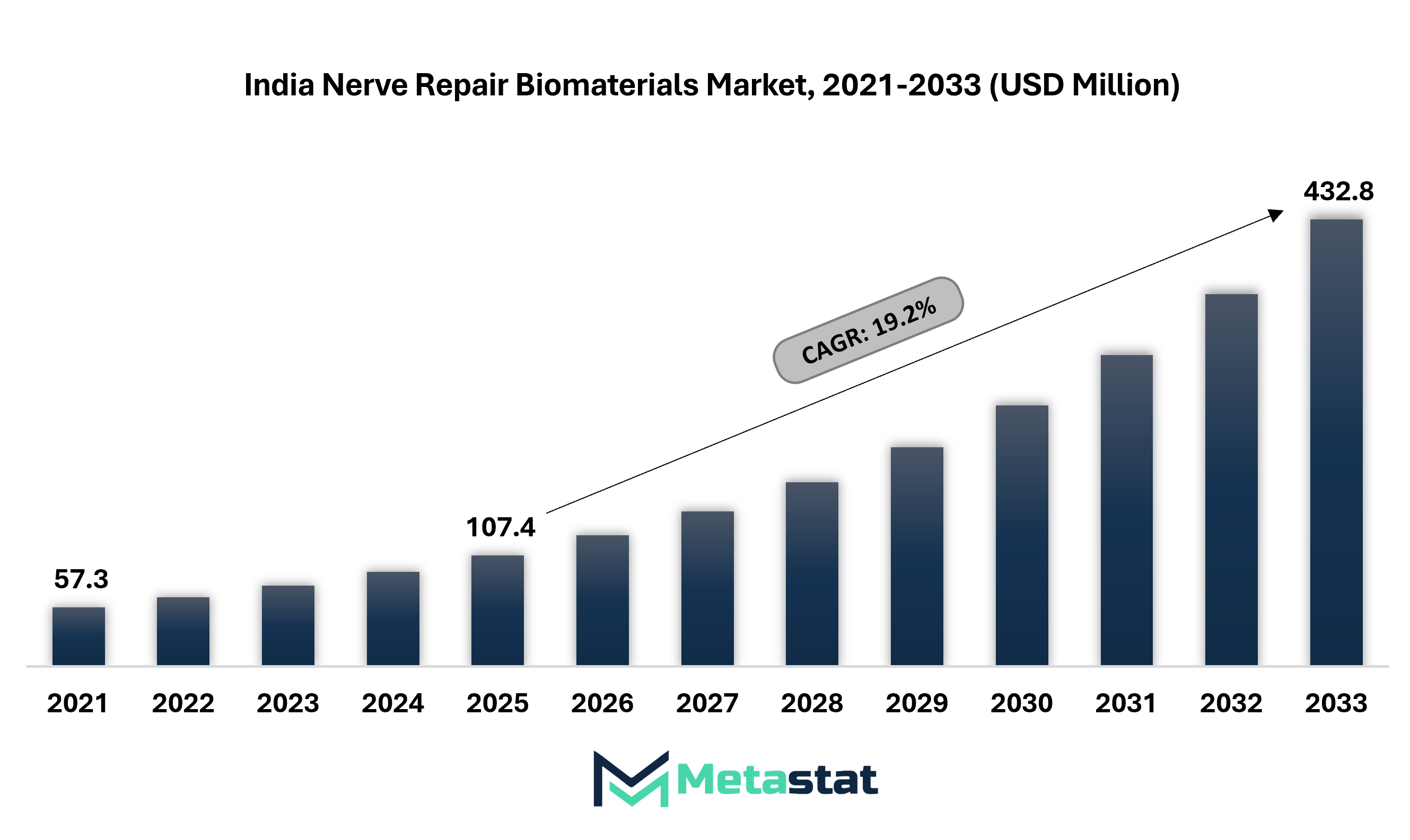
The increasing incidence of trauma and diabetic neuropathy in urban and semi-urban areas will increase the need for nerve repair procedures. Expansion of microsurgery capacity in Tier 1 and Tier 2 hospitals will support higher surgical volumes. Over the forecast period, improved referral pathways and specialized surgical units will strengthen procedural throughput across the country.
Increasing availability of bioresorbable and collagen conduits, along with growing private insurance coverage, is improving adoption versus autografts. Comprehensive private insurance coverage and structured reimbursement models will reduce financial friction. In the coming years, continued product access and payer support will encourage surgeons to adopt advanced biomaterials, thereby improving recovery outcomes and procedural efficiency.
Higher device pricing, compared to autograft procedures, will continue to challenge adoption in price-sensitive health care settings. Significant out-of-pocket expenses will limit patient access in many areas. Without rationalizing pricing, future growth will face resistance despite clinical benefits, especially in public hospitals and small private care centers.
Limited availability of local clinical evidence and structured training programs will limit confidence among surgeons. Uneven distribution of advanced nerve repair products beyond metropolitan areas will further slow penetration. Unless education networks and supply chains expand, the adoption gap between metropolitan and non-metropolitan areas will persist.
Localized manufacturing combined with India-focused clinical trials for long-interval nerve repair will unlock scalable growth. Collaboration between OEMs and hospitals on collagen, chitosan conduits and neuro-caps will reduce costs and validate results. Looking ahead, such partnerships will position domestic innovation as a competitive force in advanced neurocare.
India Nerve Repair Biomaterials market is mainly classified on Type, Application, and End-Use Industry.
Nerve Wrap segment was valued at USD 31.7 Million in 2026 and is projected to reach USD 109.1 Million by 2033, at a CAGR of 19.3% during the forecast period.
Nerve wrap solutions will continue to be adopted as controlled treatment environments become a priority. These materials will support neuroprotection during recovery while minimizing external interference. Future development will focus on flexibility, biocompatibility and improved regeneration support, in line with evolving surgical expectations and patient outcome standards.
Nerve Conduit segment was valued at USD 56.5 Million in 2026 and is projected to reach USD 189.5 Million by 2033, at a CAGR of 18.9% during the forecast period.
Nerve conduit solutions will play a central role in directed nerve regeneration processes. The structured channels will enable controlled nerve growth over damaged sections. Advances will emphasize durability and biocompatibility, allowing broad application in complex procedures while maintaining predictable treatment pathways in advanced clinical practices.
Nerve Grafts segment was valued at USD 26.1 Million in 2026 and is projected to reach USD 93.1 Million by 2033, at a CAGR of 19.9% during the forecast period.
Owing to rising use of biological and synthetic alternatives in nerve reconstruction, nerve graft utilization will increase. Advanced graft processing and material refinement will support better signal transmission. Ongoing innovation will aim to balance availability and performance while supporting consistent surgical outcomes across a variety of nerve damage scenarios.
Nerve Caps segment was valued at USD 12.5 Million in 2026 and is projected to reach USD 41.1 Million by 2033, at a CAGR of 18.6% during the forecast period.
Nerve caps will gain relevance in preventing abnormal nerve regrowth and post-surgical discomfort. Future designs will focus on precise placement and long-term stability. As awareness increases about controlled nerve endings and prevention-focused surgical planning within an advanced neurocare framework, adoption will increase.
Peripheral Nerve Repair segment is projected to reach USD 282 Million by 2033, at a CAGR of 18.9% during the forecast period.
Peripheral nerve repair procedures will remain a priority as trauma and surgical interventions increase. Material improvements will support quicker recovery and useful restoration. Continued procedural refinements will consolidate outcomes, positioning advanced biomaterials as important components within restorative nerve repair protocols.
Spinal Cord Injury segment is projected to reach USD 64.4 Million by 2033, at a CAGR of 20.2% during the forecast period.
Spinal cord injury applications will see gradual development, supported by regenerative research. The biomaterial will guide a controlled environment for nerve restoration efforts. Although complexity remains high, future-oriented trends will emphasize supportive scaffolding and treatment assistance to strengthen long-term neurological restoration potential.
Neurostimulation segment is projected to reach USD 34.9 Million by 2033, at a CAGR of 20.4% during the forecast period.
Neurostimulation applications will integrate biomaterials to enhance device compatibility and neural response. The performance of the material will affect signal stability and patient comfort. Future integration will focus on stability and biological harmony, which will support expansion of therapeutic use across pain management and neurological treatment pathways.
Others segment is projected to reach USD 51.5 Million by 2033, at a CAGR of 18.6% during the forecast period.
As research expands into diverse neurological conditions, additional applications will emerge. Biomaterials will support experimental and specific procedures. Continued exploration will open new therapeutic directions, strengthening the adaptability of nerve repair materials to emerging medical use cases.
Hospitals segment accounted for 71.6% share in 2025 and is projected to reach USD 314.6 million by 2033.
Hospitals will remain the primary adoption centers due to advanced surgical infrastructure. Integration of nerve repair biomaterials will align with specific treatment protocols. Future expansion will reflect increasing procedure volumes and institutional investment in restorative health care technologies.
Clinics segment accounted for 13.9% share in 2025 and is projected to reach USD 66.0 million by 2033.
Clinics will gradually expand their use as minimally invasive nerve treatments increase. Improved access to biomaterial solutions will support outpatient procedures. The increasing familiarity of practitioners will lead to continued adoption of focused treatment environments emphasizing recovery efficiency.
Research Institutes segment accounted for 8.0% share in 2025 and is projected to reach USD 29.2 million by 2033.
Research institutions will influence long-term innovation through materials testing and regenerative studies. Experimental applications will refine future biomaterial designs. Continued funding and academic collaboration will strengthen the fundamental advances supporting clinical translation over time.
Others segment accounted for 6.5% share in 2025 and is projected to reach USD 23.0 million by 2033.
Other end-use segments will include specialty care centers and emerging medical facilities. Adoption will depend on procedural expertise and resource availability. Over time, widespread distribution will support diverse uses in expanded healthcare delivery models.
India Nerve Repair Biomaterials Market is emerging as healthcare professionals pay increasing attention to repairing nerves. With an increase in cases related to road accidents, trauma, and neurological disorders, there will be a high demand for new treatment options. Biomaterials for nerve repair have been developed to aid in the healing process by facilitating nerve regeneration. In India, there has been an increase in awareness among surgeons regarding biomaterials, thereby propelling this segment from being used sporadically to being widely accepted.
The hospitals and medical centers in the country are now resorting to alternatives for conventional nerve grafting procedures, which in many ways pose additional risks for the patient. The use of biomaterial products for medical needs ensures proper regulation of the healing process and provides comfort to the patient, which will help expedite their assimilation into the healthcare sector, either in the public domain or in private institutes. As awareness and training develop, surgeons are getting more confident about working with advanced materials for nerve repair.
Emerging companies are actively shaping this market through innovation and product development. Key players in the India Nerve Repair Biomaterials Market industry include major medical device portfolio companies, Integra LifeSciences Corporation, and Stryker Corporation, with a core emphasis on surgical solutions. Specialized biomaterial designing companies, Toyobo Co., Ltd., and Synovis Micro Companies Alliance, Inc., and nerve-specific repair technologies supporting precision and better outcomes include AxoGen, Inc., and Checkpoint Surgical, Inc.
Other prominent contributors include Regenity Biosciences, Newrotex, and Orthocell Ltd., which are attracting attention with research-driven approaches and regenerative solutions. BioCircuit Technologies is also working on novel material concepts to help in better nerve healing. Collectively, these companies will be closely involved in setting treatment standards and widening access to biomaterials for nerve repair in India. With growing collaboration between clinicians, researchers, and manufacturers, the market is poised to move toward both effective and accessible treatments that help patients recover from their injuries.
Market size is forecast to rise from USD 107.4 million in 2025 to over USD 432.8 million by 2033.
Manufacturing strategies will also evolve, prioritizing precision, reproducibility and regulatory alignment. As domestic competencies mature, the enterprise will aim to help create custom-designed solutions acceptable to India's various scientific environments. The India nerve repair biomaterials marketplace will therefore increase its scope from isolated product development to becoming an incorporated contributor to neurological care, thereby strengthening India's function as a hub of superior biomedical innovation at the same time as shaping the future of nerve restoration practices.
This research report categorizes the India Nerve Repair Biomaterials market based on key segments, forecasts revenue growth, and analyses trends in each submarket. The report analyses the key growth drivers, opportunities, and challenges influencing the India Nerve Repair Biomaterials market. Recent market developments and competitive strategies such as expansion, product launch, product development, partnerships, mergers, and acquisitions have been included to map the competitive landscape in the market.
The report strategically identifies and profiles the key market players and analyses their core competencies in each sub-segment of the India Nerve Repair Biomaterials market.
|
Report Attributes |
Details |
|
Study Period |
2021-2033 |
|
Base Year |
2025 |
|
Estimated Year |
2026 |
|
Forecast Period |
2026-2033 |
|
Historical Period |
2021-2025 |
|
Growth Rate |
CAGR 19.2% from 2026 to 2033 |
|
Revenue Unit |
USD Million |
|
Sales Volume Unit |
Units |
|
Segmentation |
By Type, Application and End-Use Industry |
|
By Type |
|
|
By Application |
|
|
By End-Use Industry |
|
Find answers to common questions about this report
The Metastat Insight study shows that the India Nerve Repair Biomaterials market size was USD 107.4 million in 2025.
The India Nerve Repair Biomaterials market is likely to grow at a CAGR of 19.2% over the forecast period (2026-2033).
The Metastat Insight analysis shows that the India Nerve Repair Biomaterials market size is estimated to be USD 432.8 million by 2033.
Nerve Conduit is the leading type segment in India.
Rising trauma & diabetic neuropathy burden plus expanding microsurgery capacity in Tier-1/2 hospitals are lifting procedure volumes and Increasing availability of bioresorbable/collagen conduits and growing private insurance coverage are improving adoption over autografts are key driving factors, boosting the market.
High device costs vs. autograft and significant out-of-pocket expenditure slow uptake in cost-sensitive settings will hamper the market growth within the forecast period.
India Nerve Repair Biomaterials market is estimated to reach USD 432.8 million by 2033.
Top players operating in the India Nerve Repair Biomaterials industry include Integra LifeSciences Corporation, Stryker Corporation, Toyobo Co., Ltd., Synovis Micro Companies Alliance, Inc., and AxoGen, Inc.
The analysts below cover Biotechnology research at Metastat Insights.
LEAD ANALYST
Utkarsh Khirodkar is a Lead Market Research Analyst at MetaStat Insight, specializing in market intelligence, technology sector assessments, and competitive strategy.

SENIOR RESEARCH ANALYST
Biotechnology · Food and Beverages · Medical Devices · Packaging
Snehal Pasalkar is a Research Analyst at MetaStat Insight, operating at the intersection of life sciences research, competitive strategy, and market intelligence.
Replacing petrochemical surfactants with bio-based alternatives requires realistic timelines on industrial precision fermentation scaling. The market research broke down commercialization timelines, feedstock sugar price sensitivities, and regional cosmetic ingredient regulatory approvals in Europe and East Asia. That supplier readiness mapping gave our formulations team reliable context when comparing renewable chemical sourcing roadmaps.
Tracking ceramic matrix composite adoption in high-bypass aero engines requires strict attention to material qualification cycles and FAA airworthiness testing milestones. The MetaStat Insight team provided a detailed timeline of silicon carbide fiber manufacturing capacity and commercial foundry lead times. Having clear visibility into upstream thermal barrier coating supply helped us stress-test our long-term component procurement strategy.
Transitioning ultra-class mining haul trucks to alternative power requires concrete data on remote hydrogen refueling infrastructure economics. The report evaluated megawatt-scale electrolyzer installation expenses, onsite storage safety mandates, and heavy-duty fuel cell stack degradation under continuous duty cycles. That technical rigor helped our engineers benchmark realistic total operating cost horizons for off-highway fleet decarbonization.
Explore related market intelligence reports worth reading alongside this one.