
LEAD ANALYST
Utkarsh Khirodkar is a Lead Market Research Analyst at MetaStat Insight, specializing in market intelligence, technology sector assessments, and competitive strategy.

Global Intelligent Underwater Robotics Market Size, Share, By Type (Autonomous Underwater Vehicles (AUVs), Remotely Operated Vehicles (ROVs), and Hybrid Vehicles), By Application (Marine Research, Oil, Gas, Defense, Environmental Monitoring, and Underwater Inspections), By End-User (Commercial, Government, and Research Institutions), Industry Analysis, Growth, Trends, and Forecast, 2026-2033
Report ID
MSI-4750
Published
May, 2026
Pages
315 Pages
Format
Report Details
Choose Your License
Intelligent Underwater Robotics Market
Global Intelligent Underwater Robotics market size is valued at USD 1,403.3 million in 2025 and projected to grow at a CAGR of 11.5% during the forecast period, reaching USD 3,350.4 million by 2033.
North America holds 31.9% in 2025 with US leading the market share in 2025.
Autonomous Underwater Vehicles (AUVs) segment account for a market share of 36.3% in 2025.
Key trends driving growth: Increased offshore oil & gas and renewable energy activities propel adoption of autonomous subsea inspection and maintenance solutions, along with rising demand for deep-sea exploration and oceanographic research accelerates deployment of AI-enabled underwater robots.
Opportunities include expansion of underwater defense, security, and environmental monitoring applications creates strong growth avenues for intelligent robotic systems.
Key insight: AI-powered autonomous underwater systems are transforming subsea operations by improving safety, efficiency, and real-time decision-making capabilities.
The Global Intelligent Underwater Robotics Market is witnessing steady expansion, supported by the growing integration of artificial intelligence, autonomous navigation systems, advanced sonar technology, and real-time underwater analytics into marine operations. Intelligent underwater robots, including Autonomous Underwater Vehicles (AUVs) and Remotely Operated Vehicles (ROVs), are becoming critical across offshore oil & gas, naval defense, marine research, underwater inspection, and subsea infrastructure monitoring. The market is gaining traction as industries seek safer, cost-efficient, and highly precise alternatives to manual underwater operations. Rising investments in deep-sea exploration, offshore renewable energy projects, and underwater surveillance applications are further accelerating adoption globally.
Technological advancements are significantly reshaping the competitive landscape of the market. AI-driven navigation, machine learning-based object detection, edge computing, sensor fusion, and multi-task payload integration are improving operational endurance and autonomous decision-making capabilities of underwater robotic systems. Defense organizations worldwide are increasingly deploying intelligent underwater robots for mine countermeasures, intelligence gathering, seabed mapping, and maritime security programs. At the same time, commercial sectors are adopting robotics-as-a-service models to reduce dependence on expensive crewed vessels and divers. Growing focus on underwater infrastructure safety, climate monitoring, and oceanographic research will sustain long-term demand across developed and emerging economies.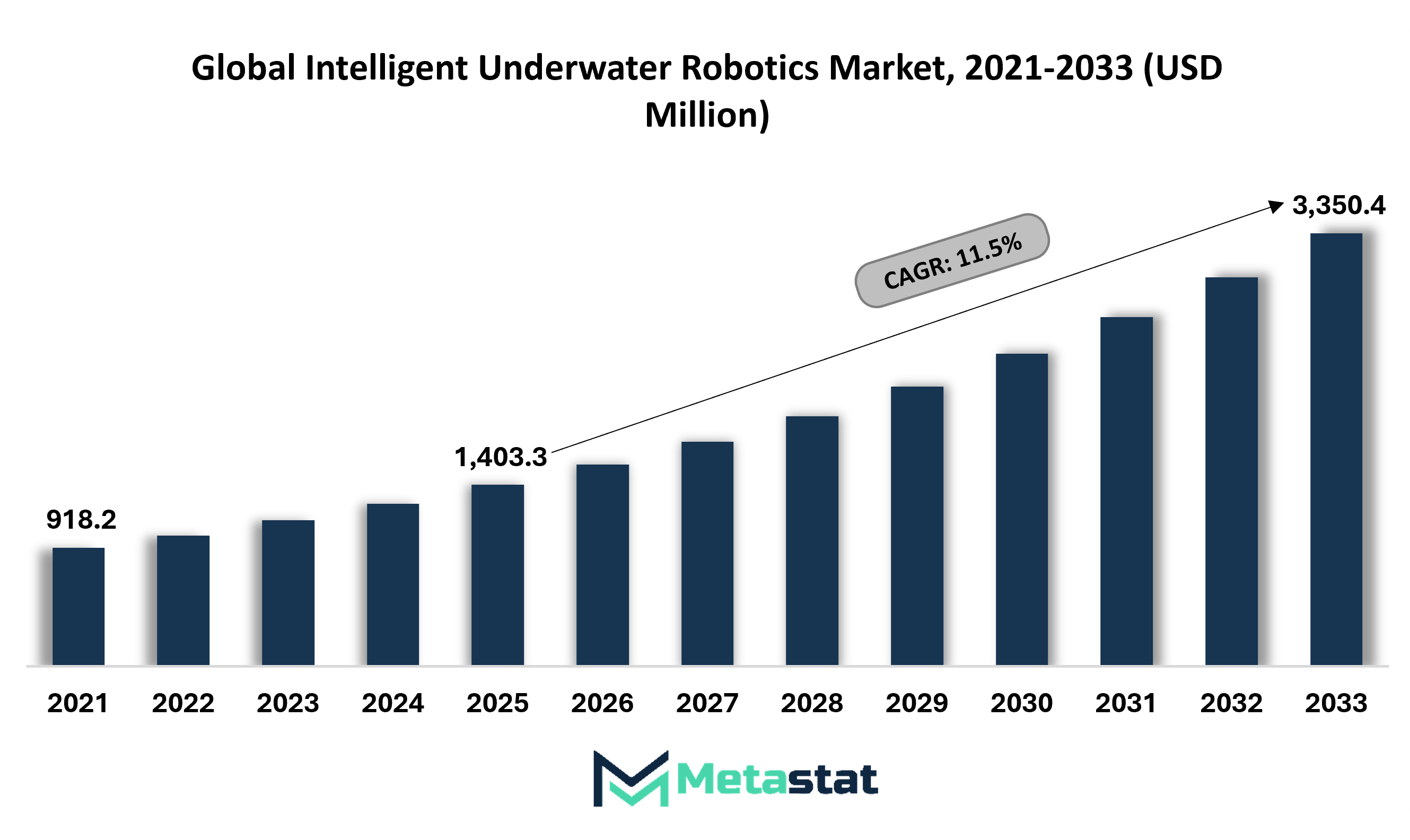
Increased offshore oil & gas and renewable energy activities propel adoption of autonomous subsea inspection and maintenance solutions.
Increased offshore oil & gas exploration activities, along with rapid investments in floating wind farms, continue to strengthen demand for advanced subsea robotics across global marine industries. Autonomous inspection systems support pipeline monitoring, underwater asset assessment, corrosion detection, and predictive maintenance operations. Future commercial expansion across offshore energy infrastructure will encourage broader adoption of intelligent robotic technologies that improve operational continuity, personnel safety, and underwater inspection precision in challenging marine environments.
Rising demand for deep-sea exploration and oceanographic research accelerates deployment of AI-enabled underwater robots
Growing interest in deep-sea mineral exploration, marine biodiversity assessment, and oceanographic mapping is accelerating the deployment of AI-enabled underwater robotic systems across research institutions and commercial marine projects. Intelligent navigation systems support high-resolution seabed imaging, environmental data collection, and autonomous underwater surveillance during long-duration missions. Future improvements in machine learning, sensor integration, and robotic mobility will strengthen development potential across scientific exploration applications seeking efficient underwater monitoring capabilities across unexplored ocean territories.
High development and operational costs limit widespread commercialization across small and mid-scale operators
High production costs, software integration expenses, and operational maintenance requirements continue to create financial pressure for small and medium-scale marine operators entering underwater robotics adoption cycles. Advanced robotic systems require substantial investment across sensors, propulsion systems, artificial intelligence modules, and underwater communication technologies. Future commercialization will face slower adoption across cost-sensitive industries where budget limitations influence procurement decisions involving intelligent subsea robotic deployment and long-term operational scalability.
Technical challenges in underwater communication and navigation constrain real-time control and data transmission efficiency
Underwater communication barriers, limited signal transmission range, and navigation accuracy challenges continue to affect the performance of intelligent robotic operations in deep marine environments. Harsh underwater conditions often interfere with real-time data transfer, autonomous positioning systems, and remote operational control capabilities. Future technological improvement remains critical for enhancing acoustic communication networks, underwater mapping precision, and navigation stability required for complex robotic missions involving extended operational periods below ocean surfaces.
Expansion of underwater defence, security, and environmental monitoring applications creates strong growth avenues for intelligent robotic systems
Expansion of underwater defense surveillance, coastal security operations, and environmental monitoring applications is creating strong long-term opportunities for intelligent underwater robotic systems worldwide. Governments and marine organizations are increasingly investing in autonomous underwater technologies that support threat detection, seabed surveillance, pollution monitoring, and marine ecosystem protection initiatives. Future growth potential will strengthen through the rising integration of artificial intelligence, predictive analytics, and autonomous mission-planning technologies that support secure, data-driven underwater operations across defense and environmental sectors.
The Global Intelligent Underwater Robotics market is classified based on Type, Application, and End-User.
Autonomous Underwater Vehicles (AUVs) segment is valued at USD 567.2 million in 2026 and is projected to reach USD 1,374.7 million by 2033, at a CAGR of 13.5% during the forecast period.
Global Intelligent Underwater Robotics Market growth for autonomous underwater vehicles reflects rising demand for independent ocean operations across deep-sea projects. Advanced navigation systems, sensor integration, and artificial intelligence support accurate underwater mapping, seabed exploration, and data collection. Future industry trends indicate stronger deployment across offshore energy projects, marine surveys, and long-duration scientific missions.
Remotely Operated Vehicles (ROVs) segment is valued at USD 682.1 million in 2026 and is projected to reach USD 1,320.7 million by 2033, at a CAGR of 9.9% during the forecast period.
Global Intelligent Underwater Robotics Market demand for remotely operated vehicles continues to grow, supported by rising underwater inspection, maintenance, and intervention activities. High-definition imaging systems, robotic arms, and improved communication technologies support precise underwater intervention tasks. Future development trends indicate stronger commercial adoption across offshore drilling sites, pipeline repair operations, and underwater infrastructure management activities worldwide.
Hybrid Vehicles segment is valued at USD 313.8 million in 2026 and is projected to reach USD 655 million by 2033, at a CAGR of 11.1% during the forecast period.
Global Intelligent Underwater Robotics Market growth within hybrid vehicles reflects increasing preference for flexible underwater systems capable of autonomous operation along with remote-control functionality. Enhanced battery performance, operational efficiency, and adaptive mission capabilities support broader underwater applications. Future commercial potential indicates growing investments from defense organizations, energy firms, and marine engineering companies seeking multifunctional robotic systems.
Marine Research segment is projected to reach USD 794.6 million by 2033, at a CAGR of 13.4% during the forecast period.
Global Intelligent Underwater Robotics Market usage across marine research activities continues to expand, supported by increasing ocean exploration programs and biodiversity assessment initiatives. Intelligent robotic systems support accurate sample collection, underwater imaging, and climate-related marine observations. Future research initiatives indicate stronger collaboration between universities, oceanographic centers, and environmental organizations focused on deep-water ecosystem understanding.
Oil and Gas segment is projected to reach USD 815.8 million by 2033, at a CAGR of 9.6% during the forecast period.
Global Intelligent Underwater Robotics Market presence within oil & gas operations remains significant, supported by increasing offshore exploration and underwater asset maintenance requirements. Robotic technologies support pipeline inspections, leak detection, and subsea construction activities under harsh underwater conditions. Future operational demand indicates rising investment in automated underwater systems that support safer and cost-efficient offshore production environments.
Defense segment is projected to reach USD 722.7 million by 2033, at a CAGR of 12.2% during the forecast period.
Global Intelligent Underwater Robotics Market adoption across defense sectors reflects growing emphasis on maritime security, underwater surveillance, and naval intelligence-gathering operations. Intelligent robotic systems support mine detection, border monitoring, and strategic underwater reconnaissance activities. Future military modernization programs indicate stronger procurement of advanced underwater robotics supporting national security objectives across coastal and deep-water territories.
Environmental Monitoring segment is projected to reach USD 550.5 million by 2033, at a CAGR of 12.7% during the forecast period.
Global Intelligent Underwater Robotics Market application within environmental monitoring continues to grow, supported by increasing concerns regarding marine pollution, water quality, and climate change impacts. Robotic systems support real-time underwater observation, contamination tracking, and ecosystem analysis programs. Future sustainability initiatives indicate stronger government-backed monitoring projects focused on marine conservation and underwater environmental protection.
Underwater Inspections segment is projected to reach USD 466.7 million by 2033, at a CAGR of 9.7% during the forecast period.
Global Intelligent Underwater Robotics Market expansion within underwater inspection services reflects rising infrastructure monitoring requirements across ports, bridges, dams, and offshore installations. Intelligent robotic systems support accurate structural assessment under challenging underwater environments. Future infrastructure development initiatives indicate growing reliance on robotic inspection technologies that support operational safety, maintenance planning, and reduced human intervention.
Commercial segment is projected to reach USD 1,439.3 million by 2033.
Global Intelligent Underwater Robotics Market growth across commercial end-users reflects rising industrial reliance on automated underwater technologies for operational efficiency and cost management. Shipping companies, offshore contractors, and infrastructure developers continue to increase robotic adoption across underwater projects. Future commercial opportunities indicate stronger private sector investments supporting advanced robotic deployment across marine industry operations.
Government segment is projected to reach USD 1,237.3 million by 2033.
Global Intelligent Underwater Robotics Market demand from government organizations continues to grow, supported by rising investments across maritime security, ocean exploration, and environmental management initiatives. Public sector programs support technological innovation, underwater research funding, and coastal monitoring operations. Future policy-driven investments indicate broader adoption of intelligent underwater robotics supporting national marine development goals and resource management activities.
Research Institutions segment is projected to reach USD 673.8 million by 2033.
Global Intelligent Underwater Robotics Market engagement among research institutions reflects growing academic interest in underwater automation, marine science, and robotic engineering advancements. Intelligent underwater systems support experimental research, environmental assessments, and deep-sea observation activities. Future technological progress indicates stronger institutional partnerships focused on innovation, robotic testing programs, and advanced underwater scientific exploration initiatives.
Based on geography, the Global Intelligent Underwater Robotics market is divided into North America, Europe, Asia-Pacific, South America, Middle East, and Africa.
Strong U.S. defense spending on unmanned maritime surveillance and mine countermeasure systems is driving regional market growth. Growing investments in offshore energy infrastructure inspection and underwater security are boosting smart robotics adoption in North America.
Europe is strengthening investments in autonomous underwater defense technologies and subsea infrastructure protection amid rising maritime security concerns and expanded naval modernization projects.
Increasing offshore energy exploration and smart port development initiatives are generating strong demand for intelligent underwater systems in Asia Pacific.
The Middle East, Africa, and South America are witnessing gradual adoption of intelligent underwater robotics, supported by offshore oil exploration, subsea pipeline inspection requirements, marine resource mapping initiatives, and growing investments in maritime security infrastructure.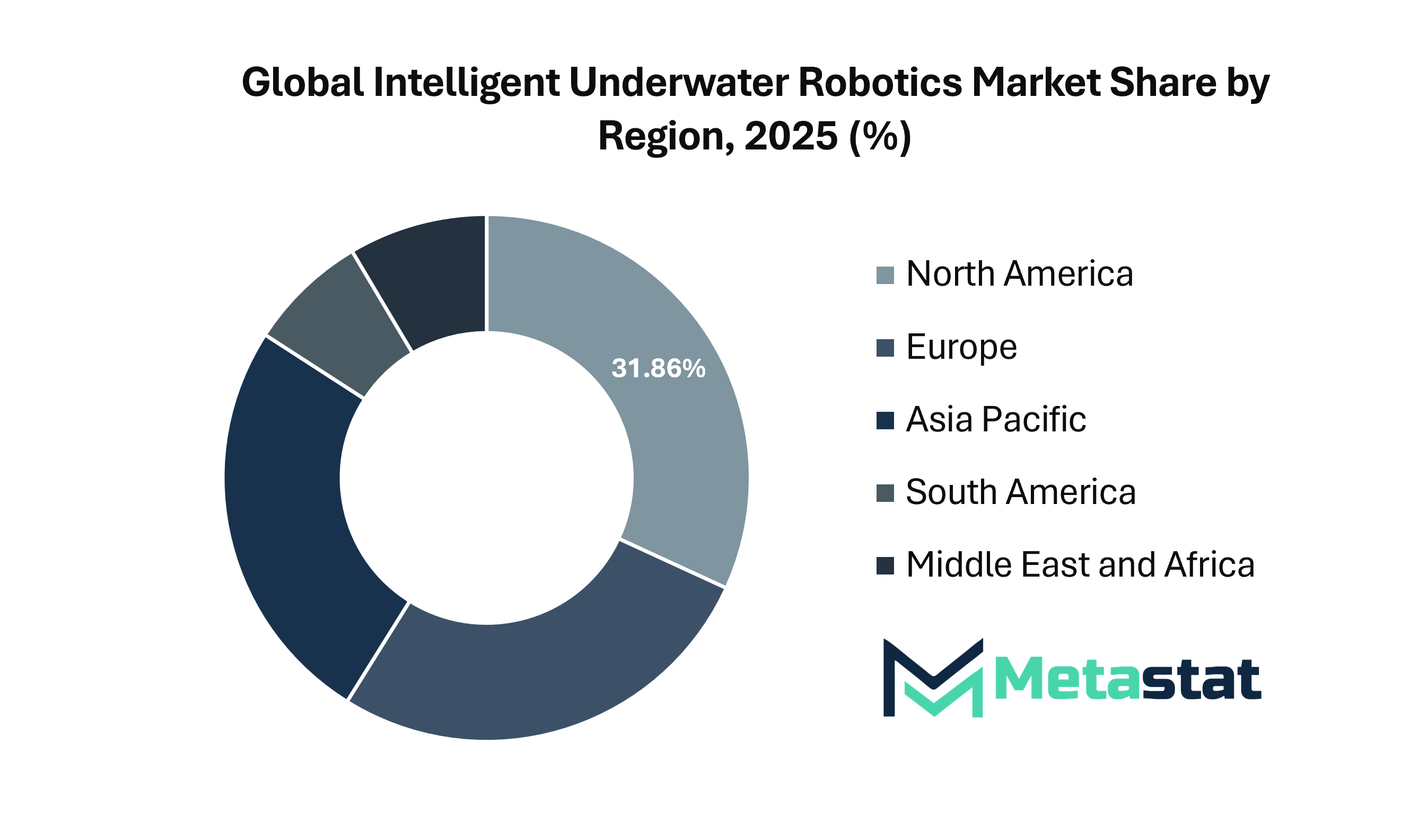
The Global Intelligent Underwater Robotics Market is gaining strong attention owing to the rising need for advanced systems that operate deep below the sea surface with higher speed, safety, and accuracy. These robotic systems are being used for underwater inspection, offshore energy projects, naval operations, marine research, and environmental studies. Companies and governments are investing in smarter machines that operate for long hours with limited direct human control. Improved sensor technologies, artificial intelligence, and communication systems are helping these robots perform complex tasks in challenging underwater conditions. Adoption is also increasing as industries seek safer solutions that reduce human risk during deep-sea operations and underwater maintenance work.
Many technology companies are focusing on research and product development to enhance underwater robotic systems. Kongsberg Maritime AS, Oceaneering International, Inc., General Dynamics Mission Systems, Inc., and Teledyne Technologies Incorporated are developing advanced solutions for defense and offshore applications. Saab AB and Huntington Ingalls Industries, Inc. are also expanding their underwater programs to support naval missions and surveillance activities. Exail Technologies and Singapore Technologies Engineering Ltd. are developing systems with stronger navigation capabilities and improved data collection features. These organizations are working toward machines that move efficiently through difficult ocean environments while delivering accurate real-time information for commercial and security operations.
The market is also witnessing participation from organizations focused on autonomous and AI-driven systems. The Boeing Company, BAE Systems plc, Anduril Industries, Inc., and Israel Aerospace Industries Ltd. are increasing efforts in smart marine technologies for defense and monitoring applications. Nauticus Robotics, Inc., Cellula Robotics Ltd., and Ocean Infinity Group Limited are introducing robotic systems that perform underwater mapping and inspection with limited human support. Fugro N.V., DeepOcean Group Holding B.V., DOF Group ASA, and TechnipFMC plc continue supporting offshore energy operations through advanced robotic services. Many companies are working to reduce operating costs while improving underwater performance, creating wider opportunities for innovation and long-term expansion.
Smaller and specialized organizations are also supporting industry growth through flexible and cost-effective solutions. Kraken Robotics Inc., L3Harris Technologies, Inc., Greensea IQ, and Blue Robotics Inc. are bringing improved imaging and navigation systems into the market. VideoRay LLC, Deep Trekker Inc., Blueye Robotics AS, and SEAMOR Marine Ltd. are producing compact robotic devices that support research, inspection, and emergency response work. Hydromea SA, Ocean Aero, and Autonomous Robotics Ltd. are introducing newer designs focused on energy efficiency and remote operation. Rising offshore activities, stronger defense spending, and growing interest in ocean exploration will continue supporting market expansion during the coming years.
Market size is forecast to rise from USD 1,403.3 million in 2025 to over USD 3,350.4 million by 2033.
Future market expansion will be supported by rising defense modernization programs, offshore wind energy infrastructure development, increasing deepwater oil exploration activities, and advancements in AI-enabled autonomous underwater systems. Improvements in battery endurance, underwater communication technologies, real-time analytics, and swarm robotics will strengthen commercial adoption across subsea inspection, offshore energy, maritime security, environmental monitoring, and deep-sea exploration applications.
This research report categorizes the Intelligent Underwater Robotics market based on key segments and regions, forecasts revenue growth, and analyses trends in each submarket. The report analyses the key growth drivers, opportunities, and challenges influencing the Intelligent Underwater Robotics market. Recent market developments and competitive strategies such as expansion, product launch, partnership, merger, and acquisition have been included to draw the competitive landscape in the market.
The report strategically identifies and profiles the key market players and analyses their core competencies in each sub-segment of the Intelligent Underwater Robotics market.
|
Report Attributes |
Details |
|
Study Period |
2021-2033 |
|
Base Year |
2025 |
|
Estimated Year |
2026 |
|
Forecast Period |
2026-2033 |
|
Historical Period |
2021-2025 |
|
Growth Rate |
CAGR 11.5% from 2026 to 2033 |
|
Revenue Unit |
USD million |
|
Sales Volume Unit |
Units |
|
Segmentation |
By Type, Application, End-User, and Region |
|
By Region |
North America (By Type, Application, End-User, and Country)
|
|
Europe (By Type, Application, End-User, and Country)
|
|
|
Asia Pacific (By Type, Application, End-User, and Country)
|
|
|
South America (By Type, Application, End-User, and Country)
|
|
|
Middle East and Africa (By Type, Application, End-User, and Country)
|
Find answers to common questions about this report
Top players operating in the Intelligent Underwater Robotics industry includes Kongsberg Maritime AS, Oceaneering International, Inc., General Dynamics Mission Systems, Inc., Teledyne Technologies Incorporated (Teledyne Marine), and Saab AB.
Global Intelligent Underwater Robotics market is estimated to reach USD 3,350.4 million by 2033.
The Remotely Operated Vehicles (ROVs) is the leading type segment in the Global market.
Increased offshore oil & gas and renewable energy activities propel adoption of autonomous subsea inspection and maintenance solutions and rising demand for deep-sea exploration and oceanographic research accelerates deployment of AI-enabled underwater robots are key driving factors, boosting the market.
High development and operational costs limit widespread commercialization across small and mid-scale operators will hamper the market growth within the forecast period.
North America region dominates the market.
The Metastat Insights analysis shows that the North America Intelligent Underwater Robotics market size is estimated to be USD 1,077.5 million by 2033.
The Global Intelligent Underwater Robotics market is expected to grow at a CAGR of 11.5% over the forecast period (2026-2033).
The Metastat Insights study shows that the Global Intelligent Underwater Robotics market size was USD 1,403.3 million in 2025.
The analysts below cover Machinery & Equipment research at Metastat Insights.
LEAD ANALYST
Utkarsh Khirodkar is a Lead Market Research Analyst at MetaStat Insight, specializing in market intelligence, technology sector assessments, and competitive strategy.

INDUSTRY CONSULTANT - CHEMICALS & ADVANCED MATERIALS
Chemicals and Materials · Machinery & Equipment · Packaging
Amit Gadhekar Consultant for Chemicals and Materials at MetaStat Insight, directing sector-specific intelligence, research, and strategic consulting across global chemical and processing markets.

PRINCIPAL CONSULTANT - QUALITY SYSTEMS & COMPLIANCE
Electronics and Semiconductor · Machinery & Equipment · Professional Services
Omkar Phadtare is an Industry Consultant at MetaStat Insight, specializing in quality systems, regulatory compliance, and standards benchmarking to drive data-driven market intelligence and strategic industry research.

ENERGY & INFRASTRUCTURE INDUSTRY CONSULTANT
Automotive and Transportation · Electronics and Semiconductor · Energy and Power · Machinery & Equipment
Saurabh Vasant Ganvir consults for Energy & Infrastructure Industry at MetaStat Insight, specializing in renewable energy, solar EPC, and electric vehicle (EV) infrastructure markets.

LEAD CONSULTANT - COMMUNICATION, TELECOM, AND IT
Electronics and Semiconductor · Information & Technology · Machinery & Equipment · Professional Services
Ravindra Sathe Consultants for Communication, Telecom, and IT at MetaStat Insight. He leads the firm's industry research initiatives across telecommunications infrastructure, digital connectivity, enterprise networking, and emerging information technology domains.
Assessing commercial microgrid software adoption requires looking past top-level installation numbers and examining utility interconnection queues. The research provided verifiable data on average permitting timelines, tariff structures, and battery storage integration costs across regional utility territories. That grounded perspective was valuable for our team when building five-year demand projections for industrial microgrid controllers.
Ambulatory surgical centers have very different purchasing cycles for robotic-assisted surgery platforms than major hospital networks. The MetaStat Insight study focused squarely on capital expenditure depreciation, procedural reimbursement pathways, and surgeon training overhead. That operational clarity made it much simpler to validate multi-year procedure growth forecasts against actual ambulatory center adoption patterns.
When planning edge sensor rollouts across refinery environments, generic IoT reports typically miss the harsh-environment certification bottlenecks. MetaStat Insight gave an objective evaluation of ATEX and Class 1 Division 2 hardware availability, along with realistic five-year maintenance cycle cost projections. The comparison of wireless mesh versus private cellular backhaul helped our team pressure-test network reliability models for remote processing facilities.
Explore related market intelligence reports worth reading alongside this one.