
LEAD ANALYST
Utkarsh Khirodkar is a Lead Market Research Analyst at MetaStat Insight, specializing in market intelligence, technology sector assessments, and competitive strategy.

Global Manga Publishing and Distribution Market Size, Share, By Format (Print Manga and Digital Manga), By Target Demographic (Shōnen, Shōjo, Seinen, Josei, Kodomomuke / Children's Manga and General / Cross-Demographic Manga), By Monetization Model (Transactional Purchase, Subscription Access, Digital Rental / Time-Limited Access and Advertising-Supported Access), Industry Analysis, Growth, Trends, and Forecast, 2026-2033
Report ID
MSI-5201
Published
September, 2026
Pages
269 Pages
Format
Historical
Base year
Forecast
Forecast period
Report Details
Choose Your License
Global Manga Publishing and Distribution Market
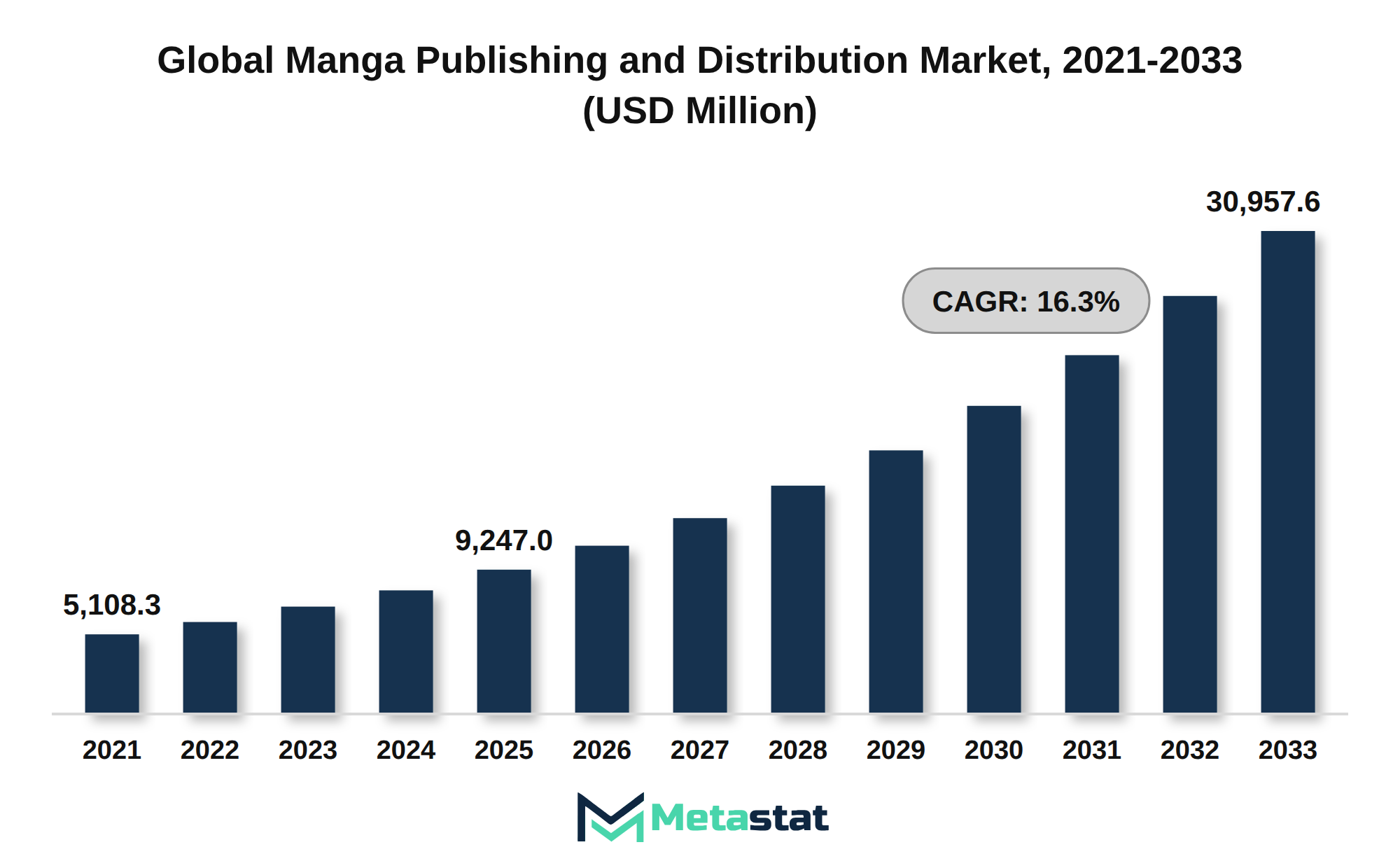
The global Manga Publishing and Distribution market was valued at USD 9,247 million in 2025 and is projected to reach USD 30,957.6 million by 2033, growing at a CAGR of 16.3% over the forecast period.
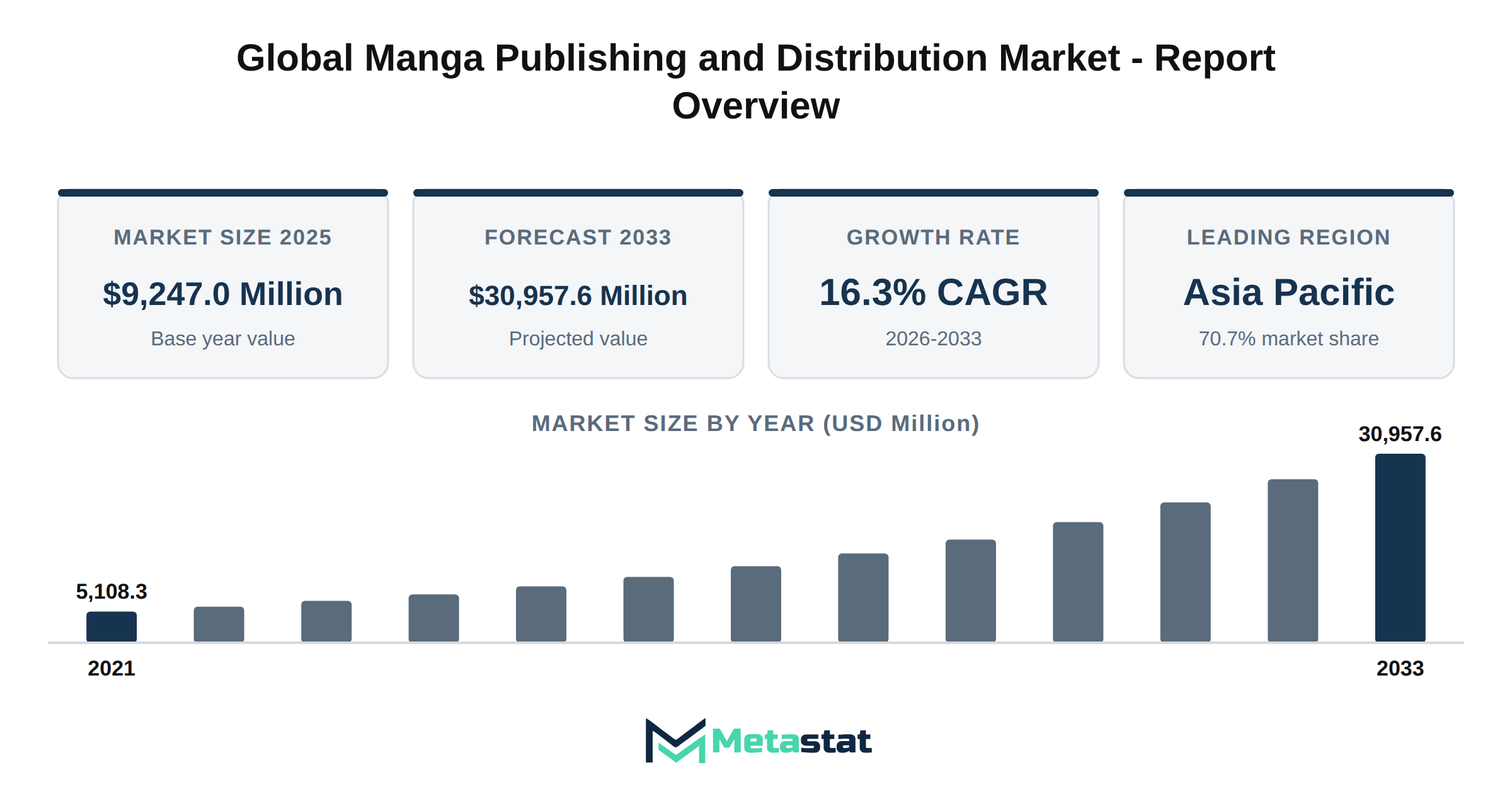
The global Manga Publishing and Distribution market reached a valuation of USD 9,247 million in 2025, reflecting a significant growth trajectory. The market is projected to achieve USD 30,957.6 million by the end of 2033, reflecting a compound annual growth rate (CAGR) of 16.3%. Historical data indicates steady growth from USD 5,108.3 million in 2021 to USD 7,879.2 million in 2023, demonstrating increasing consumer interest in manga content.
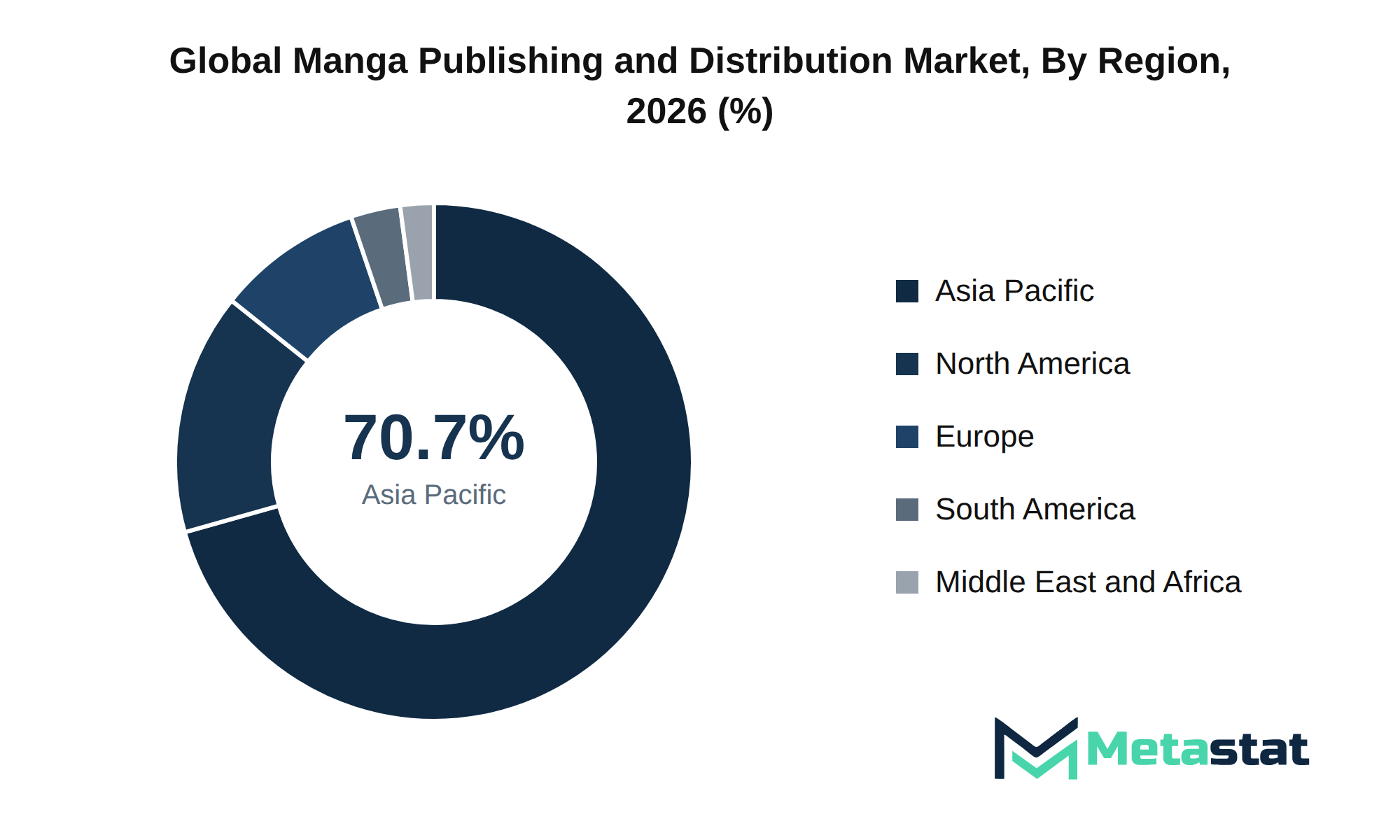
Regional dynamics show that the Asia Pacific region dominates the market with a share of 70.7%. North America follows, accounting for 15.1% of the market, while Europe holds a 9.1% share. The South American and Middle Eastern markets contribute smaller portions, at 3.1% and 2.1%, respectively. By 2033, North America is projected to reach a value of USD 4,953.2 million, maintaining a CAGR of 16.3%.
The segmentation of the Manga Publishing and Distribution market illustrates the diverse consumer preferences. Print manga is anticipated to grow from USD 5,954.4 million in 2026 to USD 13,621.3 million in 2033, resulting in a CAGR of 12.5%. In contrast, digital manga is set to reach USD 17,336.3 million by 2033, exhibiting a robust CAGR of 20%. These growth rates reflect the ongoing shift towards digital platforms and enhanced accessibility for consumers.
Target demographics, particularly Shōnen and Shōjo categories, demonstrate significant growth potential. The Shōnen demographic is projected to expand from USD 4,054.1 million in 2026 to USD 11,185 million by 2033, with a CAGR of 15.6%. The Shōjo category is expected to reach USD 6,346.3 million by 2033, indicating a CAGR of 16.6%. These trends illustrate the increasing appeal of manga across various age groups and genders.
The Manga Publishing and Distribution market experiences significant growth driven by various factors. The rise in digital consumption, particularly among younger demographics, enhances demand for digital manga formats. Increasing smartphone penetration and internet accessibility enable readers to engage more frequently with digital content. This trend is expected to accelerate, contributing to a compound annual growth rate (CAGR) of 20% for digital manga by 2033.
Print manga continues to maintain a substantial presence within the market. Despite the shift towards digital formats, print manga retains loyalty among traditional readers. The format is projected to grow at a CAGR of 12.5%, reflecting an enduring appreciation for physical media. This duality in format preference supports a diverse revenue stream for publishers.
Target demographics play a crucial role in shaping content and marketing strategies. Shōnen and Shōjo manga segments exhibit strong growth trajectories, with respective CAGRs of 15.6% and 16.6% through 2033. Publishers focus on tailoring narratives and artwork to cater to these audiences, driving engagement and sales.
The monetization models within the market evolve significantly. Transactional purchases remain popular, with a forecasted value of USD 17,645.8 million by 2033. Subscription access is anticipated to grow at a significant CAGR of 20.8%, indicating a shift towards recurring revenue models. Advertising-supported access contributes to revenue, reflecting an adaptive monetization landscape.
Market fragmentation presents challenges and opportunities for publishers. Numerous players, including established companies and emerging independent publishers, contribute to a competitive environment. Companies including Shueisha Inc, Kodansha Ltd, and VIZ Media, among others, strategize to enhance market presence through innovative content offerings and distribution channels.
Investment in infrastructure and technology remains critical for the market's growth. Companies allocate capital towards enhancing digital platforms and distribution networks, ensuring efficient delivery of content. This focus on technological advancement aligns with changing consumer preferences and supports sustainable growth in the Manga Publishing and Distribution market.
Rapid digital transformation significantly influences the Manga Publishing and Distribution market, enhancing content accessibility for consumers. Increasing smartphone penetration and internet connectivity facilitate the distribution of digital manga, expanding readership demographics. This shift attracts younger audiences who prefer digital formats, driving growth in the market.
Technological advancements enable publishers to adopt innovative distribution models, including subscription access and advertising-supported platforms. These models optimize revenue streams and enhance user engagement. Changes align with shifting consumer behaviors and preferences, leading to increased demand for diverse manga offerings.
The rise of digital platforms increases competition among publishers, compelling them to invest in technology and digital marketing strategies. This competition enhances operational efficiency and improves consumer experiences, contributing to overall market growth. Enhanced monetization models, including transactional purchases and subscription access, further support revenue generation in the evolving landscape of manga publishing.
While digital content consumption rises, heightened interest from investors and stakeholders encourages capital investment in digital infrastructure and content creation, fueling innovation. The overall impact of digital transformation positions the Manga Publishing and Distribution market for sustained expansion throughout the forecast period.
Shifts in consumer behavior significantly influence the Manga Publishing and Distribution market. Increasing interest in diverse formats, particularly digital and print, aligns with ongoing societal trends toward personalized content consumption. Factors including rising urbanization and lifestyle changes contribute to growing demand for accessible and visually engaging material. Younger demographics exhibit a preference for digital manga, while traditional print formats maintain popularity among older audiences, presenting opportunities for publishers to cater to varying tastes and preferences.
The relationship between demographic patterns and purchasing behavior shapes market dynamics. An aging population seeks nostalgic content, while younger consumers drive innovation in storytelling and artwork. This divergence necessitates strategic adaptations from publishers to meet the expectations of different target demographics. Leveraging technological advancements facilitates the creation of tailored marketing campaigns, enhancing engagement and retention rates within the Manga Publishing and Distribution market.
Investment in content diversification remains essential for capturing emerging trends. Publishers focusing on innovative storytelling, character development, and unique art styles attract a broad audience base. Understanding consumer preferences influenced by cultural shifts enables publishers to enhance their offerings, ultimately driving revenue growth and increasing market share. The connection between evolving consumer behavior and strategic content development enhances the overall attractiveness of the Manga Publishing and Distribution market.
Regulatory challenges significantly impact the Manga Publishing and Distribution market by complicating compliance efforts for publishers and distributors. Stringent legal mandates require substantial resources for adherence, leading to increased operational costs that deter market participants. Inflationary pressures contribute to rising prices for materials and distribution services, further straining profitability and influencing pricing strategies.
Macroeconomic headwinds, including fluctuating currency exchange rates, negatively affect international sales and reduce the attractiveness of exporting manga products to foreign markets. Supply chain disruptions stemming from geopolitical instability create challenges in sourcing materials and managing logistics, impacting the timely delivery of products to consumers. A fragmented market complicates distribution efforts, with varying consumer preferences across regions demanding tailored approaches.
High capital investment requirements for technological advancements and evolving production methods present financial hurdles for many smaller publishers. While digital formats gain traction, the transition entails investment in new platforms and content delivery methods, which burden traditional publishers. Skilled labor deficiencies pose challenges in maintaining high-quality production standards, with talent gaps in creative and technical fields affecting overall output.
The combination of regulatory challenges, macroeconomic pressures, and talent shortages contributes to a complex operational environment, which ultimately limits the growth potential of the Manga Publishing and Distribution market. Addressing these issues will be essential for market participants seeking to improve competitiveness and expand outreach in an increasingly demanding environment.
The Manga Publishing and Distribution market faces challenges stemming from geopolitical tensions and trade deficits. These factors create tariff friction that impacts pricing strategies and profit margins. Disruptions in trade relationships contribute to supply chain instability, complicating the import of essential manga materials and components.
Technological disruptions further complicate the market. Rapid advancements in digital formats create pressures on traditional print media, leading to market saturation and increased competition. This scenario forces companies to adapt quickly, often increasing operational costs associated with research and development for innovative content delivery.
Environmental sustainability demands add another layer of complexity. Companies are pressured to align with decarbonization mandates, which raise costs associated with compliance. The Manga Publishing and Distribution market faces rising input costs, compounded by fluctuating feedstock prices, which challenge profitability.
Workforce skill gaps hinder the adoption of new technologies and processes. The need for skilled talent in digital media creation and distribution remains critical, yet retention pressures emerge owing to companies competing for a limited talent pool. These elements combine to create an environment where operational efficiency becomes increasingly difficult to achieve.
Overall, the combination of these market challenges shapes the strategic landscape for stakeholders involved in the Manga Publishing and Distribution market. Companies that navigate these complexities effectively will position themselves for future growth and resilience.
The Manga Publishing and Distribution market experiences multiple growth opportunities driven by emerging regional demands. Regions including Asia Pacific represent significant potential, holding a substantial market share of 70.7 percent. This regional dominance arises from a rich cultural heritage of manga, which continues to support a strong consumer base eager for diverse content offerings. Increased disposable income and a growing youth demographic support this demand, leading to heightened interest in both print and digital formats.
Infrastructure modernization across key markets facilitates improved distribution channels and enhances access to manga content. Geographic expansion into untapped markets, particularly in South America and the Middle East and Africa, presents opportunities for growth. These regions exhibit increasing interest in manga, driven by rising internet penetration and mobile accessibility. Consequently, the market capitalizes on these transitions by offering localized content tailored to specific cultural tastes.
Technological disruptions play a crucial role in shaping the market dynamics. The transition to digital platforms promotes wider accessibility and convenience for consumers, supporting increased engagement. This digital transformation aligns with evolving buying behaviors of consumers who increasingly prefer subscription models and convenient purchasing experiences. Innovations in monetization models, including advertising-supported access, create new revenue streams.
Strategic consolidation among key players within the Manga Publishing and Distribution market presents opportunities for efficiency gains and enhanced competitive positioning. Collaborative partnerships and cross-industry mergers enrich content portfolios, enabling businesses to respond effectively to changing consumer preferences. While market dynamics evolve, the focus on value-chain optimization and operational yield maximization becomes essential for sustaining growth potential.
The emphasis on sustainability imperatives and eco-friendly practices influences market strategies, aligning with consumer expectations for responsible business operations. Such alignment supports enhanced brand loyalty and attracts a broader audience base. Overall, the Manga Publishing and Distribution market stands at the leading edge of change, driven by the confluence of emerging demands, technological advancements, and strategic initiatives aimed at capitalizing on evolving consumer behaviors.
The Global Manga Publishing and Distribution market is segmented based on Format, Target Demographic, and Monetization Model.
Print Manga segment is valued at USD 5,954.4 million in 2026 and is projected to reach USD 13,621.3 million by 2033, at a CAGR of 12.5% during the forecast period. Strong interest in physical manga products among consumers drives demand, with collectors and dedicated fans contributing to sustained sales growth. Traditional retail environments remain vital, allowing readers to engage with the physical format and encouraging community interactions through manga events and signings.
Significant factors influencing expansion include the nostalgia factor associated with print media, attributed to older generations introducing younger audiences to Manga. This intergenerational sharing enhances market penetration, allowing publishers to explore diverse genres catering to various demographic segments. Collaborations between publishers and popular franchises increase interest, leading to limited-edition releases and cross-promotional opportunities, ultimately enhancing sales and visibility in the market.
Pricing strategies in the print segment reflect ongoing trends, including premium pricing for special editions or bundled offers with merchandise. Such strategies optimize margin performance, balancing between affordability and exclusivity. While print production technologies advance, publishers streamline operations, reducing costs and improving quality, thus encouraging a more competitive environment.
Shifts in consumer preferences towards collectible items create strategic opportunities within the print manga sector. Publishers leverage these trends by developing unique offerings that cater to collector demands, capitalizing on the growing interest in limited editions and variant covers. The market's focus on providing tangible experiences positions print manga favorably against digital alternatives, reinforcing its relevance in a changing media environment.
Growth in the Digital Manga segment reflects a robust consumer shift towards digital content consumption. Increased smartphone penetration and high-speed internet access enhance accessibility and convenience for readers. Publishers rapidly adapt to these changing preferences by expanding digital offerings, resulting in an estimated market value of USD 17,336.3 million by 2033, at a CAGR of 20% during the forecast period. This segment benefits from rising demand for on-the-go entertainment, particularly among younger demographics, who favor digital formats for portability and interactivity.
Technological advancements play a crucial role in the evolution of Digital Manga. Innovations in digital reading platforms improve user experiences, leading to higher engagement levels. Interactive elements, including animations and soundtracks, complement traditional storytelling, attracting a broader audience. The Manga Publishing and Distribution market sees significant investment in these technologies, facilitating further growth in digital formats. Publishers effectively leverage subscription models and transactional purchases, enhancing revenue streams and ensuring sustained consumer engagement.
Market dynamics indicate an increasing preference for subscription access models, driven by consumers seeking cost-effective content consumption. The Digital Manga segment's adaptability allows publishers to cater to diverse consumer preferences, from casual readers to dedicated fans. This flexibility in monetization strategies contributes to a competitive advantage, positioning publishers effectively within the Manga Publishing and Distribution market. The expanding digital landscape opens strategic opportunity windows for market players, enabling them to diversify their product offerings and attract new readership segments.
Valued at USD 4,054.1 million in 2026, the Shōnen segment is projected to reach USD 11,185 million by 2033, reflecting a CAGR of 15.6% during this forecast period. Strong interest in Shōnen narratives, characterized by action, adventure, and relatable protagonists, drives this growth. Young male audiences, often the primary consumers, actively engage with stories that connect with their experiences and aspirations.
Technological advancements play a significant role in segment expansion, particularly through digital platforms that enable wider access to Shōnen content. Enhanced digital distribution channels allow readers to connect with manga on various devices, increasing consumption and driving sales. The rise of smartphones and tablets facilitates a shift toward digital manga, further increasing the segment's market presence.
Changing consumer preferences toward subscription models and advertising-supported access contribute to market dynamics for Shōnen. Readers increasingly prefer flexible consumption options, including streaming services providing access to many titles. This trend aligns with broader shifts in end-use dynamics within the Manga Publishing and Distribution market.
Strategic opportunities arise from collaborations between publishers and digital platforms to enhance content accessibility. Partnerships with streaming services and gaming companies create cross-promotional avenues that improve Shōnen content visibility. These collaborations increase market penetration and deepen engagement with the target demographic.
Investment in innovative storytelling and diverse character representation is crucial for sustaining growth and maintaining audience interest. Publishers focusing on evolving narratives and themes that cater to modern sensibilities are likely to connect with a broader audience. While the Shōnen segment evolves, it continues to play a vital role in the overall expansion of the Manga Publishing and Distribution market.
Growing interest in the Shōjo demographic emphasizes themes of romance, relationships, and personal development, leading to increased engagement within the Manga Publishing and Distribution market. This segment exhibits a strong appeal among younger female audiences, driving demand for titles crafted specifically for this group. Cultural shifts toward inclusivity and diverse storytelling contribute to the expansion of Shōjo manga, creating a deeper connection with readers and encouraging publishers to invest in new titles that align with evolving expectations.
The Shōjo segment is projected to reach USD 6,346.3 million by 2033, at a CAGR of 16.6% during the forecast period. Increased availability of digital platforms facilitates access to Shōjo content, enhancing consumption patterns and allowing for greater exposure to international titles. More readers engage with Shōjo manga through digital subscriptions and transactional purchases, reinforcing the importance of this segment within the overall landscape of manga publishing.
Competitive dynamics within the market highlight the significant role of established publishers alongside new entrants, who aim to capture the interest of Shōjo readers. Innovative storytelling techniques and visual styles in Shōjo manga enhance reader experiences, attracting a wider audience and driving sales growth. Publishers strategically focus on marketing campaigns that emphasize the emotional depth and relatability of Shōjo characters, further strengthening the segment’s position in the Manga Publishing and Distribution market.
Increasing interest in the Seinen demographic drives notable growth in the Manga Publishing and Distribution market. This segment focuses on adult male readers, featuring mature themes and complex narratives that attract consumers seeking depth in storytelling. The segment is expected to reach USD 6,036.7 million by 2033, reflecting a growing appetite for content that aligns with evolving cultural norms and societal issues.
Shifts in content consumption, particularly through digital platforms, enhance accessibility and engagement with Seinen titles. Technological advancements improve the digital experience, allowing for interactive elements and multimedia integration that appeal to younger audiences. Higher adoption rates expand the consumer base, driving revenue growth within the market.
Strategic collaborations between publishers and popular creators lead to innovative content offerings. The introduction of new series and adaptations of existing works into other media formats, including anime and video games, creates cross-promotional opportunities that enhance visibility. This connection between different entertainment sectors increases interest and investment in Seinen titles.
Pricing strategies within the Seinen segment reflect a balance between consumer expectations and production costs. Competitive pricing for digital subscriptions and transactional purchases attracts a broader audience, while premium editions and collectibles cater to dedicated fans. The pricing structure influences revenue generation and shapes market dynamics, impacting growth in the segment.
Demand for Manga Publishing and Distribution continues to evolve, with the Josei segment projected to grow at a CAGR of 17% during the forecast period. This growth stems from increasing interest in diverse storytelling that appeals to female audiences, driving publishers to expand their offerings. The segment’s appeal lies in its unique narratives, focusing on relatable themes of adulthood, romance, and personal development. Publishers utilize digital platforms to reach wider audiences, enhancing accessibility and attracting new readers.
Engagement through social media has fueled awareness and interest in Josei titles, significantly impacting consumer preferences. Younger demographics increasingly explore various genres, broadening the appeal of Josei manga beyond traditional age groups. The availability of digital formats provides easier access, aligning with consumption shifts towards mobile and on-demand content. Publishers have adapted their strategies, creating subscription models and advertising-supported access options, reflecting shifts in monetization practices within the market.
While the segment grows, the introduction of innovative storytelling techniques and collaborations with popular creators contribute to its expansion. This dynamic environment drives competition among publishers, resulting in attractive pricing strategies that entice consumers. The Josei segment enriches the Manga Publishing and Distribution market and establishes a solid foundation for sustained growth by evolving to meet the changing needs and preferences of readers.
Growing interest in Kodomomuke / Children's Manga reflects the increasing consumption of content targeting younger audiences. Parents and educators recognize the value of manga in promoting literacy and creativity among children, driving demand for engaging, age-appropriate narratives. The adaptation of popular children's stories into manga format enhances accessibility and encourages reading, positioning these offerings because attractive options for families.
Segment expansion finds catalyst in technological advancements that enable the creation and distribution of digital manga. Interactive storytelling features appeal to a tech-savvy younger demographic, increasing engagement with the medium. This evolution in presentation, coupled with rising smartphone penetration among children, enhances the reach of digital platforms, ensuring a broader audience for Kodomomuke titles.
Consumption shifts reflect an increasing preference for entertaining yet educational content. Themes incorporating lessons on friendship, teamwork, and problem-solving connect well with both parents and children, reinforcing the value proposition of Kodomomuke offerings. The market experiences heightened competition among publishers aiming to capture this demographic, prompting creative storytelling and innovative marketing strategies.
Strategic opportunity windows emerge because publishers explore cross-platform initiatives, including collaborations with animated series or educational apps. Such synergies enhance the market presence, allowing for an integrated entertainment experience that engages young readers across multiple formats. Capital investment in quality storytelling and illustration remains crucial to ensure lasting appeal in the Kodomomuke / Children's Manga segment.
Consumer interest in General / Cross-Demographic Manga expands owing to its broad appeal across various age groups and cultural backgrounds. This segment attracts diverse demographics, including children, teens, and adults, resulting in a rich collection of stories that connect with multiple audiences. Content flexibility and thematic diversity enhance engagement, with elements of adventure, fantasy, and slice-of-life appealing to a wide range of readers. Technological advancements in digital distribution platforms facilitate access to General / Cross-Demographic Manga, further enhancing its market presence. While more readers adopt digital formats, content providers optimize offerings to cater to evolving preferences, driving investments in user-friendly applications and platforms. The Manga Publishing and Distribution market benefits from this shift, with increased visibility and accessibility leading to higher readership. Shifts in consumption patterns reflect a growing trend toward diverse storytelling, creating a community that supports both established and emerging creators. This dynamic encourages the exploration of new narratives that blend genres and appeal to broader audiences, contributing to overall market growth. While content continues to evolve, the potential for innovation remains high, positioning General / Cross-Demographic Manga because an important segment within the Manga Publishing and Distribution market.
Growth in the Transactional Purchase segment of the Manga Publishing and Distribution market reflects a shift towards consumer preferences for direct ownership of content. Valued at USD 7,112.6 million in 2026, this segment is projected to reach USD 17,645.8 million by 2033, at a CAGR of 13.9% during the forecast period. Factors driving this demand include increased accessibility to a wide range of titles and heightened consumer interest in exclusive and collectible editions. The evolving environment of digital commerce supports the expansion of transactional purchases, driven by platforms providing effective purchasing experiences across devices.
Technological advancements enhance the appeal of transactional purchases through features including instant downloads and user-friendly interfaces. The desire for ownership, particularly among collectors and dedicated fans of specific manga series, further drives segment growth. The market experiences significant shifts in consumption patterns, with consumers increasingly opting for physical copies in addition to digital formats, reinforcing the value of transactional purchases.
Pricing strategies will influence margin pressures within this segment, owing to competitive dynamics prompting publishers to optimize pricing structures. Adapting to market demands and consumer expectations will determine the success of transactional offerings. Overall, the Transactional Purchase segment remains essential in shaping the future trajectory of the Manga Publishing and Distribution market.
Growing popularity of subscription-based services drives the expansion of the Subscription Access segment in the Manga Publishing and Distribution market. Consumers increasingly favor predictable monthly payments for access to vast libraries of manga content, promoting sustained engagement and reducing transactional friction. This shift aligns with broader digital consumption trends, where convenience and flexibility remain essential.
Subscription models enhance user experience through personalized recommendations and exclusive content, creating a loyal subscriber base. While competition intensifies among providers, content differentiation becomes critical, motivating investments in next-generation upgrades and original series. This strategy attracts new users and retains existing subscribers.
The Subscription Access segment is estimated to reach USD 7,429.8 million by 2033, at a CAGR of 20.8% during the forecast period. Driving factors include the increasing prevalence of mobile devices and robust internet connectivity, particularly in regions including Asia Pacific, where manga enjoys significant cultural resonance. These developments enable access to digital platforms, enhancing market penetration.
While the market evolves, players focus on enhancing content libraries and expanding partnerships to enrich user experiences. The strategic opportunity window remains broad, with forecasts indicating strong growth potential driven by evolving consumer preferences and technological advancements. Stakeholders are positioned to capitalize on these trends, ensuring a robust trajectory for the Subscription Access segment in the Manga Publishing and Distribution market.
Consumer interest in digital rental options for manga continues to rise, driven by increasing demand for flexible access to content. This segment allows users to enjoy a variety of titles without the commitment of permanent ownership, appealing particularly to younger audiences who favor on-demand services. The growing trend of digital consumption, coupled with advancements in technology, supports the expansion of digital rental and time-limited access within the manga market.
Valued at USD 1,857.5 million by 2033, this segment reflects a strong growth trajectory, fueled by evolving preferences of consumers seeking convenience and affordability. The transition from traditional purchasing models to subscription and rental systems indicates a significant shift in consumer behavior, positioning the segment favorably within the larger Manga Publishing and Distribution market. Enhanced digital platforms and mobile accessibility further contribute to the adoption of time-limited access, shaping the future of manga consumption.
Advertising-Supported Access segment is projected to grow at a CAGR of 22.7% during the forecast period. This growth reflects an increasing preference for free content among consumers looking for diverse manga offerings. By allowing advertisers to reach targeted audiences, this model enhances revenue opportunities for creators and publishers within the Manga Publishing and Distribution market. The continued rise of digital platforms supports this trend, driven by more users engaging with manga through mobile applications and websites featuring advertising. Such platforms utilize data analytics to optimize ad placements, driving higher engagement rates and generating additional income streams.
While the market evolves, advertisers recognize the potential in reaching manga enthusiasts, further incentivizing publishers to integrate advertising features. This dynamic creates a competitive environment among content creators striving to enhance user experiences while maintaining profitability. The focus on user engagement through advertising-supported models indicates a shift in consumption patterns, opening new avenues for monetization within the market. The expansion of this segment aligns with broader trends in digital content consumption, indicating significant growth and opportunity in the years ahead.
Based on geography, the Global Manga Publishing and Distribution market is divided into North America, Europe, Asia-Pacific, South America, Middle East, and Africa.
North America represents a substantial share of the global Manga Publishing and Distribution market, expected to account for 15.1% in 2025. The region expands at a CAGR of 16.3% within the forecast period, reaching a market size (TAM) of USD 4,953.2 million by the end of 2033.
Key demand drivers include a strong consumer base in the United States, Canada, and Mexico, with increasing engagement in both print and digital manga formats. The younger demographic, particularly in urban areas, seeks diverse storytelling and representation, fueling growth across various segments. Digital manga gains traction due to enhanced accessibility and technological advances.
The regional competitive landscape features several domestic market participants, including Shueisha Inc, Kodansha Ltd, and VIZ Media, which focus on localized content and strategic partnerships to strengthen their positions. These players respond to cultural nuances and B2B buying behaviors that shape consumer preferences, optimizing their product offerings and marketing strategies.
Emerging trends include the rise of subscription access models, which cater to the evolving consumption habits of audiences favoring cost-effective and convenient access to manga content. This shift reflects a broader cultural trend toward digital consumption, enhancing growth potential for the market in North America.
Infrastructure modernization and localized manufacturing densities support market expansion, enabling quicker distribution and reduced operational costs. The combination of strong demand, a competitive landscape, and favorable market conditions positions North America because a key growth territory in the global manga landscape.
The Manga Publishing and Distribution market in Europe contributes significantly, reflecting a strong presence in the global market. The primary demand drivers include a growing interest in diverse genres and an expanding readership among various demographics, particularly among young adults and adolescents.
The region benefits from established cultural markets where manga has already gained a foothold, particularly in countries including Germany, France, the UK, Italy, and Spain. This cultural acceptance facilitates higher adoption rates, supporting the growth of both print and digital formats within the market.
European publishers continue to innovate with localized content, catering to specific tastes and preferences. This adaptation strengthens consumer engagement and drives segment expansion, especially in the digital domain where the shift towards online platforms accelerates.
Investments in digital infrastructure enhance accessibility to manga, enabling readers to explore a wider variety of titles. The emphasis on digital formats aligns with the preferences of tech-savvy consumers, further propelling growth in the Manga Publishing and Distribution market.
Regulatory frameworks and compliance mandates influence the competitive landscape, shaping how companies operate within the region. Local market leaders leverage their knowledge of regional tastes while navigating these frameworks, ensuring sustained revenue generation and market share retention.
Strategic collaborations among publishers and distributors emerge due to key initiatives for market expansion. Partnerships allow for resource sharing and localized distribution strategies, enhancing reach across various demographics and territories.
Overall, the European market exhibits strong potential for growth, driven by cultural engagement, digital transformation, and strategic localization efforts that connect with consumers. These factors collectively contribute to a thriving and dynamic Manga Publishing and Distribution market with promising future prospects.
Asia-Pacific accounts for 70.7% of the global Manga Publishing and Distribution market in 2025. This region is characterized by a high rate of digital adoption and a strong cultural affinity for manga, which drives demand across various demographics. Countries like China and Japan lead the market, with established publishing houses and a deep-rooted consumer base for manga content.
In China, rapid urbanization and technological advancements enhance access to digital platforms, thereby increasing the consumption of digital manga. Japan, historically the birthplace of manga, continues to demonstrate robust sales in both print and digital formats, reflecting its cultural significance. South Korea and India exhibit emerging trends, with increasing youth populations driving demand for contemporary themes in manga.
Infrastructure modernization, particularly in digital distribution networks, supports growth in the region. Countries including Australia and Southeast Asia experience evolving market dynamics, with localized production and consumption patterns becoming prominent. The market is expected to see incremental growth vectors influenced by regional preferences and localized content development.
Competitive landscapes in Asia-Pacific feature several domestic market participants, including Shueisha Inc, Kodansha Ltd, and VIZ Media, which dominate the segment through strategic partnerships and extensive catalog offerings. The interaction of regional procurement dynamics and cultural nuances creates a unique market environment, where consumer engagement significantly impacts market trends.
Investment in localized manufacturing and distribution channels enhances the market's resilience and adaptability. Continued foreign direct investment flows contribute to the expansion windows available for new entrants, thereby creating a competitive marketplace that aligns with the preferences of manga consumers across the region.
The Manga Publishing and Distribution market in South America presents a unique landscape characterized by emerging trends and evolving consumer preferences. The region, encompassing Brazil, Argentina, and Rest of South America, holds a modest share of 3.1% of the global market in 2025. Growing interest in digital formats aligns with the global shift towards online consumption, reflecting the potential for continued expansion in the digital manga segment.
In Brazil, the largest market within the region, increasing access to internet connectivity facilitates greater engagement with digital manga. Argentina follows closely, with a rising number of publishers exploring localized content to cater to regional tastes. These factors contribute to a significant growth trajectory, allowing the manga sector to adapt to the preferences of young audiences.
Local publishers focus on increasing their presence through strategic partnerships with international firms to expand their offerings while adapting to cultural nuances. This localized approach strengthens market dynamics and drives competition, establishing a competitive landscape that encourages growth within the market. Investment in domestic talent and content creation further enhances the appeal of manga in South America, positioning the region because an emerging front-runner in the global manga scene.
While infrastructure modernizes and digital platforms expand, South America benefits from an influx of foreign direct investment (FDI), promoting localized production initiatives. These initiatives aim to enhance distribution networks and create efficiencies within the supply chain, ultimately driving down costs for consumers and enhancing accessibility to manga products. The Manga Publishing and Distribution market stands poised for incremental growth because these trends continue to unfold.
The Manga Publishing and Distribution market in the Middle East and Africa experiences limited penetration, with a market share of 2.1% recorded in 2025. This region experiences unique cultural dynamics that influence the consumption of manga, with local preferences shaping the types of content that appeal to audiences. Countries like Saudi Arabia and the UAE exhibit rising interest in both print and digital formats, driven by increasing access to technology and growing literacy rates.
Infrastructure modernization plays a critical role in expanding market reach, with improvements in internet connectivity facilitating a shift toward digital manga consumption. This trend aligns with the global increase in online platforms for manga distribution, enhancing accessibility for consumers in South Africa and other territories within the region. Local compliance mandates and cultural nuances contribute to shaping content that appeals specifically to regional audiences.
The market landscape in this region reflects a diverse array of players, with emerging domestic companies competing alongside established international publishers. A focus on localized procurement dynamics and understanding regional B2B buying behaviors is essential for companies aiming to expand their presence. Strategic entry barriers, including regulatory frameworks and market entry costs, influence foreign direct investment flows, guiding companies in their geographic expansion efforts.
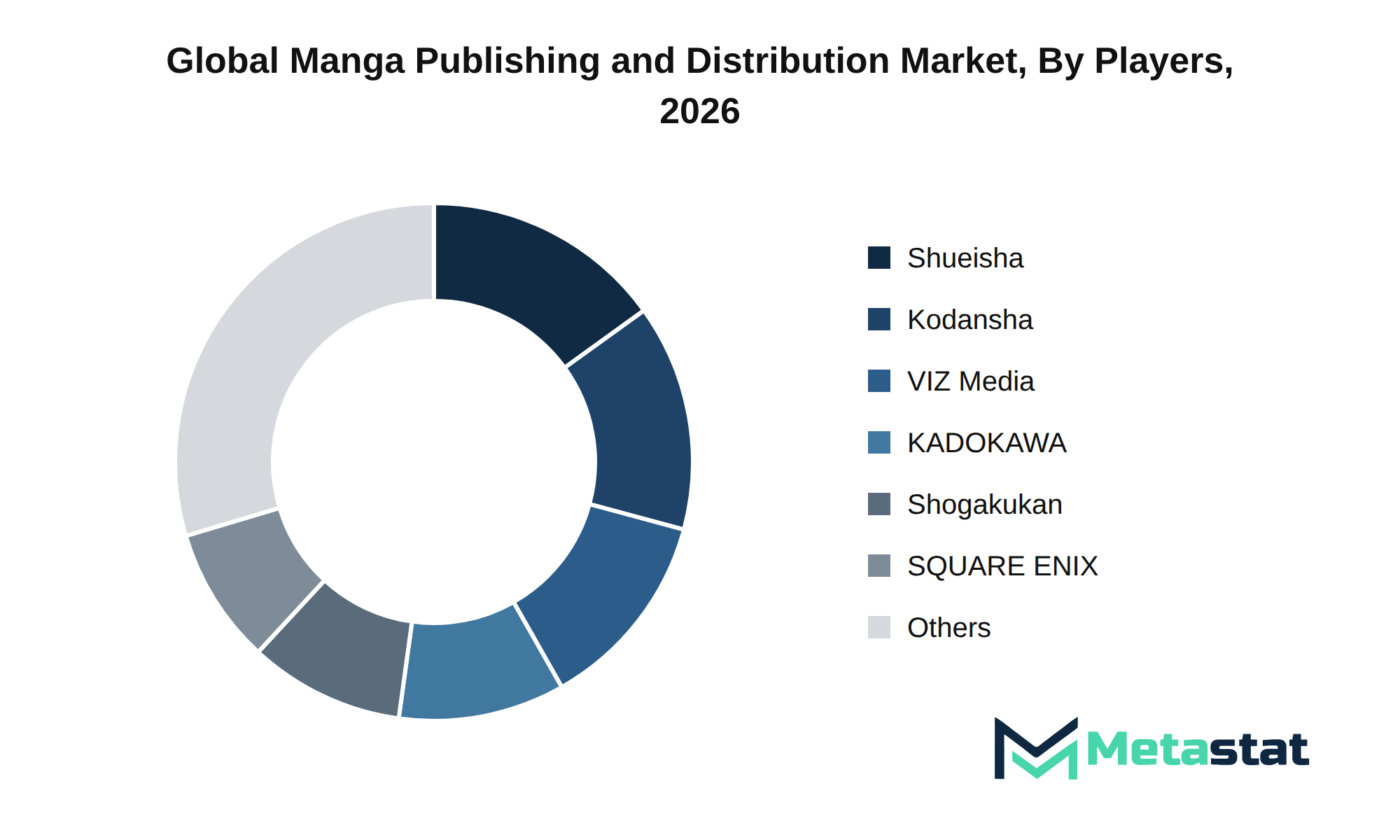
The Manga Publishing and Distribution market exhibits a dynamic competitive environment, shaped by the presence of several key players. Major companies like Shueisha Inc, Kodansha Ltd, and Shogakukan Inc engage in strategic consolidation through mergers and acquisitions to enhance market share and operational efficiency.
Players including KADOKAWA CORPORATION and SQUARE ENIX CO, LTD focus on product differentiation and R&D pipelines to create unique offerings that appeal to diverse demographics within the market. Digital innovations and proprietary technology have become critical for sustaining competitive advantages, with VIZ Media, LLC and Hakusensha, Inc investing heavily in these areas.
The relationship between customer retention strategies and brand equity dynamics significantly influences purchasing behaviors. Companies like Akita Publishing Co, Ltd and Futabasha Publishers Ltd emphasize creating loyal customer bases through subscription models and exclusive content access.
Joint ventures and cross-industry partnerships among players like Shinchosha Publishing Co, Ltd and Houbunsha Co, Ltd further enhance the market's value chain integration, increasing procurement leverage. The increasing threat of new entrants compels established firms to focus on defensive imperatives and strategic growth vectors, ensuring their position within the evolving landscape of the Manga Publishing and Distribution market.
Market size is forecast to rise from USD 9,247 million in 2025 to over USD 30,957.6 million by 2033. The base case scenario anticipates a steady growth trajectory with a compound annual growth rate (CAGR) of 16.3%. Potential bull case scenarios envision accelerated adoption and heightened consumer engagement, leading to even stronger growth outcomes. Conversely, bear case scenarios consider adverse economic conditions and shifts in consumer preferences that could hinder market expansion.
The Manga Publishing and Distribution market reflects ongoing structural changes influenced by macroeconomic factors, evolving consumer behavior, and advancements in technology. The increasing integration of digital platforms reshapes consumption patterns, significantly affecting demand dynamics. Organizations prioritize investments in next-generation technology to enhance user experiences and optimize distribution channels. Enhanced capabilities in digital delivery promote greater accessibility, particularly in emerging markets.
Regulatory frameworks evolve to support the industry's growth while addressing compliance challenges. Anticipated regulatory milestones will guide operational practices, ensuring a focus on sustainability and ethical considerations. Companies that effectively navigate this landscape position themselves for long-term success and competitiveness.
Geopolitical realignments and shifting trade corridors influence the global supply chain, impacting resource availability and distribution efficiency. Strategic capital allocation toward infrastructure development and innovative content creation strengthens resilience in the market. Identifying and addressing unmet consumer needs presents significant white-space opportunities, enabling companies to capture high-growth segments and strengthen their market presence.
Executive-level strategic imperatives emphasize the importance of defensive roadmaps to mitigate risks associated with economic fluctuations and industry maturation. By focusing on future growth recommendations, stakeholders in the Manga Publishing and Distribution market adapt to evolving market demands while ensuring sustained profitability.
The report strategically identifies and profiles the key market players and analyses their core competencies in each sub-segment of the Manga Publishing and Distribution market.
Report Attributes | Details |
Study Period | 2021-2033 |
Base Year | 2025 |
Estimated Year | 2026 |
Forecast Period | 2026-2033 |
Historical Period | 2021-2025 |
Growth Rate | CAGR 16.3% from 2026 to 2033 |
Revenue Unit | USD million |
Segmentation | By Format, Target Demographic, Monetization Model, and Region |
By Region | North America (By Format, Target Demographic, Monetization Model, and Country)
|
Europe (By Format, Target Demographic, Monetization Model, and Country)
| |
Asia Pacific (By Format, Target Demographic, Monetization Model, and Country)
| |
South America (By Format, Target Demographic, Monetization Model, and Country)
| |
Middle East and Africa (By Format, Target Demographic, Monetization Model, and Country)
|
Find answers to common questions about this report
The Manga Publishing and Distribution market size was valued at USD 9,247 million in 2025, according to the Metastat Insights study.
The Manga Publishing and Distribution market is projected to grow at a CAGR of 16.3% during the forecast period from 2026 to 2033.
The North America Manga Publishing and Distribution market size is estimated to reach USD 4,953.2 million by 2033.
Digital Manga leads the Manga Publishing and Distribution market, with a projected value of USD 17,336.3 million by 2033. This segment's growth reflects a significant increase in consumer preference for digital formats over traditional print.
Key drivers for the Manga Publishing and Distribution market include rapid digital transformation, increasing smartphone penetration, and enhanced internet connectivity. These factors expand content accessibility, attract younger audiences, and increase competition among publishers, ultimately driving growth and innovation in the market.
Regulatory challenges complicate compliance efforts for publishers, increasing operational costs and deterring market participants. Inflationary pressures raise material and distribution prices, while macroeconomic headwinds, including currency fluctuations and supply chain disruptions, negatively affect profitability and international sales. These factors collectively limit the growth potential of the Manga Publishing and Distribution market.
Increasing smartphone penetration and internet connectivity enhance access to digital manga, attracting younger audiences who prefer these formats. Technological advancements enable innovative distribution models, including subscription access, optimizing revenue streams and improving user engagement. These factors drive product adoption in the Manga Publishing and Distribution market.
The Manga Publishing and Distribution market is estimated to reach a valuation of USD 30,957.6 million by 2033.
Key players in the Manga Publishing and Distribution market include Shueisha Inc, Kodansha Ltd, Shogakukan Inc, KADOKAWA CORPORATION, VIZ Media, LLC, Hakusensha, Inc, and Yen Press, LLC.
Digital manga is projected to grow at a compound annual growth rate of 20% through 2033, reflecting the increasing consumer preference for digital formats.
The analysts below cover Consumer Goods research at Metastat Insights.
LEAD ANALYST
Utkarsh Khirodkar is a Lead Market Research Analyst at MetaStat Insight, specializing in market intelligence, technology sector assessments, and competitive strategy.
Most industry reports on warehouse automation bundle autonomous mobile robots and fixed conveyor installations into the same top-level numbers, which complicates advisory work. This study split the market cleanly by payload tiers, navigation technology, and fleet management software layers. The regional forecast for Western Europe gave our team defensible adoption benchmarks when evaluating capital allocation for logistics clients, saving us days of secondary data scrubbing.
Analyzing the transition from natural gas to green hydrogen in iron ore reduction requires realistic infrastructure timelines. Meta stat insight supplied a detailed regional assessment of DRI plant conversion costs and scrap metal availability in North America and Western Europe. Their report carefully examined pellet quality specs and electrical grid access constraints without making oversimplified market assumptions. The research material served as a practical reference during internal technology roadmap discussions.
Integrating zero-trust access controls across legacy electronic health record systems involves complex compliance overhead. Team produced an analysis that clearly separated identity governance and administration tools from privileged access management platforms. Their evaluation of HIPAA and GDPR compliance features across cloud native solutions gave our architecture group clear baseline criteria. The custom data request regarding biometric authentication adoption in hospital networks was returned promptly with clear documentation.
Explore related market intelligence reports worth reading alongside this one.