
LEAD ANALYST
Utkarsh Khirodkar is a Lead Market Research Analyst at MetaStat Insight, specializing in market intelligence, technology sector assessments, and competitive strategy.

Men's Western Shirts Market Size, Share, By Product Type (Denim Western Shirts, Chambray Western Shirts, Flannel Western Shirts, and Others), By Material (Cotton, Denim, Polyester, Blended Fabrics, and Others), By Price Tier (Value, Mid-range, Premium, and Luxury), By Distribution Channel (Online Retail, E‑commerce, Specialty Western Wear Stores, Departmental Stores, Multi‑brand Stores, and Brand Flagship Stores), Industry Analysis, Growth, Trends, and Forecast, 2026-2033
Report ID
MSI-4660
Published
April, 2026
Updated
Pages
313 Pages
Format
Report Details
Choose Your License
Men's Western Shirts Market
The Global Men's Western Shirts market size was valued at USD 973 million in 2025 and projected to grow at a CAGR of 6.2% during the forecast period, reaching USD 1,573.4 million by 2033.
North America holds 49.1% of the global market in 2025, with the U.S. leading the regional market.
Denim Western Shirts segment accounts for a market share of 34.6% in 2025.
Key trends driving growth include workplace casualization and hybrid office norms supporting business-casual shirt usage, along with the acceleration of online-led and omnichannel apparel retail, which is increasing style and fit discovery at scale.
Opportunities include sustainable fabrics, traceable cotton, and recycled blends aligned with brand ESG roadmaps and premiumization
Key insight: Style versatility and retail digitization shape growth momentum, while sustainability and personalization redefine competitive advantage in the Global Men’s Western Shirts market.
The Global Men's Western Shirts market is moving beyond traditional product boundaries, with design intent, cultural relevance, and supply chain agility becoming stronger value drivers than volume-led expansion alone. Over the forecast period, men's western shirts will increasingly serve as style statements shaped by regional preferences, digital influence, and rising expectations around fit, craftsmanship, and fabric quality.
Manufacturers will place greater emphasis on focused design narratives rather than broad seasonal themes. Stitch detailing, collar construction, fabric blends, and trim elements will be refined to match distinct consumer groups, ranging from professionals seeking polished casualwear to younger buyers drawn to retro-inspired silhouettes with contemporary finishes. Shorter production cycles will support limited runs, faster feedback integration, and tighter inventory control.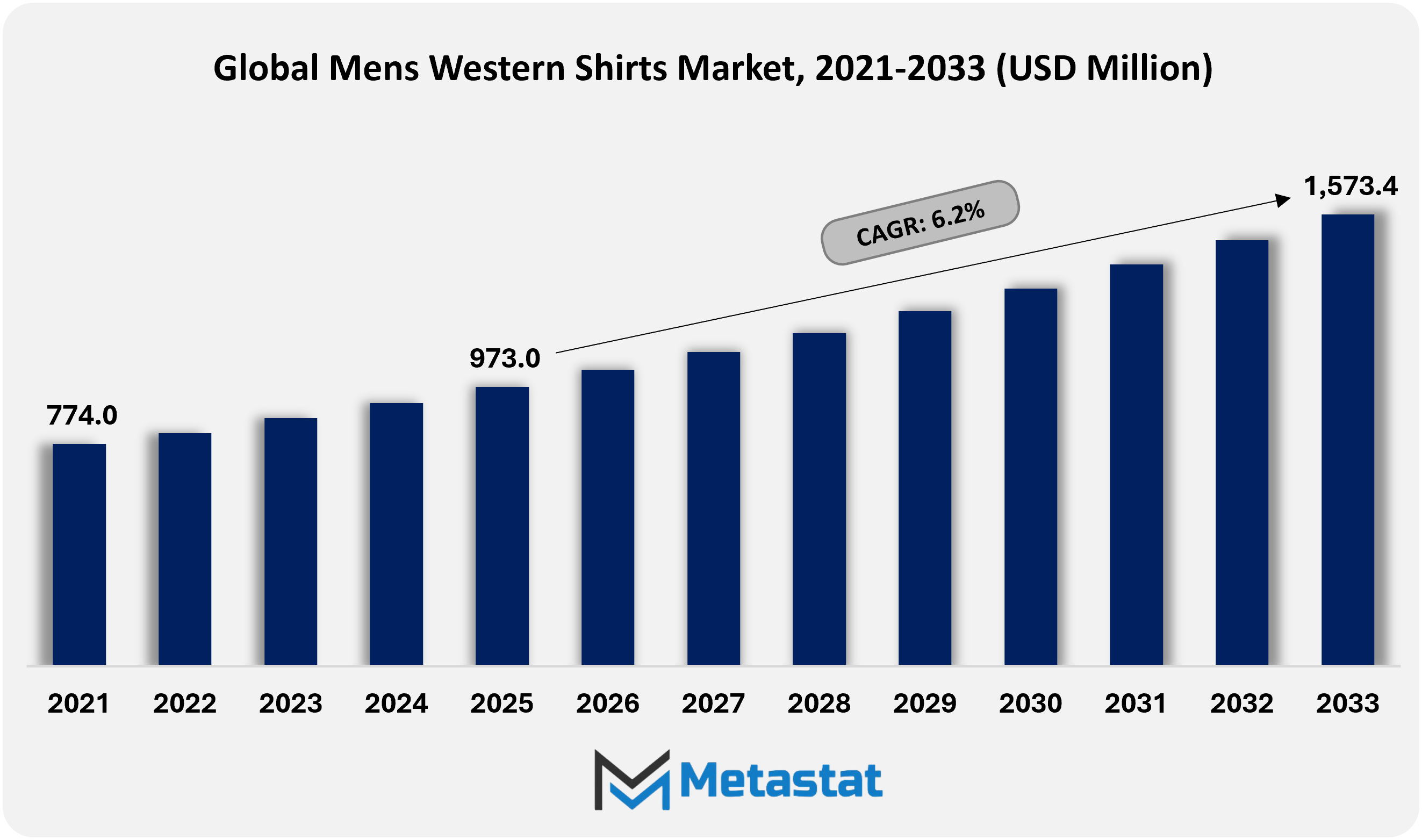
Workplace casualization and hybrid office norms supporting business-casual shirt usage.
Workplace environments are continuing to shift toward flexible schedules and hybrid office formats, supporting steady demand for polished yet comfortable apparel. The Global Men's Western Shirts market benefits from rising preference for business-casual dressing, where structured shirts meet professional expectations while offering day-long comfort, versatility, and repeat wear across varied workplace settings.
Acceleration of online-led and omnichannel apparel retail increasing style and fit discovery at scale
Digital retail expansion is improving product visibility through advanced sizing tools, richer merchandising, and data-led personalization. The Global Men's Western Shirts market is gaining momentum from omnichannel models that allow seamless movement between stores and digital platforms, supporting better purchase decisions, broader style discovery, and stronger access across urban and semi-urban consumer groups.
Cotton and yarn price volatility pressuring sourcing costs and retail pricing stability
Raw material cost fluctuations continue to influence production planning and supplier negotiations. The Global Men's Western Shirts market faces margin pressure from volatile cotton and yarn prices, pushing brands toward sourcing diversification, efficiency-led manufacturing, and disciplined pricing strategies to protect profitability without compromising fabric quality.
High return rates and markdown intensity in online apparel retail impacting realized margins
Rapid growth in online apparel retail brings operational pressure linked to size mismatches and style-based returns. The Global Men's Western Shirts market faces realized margin pressure from elevated return volumes and frequent discounting, leading brands to invest in fit technology, sharper product descriptions, and stronger demand forecasting.
Sustainable fabrics, traceable cotton, and recycled blends aligned with brand ESG roadmaps and premiumization
Sustainability-led product development is shaping future portfolio strategy. The Global Men's Western Shirts market can unlock premium positioning through traceable cotton, recycled fiber blends, and transparent sourcing practices, supporting brand ESG goals while attracting consumers seeking durability, ethical sourcing, and long-term wardrobe value.
The Global Men's Western Shirts market is segmented by Product Type, Material, Price Tier, and Distribution Channel.
Denim Western Shirts segment is estimated at USD 357.5 million in 2026 and is projected to reach USD 534.6 million by 2033, at a CAGR of 5.9% during the forecast period.
Denim Western Shirts in the Global Men's Western Shirts market will preserve gaining preference owing to durability, dependent enchantment, and long-time period usability. Future demand will be formed by means of evolving casual work cultures, sustainable denim processing, and top-class stitching requirements. Manufacturers will emphasize consolation-centered fits, eco-conscious washes, and adaptable designs appropriate for urban lifestyles.
Chambray Western Shirts segment is estimated at USD 154.9 million in 2026 and is projected to reach USD 252.1 million by 2033, at a CAGR of 7.2% during the forecast period.
Chambray Western Shirts are projected to witness consistent traction in the Global Men's Western Shirts market owing to lightweight texture and delicate look. Growing inclination closer to breathable fabric and all-season put-on will influence production trends. Brands will put money into softer yarn blends, muted coloration palettes, and versatile styling suited for contemporary professional environments.
Flannel Western Shirts segment is estimated at USD 258.3 million in 2026 and is projected to reach USD 381.1 million by 2033, at a CAGR of 5.7% during the forecast period.
Flannel Western Shirts will preserve relevance across colder areas owing to insulation properties and comfort-pushed layout. Within the Global Men's Western Shirts market, future expansion will align with layered fashion and out of doors-inspired garb. Improved fabric treatments, shade balance, and modern-day styles will increase enchantment among fashion-aware male customers.
Others segment is estimated at USD 261.5 million in 2026 and is projected to reach USD 405.6 million by 2033, at a CAGR of 6.5% during the forecast period.
Other product classes will aid innovation-led increase throughout the Global Men's Western Shirts market. Experimental material textures, hybrid silhouettes, and place-specific designs will form upcoming collections. Designers will discover overall performance-driven materials and minimalistic detailing to address rising style sensibilities even as retaining Western-stimulated aesthetics.
Cotton segment is projected to reach USD 692.1 million by 2033, at a CAGR of 6% during the forecast period.
Cotton cloth will continue to be a dominant contributor across the Global Men's Western Shirts market owing to breathability and luxury benefits. Future production will awareness on organic sourcing, decreased water consumption, and better softness. Market players will align cotton offerings with sustainability benchmarks and long-put on overall performance expectancies.
Denim segment is projected to reach USD 463.4 million by 2033, at a CAGR of 6% during the forecast period.
Denim fabric usage will make bigger step by step in the Global Men's Western Shirts market pushed by way of sturdiness and timeless appeal. Technological advancements in weaving strategies and fiber blends will enhance flexibility and decrease fabric weight. Demand will desire delicate finishes appropriate for both informal and semi-formal dressing requirements.
Polyester segment is projected to reach USD 130.7 million by 2033, at a CAGR of 6.8% during the forecast period.
Polyester fabrics will advantage strategic significance throughout the Global Men's Western Shirts market owing to wrinkle resistance and price efficiency. Future adoption will center on recycled polyester versions and moisture-manage improvements. Manufacturers will combine polyester with consolation-centered engineering to satisfy rising overall performance garb expectations.
Blended Fabrics segment is projected to reach USD 219.2 million by 2033, at a CAGR of 7.9% during the forecast period.
Blended Fabrics will play a key position in balancing comfort, durability, and affordability inside the Global Men's Western Shirts market. Innovation will prioritize cloth blends delivering stepped forward breathability and sturdiness. Market expansion will mirror developing acceptance of hybrid substances desirable for extended each day wear.
Others segment is projected to reach USD 68 million by 2033, at a CAGR of 4.2% during the forecast period.
Other substances will support diversification techniques inside the Global Men's Western Shirts market. Development will include linen blends, stretch fabric, and weather-adaptive textiles. Such materials will deal with area of interest demand segments in search of practical cost mixed with Western styling affects.
Value segment is projected to reach USD 521.7 million by 2033.
Value-priced offerings will drive quantity growth across the Global Men's Western Shirts market by addressing value-touchy purchaser segments. Future techniques will emphasize efficient sourcing, simplified designs, and scalable production. Brands will hold first-class benchmarks whilst enhancing accessibility via competitive pricing structures.
Mid-range segment is projected to reach USD 665.7 million by 2033.
Mid-variety pricing will constitute balanced growth inside the Global Men's Western Shirts market owing to growing disposable income and high-quality clothing. Focus will shift in the direction of subtle finishes, progressed cloth sturdiness, and emblem differentiation. Market contributors will goal aspirational consumers looking for value with more suitable fashion credibility.
Premium segment is projected to reach USD 286.5 million by 2033.
Premium segments will extend step by step inside the Global Men's Western Shirts market driven by craftsmanship consciousness and material pleasant. Future collections will function tailored fits, superior fabric treatments, and confined-version designs. Consumer choice will favor brands presenting exclusivity blended with long-term wear fee.
Luxury segment is projected to reach USD 99.4 million by 2033.
Luxury classes will witness selective growth across the Global Men's Western Shirts market, supported with the aid of emblem history and superior detailing. Future demand will reflect interest in bespoke designs, artisanal production techniques, and excessive-grade substances. Market positioning will prioritize exclusivity and delicate Western aesthetics.
Online Retail/E‑commerce segment is projected to grow at a CAGR of 8.8% during the forecast period.
Online Retail channels will reshape accessibility across the Global Men's Western Shirts market via wider product visibility and virtual engagement. Future enlargement will depend on advanced length-matching equipment, virtual styling aid, and efficient logistics. E-trade systems will enhance consumer confidence through transparent product information.
Specialty Western Wear Stores segment is projected to grow at a CAGR of 4.7% during the forecast period.
Specialty Western Wear Stores will preserve relevance in the Global Men's Western Shirts market by supplying curated collections and professional steerage. Growth will stem from experiential retail formats and personalised service. Store layouts will increasingly more highlight background styling mixed with modern-day fashion preferences.
Departmental/Multi‑brand Stores segment is projected to grow at a CAGR of 5.3% during the forecast period.
Departmental and Multi-emblem Stores will support emblem discovery across the Global Men's Western Shirts market. Future performance will depend upon strategic logo placement, seasonal assortments, and competitive pricing. Such formats will entice clients seeking range and consolidated shopping experiences.
Brand Flagship Stores segment is projected to grow at a CAGR of 6.4% during the forecast period.
Brand Flagship Stores will support emblem identification throughout the Global Men's Western Shirts market through immersive retail reviews. Future investments will emphasize storytelling, one-of-a-kind collections, and consumer engagement. These stores will act as innovation showcases reinforcing long-time period brand positioning.
Based on geography, the Global Men's Western Shirts market is divided into North America, Europe, Asia-Pacific, South America, Middle East, and Africa.
North America Men's Western Shirts Market is set to expand at a CAGR of 6.2% within the forecast period, reaching a market size (TAM) of USD 717.2 million by the end of 2033.
North America drives the Global Men's Western Shirts market through robust top rate casual put on connected to way of life branding and high consistent with-capita apparel spending.
North America supports market momentum through installed retail networks and rapid adoption of seasonal Western blouse collections across city purchasers.
Europe will witness steady growth over the forecast period, supported by rising preference for heritage-inspired apparel, premium casualwear, and quality-driven fabric choices.
Asia Pacific offers foremost opportunity for the Global Men's Western Shirts market as growing disposable income and growing desire for Western-stimulated everyday style.
Asia Pacific affords an expansion scope pushed by way of rapid e-trade penetration and youngsters-led low-cost branded Western shirts.
Across Middle East, Africa, and South America, the Global Men's Western Shirts market shows sluggish traction supported by using urbanization, exposure to global fashion developments, and expanding mid-profits consumer companies.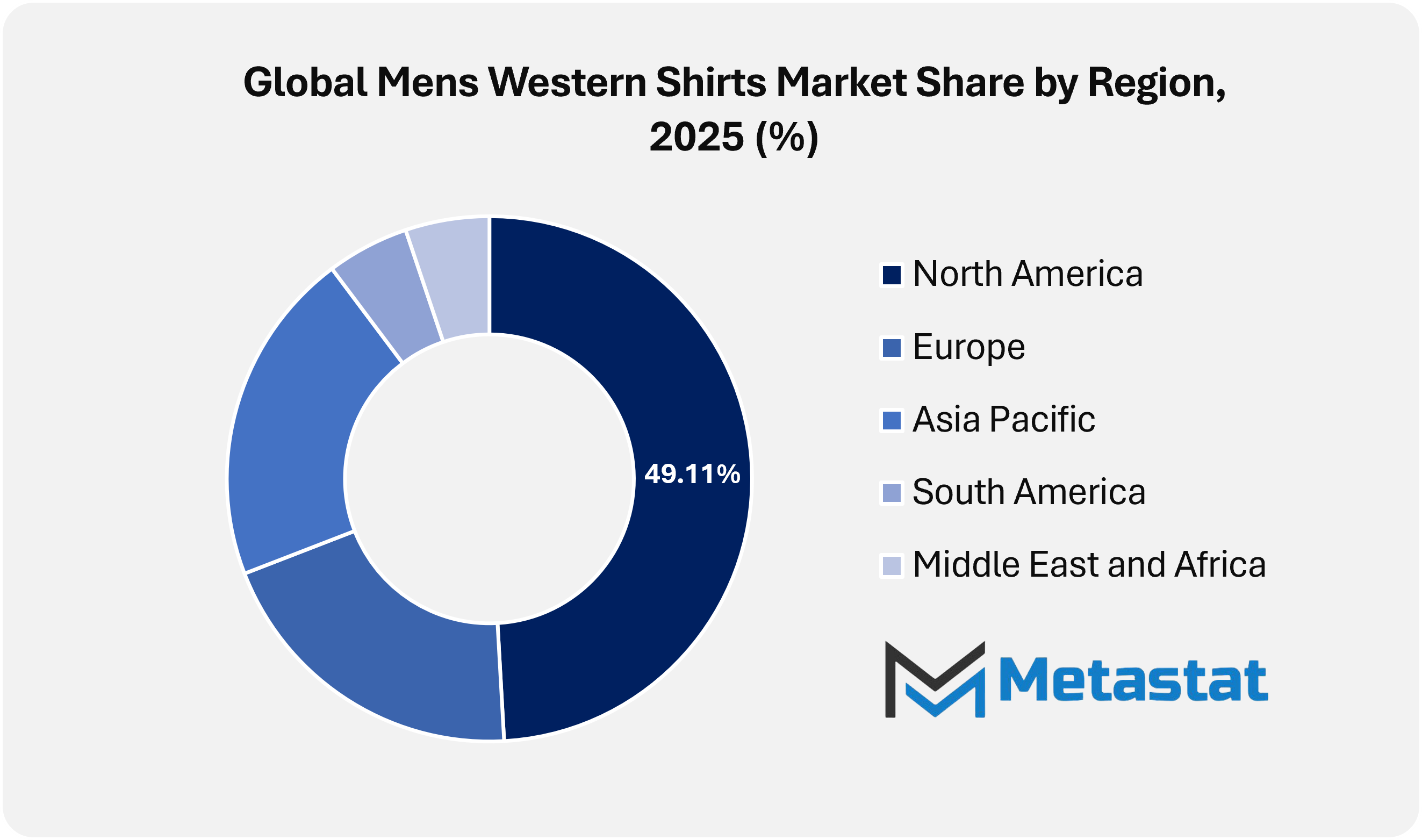
The Global Men's Western Shirts market continues to expand as traditional western styling merges with modern casual fashion. Once concentrated in ranch wear and regional apparel use, western shirts have moved into everyday wardrobes, supported by growing interest in rugged aesthetics, heritage-inspired design, and functional comfort. Consumers increasingly prefer durable fabrics, distinctive stitching, snap buttons, and versatile silhouettes suited to both casual and semi-formal settings. Brands are refining fit, fabric breathability, and styling details to remain relevant while preserving authentic western design identity.
Major global fashion retailers such as Zara, H & M Hennes & Mauritz AB, Fast Retailing Co., Ltd. (UNIQLO), Gap Inc., Marks and Spencer Group plc, and Next plc play a key role in making western-style shirts accessible to a wider consumer base. Gap Inc. banners such as Old Navy and Banana Republic further strengthen category visibility across value and premium retail positioning.
Premium and heritage-driven brands such as Ralph Lauren Corporation, Levi Strauss & Co., PVH Corp., Brooks Brothers Group, Inc., Hugo Boss AG, Prada S.p.A., and Abercrombie & Fitch Co. focus on craftsmanship, fabric quality, and brand presentation. Their western shirt offerings often balance classic silhouettes with refined finishes, appealing to consumers seeking elevated casualwear. These players continue to influence style direction while reinforcing western shirts as enduring fashion staples rather than short-term seasonal trends.
Authentic Western and workwear brands together with Wrangler, Lee (a Kontoor Brands Company), Ariat International, Inc., Ely Cattleman, Cowboy Hardware, Stetson, Cinch Jeans, Roper Apparel & Footwear, Tin Haul, Berne Apparel, Starr Western Wear, Cody James, Tractor Supply Company, Wolverine, and Scully Sportswear, Inc. Continue to be deeply related to Western tradition. Their collections emphasize durability, practical layout, and conventional detailing, resonating strongly with loyal customer bases. These brands will benefit from sustained demand for realistic clothing that carries cultural fee and ordinary usability.
Regional and specialty players such as Aditya Birla Fashion and Retail Limited, J.Crew Group, Inc., American Eagle Outfitters, Inc., and niche western retailers add depth to the market by catering to specific style preferences and regional tastes. Their presence strengthens market breadth and encourages innovation in fits, fabrics, and design interpretation across consumer groups. Together, international style houses and Western-centered brands will shape a market that balances heritage, consolation, and present-day enchantment, making sure regular Men’s Western shirts worldwide.
Market size is forecast to rise from USD 973 million in 2025 to over USD 1,573.4 million by 2033.
The Global Men's Western Shirts market will witness a shift in brand narratives from overt fashion positioning toward understated authenticity. Labels will place greater emphasis on origin stories, fabric sourcing standards, and tailoring philosophy, while cross-border collaborations with designers and textile innovators strengthen product differentiation. Over time, competitive advantage will be shaped less by scale alone and more by relevance, adaptability, and the ability to convert evolving consumer signals into commercially successful products.
This research report categorizes the Men's Western Shirts market based on key segments and regions, forecasts revenue growth, and analyses trends in each submarket. The report analyses the key growth drivers, opportunities, and challenges influencing the Men's Western Shirts market. Recent market developments and competitive strategies such as expansion, product launch, partnership, merger, and acquisition have been included to draw the competitive landscape in the market.
The report strategically identifies and profiles the key market players and analyses their core competencies in each sub-segment of the Men's Western Shirts market.
|
Report Attributes |
Details |
|
Study Period |
2021-2033 |
|
Base Year |
2025 |
|
Estimated Year |
2026 |
|
Forecast Period |
2026-2033 |
|
Historical Period |
2021-2025 |
|
Growth Rate |
CAGR 6.2% from 2026 to 2033 |
|
Revenue Unit |
USD Million |
|
Sales Volume Unit |
Million Units |
|
Segmentation |
By Product Type, Material, Price Tier, Distribution Channel, and Region |
|
By Region |
North America (By Product Type, Material, Price Tier, Distribution Channel, and Country)
|
|
Europe (By Product Type, Material, Price Tier, Distribution Channel, and Country)
|
|
|
Asia Pacific (By Product Type, Material, Price Tier, Distribution Channel, and Country)
|
|
|
South America (By Product Type, Material, Price Tier, Distribution Channel, and Country)
|
|
|
Middle East and Africa (By Product Type, Material, Price Tier, Distribution Channel, and Country)
|
Find answers to common questions about this report
Top players operating in the Men's Western Shirts industry include Zara, H & M Hennes & Mauritz AB, Fast Retailing Co., Ltd. (UNIQLO), Gap Inc., PVH Corp., and Old Navy.
Global Men's Western Shirts market is estimated to reach USD 1,573.4 million by 2033.
The Denim Western Shirts is the leading type of segment in the Global market.
Cotton and yarn price volatility pressuring sourcing costs and retail pricing stability will hamper the market growth within the forecast period.
North America region dominates the market.
Workplace casualization and hybrid office norms supporting business-casual shirt usage and Acceleration of online-led and omnichannel apparel retail increasing style and fit discovery at scale are key driving factors, boosting the market.
The Metastat Insights analysis shows that the North America Men's Western Shirts market size is estimated to be USD 717.2 million by 2033.
The Global Men's Western Shirts market is expected to grow at a CAGR of 6.2% over the forecast period (2026-2033).
The Metastat Insights study shows that the Global Men's Western Shirts market size was USD 973 million in 2025.
The analysts below cover Consumer Goods research at Metastat Insights.
LEAD ANALYST
Utkarsh Khirodkar is a Lead Market Research Analyst at MetaStat Insight, specializing in market intelligence, technology sector assessments, and competitive strategy.
Last Updated: August, 2026
Scaling antibody-drug conjugate manufacturing hinges on contract manufacturing availability for high-potency active ingredients. The MetaStat Insight analysis looked closely at global cleanroom slot constraints, bioconjugation batch failure rates, and supply chain redundancies between the US, Europe, and India. The supplier capability matrix proved genuinely useful for our team when mapping secondary source options across our clinical pipeline.
Floating offshore wind feasibility relies heavily on specialized installation vessel availability and port crane limits, which most broad renewable energy forecasts ignore. The report delivered a thorough analysis of dry dock capacity, mooring chain supply constraints, and raw material pricing trends for deepwater anchor installations. It served as a solid independent sanity check for our offshore project capital expenditure assumptions.
Assessing commercial microgrid software adoption requires looking past top-level installation numbers and examining utility interconnection queues. The research provided verifiable data on average permitting timelines, tariff structures, and battery storage integration costs across regional utility territories. That grounded perspective was valuable for our team when building five-year demand projections for industrial microgrid controllers.
Explore related market intelligence reports worth reading alongside this one.