
LEAD ANALYST
Utkarsh Khirodkar is a Lead Market Research Analyst at MetaStat Insight, specializing in market intelligence, technology sector assessments, and competitive strategy.

Mexico Pet Food Market Size, Share, By Type (Dry Pet Foods, Wet Pet Foods, Veterinary Diets and Treats and Snacks), By Ingredient Type (Animal-Derived, Plant-Derived and Cereals and Cereal Derivatives), By Distribution Channel (Supermarkets and Hypermarkets, Specialty Stores and Online Channels), By Pet Type (Dogs, Cats and Other Pets), Industry Analysis, Growth, Trends, and Forecast, 2026-2033
Report ID
MSI-5167
Published
September, 2026
Pages
263 Pages
Format
Historical
Base year
Forecast
Forecast period
Report Details
Choose Your License
Mexico Pet Food Market
The Mexico Pet Food market was valued at USD 3,645.9 million in 2025 and is projected to reach USD 5,639.7 million by 2033, growing at a CAGR of 5.6% over the forecast period.
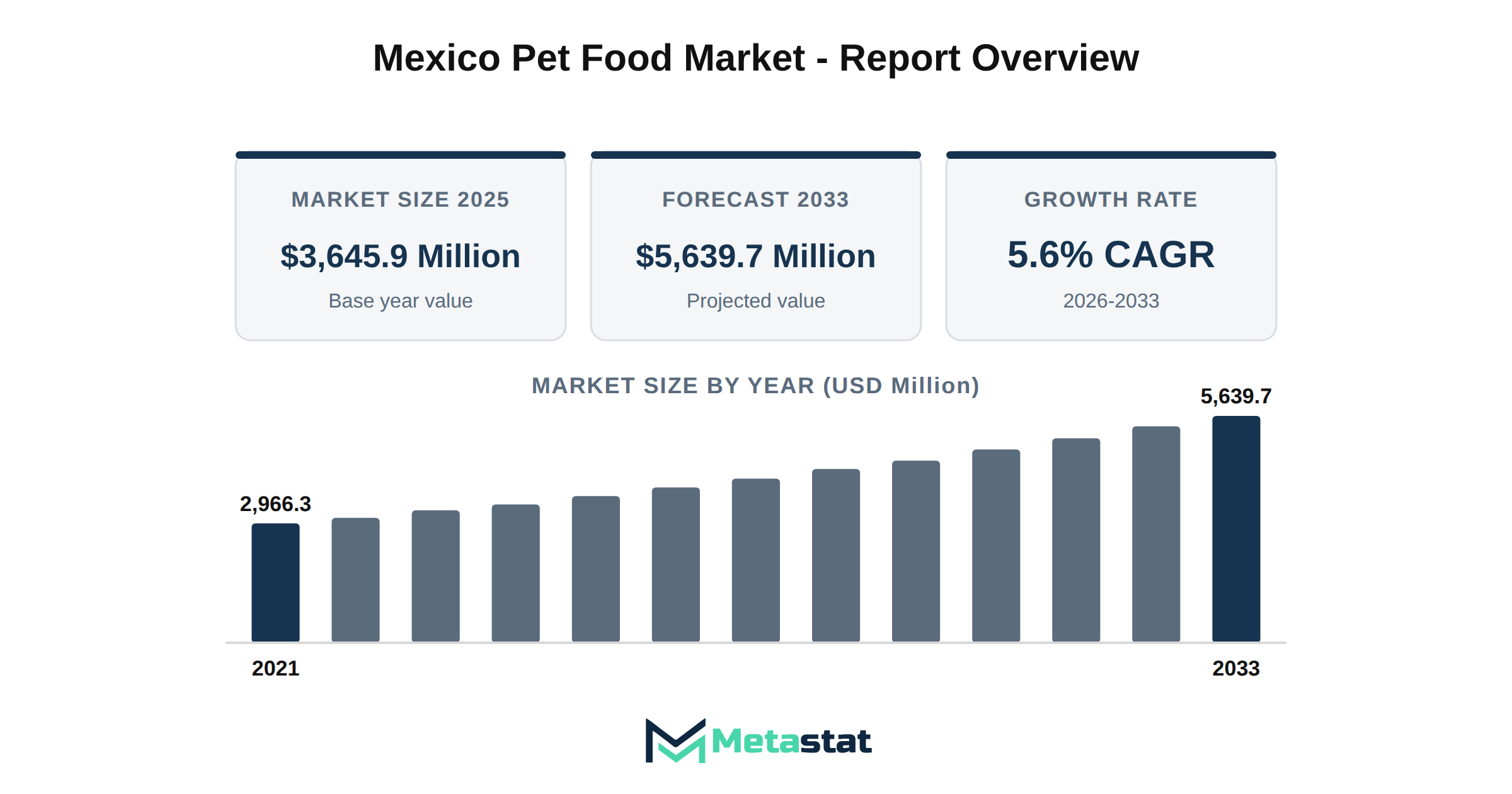
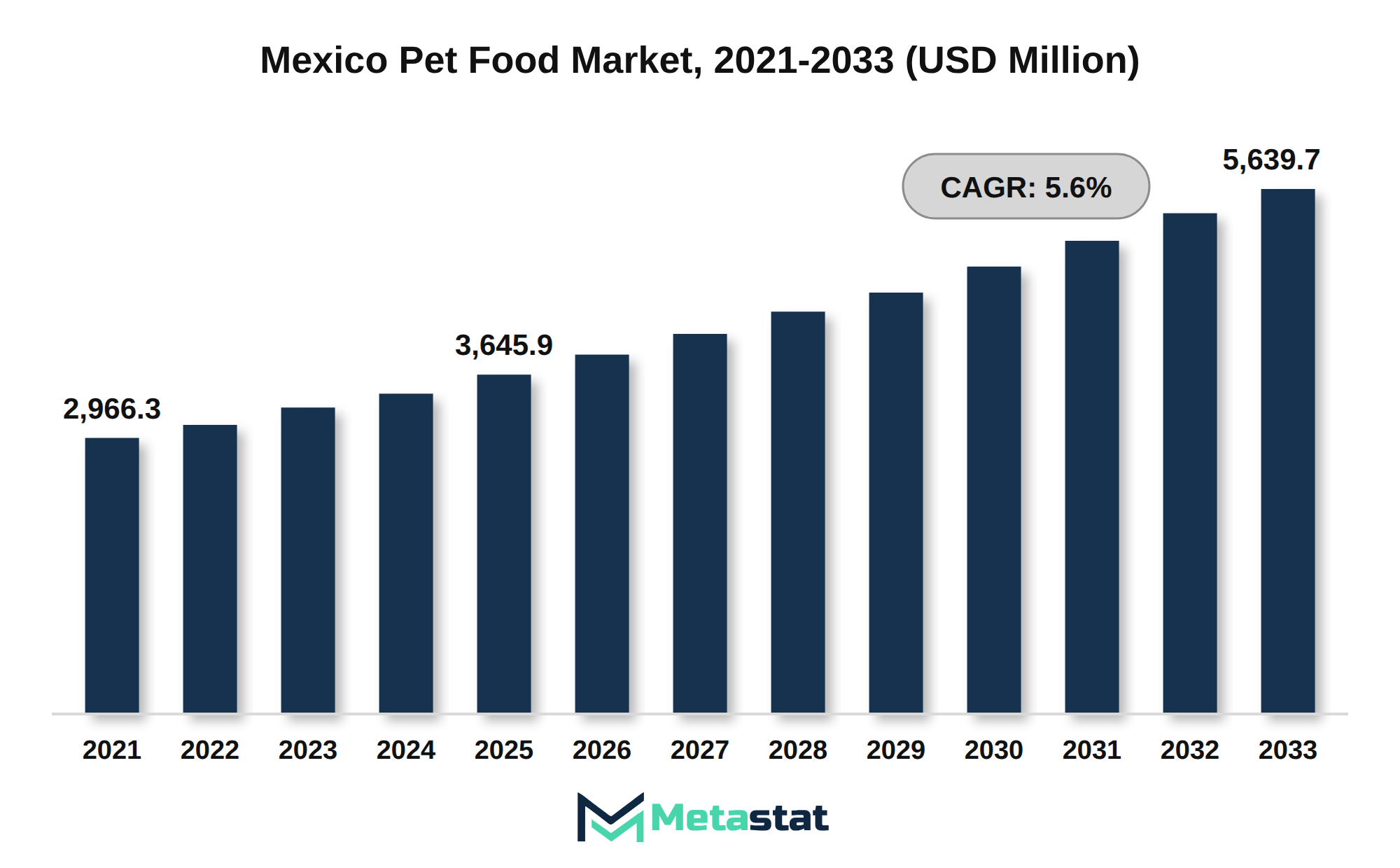
The Mexico Pet Food market demonstrates significant growth potential, with a base value of USD 3,645.9 million in 2025. The market is projected to reach USD 5,639.7 million by 2033, reflecting a compound annual growth rate (CAGR) of 5.6% during the forecast period from 2026 to 2033. Historical data indicates a steady upward trajectory, starting from USD 2,966.3 million in 2021 and progressing to USD 3,440.5 million in 2024. This growth trajectory highlights increasing consumer demand for pet food products across various segments.
The market is characterized by diverse segments, including dry pet foods, wet pet foods, veterinary diets, and treats and snacks. Dry pet foods hold the largest share, contributing 57.6% to the overall market revenue. Wet pet foods represent 20.2%, while veterinary diets account for 7.1%, and treats and snacks comprise 15.1%. The growth of the market is driven by evolving consumer preferences toward premium and specialized pet food options, particularly in the dry and wet segments.
Investment in research and development (R&D) plays a critical role in enhancing product offerings within the Mexico Pet Food market. Companies focus on developing innovative ingredients and formulations to meet the nutritional needs of pets while considering factors including sustainability and health benefits. Increasing awareness of pet health and wellness contributes to rising demand for high-quality pet food, further stimulating market growth.
Distribution channels influence market dynamics significantly. Supermarkets and hypermarkets dominate the distribution landscape, accounting for a large share of sales. Online channels are gaining traction, driven by the convenience they offer consumers. Specialty stores remain an essential channel, catering to niche markets and promoting specialized products. The strategic allocation of resources toward these distribution channels enhances accessibility and visibility of products, ultimately supporting market expansion.
The Mexico Pet Food market faces various dynamics that influence its progression. Regulatory compliance remains essential, with stringent standards governing production and safety. Companies align with these regulations to ensure product quality and maintain consumer trust. Geopolitical risks affect supply chains, necessitating effective strategies to mitigate potential disruptions.
Research and development trajectories continue to shape the market, with innovation driving product differentiation. Next-generation innovations, including personalized diets and functional pet foods, enhance customer engagement and expand market reach. Sustainable transformation remains a critical focus, with companies increasingly adopting practices that promote environmental responsibility.
Decarbonization efforts are becoming integral to operational strategies. Brands are exploring circular economy dynamics, emphasizing waste reduction and sustainable sourcing. The supply chain landscape has evolved, with logistics architecture adapting to meet consumer demands for fast, reliable delivery. Sourcing strategies now prioritize local suppliers to mitigate risks associated with global supply disruptions.
Market fragmentation presents opportunities for niche players to thrive. M&A dynamics influence competitive positioning, with strategic acquisitions enhancing product portfolios and expanding market access. The value chain reflects a shift towards more collaborative relationships among stakeholders, enhancing efficiency and responsiveness to market changes.
Capital allocation focuses on technology investments that streamline operations and improve customer experiences. Infrastructure investments are crucial for supporting growth, particularly in e-commerce channels. Inflationary pressures impact pricing strategies, with companies adjusting to maintain profitability while remaining competitive in the market.
Currency volatility introduces challenges for international trade, prompting businesses to develop risk management strategies. The future strategic outlook for the Mexico Pet Food market indicates a positive growth trajectory, with companies prioritizing innovation and sustainability driven by key drivers of success. Corporate imperatives center around enhancing customer loyalty and adapting to evolving consumer preferences, ensuring long-term viability in a competitive landscape.
High-value recommendations include investing in R&D to drive innovation and adopting sustainable practices to enhance brand reputation. Companies that navigate these complexities effectively position themselves for success in the evolving Mexico Pet Food market.
The evolving demographic landscape in Mexico significantly influences the growth of the Mexico Pet Food market. An increase in disposable income among younger generations, coupled with the rise of urbanization, leads to increased pet ownership. Younger consumers prioritize companionship and are willing to invest in premium pet food products to ensure their pets receive high-quality nutrition. This trend aligns with shifting consumer behaviors, particularly among millennials and Generation Z, who view pets because family members rather than mere animals.
An aging population contributes to the market's expansion, because older adults often seek the companionship that pets provide. This demographic shift encourages increased spending on pet wellness and nutrition, further driving demand for specialized products including veterinary diets and premium treats. The combination of these demographic factors not only enhances the market's growth trajectory but drives innovation in product offerings, aligning with consumer preferences for quality and sustainability.
The Mexico Pet Food market experiences growth driven by rising urbanization trends. Urban areas typically exhibit higher disposable incomes, leading to increased demand for premium and specialized pet food products. A growing population in urban centers emphasizes convenience and quality, influencing consumers to prioritize nutrition and health when selecting pet food.
Urbanization correlates with changing lifestyles, where pet ownership becomes an integral part of modern living. Urban dwellers seek products that cater to their pets’ health and well-being, resulting in a shift towards premium offerings. This shift creates substantial opportunities for brands focusing on high-quality ingredients and tailored formulations.
Urban pet owners are becoming more informed about pet nutrition, leading to a corresponding rise in demand for products that align with evolving consumer preferences. The Mexico Pet Food market benefits from this trend, reflecting a growing willingness among consumers to invest in premium pet food options that promote overall pet health.
The Mexico Pet Food market encounters significant hurdles due to stringent regulatory requirements and compliance challenges. These regulations impact production processes, requiring companies to invest in advanced technologies and practices to meet standards. Increased scrutiny on product ingredients and safety protocols necessitates additional quality assurance measures, raising operational costs and limiting the ability of smaller players to compete effectively.
Macroeconomic factors, including inflationary pressures, contribute to rising costs associated with raw materials and distribution. These conditions lead to tighter profit margins for many suppliers and manufacturers. In addition, supply chain disruptions caused by geopolitical tensions and resource scarcity present further obstacles, creating uncertainty in sourcing and inventory management. The cumulative effect of these factors results in inhibited growth potential within the market.
The Mexico Pet Food market faces challenges related to skilled labor shortages. A lack of qualified personnel in the pet food industry complicates production efficiency and innovation efforts. Compounding this issue, cultural barriers and regional adoption resistors impede the acceptance of new products and brands, further stalling market penetration and expansion.
The Mexico Pet Food market experiences challenges due to logistics disruptions that affect the supply chain. These disruptions stem from various factors, including geopolitical fragmentation and trade deficits, which result in tariff friction and complicate import and export processes. Suppliers face difficulties in sourcing raw materials, leading to increased costs and potential delays in production. Instability within the supply chain impacts the timely delivery of products to consumers, ultimately affecting sales and revenue potential.
Rising input costs further exacerbate these challenges, driven by manufacturers grappling with fluctuating feedstock and component volatility. This situation compresses pricing strategies, forcing companies to make tough decisions regarding margins and profitability. A robust logistics framework is required to navigate these obstacles effectively, ensuring that products reach consumers without significant interruptions. Addressing these logistics disruptions hinders the growth trajectory of the market and creates inefficiencies that limit competitive positioning.
While companies struggle with logistics challenges, talent retention pressures increase within the workforce. The need for skilled workers in logistics and supply chain management becomes critical, and gaps in workforce capabilities lead to further operational inefficiencies. Addressing these issues is essential for improving the overall resilience of the Mexico Pet Food market and achieving sustainable growth in the face of ongoing challenges.
Emerging regional demands for pet food in Mexico reflect a shift towards healthier and premium products, driven by changing consumer preferences. This demand leads to opportunities for brands to innovate their offerings, focusing on high-quality ingredients and tailored nutrition. While pet owners increasingly prioritize health and wellness, the market benefits from the integration of functional and specialty diets, enhancing growth prospects across various segments.
Technological disruptions contribute significantly to the Mexico Pet Food market, with advancements in production and ingredient sourcing enabling more efficient processes. Digital transformation enables companies to streamline operations and engage with consumers through e-commerce platforms. The rise of online channels shifts purchasing behaviors, creating a significant opportunity for brands to enhance their digital presence and expand market reach.
Sustainability imperatives are increasingly influencing market dynamics in Mexico. Companies aligning with eco-friendly practices gain a competitive edge, appealing to environmentally conscious consumers. The focus on sustainability drives innovation in packaging and ingredient sourcing, creating new partnerships and supply chain strategies that support the market's long-term growth.
Asset life-cycle extensions are becoming crucial in the market, driven by manufacturers optimizing operations and reducing waste. Strategic consolidation through mergers and acquisitions allows for greater resource sharing, enhancing product offerings and operational efficiencies. This consolidation strengthens market positioning, providing opportunities to leverage combined capabilities for product development and distribution.
The Mexico Pet Food market benefits from evolving buying behaviors, with consumers increasingly seeking convenience and quality in their purchases. Digital procurement shifts facilitate this transition, prompting brands to invest in e-commerce and direct-to-consumer strategies. Such adaptations ensure businesses remain competitive while addressing changing consumer preferences, ultimately driving market growth.
The Mexico Pet Food market is segmented based on Type, Ingredient Type, Distribution Channel, and Pet Type.
Valued at USD 2,209.6 million in 2026, the Dry Pet Foods segment is projected to reach USD 3,068 million by 2033, demonstrating a CAGR of 4.8% during the forecast period. Increased pet ownership and rising disposable incomes among consumers significantly drive demand for this segment. Pet owners increasingly prioritize high-quality nutrition for their animals, contributing to an increasing preference for premium dry food options. This trend aligns with growing awareness surrounding pet health and wellness, stimulating expansion within the market.
Technological advancements in formulation and production processes enhance the appeal of dry pet foods. Manufacturers introduce next-generation products featuring improved nutritional profiles and innovative ingredients, catering to the evolving preferences of pet owners. Continuous product evolution, including grain-free options and specialized diets, positions the segment favorably against competitors within the Mexico Pet Food market.
Distribution channels play a critical role in expanding market access. Supermarkets and hypermarkets remain the predominant sales avenues, with projected growth in online channels offering convenient purchasing options for consumers. The shift toward e-commerce reflects broader consumption trends, facilitating a wider reach for dry pet food brands.
Regulatory compliance standards related to pet food safety and quality influence market dynamics. Adherence to these standards is crucial for maintaining consumer trust and brand reputation. Manufacturers invest in certifications to demonstrate commitment to quality and safety, impacting overall cost structures and pricing strategies in the segment.
Supply chain resilience is vital for ensuring consistent availability of raw materials. Sourcing high-quality ingredients, particularly animal-derived components, presents challenges related to pricing volatility and market competition. Enhanced relationships with suppliers and strategic sourcing initiatives contribute to minimizing risks associated with ingredient availability, allowing brands to maintain pricing and margin stability.
Overall, the Dry Pet Foods segment is positioned for sustained growth, underpinned by evolving consumer preferences, technological advancements, and strategic market positioning within the Mexico Pet Food market.
Growth in the Wet Pet Foods segment reflects evolving consumer preferences towards more nutritious and convenient feeding options for pets. Increasing awareness regarding pet health and wellness has prompted manufacturers to innovate and expand their product lines. These developments enhance market penetration and attract new consumers seeking high-quality nutrition for their pets.
The Wet Pet Foods segment is projected to reach USD 1,208.6 million by 2033, at a CAGR of 6.4% during the forecast period. This segment benefits from rising disposable incomes and changing lifestyles, which enable pet owners to purchase premium products. Convenient packaging and diverse flavors further appeal to pet owners, driving continued growth.
Regulatory compliance plays a critical role in shaping product offerings within the market. Manufacturers adhere to stringent safety and quality standards, ensuring that products meet consumer expectations. This compliance builds trust among consumers, contributing to brand loyalty and repeat purchases.
Competition within the Mexico Pet Food market is intense, with numerous players striving to differentiate their products. Innovations in ingredient sourcing and the introduction of alternative protein sources enhance product offerings while addressing consumer demand for sustainable options. Strategic marketing efforts focused on health benefits and premium positioning drive sales.
Growth in the Veterinary Diets segment is driven by increasing awareness of pet health and specific dietary requirements. Pet owners increasingly seek specialized nutrition to manage health issues in their animals, fueling demand for veterinary diets that provide tailored solutions. This shift toward targeted nutrition promotes an expansion of product offerings by manufacturers, enhancing market competitiveness and supporting long-term demand.
The Veterinary Diets segment is projected to reach USD 468.7 million by 2033. Regulatory compliance and certifications play an essential role in this segment, ensuring products meet stringent standards for safety and efficacy. These requirements encourage manufacturers to invest in research and development, leading to product innovations and improvements that strengthen market positioning.
Pricing dynamics remain a critical factor, with premium products commanding higher margins. Suppliers focus on differentiating their offerings through quality and specialized formulations, impacting purchasing decisions among consumers. This emphasis on high-quality ingredients contributes to the segment's consistent growth, because consumers prioritize health benefits over price in veterinary diet selections.
Strategic opportunities arise from increased pet ownership and changing consumer preferences towards higher-quality pet food options. Companies within the Mexico Pet Food market explore white-space opportunities, expanding their portfolios to address unmet consumer demands. While competition intensifies, investment in marketing and brand awareness becomes crucial for capturing this growing segment and enhancing overall market share.
Market interest in the Treats and Snacks segment stems from evolving consumer preferences for high-quality, nutritious options for pets. Increasing awareness of the health benefits associated with these products fuels demand, particularly among pet owners focused on wellness and enrichment. This segment is projected to grow at a CAGR of 6.2% during the forecast period. A key driver of growth includes the rising number of pet ownership and the humanization of pets, leading to greater expenditure on premium treats. Consumers increasingly view these products because an extension of their pets' diets, aligning with trends in human food consumption.
Innovation within the segment contributes significantly to its expansion. Companies invest in product development, introducing various flavors and formulations that cater to specific dietary needs or preferences. This includes options that emphasize natural ingredients or cater to specific pet types, enhancing market appeal. The Treats and Snacks segment benefits from the increasing popularity of e-commerce, allowing consumers easier access to diverse product offerings. While the market evolves, strategic opportunities arise for brands to differentiate themselves through unique product lines and targeted marketing efforts.
In the evolving landscape of the Mexico Pet Food market, regulatory compliance and consumer certification standards play a substantial role in shaping product offerings. Companies face pressure to meet stringent requirements, which influences production practices and pricing strategies. Treats and Snacks encounter competition from various alternatives, including homemade options and emerging plant-based treats. This competitive environment highlights the necessity for brands to maintain quality while optimizing cost structures to protect margins. Overall, the Treats and Snacks segment reflects a dynamic and growing area within the Mexico Pet Food market, driven by consumer trends and innovation.
Valued at USD 1,865.8 million in 2026, the Animal-Derived segment is projected to reach USD 2,775.3 million by 2033, with a CAGR of 5.8% during the forecast period. Increased pet ownership and a growing preference for high-protein diets drive demand for animal-derived ingredients in the Mexico Pet Food market. Health-conscious consumers increasingly seek products that feature natural, animal-based components, leading to a surge in innovation within this segment.
Technological advancements in processing methods enhance the quality and safety of animal-derived ingredients, positioning them favorably in the market. This segment benefits from the integration of next-generation upgrades, which improve product formulations and nutritional profiles. Consequently, manufacturers focus on product evolution to meet the changing preferences of pet owners. This focus impacts overall consumption dynamics.
Regulatory compliance standards regarding sourcing and production further influence the market landscape. Compliance with food safety regulations ensures that products maintain high-quality standards, which builds consumer trust and loyalty. Cost structures within the segment reflect the sourcing of premium raw materials, impacting pricing strategies and margin pressures. These pressures emerge especially in competitive retail environments.
Strategic opportunity windows arise owing to increasing consumer awareness about ingredient sourcing. Brands that emphasize transparency regarding their animal-derived ingredients capture a growing share of the market. The resilience of supply chains for animal-derived components remains critical; disruptions in sourcing affect product availability and pricing strategies. Overall, the growth trajectory of the Animal-Derived segment contributes significantly to the broader expansion of the Mexico Pet Food market.
Consumer preferences shift towards plant-derived ingredients, reflecting a growing awareness of health and sustainability. This trend influences adoption, particularly among pet owners who prioritize natural and organic options for their pets. The segment's evolution aligns with broader dietary trends influencing both human and pet food markets, resulting in increased demand for products featuring plant-based components.
Projected growth in the Plant-Derived segment indicates an anticipated value of USD 1,368.8 million by 2033, with a CAGR of 6.7% during the forecast period. This expansion results from several factors, including increasing availability of high-quality plant ingredients and innovations in formulation that enhance palatability and nutritional value. Manufacturers focus on developing products that appeal to health-conscious consumers, contributing to the segment's strong trajectory.
Regulatory compliance plays a critical role in shaping market dynamics, driven by brands striving to meet evolving standards for ingredient sourcing and labeling. Pet food products containing plant-derived ingredients adhere to stringent regulations, ensuring transparency and safety. This emphasis on compliance not only influences product development but impacts pricing strategies within the segment.
Heightened competition drives companies to explore strategic opportunities within the Plant-Derived segment, encouraging innovation and product differentiation. Investments in research and development allow brands to create unique formulations that cater to diverse dietary needs, positioning themselves effectively in the competitive environment. The expanding consumer base for plant-based pet food presents lucrative opportunities for growth in the Mexico Pet Food market.
Increased consumer awareness regarding nutrition and the health benefits of grains contributes to the demand for cereals and cereal derivatives in the Mexico Pet Food market. This segment experiences growth driven by a trend toward natural and wholesome ingredients, aligning with evolving pet owner preferences. While pet owners prioritize the health of their animals, formulations featuring cereals and cereal derivatives attract attention due to their perceived benefits in delivering essential nutrients.
Market expansion reflects a shift toward premium offerings, where cereals serve because a key ingredient, enhancing the appeal of products within the segment. The incorporation of cereals in pet food formulations supports texture and palatability, encouraging higher consumption rates. The segment benefits from technological advancements that optimize the use of these ingredients, enabling the development of specialized diets tailored to specific pet health needs.
Regulatory compliance regarding ingredient sourcing and quality assurance standards affects the market landscape, ensuring that products meet safety and nutritional benchmarks. This compliance builds consumer trust and stimulates market growth. Valued at USD 1,495.7 million by 2033, the cereals and cereal derivatives segment is projected to remain a significant component of the broader Mexico Pet Food market, reflecting robust demand from informed pet owners and a focus on quality nutrition.
Valued at USD 1,956.4 million in 2026, the Supermarkets and Hypermarkets segment is projected to reach USD 2,537.9 million by 2033, at a CAGR of 3.8% during the forecast period. This growth is linked to increasing consumer preference for the convenience offered by these retail formats. The rising trend of pet ownership drives demand for various pet food products, with supermarkets and hypermarkets providing a wide selection that appeals to pet owners.
Product placement and strategic marketing within these retail channels enhance visibility and accessibility, contributing to sales growth in the Mexico Pet Food market. The ability of these channels to accommodate multiple brands and product types allows consumers to make informed choices, thus supporting stronger purchasing decisions.
Competition among retailers incentivizes continuous innovation in product offerings, including premium and specialized pet food lines. The introduction of next-generation upgrades, including eco-friendly packaging and high-quality formulations, aligns with consumer trends towards sustainability and health-conscious choices for pets.
The structural advantages of supermarkets and hypermarkets, including extensive supply chain networks and established customer loyalty, reinforce their role because key players in the market. Investment in marketing strategies that educate consumers about the benefits of various pet food options positions these retailers for sustained growth in the coming years.
Growth in the Specialty Stores segment reflects a preference among consumers for personalized shopping experiences and quality product offerings. Increasing awareness about pet health and nutrition drives demand for premium pet food products, which these stores are well-positioned to provide. The segment is estimated to reach USD 1,522.7 million by 2033, at a CAGR of 5.1% during the forecast period.
Consumers increasingly seek specialized advice and curated selections, creating a competitive advantage for specialty stores. These establishments typically offer unique products not found in standard retail environments, enhancing their appeal. The growth trajectory of the Mexico Pet Food market aligns with a broader trend where consumers prioritize high-quality ingredients and tailored nutrition for pets.
Investment in inventory diversification and enhanced customer service capabilities acts because a catalyst for growth in this segment. Specialty stores benefit from the increasing trend of pet humanization, where owners view pets because family members deserving of premium care. This trend drives the demand for higher-priced, specialized products available through dedicated retail channels.
Rapid growth in the Online Channels segment reflects changing consumer preferences for convenience and accessibility in purchasing pet food. Increased internet penetration and a shift towards e-commerce significantly influence market dynamics, enabling consumers to explore a wide variety of products from the comfort of their homes.
Valued at USD 1,579.1 million by 2033, this segment benefits from greater digital marketing efforts by pet food brands, which enhance product awareness and customer engagement. Consumers increasingly prefer online shopping due to the extensive selection of brands, competitive pricing, and the convenience of home delivery, driving demand in the Mexico Pet Food market.
Technological advancements play a crucial role in shaping this segment, with innovations in mobile applications and personalized shopping experiences further enhancing customer satisfaction. The Online Channels segment aligns with a broader trend of digital transformation within the market, establishing a robust platform for growth and expanding reach to consumers.
Valued at USD 2,594.6 million in 2026, the Dogs segment is projected to reach USD 3,620.7 million by 2033, at a CAGR of 4.9% during the forecast period. Demand for dog food experiences upward momentum due to changing consumer preferences towards premium, health-oriented products. Pet owners increasingly seek high-quality ingredients and nutritional value, resulting in a shift from basic offerings to specialized and tailored diets for dogs.
Technological maturation in pet food production enables companies to innovate and enhance product offerings. Next-gen upgrades focus on integrating advanced nutritional science into formulations, catering to specific health needs including weight management and skin sensitivity. This product evolution contributes to expanding the market, with dog owners prioritizing nutrition that aligns with their pets' health requirements.
Downstream applications of these trends show a significant increase in demand for organic and natural ingredients, aligning with broader consumer trends towards sustainability and wellness. Regulatory compliance standards influence product development, ensuring that formulations meet safety and health benchmarks. An emphasis on transparency in sourcing and ingredient labeling strengthens consumer trust, driving sales in the market.
Pricing volatility affects consumer behavior, with fluctuations in raw material costs impacting final product prices. Companies adapting to these changes through strategic pricing and promotional tactics maintain competitive margins. Capital investment outlook remains positive, driven by companies investing in production capabilities and marketing strategies to capture a larger share of the growing dogs segment within the Mexico Pet Food market.
Growing trends in pet ownership increase the demand for specialized pet food products, particularly among cat owners. The Cats segment is estimated to reach USD 1,748.3 million by 2033, at a CAGR of 7.2% during the forecast period. Increased awareness of pet nutrition drives consumers to seek high-quality, nutritious food options for their cats. This demand influences manufacturers to invest in product innovation, focusing on premium ingredients and tailored diets that cater to specific health needs.
Technological advancements enhance product offerings, with manufacturers adopting new formulations and packaging solutions that improve shelf life and convenience. The market sees an increasing shift towards online purchasing platforms, providing consumers easy access to a wider range of cat food products. Enhanced e-commerce strategies enable brands to expand their reach and cater to the growing preference for home delivery.
The rising popularity of natural and organic ingredients plays a significant role in shaping consumer choices within the Cats segment. Brands that emphasize sustainability and environmentally friendly practices attract health-conscious and eco-aware pet owners. Regulatory compliance regarding ingredient sourcing and labeling adds a layer of assurance for consumers, reinforcing trust in product quality.
Pricing strategies remain crucial owing to intensifying competition. Companies face pressure to balance the costs of high-quality ingredients with consumer price sensitivity, affecting profitability margins. Strategic partnerships along the supply chain help mitigate these challenges, fostering resilience and enabling brands to adapt to shifting market dynamics.
Increasing interest in pet ownership contributes to a positive outlook for the Other Pets segment within the Mexico Pet Food market. This segment caters to various non-traditional pets, including small mammals, birds, and reptiles, which require specialized nutrition and care. Pet owners seek to provide optimal health and well-being for these animals. Rising demand for tailored products drives market growth. The segment is expected to reach USD 270.7 million by 2033. Insights from consumer behavior indicate a trend towards premium pet food products that emphasize health benefits and quality ingredients, enhancing the appeal of offerings within this segment.
Technological advancements in pet nutrition enable product evolution, allowing manufacturers to develop formulations that address specific dietary needs of other pets. This evolution aligns with a growing awareness among consumers regarding the nutritional requirements of their pets, leading to increased adoption of specialized diets. Effective marketing strategies and educational initiatives enhance consumer understanding of the dietary needs of various pet types, positively impacting overall segment growth within the market.
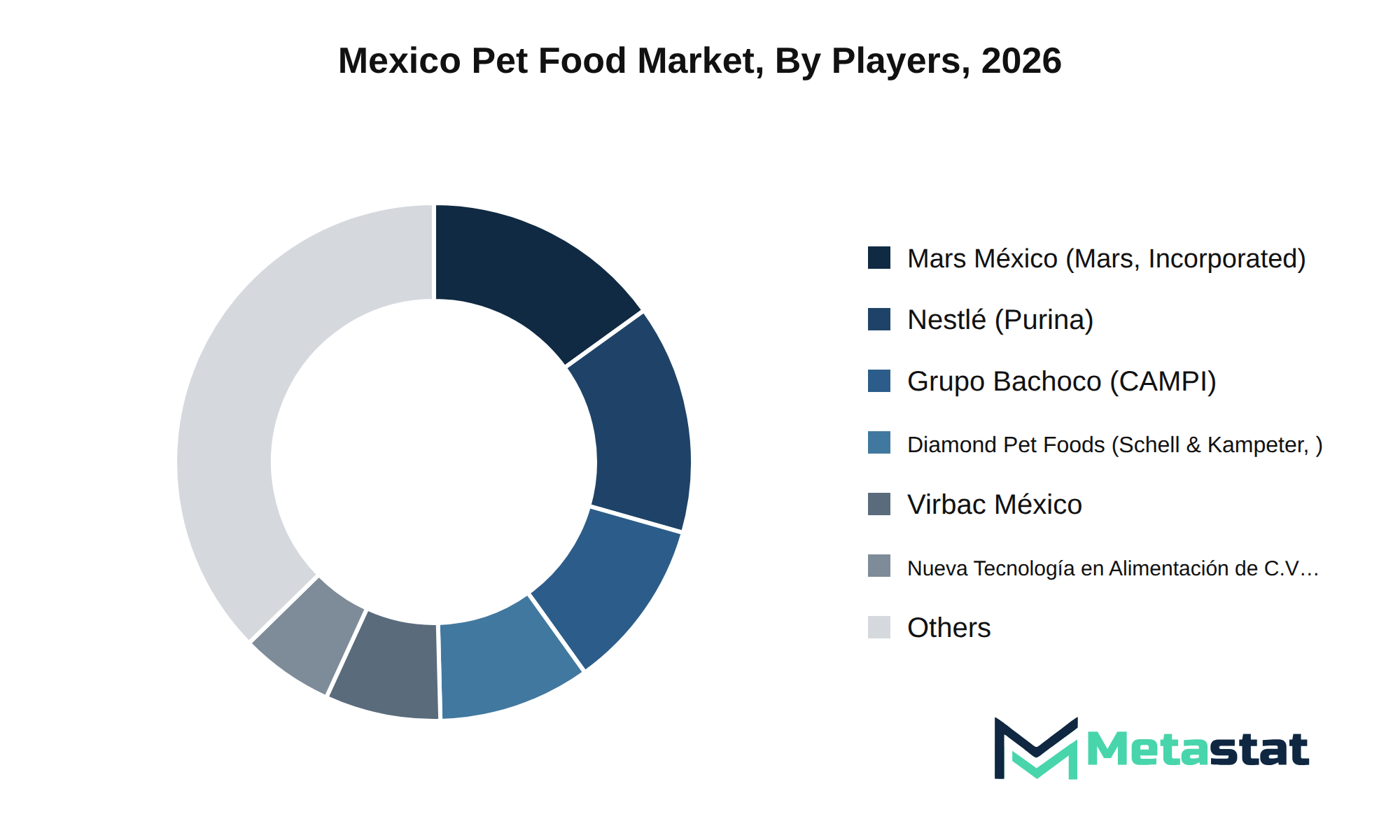
The Mexico Pet Food market experiences significant engagement from major players including Mars México (Mars, Incorporated) and Nestlé (Purina), which leverage brand equity and extensive distribution networks to maintain market presence. Competitive strategies focus on product differentiation and pricing architectures targeted towards meeting diverse consumer preferences within the country.
Companies like ADM and Grupo Bachoco (CAMPI) emphasize research and development pipelines to innovate within their product offerings. Strategic alliances and joint ventures enhance market positioning, creating cross-industry partnerships that strengthen their supply chain dominance and procurement leverage. This dynamic enhances value chain integration, positioning these organizations to respond effectively to evolving market demands.
Emerging companies including Diamond Pet Foods (Schell & Kampeter, Inc.) and Virbac México contribute to competitive tension by introducing unique product variations aimed at specific pet types. The presence of these players indicates a robust competitive outlook, with an environment conducive to startup disruption dynamics, ensuring that established players continuously adapt to maintain relevance. This competitive environment drives innovation and responsiveness among all market participants.
Customer retention strategies and switching costs play critical roles in shaping brand loyalty within the market. With a growing emphasis on the importance of intellectual property portfolios, companies secure technological defensibility to mitigate the threat of new entrants. This focus on proprietary technology moats influences strategic growth vectors across the sector, ensuring sustained competitive advantage.
Market size is forecast to rise from USD 3,645.9 million in 2025 to over USD 5,639.7 million by 2033. The base case anticipates a compound annual growth rate (CAGR) of 5.6% over this period. The bull case envisions accelerated growth driven by increasing consumer investment in premium products, enhancing overall demand within the Mexico Pet Food market. Conversely, the bear case could arise from economic constraints or significant regulatory changes that limit market expansion.
Structural consumption shifts, including the increasing preference for high-quality ingredients across pet food segments, influence market dynamics. The integration of next-generation technologies, including advanced food processing and enhanced safety protocols, supports product innovation and drives demand. Evolving trade corridors and regional supply chain shifts prompt strategic capital allocation, ensuring that supply meets rising consumer expectations.
R&D commercialization timelines are critical in determining how quickly new products reach the market. Companies focusing on compliance with imminent regulatory standards enhance their competitive position, driving market growth. Identifying emerging white-space opportunities allows businesses to target unmet enterprise needs, particularly in niche segments, thereby enabling sustained growth.
Investment in infrastructure and capital expenditures aligns with broader economic trends, reinforcing the market’s resilience. Executive-level strategic imperatives emphasize the importance of adaptability, positioning firms to navigate future challenges effectively. These factors collectively contribute to a robust outlook for the Mexico Pet Food market through 2033.
The report strategically identifies and profiles the key market players and analyses their core competencies in each sub-segment of the Pet Food market.
Report Attributes | Details |
Study Period | 2021-2033 |
Base Year | 2025 |
Estimated Year | 2026 |
Forecast Period | 2026-2033 |
Historical Period | 2021-2025 |
Growth Rate | CAGR 5.6% from 2026 to 2033 |
Revenue Unit | USD million |
Segmentation | By Type, Ingredient Type, Distribution Channel, Pet Type, and Region |
Find answers to common questions about this report
The Mexico Pet Food market size was valued at USD 3,645.9 million in 2025.
The Pet Food market is projected to grow at a CAGR of 5.6% during the forecast period from 2026 to 2033.
The Dry Pet Foods segment leads the Mexico Pet Food market, with a value of USD 2,209.6 million in 2026. This segment represents the largest share compared to Wet Pet Foods, Veterinary Diets, and Treats and Snacks.
The key drivers for the Mexico Pet Food market include rising disposable income among younger generations, increased urbanization, and a growing emphasis on pet health and wellness. These factors lead to higher pet ownership and a shift towards premium and specialized products, reflecting changing consumer preferences and lifestyles.
The Mexico Pet Food market faces significant challenges due to stringent regulatory requirements and compliance challenges that increase operational costs. Macroeconomic factors, including inflationary pressures and supply chain disruptions, create uncertainty in sourcing and inventory management, further hindering growth potential.
Rising disposable incomes among younger generations and increased urbanization favor product adoption in the Mexico Pet Food market. Younger consumers prioritize premium pet food for high-quality nutrition, while urban dwellers seek convenience and health-focused options, driving demand for specialized products that align with evolving consumer preferences.
The Pet Food market is estimated to reach a valuation of USD 5,639.7 million by 2033.
Key players in the Mexico Pet Food market include Mars México (Mars, Incorporated), Nestlé (Purina), ADM, Nueva Tecnología en Alimentación S.A. de C.V. (NUPEC), Kimberly-Clark de México, S.A.B. de C.V. (Prime Care®), and Grupo Bachoco (CAMPI).
The dry pet foods segment is projected to grow from USD 2,209.6 million in 2026 to USD 3,068 million by 2033, reflecting a CAGR of 4.8.
The online channels are anticipated to experience significant growth, with a forecasted value of USD 1,579.1 million by 2033.
The analysts below cover Food and Beverages research at Metastat Insights.
LEAD ANALYST
Utkarsh Khirodkar is a Lead Market Research Analyst at MetaStat Insight, specializing in market intelligence, technology sector assessments, and competitive strategy.

LEAD PRINCIPAL ANALYST, PHARMA AND HEALTHCARE
Food and Beverages · Healthcare · Healthcare IT · Medical Devices
Ajay Devgire is the Lead Healthcare Analyst at MetaStat Insight, leading strategic research and market intelligence initiatives across the global healthcare domain.

SENIOR RESEARCH ANALYST
Biotechnology · Food and Beverages · Medical Devices · Packaging
Snehal Pasalkar is a Research Analyst at MetaStat Insight, operating at the intersection of life sciences research, competitive strategy, and market intelligence.
Replacing petrochemical surfactants with bio-based alternatives requires realistic timelines on industrial precision fermentation scaling. The market research broke down commercialization timelines, feedstock sugar price sensitivities, and regional cosmetic ingredient regulatory approvals in Europe and East Asia. That supplier readiness mapping gave our formulations team reliable context when comparing renewable chemical sourcing roadmaps.
Tracking ceramic matrix composite adoption in high-bypass aero engines requires strict attention to material qualification cycles and FAA airworthiness testing milestones. The MetaStat Insight team provided a detailed timeline of silicon carbide fiber manufacturing capacity and commercial foundry lead times. Having clear visibility into upstream thermal barrier coating supply helped us stress-test our long-term component procurement strategy.
Transitioning ultra-class mining haul trucks to alternative power requires concrete data on remote hydrogen refueling infrastructure economics. The report evaluated megawatt-scale electrolyzer installation expenses, onsite storage safety mandates, and heavy-duty fuel cell stack degradation under continuous duty cycles. That technical rigor helped our engineers benchmark realistic total operating cost horizons for off-highway fleet decarbonization.
Explore related market intelligence reports worth reading alongside this one.