
LEAD ANALYST
Utkarsh Khirodkar is a Lead Market Research Analyst at MetaStat Insight, specializing in market intelligence, technology sector assessments, and competitive strategy.

New Zealand Waste Management Equipment Market Size, Share, By Product Type (Balers, Compactors, Shredders, Granulators, Crushers, Sorting and Separation Equipment, Conveyors and Feeding Systems, Waste Containers and Bins), By Waste Type (E-Waste and WEEE, Lithium-Ion Batteries, Organic Waste, Paper and Cardboard, Plastics, Metals), By Automation Level (Manual, Semi-Automatic, Fully Automatic), By Application (Residential and Commercial Waste, Industrial Waste, Construction and Demolition Waste, Healthcare Waste), Industry Analysis, Growth, Trends, and Forecast, 2026-2033
Report ID
MSI-5115
Published
September, 2026
Pages
288 Pages
Format
Historical
Base year
Forecast
Forecast period
Report Details
Choose Your License
New Zealand Waste Management Equipment Market
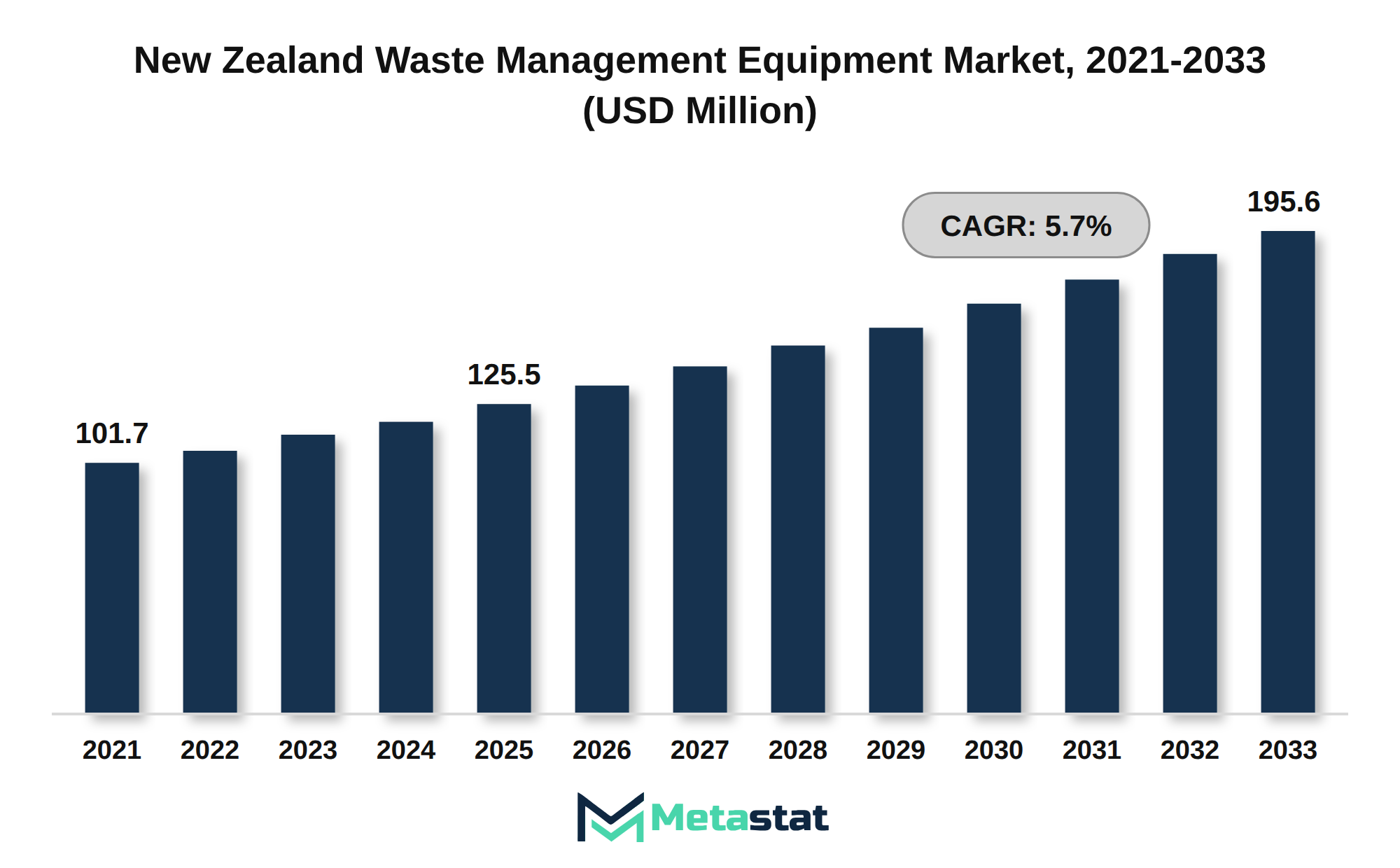
The New Zealand Waste Management Equipment market was valued at USD 125.5 million in 2025 and is projected to reach USD 195.6 million by 2033, growing at a CAGR of 5.7% over the forecast period.
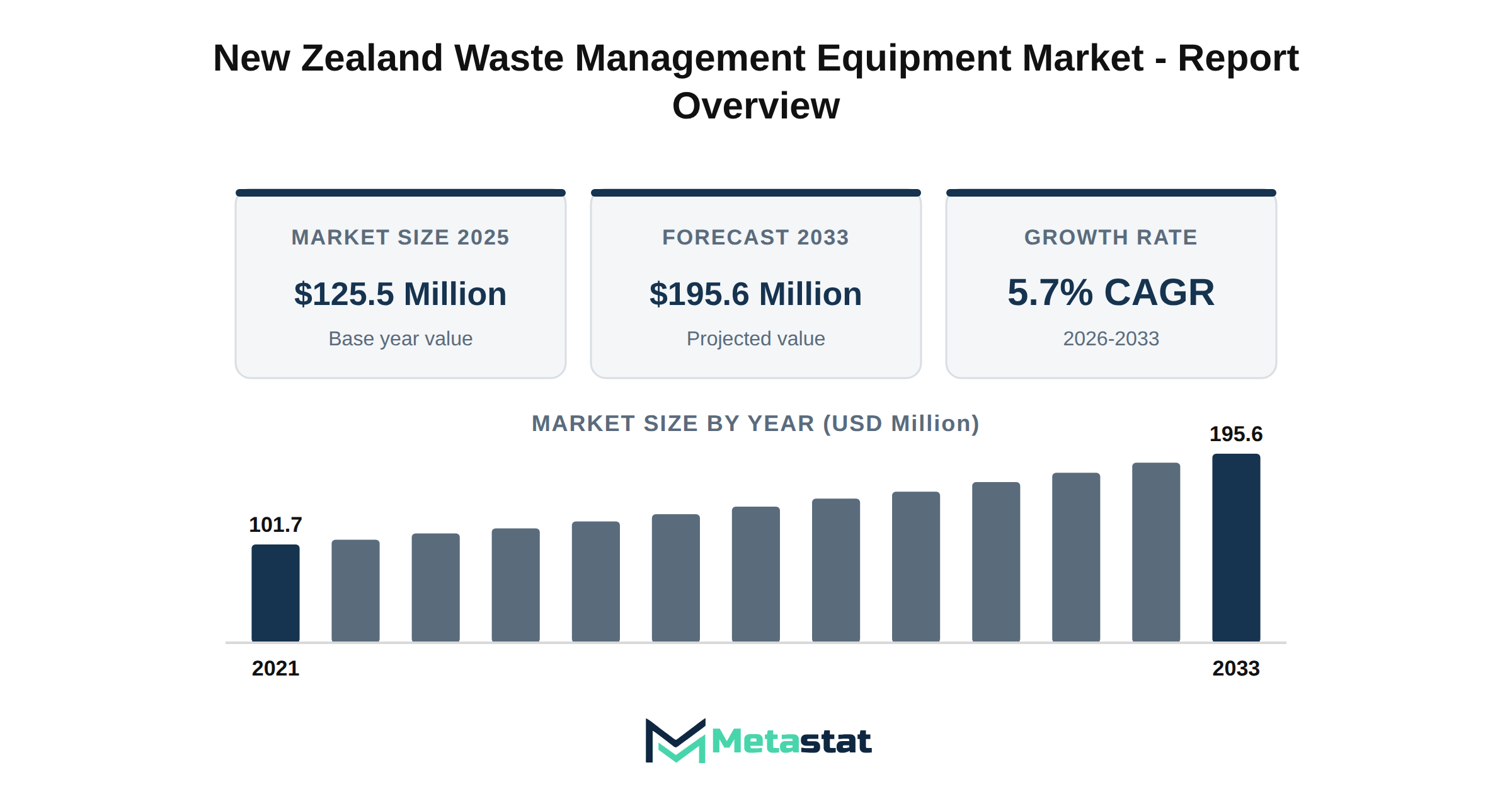
The New Zealand Waste Management Equipment market reached a value of USD 125.5 million in 2025, reflecting a gradual growth trajectory from USD 101.7 million in 2021. Projections indicate a rise to USD 195.6 million by 2033, demonstrating a compound annual growth rate (CAGR) of 5.7% over the forecast period.
Key segments contributing to market dynamics include product types including balers, compactors, and shredders, with balers holding a share of 13.9% and compactors at 18.3%. The demand for shredders represents 11.7% of the market, while other equipment types, including sorting and separation equipment, conveyance systems, and waste containers, play significant roles in shaping the market landscape. The forecast period anticipates a steady increase in investment in these segments, pushing overall market growth.
Regulatory frameworks surrounding waste management continue to evolve, influencing operational practices within the market. Compliance with environmental standards drives manufacturers to innovate and improve equipment efficiency, creating a competitive edge. Companies are focusing on enhancing product offerings to align with sustainability goals, reflecting a shift toward circular economy dynamics.
The supply chain landscape remains complex, with logistics architecture adapting to address emerging challenges. Sourcing strategies are becoming increasingly important, driven by organizations seeking to optimize procurement processes amid inflationary pressures and currency volatility. Such factors contribute to market fragmentation, compelling players to explore mergers and acquisitions to enhance market positioning and operational capabilities.
Regulatory compliance shapes the New Zealand Waste Management Equipment market. Stringent environmental regulations drive the adoption of advanced waste management solutions, compelling companies to invest in technologies that align with compliance standards. This focus on regulatory adherence increases operational costs but enhances the market's overall sustainability. Companies prioritizing compliance gain a competitive advantage, positioning themselves favorably in an increasingly eco-conscious market.
Next-generation innovations transform the market with advanced technologies including automation, data analytics, and artificial intelligence. These innovations streamline operations, improve efficiency, and enhance waste processing capabilities. Companies investing in research and development experience improved productivity and reduced operational costs, creating a more resilient market environment. The emphasis on next-gen solutions is expected to drive significant growth in the coming years, aligning with the global shift towards smarter waste management practices.
The market experiences ongoing transformation through sustainable practices and circular economy dynamics. Companies actively adopting sustainable transformation strategies create closed-loop systems that minimize waste and maximize resource recovery. This approach benefits the environment and enhances profitability by reducing raw material costs. The integration of circular economy principles into business models supports long-term viability and positions companies favorably within the New Zealand Waste Management Equipment market.
Capital allocation toward infrastructure investments remains crucial for enhancing waste management capabilities. Investments in modernized equipment and facilities improve operational efficiency, allowing companies to meet increasing waste volumes and compliance requirements. While infrastructure develops, the market expands, catering to a growing customer base seeking reliable waste management solutions.
Inflationary pressures and currency volatility present challenges for the New Zealand Waste Management Equipment market. Fluctuating material costs and exchange rates impact pricing strategies, necessitating strategic sourcing and procurement practices. Companies effectively managing these pressures maintain competitiveness and ensure stable profit margins, contributing to a more robust market environment.
The future strategic outlook for the market emphasizes the need for agility and innovation amid evolving regulatory landscapes and consumer preferences. Companies adapting to these changes by investing in technology and sustainable practices enhance their market position. High-value recommendations for stakeholders include prioritizing research and development initiatives, exploring strategic partnerships, and continuously monitoring regulatory developments to remain ahead in the competitive arena.
The New Zealand Waste Management Equipment market experiences growth driven by heightened emphasis on sustainability and environmental responsibility. Climate change awareness and resource conservation influence both consumer and business behaviors, leading to increased investments in waste management solutions. These solutions include advanced recycling technologies and efficient waste processing systems, which align with broader sustainability goals.
Several industries recognize the importance of sustainable practices, enhancing the demand for equipment that supports recycling and waste minimization efforts. This trend is particularly evident in sectors including construction, healthcare, and manufacturing, where waste management is essential for operational efficiency and compliance with evolving environmental standards.
Investment in waste management equipment promotes a circular economy by encouraging resource recovery and reducing landfill dependency. Companies that adopt innovative waste management practices benefit from improved operational productivity and cost efficiency, further driving growth within the market. The ongoing commitment to sustainability initiatives is expected to sustain momentum in the New Zealand Waste Management Equipment market through the forecast period.
Investment in infrastructure development significantly influences the New Zealand Waste Management Equipment market. Increased public and private sector spending on waste management facilities enhances the capacity for waste processing and disposal. This investment reflects a broader commitment to modernizing existing systems and integrating advanced technologies, thereby improving operational efficiency. Growing urbanization contributes to rising waste generation, driving demand for efficient waste management solutions.
Public-private partnerships emerge because a critical strategy in funding infrastructure projects. These collaborations enable the allocation of resources toward building and upgrading waste management facilities, promoting technological innovation and integration. Advanced solutions, including automated sorting and separation systems, increase processing capabilities and reduce operational costs. Such initiatives enhance the market's potential for growth and sustainability.
Technological integration within waste management infrastructure further supports the market. Adopting automation and digitizing legacy processes allows for streamlined operations and improved data management. This transformation enables effective tracking of waste streams, facilitating better decision-making and operational transparency. The combination of infrastructure development and technological advancements positions the market for sustained growth through 2033.
High capital investment requirements present a significant restraint within the New Zealand Waste Management Equipment market. The need for advanced technology and infrastructure to handle waste effectively results in substantial financial outlays for companies. These investments create barriers for small and medium-sized enterprises, limiting their ability to compete with established players that have more considerable resources. New entrants experience challenges in securing necessary funding, which stifles innovation and adoption of new equipment in the market.
Inflationary pressures further exacerbate the situation. Rising costs of raw materials and components impact the pricing of waste management equipment, leading to increased operational expenses for companies. Higher costs translate into increased prices for end-users, which reduces demand for new equipment. Consequently, operators delay or forgo investments in new machinery, leading to potential stagnation within the market.
Supply chain disruptions have become more frequent, affecting the availability of critical components required for manufacturing waste management equipment. Delays in procurement extend lead times, hindering timely deployment of new systems. This situation creates a ripple effect, limiting the ability of companies to meet rising demand and affecting overall market growth.
Throughout this complex environment, the New Zealand Waste Management Equipment market faces challenges that hinder expansion and innovation. Addressing high capital investment requirements and the associated inflationary pressures remains crucial for creating a more competitive and sustainable market environment.
The New Zealand Waste Management Equipment market encounters challenges stemming from geopolitical fragmentation and trade deficits. These dynamics lead to tariff friction, complicating the import of essential components and equipment. Suppliers face increased operational costs due to tariffs, impacting pricing strategies and profit margins.
Technological disruptions further complicate the landscape, with rapid advancements requiring significant investments in research and development. Companies navigate complex R&D integrations while ensuring interoperability among various waste management technologies. This complexity deters several smaller players from entering the market, limiting competition and innovation.
The volatility of feedstock and components influences operational stability. Fluctuations in material availability and pricing necessitate efficient supply chain management to maintain production levels. Supply chain instability leads to delays in project timelines, affecting overall market performance.
Tightening regional regulatory standards introduce additional compliance overhead. Companies operating in the New Zealand Waste Management Equipment market adapt to evolving legal liabilities, straining resources and diverting focus from core business operations. This regulatory environment inhibits market entry for new players, further entrenching existing competitors.
Environmental lifecycle footprints impose sustainability demands, pressuring companies to adopt greener technologies. Balancing regulatory compliance with market expectations complicates strategic planning, requiring investment in cleaner alternatives. The growing emphasis on decarbonization mandates a shift in operational practices, straining financial resources.
Workforce skill gaps hinder the implementation of advanced technologies. Talent retention pressures contribute to challenges in maintaining a skilled workforce, exacerbating operational inefficiencies. The market's reliance on automation, while beneficial in several areas, displaces certain job categories, leading to friction within the labor market.
Overall, these multifaceted challenges shape the trajectory of the New Zealand Waste Management Equipment market, influencing demand dynamics and competitive positioning. Stakeholders navigate this complex environment to remain competitive and capitalize on growth opportunities.
The New Zealand Waste Management Equipment market exhibits substantial opportunities driven by emerging technological advancements. Innovations in automation, including semi-automatic and fully automatic systems, enhance operational efficiency and reduce labor costs. The semi-automatic segment is projected to reach USD 86.2 million by 2033, with a compound annual growth rate (CAGR) of 4.9%. Such advancements enable businesses to optimize waste processing and management operations, appealing to a diverse range of industries.
Digital transformation significantly influences purchasing behaviors, with procurement processes increasingly shifting towards online platforms. This transition enhances accessibility to a wider variety of waste management solutions, attracting new customers and increasing competition among suppliers. The integration of digital tools into waste management strategies aligns with sustainability imperatives, driving demand for eco-friendly equipment and solutions.
Next-generation innovations, including advancements in sorting and separation technologies, present additional avenues for market growth. Industries adapting to stringent environmental standards require advanced equipment to effectively manage diverse waste types, including e-waste and organic waste. The New Zealand Waste Management Equipment market stands to benefit from increasing investments in these technologies, which enable improved recycling rates and support circular economy initiatives within various sectors.
The New Zealand Waste Management Equipment market is segmented based on Product Type, Waste Type, Automation Level, and Application.
Valued at USD 18.4 million in 2026, the balers segment is projected to reach USD 25 million by 2033, reflecting a CAGR of 4.5% during the forecast period. Growing demand for waste management solutions in New Zealand drives this expansion. Increased focus on recycling and resource recovery spurs the need for efficient balers capable of compacting various waste types. The market experiences a significant push from industries seeking to enhance operational efficiency and reduce disposal costs through improved waste management practices.
Technological advancements play a vital role in the balers segment. Innovations in design and automation lead to enhanced performance and efficiency, supporting higher throughput and increased compaction ratios. This evolution aligns with the broader trends of adopting advanced technologies in the New Zealand Waste Management Equipment market. Adoption of balers in residential, commercial, and industrial applications highlights their versatility, further promoting segment growth.
Regulatory compliance standards increasingly influence the market landscape. Stricter regulations surrounding waste disposal and management drive investments in balers that meet environmental compliance. This dynamic encourages end-users to upgrade their equipment, facilitating a shift towards more sustainable waste handling solutions. Consequently, the segment is positioned to benefit from the continuous evolution of waste management practices in New Zealand.
Growth in the Compactors segment reflects increasing demand for efficient waste management solutions in various applications. The focus on urbanization and population growth contributes significantly to the rising need for compacting waste materials, particularly in residential and commercial sectors. Rising demand drives manufacturers to innovate and upgrade their product offerings, improving equipment efficiency and effectiveness.
Compactors segment is estimated to reach USD 32.7 million by 2033, at a CAGR of 4.5% during the forecast period. Technological advancements play a crucial role in this segment's expansion, enabling the development of more efficient, automated, and environmentally friendly waste management equipment. The integration of smart technologies enhances performance and better waste processing capabilities, attracting potential end-users.
Industry adoption aligns with stringent regulatory compliance standards, which focus on waste reduction and recycling efforts. This alignment encourages investment in compactors, particularly in sectors prioritizing sustainability and responsible waste disposal practices. Ongoing shifts in consumption patterns towards environmentally conscious solutions further support the market, emphasizing the importance of compactors in achieving waste reduction targets.
Shredders segment is expected to reach USD 25.9 million by 2033. Demand for shredders in the New Zealand Waste Management Equipment market derives from increasing waste generation and the need for effective waste processing solutions. Adoption of shredders is influenced by the growing emphasis on recycling and recovery of valuable materials from waste streams. The market experiences expansion driven by technological advancements, enabling higher efficiency and reduced operational costs.
Shredders support various downstream applications, including residential, commercial, and industrial waste management. End-use dynamics reflect a shift towards more sustainable practices, prompting businesses to invest in efficient waste processing equipment. Regulatory compliance standards concerning waste disposal and recycling further increase the need for advanced shredding solutions. With continuing investments in waste management infrastructure, market participants respond to rising consumer preferences for environmentally friendly solutions.
Cost structures within this segment include initial capital investments and ongoing maintenance expenses. Pricing volatility arises from fluctuating raw material costs and changes in demand patterns. Strategic opportunity windows emerge from the growing focus on waste reduction and resource recovery, positioning shredders because critical components of waste management systems. Overall, the shredders segment demonstrates robust potential for growth within the New Zealand Waste Management Equipment market.
Anticipated growth in the Granulators segment aligns with increasing environmental awareness and regulatory pressures in waste management practices. Granulators serve a critical function, facilitating the recycling process by reducing materials into manageable sizes for further processing. This segment is projected to grow at a CAGR of 7.2% during the forecast period. The rising focus on sustainability and efficient waste management in various industries drives heightened demand for such equipment.
Advancements in technology promote the development of more efficient and effective granulating equipment. Innovations improve the performance and energy efficiency of granulators, enabling businesses to reduce operational costs while enhancing output. Industries prioritize eco-friendly practices, driving the shift towards granulators in the New Zealand Waste Management Equipment market.
Investment in the granulating sector reflects the expanding applications of recycled materials across diverse industries, including construction, packaging, and consumer goods. These shifts in end-use dynamics drive consumption patterns, prompting manufacturers to enhance their granulator offerings. Increased capital investments in next-generation technology play a vital role in sustaining this growth trajectory.
Growth in the Crushers sub-segment is driven by increasing demand for effective waste management solutions across various industries. Industrial sectors, particularly construction and manufacturing, rely heavily on crushers to process materials and reduce waste volume. The expansion of urban areas and infrastructure projects necessitates the efficient handling of waste materials, positioning crushers because essential equipment in the market.
Technological maturation significantly influences the adoption of advanced crushers. Innovations in automation and efficiency enhance processing capabilities, making these machines more attractive to operators. The integration of smart technologies facilitates real-time monitoring and predictive maintenance, thereby improving operational efficiency and reducing downtime.
Environmental regulations play a critical role in shaping the market landscape. Stricter compliance standards drive the implementation of waste reduction practices, prompting companies to invest in crushers that optimize material recovery and minimize landfill contributions. This regulatory impetus supports segment growth and encourages the adoption of environmentally friendly technologies.
Market participants experience considerable pressure from fluctuating raw material costs. Supply chain resilience becomes crucial because manufacturers seek to navigate these challenges while maintaining profitability. Crushers that incorporate durable materials and energy-efficient designs enhance value propositions, mitigating margin pressures in the face of economic volatility.
Strategic opportunity windows arise from evolving consumption patterns, with increased emphasis on recycling and resource recovery. The market benefits from an expanding base of end-users who prioritize sustainability, propelling demand for crushers that support these initiatives. Overall, the Crushers sub-segment occupies a vital position within the New Zealand Waste Management Equipment market, driven by technological advancements and regulatory compliance factors.
Growing emphasis on recycling initiatives and sustainable waste management practices drives demand for Sorting & Separation Equipment in the New Zealand Waste Management Equipment market. This segment enables effective waste segregation, enhancing recycling rates and reducing landfill dependency.
Technological advancements significantly influence the evolution of sorting and separation technologies. Innovations in automation and artificial intelligence enhance operational efficiency, allowing for higher throughput and improved separation accuracy. Industries adopting these technologies experience reduced labor costs and improved resource recovery rates, leading to increased profitability.
Regulatory compliance standards increasingly mandate efficient waste separation processes, pushing industries to invest in advanced equipment. Stringent waste management policies create a favorable environment for the segment's growth. Organizations prioritize compliance to avoid penalties and enhance their corporate sustainability profiles.
Changing consumer preferences towards eco-friendly practices contribute to increased investment in sorting and separation solutions. Businesses aim to align with societal expectations, driving demand for technologies that optimize waste management operations and promote environmental stewardship.
New Zealand's focus on sustainable waste practices and recycling efforts positions the sorting and separation segment for continued growth. Increased public awareness of waste-related issues fuels demand for innovative solutions, enhancing the segment's significance within the market.
Growing demand for automation in waste handling drives interest in Conveyors & Feeding Systems within the New Zealand Waste Management Equipment market. These systems streamline operations by efficiently transporting waste materials, enhancing productivity and reducing processing times.
Technological maturation continues to influence the development of advanced conveyor systems that incorporate smart technologies, enabling real-time monitoring and data collection. This advancement supports optimization in waste sorting and processing, attracting various sectors, including residential, commercial, and industrial applications.
Shifts in consumption patterns towards sustainable waste management and recycling practices create a favorable environment for the adoption of these systems. Regulatory frameworks promoting recycling initiatives further fuel interest in efficient waste handling solutions, necessitating the integration of reliable and effective conveyors.
Supply chain resilience remains a critical factor, ensuring that the availability of raw materials and components supports the manufacturing of high-quality conveyors. Market participants focus on strategic investments to enhance product offerings and adapt to evolving market requirements. This positions them for long-term growth in the competitive environment.
Downstream applications encompass various waste types, including organic waste and E-Waste, highlighting the versatility of Conveyors & Feeding Systems. Manufacturers respond to these demands by developing customized solutions tailored to specific industry needs, ultimately contributing to the overall expansion of the market.
Interest in the Waste Containers & Bins sub-segment arises from increasing environmental awareness and the push for effective waste management solutions. Ongoing urbanization and growing population density in New Zealand fuel demand for adequate waste containment options, supporting the overall market. Improved waste management practices directly influence end-use dynamics, reflecting a strong shift towards sustainable disposal methods.
Adoption of innovative designs and materials enhances the functionality of waste containers and bins, enabling better waste segregation and recycling efforts. Heightened focus on waste reduction initiatives among municipalities and businesses contributes to segment expansion. Regulatory compliance standards further emphasize the necessity for durable, efficient waste containment solutions that meet environmental guidelines.
Fluctuations in raw material prices affect cost structures within the segment, creating pricing volatility that influences purchasing decisions. Enhanced supply chain resilience is critical in ensuring consistent delivery of these products. Strategic investment in technology and infrastructure supports the development of next-generation containers and bins, addressing the evolving needs of customers and promoting long-term growth in the New Zealand Waste Management Equipment market.
Investment in advanced waste management solutions drives demand for perforators, de-packaging equipment, and briquetting presses within the New Zealand Waste Management Equipment market. Industries focused on optimizing waste processing techniques fuel interest in these technologies to enhance material recovery and reduce landfill contributions. The trend toward sustainable practices accelerates the adoption of innovative equipment that maximizes efficiency and minimizes environmental impact.
Technological maturation in these products has led to improved performance and greater reliability, attracting manufacturers and service providers to invest in this segment. Enhanced product evolution focuses on integrating automation and smart technologies, increasing operational efficiency and process effectiveness. Compliance with increasingly stringent regulatory standards regarding waste management reinforces the necessity for robust equipment solutions, compelling end-users to upgrade their existing systems.
Shifts in consumption patterns toward increased recycling and reprocessing of materials enhance the relevance of this segment. End-use dynamics reflect a growing preference for equipment that accommodates diverse waste types and promotes circular economy practices. Strategic opportunity windows arise from rising demand for eco-friendly technologies among various sectors, including construction, healthcare, and general waste management.
Overall, the growth trajectory of the segment aligns with ongoing investments in sustainable waste management methodologies, highlighting the market's commitment to addressing environmental challenges. The New Zealand Waste Management Equipment market continues to evolve, with increasing technological advancements and regulatory pressures shaping future developments.
E-Waste & WEEE segment is valued at USD 11.5 million in 2026 and is projected to reach USD 19.6 million by 2033, at a CAGR of 7.9% during the forecast period. Increased consumer electronics usage generates significant quantities of e-waste, driving the demand for effective waste management solutions. Regulatory compliance standards in New Zealand further emphasize the importance of proper e-waste disposal, leading to stronger market dynamics. End-use dynamics reflect a growing focus on recycling and recovery of valuable materials, contributing to the segment's expansion. Technological maturation facilitates the adoption of advanced recycling technologies, enhancing the efficiency of e-waste processing. The market benefits from strategic opportunities driven by manufacturers investing in next-generation upgrades and innovations that align with evolving consumer preferences and environmental requirements. Capital investment outlook remains positive, attracting players in the New Zealand Waste Management Equipment market keen on tapping into this expanding segment.
Strong growth dynamics characterize the Lithium-Ion Batteries segment within the New Zealand Waste Management Equipment market. This segment is estimated to reach USD 11.8 million by 2033, at a CAGR of 12.2% during the forecast period. Rising consumer electronics adoption drives demand for efficient recycling solutions, particularly driven by lithium-ion battery usage expanding in everyday products including smartphones, laptops, and electric vehicles. Regulatory compliance standards surrounding battery disposal and recycling increasingly influence operational practices, compelling manufacturers to invest in advanced waste management technologies.
Enhanced end-use dynamics reflect a growing awareness of environmental impacts associated with battery waste. This awareness emphasizes the need for responsible disposal and recycling, creating a more robust market for lithium-ion battery management solutions. The evolving technology further supports segment expansion, because innovations in battery recycling technologies emerge, offering improved efficiency and cost-effectiveness. Capital investments into next-generation upgrades represent strategic opportunities for companies operating within the market, positioning them for sustained growth in response to shifting consumer behaviors and regulatory developments.
Increasing concern regarding environmental sustainability fuels demand for the Organic Waste segment within the New Zealand Waste Management Equipment market. This segment is expected to reach USD 42.9 million by 2033, reflecting a growing recognition of the importance of proper organic waste disposal and recycling practices. Adoption of advanced technologies in waste processing drives segment expansion, enabling more efficient separation, shredding, and composting of organic materials.
Regulatory compliance standards increasingly prioritize organic waste management, pushing businesses and municipalities to invest in appropriate equipment. The rise of composting initiatives and community gardens highlights consumer preference for sustainable practices, influencing end-use dynamics. Enhanced product evolution and the introduction of innovations, including anaerobic digestion systems, improve processing capabilities and address operational challenges in handling organic waste.
Strategic opportunities arise from heightened focus on organic waste recycling, with technological maturation offering new solutions to capture and process organic materials effectively. Investment in this segment contributes to overall growth in the New Zealand Waste Management Equipment market, with stakeholders recognizing the financial and environmental benefits of proper organic waste management.
Demand for Paper & Cardboard waste management solutions reflects increasing recycling efforts and regulatory pressures. The growing focus on sustainability and environmental responsibility drives this trend, pushing businesses in various sectors to adopt efficient waste management practices. Regulatory compliance standards aimed at reducing landfill waste enhance the need for effective recycling equipment.
Valued at USD 11.5 million in 2026, the segment is projected to grow at a CAGR of 3% during the forecast period, reaching USD 19.6 million by 2033. Investments in advanced technology and automation within the market contribute to operational efficiencies, allowing companies to manage paper and cardboard waste more effectively. The evolution of products in this segment aligns with changing consumption patterns, driven by businesses seeking to reduce their environmental footprint.
End-use dynamics highlight the increasing integration of recycled materials into manufacturing processes. Industries focusing on circular economy principles prioritize the recycling of paper and cardboard, which drives demand for specialized equipment. The market continues to adapt to these shifts, ensuring that it meets the evolving needs of consumers and businesses.
Increasing emphasis on sustainable waste management strategies fuels demand for plastics recycling solutions within the New Zealand Waste Management Equipment market. Rising regulations aimed at reducing plastic waste drive adoption of advanced recycling technologies. Manufacturers focus on designing equipment that enhances efficiency and effectiveness in processing plastics, reflecting the evolving needs of industries reliant on plastic materials.
Investment in technological advancements supports the development of next-generation recycling systems, enabling higher recovery rates and improved quality of recycled plastics. End-use dynamics reflect a growing preference for recycled plastic in various applications, including packaging and construction. The market responds to these shifts with innovative solutions that enhance the recycling ecosystem.
Regulatory compliance remains a critical factor, compelling companies to invest in equipment that meets stringent environmental standards. Cost structures associated with managing plastic waste influence purchasing decisions, leading to a focus on cost-effective recycling solutions. The plastics segment within the New Zealand Waste Management Equipment market presents significant opportunities for growth driven by technological innovation and regulatory mandates.
Demand for waste management equipment dedicated to metals stems from several key factors. Increasing industrial activity contributes significantly to the growth of this sub-segment, particularly in sectors including manufacturing and construction. The focus on maximizing recycling rates enhances the demand for efficient metal recovery solutions, increasing the need for advanced equipment capable of processing various metal types effectively.
Technological advancements play a critical role in the metals sub-segment, allowing for more efficient sorting, separating, and processing techniques. These innovations lead to improved recovery rates and reduced operational costs, further driving adoption among industries focused on sustainability. Regulatory compliance standards regarding metal recycling drive investments in equipment that meets these requirements, shaping the competitive environment of the New Zealand Waste Management Equipment market.
With environmental concerns guiding consumer behavior and purchasing decisions, the emphasis on recycling and circular economy principles influences market demand dynamics. Companies increasingly seek equipment that aligns with their sustainability goals, influencing overall market demand. In this context, developments in raw material sourcing and supply chain resilience become essential, ensuring that operators effectively meet the increasing requirements of metal recycling.
Overall, the metals sub-segment reflects a robust response to both market conditions and regulatory influences. The ongoing shift towards sustainable waste management practices positions this segment for continued evolution and growth within the broader New Zealand Waste Management Equipment market.
Growing awareness regarding environmental impact drives demand for waste management solutions targeting materials including glass, tyres, and textiles. This segment reflects increasing urgency for sustainable practices across various industries and among consumers. Regulatory pressures emphasize the importance of recycling and proper waste disposal, creating a favorable environment for the adoption of specialized equipment.
Technological advancements enhance the operational efficiency of equipment designed for recycling these materials. Innovations in processing techniques lead to improved product quality and reduced operational costs, aligning with the goals of businesses pursuing sustainability. Shifts in consumer behavior toward environmentally friendly practices influence market dynamics, encouraging investments in effective waste management technologies.
The New Zealand Waste Management Equipment market benefits from a strategic focus on recycling initiatives and the development of infrastructure to support the handling of diverse waste types, including those in this segment. Increased capital investment from both public and private sectors encourages growth, with a strong emphasis on compliance with environmental regulations. Overall, opportunities for development within this sub-segment arise from a combination of demand drivers, technological maturation, and evolving end-use dynamics.
Valued at USD 29.4 million in 2026, the Manual segment is projected to reach USD 35.3 million by 2033, exhibiting a CAGR of 2.7% during the forecast period. This segment benefits from a steady demand driven by organizations prioritizing cost-effective waste management solutions. Adoption of manual equipment remains prevalent among smaller facilities and operations where budget constraints limit the transition to automated systems. The market displays opportunities for growth through advancements in manual handling techniques and equipment efficiency. Increased regulatory pressure on waste disposal practices influences the demand for manual solutions, reflecting businesses seeking compliance while optimizing operational costs. With environmental considerations gaining prominence, end-users increasingly recognize the value of manual systems for specific waste types, ensuring that the New Zealand Waste Management Equipment market maintains a diversified offering tailored to varied operational needs.
Growing interest in the Semi-Automatic segment of the New Zealand Waste Management Equipment market reflects increasing demand for efficient waste processing solutions. This demand arises from various industries seeking to streamline operations while maintaining cost-effectiveness. The segment is estimated to reach USD 86.2 million by 2033, at a CAGR of 4.9% during the forecast period.
Technological advancements play a crucial role in the expansion of the Semi-Automatic segment. Manufacturers invest in innovative features that enhance the performance and reliability of equipment, meeting evolving regulatory compliance standards and consumer expectations. Increased adoption of semi-automatic systems allows facilities to reduce labor costs while improving processing efficiency, directly impacting profit margins.
The market experiences a shift in consumption patterns, with businesses prioritizing automation to meet rising processing demands. Semi-automatic solutions offer a balanced approach, combining human oversight with automated processes, which suits various waste types, including commercial, industrial, and construction waste. This adaptability enables broader application across sectors, further driving growth within the market.
While organizations face stringent environmental regulations, investments in semi-automatic waste management solutions align with policies aimed at promoting sustainability. Compliance with these standards enhances operational credibility and opens avenues for potential partnerships within the waste management ecosystem. The Semi-Automatic segment stands out because a vital component of the New Zealand Waste Management Equipment market, ensuring efficient processing while meeting both market and regulatory demands.
In the New Zealand Waste Management Equipment market, the Fully Automatic segment is projected to reach USD 74.1 million by 2033. This segment experiences growth driven by increased efficiency in waste management processes. Fully automatic systems streamline operations, reduce labor costs, and enhance waste processing capabilities, appealing to various sectors, including industrial and commercial entities.
Technological advancements contribute significantly to the expansion of the Fully Automatic segment. Innovations enhance equipment functionality, allowing for improved sorting and processing of different waste types. Such innovations meet the evolving needs of consumers focused on efficient waste management solutions.
Regulatory compliance standards further drive adoption rates within this segment. Stricter environmental regulations encourage industries to upgrade to automated solutions that promote responsible waste disposal and recycling practices. These shifts in compliance requirements create strategic opportunity windows, prompting investments in fully automatic systems.
Cost structures in the market reflect the demand for sophisticated waste management technology. Fully automatic systems, while initially more expensive, lead to long-term savings through reduced operational costs and enhanced productivity. The shift in consumer preferences towards automated solutions positions this segment favorably for future growth.
Overall, the Fully Automatic segment is central to the broader dynamics of the New Zealand Waste Management Equipment market, reflecting the industry's commitment to sustainable practices through technological innovation and compliance with regulatory frameworks.
Valued at USD 49.7 million in 2026, the Residential & Commercial Waste segment is projected to reach USD 68.4 million by 2033, at a CAGR of 4.7% during the forecast period. Rising urbanization and increased consumer spending drive demand for efficient waste management solutions in residential and commercial sectors. The growing focus on sustainability and regulatory compliance enhances the need for advanced waste management equipment within this segment. Technological advancements facilitate product evolution, allowing for more effective and environmentally friendly waste processing methods.
Increased awareness of environmental impact influences consumption shifts toward sustainable waste practices. Businesses and households prioritize proper waste disposal, leading to higher demand for efficient solutions. Regulatory frameworks governing waste management compel stakeholders to adhere to standards, promoting the adoption of innovative waste management technologies. The New Zealand Waste Management Equipment market benefits from these dynamics, creating strategic opportunity windows for suppliers to enhance their offerings and capture greater market share.
Growing recognition of the importance of effective waste management drives demand for solutions targeting industrial waste. This segment is crucial due to the increasing volume of waste generated by industries, including manufacturing and construction, necessitating advanced equipment for efficient processing and disposal. Integration of next-generation technologies into waste management systems enhances operational efficiency and reduces environmental impact, aligning with regulatory compliance standards that mandate responsible waste disposal practices.
Market participants focus on adopting innovations that improve processing capabilities and reduce costs associated with waste management. The industrial waste segment is projected to reach USD 56.6 million by 2033, with a CAGR of 6.5% during the forecast period. Investments in automated waste sorting and separation technologies facilitate the effective recovery of recyclable materials, further supporting sustainability initiatives across various industries.
Increasing regulatory pressures regarding waste disposal practices drive a shift toward cleaner technologies in the New Zealand Waste Management Equipment market. This shift results in greater emphasis on compliance with environmental standards, influencing purchasing decisions among industrial operators. The evolution of product offerings in this segment reflects growing industry demands for enhanced efficiency, performance, and adaptability to diverse waste types and processing requirements.
Increasing urbanization and infrastructure development significantly influence the demand for Construction & Demolition Waste management solutions. Stakeholders in the construction sector prioritize efficient waste disposal methods owing to rising regulatory pressures and sustainability initiatives. This focus leads to an increase in the adoption of advanced waste management equipment tailored for construction and demolition applications.
Growing investments in infrastructure projects throughout New Zealand drive the need for effective waste management solutions. Construction activities expand, and the volume of waste generated rises, necessitating efficient processing equipment. The anticipated growth in this segment reinforces the market's overall trajectory, with the Construction & Demolition Waste segment projected to reach USD 39.2 million by 2033.
Technological advancements play a vital role in this segment's evolution, with innovations in equipment design and functionality enhancing processing efficiency. Next-generation upgrades, including automation and improved sorting capabilities, streamline operations and reduce manual intervention. These advancements contribute to higher productivity levels and cost savings for end users in the construction industry.
Environmental regulations increasingly require construction firms to manage waste responsibly, driving investments in compliant waste management equipment. Compliance with these standards impacts operational costs, because firms allocate resources to ensure adherence to regulations. This regulatory landscape influences purchasing decisions, with companies opting for equipment that meets stringent waste processing criteria.
The Construction & Demolition Waste segment within the New Zealand Waste Management Equipment market demonstrates strong growth potential. Stakeholders focus on leveraging technological innovations and adhering to regulatory standards, contributing to enhanced operational efficiency and sustainability in waste management practices.
Growing recognition of the significance of proper waste management in healthcare fuels demand for relevant equipment within the New Zealand Waste Management Equipment market. Increasing regulatory compliance standards regarding the disposal of healthcare waste drive investments in advanced waste management solutions. Facilities including hospitals and clinics require reliable tools to handle potentially hazardous materials safely, ensuring compliance with strict regulations.
This segment is projected to grow at a CAGR of 6.5% during the forecast period. Technological maturation within the sector supports the adoption of next-generation waste management solutions, enhancing efficiency and safety in processing healthcare waste. The evolution of products tailored to meet specific healthcare applications further stimulates growth, addressing unique challenges faced by healthcare providers.
End-use dynamics indicate a shift toward innovative waste management practices, emphasizing sustainable and environmentally responsible solutions. While healthcare providers increasingly prioritize sustainability, demand for effective healthcare waste management systems continues to rise. The market reflects growth driven by ongoing advancements in technology and increasing awareness surrounding environmental impact.
Growing awareness of waste management practices within agriculture and mining sectors drives interest in efficient disposal and processing solutions. Demand in these subsectors reflects a broader focus on sustainability and compliance with regulatory requirements. Producers and operators prioritize effective waste handling to mitigate environmental impacts and enhance operational efficiency. Regulatory pressures push for advanced equipment capable of managing complex waste streams sustainably. Investment in waste management technology aligns with a strategic shift toward reducing waste footprints and optimizing resource recovery processes.
Technological advancements play a critical role in enhancing the performance and efficiency of waste management equipment used in agriculture and mining. Emerging innovations focus on automation, increasing throughput, and reducing operational costs. Adoption of smart technologies supports monitoring, tracking, and optimizing waste management processes, further enhancing compliance with environmental standards. The New Zealand Waste Management Equipment market benefits from these technological improvements, aligning with the need for more effective solutions in handling diverse waste types generated in these industries.
End-use dynamics reflect increasing collaboration between equipment manufacturers and industry stakeholders to develop tailored solutions that address specific waste management challenges. Customized systems enhance efficiency, reduce downtime, and streamline operations. Investment in capital equipment within these sectors aligns with broader economic trends, promoting resilience against market fluctuations and ensuring robust operational capabilities.
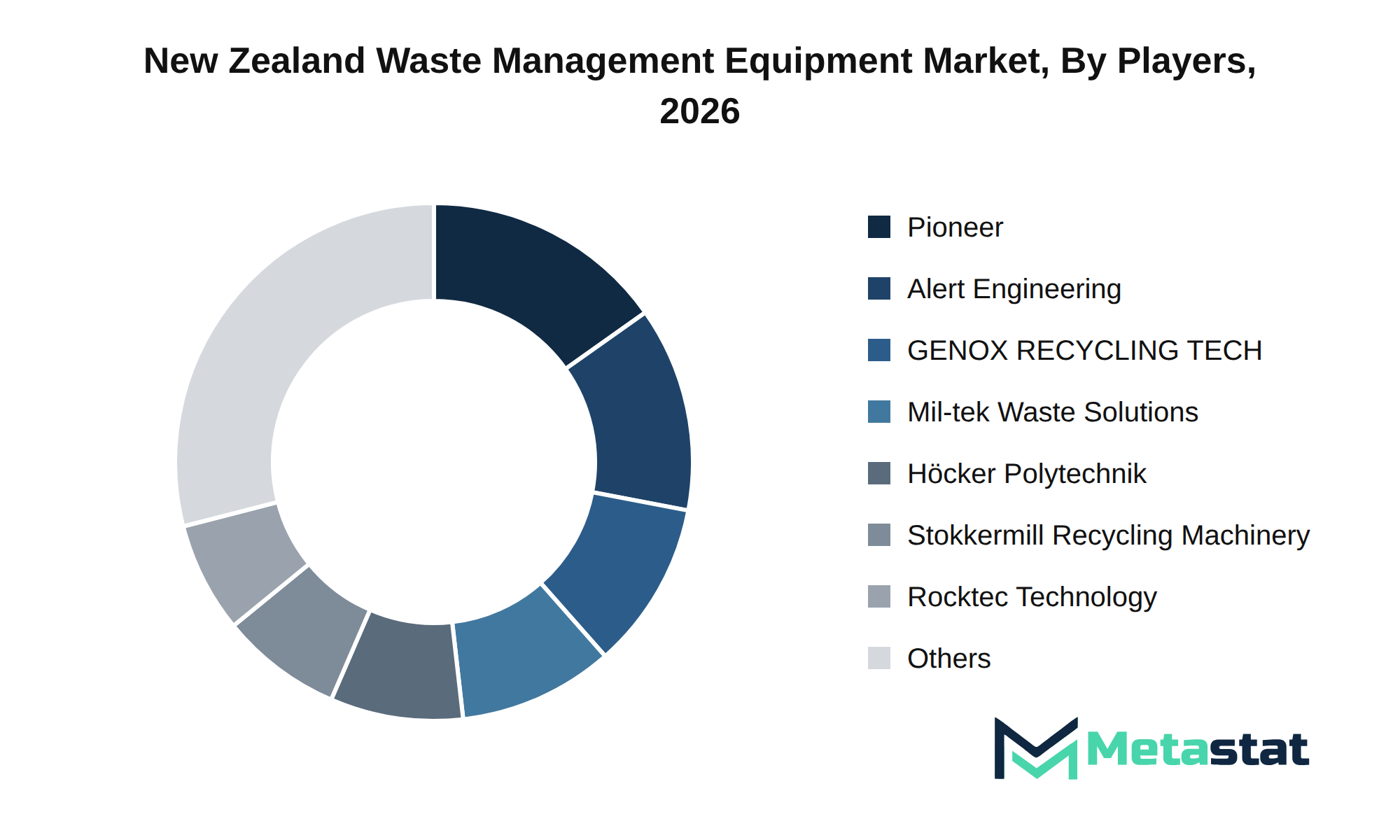
The New Zealand Waste Management Equipment market features a diverse array of players competing across various strategic dimensions. Companies including Pioneer Group, Alert Engineering Co Ltd, and GENOX RECYCLING TECH CO., LTD. focus on product differentiation through innovative technologies and unique offerings, establishing strong positions in the market. Research and development pipelines remain crucial for these firms, enabling them to advance proprietary technologies that enhance operational efficiency.
Strategic alliances and partnerships shape the competitive dynamics of the market. Companies like Mil-tek Waste Solutions and Höcker Polytechnik GmbH leverage cross-industry collaborations to expand their market reach and access new customer segments. These alliances facilitate the sharing of resources and expertise, driving product development and enhancing customer retention strategies.
Pricing architectures and commercial models impact competitive positioning. Firms including Stokkermill Recycling Machinery and Rocktec Technology Ltd adopt flexible pricing strategies to respond to market demands while ensuring profitability. This approach enables them to maintain a competitive edge against emerging players and established companies.
The competitive outlook for the New Zealand Waste Management Equipment market suggests growth and innovation. Companies navigate barriers to entry and address the threat of new entrants, ensuring their market positions remain robust. With ongoing investments in technology and strategic initiatives, these companies are equipped to capitalize on future opportunities and strengthen their market presence.
Market size is forecast to rise from USD 125.5 million in 2025 to over USD 195.6 million by 2033. This growth reflects a compound annual growth rate (CAGR) of 5.7%. The base case scenario underlines a steady increase in demand for waste management solutions driven by heightened awareness of environmental concerns and increased regulatory pressures regarding waste disposal.
The bull case scenario anticipates accelerated growth due to rapid technological advancements and increased investment in next-generation waste management technologies. Economic cycles and downstream demand shifts strongly influence the market. Infrastructure commitments and capital expenditure investments play a crucial role in determining the pace of market expansion, providing opportunities for manufacturers and suppliers to capture emerging market segments effectively.
The bear case scenario highlights potential challenges including economic downturns leading to reduced capital expenditure on waste management equipment. Regulatory evolution and compliance milestones impose additional financial burdens on businesses, affecting operational capacities in the market. However, a focus on strategic capital allocation and emerging white-space opportunities supports resilience and adaptability within the market.
The New Zealand Waste Management Equipment market is poised for significant transformation driven by evolving industry dynamics, consumer preferences, and regulatory frameworks. Stakeholders are encouraged to leverage these shifts for sustainable growth and competitive advantage.
The report strategically identifies and profiles the key market players and analyses their core competencies in each sub-segment of the Waste Management Equipment market.
Report Attributes | Details |
Study Period | 2021-2033 |
Base Year | 2025 |
Estimated Year | 2026 |
Forecast Period | 2026-2033 |
Historical Period | 2021-2025 |
Growth Rate | CAGR 5.7% from 2026 to 2033 |
Revenue Unit | USD million |
Segmentation | By Product Type, Waste Type, Automation Level, Application, and Region |
Find answers to common questions about this report
The Waste Management Equipment market size in New Zealand was valued at USD 125.5 million in 2025.
The Waste Management Equipment market is projected to grow at a CAGR of 5.7% during the forecast period from 2026 to 2033.
The leading type segment in the New Zealand Waste Management Equipment market is Compactors, with a projected value of USD 32.7 million by 2033. This segment surpasses others in terms of market share and growth potential.
Heightened emphasis on sustainability and environmental responsibility drives the New Zealand Waste Management Equipment market. Increased awareness of climate change and resource conservation influences investments in advanced recycling technologies and efficient waste processing systems, particularly in sectors including construction, healthcare, and manufacturing, where operational efficiency and compliance with environmental standards are essential.
High capital investment requirements and inflationary pressures significantly restrain growth in the New Zealand Waste Management Equipment market. Rising costs of raw materials and components increase operational expenses, leading to higher prices for end-users and reduced demand for new equipment. Supply chain disruptions further hinder timely deployment of systems, affecting overall market performance.
Heightened emphasis on sustainability and environmental responsibility drives product adoption in the New Zealand Waste Management Equipment market. Increased investments in advanced recycling technologies and efficient waste processing systems align with broader sustainability goals, particularly in sectors including construction, healthcare, and manufacturing, where waste management is essential for operational efficiency and compliance.
The Waste Management Equipment market is estimated to reach a valuation of USD 195.6 million by 2033.
Key players in the New Zealand Waste Management Equipment market include Pioneer Group, Alert Engineering Co Ltd, GENOX RECYCLING TECH CO., LTD., Mil-tek Waste Solutions, Höcker Polytechnik GmbH, and Stokkermill Recycling Machinery.
The balers segment is projected to grow from USD 18.4 million in 2026 to USD 25 million by 2033, reflecting a compound annual growth rate of 4.5%.
The lithium-ion batteries segment is anticipated to reach USD 11.8 million by 2033, achieving a compound annual growth rate of 12.2%.
The analysts below cover Machinery & Equipment research at Metastat Insights.
LEAD ANALYST
Utkarsh Khirodkar is a Lead Market Research Analyst at MetaStat Insight, specializing in market intelligence, technology sector assessments, and competitive strategy.

INDUSTRY CONSULTANT - CHEMICALS & ADVANCED MATERIALS
Chemicals and Materials · Machinery & Equipment · Packaging
Amit Gadhekar Consultant for Chemicals and Materials at MetaStat Insight, directing sector-specific intelligence, research, and strategic consulting across global chemical and processing markets.

PRINCIPAL CONSULTANT - QUALITY SYSTEMS & COMPLIANCE
Electronics and Semiconductor · Machinery & Equipment · Professional Services
Omkar Phadtare is an Industry Consultant at MetaStat Insight, specializing in quality systems, regulatory compliance, and standards benchmarking to drive data-driven market intelligence and strategic industry research.

ENERGY & INFRASTRUCTURE INDUSTRY CONSULTANT
Automotive and Transportation · Electronics and Semiconductor · Energy and Power · Machinery & Equipment
Saurabh Vasant Ganvir consults for Energy & Infrastructure Industry at MetaStat Insight, specializing in renewable energy, solar EPC, and electric vehicle (EV) infrastructure markets.

LEAD CONSULTANT - COMMUNICATION, TELECOM, AND IT
Electronics and Semiconductor · Information & Technology · Machinery & Equipment · Professional Services
Ravindra Sathe Consultants for Communication, Telecom, and IT at MetaStat Insight. He leads the firm's industry research initiatives across telecommunications infrastructure, digital connectivity, enterprise networking, and emerging information technology domains.
When evaluating distributed energy resource management systems, standard research summaries tend to gloss over the operational differences between front-of-the-meter utility deployments and behind-the-meter industrial sites. The MetaStat Insight report addressed those distinctions directly, especially regarding software interoperability standards and grid interconnection backlogs. The five-year market sizing across regional transmission organizations provided actionable context for our grid modernization strategy.
Most industry reports on warehouse automation bundle autonomous mobile robots and fixed conveyor installations into the same top-level numbers, which complicates advisory work. This study split the market cleanly by payload tiers, navigation technology, and fleet management software layers. The regional forecast for Western Europe gave our team defensible adoption benchmarks when evaluating capital allocation for logistics clients, saving us days of secondary data scrubbing.
Analyzing the transition from natural gas to green hydrogen in iron ore reduction requires realistic infrastructure timelines. Meta stat insight supplied a detailed regional assessment of DRI plant conversion costs and scrap metal availability in North America and Western Europe. Their report carefully examined pellet quality specs and electrical grid access constraints without making oversimplified market assumptions. The research material served as a practical reference during internal technology roadmap discussions.
Explore related market intelligence reports worth reading alongside this one.
Starting from
$2950