
LEAD ANALYST
Utkarsh Khirodkar is a Lead Market Research Analyst at MetaStat Insight, specializing in market intelligence, technology sector assessments, and competitive strategy.

North America Property and Casualty Insurance Market Size, Share, By Insurance Line (Personal Auto Insurance, Homeowners & Residential Property Insurance, Commercial Property Insurance, Commercial Auto Insurance, Workers' Compensation Insurance, General & Excess Liability Insurance, Professional & Management Liability Insurance, Cyber Insurance, Marine & Inland Marine Insurance), By Distribution Channel (Captive & Exclusive Agents, Independent Agents & Retail Brokers, Wholesale Brokers & Managing General Agents (MGAs), Direct-to-Consumer, Bancassurance), By Customer Segment (Personal Lines, Small Commercial, Middle-Market Commercial, Large Commercial), By Region (United States, Canada, Mexico), Industry Analysis, Growth, Trends, and Forecast, 2026-2033
Report ID
MSI-5358
Published
September, 2026
Pages
300 Pages
Format
Historical
Base year
Forecast
Forecast period
Report Details
Market Valuation: Valued at $854.2 Billion in 2025, projected to reach $1,215.2 Billion by 2033 at a 4.5% CAGR.
Dominant Segment: The Personal Auto Insurance segment leads the market, driven by increasing vehicle ownership and heightened demand for comprehensive coverage due to rising accident rates.
Geographic Lead: The United States dominates the North America Property and Casualty Insurance market, supported by a large population and significant economic activity that drives insurance demand.
What's Inside: This report provides a detailed analysis of market dynamics, competitive landscape, and forecasts from 2026 to 2033, covering various insurance lines, distribution channels, and customer segments.
Market Opportunity: Digital transformation presents significant growth opportunities, as insurers leverage advanced technologies to enhance customer engagement and streamline operations.
Regulatory Impact: Regulatory compliance challenges shape operational strategies for insurers, influencing pricing and product offerings across the market.
Choose Your License
North America Property and Casualty Insurance Market
The North America Property and Casualty Insurance market was valued at USD 854.2 billion in 2025 and is projected to reach USD 1,215.2 billion by 2033, growing at a CAGR of 4.5% over the forecast period.
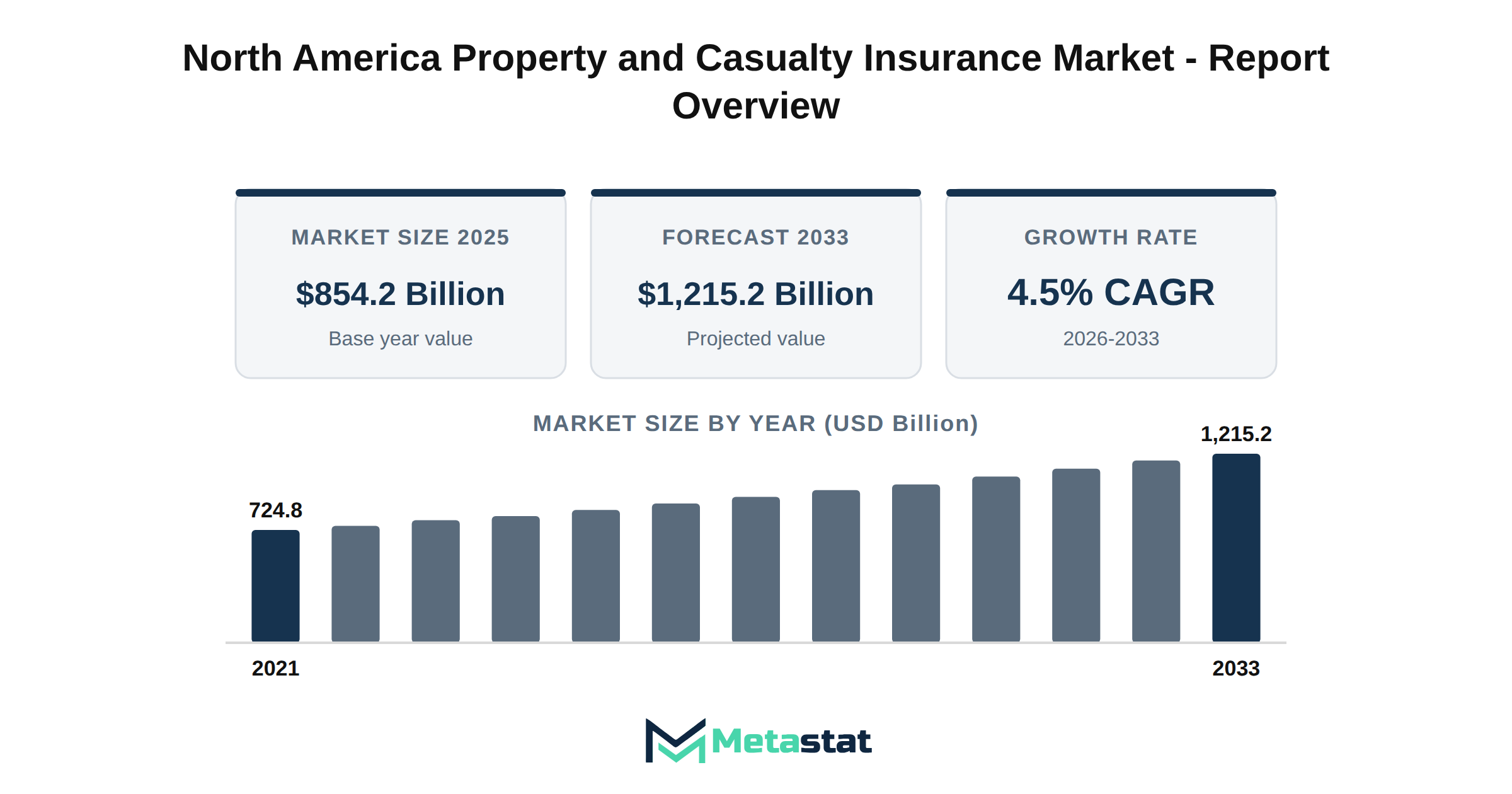
The North America Property and Casualty Insurance market is projected to grow from USD 854.2 billion in 2025 to USD 1,215.2 billion by 2033, reflecting a compound annual growth rate (CAGR) of 4.5%. Historical data indicates steady growth, with the market expanding from USD 724.8 billion in 2021 to USD 814.5 billion in 2024.
Rising property catastrophe losses are reshaping demand for property and casualty insurance. Increased incidence of natural disasters has heightened awareness regarding coverage adequacy, prompting consumers and businesses to seek comprehensive policies. This trend enhances premium growth potential within the market.
Pricing trends in personal auto insurance indicate an upward trajectory due to escalating claims costs driven by vehicle repairs and liability claims. Insurers are adjusting rates to accommodate these increased costs, influencing consumer purchasing behavior and reshaping market dynamics.
Homeowners insurance has experienced premium inflation driven by rising property values and increased replacement costs. Coverage availability remains a concern, particularly in high-risk areas, leading to shifts in consumer preferences toward more tailored insurance solutions.
Commercial property insurance reflects evolving capacity and underwriting trends. Insurers are adapting their approaches to account for emerging risks and market conditions, impacting premium structures and coverage offerings. This adaptation is critical in maintaining competitiveness within the market.
The growth of cyber insurance across North American businesses highlights increasing concerns over data breaches and cyber threats. Organizations are prioritizing coverage to mitigate potential losses, resulting in significant growth trajectory for this segment within the market.
Expansion of specialty and excess liability insurance is evident due to businesses seeking enhanced protection against unique risks. This trend creates growth opportunities for insurers willing to innovate and develop specialized products tailored to diverse industries.
Advancements in AI and automation are transforming P&C insurance underwriting processes. These technologies streamline operations, enhance risk assessment capabilities, and improve overall efficiency, benefiting insurers and policyholders alike.
Telematics adoption in personal and commercial auto insurance is increasing due to consumers seeking personalized premiums based on driving behavior. This data-driven approach allows for more accurate risk assessments, supporting competitive pricing strategies within the market.
The North America Property and Casualty Insurance market experiences significant growth trends driven by various factors. Rising property catastrophe losses impact insurance demand, compelling insurers to adjust their strategies and pricing models. The increasing frequency and severity of natural disasters create substantial challenges for underwriters, resulting in a reevaluation of risk assessments and pricing structures.
In the personal auto insurance segment, pricing and claims cost trends reflect a complex landscape. Insurers face rising claims expenses due to higher repair costs and evolving consumer expectations. The integration of telematics technology significantly shapes underwriting practices, allowing insurers to assess risk more accurately and adjust premiums accordingly.
Homeowners insurance premiums experience inflation, driven by increased reconstruction costs and changing market dynamics. Coverage availability becomes a concern for many homeowners, particularly in areas susceptible to natural disasters. Insurers increasingly focus on developing comprehensive policies that address emerging risks while ensuring adequate coverage for clients.
Commercial property insurance faces challenges related to capacity and underwriting trends. Insurers adopt a more cautious approach to underwriting, reflecting heightened risk perceptions. This cautious approach influences the availability of coverage for businesses, with many seeking specialized solutions to meet their unique needs.
The growth of cyber insurance across North American businesses signifies a shift in risk management priorities. While cyber threats escalate, organizations recognize the importance of safeguarding their digital assets. Insurers respond by expanding their offerings, tailoring policies to address specific cybersecurity risks and enhance coverage options.
Specialty and excess liability insurance sectors demonstrate significant growth, driven by increasing awareness of potential liabilities. Businesses seek enhanced protection against various risks, prompting insurers to innovate and expand their product offerings. This trend highlights the evolving nature of risk in today’s business environment.
Artificial intelligence and automation transform underwriting processes within the market. Insurers leverage advanced technologies to streamline operations, enhance data analysis, and improve decision-making. This transformation leads to greater efficiency and more competitive pricing structures in the insurance landscape.
Digital claims management and fraud detection initiatives reshape customer experiences within the market. Insurers invest in technology to facilitate quicker claims processing and mitigate fraudulent activities. These innovations enhance customer satisfaction while reinforcing the integrity of the insurance process.
Climate risk and catastrophe modeling become essential components of property insurance strategies. Insurers incorporate advanced modeling techniques to assess potential risks associated with climate change. This proactive approach enables better pricing strategies and coverage options tailored to emerging risks.
Reinsurance cost trends significantly impact pricing strategies within the market. Fluctuations in reinsurance rates influence how insurers price their products, ultimately affecting consumer premiums. Insurers navigate these trends to maintain competitiveness while ensuring adequate coverage for policyholders.
Regulatory changes affect North American P&C insurers, requiring adaptation to evolving compliance standards. Insurers prioritize compliance initiatives to mitigate risks associated with non-compliance. This focus on regulatory adherence influences operational strategies and overall market dynamics.
Independent agents and managing general agents (MGAs) play a critical role in the distribution channel evolution. Their expertise facilitates connections between insurers and policyholders, enhancing the accessibility of insurance products. This evolution reflects a growing demand for personalized service and tailored insurance solutions.
Direct-to-consumer insurance adoption across personal lines continues to rise. Consumers increasingly seek convenient and straightforward purchasing experiences. Insurers respond by enhancing their digital platforms and marketing strategies to meet evolving consumer preferences within the market.
The demand for commercial P&C coverage, particularly among small and mid-sized businesses, reflects a growing awareness of risk management. These businesses actively pursue comprehensive insurance solutions that address their specific needs. Insurers recognize this trend and adapt their offerings accordingly, creating growth opportunities within this segment.
Embedded insurance and affinity distribution channels experience accelerated growth. Insurers collaborate with various partners to integrate insurance products into existing services, enhancing customer convenience. This approach broadens market reach and increases penetration among diverse consumer segments.
The North America Property and Casualty Insurance market experiences ongoing mergers, acquisitions, and insurtech investment trends. Insurers increasingly seek partnerships to enhance their capabilities and expand market share. These strategic moves reflect a competitive environment where innovation significantly shapes the future of the industry.
In the United States, the P&C insurance market experiences significant growth and competitive dynamics. Insurers focus on optimizing their product offerings and improving customer engagement. Canada follows suit, with trends indicating a growing demand for comprehensive insurance solutions tailored to local needs. Mexico presents unique growth opportunities, particularly in addressing the specific insurance requirements of its market.
Claims severity, repair costs, and social inflation trends significantly impact insurers' operational strategies. The rising costs associated with claims processing necessitate careful management of resources and pricing strategies. Natural catastrophe exposure creates protection gaps that insurers address to maintain market stability and customer trust.
Future growth opportunities in the North America Property and Casualty Insurance market hinge on innovation, adaptation, and responsiveness to evolving market dynamics. Insurers that align their strategies with emerging trends position themselves for success in this competitive environment.
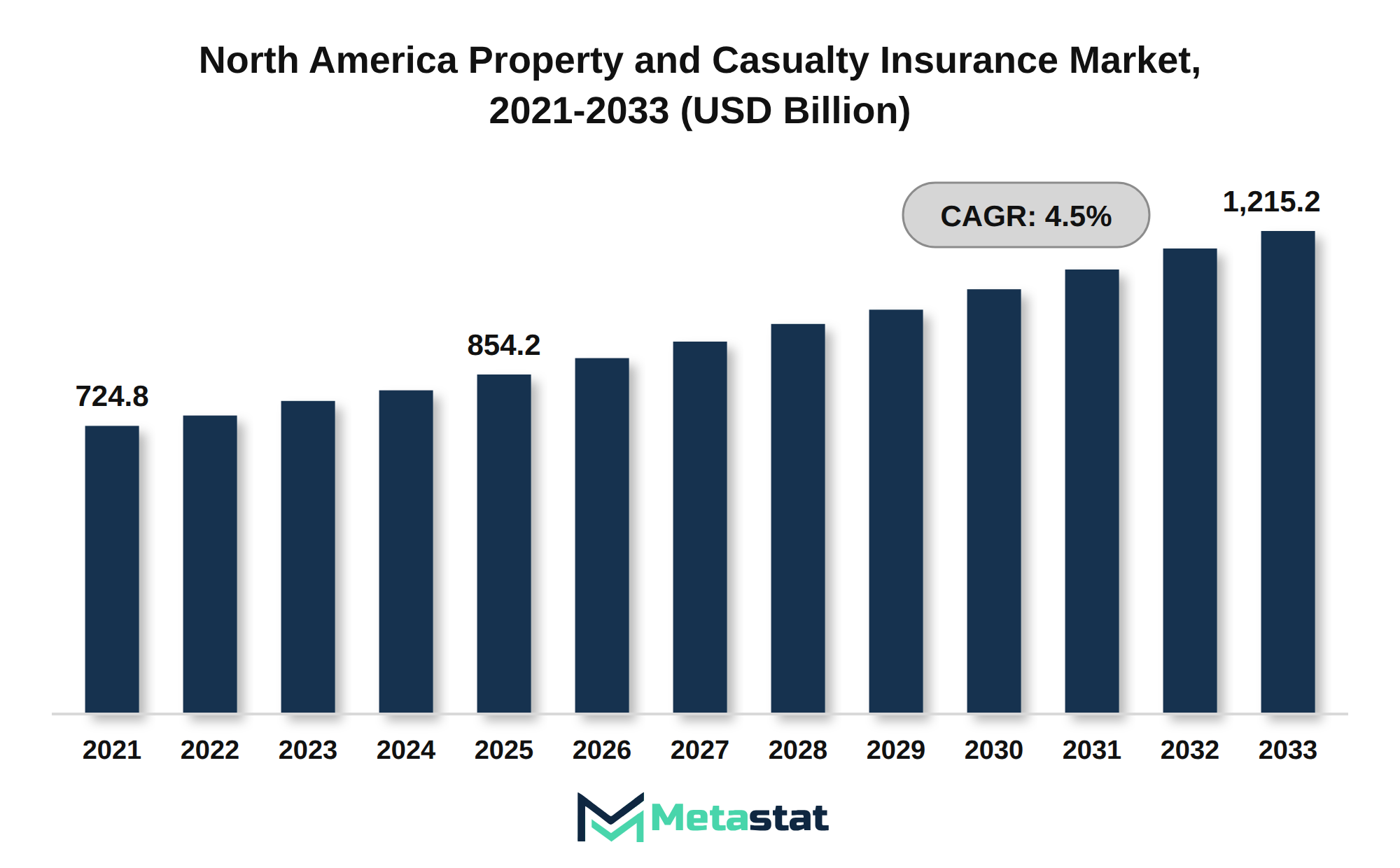
The North America Property and Casualty Insurance market experiences growth driven by several macro-economic factors. Economic indicators, including GDP growth and capital investments, directly influence the demand for insurance products. Increased economic activity often leads to higher asset values, which in turn raises the requirement for comprehensive insurance coverage. The subsequent rise in public and private spending enhances the attractiveness of insurance offerings, leading to higher market penetration.
Interest rates further impact the market through their effect on consumer borrowing and investment behavior. Lower interest rates typically encourage borrowing, enabling individuals and businesses to invest in property and assets that require insurance. This trend increases demand for various insurance products, including personal and commercial lines.
Demographic shifts, particularly urbanization and changing consumer behaviors, play a critical role in shaping the insurance landscape. The aging population in North America necessitates tailored insurance solutions that address specific health and lifestyle concerns, contributing to the market's growth. Evolving consumer priorities toward digital solutions and enhanced user experiences promote the adoption of innovative technologies within the industry, further supporting market expansion.
The North America Property and Casualty Insurance market is anticipated to benefit from these macro-economic dynamics, reinforcing the reliance on insurance products across various sectors. Sustained economic growth, along with demographic changes, ensures a dynamic environment for insurance providers to innovate and adapt their offerings, ultimately enhancing competitiveness and consumer satisfaction.
Digital transformation significantly shapes the North America Property and Casualty Insurance market. The integration of advanced technologies, including automation, artificial intelligence, and software adoption, streamlines processes and enhances operational efficiency. Insurers leverage these technologies to digitize legacy systems, facilitating improved customer interactions and faster claims processing. Such advancements lead to increased productivity and reduced operational costs.
The adoption of technology-driven solutions responds to shifting consumer behaviors and expectations. Customers demand effective experiences and personalized services, prompting insurers to invest in innovative platforms that meet these requirements. Enhanced digital capabilities support better data analysis and risk assessment, allowing insurers to tailor products to individual needs effectively. This alignment with consumer preferences fuels demand in the market.
Technological advancements enable insurers to comply with evolving regulatory frameworks more efficiently. Automation reduces the burden of manual compliance processes and enhances accuracy. This capability allows insurers to focus on strategic initiatives while ensuring adherence to regulatory standards, supporting overall market growth. The combination of these advancements strengthens the outlook for the North America Property and Casualty Insurance market, leading to sustained expansion throughout the forecast period.
The North America Property and Casualty Insurance market faces significant challenges related to regulatory compliance. Regulatory tightening increases the complexity of operations for insurers, requiring them to allocate substantial resources to meet evolving legal mandates. Compliance hurdles, including strict reporting requirements and adherence to varied state regulations, lead to increased operational costs. Insurers bear the burden of these compliance costs, detracting from their ability to invest in innovative solutions or competitive pricing strategies.
Macroeconomic headwinds, including inflationary pressures and capital stagnation, further constrain the market. Rising inflation impacts consumer purchasing power, leading to reduced demand for insurance products. Geopolitical instability creates uncertainty in the market, affecting investment decisions and operational stability. This uncertainty slows growth and limits opportunities for expansion.
Infrastructure gaps and connectivity deficits hamper the ability of insurers to streamline operations. Insufficient technological infrastructure delays the adoption of digital solutions, essential for enhancing customer engagement and operational efficiency. Talent gaps and skilled labor deficiencies create challenges in operational execution, affecting service delivery and customer satisfaction.
Data security vulnerabilities and privacy concerns heighten the risks associated with digital transformation. Insurers face pressure to protect sensitive customer information, leading to increased costs in cybersecurity measures. Continuing concerns about intellectual property theft further complicate the market environment, necessitating that insurers invest in robust security protocols.
Overall, these restraints hinder the growth potential of the North America Property and Casualty Insurance market. Addressing these challenges involves balancing compliance with operational efficiency while navigating external economic factors. The market's ability to adapt and innovate amid these pressures will significantly influence its future trajectory.
Geopolitical fragmentation disrupts the North America Property and Casualty Insurance market by creating uncertainties in trade relations and regulatory environments. Inconsistent policies across regions lead to challenges in compliance and operational consistency, impacting insurers' ability to effectively manage risks and set competitive pricing. Trade deficits and tariff friction exacerbate these challenges, particularly for companies reliant on international markets for resources and components.
Technological disruptions further complicate the landscape, driven by rapid advancements that outpace the ability of the market to adapt. Insurers face significant pressures to integrate new technologies into legacy systems, which creates interoperability issues and increases operational costs. The need for effective integration of digital tools and platforms strains existing infrastructures, limiting growth prospects and increasing competition.
Rising input costs and pricing compression influence profitability across the market. Insurers continue to encounter margin pressures due to elevated operational expenses and competitive pricing strategies, which restrict investments in innovation and customer service enhancements. This dynamic poses a threat to long-term sustainability and customer retention.
Workforce skill gaps and talent retention pressures further challenge the market. The increasing demand for skilled professionals in emerging technologies necessitates investments in training and development programs. A shortage of qualified personnel hinders operational efficiency and innovation, impacting overall market performance.
These factors collectively contribute to heightened volatility within the North America Property and Casualty Insurance market. Insurers navigate these complexities to maintain a competitive edge and ensure sustainable growth in an increasingly fragmented environment.
The North America Property and Casualty Insurance market experiences opportunities driven by digital transformation, influencing customer interactions and operational processes. The adoption of advanced technologies, including artificial intelligence and machine learning, enhances risk assessment and claims processing efficiencies, leading to improved customer service and satisfaction. This technological shift attracts customers seeking personalized experiences, resulting in increased demand across various insurance lines.
Investment in digital platforms supports the emergence of innovative service models, enabling direct-to-consumer channels and enhancing customer engagement. Digital procurement shifts reshape buying behaviors, allowing insurers to respond quickly to evolving market needs and preferences. Consequently, this transformation drives competitive advantages, enabling firms to enhance their offerings and capture new market segments.
The North America Property and Casualty Insurance market benefits from strategic consolidation activities within the industry. Mergers and acquisitions create cross-industry collaborations, expanding service capabilities and product integration. This consolidation allows for greater operational synergies, ultimately benefiting customers through more comprehensive insurance solutions.
The increasing focus on sustainability and environmental, social, and governance (ESG) frameworks shapes product development and service delivery within the market. Insurers align their offerings with eco-friendly practices, catering to a growing market segment that prioritizes sustainability. This alignment enhances brand reputation and opens new avenues for growth in niche application areas.
Overall, the North America Property and Casualty Insurance market is poised for significant advancement through digital transformation, strategic consolidation, and an emphasis on sustainable practices, presenting substantial opportunities for growth and investment in the coming years.
The North America Property and Casualty Insurance market is segmented based on Insurance Line, Distribution Channel, Customer Segment, and Region.
Valued at USD 340.6 billion in 2026, the Personal Auto Insurance segment is projected to reach USD 438.9 billion by 2033, with a CAGR of 3.7% during the forecast period. Factors driving growth include increasing vehicle ownership, higher disposable incomes, and rising accident rates, which contribute to heightened demand for auto insurance coverage. Changes in consumer preferences toward digital services and streamlined claims processing enhance the appeal of personal auto insurance products.
Technological advancements play a crucial role in this segment, with insurers adopting telematics and usage-based insurance models to provide personalized pricing and incentivize safe driving behaviors. Such innovations improve customer satisfaction and enable companies to manage risk more effectively. The market witnesses a shift toward comprehensive coverage options, addressing emerging needs including cyber insurance for connected vehicles.
Regulatory compliance remains a significant aspect affecting the market. Insurers adapt to evolving regulations that mandate coverage levels and consumer protections, influencing policy offerings and pricing strategies. Economic fluctuations impact cost structures, driving insurers to refine their pricing models and enhance operational efficiency to maintain profitability.
The North America Property and Casualty Insurance market reflects ongoing changes in consumer behavior, alongside the integration of advanced technologies that reshape product offerings. Competitive dynamics intensify because players adapt to market demands, balancing innovation with regulatory compliance to secure and expand their market share.
Growth in the homeowners and residential property insurance segment reflects increased demand for residential coverage amid rising property values and growing awareness of risk management. Homeowners increasingly seek protection against natural disasters, theft, and liability claims, driven by a higher incidence of extreme weather events. This evolving risk landscape necessitates enhanced insurance solutions tailored to individual homeowner needs, supporting segment expansion.
Technological maturation influences the market by enabling innovative insurance models, including usage-based insurance and digital platforms that simplify claims processing. These advancements enhance customer engagement and streamline insurance purchase processes, driving adoption rates upward. The segment is projected to reach USD 216.8 billion by 2033, growing at a CAGR of 4.1% during the forecast period.
Regulatory compliance standards and certifications play critical roles in shaping the homeowners and residential property insurance segment. Insurers adhere to evolving regulations that govern policy terms, coverage limits, and pricing structures. Meeting these standards promotes consumer trust and confidence while ensuring a competitive edge in the market.
Pricing volatility presents challenges due to fluctuating reinsurance costs and regional disparities in risk assessments. Insurers face margin pressures, necessitating effective risk management strategies to maintain profitability. Addressing these pressures requires strategic opportunities that utilize data analytics for more accurate pricing models and risk assessments.
Market players actively invest in white-space analysis to identify unmet consumer needs, leading to the development of personalized insurance products. Shifts in consumer preferences toward customizable policies support the evolution of product offerings, enhancing competition within the homeowners and residential property insurance segment. The strategic capital investment outlook remains positive, driven by initiatives aimed at enhancing digital capabilities and product innovation, ultimately benefiting the market.
Commercial Property Insurance experiences steady growth, projected to reach USD 109.7 billion by 2033. The increasing prevalence of natural disasters and climate-related events drives demand for comprehensive coverage. Businesses across various sectors recognize the protect their assets against risks including fire, theft, and liability, leading to heightened awareness of insurance needs.
The adoption of advanced risk assessment technologies enhances the underwriting process, allowing insurers to evaluate threats more accurately. This technological maturation promotes competitive pricing structures and encourages wider adoption among businesses seeking tailored insurance solutions. Ongoing evolution in product offerings meets the diverse needs of commercial clients, ranging from small enterprises to large corporations.
Regulatory compliance standards influence the market, requiring businesses to maintain adequate insurance coverage. These standards create an environment where companies prioritize risk management and insurance procurement, further stimulating market growth. Pricing volatility remains a consideration, with companies navigating fluctuating premiums influenced by the broader economic landscape and loss history.
Investment in the Commercial Property Insurance segment supports strategic opportunity windows, enabling insurers to innovate and diversify their offerings. The integration of technology in claims processing and customer service enhances efficiency, resulting in improved customer satisfaction and retention. Overall, the North America Property and Casualty Insurance market reflects a robust trajectory, driven by evolving customer needs and an adaptive insurance landscape.
Growing recognition of the importance of commercial auto insurance supports increased demand across various industries. Fleet operators, delivery services, and construction companies rely heavily on commercial auto coverage to mitigate risks associated with vehicle operations. The segment is projected to grow at a CAGR of 4.2% during the forecast period. Enhanced regulatory requirements for fleet safety and environmental standards drive companies to seek comprehensive insurance solutions.
Technological advancements in telematics and vehicle tracking systems contribute to the evolution of insurance products. Insurers incorporate data analytics to offer tailored policies that reflect actual driving behavior, promoting safer practices among insured drivers. This trend aligns with the broader market shift toward personalized insurance offerings that cater to specific risk profiles.
Competitive pricing and comprehensive coverage options attract new clients. Changing consumer preferences favor insurers that provide transparent pricing structures and value-added services, including risk management consulting. The market remains sensitive to pricing volatility, with ongoing pressures to maintain profitability while meeting client expectations.
Strategic opportunity windows emerge for insurers that invest in digital platforms and improve customer engagement. Streamlined claims processes and online policy management enhance customer experience, encouraging retention and attracting new policyholders. This dynamic contributes to the overall growth of the North America Property and Casualty Insurance market.
Demand for Workers' Compensation Insurance in the North America Property and Casualty Insurance market stems from various factors, including the rising emphasis on workplace safety and employee well-being across industries. Enhanced focus on compliance with occupational safety regulations drives employers to secure coverage that protects against potential liabilities arising from worker injuries or illnesses, promoting a safer work environment.
Adoption of Workers' Compensation Insurance continues to expand driven by the increasing number of small to medium-sized enterprises (SMEs) recognizing the importance of safeguarding their workforce. With advancements in technology, insurance providers innovate their offerings, providing tailored solutions that meet the unique needs of different businesses, leading to greater uptake in this segment.
The segment's evolution reflects ongoing changes in the regulatory landscape, with states implementing stricter compliance standards. Insurers now navigate diverse legislative requirements, influencing product designs and pricing strategies. This regulatory pressure promotes a competitive environment among providers and encourages continuous improvements in claims processing and customer service.
Technological maturation supports the development of next-generation insurance products, with data analytics and artificial intelligence enhancing underwriting processes and risk assessment capabilities. These advancements facilitate more accurate pricing models and enable insurers to better predict potential claims, thereby increasing profitability within the segment.
End-use dynamics highlight the significance of Workers' Compensation Insurance across various sectors, including construction, healthcare, and manufacturing. These industries, characterized by higher occupational risk, place a premium on securing comprehensive coverage that addresses their specific challenges. Consequently, this targeted approach increases demand and drives sustained growth within the segment.
While consumption shifts toward more flexible and customized insurance solutions, providers seek strategic opportunity windows to adapt their products. Enhanced digital interfaces and streamlined processes allow customers to engage more seamlessly, driving higher satisfaction levels and loyalty toward insurers. This transformation positions Workers' Compensation Insurance because a critical component of the broader North America Property and Casualty Insurance market.
Investment in technology and innovative solutions will play a crucial role in shaping the future of Workers' Compensation Insurance. Insurers that align their strategies to capitalize on these trends are likely to strengthen their competitive position and enhance overall market performance.
Growth in the General & Excess Liability Insurance segment derives from increasing awareness about risk management among businesses. Organizations recognize the necessity of protecting against various liability exposures, thus driving demand for this insurance type. Companies across multiple industries, including manufacturing, technology, and retail, rely on these policies to mitigate financial risks linked to claims and lawsuits.
Technological advancements contribute significantly to the evolving landscape of this segment. Insurers implement data analytics and artificial intelligence to assess risk profiles more accurately, enhancing underwriting processes. These improvements enable insurers to offer tailored coverage options, addressing the unique needs of different businesses while maintaining competitive pricing structures.
Regulatory changes further impact the General & Excess Liability Insurance segment, pushing organizations toward compliance with new standards. Companies adapt to evolving regulations, creating a need for comprehensive liability coverage that emphasizes regulatory compliance. This dynamic drives growth within the market, driven by businesses seeking policies that align with their operational frameworks.
Pricing volatility represents a challenge in this segment, influenced by market competition and claims history. Insurers adjust premiums based on risk assessments, which fluctuate based on industry trends and economic conditions. Consequently, businesses experience varying costs associated with liability insurance, impacting their overall financial planning.
Investment in capital improvements remains essential for insurers aiming to enhance their product offerings and customer service. Companies focusing on innovation attract clients seeking comprehensive solutions tailored to their specific needs. This strategic approach drives growth within the North America Property and Casualty Insurance market, positioning insurers to capitalize on emerging opportunities.
Increasing awareness of regulatory compliance standards drives demand for Professional & Management Liability Insurance within the North America Property and Casualty Insurance market. Organizations prioritize coverage for legal liabilities that arise from professional services, reinforcing the need for comprehensive protection against potential claims. This segment experiences growth due to heightened litigation risks and an evolving business landscape that demands greater accountability.
Technological maturation influences product evolution within this insurance segment. Advancements in risk assessment and management tools enhance underwriting processes, enabling insurers to offer tailored policies that address specific client needs. The integration of data analytics and artificial intelligence facilitates improved decision-making for insurers, contributing to competitive pricing structures in the market.
Downstream applications of Professional & Management Liability Insurance extend across various industries, including healthcare, legal, and financial services. Escalating complexities in these sectors create a fertile ground for adopting tailored coverage solutions that address unique risks. This trend reflects a shift in consumption patterns, where businesses actively seek coverage that aligns with their operational profiles and risk exposure.
Cost structures within the segment face pressures from rising claims and litigation expenses. Insurers respond by adjusting premiums and enhancing loss control measures to maintain profitability. Pricing volatility challenges market participants to balance competitive rates with sustainable margins, impacting their strategic positioning within the North America Property and Casualty Insurance market.
Strategic opportunity windows emerge owing to businesses seeking innovative solutions to mitigate risks associated with professional services. Insurers that invest in next-generation upgrades, including digital platforms and enhanced service offerings, position themselves favorably to capture market share. This proactive approach supports ongoing growth and adaptation to shifting market dynamics.
Growing concerns surrounding cybersecurity threats drive the demand for Cyber Insurance within the North America Property and Casualty Insurance market. Increased reliance on digital infrastructure across various industries pushes businesses to seek protection against potential losses from cyberattacks, data breaches, and hacking incidents. Heightened awareness of the financial implications associated with cyber incidents influences both large enterprises and small to medium-sized enterprises to adopt Cyber Insurance solutions because a critical risk management strategy.
Technological maturation in cybersecurity solutions contributes to the segment’s expansion. Enhanced security measures and innovations in threat detection reshape product offerings, enabling insurers to provide more tailored coverage options. This evolution supports a shift in end-use dynamics, because businesses increasingly recognize the importance of comprehensive cyber risk management.
Regulatory compliance standards play a significant role in shaping the Cyber Insurance segment. Emerging regulations mandating data protection and privacy standards compel organizations to integrate insurance solutions that address their compliance requirements. This regulatory landscape drives the adoption of Cyber Insurance, aligning it with broader corporate governance strategies.
Cost structures within the segment reflect the ongoing competition among insurers, resulting in diverse pricing strategies. Insurers continuously adjust their pricing models to accommodate the evolving risk landscape and reinforce their market positioning. Increased competition encourages innovation, prompting insurers to enhance their product offerings and address customer needs effectively.
Strategic opportunity windows arise from the increasing sophistication of cyber threats, driving insurers to explore new capabilities and partnerships. Investment in next-generation upgrades allows companies to stay ahead of emerging risks, further enhancing the relevance of Cyber Insurance. The market continues to adapt, reflecting the critical importance of safeguarding businesses against evolving cyber threats.
In the North America Property and Casualty Insurance market, Marine & Inland Marine Insurance responds to evolving risks associated with maritime activities. Growing international trade and increased shipping activities drive demand for coverage against potential losses. Industries including shipping, logistics, and recreational boating contribute to this demand, requiring tailored insurance solutions that consider unique exposure levels.
Technological advancements support the segment's evolution, with enhanced risk assessment tools and data analytics improving underwriting processes. Adoption of innovative technologies facilitates better prediction of risks, allowing insurers to develop specialized products for clients. Regulatory compliance standards surrounding marine operations impact the segment, requiring insurance providers to navigate complex legal frameworks while offering competitive products.
Market participants face challenges related to cost structures and margin pressures stemming from pricing volatility. Fluctuating costs of raw materials, including those related to vessel construction and maintenance, directly affect insurance premiums. Strategic opportunities arise from increasing investments in the marine sector, particularly in areas including eco-friendly vessel technology and automation, offering insurers potential avenues for growth.
Consumption shifts toward sustainability influence the types of coverage sought, with an emphasis on environmental responsibility among consumers. Insurers adapting products to address these concerns position themselves favorably within the market. The Marine & Inland Marine Insurance segment reflects a dynamic relationship of demand drivers and market forces, highlighting its importance within the broader North America Property and Casualty Insurance market.
Demand for the Others (Surety, Crop, Aviation, Pet, Travel Insurance) segment is driven by diverse end-use applications, including niche markets addressing specific insurance needs. Consumer awareness regarding financial protection against unforeseen events accelerates adoption, particularly in less conventional sectors including pet insurance and travel coverage. Evolving regulatory compliance standards further highlight the importance of adequate insurance solutions, prompting individuals and businesses to seek tailored offerings.
Segment expansion relies on innovations in product offerings, utilizing technological advancements to enhance customer experience and streamline claims processing. Insurance companies prioritize product evolution, developing policies that cater to emerging risks and customer preferences. Increased investment in marketing strategies effectively targets demographics that previously overlooked these insurance products, thereby widening the customer base.
End-use dynamics reflect shifting consumption patterns, with consumers increasingly recognizing the need for comprehensive coverage. Specific risks become more pronounced, including those associated with climate change and travel disruptions, driving demand for niche insurance products. Capital investment outlook remains favorable, driven by a growing number of entrants into the market striving to offer competitive solutions tailored to meet varied consumer needs.
In the North America Property and Casualty Insurance market, supply chain resilience and strategic opportunity windows present avenues for growth within this sub-segment. Addressing logistics vulnerabilities and adapting to shifts in consumer expectations positions companies operating in this space to capture a larger market share. The combination of regulatory pressures and market demands creates an environment ripe for innovation, encouraging firms to explore new product lines and customer engagement strategies.
Valued at USD 275.3 billion in 2026, the Captive & Exclusive Agents segment is projected to reach USD 338.2 billion by 2033, representing a CAGR of 3% during the forecast period. Factors driving demand within this segment include the growing preference for personalized insurance solutions, creating closer relationships between agents and clients. This demand is particularly prevalent among consumers seeking tailored products that traditional distribution channels often overlook.
Adoption of technology continues to transform the segment, enhancing customer engagement and operational efficiencies. Many agents leverage digital platforms to streamline processes and improve customer experience, ultimately increasing client retention and loyalty. Segment expansion benefits from the rise of digital tools that enable agents to access a broader range of insurance products, enhancing competitiveness in the market.
The regulatory landscape significantly influences this segment, requiring agents to stay abreast of compliance standards, which impacts operational costs. Fluctuations in pricing due to market volatility necessitate strategic positioning by agents to maintain margins, further emphasizing the importance of robust risk management practices. Continuous investment in training and technology is essential for agents to adapt to evolving consumer needs and regulatory requirements.
Overall, the Captive & Exclusive Agents segment plays a critical role in the North America Property and Casualty Insurance market. Growth in this sector reflects broader trends toward customization and digital transformation, positioning agents to thrive amid a changing industry environment.
Growth in the Independent Agents & Retail Brokers segment reflects increasing demand for personalized insurance services and the ability to navigate complex insurance products. This demand arises from consumers seeking tailored solutions, driving agents to enhance service offerings and improve customer interactions. Segment expansion stems from technological advancements that enable agents to apply digital tools for better customer engagement and streamlined processes.
Independent agents increasingly employ data analytics to inform product offerings and identify market trends. This data-driven approach enhances their ability to meet evolving consumer needs. Regulatory changes influence how agents operate, with compliance becoming a critical focus area, affecting operational strategies and market engagement.
The segment is projected to reach USD 393.8 billion by 2033, growing at a CAGR of 3.8% during the forecast period. Improved service quality and customer satisfaction contribute to this growth, positioning the segment favorably within the North America Property and Casualty Insurance market.
Investments in technology and training further enhance agents' capabilities, allowing them to compete effectively against direct-to-consumer models. Agents who adapt to changing market dynamics and enhance their value propositions will play a significant role in shaping the market.
Growth within the Wholesale Brokers & Managing General Agents (MGAs) segment is driven by the increasing complexity of insurance products and the need for specialized knowledge in risk management. This segment is projected to reach USD 125.9 billion by 2033, reflecting a strategic shift in how insurers distribute their offerings, particularly driven by organizations seeking to enhance their service capabilities. While the market evolves, demand is expected to rise for brokers and agents who navigate intricate insurance landscapes and deliver tailored solutions.
Technological maturation significantly influences the segment's expansion. Innovations including data analytics, artificial intelligence, and digital platforms facilitate more efficient operations and enhance customer engagement. These advancements enable wholesalers and MGAs to streamline processes, optimize pricing models, and provide superior service to clients, which translates into increased market share. The integration of next-generation upgrades positions these intermediaries to capitalize on emerging opportunities, especially in niche markets.
Regulatory compliance remains a significant factor influencing market dynamics. The evolving landscape of insurance regulation necessitates that brokers and MGAs stay informed about changes to maintain compliance and mitigate risks. This regulatory environment creates a demand for firms equipped with the expertise to navigate compliance standards, ensuring that they effectively serve their clients while minimizing exposure to liabilities. Consequently, this demand supports growth prospects within the Wholesale Brokers & Managing General Agents (MGAs) segment.
Investment in professional development and training is essential to enhance the capabilities of the workforce within this segment. Cultivating a culture of continuous learning ensures that brokers and agents are well-prepared to meet the changing needs of clients in the North America Property and Casualty Insurance market. While firms invest in human capital, they strengthen their competitive positioning and create more robust service offerings.
Overall, the Wholesale Brokers & Managing General Agents (MGAs) segment presents a landscape ripe for growth. With strategic investment in technology, adherence to regulatory requirements, and a focus on skilled workforce development, the segment is set to thrive in the North America Property and Casualty Insurance market.
Direct-to-Consumer segment is projected to grow at a CAGR of 6.6% during the forecast period. Increased accessibility to online platforms enables direct engagement between insurers and policyholders, eliminating intermediaries and streamlining the purchasing process. This shift aligns with changing consumer preferences for convenience and transparency, creating a more efficient experience for customers. Enhanced digital marketing strategies and targeted advertising further support segment growth, allowing insurers to reach a broader audience effectively.
Technological advancements play a significant role in driving this segment, with innovations in mobile applications and user-friendly online interfaces enhancing customer interaction and policy management. Insurers leveraging data analytics tailor offerings based on user behavior and preferences, thus improving customer satisfaction and retention. The North America Property and Casualty Insurance market increasingly recognizes the importance of these technological advancements, reflecting a critical driver of sustained growth.
Competitive pressures within the market prompt insurers to develop unique product offerings that cater to the evolving needs of consumers. Direct-to-Consumer channels enable rapid product evolution, allowing for quicker adjustments in response to market demands. This adaptability positions insurers favorably in a landscape characterized by shifting consumer expectations and regulatory requirements.
While insurers increasingly focus on direct engagement strategies, the segment's share within the overall market expands. Enhanced customer experience, combined with streamlined operations, supports future growth, reinforcing the importance of the Direct-to-Consumer segment in the North America Property and Casualty Insurance market.
Adoption of bancassurance in the North America Property and Casualty Insurance market aligns with the increasing integration of financial services within banking institutions. Insurers collaborate with banks, expanding the distribution reach of insurance products. Regulatory compliance standards significantly influence this collaboration, encouraging banks to offer insurance solutions alongside traditional banking products.
Strategic opportunity windows exist for banks seeking to diversify their offerings, creating a competitive advantage in the financial services landscape. Customers benefit from streamlined access to insurance products through familiar banking channels, leading to shifts in consumer behavior towards integrated financial solutions. The focus on enhancing customer experience contributes to the evolution of product offerings within the bancassurance segment, further reinforcing its role in the market.
Technological maturation continues to play an important role in shaping the bancassurance model. Advancements in digital platforms facilitate integration of insurance services, enabling banks to provide personalized insurance solutions tailored to individual customer needs. This shift toward digital engagement improves customer retention and enhances the overall value proposition of bancassurance in the North America Property and Casualty Insurance market.
Cost structures associated with bancassurance fluctuate, influenced by the operational efficiencies gained through technological investments and partnerships with insurers. Pricing volatility in the market necessitates a strong strategy to maintain competitive pricing while ensuring profitability. Margin pressures arise from the investment in technology and training, yet the long-term benefits of a well-executed bancassurance strategy present an attractive growth opportunity.
Consumer interest in Affinity & Partner Distribution channels within the North America Property and Casualty Insurance market highlights a strategic approach to securing insurance products through relationships with trusted entities. Organizations leveraging these partnerships benefit from established trust and credibility, facilitating streamlined access to insurance solutions tailored to specific customer needs. The focus on enhancing customer experience drives growth and deepens engagement with target demographics.
Technological advancements in data analytics and customer relationship management systems support these partnerships by enabling insurers to personalize offerings and improve service delivery. Enhanced data insights facilitate identifying market trends and customer preferences, positioning insurers to innovate and adapt their products effectively. This dynamism in product evolution aligns with broader industry shifts towards greater customization and flexibility in insurance solutions.
Regulatory compliance standards continue to pose challenges, influencing the operational frameworks of firms pursuing Affinity & Partner Distribution strategies. Adhering to these standards ensures that partnerships remain robust and compliant, strengthening long-term relationships with distribution partners. Emphasis on transparency and accountability within these collaborations enhances consumer trust while navigating the complexities of policy headwinds.
Competition within the market intensifies owing to players seeking to differentiate their offerings through innovative partnership models. Strategic opportunity windows arise for firms willing to invest in technology and customer engagement initiatives, allowing them to capture market share effectively. A commitment to addressing evolving consumer needs through this distribution channel positions organizations favorably within the broader North America Property and Casualty Insurance market.
Valued at USD 516.7 billion in 2026, the Personal Lines segment projects a growth to USD 667.4 billion by 2033, reflecting a CAGR of 3.7% during the forecast period. Consumer preferences for personalized insurance products influence this growth, driven by individuals increasingly seeking tailored coverage options for their homes and vehicles. Rising adoption of digital platforms enhances the ability of insurers to reach customers effectively, creating opportunities for improved customer engagement and satisfaction.
Technological advancements play a critical role in shaping this segment. Integration of artificial intelligence and data analytics enables insurers to offer customized policies and streamline claims processes, enhancing operational efficiency. Increased competition among providers drives innovation and product evolution, leading to improved offerings that meet changing consumer demands. Regulatory compliance standards, particularly related to data security and consumer protection, necessitate ongoing adaptation within the market, influencing operational costs for insurers.
Shifts in demographics, including an increasing number of younger consumers entering the insurance market, contribute to evolving preferences and consumption patterns. This demographic trend encourages insurers to develop more user-friendly digital interfaces and flexible policy options. The economic landscape impacts disposable income, which directly affects the ability of consumers to invest in insurance products. Overall, the Personal Lines segment reflects a dynamic intersection of consumer preferences, technological advancements, and regulatory demands within the North America Property and Casualty Insurance market.
Significant growth in the Small Commercial (SME) segment is projected, with the market estimated to reach USD 227.4 billion by 2033, at a CAGR of 5% during the forecast period. Several factors contribute to this expansion, including increased demand for tailored insurance solutions that cater specifically to the unique risks faced by small and medium-sized enterprises. These businesses increasingly seek coverage that addresses property damage, liability risks, and business interruption, driving insurers to innovate their offerings.
Technological advancements play a crucial role in shaping the SME segment within the North America Property and Casualty Insurance market. The adoption of digital platforms and data analytics enhances customer engagement and streamlines the underwriting process. This technological maturation enables insurers to offer more competitive pricing and personalized products, aligning closely with the needs of SMEs.
Regulatory compliance standards significantly impact market dynamics. Changes in legislation requiring specific coverage levels force SMEs to adapt and secure appropriate insurance products. Insurers that effectively navigate these regulatory environments capture market share by providing necessary solutions that help SMEs remain compliant.
Pricing volatility and margin pressures represent key challenges for insurers in this segment. Fluctuations in loss experience and economic factors influence premium rates, affecting both buyers and providers. Insurers that adopt proactive risk management strategies mitigate these impacts, enhancing their competitive positioning while ensuring they meet the evolving needs of SMEs.
Overall, the Small Commercial (SME) segment stands at a strategic juncture within the North America Property and Casualty Insurance market, driven by demand for innovative solutions and a commitment to regulatory compliance. The combination of these factors creates a robust environment for growth and opportunity within this critical segment.
Demand for the Middle-Market Commercial segment contributes significantly to the overall growth of the North America Property and Casualty Insurance market. The segment is projected to reach USD 161 billion by 2033, providing a robust opportunity for insurers targeting mid-sized companies. Increasing insurance needs among middle-market businesses arise from economic expansion and rising operational complexities, which necessitate comprehensive coverage solutions.
Enhanced regulatory compliance standards compel businesses to seek tailored insurance products that protect against specific risks. Middle-market enterprises face unique challenges that differ from those of larger corporations, leading to a demand for specialized insurance offerings. Insurers that adapt their product portfolios to meet these evolving demands position themselves advantageously within the market.
Investment in technology is vital to the segment's evolution. Insurers focusing on digital platforms and data analytics enhance customer engagement and streamline policy administration. Integrating advanced technologies facilitates developing innovative products, enabling insurers to address the needs of middle-market clients more effectively.
Strategic partnerships and collaborations with distribution channels, including independent agents and brokers, significantly impact market penetration within the Middle-Market Commercial segment. These partnerships enhance the reach of insurance providers, driving growth and accessibility for mid-sized businesses seeking effective coverage solutions. Overall, the Middle-Market Commercial segment reflects a dynamic and evolving environment within the North America Property and Casualty Insurance market, characterized by growing demand, technological advancements, and a strong focus on customer-centric solutions.
Growth in the Large Commercial & Specialty segment aligns with the increasing complexity of business operations and heightened liability concerns. Risk management strategies evolve, prompting businesses to seek tailored insurance solutions that address unique industry challenges. The segment is projected to grow at a CAGR of 6.5% during the forecast period. Enhanced focus on compliance with regulatory standards further fuels demand for specialized coverage, driven by companies striving to mitigate potential legal and financial penalties. The ongoing evolution of products tailored for large enterprises enhances overall market attractiveness, drawing in investments aimed at advancing coverage options.
Continued technological maturation in the insurance industry supports improved underwriting processes and risk assessment methodologies, which benefits the Large Commercial & Specialty sector. Insurers invest in advanced analytics and data-driven insights, enabling them to offer customized policies that cater to the specific needs of large businesses. This trend increases competition within the market, compelling players to innovate while balancing cost structures and pricing volatility. While the demand for specialized coverage increases, companies engage in strategic partnerships and collaborations to enhance service offerings and expand their market reach within the North America Property and Casualty Insurance market.
Valued at USD 820.2 billion in 2026, the segment is projected to reach USD 1,102.5 billion by 2033, at a CAGR of 4.3% during the forecast period. Growth within the United States stems from factors including increasing consumer awareness of the importance of insurance coverage and the rising frequency of natural disasters. These elements drive demand for various insurance lines, particularly Personal Auto Insurance and Homeowners & Residential Property Insurance, which hold significant market shares. The ongoing evolution of products and services, alongside advancements in technology, enhances customer experience, leading to higher adoption rates across the market.
Investment in next-generation upgrades supports the development of innovative insurance solutions, enabling providers to respond effectively to changing consumer needs. Regulatory compliance standards play a critical role in shaping business operations, compelling companies to align with evolving legislation to mitigate risks. Cost structures exhibit pressures from pricing volatility driven by market competition and loss events, influencing operational margins. The strategic opportunity window in the United States market involves leveraging technological advancements to streamline processes and enhance profitability.
End-use dynamics contribute to a shift in consumption patterns, with consumers increasingly seeking personalized coverage options tailored to individual needs. This trend reflects a broader movement towards customization within the North America Property and Casualty Insurance market. Companies that adapt their offerings to meet these changing demands strengthen their market position and expand their customer base. Capital investment outlook remains positive, with firms focusing on integrating advanced analytics and digital platforms to enhance service delivery and operational efficiency.
Forecasts indicate the Canada segment is estimated to reach USD 86 billion by 2033, at a CAGR of 5.1% during the forecast period. Factors driving growth encompass a rising focus on comprehensive insurance solutions and evolving consumer preferences, along with heightened awareness regarding risk management. This evolving landscape influences market dynamics, because insurers enhance their product offerings to cater to the demands of both personal and commercial lines.
Technological advancements are expected to play a crucial role in shaping the market, with insurers adopting digital platforms to streamline customer interactions and expand their reach. Continuous innovation in underwriting processes and claims management systems facilitates improved efficiency, enhancing customer satisfaction and retention rates. A shift towards personalized insurance products aligns with changing consumer expectations, prompting companies to adjust their strategies accordingly.
Regulatory compliance remains a significant factor affecting market operations, compelling insurers to adapt to emerging standards and practices. Adhering to these regulations influences pricing structures and operational expenses, thereby impacting profitability margins. Insurers actively invest in compliance measures to mitigate risks associated with regulatory penalties while enhancing their reputation in the market.
The Canada segment's performance aligns with broader trends shaping the North America Property and Casualty Insurance market. Growth opportunities arise from the increasing demand for innovative insurance solutions, which enables insurers to capture a larger market share. Strategic investments in technology and customer-centric approaches are essential for players aiming to succeed in this competitive environment.
Projected growth in the Mexico segment reflects strong interest in property and casualty insurance products. Increased awareness of risk management and the importance of insurance among individuals and businesses drives this expansion. Regulatory reforms aimed at enhancing the insurance market's stability and transparency contribute to this positive environment, enabling wider adoption across consumer demographics.
The Mexico segment is expected to reach USD 26.6 billion by 2033. Growth in the market aligns with rising disposable incomes and increased urbanization, leading to higher property values and greater demand for comprehensive coverage. Technological advancements in insurance distribution and customer engagement enhance the overall consumer experience, further boosting market penetration.
Investments in next-generation technology and digital platforms facilitate improved service delivery in the Mexico segment. This approach aligns with broader trends in the North America Property and Casualty Insurance market, emphasizing efficiency and customer satisfaction. Intensifying competition prompts insurers to focus on innovative product offerings and tailored solutions to meet evolving consumer expectations.
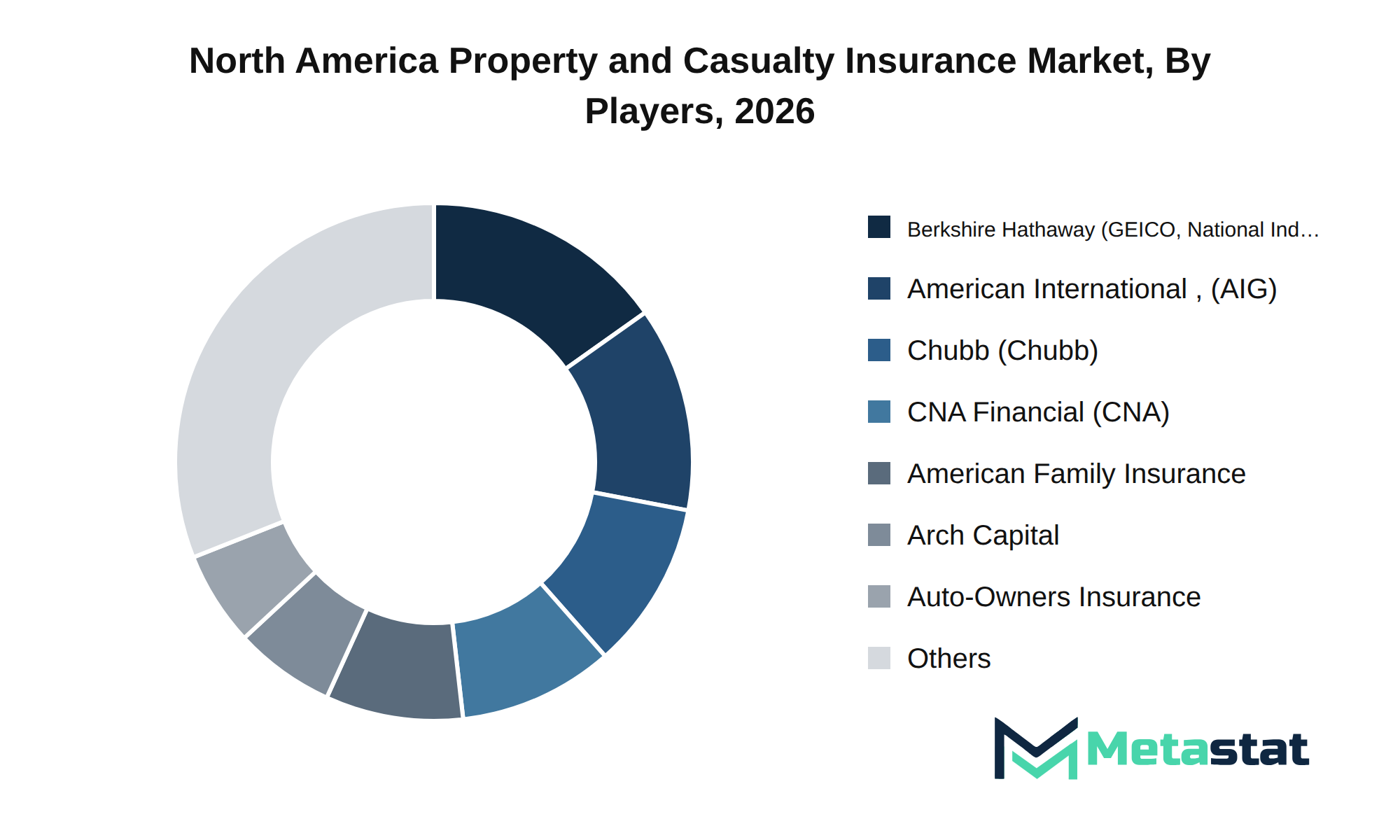
The North America Property and Casualty Insurance market features a competitive environment shaped by various strategic behaviors among key players. Mergers and acquisitions remain prominent owing to companies seeking to consolidate their positions and enhance market share. For instance, firms including Berkshire Hathaway Inc, Chubb Limited, and Liberty Mutual Insurance have pursued strategic consolidation to improve operational efficiencies and broaden their product offerings. The emphasis on product differentiation plays a critical role, with companies investing in innovative insurance products to meet evolving consumer demands.
Strong go-to-market strategies further define the competitive landscape, with players like State Farm Mutual Automobile Insurance Co and The Progressive Corporation leveraging direct-to-consumer models to increase customer engagement. Brand equity remains essential, influencing customer retention strategies and switching costs associated with moving between providers. While the North America Property and Casualty Insurance market evolves, the outlook indicates continued pressure on companies to adapt to changing regulatory frameworks and consumer preferences, ensuring that defensive imperatives and growth vectors align with market demands.
Market size is forecast to rise from USD 854.2 billion in 2025 to over USD 1,215.2 billion by 2033. The base case anticipates a steady increase at a 4.5% CAGR, reflecting ongoing trends in consumer demand and economic growth. In a bullish scenario, heightened regulatory support, technological advancements, and increased investment in infrastructure accelerate growth beyond current projections. Conversely, in a bearish environment, economic downturns, stringent regulatory changes, and geopolitical tensions inhibit market expansion, leading to slower growth rates.
Macro-level factors including economic cycles and demand fluctuations significantly impact the North America Property and Casualty Insurance market. Core industries are maturing, prompting shifts in consumption patterns and a focus on efficiency and innovation. Next-generation technology integration, including digital platforms and automation, enhances operational capabilities and customer engagement. This transformation supports the development of new insurance products and services that cater to evolving consumer needs.
Regulatory evolution significantly shapes market dynamics. Compliance timelines and enforcement horizons influence capital allocation and strategic investment decisions. While the landscape evolves, companies adapt to emerging white-space opportunities and unmet enterprise needs. This adaptability defines competitive positioning and operational resilience within the market.
The strategic allocation of capital and infrastructure commitments drives growth in high-potential segments. Companies focusing on small commercial markets and personal lines are positioned to capture significant share, supported by favorable economic conditions and demographic shifts. Executive-level strategic imperatives guide firms in navigating market complexities and enhancing their defensibility in an increasingly competitive environment.
The report strategically identifies and profiles the key market players and analyses their core competencies in each sub-segment of the Property and Casualty Insurance market.
Report Attributes | Details |
Study Period | 2021-2033 |
Base Year | 2025 |
Estimated Year | 2026 |
Forecast Period | 2026-2033 |
Historical Period | 2021-2025 |
Growth Rate | CAGR 4.5% from 2026 to 2033 |
Revenue Unit | USD billion |
Segmentation | By Insurance Line, Distribution Channel, Customer Segment, Region, and Region |
Find answers to common questions about this report
The North America Property and Casualty Insurance market size was valued at USD 854.2 billion in 2025.
The Property and Casualty Insurance market is projected to grow at a CAGR of 4.5% during the forecast period from 2026 to 2033.
Personal Auto Insurance leads the North America Property and Casualty Insurance market, with a projected value of USD 438.9 billion by 2033, representing a significant share compared to other segments.
Key drivers for the North America Property and Casualty Insurance market include economic growth, which raises asset values and insurance demand, and demographic shifts, particularly urbanization and an aging population. advancements in technology enhance operational efficiency and customer engagement, further supporting market expansion.
Significant challenges restraining the North America Property and Casualty Insurance market include regulatory compliance complexities, rising operational costs, and macroeconomic headwinds including inflation and geopolitical instability. These factors hinder insurers' ability to innovate and invest in competitive pricing strategies, ultimately limiting growth potential.
Several macro-economic factors favor product adoption in the North America Property and Casualty Insurance market. Economic growth increases asset values, driving demand for comprehensive insurance coverage. demographic shifts, including urbanization and an aging population, necessitate tailored insurance solutions, while evolving consumer preferences for digital solutions enhance market engagement.
The Property and Casualty Insurance market is estimated to reach a valuation of USD 1,215.2 billion by 2033.
Key players in the North America Property and Casualty Insurance Market include American Family Insurance Group, American International Group, Inc. (AIG), Arch Capital Group Ltd, Berkshire Hathaway Inc (GEICO, National Indemnity), Chubb Limited (Chubb), Liberty Mutual Insurance, The Progressive Corporation (Progressive), and State Farm Mutual Automobile Insurance Co.
The personal auto insurance segment is projected to grow at a CAGR of 3.7% from USD 340.6 billion in 2026 to USD 438.9 billion by 2033.
The direct-to-consumer distribution channel is anticipated to grow at a CAGR of 6.6%, reflecting the shift towards more accessible insurance purchasing options.
The analysts below cover Banking & Finance research at Metastat Insights.
LEAD ANALYST
Utkarsh Khirodkar is a Lead Market Research Analyst at MetaStat Insight, specializing in market intelligence, technology sector assessments, and competitive strategy.

PRINCIPAL CONSULTANT - ENTERPRISE AI & EMERGING TECHNOLOGIES
Banking & Finance · Electronics and Semiconductor · Energy and Power · Healthcare IT · Information & Technology · Professional Services
Vijay Gunti is a Principal Consultant at MetaStat Insight, bringing over two decades of experience across enterprise digital transformation, technology strategy, and intelligent systems.
Tracking maintenance cycle demand for secondary flight display units and terrain collision avoidance systems across regional jet fleets involves complex aftermarket dynamics. MetaStat Insight provided practical analysis separating airline retrofit programs from OEM forward-fit production schedules in North America and Southeast Asia. The supplier matrix highlighted component obsolescence timelines without resorting to vague generalizations. The dataset served as a dependable reference during our annual program review meetings.
Evaluating secondary resin quality across post-consumer packaging streams requires reliable technical segmentation. MetaStat Insight delivered an objective assessment that distinguished between extrusion-grade flake pricing and optical sorting throughput limitations across Western Europe. The competitive positioning breakdown for licensed depolymerization technology providers answered several questions during our feedstock feasibility audit. Their team clarified regional trade restrictions on mixed plastic scrap quickly when our team submitted follow-up requests.
Evaluating sovereign cloud deployments for core banking platforms demands a clear view of data residency regulations and migration exit strategies. MetaStat Insight delivered an exhaustive review of regional latency tolerances, mainframe decommission milestones, and third-party vendor concentration risk. The regulatory compliance mapping across European and Asian financial jurisdictions gave our team a dependable baseline for multi-cloud infrastructure discussions.
Explore related market intelligence reports worth reading alongside this one.