
LEAD ANALYST
Utkarsh Khirodkar is a Lead Market Research Analyst at MetaStat Insight, specializing in market intelligence, technology sector assessments, and competitive strategy.

Online Bus Ticketing Market Size, Share, By Booking Channel (Web-based, Browser-based, and Mobile Application), By Payment Method (Digital Wallets, Credit Cards, Debit Cards, and Net Banking), By Booking Type (One-way Ticket, Round-trip Ticket, and Multi-city Ticket), By End-User (Individual Travelers, Group Travelers, and Corporate Travelers), Industry Analysis, Growth, Trends, and Forecast, 2026-2033
Report ID
MSI-4686
Published
April, 2026
Pages
315 Pages
Format
Report Details
Choose Your License
Online Bus Ticketing Market
Global Online Bus Ticketing market size is valued at USD 17.2 billion in 2025 and projected to grow at a CAGR of 14.9% during the forecast period, reaching USD 52.1 billion by 2033.
North America accounts for a 19.4% market share in 2025, with the U.S. leading regional revenue generation.
The Web-based/Browser-based segment accounts for a 25.5% market share in 2025.
Key trends driving growth: Smartphone penetration and digital payments adoption along with operator digitization and inventory aggregation across routes.
Opportunities include integrated multimodal journey planning with real-time operations and dynamic pricing.
Key insight: Digital mobility platforms are reshaping intercity travel booking behavior through mobile-first access, real-time inventory, and integrated payment ecosystems.
The Global Online Bus Ticketing market within the digital mobility and travel services industry is evolving into a core enabler of intercity and intracity passenger transport. Online booking platforms are moving beyond basic seat reservation by integrating route discovery, real-time seat availability, digital payments, cancellation flexibility, and customer support within a unified digital interface. Rising smartphone penetration, broader internet access, and increasing preference for cashless transactions are strengthening the role of app-based and web-based ticketing across both developed and emerging transport corridors.
Operators and aggregators are increasingly using digital platforms to improve seat utilization, centralize inventory, optimize schedules, and enhance passenger engagement. Features such as live seat mapping, dynamic pricing, multilingual support, and real-time service alerts are improving conversion rates and repeat bookings. Public and private transport networks are also becoming better connected through digital distribution systems, supporting wider route visibility, better fare transparency, and improved overall efficiency in bus travel booking.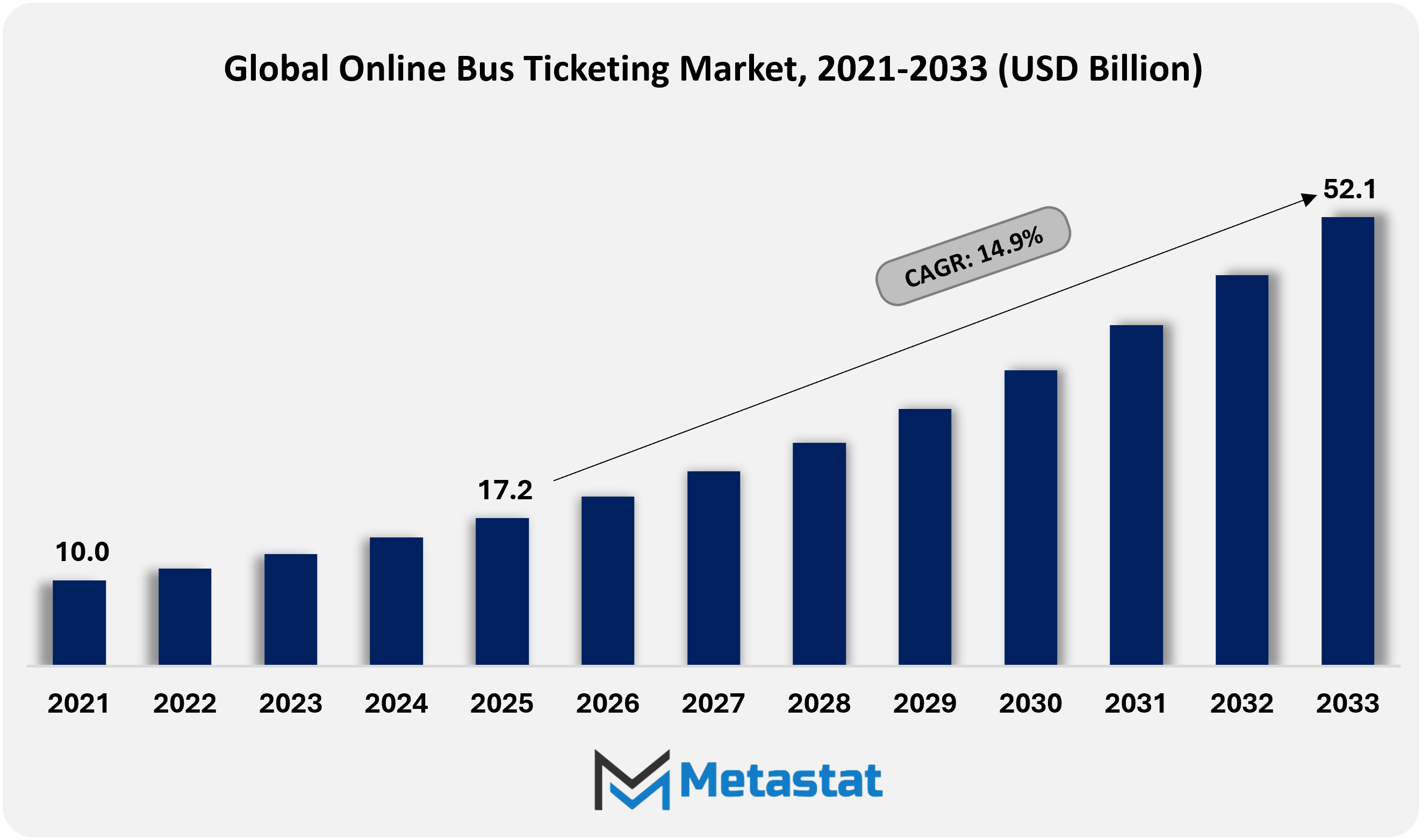
Smartphone penetration and digital payments adoption.
Smartphone penetration and digital payment adoption continue to accelerate online bus ticket purchases across urban, semi-urban, and increasingly tier-2 and tier-3 markets. Widespread access to mobile internet, secure payment gateways, UPI and wallet ecosystems, and contactless transactions is strengthening consumer confidence in digital ticketing channels. These factors are expanding the addressable user base and supporting higher booking frequency across the Global Online Bus Ticketing market.
Operator digitization and inventory aggregation across routes
Transport operators are increasingly digitizing schedules, seat inventory, and route management through centralized dashboards and cloud-based platforms. Aggregated inventory visibility across routes improves load optimization, reduces manual booking dependency, and enhances the overall booking experience. This shift toward structured digital distribution is improving operational efficiency and supporting scalable expansion of the Global Online Bus Ticketing market.
Fragmented operator landscape and inconsistent schedule reliability
A fragmented operator landscape continues to challenge market standardization, particularly across price-sensitive and regionally managed routes. Variations in service quality, schedule adherence, refund handling, and real-time seat availability can reduce passenger trust in online platforms. Limited consistency across smaller operators also affects route visibility and booking reliability, restricting full-scale digital adoption in several corridors.
Connectivity gaps and limited digital literacy in select commuter belts
Connectivity gaps and limited digital literacy remain key barriers in select commuter belts and underserved rural markets. Many passengers still rely on offline counters or local agents owing to weak internet access, low familiarity with digital interfaces, or hesitation around online transactions. These adoption barriers slow platform penetration and limit the speed of digital transition in certain regions.
Integrated multimodal journey planning with real-time operations and dynamic pricing
Integrated multimodal journey planning presents a strong growth opportunity for the market, particularly as travelers increasingly prefer seamless connections across bus, rail, metro, ferry, and ride-hailing networks. Platforms that combine real-time operations, unified payment flows, synchronized itineraries, and dynamic pricing can deliver higher convenience and stronger customer retention. This shift can position online bus ticketing platforms as broader digital mobility ecosystems rather than standalone ticketing tools.
The Global Online Bus Ticketing market is classified based on Booking Channel, Payment Method, Booking Type, and End-User.
Web-based/Browser-based segment is valued at USD 5 billion in 2026 and is projected to reach USD 8 billion by 2033, at a CAGR of 6.9% during the forecast period.
Web-based and browser-based platforms continue to serve travelers who prefer structured booking environments through desktops and laptops, especially for planned intercity journeys and corporate travel. Strong interface design, multilingual support, secure payment integration, and real-time seat mapping improve booking clarity and transaction confidence. While mobile applications are expanding faster, browser-based channels retain relevance among users seeking detailed route comparison and itinerary planning.
Mobile Application segment is valued at USD 14.7 billion in 2026 and is projected to reach USD 44.1 billion by 2033, at a CAGR of 17% during the forecast period.
Mobile applications are expected to remain the primary growth engine of the market by offering instant booking access, push notifications, geo-location support, digital boarding passes, and on-the-go cancellation or rescheduling features. Personalized recommendations, app-exclusive discounts, and stored traveler preferences improve user retention and booking frequency. Continued improvement in app usability and regional payment integration will further strengthen mobile-led growth across the Global Online Bus Ticketing market.
Digital Wallets segment is projected to reach USD 27.1 billion by 2033, at a CAGR of 17.7% during the forecast period.
Digital wallets are gaining strong traction owing to faster transaction processing, cashback benefits, seamless checkout experiences, and growing integration with regional fintech ecosystems. Security enhancements such as tokenization, OTP verification, and multi-factor authentication improve payment reliability. Increasing wallet adoption across emerging economies is expected to support sustained growth of wallet-based transactions in the Global Online Bus Ticketing market.
Credit/Debit Cards segment is projected to reach USD 21.6 billion by 2033, at a CAGR of 13.9% during the forecast period.
Credit and debit cards remain an important payment option, supported by established banking infrastructure, global acceptance, and strong consumer familiarity. Features such as contactless payments, fraud monitoring, installment options, and recurring card storage improve convenience and trust. Card-based transactions will continue to contribute materially to revenue generation across domestic and cross-border bus booking platforms.
Net Banking segment is projected to reach USD 3.5 billion by 2033, at a CAGR of 5.7% during the forecast period.
Net banking continues to retain relevance among users who prefer direct bank-to-platform payments, particularly in markets where online banking adoption is well established. Strong authentication frameworks, instant payment confirmation, and alignment with national banking systems support transaction transparency. Although growth is slower than wallets and cards, net banking remains a stable payment channel within the Global Online Bus Ticketing market.
One-way Ticket segment is projected to reach USD 38.9 billion by 2033.
One-way ticket bookings represent the largest share of the market, supported by frequent short-distance travel, last-minute booking behavior, and flexible travel needs. Real-time availability updates, route comparison tools, and dynamic fare displays improve decision-making for individual passengers. Rising urban mobility and intercity commuter traffic will continue to support the dominance of one-way reservations.
Round-trip Ticket segment is projected to reach USD 10.8 billion by 2033.
Round-trip ticket bookings are gaining traction among planned travelers seeking convenience, fare optimization, and scheduling certainty. Bundled fare benefits, automated return reminders, and flexible rescheduling features improve booking confidence and platform stickiness. Expansion in long-distance travel and leisure journeys is expected to support steady growth in this segment.
Multi-city Ticket segment is projected to reach USD 2.4 billion by 2033.
Multi-city ticket bookings are developing gradually with the rise of tourism circuits, pilgrimage travel, and regional route integration. Integrated itinerary planning, route bundling, and centralized trip management tools improve convenience for passengers traveling across multiple destinations. Wider network partnerships and smarter inter-operator coordination will support future adoption of this segment.
Individual Travelers segment is projected to grow at a CAGR of 14.4% during the forecast period.
Individual travelers represent the largest user base in the market, driven by convenience, transparent pricing, and instant access to real-time seat availability. Loyalty programs, personalized recommendations, and easy cancellation features support repeat usage. Growing digital literacy and independent travel preferences continue to strengthen this segment across both urban and intercity routes.
Group Travelers segment is projected to grow at a CAGR of 16.3% during the forecast period.
Group travelers benefit from features such as bulk booking discounts, coordinated seat allocation, shared itinerary management, and payment splitting tools. School trips, events, pilgrimages, and family travel create strong use cases for group reservations. Platform improvements in group booking management are expected to support higher adoption within this segment.
Corporate Travelers segment is projected to grow at a CAGR of 18.1% during the forecast period.
Corporate travelers increasingly rely on centralized dashboards, expense tracking integration, invoicing support, and policy-compliant booking systems. Companies managing employee mobility across regional routes are adopting bus booking platforms for cost control and administrative efficiency. Strategic partnerships between operators and institutions are expected to strengthen the corporate travel segment over the forecast period.
Based on geography, the Global Online Bus Ticketing market is divided into North America, Europe, Asia-Pacific, South America, Middle East, and Africa.
North America Online Bus Ticketing Market is set to expand at a CAGR of 14.9% within the forecast period, reaching a market size (TAM) of USD 8.7 billion by the end of 2033.
In North America, strong digital fee adoption and excessive smartphone penetration accelerate increase in the Online Bus Ticketing market.
Europe Online Bus Ticketing market is expected to grow steadily during the forecast period, supported by strong digital travel adoption, organized intercity coach networks, and rising preference for online and mobile-based reservation platforms.
In Asia Pacific, growing urbanization and increasing intercity bus networks create significant enlargement scope for the Online Bus Ticketing market.
Across the Middle East, Africa, and South America, enhancing net accessibility and slow virtual transformation of public shipping systems help steady adoption in the Global Online Bus Ticketing marketplace.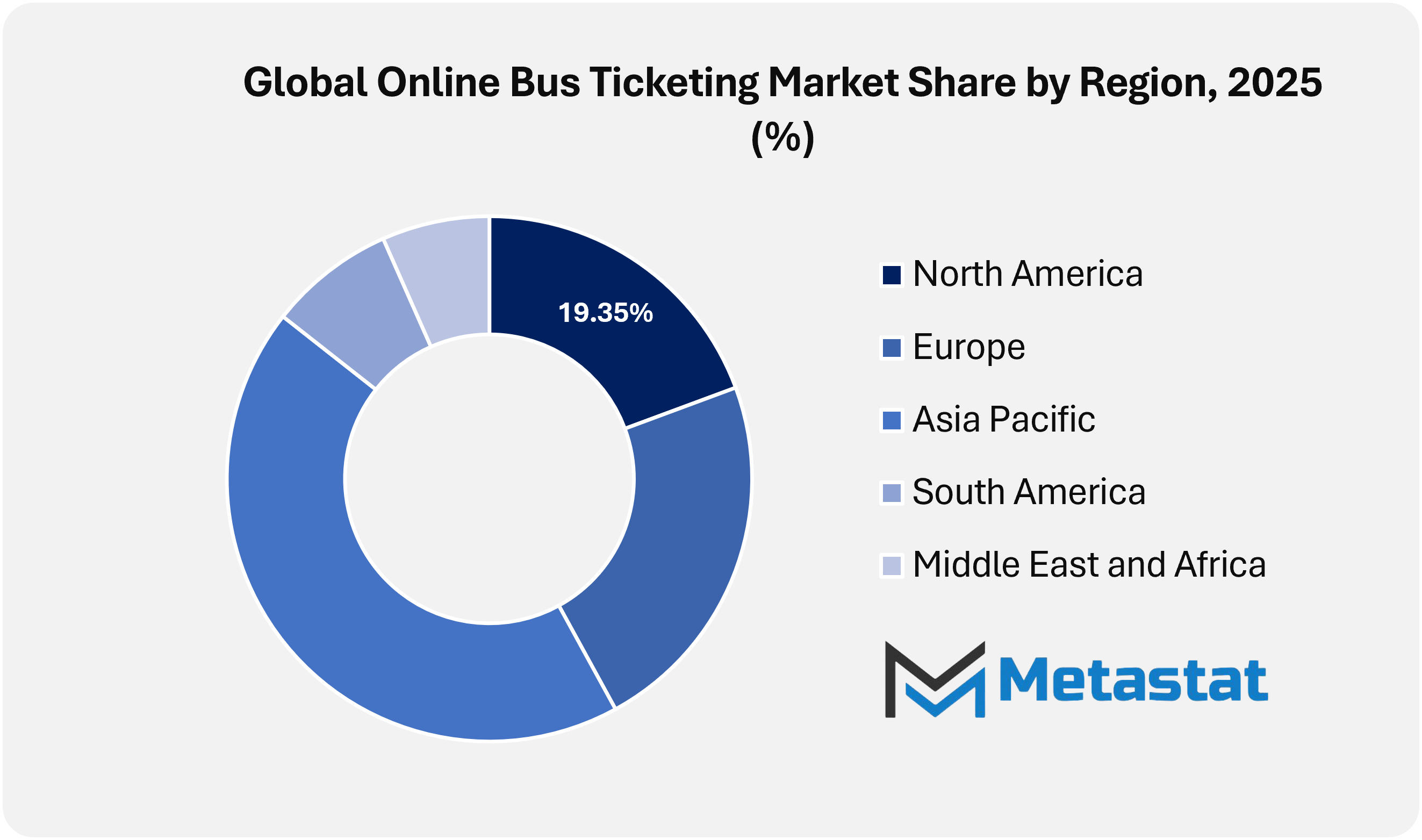
The global online bus ticketing market has expanded steadily as passengers move away from physical ticket counters and increasingly rely on digital platforms for route discovery and reservation. Travelers now expect fast booking journeys, transparent fare comparison, real-time seat selection, and secure payment options across both mobile and web channels. At the same time, operators benefit from improved seat management, reduced manual workload, better schedule visibility, and stronger customer engagement through digital systems.
Competition in the market remains strong, with both regional and international players expanding their digital capabilities to capture a larger customer base. Companies such as Omio Global GmbH, RedBus India Private Limited, MakeMyTrip Limited, Paytm Travel, and Ixigo have built strong market positions through route aggregation, promotional offers, and real-time service updates. Platforms including Yatra Online Limited, EaseMyTrip.com, Wanderu Inc., and Busbud Inc. are also strengthening their presence by simplifying domestic and cross-border bus travel booking.
In North America and Europe, operators and travel platforms such as Greyhound Lines Inc., Megabus USA LLC, Coach USA Inc., Stagecoach Group plc, Ecolines AS, and Leo Express Global a.s. continue to invest in digital channels to improve booking efficiency and customer retention. At the same time, multimodal platforms such as BlaBlaCar SA and Trainline Plc are extending the value of online ticketing by linking bus journeys with other transportation modes. In Asia Pacific and Latin America, companies such as AbhiBus Services India Private Limited, Goibibo, Traveloka, 12Go Asia Pte. Ltd., Easybook (M) Sdn Bhd, Zingbus, ClickBus Serviços de Tecnologia Ltda., and Buser Brasil Tecnologia Ltda. are strengthening local route connectivity through user-friendly interfaces and region-specific payment integration.
Market size is forecast to rise from USD 17.2 billion in 2025 to over USD 52.1 billion by 2033.
Future market development will be shaped by deeper integration of real-time route intelligence, flexible pricing systems, digital identity verification, and personalized booking experiences. Platforms that combine reliability, payment convenience, route visibility, and multimodal connectivity will be better positioned to strengthen market share and improve long-term customer retention.
This research report categorizes the Online Bus Ticketing market based on key segments and regions, forecasts revenue growth, and analyses trends in each submarket. The report analyses the key growth drivers, opportunities, and challenges influencing the Online Bus Ticketing market. Recent market developments and competitive strategies such as expansion, product launch, partnership, merger, and acquisition have been included to draw the competitive landscape in the market.
The report strategically identifies and profiles the key market players and analyses their core competencies in each sub-segment of the Online Bus Ticketing market.
|
Report Attributes |
Details |
|
Study Period |
2021-2033 |
|
Base Year |
2025 |
|
Estimated Year |
2026 |
|
Forecast Period |
2026-2033 |
|
Historical Period |
2021-2025 |
|
Growth Rate |
CAGR 14.9% from 2026 to 2033 |
|
Revenue Unit |
USD billion |
|
Segmentation |
By Booking Channel, Payment Method, Booking Type, End-User, and Region |
|
By Region |
North America (By Booking Channel, Payment Method, Booking Type, End-User, and Country)
|
|
Europe (By Booking Channel, Payment Method, Booking Type, End-User, and Country)
|
|
|
Asia Pacific (By Booking Channel, Payment Method, Booking Type, End-User, and Country)
|
|
|
South America (By Booking Channel, Payment Method, Booking Type, End-User, and Country)
|
|
|
Middle East and Africa (By Booking Channel, Payment Method, Booking Type, End-User, and Country)
|
Find answers to common questions about this report
Top players operating in the Online Bus Ticketing industry include Omio Global GmbH, GotoBus, RedBus India Private Limited, MakeMyTrip Limited, Paytm Travel, Ixigo, and Yatra Online Limited.
Global Online Bus Ticketing market is estimated to reach USD 52.1 billion by 2033.
Fragmented operator landscape and inconsistent schedule reliability will hamper the market growth within the forecast period.
Asia Pacific region dominates the market.
Smartphone penetration and digital payments adoption and Operator digitization and inventory aggregation across routes are key driving factors, boosting the market.
The One-way Ticket is the leading type segment in the Global market.
The Metastat Insights analysis shows that the North America Online Bus Ticketing market size is estimated to be USD 8.7 billion by 2033.
The Global Online Bus Ticketing market is expected to grow at a CAGR of 14.9% over the forecast period (2026-2033).
The Metastat Insights study shows that the Global Online Bus Ticketing market size was USD 17.2 billion in 2025.
The analysts below cover Automotive and Transportation research at Metastat Insights.
LEAD ANALYST
Utkarsh Khirodkar is a Lead Market Research Analyst at MetaStat Insight, specializing in market intelligence, technology sector assessments, and competitive strategy.

ENERGY & INFRASTRUCTURE INDUSTRY CONSULTANT
Automotive and Transportation · Electronics and Semiconductor · Energy and Power · Machinery & Equipment
Saurabh Vasant Ganvir consults for Energy & Infrastructure Industry at MetaStat Insight, specializing in renewable energy, solar EPC, and electric vehicle (EV) infrastructure markets.
When planning edge sensor rollouts across refinery environments, generic IoT reports typically miss the harsh-environment certification bottlenecks. MetaStat Insight gave an objective evaluation of ATEX and Class 1 Division 2 hardware availability, along with realistic five-year maintenance cycle cost projections. The comparison of wireless mesh versus private cellular backhaul helped our team pressure-test network reliability models for remote processing facilities.
In the biological seed treatment space, registration timelines vary drastically between the European Union, Brazil, and North America. The MetaStat Insight research handled these cross-border regulatory barriers with genuine nuance, mapping commercialization pathways alongside historical field adoption rates. The segmentation between microbial strains and biochemical active ingredients was particularly well structured.
Our team was tracking whether regional recycling infrastructure could realistically absorb the growing volume of lithium iron phosphate batteries over the next decade. The report did a solid job separating announced hydrometallurgical plant capacity from active, permitted operational throughput. That distinction made the feedstock availability projections and regional recovery rate models far more credible than standard commercial overviews.
Explore related market intelligence reports worth reading alongside this one.
Starting from
$2950