
LEAD ANALYST
Utkarsh Khirodkar is a Lead Market Research Analyst at MetaStat Insight, specializing in market intelligence, technology sector assessments, and competitive strategy.

Global Outdoor Tools Market Size, Share, By Equipment Type (Lawn Mowers, Trimmers, Edgers & Hedge Trimmers, Blowers, Chainsaws, Pressure Washers, Tillers & Cultivators, Snow Throwers and Others), By Power Source (Gasoline-Powered, Battery-Powered and Electric Corded), By Application (Residential/DIY, Commercial Landscaping, Municipal & Public Grounds, Golf Courses & Sports Turf, Forestry & Agriculture and Others), By Sales Channel (Home Improvement Stores & Mass Retailers, Specialty Dealers & Distributors and Online Retail), Industry Analysis, Growth, Trends, and Forecast, 2026-2033
Report ID
MSI-5668
Published
November, 2026
Pages
293 Pages
Format
Historical
Base year
Forecast
Forecast period
Report Details
Market Valuation: Valued at $39.8 Billion in 2025, projected to reach $63.6 Billion by 2033 at a 6.0% CAGR.
Dominant Segment: Lawn mowers lead the Outdoor Tools market, driven by their essential role in residential landscaping and the rising interest in home gardening.
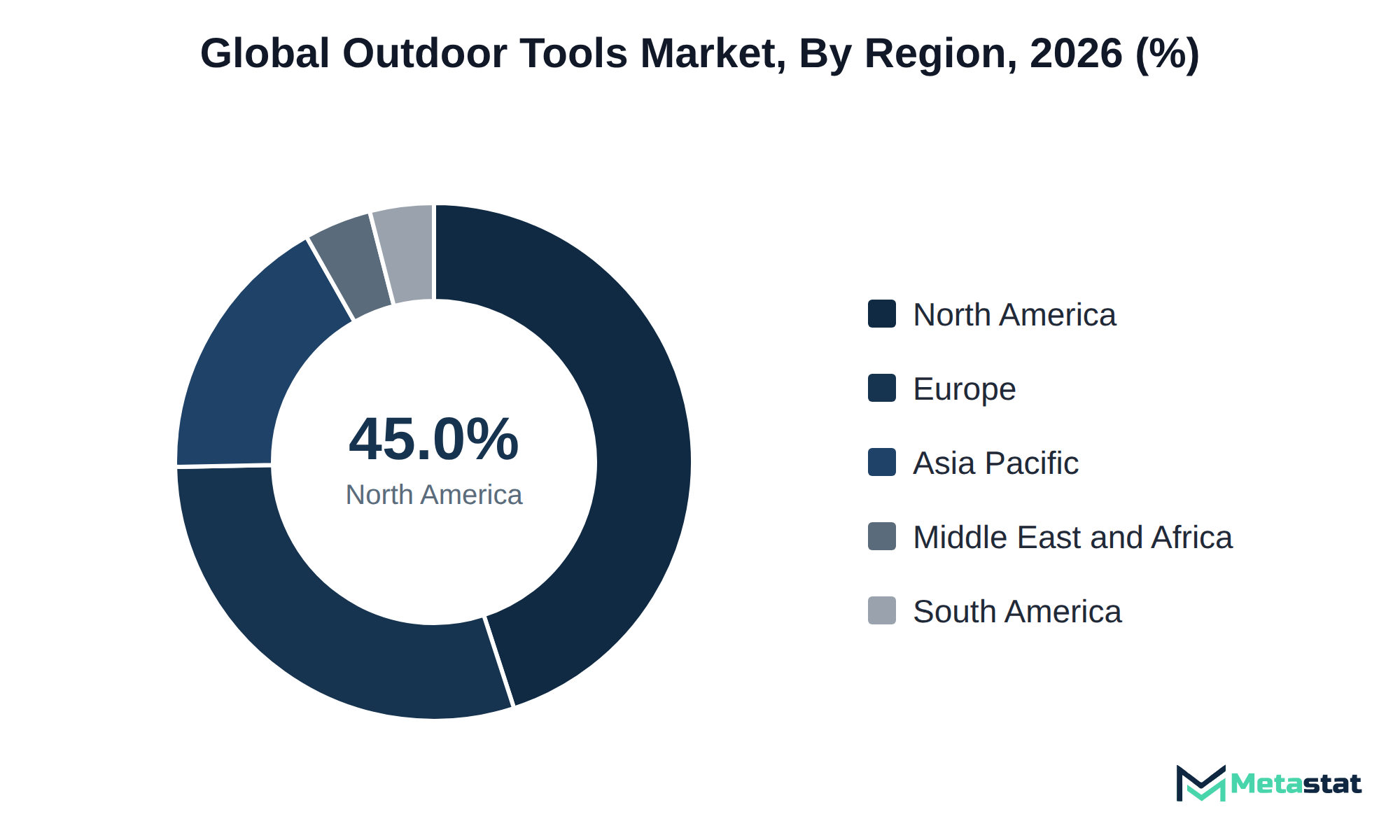
Geographic Lead: North America is the largest market, holding 45.0% share in 2025, with the US expected to maintain its leadership position due to a strong consumer base and favorable purchasing conditions.
What's Inside: The report provides comprehensive coverage of market dynamics, including competitive landscape analysis, segment performance, and forecasts through 2033.
Emerging Trends: The battery-powered segment is projected to grow at a CAGR of 12.2%, reflecting a significant shift towards environmentally friendly equipment in both residential and commercial applications.
Technological Advancements: Innovations in battery technology are enhancing tool performance and reducing operational costs, driving increased adoption of battery-powered outdoor tools.
Choose Your License
Global Outdoor Tools Market
The global Outdoor Tools market was valued at USD 39.8 billion in 2025 and is projected to reach USD 63.6 billion by 2033, growing at a CAGR of 6.0% over the forecast period.
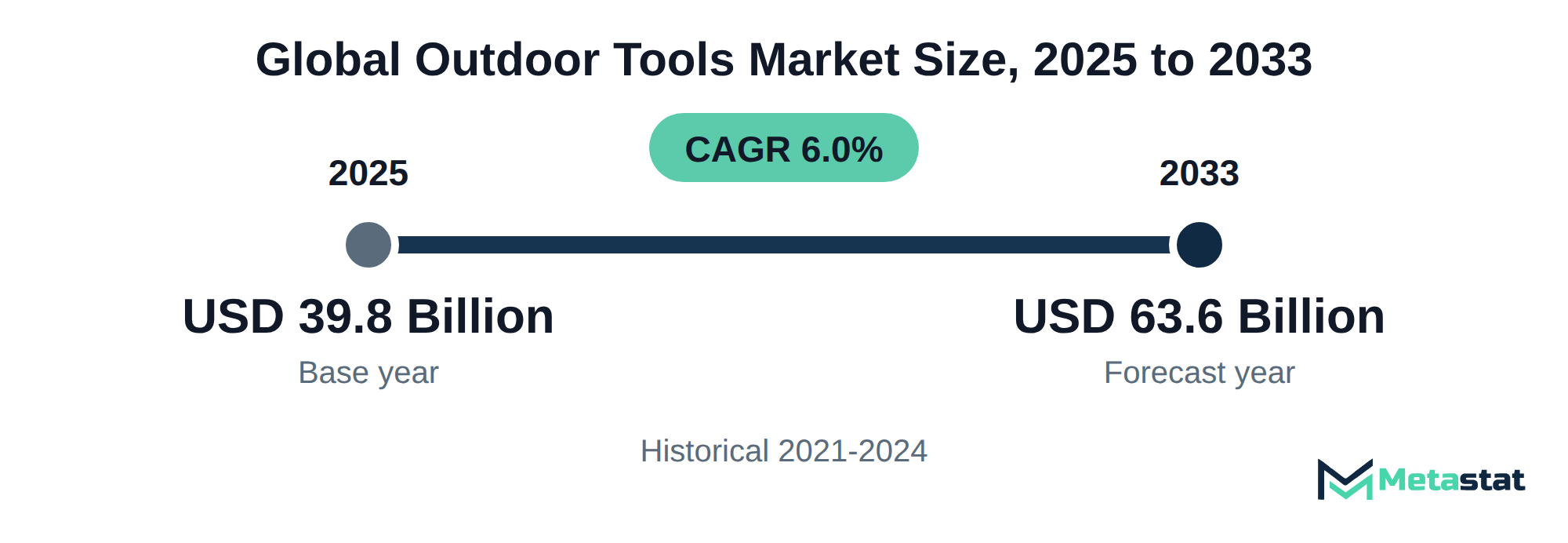
The Outdoor Tools market covers equipment designed for outdoor maintenance and landscaping. Buyers invest in this market due to the increasing demand for efficient and effective tools that enhance productivity in both residential and commercial applications. The need for high-quality outdoor tools supports the growth of various segments, including lawn care, gardening, and landscaping activities.
Growth in the market is driven by the rising interest in outdoor activities and home improvement projects, which has led to increased spending on outdoor tools. Lawn mowers represent the segment with the highest value, reflecting the essential role they play in residential landscaping. North America holds 45.0% of the market in 2025, with the US leading in 2026. This share points to firm regional demand, supported by a large consumer base and favorable purchasing conditions.
Technological advancements in battery-powered equipment contribute significantly to market expansion, as they offer enhanced convenience and efficiency. Innovations in power sources align with consumer preferences for environmentally friendly and easy-to-use tools. The market is projected to experience continued growth, driven by these developments and an increasing focus on sustainable practices in outdoor maintenance.
The Outdoor Tools market includes various equipment types for landscaping, gardening, and outdoor maintenance. Buyers invest in this market primarily due to the increasing focus on maintaining outdoor spaces, enhancing property aesthetics, and supporting outdoor recreational activities. The demand for high-quality tools reflects consumer preferences for durability and performance, driving significant spending across residential and commercial sectors.
Growth in the market is propelled by technological advancements leading to more efficient and user-friendly outdoor tools. Among the equipment types, Lawn Mowers hold the highest value, reflecting a strong consumer preference for effective lawn maintenance solutions. This region benefits from a well-developed retail infrastructure and a high rate of homeownership, stimulating demand for outdoor tools.
Innovations in battery-powered and electric tools contribute to market expansion, aligning with sustainable practices and reducing environmental impact. The shift towards battery-powered tools is particularly pronounced, attracting environmentally conscious consumers. The integration of smart technologies in outdoor tools is anticipated to further improve user experience and operational efficiency as the market evolves.
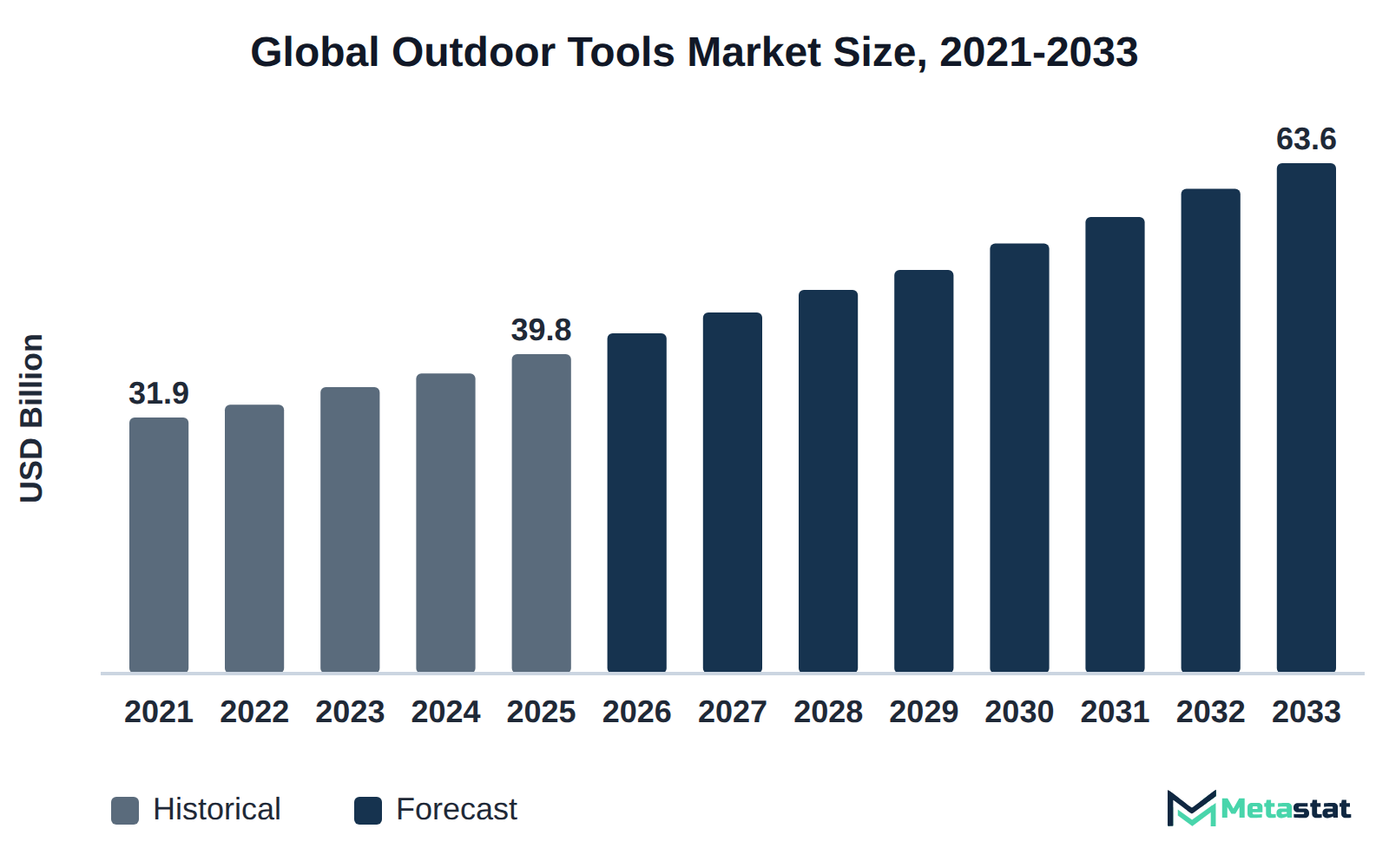
The shift from gasoline-powered engines to battery platforms in lawn and garden equipment significantly alters operational dynamics within the Outdoor Tools market. This transition is driven by increasing demand for environmentally friendly alternatives, aligning with the sustainability goals of various consumer segments. The battery-powered segment is projected to grow at a compound annual growth rate (CAGR) of 12.2% through 2033, reflecting strong preference for cleaner energy sources in gardening tools.
Battery-powered equipment offers advantages including reduced noise and emissions compared to traditional gasoline engines. This shift enhances user experience and meets regulatory pressures aimed at minimizing environmental impact. By 2033, the battery-powered segment is expected to reach USD 22.8 billion, highlighting its growing acceptance among both residential and commercial users.
Improving battery technologies reduce maintenance and fuel costs, which drives demand within the Outdoor Tools market. The commercial landscaping sector, in particular, benefits from these advancements, with an anticipated CAGR of 7.1%, indicating a robust market for battery-powered solutions in professional applications. This trajectory demonstrates how battery platforms reshape the competitive environment of lawn and garden equipment.
Robotic mowers and connected tools significantly enhance efficiencies in commercial landscaping workflows. The rise of these technologies transforms traditional practices, enabling firms to optimize labor costs and streamline project management. For instance, the Outdoor Tools market anticipates the commercial landscaping application segment will reach USD 12.1 billion by 2033, reflecting a compound annual growth rate (CAGR) of 7.1%. This growth signals increasing adoption of mobile robotics and smart tools among professional landscapers, driven by demand for reduced operational costs and improved outcomes.
Buyers in the market increasingly gravitate towards subscription-based pricing models, such as hardware-as-a-service, when acquiring robotic mowers and connected tools. Several vendors offer tiered pricing structures, aligning costs with features and service levels. This approach allows landscaping companies to manage expenditures while gaining access to advanced equipment without substantial upfront investments. The flexibility of these contract models enables businesses to adapt their toolsets in accordance with seasonal demands and project scopes, further enhancing operational efficiency.
This shift toward subscription services in the Outdoor Tools market encourages greater competition among suppliers to provide innovative solutions that meet evolving customer expectations. Firms adopting these new purchasing strategies improve service delivery and position themselves to capitalize on future growth opportunities in the commercial landscaping sector.
Commercial landscaping professionals increasingly prioritize battery-powered equipment due to evolving emission regulations. The market for battery-powered outdoor tools is projected to reach USD 22.8 billion by 2033, reflecting a compound annual growth rate (CAGR) of 12.2%. This shift arises from tighter emission standards implemented by various regulatory bodies, pushing landscapers to adopt cleaner technologies that comply with environmental guidelines.
Landscape contractors favor battery-powered tools for their efficiency and lower environmental impact. The reduced noise and emissions associated with these products cater to urban landscaping needs while allowing operators to work in noise-sensitive areas. Growing urbanization and demand for sustainable practices in landscaping heighten the necessity for battery-powered solutions.
Suppliers focusing on battery-powered equipment experience increased demand from commercial buyers seeking compliance with stringent regulations. New customers add to revenue growth, benefiting suppliers that invest in innovative technologies and sustainable practices.
Battery-powered equipment is gaining traction in professional landscaping due to its environmental benefits and operational efficiencies. The Outdoor Tools market has seen a notable shift, with battery-powered tools projected to reach USD 22.8 billion by 2033. This growth reflects an increasing preference among landscapers for sustainable practices and reduced emissions compared to traditional gasoline-powered equipment.
Landscaping companies are increasingly prioritizing eco-friendly solutions. Battery-powered tools offer lower operational costs and reduced maintenance requirements, making them attractive for professional use. The market's segmentation shows that gasoline-powered equipment is expected to grow from USD 28.9 billion in 2026 to USD 35.7 billion in 2033, growing at a slower rate of 3.1% CAGR. In contrast, battery-powered tools exhibit a 12.2% CAGR, pointing to growing adoption.
This transition signals a significant opportunity for manufacturers and suppliers in the Outdoor Tools market. Professionals seek to align with environmentally conscious practices, driving demand for battery-powered options and opening avenues for innovation and investment in advanced lithium-ion battery technology.
Interest in home gardening has surged, driving higher sales of outdoor tools among residential consumers. This demographic shift reflects a growing trend of individuals seeking outdoor activities, particularly during the recent emphasis on self-sufficiency and sustainable living. Consumers increasingly invest in equipment to maintain their gardens and outdoor spaces, resulting in increased demand for garden tools that facilitate these activities. The Outdoor Tools market anticipates a notable increase in value, with the residential/DIY segment projected to reach USD 39 billion by 2033, up from USD 27 billion in 2026. This growth supports expansion in sales volumes and prices, benefiting manufacturers and retailers within the market.
Shifts in consumer behavior, including a preference for gardening and landscaping, contribute to this revenue increase. The desire to create aesthetically pleasing outdoor environments aligns with modern lifestyle changes, further enhancing market dynamics. Retailers adapt their strategies to meet the rising demand, focusing on providing a diverse range of tools tailored to gardening enthusiasts, thereby strengthening their competitive position.
Technological advancements in battery performance significantly influence the Outdoor Tools market. Enhanced battery life and faster charging capabilities drive consumer interest in battery-powered outdoor equipment. This shift occurs amid rising awareness of environmental impacts associated with gasoline-powered alternatives. Manufacturers increasingly focus on developing powerful, lightweight batteries that provide longer run times, catering to both residential and commercial customers. Improved energy density in batteries allows for more efficient tools, reducing operational costs for users. The growth of urban gardening and landscaping initiatives intensifies demand for portable, battery-operated devices, particularly in densely populated regions. This shift encourages competitive differentiation among suppliers and drives ongoing investment in research and development. These advances make battery-powered equipment easier to adopt and support growth in the Outdoor Tools market.
Price sensitivity among buyers significantly affects adoption rates in the Outdoor Tools market. Many residential and commercial customers face budget constraints when purchasing outdoor equipment, leading to slower uptake and smaller orders. High-quality outdoor tools often come at premium prices, deterring budget-conscious consumers from making immediate purchases. This price sensitivity results in delayed replacement of aging equipment among professionals requiring reliable tools for consistent performance. The need for cost-effective solutions drives customers to explore alternatives, including lower-priced substitutes or renting equipment. Price therefore remains a major factor in purchasing decisions and overall market dynamics.
Suppliers in the Outdoor Tools market face significant challenges related to rising input costs. Increasing prices for raw materials, components, and manufacturing processes negatively impact profit margins. These costs affect the pricing strategies that suppliers implement, leading to pressure on profit margins and overall financial performance. To address these challenges, suppliers are exploring various strategies, including cost-efficient sourcing, investments in innovative manufacturing techniques, and enhancing supply chain efficiencies. By adopting these measures, suppliers aim to mitigate the impact of rising costs while maintaining competitive pricing. Implementing smart manufacturing technologies and automation further aids in driving down operational costs, allowing companies to remain profitable while meeting consumer demand. This adaptation helps suppliers sustain growth and stay competitive as the market evolves. The responses from suppliers highlight the importance of agility in navigating challenges tied to input costs.
Battery-powered tools present a significant opportunity within the market, particularly in the residential and DIY segments. With a projected compound annual growth rate (CAGR) of 12.2% through 2033, this segment is expected to reach a value of USD 22.8 billion, reflecting a strong shift towards environmentally friendly solutions. Increasing consumer awareness regarding the benefits of battery-powered equipment drives demand, allowing homeowners to engage in sustainable gardening practices without compromising efficiency. This transition aligns with broader trends favoring lower emissions and reduced noise levels in residential areas.
This rapid growth benefits manufacturers focused on developing advanced battery technologies that enhance tool performance and extend usage time. The Outdoor Tools market sees significant investment in battery development, enabling greater adoption rates among consumers seeking reliable and effective solutions. As this trend continues, product offerings and competitive strategies across the sector are likely to shift.
The Global Outdoor Tools market is segmented based on Equipment Type, Power Source, Application, and Sales Channel.
Lawn Mowers segment is valued at USD 14.9 billion in 2026 and is projected to reach USD 21.7 billion by 2033, at a CAGR of 5.5% during the forecast period. This equipment is primarily used for maintaining lawns and gardens, appealing to both residential consumers and professional landscapers. The rising interest in home gardening, coupled with the necessity for efficient lawn maintenance, drives demand for this segment. In comparison to other equipment types, lawn mowers experience a moderate growth rate, differentiating themselves with a focus on residential applications where consumers prioritize ease of use and performance. This segment's growth trajectory is supported by advancements in battery technology, which enhance efficiency and reduce operational costs while addressing environmental concerns. While consumers increasingly seek sustainable options, the transition toward battery-powered lawn mowers presents a notable shift in the market, influencing purchasing decisions across various buyer groups.
Trimmers, Edgers & Hedge Trimmers segment is estimated to reach USD 10.6 billion by 2033, at a CAGR of 6.2% during the forecast period. These tools are essential for maintaining the aesthetic appeal of gardens, lawns, and landscapes, commonly used by both residential consumers and professionals in landscaping. Enhanced focus on landscape aesthetics drives demand for these products. The segment shows a higher growth rate compared to gasoline-powered equipment, which faces challenges related to emissions regulations. Increasing preference for environmentally friendly options supports the segment's expansion, with buyers seeking efficient solutions for maintaining outdoor spaces. A notable shift toward battery-powered tools further distinguishes this segment, with professional landscapers embracing innovations that improve operational efficiency and reduce environmental impact.
Blowers segment is expected to reach USD 8.3 billion by 2033. These tools find application in various outdoor activities including clearing leaves, debris, and grass clippings, catering to both residential users and professional landscapers. The growth of this sub-segment is driven by increasing interest in outdoor aesthetics and demand for efficient, eco-friendly maintenance solutions. The segment exhibits a higher growth rate compared to traditional equipment, with a CAGR of 6.2%. A notable advantage includes the shift towards battery-powered models, which appeal to environmentally-conscious buyers and deliver operational efficiency. This trend contrasts with gasoline-powered tools, which face challenges related to emissions and operational costs. Blowers stand out in the market due to their versatility and ease of use, making them a preferred choice among consumers seeking effective outdoor maintenance solutions.
Chainsaws segment is projected to grow at a CAGR of 6.2% during the forecast period. Primarily for cutting trees and pruning, chainsaws serve both residential consumers and professionals in landscaping and forestry. Interest in efficient and powerful tools drives demand among users, particularly in commercial landscaping, where productivity is essential. Compared to other segments, chainsaws typically have higher price points due to their specialized applications and the technology involved. Their growth remains robust, reflecting an increasing focus on enhancing outdoor maintenance capabilities. Price changes in raw materials and competitive offerings influence the chainsaws segment, which distinguishes itself by combining power and efficiency for demanding tasks.
Pressure Washers serve as a vital tool for cleaning outdoor surfaces, applicable in both residential and commercial settings. Their utility spans tasks including washing vehicles, patios, and siding, appealing to homeowners, landscapers, and maintenance professionals. Demand for this equipment is driven by the increasing emphasis on property maintenance and aesthetics. Unlike other equipment types, Pressure Washers often experience price sensitivity due to varying power specifications and capabilities. This segment usually sees slower growth compared to others, including lawn mowers, driven by higher initial investment costs and competition from manual cleaning methods. The Outdoor Tools market continues to evolve, with innovations in pressure washing technology providing opportunities for enhanced efficiency and effectiveness.
Tillers and cultivators serve essential functions in agricultural preparation and garden maintenance, allowing users to prepare soil and manage plant growth effectively. Farm-scale soil preparation draws on the wider agricultural machinery industry. Gardeners and agricultural professionals use these tools to enhance productivity in gardening, landscaping, and farming practices. The increasing trend toward home gardening supports higher demand for these items, reflecting a broader shift in consumer behavior toward sustainable practices. This segment distinguishes itself from other equipment types through its specific focus on soil cultivation processes, differing in both application and target users. While segments like lawn mowers experience rapid growth, tillers and cultivators maintain steady performance, addressing specific gardening needs. Environmental concerns further influence the development of innovative solutions within this segment, emphasizing sustainability in gardening practices.
Snow throwers serve a critical role in removing snow from residential driveways, walkways, and commercial spaces. Homeowners and property managers employ these tools to enhance safety and accessibility during winter months. The primary demand driver stems from increasing snowfall in various regions, leading to higher adoption rates among consumers who prioritize efficient snow management. Compared to equipment including lawn mowers and blowers, snow throwers experience seasonal demand fluctuations, with sales peaking during winter. This segment attracts buyers seeking reliability and performance in harsh weather conditions, resulting in a higher average price point relative to other sub-segments. Advancements in technology and engineering improve efficiency and ease of use, appealing to a broader user base in the market.
Log splitters, wood chippers, and pole saws serve essential functions in managing outdoor spaces. These tools facilitate the processing of wood and vegetation for residential and professional users, including landscapers and forestry professionals. Demand for these products increases due to a greater emphasis on efficient land management and landscaping practices. Within the Equipment Type category, this sub-segment experiences different dynamics compared to other segments. While the market sees rising interest in battery-powered equipment, professionals prioritize gasoline-powered options for their reliability in heavy-duty applications. This preference results in varied sales trajectories across the segment. Demand for these specialized tools reflects the varied needs of users engaged in outdoor maintenance and improvement.
This segment primarily serves users in landscaping, agriculture, and municipal applications, where robust power tools are essential for various outdoor tasks. Key drivers influencing growth include the demand for high-performance tools among professional landscapers and agricultural workers, who require reliability and efficiency. Gasoline-powered tools typically offer higher power output compared to battery-powered alternatives, making them suitable for heavy-duty tasks. In contrast, the battery-powered segment exhibits a higher CAGR of 12.2%, indicating a shift toward cleaner energy sources. With growing environmental regulations, the gasoline-powered segment faces increased pressure to innovate and reduce emissions, affecting its future competitiveness in the market.
These tools serve multiple applications, including residential gardening and landscaping, appealing to both DIY enthusiasts and professionals. The growing preference for environmentally friendly options drives increased adoption, especially among consumers prioritizing sustainability in their gardening practices. This segment differentiates itself through faster growth compared to gasoline-powered alternatives, which are projected to grow at a CAGR of 3.1%. Rising demand stems from advancements in battery technology, enabling longer run times and quicker charging, essential for residential and commercial users. Overall, the battery-powered segment exemplifies a shift towards more efficient and eco-friendly outdoor tool options, significantly impacting the market.
Electric Corded segment is expected to reach USD 5.1 billion by 2033. This segment primarily serves residential users who prefer the convenience of electric tools for various gardening and maintenance tasks. Demand for electric corded tools is driven by the growing emphasis on environmentally friendly products and the desire for quieter operation in residential areas. Compared to gasoline-powered tools, electric corded devices typically offer lower operational costs and reduced emissions. However, their reliance on power outlets limits mobility, which deters several users. Customers seeking reliable and efficient tools for home use contribute significantly to the overall expansion of the outdoor tools market.
This segment encompasses tools used by homeowners and DIY enthusiasts for gardening, landscaping, and maintenance activities. Demand from this group is driven by increasing interest in home improvement projects and outdoor aesthetics. In contrast to the commercial landscaping segment, which targets professional customers, the Residential/DIY segment focuses on individual consumers. Higher adoption of battery-powered tools enhances convenience, particularly among residential users who prioritize ease of use and portability. The growth trajectory of this segment positions it uniquely within the Outdoor Tools market, reflecting consumer preferences for efficient and versatile tools.
This segment encompasses tools for landscaping, maintenance, and beautification of commercial properties, including parks, golf courses, and corporate grounds. Grounds upkeep of this kind often sits within the wider facilities management industry. Professional landscapers and maintenance providers primarily drive demand in this segment, with an increasing emphasis on outdoor aesthetics and environmental sustainability influencing purchasing decisions. The anticipated growth in this segment surpasses that of the Residential/DIY segment, reflecting the higher price point and specialized requirements of commercial landscaping tools. Factors including advances in technology, driven by battery-powered options, enhance efficiency and performance, attracting more investment in landscaping services. A growing awareness of the environmental impact of landscaping practices encourages the adoption of more sustainable products and practices in the market.
Municipal & Public Grounds segment is expected to reach USD 4.2 billion by 2033. This segment finds application in maintaining public parks, recreational areas, and municipal facilities, serving cities and local government bodies. Key drivers include increased investment in urban maintenance and landscaping to enhance public spaces and support community well-being. The segment exhibits a CAGR of 4.2%, reflecting steady growth, potentially outpacing other segments like Golf Courses & Sports Turf, which holds a CAGR of 6.6%. Unlike the Residential/DIY segment, which caters to individual consumers, the Municipal & Public Grounds segment primarily engages institutional buyers, reflecting different purchasing patterns and budget considerations. Emphasis on sustainability and environmentally friendly practices influences product selection within this segment, driving demand for tools that align with green initiatives. The Outdoor Tools market adapts to these evolving needs, focusing on innovation and efficiency to support public infrastructure.
Golf Courses & Sports Turf segment is projected to grow at a CAGR of 6.6% during the forecast period. This segment focuses on specialized tools used for maintaining turf quality and landscaping in golf courses and sports fields, catering primarily to golf course managers and groundskeepers in the sports industry. Increasing participation in golf and outdoor sports activities drives demand for effective maintenance solutions, enhancing the quality of play and aesthetics. Compared to other applications, this segment experiences faster growth due to heightened attention to turf health and appearance, which is critical for attracting patrons. The growth trajectory reflects a broader trend of investing in well-maintained outdoor environments in the sports sector, with a focus on improving user experience and field performance. Such trends signify the importance of specialized outdoor tools, pushing the market toward innovation and advancements in turf management technologies.
Forestry and Agriculture encompass essential applications for managing forest resources and agricultural landscapes. This segment sees utilization by farmers, forest managers, and agricultural workers who rely on tools to enhance productivity and efficiency in land management. Demand in this area stems from the increasing focus on sustainable forestry practices and agricultural productivity. Adoption of advanced tools supporting precision agriculture and forestry management drives growth in this segment. Compared to others, tools in this segment often require higher investment due to their specialized nature and technology integration, impacting the overall pricing strategy. The specific needs of this market, focusing on productivity and sustainability, distinguish it from other segments in this market.
This segment encompasses various applications in construction sites, resorts and hospitality, and industrial campuses. These tools are used for landscape maintenance, site preparation, and general outdoor upkeep, primarily by contractors and professional maintenance teams. Demand for this segment is driven by growing investment in infrastructure projects and expansion of the hospitality sector, leading to increased outdoor maintenance requirements. Compared to other segments, this application focuses on commercial buyers rather than residential consumers. The tools used in this segment often carry a higher price point due to their durability and performance specifications, reflecting the professional standards required for commercial applications. These factors set the segment apart from other applications in the Outdoor Tools market.
Home Improvement Stores & Mass Retailers segment is valued at USD 17.8 billion in 2026 and is projected to reach USD 24.8 billion by 2033, at a CAGR of 4.9% during the forecast period. This segment caters primarily to homeowners and do-it-yourself enthusiasts, providing a wide range of outdoor tools and equipment necessary for landscaping and maintenance tasks. The growth in this segment is supported by an increasing trend of home improvement projects, driving demand for accessible and affordable tools. Compared to other segments, Home Improvement Stores & Mass Retailers experience slower growth, with a CAGR of 4.9%, contrasting with the more robust expansion anticipated in the Battery-Powered segment, which has a CAGR of 12.2%. This distinction highlights the varying dynamics within the market, influenced by consumer preferences and technological advancements in power sources.
Specialty Dealers & Distributors segment is estimated to reach USD 21.7 billion by 2033, at a CAGR of 4.5% during the forecast period. This segment caters to specialized retailers and distributors that provide a wide range of outdoor tools, focusing on products designed for both residential and commercial use. The segment experiences growth driven by increased consumer interest in high-quality, durable outdoor equipment, with buyers prioritizing performance and reliability over cost. This focus differentiates it from other sales channels, including Home Improvement Stores & Mass Retailers, which prioritize volume and price competitiveness. While the market evolves, consumers increasingly seek personalized service and expert advice from specialty dealers, enhancing customer loyalty and repeat business.
The Online Retail segment is expected to reach USD 13.4 billion by 2033. This segment serves a significant role in the distribution of outdoor tools for individual consumers and professionals, facilitating easy access and convenience. The increasing trend of online shopping fuels demand for outdoor tools, appealing to various buyer groups, including residential users and commercial landscapers. The growth rate for this segment stands at a CAGR of 4.6%, which is slower compared to the battery-powered tools segment, projected at a CAGR of 12.2%. A major factor influencing this segment involves changing consumer preferences toward digital purchasing channels, especially among younger demographics seeking convenience and variety. Competitive pricing strategies and promotional offers available online further enhance appeal, differentiating this segment from traditional retail channels where pricing dynamics and stock availability vary more widely. The Outdoor Tools market continues to evolve with the rising importance of online retailing in shaping purchasing behaviors.
Others (Direct Sales, Rental Channels, Government Contracts) segment is projected to grow at a CAGR of 4.6% during the forecast period. This segment facilitates access to outdoor tools for various applications through direct sales and rental options for consumers, contractors, and governmental entities. Such accessibility supports increased engagement from multiple buyer groups seeking flexible solutions that align with project demands. The segment differentiates itself with a focus on contractual agreements and rental models, appealing to users requiring temporary access to equipment without the commitment of ownership. These dynamics drive steady growth, countering fluctuations in other segments that rely more heavily on outright purchases. Increased demand for rental solutions and government contracts reflects a shift in procurement strategies, particularly in the public sector, influencing overall trends in the Outdoor Tools market.
Based on geography, the Global Outdoor Tools market is divided into North America, Europe, Asia-Pacific, South America, Middle East, and Africa.
Demand for outdoor tools in North America derives significantly from both residential and commercial applications. The United States, Canada, and Mexico represent key markets, driven by a growing interest in landscaping and outdoor maintenance. The focus on sustainability and eco-friendly practices influences consumer preferences, pushing demand for battery-powered equipment. By the end of 2033, North America is projected to reach USD 26.3 billion, accounting for 45.0% of the global market share in 2025. Home improvement initiatives and investments in public landscaping contribute to market expansion. The outdoor tools market in this region benefits from an established distribution network, with home improvement stores and specialty dealers playing vital roles in accessibility. This well-integrated infrastructure facilitates growth opportunities for manufacturers and suppliers.
Demand for the Outdoor Tools market in Europe draws significant attention, particularly from countries like Germany, France, and the UK. The region benefits from a robust residential sector, with homeowners engaging in landscaping and gardening activities. Rising interest in sustainable gardening and eco-friendly products drives growth, especially within the battery-powered segment. Battery-powered adoption in the region also shows up in cordless drilling and driving tools. This category is expected to reach USD 22.8 billion by 2033, reflecting a clear shift towards environmentally conscious tools. Infrastructure supporting urban green spaces and community gardens enhances market opportunities. The market share in Europe is 29.7% in 2025, highlighting its prominence on a global scale. Manufacturers focus on innovation and efficiency, aiding in meeting the evolving demands of consumers, thereby strengthening competitive positioning within the market.
The outdoor tools market experiences significant growth in the Asia-Pacific region, driven by rising urbanization and increasing landscaping activities. Countries like China and India exhibit strong demand for outdoor tools due to expansive agricultural sectors and growing residential landscapes. The region benefits from a young, tech-savvy population increasingly inclined toward battery-powered and electric corded tools, contributing to anticipated market expansion. The market's share in 2025 stands at 17.1%, reflecting a robust consumer base and favorable economic conditions. Infrastructure developments and government initiatives support the adoption of outdoor tools. This growth presents opportunities for various suppliers and manufacturers seeking to enhance their presence in this dynamic market.
Demand for the Outdoor Tools market in South America predominantly arises from Brazil and Argentina, where landscaping and maintenance activities are significant. The regional focus on enhancing residential spaces drives growth in the market, particularly among homeowners seeking to improve their outdoor aesthetics. Infrastructure investments in urban areas support the expansion of commercial landscaping services, contributing to demand. The South American market accounts for 4.0% of the global share in 2025, reflecting a steady growth trajectory driven by rising consumer interest. The Outdoor Tools market benefits from a growing emphasis on sustainable gardening practices, with increased adoption of battery-powered tools expected to reshape purchasing trends. Local manufacturers focus on providing cost-effective solutions tailored to regional preferences, further stimulating market potential.
The Middle East and Africa region accounts for a share of 4.2% in the global Outdoor Tools market. Demand arises predominantly from residential and commercial landscaping activities, driven by increasing interest in maintenance and aesthetics of outdoor spaces. Countries like Saudi Arabia and the UAE demonstrate rising investment in landscaping projects, contributing to market expansion. South Africa shows a trend toward adopting advanced outdoor tools for both residential and commercial applications. The development of infrastructure in urban areas accelerates growth opportunities within the market, reflecting an emphasis on enhancing outdoor environments. Investment in these tools supports local economies while driving competition among suppliers.
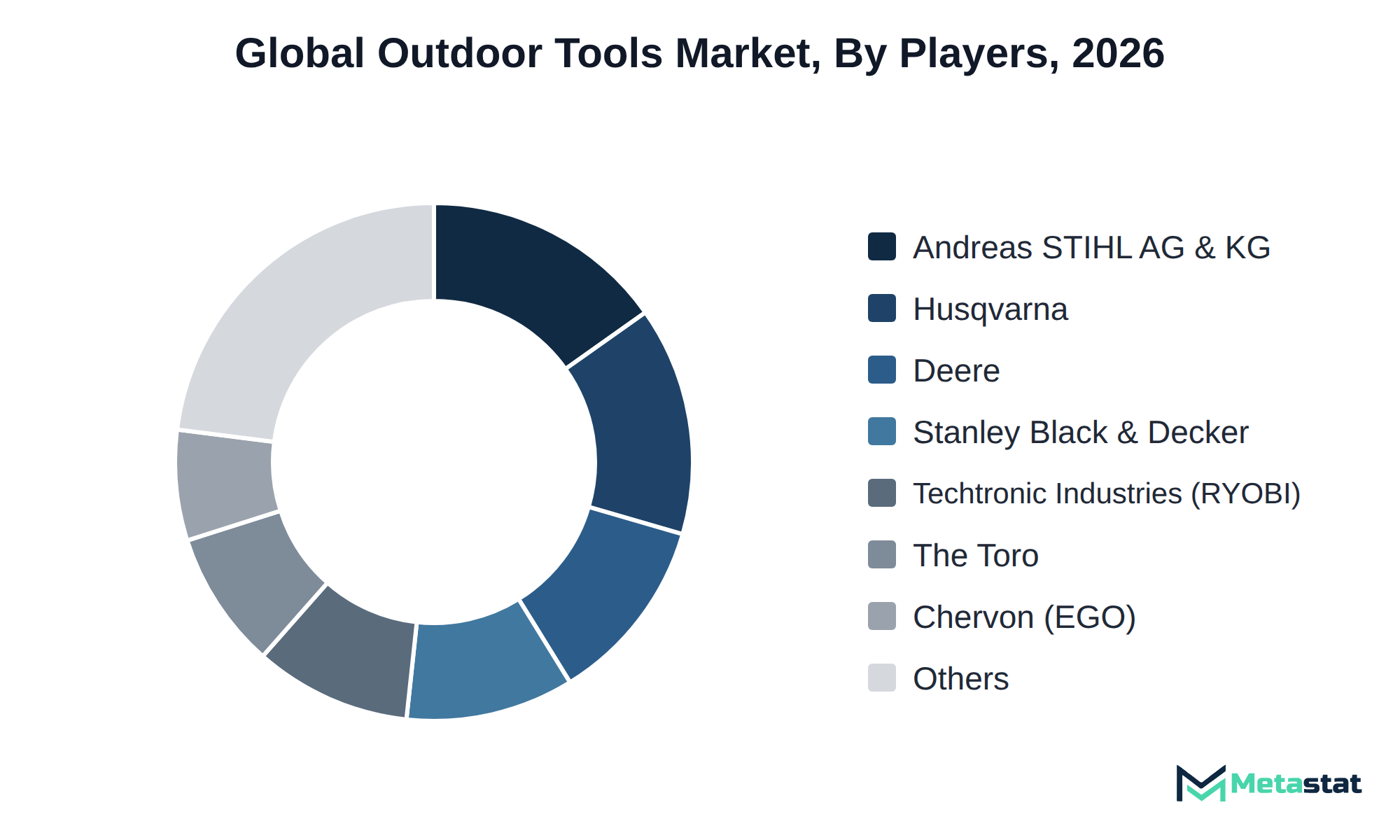
Competition in the outdoor tools market emphasizes product differentiation and customer-centric strategies. Companies focus on attributes including price, certification, customization, and service to attract buyers. For instance, Husqvarna Group focuses on high-performance lawn care solutions, emphasizing innovative technology and eco-friendliness in its product line. Meanwhile, Andreas STIHL AG & Co. KG prioritizes robust and reliable gasoline-powered tools, appealing to both residential and commercial users.
Companies utilize their ecosystems to enhance customer experiences and drive loyalty. Deere & Company combines machinery with digital solutions, offering integrated services that facilitate user engagement. The Toro Company develops a range of products tailored for both residential and commercial applications, demonstrating versatility in the market. This strategic behavior creates a competitive advantage, addressing diverse customer needs while building brand loyalty in the outdoor tools market.
This growth relies on several key developments. First, the increasing demand for battery-powered outdoor tools, projected to reach USD 22.8 billion by 2033, will drive significant market expansion, particularly in the residential and commercial sectors. Second, innovations in lawn care equipment, including lawn mowers, will attract more buyers, contributing to a growth rate of 5.5% and escalating sales in North America, where the market commands a share of 45%. Lastly, the rise in online retail channels will facilitate broader access for consumers, further boosting sales potential.
The primary risk to achieving the forecasted market size involves economic fluctuations that could impact consumer spending power. A downturn could dampen the growth of segments including commercial landscaping, which is anticipated to reach USD 12.1 billion by 2033 but faces vulnerabilities under economic pressure. The Outdoor Tools market requires sustained investment in innovation and consumer outreach to mitigate these risks and fulfill its growth potential.
By Equipment Type: Lawn Mowers, Trimmers, Edgers & Hedge Trimmers, Blowers, Chainsaws, Pressure Washers, Tillers & Cultivators, Snow Throwers, Others (Log Splitters, Wood Chippers, Pole Saws)
By Power Source: Gasoline-Powered, Battery-Powered, Electric Corded
By Application: Residential/DIY, Commercial Landscaping, Municipal & Public Grounds, Golf Courses & Sports Turf, Forestry & Agriculture, Others (Construction Sites, Resorts & Hospitality, Industrial Campuses)
By Sales Channel: Home Improvement Stores & Mass Retailers, Specialty Dealers & Distributors, Online Retail, Others (Direct Sales, Rental Channels, Government Contracts)
The report strategically identifies and profiles the key market players and analyses their core competencies in each sub-segment of the Outdoor Tools market.
Report Attributes | Details |
Study Period | 2021-2033 |
Base Year | 2025 |
Estimated Year | 2026 |
Forecast Period | 2026-2033 |
Historical Period | 2021-2025 |
Growth Rate | CAGR 6.0% from 2026 to 2033 |
Revenue Unit | USD billion |
Segmentation | By Equipment Type, Power Source, Application, Sales Channel, and Region |
By Region | North America (By Equipment Type, Power Source, Application, Sales Channel, and Country)
|
Europe (By Equipment Type, Power Source, Application, Sales Channel, and Country)
| |
Asia Pacific (By Equipment Type, Power Source, Application, Sales Channel, and Country)
| |
South America (By Equipment Type, Power Source, Application, Sales Channel, and Country)
| |
Middle East and Africa (By Equipment Type, Power Source, Application, Sales Channel, and Country)
|
Find answers to common questions about this report
The Outdoor Tools market size was valued at USD 39.8 billion in 2025.
The market is projected to grow at a CAGR of 6.0% during the forecast period from 2026 to 2033.
The North America Outdoor Tools market size is estimated to reach USD 26.3 billion by 2033.
Lawn Mowers lead the Outdoor Tools market with a projected value of USD 21.7 billion in 2033, representing the highest revenue among the equipment type segments.
Interest in home gardening has surged, driving higher sales among residential consumers. Technological advancements in battery performance significantly influence the market, enhancing consumer interest in battery-powered outdoor equipment.
North America holds the dominant share of the Outdoor Tools market, with a value of USD 26.3 billion projected for 2033, representing 45 percent of the total market.
Price sensitivity among buyers restrains growth in the Outdoor Tools market, resulting in slower adoption rates and smaller orders. Rising input costs for raw materials and manufacturing processes challenge suppliers, negatively impacting profit margins and pricing strategies.
The growing demand for battery-powered tools significantly drives adoption, particularly in the residential and DIY segments, projected to reach USD 22.8 billion by 2033. Increased consumer awareness of environmentally friendly solutions and the benefits of lower emissions and reduced noise levels further support this trend.
The Outdoor Tools market is estimated to reach a valuation of USD 63.6 billion by 2033.
Key players operating in the Outdoor Tools market include Husqvarna Group, Andreas STIHL AG & Co. KG, Deere & Company, The Toro Company, Techtronic Industries (RYOBI), and Stanley Black & Decker.
The analysts below cover Machinery & Equipment research at Metastat Insights.
LEAD ANALYST
Utkarsh Khirodkar is a Lead Market Research Analyst at MetaStat Insight, specializing in market intelligence, technology sector assessments, and competitive strategy.

INDUSTRY CONSULTANT - CHEMICALS & ADVANCED MATERIALS
Chemicals and Materials · Machinery & Equipment · Packaging
Amit Gadhekar Consultant for Chemicals and Materials at MetaStat Insight, directing sector-specific intelligence, research, and strategic consulting across global chemical and processing markets.

PRINCIPAL CONSULTANT - QUALITY SYSTEMS & COMPLIANCE
Electronics and Semiconductor · Machinery & Equipment · Professional Services
Omkar Phadtare is an Industry Consultant at MetaStat Insight, specializing in quality systems, regulatory compliance, and standards benchmarking to drive data-driven market intelligence and strategic industry research.

ENERGY & INFRASTRUCTURE INDUSTRY CONSULTANT
Automotive and Transportation · Electronics and Semiconductor · Energy and Power · Machinery & Equipment
Saurabh Vasant Ganvir consults for Energy & Infrastructure Industry at MetaStat Insight, specializing in renewable energy, solar EPC, and electric vehicle (EV) infrastructure markets.

LEAD CONSULTANT - COMMUNICATION, TELECOM, AND IT
Electronics and Semiconductor · Information & Technology · Machinery & Equipment · Professional Services
Ravindra Sathe Consultants for Communication, Telecom, and IT at MetaStat Insight. He leads the firm's industry research initiatives across telecommunications infrastructure, digital connectivity, enterprise networking, and emerging information technology domains.
Analyzing the transition from natural gas to green hydrogen in iron ore reduction requires realistic infrastructure timelines. Meta stat insight supplied a detailed regional assessment of DRI plant conversion costs and scrap metal availability in North America and Western Europe. Their report carefully examined pellet quality specs and electrical grid access constraints without making oversimplified market assumptions. The research material served as a practical reference during internal technology roadmap discussions.
Integrating zero-trust access controls across legacy electronic health record systems involves complex compliance overhead. Team produced an analysis that clearly separated identity governance and administration tools from privileged access management platforms. Their evaluation of HIPAA and GDPR compliance features across cloud native solutions gave our architecture group clear baseline criteria. The custom data request regarding biometric authentication adoption in hospital networks was returned promptly with clear documentation.
Evaluating calorific value requirements and air permit compliance across municipal waste facilities requires localized data. Metastat Insight structured their analysis around operational throughput capacity and feedstock composition variations in Latin America and Eastern Europe. Their competitive mapping of sorting equipment vendors helped clarify technology differences between optical separators and heavy media systems. The study provided an objective baseline during our capital expenditure reviews.
Explore related market intelligence reports worth reading alongside this one.