
LEAD ANALYST
Utkarsh Khirodkar is a Lead Market Research Analyst at MetaStat Insight, specializing in market intelligence, technology sector assessments, and competitive strategy.

Global Petrochemical Consulting Market Size, Share, By Consulting Type (Strategy & Market Advisory, Commercial & Pricing Advisory, Technical & Process Consulting, Operations & Performance Improvement, Capital Projects & Project Advisory, Transaction & Due Diligence Advisory, Digital & Analytics Consulting, Sustainability & Decarbonization Advisory, Regulatory, Risk & Compliance Advisory, Organization & Transformation Consulting), By Petrochemical Value Chain Focus (Feedstocks & Refinery-Petrochemical Integration, Olefins, Aromatics, Methanol & Syngas Derivatives, Polymers & Plastics, Petrochemical Intermediates & Derivatives, Specialty Petrochemicals), By Project Lifecycle Stage (Concept & Master Planning, Feasibility & Pre-FEED, FEED & Project Development, Engineering & Construction Advisory, Commissioning & Start-Up Support, Operations & Asset Optimization, Revamp, Debottlenecking & Expansion, Decommissioning & Asset Transition), By Application (Petrochemical Companies, Chemical Plants, Oil Refineries, Industrial Manufacturing and Energy Sector), Industry Analysis, Growth, Trends, and Forecast, 2026-2033
Report ID
MSI-5351
Published
September, 2026
Pages
301 Pages
Format
Historical
Base year
Forecast
Forecast period
Report Details
Market Valuation: Valued at $2,263.5 Million in 2025, projected to reach $3,691.3 Million by 2033 at a 6.3% CAGR.
Dominant Segment: The Strategy & Market Advisory segment leads the market, driven by increasing complexity in the petrochemical landscape and the need for expert guidance. This segment is projected to grow from USD 427.9 million in 2026 to USD 617.2 million by 2033, reflecting a CAGR of 5.4%.
Geographic Lead: The Asia Pacific region, particularly India and Southeast Asia, shows the fastest growth in the Petrochemical Consulting market. This growth is fueled by rising investments in petrochemical production and consumption, alongside ongoing infrastructure modernization initiatives.
What's Inside: The report provides a comprehensive analysis of the competitive landscape, market dynamics, and detailed segmentation across various consulting types, petrochemical value chains, and project lifecycle stages. It includes forecasts from 2026 to 2033.
Investment in Digital Transformation Dri: Digital transformation is significantly enhancing the Petrochemical Consulting market by integrating automation and AI, which improves operational efficiency and attracts further investment in consulting services.
Regulatory Compliance and Market Fragmen: Regulatory compliance challenges and market fragmentation complicate the Petrochemical Consulting landscape, impacting operational efficiency and increasing costs for consulting firms.
Choose Your License
Global Petrochemical Consulting Market
The global Petrochemical Consulting market was valued at USD 2,263.5 million in 2025 and is projected to reach USD 3,691.3 million by 2033, growing at a CAGR of 6.3% over the forecast period.
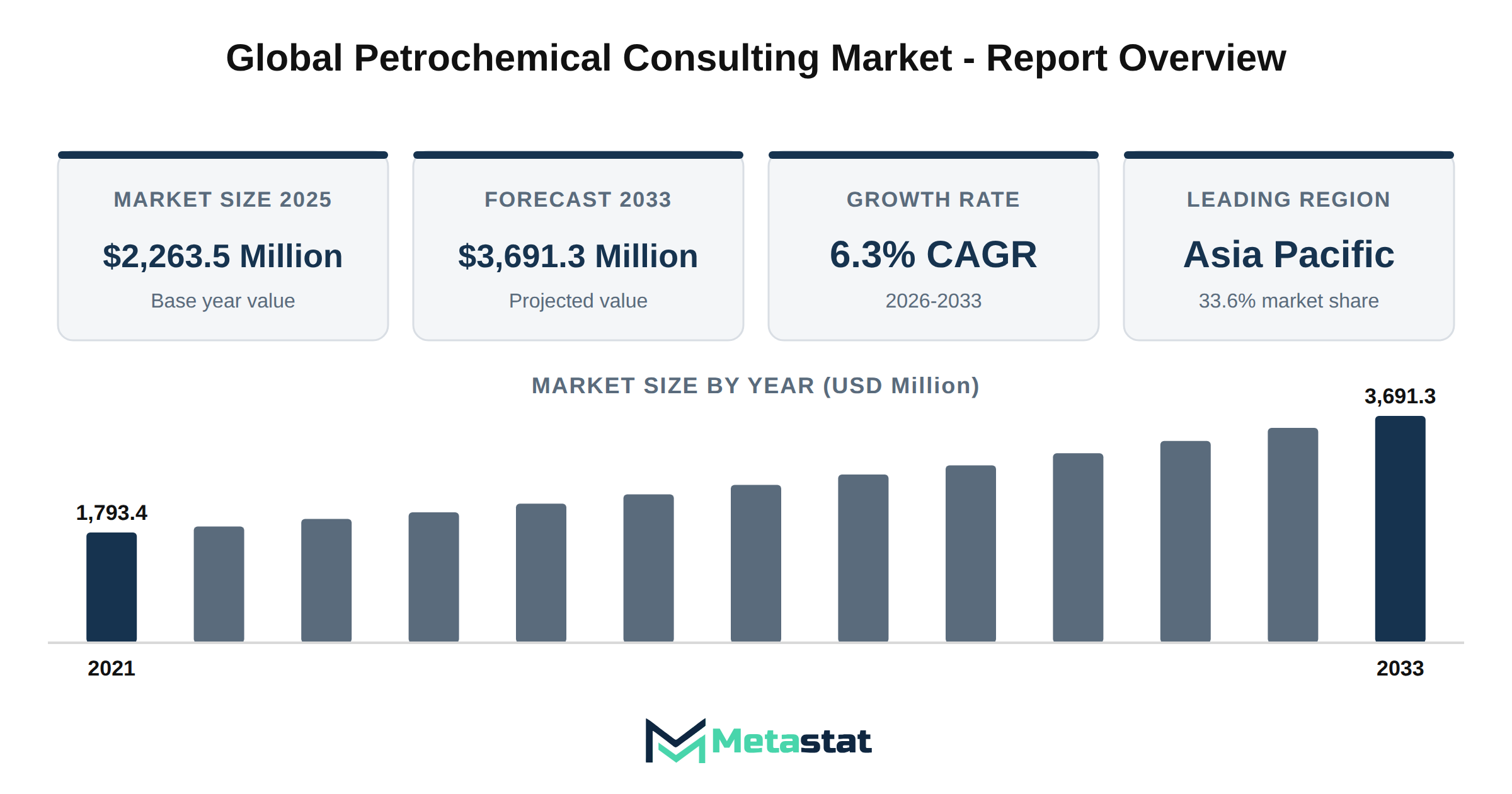
The Petrochemical Consulting market reached a valuation of USD 2,263.5 million in 2025, reflecting a steady growth trend from USD 1,793.4 million in 2021 to USD 2,122 million in 2024. Forecasts indicate an expansion to USD 3,691.3 million by 2033, with a compound annual growth rate (CAGR) of 6.3% from 2026 through 2033. This growth is attributed to various factors, including the integration of refinery and chemical processes, which has driven demand for strategic advisory services.
Rising demand for petrochemical strategy and market advisory services stems from the increasing complexity of market dynamics and the need for companies to navigate competitive landscapes effectively. The integration of digital technologies reshapes consulting services, enhancing operational efficiency and decision-making processes. The adoption of artificial intelligence and advanced analytics tools within the consulting framework supports data-driven strategies, allowing firms to optimize their operations and align with market trends.
Consulting focused on petrochemical decarbonization gains strategic importance amid global sustainability initiatives. Companies are increasingly seeking expertise to transition towards greener practices, which drives demand for specialized consulting services. Integration from refinery to petrochemicals creates new opportunities for consulting firms, enabling them to address unique challenges and optimize processes effectively.
The demand for capital project advisory services is evident across various petrochemical expansion programs. While companies invest in new facilities and upgrades, expert guidance in project execution becomes critical. Trends in process optimization and asset performance consulting further illustrate the market's evolution, with firms focusing on maximizing efficiency and reducing operational costs.
Growing demand for feasibility and pre-FEED advisory services reflects the complexity and investment required in petrochemical projects. This trend highlights a significant area of opportunity within the market, where expert assessments inform decision-making and project viability. Commercial and pricing advisory services are essential, enabling firms to navigate pricing pressures and market fluctuations, ensuring profitability in an evolving landscape.
Sustainability and carbon reduction strategies are integral to petrochemical consulting, with firms increasingly focusing on aligning with environmental regulations and consumer expectations. This shift influences consulting dynamics, leading to enhanced practices and innovative solutions. Activity surrounding mergers and acquisitions, along with due diligence advisory, underscores the need for expertise in navigating strategic partnerships within the market.
The integration of refinery and chemical processes drives significant growth in the Petrochemical Consulting market. Enhanced collaboration between these sectors allows firms to improve efficiency, reduce costs, and optimize product output. This trend attracts consulting services that focus on streamlining operations and encouraging innovation within integrated environments.
Demand for strategy and market advisory services within the petrochemical sector has surged, reflecting the need for firms to navigate increasingly complex market dynamics. Consulting services that provide insights into market trends, competitive positioning, and strategic planning play a crucial role in helping organizations achieve sustainable growth.
Digital transformation reshapes consulting services in the petrochemical industry, emphasizing the adoption of advanced technologies. The integration of digital tools enhances data analysis, operational efficiency, and decision-making capabilities, allowing firms to remain competitive in a changing market.
The adoption of AI and advanced analytics in consulting practices has emerged because a key trend. Firms leverage these technologies to gain insights from large data sets, facilitating better forecasting, risk assessment, and operational improvements. This strategic shift supports enhanced decision-making processes across the petrochemical value chain.
Decarbonization consulting has gained strategic importance, because firms prioritize sustainability initiatives. Consulting services that focus on reducing carbon footprints and implementing green technologies align with global environmental goals, presenting new opportunities for growth in the market.
The integration of refinery and petrochemical operations creates new consulting opportunities. This trend allows firms to capitalize on synergies within the value chain, driving demand for consulting services that address operational challenges and optimize resource allocation.
Capital project advisory services experience increased demand due to expansion programs within the petrochemical sector. While firms invest in new facilities and technology upgrades, consulting services focused on project management, feasibility studies, and risk mitigation become essential components of successful project execution.
Trends in process optimization and asset performance consulting reflect the ongoing quest for efficiency within petrochemical plants. Firms seek to maximize production capabilities, minimize downtime, and enhance overall asset reliability, resulting in a growing demand for specialized consulting services.
Growing interest in FEED and pre-FEED advisory services highlights the importance of thorough planning in petrochemical projects. These services provide critical insights during the early stages of project development, enabling firms to identify potential challenges and streamline project execution.
Consulting trends related to pricing and commercial advisory emphasize the need for firms to adapt to fluctuating market conditions. Consulting services that focus on pricing strategies, market analysis, and competitive benchmarking help organizations optimize profitability and maintain market share.
Sustainability and carbon reduction strategies drive consulting practices in the petrochemical sector. Firms increasingly seek expert guidance on implementing sustainable practices, aligning business objectives with environmental regulations and stakeholder expectations.
M&A and due diligence advisory activity reflects the dynamic nature of the petrochemical market. Consulting services that specialize in transaction support, risk assessment, and valuation analysis play a critical role in facilitating successful mergers and acquisitions.
Operational excellence consulting becomes essential for petrochemical plants aiming to enhance productivity and reduce costs. Firms invest in consulting services that focus on process improvements, workforce optimization, and technology integration to achieve operational goals.
Trends in supply chain optimization and feedstock strategy highlight the importance of efficient resource management. Consulting services that analyze supply chain dynamics, feedstock availability, and pricing trends support firms in making informed decisions that enhance competitiveness.
Investments in the Middle East drive expanding demand for consulting services in the petrochemical sector. While regional firms pursue growth opportunities, consulting services that provide market insights, feasibility studies, and project management expertise become increasingly valuable.
Growth in petrochemical capacity in the Asia Pacific region supports advisory services because firms seek to enhance production capabilities. Increased activity in this region presents consulting opportunities that focus on market entry strategies, operational efficiency, and investment optimization.
North American demand for consulting services reflects the region's feedstock advantage. Firms leverage consulting expertise to navigate market complexities and capitalize on favorable production conditions, driving growth in the market.
Trends in regulatory and compliance advisory highlight the need for firms to stay abreast of evolving regulations within the petrochemical industry. Consulting services that provide insights into compliance requirements and risk management strategies are essential for maintaining operational integrity.
The focus on circular plastics and chemical recycling drives new consulting requirements within the market. Firms seek expert guidance on implementing recycling initiatives and sustainable practices that align with global sustainability goals.
Portfolio optimization and business transformation strategies gain traction because firms seek to adapt to changing market dynamics. Consulting services that assist organizations in reshaping their portfolios and aligning business strategies with market demands play a crucial role in driving growth.
Increasing technical consulting demand arises from revamp and debottlenecking projects in the petrochemical sector. Firms pursue consulting services that focus on optimizing existing assets and enhancing production capabilities to meet growing market needs.
Energy transition risks significantly reshape investment advisory in the petrochemical market. Consulting services that assess market impacts, regulatory changes, and technological advancements provide essential insights for firms navigating the transition to sustainable energy solutions.
Competitive benchmarking and cost curve analysis emerge because critical components of consulting services in the petrochemical sector. Firms leverage these insights to identify areas for improvement, optimize operational efficiency, and maintain a competitive edge in the market.
Specialty chemicals and derivatives present consulting opportunities for firms seeking to expand their market presence. Consulting services that focus on market trends, product development, and strategic positioning support firms in capturing growth within this segment.
The petrochemical consulting market is expected to experience significant growth through 2033, driven by evolving industry dynamics, technological advancements, and increasing demand for specialized expertise. Firms that adapt to these trends are well-positioned to thrive in the competitive consulting environment.
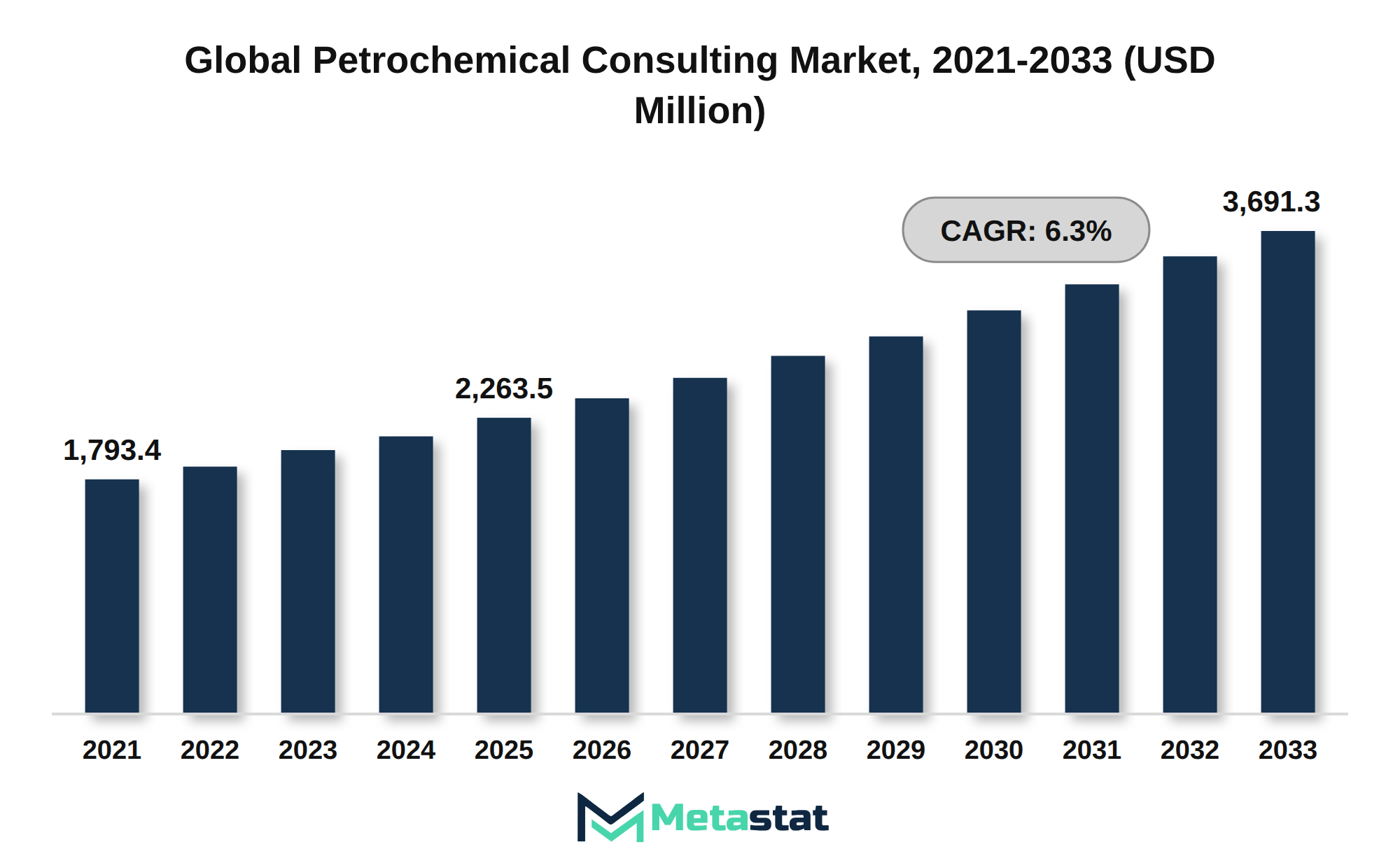
Increased capital investment environments significantly influence the Petrochemical Consulting market. Factors including GDP growth, interest rates, and venture funding create a favorable landscape for firms within the petrochemical industry. This optimism results in higher spending on consulting services aimed at optimizing operations and enhancing competitive positions.
Investors actively seek opportunities in emerging markets due to robust economic indicators and growth projections. The influx of public-private investments in infrastructure and technology development creates an environment ripe for consulting engagements, driving demand for strategic advisory services. Industries increasingly rely on consulting firms to navigate the complexities of capital allocation, ensuring efficient resource utilization and maximizing returns on investment.
The market experiences accelerated growth driven by petrochemical companies leveraging insights gained from consulting engagements to streamline operations and improve profitability. Enhanced operational productivity and cost-efficiency initiatives emerge because significant themes in this context, with firms prioritizing strategies that minimize overhead and optimize labor. The Petrochemical Consulting market is positioned for sustained expansion, with expectations of reaching USD 3,691.3 million by the end of the forecast period in 2033.
Digital transformation significantly enhances the Petrochemical Consulting market. This transformation involves integrating automation, artificial intelligence, and software solutions, which improve efficiency across processes. Digitizing legacy operations enables firms to reduce operational costs while increasing productivity, attracting further investment and interest in consulting services. Companies that embrace these technologies position themselves to outperform competitors, ensuring access to superior resources and capabilities.
Demand for consulting services is pronounced among petrochemical companies seeking modernization. Optimizing operations through digital tools enhances decision-making capabilities, leading to improved project outcomes. This trend reflects macro-economic factors, including rising venture funding directed at tech-enabled solutions. The Petrochemical Consulting market leverages this investment to enhance service offerings, enabling clients to adapt to rapidly shifting market dynamics while maintaining competitive advantages.
Regulatory compliance poses significant challenges within the Petrochemical Consulting market, impacting operational efficiency and increasing costs. Stringent regulations surrounding environmental standards necessitate extensive adjustments in consulting strategies, particularly for firms focused on emissions reduction and waste management. Compliance hurdles divert resources from core consulting functions, hindering growth potential in a competitive market.
Market fragmentation complicates the Petrochemical Consulting market, with numerous players offering divergent services and methodologies. This fragmentation creates confusion for potential clients seeking tailored consulting solutions, resulting in slower decision-making processes. Smaller firms struggle to compete with established players, leading to operational inefficiencies that further constrain growth within the market.
Macroeconomic headwinds, including inflationary pressures and resource scarcity, exacerbate these challenges. Escalating costs for raw materials and labor force firms to reconsider their consulting strategies, impacting profitability and investment in new technologies. Consequently, the Petrochemical Consulting market faces a complex environment where compliance and economic factors intertwine, influencing overall market performance and future prospects.
Geopolitical tensions and trade uncertainties significantly impact the Petrochemical Consulting market by introducing volatility in trade relations and complicating supply chains. Nations prioritizing self-sufficiency in petrochemical production create barriers for international collaboration, leading to trade deficits and tariff friction. Consequently, consulting firms face challenges in navigating complex regulatory environments while advising clients on market entry strategies and compliance requirements.
Technological disruptions further hinder progress. Ongoing innovations necessitate rapid adaptation in consulting practices. Firms involved in research and development often encounter interoperability friction, complicating the integration of new technologies into existing operations. This situation creates additional burdens on clients striving to maintain competitive advantages while managing costs associated with advanced solutions.
Fluctuations in feedstock availability and prices pose another challenge for the market. Volatility in raw material costs affects project feasibility assessments and pricing strategies, placing pressure on profit margins for consulting firms. Rising input costs, alongside forces driving decarbonization mandates and sustainability demands, necessitate a reevaluation of business models across the value chain.
Logistics disruptions and supply chain instability further complicate project execution. Clients increasingly require consulting services to address these challenges, leading to increased demand for comprehensive supply chain assessments. Tightening global regulatory standards introduce compliance overhead, further straining consultants, driven by the help firms navigate evolving legal liabilities.
Market saturation and substitution vector pressures limit growth opportunities, compelling consulting firms to innovate continuously. Clients seek insights into changing downstream demands while striving to retain talent and address workforce skill gaps. Balancing technological advancements and workforce capabilities remains a critical concern for firms operating within the Petrochemical Consulting market.
The Petrochemical Consulting market experiences opportunities driven by emerging digital procurement trends and evolving buying behaviors. Companies increasingly adopt digital platforms for sourcing services, enhancing efficiency and transparency in procurement activities. This shift supports better decision-making and encourages the adoption of innovative consulting services tailored to specific needs.
Geographical expansion in emerging markets significantly influences the demand for consulting services in the petrochemical sector. Countries in Asia Pacific, particularly India and Southeast Asia, exhibit rapid growth in petrochemical production and consumption. Rising investments in these regions create substantial demand for consulting expertise to navigate complex market dynamics and optimize operations.
Infrastructure modernization initiatives further enhance market opportunities. Upgrading aging facilities improves operational efficiencies, while new projects require strategic consulting to integrate advanced technologies and sustainability practices. These improvements help firms maintain competitiveness and meet evolving consumer expectations.
Sustainability imperatives play a crucial role in shaping consulting engagements. Companies increasingly align with environmental, social, and governance (ESG) criteria, driving demand for expertise in sustainable practices and green transformations. The market sees a growing need for consulting services that assist organizations in implementing eco-friendly practices across the petrochemical value chain.
The integration of advanced technologies drives digital transformation within the market. Automation, process optimization, and data analytics enable firms to enhance productivity and reduce operational costs. Consulting firms that provide insights into these emerging technologies position themselves to capture significant market share.
Overall, opportunities in the Petrochemical Consulting market arise from a combination of digital procurement shifts, geographical expansion, infrastructure modernization, and sustainability initiatives. Firms that align their offerings with these trends are well-positioned to capitalize on the growth potential within this evolving environment.
The Global Petrochemical Consulting market is segmented based on Consulting Type, Petrochemical Value Chain Focus, Project Lifecycle Stage, and Application.
Growth in the Strategy & Market Advisory segment stems from the increasing complexity of the petrochemical landscape, with companies seeking expert guidance to navigate market dynamics. The segment is valued at USD 427.9 million in 2026 and is projected to reach USD 617.2 million by 2033, at a CAGR of 5.4% during the forecast period. This growth is influenced by rising demand for strategic insights, which help organizations optimize their operations and capitalize on market opportunities.
Adoption of advanced analytical tools fuels expansion in the segment, enabling firms to make data-driven decisions. The evolving regulatory environment pushes companies to enhance compliance measures, thereby increasing reliance on advisory services that address both regulatory challenges and strategic planning. Heightened competition in the petrochemical consulting market compels firms to improve service offerings and focus on client-specific needs, which contributes to market growth.
Investment in sustainability and digital transformation has created new avenues for advisory services, driven by organizations striving to minimize their environmental impact while maximizing efficiency. This trend increases demand for tailored strategies that integrate sustainable practices into traditional petrochemical operations. The market experiences an uptick in opportunities for consultants specializing in sustainability and innovation within the petrochemical sector.
The Strategy & Market Advisory segment reflects a robust outlook, supported by evolving client needs, technological advancements, and a focus on regulatory compliance, all of which position it for continued growth in the petrochemical consulting market.
Demand for Commercial & Pricing Advisory services within the Petrochemical Consulting market derives from the need for enhanced pricing strategies and commercial insights driven by evolving market dynamics. The increasing complexity of global supply chains and fluctuations in raw material costs drive companies to seek expert advice to optimize pricing models and maximize profitability. This emphasis on strategic pricing enables firms to navigate market volatility and maintain competitive advantage.
Technological advancements contribute to segment growth, with analytical tools and digital platforms enhancing the ability to analyze market trends and consumer behavior. Firms integrating these technologies into their consulting practices increase efficiency and accuracy in pricing strategies, attracting a broader client base. This segment is projected to reach USD 400.1 million by 2033, at a CAGR of 5.4% during the forecast period.
End-use dynamics reflect a notable shift towards sustainability, with petrochemical companies prioritizing eco-friendly processes. This trend influences pricing strategies, because companies look to leverage sustainable practices while optimizing costs. Regulatory compliance standards further impact the segment, requiring a comprehensive understanding and assessment of market conditions to ensure alignment with evolving policies.
Primary demand drivers for Commercial & Pricing Advisory services include the necessity for businesses to adapt to changing market conditions and consumer preferences. Continuous monitoring of cost structures, pricing volatility, and margin pressures remains crucial for firms aiming to sustain profitability. By addressing these factors, businesses enhance their strategic capabilities and positioning within the competitive environment.
Increasing focus on efficiency and sustainability fuels the demand for Technical & Process Consulting services within the Petrochemical Consulting market. These services provide crucial support for optimizing operations, reducing costs, and enhancing production processes across the petrochemical value chain. Regulatory compliance standards, driven by environmental concerns, necessitate advanced consulting solutions to help companies navigate complex requirements while maintaining profitability.
Technological advancements contribute significantly to market expansion. The emergence of innovative processes and next-generation technologies allows organizations to improve their operational capabilities. Clients across various sectors seek expertise in integrating these technologies to enhance productivity and reduce environmental impacts. The anticipated growth in this segment reflects an increasing reliance on technical consulting to implement effective solutions and address evolving industry challenges.
By 2033, the Technical & Process Consulting segment is projected to reach USD 633.1 million. This growth aligns with a broader trend of digital transformation and the demand for tailored solutions that support ongoing operational improvements. Increased investment in capital projects further enhances this segment's role in driving efficiency and profitability across the petrochemical industry.
Increasing emphasis on operational efficiency within the Petrochemical Consulting market drives the demand for Operations & Performance Improvement services. Companies seek to optimize processes and enhance productivity, resulting in a greater focus on performance metrics and methodologies. This segment benefits from technological advancements that enable real-time monitoring and data analysis, facilitating immediate decision-making and resource allocation. Engagement in continuous improvement practices helps organizations remain competitive in evolving market conditions.
The Operations & Performance Improvement segment is projected to grow at a CAGR of 5.6% during the forecast period. The need for organizations to adapt to regulatory requirements and standards contributes to the demand for consulting services in this space. Compliance with environmental regulations and safety standards necessitates enhanced operational practices, prompting firms to invest in expert guidance for process optimization.
This segment experiences growth due to emerging trends in sustainability and resource management. Companies increasingly prioritize sustainable practices, leading to a shift in operational strategies that align with environmental objectives. Such initiatives often result in cost savings and improved operational resilience, making consulting services in this area essential for navigating the complexities of modern petrochemical operations. This focus on sustainability further enhances the relevance of consulting expertise.
With rising competition and market volatility, organizations recognize the importance of agility in operations. Demand for performance improvement consulting services intensifies, providing firms with the necessary tools to adapt swiftly to changing market dynamics. This strategic focus on operational excellence enhances overall profitability and positions companies for long-term success within the broader petrochemical industry.
Investment in capital projects remains a critical component within the Petrochemical Consulting market, influencing the overall landscape. Demand arises from the necessity for efficient project execution and risk management, particularly during the planning and development phases. Clients seek expertise in navigating complex regulatory landscapes, ensuring compliance with increasingly stringent standards while optimizing project returns.
Technological maturation drives advancements in project advisory services, enabling firms to leverage innovative methodologies and tools. Increased focus on sustainability and digital integration facilitates the incorporation of next-generation technologies, enhancing project efficiency and reducing environmental impact. While firms strive for operational excellence, effective project management and advisory services become increasingly important.
The intersection of various end-use dynamics, including shifts in consumption patterns, shapes the demand for capital projects and project advisory services. Industries, including petrochemical manufacturing and chemical processing, emphasize the need for strategic guidance in project execution to maintain competitiveness. Regulatory compliance standards significantly influence project scopes, impacting the advisory services sought by firms within the market.
Cost structures and pricing volatility significantly impact project feasibility, highlighting the importance of strategic advisory services in navigating financial pressures. Maintaining resilience within supply chains remains crucial, particularly in the face of fluctuating raw material costs. Firms actively seek to mitigate risks associated with supply chain vulnerabilities, emphasizing the role of comprehensive project advisory services.
Strategic opportunity windows emerge owing to firms exploring new ventures and expansions, propelling demand for advisory expertise in capital projects. The evolution of industry-specific needs and regulatory landscapes necessitates adaptive strategies, making the role of project advisory services increasingly relevant. Continuous investment in advising capabilities is essential for firms to thrive within the competitive environment of the Petrochemical Consulting market.
Transaction & Due Diligence Advisory services play a critical role in the Petrochemical Consulting market by facilitating informed decision-making during mergers, acquisitions, and partnerships. These services help petrochemical companies evaluate the potential risks and rewards of investments in an increasingly competitive landscape. The demand for robust advisory services stems from the need for organizations to navigate complex market dynamics and align their strategies with evolving regulatory standards.
Factors including technological maturation and competitive pressures drive the expansion of Transaction & Due Diligence Advisory. Companies pursue these services to enhance their market positioning and ensure compliance with stringent regulations governing the petrochemical sector. The growing complexity of projects necessitates comprehensive assessments, highlighting the importance of thorough due diligence in investment strategies.
Investment in advanced analytics and data-driven methodologies supports the evolution of Transaction & Due Diligence Advisory services. Firms within the petrochemical industry increasingly recognize the value of leveraging innovative technologies to streamline processes and improve analytical precision. This trend contributes to the service's growing importance in the market. Organizations seek to achieve operational excellence and optimize their investment decisions.
Challenges related to pricing volatility and margin pressures persist, impacting the feasibility of certain transactions. Fluctuating raw material costs and market uncertainties compel organizations to approach investments with heightened caution. Transaction & Due Diligence Advisory services provide strategic insights and cost-effective solutions to address these challenges and enhance competitive advantage within the Petrochemical Consulting market.
Emerging technologies play a crucial role in reshaping the Digital & Analytics Consulting sector within the Petrochemical Consulting market. The adoption of advanced analytics and digital tools enhances operational efficiencies and decision-making processes for petrochemical companies. Growing data availability and the need for data-driven insights drive demand for analytics services, allowing firms to optimize production while minimizing costs.
Technological maturation significantly impacts service offerings, with upgrades to existing systems enabling the development of innovative solutions. Next-gen analytics tools facilitate real-time monitoring and predictive maintenance, enhancing performance across the value chain. These advancements create strategic opportunity windows for firms to leverage their analytics capabilities, ensuring competitiveness in a changing environment.
Regulatory compliance standards continue to evolve, influencing the demand for consulting services that aid in navigating complex compliance landscapes. Adherence to these standards requires continuous adaptation of strategies, prompting firms to invest in digital solutions that streamline compliance processes. This environment emphasizes transparency and accountability within the market.
Cost structures remain a critical consideration, with pricing volatility impacting project feasibility. Fluctuations in raw material costs necessitate strong analytics capabilities to forecast and manage price risks effectively. The need for strategic insight into market dynamics drives the evolution of consulting services, aligning them with broader industry trends and consumption shifts.
Supply chain resilience becomes increasingly important, especially in the face of logistical vulnerabilities. Firms face challenges in ensuring stability while sourcing raw materials, creating a demand for strategic insights that enhance supply chain management. The ability to mitigate substitution risks through comprehensive data analysis positions consulting firms favorably in the market.
Overall, the Digital & Analytics Consulting sector within the Petrochemical Consulting market experiences significant growth driven by technological advancements, regulatory pressures, and evolving market demands. Strategic investments in this arena are expected to yield operational benefits, positioning firms for success in an increasingly competitive environment.
Growing attention toward environmental sustainability drives increased interest in Sustainability & Decarbonization Advisory services within the Petrochemical Consulting market. Companies face rising pressure to lower greenhouse gas emissions, comply with stricter regulations, and enhance overall sustainability practices. The demand for advisory services arises from the identify strategies that align with both corporate goals and governmental standards.
Technological advancements enable firms to adopt innovative solutions for sustainability and decarbonization. Next-generation technologies, including carbon capture and storage, provide pathways for energy efficiency and emissions reduction. These technologies expand the advisory segment, allowing consultants to offer specialized insights that align with the evolving regulatory landscape.
Regulatory frameworks play a crucial role in shaping the market dynamics. Governments worldwide implement policies promoting sustainability, which influences investment and operational strategies across various industries. Compliance with these regulations necessitates expert guidance, driving growth in the advisory segment because organizations seek to navigate the complexities of compliance.
Cost structures related to sustainable practices impact overall profitability. Companies assess the financial implications of transitioning to greener alternatives, examining investments in technology, infrastructure, and operational changes. The incorporation of sustainability initiatives affects margin pressures, compelling organizations to optimize resources while maintaining competitiveness in the market.
Consumer preferences shift toward sustainable products and practices, creating opportunities for organizations prioritizing sustainability. Firms that successfully integrate decarbonization strategies often experience enhanced brand loyalty and market positioning. This consumer-driven approach reinforces the demand for Sustainability & Decarbonization Advisory services, positioning them because vital components of broader consulting efforts.
Strategic opportunity windows emerge because companies adapt to the changing landscape. Organizations pursuing sustainability initiatives tend to enhance their reputations and attract investments. This momentum for sustainable practices within the Petrochemical Consulting market highlights the growing importance of advisory services tailored to sustainability and decarbonization.
Increasing scrutiny surrounding regulatory compliance shapes advisory requirements within the Petrochemical Consulting market. Companies face complex regulations that necessitate expert guidance to navigate compliance frameworks effectively. A growing emphasis on sustainability and environmental responsibility drives demand for advisory services focused on regulatory risk management and compliance strategies. Professionals in this domain provide insights into evolving regulations and their implications on operational practices, enabling companies to maintain compliance while optimizing performance.
Continued investment in regulatory, risk, and compliance advisory services enhances the market's resilience. Stakeholders recognize the importance of understanding and mitigating compliance-related risks, which supports strategic decision-making and long-term operational sustainability. The evolving landscape of compliance standards influences firms to seek proactive measures in managing risks associated with non-compliance, thereby enhancing the overall value of advisory services to clients.
Demand for regulatory, risk, and compliance advisory services aligns with broader trends in the Petrochemical Consulting market, highlighting the significance of strategic planning and risk assessment in achieving operational objectives. Firms prioritizing compliance gain a competitive advantage by effectively managing risks and ensuring adherence to regulatory frameworks, positioning themselves for sustainable growth and enhanced market presence.
In the context of the Petrochemical Consulting market, Organization & Transformation Consulting emerges because a vital area driving strategic growth. This segment aligns with industry trends that prioritize operational effectiveness and transformation initiatives. Demand arises from organizations seeking to navigate complex market dynamics and efficiently adapt to evolving consumer behaviors.
Factors driving expansion include the increasing need for digital transformation and process optimization among petrochemical companies. Organizations invest in this consulting type to enhance their agility and responsiveness, thereby ensuring competitiveness in a rapidly changing landscape. The focus on sustainable practices further increases the relevance of Organization & Transformation Consulting, because firms strive to align their operations with environmental standards and corporate social responsibility objectives.
Technological advancements play a significant role in shaping this segment. Next-generation solutions, including data analytics and artificial intelligence, enable firms to streamline operations and enhance decision-making processes. These tools support the ongoing transformation initiatives within petrochemical companies, driving both efficiency and innovation.
End-use dynamics highlight the necessity for organizations to adapt their strategies continuously. Consumption shifts demand agile responses from firms, compelling them to reevaluate their operational frameworks. Regulatory compliance standards further influence transformation efforts, pushing organizations to integrate sustainable practices into their core strategies.
Overall, the Organization & Transformation Consulting segment within the Petrochemical Consulting market reflects a critical avenue for companies aiming to achieve long-term success and resilience in an increasingly competitive environment.
Valued at USD 456.5 million in 2026, the Feedstocks & Refinery-Petrochemical Integration segment is projected to reach USD 716.5 million by 2033, achieving a CAGR of 6.7% during the forecast period. This segment's growth is driven by the increasing integration of refinery processes with petrochemical production, which enhances operational efficiency and reduces overall costs. Rising demand for feedstocks, primarily in developing economies, aligns with an expanding petrochemical industry seeking to optimize production capabilities.
Technological advancements significantly contribute to the segment's evolution. Innovations in refining processes and petrochemical production techniques enable more efficient feedstock application, creating a competitive advantage for companies investing in these technologies. Shifting consumer preferences towards sustainable practices prompt refiners to adapt operations that apply alternative feedstocks and minimize environmental impact.
Regulatory compliance standards increasingly influence operational strategies within the market. Stricter environmental regulations require refiners to invest in cleaner technologies and processes. Firms that proactively align with these standards position themselves favorably in a market that values sustainability.
Pricing volatility in raw materials directly impacts profit margins within the segment. Fluctuations in crude oil prices affect feedstock availability and cost structures, challenging companies to optimize procurement and inventory strategies. This environment necessitates strategic investments in supply chain resilience and risk management to mitigate adverse effects on profitability.
The Feedstocks & Refinery-Petrochemical Integration segment presents strategic opportunity windows for firms willing to invest in next-generation technologies and sustainable practices. By addressing the evolving demands of the market, participants capitalize on growth trajectories that reflect the market's overall expansion trends and consumer expectations.
Increasing demand for olefins in various applications drives growth within the Petrochemical Consulting market. Petrochemical companies require guidance in optimizing production processes and enhancing operational efficiency. Technological advancements in production methods facilitate the development of new derivatives, enabling companies to meet evolving market demands.
Environmental regulations significantly influence the olefins segment, driving investments in sustainable production practices and compliance solutions. Cost structures associated with raw materials and energy supply directly affect profitability within the segment. Pricing volatility impacts strategic decision-making, compelling firms to seek expert advice to navigate market fluctuations.
The olefins segment is projected to reach USD 713.2 million by 2033, at a CAGR of 5.6% during the forecast period. This growth reflects the increasing adoption of olefins in diverse end-use applications, including automotive, packaging, and construction. The trend toward lighter and more efficient materials enhances the attractiveness of olefins for various industries.
Strategic opportunity windows emerge for consulting services focused on product evolution and next-generation upgrades. Companies prioritize investments in innovation to maintain competitive advantage. Enhanced demand for sustainable solutions creates additional avenues for growth. This trend encourages firms to adopt advanced technologies and integrate them into their operational frameworks.
Anticipated growth in the Aromatics segment reflects strong demand for various applications, including the production of plastics, detergents, and synthetic fibers. This segment is expected to reach USD 478.4 million by 2033. Increasing consumption of consumer goods and an enhanced focus on developing sustainable products drive this demand. Regulatory compliance regarding environmental impacts and emissions increases the need for effective consulting services to navigate complexities in the market.
Technological maturation within the petrochemical industry supports innovative processes that enhance the production efficiency of aromatics. Upgrades in refining technologies and integration of digital solutions contribute to improved operational performance. Pursuing cost-effective production techniques positions companies favorably against market fluctuations and pricing volatility.
The evolving dynamics of end-use applications, particularly in the automotive and construction sectors, significantly influence consumption patterns. Shifts toward lightweight materials in automotive design and enhanced thermal insulation in construction drive increased utilization of aromatic compounds. These trends highlight the importance of strategic advisory services that align production capabilities with market demands.
Investment in research and development drives the evolution of products derived from aromatics, creating strategic opportunity windows for consulting firms. Navigating challenges related to raw material sourcing, substitution risks, and competitive pressures remains crucial. This environment presents firms with opportunities to enhance service offerings tailored to the petrochemical consulting market.
Increasing demand for methanol and syngas derivatives drives significant growth within the Petrochemical Consulting market. This segment is projected to grow at a CAGR of 6.8% during the forecast period. Factors contributing to this growth include the rising need for cleaner fuels and the expansion of methanol because a key building block for various chemicals. The adoption of methanol because an alternative to conventional fuels enhances its attractiveness in the energy sector, resulting in increased consulting opportunities tailored to this application.
Technological advancements in methanol production and syngas derivatives create catalysts for segment expansion. Innovative methods in catalytic processes and gas-to-liquid technologies provide avenues for enhanced efficiency and lower production costs. Consequently, consulting services focusing on these technological improvements gain traction among petrochemical companies and energy sectors.
Downstream applications, particularly in the automotive and chemical industries, experience significant shifts toward methanol and syngas derivatives. While regulations promoting cleaner fuels tighten, companies exploring these alternatives require specialized consulting services to navigate compliance and optimize production processes. Such regulatory frameworks shape investment strategies, leading to increased demand for advisory services within the Petrochemical Consulting market.
Market dynamics reflect consumption shifts driven by sustainability initiatives. The emphasis on reducing carbon footprints compels companies to invest in methanol and syngas derivatives, prompting a reevaluation of sourcing strategies and supply chain resilience. This shifting landscape highlights strategic opportunity windows for consulting firms specializing in environmental compliance and technology maturation.
Demand for polymers and plastics remains robust owing to their versatility and wide-ranging applications across industries, including automotive, packaging, and construction. The Petrochemical Consulting market experiences heightened interest in this segment, primarily driven by technological advancements in polymer production and processing techniques. Innovations in materials science facilitate the development of high-performance polymers, enhancing product quality and expanding their use in various applications.
End-use dynamics reflect shifts toward lightweight and durable materials, particularly in the automotive sector, where fuel efficiency and emissions standards push manufacturers toward adopting advanced polymer solutions. Regulatory compliance standards regarding environmental impact and recyclability significantly influence product evolution, prompting companies to explore sustainable alternatives to traditional plastics.
Pricing volatility in raw materials, particularly crude oil and natural gas, poses challenges within this segment. Fluctuations in feedstock costs lead to varying pricing strategies that impact margins throughout the supply chain. Strategic opportunity windows emerge for companies that successfully navigate these challenges, focusing on innovative solutions and sustainable practices to enhance profitability.
Investment in research and development drives technological maturation within the polymers and plastics segment. Companies investing in next-generation upgrades enhance their competitive edge, addressing both consumer demand for sustainable products and regulatory pressures. Supply chain resilience becomes essential owing to companies seeking reliable sourcing for raw materials while mitigating risks associated with logistics vulnerabilities.
Overall, the complexities of the polymers and plastics segment within the Petrochemical Consulting market provide a space rich with growth prospects, demanding strategic focus from industry players to leverage opportunities effectively.
Increased focus on developing Petrochemical Intermediates & Derivatives aligns with ongoing shifts toward higher efficiency and sustainability across the petrochemical value chain. Regulatory compliance standards significantly influence demand dynamics, driving companies to seek effective consulting solutions to navigate complex regulations while optimizing production processes.
Technological maturation in the petrochemical sector facilitates advancements in production techniques and product evolution, enhancing the competitiveness of intermediates and derivatives. Downstream applications across various industries, including automotive, construction, and pharmaceuticals, highlight the growing relevance of these products, leading to increased investment in consulting services tailored to specific needs.
Cost structures, along with pricing volatility and margin pressures, create challenges for firms operating in this segment. Companies increasingly seek expert guidance to manage these financial aspects effectively, ensuring sustained profitability in a fluctuating market environment. Strategic opportunity windows arise from the need for innovation and responsiveness to market demands, encouraging investment in next-generation upgrades and disruptive alternatives.
While supply chain resilience becomes critical, raw material sourcing strategies and logistics vulnerabilities assert significant influence over the operational landscape. Firms face the challenge of balancing cost efficiency with reliability in sourcing petrochemical intermediates and derivatives, reinforcing the market's demand for specialized consulting services. Evolving consumption shifts, underlined by environmental considerations, further shape the strategic directions of industry players.
The Petrochemical Consulting market reflects a dynamic relationship among these factors, highlighting the essential role of consulting services in navigating the complexities inherent in the Petrochemical Intermediates & Derivatives segment. Companies engaging in this market benefit from targeted insights and guidance, positioning themselves for success amid ongoing industry transformations.
Innovations within the specialty petrochemicals segment attract attention due to their diverse applications across various industries. Demand for high-performance products in sectors including automotive, construction, and electronics drives growth. The trend toward lightweight materials and enhanced performance stimulates investment in specialty chemicals, leading to increased research and development efforts.
Technological maturation enables the introduction of next-generation products, allowing manufacturers to meet evolving standards for efficiency and sustainability. Regulatory compliance influences product development, whereby stringent environmental regulations encourage the creation of eco-friendly alternatives. This shift aligns with end-user preferences for sustainable and efficient solutions, impacting consumption patterns across sectors.
Pricing volatility remains a challenge within the market, driven by fluctuations in raw material costs and geopolitical factors. Producers face margin pressures, necessitating strategic adjustments in pricing strategies to maintain profitability. Supply chain resilience is essential in mitigating risks associated with sourcing raw materials, highlighting the necessity for agile logistics frameworks.
Substitution risks arise from the emergence of disruptive alternatives, compelling manufacturers to innovate continuously. Strategic opportunity windows indicate areas for growth, particularly in high-value applications that leverage advanced materials. Capital investment outlooks reflect a sustained commitment to enhancing production capabilities and expanding product offerings, reinforcing the segment's importance within the broader petrochemical consulting market.
Valued at USD 307.2 million in 2026, the Concept & Master Planning segment is projected to reach USD 447 million by 2033, at a CAGR of 5.5% during the forecast period. Demand drivers within this segment include the growing complexity of petrochemical projects and the need for efficient resource allocation. Factors including strategic planning and risk assessment play significant roles in adoption, compelling companies to seek expert guidance for streamlined project execution. The shift toward innovative technologies enhances the capabilities of consulting services, enabling firms to address challenges in project execution effectively.
Expansion catalysts include increased investment in capital projects and a focus on sustainable practices within the Petrochemical Consulting market. Companies prioritize effective project management to optimize operational efficiency and reduce costs. End-use dynamics demonstrate a shift toward integrated solutions that encompass both conceptual frameworks and practical applications, highlighting the importance of comprehensive planning in project success. Regulatory compliance standards influence advisory requirements, prompting firms to adapt their strategies to meet evolving legal and environmental expectations.
Strategic opportunity windows emerge for firms that offer tailored solutions to meet unique project needs. Capital investment outlook remains positive, with stakeholders recognizing the value of expert advisory in navigating complex project lifecycles. The emphasis on innovative approaches, alongside traditional methods, positions the Concept & Master Planning segment for sustained growth, contributing to the overall advancement of the market.
Valued at USD 530.8 million by 2033, the Feasibility & Pre-FEED segment experiences a CAGR of 5.8% during the forecast period. Demand drivers in this segment include the rising complexity of petrochemical projects and increased focus on thorough risk assessment during the early stages of project development. Clients prioritize detailed analysis to minimize financial exposure while optimizing project feasibility. Regulatory compliance standards necessitate comprehensive feasibility studies, driving demand for expert consulting services in the market.
Technological maturation significantly impacts the Feasibility & Pre-FEED segment, driven by advancements in modeling software and analytical tools that improve accuracy and efficiency in project evaluations. The integration of data analytics and simulation technologies facilitates better decision-making processes, ensuring projects align with market dynamics and environmental regulations. This evolution supports strategic opportunity windows for consulting firms specializing in this sub-segment.
Industry players face challenges related to pricing volatility and margin pressures, primarily resulting from fluctuations in raw material costs and market demand. Effective management of these factors enhances the competitive edge of consulting firms in the market. Strong supply chain resilience plays a crucial role in ensuring the timely execution of feasibility studies, minimizing disruptions that could affect project timelines and costs.
The Feasibility & Pre-FEED segment within the Petrochemical Consulting market remains a critical area for investment and growth. With the anticipated increase in project complexity and rising regulatory requirements, consulting firms equipped with advanced technological capabilities and strategic insights stand to gain a substantial competitive advantage.
Increasing investment in petrochemical infrastructure significantly influences the demand for advisory services in the FEED & Project Development segment. This segment addresses critical phases of project execution, focusing on feasibility and detailed project design, which are essential for ensuring project success and alignment with market standards.
Valued at USD 599.5 million by 2033, this segment benefits from heightened activity in the petrochemical sector, driven by efficient resource allocation and timely project completion. Strategic investments in emerging markets increase the demand for specialized consulting services, particularly in the context of evolving regulatory frameworks and sustainability goals.
End-user dynamics indicate a shift toward integrated project management approaches, emphasizing solutions that encompass technical and operational considerations. This shift aligns with broader trends within the Petrochemical Consulting market, where firms increasingly seek effective strategies to navigate complex project lifecycles.
Pricing volatility and margin pressures specific to project development exacerbate the necessity for expert guidance, creating a robust environment for strategic consulting. Industry players focus on innovative practices and technologies to enhance project efficiency and minimize risks associated with investment.
The evolving landscape of the FEED & Project Development segment reflects a confluence of factors driving demand within the Petrochemical Consulting market, establishing a foundation for sustained growth and opportunity.
Growing complexity in petrochemical projects necessitates specialized expertise in engineering and construction. Firms increasingly seek comprehensive advisory services to optimize project execution, enhance operational efficiencies, and ensure regulatory compliance. The demand for Engineering & Construction Advisory services aligns with a broader trend of rising investments in petrochemical infrastructure, driven by expanding production capacities and technological advancements. Regulatory pressures regarding safety and environmental standards influence project requirements, creating a need for robust advisory support throughout the project lifecycle.
The Engineering & Construction Advisory segment is projected to grow at a CAGR of 5.7% during the forecast period. This growth reflects a commitment to improving project outcomes, maximizing resource utilization, and addressing evolving market demands. Adoption of advanced technologies and methodologies facilitates the integration of innovative solutions, enhancing project effectiveness. With the increasing focus on sustainability, firms prioritize strategies that incorporate environmentally responsible practices within project planning and execution.
Investment in engineering and construction capabilities strengthens competitive positioning within the Petrochemical Consulting market. Companies emphasize strategic initiatives to address supply chain vulnerabilities and optimize raw material sourcing, thus enhancing project resilience. The segment's growth trajectory is supported by increasing capital investments and a shifting focus toward modernization and efficiency improvement in project execution. Overall, the Engineering & Construction Advisory segment's evolution reflects the dynamic nature of the market and the critical role of expert guidance in navigating complex project environments.
Specialized support during the commissioning and start-up phases of petrochemical projects plays a critical role in ensuring operational efficiency and compliance with regulatory standards. This segment benefits from increased complexity in project execution, emphasizing the need for expert guidance in the transition from construction to operational phases. The integration of advanced technologies improves performance metrics, highlighting the importance of tailored advisory services during these stages.
Heightened focus on environmental and safety regulations drives demand for comprehensive commissioning strategies that align with industry standards. The growing emphasis on sustainable practices influences the scope of support provided, with a significant push toward minimizing environmental impact during start-up operations. Operators seek to enhance performance while meeting compliance requirements, intensifying the demand for specialized commissioning services within the Petrochemical Consulting market.
Technological maturation contributes to the evolution of commissioning practices, with innovations in digital tools and data analytics facilitating more effective monitoring and management of start-up activities. These advancements enhance decision-making processes and optimize resource allocation, ultimately influencing the success of new installations. The market's response to these technological shifts reflects a strategic opportunity for firms specializing in commissioning and start-up support services.
Increasing emphasis on operational efficiency drives demand for optimization within petrochemical projects. Companies focus on enhancing productivity and reducing operational costs, prompting investments in specialized consulting services. This environment increases the need for improved methodologies and tools tailored to asset optimization.
Technological advancements within the petrochemical consulting market support the evolution of operations and asset optimization. Emerging digital solutions, including predictive analytics and automation, streamline processes, reduce downtime, and enhance overall performance. These innovations align with industry objectives to maintain competitiveness in a challenging market.
Regulatory compliance standards influence the landscape of operations and asset optimization. Stricter environmental regulations necessitate the implementation of sustainable practices and efficient resource management. Firms adapt operational strategies to meet these requirements while maximizing productivity and profitability.
Consumption shifts toward more sustainable and efficient processes impact project lifecycle stages, with a growing focus on long-term asset performance. This shift creates strategic opportunity windows for consulting firms specializing in optimizing operations and assets within petrochemical projects. Increased investment in these areas drives further growth and innovation.
Investments in revamping and debottlenecking existing facilities enhance operational efficiency and increase production capacity within the petrochemical sector. Companies seek to optimize their asset utilization and meet rising demand without incurring the costs associated with building new facilities. The focus on expansion through existing infrastructure aligns with the need for sustainable practices, allowing firms to reduce their carbon footprint while maximizing output.
Technological advancements drive the effectiveness of revamp and debottlenecking projects, enabling improved process integration and the adoption of next-generation technologies. This transition leads to enhanced productivity and supports the competitive positioning of firms within the petrochemical consulting market. Strategic upgrades and innovations, including digital tools for monitoring and optimizing processes, facilitate better decision-making and resource allocation.
End-use dynamics indicate a shift towards more efficient production methods, highlighting the importance of regulatory compliance in project execution. Clients face increasing scrutiny regarding environmental standards, driving the necessity for compliant practices in revamp initiatives. The response to regulatory pressures influences capital investment strategies, pushing firms to allocate resources toward projects that ensure compliance while delivering value.
Market participants encounter challenges related to pricing volatility and cost structures during revamp projects. Fluctuations in raw material prices affect overall project budgets, prompting firms to adopt risk management strategies that safeguard margins. Navigating these pressures through effective planning and implementation becomes crucial for sustaining growth in the market.
Strategic opportunity windows emerge because firms recognize the potential for optimizing aging assets. Investment in revamp and debottlenecking not only addresses immediate capacity needs but positions firms for long-term growth and sustainability. Companies that successfully execute these projects strengthen their market presence and enhance their ability to respond to shifts in demand and regulatory landscapes.
Decommissioning and asset transition processes in the petrochemical sector demand specialized approaches to manage the complexities associated with aging infrastructure and environmental regulations. The primary drivers of this segment include the increasing need for efficient dismantling and repurposing of facilities, alongside the imperative to adhere to stringent environmental compliance standards. Companies within the petrochemical consulting market actively seek to optimize these processes, reducing the risks associated with regulatory non-compliance.
The rising trend of sustainability and carbon reduction fuels demand for effective decommissioning strategies. Petrochemical companies prioritize the development of frameworks that facilitate safe asset transition and the recycling of materials, thereby reducing downstream waste. This evolution leads to a significant focus on next-generation upgrades that enhance operational efficiencies while addressing environmental concerns.
Organizations face pressures from fluctuating pricing in raw materials, impacting cost structures within the decommissioning phase. Strategic opportunity windows arise from the necessity to transition assets in alignment with market demands, influencing investment levels in sustainable technologies. While the industry progresses, the importance of supply chain resilience becomes evident, ensuring that raw material sourcing aligns with evolving market needs.
Technological advancements in the decommissioning and asset transition segment enable more effective project lifecycle management, enhancing overall operational frameworks. Companies incorporating these technologies improve their competitive positioning, adapting to the dynamic requirements of the petrochemical consulting market. Effective execution of decommissioning projects aligns with environmental regulatory compliance and positions organizations favorably within an increasingly eco-conscious market.
Valued at USD 937.5 million in 2026, the Petrochemical Companies segment is projected to reach USD 1,481 million by 2033, reflecting a CAGR of 6.7% during the forecast period. Demand for petrochemical consulting services arises from the necessity for companies to navigate complex market dynamics, optimize production processes, and enhance operational efficiency. The growth trajectory aligns with increasing adoption of advanced technologies and sustainable practices within the petrochemical industry.
Strategic investments in innovation and modernization drive demand for specialized consulting services tailored for petrochemical companies. Regulatory compliance standards compel organizations to seek expert advice to meet stringent environmental regulations and sustainability goals. Consulting firms with expertise in navigating these challenges gain significant advantages within the Petrochemical Consulting market.
The evolving landscape of feedstock availability and pricing volatility influences procurement strategies, necessitating robust consulting support. Companies focus on leveraging analytical insights to improve decision-making processes and enhance overall profitability. Enhanced supply chain resilience and risk management strategies are essential for sustaining competitive advantages in the market.
Investment in chemical plants drives growth within the Petrochemical Consulting market. Increased focus on sustainability and regulatory compliance heightens demand for consulting services tailored to optimize operations and enhance efficiency. The ongoing shift towards advanced technologies, including automation and digitalization, leads to significant enhancements in operational processes within these plants. Rising complexities in production and evolving standards necessitate specialized consulting expertise, further fueling market expansion.
Valued at USD 810.2 million by 2033, the Chemical Plants segment is projected to grow at a CAGR of 5.6% during the forecast period. Strategic opportunities arise from the need for next-generation upgrades and the integration of innovative solutions within chemical plants. The market benefits from evolving end-use dynamics, driven by industries prioritizing efficiency and sustainability in their operations. Continuous advancements in raw material sourcing and supply chain management enhance resilience, positioning the market for growth.
Investment in the Oil Refineries segment of the Petrochemical Consulting market is expected to reach USD 639 million by 2033. This growth arises from the increasing demand for refined products and the need for enhanced operational efficiencies within existing facilities. Technological advancements in refinery processes contribute to this demand, with a focus on optimizing yield and reducing waste. Regulatory compliance standards drive the development of sustainability initiatives, compelling refineries to adopt cleaner technologies and improve their environmental footprint.
Consumption shifts towards more sustainable fuels further influence the market, because refineries adapt their operations to meet changing consumer preferences. Capital investment outlook remains positive, with stakeholders prioritizing upgrades and next-generation technologies to enhance productivity. Strategic opportunity windows arise from the necessity for continuous improvement in efficiency, driving investments in consulting services that align with the evolving landscape of the petrochemical industry.
Growing demands within the industrial manufacturing sector drive expansion in the Petrochemical Consulting market. This segment benefits from the increasing need for efficient processes and sustainable practices among industrial manufacturers. The adoption of advanced technologies enhances productivity, leading to significant investments aimed at optimizing operations. Regulatory compliance standards further influence operational decisions, prompting manufacturers to seek expert guidance in navigating complex regulations.
Industrial manufacturing demonstrates a clear trajectory for growth, projected at a CAGR of 6.5% during the forecast period. Enhanced product evolution and technological maturation contribute to this upward trend, driven by manufacturers increasingly adopting next-generation solutions. Strategic opportunity windows arise from shifts in consumption patterns, with a growing focus on sustainable practices and efficiency driving demand for specialized consulting services.
The interaction between cost structures and pricing volatility significantly shapes the market. Fluctuations in raw material costs compel manufacturers to seek strategic insights that enable better financial management. This dynamic highlights the importance of resilience within supply chains, prompting a more robust approach to sourcing and logistics among industry players. The need for ongoing investment in capital projects further emphasizes the critical role of consulting services in the industrial manufacturing landscape.
Increasing reliance on petrochemical products within the energy sector drives demand for specialized consultancy services. Factors including the need for enhanced efficiency in energy production and distribution systems contribute to this trend. Companies involved in energy production seek to optimize processes, reduce emissions, and ensure regulatory compliance, creating opportunities for consulting firms that provide insights into best practices and innovations.
Technological maturation within the sector enables the adoption of advanced solutions that enhance operational performance. Innovations in energy-efficient technologies facilitate improved performance metrics and support companies in achieving sustainability targets. The shift towards cleaner energy sources necessitates a re-evaluation of existing processes, thus creating a strong market for consulting firms that specialize in these transitions.
Growing regulatory frameworks surrounding emissions and sustainability further influence the demand for consultancy services. Companies face heightened scrutiny regarding their environmental impact, prompting investment in consulting to navigate complex compliance requirements. This regulatory environment drives firms to seek expert guidance on minimizing risks and enhancing operational resilience.
Investment in infrastructure, including renewable energy projects, creates the need for specialized consulting services that address unique challenges in the energy sector. While companies expand their portfolios to include sustainable energy solutions, the demand for expertise in project planning and execution increases. This trend highlights the importance of the Petrochemical Consulting market in supporting the evolution of energy companies, reflecting their adaptation to changing market dynamics.
Market participants encounter pressures related to pricing volatility and margin stability, compelling organizations to seek external expertise to enhance efficiency and profitability. Consulting firms play a crucial role in helping clients optimize cost structures, manage risks associated with raw material sourcing, and navigate potential disruptions in the supply chain. These factors contribute to a competitive landscape where consulting services become an essential investment for companies operating within the energy sector.
Based on geography, the Global Petrochemical Consulting market is divided into North America, Europe, Asia-Pacific, South America, Middle East, and Africa.
North America Petrochemical Consulting Market is set to expand at a CAGR of 6.3% within the forecast period, reaching a market size (TAM) of USD 947.9 million by the end of 2033. Demand drivers in this region include the growing focus on operational efficiency and the need for expert guidance in project execution across the United States, Canada, and Mexico. Increased investment in modernization of existing petrochemical facilities supports the overall growth of the market, creating a competitive landscape that encourages innovation and strategic partnerships.
The presence of established domestic market leaders enhances the regional supply chain dynamics, while localized procurement strategies align with B2B buying behaviors specific to North America. Geopolitical factors impacting tariff structures and cross-border trade corridors further influence the consulting landscape, creating both opportunities and challenges for vendors operating within the region. Infrastructure readiness and resource availability serve because critical determinants of market entry, driving Foreign Direct Investment flows and promoting market expansion.
Firms specializing in technical and process consulting, alongside those offering operations and performance improvement services, are well-positioned to capture growth opportunities in North America. The Petrochemical Consulting market thrives on the demand for integrated solutions that address the unique challenges faced by local players in the petrochemical value chain.
Growth in the Petrochemical Consulting market within Europe stems from several factors, including robust demand for consulting services across various segments. The increasing complexity of petrochemical projects necessitates specialized expertise, particularly in the areas of technical and process consulting, which directly supports operational performance. Countries including Germany, France, and the UK serve because key players, leveraging strong industrial bases to enhance consulting engagements. The emphasis on improving efficiency and sustainability within the petrochemical value chain drives further growth.
Investment patterns point towards a significant focus on innovation and digital transformation within the market. European companies prioritize regulatory compliance and sustainability, influencing the demand for consulting services that align with these objectives. The presence of established petrochemical firms creates a competitive environment, driving demand for high-value advisory services focused on strategic market and operations advisory.
Localized procurement dynamics play a crucial role in shaping consulting engagements, with companies increasingly seeking regional firms that understand local market nuances. The Petrochemical Consulting market in Europe is expected to benefit from the consolidation of domestic vendors, which enhances service delivery capabilities. The region's commitment to sustainability and decarbonization efforts promotes demand for specialized consulting services that further support innovation.
Europe presents a favorable environment for the Petrochemical Consulting market, characterized by growth driven by regulatory compliance, innovation, and the strategic pursuits of industry players. The integration of local insights and expertise into consulting services aligns with the broader goals of enhancing operational efficiency and sustainability within the petrochemical sector.
Asia-Pacific represents a significant portion of the Petrochemical Consulting market, contributing 33.6% of the global market share in 2025. Rapid industrialization across key countries including China, India, and South Korea drives demand for consulting services tailored to the petrochemical sector. The growing complexity of petrochemical projects creates opportunities for specialized expertise, particularly in technical and process consulting, which improves operational efficiency and enhances project outcomes.
Investment in infrastructure modernization plays a critical role in the region's market dynamics, with ongoing projects in Southeast Asia and Australia focusing on enhancing production capabilities. Local compliance mandates and regulations shape the consulting strategies adopted by industry players, ensuring adherence to safety and environmental standards. Growth opportunities exist in underpenetrated territories, where emerging market front-runners actively seek consulting partnerships to enhance their capabilities.
Regional resource availability and energy grid resiliency contribute to the competitiveness of the market, influencing procurement dynamics and local manufacturing densities. Domestic market participants, including Mitsubishi Chemical Corporation and other key players, engage in vendor consolidation trends to streamline operations and enhance service offerings. The Petrochemical Consulting market in Asia-Pacific is characterized by increasing Foreign Direct Investment (FDI) flows, indicating strong confidence in the region's potential for growth.
The Petrochemical Consulting market in South America, comprising Brazil, Argentina, and the Rest of South America, reflects a growing interest in optimizing local operations. Rising demand for petrochemical products is driven by industrial growth and urbanization. Brazil's expanding economy and increasing production capacity create opportunities for consulting services that enhance operational performance and strategic planning.
Argentina's focus on revitalizing its petrochemical industry, alongside Brazil's robust market dynamics, contributes to overall market growth. Local firms seek to increase efficiency and competitiveness while navigating complex regulatory environments, prompting demand for specialized consulting services. The market's projected growth correlates with increasing investments in infrastructure and modernization efforts across petrochemical facilities.
South America presents attractive opportunities for consulting firms, particularly those focused on the region's unique challenges and regulatory frameworks. Companies prioritize localized manufacturing and optimization, suggesting that the Petrochemical Consulting market will experience continued expansion and investment in the coming years.
The Petrochemical Consulting market in the Middle East and Africa presents unique dynamics influenced by regional resource availability and energy grid resiliency. Investment in petrochemical infrastructure remains critical, particularly in Saudi Arabia and the UAE, where substantial resources support growth. South Africa's evolving market landscape contributes to the overall development of the sector. The share of the global market for this region reached 8.7% in 2025, reflecting a steady increase in demand for consulting services across various segments.
Local compliance mandates and regulatory frameworks shape the competitive landscape, necessitating that companies align with specific regional requirements to maximize operational effectiveness. Domestic market participants leverage localized procurement dynamics to enhance supply chain efficiencies. Cultural nuances significantly influence B2B buying behaviors, affecting how consulting services are marketed and delivered within the region.
Investment in modernization efforts drives incremental growth across the petrochemical value chain. Emerging market participants prioritize strategic entry barriers and foreign direct investment (FDI) flows to capture opportunities in the market. Ongoing geopolitical fragmentation prompts businesses to adapt to shifting trade policies and cross-border trade corridors, reinforcing the importance of flexible and responsive consulting approaches.
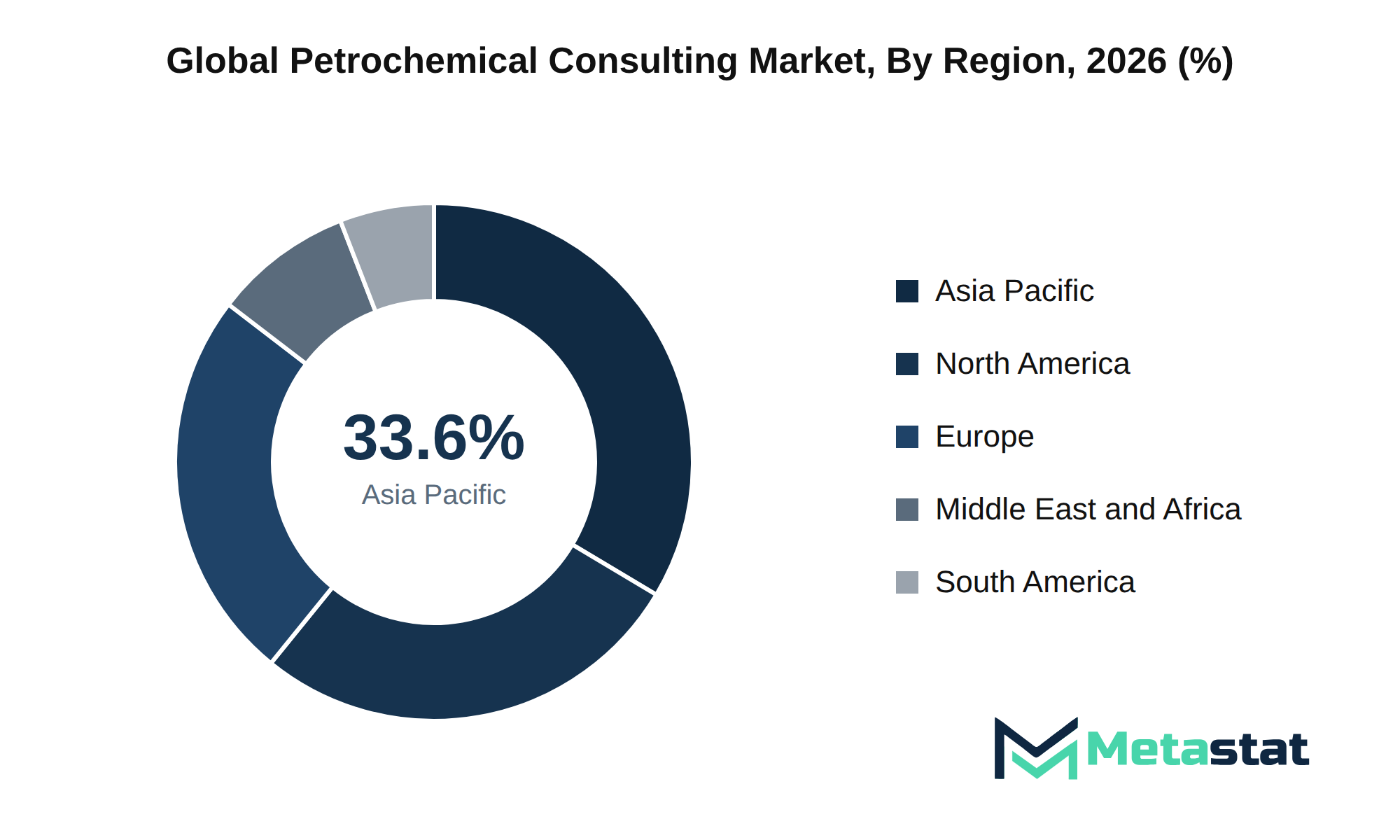
The Petrochemical Consulting market features a diverse array of players employing various strategies to strengthen their market positions. Key firms including McKinsey & Company, Boston Consulting Group (BCG), and Bain & Company focus on strategic consolidation through mergers and acquisitions, enhancing their consulting capabilities and expanding service offerings. This trend enables firms to cater to the evolving needs of petrochemical companies and related industries.
Strategic alliances and joint ventures are prevalent among firms including Shell Catalysts & Technologies and Accenture plc. These partnerships facilitate access to new technologies and innovative solutions, enhancing their competitive advantage in the market. Companies emphasize the importance of proprietary technology moats and research and development pipelines to differentiate their services in a crowded landscape.
Barriers to entry in the Petrochemical Consulting market remain significant due to established brand equity and customer retention strategies. Players including EY, PwC, and KPMG International leverage their strong reputations to maintain client loyalty and reduce switching costs. This dynamic reinforces their market positions and enables sustained growth amid increasing competition.
The future competitive outlook indicates that firms will continue to prioritize value chain integration and supply chain dominance. Players like Technip Energies N.V. and Worley Limited actively seek to optimize procurement leverage, enhancing operational efficiency. This approach positions them favorably for anticipated growth in the Petrochemical Consulting market.
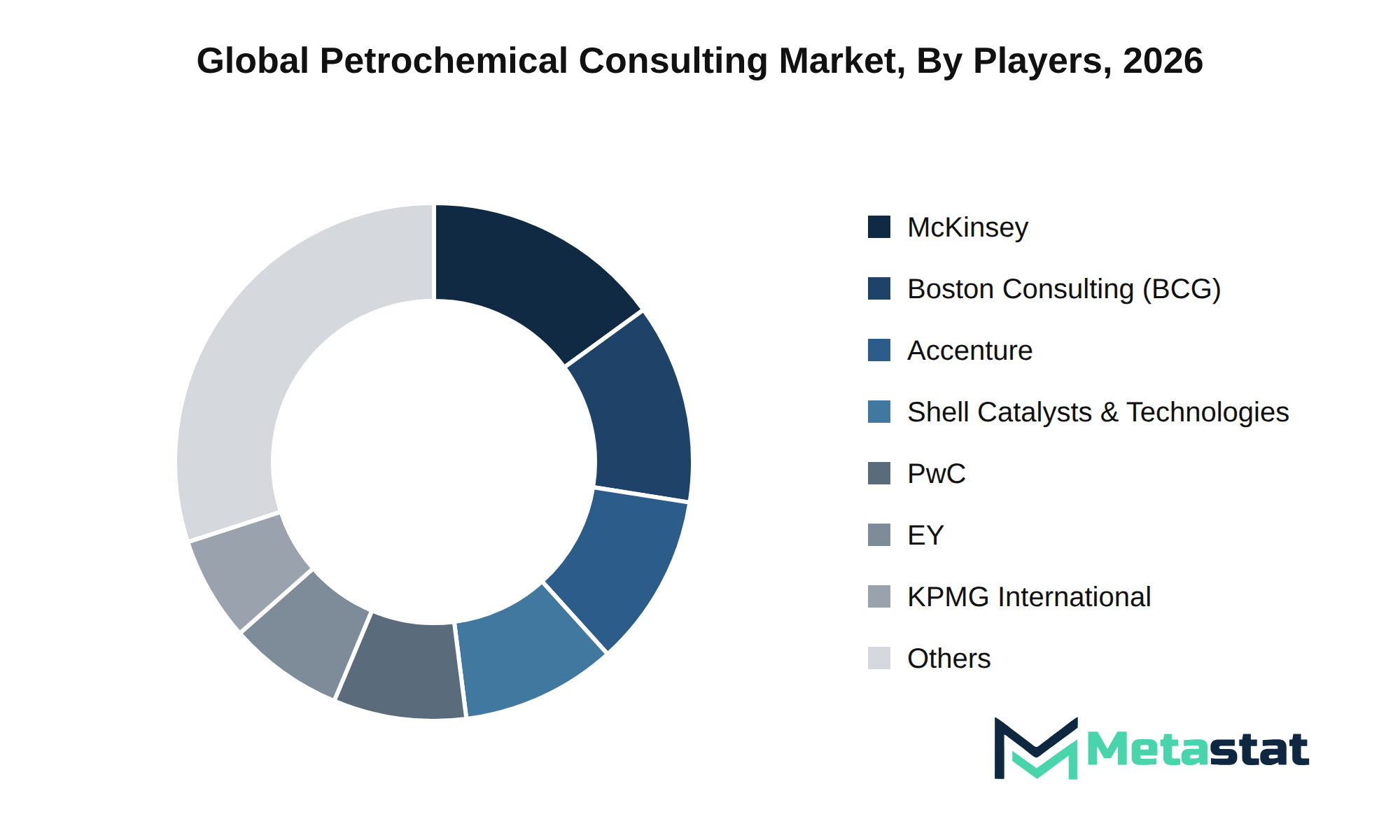
Market size is forecast to rise from USD 2,263.5 million in 2025 to over USD 3,691.3 million by 2033. The base case anticipates a growth trajectory with a compound annual growth rate (CAGR) of 6.3%. This expansion reflects several interlinked factors influencing the Petrochemical Consulting market, including macroeconomic conditions and downstream demand fluctuations.
Economic cycles impact demand for consulting services, particularly owing to core industries maturing. Increased focus on next-generation technologies drives significant research and development activities. Product life cycles evolve in response to market demands, while regulatory changes shape the landscape. Imminent compliance milestones press companies to adapt to evolving policies.
Geopolitical realignments and shifts in trade corridors influence global supply chains. These factors necessitate strategic capital allocation and infrastructure investments. Executives prioritize defensibility roadmaps to navigate complexities, ensuring alignment with emerging white-space opportunities and unmet enterprise needs. High-growth pockets within the market present avenues for expansion, driven by strategic initiatives and infrastructure commitments.
Investment in advanced technologies enhances operational efficiency. Firms remain competitive amid changing market dynamics. Continuous tracking of consumer preferences and regulatory environments proves essential for adapting strategies and securing future growth. The outlook for the Petrochemical Consulting market remains promising, with a focused approach on innovation and compliance driving progression in the coming years.
The report strategically identifies and profiles the key market players and analyses their core competencies in each sub-segment of the Petrochemical Consulting market.
Report Attributes | Details |
Study Period | 2021-2033 |
Base Year | 2025 |
Estimated Year | 2026 |
Forecast Period | 2026-2033 |
Historical Period | 2021-2025 |
Growth Rate | CAGR 6.3% from 2026 to 2033 |
Revenue Unit | USD million |
Segmentation | By Consulting Type, Petrochemical Value Chain Focus, Project Lifecycle Stage, Application, and Region |
By Region | North America (By Consulting Type, Petrochemical Value Chain Focus, Project Lifecycle Stage, Application, and Country)
|
Europe (By Consulting Type, Petrochemical Value Chain Focus, Project Lifecycle Stage, Application, and Country)
| |
Asia Pacific (By Consulting Type, Petrochemical Value Chain Focus, Project Lifecycle Stage, Application, and Country)
| |
South America (By Consulting Type, Petrochemical Value Chain Focus, Project Lifecycle Stage, Application, and Country)
| |
Middle East and Africa (By Consulting Type, Petrochemical Value Chain Focus, Project Lifecycle Stage, Application, and Country)
|
Find answers to common questions about this report
The Petrochemical Consulting market size was valued at USD 2,263.5 million in 2025.
The Petrochemical Consulting market is projected to grow at a CAGR of 6.3% during the forecast period from 2026 to 2033.
The North America Petrochemical Consulting market size is estimated to reach USD 947.9 million by 2033.
The segment "Technical & Process Consulting" leads the Petrochemical Consulting market with a projected value of USD 633.1 million by 2033. This figure represents the highest anticipated revenue among the consulting type segments.
Increased capital investment environments significantly influence the Petrochemical Consulting market. Factors including GDP growth, venture funding, and public-private investments in infrastructure drive demand for consulting services aimed at optimizing operations and enhancing competitive positions. The integration of digital transformation technologies further supports market growth by improving efficiency and attracting additional investment.
Regulatory compliance poses significant challenges within the Petrochemical Consulting market, increasing operational costs and diverting resources from core functions. Market fragmentation complicates the landscape, hindering decision-making processes for potential clients. macroeconomic headwinds, including inflation and resource scarcity, further constrain growth opportunities for consulting firms.
Increased capital investment environments, driven by GDP growth and venture funding, support product adoption in the Petrochemical Consulting market. The influx of public-private investments in infrastructure and technology development increases demand for consulting services, enabling firms to optimize operations and enhance competitive positions.
The Petrochemical Consulting market is estimated to reach a valuation of USD 3,691.3 million by 2033.
Key players in the Petrochemical Consulting market include McKinsey & Company, Boston Consulting Group (BCG), Bain & Company, Accenture plc, Shell Catalysts & Technologies, and Wood Mackenzie.
The Petrochemical Consulting market is expected to reach USD 3,691.3 million by 2033.
The analysts below cover Chemicals and Materials research at Metastat Insights.
LEAD ANALYST
Utkarsh Khirodkar is a Lead Market Research Analyst at MetaStat Insight, specializing in market intelligence, technology sector assessments, and competitive strategy.

INDUSTRY CONSULTANT - CHEMICALS & ADVANCED MATERIALS
Chemicals and Materials · Machinery & Equipment · Packaging
Amit Gadhekar Consultant for Chemicals and Materials at MetaStat Insight, directing sector-specific intelligence, research, and strategic consulting across global chemical and processing markets.
When evaluating distributed energy resource management systems, standard research summaries tend to gloss over the operational differences between front-of-the-meter utility deployments and behind-the-meter industrial sites. The MetaStat Insight report addressed those distinctions directly, especially regarding software interoperability standards and grid interconnection backlogs. The five-year market sizing across regional transmission organizations provided actionable context for our grid modernization strategy.
Most industry reports on warehouse automation bundle autonomous mobile robots and fixed conveyor installations into the same top-level numbers, which complicates advisory work. This study split the market cleanly by payload tiers, navigation technology, and fleet management software layers. The regional forecast for Western Europe gave our team defensible adoption benchmarks when evaluating capital allocation for logistics clients, saving us days of secondary data scrubbing.
Analyzing the transition from natural gas to green hydrogen in iron ore reduction requires realistic infrastructure timelines. Meta stat insight supplied a detailed regional assessment of DRI plant conversion costs and scrap metal availability in North America and Western Europe. Their report carefully examined pellet quality specs and electrical grid access constraints without making oversimplified market assumptions. The research material served as a practical reference during internal technology roadmap discussions.
Explore related market intelligence reports worth reading alongside this one.
Starting from
$2950
Starting from
$2950
Starting from
$2950