
LEAD ANALYST
Utkarsh Khirodkar is a Lead Market Research Analyst at MetaStat Insight, specializing in market intelligence, technology sector assessments, and competitive strategy.

Global Oil and Gas Equipment Maintenance, Repair, and Operation (MRO) Services Market Size, Share, By Service Type (Maintenance Services, Repair Services, Overhaul and Refurbishment Services, Inspection and Condition Monitoring Services) and By Equipment Type (Gas and Steam Turbines, Compressors, Pumps, Valves and Actuators, Drilling and Well Control Equipment, Electrical Motors and Generators, Instrumentation and Control Systems, Heat Exchangers and Pressure Vessels, Boilers and Fired Heaters) and By End-Use Sector (Upstream Oil and Gas, Midstream Oil and Gas, Petroleum Refining, Petrochemical Processing) and By Service Delivery Location (On-Site Services, Workshop Services, Remote Services), Industry Analysis, Growth, Trends, and Forecast, 2026-2033
Report ID
MSI-5605
Published
October, 2026
Pages
271 Pages
Format
Historical
Base year
Forecast
Forecast period
Report Details
Market Valuation: Valued at $13.8 Billion in 2025, projected to reach $19.2 Billion by 2033 at a 4.2% CAGR.
Dominant Segment: Maintenance Services leads the market, driven by the ongoing need for regular upkeep and performance optimization of equipment in the oil and gas sector.
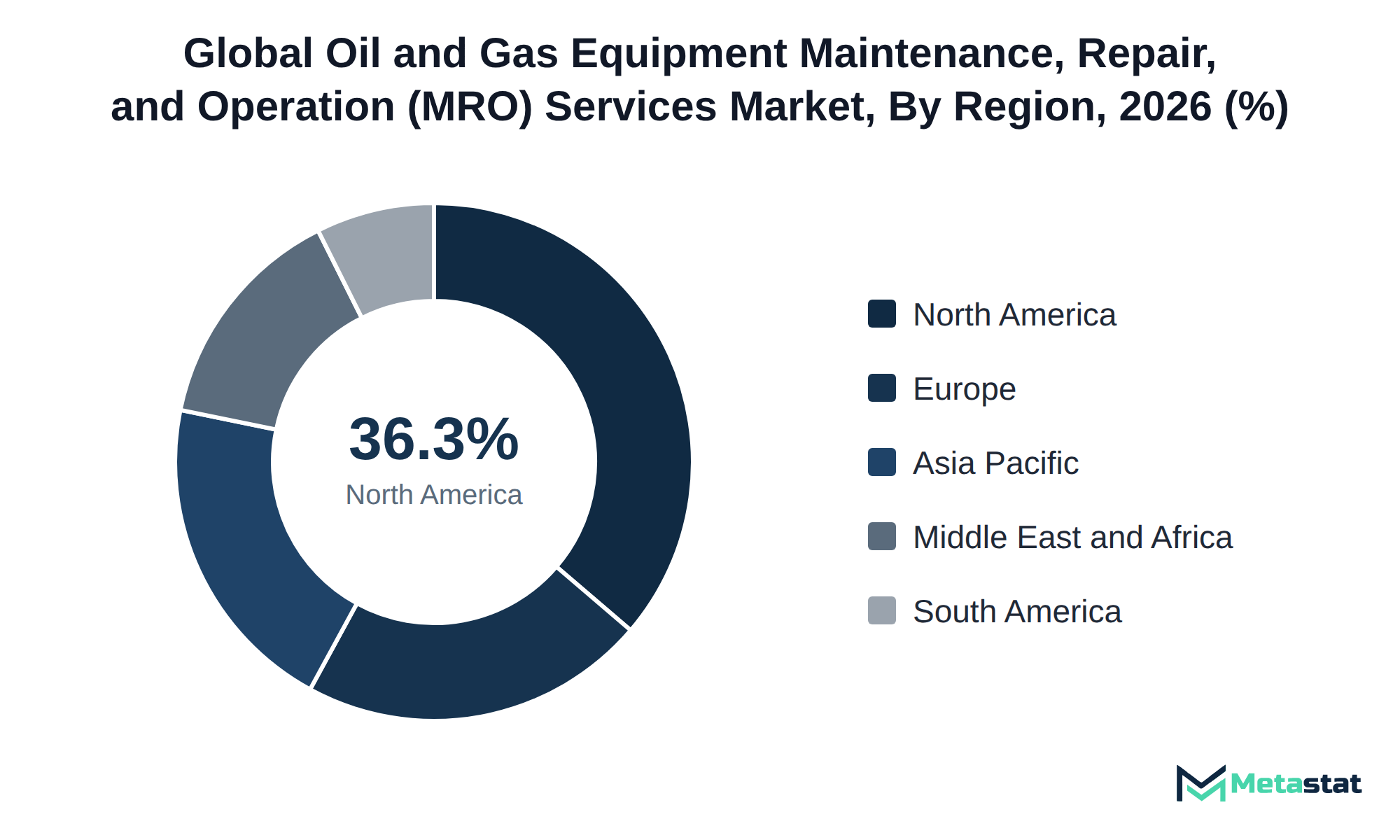
Geographic Lead: North America is the leading region, holding 36.3% of the market in 2025, with significant investments in equipment maintenance and repair, particularly in the US.
What's Inside: The report includes comprehensive competitive coverage, detailed analyses of service types and equipment, and forecasts extending to 2033.
Emerging Growth in Inspection Services: Inspection and Condition Monitoring Services are projected to grow at a CAGR of 6.4%, reflecting a shift towards proactive maintenance strategies and enhanced operational efficiency.
Integration of Advanced Repair Technolog: The adoption of robotic systems and automation tools is streamlining maintenance operations, reducing human error, and accelerating turnaround times.
Choose Your License
Global Oil and Gas Equipment Maintenance, Repair, and Operation (MRO) Services Market
The global Oil and Gas Equipment Maintenance, Repair, and Operation (MRO) Services market was valued at USD 13.8 billion in 2025 and is projected to reach USD 19.2 billion by 2033, growing at a CAGR of 4.2% over the forecast period.
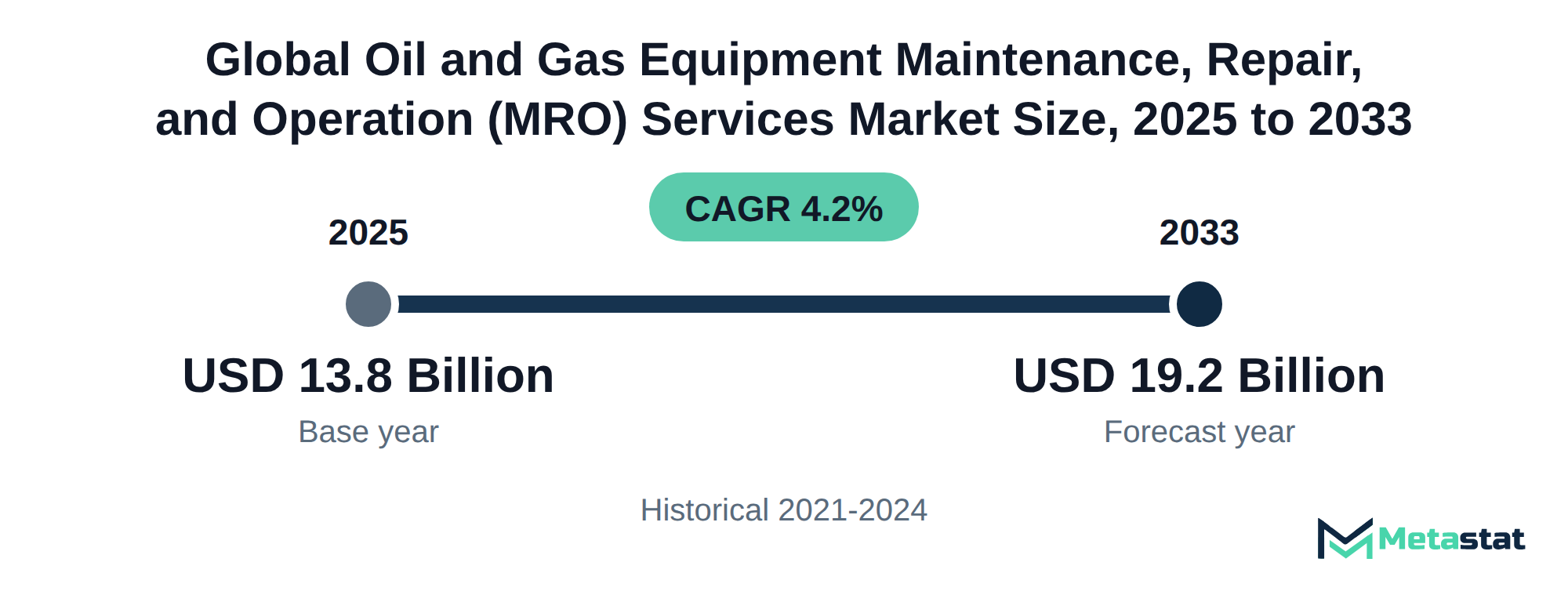
The Oil and Gas Equipment Maintenance, Repair, and Operation (MRO) Services market covers services that keep equipment used in the oil and gas industry reliable and efficient. Buyers invest in these services to minimize downtime, enhance operational efficiency, and ensure compliance with safety and environmental regulations. The critical nature of oil and gas operations drives significant expenditure on maintenance and repair, with any equipment failure resulting in substantial financial implications.
Growth in the market is influenced by several factors, including increasing demand for energy, regulatory pressures, and advancements in technology. The segment generating the highest value is Maintenance Services, which reflects the ongoing need for regular upkeep and performance optimization of equipment. North America holds 36.3% of the market in 2025, with the US leading in 2026. This region benefits from a well-established oil and gas sector and significant investments in equipment maintenance and repair.
Technological advancements play a significant role in driving market growth, with innovations in predictive maintenance and condition monitoring enhancing efficiency and reducing operational costs. Such developments allow companies to preemptively address equipment issues, thereby minimizing disruptions and improving overall productivity. The application of these technologies is expected to reshape the Oil and Gas Equipment Maintenance, Repair, and Operation (MRO) Services market.
The market encompasses various services essential for maintaining and enhancing the performance of equipment in the oil and gas sector. Buyers, including operators and service providers, invest in these services to ensure optimal functionality, reduce downtime, and extend the lifespan of critical assets. Demand for reliable operational performance drives investment in maintenance, repair, and operational activities needed to meet industry standards and achieve operational efficiency.
Growth in the Oil and Gas Equipment Maintenance, Repair, and Operation (MRO) Services market is fueled by increasing investments in infrastructure and technological advancements. Among the service segments, Maintenance Services holds the largest value, reflecting the continuous need for upkeep of equipment. The region’s significant investments in oil and gas production and infrastructure development contribute to strong demand for MRO services.
Technological innovations advance the market by improving monitoring and predictive maintenance capabilities. These advancements help companies minimize operational disruptions and optimize performance. The ongoing transition to more efficient and sustainable practices within the industry further supports market growth, with companies seeking to improve their operational frameworks while addressing environmental concerns.
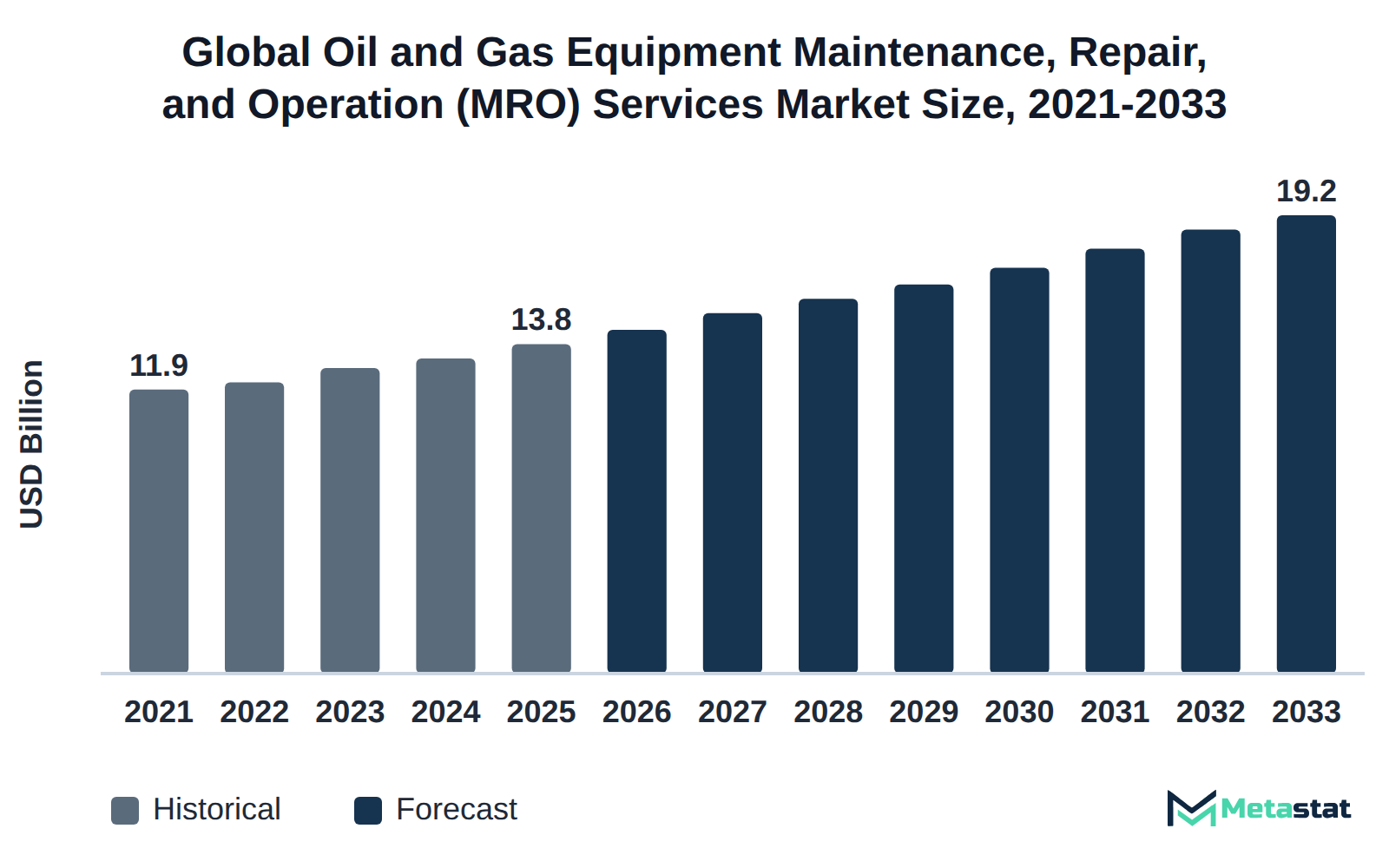
The integration of condition monitoring and digital twin technologies significantly transforms the maintenance strategies for rotating equipment within the Oil and Gas Equipment Maintenance, Repair, and Operation (MRO) Services market. Condition monitoring enables real-time assessment of equipment health, allowing for timely interventions that prevent catastrophic failures. Digital twins create virtual replicas of physical assets, providing insights into performance and wear patterns without physical access. This technology enhances predictive maintenance capabilities, leading to reduced downtime and operational costs.
In the forecast period leading to 2033, the market for inspection and condition monitoring services is projected to expand at a compound annual growth rate (CAGR) of 6.4%. This growth reflects an increasing reliance on advanced technologies among operators to ensure equipment reliability and efficiency. By adopting these technologies, companies optimize maintenance schedules and allocate resources effectively, which improves overall productivity.
The adoption of condition monitoring and digital twin technologies signifies a shift towards more proactive maintenance strategies in the market. These innovations enable operators to make data-driven decisions, improving operational resilience and reducing overall maintenance costs. Consequently, organizations that implement these technologies position themselves advantageously in the competitive landscape of the Oil and Gas Equipment Maintenance, Repair, and Operation (MRO) Services market.
The growing reliability of LNG compressors significantly drives the trend toward long-term service agreements in the Oil and Gas Equipment Maintenance, Repair, and Operation (MRO) Services market. Companies increasingly recognize the value of securing dependable maintenance contracts that ensure optimal performance and minimize downtime. This trend stems from the need for operational efficiency in the oil and gas sector, where reliability is critical.
Long-term service agreements often feature structured pricing models that align with the evolving requirements of LNG facilities. Maintenance services are projected to increase from USD 4.9 billion in 2026 to USD 6.3 billion by 2033, reflecting a compound annual growth rate of 3.6%. This anticipated growth indicates that companies prioritize investing in service agreements that safeguard their assets and streamline maintenance operations.
Buyers frequently seek contracts that encompass various service types, including on-site and remote services, allowing for flexibility in responding to maintenance needs. By establishing long-term partnerships with service providers, buyers secure predictable maintenance costs and improve budgeting accuracy. This strategic procurement approach reinforces the competitive position of oil and gas companies in a changing market, supporting sustained growth and operational success.
Local repair capacity and parts availability significantly influence turnaround performance within the Oil and Gas Equipment Maintenance, Repair, and Operation (MRO) Services market. Operators require efficient access to repair services to minimize downtime and maintain operational efficiency. Reliable local repair capabilities matter because they deliver timely and effective service.
Demand for rapid maintenance and repair services arises from the need to maintain equipment reliability and avert costly production delays. In remote or challenging environments, local repair capacity directly affects operational readiness. Companies relying on imported parts often face prolonged downtimes while waiting for shipments. In contrast, organizations with robust local repair capabilities provide necessary services promptly, reducing the impact on productivity. The presence of local service providers enhances competitive advantage, allowing for more agile responses to equipment failures.
Prioritizing local repair capacity and parts availability is essential for operators within the Oil and Gas Equipment Maintenance, Repair, and Operation (MRO) Services market to optimize performance and minimize operational disruptions. Facilitating quicker turnaround times enables business continuity and supports long-term growth strategies.
When comparing original equipment manufacturers (OEMs) and independent maintenance, repair, and operation (MRO) providers, cost considerations play a significant role in decision-making processes. The Oil and Gas Equipment Maintenance, Repair, and Operation (MRO) Services market features OEM services that are typically priced higher due to brand reputation and warranty offerings. OEMs often provide warranties that cover longer periods or more extensive services than independent providers, appealing to companies seeking reliability. In contrast, independent MRO providers frequently offer more competitive pricing structures, which attract price-sensitive buyers.
For equipment types like compressors, the market anticipates a service value of USD 3.4 billion from independent MRO providers by 2033. This figure highlights the growing acceptance of independent services within the industry. The cost-effectiveness of these providers allows firms to allocate resources to other critical areas, enhancing overall operational efficiency. While OEMs offer extensive warranties, independent providers often address immediate needs at lower costs, which improves uptime for operators. This dynamic influences how companies strategize their maintenance approaches. Many lean towards balancing cost and reliability in selecting their MRO partner.
Operators shift their strategies to prioritize proactive maintenance solutions, reflecting a cultural shift toward risk mitigation and enhanced operational efficiency. This change results from rising equipment complexity and the need for minimal downtime in production processes. Aiming for higher equipment availability, buyers include companies from the upstream and midstream oil and gas sectors, which increasingly seek reliable services to avoid costly disruptions. Maintenance reliability increasingly shapes strategic investments across the industry.
Inspection and condition monitoring services, which show a CAGR of 6.4%, exemplify this trend, with operators increasingly adopting advanced monitoring technologies to enhance equipment reliability and performance.
Integration of advanced technologies within maintenance operations significantly enhances efficiency and effectiveness in service delivery. Adoption of advanced robotics for industrial automation streamlines tasks including inspections, repairs, and overhauls. This technological advancement reduces human error, optimizes resource allocation, and accelerates turnaround times for maintenance activities. The market experiences heightened demand for these advanced solutions, driven by a growing emphasis on operational excellence and cost reduction.
Upstream oil and gas companies prioritize the adoption of these technologies to maintain competitive advantage. Integrating real-time data analytics improves decision-making processes, enabling companies to address issues proactively rather than reactively. Consequently, the Oil and Gas Equipment Maintenance, Repair, and Operation (MRO) Services market is expected to experience growth opportunities fueled by these innovations. Enhanced reliability and efficiency lower operational costs and drive customer satisfaction, establishing long-term partnerships between service providers and clients.
Rising equipment costs present a significant barrier to the growth of the Oil and Gas Equipment Maintenance, Repair, and Operation (MRO) Services market. Operators in the upstream oil and gas sector often face challenges securing budgets for maintenance and repair activities, leading to smaller orders and delayed equipment replacements. This financial pressure particularly impacts smaller operators who struggle to allocate sufficient funds for essential MRO services. The need for cost-effective solutions drives these operators toward alternative strategies, including extending the life of existing equipment rather than investing in new machinery. Consequently, this trend results in slower uptake of advanced maintenance services and technologies, limiting overall market growth. The ongoing transition toward more effective and efficient maintenance practices remains hindered by these escalating costs, impacting strategic decision-making among key players.
Rising talent costs represent significant challenges for profitability within the Oil and Gas Equipment Maintenance, Repair, and Operation (MRO) Services market. Competition for skilled technicians and engineers intensifies due to evolving industry requirements and advancing technology. Suppliers face pressures to enhance service offerings while managing labor expenses, which diminish margins. Efforts to mitigate these costs include investing in training and development programs aimed at improving workforce efficiency. Automation technologies are integrated to reduce reliance on manual labor, enabling service providers to deliver quality while controlling operational costs. These strategic responses reflect a broader trend toward optimizing labor resources while maintaining competitive service delivery. The ongoing need for skilled personnel and technological adaptation shapes market dynamics and influences pricing strategies across various service types.
The segment of Inspection and Condition Monitoring Services is projected to experience substantial growth within the Oil and Gas Equipment Maintenance, Repair, and Operation (MRO) Services market, driven by increasing emphasis on operational efficiency and equipment reliability. This segment benefits from a compound annual growth rate of 6.4%, indicating strong demand across sectors. Buyers prioritize proactive maintenance strategies that optimize equipment performance and minimize downtime. This trend reflects the shift toward preventive measures, aligning with broader industry goals of sustainability and cost reduction. Enhanced monitoring technologies and data analytics support operators in achieving these objectives, leading to a competitive advantage in the market. Addressing this pocket of growth gives service providers an opportunity to develop and implement advanced monitoring solutions that secure their positions.
The Global Oil and Gas Equipment Maintenance, Repair, and Operation (MRO) Services market is segmented based on Service Type, Equipment Type, End-Use Sector, and Service Delivery Location.
This segment focuses on regular upkeep and servicing of equipment used in the oil and gas sector, ensuring operational efficiency and safety. Key users include upstream and midstream companies relying on consistent performance from their equipment. Increased regulations regarding operational safety drive demand for maintenance services, compelling companies to prioritize regular servicing to comply with standards. Unlike Repair Services, which address failures and malfunctions, Maintenance Services emphasize prevention and efficiency, reflecting a lower growth rate compared to Inspection and Condition Monitoring Services, which are projected to grow at a CAGR of 6.4%. This distinct positioning highlights the vital role of proactive maintenance in enhancing equipment lifespan and reliability in the market.
Repair Services segment is estimated to reach USD 4.5 billion by 2033, at a CAGR of 3.5% during the forecast period. This segment focuses on restoring and maintaining the functionality of equipment used in oil and gas operations, including compressors, turbines, and pumps. Companies in upstream and midstream oil and gas sectors frequently rely on these services to ensure operational continuity and minimize unplanned downtime. Demand for repair services is driven by the need for efficient equipment performance and the increasing frequency of maintenance checks. Unlike other service types, including overhaul and refurbishment services, which experience slower growth, repair services maintain a steady pace due to ongoing requirements for equipment reliability. This segment's relatively lower pricing compared to new equipment purchases further distinguishes it, encouraging operators to invest in maintaining existing assets rather than replacing them.
Overhaul and Refurbishment Services segment is expected to reach USD 4.2 billion by 2033. This segment focuses on restoring equipment to optimal functioning conditions, primarily catering to industries including upstream oil and gas and midstream oil and gas. Demand for these services is driven by the increasing age of existing equipment, necessitating periodic restoration to maintain operational efficiency. Compared to other service types, this segment experiences slower growth, with a compound annual growth rate (CAGR) of 3.6%. In contrast, Inspection and Condition Monitoring Services exhibit a higher CAGR of 6.4%, reflecting a shift toward proactive maintenance strategies and real-time monitoring. The need for enhanced equipment longevity and reliability fuels investments in overhaul and refurbishment services, distinguishing it within the broader context of the market.
Inspection and Condition Monitoring Services segment is projected to grow at a CAGR of 6.4% during the forecast period. This segment focuses on assessing equipment conditions and predicting maintenance requirements, primarily employed by operators in the oil and gas sector to ensure continuous and efficient performance of their assets. The significant emphasis on predictive maintenance and asset performance management drives demand within this segment. Enhanced reliability of equipment leads to reduced operational downtime and maintenance costs. Compared to other segments, this segment experiences faster growth due to the increasing adoption of advanced monitoring technologies, reflecting a shift towards proactive maintenance strategies. The integration of digital tools in condition monitoring further supports this trend, enabling real-time assessments and data-driven decision-making. The growing focus on inspection and monitoring positions operators to optimize their maintenance practices within the Oil and Gas Equipment Maintenance, Repair, and Operation (MRO) Services market.
Equipment Operations Support focuses on providing essential assistance in the operation of oil and gas equipment, enhancing performance and efficiency. This segment serves operators aiming to maximize uptime and ensure the safe functioning of critical assets. The demand for such support is driven by the increasing complexity of equipment and the necessity for real-time operational insights. Compared to other service types, Equipment Operations Support typically involves a higher engagement level with users, aligning closely with specific operational demands. The continuous evolution of technologies in monitoring and control systems influences this segment, promoting the adoption of predictive maintenance strategies. Unlike conventional maintenance or repair services, Equipment Operations Support emphasizes active and ongoing collaboration with operators, reflecting the growing trend toward integrated service models within the market.
Gas and Steam Turbines segment is valued at USD 3.9 billion in 2026 and is projected to reach USD 5.1 billion by 2033, at a CAGR of 3.8% during the forecast period. This segment supports energy generation, particularly for upstream oil and gas operations where efficiency and reliability are essential. The demand for this segment is driven by advancements in turbine technology and the growing need for efficient energy production. Maintenance of these turbines also falls within the wider gas turbine services industry. Gas and steam turbines offer distinct advantages over other equipment types due to their reliability and efficiency at high capacities. Compared to the Repair Services segment, which grows at a CAGR of 3.5%, the Gas and Steam Turbines segment experiences slightly higher growth, reflecting increasing investments in energy infrastructure and a focus on optimizing performance within the market.
Compressors segment is estimated to reach USD 3.4 billion by 2033, at a CAGR of 4.7% during the forecast period. This segment supports efficient gas handling, transportation, and processing across the oil and gas industry. Operators in upstream and midstream oil and gas sectors rely on gas compressors for enhanced performance and operational efficiency. The growing focus on energy efficiency drives investment in advanced compressor technologies, supporting a trend toward optimization and sustainability. Compared to other segments, compressors exhibit a higher growth rate, benefiting from increasing demand for energy-efficient solutions and ongoing technological advancements. This contrasts with segments like pumps and valves, which experience slower growth due to market saturation and price competitiveness. The market continues to adapt to these dynamics, ensuring that compressors remain essential in operational frameworks.
Pumps are projected to reach USD 2.8 billion by 2033. This segment plays a critical role in the transportation of fluids across various processes within the oil and gas industry, serving upstream, midstream, and downstream operations. Demand for pumps is driven by their essential function in enhancing operational efficiency and safety, particularly in the upstream oil and gas sector. The segment exhibits a CAGR of 4.7%, indicating stronger growth compared to other equipment types, driven by the increasing installation of advanced pumping solutions. Buyers prioritize long-term reliability and efficiency, which distinguishes this segment from others, including compressors, which have a projected growth rate of 4.7%. The market emphasizes robust pump maintenance protocols to ensure consistent performance and minimize downtime.
Valves and Actuators segment is projected to grow at a CAGR of 4.7% during the forecast period. This segment serves critical functions in controlling fluid flow and pressure within various oil and gas operations, including upstream, midstream, and downstream applications. Demand for oil and gas valves and actuators stems from increasing investments in infrastructure and an enhanced focus on operational efficiency. Unlike other equipment types, this segment experiences significant growth driven by technological advancements and automation trends, making it essential for maintaining optimal performance across operations. In comparison to Gas and Steam Turbines, which have a CAGR of 3.8%, the Valves and Actuators segment demonstrates a faster growth trajectory, supporting modernized processes within the oil and gas industry. The market prioritizes high-quality, reliable components to meet stringent operational standards and ensure system integrity.
Drilling and Well Control Equipment consists of essential tools used in drilling operations and managing the pressures associated with oil and gas extraction. These tools are critical for preventing blowouts and ensuring the safety and efficiency of drilling activities. This segment primarily serves oil and gas exploration and production companies, which rely on reliable equipment to maintain operational integrity. The increasing complexity of drilling operations, along with heightened regulatory requirements for safety and efficiency, drives demand for these specialized tools. Compared to other equipment types, this segment experiences slower growth due to the higher capital investments required for advanced drilling technologies and potential fluctuations in oil prices, impacting financing decisions. The Oil and Gas Equipment Maintenance, Repair, and Operation (MRO) Services market evolves, with drilling and well control equipment representing a significant focal point for maintaining operational reliability and compliance.
Electrical motors and generators are essential to the operation of equipment across the oil and gas sector. These components are essential for converting electrical energy into mechanical power, enabling the functionality of pumps, compressors, and other machinery used in oil extraction, transportation, and refinement. Demand for electrical motors and generators is driven by the increasing need for energy efficiency and reliable performance in oil and gas operations. The push for renewable energy integration further emphasizes the importance of these components, as companies seek to optimize their operations with innovative technologies. Compared to other equipment types, electrical motors and generators experience steady growth, reflecting their ongoing necessity across all segments in the oil and gas value chain. The market continues to adapt to evolving technological demands and regulatory standards, ensuring these components remain vital for operational excellence.
Instrumentation and Control Systems encompass a vital component of operational efficiency within the oil and gas sector. These systems facilitate the monitoring and control of various processes, allowing operators to maintain optimal performance and safety across their operations. Typically adopted by upstream oil and gas companies, these systems support critical functions including pressure and temperature management, ensuring compliance with safety regulations and operational standards. Demand for instrumentation and control systems experiences growth driven by the increasing focus on automation and process optimization. These systems also belong to the wider process automation and instrumentation industry. The sector faces challenges related to the integration of new technologies and the necessity for skilled personnel to operate these advanced systems. Compared to other equipment types, instrumentation and control systems generally attract higher investments due to their critical role in enhancing operational reliability, positioning them as a priority for companies striving for efficiency in the Oil and Gas Equipment Maintenance, Repair, and Operation (MRO) Services market.
Heat exchangers and pressure vessels serve critical functions in the oil and gas sector, facilitating heat transfer and storage in various processes. These components find extensive use in upstream oil and gas, midstream transportation, and petroleum refining. The demand for efficient thermal management drives growth in this segment, with a focus on enhancing energy efficiency and reducing operational costs. Technological advancements in materials and designs influence the adoption of modern heat exchangers and pressure vessels, improving performance and durability. Compared to other equipment types, this segment presents unique challenges due to the need for stringent safety standards and regulatory compliance, which impact pricing and service delivery. The emphasis on sustainability and energy efficiency further drives innovation, contributing to competitive advantages in the market.
Boilers and Fired Heaters represent critical components in thermal processes, serving industries engaged in energy generation and manufacturing. These systems play a vital role in maintaining efficient operations, ensuring that production facilities meet their energy needs while managing emissions effectively. Demand for services related to this segment is driven by ongoing efforts toward regulatory compliance and energy efficiency improvements. Facilities prioritize upgrades and maintenance to minimize operational costs and enhance reliability. Compared to other segments, including Gas and Steam Turbines, this segment experiences a different growth trajectory, reflecting varying priorities among buyers in the oil and gas sector. The Oil and Gas Equipment Maintenance, Repair, and Operation (MRO) Services market evolves to address these dynamics, emphasizing the importance of specialized services for Boilers and Fired Heaters to support overall system efficiency and compliance.
This sub-segment includes essential components like storage tanks, gearboxes, and filtration equipment, which play a critical role in the operational integrity of oil and gas systems. These elements are used extensively in various processes, including storage, transportation, and filtration of oil and gas products across different sectors. Demand for these components is driven by the increasing emphasis on operational safety and efficiency, prompting companies to invest in high-quality equipment. Unlike other equipment types, this sub-segment involves longer replacement cycles and maintenance schedules, impacting its growth trajectory. The relative stability of this sub-segment contrasts with more dynamic segments including Gas and Steam Turbines, reflecting a more conservative investment approach by operators in the Oil and Gas Equipment Maintenance, Repair, and Operation (MRO) Services market.
Upstream Oil and Gas segment is valued at USD 5.5 billion in 2026 and is projected to reach USD 7.1 billion by 2033, at a CAGR of 3.8% during the forecast period. This segment serves major oil and gas companies focusing on exploration and production activities. Increasing global energy demand drives significant investment in upstream operations, requiring reliable maintenance, repair, and operation (MRO) services to ensure equipment efficiency and safety. The upstream sector experiences faster growth compared to midstream and downstream segments, driven by heightened exploration activities and technological advancements that enhance extraction processes. The high price volatility of crude oil directly influences the operational budgets of upstream companies, impacting their investment decisions in MRO services. In this context, the Oil and Gas Equipment Maintenance, Repair, and Operation (MRO) Services market emphasizes the need for specialized services tailored to the unique challenges of upstream operations, driving demand for innovative solutions.
Midstream Oil and Gas segment is estimated to reach USD 5.2 billion by 2033, at a CAGR of 5.2% during the forecast period. This segment involves the transportation, storage, and wholesale marketing of crude oil and natural gas. Operators and service providers apply these services to ensure efficient movement and processing of hydrocarbons. Growing demand for efficient and reliable transportation solutions drives this segment. Increased emphasis on pipeline infrastructure and the expansion of liquefied natural gas (LNG) facilities contribute significantly to market dynamics. Compared to other segments, the midstream sector exhibits faster growth due to rising investments in infrastructure. The market emphasizes operational efficiency, resulting in higher demand for specialized maintenance and repair services tailored to midstream applications. With the industry's evolution, the Oil and Gas Equipment Maintenance, Repair, and Operation (MRO) Services market reflects this upward trend in the midstream sector.
Petroleum Refining segment is expected to reach USD 3.9 billion by 2033. This segment serves the oil and gas industry by ensuring that refineries operate efficiently and safely, which is critical for processing crude oil into usable products. Key demand drivers include rising global energy needs and regulatory requirements for environmental compliance, pushing operators to maintain high standards in equipment performance. The growth rate for this segment stands at a CAGR of 4.3%, reflecting robust market expansion. Compared to other end-use sectors like Upstream Oil and Gas, which has a CAGR of 3.8%, the Petroleum Refining segment exhibits a more accelerated growth trajectory, highlighting its importance in meeting evolving market demands. Increased investments in refining technologies and automation play a significant role in driving this segment, contributing to the overall growth of the market.
Petrochemical Processing segment is projected to grow at a CAGR of 4.3% during the forecast period. This segment plays a critical role in refining crude oil and converting it into essential petrochemicals, serving industries including plastics, fertilizers, and pharmaceuticals. Increasing demand for petrochemicals, driven by growth in the automotive and construction sectors, supports expansion in this segment. The Petrochemical Processing segment exhibits a slower growth rate compared to the Midstream Oil and Gas sector, which is projected to grow at a CAGR of 5.2%. The distinct focus on specialized chemical production in the Petrochemical Processing segment differentiates it from others in the market, catering to a specific set of buyers seeking high-quality chemical outputs.
On-Site Services segment is valued at USD 9.3 billion in 2026 and is projected to reach USD 12.1 billion by 2033, at a CAGR of 3.9% during the forecast period. This segment primarily includes maintenance and repair activities conducted directly at customer facilities, focusing on equipment that requires immediate attention to ensure operational continuity. Major buyers include oil and gas operators looking to minimize downtime and enhance productivity. The increasing demand for efficient operations and the need for immediate repair services drive growth in this segment. Compared to other service delivery locations, including workshop and remote services, on-site services often involve higher costs due to the logistics and specialized labor required. However, their importance in reducing operational interruptions positions them as a critical component of the market.
Workshop Services segment is estimated to reach USD 5.6 billion by 2033, at a CAGR of 3.7% during the forecast period. This segment provides critical support for the maintenance and repair of oil and gas equipment in controlled environments, allowing for enhanced precision and efficiency. Companies engage workshop services to conduct extensive repairs and refurbishments that ensure compliance with operational standards. Growth in this segment aligns with the increased focus on equipment reliability and safety, driven by rising operational demands from the upstream and midstream sectors. Compared to other service delivery locations, including on-site services which face higher logistical complexities, workshop services typically offer lower operational costs and a more structured environment for complex repairs. This differentiation contributes to a steady increase in investments in workshop capabilities, which supports overall expansion in the market.
The Remote Services segment is expected to reach USD 1.5 billion by 2033. This sub-segment provides technical support and maintenance services remotely, catering to clients in the oil and gas sector who require timely assistance without the need for physical presence. The increasing demand for cost-effective solutions fuels growth in this segment, driven by advancements in communication technology and remote monitoring systems. Compared to other service delivery locations, Remote Services benefits from a higher growth trajectory, reflecting a CAGR of 3.9% during the forecast period. This growth contrasts with On-Site Services, which, while crucial, involves more operational overhead. Companies in this segment strive to enhance efficiency and reduce downtime, strengthening their roles in the Oil and Gas Equipment Maintenance, Repair, and Operation (MRO) Services market.
Based on geography, the Global Oil and Gas Equipment Maintenance, Repair, and Operation (MRO) Services market is divided into North America, Europe, Asia-Pacific, South America, Middle East, and Africa.
Strong demand for Oil and Gas Equipment Maintenance, Repair, and Operation (MRO) Services in North America stems from industries including upstream oil and gas, where operators focus on improving operational efficiency and minimizing downtime. The presence of established infrastructure and advanced technologies supports the growth of maintenance and repair services across the region. North America accounts for 36.3% of the global market share in 2025. By the end of 2033, the market is projected to reach USD 6.7 billion, driven by an increasing emphasis on sustainability and regulatory compliance. The focus on real-time monitoring and predictive maintenance significantly influences service delivery, with companies investing in digital solutions to enhance service efficiency and reduce operational costs.
In Europe, the market for Oil and Gas Equipment Maintenance, Repair, and Operation (MRO) Services reflects significant demand driven by robust industries including upstream oil and gas, midstream operations, and petroleum refining. Countries including Germany, France, and the UK contribute to the region's prominent share of 21.7% in the global market in 2025. Investment in infrastructure and technology modernization enhances operational efficiencies across the sector. The need for adherence to stringent environmental regulations influences maintenance protocols and operational practices. With forecasted growth, the market is projected to reach USD 19.2 billion by 2033, reflecting a continued focus on enhancing service delivery models to meet evolving industry standards.
Asia-Pacific accounted for 20.3% of the global total in 2025. Demand in this region primarily comes from the Upstream Oil and Gas and Midstream Oil and Gas sectors, driven by substantial investment in exploration and production activities. Countries like China and India exhibit rapid industrial growth, leading to an increased requirement for maintenance, repair, and operation services for various equipment types. Infrastructure development, particularly in offshore drilling and gas processing facilities, significantly influences the landscape of the oil and gas sector. An expanding focus on sustainability and environmental regulations further influences operational strategies, encouraging companies to adopt advanced maintenance technologies. This regional dynamic sets the Asia-Pacific market apart, creating a competitive environment for service providers and driving revenue growth in the Oil and Gas Equipment Maintenance, Repair, and Operation (MRO) Services market.
Brazil and Argentina play important roles in driving the market, with key industries including upstream oil and gas, which significantly contributes to demand. The focus on enhancing infrastructure in these countries supports operational efficiency, reflecting a growing awareness of the need for reliable maintenance, repair, and operation services. The market in South America, with a share of 7.4% in 2025, shows potential for growth due to increasing activities in oil extraction and refining processes. Investment in local capabilities highlights the commitment to improving service delivery locations, including on-site and workshop services. The Oil and Gas Equipment Maintenance, Repair, and Operation (MRO) Services market in this region is expected to benefit from ongoing technological advancements, improving performance and sustainability in operations.
The Middle East and Africa exhibit distinct characteristics within the Oil and Gas Equipment Maintenance, Repair, and Operation (MRO) Services market. Demand stems primarily from countries like Saudi Arabia and the UAE, driven by ongoing investments in oil production and refining infrastructure. South Africa contributes to this demand through its growing energy sector, focusing on modernization and efficiency improvements. Significant growth opportunities arise from the need for advanced maintenance and repair solutions that enhance operational reliability. A robust regulatory framework supports these initiatives, promoting sustainable practices across the region. The market share for this region is projected at 14.4% in 2025, reflecting its importance in the global landscape.
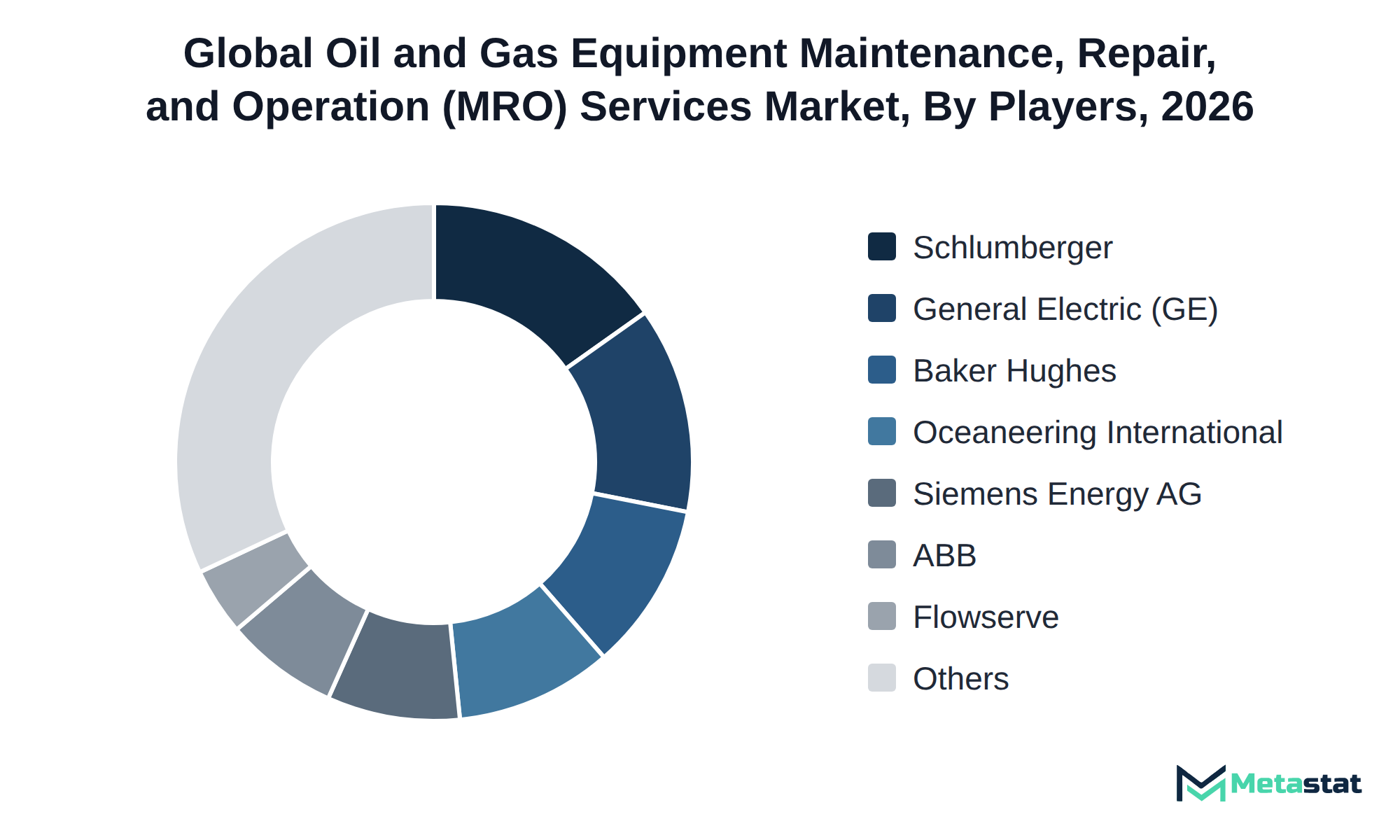
The competitive landscape for the Oil and Gas Equipment Maintenance, Repair, and Operation (MRO) Services market features various companies competing across multiple service types and equipment categories. Players differentiate their offerings based on factors including pricing, service quality, certification, and customization capabilities. Companies focus on specific segments to leverage their expertise and optimize market reach.
Maintenance services, repair services, and overhaul and refurbishment services represent significant areas within the market. For instance, General Electric (GE) highlights its capabilities in maintenance services, while Schlumberger emphasizes its repair services. Companies like Aker Solutions and Baker Hughes Company focus on comprehensive solutions that enhance operational efficiency across different service types.
Within the equipment type segment, players like Siemens Energy AG and Flowserve Corporation emphasize their strengths in gas and steam turbines and pumps. Competitive advantages arise from the ability to provide customized solutions tailored to client requirements. Companies like NOV Inc. and ABB Ltd. strive to meet the evolving demands of the market through innovation and specialized service offerings, reinforcing their positions within the Oil and Gas Equipment Maintenance, Repair, and Operation (MRO) Services market.
The growth hinges on several key developments, including the increasing demand for maintenance services, particularly in the upstream oil and gas sector. This segment is projected to expand from USD 5.5 billion in 2026 to USD 7.1 billion by 2033, driven by the need for enhanced operational efficiency and reliability. Advancements in inspection and condition monitoring services, anticipated to grow at a CAGR of 6.4%, will support the market's trajectory by ensuring long-term equipment performance and safety compliance. Regional dynamics play a crucial role in this forecast, with North America representing a 36.3% share of the market. The strong focus on technological integration and infrastructure development in this region facilitates growth. However, external risks including fluctuating oil prices could create uncertainties. Price volatility impacts capital expenditures, potentially hindering investment in maintenance, repair, and operation services. Overall, the sustained demand for the Oil and Gas Equipment Maintenance, Repair, and Operation (MRO) Services market remains contingent on these developments and regional factors.
By Service Type: Maintenance Services, Repair Services, Overhaul and Refurbishment Services, Inspection and Condition Monitoring Services, Equipment Operations Support
By Equipment Type: Gas and Steam Turbines, Compressors, Pumps, Valves and Actuators, Drilling and Well Control Equipment, Electrical Motors and Generators, Instrumentation and Control Systems, Heat Exchangers and Pressure Vessels, Boilers and Fired Heaters, Others (Storage Tanks, Gearboxes, Filtration Equipment)
By End-Use Sector: Upstream Oil and Gas, Midstream Oil and Gas, Petroleum Refining, Petrochemical Processing
The report strategically identifies and profiles the key market players and analyses their core competencies in each sub-segment of the Oil and Gas Equipment Maintenance, Repair, and Operation (MRO) Services market.
|
Report Attributes |
Details |
|
Study Period |
2021-2033 |
|
Base Year |
2025 |
|
Estimated Year |
2026 |
|
Forecast Period |
2026-2033 |
|
Historical Period |
2021-2025 |
|
Growth Rate |
CAGR 4.2% from 2026 to 2033 |
|
Revenue Unit |
USD billion |
|
Segmentation |
By Service Type, Equipment Type, End-Use Sector, Service Delivery Location, and Region |
|
By Region |
North America (By Service Type, Equipment Type, End-Use Sector, Service Delivery Location, and Country)
|
|
Europe (By Service Type, Equipment Type, End-Use Sector, Service Delivery Location, and Country)
|
|
|
Asia Pacific (By Service Type, Equipment Type, End-Use Sector, Service Delivery Location, and Country)
|
|
|
South America (By Service Type, Equipment Type, End-Use Sector, Service Delivery Location, and Country)
|
|
|
Middle East and Africa (By Service Type, Equipment Type, End-Use Sector, Service Delivery Location, and Country)
|
Find answers to common questions about this report
The Oil and Gas Equipment Maintenance, Repair, and Operation (MRO) Services market size was valued at USD 13.8 billion in 2025.
The market is projected to grow at a CAGR of 4.2% during the forecast period from 2026 to 2033.
The North America Oil and Gas Equipment Maintenance, Repair, and Operation (MRO) Services market size is estimated to reach USD 6.7 billion by 2033.
Maintenance Services leads the Oil and Gas Equipment Maintenance, Repair, and Operation (MRO) Services market with a projected value of USD 6.3 billion by 2033. This segment's growth reflects a compound annual growth rate of 3.6 percent during the forecast period.
Growing emphasis on maintenance reliability drives investment in the market. Rising equipment complexity and the need for minimal downtime in production processes contribute to this trend.
North America holds the dominant share of the Oil and Gas Equipment Maintenance, Repair, and Operation (MRO) Services market, with a value of USD 6.7 billion in 2033, representing 36.3 percent of the total market.
Rising equipment costs present a significant barrier to market growth, as operators struggle to secure budgets for maintenance and repair activities. Rising talent costs further challenge profitability, intensifying competition for skilled technicians and engineers while increasing labor expenses.
Growing emphasis on maintenance reliability and operational efficiency drives adoption of advanced monitoring technologies and proactive maintenance strategies. This shift enhances equipment performance and minimizes downtime, aligning with industry goals of sustainability and cost reduction.
The Oil and Gas Equipment Maintenance, Repair, and Operation (MRO) Services market is estimated to reach a valuation of USD 19.2 billion by 2033.
Key players operating in the Oil and Gas Equipment Maintenance, Repair, and Operation (MRO) Services market include General Electric (GE), Schlumberger, Baker Hughes Company, Aker Solutions, Siemens Energy AG, Halliburton Company, and Mitsubishi Heavy Industries, Ltd.
The analysts below cover Energy and Power research at Metastat Insights.
LEAD ANALYST
Utkarsh Khirodkar is a Lead Market Research Analyst at MetaStat Insight, specializing in market intelligence, technology sector assessments, and competitive strategy.

PRINCIPAL CONSULTANT - ENTERPRISE AI & EMERGING TECHNOLOGIES
Banking & Finance · Electronics and Semiconductor · Energy and Power · Healthcare IT · Information & Technology · Professional Services
Vijay Gunti is a Principal Consultant at MetaStat Insight, bringing over two decades of experience across enterprise digital transformation, technology strategy, and intelligent systems.

ENERGY & INFRASTRUCTURE INDUSTRY CONSULTANT
Automotive and Transportation · Electronics and Semiconductor · Energy and Power · Machinery & Equipment
Saurabh Vasant Ganvir consults for Energy & Infrastructure Industry at MetaStat Insight, specializing in renewable energy, solar EPC, and electric vehicle (EV) infrastructure markets.
Enterprise zero-trust network rollouts are often slowed down by multi-cloud transit latency and proprietary hardware retirement schedules. This study provided realistic total cost of ownership models comparing cloud-delivered security edge solutions against traditional hardware refreshes. The analysis of contract renewal lengths and software maintenance fees gave us clear visibility into enterprise replacement cycles over the next three to five years.
Scaling antibody-drug conjugate manufacturing hinges on contract manufacturing availability for high-potency active ingredients. The MetaStat Insight analysis looked closely at global cleanroom slot constraints, bioconjugation batch failure rates, and supply chain redundancies between the US, Europe, and India. The supplier capability matrix proved genuinely useful for our team when mapping secondary source options across our clinical pipeline.
Floating offshore wind feasibility relies heavily on specialized installation vessel availability and port crane limits, which most broad renewable energy forecasts ignore. The report delivered a thorough analysis of dry dock capacity, mooring chain supply constraints, and raw material pricing trends for deepwater anchor installations. It served as a solid independent sanity check for our offshore project capital expenditure assumptions.
Explore related market intelligence reports worth reading alongside this one.
Starting from
$2950