
Romania Chocolate Confectionery Market
Romania Chocolate Confectionery Market Size, Share, By Product Form (Bars & Tablet, Countlines/Single-Serve Bar, Boxed Assortments/Praline, Seasonal/Gifting Chocolate and Spreads & Coated Snack), By Chocolate Type (Milk Chocolate, Dark Chocolate, White Chocolate and Others (Ruby, Blonde and Mixed Chocolate)), By Price Tier (Mass Market, Premium and Luxury/Artisanal), By Distribution Channel (Hypermarkets & Supermarkets, Convenience Stores & Traditional Grocery, Specialist Confectionery & Chocolatiers, Online Retail & Direct-to-Consumer and Travel Retail), Industry Analysis, Growth, Trends, and Forecast, 2026-2033
MSI-4970
Date unavailable
Updated
299 Pages
Historical
Base year
Forecast
Forecast period
Report Details
Comprehensive Market Analysis And Insights
Market Overview
The Romania Chocolate Confectionery market was valued at USD 3,992.4 million in 2025 and is projected to reach USD 5,138.2 million by 2033, growing at a CAGR of 3.2% over the forecast period.
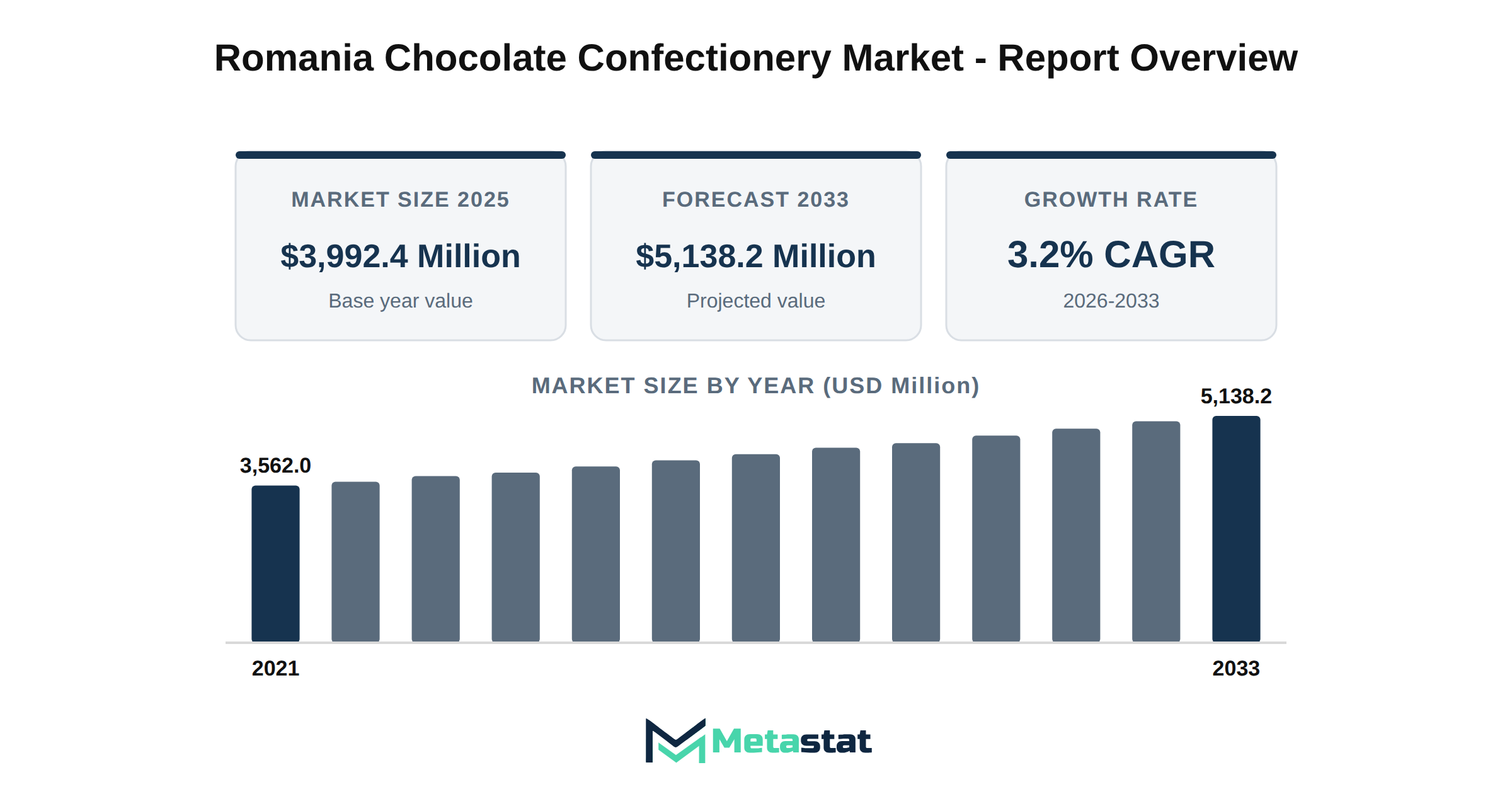
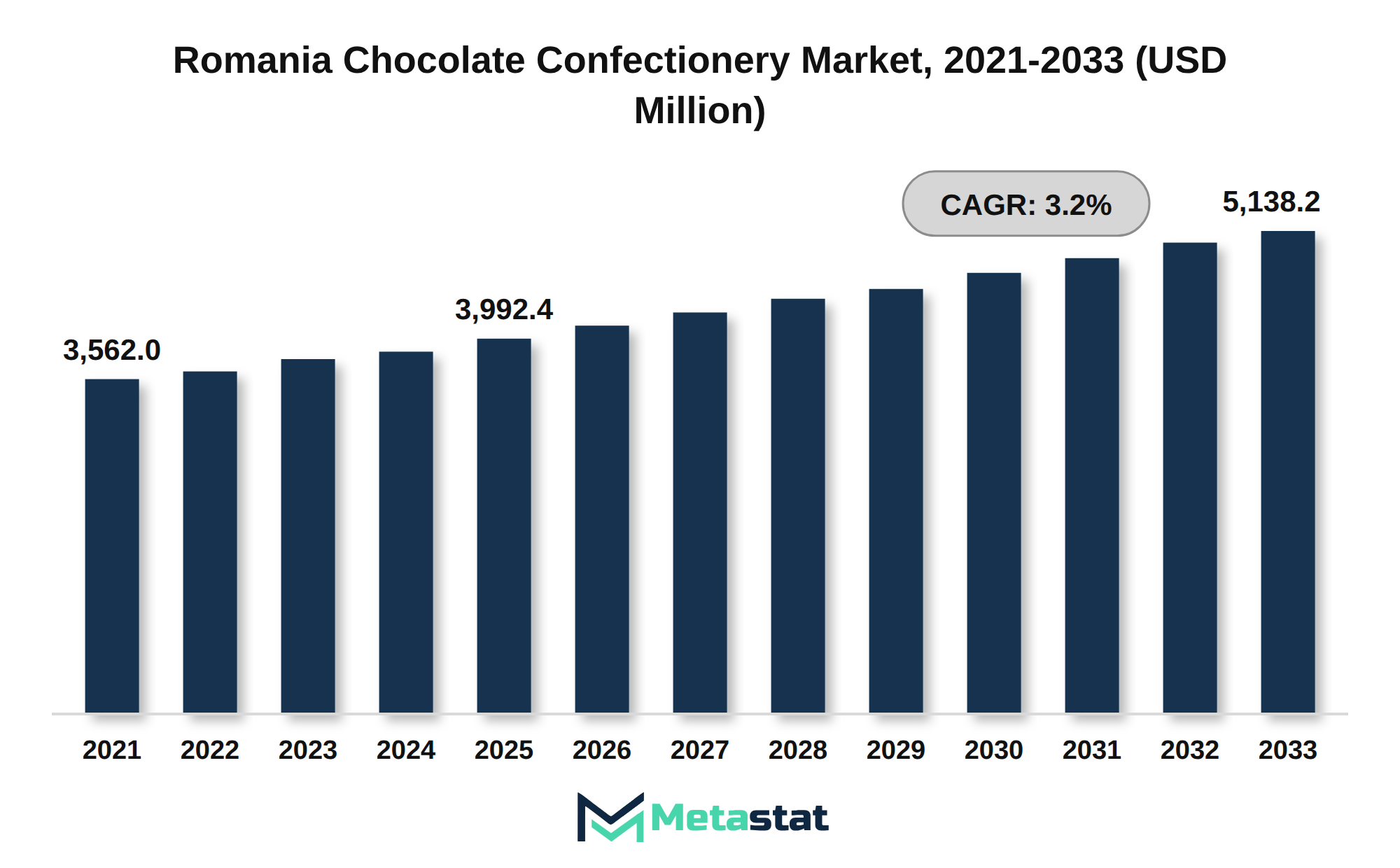
The Romania Chocolate Confectionery market reached a valuation of USD 3,992.4 million in 2025, demonstrating a steady growth trajectory. The market is projected to achieve USD 5,138.2 million by the end of the forecast period in 2033, reflecting a compound annual growth rate (CAGR) of 3.2%. Historical data indicates a growth pattern, with the market valued at USD 3,562 million in 2021, USD 3,643.9 million in 2022, and USD 3,774.9 million in 2023.
In 2024, the market increased to USD 3,854.8 million, followed by the base year value of USD 3,992.4 million in 2025. Key trends influencing growth within the Romania Chocolate Confectionery market include rising consumer demand for diverse product categories, including bars, boxed assortments, and seasonal gifting chocolates. The emphasis on premium and artisanal products indicates a shift in consumer preference towards higher-quality offerings, which contributes to the overall market expansion.
Competitive positioning within the market reflects a blend of established brands and emerging players. Major companies including Mars, Incorporated, Ferrero, and Mondelēz International, Inc. dominate the landscape, while local firms enhance competition through innovation and unique product offerings. This competitive dynamic creates an environment conducive to growth opportunities, particularly in segments like dark chocolate and premium products.
Distribution channels play a crucial role in market accessibility, with hypermarkets and supermarkets serving because primary venues for consumer purchases. Online retailing has gained traction, accommodating shifting shopping habits, particularly among younger demographics. The combination of traditional and modern retail formats enhances reach and engagement within the Romania Chocolate Confectionery market.
The Romania Chocolate Confectionery market experiences significant trends influencing consumer preferences and purchasing behavior. Rising health awareness drives demand for products with cleaner labels and higher quality ingredients. This shift reflects a broader consumer trend prioritizing health-conscious choices, propelling manufacturers to innovate and adapt their offerings accordingly. The growing inclination towards premium and artisanal chocolates indicates a willingness to spend more for perceived quality and unique experiences.
In terms of competitive positioning, established brands leverage their market presence and distribution networks, while emerging players introduce niche products catering to specific consumer segments. The market experiences fragmentation, with numerous local and international brands vying for attention. This landscape encourages dynamic competition, promoting continuous innovation and marketing strategies tailored to diverse consumer needs.
Distribution channels play a crucial role in shaping market accessibility. Hypermarkets and supermarkets dominate, but online retail channels gain traction, particularly among younger consumers seeking convenience and variety. The integration of digital platforms enhances customer engagement, allowing brands to connect directly with their audience and tailor promotions effectively.
Growth opportunities abound within the Romania Chocolate Confectionery market. Expanding product lines to include healthier options, including sugar-free and organic chocolates, aligns with changing consumer preferences. Seasonal and gifting chocolates represent a lucrative segment, particularly during holidays and special occasions, driving significant revenue spikes during these periods.
Regulatory compliance and standards remain vital considerations for market players. Adherence to food safety regulations and quality standards ensures consumer trust and brand integrity. Geopolitical factors, including trade policies and import regulations, influence sourcing strategies and market dynamics, necessitating agile responses from manufacturers.
Logistics architecture and supply chain management significantly impact operational efficiencies. Streamlining sourcing and distribution processes enhances profitability while maintaining product quality. Companies investing in robust supply chain infrastructure position themselves advantageously, enabling timely delivery and reducing operational costs.
Macroeconomic headwinds, including inflationary pressures and currency volatility, present challenges for manufacturers. Increased production costs affect pricing strategies, prompting brands to reassess their value propositions to remain competitive. Strategic capital allocation becomes essential in navigating these economic fluctuations while pursuing growth initiatives.
The future strategic outlook for the Romania Chocolate Confectionery market hinges on continuous innovation, consumer engagement, and adaptability. Companies focusing on sustainable transformation, including eco-friendly packaging and ethical sourcing, align with an increasingly environmentally conscious consumer base. By aligning corporate imperatives with evolving market trends, businesses position themselves for long-term success and resilience.
Market Dynamics
Increasing consumer health consciousness drives demand
Growing health awareness influences consumer preferences within the Romania Chocolate Confectionery market. Shifts toward healthier lifestyles have prompted consumers to seek products that combine indulgence with nutritional benefits. This trend drives the development of products featuring natural ingredients, low sugar content, and functional properties including added vitamins or minerals.
Increased consumer education regarding dietary choices contributes to this evolution, because individuals prioritize wellness and sustainability. This shift necessitates that manufacturers adapt their offerings to meet the rising demand for healthier options, leading to the introduction of innovative products that align with these preferences.
Consequently, the market anticipates sustained growth driven by the introduction of healthier chocolate alternatives, appealing to a broader audience concerned with health and wellness. Meeting these evolving consumer demands enhances manufacturers' competitive positions and drives revenue in the Romania Chocolate Confectionery market.
Increasing investment in luxury products
Investment in luxury chocolate products contributes significantly to the growth of the Romania Chocolate Confectionery market. Consumers increasingly seek high-quality, premium offerings, driving chocolate manufacturers to enhance their product lines. This trend is supported by rising disposable incomes, particularly among urban populations, which enable greater spending on premium confectioneries.
The shift towards luxury products presents opportunities for brands to innovate and diversify their offerings. Companies invest in marketing strategies that highlight unique flavors and artisanal craftsmanship, appealing to consumers' evolving preferences. This trend enhances brand loyalty and encourages repeat purchases, positively influencing overall market growth.
The market benefits from expanding distribution channels, including online retail and specialty stores. The growth of e-commerce allows consumers easier access to high-end chocolate products, facilitating market penetration and increasing sales volumes. Sustained investments in luxury chocolate products are expected to support continued growth throughout the forecast period.
Regulatory constraints limit market expansion
The Romania Chocolate Confectionery market faces significant challenges stemming from regulatory constraints that increase compliance hurdles for manufacturers. Stringent food safety regulations and labeling requirements necessitate considerable investment in quality assurance and product testing. These demands create barriers, particularly for smaller producers who lack the resources to meet these standards effectively.
Macroeconomic headwinds, including inflationary pressures, contribute to rising operating costs. These factors strain profit margins and deter investment in innovation or market expansion. Supply chain disruptions resulting from geopolitical instability complicate procurement processes and restrict reliable access to raw materials. Such disruptions hinder manufacturers' ability to maintain consistent production levels and meet growing consumer demand.
Technological obsolescence represents another concern for the market. Firms invest in updated production technologies to remain competitive. Failure to do so risks falling behind peers who embrace advancements in manufacturing efficiency and product quality. The presence of substitute products, including healthier alternatives or other confectionery offerings, poses a constant challenge, impacting market share and consumer loyalty.
The combination of these factors results in fragmented market participation, where smaller players struggle to survive against larger competitors. Consequently, the Romania Chocolate Confectionery market faces a complex environment, balancing regulatory requirements, economic pressures, and competitive dynamics while striving for sustainable growth.
Supply chain instability challenges growth
The Romania Chocolate Confectionery market encounters significant challenges stemming from supply chain instability. Multiple factors contribute to this disruption, including geopolitical fragmentation and trade deficits, which complicate cross-border transactions and sourcing of raw materials. Increased tariffs create additional cost burdens for producers, leading to inflation across the supply chain.
This instability impacts several players within the market, particularly those reliant on imported ingredients or sophisticated manufacturing technologies. Rising input costs associated with these factors hinder profit margins and strain operational capabilities. Suppliers face challenges in maintaining consistent quality and availability of components, which exacerbates competition among manufacturers.
Logistical disruptions, including transportation delays and fluctuating fuel prices, affect the timely delivery of products to consumers. This situation creates additional pressure on companies to implement more robust supply chain strategies and innovations. The overall impact extends beyond immediate costs; it influences consumer trust and brand loyalty, resulting from inconsistent product availability that undermines market positioning.
Consequently, the market navigates these complexities to sustain growth and meet evolving consumer demands. Addressing supply chain instability remains essential for ensuring the long-term viability and competitiveness of the Romania Chocolate Confectionery market.
Emerging digital procurement trends drive market growth
The Romania Chocolate Confectionery market experiences transformation driven by emerging digital procurement trends. Increased online purchasing and direct-to-consumer strategies reshape how businesses engage with consumers, enhancing overall sales channels. This shift enables players to reach broader audiences while streamlining operations, resulting in improved efficiency and reduced costs.
Technological disruptions play a significant role in this market evolution. Innovations in e-commerce platforms and digital marketing strategies provide opportunities for manufacturers to diversify their product offerings. Enhanced customer engagement through targeted promotions and personalized shopping experiences leads to increased customer loyalty and repeat purchases.
Geographical expansion contributes to market growth by enabling brands to penetrate new regions. While companies expand their market presence, they capitalize on unserved areas, tapping into fresh consumer bases eager for chocolate products. This strategy aligns with sustainability imperatives, driven by firms adopting local sourcing practices and environmentally friendly packaging solutions.
Product integration further drives consumer interest within the Romania Chocolate Confectionery market. The blending of flavors and combinations enhances the overall appeal of chocolate offerings, catering to evolving consumer tastes. By focusing on niche applications and unique product experiences, brands strengthen their competitive edge and attract diverse clientele.
Strategic consolidation through mergers and acquisition initiatives enhances market potential. By combining resources and expertise, firms optimize their capabilities, leading to product innovation and improved operational efficiencies. This trend reflects a broader industry movement toward collaboration, promoting creativity and advancement among market participants.
Market Segmentation Analysis
The Romania Chocolate Confectionery market is segmented based on Product Form, Chocolate Type, Price Tier, and Distribution Channel.
By Product Form, the market is further segmented into:
- Bars & Tablet
- Countlines/Single-Serve Bar
- Boxed Assortments/Praline
- Seasonal/Gifting Chocolate
- Spreads & Coated Snack
Bars & Tablet
Bars & Tablet segment is valued at USD 1,542.5 million in 2026 and is projected to reach USD 1,789.6 million by 2033, at a CAGR of 2.1% during the forecast period. Consumer preference for convenience and on-the-go snacking drives demand for bars in the Romania Chocolate Confectionery market. An increasing number of health-conscious consumers seeking indulgent yet portion-controlled options enhances the segment's appeal. Product innovation, including the introduction of premium ingredients and unique flavor combinations, supports segment expansion. Brands focusing on organic, gluten-free, and ethically sourced ingredients attract a broader audience, particularly among younger consumers. The influence of social media marketing effectively raises awareness and boosts sales within this sub-segment.
Countlines/Single-Serve Bar
Increasing consumer preference for convenient snacking options significantly drives demand for the Countlines/Single-Serve Bar segment within the Romania Chocolate Confectionery market. Urbanization and busy lifestyles contribute to a shift toward portable and easy-to-consume products, enhancing the appeal of this segment. The growing trend toward on-the-go consumption encourages manufacturers to innovate and expand their offerings, resulting in a wider variety of flavors and formats that capture consumer interest.
The incorporation of premium ingredients and health-conscious formulations drives market expansion. Consumers increasingly seek products with natural ingredients, reduced sugar, and functional benefits, leading to enhanced product appeal and differentiation in a competitive environment. Retailers, influenced by these trends, prioritize the display and promotion of Countlines/Single-Serve Bars, further enhancing their market presence.
The Countlines/Single-Serve Bar segment is estimated to reach USD 1,236.2 million by 2033, at a CAGR of 3.2% during the forecast period. This growth reflects the segment's ability to adapt to changing consumer preferences, ensuring relevance in the market. With ongoing product innovations and strategic marketing initiatives, brands capitalize on emerging opportunities and strengthen their competitive positions within the Romania Chocolate Confectionery market.
Boxed Assortments/Praline
Consumer interest in premium gifting options significantly drives the Boxed Assortments/Praline segment of the Romania Chocolate Confectionery market. This segment is expected to reach USD 920.8 million by 2033, reflecting a notable demand for luxurious chocolate experiences during special occasions. The popularity of boxed assortments stems from their appeal during holidays and celebrations, where presentation and variety enhance their attractiveness.
Technological advancements in packaging and product design contribute to the segment's growth, enabling more engaging and visually appealing offerings. Innovations in sustainable packaging solutions align with rising consumer environmental awareness, enhancing brand loyalty and market penetration. The evolution of flavors and fillings in boxed assortments provides consumers with diverse options, catering to various preferences and expanding market reach.
Changes in consumption patterns, particularly among younger demographics, emphasize the importance of unique and experiential offerings in the market. Social media influences purchasing decisions, driven by visually striking products that gain traction online. The trend towards personalization in gifting drives further segment expansion, allowing consumers to select tailored assortments for specific occasions.
Pricing strategies play a crucial role in maintaining competitiveness within the segment. Fluctuations in raw material costs impact pricing volatility, affecting profit margins. Effective supply chain management and strategic sourcing of ingredients enhance cost efficiency, positioning brands favorably against competition. The segment's growth relies on understanding consumer trends and aligning product offerings with evolving preferences, ensuring sustained demand in the Romania Chocolate Confectionery market.
Seasonal/Gifting Chocolate
Demand for Seasonal/Gifting Chocolate continues to rise, driven by cultural traditions and festive celebrations, particularly during holidays including Christmas and Easter. This segment grows at a CAGR of 5.2% during the forecast period. Gifting chocolate products are increasingly viewed because a desirable way to express affection, which enhances sales potential. Consumers seek unique and visually appealing packaging for these products, aligning with trends in personalization and luxury consumption. The market's evolution reflects a shift towards premium offerings, with manufacturers focusing on high-quality ingredients and innovative flavors to attract discerning consumers.
Market dynamics indicate that promotional strategies and seasonal marketing campaigns effectively boost awareness and sales. Retailers expand their distribution channels, including online platforms, to enhance accessibility to consumers. The growing trend of gifting, particularly among younger demographics, significantly influences market performance. The Romania Chocolate Confectionery market illustrates a promising trajectory, supported by evolving consumer preferences and effective marketing initiatives.
Spreads & Coated Snack
Consumer trends within the Romania Chocolate Confectionery market indicate a shift towards innovative and indulgent options including spreads and coated snacks. Demand for these products ties closely to evolving consumer preferences for unique flavors and textures, driving manufacturers to enhance their offerings with diverse ingredient combinations. This segment benefits from the growing popularity of snacking and the incorporation of chocolate into various product forms, appealing to a wide range of consumers.
Product evolution significantly influences this market segment's dynamics. Brands increasingly explore novel concepts and seasonal variations, contributing to heightened consumer interest. Enhancements in packaging and marketing strategies emphasize convenience, aligning with the lifestyles of contemporary consumers.
Regulatory compliance and quality certifications create a structured landscape for the segment, impacting production standards and consumer confidence. The influence of health trends encourages manufacturers to explore alternatives, including reduced sugar or plant-based options, appealing to health-conscious consumers while maintaining indulgent attributes.
While manufacturers respond to these shifts, investment in product innovation, marketing, and distribution channels becomes essential. Strategic opportunity windows emerge owing to brands tapping into niche markets, further expanding the reach of spreads and coated snacks within the Romania Chocolate Confectionery market.
By Chocolate Type, the market is further segmented into:
- Milk Chocolate
- Dark Chocolate
- White Chocolate
- Others (Ruby, Blonde and Mixed Chocolate)
Milk Chocolate
Valued at USD 2,641.1 million in 2026, the Milk Chocolate segment is projected to reach USD 3,067 million by 2033, achieving a CAGR of 2.2% during the forecast period. Increasing consumption of milk chocolate correlates with rising consumer preferences for sweet and creamy flavors, contributing to sustained demand in the Romania Chocolate Confectionery market. The segment's appeal extends across various demographics, including children and young adults, who favor indulgent treats.
Several factors influence the segment's growth trajectory. Enhanced marketing strategies, including collaborations with popular brands and influencers, boost brand visibility and consumer engagement. Innovations in product formulations, including the introduction of new flavor profiles and healthier options, attract health-conscious consumers while maintaining indulgence. This evolution in product offerings aligns with a broader trend within the market, emphasizing quality and premium ingredients.
Price sensitivity remains a crucial consideration for consumers, particularly in the mass market segment. Companies focused on optimizing cost structures and pricing strategies navigate these challenges effectively, positioning themselves for sustained growth. The perception of quality associated with milk chocolate supports its appeal, making it a favored choice for gifting.
Increased competition from alternative chocolate types, including dark and white chocolate, introduces a dynamic element to the market. However, strong brand loyalty associated with established milk chocolate brands provides a competitive edge. Strategic investments in marketing and product innovation enhance market penetration and maintain relevance amid evolving consumer preferences in the Romania Chocolate Confectionery market.
Dark Chocolate
Consumer demand for Dark Chocolate continues to exhibit significant growth within the Romania Chocolate Confectionery market. This segment is estimated to reach USD 1,394 million by 2033, at a CAGR of 5.1% during the forecast period. Increasing health consciousness among consumers drives a preference for dark chocolate, perceived for its higher cocoa content and associated health benefits. The segment's expansion is supported by a variety of product innovations and flavor enhancements that cater to evolving consumer tastes.
Technological maturation facilitates the production of premium and artisanal dark chocolate offerings, attracting a discerning customer base. Strategic marketing initiatives emphasize the unique qualities of dark chocolate, promoting its versatility in culinary applications and serving because a gourmet gift option. In addition, expanding distribution channels, including online retail, enhance accessibility, further fueling consumption.
Pricing dynamics within the dark chocolate segment reflect its premium positioning in the market. Rising raw material costs contribute to pricing volatility, creating margin pressures for producers. However, the overall demand trajectory aligns with a willingness among consumers to invest in higher-quality chocolate experiences. This willingness presents the opportunity for brands to enhance product lines and establish a stronger presence in the market.
White Chocolate
Consumer interest in unique flavor profiles and indulgent experiences fuels demand for the White Chocolate segment within the Romania Chocolate Confectionery market. This segment offers a diverse range of products that appeal to both traditional and adventurous tastes, contributing to its anticipated growth trajectory. White chocolate's creamy texture and versatility enable incorporation into various applications, including desserts, baked goods, and confectionery items, enhancing its attractiveness among consumers.
Regulatory compliance and quality standards significantly impact product offerings within this segment. Adherence to safety and labeling requirements reassures consumers about the quality of white chocolate products. Pricing volatility stemming from raw material sourcing influences profitability, compelling manufacturers to adopt strategic pricing strategies. The White Chocolate segment is projected to reach USD 516.9 million by 2033, reflecting consistent demand driven by evolving consumer preferences.
Investments in innovative product development and marketing strategies position manufacturers competitively within the market. Engaging marketing campaigns highlighting the unique attributes of white chocolate appeal to target demographics, promoting both brand loyalty and repeat purchases. These factors are expected to enhance market penetration and expand the consumer base for white chocolate products, further strengthening its presence in the Romania Chocolate Confectionery market.
Others (Ruby, Blonde and Mixed Chocolate)
Consumer interest in unique and innovative chocolate products supports the growth of the Others (Ruby, Blonde and Mixed Chocolate) segment within the Romania Chocolate Confectionery market. This segment is projected to grow at a CAGR of 8.4% during the forecast period. Expanding product lines featuring ruby and blonde chocolates reflect manufacturers' strategies to cater to evolving tastes and preferences. The introduction of visually appealing and flavor-diverse chocolates captures the attention of consumers seeking novel experiences, driving demand for these specialty offerings.
The segment's growth is driven by changing consumption patterns where consumers increasingly seek alternatives to traditional chocolate types. Fluctuations in consumer preferences towards unique flavor profiles, including fruity or floral notes, inspire product innovation among manufacturers. This trend encourages investment in R&D for new chocolate formulations, enhancing market competitiveness.
In conjunction with these trends, promotional activities targeting adventurous consumers enhance visibility for Ruby, Blonde, and Mixed Chocolate products. Retailers benefit from strategic collaborations with confectionery brands, facilitating broader distribution and awareness of these unique offerings. While the market evolves, capturing consumer interest through creative marketing strategies remains crucial for sustained growth in the Others (Ruby, Blonde and Mixed Chocolate) segment.
By Price Tier, the market is further segmented into:
- Mass Market
- Premium
- Luxury/Artisanal
Mass Market
Valued at USD 3,005.7 million in 2026, the Mass Market segment is projected to reach USD 3,483.2 million by 2033, at a CAGR of 2.1% during the forecast period. Primary demand in this segment arises from a broad consumer base seeking affordable chocolate options, with brands focusing on value-for-money propositions. The segment experiences consistent growth driven by the increasing availability of products across various retail channels including hypermarkets, supermarkets, and online platforms. Consumers exhibit a strong preference for familiar flavors and classic chocolate formats, which further supports stable demand.
Trends within the Romania Chocolate Confectionery market point toward evolving consumption patterns, with a shift toward convenience and accessibility. The expansion of retail formats enhances reach, enabling consumers to access mass market chocolate products more readily. Competitive pricing strategies among key players stimulate market activity, ensuring that consumers engage with various offerings. The market encounters limited price volatility, contributing to consistent purchasing behavior among consumers who prioritize affordability in their chocolate selections.
Strategic investments in marketing and promotional activities enhance brand visibility within the mass market, where consumer engagement remains critical. Companies actively innovate within the segment, introducing seasonal promotions and limited-edition flavors to stimulate interest and drive sales. The dynamic nature of consumer preferences necessitates ongoing adaptation among brands, ensuring alignment with market trends and consumer expectations. Overall, the Mass Market segment remains a vital component of the Romania Chocolate Confectionery market, reflecting a balance between traditional offerings and innovative approaches aimed at attracting diverse consumer segments.
Premium
Growing consumer inclination towards high-quality, artisanal options fuels the demand for premium chocolate products in Romania. This segment, focusing on superior ingredients and unique flavor profiles, caters to consumers seeking indulgent experiences. Premium products emphasize sustainability and ethical sourcing, aligning with evolving consumer values that prioritize health and environmental responsibility.
While consumer spending on luxury items increases, brands within the Romania Chocolate Confectionery market capitalize on this trend. The premium segment is projected to reach USD 1,291.2 million by 2033, at a CAGR of 5.2% during the forecast period. The rise in gifting occasions, coupled with a surge in online retail channels, enhances market accessibility for premium offerings.
Brands investing in innovative packaging and exclusive flavors differentiate themselves in a competitive landscape. This focus on product evolution and strategic marketing drives brand loyalty, attracting discerning consumers seeking both quality and prestige. The premium chocolate segment reflects a significant opportunity for growth, with manufacturers expanding their portfolios to meet shifting taste preferences.
Luxury/Artisanal
Consumer interest in high-quality, artisanal chocolates significantly drives growth within the Luxury/Artisanal segment of the Romania Chocolate Confectionery market. This segment is projected to reach USD 363.8 million by 2033, reflecting a growing preference for premium products among consumers seeking indulgent experiences. Brand storytelling, craftsmanship, and high-quality ingredients play vital roles in attracting discerning buyers who prioritize unique taste profiles and ethical sourcing practices.
The evolving market shows a shift toward personalization and exclusivity in chocolate offerings, with consumers increasingly favoring handcrafted products. This trend enhances the appeal of Luxury/Artisanal chocolates, building brand loyalty and repeat purchases. Retail formats, including gourmet shops and specialty stores, have expanded their offerings to cater to this demand, ensuring greater visibility and accessibility for premium chocolates.
Technological advancements in production processes contribute to manufacturers' ability to innovate and create distinctive products that align with consumer preferences. Increased focus on sustainable practices impacts sourcing decisions, prompting brands to seek high-quality raw materials that meet ethical standards while ensuring product excellence. The continuous development of unique flavors and textures enhances product appeal, positioning the Luxury/Artisanal segment favorably within the market.
By Distribution Channel, the market is further segmented into:
- Hypermarkets & Supermarkets
- Convenience Stores & Traditional Grocery
- Specialist Confectionery & Chocolatiers
- Online Retail & Direct-to-Consumer
- Travel Retail
- Others (Department Stores, Vending)
Hypermarkets & Supermarkets
Growing consumer preference for convenient shopping experiences drives demand within hypermarkets and supermarkets in the Romania Chocolate Confectionery market. These retail formats offer a wide assortment of chocolate products, catering to diverse consumer tastes and preferences. The presence of various brands and product types allows consumers to explore new options while benefiting from competitive pricing.
Increased foot traffic in hypermarkets and supermarkets encourages impulse purchases, often leading to higher sales volumes. Seasonal promotions and product placements enhance visibility, further influencing consumer choices. Such retail strategies significantly impact consumption patterns, aligning with evolving consumer behaviors that favor immediate access to chocolate products.
Ongoing advancements in retail technology, including self-checkout systems and mobile payment options, enhance the shopping experience and attract tech-savvy consumers. The growth of e-commerce complements traditional retail, with many hypermarkets and supermarkets investing in online platforms. This investment expands their reach and accessibility.
Strategic collaborations between chocolate manufacturers and retail chains strengthen market positioning. Exclusive product launches and promotional campaigns within these outlets boost brand visibility and drive sales. This collaboration enhances competitive differentiation among players in the Romania Chocolate Confectionery market, contributing to an environment conducive to innovation and consumer engagement.
Convenience Stores & Traditional Grocery
Consumer access to chocolate products through Convenience Stores and Traditional Grocery significantly impacts the Romania Chocolate Confectionery market. Expanding retail networks and the convenience of nearby shopping options enhance consumer engagement with chocolate brands. Retailers adapt their inventory to meet local preferences, driving demand for diverse chocolate offerings.
Shifts in consumer purchasing behavior, influenced by the desire for on-the-go snacks, strengthen the role of this distribution channel. Enhancements in promotional strategies and point-of-sale marketing effectively attract consumers, encouraging impulse purchases. The integration of seasonal and limited-edition products within these stores creates excitement and builds brand loyalty among consumers.
Cost structures within this segment reflect the dynamics of retail pricing and promotional activities. Retailers balance pricing volatility against consumer expectations, impacting margin pressures. Maintaining supply chain resilience ensures product availability, addressing potential vulnerabilities associated with raw material sourcing.
Strategic partnerships between chocolate manufacturers and retailers promote visibility and access to a broader audience. The introduction of next-generation products tailored for convenience store formats supports segment growth, creating opportunities for innovation within the Romania Chocolate Confectionery market. Aligning distribution strategies with consumer trends shapes the future of this segment.
Specialist Confectionery & Chocolatiers
Consumer preferences increasingly shift towards high-quality, artisanal offerings within the Romania Chocolate Confectionery market. This transition stems from a heightened awareness of sustainability and ethically sourced ingredients, which influences purchasing decisions among consumers. The demand is especially strong among consumers seeking unique experiences, driven by their gravitation towards specialty chocolate products crafted by local chocolatiers.
Market dynamics favor the growth of the Specialist Confectionery & Chocolatiers distribution channel, supported by a trend towards personalization and customization in gifting. Consumers prioritize unique flavors and premium packaging, aligning with their desire for distinctive gifts. This trend opens doors for increased collaboration between chocolatiers and local artisans, enhancing product offerings and broadening market appeal.
Technological advancements facilitate product innovation, enabling chocolatiers to create novel offerings that align with evolving consumer preferences. Brands increasingly adopt sustainable practices, leveraging organic and locally sourced ingredients to enhance their brand reputation and attract environmentally conscious consumers. The positioning of these products in the market emphasizes quality and craftsmanship, leading to higher price points and improved margins for retailers.
In response to competitive pressures, strategic partnerships and branding initiatives are critical for growth. Chocolatiers that align with local events and cultural celebrations tap into the emotional aspects of gifting, strengthening customer loyalty. Regulatory compliance and adherence to quality standards reinforce brand credibility, positioning these products favorably in the market. Overall, the Specialist Confectionery & Chocolatiers channel significantly shapes consumer experiences within the broader Romania Chocolate Confectionery market.
Online Retail & Direct-to-Consumer
Growing consumer preference for online shopping channels significantly impacts the Romania Chocolate Confectionery market. The convenience of purchasing chocolate products through online retail and direct-to-consumer platforms enhances consumer access to a diverse range of products, catering to evolving taste preferences. Increased smartphone penetration and improved internet connectivity facilitate this trend, driving a shift towards e-commerce in the chocolate segment.
Online platforms enable brands to engage directly with consumers, providing opportunities for personalized marketing and targeted promotions. This direct engagement strengthens brand loyalty and encourages repeat purchases, creating a competitive edge in the market. Strategies that leverage social media platforms for product visibility and customer interaction contribute to market growth.
Technological advancements in logistics and distribution enhance supply chain efficiency within online retail channels, allowing quicker delivery times and better customer service. This responsiveness to consumer demands strengthens the position of online retail within the Romania Chocolate Confectionery market, highlighting its relevance in the broader distribution framework.
Travel Retail
Travel retail serves because a distinctive distribution channel within the Romania Chocolate Confectionery market, catering primarily to tourists and travelers seeking convenient and indulgent chocolate options. Increased international travel, particularly to and from Romania, significantly influences demand within this segment. Travelers often purchase chocolates because souvenirs or gifts, creating a growing interest in premium and artisanal selections that enhance their travel experiences.
Consumer trends indicate a shift towards unique and locally produced chocolate brands during travel. This trend creates opportunities for retailers to present regional specialties, attracting consumers looking for authentic products that represent Romanian culture. The integration of experiential marketing strategies within travel retail environments further boosts consumer engagement, encouraging impulse purchases of chocolate products.
While travelers prioritize convenience and quality, chocolate brands that offer portable packaging and engaging flavor profiles are likely to gain traction. Retailers positioned in high-traffic areas, including airports and train stations, play a crucial role in capturing this segment's potential. By enhancing product visibility and accessibility, the market benefits from increased foot traffic and sales conversions.
The travel retail segment within the Romania Chocolate Confectionery market reflects a dynamic relationship of consumer preferences and strategic retail positioning. Continuous adaptation to emerging trends in consumer behavior, along with effective branding strategies, will support further growth in this niche market segment.
Others (Department Stores, Vending)
Emerging retail formats significantly influence the distribution of chocolate products within the Romania Chocolate Confectionery market. Department stores and vending machines provide essential channels for consumers seeking convenient access to confectionery items. This segment attracts customers looking for on-the-go purchasing options, aligning with increasing demand for instant gratification in snack consumption.
Retailers in this segment focus on enhancing product visibility and accessibility, allowing for impulse buying behavior. The prevalence of vending machines in high-traffic areas including offices, schools, and transportation hubs presents opportunities for brands to reach a wider audience. This distribution strategy capitalizes on consumer trends towards convenience, enabling brands to capture market share effectively.
Technological advancements in vending machine operations enhance the user experience, incorporating cashless payment options and interactive interfaces. These innovations streamline transactions, encouraging higher sales volumes. The expansion of product ranges within department stores, including premium and artisanal offerings, caters to evolving consumer preferences in the Romania Chocolate Confectionery market.
Challenges including competition from online retail and pricing pressures from mass-market offerings affect profitability in this segment. The unique positioning of department stores and vending machines, driven by convenient access points, allows brands to maintain a competitive edge. Strategic collaborations with retail partners and effective marketing campaigns will be crucial for leveraging these opportunities.
Competitive Landscape and Strategic Insights
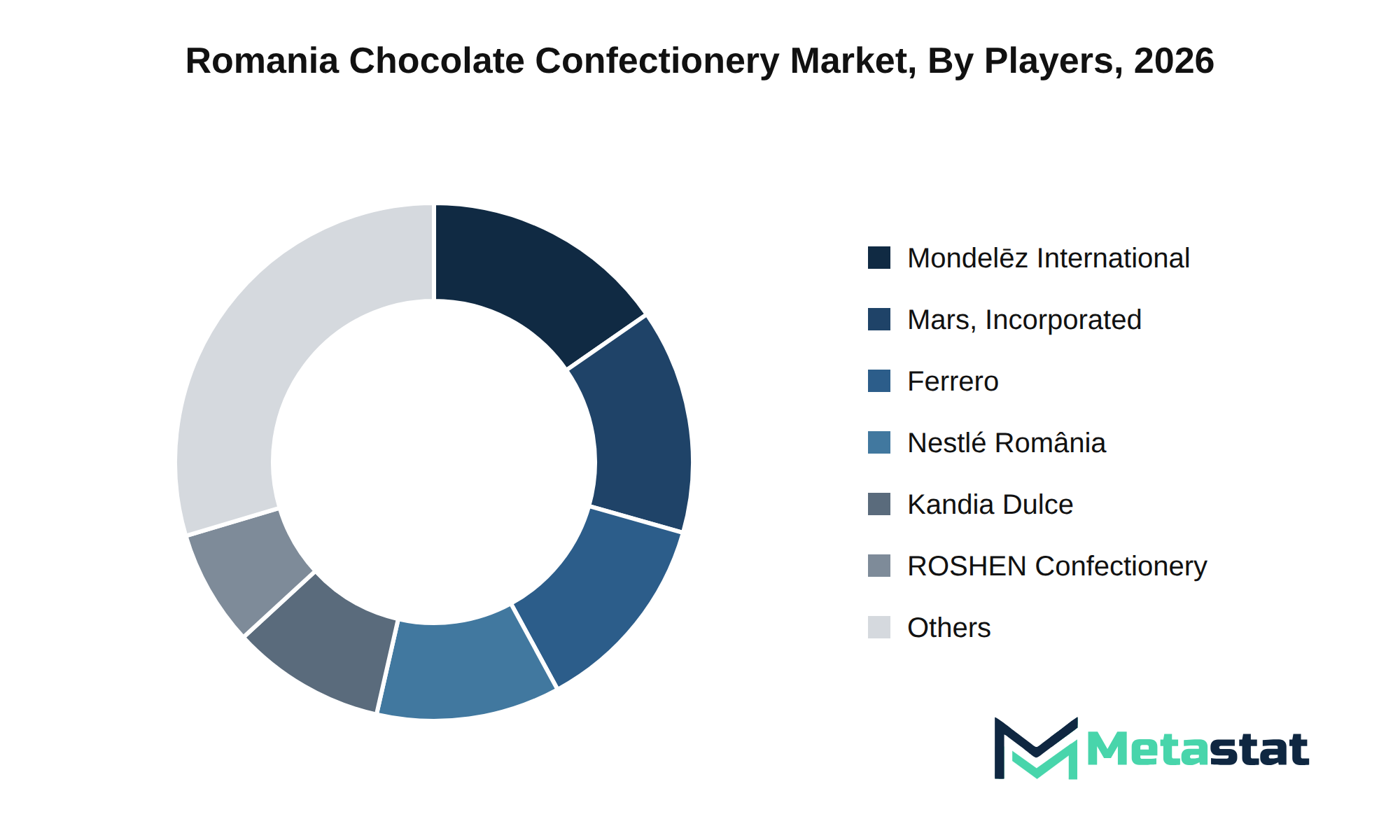
The Romania Chocolate Confectionery market features significant competition among established players. Companies including Mars, Incorporated, Ferrero, and Mondelēz International, Inc. operate in the market, leveraging strong brand recognition and extensive distribution networks. These companies employ strategic consolidation methods and value chain integration to enhance operational efficiencies.
Pricing architectures in the market reflect varying consumer preferences, with brands like Nestlé România and Kandia Dulce S.A. focusing on product differentiation to appeal to distinct market segments. Premium and luxury offerings are gaining traction, with firms including Läderach and Neuhaus prioritizing high-quality ingredients and artisanal production techniques, supporting their competitive positioning.
Strategic alliances and partnerships play an important role in expanding market reach. Collaborations among regional players, including Kaufland Romania S.C.S. and Auchan Romania S.A., facilitate distribution across various channels, including hypermarkets and online retail. This dynamic enhances customer retention strategies and strengthens brand loyalty, contributing to long-term market stability.
The threat of new entrants remains a consideration, with startups introducing innovative products that challenge traditional offerings. The competitive outlook emphasizes the importance of robust intellectual property portfolios and defense mechanisms against emerging disruptors, influencing investment strategies across the sector.
While the market evolves, firms are expected to focus on sustainable practices and adapt to changing consumer demands, positioning themselves for future growth and market resilience.
Forecast and Future Outlook
Market size is forecast to rise from USD 3,992.4 million in 2025 to over USD 5,138.2 million by 2033. The base case anticipates a growth trajectory reflecting a 3.2% CAGR during this period, informing strategies across various stakeholders in the Romania Chocolate Confectionery market.
In an optimistic scenario, accelerated consumer preferences for premium and artisanal products drive demand significantly higher, leading to enhanced market dynamics and encouraging innovations across product offerings. Conversely, a pessimistic view indicates that economic challenges restrict consumer spending, dampening growth and limiting market expansion.
The market faces evolving trends influenced by upstream supply chain adjustments, regulatory frameworks, and shifting consumer behaviors. Strategic investments in research and development are essential to meet future demands, particularly in the context of next-generation technology integration and product life cycles. Stakeholders should position themselves to capitalize on emerging opportunities while navigating the complexities of compliance and market volatility.
Romania Chocolate Confectionery Market Key Segments
By Product Form:
- Bars & Tablet
- Countlines/Single-Serve Bar
- Boxed Assortments/Praline
- Seasonal/Gifting Chocolate
- Spreads & Coated Snack
By Chocolate Type:
- Milk Chocolate
- Dark Chocolate
- White Chocolate
- Others (Ruby, Blonde and Mixed Chocolate)
By Price Tier:
- Mass Market
- Premium
- Luxury/Artisanal
By Distribution Channel:
- Hypermarkets & Supermarkets
- Convenience Stores & Traditional Grocery
- Specialist Confectionery & Chocolatiers
- Online Retail & Direct-to-Consumer
- Travel Retail
- Others (Department Stores, Vending)
Key Romania Chocolate Confectionery Industry Players
- Mars, Incorporated
- Ferrero
- Mondelēz International, Inc.
- Nestlé România
- Kandia Dulce S.A.
- Kaufland Romania S.C.S.
- ROSHEN Confectionery Corporation
- Auchan Romania S.A.
- Eti European Food Industries
- LOTTE Wedel
- Leonidas
- Läderach
- Neuhaus
- S.C. Choco Pack S.R.L.
- The Chocolate Makers S.R.L. (Chocolissimo)
- S.C. Sweeteria S.R.L.
- Choco Fashion S.R.L.
- S.C. Maximilian Chocolat S.R.L.
- Luado Chocolate S.R.L.
- Monish Shop S.R.L. (Chantia)
Report Coverage
The report strategically identifies and profiles the key market players and analyses their core competencies in each sub-segment of the Chocolate Confectionery market.
Report Attributes | Details |
Study Period | 2021-2033 |
Base Year | 2025 |
Estimated Year | 2026 |
Forecast Period | 2026-2033 |
Historical Period | 2021-2025 |
Growth Rate | CAGR 3.2% from 2026 to 2033 |
Revenue Unit | USD million |
Segmentation | By Product Form, Chocolate Type, Price Tier, Distribution Channel, and Region |
What Report Provides
- Key Company Market Share, Revenue and Ranking for the Romania Chocolate Confectionery Market
- Key Market Leaders in the Romania Chocolate Confectionery Industry
- Full In-Depth Analysis of the Parent Chocolate Industry
- Comprehensive Industry Statistics and Market Dynamics
- Segmentation Details of the Romania Chocolate Confectionery Market
- Historical, Ongoing and Projected Market Analysis
- Assessment of Niche Developments in the Chocolate Confectionery Sector
- Key Strategies of Major Players in the Market
Frequently Asked Questions
Find answers to common questions about this report
The Chocolate Confectionery market size in Romania was valued at USD 3,992.4 million in 2025.
The Chocolate Confectionery market is projected to grow at a CAGR of 3.2% during the forecast period from 2026 to 2033.
The leading segment in the Romania Chocolate Confectionery market is Milk Chocolate, with a projected value of USD 3,067 million by 2033. This segment surpasses others in terms of revenue generation within the market.
Key drivers for the Romania Chocolate Confectionery market include growing health awareness, prompting demand for healthier options, and increased consumer interest in luxury chocolate products, driven by rising disposable incomes. Expanding distribution channels, particularly through e-commerce, further facilitates market growth by providing easier access to high-quality offerings.
The Romania Chocolate Confectionery market growth faces significant challenges from regulatory constraints that increase compliance costs, macroeconomic pressures leading to rising operating expenses, and supply chain instability caused by geopolitical factors. These issues create barriers for manufacturers, particularly smaller producers, and strain profit margins, hindering market expansion.
Growing health awareness and rising disposable incomes favor product adoption in the Romania Chocolate Confectionery market. Consumers increasingly seek healthier options and premium offerings, prompting manufacturers to innovate and diversify their product lines. Enhanced distribution channels, particularly e-commerce, further facilitate access to these products, driving market growth.
The Chocolate Confectionery market is estimated to reach a valuation of USD 5,138.2 million by 2033.
Key players in the Romania Chocolate Confectionery market include Mars, Incorporated, Ferrero, Mondelēz International, Inc., Nestlé România, Kandia Dulce S.A., and Kaufland Romania S.C.S. These companies significantly influence the market dynamics and consumer preferences within the chocolate confectionery sector.
The chocolate bars segment is projected to reach USD 1,789.6 million by 2033.
The premium chocolate segment is anticipated to reach USD 1,291.2 million by 2033.
Choose Your License
Romania Chocolate Confectionery Market
Related Reports
Explore related market intelligence reports worth reading alongside this one.