
LEAD ANALYST
Utkarsh Khirodkar is a Lead Market Research Analyst at MetaStat Insight, specializing in market intelligence, technology sector assessments, and competitive strategy.

Saudi Arabia Frozen Potato Products Market Size and Share, By Product Type (French Fries, Tikki, Potato Wedges, Potato Bites, Smileys, Hash Brown, and Others), By Distribution Channel (Business to Business (B2B), Supermarkets, Hypermarkets, Convenience Stores, Departmental Stores, Online, and Others), By End Use (Food Services, Retail, Quick Service Restaurants (QSR), and Households), Industry Analysis, Growth, Trends, and Forecast, 2026-2033
Report ID
MSI-4563
Published
February, 2026
Pages
311 Pages
Format
Report Details
Choose Your License
Saudi Arabia Frozen Potato Products Market
The Saudi Arabia Frozen Potato Products market size is valued at USD 531.3 million with a sales volume of 260.1 kilotons in 2025. The market is projected to garner USD 993.6 million by 2033, exhibiting a CAGR of 8.2% during the forecast period.
The Saudi Arabia Frozen Potato Products market was valued at USD 531.3 million in 2025 and is projected to grow at a CAGR of 8.2% through 2033, reaching USD 993.6 million.
Key trends driving growth: Rapid expansion of quick-service restaurants and international foodservice chains driving bulk demand for frozen potato offerings.
Key opportunity includes rising adoption of air-fried and oven-ready frozen potato variants aligned with healthier cooking preferences.
Key insight: Foodservice-led consumption and lifestyle-driven convenience purchases anchoring growth, alongside innovation in healthier frozen potato formats supporting future upside.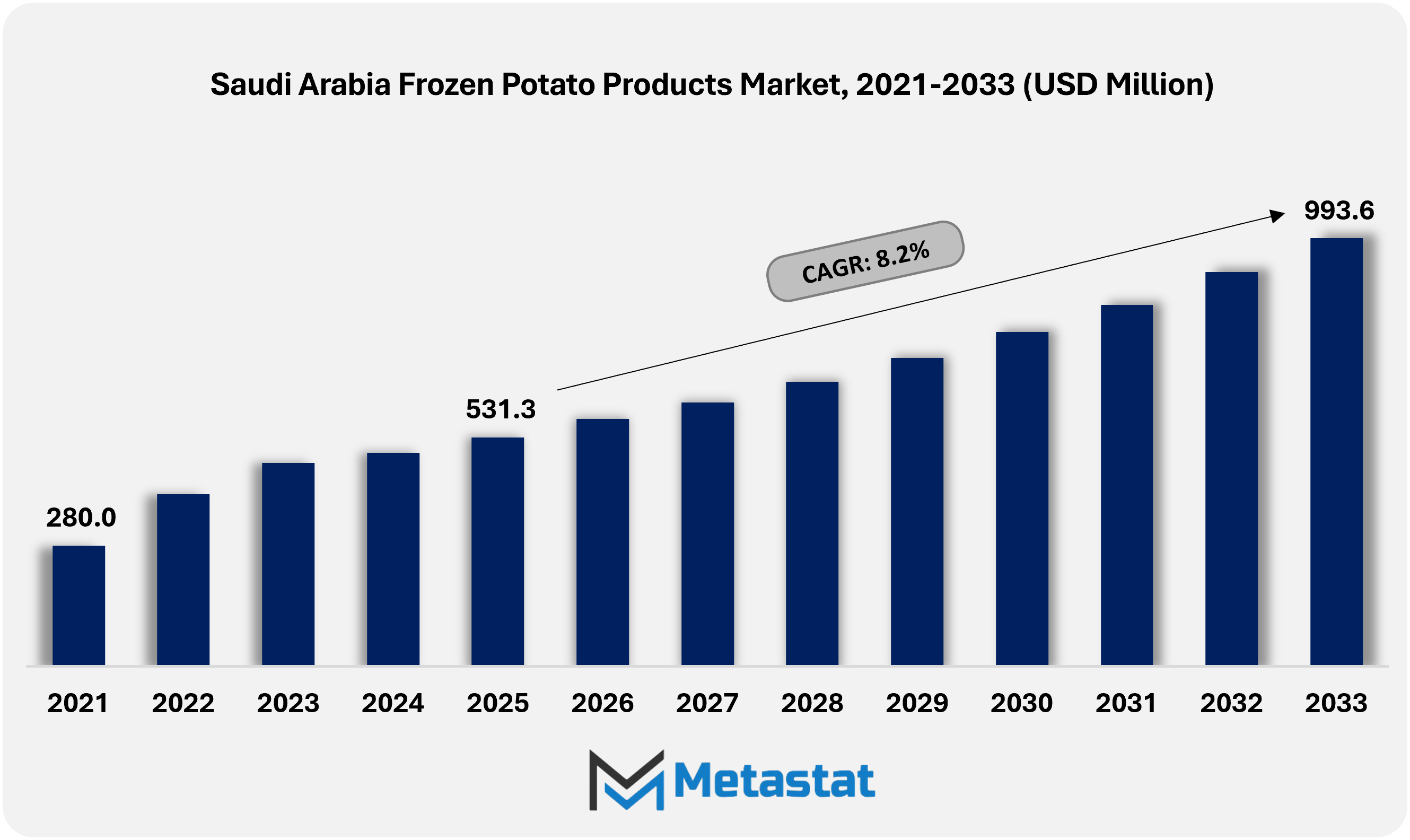
The Saudi Arabia frozen potato products market is set for substantial transformation over the coming years, supported by innovation across the food industry and shifting consumption patterns. Increased preference for premium offerings among chefs and households is strengthening uptake of convenient alternatives to fresh potatoes while preserving taste and texture. Adoption of advanced processing methods is improving texture retention and limiting nutrient loss across branded product lines in retail freezers.
Manufacturers are strengthening collaboration with local distributors to support year-round availability across key urban centers. Retail expansion is extending beyond conventional hypermarkets into specialty frozen food outlets aligned with diverse culinary preferences. Packaging innovations focused on extended shelf stability are influencing purchase decisions. High-performance cold chain logistics remains critical for preserving product integrity from production sites to end users.
The fast growth of quick-service restaurants and global food chains will continue to stimulate bulk demand for standardized frozen potato products. Consistent flavor, extended shelf life, and operational efficiency will guide purchasing decisions. Long-time period food provider funding in city centres will improve quantity balance and encourage contract-based sourcing fashions.
The growing urban population with fast-paced lifestyles is strengthening preference for convenient and time-saving food options. Frozen potato products will advantage popularity through retail channels owing to their ease of coaching and constant excellent. Household freezer penetration, dual-income demographics, and changing food patterns will collectively strengthen retail consumption.
Dependence on imported raw potatoes will continue to expose suppliers to international price fluctuations and logistics disruptions. Trade barriers, climate-related yield variability, and freight cost volatility will impact procurement planning. Cost pressure limits pricing flexibility, impacting margins at the processing and distribution stages.
Increasing health awareness will promote moderation in consumption of fried and processed food. Nutrition labelling, health campaigns, and dietary guidance will form consumer belief. Higher sensitivity toward oil content and calorie intake will influence selective buying behavior, slowing momentum for traditional fried frozen potato formats.
The adoption of air-fried and oven-ready frozen potato varieties will accelerate in response to healthier cooking preferences. Product innovations focusing on reduced oil absorption will attract health-conscious consumers. Emphasis on versatility, clear health positioning, and cooking convenience will strengthen competitive advantage across premium and mid-range segments.
The Saudi Arabia Frozen Potato Products market is classified based on Product Type, Distribution Channel, and End Use.
French Fries segment is valued at USD 351.6 Million in 2026 and is projected to reach USD 611.7 Million by 2033, at a CAGR of 8.2% during the forecast period.
French fries represent a major product category owing to consistent demand from food stores and retail freezers. Standardized sizes, predictable cooking performance, and compatibility with commercial frying systems will maintain volume movement. Future growth will align with menu consistency, portion control requirements and increasing penetration in organized dining product.
Tikki segment is valued at USD 46.5 Million in 2026 and is projected to reach USD 83.4 Million by 2033, at a CAGR of 8.7% during the forecast period.
Tikki remains relevant owing to cultural familiarity and adaptability in snack-oriented food. Product innovation will focus on texture retention, spice balance and cooking convenience. The expansion will follow the penetration of freezers in medium-sized cities and wider availability through modern business formats.
Potato Wedges segment is valued at USD 87.1 Million in 2026 and is projected to reach USD 154.7 Million by 2033, at a CAGR of 8.6% during the forecast period.
Potato wedges are increasing acceptance owing to their premium positioning and perceived versatility among potato-based products. Thick-cut formats support the trend of baking and air frying. The growth will be driven by premium casual dining expansion and higher home appliance adoption. Packaging innovation and spice differentiation will support category visibility and shelf performance.
Potato Bites segment is valued at USD 35.5 Million in 2026 and is projected to reach USD 58.7 Million by 2033, at a CAGR of 7.4% during the forecast period.
Potato Bites addresses portion-based consumption preferences in institutional catering and retail snacks. Uniform size and quick preparation cycle support operational efficiency. Future uptake will depend on flavour diversification and packaging suitable for single-use or controlled servings, particularly within office catering and school-oriented food supply systems.
Smileys segment is valued at USD 25.2 Million in 2026 and is projected to reach USD 40.7 Million by 2033, at a CAGR of 7.1% during the forecast period.
Smileys demand through visual appeal and suitability for family-centric consumption. The strength of demand is linked to household freezer ownership and child-oriented meal planning. The sustainability of the product will depend on continued quality, nutritional status and availability in organized retail chains serving residential consumption areas.
Others segment is valued at USD 27.9 Million in 2026 and is projected to reach USD 44.4 Million by 2033, at a CAGR of 6.9% during the forecast period.
Others include experimental food and specific potato formats catering to regional taste preferences. Innovation within coated products, experiential variants and mixed-format packs will support limited but steady demand. Growth will depend on targeted placement, controlled production volumes and response to emerging consumption patterns.
Business to Business segment is projected to reach USD 378.8 Million by 2033, at a CAGR of 8.4% during the forecast period.
Business to business delivery will remain fundamental through supply contracts with hotels, caterers and institutional kitchens. Volume stability will depend on pricing discipline, cold storage reliability and logistics efficiency. Long-term demand will follow tourism recovery, infrastructure projects and expansion of organized food networks.
Supermarkets and Hypermarkets segment is projected to reach USD 341.9 Million by 2033, at a CAGR of 8.2% during the forecast period.
Supermarkets and hypermarkets will continue to shape consumer reach through extensive freezer sections and brand-based displays. Purchasing behaviour within such outlets favours bulk purchasing and testing of new variants. Relevance in the future will increase through private label expansion, promotional bundling and alignment with household stocking habits.
Convenience Stores segment is projected to reach USD 93.3 Million by 2033, at a CAGR of 7.7% during the forecast period.
Convenience stores cater to immediate consumption needs within urban clusters. Limited freezer space will prioritize fast-moving formats. Growth of convenience stores will be gradual and location-dependent, driven by foot traffic density and proximity to residential or workplace areas rather than depth of assortment.
Departmental Stores segment is projected to reach USD 38.7 Million by 2033, at a CAGR of 7.1% during the forecast period.
Departmental stores contribute selective quantities through curated frozen food sections. Demand through such channels will remain modest but consistent, supported by quality perception and organized buying environment. After expansion, the store network will be developed, and the allocation of cold storage will be increased.
Online segment is projected to reach USD 106.7 Million by 2033, at a CAGR of 8.5% during the forecast period.
Online delivery through scheduled delivery models and subscription-based grocery platforms will gain relevance. The integrity of the product during transit and temperature control will determine consumer confidence. Growth prospects will align with digital grocery adoption and last-mile cold logistics optimization.
Others segment is projected to reach USD 34.3 Million by 2033, at a CAGR of 7% during the forecast period.
Others within distribution include specialty wholesalers and institutional supply centres. Such channels support fragmented demand groups. Performance will depend on regional coverage, pricing transparency and the ability to manage low-margin, high-frequency supply cycles.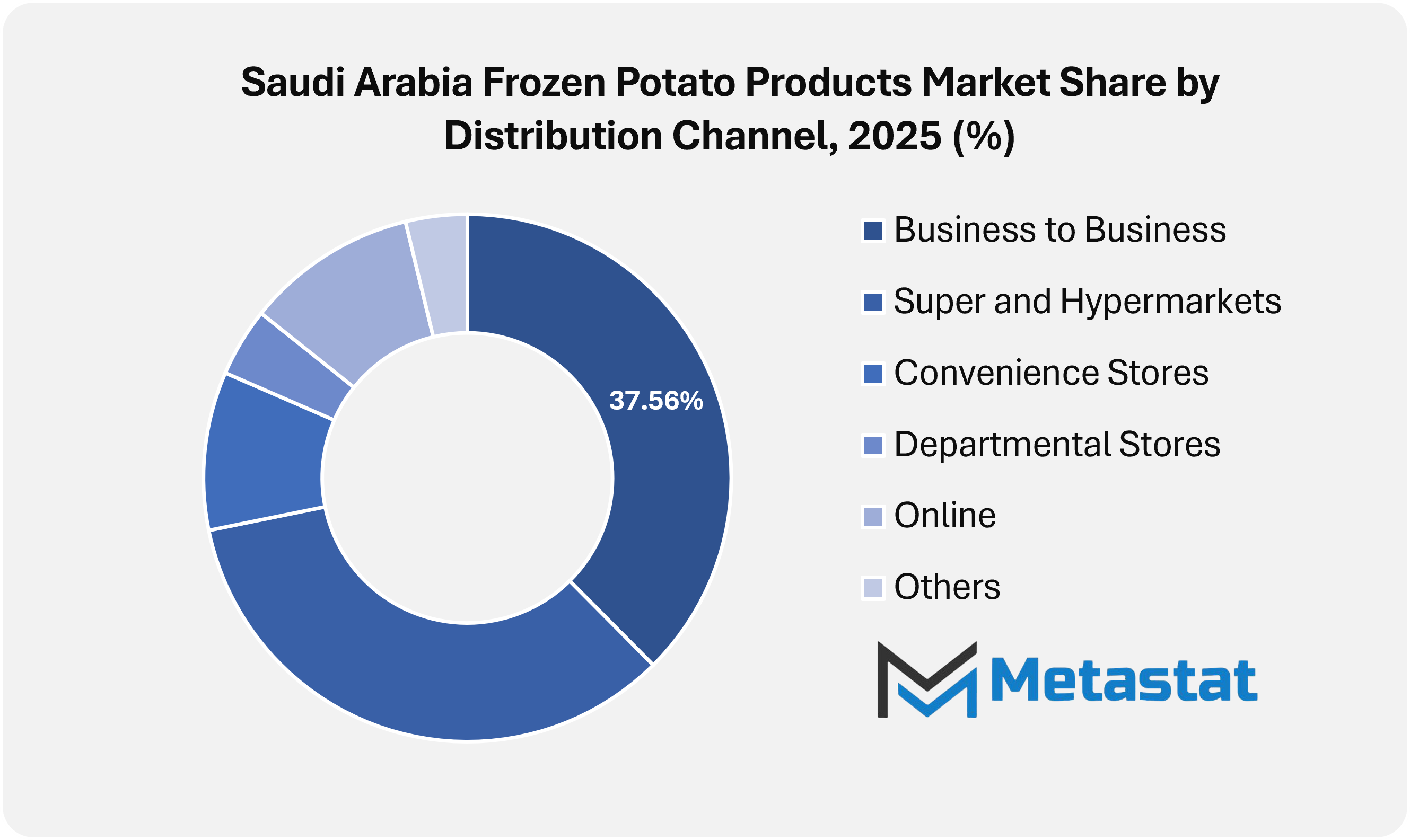
Food Services segment is projected to reach USD 354.9 Million by 2033 with a share of 36.5% in 2025.
Food services remain a central consumption driver through consistent menu usage and volume forecasting. Standardized frozen potato inputs support operational efficiency. The growth will be related to dining outlet density, event catering activity and structured procurement systems in hospitality operators.
Retail segment is projected to reach USD 331.3 Million by 2033 with a share of 32.7% in 2025.
Retail end use reflects home stocking behaviour and freezer capacity growth. Demand patterns favour versatility and ease of cooking. Future expansions will include equipment accessibility, promotional pricing strategies, and increased acceptance of frozen meals within the daily meal plan.
Quick Service Restaurants segment is projected to reach USD 189.7 Million by 2033 with a share of 18.5% in 2025.
Quick service restaurants drive high-frequency demand through fixed food product. Product consistency and reliability of supply remain important. The expansion of franchise network and roadside outlets will directly impact volume growth in core potato categories.
Households segment is projected to reach USD 117.7 Million by 2033 with a share of 12.3% in 2025.
Households represent an ever-growing consumption base supported by changing lifestyles and preferences for time-efficient cooking. Purchase frequency will increase with better product familiarity and perceived value. Long-term growth will be in line with urbanization trends and organized retail access.
The Saudi Arabian frozen potato products market is steadily expanding because of the changing food habits and the rising urban lifestyle. Frozen potato products will remain in demand because of their quick preparation time, uniform taste, and longer shelf life. The food service sector is increasingly using frozen fries, wedges, and specialty potato products to handle volume while preserving quality. The market will also receive a boost because of the rising retail penetration, especially in supermarkets and online grocery shopping sites.
Consumer behavior in Saudi Arabia is trending towards convenience-driven food options that appeal to busy lifestyles. Frozen potato food products address such requirements while retaining their flavor and texture, thus ensuring customer retention. The rise of international food chains in major cities will further drive demand, as their menus are heavily dependent on quality frozen ingredients. Enhancements in cold chain logistics for storage and distribution will further boost product reach.
Major industry players play a central role in shaping the market structure and competitive balance. Lamb Weston, Inc., McCain Foods Ltd., Farm Frites International BV, Avico BV, Del Monte International GmbH, EcoFrost NV, AJC International, Inc. and JBS S.A. Such global leaders contribute advanced processing capabilities and broad product portfolios across foodservice and retail channels. Regional and local players including Al Kabeer Group ME, Almunajem Foods Company (Dari), Sunbulah Group, Americana Foods, Saudia Dairy and Foodstuff Company (SADAFCO), Wafra for Industry and Development Company and MBRF strengthen domestic supply and cultural alignment within the product offering.
Competition in the Saudi frozen potato products market will remain active, with companies focusing on pricing stability, product variety and distribution reach. Innovation around seasoning profiles, portion formats and healthy preparation methods will influence purchasing decisions. Strategic partnerships with food service operators and retailers will aid in brand visibility and volume growth. Continued investment in local production facilities will help players improve supply security and respond faster to changing consumer needs across the country.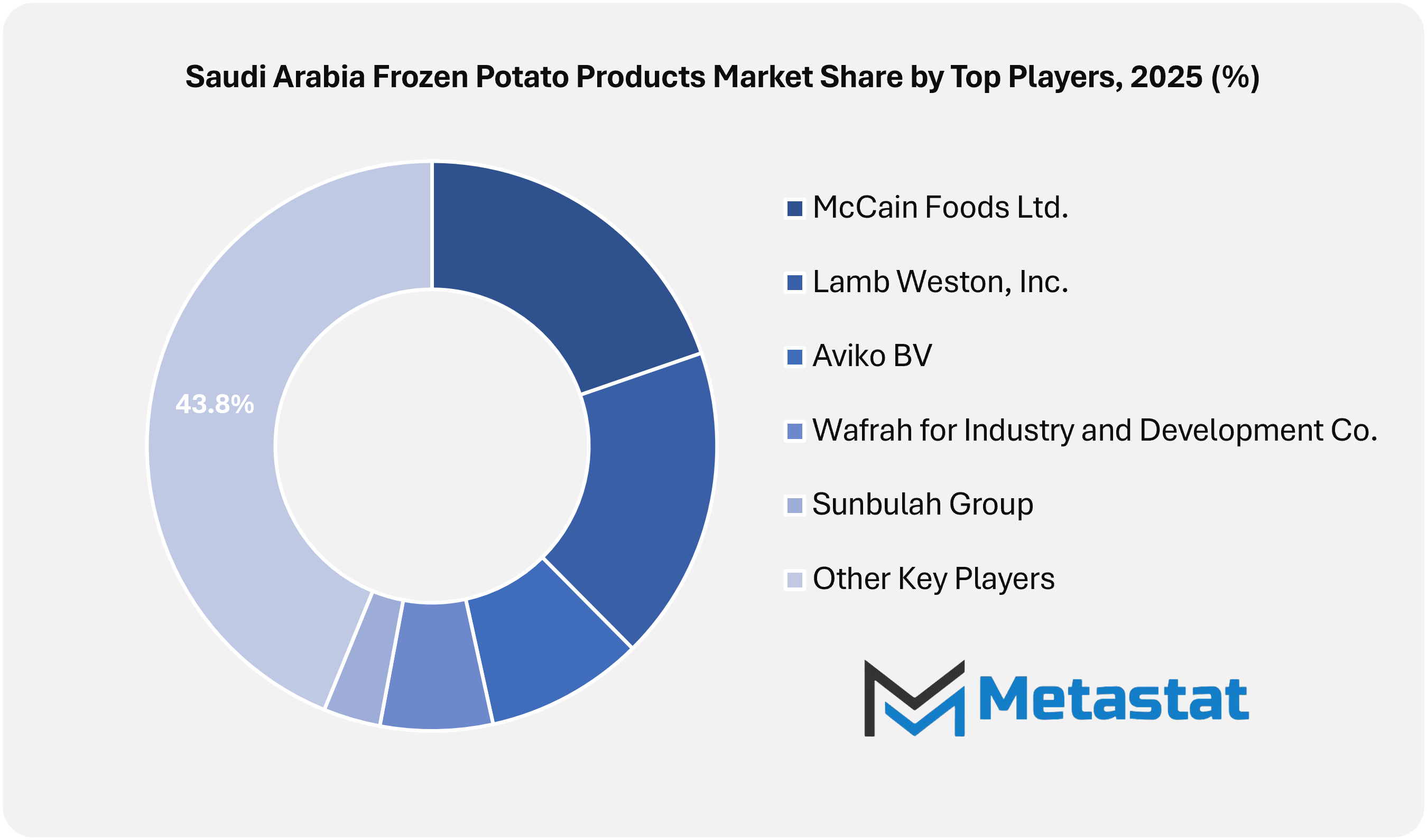
Market size is forecast to rise from USD 531.3 million in 2025 to over USD 993.6 million by 2033.
Investments in human capital will strengthen technical expertise within production teams, promoting continued refinement of operational workflows. Strategic planning will include predictive analytics to align inventory with changing demand patterns. The deployment of capital towards sustainable energy solutions within manufacturing sites will address environmental considerations associated with electricity consumption. The Saudi Arabia Frozen Potato Products market will position itself to meet rising consumer expectations and industrial requirements through disciplined execution and visionary decision making.
This research report categorizes the Frozen Potato Products market based on key segments and regions, forecasts revenue growth, and analyses trends in each submarket. The report analyzes the key growth drivers, opportunities, and challenges influencing the Frozen Potato Products market. Recent market developments and competitive strategies such as expansion, product launch, development, partnership, merger, and acquisition are included to support the competitive landscape assessment.
The report strategically identifies and profiles the key market players and analyses their core competencies in each sub-segment of the Frozen Potato Products market.
|
Report Attributes |
Details |
|
Study Period |
2021-2033 |
|
Base Year |
2025 |
|
Estimated Year |
2026 |
|
Forecast Period |
2026-2033 |
|
Historical Period |
2021-2025 |
|
Growth Rate |
CAGR 8.2% from 2026 to 2033 |
|
Revenue Unit |
USD million |
|
Sales Volume Unit |
Kilotons |
|
Segmentation |
By Product Type, Distribution Channel, and End Use |
|
By Product Type |
|
|
By Distribution Channel |
|
|
By End Use |
|
Find answers to common questions about this report
The Metastat Insight study indicates that the Saudi Arabia Frozen Potato Products market size was USD 531.3 million in 2025.
The Saudi Arabia Frozen Potato Products market is likely to grow at a CAGR of 8.2% over the forecast period (2026-2033).
The French Fries is the leading type segment in the Saudi Arabia market.
Rapid expansion of quick-service restaurants and international foodservice chains driving bulk demand for frozen potato offerings and growing urban population with rising preferences for convenient, time-saving food options supporting retail consumption are key driving factors, boosting the market.
Dependence on imported raw potatoes exposing suppliers to price volatility and supply chain disruptions will hamper the market growth within the forecast period.
Saudi Arabia Frozen Potato Products market is estimated to reach USD 993.6 million by 2033.
Top players operating in the Frozen Potato Products industry include Lamb Weston, Inc., McCain Foods Ltd., Farm Frites International BV, Aviko BV, Al Kabeer Group ME, and Almunajem Foods Company (Dari).
The analysts below cover Food and Beverages research at Metastat Insights.
LEAD ANALYST
Utkarsh Khirodkar is a Lead Market Research Analyst at MetaStat Insight, specializing in market intelligence, technology sector assessments, and competitive strategy.

LEAD PRINCIPAL ANALYST, PHARMA AND HEALTHCARE
Food and Beverages · Healthcare · Healthcare IT · Medical Devices
Ajay Devgire is the Lead Healthcare Analyst at MetaStat Insight, leading strategic research and market intelligence initiatives across the global healthcare domain.

SENIOR RESEARCH ANALYST
Biotechnology · Food and Beverages · Medical Devices · Packaging
Snehal Pasalkar is a Research Analyst at MetaStat Insight, operating at the intersection of life sciences research, competitive strategy, and market intelligence.
Most industry reports on warehouse automation bundle autonomous mobile robots and fixed conveyor installations into the same top-level numbers, which complicates advisory work. This study split the market cleanly by payload tiers, navigation technology, and fleet management software layers. The regional forecast for Western Europe gave our team defensible adoption benchmarks when evaluating capital allocation for logistics clients, saving us days of secondary data scrubbing.
Analyzing the transition from natural gas to green hydrogen in iron ore reduction requires realistic infrastructure timelines. Meta stat insight supplied a detailed regional assessment of DRI plant conversion costs and scrap metal availability in North America and Western Europe. Their report carefully examined pellet quality specs and electrical grid access constraints without making oversimplified market assumptions. The research material served as a practical reference during internal technology roadmap discussions.
Integrating zero-trust access controls across legacy electronic health record systems involves complex compliance overhead. Team produced an analysis that clearly separated identity governance and administration tools from privileged access management platforms. Their evaluation of HIPAA and GDPR compliance features across cloud native solutions gave our architecture group clear baseline criteria. The custom data request regarding biometric authentication adoption in hospital networks was returned promptly with clear documentation.
Explore related market intelligence reports worth reading alongside this one.