
LEAD ANALYST
Utkarsh Khirodkar is a Lead Market Research Analyst at MetaStat Insight, specializing in market intelligence, technology sector assessments, and competitive strategy.

Switzerland Bridge Construction, Rehabilitation and Structural Health Monitoring Market Size, Share, By Service Type (New Bridge Construction, Bridge Replacement and Reconstruction, Bridge Repair and Rehabilitation, Structural Strengthening and Load-Capacity Upgrades, Bridge Inspection and Condition Assessment, Structural Health Monitoring, Routine and Preventive Maintenance), By Bridge Type (Road and Highway Bridges, Railway Bridges, Pedestrian and Cycle Bridges, Tram and Urban Transit Bridges, Multimodal Transport Bridges), By Structural Material (Reinforced Concrete, Prestressed Concrete, Steel, Steel-Concrete Composite, Timber, Masonry and Stone, Fiber-Reinforced Polymer Composite), By End User (Federal Road Authorities, Cantonal and Municipal Authorities, Railway Infrastructure Operators, Urban Public Transport Operators, Private Transport Infrastructure Owners), Industry Analysis, Growth, Trends, and Forecast, 2026-2033
Report ID
MSI-5316
Published
September, 2026
Pages
271 Pages
Format
Historical
Base year
Forecast
Forecast period
Report Details
Market Valuation: Valued at $819.9 Million in 2025, projected to reach $1,139.9 Million by 2033 at a 4.2% CAGR.
Dominant Segment: The Bridge Repair and Rehabilitation segment currently leads the market, driven by the urgent need to address aging infrastructure and ensure safety compliance. This segment holds a 25% market share, highlighting its significance in ongoing rehabilitation investments.
Geographic Lead: Switzerland is experiencing robust growth in bridge construction and rehabilitation, primarily due to federal and cantonal authorities prioritizing infrastructure modernization. This focus on safety and functionality is expected to drive market expansion.
What's Inside: The report provides a comprehensive analysis of market dynamics, including service type, bridge type, and structural material segments. It also includes competitive coverage and forecasts through 2033, offering insights into investment trends and technological advancements.
Emerging Demands: Sustainable infrastructure is becoming increasingly important, with a shift towards eco-friendly practices and materials. This trend is fostering innovation in construction and rehabilitation processes, aligning with global environmental standards.
Choose Your License
Switzerland Bridge Construction, Rehabilitation & Structural Health Monitoring Market
The Switzerland Bridge Construction, Rehabilitation & Structural Health Monitoring market was valued at USD 819.9 million in 2025 and is projected to reach USD 1,139.9 million by 2033, growing at a CAGR of 4.2% over the forecast period.
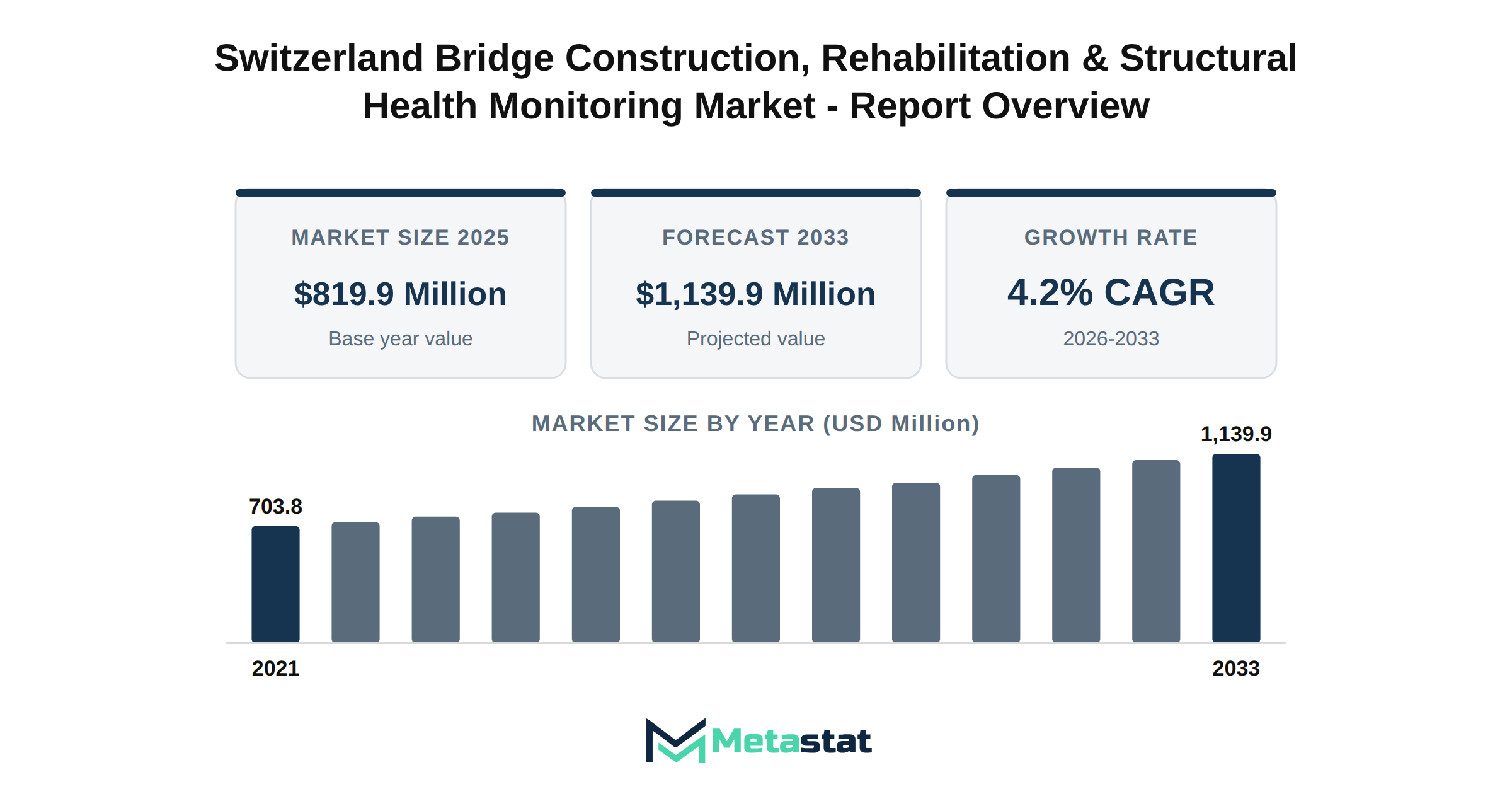
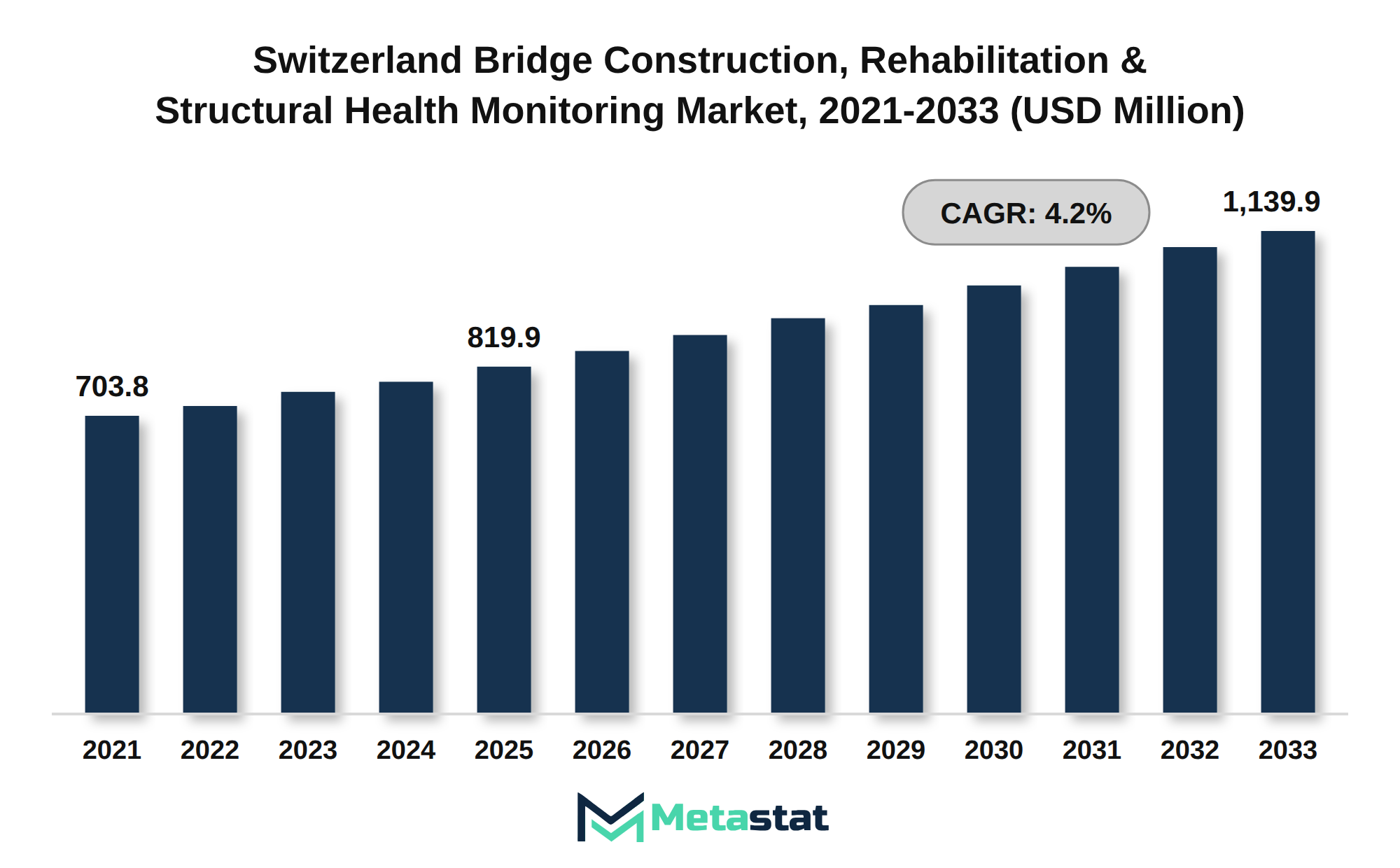
The Switzerland Bridge Construction, Rehabilitation & Structural Health Monitoring market reached a valuation of USD 819.9 million in 2025. The market is projected to expand to USD 1,139.9 million by 2033, reflecting a compound annual growth rate (CAGR) of 4.2%. Historical trends indicate growth from USD 703.8 million in 2021, increasing to USD 784.1 million in 2024, and further to USD 819.9 million in 2025.
Aging bridge infrastructure significantly drives rehabilitation investments across Switzerland. Many bridges have surpassed their intended lifespan, necessitating upgrades and repairs to ensure safety and functionality. This trend creates demand for bridge repair and rehabilitation services, which currently holds a 25% share of the market. The ongoing need for replacement and reconstruction projects further influences the market, with this segment accounting for 14.7% of the total market share.
The pipeline for bridge replacement and reconstruction projects in Switzerland reflects a commitment to enhancing infrastructure. Federal and cantonal authorities prioritize investment in modernizing existing structures to meet safety standards and address traffic demands. This focus on structural integrity aligns with anticipated growth in the market, particularly in the bridge repair and rehabilitation segment.
Adoption of structural health monitoring technologies across Swiss bridges contributes to maintaining infrastructure reliability. Implementation of smart sensors and digital monitoring systems enables real-time assessment of bridge conditions. This proactive approach supports predictive maintenance strategies, enhancing the overall management of bridge assets.
Technological advancements in bridge inspection and condition assessment are essential for maintaining infrastructure safety. Innovative technologies facilitate efficient evaluation processes, resulting in better-informed maintenance decisions. Corrosion monitoring, especially in reinforced concrete bridges, has seen increased demand, driven by the need for long-term durability and performance.
Load capacity upgrades and structural strengthening form a critical aspect of maintaining operational bridges in Switzerland. Growing traffic volumes require that infrastructure adapts to increased demands, leading to investments in strengthening initiatives. Federal and cantonal authorities focus on ensuring bridges accommodate modern loads while adhering to safety regulations.
Investment trends among federal and cantonal authorities emphasize the importance of bridge infrastructure. Funding allocations reflect a strategic approach to enhancing public transport networks and ensuring safety standards. This emphasis on infrastructure investment aligns with the overall growth trajectory of the Switzerland Bridge Construction, Rehabilitation & Structural Health Monitoring market.
The Switzerland Bridge Construction, Rehabilitation & Structural Health Monitoring market faces significant demand trends influenced by aging infrastructure. Investment in rehabilitation projects is essential to address the challenges posed by deteriorating bridge conditions across the country. Federal and cantonal authorities prioritize maintenance and upgrades, leading to increased funding and support for rehabilitation initiatives. This trend highlights the urgent need for substantial investment in existing bridge infrastructure.
Replacement and reconstruction projects form a critical component of the market, with numerous initiatives underway to modernize aging bridges. The pipeline for these projects reflects a strong commitment to enhancing safety and operational efficiency. Structural health monitoring technologies gain traction, providing real-time data and insights into bridge conditions, which supports proactive maintenance strategies.
Smart sensors and digital monitoring technologies play an integral role in advancing the capabilities of bridge infrastructure. These innovations facilitate continuous assessment, enabling stakeholders to identify potential issues before they escalate into costly repairs. Predictive maintenance emerges because a leading approach, emphasizing condition-based asset management to optimize the lifespan of bridges.
Bridge inspection and condition assessment technologies evolve rapidly, driven by advancements in remote sensing and data analytics. Corrosion monitoring solutions, particularly for reinforced concrete bridges, gain importance, ensuring that structural integrity is maintained despite environmental challenges. Load capacity upgrades and structural strengthening efforts are prioritized to extend the usability of existing bridges, reflecting a strategic approach to infrastructure management.
Investment trends from federal and cantonal authorities focus on modernizing railway bridges, addressing the need for enhanced operational capabilities and safety. Road and highway bridge renewal strategies emphasize the importance of maintaining crucial transport links. Urban transit and tram bridge infrastructure development aligns with broader efforts to enhance public transport systems and reduce congestion.
Sustainable materials and low-carbon construction practices gain momentum in the market, reflecting a commitment to environmental responsibility. The adoption of fiber-reinforced polymers in bridge strengthening applications demonstrates a shift towards innovative solutions that enhance durability and performance. Ultra-high-performance concrete gains traction in rehabilitation projects, offering superior strength and longevity.
Digital twins and data analytics contribute significantly to bridge lifecycle management, ensuring optimal performance and maintenance throughout the asset’s lifespan. Automated and remote bridge monitoring systems streamline inspection processes, reducing labor costs and improving efficiency. Procurement and tendering trends in bridge maintenance reflect a competitive landscape, with various contractors vying for projects across the region.
Bridge construction costs and rehabilitation pricing trends reflect ongoing market dynamics, influenced by material availability and labor costs. Engineering standards and regulatory requirements shape the practices of bridge contractors, ensuring compliance with safety and performance criteria. Climate resilience strategies focus on protecting infrastructure against extreme weather events, reinforcing the need for robust design and construction practices.
Lifecycle cost optimization remains a key consideration in bridge rehabilitation and monitoring, enabling stakeholders to maximize value over the asset's lifespan. The competitive landscape within the Switzerland Bridge Construction, Rehabilitation & Structural Health Monitoring market features a diverse range of contractors and monitoring providers, each contributing to the modernization and enhancement of the nation's bridge infrastructure. Future growth opportunities emerge from ongoing infrastructure modernization efforts, highlighting the significance of strategic investments in this essential sector.
Digital transformation emerges because a crucial driver for the Switzerland Bridge Construction, Rehabilitation & Structural Health Monitoring market. The integration of advanced technologies including automation and artificial intelligence facilitates the digitization of legacy processes, leading to improved operational efficiency and decision-making. Increased venture funding in technology adoption supports firms in transitioning to modernized systems, optimizing resource allocation and reducing costs.
Technological advancements enable real-time data collection and analysis, enhancing the accuracy of structural health monitoring and maintenance planning. This shift results in proactive management of infrastructure assets, extending their lifespan while minimizing unexpected failures. The focus on operational productivity aligns with the market's growth trajectory, because stakeholders engage in cost-efficiency initiatives to address escalating demands.
Public-private partnerships increasingly prioritize digital innovation in bridge construction and maintenance, reflecting a broader commitment to sustainability and resource stewardship. Significant investments in digital platforms strengthen the competitive position of companies within the market, ultimately driving demand for smarter, more efficient infrastructure solutions.
The Switzerland Bridge Construction, Rehabilitation & Structural Health Monitoring market faces significant constraints due to high capital investment requirements. Substantial financial resources are necessary for construction and rehabilitation projects, leading to delays in project initiation and execution. Municipal authorities and private investors encounter challenges in securing adequate funding, especially during economic uncertainty, which hampers project timelines and overall market growth.
Escalating operating costs further complicate the landscape. Increased prices for materials, labor, and compliance measures exert pressure on budgets, compelling stakeholders to reassess project viability. This situation affects procurement decisions, often resulting in project cancellations or postponements, which diminish market activity.
Geopolitical instability contributes to market hesitance, influencing investor confidence and creating an unpredictable environment for capital allocation. Concerns over resource scarcity and inflationary pressures exacerbate financial constraints, compelling firms to adopt more cautious approaches regarding investment, thereby impacting overall market dynamics.
The intersection of these factors creates a challenging environment for the Switzerland Bridge Construction, Rehabilitation & Structural Health Monitoring market, limiting growth opportunities and requiring strategic adjustments from stakeholders to navigate the prevailing economic landscape.
Geopolitical fragmentation impacts the Switzerland Bridge Construction, Rehabilitation & Structural Health Monitoring market by creating uncertainties in trade agreements and regulatory frameworks. Nations prioritizing domestic production result in increased tariffs and trade barriers, raising costs for imported materials and equipment. This environment complicates supply chain management and hinders the timely execution of projects, ultimately affecting project timelines and budgets.
Technological disruptions present significant challenges, particularly in integrating new innovations with existing infrastructure. Firms encounter interoperability friction when adopting advanced monitoring technologies and systems, leading to inefficiencies and increased costs. The market's reliance on advanced materials and techniques necessitates continuous research and development, straining resources and limiting the ability to meet project deadlines.
Rising input costs, driven by inflation and supply chain instability, add pressure to profit margins. Companies absorb these costs or pass them on to clients, risking a loss of competitive edge in a saturated market. Workforce skill gaps hinder the adoption of automation and advanced technologies, leading to delays in project delivery and increased operational costs.
Environmental considerations, including decarbonization mandates and sustainability demands, create further complexity. Companies adapt to tighter regulatory standards while addressing public expectations for greener construction practices. This shift requires substantial investments in new technologies and processes, straining financial resources within the market.
Overall, these challenges create a complex operating environment for stakeholders in the Switzerland Bridge Construction, Rehabilitation & Structural Health Monitoring market, necessitating strategic adaptation to navigate the evolving landscape successfully.
The Switzerland Bridge Construction, Rehabilitation & Structural Health Monitoring market experiences significant opportunities driven by emerging demands for sustainable infrastructure. Evolving consumer preferences emphasize eco-friendly practices and materials, promoting the adoption of green technologies throughout the construction lifecycle. Regulatory shifts towards sustainability incentivize investments in low-impact building methods and materials, aligning with global environmental standards.
Infrastructure modernization initiatives prioritize the integration of innovative solutions, enhancing both functionality and sustainability. Increased investments in structural health monitoring technologies enable real-time assessment of bridge conditions, maximizing asset longevity and minimizing maintenance costs. This shift towards proactive management of infrastructure supports long-term planning and investment strategies.
Geographical expansion into urban centers and underserved areas contributes to market growth. While populations increase, the demand for reliable transportation networks raises the need for new bridges and the rehabilitation of existing structures. Investments in regional infrastructure development create pathways for companies to diversify their offerings and strengthen their market presence.
Technological disruptions drive digital transformation, facilitating efficient project management and construction processes. The adoption of advanced materials, automation, and data analytics promotes operational efficiencies and enhances service delivery. Strategic consolidation within the market enables players to leverage synergies, creating competitive advantages while addressing evolving buyer behaviors through tailored solutions.
Niche application growth in specialized sectors including pedestrian bridges and urban transit has the potential to create new revenue streams. Employers prioritize safety and accessibility, prompting investment in infrastructure that meets the needs of diverse communities. This trend creates demand for innovative designs and functionality within the Switzerland Bridge Construction, Rehabilitation & Structural Health Monitoring market.
Overall, the convergence of sustainability imperatives, technological advancements, and evolving consumer expectations positions the market for strong growth, highlighting the importance of strategic foresight and adaptability among industry stakeholders.
The Switzerland Bridge Construction, Rehabilitation & Structural Health Monitoring market is segmented based on Service Type, Bridge Type, Structural Material, and End User.
Valued at USD 177.6 million in 2026, the New Bridge Construction segment is projected to reach USD 203.6 million by 2033, achieving a CAGR of 2% during the forecast period. Ongoing demand for new infrastructure, driven by urbanization and increased transportation needs, creates a robust environment for growth within this segment. Municipal and federal investments focus on enhancing connectivity through new bridge projects, directly influencing demand dynamics. This segment benefits from advancements in construction technologies, including modular construction and improved materials, which enhance project efficiency and reduce timelines.
Regulatory compliance regarding safety and environmental impact shapes the operational landscape for new bridge construction. Stringent regulations require adherence to modern standards, necessitating investments in quality materials and construction practices. These factors contribute to overall project costs and influence pricing strategies across the market. The anticipated increase in capital investments from both public and private sectors reinforces the strategic importance of this segment, ensuring sustained growth opportunities. The New Bridge Construction segment remains a critical component of the Switzerland Bridge Construction, Rehabilitation & Structural Health Monitoring market, positioning itself favorably within the broader infrastructure development landscape.
Investments in infrastructure improvement alongside the increasing need for reliable transport networks contribute significantly to the growth of the bridge replacement and reconstruction segment. This sector addresses aging infrastructure, promoting safety and efficiency in transportation systems. Federal road authorities and municipal governments actively pursue funding and strategic partnerships to support reconstruction projects.
The bridge replacement and reconstruction segment is estimated to reach USD 173.4 million by 2033, at a CAGR of 4.6% during the forecast period. Regulatory compliance standards compel authorities to enhance structural integrity and ensure public safety. Such demands drive the adoption of advanced materials and construction techniques, influencing innovation within the Switzerland Bridge Construction, Rehabilitation & Structural Health Monitoring market.
Cost structures for bridge replacement and reconstruction involve several factors, including labor, materials, and project management expenses. Price volatility in raw materials impacts project budgets, urging stakeholders to seek cost-effective solutions. Strategic opportunities arise from advancements in technology, including the use of prefabricated components, which enhance efficiency and reduce timelines for construction.
Investment in the Bridge Repair & Rehabilitation segment reflects a growing commitment to maintaining and enhancing existing infrastructure. Increasing traffic demands and aging bridge assets drive the necessity for consistent maintenance and upgrades, ensuring safety and compliance with regulatory standards. Innovations in materials and techniques, including advanced monitoring systems, contribute to efficient repair processes, enhancing longevity and reducing overall lifecycle costs.
Bridge Repair & Rehabilitation segment is expected to reach USD 293.4 million by 2033. Structural health monitoring technologies gain traction, enabling proactive assessments and timely interventions. This shift in focus from reactive to preventive measures positions the market favorably for sustained growth, with players leveraging these advancements to improve service delivery and operational efficiency.
Regulatory compliance standards create opportunities for enhanced funding and investment in infrastructure projects. Increased government spending on public transport and roadways augments demand within the segment, driven by authorities prioritizing safety and resilience. Consequently, industry participants position themselves strategically to capitalize on these trends, further strengthening their presence in the Switzerland Bridge Construction, Rehabilitation & Structural Health Monitoring market.
Investment in structural strengthening and load-capacity upgrades reflects a growing awareness of infrastructure longevity and safety. This segment is projected to grow at a CAGR of 5% during the forecast period. Enhanced regulations surrounding safety and maintenance standards drive demand from federal road authorities and municipal entities, which prioritize updated infrastructure to meet increasing traffic demands and ensure public safety. The necessity of reinforcing aging structures has led to heightened adoption of innovative materials and methodologies, promoting a shift toward advanced strengthening techniques. Ongoing technological maturation supports the development of next-generation products that improve the efficacy of load-capacity upgrades, enhancing overall structural sustainability.
With the rise in urbanization and transportation needs, end-use dynamics increasingly dictate the focus on structural health monitoring and maintenance strategies. Authorities face pressures to allocate budget resources efficiently, driving interest in cost-effective upgrade solutions that extend the operational lifespan of existing infrastructures. The Switzerland Bridge Construction, Rehabilitation & Structural Health Monitoring market is witnessing significant capital investment in this segment, driven by stakeholders looking to leverage technological advancements and optimize resource utilization.
Bridges require regular inspection and condition assessment to ensure structural integrity and safety. This segment focuses on the systematic evaluation of bridge conditions, employing advanced technologies to detect potential issues before they escalate. The increasing demand for infrastructure safety and longevity drives the adoption of enhanced inspection protocols and monitoring techniques. Regulatory compliance standards emphasize the necessity for rigorous evaluation processes, promoting the use of up-to-date methodologies in inspections.
Technological maturation supports the evolution of inspection tools, with innovations including drone technology, automated sensors, and data analytics becoming integral to assessments. These advancements facilitate more accurate and timely evaluations, minimizing manual labor and improving overall efficiency. The incorporation of these technologies aligns with broader trends in the Switzerland Bridge Construction, Rehabilitation & Structural Health Monitoring market, where a strong push towards modernization and improved operational strategies occurs.
Competition among key players influences the development of state-of-the-art inspection solutions. Companies actively seek to differentiate their offerings through next-generation upgrades and improved service delivery. The market's expansion indicates a strategic opportunity window for firms specializing in inspection services, highlighting the importance of continuous capital investment in research and development to meet evolving customer demands.
In the Switzerland Bridge Construction, Rehabilitation & Structural Health Monitoring market, the demand for Structural Health Monitoring services is driven by rising awareness of infrastructure integrity and safety standards. Continuous monitoring of bridge conditions ensures proactive maintenance and timely interventions, which significantly enhance the longevity and safety of structures. Increasing investments in infrastructure projects across Switzerland further increase this demand, driven by stakeholders prioritizing advanced monitoring solutions to mitigate risks associated with aging bridges and related infrastructure.
Technological maturation influences the adoption of Structural Health Monitoring systems. Innovations in sensor technologies, data analytics, and real-time monitoring solutions offer improved accuracy and reliability in assessing bridge conditions. This evolution in technology attracts various end users, including federal road authorities and urban public transport operators, who seek to implement efficient maintenance strategies and comply with stringent regulatory frameworks.
Regulatory compliance standards surrounding safety and performance expectations for infrastructure have strengthened the adoption of Structural Health Monitoring. Authorities increasingly mandate the implementation of robust monitoring systems to ensure public safety and facilitate regulatory compliance. This shift highlights the importance of adopting advanced monitoring techniques to meet or exceed these standards, encouraging a competitive environment for service providers in the market.
Cost structures associated with implementing Structural Health Monitoring systems often reflect the initial investments required for advanced technologies and installation. However, the long-term benefits of reduced maintenance costs and extended service life of infrastructure significantly outweigh these upfront expenses. Such financial considerations encourage end users to adopt innovative solutions that enhance operational efficiency and minimize disruptions.
The market for Structural Health Monitoring within the broader Switzerland Bridge Construction, Rehabilitation & Structural Health Monitoring landscape is poised for growth. The combination of technological advancements, stringent regulatory requirements, and increasing infrastructure investments creates a favorable environment for the expansion of monitoring services.
Routine and preventive maintenance emerge because crucial components within the Switzerland Bridge Construction, Rehabilitation & Structural Health Monitoring market, ensuring longevity and safety. Factors driving demand for routine maintenance include the increasing need for asset reliability and compliance with stringent regulatory standards. Adoption of advanced monitoring technologies for condition assessment further enhances maintenance efficiency, prompting increased investments in this area.
Technological advancements support segment expansion, enabling more accurate assessments and timely interventions. Upgrades to monitoring systems enhance capabilities, leading to improved asset management. Regulatory compliance standards require regular inspections, increasing the importance of routine maintenance for both public and private infrastructure.
Cost structures associated with routine maintenance involve a balance between preventive measures and emergency repairs. Pricing volatility impacts budget allocations, necessitating strategic planning by stakeholders. Continuous investment in maintenance practices promotes resilience in supply chains and ensures effective raw material sourcing, contributing to the overall health of infrastructure.
Shifts in consumption dynamics reflect a growing awareness of the importance of proactive maintenance strategies. Downstream applications benefit from enhanced safety and reduced downtime, driving demand among federal road authorities, cantonal and municipal authorities, and urban public transport operators. The strengthening of routine and preventive maintenance practices represents a strategic opportunity for stakeholders in the market, ultimately supporting the infrastructure's sustainability and performance.
Valued at USD 391.4 million in 2026, the Road & Highway Bridges segment is projected to reach USD 492.6 million by 2033, at a CAGR of 3.3% during the forecast period. Growing urbanization and the demand for improved transportation networks drive investments in road and highway infrastructure, resulting in an increased focus on construction and rehabilitation projects. Federal and cantonal authorities prioritize upgrades for existing structures to enhance safety and efficiency, leading to heightened demand for modernized bridges.
Technological advancements contribute to the evolution of the segment, driven by innovative materials and construction techniques that improve durability and reduce maintenance costs. The adoption of smart technologies facilitates real-time monitoring of structural health, allowing for timely interventions and maintenance, which further supports growth within the Switzerland Bridge Construction, Rehabilitation & Structural Health Monitoring market. Regulatory compliance with environmental standards influences construction practices, requiring increased investment in sustainable materials and processes.
Cost structures exhibit volatility due to fluctuations in raw material prices, impacting project budgets and timelines. Supply chain resilience becomes critical because delays in procurement hinder project completion. The rising importance of sustainability in bridge construction leads to a shift towards eco-friendly materials, presenting strategic opportunities for suppliers focusing on sustainable practices. Overall, the Road & Highway Bridges segment demonstrates robust potential for growth, driven by infrastructural demands and technological advancements.
Investment in railway infrastructure continues to drive demand within the Switzerland Bridge Construction, Rehabilitation & Structural Health Monitoring market. The segment is estimated to reach USD 344 million by 2033, at a CAGR of 4.8% during the forecast period. A significant factor behind this growth involves the increasing need for efficient and reliable transportation systems to accommodate rising passenger and freight traffic. Enhanced connectivity through railway bridges enables municipalities and authorities to meet economic demands and streamline logistics.
Technological advancements support segment expansion, with next-generation upgrades focusing on smart infrastructure solutions. Monitoring systems that use sensors improve the assessment and maintenance of railway bridges, promoting safety and longevity. Increased emphasis on environmental sustainability encourages the adoption of modern materials and construction techniques, reinforcing structural integrity while minimizing ecological impacts.
Regulatory compliance remains essential for railway bridge projects, ensuring adherence to safety and operational standards. Upcoming certifications shape investment decisions and influence project timelines. While competition intensifies, cost structures and pricing volatility associated with raw materials create margin pressures for key participants. Established companies in the market leverage supply chain resilience and optimize resource sourcing to maintain profitability.
Capital investment outlook suggests continued growth in the railway bridges segment, driven by strategic opportunity windows and evolving end-user dynamics. Federal road authorities and railway infrastructure operators prioritize projects that enhance operational efficiency and accommodate future traffic demands. Consequently, the Switzerland Bridge Construction, Rehabilitation & Structural Health Monitoring market positions itself for expansion in the coming years.
Investment in pedestrian and cycle bridges reflects a rising emphasis on sustainable transportation solutions within urban environments. Infrastructure development prioritizes accessibility and safety for non-motorized users, aligning with broader trends toward reducing carbon footprints. Increasing government support for eco-friendly transit options enhances demand for dedicated pedestrian and cycle pathways, contributing to significant project undertakings across Switzerland.
Advancements in design and construction technologies facilitate the development of pedestrian and cycle bridges, allowing for innovative solutions that meet both functional and aesthetic requirements. Enhanced materials and construction methods contribute to cost efficiencies and sustainability, further supporting investment in this segment. The anticipated market value of USD 119.3 million by 2033 highlights the potential for substantial growth within the Switzerland Bridge Construction, Rehabilitation & Structural Health Monitoring market.
Regulatory frameworks increasingly emphasize the importance of integrating pedestrian and cycle infrastructure into urban planning. Compliance with these standards drives investment from various authorities, including federal and cantonal entities. The growing recognition of the social and economic benefits associated with improved non-motorized transit options significantly influences market dynamics.
Investment in tram and urban transit bridges reflects a growing emphasis on sustainable public transportation solutions within Switzerland. This segment is projected to grow at a CAGR of 5% during the forecast period, indicating robust demand for efficient urban mobility infrastructure. Increased urbanization and population growth within cities drive the need for enhanced public transit options, influencing the adoption of new tram and urban transit bridges.
Technological maturation, including advancements in materials and construction techniques, supports the development of more resilient and efficient bridge designs. Adoption of smart monitoring systems within tram and urban transit bridges enhances structural health monitoring capabilities, contributing to improved safety and longevity. Regulatory compliance standards, including safety and environmental regulations, push for investments in modernized infrastructure, aligning with sustainability goals set by local governments.
Cost structures within the tram and urban transit bridge segment reflect the need for innovative financing solutions to support large-scale projects. Pricing volatility in raw materials, particularly steel and concrete, introduces challenges that influence project budgets and timelines. Strategic opportunity windows arise from public-private partnerships, allowing for shared risk and investment in essential urban infrastructure.
Overall, the Switzerland Bridge Construction, Rehabilitation & Structural Health Monitoring market positions tram and urban transit bridges because a critical component in addressing urban mobility challenges while ensuring compliance with stringent regulations. This segment's growth indicates a significant shift toward prioritizing public transportation infrastructure investments that enhance the quality of urban life.
Investment in multimodal transport bridges reflects a strategic response to evolving urban mobility needs and infrastructure modernization efforts. The integration of various transport modalities facilitates transit solutions, driving demand among urban planners and transportation authorities. Enhanced connectivity between road, rail, and pedestrian systems promotes efficiency and supports sustainable urban environments.
Technological advancements in construction materials and methods contribute to the expansion of this segment within the Switzerland Bridge Construction, Rehabilitation & Structural Health Monitoring market. Innovations including lightweight, high-strength materials enhance structural performance while reducing environmental impact. This evolution encourages investment from public and private sectors, prioritizing infrastructure that accommodates future transport demands.
Regulatory compliance and environmental standards play significant roles in shaping investment decisions. Stringent guidelines governing construction methodologies and sustainability metrics compel stakeholders to adopt next-generation upgrades in bridge design and construction. Adherence to these standards ensures compliance and enhances competitiveness in the market.
Collaboration among various stakeholders, including government agencies and private contractors, enhances project feasibility and accelerates implementation timelines. This collaboration ensures a comprehensive approach to multimodal transport bridges, optimizing resource allocation and minimizing disruptions during construction. The resultant increase in project efficiency supports overall market growth.
Demand for multimodal transport solutions illustrates a shift towards integrated urban infrastructure, reinforcing the necessity for strategic investment in this sector. While cities expand and populations grow, the urgency for efficient transport networks indicates robust opportunities within the Switzerland Bridge Construction, Rehabilitation & Structural Health Monitoring market.
Investment in reinforced concrete construction remains strong among key infrastructure projects in Switzerland. This sub-segment, valued at USD 352.7 million in 2026, is projected to reach USD 440.2 million by 2033, at a CAGR of 3.2% during the forecast period. The demand for reinforced concrete stems from its durability and versatility, making it a preferred choice for various structural applications.
In the context of the Switzerland Bridge Construction, Rehabilitation & Structural Health Monitoring market, reinforced concrete benefits from technological maturation and product evolution, resulting in enhanced performance characteristics. These advancements facilitate the adoption of reinforced concrete in new bridge construction and rehabilitation projects, particularly in urban areas where existing infrastructure requires significant upgrades.
Regulatory compliance standards and certifications drive the use of reinforced concrete due to municipalities and federal authorities prioritizing safety and longevity in public works. Heightened scrutiny on infrastructure safety standards leads to increased investment in modernized construction methods, further reinforcing the position of reinforced concrete within the market.
Pricing volatility for raw materials, including cement and steel, influences project costs in the reinforced concrete sub-segment. These fluctuations create margin pressures, compelling stakeholders to adopt innovative construction practices and materials that optimize cost-efficiency while maintaining structural integrity. The market landscape continues to evolve, presenting strategic opportunity windows for investment in advanced reinforced concrete technologies.
Overall, the reinforced concrete segment reflects a critical component of the Switzerland Bridge Construction, Rehabilitation & Structural Health Monitoring market, highlighting the sector's commitment to building resilient infrastructure that meets contemporary needs.
Growing infrastructure investment and the ongoing need for durable materials drive demand for the Prestressed Concrete segment within the Switzerland Bridge Construction, Rehabilitation & Structural Health Monitoring market. This segment is projected to reach USD 309.4 million by 2033, at a CAGR of 4.8% during the forecast period. An increasing number of bridges and other structures utilizing prestressed concrete enhances their durability and load-bearing capacity, contributing to overall market growth.
The shift toward sustainable construction practices favors prestressed concrete due to its ability to reduce material usage while maintaining structural integrity. This trend aligns with regulatory compliance standards that emphasize sustainability and efficiency in construction processes. Consequently, end users including Federal Road Authorities and Cantonal & Municipal Authorities are increasingly adopting prestressed concrete solutions for bridge construction and rehabilitation projects.
Technological maturation enhances the performance characteristics of prestressed concrete, thereby increasing its appeal. Innovations lead to improved formulations and manufacturing techniques that offer better performance and longevity. These advancements result in more competitive pricing structures, allowing wider adoption across various projects in the market.
Consumption shifts toward prestressed concrete reflect its favorable cost structures and the ability to withstand varying environmental conditions. The strategic opportunity lies in capital investment focused on research and development for next-generation prestressed concrete products. This investment supports ongoing improvements in material properties, which further strengthen the segment's position within the broader market.
Growing demand for durable and cost-effective construction materials drives the Steel segment in the Switzerland Bridge Construction, Rehabilitation & Structural Health Monitoring market. Steel provides crucial structural integrity for various bridge types, including road, railway, and pedestrian bridges. Increasing focus on sustainability and environmental considerations spurs the adoption of advanced steel materials, enhancing performance while reducing overall lifecycle costs.
Investment in infrastructure development positions the Steel segment for significant growth. Anticipated technological advancements in steel manufacturing, including innovations in alloy compositions and production processes, support future applications across bridge construction and rehabilitation. The segment is projected to reach USD 143.3 million by 2033, reflecting a strategic opportunity for suppliers and contractors to leverage modern steel solutions.
Ongoing regulatory compliance and standards for bridge safety and durability drive the demand for high-quality steel materials. Increased construction activity, fueled by urbanization and population growth, creates a favorable environment for steel utilization in new projects. Consequently, steel's role in the market is expected to expand significantly, aligning with broader trends in the construction industry.
Investment in Steel-Concrete Composite materials aligns with the growing emphasis on durability and cost-efficiency in infrastructure projects. This composite material effectively combines the strength of steel with the compressive resistance of concrete, offering enhanced performance characteristics that appeal to federal road authorities and municipal entities. The projected CAGR of 6.2% during the forecast period highlights the increasing adoption of this construction method in the Switzerland Bridge Construction, Rehabilitation & Structural Health Monitoring market.
While infrastructure demands evolve, the trend towards hybrid materials like Steel-Concrete Composite aids in meeting regulatory compliance standards while addressing environmental considerations. The ongoing shift in consumption patterns towards sustainable construction practices further increases the relevance of this segment. The Steel-Concrete Composite segment's performance is anticipated to benefit from technological advancements and the continuous development of innovative construction techniques, driving investment opportunities and market growth.
With a projected value increase from USD 352.7 million in 2026 to USD 440.2 million by 2033, the segment reflects a significant commitment to building infrastructure that withstands the test of time. This investment trajectory highlights the importance of Steel-Concrete Composite in the broader context of the market, positioning it because a key element for future developments in bridge construction and rehabilitation efforts.
Shifts towards sustainable construction practices prominently influence the Timber segment within the Switzerland Bridge Construction, Rehabilitation & Structural Health Monitoring market. Increased environmental awareness drives demand for timber, a renewable resource that emphasizes reduced carbon footprints in construction projects. Adoption of timber structures aligns with green building certifications and initiatives aimed at minimizing environmental impacts, enhancing the appeal to government and private sector stakeholders.
Market expansion occurs through advancements in timber engineering and technology, facilitating the integration of timber in larger and more complex bridge designs. Innovations including engineered wood products enhance the structural capabilities of timber, making it a favorable choice in various applications. The evolution of timber products increases versatility, allowing for creative architectural designs that attract a broader range of projects.
End-use dynamics reflect a shift towards using timber in pedestrian and cycle bridges, driven by increasing urbanization and a focus on sustainable urban mobility. Regulatory compliance standards related to sustainability further condition preference for timber in infrastructure projects. Consequently, the Timber segment positions itself strategically within the market, capitalizing on evolving trends in construction materials.
Challenges remain concerning raw material sourcing and supply chain resilience, impacting the segment's growth potential. Sustainability in timber sourcing increasingly influences market dynamics, necessitating adherence to regulations and certifications that promote responsible forestry practices. Monitoring and navigating these factors is essential for stakeholders aiming to optimize costs while maintaining compliance within the market.
Increased interest in sustainable construction practices drives demand for masonry and stone materials within the Switzerland Bridge Construction, Rehabilitation & Structural Health Monitoring market. The natural aesthetic and durability of masonry and stone align with contemporary architectural trends, encouraging their adoption in various projects. This segment benefits from advancements in manufacturing techniques, enhancing material performance while ensuring compliance with stringent regulatory standards in the construction industry.
Consumption patterns indicate a shift toward using masonry and stone, particularly in urban settings where aesthetic appeal and historical preservation play crucial roles. End users appreciate the durability and low maintenance requirements of these materials, contributing to heightened demand. Fluctuations in raw material sourcing and pricing volatility impact overall project budgets, influencing the choice of masonry and stone in bridge construction and rehabilitation projects.
Strategic investments in research and development facilitate technological advancements, promoting the evolution of masonry and stone products tailored for modern engineering challenges. These innovations enhance structural capabilities, ensuring longevity and safety in infrastructure projects. The ongoing commitment to sustainability and environmental compliance continues to shape the Switzerland Bridge Construction, Rehabilitation & Structural Health Monitoring market, driving further exploration of opportunities within this segment.
Demand for Fiber-Reinforced Polymer Composite materials stems from the ongoing push for innovative solutions within the Switzerland Bridge Construction, Rehabilitation & Structural Health Monitoring market. The composite's lightweight properties, coupled with high strength and corrosion resistance, contribute to its adoption in various structural applications.
Technological maturation in composite materials enhances their performance and durability, driving interest from infrastructure developers focused on longevity and sustainability. The integration of advanced manufacturing techniques further promotes efficiency in production, lowering costs while maintaining quality standards.
Downstream applications expand across multiple sectors, including transportation and public infrastructure, where the need for resilient materials is critical. End-use dynamics reflect a growing awareness of the environmental impacts associated with traditional construction materials, positioning Fiber-Reinforced Polymer Composites because a viable alternative for sustainable construction practices.
Regulatory compliance standards increasingly favor the adoption of innovative materials that support structural integrity and safety. This regulatory environment supports demand for Fiber-Reinforced Polymer Composites, positioning them favorably within the market.
Investment in research and development drives the evolution of Fiber-Reinforced Polymer Composite technologies, enabling new applications and enhancing product offerings. With strategic opportunity windows arising from the need for modernization of existing infrastructure, this segment demonstrates significant potential for growth within the market.
Investment from Federal Road Authorities significantly influences the Switzerland Bridge Construction, Rehabilitation & Structural Health Monitoring market. Valued at USD 294.9 million in 2026, this segment is projected to reach USD 373.2 million by 2033, reflecting a CAGR of 3.4% during the forecast period. Infrastructure development initiatives, particularly those aimed at enhancing road safety and longevity, drive the demand for structural health monitoring and rehabilitation services. Increased funding allocations from government bodies support advancements in technology, thereby improving the quality and efficacy of bridge construction practices.
Regulatory compliance standards play a critical role in shaping the activities of Federal Road Authorities. Stricter safety regulations and environmental certifications necessitate the adoption of innovative materials and methods in bridge construction and rehabilitation. Consequently, authorities prioritize investments that ensure both compliance and enhanced performance, which improves the overall quality of infrastructure. Continuous technological maturation further supports the segment's growth by introducing next-generation upgrades that improve maintenance efficiencies and reduce long-term operational costs.
Consumption shifts towards sustainable construction materials persist in defining the market landscape. Federal Road Authorities increasingly seek solutions that align with environmental sustainability goals while maintaining structural integrity. This trend translates into a demand for advanced materials including fiber-reinforced polymer composites and steel-concrete composites, which align with contemporary regulatory frameworks. Technological obsolescence in traditional materials prompts authorities to invest in innovative solutions that offer superior performance and durability.
Strategic opportunity windows arise from expanding infrastructure projects and aging bridge structures requiring rehabilitation. The Federal Road Authorities' proactive approach towards addressing these challenges positions them favorably within the competitive landscape. Capital investment outlook remains robust, driven by a commitment to maintaining and upgrading existing infrastructure, which supports sustained growth for the Switzerland Bridge Construction, Rehabilitation & Structural Health Monitoring market.
Investment from Cantonal and Municipal Authorities focuses on enhancing regional infrastructure, directly influencing the growth of the Switzerland Bridge Construction, Rehabilitation & Structural Health Monitoring market. Infrastructure development in urban areas necessitates ongoing bridge rehabilitation and maintenance, ensuring safety and functionality. With an estimated reach of USD 321 million by 2033, this segment reflects a commitment to sustainable urban development and resilience against environmental challenges.
Catalysts driving demand include increasing urbanization and regulatory frameworks prioritizing transportation efficiency. The segment is projected to see a CAGR of 4.5% during the forecast period, highlighting the significance of infrastructure investment in meeting the evolving needs of urban populations. Enhanced collaboration between authorities and construction firms supports innovation in design and technology, optimizing bridge structures for longevity and performance.
Technological advancements in structural health monitoring play a critical role in extending the lifespan of bridges, allowing for timely assessments and interventions. The emphasis on data-driven decision-making enhances operational efficiency and reduces long-term costs associated with bridge maintenance. Overall, the expansion of the Cantonal and Municipal Authorities segment significantly contributes to the overall growth trajectory of the market.
Investment in railway infrastructure continues to play a crucial role in the overall development of the Switzerland Bridge Construction, Rehabilitation & Structural Health Monitoring market. Demand for enhanced rail connectivity drives the need for significant upgrades and new bridge constructions specifically tailored for railway infrastructure operators. This segment is expected to reach USD 318.6 million by 2033, reflecting the ongoing commitment to improving rail networks across the country.
Technological advancements contribute to the expansion of this segment. Innovations in materials and construction techniques enhance the durability and efficiency of railway bridges. Adoption of smart technologies in structural health monitoring improves maintenance strategies. Operators monitor bridge conditions and address issues proactively. These advancements enhance operational efficiency, safety, and reliability in railway transport.
Regulatory compliance standards increasingly influence spending patterns among railway infrastructure operators. Meeting these standards ensures that bridges remain compliant with safety protocols and operational guidelines. Investment in compliance enhances safety and mitigates potential liabilities, contributing to long-term financial stability within the market.
Shifts in consumption patterns towards sustainable materials significantly affect purchasing decisions. Railway infrastructure operators prioritize environmentally friendly options, leading to increased demand for reinforced concrete and steel materials that align with sustainability goals. This trend influences the growth of the Switzerland Bridge Construction, Rehabilitation & Structural Health Monitoring market. Operators seek to balance performance with environmental impact.
Strategic opportunities arise from ongoing urbanization and population growth, prompting investments in rail infrastructure. The need for efficient transport solutions urges operators to enhance their bridge systems. This growth presents opportunities for suppliers and contractors to innovate and differentiate their offerings in a competitive landscape.
Investment from Urban Public Transport Operators significantly influences the Switzerland Bridge Construction, Rehabilitation & Structural Health Monitoring market. This segment is projected to grow at a CAGR of 4.9% during the forecast period. The increasing need for efficient and reliable public transport infrastructure drives demand for bridge construction and rehabilitation. Urban areas seek enhancements in transit connectivity, which spurs investments in new and existing bridge projects. Technological advancements in structural health monitoring enhance the longevity and safety of urban transportation networks. Regulatory compliance standards regarding safety and environmental impact further shape the investment landscape, leading to a competitive market focused on innovation. These factors contribute to sustained growth in the Urban Public Transport Operators segment within the broader market.
Investment from Private Transport Infrastructure Owners significantly contributes to the Switzerland Bridge Construction, Rehabilitation & Structural Health Monitoring market. This segment experiences heightened demand driven by the increasing need for improved connectivity and efficient transport solutions. The focus shifts toward upgrading existing infrastructure and expanding network capabilities, reflecting a commitment to improving mobility across regions.
Regulatory compliance stands because a prominent factor affecting investment strategies within this segment. Strict environmental standards and safety regulations necessitate the adoption of advanced construction techniques and materials. The ongoing evolution in technological solutions allows for more efficient project execution, directly impacting the cost structures faced by these owners.
Strategic opportunity windows arise from the integration of innovative technologies, including structural health monitoring systems. These technologies provide real-time data on infrastructure performance, enabling proactive maintenance approaches that reduce long-term costs. The emphasis on sustainability in construction continues to shape investment decisions, with Private Transport Infrastructure Owners seeking materials that demonstrate durability and eco-friendliness.
Consumption shifts toward more resilient and high-performance materials, supporting the segment's growth trajectory. Collaboration among stakeholders within the supply chain enhances resilience against potential disruptions, ensuring projects progress smoothly. This collaborative environment creates an ecosystem where innovations in construction methods and materials improve the overall quality of infrastructure.
Investment in the Switzerland Bridge Construction, Rehabilitation & Structural Health Monitoring market by Private Transport Infrastructure Owners reflects a multifaceted approach to addressing contemporary transportation challenges. Emerging technologies and compliance with evolving regulations create a robust framework for growth and development in this segment.
The Switzerland Bridge Construction, Rehabilitation & Structural Health Monitoring market features a diverse range of players actively engaged in various strategic initiatives. Mergers and acquisitions (M&A) serve because a significant method for companies to enhance their market positioning. For instance, several firms within the sector pursue strategic consolidation to leverage synergies and improve operational efficiencies.
Go-to-market strategies play an important role in positioning products effectively and capturing market share. Companies emphasize product differentiation through innovation in structural materials, which enhances competitiveness. Research and development (R&D) pipelines focus on enhancing proprietary technologies, particularly in structural health monitoring systems, to create barriers to entry for new participants.
Strategic alliances and joint ventures have become common tactics to encourage collaboration across the industry, allowing firms to combine resources and expertise. These partnerships often lead to improved customer retention strategies, because companies work together to offer comprehensive solutions and maintain brand equity within the market.
Procurement leverage influences the dynamics of the supply chain, where established players integrate value chains to enhance competitive advantages. The future competitive outlook for the Switzerland Bridge Construction, Rehabilitation & Structural Health Monitoring market reflects a focus on strategic growth vectors, emphasizing sustainability and technological advancements.
Market size is forecast to rise from USD 819.9 million in 2025 to over USD 1,139.9 million by 2033. This base case reflects a 4.2% CAGR over the forecast period. The anticipated expansion results from several interrelated factors, including macroeconomic conditions, evolving infrastructure commitments, and increasing regulatory pressures. These elements drive demand within the Switzerland Bridge Construction, Rehabilitation & Structural Health Monitoring market.
In a bullish scenario, accelerating investments in infrastructure and next-generation technologies could push growth rates higher, resulting in increased demand for advanced construction and rehabilitation solutions. A bearish scenario unfolds due to global economic downturns or shifts in political priorities, leading to reduced public spending and delayed projects. Regardless of these variations, the market remains positioned for growth owing to ongoing needs for structural maintenance and upgrades.
Downstream demand is influenced by urbanization and population growth, prompting strategic capital allocation towards enhancing transport infrastructure. This dynamic ensures sustained interest in the Switzerland Bridge Construction, Rehabilitation & Structural Health Monitoring market. Unmet enterprise needs and high-growth pockets continue to attract investment and innovation, reinforcing resilience against potential market fluctuations.
The report strategically identifies and profiles the key market players and analyses their core competencies in each sub-segment of the Bridge Construction, Rehabilitation & Structural Health Monitoring market.
Report Attributes | Details |
Study Period | 2021-2033 |
Base Year | 2025 |
Estimated Year | 2026 |
Forecast Period | 2026-2033 |
Historical Period | 2021-2025 |
Growth Rate | CAGR 4.2% from 2026 to 2033 |
Revenue Unit | USD million |
Segmentation | By Service Type, Bridge Type, Structural Material, End User, and Region |
Find answers to common questions about this report
The Bridge Construction, Rehabilitation & Structural Health Monitoring market size in Switzerland was valued at USD 819.9 million in 2025, according to the Metastat Insights study.
The Switzerland Bridge Construction, Rehabilitation & Structural Health Monitoring market is projected to grow at a CAGR of 4.2% during the forecast period from 2026 to 2033.
Bridge Repair & Rehabilitation leads the Switzerland Bridge Construction, Rehabilitation & Structural Health Monitoring market, with a projected value of USD 293.4 million by 2033. This segment surpasses others in terms of revenue potential.
Key drivers for the Switzerland Bridge Construction, Rehabilitation & Structural Health Monitoring market include the ongoing focus on asset modernization, increased venture funding, and the integration of advanced technologies including automation and artificial intelligence. These factors enhance operational efficiency, promote sustainable practices, and support the development of innovative infrastructure solutions.
High capital investment requirements significantly restrain the Switzerland Bridge Construction, Rehabilitation & Structural Health Monitoring market. Challenges in securing adequate funding, escalating operating costs, and geopolitical instability create an unpredictable environment that hampers project timelines and overall market growth. These factors compel stakeholders to adopt cautious investment strategies, limiting growth opportunities.
The ongoing focus on asset modernization and increased venture funding drive product adoption in the Switzerland Bridge Construction, Rehabilitation & Structural Health Monitoring market. Government initiatives promoting sustainable practices and the integration of advanced technologies enhance operational efficiency, enabling firms to optimize resource allocation and reduce costs.
The Bridge Construction, Rehabilitation & Structural Health Monitoring market is estimated to reach a valuation of USD 1,139.9 million by 2033.
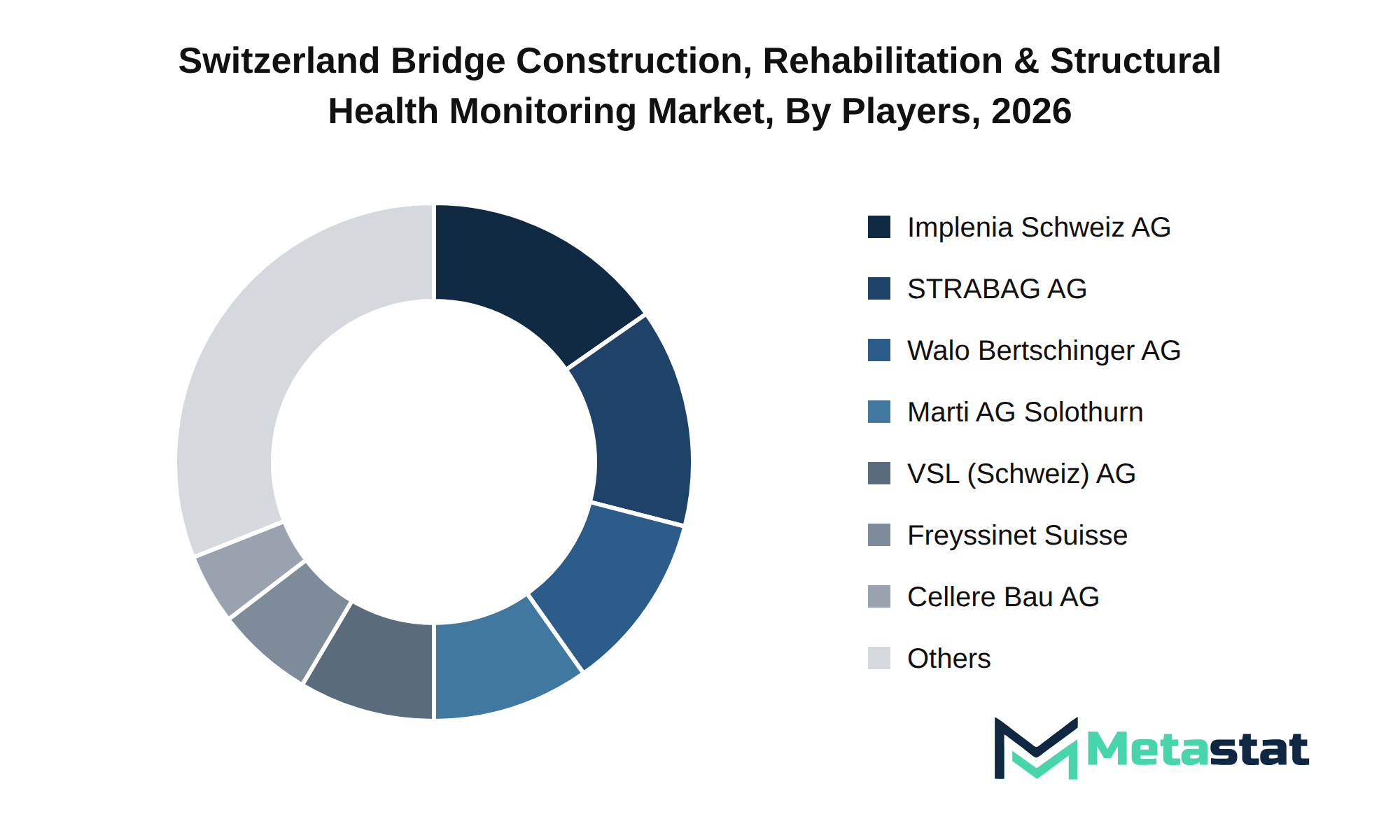
Key players in the Switzerland Bridge Construction, Rehabilitation & Structural Health Monitoring market include Implenia Schweiz AG, STRABAG AG, Walo Bertschinger AG, Frutiger AG, JPF Construction SA, ANLIKER AG Bauunternehmung, and Sika Schweiz AG.
The expected compound annual growth rate (CAGR) for the Switzerland Bridge Construction, Rehabilitation & Structural Health Monitoring market is 4.2% from the base year 2025 to the forecast end in 2033.
The Bridge Repair & Rehabilitation segment experiences the highest revenue, projected to reach USD 293.4 million by 2033.
The analysts below cover Automotive and Transportation research at Metastat Insights.
LEAD ANALYST
Utkarsh Khirodkar is a Lead Market Research Analyst at MetaStat Insight, specializing in market intelligence, technology sector assessments, and competitive strategy.

ENERGY & INFRASTRUCTURE INDUSTRY CONSULTANT
Automotive and Transportation · Electronics and Semiconductor · Energy and Power · Machinery & Equipment
Saurabh Vasant Ganvir consults for Energy & Infrastructure Industry at MetaStat Insight, specializing in renewable energy, solar EPC, and electric vehicle (EV) infrastructure markets.
Evaluating sovereign cloud deployments for core banking platforms demands a clear view of data residency regulations and migration exit strategies. MetaStat Insight delivered an exhaustive review of regional latency tolerances, mainframe decommission milestones, and third-party vendor concentration risk. The regulatory compliance mapping across European and Asian financial jurisdictions gave our team a dependable baseline for multi-cloud infrastructure discussions.
Replacing petrochemical surfactants with bio-based alternatives requires realistic timelines on industrial precision fermentation scaling. The market research broke down commercialization timelines, feedstock sugar price sensitivities, and regional cosmetic ingredient regulatory approvals in Europe and East Asia. That supplier readiness mapping gave our formulations team reliable context when comparing renewable chemical sourcing roadmaps.
Tracking ceramic matrix composite adoption in high-bypass aero engines requires strict attention to material qualification cycles and FAA airworthiness testing milestones. The MetaStat Insight team provided a detailed timeline of silicon carbide fiber manufacturing capacity and commercial foundry lead times. Having clear visibility into upstream thermal barrier coating supply helped us stress-test our long-term component procurement strategy.
Explore related market intelligence reports worth reading alongside this one.
Starting from
$2950
Starting from
$2950