
LEAD ANALYST
Utkarsh Khirodkar is a Lead Market Research Analyst at MetaStat Insight, specializing in market intelligence, technology sector assessments, and competitive strategy.

Global Tire Recycling Market Size, Share, By Technology (Ambient Mechanical Shredding and Granulation, Cryogenic Grinding, Thermochemical Recycling (Pyrolysis/Thermolysis), Devulcanization and Rubber Reclaiming, Other Advanced Recycling Technologies), By Recovered Product (Rubber Crumb and Granulate, Micronized Rubber Powder, Reclaimed and Devulcanized Rubber, Recovered Carbon Black (rCB), Tire Pyrolysis Oil (TPO), Recovered Steel, Recovered Textile Fiber, Tire-Derived Aggregate (TDA), Tire-Derived Fuel (TDF)), By Source (Passenger Car Tires, Light Commercial Vehicle Tires, Medium and Heavy Commercial Vehicle Tires, Off-the-Road (OTR) Tires, Agricultural Tires, Two-Wheeler Tires, Aircraft Tires), By End-Use Industry (Tire Manufacturing, Non-Tire Rubber Products, Road Construction, Building and Civil Engineering, Sports and Recreational Surfaces, Automotive and Transportation, Chemical and Petrochemical, Cement and Industrial Energy, Plastics and Polymer Compounding), Industry Analysis, Growth, Trends, and Forecast, 2026-2033
Report ID
MSI-5374
Published
September, 2026
Pages
272 Pages
Format
Historical
Base year
Forecast
Forecast period
Report Details
Market Valuation: Valued at $6,104.3 Million in 2025, projected to reach $8,885.2 Million by 2033 at a 4.8% CAGR.
Dominant Segment: The Devulcanization & Rubber Reclaiming segment leads the market, driven by the increasing demand for high-quality recycled rubber products across various industries.
Geographic Lead: The market is seeing significant growth in regions prioritizing sustainability, particularly where regulatory frameworks support recycling initiatives.
What's Inside: The report provides comprehensive competitive coverage, detailed analyses of market segments, and forecasts extending to 2033, offering insights into technology and product trends.
Emerging Technologies: Advancements in recycling technologies, such as thermochemical recycling and cryogenic grinding, are enhancing product recovery and driving market growth.
Choose Your License
Global Tire Recycling Market
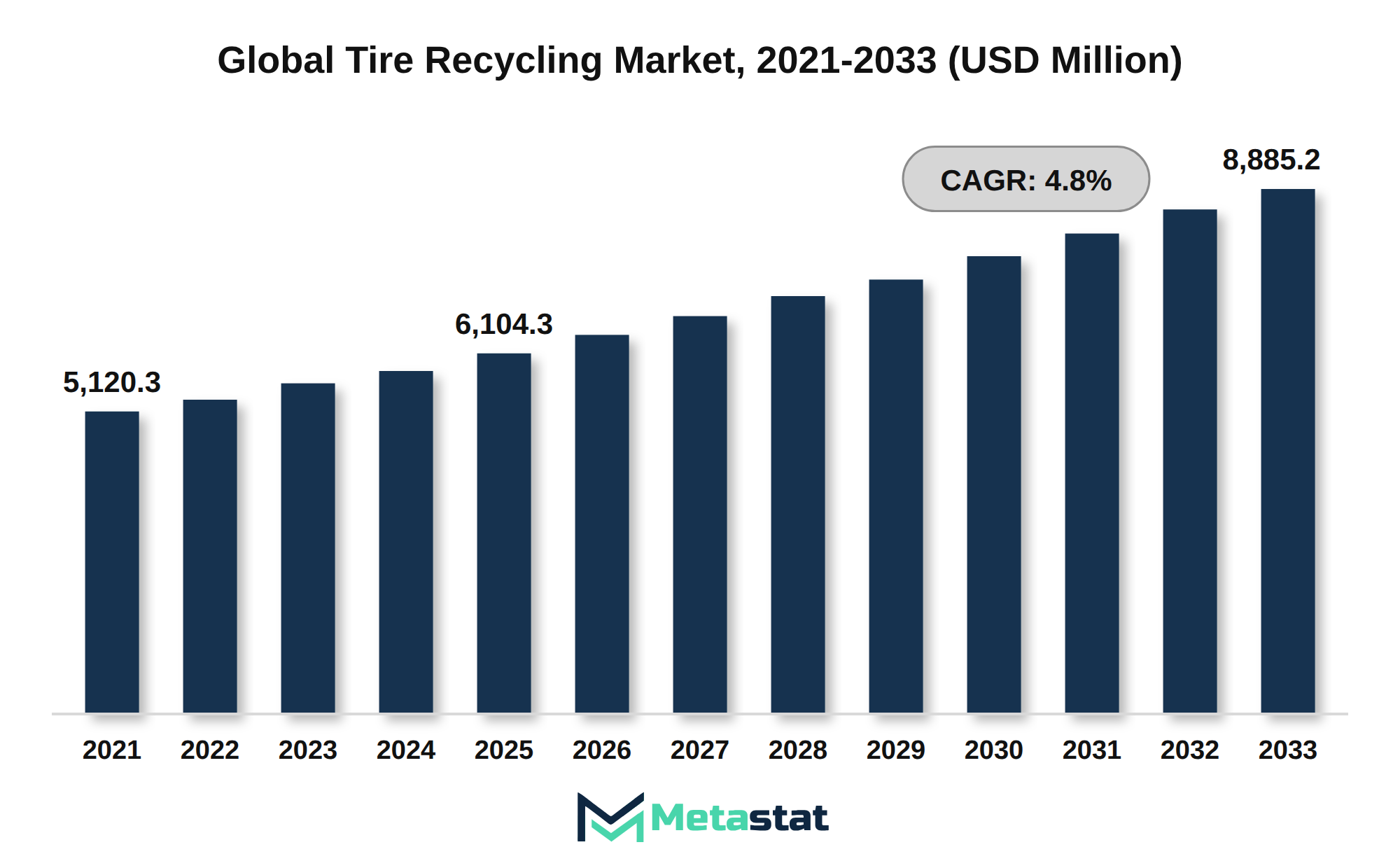
The global Tire Recycling market was valued at USD 6,104.3 million in 2025 and is projected to reach USD 8,885.2 million by 2033, growing at a CAGR of 4.8% over the forecast period.
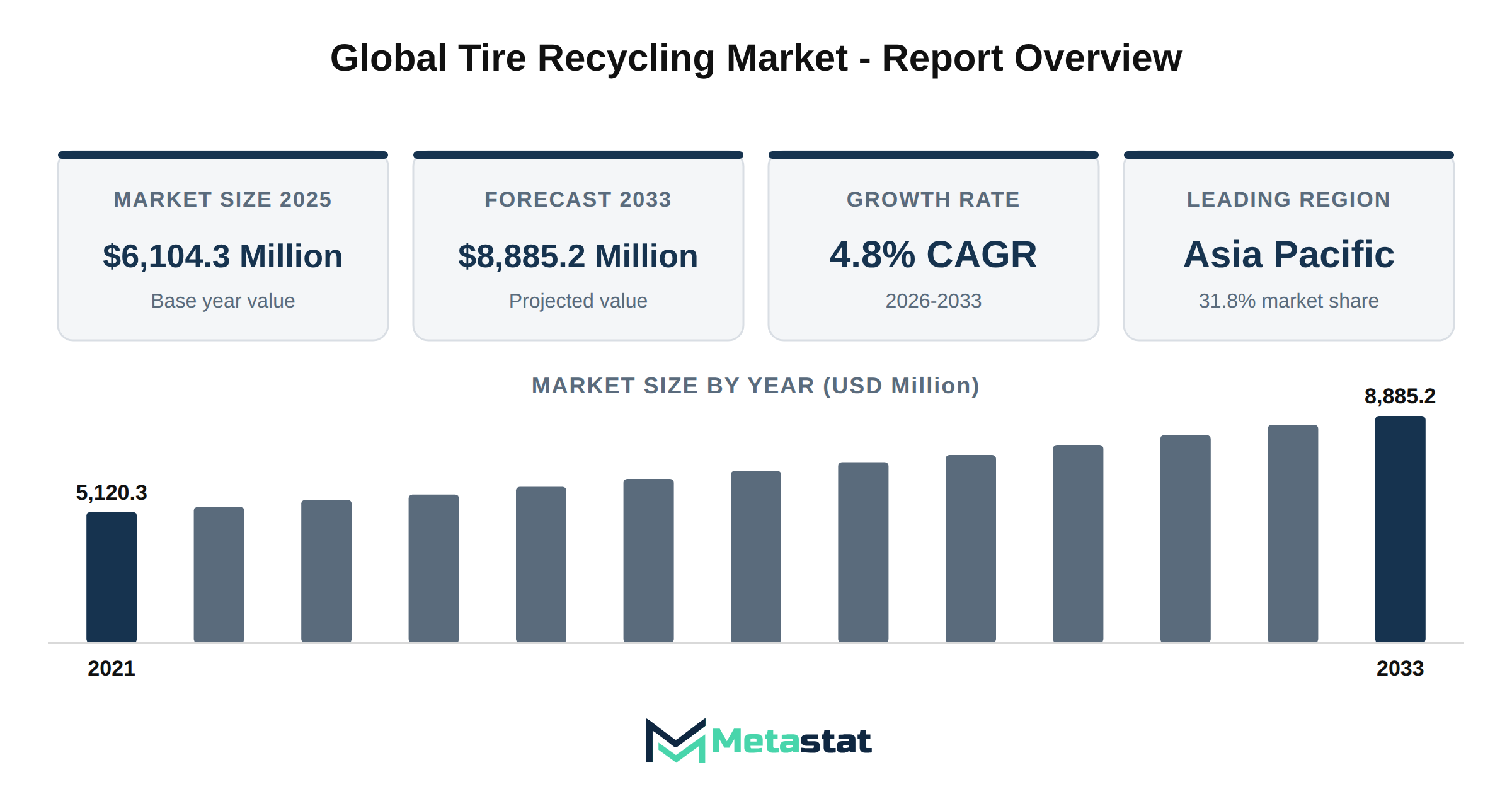
The global Tire Recycling market reached USD 6,104.3 million in 2025 and is projected to expand to USD 8,885.2 million by 2033, reflecting a compound annual growth rate (CAGR) of 4.8%. Historical data indicates growth from USD 5,120.3 million in 2021 to USD 6,104.3 million in 2025, demonstrating a steady increase in demand for tire recycling solutions.
Significant factors driving growth in the Tire Recycling market include the rising generation of end-of-life tires and the increasing demand for sustainable recycling practices. The adoption of circular economy principles across various industries has heightened the focus on recycling initiatives, influencing both consumer behavior and regulatory frameworks.
Demand for recovered carbon black in tire recycling is gaining traction due to its application in new tire manufacturing and other industrial uses. This trend supports the overall growth of the market, driven by companies seeking to incorporate high-quality recycled materials into their production processes.
Technological advancements in tire pyrolysis and thermochemical recycling processes enhance the efficiency and profitability of tire recycling operations. These methods enable the conversion of tires into valuable resources, including oils and gases, thereby expanding the range of recovered products available from recycled tires.
Mechanical tire recycling and rubber granulation processes evolve, driven by the need for higher efficiency and better-quality outputs. Innovations in these technologies enable recyclers to extract more usable material from end-of-life tires, ultimately improving overall recycling rates.
Devulcanization and reclaimed rubber technology developments contribute significantly to the market's growth by enhancing the quality and applications of recycled rubber. This innovation supports various end-use industries, including tire manufacturing and non-tire rubber products, driving demand for recycled materials.
The increasing demand for tire pyrolysis oil shapes market dynamics, providing a sustainable alternative to traditional fossil fuels. Commercialization of this product within various industrial applications presents new opportunities for revenue generation in the Tire Recycling market.
Recycled rubber's application in road construction and asphalt expands, driven by municipalities and construction companies seeking sustainable materials for infrastructure projects. This trend aligns with broader sustainability goals, increasing the attractiveness of recycled rubber in civil engineering applications.
The Tire Recycling market benefits from various growth drivers that stimulate demand for recycled materials. The increasing focus on sustainability and circular economy initiatives drives the generation and recycling of end-of-life tires. This trend is evident across multiple industries, including automotive and construction, where recycled materials find valuable applications, enhancing operational efficiency and reducing environmental impact.
Adoption of recovered carbon black in tire recycling processes presents significant opportunities for industry players. The material acts because an essential feedstock in manufacturing new tires and rubber products, contributing to the reduction of virgin material usage and creating a more sustainable supply chain.
Advancements in tire pyrolysis and thermochemical recycling technologies are shaping the market. These innovative methods effectively convert end-of-life tires into valuable products, including oils and carbon black, which have high commercial potential in various applications, including energy production and materials manufacturing.
Mechanical tire recycling and rubber granulation have witnessed significant developments, improving the efficiency and effectiveness of the recycling process. These methods enable the recovery of high-quality rubber granulate, which finds application in diverse sectors, including sports surfaces, playgrounds, and construction materials.
Innovation in devulcanization and reclaimed rubber technologies enhances the quality of recycled materials, making them suitable for use in new tire manufacturing and other rubber products. This progress supports the growth of the Tire Recycling market by increasing the attractiveness of recycled materials to manufacturers.
Tire pyrolysis oil demand continues to rise, driven by its potential because an alternative energy source. Commercialization trends highlight the value of this product, generating interest from various industries seeking sustainable energy alternatives.
Recycled rubber demand in road construction and asphalt applications plays a critical role in promoting the use of recycled materials. The integration of recycled rubber in these sectors contributes to enhanced performance and durability of road surfaces while reducing waste.
Integration of circular tire manufacturing processes with recycled materials is advancing within the industry. This shift emphasizes the importance of sustainability in tire production, aligning with broader environmental goals and regulatory expectations.
The demand for tire-derived fuel in cement and industrial applications is on the rise, driven by the need for sustainable energy sources. This trend reflects the industry's shift towards using waste materials for energy production, aligning with global sustainability targets.
Adoption of tire-derived aggregate in civil engineering projects illustrates the versatility of recycled materials. This practice supports various construction applications, minimizing landfill waste and promoting responsible resource management.
Regulatory policies continue to shape the landscape of end-of-life tire recycling. Compliance with these regulations encourages investment in advanced recycling technologies and facilities, reinforcing the market's commitment to sustainability and waste reduction.
Extended producer responsibility initiatives enhance compliance in tire recycling, driving manufacturers to implement sustainable practices and support recycling efforts. This regulatory framework encourages a collaborative approach to managing end-of-life tires, benefiting both the environment and the market.
Investment trends in advanced tire recycling facilities signal a growing commitment to sustainability and innovation. These investments support the development of new technologies, enhancing the market's capacity to process end-of-life tires efficiently.
The expansion of tire recycling capacity and infrastructure development reflects the industry's growth potential. Increased capacity enables the market to meet rising demand for recycled materials, creating a more sustainable approach to tire disposal and recycling.
Recovered material pricing and profitability dynamics play a crucial role in the market's development. Fluctuations in pricing influence the economic viability of recycling operations, impacting investment decisions and market growth.
The tire recycling supply chain's efficiency and feedstock availability are crucial for sustaining growth in the market. A reliable supply of end-of-life tires ensures that recycling operations remain competitive and capable of meeting market demand.
The competitive landscape of global tire recycling companies highlights the presence of key players who drive innovation and market growth. Strategic partnerships and mergers and acquisitions within the industry promote collaboration, enabling companies to enhance their capabilities and expand their market reach.
Sustainability and carbon reduction benefits associated with tire recycling are significant within the industry. These advantages support the market's growth, aligning with global efforts to reduce carbon footprints and promote environmentally responsible practices.
Growth opportunities in Asia Pacific present significant potential for the Tire Recycling market, driven by increasing demand for sustainable materials and technologies. North America and Europe continue to lead in recycling initiatives, emphasizing their commitment to circular economy practices. Emerging markets for recycled tire materials reflect the global trend towards sustainable resource management, creating a favorable environment for future opportunities in high-value tire recycling products.
Increasing environmental awareness drives adoption of tire recycling technologies, particularly in response to stringent emission limits set by various jurisdictions. The pressure on manufacturers to comply with these limits results in a shift towards closed-loop systems where recycled materials replace virgin inputs. This shift enables companies to reduce their carbon footprint while maintaining product quality, aligning with consumer preferences for sustainable products.
Industries including automotive manufacturing and construction prioritize sustainability within their supply chains. By incorporating recycled tire materials, these industries achieve cost efficiency while minimizing waste. The Tire Recycling market benefits from this trend, with projected growth fueled by rising demand for eco-friendly alternatives across various sectors.
Investment in advanced recycling technologies, including ambient mechanical shredding and thermochemical recycling, enhances operational efficiency while meeting regulatory requirements. Companies that adapt to these changing dynamics position themselves favorably within the market, contributing to significant growth through 2033.
The ongoing transition towards circular economy practices further supports the demand for recycled tire products. Public and private sectors emphasize resource stewardship, and businesses that engage in tire recycling practices strengthen their competitive edge, ensuring long-term market sustainability.
Technological integration significantly influences the growth of the Tire Recycling market by improving operational efficiencies and reducing costs. Innovations in automation, artificial intelligence, and software adoption streamline processes, enhancing productivity. These advancements facilitate effective sorting, processing, and converting of waste tires into valuable materials.
Capital investment in technology contributes to the development of advanced recycling solutions, including cryogenic grinding and thermochemical recycling. These processes yield high-quality recovered products, including rubber crumb and carbon black, which find applications across diverse industries. Enhanced recovery rates directly impact profitability for recycling operators and create new revenue streams.
Consumer behaviors increasingly favor sustainable practices, prompting tire manufacturers and end-users to seek partners prioritizing environmental responsibility. Businesses adopting these technologies position the Tire Recycling market to benefit from heightened demand for recycled materials, aligning with global sustainability initiatives.
Overall, technological integration creates an environment where recycling processes become more efficient and cost-effective. Leveraging these advancements positions the market for consistent growth driven by innovation and a collective push toward sustainability.
Regulatory constraints significantly impact the Tire Recycling market, primarily through stringent compliance requirements that impose operational challenges on recycling facilities. The necessity for rigorous adherence to environmental and safety standards demands substantial investment in technology and infrastructure. Compliance with these regulations increases operational costs, affecting the overall financial viability of recycling projects.
Macroeconomic headwinds, including inflationary pressures, further exacerbate these challenges. Rising costs of raw materials and labor create barriers that impede market growth. High capital investment requirements for advanced recycling technologies deter new entrants, limiting competition and innovation within the market.
Supply chain disruptions, stemming from geopolitical instability and resource scarcity, contribute to operational inefficiencies. These disruptions hinder timely access to essential materials for recycling processes, causing production delays. The effects of these challenges ripple through various sectors that rely on recycled tire products, resulting in decreased downstream demand.
Market fragmentation complicates efforts to streamline recycling processes, driven by differing regulations across regions that lead to inconsistent practices. Regional adoption resistors, including cultural barriers and varying levels of infrastructure development, slow the implementation of established recycling technologies. This fragmentation particularly affects the competitiveness of the market in regions where adoption lags.
Escalating operating costs associated with labor and technology maintenance present ongoing challenges. Skilled labor deficiencies and talent gaps further hinder the ability to maintain efficient operations. While the Tire Recycling market matures, these factors converge, resulting in stagnation of growth and potential market saturation.
Geopolitical fragmentation creates significant challenges for the Tire Recycling market, impacting trade dynamics and international cooperation. Tariff friction among nations disrupts the smooth flow of materials and technologies essential for tire recycling processes. This situation increases costs and complicates supply chains, leading to inefficiencies that affect pricing strategies.
Volatility in feedstock availability results from fluctuating global supply chains, particularly amid rising protectionist measures. This volatility constrains consistent operations for recycling facilities, which require stable access to used tires for processing. In addition, the market faces technological disruptions stemming from diverse regulatory environments that differ across regions, making it challenging for companies to standardize processes and products.
Tightening global regulatory standards impose compliance overhead that strains resources. Companies in the market experience increased scrutiny over environmental impacts and sustainability practices, necessitating investments in advanced technologies and processes. These investments introduce immediate financial pressures that affect margins, despite their long-term benefits.
The workforce skill gap presents another obstacle, with a shortage of trained professionals capable of operating advanced recycling technologies. Talent retention pressures further exacerbate this issue, driven by skilled workers being drawn to other sectors offering competitive compensation or better working conditions. These workforce challenges impede operational efficiency and innovation within the Tire Recycling market.
Complex research and development integrations demand substantial time and investment, hindering agility in adapting to changing market conditions. This situation results in slow responses to evolving downstream demands, adding another layer of difficulty for companies striving to maintain competitiveness and relevance in the market.
Innovation in recycling technology presents substantial opportunities within the Tire Recycling market. Advancements in ambient mechanical shredding, cryogenic grinding, and thermochemical recycling allow for efficient recovery of materials from used tires. These technologies optimize the recovery process and improve the quality of the recovered products, including rubber crumb, micronized rubber powder, and reclaimed rubber. Enhanced recovery capabilities drive market growth by attracting a broader range of applications across various industries, including tire manufacturing and non-tire rubber products.
The increasing emphasis on sustainability and circular economy principles aligns market players with evolving consumer preferences. Emerging regional demands for eco-friendly solutions encourage companies to invest in next-generation innovations that meet stringent environmental standards prevalent in various jurisdictions. This shift supports the growth of niche applications for recycled materials, expanding usage in sectors including road construction and building materials.
Digital transformation influences the operational landscape of the market. The rise of digital procurement shifts allows companies to streamline sourcing processes while maximizing efficiency in supply chain management. This transition supports local and regional sourcing strategies, enabling firms to respond more effectively to fluctuations in demand and regulatory requirements. Enhanced capabilities for data analytics enable informed decision-making, ultimately driving operational yield maximization.
Strategic consolidation through cross-industry mergers and acquisitions creates competitive advantages among market participants. By combining resources and expertise, companies enhance their service offerings, attracting diverse clientele seeking integrated recycling solutions. This trend promotes improved market positioning and encourages innovation, creating a robust ecosystem that supports growth within the Tire Recycling market.
The Global Tire Recycling market is segmented based on Technology, Recovered Product, Source, and End-Use Industry.
Expansion in the Ambient Mechanical Shredding & Granulation sub-segment reflects ongoing advancements in recycling processes. Valued at USD 2,986.5 million in 2026, this segment is projected to reach USD 3,747.8 million by 2033, achieving a CAGR of 3.3% during the forecast period. Several factors contribute to this growth, including increasing environmental awareness and rising demand for sustainable practices in waste management.
Technological maturation in this segment enhances operational efficiency and product quality, making it an attractive option for companies aiming to improve their recycling capabilities. The development of next-generation upgrades, including improved shredding and granulation processes, supports the adoption of these technologies across various industries.
End-use dynamics indicate a shift toward using recycled materials in the manufacturing of new tires and other rubber products, increasing consumption of recycled products. Regulatory compliance standards emphasizing sustainability further drive market growth, creating a favorable landscape for innovation in recycling technology.
Cost structures within the segment remain competitive, although pricing volatility in raw materials exerts pressure on margins. Strategic opportunity windows arise from evolving policies and consumer preferences, presenting avenues for investment and expansion within the Tire Recycling market.
Demand for Cryogenic Grinding in the Tire Recycling market stems from its ability to produce high-quality rubber powder, which is essential for various applications. This segment benefits from technological maturation, allowing operators to enhance the efficiency and effectiveness of their recycling processes. Key players in the market invest in advanced technologies to optimize production, capturing higher value from the recycled materials.
Growing emphasis on sustainability across industries drives the adoption of Cryogenic Grinding technologies. Manufacturers seek to comply with stringent environmental regulations, creating a favorable environment for investments in this segment. The shift towards sustainable practices in sectors including tire manufacturing, construction, and automotive reinforces the demand for recycled rubber products.
The Cryogenic Grinding segment is projected to reach USD 856.5 million by 2033, at a CAGR of 3% during the forecast period. This growth trajectory indicates rising consumption of micronized rubber powder and its applications in various rubber products. The segment's expansion supports increasing demand for high-performance materials that offer superior characteristics compared to conventional alternatives.
While the market evolves, strategic opportunity windows emerge for innovation and product development. Companies operating in this space focus on enhancing their product offerings to meet the specific needs of end-use industries. Developing high-grade recycled materials highlights the segment's potential to contribute significantly to the overall growth of the Tire Recycling market.
The adoption of Thermochemical Recycling (Pyrolysis/Thermolysis) technologies in the Tire Recycling market responds to increasing demand for sustainable waste management solutions. This segment thrives on the necessity for improved recycling methods that convert end-of-life tires into valuable materials. The process effectively extracts oil, gas, and carbon black from tires, enabling manufacturers to reintroduce these materials into production cycles. Significant regulatory support for sustainable practices fuels the growth of this segment, driven by governments implementing stricter policies regarding waste disposal and encouraging recycling initiatives. The trend towards circular economy models emphasizes the importance of thermochemical recycling, stimulating investments in advanced technologies. Companies seeking to enhance their product offerings focus on developing efficient pyrolysis systems, addressing the market's need for high-quality recycled materials. The evolving landscape of end-use industries, including tire manufacturing and non-tire rubber products, drives the demand for thermochemical recycling solutions. While the market matures, innovations in process efficiency and product yield are anticipated. These advancements enable players to optimize returns on investment while reducing overall costs. Growing competition among suppliers enhances product differentiation and improves service offerings, supporting increased market penetration.
Growth in the Devulcanization & Rubber Reclaiming segment is driven primarily by the increasing demand for high-quality recycled rubber products across various industries. This segment is projected to grow at a CAGR of 6% during the forecast period. The ability to reclaim rubber from tires ensures a sustainable supply of raw materials while reducing reliance on virgin materials, aligning with global sustainability goals. Adoption of these technologies benefits manufacturers in the tire and non-tire rubber product industries, enabling them to reduce production costs and improve profit margins.
The expansion of this segment is fueled by advancements in recycling technologies that enhance the efficiency and quality of reclaimed materials. Innovations in processing techniques contribute to market growth, attracting investment and encouraging new entrants. Key end-use industries, including tire manufacturing and road construction, drive demand for reclaimed rubber, emphasizing performance and environmental compliance. These trends indicate a robust future for the Devulcanization & Rubber Reclaiming segment within the broader Tire Recycling market.
Innovative approaches in advanced recycling technologies enhance the sustainability of the Tire Recycling market. Key drivers include increasing regulatory demands for waste management and environmental pressures that stimulate the adoption of these technologies. The segment experiences expansion driven by advancements in processing methodologies and improvements in the efficiency of recycling systems.
Technological maturation plays a critical role in establishing competitive advantages among market participants. Next-generation upgrades in recycling methods enable better recovery rates of valuable materials while reducing the environmental footprint of tire disposal. The evolution of product offerings aligns with downstream applications in various industries, indicating a shift toward sustainable practices.
End-use dynamics influence consumption patterns within the market. Growing demand for sustainable materials in construction, automotive, and consumer goods increases interest in advanced recycling technologies. Such shifts highlight strategic opportunity windows for investment, particularly in regions with supportive regulatory frameworks.
Challenges related to supply chain resilience, including raw material sourcing and logistics vulnerabilities, require ongoing adaptations from stakeholders. Disruptive alternatives emerge from potential competitors, prompting continuous innovation and improvement in established processes. The need for strategic responses to pricing volatility and margin pressures remains a priority for industry participants.
Valued at USD 1,605.1 million in 2026, the Rubber Crumb & Granulate segment is projected to reach USD 2,053.4 million by 2033, at a CAGR of 3.6% during the forecast period. This growth arises from increasing applications in various industries, including construction and manufacturing, where recycled rubber products serve because sustainable alternatives to virgin materials. Downstream demand for environmentally friendly solutions significantly influences adoption, particularly driven by regulatory incentives promoting waste reduction and sustainable practices.
Technological advancements in processing techniques enhance the quality and consistency of rubber crumb and granulate, expanding its utility in diverse applications, including playground surfaces and asphalt modification. The market experiences pressure from fluctuating raw material prices and the need for cost-effective production methods, leading to a competitive landscape that prioritizes efficiency and innovation. Strategic investments in infrastructure and technology are central to maintaining supply chain resilience and addressing challenges related to sourcing quality materials.
Increased focus on circular economy principles drives the market's growth, because industries seek to minimize waste and optimize resource utilization. Favorable policy frameworks that incentivize recycling initiatives support the expansion of the Rubber Crumb & Granulate segment, positioning it favorably within the broader Tire Recycling market. Overall, the segment's trajectory aligns with sustainable development goals, reinforcing its significance in the evolving landscape of tire recycling.
Demand for Micronized Rubber Powder stems from its extensive applications across various industries. This product's favorable properties, including improved performance characteristics and environmental benefits, drive adoption in sectors like automotive, construction, and consumer goods. The segment is estimated to reach USD 792.6 million by 2033, at a CAGR of 5.4% during the forecast period.
Growth catalysts include increasing regulatory emphasis on sustainability and the circular economy, prompting manufacturers to seek recycled materials. The industry experiences a shift in consumption patterns, with preferences leaning towards eco-friendly alternatives, further enhancing the segment's profile. Applications in tire manufacturing and non-tire rubber products serve significant end-use drivers, expanding market penetration.
Technological advancements play a critical role in the evolution of Micronized Rubber Powder. Innovations in processing techniques and product formulations enhance product quality and performance, allowing for broader applications. Strategic investment in R&D supports the development of next-generation products, aligning with the market's sustainability goals.
Cost pressures associated with raw material sourcing and production processes affect pricing dynamics within this segment. However, effective supply chain management and strategic partnerships mitigate these impacts, ensuring resilience against market fluctuations. Overall, the evolving landscape of the Tire Recycling market positions Micronized Rubber Powder because a vital component in sustainable manufacturing practices, reflecting ongoing trends in environmental responsibility and resource efficiency.
High interest in sustainability and environmental responsibility drives demand for reclaimed and devulcanized rubber in the Tire Recycling market. This segment is projected to reach USD 1,016.5 million by 2033, reflecting the growing recognition of the value of recycled materials in various applications. Increased regulatory pressure for waste reduction and recycling initiatives supports the integration of reclaimed and devulcanized rubber into product development across industries including automotive manufacturing and construction.
The evolution of processing technologies and methods enhances the quality and usability of reclaimed and devulcanized rubber. Innovations in processing techniques improve material performance, making recycled rubber more attractive for usage in tire manufacturing and non-tire rubber products. Enhanced performance characteristics provide a competitive advantage and facilitate wider adoption among manufacturers aiming to meet sustainability goals.
Investments in research and development lead to continuous improvement in the properties of reclaimed and devulcanized rubber, which in turn influences market dynamics. Companies focusing on technological advancements tap into strategic opportunities that arise from shifts in consumer preferences towards eco-friendly products. This trend strengthens market positioning for players involved in the production of reclaimed and devulcanized rubber and ensures alignment with environmental standards.
While the Tire Recycling market evolves, the segment reflects a strong response to changing consumer expectations and regulatory frameworks. Increased awareness of the benefits of circular economy principles creates favorable conditions for the growth of reclaimed and devulcanized rubber. Sustained capital investment in infrastructure and technology will enhance the segment's contribution to the overall market, positioning it because a critical component of the tire recycling ecosystem.
Continuous innovation in recycling technology drives the demand for Recovered Carbon Black (rCB). This segment is projected to grow at a CAGR of 7.2% during the forecast period. Increased utilization of rCB in various applications enhances its market attractiveness, particularly in industries focusing on sustainable practices. Rising regulatory pressures for environmental compliance further stimulate the market. The growing preference for eco-friendly products among manufacturers supports the expansion of this segment. While end-users transition to sustainable materials, the demand for rCB grows, reflecting a significant shift in consumption patterns.
Cost pressures associated with virgin carbon black production prompt manufacturers to explore recycled alternatives. Competitive pricing against traditional carbon black offers strategic advantages to companies adopting rCB in their supply chains. Technological maturation in processing methods enhances the quality and performance of rCB, ensuring its viability in demanding applications. Investments in advanced recycling technologies reinforce the segment's growth potential, positioning it favorably within the broader Tire Recycling market.
Tire Pyrolysis Oil (TPO) represents a significant component of the Recovered Product segment within the Tire Recycling market. Demand for TPO arises from its versatile applications across various industries, particularly in energy production and material recovery. The increasing emphasis on sustainable practices drives adoption, owing to TPO acting because a renewable alternative to traditional fossil fuels. Technological advancements enhance the efficiency and effectiveness of pyrolysis processes, thus expanding TPO's production capabilities.
Next-generation upgrades in pyrolysis technology streamline operations while reducing environmental impact. The evolving landscape of regulatory compliance encourages the use of TPO in applications that require eco-friendly materials. End-use dynamics reflect a growing preference for products derived from recycled materials, enhancing TPO's appeal. Consumption shifts towards renewable sources in multiple sectors further support the segment's growth.
Strategic opportunity windows arise from increasing investments in green technology, creating a favorable environment for TPO market expansion. The combination of favorable regulatory frameworks and heightened market awareness regarding environmental sustainability positions TPO because a critical component in the broader Tire Recycling market. Overall, the segment demonstrates potential for growth driven by a convergence of technological innovation, regulatory support, and changing consumer preferences.
Increased emphasis on recycling and sustainability drives demand for Recovered Steel within the Tire Recycling market. The growing awareness of environmental conservation and resource recovery encourages industries to seek sustainable materials, enhancing the push for effective recycling practices. This segment benefits from rising regulatory standards that promote sustainable production and waste management, influencing manufacturers across various industries.
Technological advancements in recycling processes enhance the efficiency of recovered steel extraction. Innovations in processing techniques and equipment improve yield rates and operational effectiveness, creating a more competitive landscape. Companies focusing on technological maturation and next-generation upgrades in recovery processes are well-positioned to meet the rising demand for quality recycled steel, reflecting a strategic opportunity within the Tire Recycling market.
End-use dynamics indicate a growing acceptance of recycled materials, particularly in construction and manufacturing sectors. The demand for sustainable products aligns with shifts toward circular economy principles, encouraging industries to adopt recycled steel in various applications. This trend indicates a significant evolution in consumer preferences and corporate strategies, positioning Recovered Steel because a vital component in resource-efficient practices.
Cost structures within the segment illustrate the impact of fluctuating raw material prices and energy costs on operational margins. Pricing volatility pressures profit margins and influences the overall economics of recycling operations. Companies in the market focus on optimizing processes and sourcing strategies to mitigate cost-related challenges, ensuring resilience amid market fluctuations.
Strategic investment in recycling technologies creates a favorable outlook for the Recovered Steel segment. Capital investments in innovative recycling solutions and infrastructure development play a crucial role in enhancing capacity and operational efficiency. Such investments reflect a commitment to meeting future demand for recycled materials and ensuring competitiveness within the evolving landscape of the Tire Recycling market.
Increasing emphasis on sustainable practices drives interest in Recovered Textile Fiber within the Tire Recycling market. This growing focus aligns with heightened environmental awareness among consumers and industries, leading to a greater demand for materials derived from recycled products. The market benefits from advancements in recycling technologies that enhance fiber recovery processes, improving the quality and usability of recovered materials.
Adoption of Recovered Textile Fiber in various applications supports market growth. Industries including automotive, construction, and textiles seek sustainable alternatives to traditional materials, positioning recovered fibers because viable options. The move toward circular economy principles fuels the integration of these materials into new products, thereby enhancing their commercial appeal.
Technological maturation facilitates improved processing techniques, allowing for more efficient recovery and refinement of textile fibers from tires. Innovations in processing methods contribute to higher quality outputs, meeting the evolving standards and expectations of downstream applications. Regulatory compliance, including standards for recycled materials, encourages industries to incorporate sustainable options like Recovered Textile Fiber.
Market dynamics reflect a strategic shift toward resource efficiency and waste reduction. Businesses recognize the economic benefits of recycling materials, which lower production costs and reduce waste disposal expenses. This strategic opportunity window aligns with broader trends in sustainability and environmental responsibility, reinforcing the value of Recovered Textile Fiber in the Tire Recycling market.
Investment in infrastructure and technology enhances the resilience of supply chains associated with Recovered Textile Fiber. Robust sourcing strategies for raw materials and effective logistics management contribute to a steady supply of quality fibers. Recognizing substitution risks from alternative materials, industries increasingly rely on these fibers to meet their sustainability goals and consumer demands.
Increasing awareness of sustainable construction practices drives demand for Tire-Derived Aggregate (TDA) within the Tire Recycling market. This segment serves because a valuable component in road construction and other civil engineering applications, where recycled materials contribute to environmental benefits while reducing costs associated with raw material sourcing.
Technological advancements in processing techniques enhance the quality and performance of TDA, positioning it because a viable alternative to traditional aggregates. The evolution of recycling methods supports the growth of this segment by allowing higher recovery rates of valuable materials, leading to more efficient resource utilization.
Growing regulatory compliance standards concerning waste management and environmental sustainability increase the adoption of TDA. Increased government incentives for using recycled materials further drive market growth, pushing industries to incorporate TDA into their projects.
Demand dynamics shift toward eco-friendly solutions, with construction firms increasingly seeking sustainable materials. This trend enhances competitive advantage and aligns with broader environmental goals, enhancing the overall appeal of Tire-Derived Aggregate in the market.
Growing interest in sustainability fuels demand for Tire-Derived Fuel (TDF) within the Tire Recycling market. TDF acts because an alternative energy source, offering a solution for managing waste tires while addressing energy needs across various industries. The integration of TDF into energy production processes enhances efficiency, enabling manufacturers to reduce dependence on fossil fuels. Environmental regulations increasingly promote the use of sustainable fuels, creating favorable conditions for TDF adoption.
Innovations in processing technologies contribute to the segment's expansion. Improved methods for converting waste tires into TDF increase the quality and calorific value of the product, making it more attractive for industrial applications. The growth of industries including cement and steel manufacturing, which adopt TDF because a viable fuel option, underlines its importance in the energy sector.
Market dynamics indicate a shift in consumption patterns, with companies prioritizing sustainability and circular economy practices. TDF, recognized for its lower environmental impact compared to traditional fuels, aligns with these trends. Strategic investments in infrastructure for TDF production and utilization enhance supply chain resilience and support the overall growth of the market.
Regulatory compliance and certification standards play critical roles in shaping TDF's market trajectory. Stringent regulations govern waste management and emissions, encouraging industries to adopt TDF because a cleaner alternative. Initiatives aimed at promoting alternative fuels further increase demand, ensuring that TDF remains a relevant option in the evolving energy landscape.
Interest in specialty recycled tire materials, including process gas, reflects a wider trend towards sustainable practices within the Tire Recycling market. This segment benefits from advancements in technology that enhance the efficiency of material recovery and processing. Regulatory compliance standards increasingly favor innovative recycling methods, encouraging manufacturers to invest in alternative materials derived from used tires. The growing focus on environmental sustainability and circular economy principles drives further exploration in this area.
Technological maturation plays a significant role in advancing the capabilities of recycling processes. Enhanced recovery techniques improve the quality and range of specialty products derived from tires. Investment in research and development supports the evolution of next-generation recycling technologies, increasing the attractiveness of these materials for various applications. Continuous improvements in product quality further incentivize their adoption across multiple sectors, contributing positively to market dynamics.
Downstream applications for specialty recycled tire materials continue to expand, finding use in a variety of industries, including construction and automotive. Increased consumption of these materials aligns with shifts towards sustainable construction practices and eco-friendly automotive components. The evolving landscape reflects a growing acceptance of recycled materials, enhancing the market's potential for future growth. Strategic opportunity windows emerge for businesses that adapt to these changing consumption patterns within the Tire Recycling market.
Supply chain resilience is critical in ensuring the steady availability of raw materials for specialty products. Factors influencing sourcing strategies include logistics vulnerabilities and the need for reliable partnerships with suppliers. While the market evolves, companies face challenges related to pricing volatility and margin pressures, necessitating adaptive strategies to maintain competitiveness. Continuous monitoring of market trends and a proactive approach towards disruptive alternatives will help mitigate risks associated with raw material sourcing.
Investment in specialty recycled tire materials represents a strategic opportunity for businesses aiming to enhance their sustainability profiles. The focus on developing innovative recycling solutions positions companies to capitalize on emerging market demands. Careful analysis of cost structures and potential returns on investment is essential for stakeholders looking to enter or expand within this niche segment of the Tire Recycling market.
Valued at USD 2,306.9 million in 2026, the Passenger Car Tires segment is projected to reach USD 3,030.7 million by 2033, at a CAGR of 4% during the forecast period. Increasing consumer awareness regarding sustainability strongly influences growth in the Tire Recycling market. The automotive sector's ongoing transition towards environmentally friendly practices enhances adoption of recycled materials derived from passenger car tires.
Developments in recycling technology enhance the recovery of high-quality materials from used tires, contributing to lower production costs for manufacturers. These advancements support the creation of new products, including rubber crumb and devulcanized rubber. Manufacturers recognize the operational efficiencies achieved through the integration of recycled materials into their production processes, which strengthens demand across various downstream applications.
Regulatory compliance standards regarding waste management and environmental protection introduce additional incentives for the industry. Stringent regulations compel manufacturers to explore recycling options, promoting collaboration with recycling facilities and driving investment in sustainable practices. Increased focus on compliance ensures the market adapts to evolving policies and consumer expectations.
Strategic opportunity windows emerge because brands seek to differentiate themselves through sustainable products. The Passenger Car Tires segment benefits from shifting consumer preferences favoring eco-friendly options, leading to expanded market share for companies prioritizing recycling initiatives. The resulting investments in the Tire Recycling market will reinforce its growth trajectory through 2033.
Continuing advancements in the recycling of Light Commercial Vehicle Tires contribute significantly to the overall growth of the Tire Recycling market. This segment is projected to reach USD 1,311.5 million by 2033, at a CAGR of 5.2% during the forecast period. Increasing demand for vehicles, coupled with a focus on sustainability, drives the need for effective tire recycling solutions.
Technological maturation in recycling processes enhances the efficiency of converting used tires into valuable materials, catering to diverse applications in various industries. Regulatory compliance and certifications shape the adoption of recycling technologies, ensuring that recovered products meet quality standards. Evolving preferences of end-users toward environmentally friendly products support the growth of this segment.
Cost structures and pricing volatility present challenges within the market, influencing profit margins and competitive dynamics. Ongoing investments in innovative recycling methods, including devulcanization and various advanced technologies, strengthen the segment's resilience against disruptive alternatives. The Light Commercial Vehicle Tires segment is positioned for significant expansion, driven by strategic opportunity windows and increasing capital investment in the recycling sector.
Valued at USD 2300.4 million by 2033, the Medium & Heavy Commercial Vehicle Tires segment demonstrates a consistent upward trajectory driven by the increasing demand for commercial vehicles. The surge in e-commerce and logistics operations boosts the need for efficient transportation solutions, consequently enhancing the consumption of tire recycling services within this segment. The focus on sustainability is a significant catalyst for growth, driven by businesses seeking environmentally friendly options for tire disposal and recycling.
Technological maturation in recycling methods, including advanced processes for devulcanization and rubber reclaiming, supports the efficiency of tire recycling operations. Enhanced performance characteristics of recycled materials contribute to their attractiveness in various applications, particularly in the road construction and non-tire rubber product sectors. Regulatory compliance standards encouraging circular economy practices further influence market dynamics, prompting manufacturers to adopt tire recycling solutions actively.
Cost structures and pricing volatility in raw material sourcing significantly affect market positioning. Access to high-quality recycled materials offers a competitive advantage, while rising raw material costs compel manufacturers to seek economically viable alternatives. The evolving landscape of the Tire Recycling market highlights strategic opportunity windows for investments in innovative recycling technologies.
Through continuous advancements and a keen focus on sustainability, the Medium & Heavy Commercial Vehicle Tires segment is poised for growth, reflecting the broader trends within the tire recycling industry.
Increasing recognition of the environmental impact of waste materials drives growth in the Off-the-Road (OTR) Tires segment of the Tire Recycling market. This segment is projected to grow at a CAGR of 5.6% during the forecast period. Demand for OTR tires remains strong in sectors including construction, agriculture, and mining, where heavy machinery relies on durable and resilient tire products. The ongoing shift towards enhanced recycling processes, including advanced technologies for extracting valuable materials from used tires, supports market expansion. Technological maturation in recycling methods leads to higher efficiency in material recovery, allowing businesses to repurpose resources effectively. While companies adopt next-generation upgrades, the availability of high-quality recycled products increases, driving end-use applications across various industries. Continued investment in research and development encourages innovations in recycling techniques, creating strategic opportunity windows for market participants. Regulatory compliance standards drive the market by encouraging the development of sustainable waste management practices. Cost structures influenced by raw material sourcing, logistics, and recycling operations shape the competitive landscape. Economic benefits associated with recycling OTR tires, including reduced raw material costs and lower environmental impact, enhance the attractiveness of this segment. With a heightened focus on sustainability, the Tire Recycling market anticipates growth driven by evolving consumer preferences and stringent regulations promoting recycling initiatives. Opportunities in the OTR tire recycling segment highlight the critical role of sustainable practices in contemporary industry operations.
Interest in the recycling of Agricultural Tires reflects an increasing awareness of environmental sustainability within the agricultural sector. The demand for effective recycling solutions aligns with the broader trend towards sustainable agricultural practices and regulations promoting waste reduction. Various agricultural applications for recycled materials, including rubber crumb and micronized rubber powder, further stimulate interest in this sub-segment.
Regulatory compliance standards regarding waste management and environmental impact drive adoption of recycling technologies. Farmers and agricultural businesses seeking to comply with these standards find investments in tire recycling solutions more favorable. The Tire Recycling market benefits from this heightened regulatory focus, further supporting the expansion of Agricultural Tires within the sector.
Technological advancements in recycling processes, including ambient mechanical shredding and thermochemical recycling, present opportunities for enhancing the efficiency and profitability of Agricultural Tire recycling. Ongoing innovations contribute to improved recovery rates and product quality, making recycled materials more appealing to end-users in agricultural applications. These developments enhance market competitiveness, driving the continued growth of the Agricultural Tires segment.
Supply chain resilience is essential in the recycling of Agricultural Tires, particularly concerning raw material sourcing and logistics management. Continued investment in infrastructure and partnerships strengthens supply chains, reducing vulnerabilities and enhancing overall operational efficiency. This strategic focus supports market growth, ensuring reliable access to necessary materials for recycling processes.
Growing utilization of two-wheeler vehicles emphasizes the need for effective tire recycling solutions. Increasing urbanization and rising disposable incomes drive higher demand for two-wheeler tires, resulting in a significant influx of these tires into the recycling market. This trend places pressure on recycling facilities to enhance processing capabilities and efficiency to accommodate increasing tire volumes.
Technological advancements in recycling methods contribute to the segment's expansion. Innovations, including advanced shredding and granulation techniques, improve the quality of recycled materials derived from two-wheeler tires. Manufacturers seek reliable sources of raw materials to meet the demands of various industries, including tire manufacturing and automotive components.
Environmental regulations support the growth of the recycling industry by promoting sustainable practices. Compliance with regulatory standards encourages companies to adopt recycling methods, contributing to the overall growth of the Tire Recycling market. Volatility in raw material prices highlights the importance of efficient recycling processes.
Strategically, investments in recycling technologies and infrastructure facilitate the development of two-wheeler tire recycling capabilities. Companies exploring partnerships with municipalities and waste management organizations enhance supply chain resilience. This collaboration ensures a steady supply of used tires for recycling, driving demand for innovative solutions within the segment.
Interest in the recycling of Aircraft Tires aligns with a broader push toward sustainability within the aviation industry, focusing on reducing waste and improving resource efficiency. Regulatory bodies increasingly emphasize compliance with environmental standards, driving manufacturers to seek effective recycling solutions. The challenge of managing used aircraft tires presents an opportunity for innovative recycling technologies, particularly in thermochemical processes that recover valuable materials. Adoption of advanced recycling techniques enhances the overall resource recovery rate from discarded aircraft tires, supporting growth in the Tire Recycling market.
Market dynamics reflect a shift in end-use applications, with recycled materials from aircraft tires finding use in various sectors, including automotive manufacturing and civil engineering. This transition is fueled by the demand for sustainable materials that contribute to lower carbon footprints. Strategic investments in recycling infrastructure strengthen the resilience of the supply chain, enabling better management of raw materials sourced from recycled aircraft tires. In this evolving landscape, companies face pressure to address cost structures and pricing volatility associated with the recycling process.
Technological maturation within the industry offers avenues for next-generation upgrades, ensuring that recycling methods remain competitive. Continuous improvements in processing technologies present strategic opportunities for market participants aiming to capitalize on the growing demand for sustainable materials. The Tire Recycling market benefits significantly from ongoing advancements and innovations that enhance the recovery of valuable resources from aircraft tires.
Interest in recycling industrial and specialty tires contributes to the overall growth in the Tire Recycling market. Factors driving demand include increasing regulations surrounding waste management and a rising focus on circular economy principles. Companies across various industries seek sustainable material sources, aligning with environmental goals and reducing landfill contributions.
Technological advancements play a critical role in increasing efficiency and effectiveness in the recycling process for these specialized tires. Innovations in recycling techniques, including advanced mechanical shredding and cryogenic grinding, enhance material recovery rates. Recycled products become more appealing to manufacturers due to improved product quality, which supports adoption in downstream applications.
Consumption shifts reflect a growing trend among manufacturers to incorporate reclaimed materials into new products, particularly in sectors including automotive and construction. This trend aligns with global sustainability initiatives, influencing demand dynamics within the market. Compliance with regulatory standards for waste management and material sourcing impacts operational strategies for companies engaged in recycling industrial and specialty tires.
Pricing volatility remains a challenge; however, the long-term outlook for the sub-segment remains positive. Opportunities exist for strategic investments aimed at improving supply chain resilience and addressing potential disruptions. Competition within the Tire Recycling market continues to intensify, prompting players to innovate and enhance service offerings.
Valued at USD 1,230 million in 2026, the Tire Manufacturing segment is projected to reach USD 1,889 million by 2033, reflecting a CAGR of 6.3% during the forecast period. Demand for recycled materials in tire manufacturing arises from increasing regulatory pressures and the quest for sustainable practices. Manufacturers prioritize sourcing recycled rubber and other materials to reduce their environmental footprint while maintaining product quality. This shift enhances the appeal of new tire products and aligns with global sustainability goals, impacting purchasing decisions across the industry.
Technological advancements contribute significantly to the market, enabling the development of innovative recycling methods that improve the efficiency and effectiveness of resource recovery. Processes including thermochemical recycling and devulcanization provide viable solutions for integrating recycled materials into new tire production. Manufacturers adopting these technologies experience an increase in the availability of high-quality recycled inputs, supporting growth and investment in the Tire Recycling market.
With consumers becoming increasingly aware of sustainability issues, tire manufacturers face heightened expectations for environmentally friendly products. This cultural shift influences market dynamics, driving manufacturers to adopt more sustainable practices and invest in recycling technologies. The demand for eco-friendly tires rises, and companies that effectively implement recycling initiatives secure a competitive edge in the Tire Recycling market.
Growing demand for sustainable and eco-friendly construction materials drives interest in the Non-Tire Rubber Products segment of the Tire Recycling market. Increased regulatory pressures surrounding waste management and environmental sustainability enhance this demand. The segment is projected to reach USD 1,407.4 million by 2033, at a CAGR of 5.2% during the forecast period. Various applications in construction and manufacturing sectors contribute to the segment's growth, driving higher adoption of recycled rubber. Enhanced performance characteristics of products derived from recycled materials, including durability and versatility, support the segment's expansion.
Competitive pricing of Non-Tire Rubber Products compared to virgin materials motivates manufacturers to incorporate recycled options in their product lines. The evolution of new technologies facilitates the development of innovative applications for recycled rubber, opening avenues for product evolution and market penetration. Logistic efficiencies and improved supply chain resilience among suppliers enhance the attractiveness of this segment. Overall, dynamics in the Tire Recycling market create strategic opportunities for investment and development in Non-Tire Rubber Products, aligning with broader sustainability trends.
In the context of the Tire Recycling market, the Road Construction segment demonstrates significant growth potential. Increasing infrastructure development globally stimulates demand for recycled materials in road construction projects. This shift aligns with regulatory compliance standards that emphasize the use of sustainable materials, enhancing market appeal.
Valued at USD 1,716.6 million by 2033, the segment reflects a broader trend toward integrating recycling practices into construction methodologies. The adoption of Tire-Derived Aggregate (TDA) and other recycled tire materials contributes to improved performance characteristics in road applications. This adoption positively impacts cost structures by reducing reliance on virgin materials while promoting environmental benefits.
Investment in research and development for advanced recycling technologies drives innovation within the segment. Continuous improvement in material recovery techniques leads to higher quality and more diverse applications in road construction. Manufacturers seeking to differentiate their offerings create competitive advantages, driving further growth within the Tire Recycling market.
Demand for sustainable materials in construction spurs interest in recycling processes for tires. The integration of recycled tire products into building materials enhances operational efficiency and lowers environmental impact. Regulatory frameworks increasingly favor the use of recycled materials, which further drives adoption among construction firms focused on sustainability. This trend positions the Building & Civil Engineering segment to grow at a CAGR of 4% during the forecast period.
Investment in next-gen recycling technologies contributes to the evolution of products derived from tire recycling. Innovations in processing methods improve the quality of recycled materials, making them more suitable for various construction applications. These advancements create strategic opportunity windows for companies operating in the Tire Recycling market, promoting increased competition and collaboration among industry participants.
Growing environmental awareness influences consumption shifts towards more responsible sourcing of raw materials. Companies integrating recycled tire products into their offerings demonstrate a commitment to sustainability, which appeals to consumers and stakeholders alike. Enhanced marketing of these products raises awareness and drives demand, reinforcing their position in the market.
The segment's growth reflects broader trends in the tire recycling industry, where emphasis on circular economy principles gains traction. Regulatory compliance standards supporting recycling initiatives strengthen market dynamics, ensuring a steady supply of recycled materials for construction projects. Continued investment in this sector anticipates significant growth, further establishing the importance of recycled tire products in building and civil engineering applications.
Interest in recycling materials for sports and recreational surfaces aligns with the ongoing shift towards sustainability in various industries. The growing emphasis on eco-friendly products increases demand for tire-derived materials in this segment. Innovations in technology enhance the properties of these materials, contributing to their suitability in applications including athletic fields, playgrounds, and recreational pathways.
Regulatory compliance standards increasingly emphasize the need for environmentally responsible practices in construction and public space development. This trend drives the adoption of recycled tire products, because municipalities and organizations seek to meet sustainability goals. The segment's growth relies on the ability to provide high-quality, durable materials that meet performance requirements while reducing environmental impact.
Potential for advancements in next-generation products signals a strategic opportunity window for manufacturers within the Tire Recycling market. Material science progresses, and continuous improvements in the quality and versatility of recycled tire products lead to expanded applications beyond traditional uses. This evolution encourages broader acceptance and integration into sports and recreational projects.
Increased awareness of the advantages of using recycled materials, coupled with shifting consumer preferences, influences purchasing decisions in this segment. Organizations and developers prioritize sustainability, driving demand for tire-derived materials. Consequently, this push for eco-friendly options positions the Tire Recycling market favorably within the broader construction and recreational landscape.
Growing awareness of environmental sustainability significantly influences the Automotive & Transportation segment within the Tire Recycling market. This segment benefits from rising demand for recycled materials, particularly due to stringent regulations aimed at reducing waste in transportation and automotive industries. The push for sustainable practices drives manufacturers to seek recycled rubber and other materials derived from tire recycling processes, enhancing product offerings while minimizing ecological footprints.
Technological advancements play a significant role in segment expansion. The development of new recycling technologies, including cryogenic grinding and thermochemical recycling, enables efficient transformation of waste into valuable products. Such innovations provide opportunities for companies to enhance product quality and broaden applications in automotive and transportation sectors.
Cost structures remain critical in determining the competitive landscape. Fluctuations in raw material prices influence production costs, ultimately impacting pricing strategies of end products. Manufacturers operating in this segment adopt proactive measures to mitigate these pressures by investing in sustainable sourcing and optimizing supply chains.
Regulatory compliance standards significantly shape market dynamics. Governments around the world implement stricter guidelines concerning waste management and recycling practices. These regulations compel stakeholders in the automotive and transportation industries to integrate recycled materials into manufacturing processes, driving demand for tire recycling solutions.
Strategic opportunity windows arise from consumer preferences shifting towards environmentally friendly products. Public consciousness regarding sustainability grows, prompting companies in the automotive and transportation sectors to recognize the value of incorporating recycled materials into supply chains. This shift meets consumer expectations while enhancing brand reputation and competitiveness in the Tire Recycling market.
Growing interest in sustainable practices within the chemical and petrochemical industries drives demand for tire recycling solutions. These sectors increasingly prioritize eco-friendly materials, contributing to a shift toward recycled rubber products. The expansion of regulations emphasizing environmental compliance creates further motivation for industries to adopt recycled materials, enhancing responsible sourcing initiatives. This growing regulatory framework encourages the adoption of recycled products, aligning with corporate sustainability goals across various sectors.
Technological maturation in recycling processes enables the development of high-quality materials from recycled tires, making them attractive options for manufacturers in the chemical and petrochemical industries. Innovations in thermochemical recycling and other advanced technologies improve efficiency and product quality, reinforcing the market's position. The evolution of these processes allows businesses to replace traditional materials with sustainable alternatives, achieving both cost savings and enhanced market reputation.
Market dynamics reflect a significant transformation where traditional consumption patterns shift toward recycled materials. The gradual acceptance of these materials within supply chains demonstrates a robust movement toward sustainability in product offerings. By integrating recycled rubber into their manufacturing processes, companies in the chemical and petrochemical sectors position themselves favorably in an increasingly environmentally conscious market.
Investment in research and development boosts offerings in the tire recycling market, promoting advancements that meet evolving consumer demands. Capital investment in innovative technologies and processes strengthens the supply chain while ensuring compliance with emerging regulations. This proactive approach enhances competitiveness and offers a pathway for companies to achieve sustainability objectives.
Demand for sustainable alternatives in the cement and industrial energy sectors drives significant interest in tire recycling practices. The incorporation of recycled tire materials enhances production efficiency while reducing environmental impact, aligning with global sustainability goals. Increasing regulations aimed at minimizing waste and promoting recycling further enhance market dynamics. Companies pursuing eco-friendly solutions benefit from cost reductions through efficient resource utilization while gaining competitive advantages in an evolving marketplace.
Shifts toward circular economy models within the cement industry encourage investment in tire-derived materials. The utilization of crumb rubber and other recycled products enhances operational performance, supporting the market's growth. Technological advancements in recycling processes enable improved material quality and consistency, making recycled tire materials a viable option for various applications in the cement and industrial sectors.
While businesses increasingly commit to sustainable practices, strategic opportunities exist for players in the tire recycling market. The integration of recycled rubber into cement production addresses raw material shortages and contributes to reduced carbon emissions. Continued exploration of innovative recycling techniques is expected to enhance product offerings, creating pathways for further market expansion.
Growing emphasis on sustainable materials for plastics and polymer compounding significantly shapes the Tire Recycling market. The shift towards eco-friendly alternatives in manufacturing processes drives demand for recycled materials, driven by industries seeking to minimize their environmental footprint. Technological maturation in recycling processes enhances the quality of recovered materials, facilitating broader adoption across various applications in the sector.
End-use dynamics reflect increasing consumption of recycled products, with many manufacturers prioritizing sustainability in their production strategies. Regulatory compliance standards heighten the pressure to adopt environmentally responsible practices, pushing companies towards incorporating recycled content in their products. This trend aligns perfectly with the evolving preferences of consumers who actively seek sustainable options.
Investment in research and development creates next-generation upgrades in recycling technologies, creating opportunities for improved efficiency and product quality. Strategic opportunity windows open because businesses recognize the value of integrating recycled materials into their supply chains, which further encourages investment in the Tire Recycling market.
Interest in recycling materials across various applications drives demand within the Others (Landscaping, Footwear, Consumer Products) sub-segment. The emphasis on sustainable practices influences both manufacturers and consumers to explore alternatives to traditional materials. The ongoing evolution of product development in these areas reflects a growing trend toward eco-friendly solutions, where recycled materials offer significant benefits, including reduced environmental impact and lower raw material costs.
Consumer preferences increasingly shift toward sustainable products, leading to wider acceptance of recycled materials in landscaping and consumer goods. Regulatory compliance standards surrounding environmental sustainability significantly impact adoption rates, encouraging manufacturers to incorporate recycled materials into their processes. Companies enhance their product lines with sustainable options, while investment in research and development rises, promoting innovation and competitiveness in the Tire Recycling market.
Technological maturation within the recycling processes enhances the quality and versatility of recycled materials, ensuring compliance with industry standards for performance and safety. This development leads to broader applications in landscaping, footwear, and consumer products, further diversifying the market. Strategic opportunity windows arise for companies willing to invest in advanced recycling technologies, particularly those focusing on developing high-quality products from recycled tire materials.
Based on geography, the Global Tire Recycling market is divided into North America, Europe, Asia-Pacific, South America, Middle East, and Africa.
Growth in the North America Tire Recycling market aligns with increased regulatory support for sustainable waste management practices. The market benefits from a robust infrastructure that facilitates tire collection and processing in urban centers across the United States, Canada, and Mexico. With a market size projected to reach USD 2,613.1 million by the end of 2033, this region demonstrates a steady compound annual growth rate (CAGR) of 4.8% during the forecast period.
Demand for recycled tire products stems from various industries, particularly in the construction and manufacturing sectors, where recycled materials find extensive applications. The presence of established participants and efficient supply chains enables competitive pricing, further driving market adoption. The market's growth trajectory is fueled by local compliance mandates promoting environmental sustainability and reducing landfill waste.
Investment in modernization and localized manufacturing increases the overall efficiency of tire recycling operations. The trend toward nearshoring, alongside strategic partnerships among tire manufacturers and recycling firms, enhances regional capabilities. North America continues to lead in market share, accounting for 30.3% of the global market in 2025, reflecting the region's strong commitment to sustainable practices.
Europe's Tire Recycling market, accounting for 28.0% of the global share in 2025, demonstrates growth potential driven by increasing environmental regulations and a strong push towards sustainable practices. Countries including Germany, France, the UK, Italy, and Spain exhibit high demand for recycled materials, supported by stringent compliance mandates targeting waste reduction and resource optimization.
Investment in infrastructure modernization enhances recycling capabilities across the continent, facilitating greater efficiency in recycling processes. The presence of established domestic players and vendor consolidation trends contribute to competitive dynamics within the market, driving innovation and technological advancements.
While the market evolves, local compliance mandates and trade policy shifts shape procurement strategies, influencing regional buying behaviors. The increasing focus on localized manufacturing and nearshoring initiatives enables companies to capitalize on emerging market opportunities while ensuring adherence to regulatory frameworks.
The Tire Recycling market benefits from a well-developed supply chain and cross-border trade corridors, which further enhance access to critical resources. Geopolitical factors contribute to the environment, emphasizing the significance of regional resource availability and energy grid resiliency in supporting growth.
Overall, the combination of high-value replacement cycles and incremental growth vectors positions Europe favorably in the Tire Recycling market, establishing a foundation for sustained expansion throughout the forecast period.
Asia-Pacific accounts for 31.8% of the global Tire Recycling market in 2025. Driven by rapid industrialization and increasing awareness of environmental sustainability, the region demonstrates strong demand for tire recycling solutions. Countries including China and India lead in generating demand due to their large automotive sectors and rising waste management challenges.
Infrastructure modernization enhances recycling capabilities across the region. The expansion of recycling facilities in urban centers strengthens the supply chain and enables better processing of end-of-life tires. The engagement of domestic players in localized manufacturing supports regional procurement dynamics, optimizing the utilization of recycled materials.
Emerging markets within Southeast Asia exhibit underpenetrated territories, creating opportunities for market growth. Investments in recycling technologies and practices contribute to increased adoption rates in these areas, enabling a transition towards sustainable waste management. Strategic entry barriers lower, attracting foreign direct investment and boosting the market's potential.
Cultural nuances significantly influence B2B buying behaviors, with regional preferences shaping procurement strategies. Local compliance mandates and regulatory frameworks guide market participation, ensuring adherence to environmental standards. Domestic market participants leverage these dynamics to enhance their positions, encouraging vendor consolidation trends.
Incremental growth vectors exist in the form of high-value replacement cycles across various vehicle segments, further stimulating demand for tire recycling services. The competitive environment encourages innovation and efficiency, leading to enhanced service offerings that cater to evolving market needs. Overall, the Asia-Pacific Tire Recycling market is poised for development, driven by targeted investments and a commitment to sustainable practices.
The Tire Recycling market in South America shows potential characterized by an increasing number of companies participating in the global market in 2025. Brazil and Argentina represent the key players in the region, influencing the dynamics through local demand for sustainable practices in waste management.
Infrastructure modernization acts because a catalyst for market growth. Investments in recycling facilities enhance operational efficiency and respond to increasing environmental regulations. The emphasis on localized manufacturing supports the development of a robust supply chain, encouraging domestic procurement and supporting growth.
The presence of local market participants, including tire recycling companies, contributes to competitive dynamics. These firms focus on capturing market share through innovative recycling technologies while aligning with regional compliance mandates.
Regional resource availability impacts operational capabilities, particularly with regard to energy grid resiliency and infrastructure readiness. This factor enhances the effectiveness of recycling operations, thereby improving the overall productivity of the market.
Strategic entry barriers, including regulatory frameworks and investment flows, shape the competitive landscape. The focus on foreign direct investment strengthens market presence and creates opportunities for growth in underpenetrated territories.
The Tire Recycling market in the Middle East and Africa experiences a unique set of dynamics influenced by regional resource availability and varying compliance regulations. Saudi Arabia and the UAE represent significant contributors to this market, driven by increasing initiatives toward environmental sustainability. South Africa contributes to the development of recycling infrastructure, supported by government efforts for waste reduction strategies and circular economy principles.
Emerging market front-runners, particularly in the UAE, focus on localized manufacturing densities and strategic entry barriers that facilitate investment in advanced recycling technologies. Demand for rubber crumb and granulate, along with recovered carbon black, reflects the region's shift toward sustainable practices. Attention to high-value replacement cycles in tire manufacturing and non-tire rubber products supports the market's growth trajectory.
Geopolitical factors and local procurement dynamics impact the competitive landscape in the region. Domestic market participants invest in expanding their capabilities to meet increasing demand, while foreign direct investment flows into advanced recycling facilities signal confidence in market potential. Collective efforts to modernize regional infrastructure drive the ongoing development of the Tire Recycling market, promoting environmental sustainability and resource efficiency.
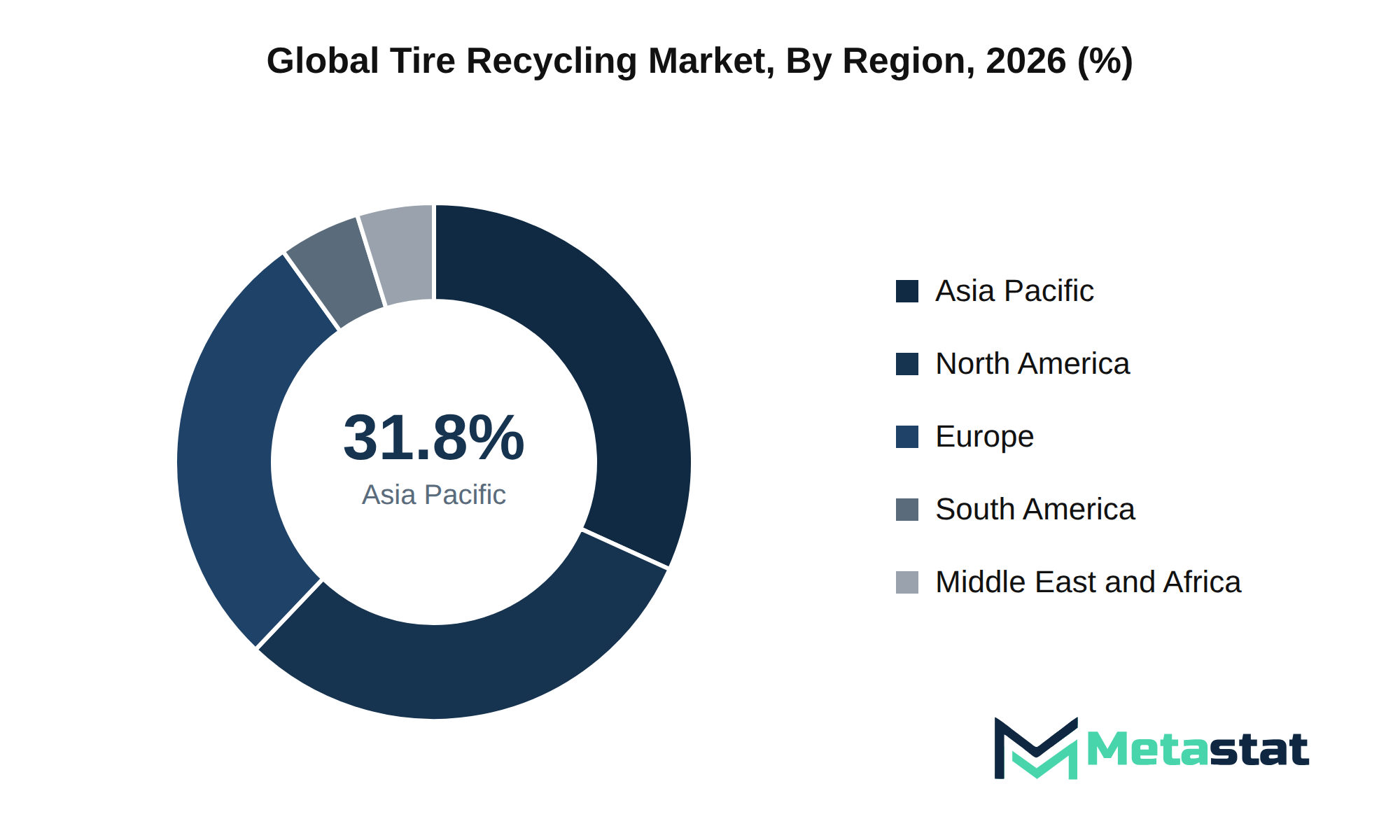
The Tire Recycling market consists of a diverse group of players focusing on various strategies to enhance competitive positioning. Companies engage in strategic alliances and joint ventures, aiming to strengthen their market reach and improve product offerings. This collaborative approach facilitates innovations in recycling technologies and helps navigate regulatory challenges. Players including Apollo Tyres Ltd., Bridgestone Corporation, and Continental AG leverage established brand equity to attract customers while addressing environmental concerns through enhanced recycling processes.
Several firms emphasize research and development to differentiate their products in the Tire Recycling market. Companies like Genan Holding A/S and Green Distillation Technologies Corporation LTD. invest significantly in proprietary technologies that enhance efficiency and output quality. These firms establish technological moats that deter new entrants from disrupting the market. Barriers to entry remain high due to the capital-intensive nature of recycling operations, combined with the need for specialized knowledge and advanced processing techniques.
The future competitive outlook involves a focus on sustainability and environmental impact, driving further consolidation and strategic growth vectors within the industry. Companies actively pursue value chain integration to optimize procurement leverage, ensuring a steady supply of raw materials from collected tires. Strategic growth initiatives will likely focus on customer retention strategies that enhance loyalty while adapting to evolving market demands.
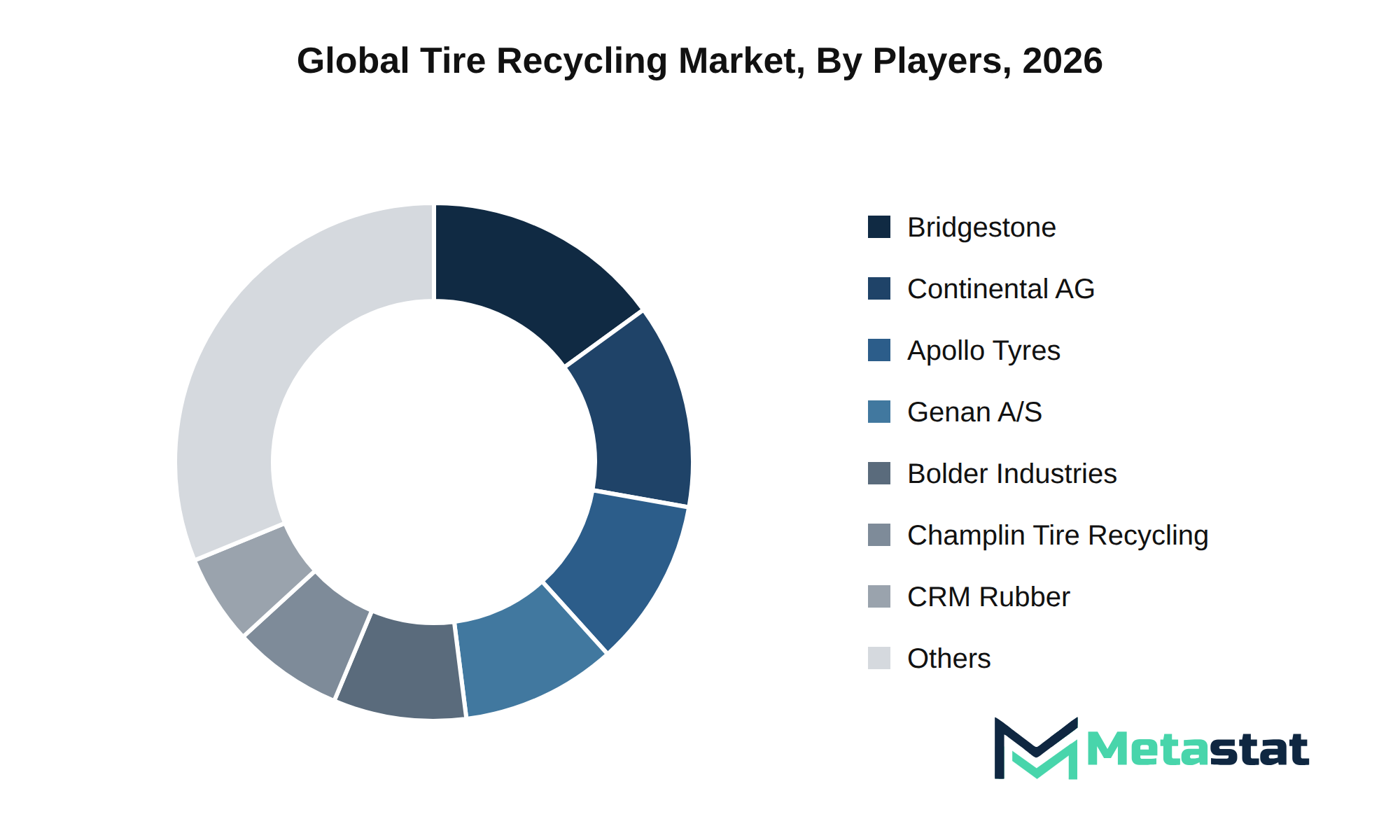
Market size is projected to rise from USD 6,104.3 million in 2025 to over USD 8,885.2 million by 2033. The base case anticipates a growth trajectory of 4.8% CAGR, reflecting stable demand and evolving industry practices. In a bullish scenario, heightened investment in next-generation technologies and strategic capital allocation could accelerate growth beyond the base case, driven by advancements in recycling processes and increased regulatory support for sustainable practices. Conversely, a bearish outlook encompasses potential disruptions from economic cycles, geopolitical realignments, and evolving trade corridors, which could challenge market stability and growth. The tire recycling market reflects an intricate landscape where macroeconomic factors, regulatory timelines, and emerging opportunities shape future growth dynamics.
The report strategically identifies and profiles the key market players and analyses their core competencies in each sub-segment of the Tire Recycling market.
Report Attributes | Details |
Study Period | 2021-2033 |
Base Year | 2025 |
Estimated Year | 2026 |
Forecast Period | 2026-2033 |
Historical Period | 2021-2025 |
Growth Rate | CAGR 4.8% from 2026 to 2033 |
Revenue Unit | USD million |
Segmentation | By Technology, Recovered Product, Source, End-Use Industry, and Region |
By Region | North America (By Technology, Recovered Product, Source, End-Use Industry, and Country)
|
Europe (By Technology, Recovered Product, Source, End-Use Industry, and Country)
| |
Asia Pacific (By Technology, Recovered Product, Source, End-Use Industry, and Country)
| |
South America (By Technology, Recovered Product, Source, End-Use Industry, and Country)
| |
Middle East and Africa (By Technology, Recovered Product, Source, End-Use Industry, and Country)
|
Find answers to common questions about this report
The Tire Recycling market size was valued at USD 6,104.3 million in 2025, according to the Metastat Insights study.
The Tire Recycling market is projected to grow at a CAGR of 4.8% during the forecast period from 2026 to 2033.
The North America Tire Recycling market size is estimated to reach USD 2,613.1 million by 2033.
The segment leading the Tire Recycling market is Ambient Mechanical Shredding & Granulation, with a projected value of USD 3,747.8 million by 2033. This segment demonstrates significant growth potential compared to other technology segments.
Increasing environmental awareness drives adoption of tire recycling technologies. Stringent emission limits and a shift towards closed-loop systems enable companies to reduce their carbon footprint while meeting consumer preferences for sustainable products. The transition towards circular economy practices further supports demand for recycled tire products across various industries.
Asia Pacific holds the dominant share of the Tire Recycling market, with a regional share of 31.8% in 2025. This positions it ahead of North America, which holds a share of 30.3%.
Regulatory constraints, including stringent compliance requirements, increase operational costs for recycling facilities. Macroeconomic factors including inflationary pressures and rising costs of raw materials and labor create barriers to market growth. Supply chain disruptions and market fragmentation hinder the efficient implementation of recycling technologies.
Increasing environmental awareness and stringent emission limits drive the adoption of tire recycling technologies. Industries including automotive manufacturing and construction prioritize sustainability, achieving cost efficiency and minimizing waste by incorporating recycled tire materials. This trend aligns with consumer preferences for eco-friendly alternatives, positioning the Tire Recycling market for growth.
The Tire Recycling market is estimated to reach a valuation of USD 8,885.2 million by 2033.
Key players in the Tire Recycling market include Apollo Tyres Ltd., Bridgestone Corporation, Continental AG, Genan Holding A/S, Liberty Tire Services LLC (Lakin Tire), Michelin Group S.A., and Pyrum Innovations AG.
The analysts below cover Automotive and Transportation research at Metastat Insights.
LEAD ANALYST
Utkarsh Khirodkar is a Lead Market Research Analyst at MetaStat Insight, specializing in market intelligence, technology sector assessments, and competitive strategy.

ENERGY & INFRASTRUCTURE INDUSTRY CONSULTANT
Automotive and Transportation · Electronics and Semiconductor · Energy and Power · Machinery & Equipment
Saurabh Vasant Ganvir consults for Energy & Infrastructure Industry at MetaStat Insight, specializing in renewable energy, solar EPC, and electric vehicle (EV) infrastructure markets.
Analyzing the transition from natural gas to green hydrogen in iron ore reduction requires realistic infrastructure timelines. Meta stat insight supplied a detailed regional assessment of DRI plant conversion costs and scrap metal availability in North America and Western Europe. Their report carefully examined pellet quality specs and electrical grid access constraints without making oversimplified market assumptions. The research material served as a practical reference during internal technology roadmap discussions.
Integrating zero-trust access controls across legacy electronic health record systems involves complex compliance overhead. Team produced an analysis that clearly separated identity governance and administration tools from privileged access management platforms. Their evaluation of HIPAA and GDPR compliance features across cloud native solutions gave our architecture group clear baseline criteria. The custom data request regarding biometric authentication adoption in hospital networks was returned promptly with clear documentation.
Evaluating calorific value requirements and air permit compliance across municipal waste facilities requires localized data. Metastat Insight structured their analysis around operational throughput capacity and feedstock composition variations in Latin America and Eastern Europe. Their competitive mapping of sorting equipment vendors helped clarify technology differences between optical separators and heavy media systems. The study provided an objective baseline during our capital expenditure reviews.
Explore related market intelligence reports worth reading alongside this one.