
LEAD ANALYST
Utkarsh Khirodkar is a Lead Market Research Analyst at MetaStat Insight, specializing in market intelligence, technology sector assessments, and competitive strategy.

United Kingdom Industrial Outdoor Storage (IOS) Market Size, Share, By Type (Storage Containers, Open Yards, Racks and Shelving Systems), By Industry (Logistics, Transportation, Construction, E-commerce, Automotive, Municipal Services, and Others), By Revenue Source (Sale, and Rent), By Industry Analysis, Growth, Trends, and Forecast, 2026-2033
Report ID
MSI-4571
Published
March, 2026
Updated
Pages
235 Pages
Format
Report Details
Choose Your License
United Kingdom Industrial Outdoor Storage (IOS) Market
The United Kingdom Industrial Outdoor Storage (IOS) market size was valued at USD 1,462.7 million in 2025. The market is projected to grow from USD 1588.4 million in 2026 to USD 2,849.2 million by 2033, exhibiting a CAGR of 8.7% during the forecast period.
United Kingdom Industrial Outdoor Storage (IOS) Market: Comprehensive Data-Driven Market Analysis and Strategic Outlook
The United Kingdom Industrial Outdoor Storage (IOS) market was valued at USD 1462.7 million in 2025 and is projected to grow at a CAGR of 8.7% through 2033, with potential to exceed USD 2849.2 million.
Storage Containers segment accounts for a market share of 42.8% in 2025.
Key trends driving growth include expansion in logistics, construction, and infrastructure projects increasing demand for flexible storage solutions, along with rising e-commerce and supply chain activity requiring cost-effective overflow storage.
Key opportunities include increasing demand for well-located, secured IOS facilities near ports, highways, and industrial hubs.
Key insight: The UK industrial outdoor storage market is gaining momentum through logistics growth and space constraints, while regulatory pressure and climate exposure shape investment strategies.
The UK industrial outdoor storage market will move beyond traditional capacity discussions within the industrial logistics and infrastructure industry and be viewed through a strategic land-use and operational flexibility lens. In the coming years, outdoor storage sites will be deployed not only as overflow solutions but also as long-term operational assets supporting project-based industries demanding supply continuity, infrastructure upgrades and spatial flexibility.
Future development will emphasize adaptive site design rather than standardized layouts. Operators will prioritize modular zoning, reinforced surfaces and dynamic access planning to support different storage periods and fluctuating inventory profiles. The market will move towards tighter integration with transport corridors, ports, and regeneration areas, enabling faster asset rotation and reduced reliance on adjacent warehouses. Such conditions will allow external facilities to support areas involving construction staging, energy transition equipment and large-format industrial materials without compromising turnaround efficiency.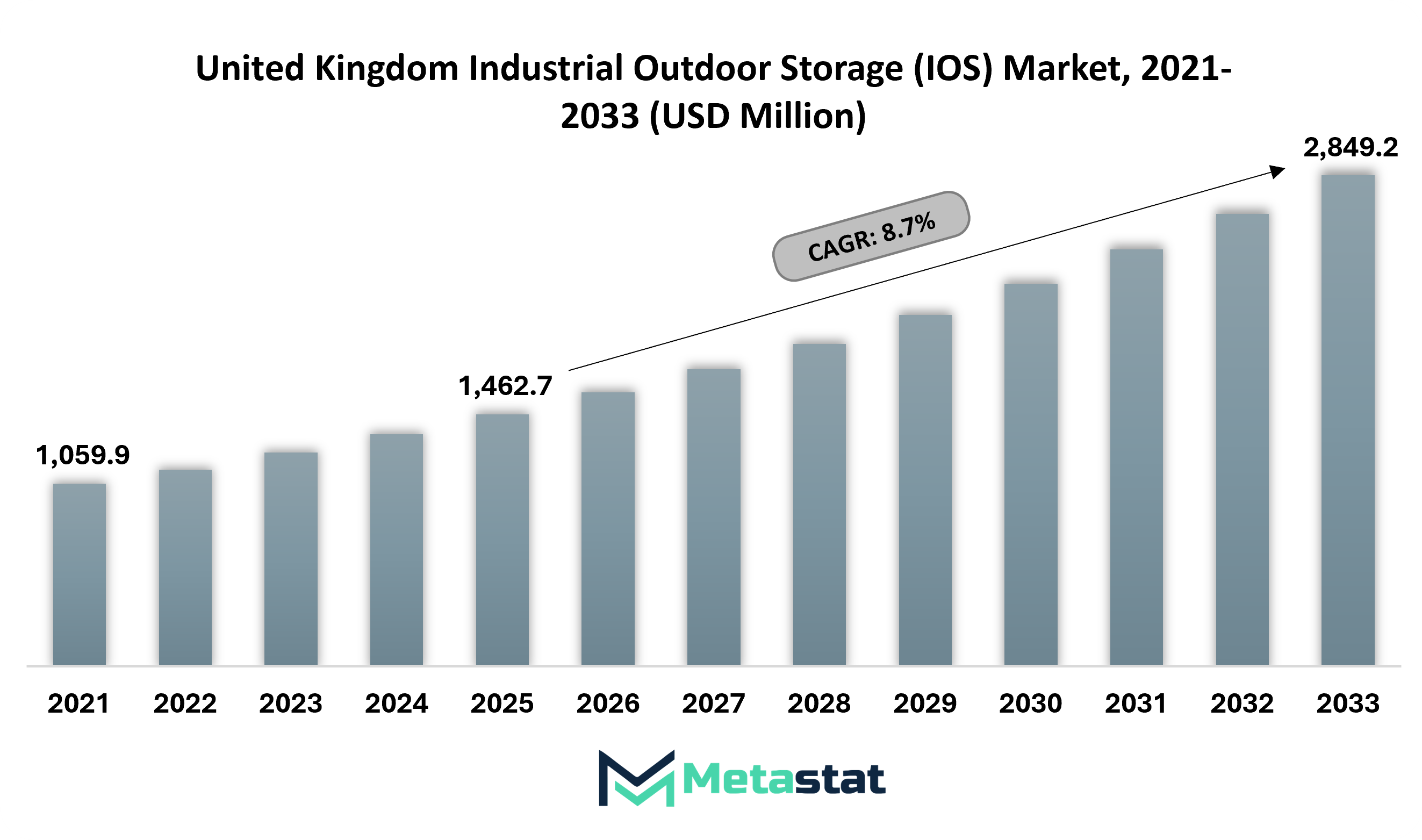
Growth in logistics, construction, and infrastructure projects increasing demand for flexible storage solutions.
Expansion in logistics, construction and large-scale infrastructure activities will accelerate the requirements for adaptable outdoor storage formats. Ongoing road, rail, energy, and urban renewal projects will generate continuous material movement. Flexible storage yards will support equipment staging, bulk material holding and phased deployment, strengthening operational efficiency across industrial supply chains.
Rising e-commerce and supply chain activities requiring cost-effective overflow storage.
The rapid growth of e-commerce distribution networks will put pressure on traditional storage capacity. Overflow storage options will gain relevance owing to price sensitivity and space optimisation priorities. Outdoor storage sites will support inventory buffering, vehicle parking, and handling, enabling faster fulfilment cycles and improved supply chain resilience.
Zoning regulations and land-use restrictions limiting site development.
Strict zoning frameworks and land-use controls will constrain development prospects in urban and semi-urban areas. Regulatory approval deadlines will slow site activation and expansion. The limited availability of conforming land parcels will increase acquisition costs, impact pricing structures, and reduce flexibility for operators seeking rapid market entry.
Exposure to weather conditions reducing suitability for certain stored materials.
Direct exposure to climatic conditions will limit storage suitability for temperature-sensitive or high-value materials. Rain, wind, and seasonal changes will require additional investment in protective measures. Material degradation risk will influence storage decisions, reduce applicable use cases, and increase operational planning complexity for facility operators.
Increasing demand for well-located, secured IOS facilities near ports, highways, and industrial hubs.
Multiple requirements will emerge for strategically located, secured outdoor storage facilities near ports, highways, and industrial corridors. Proximity to transportation nodes will reduce transit inefficiencies and support multimodal logistics techniques. Advanced security, digital access controls, and custom-designed layouts will enhance asset utilisation and support long-term commercial partnerships.
The United Kingdom Industrial Outdoor Storage (IOS) market is classified on Type, Industry, and Revenue Source.
By Type, the market is further segmented into:
Storage Containers segment was valued at USD 680.5 million in 2026 and is projected to reach USD 1297.5 million by 2033, at a CAGR of 9.7% during the forecast period.
Storage containers represent a controlled outdoor solution that supports safe inventory handling in variable environmental conditions. Modular deployment, smart locking integration, and weather-resistant materials will drive future demand. Industrial operators will adopt containerised formats enabling rapid transfers, standardised stacking, and predictable cost planning in logistics-driven operations.
Open Yards segment was valued at USD 586.7 Million in 2026 and is projected to reach USD 953.1 Million by 2033, at a CAGR of 7.2% during the forecast period.
Open yards support bulk material handling where accessibility and space utilization remain priorities. Further growth will be shaped by improved surface treatment, drainage planning and digital monitoring equipment. Industrial users will rely on open yards for large-sized inventory storage, manufacturing materials and high-turnover goods requiring frequent movement.
Racks & Shelving Systems segment was valued at USD 321.2 Million in 2026 and is projected to reach USD 598.6 Million by 2033, at a CAGR of 9.3% during the forecast period.
Outdoor rack and shelving systems provide vertical customization in limited industrial land parcels. Future adoption will increase through corrosion-resistant coatings and adjustable configurations. Warehousing strategies will increasingly integrate outdoor racking for durable and semi-finished goods, supporting rapid retrieval cycles and structured inventory separation.
By Industry, the market is divided into:
Logistics and Transportation segment is projected to reach USD 769.3 Million by 2033, at a CAGR of 8.7% during the forecast period.
Logistics and transportation operations rely on external storage for fleet equipment, transit goods and container staging. Future development will focus on proximity-based storage centers connected to multimodal corridors. Industrial planners will prioritise external capacity supporting faster turnaround times and reducing overcrowding in enclosed warehouse facilities.
Construction segment is projected to reach USD 398.9 Million by 2033, at a CAGR of 5.8% during the forecast period.
Construction activity relies heavily on external storage for raw materials, machinery and prefabricated units. Future growth will be in line with infrastructure investment and urban redevelopment. Outdoor storage solutions will evolve through reinforced layouts supporting heavy loads, advanced security compliance and rapid site-level content access.
E-commerce segment is projected to reach USD 797.8 Million by 2033, at a CAGR of 12% during the forecast period.
E-commerce fulfilment operations are increasingly using external storage for overflow inventory and packaging materials. Future demand will expand along with last-mile optimization strategies. Flexible outdoor formats will support seasonal inventory growth, reverse logistics handling and decentralized fulfilment models that will improve delivery speed and operational flexibility.
Automotive segment is projected to reach USD 313.4 Million by 2033, at a CAGR of 7.8% during the forecast period.
Automotive operations rely on external storage for vehicle staging, components and spare parts. Future adoption will increase through secure yard design and tracking-enabled layout. Industrial planners will integrate external storage into production flow management, supporting volume fluctuations and export-oriented distribution activity.
Municipal Services segment is projected to reach USD 284.9 Million by 2033, at a CAGR of 8.7% during the forecast period.
Municipal services use external storage for equipment, maintenance assets, and emergency response inventory. Future planning will focus on centralized outdoor depots to improve operational readiness. Public sector investment will support organized storage environments, ensuring rapid deployment, regulatory alignment, and long-term asset protection.
Others segment is projected to reach USD 284.9 Million by 2033, at a CAGR of 6.2% during the forecast period.
Other industrial segments, including energy, utilities, and manufacturing support services, will expand external storage use. Future growth will depend on region-specific customization and hybrid storage formats. Industrial land strategies will rapidly allocate outdoor space while supporting operational flexibility and cost efficiency.
By Revenue Source, the market is further divided into:
Sale segment is projected to reach USD 1,371.3 Million by 2033 with a share of 53.8% in 2025.
Sales-based revenue models support long-term ownership of external storage infrastructure. The priority will increase in the future among industrial entities seeking asset control and balance sheet stability. Optimized storage layouts purchased outright will enable operational stability and reduced dependence on external service providers.
Rent segment is projected to reach USD 1,477.9 Million by 2033 with a share of 46.2% in 2025.
Rental-based revenue models provide flexibility for short-term or fluctuating storage needs. Future demand will grow through project-based industrial activity and seasonal inventory cycles. Rental formats will support faster deployment, lower upfront investment and adaptive capacity planning in industrial areas.
The UK industrial outdoor storage market plays a stable role in supporting trade, logistics and infrastructure activity across the country. The requirement for open storage space will continue to grow owing to increased movement of construction materials, energy equipment, bulk cargo, and project logistics requiring flexible, large-scale yards. Ports and logistics centres across the UK will be at the heart of this market as they provide direct access to shipping routes, road networks, and industrial clusters. The market benefits from the country's strong import-export activity and the need for short- and medium-term storage that cannot be handled by closed warehouses.
Major port operators form the backbone of the UK industrial outdoor storage market. Associated British Ports (ABP), Peel Ports Group, DP World (London Gateway and Southampton), Forth Ports Limited, Port of Tyne and Bristol Port Company offer extensive outdoor storage areas designed to handle bulk cargo, heavy machinery, steel, timber, and energy-related equipment. These operators will continue to invest in yard expansion, surface upgrades and handling equipment to improve efficiency and attract long-term industrial customers. Their locations near manufacturing centres and transportation corridors reinforce their importance in the market.
Several regional and specialty ports also contribute significantly to market stability and coverage. Port of Blyth, Shoreham Port, Port of Workington, Montrose Port Authority, Port of Sunderland, Portico Shipping Ltd, Port of Aberdeen, Solent Stevedores, and James Kemball Ltd support the specific storage needs associated with offshore energy, agriculture, construction, and regional trade. These players will gain traction by offering adaptable lease terms, secure open yards, and services that support project cargo and seasonal demand patterns.
Beyond ports, logistics, and storage-focused companies add depth to the competitive landscape. Goldstar Transport, AD Logistics, TEPS, Open Storage Group, and National Self Storage expand access to outdoor storage for businesses that operate inland or need quick scalability without port dependency. These providers will benefit from the growing demand for decentralized storage spaces that reduce congestion at major ports and support faster delivery. Their role strengthens the overall market by serving industries that value flexibility, proximity and cost control.
Market size will rise from USD 1462.7 million in 2025 to over USD 2849.2 million by 2033.
The UK industrial outdoor storage market will attract interest for its potential to support long-term industrial projects and public infrastructure programmes. Investors will view these sites as complementary assets within a diversified logistics portfolio rather than as temporary stopgaps. Over time, outdoor storage will be positioned as a specialized industrial service layer, supporting national supply flexibility, redevelopment initiatives, and spatially intensive operations that enclosed facilities cannot efficiently accommodate.
This research report categorizes the Industrial Outdoor Storage (IOS) market based on key segments and regions, forecasts revenue growth, and analyses trends in each submarket. The report analyses the key growth drivers, opportunities, and challenges influencing the Industrial Outdoor Storage (IOS) market. Recent market developments and competitive strategies such as expansion, product launch, development, partnership, merger, and acquisition have been included to draw the competitive landscape in the market.
The report strategically identifies and profiles the key market players and analyses their core competencies in each sub-segment of the Industrial Outdoor Storage (IOS) market.
|
Report Attributes |
Details |
|
Study Period |
2021-2033 |
|
Base Year |
2025 |
|
Estimated Year |
2026 |
|
Forecast Period |
2026-2033 |
|
Historical Period |
2021-2025 |
|
Growth Rate |
CAGR 8.7% from 2026 to 2033 |
|
Revenue Unit |
USD Million |
|
Segmentation |
By Type, Industry, Revenue Source, and Region |
Find answers to common questions about this report
United Kingdom Industrial Outdoor Storage (IOS) market is estimated to reach USD 2,849.2 million by 2033.
Zoning regulations and land-use restrictions limiting site development. This will hamper market growth within the forecast period.
Storage Containers is the leading type segment in the United Kingdom market.
The Metastat Insights study shows that the United Kingdom Industrial Outdoor Storage (IOS) market size was USD 1,462.7 million in 2025.
Top players operating in the Industrial Outdoor Storage (IOS) industry include Associated British Ports (ABP), Peel Ports Group, DP World (London Gateway and Southampton), Forth Ports Limited, and Port of Tyne.
The United Kingdom Industrial Outdoor Storage (IOS) market is likely to grow at a CAGR of 8.7% over the forecast period (2026-2033).
Expansion in logistics, construction, and infrastructure projects increasing demand for flexible storage solutions, along with rising e-commerce and supply chain activity requiring cost-effective overflow storage, are key driving factors.
The analysts below cover Machinery & Equipment research at Metastat Insights.
LEAD ANALYST
Utkarsh Khirodkar is a Lead Market Research Analyst at MetaStat Insight, specializing in market intelligence, technology sector assessments, and competitive strategy.

INDUSTRY CONSULTANT - CHEMICALS & ADVANCED MATERIALS
Chemicals and Materials · Machinery & Equipment · Packaging
Amit Gadhekar Consultant for Chemicals and Materials at MetaStat Insight, directing sector-specific intelligence, research, and strategic consulting across global chemical and processing markets.

PRINCIPAL CONSULTANT - QUALITY SYSTEMS & COMPLIANCE
Electronics and Semiconductor · Machinery & Equipment · Professional Services
Omkar Phadtare is an Industry Consultant at MetaStat Insight, specializing in quality systems, regulatory compliance, and standards benchmarking to drive data-driven market intelligence and strategic industry research.

ENERGY & INFRASTRUCTURE INDUSTRY CONSULTANT
Automotive and Transportation · Electronics and Semiconductor · Energy and Power · Machinery & Equipment
Saurabh Vasant Ganvir consults for Energy & Infrastructure Industry at MetaStat Insight, specializing in renewable energy, solar EPC, and electric vehicle (EV) infrastructure markets.

LEAD CONSULTANT - COMMUNICATION, TELECOM, AND IT
Electronics and Semiconductor · Information & Technology · Machinery & Equipment · Professional Services
Ravindra Sathe Consultants for Communication, Telecom, and IT at MetaStat Insight. He leads the firm's industry research initiatives across telecommunications infrastructure, digital connectivity, enterprise networking, and emerging information technology domains.
Last Updated: August, 2026
Transitioning ultra-class mining haul trucks to alternative power requires concrete data on remote hydrogen refueling infrastructure economics. The report evaluated megawatt-scale electrolyzer installation expenses, onsite storage safety mandates, and heavy-duty fuel cell stack degradation under continuous duty cycles. That technical rigor helped our engineers benchmark realistic total operating cost horizons for off-highway fleet decarbonization.
Enterprise zero-trust network rollouts are often slowed down by multi-cloud transit latency and proprietary hardware retirement schedules. This study provided realistic total cost of ownership models comparing cloud-delivered security edge solutions against traditional hardware refreshes. The analysis of contract renewal lengths and software maintenance fees gave us clear visibility into enterprise replacement cycles over the next three to five years.
Scaling antibody-drug conjugate manufacturing hinges on contract manufacturing availability for high-potency active ingredients. The MetaStat Insight analysis looked closely at global cleanroom slot constraints, bioconjugation batch failure rates, and supply chain redundancies between the US, Europe, and India. The supplier capability matrix proved genuinely useful for our team when mapping secondary source options across our clinical pipeline.
Explore related market intelligence reports worth reading alongside this one.
Starting from
$2950