
LEAD ANALYST
Utkarsh Khirodkar is a Lead Market Research Analyst at MetaStat Insight, specializing in market intelligence, technology sector assessments, and competitive strategy.

Global Heavy-Duty Belt Scales Market Size, Share, By Type (Single Roller Scale and Multi-Roller Scale), By Installation Method (Suspended Type, Embedded Type, and Others), By Control System (Independent Controller, PLC Integration, and Others), By Application (Mining, Cement, Building Materials, Power Industry, Iron, Metallurgy, and Others), Industry Analysis, Growth, Trends, and Forecast, 2026-2033
Report ID
MSI-4699
Published
April, 2026
Pages
311 Pages
Format
Report Details
Choose Your License
Heavy-Duty Belt Scales Market
Global Heavy-Duty Belt Scales market size is valued at USD 1,323.1 million in 2025 and projected to grow at a CAGR of 5.0% during the forecast period, reaching USD 1,953.7 million by 2033.
North America accounts for 21.6% of the market in 2025, with the U.S. representing the leading country-level market within the region.
Single Roller Scale segment account for a market share of 36.8% in 2025.
Key trends driving growth: Increasing automation in mining, cement, and bulk material handling industries propels adoption of real-time conveyor weighing systems, along with rising focus on process optimization and inventory control enhances demand for accurate material flow measurement solutions.
Opportunities include integration of IoT and digital monitoring systems enables predictive maintenance and advanced data analytics for operational efficiency.
Key insight: The Global Heavy-Duty Belt Scales market is gaining momentum owing to industrial automation, throughput optimization, regulatory compliance, and demand for accurate continuous weighing systems.
The Global Heavy-Duty Belt Scales market within industrial equipment and process automation will move beyond traditional weight measurement applications. Belt scale systems are increasingly becoming operational intelligence tools, where material flow data supports production planning, inventory control, maintenance scheduling, and process efficiency. Growing integration with connected plant environments is enabling real-time performance monitoring and better operational decision-making across mining, cement, power, and bulk material handling facilities.
Over the coming years, weighing systems will shift toward intelligent, automated, and self-calibrating architectures. The Global Heavy-Duty Belt Scales market will increasingly support solutions designed for harsh environments, vibration-intensive operations, and variable load conditions. Advanced calibration systems, digital controllers, and cloud-connected analytics will improve long-term weighing accuracy while reducing manual intervention across large-scale industrial sites.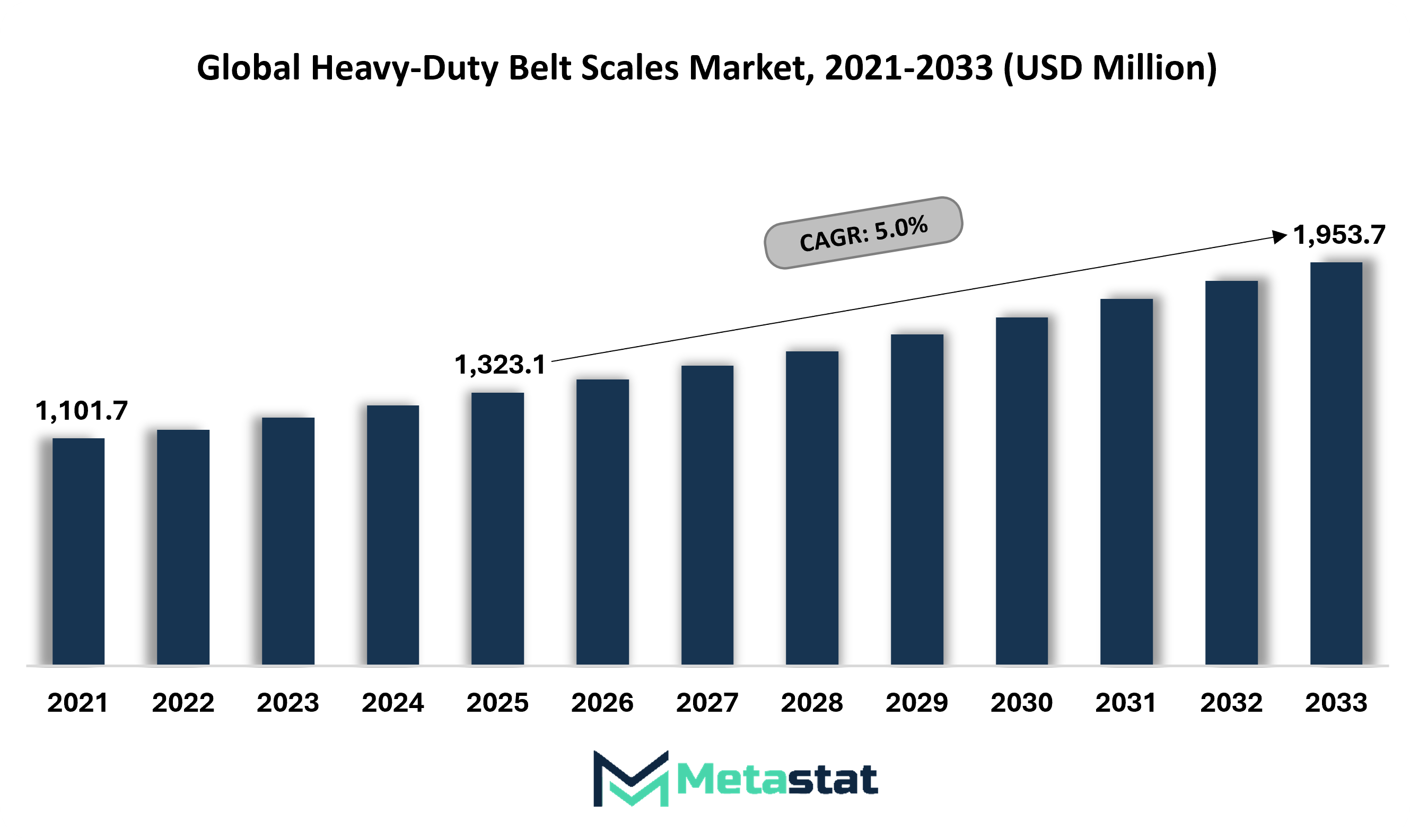
Increasing automation in mining, cement, and bulk material handling industries propels adoption of real-time conveyor weighing systems.
Mining plants, cement units, and bulk material handling facilities continue to expand automated production lines. Real-time conveyor weighing systems support continuous measurement, faster operational decisions, and reduced material loss. Smart plant planning is strengthening the need for reliable weighing networks across high-volume operations, creating steady momentum for the Global Heavy-Duty Belt Scales Market.
Rising focus on process optimization and inventory control enhances demand for accurate material flow measurement solutions.
Manufacturing companies are placing increased value on process efficiency and disciplined inventory control. Accurate material flow measurement supports inventory stability, production scheduling, and waste reduction. Future industrial operating models will support broader adoption of belt scale solutions, where precision data improves planning quality, operating margins, and supply continuity.
High installation and maintenance costs limit adoption in small and mid-scale industrial operations.
Initial spending on equipment procurement, calibration, structural modification, and servicing creates pressure on smaller industrial budgets. Mid-scale facilities often delay upgrades during cost-sensitive periods. Future expansion will face slower progress where capital allocation remains tight and maintenance planning lacks long-term investment support.
Accuracy challenges under variable load conditions and harsh environments affect measurement reliability.
Variable belt loads, vibration, dust, moisture, and temperature fluctuations can reduce measurement consistency. Harsh operating environments often require frequent recalibration and component inspection. Future buyers will prefer stronger designs, advanced compensation features, and ruggedized components before deploying belt scale systems across demanding industrial environments.
Integration of IoT and digital monitoring systems enables predictive maintenance and advanced data analytics for operational efficiency
IoT connectivity and digital monitoring are creating strong commercial potential for modern belt scale systems. Predictive maintenance tools help detect wear patterns, sensor drift, and service requirements before equipment failure occurs. Advanced analytics also improve throughput visibility, energy planning, and production coordination, supporting long-term market expansion.
The Global Heavy-Duty Belt Scales market is classified based on Type, Installation Method, Control System, and Application.
Single Roller Scale segment is valued at USD 510.3 million in 2026 and is projected to reach USD 656.1 million by 2033, at a CAGR of 3.7% during the forecast period.
Single Roller Scale demand remains steady across medium-load conveyor lines requiring compact design, faster installation, and lower maintenance requirements. Food processing plants, packaging units, and regional aggregate sites prefer these systems for reliable measurement, stable output data, and cost-effective modernization programs during upcoming capacity additions.
Multi-Roller Scale segment is valued at USD 877.6 million in 2026 and is projected to reach USD 1,297.7 million by 2033, at a CAGR of 5.7% during the forecast period.
Multi-Roller Scale adoption is increasing across heavy-load environments where vibration control, measurement stability, and higher weighing precision remain critical. Mining corridors, ports, and steel facilities prefer these systems for continuous bulk material transfer. Future installations will increase with the integration of smart diagnostics, rugged frames, and predictive service planning.
Suspended Type segment is projected to reach USD 783.8 million by 2033, at a CAGR of 4.2% during the forecast period.
Suspended Type systems gain preference where conveyor modification requirements remain limited and downtime costs remain high. These systems support faster deployment, easier service access, and flexible retrofitting across older production sites. Future adoption will grow through warehouse upgrades, terminal modernization, and seasonal material movement facilities.
Embedded Type segment is projected to reach USD 1,043.7 million by 2033, at a CAGR of 5.9% during the forecast period.
Embedded Type installations attract industries seeking permanent layout integration, stronger structural stability, and cleaner conveyor alignment. Cement plants, mineral processors, and utility stations value long operating life with reliable readings. Future growth will follow greenfield industrial projects where automated material flow receives priority investment.
Others segment is projected to reach USD 126.2 million by 2033, at a CAGR of 3.3% during the forecast period.
Other installation formats include customized frames, mobile units, and hybrid mounting arrangements designed for uncommon conveyor layouts. Specialized projects across recycling yards, inland terminals, and temporary extraction zones support niche adoption. Future product development will focus on modular designs and quick relocation capability.
Independent Controller segment is projected to reach USD 768.4 million by 2033.
Independent Controller systems remain popular where dedicated weighing functions, simple interfaces, and direct calibration access are preferred. Small factories and standalone conveyors prefer these solutions for easier operator training and limited integration costs. Future versions will include cloud alerts, remote audits, and stronger cybersecurity layers.
PLC Integration segment is projected to reach USD 1,080.8 million by 2033.
PLC Integration is expanding rapidly across connected factories seeking synchronized data flow among conveyors, feeders, batching units, and reporting dashboards. Process industries value centralized control, quick response logic, and reduced manual intervention. Future demand will strengthen with Industry 4.0 spending and plant digitization programs.
Others segment is projected to reach USD 104.5 million by 2033.
Other control formats include PC-based platforms, wireless modules, and custom automation programs designed for sector-specific requirements. Research centers, pilot plants, and mixed-system sites create steady opportunities. Future offerings will emphasize open architecture, analytics software, and compatibility across multi-brand industrial networks.
Mining segment is projected to grow at a CAGR of 5.8% during the forecast period.
Mining remains a major application owing to continuous ore transport, productivity tracking, and shipment verification requirements. Belt scale systems support extraction planning, grade movement data, and cost control measures. Future growth will accelerate through expansion in copper, lithium, coal, and iron ore operations.
Cement & Building Materials segment is projected to grow at a CAGR of 4.5% during the forecast period.
Cement and building materials facilities require accurate weighing for limestone, clinker, sand, and aggregate movement across conveyors. Reliable data improves batching stability, and dispatch control. Future construction spending across emerging economies will support fresh equipment demand and replacement cycles.
Power Industry segment is projected to grow at a CAGR of 3.6% during the forecast period.
Power industry utilization centers on coal handling, biomass feeding, ash movement, and fuel inventory tracking. Belt scales help maintain supply continuity, operational discipline, and emission-related performance targets. Future opportunities will rise through waste-to-energy plants and diversified fuel blending systems at utility sites.
Iron & Metallurgy segment is projected to grow at a CAGR of 5.4% during the forecast period.
Iron and metallurgy plants rely on conveyor weighing for ore, coke, scrap, pellets, and finished material transfer. Accurate measurement supports furnace scheduling, inventory discipline, and yield analysis. Future modernization programs will boost demand through automated mills and energy-efficient production lines worldwide.
Others segment is projected to grow at a CAGR of 5.7% during the forecast period.
Other applications include ports, fertilizers, chemicals, recycling, pulp processing, and agricultural logistics where bulk movement requires reliable measurement. Varied operating environments create the need for tailored hardware and software solutions. Future gains will emerge from circular economy projects and smarter cargo handling networks.
Based on geography, the Global Heavy-Duty Belt Scales market is divided into North America, Europe, Asia-Pacific, South America, Middle East, and Africa.
In North America, market growth is gaining momentum from modernization of conveyor assets and strong adoption of operational efficiency tools across mining, aggregates, cement, and industrial logistics facilities.
Europe represents a steady market for Heavy-Duty Belt Scales, supported by process automation, quarrying operations, cement production, recycling facilities, ports, and bulk material handling modernization.
Germany, France, the UK, Italy, and Spain remain important markets owing to established industrial infrastructure, strong manufacturing activity, and continuous investment in accurate material flow measurement.
Within Asia Pacific, the Heavy-Duty Belt Scales market benefits from increasing industrialization, mining expansion, cement production growth, and rising investment in smart plant systems.
Across the Middle East, Africa, and South America, the Heavy-Duty Belt Scales market is progressing through mining projects, port handling upgrades, and growing bulk commodity movement.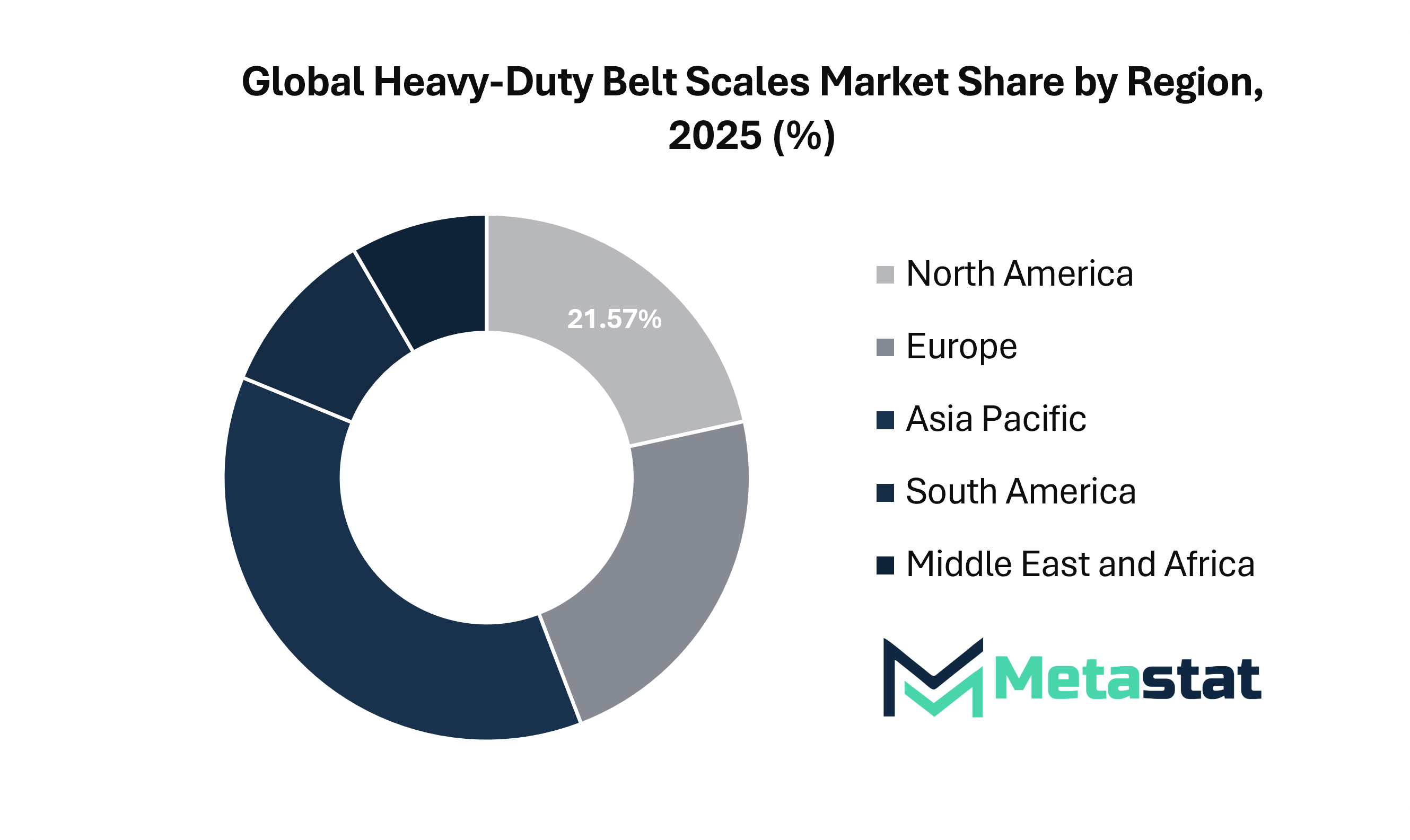
The Global Heavy-Duty Belt Scales Market supports mines, cement plants, ports, power sites, and bulk material handling lines where consistent measurement remains critical. These systems help operators track material flow, reduce waste, and maintain production continuity with fewer disruptions. Accurate real-time weight data improves planning efficiency, strengthens loss control, and supports better inventory visibility. Adoption is increasing as industries require faster reporting, cleaner data, and equipment capable of operating under dust, vibration, moisture, and harsh outdoor conditions.
Buyers often prioritize rugged frames, stable sensors, clear displays, calibration ease, and software that connects with plant control systems. Easy servicing remains critical since downtime can disrupt an entire process line. In older facilities, replacement projects are increasing as companies shift toward modern systems that deliver higher accuracy than earlier models. New installations are also expanding in developing regions where mining, aggregates, fertilizer, and food processing activities continue to grow. Digital tools now help companies monitor performance from remote locations, making service planning easier and more predictable.
Competition in the Global Heavy-Duty Belt Scales market remains strong as buyers evaluate equipment cost, service life, support quality, calibration convenience, integration capability, and long-term field reliability before purchase decisions. Thermo Fisher Scientific Inc., Siemens AG, Qlar Europe GmbH, and Coperion GmbH maintain strong industrial reach through established weighing, automation, and bulk material handling portfolios. MERRICK Industries, Inc., Tecnetics Industries, Inc., and Thayer Scale-Hyer Industries, Inc. are recognized for practical weighing solutions used across demanding plant environments, while Belt-Way Scales Inc., Cardinal Scale Manufacturing Company, and Superior Industries, Inc. serve customers requiring durable field performance and reliable conveyor weighing accuracy.
AViTEQ Vibrationstechnik GmbH, Jesma Weighing Solutions A/S, and S-E-G Instrument AB add further competitive depth through application-specific weighing systems, engineering support, and customized solutions for bulk material handling operations. KUKLA Waagenfabrik GmbH & Co. KG, BLH Nobel AB, and FMS Force Measuring Systems AG strengthen the market through precision measurement capabilities and industrial weighing expertise. Tamtron Group Oyj, PRECIA MOLEN, Yamato Scale Co., Ltd., and Rice Lake Weighing Systems continue to support industrial weighing applications across multiple regions. NOV Inc., Loadrite (Auckland) Ltd., Control Systems Technology Pty Ltd, and Hunter Weighing Pty Ltd further expand buyer options through belt scale systems, monitoring solutions, and weighing technologies suited for mining, quarrying, ports, cement, and process industries.
Market size is forecast to rise from USD 1,323.1 million in 2025 to over USD 1,953.7 million by 2033.
The Global Heavy-Duty Belt Scales market is expected to integrate increasingly with plant-wide analytics ecosystems, where continuous weight data supports inventory planning, energy optimization, predictive maintenance, and production efficiency. Traceability requirements, process automation, and operational efficiency targets are expected to strengthen adoption across industrial sectors during the forecast period.
This research report categorizes the Heavy-Duty Belt Scales market based on key segments and regions, forecasts revenue growth, and analyses trends in each submarket. The report analyses the key growth drivers, opportunities, and challenges influencing the Heavy-Duty Belt Scales market. Recent market developments and competitive strategies such as expansion, product launch, partnership, merger, and acquisition have been included to draw the competitive landscape in the market.
The report strategically identifies and profiles the key market players and analyses their core competencies in each sub-segment of the Heavy-Duty Belt Scales market.
|
Report Attributes |
Details |
|
Study Period |
2021-2033 |
|
Base Year |
2025 |
|
Estimated Year |
2026 |
|
Forecast Period |
2026-2033 |
|
Historical Period |
2021-2025 |
|
Growth Rate |
CAGR 5.0% from 2026 to 2033 |
|
Revenue Unit |
USD million |
|
Sales Volume Unit |
Units |
|
Segmentation |
By Type, Installation Method, Control System, Application, and Region |
|
By Region |
North America (By Type, Installation Method, Control System, Application, and Country)
|
|
Europe (By Type, Installation Method, Control System, Application, and Country)
|
|
|
Asia Pacific (By Type, Installation Method, Control System, Application, and Country)
|
|
|
South America (By Type, Installation Method, Control System, Application, and Country)
|
|
|
Middle East and Africa (By Type, Installation Method, Control System, Application, and Country)
|
Find answers to common questions about this report
Top players operating in the Heavy-Duty Belt Scales industry include Thermo Fisher Scientific Inc., Siemens AG, Qlar Europe GmbH, Coperion GmbH, MERRICK Industries, Inc., and Tecnetics Industries, Inc.
The Multi-Roller Scale is the leading type segment in the Global market.
High installation and maintenance costs limit adoption in small and mid-scale industrial operations. will hamper the market growth within the forecast period.
Asia Pacific region dominates the market.
Increasing automation in mining, cement, and bulk material handling industries propels adoption of real-time conveyor weighing systems. and Rising focus on process optimization and inventory control enhances demand for accurate material flow measurement solutions. are key driving factors, boosting the market.
Global Heavy-Duty Belt Scales market is estimated to reach USD 1,953.7 million by 2033.
The Global Heavy-Duty Belt Scales market is expected to grow at a CAGR of 5.0% over the forecast period (2026-2033).
The Metastat Insights analysis shows that the North America Heavy-Duty Belt Scales market size is estimated to be USD 393.5 million by 2033.
The Metastat Insights study shows that the Global Heavy-Duty Belt Scales market size was USD 1,323.1 million in 2025.
The analysts below cover Machinery & Equipment research at Metastat Insights.
LEAD ANALYST
Utkarsh Khirodkar is a Lead Market Research Analyst at MetaStat Insight, specializing in market intelligence, technology sector assessments, and competitive strategy.

INDUSTRY CONSULTANT - CHEMICALS & ADVANCED MATERIALS
Chemicals and Materials · Machinery & Equipment · Packaging
Amit Gadhekar Consultant for Chemicals and Materials at MetaStat Insight, directing sector-specific intelligence, research, and strategic consulting across global chemical and processing markets.

PRINCIPAL CONSULTANT - QUALITY SYSTEMS & COMPLIANCE
Electronics and Semiconductor · Machinery & Equipment · Professional Services
Omkar Phadtare is an Industry Consultant at MetaStat Insight, specializing in quality systems, regulatory compliance, and standards benchmarking to drive data-driven market intelligence and strategic industry research.

ENERGY & INFRASTRUCTURE INDUSTRY CONSULTANT
Automotive and Transportation · Electronics and Semiconductor · Energy and Power · Machinery & Equipment
Saurabh Vasant Ganvir consults for Energy & Infrastructure Industry at MetaStat Insight, specializing in renewable energy, solar EPC, and electric vehicle (EV) infrastructure markets.

LEAD CONSULTANT - COMMUNICATION, TELECOM, AND IT
Electronics and Semiconductor · Information & Technology · Machinery & Equipment · Professional Services
Ravindra Sathe Consultants for Communication, Telecom, and IT at MetaStat Insight. He leads the firm's industry research initiatives across telecommunications infrastructure, digital connectivity, enterprise networking, and emerging information technology domains.
Evaluating sovereign cloud deployments for core banking platforms demands a clear view of data residency regulations and migration exit strategies. MetaStat Insight delivered an exhaustive review of regional latency tolerances, mainframe decommission milestones, and third-party vendor concentration risk. The regulatory compliance mapping across European and Asian financial jurisdictions gave our team a dependable baseline for multi-cloud infrastructure discussions.
Replacing petrochemical surfactants with bio-based alternatives requires realistic timelines on industrial precision fermentation scaling. The market research broke down commercialization timelines, feedstock sugar price sensitivities, and regional cosmetic ingredient regulatory approvals in Europe and East Asia. That supplier readiness mapping gave our formulations team reliable context when comparing renewable chemical sourcing roadmaps.
Tracking ceramic matrix composite adoption in high-bypass aero engines requires strict attention to material qualification cycles and FAA airworthiness testing milestones. The MetaStat Insight team provided a detailed timeline of silicon carbide fiber manufacturing capacity and commercial foundry lead times. Having clear visibility into upstream thermal barrier coating supply helped us stress-test our long-term component procurement strategy.
Explore related market intelligence reports worth reading alongside this one.
Starting from
$2950