
LEAD ANALYST
Utkarsh Khirodkar is a Lead Market Research Analyst at MetaStat Insight, specializing in market intelligence, technology sector assessments, and competitive strategy.

Global Construction Scaffolding Market Size, Share, By Scaffolding Type (Fixed Supported Scaffolding, Mobile Tower Scaffolding, Suspended Scaffolding), By Material (Steel, Aluminum, Bamboo, Timber, and Others), By Construction Sector (Residential Buildings, Commercial Buildings, Civil Infrastructure, Industrial Buildings, Institutional Buildings, and Others), By Offering (Equipment Sales, Rental and Associated Services), Industry Analysis, Growth, Trends, and Forecast, 2026-2033
Report ID
MSI-3599
Published
November, 2026
Pages
272 Pages
Format
Historical
Base year
Forecast
Forecast period
Report Details
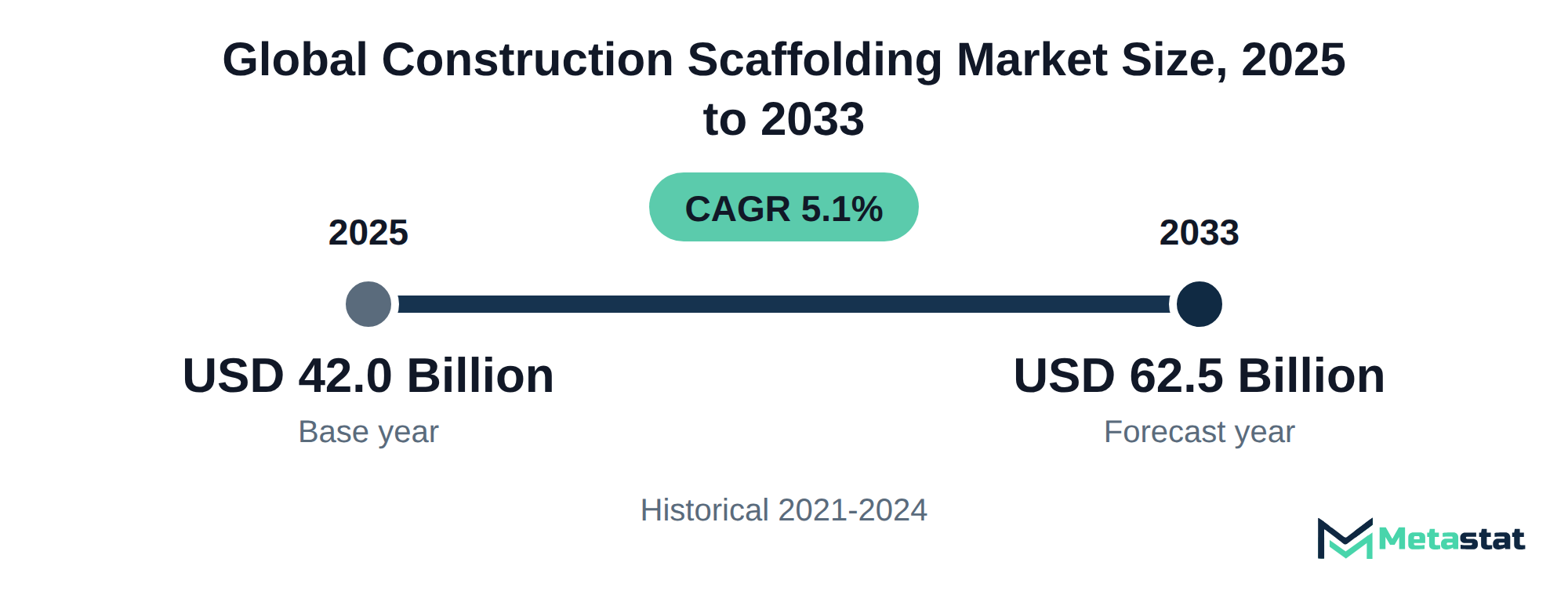
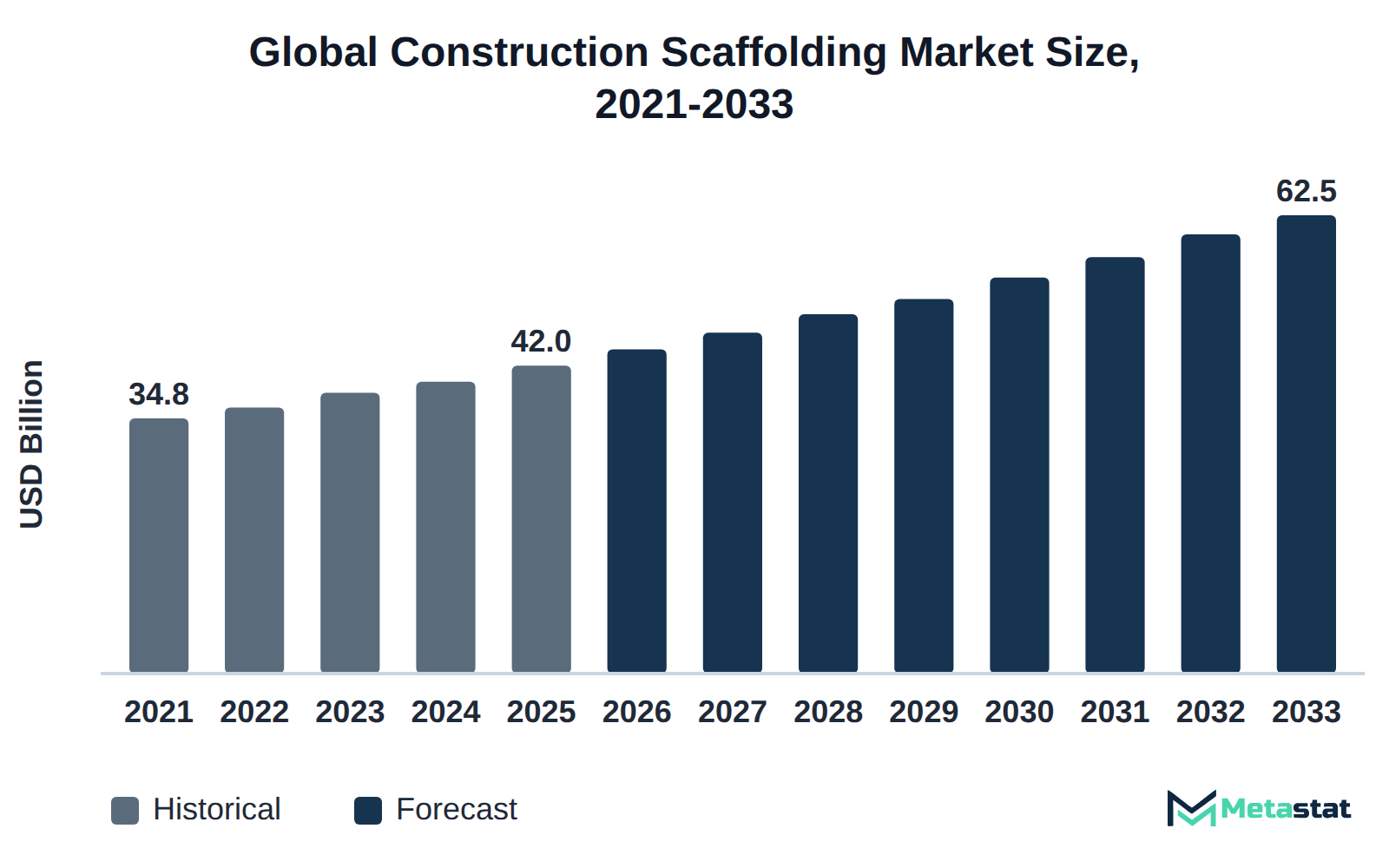
Market Valuation: Valued at $42 Billion in 2025, projected to reach $62.5 Billion by 2033 at a 5.1% CAGR.
Dominant Segment: Fixed Supported Scaffolding leads the market, driven by its essential role in providing stability for various construction projects. This segment is projected to grow from USD 28.4 billion in 2026 to USD 41.3 billion by 2033, reflecting a CAGR of 5.5%.
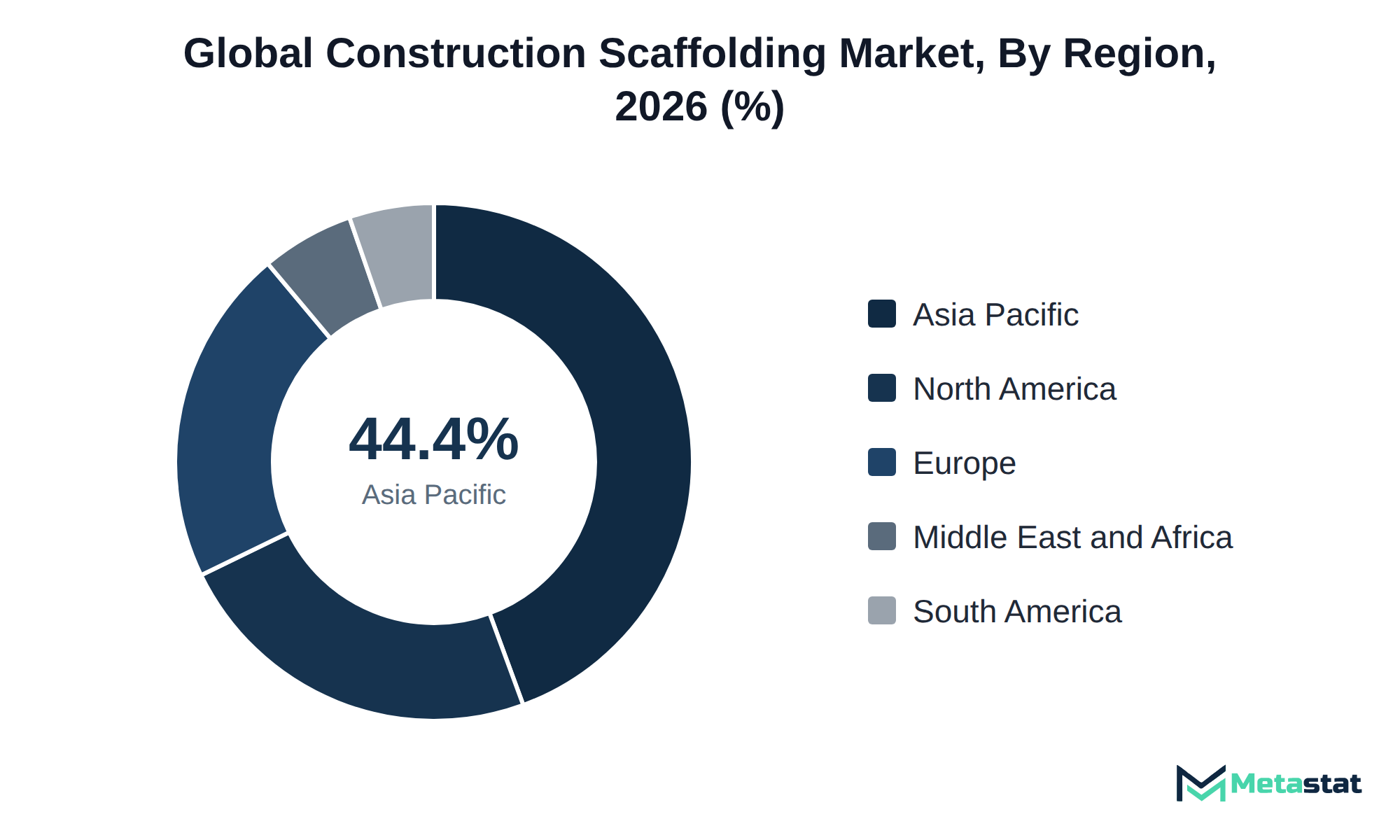
Geographic Lead: The Asia Pacific region holds a dominant share of 44.4%, fueled by rapid urbanization and industrial growth. This region's significant contribution to overall demand is supported by ongoing infrastructure development.
What's Inside: The report provides a comprehensive analysis of the global Construction Scaffolding market, including competitive coverage, segment breakdown by type, material, and construction sector, along with forecasts extending to 2033.
Emerging Technologies: Innovations in scaffolding technologies are enhancing operational efficiency, with advancements in materials leading to lighter, more durable options. These developments are driving the adoption of mobile and modular scaffolding solutions in various construction applications.
Rental Economics: The rental and associated services segment is projected to reach USD 28 billion by 2033, reflecting a growing preference for flexible, cost-effective scaffolding solutions among contractors, particularly for short-term projects.
Choose Your License
Global Construction Scaffolding Market
The global Construction Scaffolding market was valued at USD 42 billion in 2025 and is projected to reach USD 62.5 billion by 2033, growing at a CAGR of 5.1% over the forecast period.
The Construction Scaffolding market encompasses a variety of scaffolding types, materials, and offerings that cater to diverse construction needs. Buyers, including contractors and construction companies, invest in scaffolding solutions to ensure safety, efficiency, and compliance with regulations. The market's offerings include equipment sales and rental services, which provide flexibility in project execution and cost management.
Growth in the market is driven by increasing investments in infrastructure development and commercial construction activities. Fixed Supported Scaffolding holds the largest value within the market, reflecting its essential role in providing stable support for various construction projects. North America holds 23.4% of the market in 2025, with the US leading in 2026. This regional dominance stems from robust construction activities and a focus on safety standards.
Technological advancements in scaffolding materials and designs enhance operational efficiency and safety, further propelling market expansion. The Asia Pacific region, with its rapid urbanization and industrial growth, contributes significantly to overall demand. The region holds a 44.4% share of the global construction scaffolding market. Continuous development in emerging economies supports the construction industry's growth trajectory.
The Construction Scaffolding market addresses various applications within the construction sector, focusing on providing structural support during building projects. Buyers invest in these solutions to enhance safety, efficiency, and productivity on site. The flexibility of scaffolding options allows for tailored solutions that meet specific project requirements, driving significant expenditure in this area.
Rising construction activity worldwide propels market growth, particularly in the Asia Pacific region, which holds a dominant share of 44.4%. Fixed Supported Scaffolding stands out, reflecting its widespread use in diverse construction projects. The ongoing expansion of residential and commercial buildings contributes to the rising demand for scaffolding solutions.
Technological advancements in materials and design further support market growth, enhancing product offerings and promoting safety. Increased awareness of occupational health and safety regulations drives investment in reliable scaffolding systems to comply with industry standards. This focus on safety and efficiency shapes the market, leading to higher adoption rates across various construction sectors.
Ringlock scaffolding and prefabricated frames have gained traction in high-rise construction, transforming project efficiency and safety. This system offers modular components that enable rapid assembly and disassembly, enhancing workflow on construction sites. The construction scaffolding market reflects a shift towards more advanced and adaptable solutions. The Fixed Supported Scaffolding segment is expected to grow from USD 28.4 billion in 2026 to USD 41.3 billion by 2033, a compound annual growth rate (CAGR) of 5.5%. This increase highlights the demand for systems that support complex structures while ensuring worker safety.
In high-rise projects, the integration of ringlock scaffolding provides significant benefits, including reduced labor costs and shorter construction times. The ability to customize configurations for various building designs allows contractors to optimize resources effectively. Prefabricated frames contribute to this efficiency by minimizing the need for on-site fabrication, thus reducing waste and enhancing site safety. These advancements position contractors to meet tight deadlines and budget constraints, creating a competitive edge in the market.
Aluminum scaffold towers represent a crucial option for building renovation and interior fit-out projects, offering both flexibility and strength. The pricing models for these towers reflect their demand in the market, with a significant focus on rental and associated services. This segment is projected to reach a value of USD 28 billion by 2033, highlighting a growing inclination towards these solutions in construction activities.
Buyers typically engage in rental contracts that provide access to aluminum scaffold towers without the need for substantial upfront investments. This approach allows firms to allocate resources more efficiently, especially during large-scale renovation projects. Rental agreements often include maintenance and support services, ensuring that equipment remains in optimal condition throughout its use. Such arrangements enhance operational efficiency and minimize downtime.
Buyers in the construction scaffolding market need a clear understanding of pricing and contract structures. The flexibility offered by rental options facilitates project adaptability, enabling companies to respond to varying demand levels. The market for aluminum scaffold towers is expected to continue growing, driven by this shift towards dynamic procurement practices.
Long-duration infrastructure projects require reliable scaffolding solutions that balance durability and cost-effectiveness. Rental services have emerged as a preferred option among contractors due to their flexibility and lower upfront investments. For instance, the Equipment Sales segment in the Construction Scaffolding market is projected to grow from USD 24.8 billion in 2026 to USD 34.4 billion by 2033, reflecting a compound annual growth rate of 4.8%. This growth signifies a shift toward more project-specific equipment rentals rather than outright purchases, aligning with contractors' needs for adaptive strategies in managing resources over extended periods.
Infrastructure projects often span several years, necessitating scaffolding that meets diverse safety and operational requirements. Rental agreements allow for adjustments based on the project phase and specific demands, providing significant financial advantages. This approach minimizes the burden of maintaining an extensive inventory of scaffolding materials while ensuring compliance with safety regulations. The Construction Scaffolding market benefits from increased adoption of rental solutions, enhancing contractors' capacity to allocate resources effectively and focus on project execution without the overhead associated with purchased assets.
Renting scaffolding often proves to be a cost-effective solution compared to purchasing, particularly for short-term projects. The Construction Scaffolding market reflects this trend, with the rental and associated services segment projected to reach USD 28 billion by 2033. This figure highlights the growing inclination of businesses to opt for rentals rather than significant capital expenditures on equipment that will only be used briefly.
Several factors contribute to the decision to rent rather than buy. Short-term projects, fluctuating demand, and the need for flexibility significantly influence this choice. Renting scaffolding provides companies access to the latest equipment without maintenance concerns or long-term commitments. The rental option allows businesses to allocate funds more effectively by avoiding upfront costs associated with purchasing scaffolding.
The decision to rent instead of buy hinges on project duration, financial strategy, and operational flexibility. The increasing acceptance of rental solutions within the Construction Scaffolding market illustrates a broader shift toward more adaptable business models that prioritize efficiency and cost-effectiveness.
Growing governmental and private sector investment in infrastructure projects drives demand for scaffolding. This substantial increase in funding leads to greater activity in the construction sector, particularly in civil infrastructure and commercial buildings. The Construction Scaffolding market sees heightened purchases driven by the need for reliable scaffolding solutions that ensure safety and efficiency. The market is expected to expand from USD 42 billion in 2025 to USD 62.5 billion by 2033, a compound annual growth rate (CAGR) of 5.1 percent. Higher infrastructure spending increases scaffolding use and influences pricing dynamics, creating competition among suppliers to meet rising demand. End-users, including contractors and construction firms, prioritize investments in scaffolding systems to enhance operational efficiency and project timelines.
Innovations in scaffolding technologies contribute significantly to operational efficiency in construction projects. Advancements in materials and design have led to the development of lightweight yet sturdy scaffolding options, including those made from advanced composites and aluminum alloys. These innovations decrease transportation costs and simplify assembly processes, resulting in faster project execution. The Construction Scaffolding market benefits from these changes through increased adoption of mobile solutions and modular systems that enhance flexibility for various construction applications.
Integration of digital technologies, including cloud-based construction management software and real-time monitoring, optimizes scaffolding inventory and tracking. Such technologies improve safety and compliance standards on job sites, attracting firms aiming to minimize risks. The market experiences growth driven by these technological enhancements, allowing businesses to address complex construction challenges effectively. These technologies support the market's continued development and position it for expansion in the coming years.
Price volatility in raw materials significantly influences buyer decisions within the construction scaffolding market. Escalating costs of essential inputs, including steel and aluminum, create challenges for construction firms, particularly in the residential and commercial sectors. These price fluctuations often lead to smaller order sizes and delays in project timelines, with builders facing uncertainty in budgeting. Tighter profit margins drive construction companies to exercise caution in their investment strategies, resulting in slower adoption rates for new scaffolding technologies. The impact of rising prices deters several contractors from engaging in larger projects, limiting overall market growth opportunities. As a result, scaffolding demand remains constrained as firms manage the financial pressures of volatile material costs.
Rising material costs pose significant challenges for suppliers within the market, impacting profitability and the ability to deliver competitive pricing. Fluctuations in the prices of key inputs, including steel and aluminum, directly affect overall project budgets. Suppliers have begun to implement strategies to mitigate these pressures, including bulk purchasing agreements and long-term contracts with manufacturers. These approaches aim to stabilize costs and enhance budget predictability. Suppliers increasingly explore alternative materials, including bamboo and engineered composites, which present opportunities for cost savings and sustainability. The focus on cost-effective solutions allows suppliers to maintain their positions while accommodating the evolving demands of the Construction Scaffolding market. Enhanced efficiency in material usage through improved design and production processes further supports profitability, enabling suppliers to meet market needs without sacrificing quality.
Significant growth in the aluminum scaffolding segment highlights an emerging opportunity within the Construction Scaffolding market. The segment is projected to reach USD 20.4 billion by 2033, growing at a CAGR of 7.1%. The lightweight nature and corrosion resistance of aluminum make it particularly appealing for various construction applications, including residential and commercial buildings. Buyers increasingly recognize the advantages of aluminum scaffolding, especially in urban projects where mobility and ease of assembly are critical factors. Enhanced safety features and reduced installation times further support its adoption. The diverse range of applications across different construction sectors positions aluminum scaffolding as a vital offering that addresses current market demands and aligns with broader industry trends. This growth trajectory highlights the potential for suppliers focusing on aluminum products to gain a competitive edge in the evolving market.
The Global Construction Scaffolding market is segmented based on Scaffolding Type, Material, Construction Sector, and Offering.
This scaffolding type provides essential support for various construction activities, particularly in residential and commercial building projects. Construction companies choose fixed supported scaffolding for its stability and reliability, ensuring safe work environments. Growing demand for residential buildings, projected to expand from USD 15.1 billion in 2026 to USD 20.3 billion by 2033 at a CAGR of 4.3%, fuels the need for this scaffolding type. Compared to mobile tower scaffolding, which has a lower growth rate of 4.7%, fixed supported scaffolding experiences a more robust expansion, driven by increasing complexity and scale of construction projects. Enhanced safety standards and regulations further push adoption, reinforcing the segment's importance in the market.
Mobile Tower Scaffolding segment is estimated to reach USD 11.3 billion by 2033, at a CAGR of 4.7% during the forecast period. This scaffolding type primarily supports works involving maintenance, repair, and construction tasks that require flexibility and mobility. Commonly used by contractors and construction companies, Mobile Tower Scaffolding allows for quick assembly and disassembly, enhancing project speed. Demand for this segment is driven by an increasing number of small- to medium-sized construction projects, which require versatile solutions. Compared to Fixed Supported Scaffolding, which shows a higher CAGR of 5.5%, Mobile Tower Scaffolding demonstrates a steadier growth trajectory. This distinction reflects different application needs, with Mobile Tower Scaffolding appealing to environments where space constraints or rapid relocation are factors. The segment's advantages include ease of transport and setup, reinforcing its position in the market.
Suspended scaffolding segment is expected to reach USD 9.9 billion by 2033. This type of scaffolding serves critical functions in construction projects requiring access to elevated work areas, including building facades and bridges. Crews working from suspended platforms at these heights also rely on fall protection equipment to meet safety requirements. It primarily benefits contractors and construction companies focused on high-rise buildings and complex infrastructure. Demand for suspended scaffolding is influenced by the increasing complexity of construction projects, which requires efficient access solutions. This segment differentiates itself from others, including fixed supported scaffolding, by offering flexibility and adaptability, resulting in a competitive edge for projects needing quick setup and dismantling. The growth trajectory for suspended scaffolding remains promising, driven by ongoing infrastructure investments and advancements in safety standards that enhance its application in various settings. In comparison to mobile tower scaffolding, which has a lower expected growth rate of 4.7%, suspended scaffolding's unique properties create a more robust market position.
Steel segment is valued at USD 24.5 billion in 2026 and is projected to reach USD 33.8 billion by 2033, at a CAGR of 4.7% during the forecast period. Primarily used in construction projects requiring robust structural support, steel scaffolding finds applications in residential, commercial, and industrial buildings. Demand for this material arises from its strength and durability, making it a preferred choice among contractors and builders. Steel scaffolding exhibits slower growth compared to aluminum alternatives, which benefit from a higher CAGR of 7.1%. Fluctuations in raw material prices impact the cost structure and pricing strategies in the market, influencing buyers' purchasing decisions and project budgeting. Adoption of innovative designs and manufacturing techniques enhances the appeal of steel scaffolding, providing potential for increased market penetration and revenue growth.
The aluminum scaffolding segment primarily serves construction professionals in residential and commercial projects, where lightweight and corrosion-resistant materials enhance safety and efficiency. Growing demand for aluminum scaffolding stems from its portability and ease of assembly, leading to increased adoption among contractors focused on reducing labor costs and project timelines. Compared to other material segments, aluminum scaffolding experiences faster growth, fueled by the rising preference for lightweight solutions over heavier alternatives like steel, which has a CAGR of 4.7%. The market's shift towards sustainable building practices boosts aluminum's appeal, aligning with environmental standards and regulations aimed at reducing the carbon footprint of construction operations.
Bamboo scaffolding is projected to reach USD 5.1 billion by 2033. This material provides a sustainable alternative in construction projects, appealing to environmentally conscious builders and clients. The segment primarily caters to residential and low-rise commercial buildings, where lightweight and renewable materials are preferred. Key growth drivers include increasing awareness of sustainable practices and rising demand for eco-friendly construction solutions. With a CAGR of 0.7%, bamboo scaffolding experiences slower growth compared to steel and aluminum alternatives, which offer higher durability and strength. While bamboo scaffolding presents a cost-effective option, limitations in structural capacity hinder its adoption in larger-scale projects. The market continues to show a shift toward more sustainable materials, increasing competition among various material segments.
Timber is projected to grow at a CAGR of 0.7% during the forecast period. This material finds application in various construction sectors, particularly in residential projects, where it represents a sustainable option for scaffolding structures. Factors including its environmental benefits and ease of sourcing influence demand for timber scaffolding. However, compared to other materials like steel and aluminum, timber lacks growth momentum, reflecting a slower adoption rate. For instance, the aluminum segment, with a projected CAGR of 7.1%, presents a more robust opportunity for suppliers and buyers. This slower growth in the timber segment is attributed to its limited load-bearing capacity relative to stronger materials, which affects its appeal for more demanding construction needs. The Construction Scaffolding market continues to evolve, with various materials vying for prominence based on specific application requirements and project scopes.
Fiberglass and composites provide alternative materials in scaffolding applications, offering lightweight and corrosion-resistant options for various construction needs. These materials find usage primarily in specialized projects that require non-metallic solutions, particularly in environments prone to moisture or chemical exposure. Demand for these options reflects a growing trend toward enhancing safety and efficiency in construction practices. This segment differs from others, including steel and aluminum, which typically dominate due to their structural strength and cost-effectiveness. While fiberglass and composites offer unique advantages, their pricing often remains higher than traditional materials, impacting adoption rates. Ongoing innovations in composite technologies continue to influence buyer preferences, gradually expanding their market presence compared to traditional materials in the Construction Scaffolding market.
This segment involves the use of scaffolding to support construction activities for homes and residential complexes, where general contractors and builders employ these structures for safety and efficiency during construction projects. The segment's growth is driven by increasing urbanization and a consistent rise in housing demand globally. The Residential Buildings segment grows more slowly than the Commercial Buildings segment, which has a CAGR of 5.3%. This slower pace reflects the unique challenges and regulatory requirements associated with residential construction, influencing the types of scaffolding solutions adopted by contractors. Overall, dynamics within the Construction Scaffolding market highlight the significance of sector-specific requirements and trends that affect buyer behavior.
Commercial Buildings segment is estimated to reach USD 16.2 billion by 2033, at a CAGR of 5.3% during the forecast period. This segment supports various construction activities, particularly in urban areas where high-rise buildings and commercial complexes are in demand. Commercial builders and contractors employ scaffolding for safety and accessibility during construction and maintenance tasks. Increasing demand for office spaces and retail establishments in commercial real estate drives growth in this segment. Compared to other construction sectors, the commercial segment exhibits faster growth, driven by urbanization and economic development, often outpacing residential building activities. The demand for efficient and cost-effective scaffolding solutions further enhances the competitive landscape, compelling suppliers to innovate and improve their offerings. The market adapts to changing construction needs and regulatory requirements.
Civil Infrastructure segment is expected to reach USD 15.4 billion by 2033. This segment serves critical functions in large-scale construction projects, including roads, bridges, and railways, primarily serving government agencies and private construction firms. Strong demand arises from urbanization and the need for improved transportation networks, driving continuous investments in infrastructure projects. This segment exhibits a slower growth rate compared to Residential Buildings, where the CAGR stands at 4.3%. Civil infrastructure projects typically require longer timelines and more extensive planning, often encountering different regulatory challenges compared to other construction sectors. The unique nature of this segment necessitates specialized scaffolding solutions, ensuring safety and efficiency during construction activities, which contributes to its distinctive market dynamics.
Industrial Buildings segment is projected to grow at a CAGR of 4.6% during the forecast period. This segment encompasses structures designed for industrial operations, including factories and warehouses in industrial and logistics real estate, used by manufacturing companies and logistics providers. Increased demand from the industrial sector drives the adoption of advanced scaffolding solutions that enhance safety and efficiency on job sites. A notable difference between this segment and others, including Residential Buildings, lies in the scale and complexity of projects undertaken, which typically require more robust and durable scaffolding systems. Industrial projects often involve higher budgets and longer timelines, influencing purchasing decisions and driving investments in scaffolding technology. The market experiences shifts due to continuous advancements in materials and construction methodologies, which directly impact operational effectiveness and project timelines.
Institutional Buildings encompass various structures including schools, hospitals, and government facilities, which require specialized scaffolding solutions for safe and efficient construction and maintenance. This segment attracts architects, contractors, and facility developers who prioritize safety and compliance with regulatory standards. An increasing focus on sustainable building practices drives demand for innovative scaffolding materials and technologies. Compared to other segments, Institutional Buildings exhibit slower growth due to stringent regulatory requirements and a focus on long-term durability rather than cost-efficiency. The market experiences significant influence from factors including project timelines and budget constraints, impacting the choice of scaffolding solutions. Buyers within this segment seek reliable and durable scaffolding options that ensure the safety of construction workers while meeting the unique design and operational needs of institutional structures.
This segment encompasses structures used for agricultural buildings and temporary site structures. These scaffolding solutions serve crucial roles in supporting construction activities in sectors focusing on agriculture and short-term projects. Farmers and contractors often use this segment for tasks including erecting greenhouses, storage facilities, or temporary enclosures. Fluctuations in agricultural demand, driven by seasonal cycles and crop production, significantly influence this segment. Compared to other scaffolding types, it generally experiences slower growth due to the limited frequency of agricultural projects and changing farming practices. However, the increasing need for efficient and adaptable building solutions in agriculture contributes to consistent demand for these specialized scaffolding options. The market continues to evolve, reflecting shifts in construction methods and the prioritization of sustainability in agricultural practices.
This segment primarily serves construction firms that require scaffolding systems for various projects, including residential, commercial, and civil infrastructure. Strong growth in construction activities drives demand for equipment sales as firms invest in reliable and safe scaffolding solutions. Unlike rental services, which offer flexibility, equipment sales provide ownership advantages, appealing to buyers undertaking numerous projects. Compared to the Rental and Associated Services segment, which is projected to reach USD 28 billion by 2033, the Equipment Sales segment exhibits slightly slower growth, but it remains critical for companies looking to establish their scaffolding assets. Investment in high-quality equipment enhances project efficiency, influencing competitive positioning within the market.
Rental and Associated Services segment is estimated to reach USD 28 billion by 2033, at a CAGR of 5.4% during the forecast period. This segment includes the rental of scaffolding equipment and related services, catering to construction firms requiring temporary access solutions for various projects. Rising demand for flexibility in construction projects drives the growth of this segment, with contractors increasingly opting to rent scaffolding rather than purchase it outright. Compared to Equipment Sales, this segment exhibits a faster growth trajectory and offers lower upfront costs for buyers, promoting wider adoption, particularly among smaller contractors. The ongoing emphasis on cost management and resource optimization in the construction industry enhances the importance of rental services for firms aiming to improve operational efficiency while mitigating capital expenditure. The Construction Scaffolding market continues to evolve, reflecting shifting preferences toward rental and associated services, a viable strategy for numerous construction projects.
Based on geography, the Global Construction Scaffolding market is divided into North America, Europe, Asia-Pacific, South America, Middle East, and Africa.
Demand in North America drives significant growth in the construction scaffolding market, primarily fueled by ongoing commercial and civil infrastructure projects across the region. The presence of key players supports the robust market environment, while the increasing focus on safety and compliance with regulations contributes to heightened requirements for scaffolding solutions. The construction sector benefits from advancements in technology, ensuring improved efficiency and reduced labor costs. North America is projected to reach USD 14.2 billion by the end of 2033, reflecting a strong commitment to construction activities in the United States, Canada, and Mexico. This expansion aligns with the growing trend toward sustainable construction practices, enabling companies to capitalize on emerging opportunities within the market.
The construction sector in Europe exhibits strong demand for scaffolding driven by infrastructure projects and residential development. Key players in this region include Germany, France, the UK, Italy, Spain, and Russia, where ongoing urbanization and construction activities significantly influence market dynamics. The market benefits from robust investment in civil infrastructure and commercial buildings, reflecting an upward trend in construction spending. Specific regulatory frameworks in these countries promote safety standards and operational efficiency in construction practices. By 2025, Europe is expected to hold a 21.1% share of the global market. This favorable condition supports continued expansion in the construction scaffolding market, with increasing adoption of innovative materials and technologies enhancing operational capabilities on job sites.
Asia-Pacific represents 44.4% of the global Construction Scaffolding market in 2025. The rapid growth in construction activities across countries including China, India, and Japan drives demand for various scaffolding types, particularly in urban development projects and infrastructure upgrades. Government investments in public infrastructure and housing projects further support this demand, creating opportunities for scaffolding suppliers. In countries like South Korea and Australia, stringent safety regulations regarding construction site practices necessitate the use of advanced scaffolding solutions, enhancing safety and efficiency during construction. The market continues to evolve, with suppliers adapting their offerings to meet the specific needs of regional buyers, ensuring a competitive edge in this dynamic environment.
The South American market is characterized by growing demand driven by significant construction activities in Brazil and Argentina. Infrastructure development and urbanization projects in these countries create a favorable environment for scaffolding services and equipment. The market is projected to share 5.3% of the global construction scaffolding market in 2025, reflecting the increasing need for efficient construction solutions. Regulatory support for housing and public works projects enhances opportunities for scaffolding suppliers, particularly in urban areas. The market exhibits steady growth potential, fueled by investments in residential and commercial construction, which require robust scaffolding solutions for safety and efficiency. Increasing adoption of rental services further supports market expansion, ensuring accessibility and flexibility for construction firms operating in diverse projects across the region.
Demand for the market in the Middle East and Africa focuses on significant construction activities in Saudi Arabia and the UAE, driven by ambitious infrastructure development projects. Programs in the Saudi Arabia infrastructure sector form a central part of this demand. South Africa experiences growing demand within the industrial sector, with ongoing renovations and expansions of existing facilities. The region benefits from investments in civil engineering, which support the rising need for comprehensive scaffolding solutions. Various local regulations promote safety standards in construction, further enhancing the market's growth prospects. With a 5.8% share of the global market in 2025, the Middle East and Africa exhibit a developing environment for construction scaffolding, attracting both regional and international suppliers.
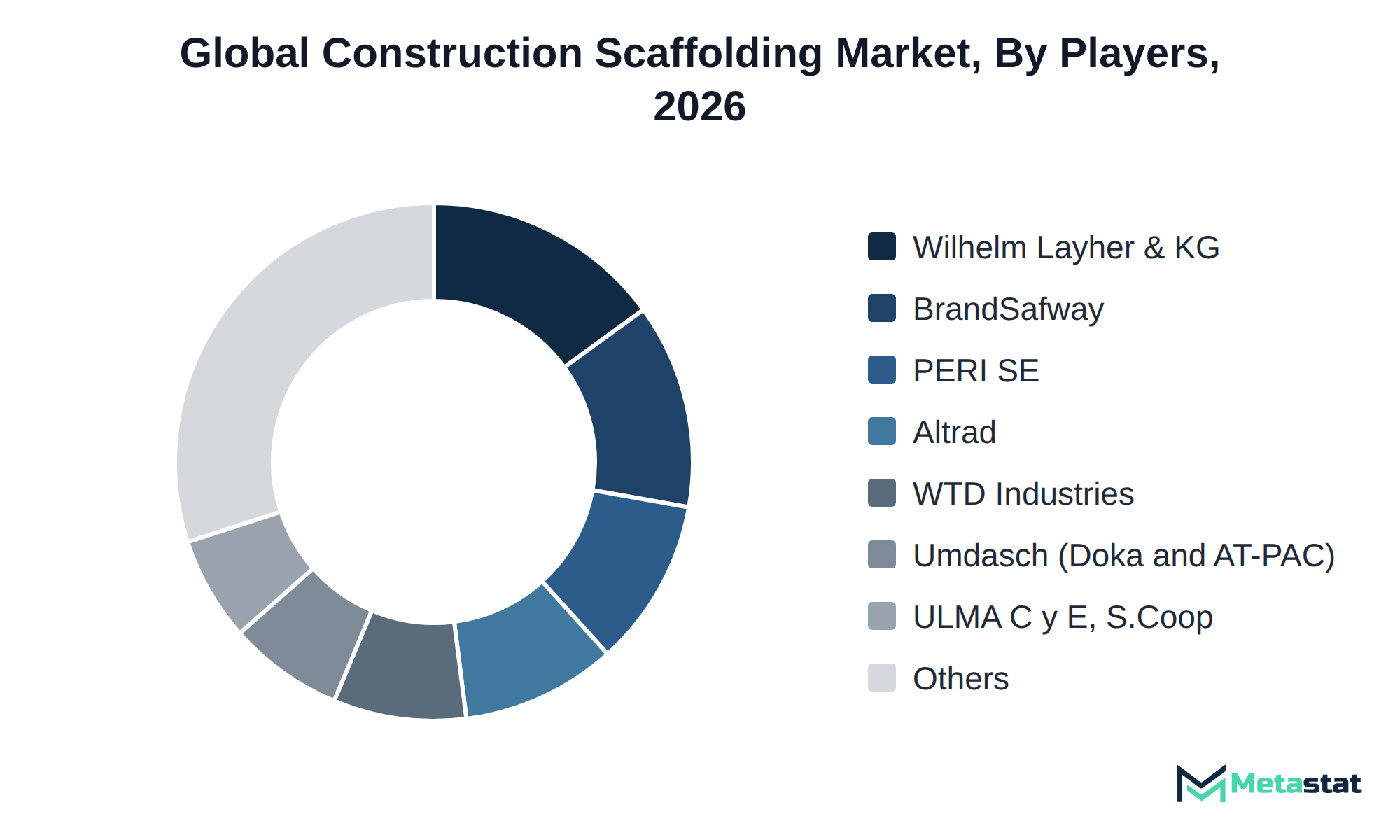
The Construction Scaffolding market features a diverse competitive landscape, with companies employing various strategies to meet buyer preferences. Price sensitivity influences many purchasing decisions, alongside factors including certification, customization, and service quality.
WTD Industries and BrandSafway emphasize equipment sales, aiming to enhance service offerings tailored to client specifications. Altrad Group focuses on rental services, addressing the needs of customers prioritizing flexibility and cost efficiency in project management. Companies like PERI SE and Umdasch Group (Doka and AT-PAC) leverage their expertise in both equipment and rental services, providing a comprehensive solution that appeals to a broad spectrum of buyers within the market. Both groups are also established suppliers in the concrete formwork systems industry.
Customization is a key differentiator, with firms like HAKI AB and Instant UpRight delivering tailored scaffolding solutions for unique construction requirements. This level of personalization generates competitive advantages in attracting clients seeking specific functionality and adaptability. ULMA C y E, S.Coop. and Scafom-rux focus on high-quality materials, ensuring that their products meet industry standards and build trust among buyers in the Construction Scaffolding market.
Reaching USD 62.5 billion depends on several key developments within the construction scaffolding market. The rising demand for aluminum materials, projected to reach USD 20.4 billion by 2033 at a CAGR of 7.1%, supports the market's expansion in various construction sectors. Potential risks to achieving this forecast include fluctuations in raw material prices and regulatory challenges, particularly in North America and Europe, which could hinder investment and project timelines. Addressing these factors will be crucial for sustaining growth in the Construction Scaffolding market during the forecast period.
By Scaffolding Type: Fixed Supported Scaffolding, Mobile Tower Scaffolding, Suspended Scaffolding
By Material: Steel, Aluminum, Bamboo, Timber, Others (Fiberglass, Composites)
By Construction Sector: Residential Buildings, Commercial Buildings, Civil Infrastructure, Industrial Buildings, Institutional Buildings, Others (Agricultural Buildings, Temporary Site Structures)
By Offering: Equipment Sales, Rental and Associated Services
The report strategically identifies and profiles the key market players and analyses their core competencies in each sub-segment of the Construction Scaffolding market.
|
Report Attributes |
Details |
|
Study Period |
2021-2033 |
|
Base Year |
2025 |
|
Estimated Year |
2026 |
|
Forecast Period |
2026-2033 |
|
Historical Period |
2021-2025 |
|
Growth Rate |
CAGR 5.1% from 2026 to 2033 |
|
Revenue Unit |
USD billion |
|
Segmentation |
By Scaffolding Type, Material, Construction Sector, Offering, and Region |
|
By Region |
North America (By Scaffolding Type, Material, Construction Sector, Offering, and Country)
|
|
Europe (By Scaffolding Type, Material, Construction Sector, Offering, and Country)
|
|
|
Asia Pacific (By Scaffolding Type, Material, Construction Sector, Offering, and Country)
|
|
|
South America (By Scaffolding Type, Material, Construction Sector, Offering, and Country)
|
|
|
Middle East and Africa (By Scaffolding Type, Material, Construction Sector, Offering, and Country)
|
Find answers to common questions about this report
The Construction Scaffolding market size was valued at USD 42 billion in 2025.
The market is projected to grow at a CAGR of 5.1% during the forecast period from 2026 to 2033.
The North America Construction Scaffolding market size is estimated to reach USD 14.2 billion by 2033.
Fixed Supported Scaffolding leads the market with a projected value of USD 41.3 billion by 2033, reflecting the highest growth compared to other segments.
Growing governmental and private sector investment in infrastructure projects drives demand for scaffolding. Price volatility in raw materials significantly influences buyer decisions within the market.
Price volatility in raw materials significantly influences buyer decisions, creating challenges for construction firms. Escalating costs of essential inputs, including steel and aluminum, lead to smaller order sizes and delays in project timelines, limiting overall market growth opportunities.
Significant growth in the aluminum scaffolding segment favors adoption, driven by its lightweight nature and corrosion resistance, which are appealing for various construction applications. Enhanced safety features and reduced installation times further support the increased utilization of aluminum scaffolding in urban projects.
The Construction Scaffolding market is estimated to reach a valuation of USD 62.5 billion by 2033.
Key players operating in the Construction Scaffolding market include WTD Industries, Wilhelm Layher GmbH & Co. KG, PERI SE, BrandSafway, Altrad Group, and Instant UpRight.
The aluminum scaffolding segment is projected to reach USD 20.4 billion by 2033, exhibiting a robust compound annual growth rate (CAGR) of 7.1 percent.
The analysts below cover Machinery & Equipment research at Metastat Insights.
LEAD ANALYST
Utkarsh Khirodkar is a Lead Market Research Analyst at MetaStat Insight, specializing in market intelligence, technology sector assessments, and competitive strategy.

INDUSTRY CONSULTANT - CHEMICALS & ADVANCED MATERIALS
Chemicals and Materials · Machinery & Equipment · Packaging
Amit Gadhekar Consultant for Chemicals and Materials at MetaStat Insight, directing sector-specific intelligence, research, and strategic consulting across global chemical and processing markets.

PRINCIPAL CONSULTANT - QUALITY SYSTEMS & COMPLIANCE
Electronics and Semiconductor · Machinery & Equipment · Professional Services
Omkar Phadtare is an Industry Consultant at MetaStat Insight, specializing in quality systems, regulatory compliance, and standards benchmarking to drive data-driven market intelligence and strategic industry research.

ENERGY & INFRASTRUCTURE INDUSTRY CONSULTANT
Automotive and Transportation · Electronics and Semiconductor · Energy and Power · Machinery & Equipment
Saurabh Vasant Ganvir consults for Energy & Infrastructure Industry at MetaStat Insight, specializing in renewable energy, solar EPC, and electric vehicle (EV) infrastructure markets.

LEAD CONSULTANT - COMMUNICATION, TELECOM, AND IT
Electronics and Semiconductor · Information & Technology · Machinery & Equipment · Professional Services
Ravindra Sathe Consultants for Communication, Telecom, and IT at MetaStat Insight. He leads the firm's industry research initiatives across telecommunications infrastructure, digital connectivity, enterprise networking, and emerging information technology domains.
Evaluating secondary resin quality across post-consumer packaging streams requires reliable technical segmentation. MetaStat Insight delivered an objective assessment that distinguished between extrusion-grade flake pricing and optical sorting throughput limitations across Western Europe. The competitive positioning breakdown for licensed depolymerization technology providers answered several questions during our feedstock feasibility audit. Their team clarified regional trade restrictions on mixed plastic scrap quickly when our team submitted follow-up requests.
Evaluating sovereign cloud deployments for core banking platforms demands a clear view of data residency regulations and migration exit strategies. MetaStat Insight delivered an exhaustive review of regional latency tolerances, mainframe decommission milestones, and third-party vendor concentration risk. The regulatory compliance mapping across European and Asian financial jurisdictions gave our team a dependable baseline for multi-cloud infrastructure discussions.
Replacing petrochemical surfactants with bio-based alternatives requires realistic timelines on industrial precision fermentation scaling. The market research broke down commercialization timelines, feedstock sugar price sensitivities, and regional cosmetic ingredient regulatory approvals in Europe and East Asia. That supplier readiness mapping gave our formulations team reliable context when comparing renewable chemical sourcing roadmaps.
Explore related market intelligence reports worth reading alongside this one.