
LEAD ANALYST
Utkarsh Khirodkar is a Lead Market Research Analyst at MetaStat Insight, specializing in market intelligence, technology sector assessments, and competitive strategy.

Global Interior Fit Out Market Size, Share, By Service (Construction and Installation, Architecture, Design and Consulting, Other Services), By Project Type (New Construction and Renovation), By Design Style (Modern and Contemporary, Traditional and Classic, Eco-Friendly and Sustainable), By End-User (Residential, Office and Corporate, Hospitality and Lodging, Retail, Food and Beverage, Healthcare, Education, Leisure, Entertainment and Cultural, Public and Institutional), Industry Analysis, Growth, Trends, and Forecast, 2026-2033
Report ID
MSI-3871
Published
September, 2026
Pages
295 Pages
Format
Historical
Base year
Forecast
Forecast period
Report Details
Market Valuation: Valued at $71.9 Billion in 2025, projected to reach $139.2 Billion by 2033 at a 8.6% CAGR.
Dominant Segment: The Construction & Installation segment leads the market, projected to grow from USD 45.5 billion in 2026 to USD 79.2 billion by 2033, driven by increasing demand for residential and commercial spaces.
Geographic Lead: The Asia Pacific region is expected to experience the fastest growth, fueled by rapid urbanization and rising disposable incomes, which drive investment in modern interior fit out services.
What's Inside: This report provides a comprehensive analysis of the Global Interior Fit Out market, including competitive coverage, detailed segmentation by service, project type, design style, and end-user, along with forecasts through 2033.
Emerging Regional Demands: Urbanization and economic growth in regions like South America present significant opportunities, with rising middle-class populations seeking modern residential and commercial spaces.
Technological Integration: The report highlights how technological advancements, such as smart building technologies and digital design tools, are reshaping the market by enhancing efficiency and project delivery.
Choose Your License
Global Interior Fit Out Market
The global Interior Fit Out market was valued at USD 71.9 billion in 2025 and is projected to reach USD 139.2 billion by 2033, growing at a CAGR of 8.6% over the forecast period.
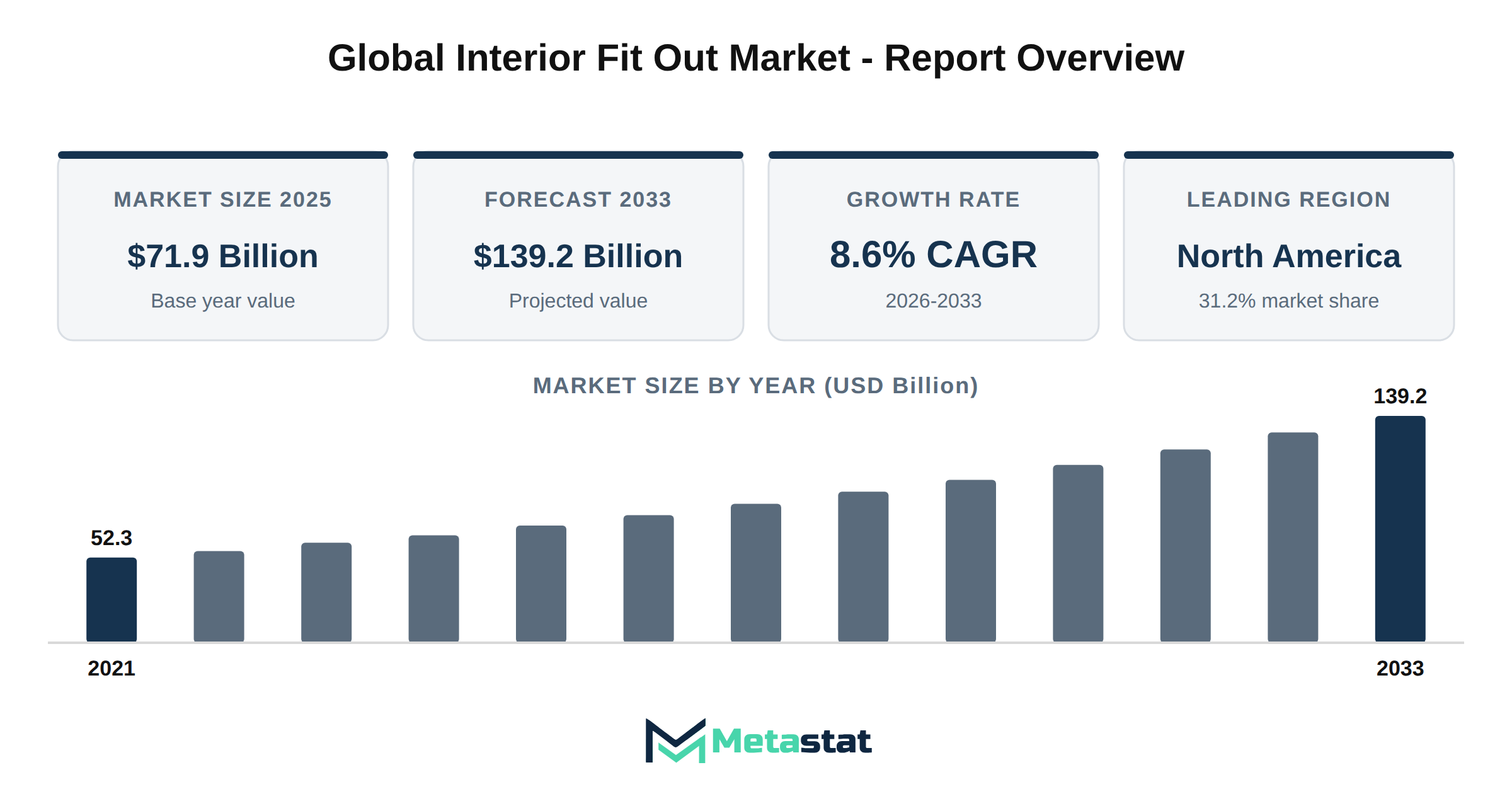
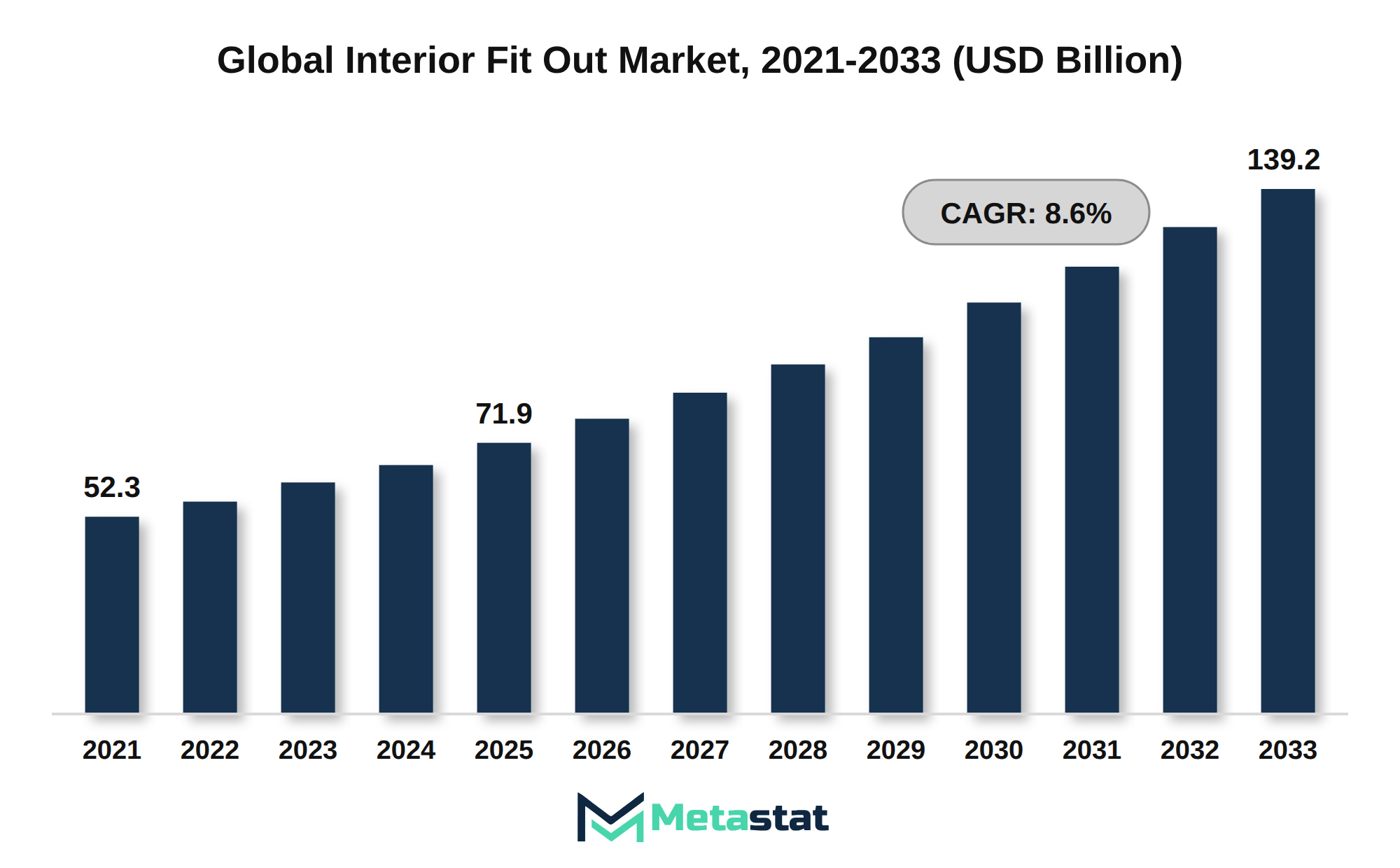
The global Interior Fit Out market is projected to reach USD 139.2 billion by 2033, expanding from a base value of USD 71.9 billion in 2025. This growth represents a compound annual growth rate (CAGR) of 8.6% during the forecast period from 2026 to 2033. Historical data indicates a steady increase in market value, starting from USD 52.3 billion in 2021 and progressing to USD 66 billion in 2024, before reaching USD 71.9 billion in 2025.
Key drivers of growth in the market include rising demand for renovation and refurbishment projects across both commercial and residential sectors. Factors including urbanization, changing lifestyles, and increased disposable income fuel the push for modernized and aesthetically pleasing spaces. The trend towards sustainable and eco-friendly interior fit out practices influences consumer preferences, leading to greater adoption of green materials and technologies in fit out projects.
Technological advancements significantly impact the market, with smart building technologies transforming conventional fit out solutions. Integration of digital design tools, building information modeling (BIM), and artificial intelligence enhances project efficiency and accuracy. Innovations in modular and prefabricated fit out solutions streamline construction processes, contributing to reduced project timelines and costs.
Demand for premium and luxury interior fit outs is on the rise, driven by affluent consumers seeking bespoke designs. The corporate office segment experiences transformation driven by businesses investing in fit out projects that enhance employee engagement and productivity. This trend aligns with evolving workplace expectations and the need for flexible office environments that accommodate remote work arrangements.
Investment trends in the hospitality and lodging sector indicate a robust focus on fit out projects, reflecting a commitment to providing high-quality guest experiences. Similarly, the retail and foodservice sectors are witnessing significant interior fit out expansions, with brands aiming to create immersive shopping environments. Opportunities in healthcare and education sectors further augment the market, highlighting the importance of tailored fit out solutions for these essential services.
The dynamics of materials, labor, and project costs play a crucial role in the market. Fluctuations in raw material prices and labor availability impact overall project budgets and timelines. Developments in procurement processes, particularly in furniture, fixtures, and equipment (FF&E), reshape supply chains and enhance project delivery efficiency.
The demand for renovation and refurbishment fit out projects continues to grow, driven by the increasing emphasis on updating and modernizing existing spaces. This trend reflects shifts in consumer preferences towards more functional and aesthetically pleasing environments. Investment in these projects is expected to rise, particularly in urban areas where property values continue to appreciate.
Sustainable and eco-friendly interior fit out practices gain prominence, with consumers prioritizing environmentally responsible choices. This shift encourages the use of sustainable materials and energy-efficient designs, contributing to lower operational costs and a reduced environmental footprint. Adoption of these practices aligns with global sustainability goals, enhancing market appeal.
Smart building technologies transform interior fit out solutions, integrating advanced features including automated lighting, climate control, and energy management systems. These innovations improve operational efficiency, reduce energy consumption, and enhance user experience. The incorporation of smart technologies is expected to play a significant role in attracting investments and driving demand within the market.
Modular and prefabricated interior fit out innovations reshape project delivery timelines and costs. This approach allows for faster construction and installation, reducing downtime for businesses. The flexibility offered by modular designs appeals to various sectors, including commercial and residential, further stimulating market growth.
Premium and luxury interior fit out demand trends highlight a shift towards high-end finishes and bespoke designs. Consumers increasingly seek unique, tailored experiences in their environments, driving demand for premium materials and craftsmanship. This segment presents significant revenue opportunities for suppliers and contractors in the market.
Corporate office fit out demand reflects ongoing workplace transformation, emphasizing open and collaborative spaces that enhance employee productivity and satisfaction. While businesses adapt to new work models, investment in office fit outs aligns with the evolving demands of the workforce, creating a competitive advantage.
Investment trends in hospitality and lodging interior fit outs illustrate a focus on enhancing guest experiences through innovative designs and state-of-the-art facilities. Significant resources are allocated to create inviting environments that attract a discerning clientele, contributing to the overall growth of the market.
The retail and foodservice sectors continue to expand their interior fit out initiatives, responding to changing consumer behaviors and preferences. Attractive and functional spaces drive foot traffic and enhance customer engagement, leading to increased revenues for businesses. This dynamic environment supports ongoing market development.
Healthcare and education sectors present substantial opportunities for interior fit out projects, with emphasis on improving patient and student experiences. Modernized facilities enhance service delivery, attracting more clients and students. Investment in these areas is expected to strengthen market growth, creating a positive outlook.
Cost dynamics related to materials, labor, and project execution influence the overall economic landscape of the market. Fluctuations in material costs and labor availability impact project budgets and timelines, necessitating strategic planning from contractors and suppliers. Effective management of these factors is vital for maintaining competitiveness.
Developments in procurement and supply chain for furniture, fixtures, and equipment (FF&E) play a significant role in the interior fit out market. Streamlined processes and strategic partnerships enhance delivery efficiency and cost management, ensuring that projects meet timelines and budgetary constraints.
MEP and building services integration in fit out projects enhances overall functionality and efficiency. This comprehensive approach allows for effective coordination among various systems, improving operational performance and occupant comfort. Increased collaboration between contractors and service providers is essential for successful project outcomes.
The integration of digital design tools, building information modeling (BIM), and artificial intelligence (AI) in the interior fit out process enhances accuracy and efficiency. These technologies facilitate better visualization, planning, and execution, resulting in superior project delivery. Increased adoption of these innovations is anticipated to reshape competitive strategies within the market.
Design and build models significantly influence fit out project delivery methods, allowing for streamlined communication and collaboration between designers and contractors. This integrated approach reduces risks and enhances project efficiency, contributing to overall market growth.
Competitive strategies among interior fit out contractors focus on differentiation through innovation, sustainability, and customer service. Firms prioritizing unique value propositions and adapting to market demands strengthen their positions within the industry, creating long-term success.
Compliance with building codes and sustainability standards remains a critical factor in the interior fit out market. Adhering to these regulations enhances project credibility and aligns with consumer expectations for environmentally responsible practices. Ongoing education and awareness of these standards are essential for market participants.
Growth opportunities in the Asia Pacific region arise from rapid urban development and increasing disposable incomes. This dynamic environment encourages investment in modern fit out solutions, driving market expansion across various sectors. Major cities in the region present significant potential for innovative interior fit out projects.
The Middle East exhibits strong demand for interior fit out services, particularly within the hospitality and mega project sectors. Investment in luxury developments and infrastructure projects enhances the market landscape, creating numerous opportunities for contractors and suppliers.
North America and Europe showcase renovation-led fit out opportunities, with businesses increasingly investing in updating existing spaces to meet evolving consumer demands. This trend stimulates market growth, providing a robust framework for future initiatives in the sector.
Investment, partnerships, and mergers and acquisitions are significant in shaping the future of the interior fit out market. Strategic collaborations enhance resource sharing and market reach, facilitating growth and innovation among industry players.
Future growth opportunities within the market hinge on emerging trends including luxury bespoke fit-out demand dynamics and turnkey design-to-installation delivery models. These developments highlight the importance of adaptability and responsiveness to consumer preferences, creating a competitive edge.
Cross-border sourcing and logistics of FF&E facilitate a broader range of options for interior fit out projects. Effective management of these elements ensures timely delivery and enhances project success rates.
The cost dynamics of premium materials and craftsmanship reflect changing consumer expectations and preferences. A focus on quality and sustainability drives pricing strategies, influencing overall market competitiveness.
Capital investment environments significantly influence the growth of the Interior Fit Out market. Increased capital investment contributes to enhancements in infrastructure, supporting higher demand for fit out projects across various sectors including residential, commercial, and hospitality. Economic factors, including interest rates and GDP growth, create favorable conditions for businesses and consumers to allocate funds toward interior fit out projects, further enhancing market traction.
The growing trend toward modernization and the renovation of spaces aligns with rising public-private spending power. Organizations prioritize upgrading facilities to improve operational efficiency and create appealing environments for employees and visitors. This trend generates robust demand for services related to construction, design, and consulting within the market.
Investment in digital transformation and automation plays a significant role in the sector's growth. Companies adopting advanced technologies experience streamlined processes and greater project efficiency, contributing to improved cost-effectiveness. These technological advancements facilitate faster project turnovers and enhance the overall value proposition for clients, stimulating demand within the Interior Fit Out market.
Technological integration drives significant advancements within the Interior Fit Out market. The adoption of automation, artificial intelligence, and software solutions enhances operational efficiency and productivity. Companies apply these technologies to streamline processes, reduce overhead costs, and improve service delivery. The increased focus on digital transformation aligns with changing consumer behaviors, emphasizing the demand for innovative design solutions and customer-centric experiences.
This integration is not limited to new projects but extends to renovations and refurbishments, which constitute a growing share of market activities. While firms embrace digitization of legacy processes, they position themselves to respond swiftly to market dynamics and consumer preferences. The ability to leverage technology in project management, design, and execution provides a competitive edge, leading to more sustainable practices and resource stewardship.
With ongoing investments in technological capabilities, businesses within the sector anticipate a surge in demand for enhanced fit-out solutions. This trend reflects the broader economic environment, where businesses prioritize modernization and adaptability. Consequently, the Interior Fit Out market is expected to experience strong growth driven by firms integrating advanced technologies to meet evolving customer expectations and industry standards.
Regulatory tightening and compliance hurdles increasingly challenge the Interior Fit Out market. Stricter regulations around building codes and safety standards create barriers for developers and contractors, leading to delays in project execution and increased costs. This situation affects various segments, including new construction and renovation projects, by prolonging approval processes and complicating supply chain logistics.
Macroeconomic headwinds, including inflationary pressures and resource scarcity, add further constraints to market expansion. Rising material costs and labor shortages impact profitability for contractors and limit the scale of projects undertaken. Geopolitical instability contributes to uncertainty in investment and operational strategies, affecting stakeholders involved in the Interior Fit Out market.
Technological obsolescence and the threat of substitution by alternative offerings create pressures on market players to invest continuously in innovation. The rapid pace of technological advancement requires businesses to adapt or risk losing competitive advantage. Skilled labor deficiencies and talent gaps exacerbate challenges faced by organizations, with qualified professionals becoming increasingly scarce in the industry.
Infrastructure gaps and connectivity deficits in various regions hinder project deployment, leading to inefficiencies and increased overhead costs. These factors collectively contribute to market fragmentation, creating uneven growth patterns across geographies. Regional adoption resistors persist, and uncertainties regarding infrastructure development affect overall demand and long-term viability in the Interior Fit Out market.
The Interior Fit Out market faces significant challenges due to geopolitical fragmentation, which creates barriers to trade and complicates international collaborations. Political tensions among countries lead to trade deficits and tariff friction, disrupting established supply chains and affecting material availability. Manufacturers experience increased costs associated with shifting tariffs, impacting pricing strategies and overall project profitability.
Technological disruptions introduce complexities into the market, necessitating advanced integration and interoperability between systems. These challenges hinder collaboration among stakeholders in the fit out process, particularly in large-scale projects that require effective coordination among various technologies. Companies investing in new technologies confront the risk of obsolescence, particularly if innovations do not align with evolving market needs.
Logistics disruptions further complicate operations within the Interior Fit Out market. Supply chain instability results from fluctuating global demand, creating delays and unpredictability in material sourcing. This instability forces companies to reassess risk management strategies and adapt to changing conditions, making it challenging to maintain competitive pricing.
Environmental sustainability demands intensify, with stakeholders increasingly prioritizing eco-friendly materials and practices. Companies navigate the complexities of decarbonization mandates while managing lifecycle footprints, adding layers of compliance overhead and operational costs. Failure to meet these expectations leads to reputational damage and lost business opportunities in a market that increasingly values sustainability.
Another challenge involves workforce skill gaps, particularly in specialized areas including advanced construction techniques and technology integration. Organizations struggle to attract and retain talent in a competitive labor market, impacting project timelines and quality. Addressing these gaps requires investment in training and development programs, adding further strain to operational budgets.
The combined effects of these challenges create an environment where businesses in the Interior Fit Out market remain agile and adaptable to thrive. Companies that successfully navigate these hurdles create growth opportunities while maintaining competitive positioning in an increasingly complex environment.
The Interior Fit Out market experiences significant opportunities due to emerging regional demands driven by urbanization and economic growth across various sectors. Regions including Asia Pacific and South America exhibit rapid infrastructure modernization, prompting increased investment in fit-out services. This growth directly correlates with rising disposable incomes and the expansion of the middle class, fueling demand for modern residential and commercial spaces.
Technological disruptions play a crucial role in shaping market dynamics. The rise of digital transformation and next-generation innovations, including smart building technologies, enhance operational efficiencies and attract investment in interior fit-out projects. These advancements enable better space utilization, energy management, and sustainable practices, aligning with the increasing focus on eco-friendly compliance and green transformations.
Strategic consolidation within the market provides additional avenues for growth. Cross-industry mergers and acquisitions facilitate the integration of diverse expertise and resources, enhancing service offerings and competitiveness. This trend enables firms to adapt to evolving customer preferences and emerging niches, including sustainable design and retrofitting services.
Shifts in buying behaviors, particularly the rise of digital procurement, influence how clients engage with suppliers. The increasing reliance on online platforms for sourcing products and services streamlines purchasing processes, resulting in greater cost efficiencies and faster project completions. This evolution in commercial models positions firms strategically to capitalize on the growing demand for interior fit-out solutions tailored to contemporary lifestyles.
The combination of these factors contributes to a favorable outlook for the market. With sustained growth projected through 2033, stakeholders across the interior fit-out ecosystem leverage emerging opportunities that arise from regional demands, technological advancements, and evolving consumer behaviors.
The Global Interior Fit Out market is segmented based on Service, Project Type, Design Style, and End-User.
Valued at USD 45.5 billion in 2026, the Construction & Installation segment is projected to reach USD 79.2 billion by 2033, reflecting a CAGR of 8.2% during the forecast period. Increasing demand for residential and commercial spaces drives growth within this sector. The expansion of urban areas and the need for updated infrastructure contribute significantly to the segment's upward trajectory. Adoption of sustainable building practices enhances the appeal of new construction and renovation projects, attracting environmentally conscious clients.
Technological advancements in construction methods and materials enhance efficiency and productivity. Innovations including modular construction and Building Information Modeling (BIM) facilitate streamlined project management and reduce construction timelines. These technologies provide substantial benefits, including cost savings and improved project delivery, appealing to a broad range of clients in the Interior Fit Out market.
Shifts in consumer preferences towards modern and eco-friendly designs further fuel market growth. End-users increasingly favor innovative design styles that reflect contemporary aesthetics and sustainability. The segment's ability to adapt to changing trends and incorporate next-generation upgrades strengthens its position in the competitive landscape.
Investments in infrastructure development and renovation projects within emerging economies present strategic opportunity windows for market players. The growing necessity for compliance with regulatory standards related to sustainable practices enhances the demand for specialized construction and installation services. Overall, the Construction & Installation segment is projected for significant growth, supported by evolving consumer demands and technological maturation.
Significant growth in the Architecture, Design, & Consulting segment reflects increasing demand for specialized services in the Interior Fit Out market. This segment is expected to reach USD 33.6 billion by 2033, growing at a CAGR of 9% during the forecast period. A shift towards modern and sustainable design practices drives demand, with an emphasis on enhancing space utilization and aesthetic appeal in commercial and residential projects. The growing trend for personalized and unique design solutions accelerates the adoption of these services.
Regulatory compliance and sustainability standards influence design decisions, prompting firms to innovate towards eco-friendly practices. Advancements in technology facilitate the integration of smart design elements, enabling more efficient project delivery and enhanced client engagement. Architecture and consulting firms invest in next-generation upgrades to their service offerings, providing clients with comprehensive and adaptive solutions that meet evolving market needs.
At a macro level, the demand for these services correlates with urbanization trends and the expansion of corporate environments. End-users across various sectors, including hospitality, retail, and corporate offices, prioritize design that enhances user experience. The Architecture, Design, & Consulting segment's growth contributes to the overall expansion of the Interior Fit Out market, providing significant revenue opportunities for industry participants.
Growth in the Other Services (MEP, Building Services Integration, Procurement) segment reflects increasing demand for efficient building systems and integration. The rising need for advanced mechanical, electrical, and plumbing (MEP) solutions drives demand in various end-use sectors, enhancing operational efficiencies. Technological advancements in building services integration, including automation and smart technologies, encourage adoption among stakeholders aiming to optimize energy consumption and enhance user experiences in built environments.
By 2033, this segment is projected to reach USD 26.4 billion. Continued emphasis on sustainability and regulatory compliance in construction projects supports this growth trajectory. Stakeholders increasingly prioritize energy-efficient solutions, aligning with broader industry trends toward eco-friendly practices. This segment is poised for expansion due to heightened awareness around the importance of sustainable building practices.
Strategic investments in next-generation upgrades and product evolution facilitate competitive advantages within the Interior Fit Out market. Companies enhancing their service offerings through innovative solutions capture a larger share of the market, responding effectively to evolving customer expectations. Effective management of cost structures and pricing volatility directly influences profitability, allowing suppliers to maintain margins while fluctuating material costs.
Valued at USD 47.6 billion in 2026, the New Construction segment is projected to reach USD 81.8 billion by 2033, at a CAGR of 8% during the forecast period. Increased urbanization and population growth lead to a rise in housing and commercial developments. Developers and investors prioritize innovative designs and sustainable construction practices, prompting higher investments in new projects. The influence of governmental policies encouraging infrastructure development further supports this growth.
Technological advancements play a critical role in shaping the New Construction segment, with the adoption of Building Information Modeling (BIM) and smart construction methodologies enhancing efficiency and reducing waste. Increased collaboration between architects, contractors, and clients during the design and execution phases contributes to streamlined project delivery and improved resource management. Developers are better positioned to meet evolving market demands and consumer preferences, reinforcing their competitive edge.
End-user dynamics reflect a shift toward more modern designs and eco-friendly materials, aligning with growing consumer awareness regarding sustainability. Residential, office, and commercial sectors increasingly favor projects that incorporate energy-efficient systems and sustainable materials, impacting design choices in the market. This trend drives investment in the sector, prompting stakeholders to explore innovative solutions and enhance the overall quality of new construction projects.
Certain challenges persist within the segment, including fluctuations in material costs and labor shortages. These factors exert pressure on profit margins for contractors and developers. However, strategic investments in technology and skilled labor mitigate these pressures, enabling firms to maintain competitiveness. Overall, the New Construction segment remains a significant driver in the broader Interior Fit Out market, positioning itself for growth amid evolving market conditions.
Renovation & Refurbishment has emerged because a key segment within the Interior Fit Out market, estimated to reach USD 57.4 billion by 2033, at a CAGR of 9.3% during the forecast period. Increasing urbanization and population growth drive the demand for updated living and working environments, prompting investments in renovation projects. Adaptive reuse of existing structures to meet modern standards has gained traction, facilitating demand for refurbishment services across various sectors, including residential, commercial, and hospitality.
Technological advancements in building materials and project management significantly enhance efficiency and sustainability in renovation projects. Environmental considerations influence design choices. End-users prioritize eco-friendly solutions that reduce energy consumption and enhance indoor air quality. The shift towards smarter buildings necessitates retrofitting existing structures with modern technology, creating opportunities for innovative service offerings within the market.
Compliance with evolving regulatory standards and certifications shapes renovation practices, ensuring that projects align with current safety and environmental guidelines. Investors increasingly seek projects that demonstrate adherence to these standards, impacting funding availability and project viability. Cost structures within the segment remain sensitive to fluctuating material prices. Strategic sourcing and procurement practices are required to manage budgetary constraints effectively.
The ongoing transition towards sustainable and energy-efficient designs reflects shifts in consumer preferences and regulatory expectations. Increased interest in integrating green technologies within refurbishment projects encourages growth, driving demand for specialized services in this area. While the market evolves, strategic opportunity windows arise for players who innovate and adapt to changing dynamics within the Interior Fit Out market.
Valued at USD 36 billion in 2026, the Modern & Contemporary segment is projected to reach USD 65.3 billion by 2033, at a CAGR of 8.9% during the forecast period. Increasing consumer preference for modern aesthetics drives demand within the Interior Fit Out market. Homeowners and corporate clients prioritize contemporary designs, emphasizing simplicity, functionality, and open spaces.
Architectural trends increasingly reflect this shift, with architects and designers focusing on integrating modern elements that cater to evolving lifestyle needs. The adoption of smart technologies enhances the appeal of contemporary designs, allowing for the incorporation of automation and improved energy efficiency.
Growth in urban populations and changing demographics contribute to rising demand for innovative interior spaces. The hospitality sector actively seeks modern designs to attract travelers, while offices pursue contemporary environments that promote collaboration and creativity among employees. This trend influences aesthetic choices and enhances the market's responsiveness to consumer expectations.
Environmental considerations shape product evolution within the segment. Eco-friendly materials and sustainable practices gain traction, aligning with consumer preferences for responsible design. Manufacturers and service providers develop solutions that address these preferences, driving investments in green technologies and materials.
Investment in the Modern & Contemporary segment highlights its significance within the overall market. The anticipated growth reflects an ongoing commitment to creating spaces that align with contemporary lifestyles while complying with regulatory standards focused on sustainability and modernity.
Increasing interest in traditional aesthetics drives demand for the Traditional & Classic segment within the Interior Fit Out market. Consumers and businesses favor designs that reflect cultural heritage and timeless sophistication, enhancing the appeal of this segment. Architectural trends favoring classic styles boost market adoption in both residential and corporate spaces, contributing to a favorable growth trajectory.
Investment in high-quality materials and artisanal craftsmanship supports segment expansion, enabling projects to stand out in a competitive environment. The segment is expected to reach USD 31.6 billion by 2033, growing at a CAGR of 7% during the forecast period. This growth aligns with rising consumer preferences for bespoke interiors that emphasize detail and quality.
Developers increasingly prioritize sustainable practices within traditional designs, integrating eco-friendly materials without compromising aesthetic standards. Such approaches connect with environmentally conscious consumers, further stimulating demand in the market. Regulatory frameworks favor sustainable building practices, and traditional styles that align with these guidelines benefit from enhanced market access and consumer acceptance.
Market dynamics demonstrate consistent shifts towards personalization in design, leading to increased investments in traditional and classic projects. This shift highlights the importance of adapting offerings to meet evolving consumer expectations while maintaining the integrity of timeless design. Overall, the Traditional & Classic segment plays a significant role in the broader growth of the Interior Fit Out market.
Growing awareness of sustainable practices fuels the Eco-Friendly & Sustainable segment within the Interior Fit Out market. Consumers prioritize environmentally sound materials and practices, influencing designers and construction firms to adapt their offerings. The rising popularity of eco-friendly designs aligns with evolving consumer preferences, prompting investments in sustainable materials and technologies.
Regulatory compliance standards heighten the demand for sustainable solutions, encouraging firms to adopt practices that meet or exceed these requirements. Certifications, including LEED (Leadership in Energy and Environmental Design), drive firms to enhance their eco-credentials, creating competitive advantages in the marketplace. Compliance with increasing environmental regulations necessitates investment in sustainable practices, influencing project development timelines and costs.
Cost structures within this segment reflect changes in raw material sourcing and supply chain dynamics, driven by eco-friendly materials that often carry higher price tags. Long-term operational savings through energy-efficient designs contribute to overall project profitability. The segment's growth trajectory supports the increasing emphasis on corporate social responsibility among end-users, particularly in sectors like residential and commercial development.
Projected to reach USD 30.5 billion by 2033, the Eco-Friendly & Sustainable segment exemplifies the shift toward environmentally conscious interior fit outs. This growth results from a combination of consumer demand, regulatory pressures, and innovative design practices. The market evolves further due to advancing technologies and the emergence of new sustainable materials, shaping the future of interior design and construction.
Unique design preferences drive demand within the Other Styles segment of the Interior Fit Out market. Increasing personalization trends among consumers in residential and commercial spaces contribute significantly to this growth. A rise in environmentally conscious consumers prompts the adoption of sustainable materials and practices within this segment, aligning with broader ecological trends.
Technological maturation plays a key role in the evolution of design styles, enhancing aesthetic possibilities while maintaining functionality. Innovations in materials and production processes lead to the emergence of diverse design options that cater to consumer demands. This evolution boosts competitiveness among suppliers, resulting in expanded offerings across the market.
International regulations surrounding sustainability and energy efficiency impact the market, particularly within the Other Styles segment. Compliance with these standards encourages investments in eco-friendly and sustainable designs, influencing consumer choices and expanding market reach. Commitment to sustainability shapes future developments in this segment.
The Other Styles segment is projected to grow at a CAGR of 5.1% during the forecast period. This growth aligns with broader trends in consumer preferences and regulatory pressures, emphasizing the importance of innovation and adaptability within the Interior Fit Out market.
Residential applications drive significant growth in the Interior Fit Out market, reflecting increasing consumer interest in home improvements and enhanced living spaces. Valued at USD 18.2 billion in 2026, this segment is projected to reach USD 30.9 billion by 2033, at a CAGR of 7.9% during the forecast period. A surge in home ownership and rising disposable incomes fuel demand for aesthetic enhancements and functional upgrades. Homeowners seek to tailor their living environments to reflect personal tastes and lifestyles.
Technological advancements contribute to the segment's expansion. Incorporation of smart home technologies and sustainable materials enhances appeal, positioning residential projects because modern and efficient. Adoption of eco-friendly practices influences consumer decisions, with an emphasis on energy efficiency and sustainable sourcing. This shift aligns with broader trends in the market towards environmentally responsible construction and fit out solutions.
Increased urbanization and shifts in demographic patterns prompt investment in residential fit outs, particularly in urban centers. Young professionals and families prioritize functional living spaces that accommodate evolving needs. This focus on adaptability ensures steady demand for renovations and refurbishments, further driving growth within the segment. Lifestyle changes continue to influence consumer preferences, and the market for residential fit outs remains robust and dynamic.
Increasing demand within the Office & Corporate sub-segment highlights a trend in workspace optimization, reflecting a shift in how businesses design their environments. Emphasis on productivity, employee well-being, and collaboration drives organizations to invest in modern fit-out solutions. The growing trend of flexible working arrangements further accelerates this demand, with businesses rethinking their spatial requirements. Regulatory compliance standards related to workplace safety and health influence purchasing decisions, compelling companies to adopt new fit-out practices that adhere to these guidelines.
The Office & Corporate segment is estimated to reach USD 28.9 billion by 2033, reflecting a compound annual growth rate (CAGR) of 7.9% during the forecast period. This growth results from broader economic conditions and shifts in workplace culture. Investment in technology and next-gen upgrades enables smarter and more efficient designs. The appeal of sustainable materials and practices attracts organizations aiming for eco-friendly operations, influencing procurement strategies in the market.
While competition increases, firms within this market focus on enhancing their service offerings to meet evolving client expectations. Customization and technological advancements drive product evolution, leading to innovative solutions that cater to specific industry needs. Overall, the Office & Corporate sub-segment's growth signals a dynamic shift in the Interior Fit Out market, underpinned by strategic investments and an adaptable approach to workspace design.
Demand for the Hospitality & Lodging segment within the Interior Fit Out market derives from several factors, including the resurgence of travel and tourism, which drives renovations and new constructions in hotels and resorts. Increased disposable income allows consumers to seek enhanced experiences and accommodations, pushing service providers to invest in modernized interiors and amenities. These trends create opportunities for developers and interior designers to expand offerings and enhance client satisfaction.
The segment experiences significant growth driven by hospitality businesses seeking to differentiate themselves through innovative design and guest-centric environments. Investment in technology integration within lodgings, including smart room features and eco-friendly installations, aligns with consumer preferences for sustainability and modern conveniences. This evolution necessitates collaboration between architects, designers, and contractors to deliver high-quality fit-outs that meet changing expectations.
Market dynamics indicate a shift towards boutique and unique lodging experiences, prompting traditional hotel chains to renovate existing properties and adopt new design styles. This trend reflects the growing demand for personalized guest experiences and distinctive environments that enhance brand identity. Valued at USD 22.4 billion by 2033, this segment demonstrates significant potential for growth and expansion.
Capital investment within the Hospitality & Lodging segment prioritizes sustainable and technologically advanced solutions. Companies increasingly focus on obtaining certifications and meeting regulatory compliance standards that support environmental initiatives. These efforts not only enhance brand reputation but strengthen market positioning in a competitive landscape.
Retail applications within the Interior Fit Out market experience notable growth, driven by evolving consumer preferences, technological advancements, and competitive pressures. Retailers increasingly focus on creating immersive shopping experiences that engage customers and enhance brand loyalty. This trend prompts investments in innovative design solutions and high-quality fit-out services.
The retail segment is projected to grow at a CAGR of 7.5% during the forecast period. Factors contributing to this expansion include the rise of e-commerce, which encourages physical retail spaces to adapt through renovations and modernizations. Retailers seek to attract foot traffic via updated environments that reflect current trends and consumer expectations.
Increased emphasis on sustainability influences the retail fit-out landscape, with businesses prioritizing eco-friendly materials and energy-efficient designs. Regulatory compliance standards and certifications drive the adoption of sustainable practices. Such initiatives comply with regulations while catering to consumer demand for environmentally responsible options.
Technological maturation, including the integration of smart technologies, significantly impacts the retail sector. This integration enhances operational efficiency, optimizes customer interactions, and drives overall business performance. Investment in next-generation upgrades ensures that retail spaces remain relevant and appealing, contributing positively to the bottom line.
While competition intensifies, retailers recognize the need for strategic opportunity windows. Aligning product offerings with evolving consumer behaviors allows businesses to capture market share and maximize revenue potential. The retail sub-segment within the Interior Fit Out market exemplifies these dynamics, positioning it for continued growth and innovation.
Within the Food & Beverage sub-segment, demand drivers focus on evolving consumer preferences and the growing importance of dining experiences. The trend towards unique, high-quality food services compels operators to invest in interior fit out solutions that enhance ambience and functionality. The rapid expansion of food delivery services and casual dining establishments creates opportunities for innovative designs that accommodate changing customer habits.
Technological maturation influences the market, with advancements in kitchen equipment and smart technologies shaping design decisions. Next-generation upgrades incorporate energy-efficient appliances and sustainable materials, aligning with an increasing focus on environmental responsibility within the industry. Regulatory compliance standards enforce safety and health regulations, impacting the design and layout of food establishments.
Cost structures within the Food & Beverage sub-segment remain sensitive to fluctuations in raw material pricing and supply chain resilience. Businesses face margin pressures due to labor costs and rising material prices, compelling operators to seek efficient fit out processes. Strategic opportunity windows arise from the demand for innovative culinary concepts and themed dining experiences, pushing businesses to differentiate themselves in a competitive environment.
Consumption shifts towards more experiential dining highlight the need for appealing and functional interior designs. Disruptive alternatives, including food trucks and pop-up restaurants, challenge traditional establishments to adapt quickly to consumer trends. The Interior Fit Out market supports this evolution by providing tailored solutions that enhance the dining experience and address the unique needs of food and beverage establishments.
Investment in healthcare facilities continues to rise, driven by the urgent need for improved patient care and enhanced operational efficiency. This sector experiences a shift towards modernized environments that support advanced medical technologies and promote patient-centered design. The increasing prevalence of chronic diseases and an aging population contribute to the demand for upgraded healthcare spaces, influencing design trends and operational requirements.
Technological maturation fuels innovation in healthcare interior fit out, with facilities adopting next-generation upgrades to enhance patient experience and streamline workflows. Integration of smart technologies enables optimized space utilization and improved healthcare outcomes. Regulatory compliance standards, including the Americans with Disabilities Act (ADA) and various local building codes, shape design and construction processes, ensuring facilities meet the necessary criteria for accessibility and safety.
Cost structures within the healthcare sector face pressures due to rising material costs and labor shortages, impacting overall project budgets. Healthcare providers increasingly seek value-engineered solutions that balance quality and cost-effectiveness. The market reflects strong potential for growth, because healthcare facilities continuously evolve to meet changing patient needs, regulatory requirements, and technological advancements.
Strategic opportunity windows exist for suppliers and contractors focusing on healthcare design and construction, particularly in regions with expanding healthcare systems. The emphasis on sustainability and eco-friendly practices influences design choices, with many facilities prioritizing energy-efficient systems and environmentally responsible materials. This shift aligns with broader consumption trends within the market, where stakeholders seek to enhance both operational performance and environmental stewardship.
Investment in educational facilities drives growth within the Interior Fit Out market, highlighting the importance of modern learning environments. An enhanced focus on student engagement and collaboration leads to the design of adaptable spaces that cater to diverse learning styles. Rapid technological advancements necessitate infrastructure upgrades to accommodate modern educational tools and techniques. Institutions increasingly prioritize sustainable design, implementing eco-friendly materials and energy-efficient systems, aligning with regulatory compliance standards.
Demand for flexible spaces in educational institutions encourages the evolution of classroom and administrative layouts. The trend toward technology integration in educational environments influences design choices, prompting the incorporation of smart building technologies. Educational institutions actively seek innovative spatial configurations to support emerging pedagogical practices, enhancing overall learning experiences.
Increased funding for educational initiatives, coupled with a push for improving educational outcomes, contributes to the expansion of the market. Strategic opportunity windows arise from governmental initiatives aimed at enhancing educational infrastructure, further propelling investments within the sector. Supply chain resilience and efficiency ensure timely project completion while maintaining quality standards.
Growing consumer engagement in leisure, entertainment, and cultural pursuits influences demand within the Leisure, Entertainment & Cultural segment of the Interior Fit Out market. Increased spending on recreational spaces, including theaters, museums, and entertainment venues, encourages innovative designs and premium materials. A shift towards immersive and interactive experiences drives stakeholders to enhance the aesthetic and functional aspects of these spaces.
Investment in technology integration continues to expand opportunities for businesses within this segment. Advanced audiovisual systems, interactive installations, and smart environments enhance user experiences, attracting more visitors to leisure and entertainment venues. This technological maturation supports the demand for sophisticated design solutions that cater to evolving consumer preferences.
Regulatory compliance standards play a critical role in shaping the segment's landscape. Adhering to safety, accessibility, and environmental regulations influences design choices and construction methods. Meeting these requirements becomes essential for operators aiming to ensure consumer satisfaction and loyalty in a competitive market.
Market players navigate challenges related to cost structures and pricing volatility. Fluctuating material prices and supply chain vulnerabilities create pressure on profit margins, necessitating strategic sourcing and efficient project management. Companies actively seek cost-effective solutions while maintaining quality, aligning with consumer expectations in the leisure and entertainment sectors.
Strategic opportunities arise from demographic shifts and changing consumer behaviors. Younger generations show a preference for unique and personalized experiences, driving demand for tailor-made fit-out solutions. This analysis identifies potential for growth, encouraging companies to innovate and offer distinctive offerings that connect with target audiences in the market.
Investment in public and institutional projects drives growth in the Interior Fit Out market. Factors including increased government spending on infrastructure, education, and healthcare drive demand for these services. Enhanced focus on creating functional and aesthetically pleasing environments within public facilities supports the growth of this segment. Regulatory compliance standards and certifications further influence design and construction practices, ensuring projects meet safety and accessibility requirements.
Technological advancements in construction and design techniques enhance project efficiency and quality. Innovative materials and sustainable practices shape the evolution of public and institutional spaces, aligning with modern expectations for environmental responsibility. The need for adaptable spaces that accommodate diverse activities and user needs influences design trends, creating a dynamic environment that encourages collaboration and engagement.
Investment in public and institutional projects requires careful consideration of cost structures and pricing volatility. Fluctuations in raw material prices impact project budgets, necessitating effective financial planning. Strategic opportunity windows arise from governments and organizations seeking to upgrade aging infrastructure and improve service delivery. Capital investment outlooks remain robust, reflecting the commitment to enhancing public spaces that serve communities effectively.
In the Interior Fit Out market, the Others (Aviation, Transport, Mixed-Use Common Areas) sub-segment represents a diverse set of applications characterized by distinct design and functionality requirements. Demand for this segment aligns with increased investments in infrastructure development and urban regeneration projects, where the integration of multifunctional spaces becomes essential. Clients prioritize designs that accommodate high foot traffic while maintaining aesthetic appeal, driving innovation and customization in fit-out solutions.
Consumer preferences shift towards environments that enhance user experience and operational efficiency. This trend has led to the adoption of advanced technologies and sustainable materials in the fit-out process, reflecting a broader industry movement towards eco-conscious design. Regulatory compliance plays a critical role, with standards emphasizing safety and accessibility in aviation and transport facilities, shaping the design and implementation strategies adopted by service providers in this niche.
Strategic investment opportunities arise from the demand for modernized and adaptable spaces that cater to evolving consumer needs. Companies involved in this segment focus on developing flexible solutions that cater to both commercial and communal uses, ensuring relevance in a rapidly changing market. The need for innovative design solutions that fuse functionality with aesthetic appeal positions this sub-segment for continued relevance within the broader Interior Fit Out market.
Based on geography, the Global Interior Fit Out market is divided into North America, Europe, Asia-Pacific, South America, Middle East, and Africa.
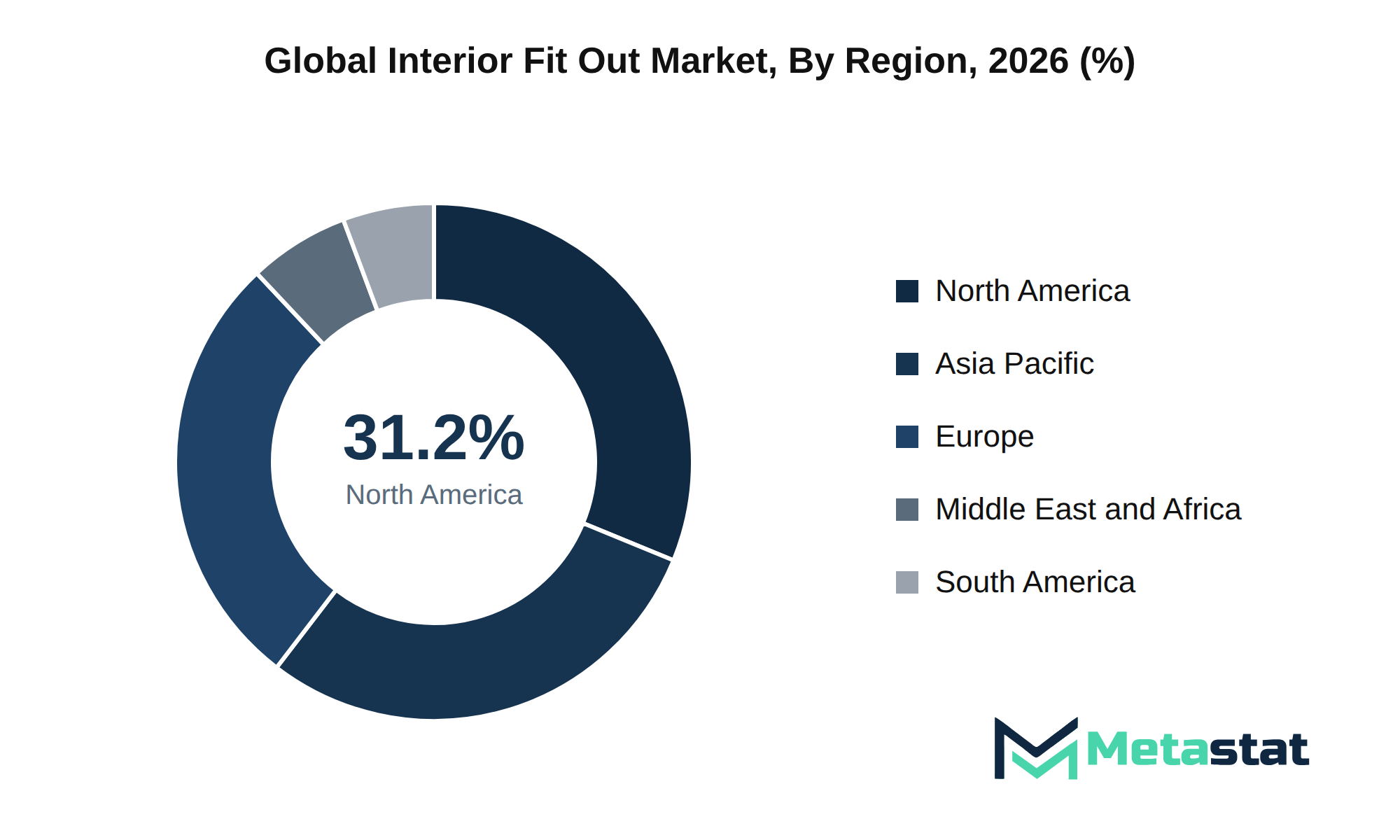
North America holds a market share of 31.2% of the Interior Fit Out market in 2025. The region is set to expand at a CAGR of 8.6% within the forecast period, reaching a market size (TAM) of USD 41.5 billion by the end of 2033. Key demand drivers include the growth of both the residential and commercial sectors, particularly in the United States, Canada, and Mexico. Infrastructure modernization initiatives contribute to this growth by enhancing the quality and functionality of existing buildings.
Adoption rates in North America reflect a strong inclination towards innovative design and sustainable practices, aligning with global trends. Significant investments in renovation and refurbishment projects further boost the market, with an emphasis on enhancing energy efficiency and aesthetic appeal. The competitive landscape features several domestic market participants that shape procurement dynamics, while localized procurement strategies adapt to cultural nuances and regional buying behavior.
Emerging opportunities arise from supply chain regionalization and nearshoring initiatives, which strengthen the manufacturing capabilities within the region. These developments facilitate a more resilient supply chain, catering to the increasing demand for timely project deliveries. The market remains attractive for foreign direct investment (FDI), with geographic expansion windows opening for suppliers aiming to capitalize on the growing infrastructure needs.
Cultural and regulatory frameworks guide local compliance mandates, shaping the dynamics within the Interior Fit Out market. These regulatory aspects influence design choices, project specifications, and overall execution strategies. The focus on high-value replacement cycles creates incremental growth vectors, allowing players in the market to navigate the evolving demands effectively.
The Interior Fit Out market in Europe reflects a market characterized by significant investment in modernizing and renovating existing structures. Countries like Germany, France, and the UK influence demand patterns through stringent regulations and cultural preferences that favor innovative and sustainable design solutions. A strong focus on architectural design and consulting services supports market expansion in the region.
Competitive activity remains robust, with domestic market participants including AECOM and Gensler driving innovation and quality. The presence of established players enhances localized procurement dynamics, improving responsiveness to regional consumer preferences. A notable trend is the emphasis on eco-friendly designs, aligning with the European Union's sustainability goals, which encourages investments in energy-efficient building practices.
Infrastructure modernization initiatives play a critical role in shaping the market. Countries in Europe are ramping up efforts to enhance their infrastructure, leading to increased opportunities in the New Construction and Renovation & Refurbishment project types. This focus contributes to an expected rise in segment expansion throughout the forecast period. The overall market is projected to reach a valuation of USD 139.2 billion by 2033, indicating a compound annual growth rate of 8.6% from 2026 to 2033.
Emerging market front-runners within Europe, including Italy and Spain, reflect increasing demand for high-quality interior fit outs, with particular growth in residential and hospitality sectors. Geopolitical factors and trade policies impact cross-border trade corridors, influencing the flow of materials and services across borders. The regional competitive environment benefits from strategic entry barriers that protect local businesses while promoting foreign direct investment flows.
Localized manufacturing densities contribute to the resilience of the supply chain, supporting the market's ongoing growth. The unique cultural nuances and regional B2B buying behaviors influence purchasing decisions, with clients favoring tailored solutions that align with local aesthetics. Ultimately, these factors collectively position Europe because a vital hub within the global Interior Fit Out market.
The Asia-Pacific region holds a share of the global Interior Fit Out market, valued at 29.2% in 2025. This market expansion stems from rapid urbanization and a growing middle class, leading to increased investments in residential and commercial spaces across key countries, particularly China, Japan, and India.
China's ongoing infrastructure modernization drives demand in both the construction and renovation sectors, supporting the market's growth. The urban housing market in India undergoes a transformation, resulting in higher demand for interior fit-out solutions in both residential and commercial properties. South Korea shows a trend of adopting innovative design styles, particularly modern and eco-friendly approaches, which enhances the attractiveness of the market.
Australia benefits from strong regulatory frameworks that promote environmentally sustainable building practices, contributing to the growth of the market in the region. Southeast Asia displays significant potential due to its underpenetrated territories, where increasing foreign direct investment (FDI) flows and localized manufacturing densities support the emergence of new market players.
The competitive landscape in Asia-Pacific features a mix of established domestic leaders and emerging players, each adapting to local compliance mandates and B2B buying behaviors. Cultural nuances play a crucial role in shaping procurement dynamics, influencing design preferences and project specifications across different countries. Overall, the market is poised for sustained growth through 2033, driven by regional dynamics and strong consumer demand for innovative interior fit-out solutions.
In South America, the Interior Fit Out market registers a share of 5.7% of the global market in 2025. Brazil and Argentina serve because the primary markets in this region, with ongoing urbanization and economic development fueling growth. Increasing investments in infrastructure and residential projects create a positive environment for market expansion. The demand for modern and contemporary design styles gains traction among consumers, influencing project preferences in both residential and commercial segments.
Brazil leads in market activity, driven by significant investments in new construction and renovation projects. The rising middle class in urban areas contributes to heightened demand for residential fit-outs, while corporate entities invest in office renovations to enhance workplace environments. Argentina follows closely, focusing on modernization initiatives across various sectors, including hospitality and retail.
Local players actively adapt to the unique cultural preferences of consumers, which shape procurement dynamics and influence design choices. The presence of domestic market participants streamlines operations, creating competitive advantages in project delivery. Overall, South America’s Interior Fit Out market displays promising growth potential, backed by strategic investments and evolving consumer preferences.
The Interior Fit Out market in the Middle East and Africa demonstrates potential for significant growth driven by several key factors. Significant investments in infrastructure modernization across Saudi Arabia and the UAE support the expansion of various segments, including hospitality and commercial spaces. The increasing focus on sustainable design and eco-friendly materials aligns with global trends, enhancing the appeal of interior fit out projects in this region.
Demand for high-quality construction services reflects the region's ambitious development projects, including mega-events and city initiatives. Countries like South Africa experience a shift towards modern and contemporary design styles, catering to a growing urban population seeking upgraded living and working environments. The market benefits from localized procurement dynamics, allowing suppliers to respond swiftly to regional preferences and needs.
Geopolitical factors and local compliance mandates influence procurement processes, prompting companies to engage with regional vendors to ensure adherence to regulations. Foreign direct investment (FDI) flows into the Middle East and Africa create strategic entry barriers for new players while encouraging existing firms to expand their service offerings.
Market players focus on enhancing service capabilities and innovating design styles to meet evolving consumer expectations. Strong competition among domestic market participants generates a dynamic environment where vendors consolidate to gain market share. The Interior Fit Out market in this region stands poised for incremental growth, driven by a combination of emerging market front-runners and established players adapting to local demands.
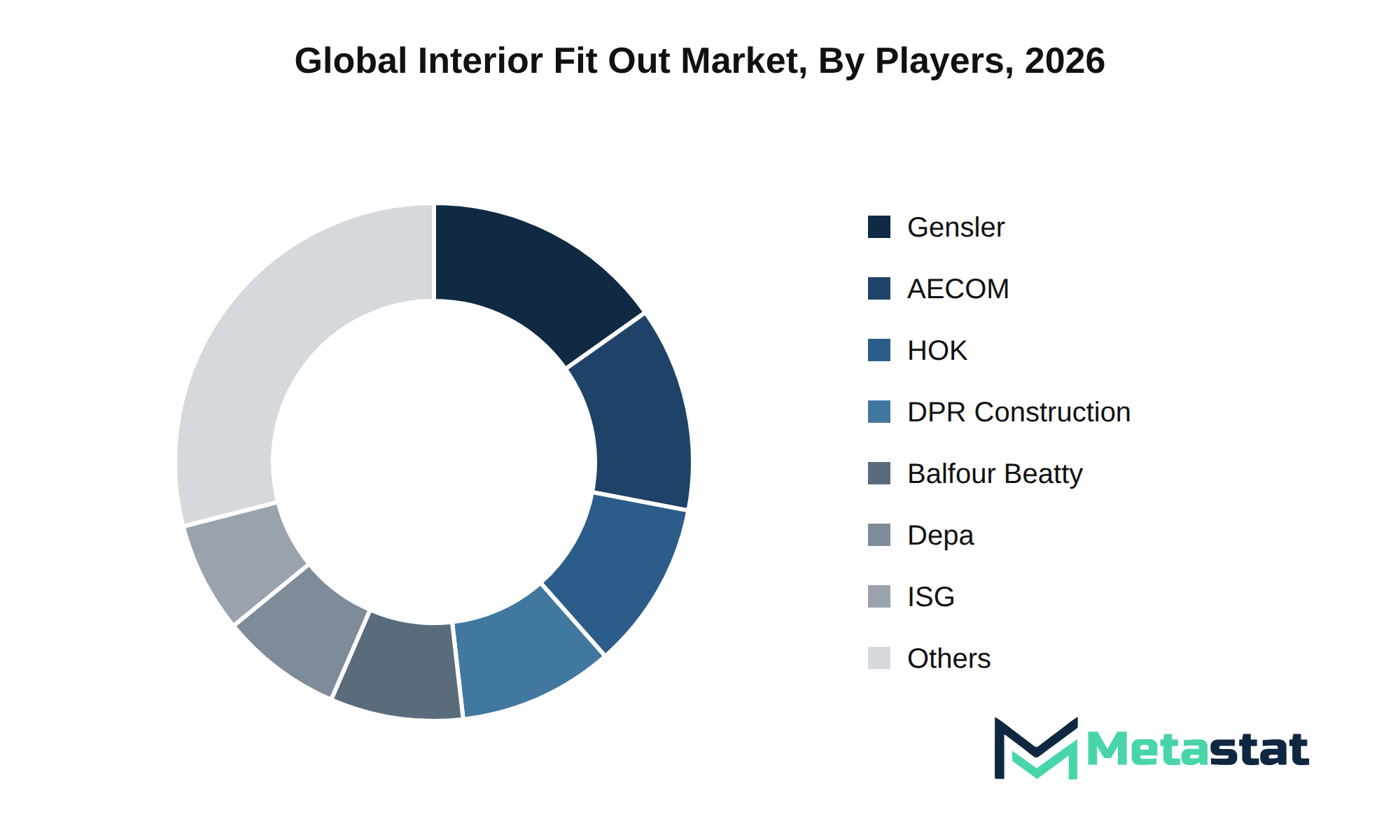
The Interior Fit Out market experiences significant competition driven by strategic behaviors among key players. Companies emphasize mergers and acquisitions to enhance market share and capabilities. This strategic consolidation enables firms to diversify their service offerings and expand geographic reach. For instance, large firms like AECOM and Balfour Beatty leverage their scale to compete effectively in various market segments.
Go-to-market strategies focus on establishing strong alliances and partnerships. Companies pursue joint ventures to access new technologies and customer bases. Collaborative efforts among firms, including Gensler and HOK, enhance their service capabilities while maintaining competitive pricing architectures. Such strategic alliances create barriers for new entrants and increase switching costs for existing customers, strengthening brand loyalty.
Value chain integration emerges because a critical factor, with market players like ISG Plc and Turner Construction Company optimizing supply chain dynamics to enhance procurement leverage. This efficiency supports competitive pricing while ensuring customer retention strategies remain effective. Firms invest in R&D pipelines, allowing differentiation through proprietary technologies, which fortifies their positions in the market.
While the market evolves, companies face ongoing challenges from startup disruptions and emerging competitors. The competitive outlook necessitates ongoing assessments of defensive imperatives and strategic growth vectors. Firms like Skanska and Depa Group continuously innovate to maintain technological defensibility while addressing the market's shifting demands.
Market size is forecast to rise from USD 71.9 billion in 2025 to over USD 139.2 billion by 2033. The base case reflects a growth trajectory at an 8.6% CAGR driven by various macroeconomic factors. In favorable conditions, a bullish scenario could see accelerated adoption of next-generation technologies and strategic capital allocations, enhancing demand across sectors. A bearish outlook could involve economic downturns impacting infrastructure investments and consumption patterns negatively.
Economic cycle fluctuations impact the Interior Fit Out market significantly. Structural consumption shifts arise from changing consumer preferences for sustainability and eco-friendly designs, prompting firms to adapt their offerings. Regulatory evolution and compliance milestones drive innovation, necessitating investments in R&D and the integration of advanced technologies.
Global geopolitical realignments and evolving trade corridors continue to reshape supply chains, affecting pricing and availability of materials. The market sees emerging white-space opportunities, particularly in underserved regions and sectors, which present growth potential for industry players. Executive-level strategic imperatives guide firms in navigating these changes, focusing on defensibility roadmaps and future growth recommendations to capitalize on high-growth pockets.
The report strategically identifies and profiles the key market players and analyses their core competencies in each sub-segment of the Interior Fit Out market.
|
Report Attributes |
Details |
|
Study Period |
2021-2033 |
|
Base Year |
2025 |
|
Estimated Year |
2026 |
|
Forecast Period |
2026-2033 |
|
Historical Period |
2021-2025 |
|
Growth Rate |
CAGR 8.6% from 2026 to 2033 |
|
Revenue Unit |
USD billion |
|
Segmentation |
By Service, Project Type, Design Style, End-User, and Region |
|
By Region |
North America (By Service, Project Type, Design Style, End-User, and Country)
|
|
Europe (By Service, Project Type, Design Style, End-User, and Country)
|
|
|
Asia Pacific (By Service, Project Type, Design Style, End-User, and Country)
|
|
|
South America (By Service, Project Type, Design Style, End-User, and Country)
|
|
|
Middle East and Africa (By Service, Project Type, Design Style, End-User, and Country)
|
Find answers to common questions about this report
The Interior Fit Out market size was valued at USD 71.9 billion in 2025, according to the Metastat Insights study.
The Interior Fit Out market is projected to grow at a CAGR of 8.6% during the forecast period from 2026 to 2033.
The North America Interior Fit Out market size is estimated to reach USD 41.5 billion by 2033.
The segment leading the Interior Fit Out market is Construction & Installation, with a projected value of USD 79.2 billion by 2033. This segment demonstrates significant growth potential, with a compound annual growth rate of 8.2% from 2026 to 2033.
Key drivers for the Interior Fit Out market include increased capital investment, which enhances infrastructure and generates demand across sectors including residential, commercial, and hospitality. The growing trend toward modernization and digital transformation improves operational efficiency, while technological advancements streamline processes and enhance project delivery.
North America holds the dominant share of the Interior Fit Out market, with a projected value of USD 41.5 billion in 2033, representing 31.2 percent of the total market.
Regulatory tightening and compliance hurdles create barriers for developers and contractors, leading to project delays and increased costs. Macroeconomic headwinds, including inflation and resource scarcity, further constrain market expansion by impacting profitability and limiting project scale. Geopolitical instability adds uncertainty to investment strategies, complicating operational decisions within the Interior Fit Out market.
Capital investment environments significantly influence product adoption within the Interior Fit Out market. Increased spending in infrastructure and modernization aligns with rising public-private spending power, generating robust demand for construction, design, and consulting services. The integration of advanced technologies enhances operational efficiency, contributing to demand for innovative fit-out solutions.
The Interior Fit Out market is estimated to reach a valuation of USD 139.2 billion by 2033.
Key players operating in the Interior Fit Out market include AECOM, Balfour Beatty, Depa Group, Gensler, Jones Lang LaSalle IP, Inc., Mace Group, Skanska, and Turner Construction Company.
The analysts below cover Consumer Goods research at Metastat Insights.
LEAD ANALYST
Utkarsh Khirodkar is a Lead Market Research Analyst at MetaStat Insight, specializing in market intelligence, technology sector assessments, and competitive strategy.
Evaluating sovereign cloud deployments for core banking platforms demands a clear view of data residency regulations and migration exit strategies. MetaStat Insight delivered an exhaustive review of regional latency tolerances, mainframe decommission milestones, and third-party vendor concentration risk. The regulatory compliance mapping across European and Asian financial jurisdictions gave our team a dependable baseline for multi-cloud infrastructure discussions.
Replacing petrochemical surfactants with bio-based alternatives requires realistic timelines on industrial precision fermentation scaling. The market research broke down commercialization timelines, feedstock sugar price sensitivities, and regional cosmetic ingredient regulatory approvals in Europe and East Asia. That supplier readiness mapping gave our formulations team reliable context when comparing renewable chemical sourcing roadmaps.
Tracking ceramic matrix composite adoption in high-bypass aero engines requires strict attention to material qualification cycles and FAA airworthiness testing milestones. The MetaStat Insight team provided a detailed timeline of silicon carbide fiber manufacturing capacity and commercial foundry lead times. Having clear visibility into upstream thermal barrier coating supply helped us stress-test our long-term component procurement strategy.
Explore related market intelligence reports worth reading alongside this one.
Starting from
$2950
Starting from
$2950