
LEAD ANALYST
Utkarsh Khirodkar is a Lead Market Research Analyst at MetaStat Insight, specializing in market intelligence, technology sector assessments, and competitive strategy.

Global Machine Vision Market Size, Share, By Offering (Hardware, Software, Services), By System Architecture (PC-Based Systems and Smart Camera-Based Systems), By Application (Quality Assurance and Inspection, Identification and Traceability, Measurement, Positioning and Guidance), By End-Use Industry (Automotive, Electronics and Semiconductors, Food and Beverages, Pharmaceuticals and Biotechnology, Medical Devices, Logistics and Warehousing, Metals and Machinery, Printing and Paper), Industry Analysis, Growth, Trends, and Forecast, 2026-2033
Report ID
MSI-5679
Published
November, 2026
Pages
306 Pages
Format
Historical
Base year
Forecast
Forecast period
Report Details
Market Valuation: Valued at $27.5 Billion in 2025, projected to reach $75.4 Billion by 2033 at a 13.4% CAGR.
Dominant Segment: The hardware segment leads the market, driven by the essential role of cameras and imaging systems in machine vision applications. This segment is projected to grow from USD 19.1 billion in 2026 to USD 43.4 billion by 2033.
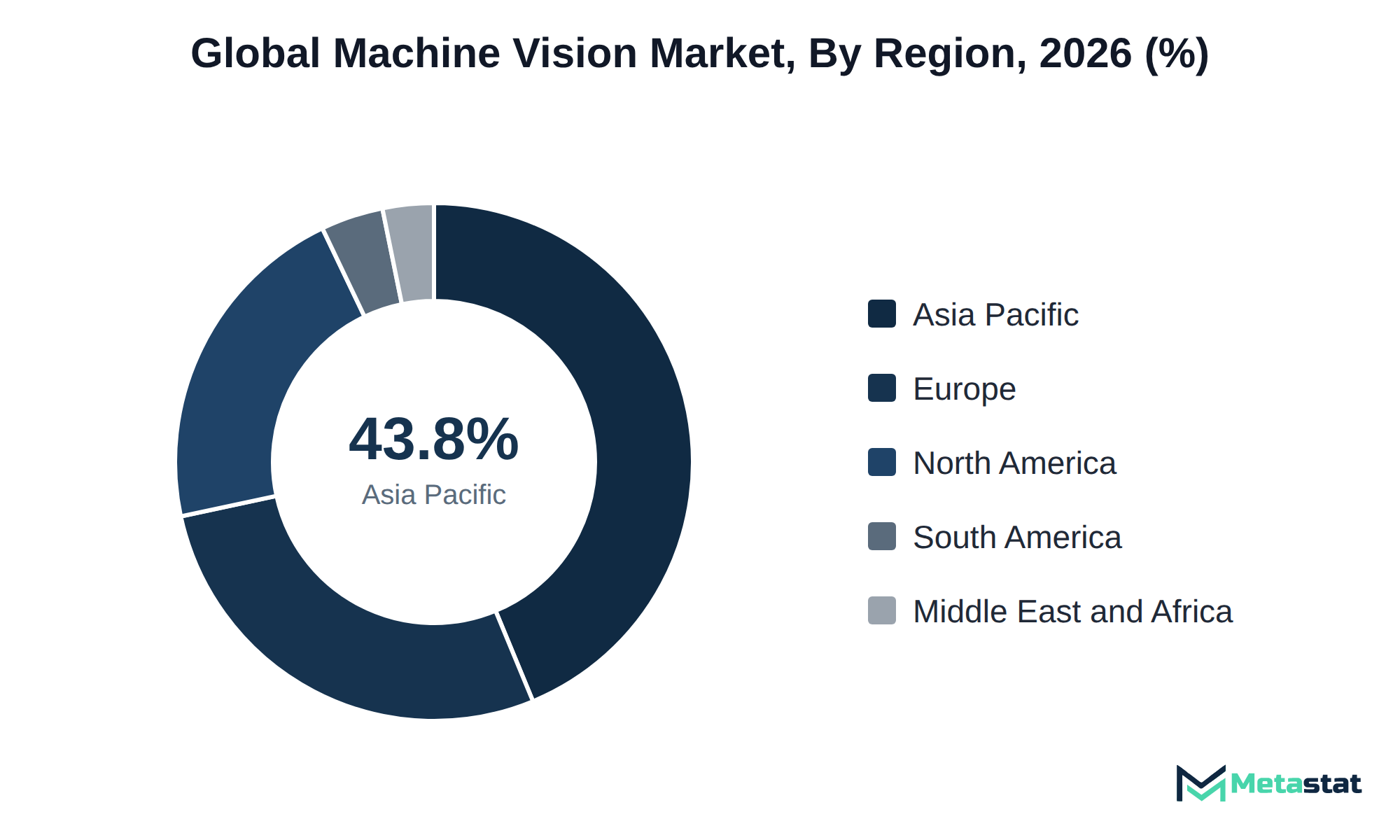
Geographic Lead: Asia Pacific holds the largest market share, accounting for 43.8% in 2025, supported by a robust manufacturing base and rapid technological advancements. North America follows, with the US expected to lead in growth by 2026.
What's Inside: The report provides a comprehensive analysis of the global machine vision market, including competitive coverage, market segmentation by offering, system architecture, application, and end-use industry, along with detailed forecasts from 2026 to 2033.
AI-Based Advancements: The integration of AI technologies in machine vision systems enhances defect detection capabilities, with the software segment projected to reach USD 21.5 billion by 2033, reflecting a CAGR of 15.2%.
3D Vision Growth: Smart camera-based systems are expected to grow significantly, reaching USD 36.3 billion by 2033, driven by rising demand for compact and efficient imaging solutions across various industries.
Choose Your License
Global Machine Vision Market
The global Machine Vision market was valued at USD 27.5 billion in 2025 and is projected to reach USD 75.4 billion by 2033, growing at a CAGR of 13.4% over the forecast period.
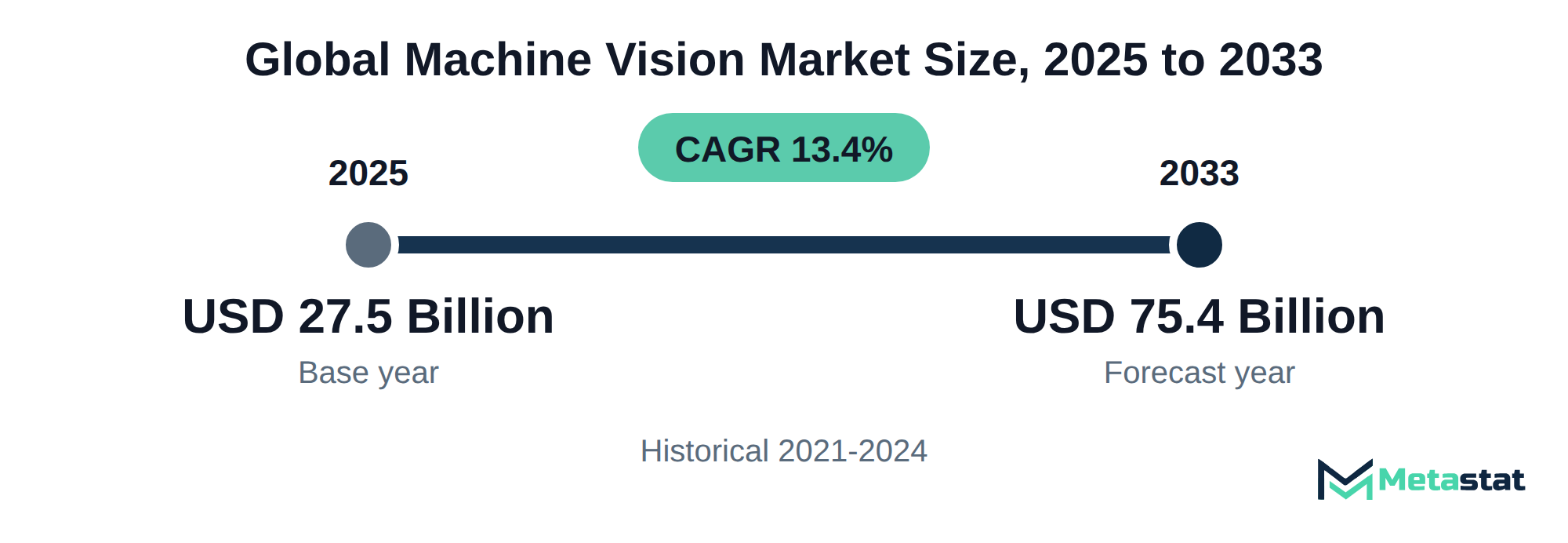
The Machine Vision market covers technologies that automate visual inspection and analysis across industries. Buyers invest in these systems to enhance efficiency, improve product quality, and reduce operational costs. This sector includes hardware, software, and services designed to meet the growing demand for precise and reliable visual data processing.
Growth in the market is driven by increased automation across industries, particularly in quality assurance and inspection applications. The hardware segment holds the largest value, reflecting the essential role of cameras and imaging systems in these solutions. Asia Pacific represents the largest share of the market, accounting for 43.8% in 2025, while North America holds 21.3% of the market in 2025, with the US leading in 2026.
Technological advancements in machine vision systems, including the integration of artificial intelligence and deep learning algorithms, enhance capabilities and broaden applications. These innovations enable industries including automotive and electronics to adopt more sophisticated inspection processes, impacting overall productivity and operational efficiency.
The demand for advanced imaging solutions drives significant investment in the Machine Vision market. Industries rely on these technologies to enhance quality control, improve operational efficiency, and reduce downtime. The growing emphasis on automation and smart manufacturing under Industry 4.0 accelerates the adoption of machine vision systems, leading to increased spending across various sectors.
Among the segments, hardware holds the largest market value, reflecting its critical role in the overall system architecture. The Asia Pacific region emerges as the largest share contributor, accounting for 43.8% of the market. This regional dominance stems from a strong manufacturing base and rapid technological advancements, which keeps the market competitive.
Rapid growth in automotive and electronics industries significantly influences market expansion. The need for enhanced inspection and traceability systems supports this trend, driving investments in machine vision technologies. Companies seek to maintain high standards of quality and efficiency, and strong demand positions the Machine Vision market for sustained growth in the coming years.
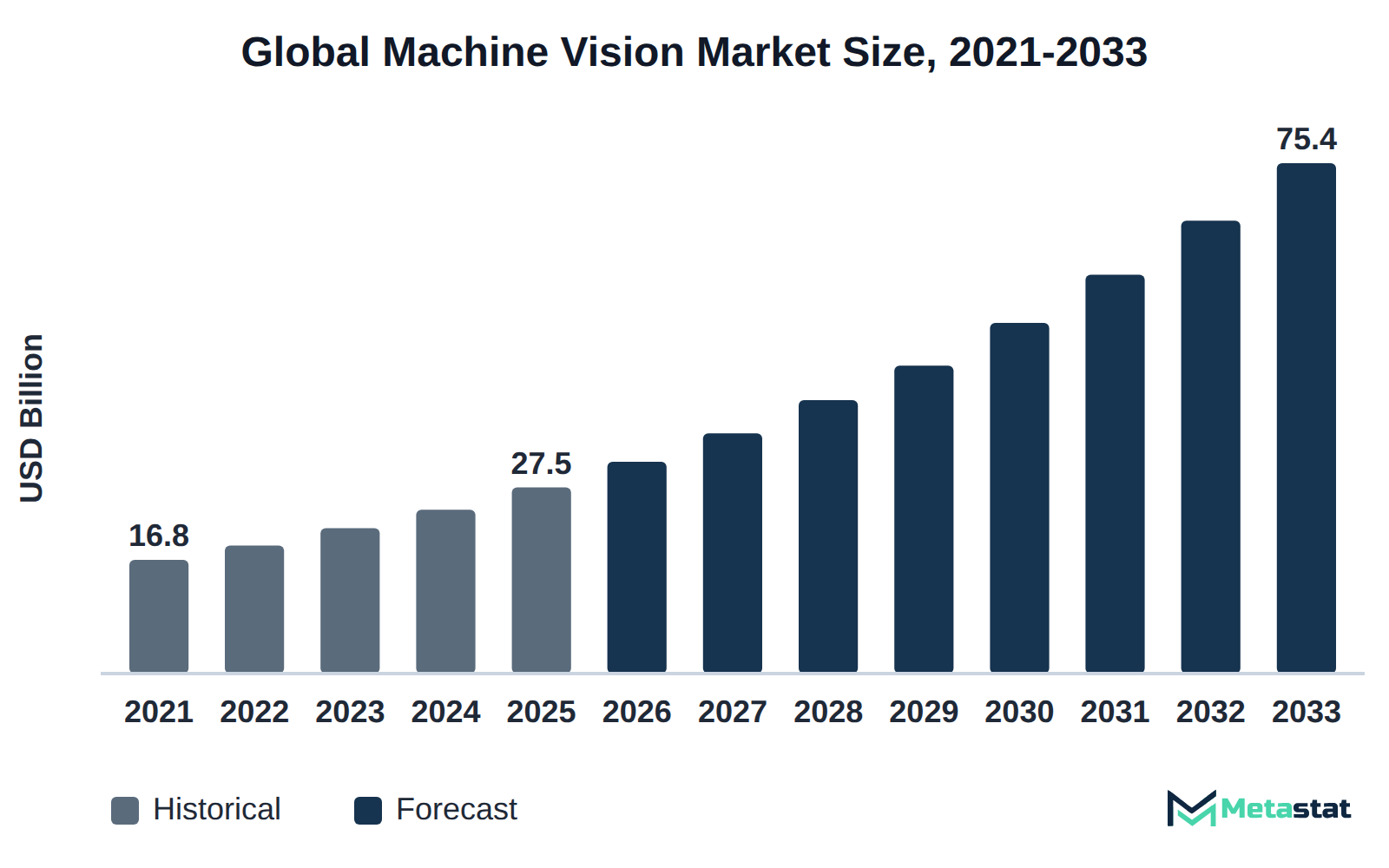
AI-based defect detection systems drive significant advancements in automated inspection processes within complex production lines. The integration of AI technologies enhances the capability of machine vision systems to identify defects with higher accuracy and speed. Wider progress in AI-based computer vision supports these gains in accuracy and speed. This advancement stems from the increasing complexity of manufacturing processes and the need for precision in quality control. Machine vision market participants are adopting AI algorithms, which analyze visual data in real-time, to detect anomalies that human inspectors overlook.
By 2033, the software segment within the market is projected to reach USD 21.5 billion, reflecting a compound annual growth rate (CAGR) of 15.2%. This growth highlights the shift towards intelligent solutions that improve defect detection and reduce operational costs associated with manual inspections. The deployment of AI-driven machine vision systems allows manufacturers to streamline their quality assurance processes, thereby enhancing productivity and minimizing waste.
As production lines evolve, reliance on traditional inspection methods decreases, leading to a more automated and efficient quality control environment. The transition to AI-based defect detection positions companies to gain a competitive edge through improved product quality and reduced time to market.
Investments in 3D vision technologies and smart cameras are reshaping the purchasing landscape within the Machine Vision market. Buyers increasingly prefer these advanced solutions due to their enhanced capabilities in robotic guidance and precision measurement. The rising demand for accurate and efficient automation solutions drives this shift. By 2033, the smart camera-based systems segment is expected to reach USD 36.3 billion, reflecting a compound annual growth rate (CAGR) of 14.3%. This significant growth illustrates the willingness of buyers to invest in higher-value technologies that deliver improved operational efficiency.
Purchasing behaviors in this market favor subscription and pay-per-use pricing models, allowing companies to reduce upfront capital expenditures. Hardware-as-a-service offerings follow a similar logic by replacing upfront purchases with recurring payments. This approach attracts several firms with limited budgets while providing larger organizations flexibility in scaling their investments. Such flexible financial arrangements let more buyers access advanced technology without the burden of substantial initial costs. This trend enhances competitive dynamics in the market, with more organizations adopting advanced Machine Vision solutions tailored to their specific operational needs.
The pharmaceutical sector increasingly adopts machine vision solutions for GMP (Good Manufacturing Practice) packaging inspection and traceability. The need for compliance with stringent regulations drives this trend, ensuring product integrity and consumer safety. In 2023, the market for quality assurance and inspection is projected to reach USD 21.5 billion, highlighting the growing emphasis on maintaining high standards in pharmaceutical manufacturing.
Investment in advanced technologies for inspection and traceability enhances operational efficiency, reduces errors, and minimizes product recalls. Machine vision systems equipped with high-resolution cameras and sophisticated algorithms enable precise defect detection and verification of packaging integrity, a critical requirement in pharmaceuticals. The integration of these systems into manufacturing processes supports manufacturers in meeting regulatory obligations while improving overall productivity.
Rising demand for high-quality pharmaceutical products drives significant market growth, resulting in expanding opportunities for suppliers of machine vision technology. The adoption of these systems positions pharmaceutical manufacturers to achieve compliance and enhance their competitive edge, ultimately leading to increased revenue and market share.
Manufacturers often face critical decisions when selecting between PC-Based and Smart Camera Vision Systems. The choice hinges on specific operational requirements and application needs. PC-Based Systems stand out in environments that require extensive processing power and flexibility. Smart Camera-Based Systems, which are anticipated to achieve USD 36.3 billion in the same year, emphasize compactness and ease of integration, appealing to manufacturers focused on space efficiency and streamlined operations.
Operational environments, including high-precision manufacturing in the automotive sector, often dictate equipment choice. Automotive manufacturers use PC-Based Systems for their ability to handle complex algorithms and larger datasets. Industries prioritizing compact solutions, including logistics and warehousing, favor Smart Camera-Based Systems. This differentiation influences purchasing patterns and shapes market dynamics, ultimately affecting production efficiency and cost management. Understanding the unique advantages of each system type leads to informed investment decisions that drive growth in the Machine Vision market.
Manufacturers in various industries increasingly adopt machine vision solutions to enhance automation and improve operational efficiency. This shift results from a growing emphasis on quality control, productivity, and cost reduction. Companies seek to streamline processes and minimize human errors, driving demand for robust machine vision systems. The automotive and electronics sectors represent significant buyer groups, with investments in automation technologies growing to meet rising production standards and consumer expectations.
This growth highlights a fundamental transition in manufacturing practices, with automation driving operational improvements and increased output. Such dynamics lead to higher volume demands for machine vision systems, which reinforces their importance in modern production environments.
Technological advancements and competitive pressures compel manufacturers to seek solutions that enhance efficiency and reduce costs, driving sustained interest in machine vision technology.
Advancements in smart camera technology significantly influence adoption rates within various industries. These cameras offer enhanced capabilities for image processing, leading to improved precision and efficiency in visual inspection tasks. Growing integration with artificial intelligence further boosts their functionality, enabling real-time data analysis and adaptive learning for defect detection. Industries including automotive and electronics prefer smart camera solutions due to their compact design and reduced setup complexity compared to traditional systems.
Investment in smart camera-based systems will drive market growth, projected to reach USD 36.3 billion by 2033. This increase results from ongoing demand for innovative inspection solutions that enhance production quality and operational efficiency. The Machine Vision market benefits from continual development of these technologies, creating a competitive environment that encourages further innovation and investment. Enhanced capabilities from smart cameras transform inspection processes, enabling manufacturers to achieve higher throughput and lower operational costs.
High capital costs associated with machine vision equipment limit adoption among small and medium-sized enterprises (SMEs). These organizations face budget constraints, resulting in slower uptake of advanced imaging systems and smaller order volumes compared to larger corporations. The significant initial investment required for high-performance hardware and software solutions creates barriers, preventing SMEs from fully leveraging the benefits of automation and quality assurance. This situation leads to delayed replacement of outdated systems, ultimately impacting operational efficiency and competitiveness within the market. The financial burden of integrating machine vision technology into existing processes restricts market penetration, particularly in cost-sensitive industries including food and beverages. Overcoming these challenges will be essential for expanding the market and driving broader acceptance among various buyer groups.
Suppliers in the Machine Vision market face significant challenges driven by rising input costs. Increased prices for essential components, including cameras and processing units, negatively impact profitability. The growing demand for high-quality features and performance drives these costs higher, leading to margin pressure across the supply chain. Various suppliers respond by optimizing operations, focusing on cost reduction strategies, and forging partnerships with component manufacturers to secure better pricing. Several companies invest in research and development to enhance product efficiency, which helps mitigate the effects of rising costs. This proactive approach supports competitiveness while maintaining the ability to serve diverse industry needs. As the market progresses, suppliers will keep seeking innovative ways to manage these cost challenges while delivering value to customers.
The segment of smart camera-based systems represents a significant growth opportunity in the Machine Vision market. Rising demand for compact and efficient imaging solutions across various applications, including quality assurance and inspection, drives this growth. Industries including automotive and electronics increasingly adopt smart camera systems to enhance operational efficiency and precision in processes. Development of advanced image processing capabilities within these systems contributes to their appeal, enabling users to perform complex tasks with greater accuracy. Ongoing evolution of smart cameras aligns with trends toward automation and integration of artificial intelligence in manufacturing, positioning this segment as a key driver of future market expansion. The market shows a strong trajectory as investments flow into smart camera technologies, reflecting their importance in the broader machine vision ecosystem.
The Global Machine Vision market is segmented based on Offering, System Architecture, Application, and End-Use Industry.
Hardware segment is valued at USD 19.1 billion in 2026 and is projected to reach USD 43.4 billion by 2033, at a CAGR of 12.4% during the forecast period. This segment comprises the physical components used in machine vision applications, including cameras, sensors, and lighting systems, essential for delivering accurate imaging and processing capabilities. The image sensors inside these cameras are an upstream component of this hardware. Industries including automotive and electronics leverage these components to enhance quality assurance processes and increase operational efficiency. Key factors influencing growth in this segment include ongoing advancements in imaging technologies and the rising demand for more efficient automation solutions. Compared to software offerings, which exhibit a higher growth rate with a CAGR of 15.2%, the hardware segment demonstrates steady growth driven by the necessity for reliable physical equipment in various automation applications. Continuous innovation shapes the hardware landscape, ensuring competitiveness and alignment with evolving market needs.
Machine vision software enables functionalities including image processing, data analysis, and automation, serving industries including automotive, electronics, and pharmaceuticals. Growing demand for sophisticated inspection solutions drives software adoption, with users seeking enhanced operational efficiency and quality assurance. Continuous advancements in software capabilities drive significant investment, shaping competitive positioning for suppliers and impacting overall market dynamics. This emphasis on software solutions highlights the evolving environment, where quality and efficiency remain essential for manufacturers aiming to maintain a competitive edge.
Services segment is expected to reach USD 10.4 billion by 2033. This segment focuses on the provision of technical support, maintenance, and consulting services related to machine vision systems. Industries including automotive, electronics, and pharmaceuticals engage these services to enhance operational efficiency and ensure system reliability. A significant growth driver for this segment includes the increasing demand for system upgrades and integration of new technologies. The services segment demonstrates a higher growth rate compared to hardware, which has a projected CAGR of 12.4%. In contrast, the software segment is anticipated to experience an even higher CAGR of 15.2%. This distinction in growth rates highlights the unique dynamics within the services segment of the market, where ongoing support and service agreements drive revenue.
PC-Based Systems segment is valued at USD 17 billion in 2026 and is projected to reach USD 39 billion by 2033, at a CAGR of 12.6% during the forecast period. These systems serve various applications, particularly high-precision manufacturing and quality control, where they support detailed inspections and data analysis. Industries including automotive and electronics increasingly implement PC-Based Systems due to their reliability and high processing capabilities. The growing demand for automation and efficiency drives the expansion of this segment. Compared to Smart Camera-Based Systems, which are expected to achieve a CAGR of 14.3%, PC-Based Systems demonstrate slower growth but offer higher processing power and flexibility, appealing to larger manufacturing environments that require extensive customization and integration.
Smart camera-based systems enable real-time image processing and decision-making in automation. Industries including automotive, electronics, and pharmaceuticals leverage smart camera-based systems for quality assurance, inspection, and traceability. A key driver of this segment is the increasing demand for efficient inspection solutions, particularly in high-throughput environments. The growth rate surpasses that of PC-Based Systems, reflecting an evolving preference for compact, integrated solutions. With a greater emphasis on cost-effectiveness and scalability, buyers gravitate towards smart camera-based systems, which present lower implementation costs compared to traditional setups. This trend positions smart camera technology as a favorable option for both large enterprises and SMEs seeking to enhance operational efficiencies in the market.
Quality Assurance and Inspection segment is valued at USD 13.8 billion in 2026 and is projected to reach USD 32.6 billion by 2033, at a CAGR of 13.1% during the forecast period. This segment focuses on verifying the quality and compliance of products across various industries, including automotive, electronics, and pharmaceuticals. Demand for improved product quality and regulatory compliance drives adoption, particularly among manufacturers seeking to enhance operational efficiency and reduce defects. Compared to other application segments, Quality Assurance and Inspection experiences a stronger growth trajectory due to increasing consumer expectations and stringent quality standards. The segment's emphasis on advanced imaging solutions distinguishes it from others, including Measurement and Positioning and Guidance, which experience lower projected growth rates.
Identification and Traceability segment is estimated to reach USD 18.9 billion by 2033, at a CAGR of 14.1% during the forecast period. This segment focuses on tracking products throughout supply chains, ensuring compliance with regulations and enhancing transparency. Manufacturers in pharmaceuticals, food and beverages, and logistics apply these solutions to monitor the origin and movement of goods. The growing emphasis on regulatory compliance and consumer safety drives demand for identification and traceability solutions, reflecting a shift towards greater accountability. Recognizing the importance of tracking, companies prioritize investments in systems that offer reliable identification mechanisms. Vision-based identification is one part of the wider field of automatic identification and data capture. Compared to other segments, this area exhibits strong growth, highlighted by a higher CAGR of 14.1%, indicating strong market potential due to increasing global trade complexities and the need for operational efficiency. The machine vision market supports this trend, enabling sectors to implement effective traceability measures.
Measurement segment is expected to reach USD 11.8 billion by 2033. This segment is used for precise dimensional assessment, ensuring products meet specific tolerances and quality standards. Precise dimensional assessment of this kind is closely related to 3D metrology. Industries including automotive and electronics heavily rely on these measurement solutions to enhance production accuracy and reduce waste. Growth in this segment is driven by increasing demand for high-precision manufacturing and integration of automation technologies. In comparison to other application segments, measurement exhibits a moderate growth rate, with a CAGR of 11.8% expected through 2033, contrasting with higher growth rates seen in sectors like Identification and Traceability. The ongoing trend of digital transformation across manufacturing processes further supports the expansion of measurement technologies, creating a favorable environment for innovation and investment in the market.
The Positioning and Guidance segment of the Machine Vision market is projected to grow at a CAGR of 14.3% during the forecast period. This segment focuses on guiding the movement of machinery and components in various applications, ensuring precise alignment and placement. Robotic guidance of this kind is closely tied to advanced robotics for industrial automation. Manufacturers in industries including automotive and electronics leverage this technology to improve operational efficiency and reduce error rates. Increasing demand for automation drives investments in advanced vision systems, which provide real-time feedback for positioning tasks. Compared to other segments, this area experiences faster growth, driven by the rising need for accuracy in high-speed production environments. The prevalence of automated assembly lines contributes to the expansion of the Positioning and Guidance market, enhancing overall production capabilities.
Vision-Based Process Monitoring encompasses a critical area in machine vision applications focusing on monitoring and controlling processes through visual data. This segment serves industries including manufacturing, pharmaceuticals, and food processing, where maintaining consistent quality and efficiency is essential. Key forces driving demand in this segment include the increasing emphasis on automation and the quest for higher operational precision. Distinct from other applications, including Quality Assurance and Inspection, Vision-Based Process Monitoring prioritizes real-time analysis and feedback, allowing for immediate adjustments in production processes. This capability enhances efficiency and minimizes waste, reinforcing its value proposition in competitive markets. The segment's growth trajectory aligns with broader trends in automation technologies and data analytics, positioning it as an integral component in advancing industrial capabilities.
The automotive segment is valued at USD 6.2 billion in 2026 and is projected to reach USD 13.8 billion by 2033, at a CAGR of 12% during the forecast period. This segment primarily serves automotive manufacturers that apply machine vision for quality assurance, inspection, and production line automation. The continuous drive for enhanced operational efficiency and product quality strongly influences growth in this segment. Compared to other segments, the automotive sector faces stricter regulations and standards, which accelerate the adoption of advanced technologies. The segment demonstrates a significant growth trajectory, supported by increasing demand for automation and precision in vehicle manufacturing processes. By 2033, the automotive segment is expected to reflect substantial investment in machine vision solutions, further reinforcing its importance in the overall market.
The Electronics and Semiconductors segment is estimated to reach USD 14.5 billion by 2033, at a CAGR of 13.2% during the forecast period. This segment serves various industries, including consumer electronics and telecommunications, where precision and efficiency are critical. Demand for advanced imaging solutions drives growth due to the increasing complexity of electronic components. The rapid pace of innovation in semiconductor technology necessitates enhanced inspection and measurement capabilities. Compared to other segments, the Electronics and Semiconductors segment reflects a relatively higher growth rate, supported by the need for automation and quality assurance in manufacturing processes. The market experiences strong competition, with manufacturers striving to offer technology that addresses evolving customer requirements.
The Food and Beverages segment is expected to reach USD 12.3 billion by 2033. This segment serves the food processing and packaging industries, focusing on quality control and compliance with health regulations. Visual inspection is one part of the wider field of food quality and safety testing. Increasing consumer demand for safe and high-quality products drives adoption, compelling manufacturers to invest in advanced machine vision systems. The expected CAGR of 15.8% for this segment highlights its rapid expansion compared to other segments in the market. Food and beverages suppliers emphasize automation and efficiency, resulting in an increasing need for machine vision solutions to ensure consistency in product quality and traceability. This segment's unique requirements for stringent quality standards differentiate it from others, ensuring sustained growth in the coming years. The demand for innovative inspection technologies further supports this growth trajectory, positioning it as a critical area in the overall machine vision market.
Pharmaceuticals and Biotechnology segment is projected to grow at a CAGR of 15.8% during the forecast period. This segment serves crucial functions in the pharmaceutical and biotechnology industries, focusing on drug development, quality control, and compliance with regulatory standards. Key drivers include heightened regulatory scrutiny and the increasing demand for high-quality products. Unlike other segments, the Pharmaceuticals and Biotechnology segment experiences significant growth due to the critical nature of its applications, resulting in higher investment levels. The segment distinguishes itself by attracting a diverse range of buyers, including pharmaceutical manufacturers, contract research organizations, and regulatory bodies, all seeking advanced solutions to enhance operational efficiency and ensure product safety. The continued evolution of technology in this field drives innovation and facilitates compliance with stringent regulations, further driving adoption.
Medical Devices form an important segment of machine vision applications. This segment is applied extensively in healthcare settings, focusing on enhancing diagnostic accuracy, ensuring product quality, and automating processes. Demand is driven largely by advancements in technology, including the integration of artificial intelligence and machine learning, which facilitate the development of more sophisticated imaging systems. Compared to other segments, Medical Devices experience slower growth due to stringent regulatory requirements and high capital investment costs. However, the ongoing push for improved healthcare outcomes and increased automation in medical environments positions this segment for future expansion. Different from the Electronics and Semiconductors segment, Medical Devices cater to specialized buyers including hospitals and laboratories, prioritizing precision and reliability in their equipment.
Logistics and Warehousing involves the application of machine vision technologies to optimize processes in supply chain management. This segment focuses on improving efficiency in inventory management, order fulfillment, and shipment tracking. These applications sit within the wider field of warehouse automation. Increased demand for automation in these areas drives the growth of this segment, reflecting a broader trend towards streamlined operations and enhanced productivity. Unlike the Automotive or Electronics and Semiconductors segments, which experience faster growth rates, Logistics and Warehousing relies heavily on advancements in software integration and real-time data analytics. Barriers to adoption include the complexity of integrating new technologies into existing systems and the initial investment required for infrastructure upgrades. The market observes a gradual shift towards implementing machine vision solutions, supporting the need for improved operational performance.
Metals and Machinery involves applications in heavy industries, using machine vision for tasks including quality control and equipment monitoring. This segment supports manufacturers in ensuring precision and compliance, primarily benefiting the automotive and industrial machinery sectors. Key drivers include technological advancements in automation that enhance operational efficiency and reduce human error. Unlike segments including Electronics and Semiconductors that target high-precision applications, the Metals and Machinery segment emphasizes cost-effective solutions that maximize productivity over strict accuracy. The market for machine vision is expected to expand, driven by increasing demand for automation and reliability in manufacturing processes.
Printing and Paper focuses on the use of machine vision technologies to enhance quality control and streamline processes in printing and paper manufacturing. Companies within this sector apply machine vision systems for applications including print inspection, ensuring that products meet quality standards, and optimizing production efficiency. A key driving force for this segment is the increasing demand for high-quality printed materials, which necessitates precise inspection processes. This segment typically operates at a different price point compared to others, reflecting the specialized requirements of printing technology and the high standards expected by customers. The segment's growth trajectory distinguishes it from other industries by emphasizing rapid advancements in imaging technology that cater specifically to the nuances of printed products. This focus enhances operational efficiency and product quality while addressing evolving market needs in the Machine Vision market.
Applications in textiles, chemicals, and wood products employ machine vision technologies for various quality control and inspection processes. Manufacturers in these industries enhance accuracy and efficiency within their operations through machine vision. Demand for these solutions stems from the increasing focus on automation and quality assurance, driven by the need to maintain high standards in production. The segment experiences distinct growth dynamics compared to others, characterized by varying technological adoption rates and specific buyer needs. Industries focused on textiles and wood products require more customized solutions, differing in approach from sectors like automotive and electronics, which utilize more standardized offerings. Emerging technologies and the demand for integration with existing production systems influence the segment's growth trajectory. The overall market is expected to expand, reflecting a broader trend toward automation and precision across various sectors.
Based on geography, the Global Machine Vision market is divided into North America, Europe, Asia-Pacific, South America, Middle East, and Africa.
The North American market is projected to experience significant growth, reaching USD 16.9 billion by the end of 2033. Major industries driving demand include automotive, electronics, and pharmaceuticals, which increasingly rely on advanced machine vision technologies for quality control and process automation. The presence of developed infrastructure and strong technological capabilities in the United States, Canada, and Mexico further enhances the market's appeal. Ongoing investments in automation and Industry 4.0 initiatives contribute to expanding adoption rates among manufacturers. The market's growth aligns with the increasing focus on enhancing operational efficiency and product quality across various sectors, positioning North America as a vital region in the global machine vision market.
Europe accounts for 27.9% of the Machine Vision market in 2025. The region benefits from a well-established manufacturing infrastructure, which supports innovation and adoption of advanced technologies. Countries like Germany and France lead in automation and quality assurance initiatives, enhancing production efficiency. Investment in research and development, particularly in Germany, supports the growth of high-precision manufacturing processes. The market continues to evolve, with increasing focus on smart camera-based systems and software solutions that streamline operations. Demand for machine vision technologies in Europe is expected to expand while industries seek to improve quality control and operational efficiency.
Rapid development in the Asia-Pacific region drives significant demand for the Machine Vision market. Countries including China, Japan, and India lead in industrial automation initiatives, pushing manufacturers to adopt advanced technologies. The market thrives on the back of growth in electronics and automotive sectors, with companies investing heavily in quality assurance and inspection applications. South Korea's emphasis on semiconductor production adds further momentum, while Australia's focus on food safety standards creates new applications within the food and beverages industry. The region accounts for 43.8% in 2025. Ongoing technological advancements, coupled with government support for smart manufacturing, enhance the competitive landscape, positioning Asia-Pacific as a central hub for innovation in machine vision technologies.
South America exhibits a unique position within the Machine Vision market, driven primarily by its automotive and food and beverage industries. Brazil and Argentina emerge as key players, focusing on quality control and inspection processes to enhance productivity and safety. The region's share of the global market reflects the growing adoption of advanced technologies in manufacturing. Investment in infrastructure improvements supports the expansion of machine vision applications, driving growth within these sectors. Specific challenges include cost constraints and limited access to advanced technology, which hinders broader adoption. The market is expected to benefit from efforts to enhance operational efficiency in local manufacturing processes.
Growth in the Middle East and Africa stems from increasing automation across various industries, particularly in manufacturing and logistics. The market in this region is supported by rising demand for enhanced quality control and inspection processes. Saudi Arabia and the UAE invest significantly in advanced manufacturing technologies, driving the adoption of machine vision solutions. South Africa demonstrates a growing interest in these technologies, particularly in sectors including food and beverages. By 2025, the region is expected to represent 3.2% of the global machine vision market, reflecting its emerging position. This growth presents opportunities for suppliers to expand their offerings and cater to the specific needs of local industries, ultimately enhancing operational efficiency.
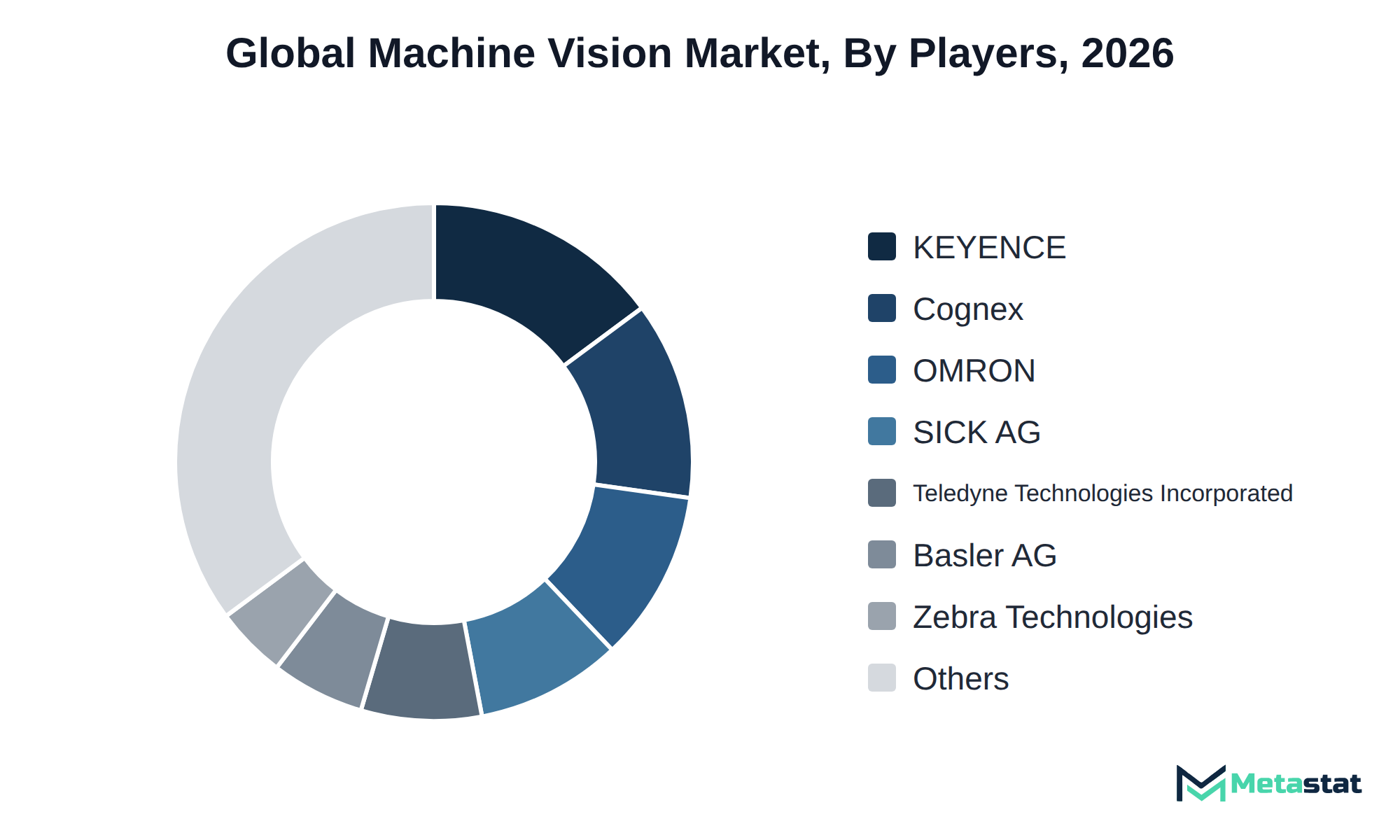
Competition in the Machine Vision market is evident across various segments, including hardware, software, and services. Companies like Cognex Corporation and KEYENCE Corporation focus on advanced hardware solutions, while others, including MVTec Software GmbH and Teledyne Technologies Incorporated, emphasize software offerings that enhance machine vision capabilities. These firms differentiate themselves through product innovation and customer support, which strengthens their competitive position.
Buyers select solutions based on factors including price, certification, and customization options. For instance, OMRON Corporation and SICK AG provide certified systems that meet industry standards, appealing to clients in regulated sectors. Companies including Basler AG and Zebra Technologies Corporation offer personalized solutions tailored to specific industry needs, supporting adoption across various applications, including quality assurance, identification, and traceability.
Achieving this growth hinges on several key developments within the Machine Vision market. First, the expansion of hardware offerings, particularly in PC-Based Systems, is expected to support increased demand across various industries including automotive and electronics. This segment is projected to grow from USD 19.1 billion in 2026 to USD 43.4 billion by 2033, driven by advancements in technology and rising automation needs.
Second, the software segment, projected to grow at a CAGR of 15.2%, will play a significant role in enhancing operational efficiency and providing robust analytics capabilities. The demand for software solutions will be critical for applications in quality assurance and inspection, which is expected to expand from USD 13.8 billion in 2026 to USD 32.6 billion by 2033.
However, potential risks including supply chain disruptions or economic downturns could hinder growth trajectories. Regions like Asia Pacific, representing 43.8% of market share, face unique challenges in scaling operations amid varying economic conditions. The overall growth of the market relies on a combination of technological advancement, strategic industry investments, and stability in global supply chains.
By Offering: Hardware, Software, Services
By System Architecture: PC-Based Systems, Smart Camera-Based Systems
By Application: Quality Assurance and Inspection, Identification and Traceability, Measurement, Positioning and Guidance, Others (Vision-Based Process Monitoring)
By End-Use Industry: Automotive, Electronics and Semiconductors, Food and Beverages, Pharmaceuticals and Biotechnology, Medical Devices, Logistics and Warehousing, Metals and Machinery, Printing and Paper, Others (Textiles, Chemicals, Wood Products)
The report strategically identifies and profiles the key market players and analyses their core competencies in each sub-segment of the Machine Vision market.
Report Attributes | Details |
Study Period | 2021-2033 |
Base Year | 2025 |
Estimated Year | 2026 |
Forecast Period | 2026-2033 |
Historical Period | 2021-2025 |
Growth Rate | CAGR 13.4% from 2026 to 2033 |
Revenue Unit | USD billion |
Segmentation | By Offering, System Architecture, Application, End-Use Industry, and Region |
By Region | North America (By Offering, System Architecture, Application, End-Use Industry, and Country)
|
Europe (By Offering, System Architecture, Application, End-Use Industry, and Country)
| |
Asia Pacific (By Offering, System Architecture, Application, End-Use Industry, and Country)
| |
South America (By Offering, System Architecture, Application, End-Use Industry, and Country)
| |
Middle East and Africa (By Offering, System Architecture, Application, End-Use Industry, and Country)
|
Find answers to common questions about this report
The Machine Vision market size was valued at USD 27.5 billion in 2025.
The market is projected to grow at a CAGR of 13.4% during the forecast period from 2026 to 2033.
The North America Machine Vision market size is estimated to reach USD 16.9 billion by 2033.
The leading segment in the Machine Vision market is Hardware, with a projected value of USD 43.4 billion by 2033. This segment surpasses others in terms of revenue growth and market share.
Manufacturers increasingly adopt machine vision solutions to enhance automation and improve operational efficiency, driven by a growing emphasis on quality control and cost reduction. Investments in smart camera-based systems are projected to reach USD 36.3 billion by 2033, reflecting rising demand for compact and efficient imaging solutions across various applications.
High capital costs associated with machine vision equipment limit adoption among small and medium-sized enterprises. Rising input costs for essential components, including cameras and processing units, negatively impact profitability for suppliers.
Technological advancements in smart camera systems significantly influence adoption rates, offering enhanced capabilities for image processing and improved precision. The growing integration of artificial intelligence further boosts functionality, enabling real-time data analysis and adaptive learning for defect detection across various industries.
The Machine Vision market is estimated to reach a valuation of USD 75.4 billion by 2033.
Key players operating in the Machine Vision market include Cognex Corporation, KEYENCE Corporation, OMRON Corporation, SICK AG, Basler AG, Teledyne Technologies Incorporated, and Zebra Technologies Corporation.
The smart camera segment in the Machine Vision market is projected to reach USD 36.3 billion by 2033, reflecting a compound annual growth rate of 14.3 percent.
The analysts below cover Machinery & Equipment research at Metastat Insights.
LEAD ANALYST
Utkarsh Khirodkar is a Lead Market Research Analyst at MetaStat Insight, specializing in market intelligence, technology sector assessments, and competitive strategy.

INDUSTRY CONSULTANT - CHEMICALS & ADVANCED MATERIALS
Chemicals and Materials · Machinery & Equipment · Packaging
Amit Gadhekar Consultant for Chemicals and Materials at MetaStat Insight, directing sector-specific intelligence, research, and strategic consulting across global chemical and processing markets.

PRINCIPAL CONSULTANT - QUALITY SYSTEMS & COMPLIANCE
Electronics and Semiconductor · Machinery & Equipment · Professional Services
Omkar Phadtare is an Industry Consultant at MetaStat Insight, specializing in quality systems, regulatory compliance, and standards benchmarking to drive data-driven market intelligence and strategic industry research.

ENERGY & INFRASTRUCTURE INDUSTRY CONSULTANT
Automotive and Transportation · Electronics and Semiconductor · Energy and Power · Machinery & Equipment
Saurabh Vasant Ganvir consults for Energy & Infrastructure Industry at MetaStat Insight, specializing in renewable energy, solar EPC, and electric vehicle (EV) infrastructure markets.

LEAD CONSULTANT - COMMUNICATION, TELECOM, AND IT
Electronics and Semiconductor · Information & Technology · Machinery & Equipment · Professional Services
Ravindra Sathe Consultants for Communication, Telecom, and IT at MetaStat Insight. He leads the firm's industry research initiatives across telecommunications infrastructure, digital connectivity, enterprise networking, and emerging information technology domains.
Scaling antibody-drug conjugate manufacturing hinges on contract manufacturing availability for high-potency active ingredients. The MetaStat Insight analysis looked closely at global cleanroom slot constraints, bioconjugation batch failure rates, and supply chain redundancies between the US, Europe, and India. The supplier capability matrix proved genuinely useful for our team when mapping secondary source options across our clinical pipeline.
Floating offshore wind feasibility relies heavily on specialized installation vessel availability and port crane limits, which most broad renewable energy forecasts ignore. The report delivered a thorough analysis of dry dock capacity, mooring chain supply constraints, and raw material pricing trends for deepwater anchor installations. It served as a solid independent sanity check for our offshore project capital expenditure assumptions.
Assessing commercial microgrid software adoption requires looking past top-level installation numbers and examining utility interconnection queues. The research provided verifiable data on average permitting timelines, tariff structures, and battery storage integration costs across regional utility territories. That grounded perspective was valuable for our team when building five-year demand projections for industrial microgrid controllers.
Explore related market intelligence reports worth reading alongside this one.