
LEAD ANALYST
Utkarsh Khirodkar is a Lead Market Research Analyst at MetaStat Insight, specializing in market intelligence, technology sector assessments, and competitive strategy.

Global Automatic Identification and Data Capture (AIDC) Market Size, Share, By Product Type (Barcode Scanners and Readers, RFID Readers and Encoders, Mobile Computers and Data Collection Terminals, Barcode and RFID Printers, Identification Labels, Tags and Cards, Biometric and Smart Card Readers, OCR and Document Capture Devices, Data Capture and Integration Software, AIDC Services and System Integration), By Technology (Barcode and QR Code Recognition, Radio Frequency Identification (RFID), Optical Character Recognition (OCR), Biometric Identification, Magnetic Stripe Recognition, Smart Card Identification, Voice-Based Data Capture), By Application (Inventory and Stock Management, Warehouse Picking and Order Fulfillment, Asset Tracking and Management, Product Traceability and Work-in-Process Tracking, Point-of-Sale and Checkout, Shipping, Receiving and Delivery Tracking, Access Control and Time and Attendance, Document and Records Processing), By End-Use Industry (Retail and E-Commerce, Transportation, Logistics and Warehousing, Manufacturing and Industrial, Healthcare and Pharmaceuticals, Banking, Financial Services and Insurance, Government and Public Sector, Hospitality, Travel and Entertainment, Energy, Mining and Utilities), Industry Analysis, Growth, Trends, and Forecast, 2026-2033
Report ID
MSI-5475
Published
October, 2026
Pages
253 Pages
Format
Historical
Base year
Forecast
Forecast period
Report Details
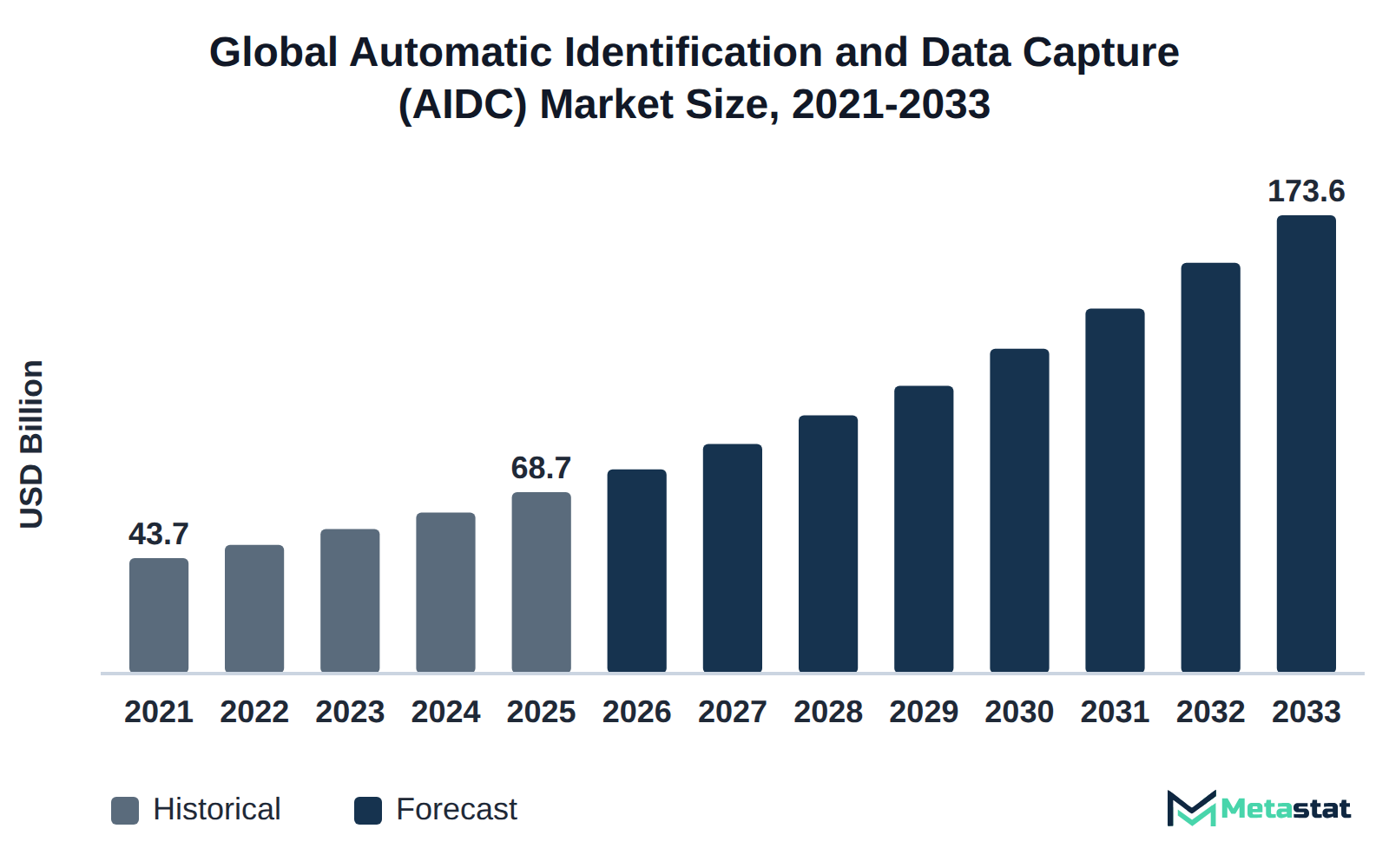
Market Valuation: Valued at $68.7 Billion in 2025, projected to reach $173.6 Billion by 2033 at a 12.2% CAGR.
Dominant Segment: The RFID Readers and Encoders segment leads the market, driven by its critical role in efficient product tracking and identification, reflecting a significant shift towards advanced tracking technologies.
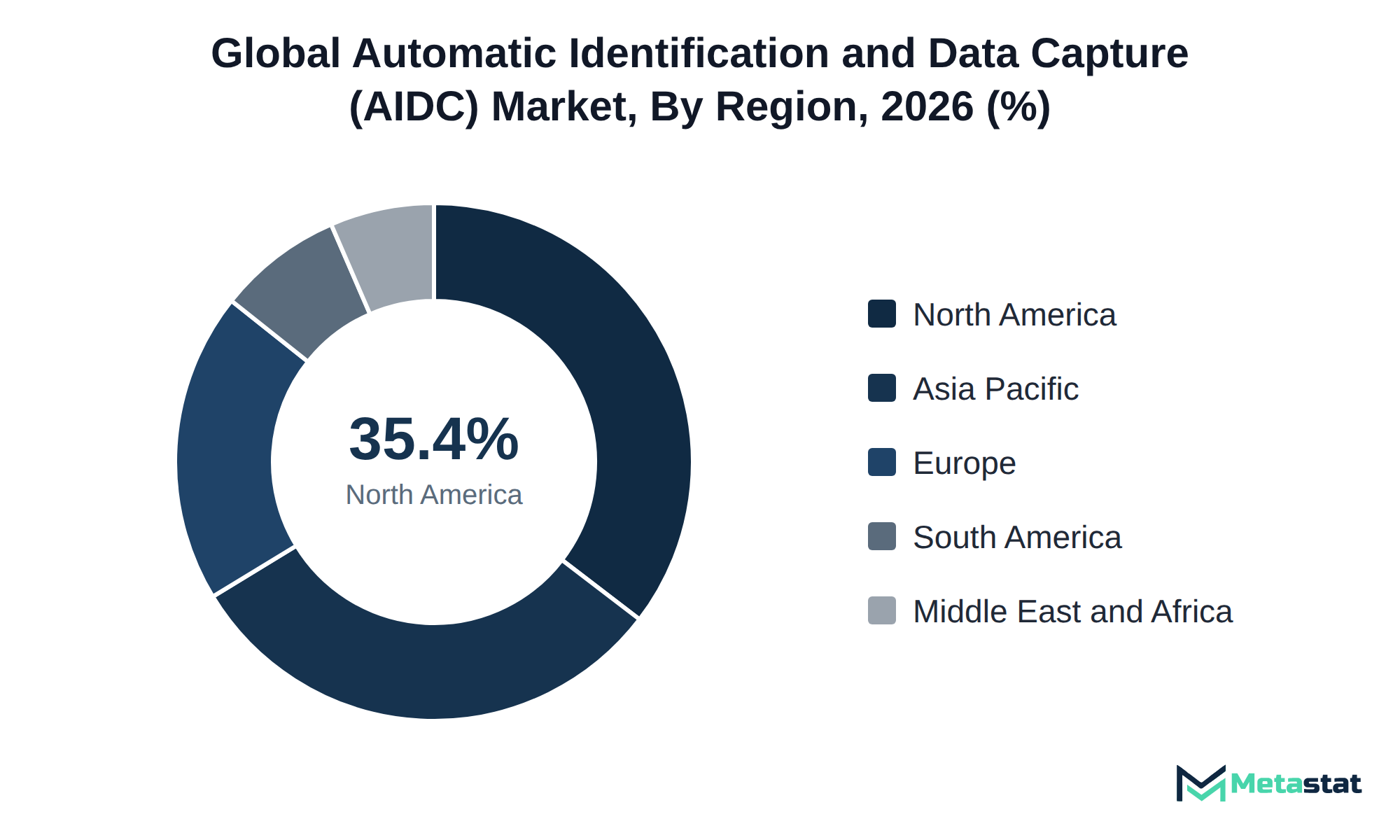
Geographic Lead: North America is the leading region, holding 35.4% of the market in 2025, with the US expected to maintain this dominance due to its robust infrastructure and technological advancements.
What's Inside: The report provides comprehensive competitive coverage, detailed analyses of market dynamics, and forecasts extending from 2026 to 2033, ensuring buyers gain valuable insights into market trends.
Increased Inventory Management Efficienc: The market is significantly driven by the demand for enhanced inventory management solutions, projected to reach USD 35.2 billion by 2033, reflecting a growing emphasis on operational efficiency.
Technological Advancements in RFID Syste: Rapid innovations in RFID technology, including improved functionalities and integration capabilities, are propelling adoption across various industries, enhancing operational efficiencies.
Choose Your License
Global Automatic Identification and Data Capture (AIDC) Market
The global Automatic Identification and Data Capture (AIDC) market was valued at USD 68.7 billion in 2025 and is projected to reach USD 173.6 billion by 2033, growing at a CAGR of 12.2% over the forecast period.
The Automatic Identification and Data Capture (AIDC) market encompasses technologies and systems that automate the identification and collection of data. Buyers invest in these solutions to enhance operational efficiency, accuracy, and productivity across various industries. The growing emphasis on inventory management, asset tracking, and streamlined operations drives spending on these technologies, allowing organizations to optimize processes and reduce errors.
Growth in the market results from the increasing demand for real-time data and automation in supply chain and logistics operations. The segment contributing the most value is the RFID Readers and Encoders segment, which plays a critical role in enabling efficient tracking and identification of products. North America holds 35.4% of the market in 2025, with the US leading in 2026. This regional dominance reflects the robust infrastructure and technological advancements present in the region.
Key drivers of expansion include the rising need for enhanced security and efficiency in data management. Organizations across sectors including retail, healthcare, and manufacturing adopt these technologies to improve operational capabilities. The Automatic Identification and Data Capture (AIDC) market evolves, adapting to the changing requirements of industries seeking to leverage technology for competitive advantage.
The Automatic Identification and Data Capture (AIDC) market includes a range of products and technologies that facilitate efficient data collection and identification processes across various industries. Buyers invest in these solutions to enhance operational efficiency, reduce errors, and optimize inventory management, leading to improved productivity and cost savings. Industries including retail, logistics, and manufacturing prioritize these technologies due to their ability to streamline operations and improve data accuracy.
Growth in the market is driven by increasing demand for real-time data visibility and automation solutions. Among the various segments, RFID Readers and Encoders represent the highest value, reflecting a significant shift towards advanced tracking and identification technologies. This dominance is supported by the region's robust infrastructure and high adoption rates of AIDC technologies across diverse sectors.
Investments in innovative AIDC solutions continue to rise, aligning with the growing emphasis on digital transformation and operational excellence. The healthcare sector demonstrates notable demand for these technologies, particularly in patient tracking and inventory management. The Automatic Identification and Data Capture (AIDC) market is poised for substantial growth, with businesses recognizing the strategic advantages of adopting advanced identification systems.
Radio Frequency Identification (RFID) technology enhances real-time inventory visibility and asset tracking within the retail and logistics sectors. This technology enables businesses to automate inventory management processes and significantly reduce the likelihood of stock discrepancies. In 2023, the RFID segment is projected to achieve a value of USD 27.9 billion by 2033, highlighting its increasing importance in the Automatic Identification and Data Capture (AIDC) market.
Retailers and logistics providers increasingly adopt RFID solutions to improve operational efficiency and enhance customer satisfaction. By accurately tracking inventory levels and asset locations, companies respond more swiftly to demand fluctuations and optimize their supply chain processes. This technology eliminates manual counting and minimizes errors, leading to substantial cost savings and improved profitability.
The integration of RFID systems transforms traditional inventory management practices, allowing for real-time data access and insights. Retailers leveraging this technology achieve enhanced accuracy in stock management, driving consumer trust and loyalty. Consequently, the growth of RFID within the market signifies a shift towards more efficient and responsive operations in retail and logistics environments.
Investment in industrial barcode scanners and mobile data capture integration becomes essential for automated warehouses seeking operational efficiency. In 2026, the market value for barcode scanners and readers is USD 13.4 billion, increasing to USD 25.9 billion by 2033, reflecting a compound annual growth rate (CAGR) of 9.9%. This growth highlights the importance of integrating advanced scanning technologies to streamline processes in high-demand environments including warehouses.
Buyers engage in flexible purchasing models, including outright purchases, leasing options, and subscription-based contracts. Outright purchases provide immediate ownership, while leasing allows for reduced upfront costs, enabling businesses to allocate resources toward other operational needs. Subscription models offer a predictable monthly payment structure, helping businesses manage cash flow more effectively. Each model offers distinct advantages, allowing buyers to select the approach that aligns with their financial strategy and operational requirements.
Considering the competitive landscape of the market, understanding these purchasing strategies allows businesses to optimize their technology investments. Buyers leveraging these options enhance their operational capabilities while minimizing financial strain, positioning themselves for success in the evolving market.
Pharmaceutical serialization serves as a key driver in the adoption of Automatic Identification and Data Capture (AIDC) technology within the healthcare sector. This process ensures that each drug package receives a unique identifier, enhancing traceability throughout the supply chain. The implementation of serialization is vital to comply with regulatory requirements aimed at combating counterfeit drugs and improving patient safety. By 2033, revenue from the healthcare and pharmaceuticals segment of the market is projected to reach USD 15.2 billion, supporting the growth of AIDC solutions tailored for this industry.
Healthcare providers and pharmaceutical companies prioritize AIDC technology to enhance operational efficiency and accuracy in inventory management. The integration of AIDC systems facilitates real-time tracking of pharmaceutical products from production to the point of sale, reducing the risk of errors and ensuring compliance with stringent regulations. This emphasis on traceability meets regulatory demands and builds consumer trust in the healthcare supply chain. The adoption of AIDC technology in pharmaceuticals significantly contributes to the overall expansion of the market.
The deployment costs of RFID and barcode systems differ significantly for enterprise buyers, impacting their decisions on which technology to implement. For example, the market anticipates that RFID readers and encoders will reach a value of USD 27.9 billion by 2033, reflecting a compound annual growth rate (CAGR) of 15.5%. This disparity in cost structures indicates that while RFID solutions involve higher initial investments due to advanced technology and infrastructure requirements, they offer superior capabilities for real-time data collection and tracking, which enhances operational efficiency.
Enterprise buyers in retail and logistics sectors often consider these factors when evaluating the total cost of ownership. The ongoing operational savings associated with RFID offset the initial expenses, especially in applications including inventory management and order fulfillment. In contrast, barcode systems typically involve lower upfront costs but incur higher long-term operational costs due to limitations in scanning speed and accuracy compared to their RFID counterparts. Understanding these dynamics is crucial for buyers in the Automatic Identification and Data Capture (AIDC) market aiming to optimize their investment strategies.
Rapid technological advancements in Radio Frequency Identification (RFID) systems significantly influence growth in the Automatic Identification and Data Capture (AIDC) market. Enhanced RFID functionalities, including improved read ranges, higher data processing speeds, and integration capabilities with other systems, drive increased adoption across various industries. Retailers and logistics companies invest in these advanced RFID solutions to improve inventory accuracy and streamline operations. The ability to capture and process data in real-time results in better decision-making and operational efficiencies, directly impacting profit margins.
Innovations in RFID technology, including miniaturization and cost reduction of RFID tags, allow for wider application opportunities. Industries including healthcare and manufacturing benefit from these enhancements, which require precise tracking of assets and products. The growth of the market reflects the increasing reliance on advanced RFID systems to meet evolving business needs, ensuring competitiveness in a dynamic marketplace. Overall, technological advancements are expected to shape the market, leading to a more integrated approach to data capture and management.
High costs associated with implementing Automatic Identification and Data Capture (AIDC) technologies significantly hinder adoption among smaller enterprises and budget-constrained organizations. These buyers often face challenges in justifying the initial investments required for equipment, integration, and ongoing maintenance. This price sensitivity results in slower uptake of advanced systems like RFID and barcode technologies, ultimately leading to smaller orders and delayed decision-making processes. For many organizations, the necessity to allocate resources to other pressing operational needs further exacerbates the reluctance to invest in AIDC solutions. Consequently, the market experiences reduced growth potential in segments characterized by lower purchasing power and limited technological infrastructure. Price barriers represent a critical restraint affecting the overall adoption of AIDC technologies.
Rising input and operational costs present significant challenges for suppliers in the Automatic Identification and Data Capture (AIDC) market. Suppliers face pressures stemming from increasing prices of raw materials and technology components, impacting profit margins. Competition for skilled personnel drives talent costs higher, making it difficult to maintain competitive pricing structures.
To address these challenges, suppliers are adopting various strategies, including optimizing supply chains and seeking alternative sourcing options. Investments in technology aimed at enhancing production efficiency enable firms to mitigate cost pressures while maintaining quality. By leveraging partnerships and collaborations, suppliers enhance their capabilities and reduce operational redundancies, contributing to sustained profitability while facing increasing costs.
The market adapts through innovations in product development and service offerings, focusing on delivering advanced solutions that meet customer demands while managing costs effectively.
Investment in Radio Frequency Identification (RFID) technology for inventory management represents a significant opportunity within the Automatic Identification and Data Capture (AIDC) market. This segment exhibits a robust compound annual growth rate (CAGR) of 14.8%, reflecting a shift toward automation in managing stock levels accurately and efficiently. Organizations increasingly recognize the importance of real-time data in optimizing inventory processes, leading to enhanced operational efficiencies and reduced holding costs.
Retailers and logistics providers, in particular, prioritize RFID systems for their capabilities in streamlining operations. The ability to track inventory seamlessly across various touchpoints facilitates improved order fulfillment and reduces shrinkage, delivering direct financial benefits. The demand for RFID technology in inventory management positions it as a critical component of competitive strategies in sectors aiming for operational excellence.
Driving factors include increased adoption of e-commerce and growing consumer expectations for rapid delivery, which creates pressure on companies to maintain accurate inventory levels. This trend further emphasizes RFID’s role in transforming inventory management practices, contributing to the overall growth trajectory of the market.
The Global Automatic Identification and Data Capture (AIDC) market is segmented based on Product Type, Technology, Application, and End-Use Industry.
This segment primarily serves retail, logistics, and healthcare industries for efficient inventory management and data collection. Users benefit from improved accuracy and speed in processing transactions, enhancing customer satisfaction and operational efficiency. The growth of this segment is driven by increasing demand for real-time inventory visibility and automation. In contrast, while RFID Readers and Encoders exhibit a higher growth rate of 15.5%, Barcode Scanners and Readers maintain a lower entry price point, making them accessible to a broader range of businesses. This combination of stable demand and competitive pricing positions the segment favorably within the market.
This technology serves various applications, particularly in inventory management and asset tracking, used by industries including retail, logistics, and manufacturing. Strong demand for improved efficiency and accuracy in tracking systems drives growth in this segment. The segment stands out with a higher growth rate compared to traditional barcode solutions, reflecting a shift towards more advanced tracking technologies. Increased investments in RFID infrastructure and ongoing innovations in reader and encoder technologies drive this momentum, allowing businesses to enhance operational capabilities and streamline processes within the market. Adoption barriers remain in the form of costs associated with system integration and infrastructure upgrades, impacting smaller firms disproportionately; however, the advantages of RFID technology continue to attract larger enterprises seeking competitive advantages.
Mobile Computers and Data Collection Terminals segment is expected to reach USD 24.1 billion by 2033. This segment plays a critical role in enabling efficient data collection and processing across various industries, including retail, logistics, and manufacturing. Primary users include warehouse operators, retail staff, and field service professionals who rely on these devices for real-time inventory management and tracking. The rapid growth in e-commerce has significantly driven demand for mobile data collection solutions, with increasing focus on improving operational efficiency. Compared to other segments, this segment experiences a higher growth rate, with a CAGR of 14.2%, reflecting the growing adoption of mobile technologies. Ongoing advancements in wireless communication technologies enhance the functionality and performance of mobile computers, differentiating this segment from others that focus primarily on fixed-point data collection solutions. The need for integration with existing systems further increases demand in this market.
Barcode and RFID Printers segment is projected to grow at a CAGR of 10.3% during the forecast period. This segment primarily serves industries that require the printing of labels and tags for inventory management, product identification, and shipping documentation. Retailers and logistics providers use these printers to enhance operational efficiency and accuracy in tracking items. Demand for advanced printing solutions, which offer higher resolution and faster printing speeds, significantly influences growth. The segment differs from others by providing specialized capabilities tailored to label production, resulting in a focused user base compared to other product types. This specialization helps maintain steady demand, particularly in sectors that emphasize accurate tracking and identification processes. Investment in these printers ensures compliance with evolving industry standards and promotes streamlined operations, aligning with broader trends in the Automatic Identification and Data Capture (AIDC) market.
Identification labels, tags, and cards serve essential tools for tracking and managing assets across multiple industries. These products find application in sectors including retail, logistics, and healthcare, where accurate identification and traceability are critical. Demand for these items is driven by the necessity for enhanced inventory control and improved efficiency in operations. The growing trend toward automated solutions in various industries drives adoption, particularly for businesses seeking to streamline processes and reduce errors. This segment differs from others within the product type category due to its focus on straightforward identification solutions rather than complex technology integrations. Consequently, it experiences a more stable growth trajectory relative to segments including RFID readers and encoders, which exhibit a faster growth rate.
Biometric and Smart Card Readers encompass technologies that provide advanced identification and verification solutions through biometric recognition and smart card functionality. This segment finds utility in various industries, including healthcare, banking, and security, where secure access and identity verification play critical roles. Significant growth stems from stringent security demands and regulatory requirements, especially in sectors including finance and healthcare. The ongoing trend toward enhanced user authentication drives investment in these technologies, differentiating this segment from others that do not prioritize security to the same extent. Compared to other product types like Barcode Scanners and Readers, the pricing for Biometric and Smart Card Readers reflects a higher value proposition due to their advanced capabilities and security features, aligning with the increasing need for robust identity management solutions in the market.
OCR and Document Capture Devices involve technologies that facilitate the automated recognition and digitization of text from printed documents. These devices serve critical functions in industries including healthcare, finance, and logistics, where accurate data capture is essential for operational efficiency and compliance. The segment sees increasing adoption driven by the growing volume of documents requiring digitization, particularly in environments focused on improving workflow and reducing manual errors. This segment stands out due to its reliance on advanced optical character recognition technology, which differs from other segments that primarily employ barcode or RFID technologies. OCR devices typically face challenges related to integration with existing systems, impacting implementation timelines. However, the demand for streamlined data processing fuels interest and investment in this area, contributing to the overall growth of the market.
Data Capture and Integration Software includes tools designed to gather and process information from various data sources, facilitating integration into existing systems. This segment finds widespread application in industries like retail, logistics, and healthcare, where accurate data management is critical for operational efficiency. The increasing emphasis on real-time data access and decision-making drives demand for solutions that enhance data accuracy and streamline workflows. A growing trend toward automation further increases adoption, especially among enterprises seeking to improve productivity. Unlike other segments, this software often involves lower upfront costs, making it more accessible for small and medium enterprises. The Automatic Identification and Data Capture (AIDC) market benefits significantly from advancements in data integration technologies, which continually evolve to meet the changing needs of various industries.
AIDC Services and System Integration encompasses the design and implementation of integrated solutions that leverage various Automatic Identification and Data Capture (AIDC) technologies. This segment primarily serves industries including retail, logistics, and manufacturing, where efficient data capture and processing are critical for operations. Investment in these services reflects a demand for streamlined processes and improved data accuracy. Adoption is driven by the growing complexity of supply chains that necessitate advanced tracking and management solutions. Compared to other sub-segments, this segment supports higher customization levels and integration with existing systems, often resulting in unique pricing structures based on project scope. The segment’s growth is influenced by the increasing need for tailored service offerings that address specific operational challenges across different sectors. The market continues to expand as organizations seek comprehensive solutions that enhance operational efficiency and data management capabilities.
Barcode and QR Code Recognition segment is valued at USD 32.7 billion in 2026 and is projected to reach USD 63.3 billion by 2033, at a CAGR of 9.9% during the forecast period. This technology facilitates the scanning and processing of barcodes and QR codes, widely used in retail, logistics, and inventory management to enhance operational efficiency. The growing adoption of contactless payment solutions significantly boosts demand for this segment, aligning with consumer preferences for convenience and speed. Compared to other technologies, including Radio Frequency Identification (RFID), Barcode and QR Code Recognition experiences slower growth; however, it remains a cost-effective solution for smaller businesses. With a projected CAGR of 9.9%, this segment's growth reflects the ongoing integration of digital solutions in traditional industries, driven by the need for accurate tracking and enhanced customer experiences. Adoption of mobile payment technologies further increases this segment's relevance in the Automatic Identification and Data Capture (AIDC) market.
Radio Frequency Identification (RFID) segment is estimated to reach USD 57 billion by 2033, at a CAGR of 14.8% during the forecast period. This technology facilitates automatic identification and tracking of tags attached to objects, making it essential for applications in logistics, inventory management, and asset tracking across various industries. Retailers and manufacturers benefit significantly from RFID due to its ability to enhance operational efficiency and accuracy in inventory control. Strong demand for real-time data access drives growth in this segment, differentiating it from others in terms of speed and application. While the RFID segment exhibits a higher growth rate compared to other technologies, including Optical Character Recognition (OCR), which shows lower adoption rates, the unique capabilities of RFID enable improved visibility and management of assets, contributing to its popularity among enterprises focusing on efficiency and accuracy in operations.
Optical Character Recognition (OCR) segment is expected to reach USD 15.2 billion by 2033. This technology facilitates the automated recognition and digitization of text from printed documents, streamlining processes in various sectors, including finance, healthcare, and logistics. Adoption of OCR enhances data entry efficiency, reducing human error and operational costs. Demand for improved accuracy and speed in document processing drives growth in this segment. The OCR segment differentiates itself through its unique capability to convert various document formats into editable data, providing an advantage over other technologies within the market. This segment experiences a growth trajectory driven by the increasing need for automation in data management, contributing to the overall expansion of the market.
Biometric Identification segment is projected to grow at a CAGR of 14.1% during the forecast period. This technology focuses on unique physical characteristics of individuals, including fingerprints or facial recognition, applied across various sectors including security, healthcare, and finance. Demand for enhanced security measures and identity verification drives growth in this segment, with organizations seeking robust solutions to combat fraud and unauthorized access. Compared to other technologies within the same grouping, Biometric Identification features higher growth potential, supporting the increasing reliance on secure and efficient user authentication methods. The rising awareness of data privacy and regulatory requirements further fuels demand, positioning this segment for significant expansion in the market.
Magnetic Stripe Recognition facilitates the reading of data stored on magnetic stripes, commonly found on credit and debit cards, identification cards, and other access control systems. This technology is essential in financial transactions and secure access, particularly in the retail and banking sectors. Major drivers of adoption include the push for enhanced security measures and the need for efficient payment processing solutions. Compared to other technologies, Magnetic Stripe Recognition generally presents lower costs but experiences slower growth due to increasing competition from more advanced methods, including RFID and biometric systems. Organizations focused on reducing transaction times and increasing security measures drive demand for Magnetic Stripe Recognition technology, which remains an essential element of the Automatic Identification and Data Capture (AIDC) market.
Smart Card Identification involves technologies for secure access control and authentication, often used in payment systems and identity verification. This segment serves various industries, including banking, healthcare, and government, where secure transactions and identity management are crucial. Demand for smart card solutions stems from increasing concerns regarding data security and the necessity for more secure identification methods. Compared to other technology segments, Smart Card Identification functions at a higher price point due to its advanced security features. This segment's growth is influenced by rising adoption of contactless payment solutions, enhancing convenience for users while providing robust security measures. The market benefits from ongoing technological advancements that improve the capabilities and functionalities of smart card systems.
Voice-Based Data Capture encompasses technologies enabling users to interact with devices and systems through spoken commands. This technology finds applications across various sectors, primarily in retail, healthcare, and logistics industries for hands-free operation and enhanced efficiency. The demand for this segment is driven by the increasing need for automation and streamlined processes, especially in environments where manual input proves challenging. Unlike other segments, including Optical Character Recognition, Voice-Based Data Capture experiences slower growth due to challenges in accuracy and user adaptation. This segment's unique capabilities position it differently in the Automatic Identification and Data Capture (AIDC) market, appealing to specific buyers seeking hands-free solutions that facilitate quicker data entry and processing.
Magnetic Ink Character Recognition (MICR) and iButton Identification technologies involve the reading of specially encoded ink and unique identification devices, respectively. These technologies find application primarily in banking for processing checks and in access control systems, enabling secure transactions and data integrity. Demand for this segment is driven by increasing requirements for secure identification and transaction verification across various industries. The growth trajectory of this segment differs from others, primarily due to its narrower focus and specialized applications, which limit widespread adoption compared to broader technologies like RFID or barcode scanning. The market increasingly prioritizes enhanced security solutions, influencing ongoing development and investment in these niche technologies.
Inventory and Stock Management segment is valued at USD 17.3 billion in 2026 and is projected to reach USD 35.2 billion by 2033, at a CAGR of 10.7% during the forecast period. This segment focuses on tracking and controlling inventory levels, ensuring businesses maintain optimal stock levels while minimizing losses. Retailers and e-commerce businesses primarily adopt these solutions to enhance operational efficiency and improve customer satisfaction. Growing demand for real-time data and automation drives investment in this segment, particularly in sectors where inventory precision is critical. With a CAGR of 10.7%, this segment experiences more moderate growth compared to other segments including Warehouse Picking and Order Fulfillment, which shows a CAGR of 14.2%. Companies prioritize solutions that streamline inventory processes, making this segment a vital part of the Automatic Identification and Data Capture market.
Warehouse Picking and Order Fulfillment segment is estimated to reach USD 28.8 billion by 2033, at a CAGR of 14.2% during the forecast period. This segment focuses on optimizing the picking process and fulfilling orders efficiently, primarily used by retailers, e-commerce platforms, and logistics providers. The rising demand for faster and more accurate order fulfillment drives growth within this segment, reflecting the broader shift toward automated solutions in supply chain management. Compared to other applications, including Inventory and Stock Management, this segment experiences faster growth due to heightened consumer expectations for quick delivery. The integration of advanced technologies like RFID and mobile computing enhances operational efficiency, enabling companies to meet market demands effectively. In the context of the Automatic Identification and Data Capture (AIDC) market, this application stands out for its critical role in enhancing productivity and accuracy in warehousing operations.
Asset Tracking and Management segment is expected to reach USD 34.3 billion by 2033. This application focuses on monitoring and managing physical assets across various industries, including manufacturing, retail, and logistics. Organizations track assets to optimize inventory levels, enhance operational efficiency, and minimize losses. Significant growth in this segment reflects increasing demand for real-time visibility and control over assets, driven by advancements in technologies like RFID and IoT. The market's emphasis on improved asset management solutions positions this segment as a vital component of the Automatic Identification and Data Capture (AIDC) market, promoting innovation and competitive advantage among users.
Product Traceability and Work-in-Process Tracking segment is projected to grow at a CAGR of 13.6% during the forecast period. This segment involves technologies and processes that enable organizations to monitor and control the flow of products through various stages of production. Industries including manufacturing and pharmaceuticals apply these capabilities to ensure compliance, reduce losses, and enhance operational efficiency. The increasing focus on quality assurance and regulatory requirements drives the demand for effective traceability solutions. Compared to other application segments, this one experiences a higher growth rate, reflecting the growing emphasis on transparency and accountability in supply chains. This segment stands out for its importance in maintaining product integrity and safety, particularly in regulated industries where tracking processes influence operational success. The market benefits from innovations in data capture techniques that further streamline tracking activities.
Point-of-Sale and Checkout applications facilitate the transaction process in retail environments, ensuring efficient processing of sales and inventory management. Retailers and e-commerce platforms employ these applications to enhance customer experiences and streamline payment procedures. Demand for this segment is driven by the increasing adoption of digital payment methods and a preference for effective checkout experiences. The need for faster transaction times and improved customer service influences growth in this area. Unlike other segments, Point-of-Sale and Checkout technologies often require specific integrations with existing retail systems, distinguishing it through its focus on immediate customer interactions and operational efficiencies. This segment differs from Inventory and Stock Management, which emphasizes broader supply chain processes, highlighting its unique role in enhancing point-of-sale efficiency within the market.
Shipping, Receiving and Delivery Tracking involves the use of technology to monitor and manage the movement of goods throughout the supply chain. This segment finds applications in various sectors, primarily benefiting retailers, logistics providers, and manufacturers who require enhanced visibility and traceability of their shipments. Demand for this segment is driven by the increasing focus on operational efficiency and the necessity for real-time tracking capabilities to improve customer satisfaction. Compared to other segments, Shipping, Receiving and Delivery Tracking often experiences faster growth, reflecting a higher urgency among businesses to adopt technologies that streamline logistics processes. Adoption barriers include high initial investment costs and integration challenges with existing systems, impacting smaller businesses disproportionately. This segment is critical for optimizing supply chain operations in the Automatic Identification and Data Capture (AIDC) market.
Access Control and Time and Attendance involves the technologies and processes used for managing entry to facilities and tracking employee attendance. This segment finds application in various sectors, including corporate workplaces, educational institutions, and public venues, ensuring security and monitoring access. Demand for these solutions is driven by the increasing focus on security and the need for efficient employee management systems. In comparison to other segments, Access Control and Time and Attendance differentiates itself through its specific focus on security and personnel management rather than inventory or logistics tracking. The market experiences unique challenges, including technological integration complexities and varying regulatory requirements, impacting adoption rates across different industries. Enhanced functionalities, including biometric authentication, continue to shape the segment, aligning it with broader trends in security and workforce management. The Automatic Identification and Data Capture (AIDC) market incorporates this segment within a wider technology adoption trend, addressing growing security concerns across various sectors.
Document and Records Processing encompasses the technologies and processes used to manage the lifecycle of documents and records, streamlining data entry and retrieval. This application primarily serves industries including legal, healthcare, and finance, where accurate documentation is crucial. Growing demands for efficiency and accuracy drive the adoption of these technologies, prompting organizations to integrate automated solutions for improved data management. Unlike applications focused on inventory or asset tracking, Document and Records Processing emphasizes regulatory compliance and data integrity, catering to sectors that require stringent documentation practices. The market experiences strong momentum due to increasing digital transformation initiatives, which push businesses to move from paper-based processes to electronic document management systems. This segment enhances operational efficiency and reduces risks associated with manual data handling.
Ticketing and Event Registration, along with Field Service Data Collection, represents a critical application within the Automatic Identification and Data Capture (AIDC) market. These applications streamline processes in venues, events, and service management by enhancing efficiency in tracking attendance, managing access, and gathering data in real-time. Industries using these technologies include entertainment, sports, and service sectors, which leverage AIDC solutions to improve customer experience and operational effectiveness. This segment experiences growth driven by increasing event attendance and the demand for effective service interactions. Compared to other application segments, it has a distinct focus on real-time data collection, differentiating it from inventory management or warehousing applications, which prioritize stock control and logistics. Enhanced user engagement and operational agility significantly drive this segment's expansion, appealing to enterprises aiming for improved service delivery and customer satisfaction.
Retail and E-Commerce segment is valued at USD 20.3 billion in 2026 and is projected to reach USD 41.4 billion by 2033, at a CAGR of 10.7% during the forecast period. This segment focuses on enhancing customer experiences and operational efficiencies for retailers and e-commerce platforms through advanced identification and data capture technologies. Demand in this sector is driven by increasing consumer preference for streamlined shopping processes and efficient inventory management. Compared to other segments, Retail and E-Commerce experiences relatively strong growth, attributed to the rising importance of data analytics and real-time inventory visibility. The market for AIDC technologies in this segment benefits from innovations in mobile and cloud technologies that facilitate data integration, thereby supporting enhanced decision-making and customer engagement.
Transportation, Logistics and Warehousing segment is estimated to reach USD 38.3 billion by 2033, at a CAGR of 13.6% during the forecast period. This segment encompasses applications used for inventory tracking, shipment monitoring, and asset management, serving industries including transportation, logistics, and warehousing. The increasing demand for efficient supply chain management drives growth in this area, with companies seeking to enhance operational visibility and streamline processes. Compared to other segments, this area exhibits stronger growth potential, reflecting its critical role in modern commerce. Advancements in Radio Frequency Identification (RFID) technology and real-time data analytics further enhance adoption, enabling businesses to reduce errors and improve accuracy in operations. The focus on enhancing customer satisfaction and operational efficiency remains a primary motivator for investments in Automatic Identification and Data Capture (AIDC) systems within this segment.
Manufacturing and Industrial segment is expected to reach USD 33.4 billion by 2033. This segment primarily serves manufacturing firms and industrial operations by enhancing efficiency in production and tracking assets. Increasing demand for advanced tracking solutions, driven by the rise in automation and Industry 4.0 initiatives, supports growth in this segment. The sector differentiates itself with a projected CAGR of 13.6%, positioning it among the faster-growing segments within the market. In contrast, other segments, including retail and e-commerce, focus more on sales processing rather than operational efficiency. The integration of automated identification technologies facilitates real-time data visibility, which is essential for manufacturers aiming to optimize supply chain management and reduce operational costs. The market experiences a notable shift towards adopting RFID technologies to streamline inventory management and enhance asset tracking capabilities.
The Healthcare and Pharmaceuticals segment is projected to grow at a CAGR of 13.7% during the forecast period. This segment focuses on the application of automatic identification and data capture technologies in hospitals, clinics, and pharmaceutical companies to enhance patient care, inventory management, and regulatory compliance. Increased demand for accurate patient identification and medication tracking drives growth, with healthcare providers investing heavily in RFID and barcode solutions to streamline operations and reduce errors. This segment's growth outpaces other segments due to heightened emphasis on patient safety and regulatory requirements. With a projected value of USD 33.4 billion by 2033, the market sees substantial investment in technology innovation, further increasing its significance in the AIDC ecosystem.
The Banking, Financial Services and Insurance segment ensures secure and efficient transactions for both businesses and consumers. This market segment primarily serves banks, insurance companies, and other financial institutions, which employ Automatic Identification and Data Capture (AIDC) technologies to streamline operations, reduce fraud, and enhance customer service. Demand for advanced identification solutions drives growth in this segment, particularly through biometric identification and RFID applications. Regulatory compliance influences adoption, prompting institutions to invest in AIDC technologies to meet security and data protection standards. Compared to other segments within the market, the Banking, Financial Services and Insurance sector experiences a higher demand for innovative solutions, driven by the need for enhanced security features and the ability to process transactions quickly and accurately.
Government and Public Sector applications employ Automatic Identification and Data Capture (AIDC) technologies for various functions, including identity verification, access control, and tracking public assets. Agencies at federal, state, and local levels implement these systems to enhance security, improve service delivery, and streamline operations. A significant force driving this segment involves increasing regulatory requirements for transparency and accountability, compelling agencies to adopt advanced identification methods. The rising need for efficient data management in public services supports demand. Compared to other segments, including Retail and E-Commerce, the Government and Public Sector segment experiences a slower growth trajectory, influenced by budget constraints and varying levels of investment in technology across jurisdictions. This sector's unique focus on compliance and accountability distinguishes it from other segments in the market, necessitating tailored solutions that address these specific challenges.
This segment encompasses the Hospitality, Travel and Entertainment industry, focusing on the use of Automatic Identification and Data Capture (AIDC) technologies to enhance guest experience and operational efficiency. Businesses in this sector apply AIDC for applications including ticketing, check-ins, and access control, allowing for streamlined operations and improved customer satisfaction. The demand for advanced technologies, particularly mobile solutions like RFID and barcode scanning, drives growth by enhancing service delivery and efficiency. Compared to other segments, this industry experiences robust demand due to the increasing emphasis on customer experience and operational optimization. The integration of AIDC solutions supports real-time tracking and management, differentiating this segment with a strong focus on customer interaction and service delivery.
Energy, Mining and Utilities focus on applying Automatic Identification and Data Capture (AIDC) technologies to enhance operational efficiency and improve safety protocols. This segment serves sectors including energy production, mining operations, and utility management, where tracking assets and personnel is critical. Demand for advanced tracking solutions arises from the optimize resource management and comply with safety regulations. Compared to other segments, this area experiences slower growth due to higher initial investment costs and the specific demands of rugged environments. Companies operating in this field prioritize rugged devices capable of enduring harsh conditions, setting them apart from other segments that benefit from more standardized solutions. The integration of AIDC technologies within this segment significantly enhances operational transparency and accountability, contributing to an overall increase in productivity within the market.
This sub-segment encompasses sectors including Agriculture, Education, and Professional Services, which apply Automatic Identification and Data Capture (AIDC) technologies for various applications. In Agriculture, AIDC facilitates tracking of livestock and crop management, improving operational efficiency and yield monitoring. Educational institutions leverage these technologies for attendance tracking and resource management, while Professional Services implement AIDC for enhancing client engagement through efficient data capture. Demand in this segment is driven by the increasing emphasis on digitization and data accuracy across these industries. A significant difference lies in the adoption rates, which tend to be slower compared to more mainstream sectors like Retail and E-Commerce. This slower growth reflects a wider range of applications and varying technological readiness among end-users, distinguishing it further from segments with faster growth rates including Transportation, Logistics, and Warehousing. The Automatic Identification and Data Capture (AIDC) market continues to evolve, presenting unique opportunities for innovation within these specialized fields.
Based on geography, the Global Automatic Identification and Data Capture (AIDC) market is divided into North America, Europe, Asia-Pacific, South America, Middle East, and Africa.
North America exhibits a strong presence in the Automatic Identification and Data Capture (AIDC) market, driven primarily by advancements in retail technology and logistics operations. Demand stems from industries including retail and e-commerce, which increasingly rely on efficient inventory management and customer engagement solutions. The region benefits from robust infrastructure and technological investments, particularly in the United States, Canada, and Mexico. These investments enhance operational efficiency and support the deployment of advanced data capture solutions. North America is projected to reach USD 55.9 billion by the end of 2033, reflecting significant growth potential within the market. Enhanced regulatory frameworks encourage the adoption of automated identification technologies across various sectors, leading to increased efficiency and accuracy in data management.
Demand for the Automatic Identification and Data Capture (AIDC) market in Europe stems primarily from industries including retail, transportation, and manufacturing. Countries like Germany and the UK leverage advanced technologies to enhance operational efficiency and improve customer experiences. Regulations supporting data protection and privacy, particularly in the EU, drive the adoption of these technologies across various sectors. The market share in Europe is projected at 19.4% in 2025, reflecting the region's significant role in the global landscape. Innovations in RFID technology and barcode scanning are expected to support growth, enabling better inventory management and asset tracking. The increasing demand for efficient data capture solutions highlights the growing importance of automation and digitization within the region's economy.
Demand for advanced technologies significantly influences the Automatic Identification and Data Capture (AIDC) market in Asia-Pacific. Sectors including retail, manufacturing, and logistics highlight the application of AIDC solutions to enhance efficiency and accuracy in operations. Countries like China and India invest heavily in infrastructure development, improving supply chain management and supporting a digital economy. The increasing emphasis on inventory management and asset tracking drives demand for RFID solutions, with the region exhibiting a strong growth trajectory. By 2025, Asia-Pacific is projected to account for 30.9% of the global market, indicating robust adoption of AIDC technologies driven by rapid industrialization and urbanization.
In South America, the Automatic Identification and Data Capture (AIDC) market attracts attention primarily from the retail and logistics sectors. Demand for efficient inventory management and order fulfillment systems drives investments in AIDC technologies. Brazil and Argentina represent the largest markets within the region, with growing e-commerce activities significantly influencing purchasing decisions. The region exhibits a unique focus on integrating AIDC solutions to enhance operational efficiency and reduce costs associated with manual processes. South America holds a notable share of the global market, reflecting increasing recognition of automation and data capture capabilities. The emphasis on improving supply chain management drives further adoption in various industries, strengthening the market presence in South America.
Demand for the Automatic Identification and Data Capture (AIDC) market in the Middle East and Africa is driven by increasing investments in technology infrastructure and digital transformation initiatives. Countries like Saudi Arabia and the UAE focus on enhancing public sector efficiency, stimulating the adoption of data capture solutions. South Africa represents a growing market due to its expanding retail and logistics sectors, where AIDC technologies facilitate operations and improve customer experiences. The region's share of the global market reached 6.5% in 2025. Challenges include varying levels of technology adoption across different countries, impacting overall market growth. Enhanced connectivity and the push for automation are expected to support advancements in the market, reflecting an optimistic outlook for the region through 2033.
Companies in the Automatic Identification and Data Capture (AIDC) market adopt various strategies to compete effectively. Focusing on product differentiation, firms prioritize features including advanced scanning capabilities, integration with existing systems, and user-friendly interfaces. Buyers select solutions based on criteria including price, certification, customization options, and the overall service ecosystem.
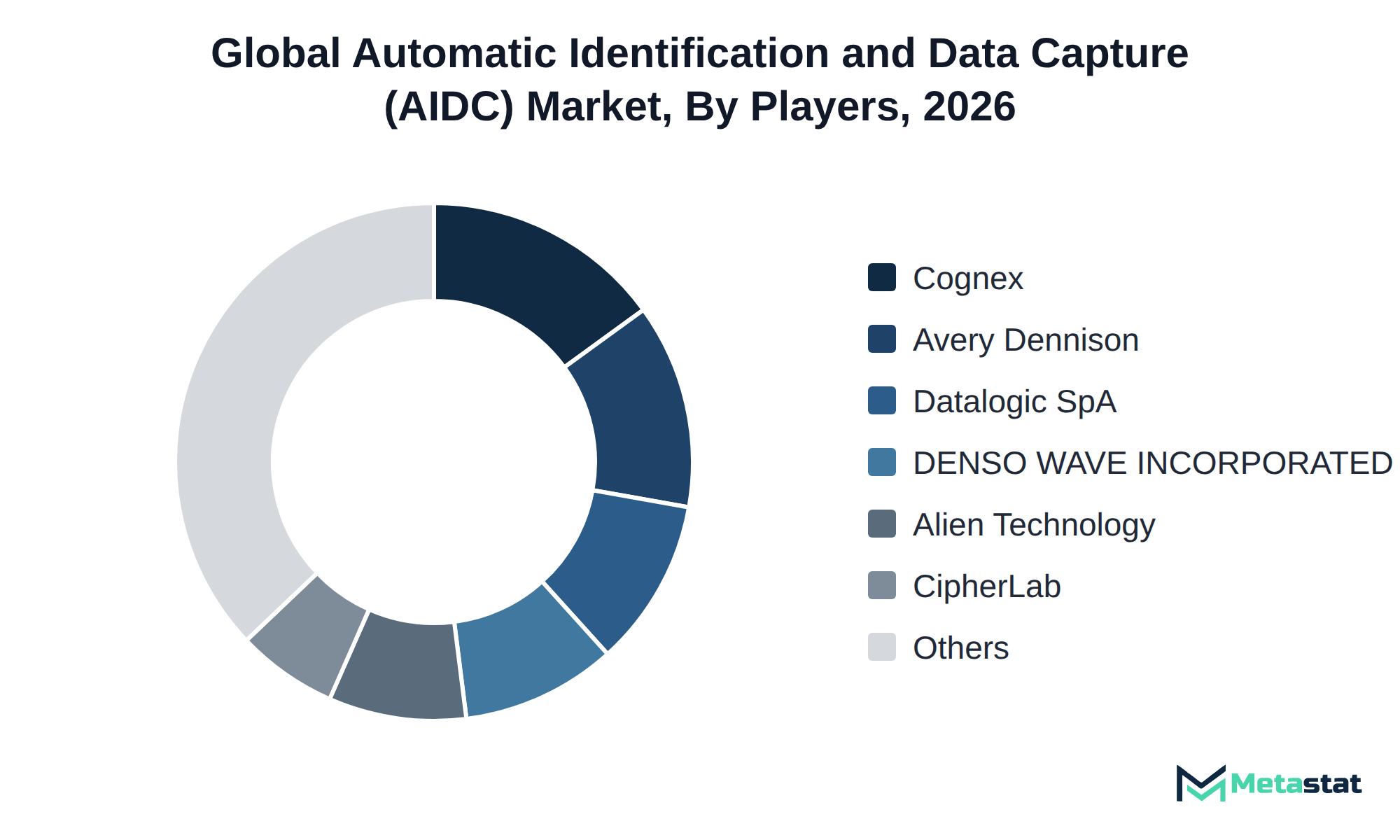
Zebra Technologies Corporation emphasizes robust mobile computing devices that enhance operational efficiency in logistics and warehousing. Honeywell International Inc. focuses on comprehensive AIDC solutions that cater to diverse applications, including healthcare and retail. Cognex Corporation specializes in machine vision systems that support quality control and automation across multiple industries.
This growth relies on several key developments within the Automatic Identification and Data Capture (AIDC) market. First, the increasing adoption of Radio Frequency Identification (RFID) technology is expected to drive the market, particularly within the retail and logistics sectors, where efficiency improvements drive demand. The segment for RFID readers and encoders is projected to experience significant growth, enhancing overall market performance.
Second, advancements in inventory and stock management applications will support market expansion. Demand in this area stems from manufacturers and retailers seeking to streamline operations and improve accuracy in supply chain processes. Growth in this application segment is anticipated to be robust, reflecting shifts toward automation and real-time data access.
However, potential economic downturns or supply chain disruptions could hinder market progress. Such risks lead to reduced investment in AIDC technologies, particularly in regions sensitive to economic fluctuations. The market's trajectory hinges on these developments, alongside the resilience of global supply chains, to achieve the forecasted growth by 2033.
By Product Type: Barcode Scanners and Readers, RFID Readers and Encoders, Mobile Computers and Data Collection Terminals, Barcode and RFID Printers, Identification Labels, Tags and Cards, Biometric and Smart Card Readers, OCR and Document Capture Devices, Data Capture and Integration Software, AIDC Services and System Integration
By Technology: Barcode and QR Code Recognition, Radio Frequency Identification (RFID), Optical Character Recognition (OCR), Biometric Identification, Magnetic Stripe Recognition, Smart Card Identification, Voice-Based Data Capture, Others (Magnetic Ink Character Recognition, iButton Identification)
By Application: Inventory and Stock Management, Warehouse Picking and Order Fulfillment, Asset Tracking and Management, Product Traceability and Work-in-Process Tracking, Point-of-Sale and Checkout, Shipping, Receiving and Delivery Tracking, Access Control and Time and Attendance, Document and Records Processing, Others (Ticketing and Event Registration, Field Service Data Collection)
By End-Use Industry: Retail and E-Commerce, Transportation, Logistics and Warehousing, Manufacturing and Industrial, Healthcare and Pharmaceuticals, Banking, Financial Services and Insurance, Government and Public Sector, Hospitality, Travel and Entertainment, Energy, Mining and Utilities, Others (Agriculture, Education, Professional Services)
The report strategically identifies and profiles the key market players and analyses their core competencies in each sub-segment of the Automatic Identification and Data Capture (AIDC) market.
Report Attributes | Details |
Study Period | 2021-2033 |
Base Year | 2025 |
Estimated Year | 2026 |
Forecast Period | 2026-2033 |
Historical Period | 2021-2025 |
Growth Rate | CAGR 12.2% from 2026 to 2033 |
Revenue Unit | USD billion |
Segmentation | By Product Type, Technology, Application, End-Use Industry, and Region |
By Region | North America (By Product Type, Technology, Application, End-Use Industry, and Country)
|
Europe (By Product Type, Technology, Application, End-Use Industry, and Country)
| |
Asia Pacific (By Product Type, Technology, Application, End-Use Industry, and Country)
| |
South America (By Product Type, Technology, Application, End-Use Industry, and Country)
| |
Middle East and Africa (By Product Type, Technology, Application, End-Use Industry, and Country)
|
Find answers to common questions about this report
The Automatic Identification and Data Capture (AIDC) market size was valued at USD 68.7 billion in 2025.
The market is projected to grow at a CAGR of 12.2% during the forecast period from 2026 to 2033.
The North America Automatic Identification and Data Capture (AIDC) market size is estimated to reach USD 55.9 billion by 2033.
RFID Readers and Encoders lead the Automatic Identification and Data Capture market with a projected value of USD 27.9 billion by 2033, surpassing other product types in growth potential.
Investment in technologies that enhance inventory management efficiency drives growth in the market. Rapid technological advancements in Radio Frequency Identification (RFID) systems significantly influence growth by improving inventory accuracy and streamlining operations.
North America holds the dominant share of the Automatic Identification and Data Capture (AIDC) market, with a value of USD 55.9 billion projected for 2033, representing 35.4 percent of the total market.
High costs associated with implementing AIDC technologies hinder adoption among smaller enterprises and budget-constrained organizations. Rising input and operational costs present significant challenges for suppliers, impacting profit margins and making it difficult to maintain competitive pricing structures.
Investment in Radio Frequency Identification (RFID) technology significantly drives adoption in the Automatic Identification and Data Capture (AIDC) market. The emphasis on real-time data for inventory management enhances operational efficiencies, aligning with the growing demand for automation and precise stock level management.
The Automatic Identification and Data Capture (AIDC) market is estimated to reach a valuation of USD 173.6 billion by 2033.
Key players operating in the Automatic Identification and Data Capture (AIDC) market include Alien Technology LLC, Avery Dennison Corporation, Cognex Corporation, Datalogic SpA, Honeywell International Inc., Impinj, Inc., SATO Holdings Corporation, and Toshiba Tec Corporation.
The analysts below cover Information & Technology research at Metastat Insights.
LEAD ANALYST
Utkarsh Khirodkar is a Lead Market Research Analyst at MetaStat Insight, specializing in market intelligence, technology sector assessments, and competitive strategy.

PRINCIPAL CONSULTANT - ENTERPRISE AI & EMERGING TECHNOLOGIES
Banking & Finance · Electronics and Semiconductor · Energy and Power · Healthcare IT · Information & Technology · Professional Services
Vijay Gunti is a Principal Consultant at MetaStat Insight, bringing over two decades of experience across enterprise digital transformation, technology strategy, and intelligent systems.

LEAD CONSULTANT - COMMUNICATION, TELECOM, AND IT
Electronics and Semiconductor · Information & Technology · Machinery & Equipment · Professional Services
Ravindra Sathe Consultants for Communication, Telecom, and IT at MetaStat Insight. He leads the firm's industry research initiatives across telecommunications infrastructure, digital connectivity, enterprise networking, and emerging information technology domains.
Evaluating sovereign cloud deployments for core banking platforms demands a clear view of data residency regulations and migration exit strategies. MetaStat Insight delivered an exhaustive review of regional latency tolerances, mainframe decommission milestones, and third-party vendor concentration risk. The regulatory compliance mapping across European and Asian financial jurisdictions gave our team a dependable baseline for multi-cloud infrastructure discussions.
Replacing petrochemical surfactants with bio-based alternatives requires realistic timelines on industrial precision fermentation scaling. The market research broke down commercialization timelines, feedstock sugar price sensitivities, and regional cosmetic ingredient regulatory approvals in Europe and East Asia. That supplier readiness mapping gave our formulations team reliable context when comparing renewable chemical sourcing roadmaps.
Tracking ceramic matrix composite adoption in high-bypass aero engines requires strict attention to material qualification cycles and FAA airworthiness testing milestones. The MetaStat Insight team provided a detailed timeline of silicon carbide fiber manufacturing capacity and commercial foundry lead times. Having clear visibility into upstream thermal barrier coating supply helped us stress-test our long-term component procurement strategy.
Explore related market intelligence reports worth reading alongside this one.
Starting from
$2950