
LEAD ANALYST
Utkarsh Khirodkar is a Lead Market Research Analyst at MetaStat Insight, specializing in market intelligence, technology sector assessments, and competitive strategy.

Global Industrial Automation Software Market Size, Share, By Software Type (Supervisory Control and Data Acquisition (SCADA) Software, Distributed Control System (DCS) Software, Manufacturing Execution Systems (MES), Human-Machine Interface (HMI) Software, Programmable Logic Controller (PLC) Programming Software, Industrial Asset Performance Management (APM) Software, Industrial Internet of Things (IIoT) Platforms, Manufacturing Operations Management (MOM) Software and Industrial Historian and Data Analytics Software), By Application (Production Process Monitoring and Control, Manufacturing Execution and Production Scheduling, Quality Management and Product Traceability, Asset Monitoring and Predictive Maintenance, Industrial Data Acquisition and Visualization, Inventory and Warehouse Operations Management, Energy Monitoring and Optimization and Industrial Safety and Alarm Management), By End-Use Industry (Automotive and Transportation Equipment, Food and Beverage, Chemicals and Petrochemicals, Oil and Gas, Pharmaceuticals and Life Sciences, Power Generation and Utilities, Metals and Mining, Electronics and Semiconductors, Machinery and Industrial Equipment and Others (Pulp and Paper, Textiles, Water and Wastewater Treatment)), By Deployment Model (On-Premises, Cloud-Based and Hybrid), Industry Analysis, Growth, Trends, and Forecast, 2026-2033
MSI-5461
October, 2026
262 Pages
Historical
Base year
Forecast
Forecast period
Report Details
Comprehensive Market Analysis And Insights
Market Valuation: Valued at $28 Billion in 2025, projected to reach $54.4 Billion by 2033 at a 8.6% CAGR.
Dominant Segment: Manufacturing Execution Systems (MES) leads the market, driven by the need for real-time monitoring and optimization of production processes.
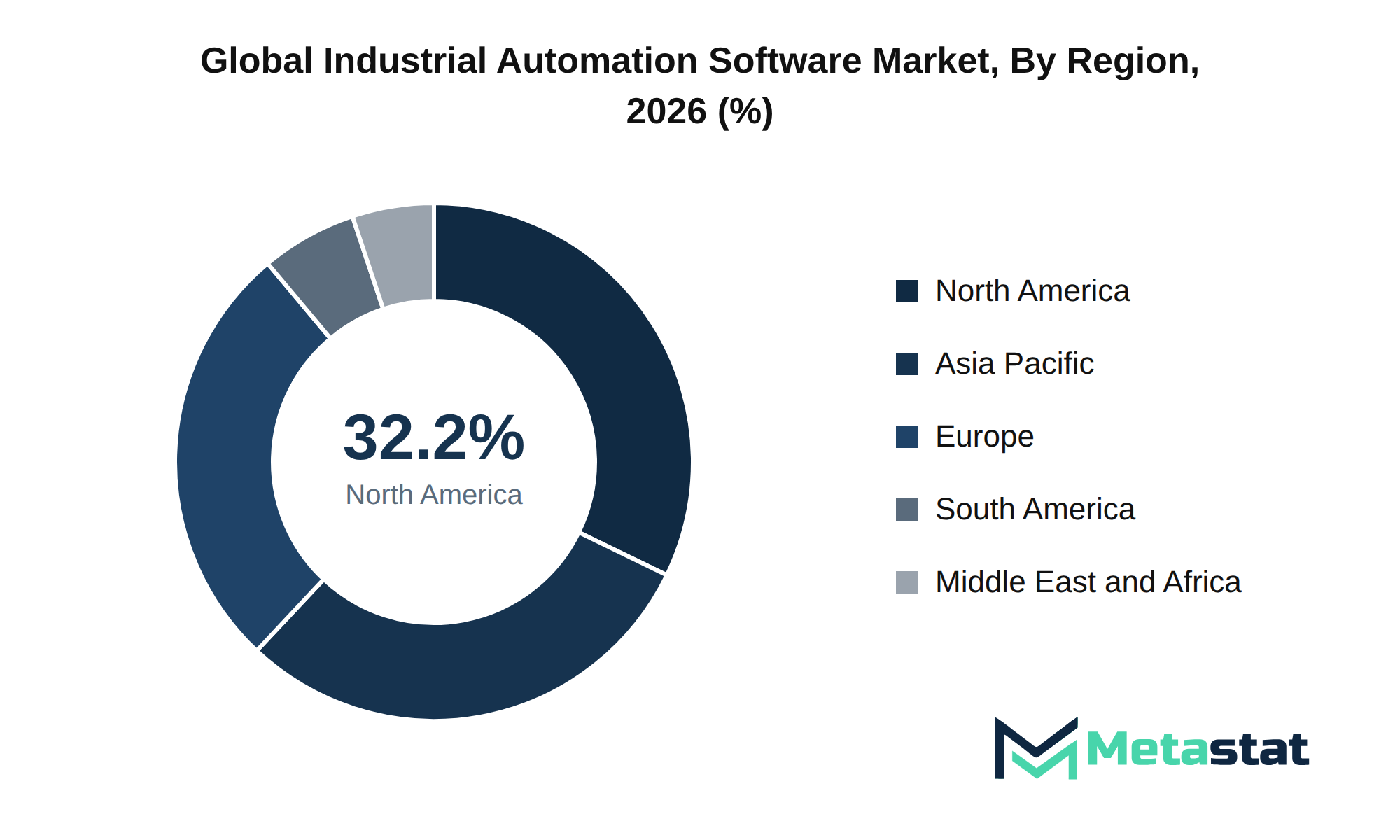
Geographic Lead: North America is the leading region, holding 32.2% of the market in 2025, with the US expected to maintain its dominance due to high adoption rates of automation technologies.
What's Inside: The report provides comprehensive coverage of software types, applications, and end-use industries, along with detailed competitive analysis and a forecast window extending to 2033.
Emerging Trends: Cloud-based solutions are rapidly gaining traction, projected to reach USD 18.9 billion by 2033, reflecting a shift towards more flexible and scalable manufacturing operations.
Growth Drivers: The market is significantly influenced by the increasing emphasis on operational efficiency and the adoption of advanced analytics, which enhance decision-making and reduce operational costs.
The global Industrial Automation Software market was valued at USD 28 billion in 2025 and is projected to reach USD 54.4 billion by 2033, growing at a CAGR of 8.6% over the forecast period.
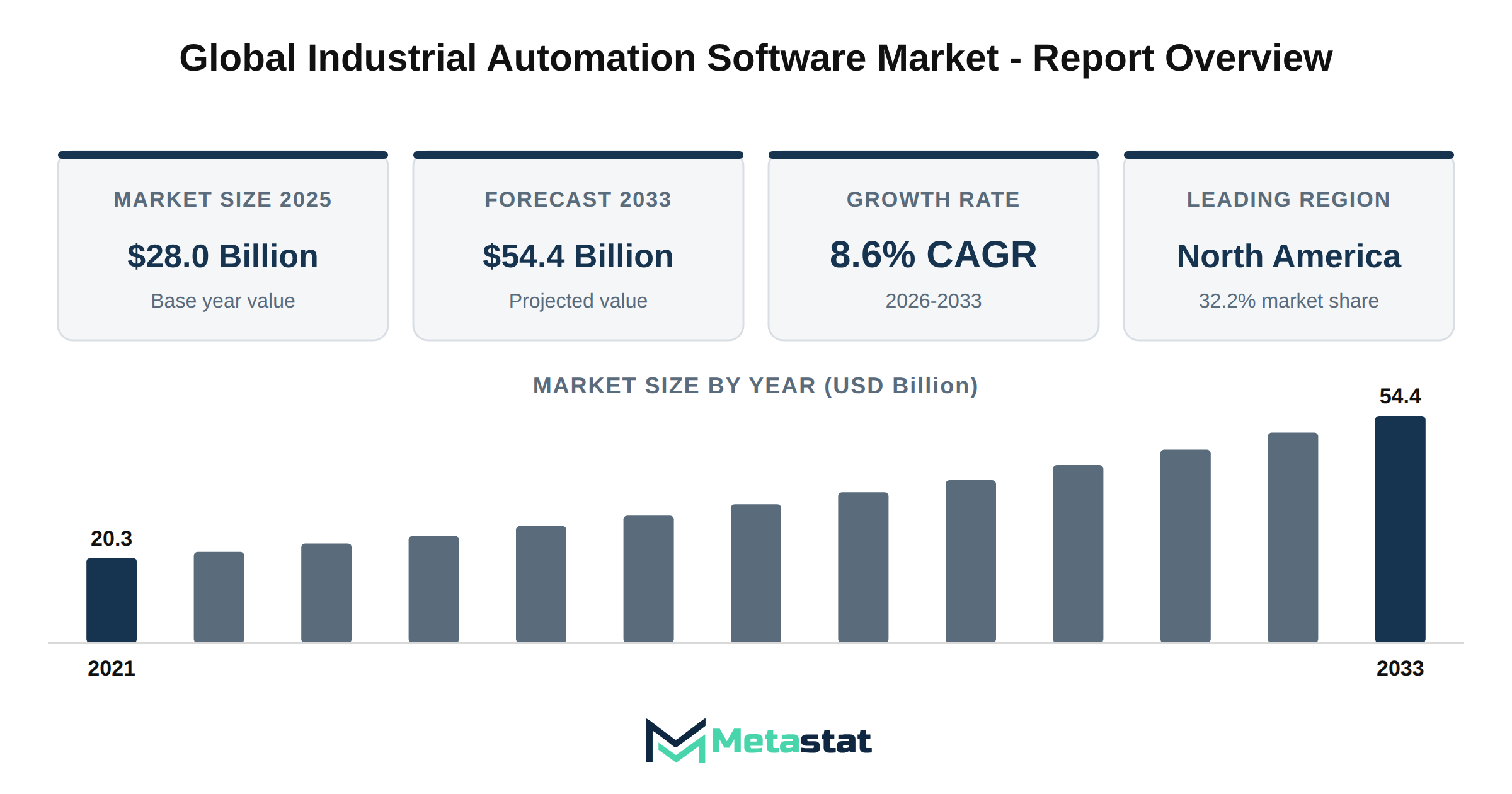
The market encompasses a range of software solutions that enhance operational efficiency, productivity, and process automation across various industries. Buyers invest in these solutions to gain real-time insights, improve decision-making, and streamline their manufacturing processes. The market's diverse applications include production process monitoring, quality management, and predictive maintenance, catering to sectors including automotive predictive maintenance, food and beverage, and chemicals.
Growth in the market is driven by increasing adoption of automation technologies to enhance productivity and reduce operational costs. The segment generating the highest value is Manufacturing Execution Systems (MES), which enables manufacturers to optimize production processes and improve product quality. North America holds 32.2% of the market in 2025, with the US leading in 2026, while Europe and Asia Pacific follow closely with 26.9% and 29.8% shares, respectively. Similar modernization efforts are expanding internationally through investments in regional factory automation and ICS infrastructures.
Investment in cloud-based solutions is accelerating, responding to rising demand for flexible and scalable automation. The shift towards cloud technologies enables businesses to leverage advanced analytics, remote monitoring, and real-time data access. This trend significantly influences decision-making and operational strategies, allowing companies to remain competitive in an evolving industrial environment. A parallel shift toward cloud-enabled asset analytics is also evident in specialized sectors utilizing renewable energy asset management software to monitor generation assets remotely.
The Industrial Automation Software market includes various software solutions designed to optimize manufacturing processes, enhance operational performance, and enable real-time monitoring and control. Buyers invest in these technologies to achieve greater efficiency, reduce operational costs, and improve product quality. Increasing emphasis on automation and data-driven decision-making within industries drives the adoption of these solutions, resulting in higher demand and spending. On the plant floor, these software systems feed directly on input data captured by hardware such as an industrial RFID reader network.
Growth in the market is significantly influenced by rising implementation of cloud-based deployment models. Cloud solutions provide flexibility, scalability, and cost-effectiveness, appealing to businesses aiming to modernize their operations. Among the segments, Manufacturing Execution Systems (MES) represent the largest share in terms of value, reflecting a strong focus on production optimization and real-time data analysis. Software platforms orchestrate these continuous workflows down to the field device layer, communicating directly with field units like electric valve actuators to regulate physical processing streams.
The shift towards smart manufacturing technologies strengthens market expansion, driven by enhanced connectivity, data analytics, and automation across various sectors. This transition is further reinforced by the deployment of traceability as a service solutions that interface with shop-floor execution tools to verify component provenance. Industries including automotive, food and beverage, and chemicals are particularly active in adopting these solutions to remain competitive and meet evolving customer demands. The evolving structure of industrial automation solutions creates opportunities for market participants to innovate and capture emerging demand.
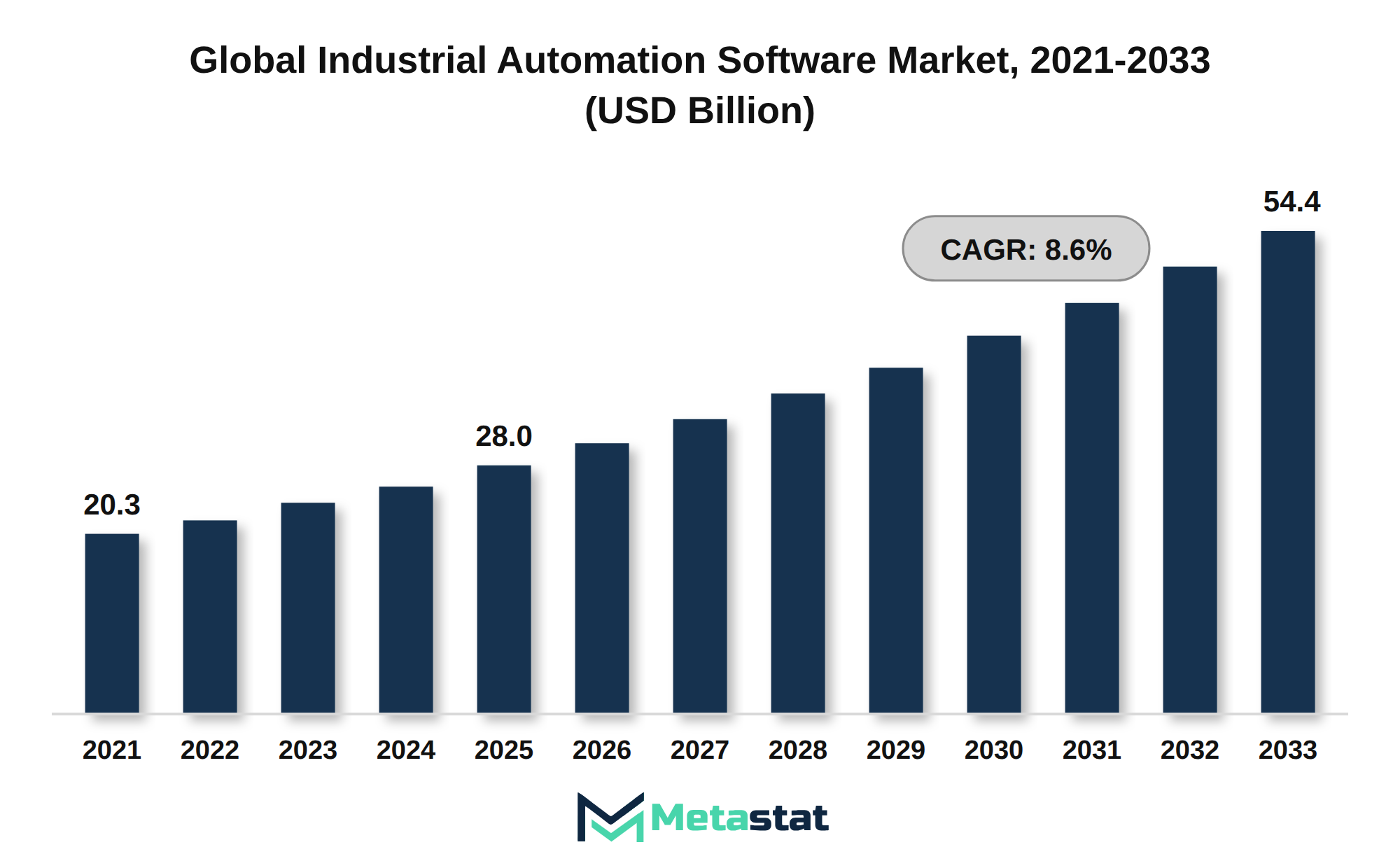
Cloud-based solutions are transforming the Industrial Automation Software market by enhancing flexibility and scalability in manufacturing operations. Companies increasingly favor these solutions due to their ability to facilitate real-time data access and remote monitoring, resulting in improved efficiency. For instance, the cloud-based deployment model is projected to reach USD 18.9 billion by 2033, reflecting a significant growth trajectory driven by digital transformation efforts across various sectors.
The shift towards cloud-based automation software reshapes the production landscape, allowing businesses to leverage advanced analytics and machine learning capabilities. This evolution supports predictive maintenance, thereby reducing downtime and operational costs. The automotive and transportation equipment industries, among others, actively adopt these technologies to enhance operational efficiencies and meet evolving consumer demands.
Manufacturers integrating cloud-based solutions into their operations experience increased agility and responsiveness to market changes. The adoption of these technologies aligns with the broader trend of digitalization within the Industrial Automation Software market, facilitating more efficient and data-driven decision-making processes. This technological shift positions companies to remain competitive in a changing marketplace, ultimately enhancing growth prospects and profitability.
Adoption of AI-driven predictive maintenance solutions transforms operational efficiency in smart factories, resulting in significant cost reductions and reduced downtime. A growing emphasis on automation in manufacturing processes drives this demand, highlighting the importance of integrating Industrial Internet of Things (IIoT) technologies with AI systems. Buyers increasingly seek solutions that enable real-time data analysis and predictive capabilities, enhancing decision-making processes and streamlining operations.
The Industrial Automation Software market reflects this trend, with specific segments including Asset Monitoring and Predictive Maintenance experiencing substantial growth. This application segment is projected to expand at a compound annual growth rate (CAGR) of 10.4% through 2033, reflecting the increasing reliance on predictive analytics in manufacturing environments. Companies investing in AI-driven solutions demonstrate an ability to reduce operational costs while maximizing equipment uptime, translating into improved profit margins.
Contract models for these advanced solutions often include subscription-based pricing or usage-based payments, allowing buyers to align costs with their specific production needs. This flexibility in payment structures encourages investment in predictive maintenance technologies, driving sustained growth within the market. Enhanced predictive capabilities support manufacturers in optimizing resource allocation and improving overall productivity, ultimately positioning them for competitive advantage.
Manufacturing Execution Systems (MES) significantly enhance production efficiency by enabling real-time monitoring and control of manufacturing processes. These systems streamline operations, providing visibility into production metrics while improving overall quality management. The MES segment is projected to reach USD 9.4 billion by 2033, highlighting the growing recognition of its value among manufacturers.
Industries including automotive and food and beverage are increasingly adopting MES solutions to address compliance and traceability requirements. The automotive sector, for instance, is expected to experience a compound annual growth rate (CAGR) of 7.6% driven by the need for efficient production scheduling and quality assurance. By implementing MES, businesses effectively minimize downtime, reduce waste, and enhance product traceability, which leads to improved operational performance.
The integration of digital traceability within MES allows manufacturers to maintain comprehensive records of their production processes. This capability fulfills regulatory requirements, increasing accountability and enhancing consumer confidence. The combination of MES and digital traceability supports significant cost savings while promoting efficient use of resources, ultimately shaping competitive advantages in the market.
Hybrid deployment models significantly drive the adoption of Industrial Automation Software by offering flexibility and scalability to organizations. These models enable businesses to leverage both cloud-based and on-premises solutions, allowing them to balance their operational needs with security and compliance requirements. The increasing preference for cloud-based solutions, projected to reach USD 18.9 billion by 2033, highlights a shift towards more adaptable and cost-effective strategies within the market.
Legacy system integration is essential in this transition, facilitating the incorporation of existing infrastructure into modern automation software. Many industries, particularly in sectors including manufacturing and automotive, rely on aged systems that require effective integration with new technologies. This necessity creates a demand for software solutions that effectively bridge the gap between traditional processes and advanced automation tools.
Firms that successfully integrate these solutions gain competitive advantages through improved efficiency and reduced operational costs. Companies investing in hybrid deployment models and robust legacy system integration strategies experience enhanced productivity and better resource utilization, ultimately driving growth in the Industrial Automation Software market.
Growing emphasis on operational efficiency drives adoption of Industrial Automation Software across various sectors. Companies seek solutions that streamline operations, reduce downtime, and enhance productivity. The demand surge is particularly notable in manufacturing, where optimizing production processes and minimizing waste directly impacts profitability. Reports indicate a significant increase in investments directed towards software that integrates real-time data analytics, allowing firms to identify inefficiencies and make informed decisions. This trend reflects a broader shift towards automation in the industrial landscape, with organizations prioritizing technology that supports continuous improvement. Consequently, the market experiences growth, with firms increasingly allocating resources towards advanced automation solutions.
Real-time monitoring and data-driven decision-making contribute to enhanced operational performance, making Industrial Automation Software essential for organizations aiming to stay competitive. Firms actively pursuing these technologies experience not only improved operational metrics but higher overall returns on investment. The ongoing transformation within industries creates a favorable environment for the market, driving innovation and encouraging the adoption of sophisticated software solutions.
Substantial obstacles arise from inadequate infrastructure, hindering the expansion of the market across various sectors. Many companies lack the necessary technological framework to integrate advanced automation solutions effectively. This shortfall results in slower uptake of industrial automation software, particularly among small and medium-sized enterprises that struggle with legacy systems. Compounding this issue, buyers without robust IT infrastructure experience delays in replacing outdated solutions, further delaying operational benefits. The automotive and food and beverage industries exhibit notable constraints, where reliance on existing frameworks hampers the swift implementation of modern automation tools. These limitations create an environment where operational efficiency remains suboptimal, ultimately restricting growth opportunities. Organizations grapple with ensuring compatibility between new software and their current systems, impacting overall investment in innovative automation approaches. Inadequate infrastructure remains a critical factor in determining the pace of adoption across the industrial automation landscape.
Supplier profitability faces significant challenges due to escalating talent costs in the Industrial Automation Software market. Companies strive to attract and retain skilled professionals, while salaries and associated expenses increase, impacting overall margins. This situation arises from heightened competition for expertise in areas including data analytics, artificial intelligence, and machine learning, driving suppliers to invest heavily in their workforce to maintain a competitive edge. Consequently, firms implement strategies to optimize their talent acquisition processes and enhance employee retention through training and development programs. Such initiatives improve workforce efficiency, offsetting rising costs. Increasing reliance on automation tools facilitates productivity improvements, allowing suppliers to maintain service levels despite financial pressures. The focus on cultivating in-house talent strengthens relationships with clients while addressing the skills gap in the market. Adapting to these challenges remains crucial for suppliers striving to sustain profitability and align with the growing demands of the market.
Cloud-based deployment models exhibit rapid growth within the market, driven by increasing demand for flexibility and scalability in production environments. Manufacturing Execution and Production Scheduling applications represent the segment with the highest compound annual growth rate (CAGR) of 9.3%, reflecting a shift toward digital solutions that optimize production workflows. This trend is especially prominent in industries like automotive and food and beverage, where operational efficiency directly impacts competitiveness. Companies adopting cloud solutions benefit from reduced infrastructure costs and improved access to real-time data analytics. A key factor contributing to this growth is the ongoing transformation of traditional manufacturing processes into more agile and responsive systems. The cloud-based model enables organizations to enhance their operational capabilities significantly, positioning them for success in an evolving market.
The Global Industrial Automation Software market is segmented based on Software Type, Application, End-Use Industry, and Deployment Model.
Supervisory Control and Data Acquisition (SCADA) Software segment is valued at USD 5.5 billion in 2026 and is projected to reach USD 8.6 billion by 2033, at a CAGR of 6.6% during the forecast period. This software monitors and controls industrial processes, providing real-time data to operators across various sectors, including energy, water treatment, and manufacturing. The demand for SCADA solutions is primarily driven by increasing focus on operational efficiency and the need for enhanced visibility into processes. Compared to other segments, including Manufacturing Execution Systems (MES), SCADA Software experiences slower growth, reflecting more mature adoption in established industries. This segment appeals to organizations seeking improved process control and data integrity, distinguishing it from faster-growing segments that cater to emerging technologies and advanced analytics solutions.
Distributed Control System (DCS) Software segment is estimated to reach USD 6.5 billion by 2033, at a CAGR of 6.5% during the forecast period. This software is widely used for managing complex industrial processes across various sectors, particularly in manufacturing and energy. Users include large-scale manufacturers and utility providers that rely on precise control and monitoring of operations. The increasing focus on automation and the need for enhanced operational efficiency drive demand. The segment's growth remains steady, supported by advancements in digital technology, distinguishing it from other software types like Manufacturing Execution Systems, which exhibit a higher growth rate at a CAGR of 9.3%. Adoption barriers, including integration challenges with legacy systems, persist, affecting overall market dynamics. Enhanced automation capabilities provided by DCS Software contribute to improved productivity and operational performance in critical industries.
Manufacturing Execution Systems (MES) segment is expected to reach USD 9.4 billion by 2033. This software type is designed to enable real-time monitoring, control, and optimization of production processes. Predominantly used by manufacturers across various sectors, MES solutions enhance operational efficiency and ensure product quality throughout the manufacturing lifecycle. The rapid advancement of technology, particularly in automation and data analytics, significantly boosts demand for MES. With a compound annual growth rate (CAGR) of 9.3%, this segment experiences faster growth compared to other software types, driven by the increasing need for effective integration of production operations and data management. The market reflects a shift towards a more data-driven approach, where manufacturers actively seek MES to streamline processes, reduce lead times, and improve overall productivity.
Human-Machine Interface (HMI) Software segment is projected to grow at a CAGR of 6.9% during the forecast period. HMI Software facilitates user interaction with machines, enabling operators to monitor and control industrial processes effectively. Key industries employing this software include manufacturing, automotive, and aerospace, where operational efficiency and real-time data visualization are critical. Increasing demand for intuitive interfaces and improved user experiences drives adoption of HMI solutions. Compared to other software types, including Manufacturing Execution Systems (MES), which are expected to grow faster at a CAGR of 9.3%, HMI software experiences moderate growth. Cost-effectiveness and advancements in HMI technologies contribute to its adoption, supporting users in enhancing productivity and reducing downtime. The market continues to expand while industries seek innovative solutions to improve operational workflows and increase efficiency.
Programmable Logic Controller (PLC) Programming Software facilitates the design and implementation of automation systems, allowing users to configure control systems for various industrial applications. This software is widely adopted by manufacturers and system integrators who require precise control over machinery and processes. Demand for PLC programming software increases due to the rising complexity of automation systems, prompting industries to seek enhanced flexibility and integration capabilities. Compared to other software types, this segment experiences steady growth, driven by the ongoing trend toward automation across sectors including automotive, food and beverage, and oil and gas. Distinct from other segments, PLC programming software often entails higher initial costs due to the specialized skill sets required for effective implementation. The emergence of cloud-based solutions shapes the environment for programming software, with operators seeking to reduce costs and improve accessibility. Overall, PLC programming software plays a critical role in optimizing manufacturing processes and enhancing productivity.
Industrial Asset Performance Management (APM) Software focuses on optimizing the performance and reliability of physical assets throughout their lifecycle. Industries including manufacturing, energy, and utilities employ APM software to enhance asset visibility, streamline maintenance processes, and improve operational efficiencies. The increasing emphasis on predictive maintenance and real-time data analytics drives demand for this software. Rapid advancements in Industrial Internet of Things (IIoT) technologies enhance the capabilities of APM software, enabling better integration with other automation solutions. Compared to other software segments, APM software demonstrates higher growth potential due to increasing reliance on data-driven decision-making. The market experiences distinct dynamics, with organizations prioritizing asset resilience and performance enhancement, leading to higher investment levels in APM solutions.
Industrial Internet of Things (IIoT) Platforms play a significant role in enabling connectivity and data exchange among industrial devices and systems. Users include manufacturing firms, energy companies, and facilities management organizations, which leverage these platforms for real-time data analytics, predictive maintenance, and operational optimization. Demand for IIoT platforms experiences growth driven by increasing investments in smart manufacturing and automation technologies. Buyers prioritize these solutions to enhance operational efficiency and achieve better asset management. Compared to other software types, IIoT platforms differentiate through higher growth potential, primarily due to the accelerating trend toward digital transformation across various industries. This segment captures attention for its innovative capabilities in connecting devices and systems, facilitating data-driven decision-making, and increasing productivity.
Manufacturing Operations Management (MOM) Software focuses on optimizing production processes and enhancing operational efficiency. This software is used by various sectors, including automotive, food and beverage, and chemicals, aiming to streamline manufacturing workflows and improve visibility across operations. The increasing demand for real-time data access and analytics drives the adoption of MOM solutions, enabling manufacturers to respond swiftly to market changes and improve decision-making. Unlike other segments, MOM Software emphasizes process integration and performance monitoring, distinguishing it through its application in complex manufacturing environments. This segment experiences significant interest due to the surge in automation investments and the need for agile operations. Companies prioritize MOM solutions to achieve higher productivity and reduce operational costs, setting this segment apart from others within the market. With the continuous evolution of manufacturing technologies, strong growth potential exists for MOM Software, reflecting a broader trend towards digital transformation in the industry.
Industrial Historian and Data Analytics Software focuses on collecting, storing, and analyzing historical data from industrial processes. This software serves manufacturers and operators seeking to optimize production efficiency through data-driven insights. The demand for this segment is propelled by the increasing need for real-time data access and analysis, facilitating informed decision-making and enhanced operational performance. Companies in sectors including automotive, food and beverage, and chemicals leverage this software to improve quality control and traceability. Compared to other software types, this segment experiences slower growth due to the upfront investment required for implementation and the complexity of integrating it with existing systems. Its capability to drive long-term improvements through analytics positions it as a crucial component in the ongoing evolution of the market.
Industrial simulation software and motion control software provide essential tools for optimizing manufacturing processes and enhancing precision across various applications. These solutions target industries that emphasize automation and require high levels of control and accuracy in their operations. Demand is driven by the increasing adoption of advanced automation technologies aimed at reducing operational costs and improving productivity. Unlike more established segments including Manufacturing Execution Systems (MES), this sub-segment experiences slower growth due to the specific expertise and training required for effective implementation. Companies in the automotive and aerospace sectors particularly benefit from these solutions, which demand high reliability and real-time process adjustments. The unique requirements of this segment distinguish it from others, affecting pricing strategies and customer engagement. Overall, the evolving landscape of the market highlights the ongoing importance of this sub-segment in meeting high-performance manufacturing needs.
Production Process Monitoring and Control segment is valued at USD 7.2 billion in 2026 and is projected to reach USD 11.6 billion by 2033, at a CAGR of 6.9% during the forecast period. This segment is primarily used for overseeing and regulating industrial production processes, ensuring operational efficiency and compliance with quality standards. Manufacturers in sectors including automotive, food and beverage, and pharmaceuticals heavily employ these systems to optimize production workflows and maintain product quality. Rapid advancements in automation technologies and increasing demand for real-time data analytics drive growth in this segment. Compared to other applications, Production Process Monitoring and Control exhibits a moderate growth rate, facing competition from more rapidly expanding segments like Manufacturing Execution and Production Scheduling, projected to reach USD 10.5 billion by 2033. The push for operational excellence continues to fuel interest in solutions that enhance productivity while mitigating risks associated with production variability.
Manufacturing Execution and Production Scheduling segment is estimated to reach USD 10.5 billion by 2033, at a CAGR of 9.3% during the forecast period. This segment facilitates coordination of production processes, enabling manufacturers to optimize efficiency and reduce lead times. Industries including automotive and food and beverage heavily rely on this software to enhance workflow accuracy and inventory management. Growing demand for real-time data analytics and improved operational performance significantly drives the adoption of this segment. In contrast to other applications, this segment exhibits a higher growth rate due to its critical role in achieving production efficiency, essential for maintaining competitiveness. The market's focus on enhancing productivity drives investment toward advanced scheduling solutions and automated processes, thereby accelerating growth in this segment.
Quality Management and Product Traceability segment is expected to reach USD 8 billion by 2033. This segment focuses on ensuring product quality and compliance throughout the manufacturing process, primarily by companies in sectors including food and beverage, pharmaceuticals, and automotive. A growing emphasis on regulatory compliance and consumer safety drives demand for effective quality management solutions. In particular, the increasing complexity of supply chains necessitates robust traceability measures to maintain product integrity. Compared to other segments, this segment is projected to achieve a faster growth rate, with a CAGR of 9.4%, reflecting its critical role in modern production environments. The market shift towards integrated quality management systems enhances operational efficiency and minimizes risks associated with product recalls or quality failures.
Asset Monitoring and Predictive Maintenance segment is projected to grow at a CAGR of 10.4% during the forecast period. This segment focuses on tracking and assessing the condition of physical assets, enabling organizations to implement predictive maintenance strategies and minimize unexpected downtime. Users primarily consist of manufacturers and industrial operators who rely on real-time monitoring to enhance operational efficiency. Demand for this segment is driven by the increasing need for cost-effective maintenance practices that extend asset lifespan and optimize performance. This segment exhibits faster growth compared to others in its category, reflecting a growing trend towards data-driven maintenance approaches. In contrast, segments including Quality Management and Product Traceability display different growth rates, indicating varying buyer priorities and investment levels across the market.
Industrial Data Acquisition and Visualization involves gathering, processing, and presenting data from various industrial processes. This application supports industries including manufacturing and utilities in monitoring performance and enhancing operational efficiency. A shift towards data-driven decision-making drives demand for this segment, emphasizing the importance of real-time data visibility for informed management. Companies increasingly use these systems to improve predictive maintenance and asset management strategies. This segment differentiates itself from others due to its focus on visualizing data, leading to quicker insights compared to segments that rely more heavily on historical data analysis. The increasing relevance of analytical tools in optimizing processes highlights the importance of this application within the Industrial Automation Software market.
Inventory and Warehouse Operations Management focuses on facilitating efficient inventory control and optimizing warehouse operations. This application provides critical functionalities for businesses in sectors like retail, manufacturing, and logistics, where accurate inventory management directly influences operational efficiency and customer satisfaction. Increased demand for inventory visibility and real-time tracking drives growth in this application, allowing companies to minimize stockouts and overstock situations. The rise of e-commerce has heightened the need for effective warehouse solutions that streamline order fulfillment processes. Compared to other applications, this segment exhibits strong growth potential, benefiting from advancements in automation technologies and the increasing integration of artificial intelligence in inventory management systems. The Industrial Automation Software market sees this application gaining traction as organizations seek to enhance productivity and reduce costs through automated inventory solutions.
Energy Monitoring and Optimization focuses on enhancing the efficiency of energy consumption across various industrial operations. This application enables organizations to monitor energy usage, identify inefficiencies, and implement strategies to minimize waste. Manufacturers and energy-intensive industries increasingly adopt this application to achieve cost savings and comply with regulatory standards aimed at reducing energy consumption. Key drivers include the rising emphasis on sustainability and the need for operational efficiency, which drives organizations to invest in energy management solutions. Compared to other applications, Energy Monitoring and Optimization experiences robust demand due to its critical role in achieving both economic and environmental objectives. While applications including Asset Monitoring and Predictive Maintenance emphasize machine reliability, Energy Monitoring and Optimization specifically targets energy usage, highlighting its unique importance in the broader Industrial Automation Software market.
Industrial Safety and Alarm Management involves monitoring safety and alarm systems in industrial environments to ensure operational integrity and worker safety. This application finds relevance across various sectors, including manufacturing, oil and gas, and chemicals, where safety is essential. Demand growth originates from increasing regulations surrounding workplace safety and the adoption of advanced technology for real-time monitoring. Organizations prioritize enhancing safety protocols and reducing incidents, driving investment in this application. Compared to other applications, Industrial Safety and Alarm Management distinguishes itself through its critical focus on compliance and risk mitigation. Its growth trajectory aligns with heightened awareness of safety standards, differing from segments emphasizing productivity or efficiency gains. The market recognizes that stringent safety measures lead to lower operational risks and enhanced compliance, which ultimately supports overall industrial performance.
Remote diagnostics and industrial workflow automation involve advanced technologies that enhance operational efficiency and streamline processes in manufacturing environments. Industries including automotive, food and beverage, and pharmaceuticals employ these applications to monitor systems, conduct diagnostics, and optimize workflows, leading to improved productivity and reduced downtime. This sub-segment attracts buyers focused on leveraging data for decision-making, driven by a growing emphasis on operational excellence and the digital transformation of businesses. Compared to other application segments, this sub-segment differentiates itself through its reliance on real-time data analytics and proactive maintenance strategies, positioning it as a critical component for companies pursuing automation solutions. The Industrial Automation Software market recognizes the increasing importance of such applications in driving innovation and maintaining competitive advantages.
Automotive and Transportation Equipment segment is valued at USD 5.3 billion in 2026 and is projected to reach USD 8.8 billion by 2033, at a CAGR of 7.6% during the forecast period. This segment focuses on the integration of automation software to enhance operational efficiency, productivity, and safety in automotive manufacturing and transportation logistics. Key players in this segment include original equipment manufacturers (OEMs) and Tier 1 suppliers, who prioritize advanced automation solutions to meet evolving consumer demands and regulatory standards. The increasing push for electric vehicles and autonomous driving technologies drives significant investments in automation software, distinguishing this segment with higher growth compared to others. Its growth rate outpaces that of many other segments within the market, with the Food and Beverage segment anticipated to grow at a CAGR of 9.4%. Consequently, automotive companies seek innovative software to streamline processes and reduce operational costs.
Food and Beverage segment is estimated to reach USD 7.3 billion by 2033, at a CAGR of 9.4% during the forecast period. This segment is crucial for the production and processing of food and beverages, serving manufacturers focused on quality control, production efficiency, and compliance with regulatory standards. Rapid growth in consumer demand for processed and packaged food drives the adoption of industrial automation solutions in this sector. Technological advancements play a vital role, with automated systems enhancing productivity and reducing labor costs. Compared to other segments, the Food and Beverage segment exhibits a higher growth rate, supported by a robust shift towards automation for improved operational efficiency. Increasing demand for automation solutions creates significant opportunities for companies in the Industrial Automation Software market to innovate and expand their offerings.
Chemicals and Petrochemicals segment is expected to reach USD 6.1 billion by 2033. This segment primarily serves industries involved in the production of chemicals, petrochemicals, and related products, where automation enhances operational efficiency and safety. Growth in this segment is driven by increasing demand for automation solutions to optimize production processes and enhance adherence to regulatory standards. The segment experiences a distinct growth trajectory compared to others, with a projected CAGR of 7.2% during the forecast period, indicating robust expansion. Buyers in this industry emphasize the importance of reliability and cost-effectiveness in automation solutions, leading to increased adoption of advanced software technologies. The continuous evolution of regulatory compliance requirements further drives the demand for specialized automation solutions, highlighting the segment's critical role in enhancing productivity and sustainability.
The Oil and Gas segment is projected to grow at a CAGR of 7.2% during the forecast period. This segment focuses on automating various processes in oil extraction, refining, and distribution. Key players in this field include oil and gas companies that seek to improve efficiency and ensure safety. The increasing need for enhanced operational efficiency drives demand for advanced automation solutions in this sector. Strict regulatory standards regarding safety and environmental practices encourage investments in automation technologies. The Oil and Gas segment experiences slower growth compared to the Food and Beverage segment, which is expected to grow at a CAGR of 9.4% during the same period. The market's unique requirements for safety and environmental compliance differentiate it from other segments, necessitating specialized solutions tailored for oil and gas operations.
Pharmaceuticals and Life Sciences involve the development, production, and distribution of medications and medical devices. This segment employs automation software to ensure compliance with stringent regulatory standards and enhance production efficiency. Key players in this sector include pharmaceutical manufacturers and biotechnology firms, which rely heavily on these technologies to monitor quality, streamline processes, and maintain traceability throughout the supply chain. Factors driving growth include increasing demand for precision and safety in drug manufacturing and the necessity for compliance with regulatory requirements. Compared to other segments, this sector operates at higher price points, reflecting the advanced nature of the software solutions required to meet health and safety regulations. The market experiences significant investment in automation technologies, reflecting a commitment to improving operational efficiencies and product quality.
Power Generation and Utilities involves the management and operation of electricity generation and distribution systems. This segment focuses on optimizing energy production, ensuring reliability, and integrating renewable energy sources into traditional grids. Utilities, energy producers, and infrastructure developers employ industrial automation software to enhance operational efficiency and maintain regulatory compliance. A significant demand driver stems from the increasing emphasis on sustainability and renewable energy integration, prompting utilities to invest in advanced automation technologies. Compared to other segments, this area features distinct challenges, including the need for robust cybersecurity measures due to the critical nature of energy infrastructure. The market is evolving with utilities exploring innovative solutions to address energy transition goals.
Metals and Mining involves the extraction and processing of minerals and metals, requiring advanced automation solutions for efficient operations. Companies in this sector apply automation software to optimize production, enhance safety, and ensure compliance with regulatory standards. The demand for automation in this segment is driven by the need for improved operational efficiency and cost reduction in a highly competitive environment. Unlike other segments, including Food and Beverage, which experience faster growth rates, Metals and Mining operates under more stable conditions, reflecting the cyclical nature of the industry. This segment benefits from technological advancements in data analytics and machine learning, allowing operators to make data-driven decisions that enhance productivity. The Industrial Automation Software market serves a critical role in streamlining operations and improving safety standards in this sector.
Electronics and Semiconductors focus on advanced manufacturing processes that emphasize precision and efficiency. Companies in this segment apply automation software for various applications, including production line optimization and real-time data analysis. The adoption of smart manufacturing practices, driven by technological advancements, increases demand in this segment. Growth hinges on increasing investments in automation technology aimed at enhancing productivity while reducing operational costs. Compared to other segments, the Electronics and Semiconductors sector experiences unique challenges, including the need for rapid innovation cycles and compliance with stringent quality standards. This segment often commands higher prices due to the specialized nature of its applications, setting it apart from more traditional end-use industries. Demand is expected to rise due to ongoing digital transformation and automation trends, creating a favorable environment for investment in the Industrial Automation Software market.
Machinery and Industrial Equipment relies on automation technologies to improve production efficiency and ensure operational reliability. This segment serves manufacturers who require complex machinery for various applications, including fabrication, assembly, and processing. Demand for automation solutions in this area stems from the ongoing push for enhanced productivity and reduced operational costs, driving investments in software that streamline processes. Increased adoption of Industry 4.0 principles further enhances technology integration, allowing manufacturers to leverage data analytics and predictive maintenance. Compared to other segments, Machinery and Industrial Equipment experiences slower growth due to high capital costs associated with upgrading existing systems. However, ongoing technological advancements and the need for efficient operations create opportunities for growth within this segment. The Industrial Automation Software market evolves, influenced by the desire for modernization and efficiency in manufacturing processes.
This segment encompasses various industries including pulp and paper, textiles, and water and wastewater treatment. These sectors employ automation software to streamline operations, enhance production efficiency, and ensure regulatory compliance. The demand for automation solutions in these industries reflects a focus on improving quality control and reducing operational costs. Increasing environmental regulations drive investments in sustainable practices, compelling manufacturers to adopt advanced automation technologies. This segment experiences slower growth compared to others due to higher capital expenditure and longer implementation timelines. Buyers include large-scale producers seeking to modernize aging infrastructure and improve productivity. The emphasis on operational efficiency and compliance distinguishes this segment from faster-growing areas, driving demand for tailored automation solutions within the Industrial Automation Software market.
On-Premises segment is valued at USD 16.2 billion in 2026 and is projected to reach USD 22.1 billion by 2033, at a CAGR of 4.5% during the forecast period. This deployment model is primarily adopted by industries requiring robust security and control over their automation systems. Key users include manufacturing entities, oil and gas firms, and large-scale production facilities that prioritize data sovereignty and regulatory compliance. The growth of this segment is influenced by increasing investments in infrastructure and automation technologies, along with a growing emphasis on data privacy. Compared to cloud-based solutions, the On-Premises segment typically experiences slower growth, primarily due to higher initial costs and maintenance requirements, while cloud solutions grow at a CAGR of 13.1%. The unique demands of industries relying on legacy systems and specific regulatory frameworks contribute to the segment's distinct positioning within the market.
Cloud-Based segment is estimated to reach USD 18.9 billion by 2033, at a CAGR of 13.1% during the forecast period. This segment serves various industries seeking flexibility and scalability in their automation processes. Businesses leverage cloud-based solutions for real-time data access, enhancing decision-making and operational efficiency. The rapid adoption of Internet of Things (IoT) technologies drives demand for cloud solutions, enabling improved connectivity and integration across systems. Compared to other deployment models, the Cloud-Based segment exhibits a higher growth rate, reflecting a significant shift towards digital transformation. While On-Premises solutions provide stability and control, the flexibility and cost-effectiveness of cloud solutions attract a broader range of buyers, optimizing investments in automation technology. This transition highlights the dynamic nature of the Industrial Automation Software market, where cloud-based solutions shape the future of industrial operations.
Hybrid deployment model is expected to reach USD 13.4 billion by 2033. This model integrates on-premises and cloud solutions, catering to organizations seeking flexibility in their industrial automation strategies. Companies adopt hybrid models to benefit from both the security of on-site infrastructure and the scalability of cloud solutions. A significant driver for this segment is the increasing demand for scalable solutions, which is evident in the projected compound annual growth rate (CAGR) of 13.1% during the forecast period. Unlike on-premises models, which exhibit a slower CAGR of 4.5%, hybrid solutions appeal to diverse buyer groups, including manufacturers and service providers, who prioritize operational efficiency and cost-effectiveness. The shift towards cloud technologies enhances data accessibility and streamlines operations, further influencing the growth trajectory of this segment. The market for hybrid deployment models continues to expand, driven by the need for adaptable industrial automation solutions.
Based on geography, the Global Industrial Automation Software market is divided into North America, Europe, Asia-Pacific, South America, Middle East, and Africa.
Strong demand for industrial automation solutions in North America arises from a focus on improving manufacturing efficiency and reducing operational costs. The region benefits from advanced technological infrastructure and a skilled workforce, contributing to the competitive edge in sectors including automotive, food processing, and pharmaceuticals. Specific initiatives supporting automation adoption include substantial investments in smart manufacturing and Industry 4.0 strategies across the United States, Canada, and Mexico. North America holds USD 16.1 billion of the global market by the end of 2033. These factors drive the expansion of the industrial automation software market, creating a robust environment for innovation and growth.
Germany, France, the UK, Italy, and Spain remain key players in the demand for industrial automation technologies. Significant investments in manufacturing modernization and efficiency drive growth in these nations. The automotive and food and beverage industries increasingly adopt software solutions to enhance production processes and quality control. A growing emphasis on sustainability and compliance with environmental regulations further influences purchasing decisions, with companies seeking solutions that streamline operations while reducing waste. The market in Europe holds a share of 26.9% in 2025, reflecting strong demand and investment potential. The rise of Industry 4.0 initiatives supports the adoption of automation solutions, allowing manufacturers to achieve higher levels of productivity and operational efficiency.
Significant growth in Asia-Pacific stems from rapid industrialization and technological advancement occurring across several nations. In this region, countries including China, Japan, and India heavily invest in modernizing their manufacturing processes, increasing demand for efficient and advanced software solutions. The automotive and food and beverage industries particularly drive this growth, with rising automation levels supporting substantial market expansion. Cloud-based models are gaining traction, driven by scalability and cost-effectiveness, appealing to various manufacturers seeking to enhance operational efficiency. The Industrial Automation Software market in Asia-Pacific is projected to account for 29.8% of the global market share in 2025, with continued growth expected through 2033.
Brazil and Argentina represent significant opportunities in the Industrial Automation Software market, driven by increasing investments in infrastructure and industrial growth. The automotive and food and beverage industries particularly fuel demand for automation solutions, reflecting a strong focus on optimizing production processes and enhancing operational efficiency. The expanding middle class in these countries supports growth, leading to higher consumption patterns and necessitating advanced manufacturing capabilities. The region's effort to adopt smart manufacturing practices aligns with the global trend towards digitization. By 2025, South America holds a 6.00% share of the global market. This share indicates the potential for further growth as companies in Brazil and Argentina explore automation technologies to meet the increasing demand. Advancements in technology and a supportive regulatory environment further enhance the industrial automation landscape within South America.
Investment in industrial automation technologies in the Middle East and Africa is growing, driven by the demand for improved operational efficiency in various industries. Countries like Saudi Arabia and UAE focus on enhancing their manufacturing capabilities, particularly in sectors including automotive and food and beverage. Government initiatives aimed at diversifying economies and increasing local production capacity contribute to this trend. South Africa experiences a surge in demand for automation solutions, especially in mining and manufacturing, to maintain competitiveness in the global market. The region's share of the global industrial automation software market is projected to hold 5.1% in 2025, reflecting ongoing investments in upgrading infrastructure and technology. With the anticipated growth in various end-use industries, the market is expected to evolve significantly through 2033.
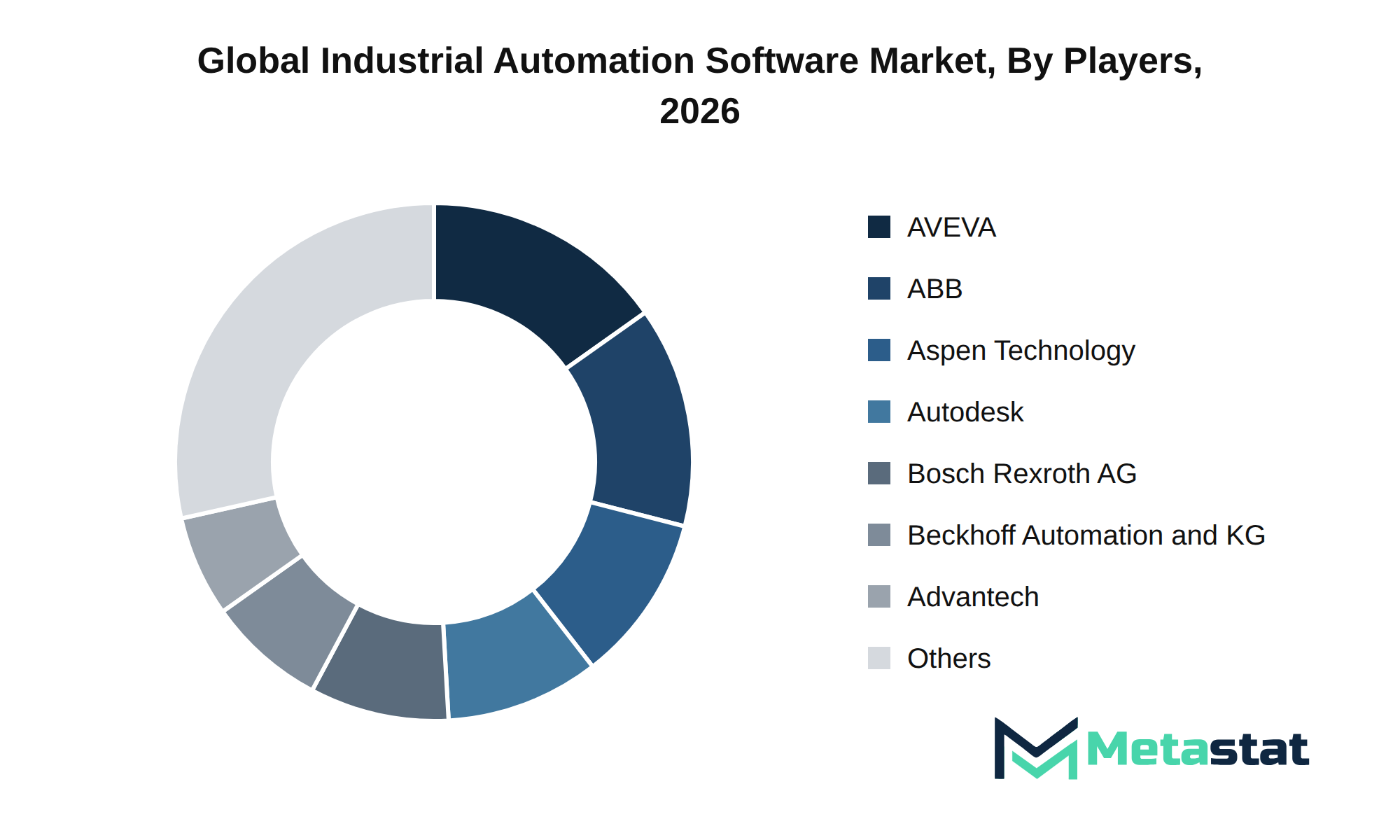
Companies in the Industrial Automation Software market compete on various factors, including price, customization, and service quality. Buyers increasingly prefer solutions that offer integration with existing systems and robust support services, influencing purchasing decisions. The market features diverse software types, including Supervisory Control and Data Acquisition (SCADA) software, Distributed Control System (DCS) software, and Manufacturing Execution Systems (MES).
Several companies operate in the Industrial Automation Software market due to their specific focus areas. For instance, Rockwell Automation, Inc. emphasizes Manufacturing Execution Systems (MES) and Production Process Monitoring, catering to the evolving needs of the manufacturing sector. Siemens AG focuses on a wide range of automation solutions, including Human-Machine Interface (HMI) software, enhancing user experience and operational efficiency. ABB Ltd. concentrates on Distributed Control System (DCS) software, providing comprehensive solutions for various industries, including oil and gas and chemicals.
Achieving this growth requires several developments, including increased adoption of cloud-based deployment models and advancements in predictive maintenance applications. The cloud-based model, projected to reach USD 18.9 billion by 2033, aligns with a growing demand for scalable and flexible solutions in industries including food and beverage. In parallel, the asset monitoring and predictive maintenance segment, anticipated to benefit from a CAGR of 10.4%, reflects the industry's focus on efficiency and operational reliability.
Challenges exist that could impede this growth trajectory. Economic fluctuations and geopolitical tensions, particularly in North America and Europe, pose significant risks. These factors lead to hesitance in capital investment, affecting the overall adoption rate of industrial automation technologies. The Industrial Automation Software market relies on these critical advancements and the mitigation of external risks to reach its projected size by 2033.
By Software Type: Supervisory Control and Data Acquisition (SCADA) Software, Distributed Control System (DCS) Software, Manufacturing Execution Systems (MES), Human-Machine Interface (HMI) Software, Programmable Logic Controller (PLC) Programming Software, Industrial Asset Performance Management (APM) Software, Industrial Internet of Things (IIoT) Platforms, Manufacturing Operations Management (MOM) Software, Industrial Historian and Data Analytics Software, Others (Industrial Simulation Software, Motion Control Software)
By Application: Production Process Monitoring and Control, Manufacturing Execution and Production Scheduling, Quality Management and Product Traceability, Asset Monitoring and Predictive Maintenance, Industrial Data Acquisition and Visualization, Inventory and Warehouse Operations Management, Energy Monitoring and Optimization, Industrial Safety and Alarm Management, Others (Remote Diagnostics, Industrial Workflow Automation)
By End-Use Industry: Automotive and Transportation Equipment, Food and Beverage, Chemicals and Petrochemicals, Oil and Gas, Pharmaceuticals and Life Sciences, Power Generation and Utilities, Metals and Mining, Electronics and Semiconductors, Machinery and Industrial Equipment, Others (Pulp and Paper, Textiles, Water and Wastewater Treatment)
By Deployment Model: On-Premises, Cloud-Based, Hybrid
The report strategically identifies and profiles the key market players and analyses their core competencies in each sub-segment of the Industrial Automation Software market.
Report Attributes | Details |
Study Period | 2021-2033 |
Base Year | 2025 |
Estimated Year | 2026 |
Forecast Period | 2026-2033 |
Historical Period | 2021-2025 |
Growth Rate | CAGR 8.6% from 2026 to 2033 |
Revenue Unit | USD billion |
Segmentation | By Software Type, Application, End-Use Industry, Deployment Model, and Region |
By Region | North America (By Software Type, Application, End-Use Industry, Deployment Model, and Country)
|
Europe (By Software Type, Application, End-Use Industry, Deployment Model, and Country)
| |
Asia Pacific (By Software Type, Application, End-Use Industry, Deployment Model, and Country)
| |
South America (By Software Type, Application, End-Use Industry, Deployment Model, and Country)
| |
Middle East and Africa (By Software Type, Application, End-Use Industry, Deployment Model, and Country)
|
Find answers to common questions about this report
The Industrial Automation Software market size was valued at USD 28 billion in 2025.
The market is projected to grow at a CAGR of 8.6% during the forecast period from 2026 to 2033.
The North America Industrial Automation Software market size is estimated to reach USD 16.1 billion by 2033.
Manufacturing Execution Systems (MES) leads the market with a projected value of USD 9.4 billion by 2033. This segment surpasses others in terms of revenue potential within the Industrial Automation Software landscape.
Key drivers for the Industrial Automation Software market include a growing emphasis on operational efficiency, with companies seeking solutions that streamline operations and enhance productivity. cloud-based deployment models experience rapid growth due to increasing demand for flexibility and scalability in production environments.
North America holds the dominant share of the market, accounting for USD 16.1 billion in 2033, representing 32.2 percent of the total market. This figure surpasses the shares of other regions, including Europe and Asia Pacific.
Inadequate infrastructure restrains growth in the Industrial Automation Software market, particularly impacting small and medium-sized enterprises reliant on legacy systems. Escalating talent costs challenge supplier profitability, increasing expenses in attracting and retaining skilled professionals in critical areas.
The ongoing transformation of traditional manufacturing processes into more agile systems drives the adoption of cloud-based solutions, enhancing operational capabilities. Companies benefit from reduced infrastructure costs and improved access to real-time data analytics, which support competitiveness in various sectors.
The Industrial Automation Software market is estimated to reach a valuation of USD 54.4 billion by 2033.
Key players operating in the Industrial Automation Software market include ABB Ltd., Advantech Co., Ltd., AMETEK Inc., Aspen Technology, Inc., Autodesk, Inc., AVEVA Group plc, and Rockwell Automation, Inc.
Choose Your License
Global Industrial Automation Software Market
The analysts below cover Information & Technology research at Metastat Insights.
LEAD ANALYST
Utkarsh Khirodkar is a Lead Market Research Analyst at MetaStat Insight, specializing in market intelligence, technology sector assessments, and competitive strategy.

PRINCIPAL CONSULTANT - ENTERPRISE AI & EMERGING TECHNOLOGIES
Banking & Finance · Electronics and Semiconductor · Energy and Power · Healthcare IT · Information & Technology · Professional Services
Vijay Gunti is a Principal Consultant at MetaStat Insight, bringing over two decades of experience across enterprise digital transformation, technology strategy, and intelligent systems.

LEAD CONSULTANT - COMMUNICATION, TELECOM, AND IT
Electronics and Semiconductor · Information & Technology · Machinery & Equipment · Professional Services
Ravindra Sathe Consultants for Communication, Telecom, and IT at MetaStat Insight. He leads the firm's industry research initiatives across telecommunications infrastructure, digital connectivity, enterprise networking, and emerging information technology domains.
Ambulatory surgical centers have very different purchasing cycles for robotic-assisted surgery platforms than major hospital networks. The MetaStat Insight study focused squarely on capital expenditure depreciation, procedural reimbursement pathways, and surgeon training overhead. That operational clarity made it much simpler to validate multi-year procedure growth forecasts against actual ambulatory center adoption patterns.
When planning edge sensor rollouts across refinery environments, generic IoT reports typically miss the harsh-environment certification bottlenecks. MetaStat Insight gave an objective evaluation of ATEX and Class 1 Division 2 hardware availability, along with realistic five-year maintenance cycle cost projections. The comparison of wireless mesh versus private cellular backhaul helped our team pressure-test network reliability models for remote processing facilities.
In the biological seed treatment space, registration timelines vary drastically between the European Union, Brazil, and North America. The MetaStat Insight research handled these cross-border regulatory barriers with genuine nuance, mapping commercialization pathways alongside historical field adoption rates. The segmentation between microbial strains and biochemical active ingredients was particularly well structured.
Explore related market intelligence reports worth reading alongside this one.
Starting from
$2950
Starting from
$2950