
LEAD ANALYST
Utkarsh Khirodkar is a Lead Market Research Analyst at MetaStat Insight, specializing in market intelligence, technology sector assessments, and competitive strategy.

Global Smart Pallets Market Size, Share, By Pallet Material (Plastic, Wood, Metal, Composite and Others), By Technology (Passive RFID / NFC, Active RFID, Bluetooth Low Energy (BLE), Cellular IoT (LTE-M, NB-IoT, 4G and 5G), LPWAN (LoRaWAN and Sigfox), Wi-Fi and Hybrid / Multi-Mode Connectivity), By Application (Asset Tracking and Location Management, Inventory Management, Condition Monitoring, Shipment and Load Verification, Pallet Loss Prevention and Recovery, Warehouse and Material Handling Automation and Others), By End-Use Industry (Food & Beverage, Pharmaceuticals & Healthcare, Retail & Consumer Goods, Automotive & Transportation Manufacturing, Industrial Manufacturing, Chemicals, Electronics & Semiconductors, Logistics & 3PL, Agriculture & Produce and Others), Industry Analysis, Growth, Trends, and Forecast, 2026-2033
Report ID
MSI-5356
Published
September, 2026
Pages
258 Pages
Format
Historical
Base year
Forecast
Forecast period
Report Details
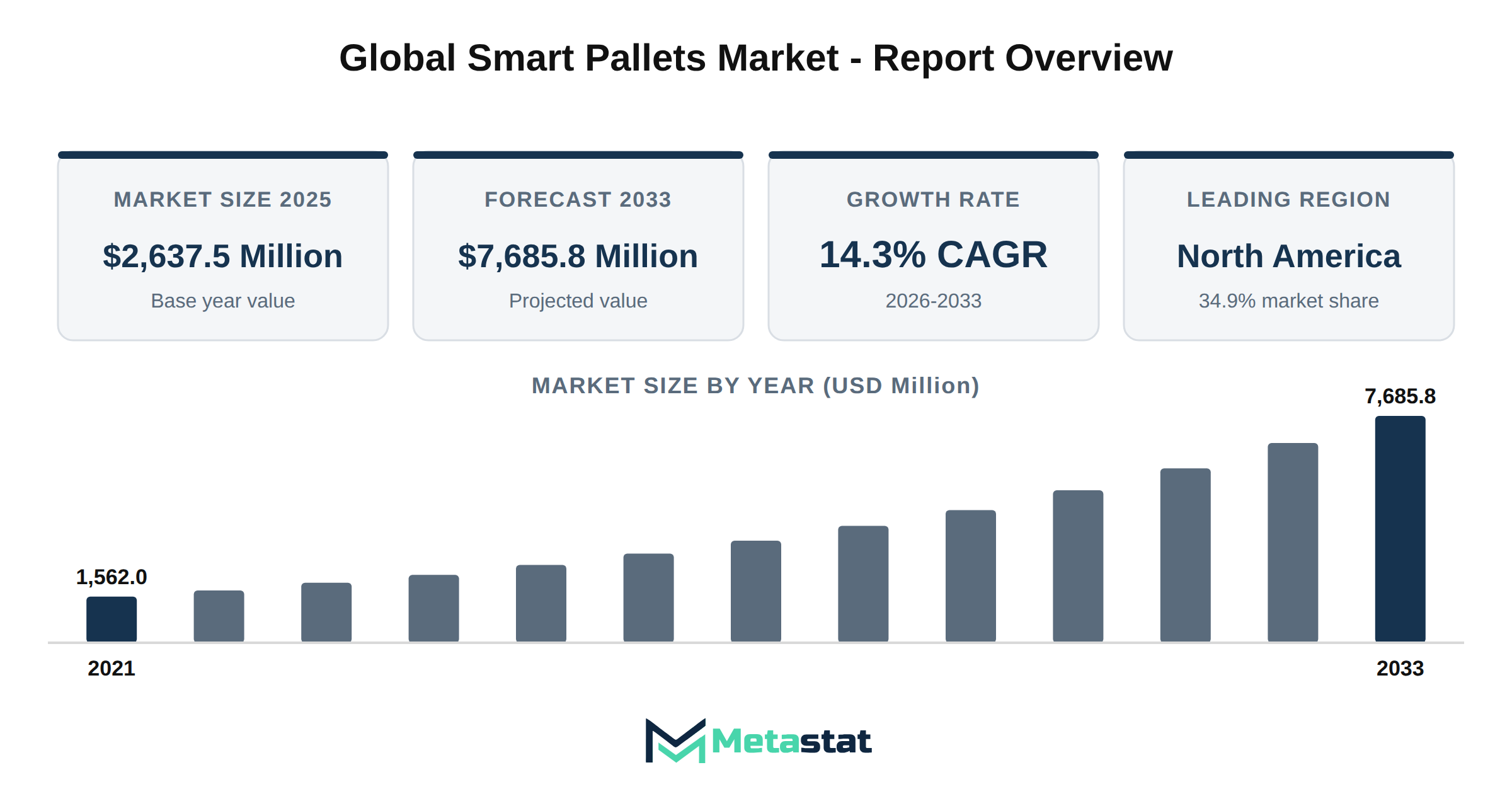
Market Valuation: Valued at $2,637.5 Million in 2025, projected to reach $7,685.8 Million by 2033 at a 14.3% CAGR.
Dominant Segment: The Plastic segment leads the Smart Pallets market, projected to grow from USD 1,275.7 million in 2026 to USD 3,452.5 million by 2033, driven by its lightweight properties and compliance with hygiene regulations.
Geographic Lead: The market is experiencing significant growth in the Asia-Pacific region, attributed to rapid industrialization and increasing investments in supply chain automation.
What's Inside: The report provides comprehensive coverage of market dynamics, competitive landscape, and detailed forecasts for the Smart Pallets market from 2026 to 2033.
Emerging Technologies: Advancements in Passive RFID, Active RFID, and Bluetooth Low Energy technologies are enhancing tracking capabilities, driving adoption across various industries.
Investment Trends: Growing investments in automation technologies are significantly influencing market growth, improving operational efficiency and reducing costs for logistics providers.
Choose Your License
Global Smart Pallets Market
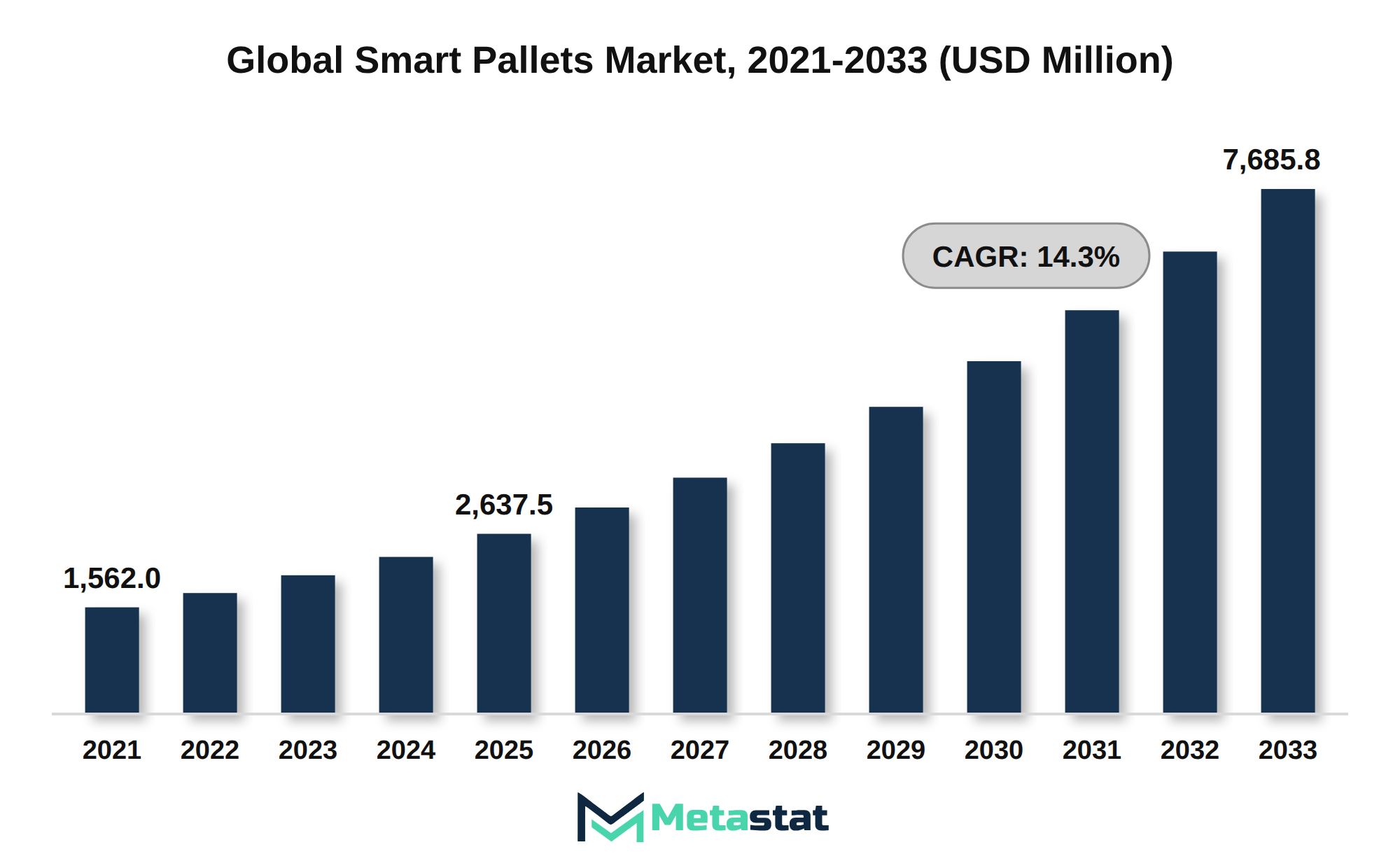
The global Smart Pallets market was valued at USD 2,637.5 million in 2025 and is projected to reach USD 7,685.8 million by 2033, growing at a CAGR of 14.3% over the forecast period.
The Smart Pallets market is positioned for significant growth, driven by advancements in RFID, IoT, and connected logistics. These technologies enhance tracking capabilities, enabling real-time visibility across supply chains. The integration of such systems improves the efficient movement of goods while minimizing losses and improving inventory accuracy.
Rising adoption of real-time pallet tracking technology across global supply chains significantly influences market dynamics. Companies recognize the value of data-driven insights in managing logistics, leading to increased implementation of smart pallet solutions. This trend reflects a broader shift towards automation and digital transformation in supply chain management.
Adoption of RFID and Bluetooth Low Energy systems in smart pallet applications enhances the efficiency of tracking and monitoring. These technologies support communication between pallets and management systems, ensuring accurate data flow and timely updates. This integration improves decision-making processes within the supply chain.
Expansion of Cellular IoT and LPWAN technologies in connected pallet networks supports the growing demand for smart pallets. These innovations enable enhanced connectivity and data transmission over long distances, which is particularly vital for logistics operations involving remote locations. The proliferation of these technologies contributes to a more robust and responsive supply chain ecosystem.
Increasing demand for smart pallets within the food and beverage logistics sector highlights the importance of temperature control and compliance. Companies prioritize solutions that facilitate monitoring during transit to ensure product quality and safety. This focus on compliance drives investments in advanced tracking technologies.
The pharmaceutical industry's emphasis on cold chain monitoring significantly drives smart pallet adoption. Stringent regulations surrounding the storage and transport of sensitive materials necessitate reliable monitoring systems. Smart pallets equipped with advanced sensors provide the necessary oversight to meet these regulatory requirements.
Integration of smart pallets with warehouse automation and WMS platforms enhances operational efficiency. This collaboration enables real-time updates and streamlined processes, contributing to reduced operational costs. Improved coordination between smart pallets and warehouse systems creates a more agile supply chain.
Pallet loss prevention and asset recovery strategies increasingly rely on IoT tracking technologies. By implementing such solutions, companies mitigate losses associated with misplaced or stolen pallets. This proactive approach enhances asset management, ultimately contributing to the overall efficiency of logistics operations.
Condition monitoring and sensor integration into smart pallets provide valuable insights into pallet status and usage. These features facilitate timely interventions and maintenance, optimizing the lifecycle of pallets within the supply chain. Enhanced monitoring capabilities support operational efficiency and cost savings.
Reusable plastic smart pallets are gaining market share within closed-loop supply chains. Their durability and sustainability align with growing environmental concerns, appealing to companies focused on reducing their carbon footprint. This trend towards reusable materials reflects a broader shift in the industry towards sustainable practices.
Smart pallet pooling and connected asset management models offer innovative solutions to optimize resource utilization. Companies increasingly explore collaborative approaches to pallet management, which enhances efficiency and reduces costs associated with ownership. This collaborative model strengthens partnerships within the supply chain.
Integration of AI and analytics in smart pallet tracking platforms enhances predictive capabilities. These technologies enable companies to anticipate demand fluctuations and optimize inventory levels accordingly. Improved forecasting and analytics drive better decision-making and operational efficiency within the market.
The Smart Pallets market sees growing adoption across retail and consumer goods supply chains. Companies recognize the importance of efficient logistics in maintaining competitiveness. Implementing smart pallet solutions facilitates enhanced inventory management and improved customer satisfaction.
Increased demand for connected pallets within automotive and industrial manufacturing sectors reflects the ongoing digital transformation. Companies prioritize solutions that enhance tracking and monitoring capabilities throughout the production process. This focus on connectivity supports greater operational efficiency and competitiveness in these industries.
The Asia Pacific region experiences significant expansion in the smart pallets market, driven by logistics digitization. Rapid growth in e-commerce and supply chain innovations in this region creates demand for advanced pallet solutions. Companies invest in technology to streamline operations and improve service delivery.
In North America, the adoption of smart pallets across automated warehousing networks contributes to market growth. Investments in automation and technology enhance efficiency and reduce operational costs. This trend reflects a broader shift towards digitization in logistics and supply chain management.
Europe's smart pallets market growth is driven by circular logistics initiatives. Companies focus on sustainability and resource optimization, which aligns with regulatory pressures to reduce waste. This emphasis on circularity influences procurement and supply chain strategies.
Integration of smart pallet data supports inventory accuracy and shipment verification processes. Enhanced visibility allows companies to track inventory levels in real-time, minimizing errors and improving operational efficiency. Companies prioritize systems that ensure data reliability and accuracy in logistics operations.
Sustainability trends and the demand for reusable packaging significantly shape smart pallet demand. Companies seek solutions that align with environmental goals while maintaining operational efficiency. This focus on sustainability influences purchasing decisions across various industries.
Future growth opportunities in sensor-enabled and multi-mode smart pallets present significant potential. Companies exploring innovative technologies will enhance functionality and improve operational performance. This evolution within the market positions it for sustained growth in the coming years.
Trends in the Smart Pallets market highlight the integration of RFID, IoT, and connected logistics solutions, driving efficiency and visibility across supply chains. The adoption of real-time pallet tracking is rising globally, enabling businesses to enhance inventory management and reduce losses.
RFID and Bluetooth Low Energy technologies are gaining traction in smart pallet systems, facilitating effective communication and data exchange. These technologies support enhanced tracking capabilities, allowing businesses to monitor asset locations and conditions in real-time.
Expansion of Cellular IoT and LPWAN technologies in connected pallet networks enhances data transmission capabilities, ensuring reliable communication between pallets and management systems. This connectivity supports efficient logistics operations, improving overall supply chain performance.
Growing demand for smart pallets in the food and beverage logistics sector highlights the need for temperature-sensitive monitoring and tracking solutions. Smart pallets provide critical data that ensures compliance with safety and quality standards throughout the supply chain.
In the pharmaceutical sector, cold chain monitoring drives smart pallet adoption, ensuring that temperature-sensitive products maintain integrity during transit. This demand emphasizes the importance of integrating advanced technologies into pallet solutions for the healthcare industry.
Integration of smart pallets with warehouse automation and WMS platforms enhances operational efficiency. This integration streamlines inventory management processes, reducing errors and increasing accuracy in inventory tracking.
Pallet loss prevention and asset recovery through IoT tracking significantly reduce costs associated with lost or damaged pallets. Effective tracking solutions ensure that businesses maintain visibility over their assets, leading to improved recovery rates.
Condition monitoring and sensor integration in smart pallets enable proactive maintenance and real-time condition reporting. This capability enhances supply chain transparency and optimizes asset utilization.
Reusable plastic smart pallets are gaining share in closed-loop supply chains, driven by sustainability initiatives and cost savings. Their durability and recyclability align with the increasing focus on environmentally friendly practices in logistics.
Smart pallet pooling and connected asset management models are emerging due to effective strategies for optimizing resource utilization. These models facilitate collaborative logistics efforts, reducing costs and enhancing service levels.
Integration of AI and analytics in smart pallet tracking platforms enhances decision-making capabilities. These technologies enable businesses to analyze data effectively, improving operational strategies and forecasting accuracy.
Smart pallet adoption across retail and consumer goods supply chains continues to expand, driven by the need for efficient inventory management and improved customer service. Retailers are increasingly recognizing the benefits of smart pallets in streamlining operations.
Automotive and industrial manufacturing sectors show strong demand for connected pallets, driven by the need for efficient material handling and tracking throughout production processes. This demand emphasizes the importance of integrating advanced pallet technologies in manufacturing environments.
The Asia Pacific smart pallets market experiences expansion fueled by logistics digitization efforts. Investments in technology infrastructure support efficient supply chain operations across the region.
North America exhibits robust smart pallet adoption across automated warehousing networks, enhancing inventory management and operational efficiency. This trend reflects the growing emphasis on automation in logistics.
Europe's smart pallets market growth is driven by circular logistics initiatives, emphasizing sustainability and resource efficiency. These initiatives encourage businesses to adopt smart pallet solutions that align with environmental goals.
Data integration for inventory accuracy and shipment verification is increasingly recognized because a vital component of smart pallet systems. Enhanced visibility throughout the supply chain improves operational performance and customer satisfaction.
Sustainability and reusable packaging trends significantly shape smart pallet demand, reflecting a broader commitment to environmental responsibility in logistics. Businesses are prioritizing sustainable solutions, contributing to the market's growth.
Future growth opportunities in sensor-enabled and multi-mode smart pallets present avenues for innovation and expansion. These advancements promise to enhance tracking capabilities and operational efficiency in diverse sectors.
The increasing emphasis on digital transformation significantly contributes to the growth of the Smart Pallets market. Organizations across various sectors recognize the necessity of integrating advanced technologies including automation, artificial intelligence, and software solutions into their operations. This shift enhances operational efficiency, streamlines processes, and reduces overhead costs, creating an environment conducive to innovation in pallet solutions.
The adoption of smart technologies facilitates better asset tracking and inventory management, vital for industries requiring precise logistics and supply chain operations. Companies investing in digitizing legacy processes drive demand for smart pallets, enabling improved visibility and control of goods throughout the supply chain. This transformation optimizes resource allocation and aligns with sustainability goals, appealing to stakeholders focused on environmental, social, and governance (ESG) principles.
In light of these factors, the Smart Pallets market is projected to experience significant growth, supported by a shift toward intelligent solutions that enhance productivity and responsiveness within the supply chain. Companies embracing these digital initiatives position themselves favorably in a competitive landscape, driving further innovation and adoption of smart pallets.
Investment in automation technologies significantly influences the Smart Pallets market, enhancing operational efficiency and reducing costs for manufacturers and logistics providers. Favorable interest rates and robust GDP growth create an ecosystem conducive to technological upgrades. Companies increasingly commit to integrating automation solutions, which streamline processes and improve productivity.
Adoption of automation technologies facilitates higher asset utilization rates, translating into lower operational costs. This trend impacts industries including food and beverage, pharmaceuticals, and retail, which prioritize efficiency and reliability in supply chain operations. By adopting advanced technologies, organizations gain a competitive advantage, leading to increased demand for smart pallets.
The shift towards automation aligns with broader digital transformation efforts across various sectors. The Smart Pallets market benefits from this connection, where investments in AI and software systems complement automated processes. These developments position smart pallets because integral to inventory management, asset tracking, and condition monitoring, enhancing overall supply chain resilience.
The focus on automation and digital integration drives growth within the Smart Pallets market, increasing efficiency and reducing costs while satisfying evolving consumer preferences and operational demands.
The Smart Pallets market faces significant challenges due to high capital investment requirements and escalating operating costs. These financial constraints deter potential adopters, particularly small and medium-sized enterprises that struggle to justify the initial outlay for smart pallet technologies. Substantial upfront investments complicate market entry, affecting overall adoption rates across various sectors.
Macroeconomic headwinds, including inflationary pressures, further compound these challenges. Rising costs of materials and labor create an environment where operational expenses escalate, impacting profitability. Companies within the market experience tightened budgets, leading to conservatism in investment decisions, which hinders growth.
Technological obsolescence presents another concern for market stakeholders. Rapid advancements in technology create a risk of existing solutions quickly becoming outdated, prompting hesitation among potential buyers. Organizations opt to delay purchases or seek alternative offerings that promise longer-term viability, thus slowing uptake.
Supply chain disruptions and geopolitical instability exert pressure on the Smart Pallets market. Fluctuations in the availability of materials and global logistics challenges complicate planning and operational efficiency. These factors lead to unpredictability in supply chains, deterring investments and affecting customer confidence.
Fragmentation within the market further limits growth potential. A wide variety of players and solutions results in confusion among buyers who find it difficult to determine the most suitable options for their needs. This complexity hampers decision-making processes, resulting in slower adoption rates.
Talent gaps and skilled labor deficiencies hinder the market's ability to implement and maintain sophisticated smart pallet systems. Without adequate expertise, companies experience difficulties in leveraging the full capabilities of these technologies, leading to suboptimal utilization and reduced effectiveness.
The Smart Pallets market experiences challenges due to geopolitical fragmentation, which leads to supply chain instability and trade deficits. These conditions create tariff friction, complicating the procurement of raw materials and components essential for smart pallet production. Volatility in feedstock prices heightens operational costs, impacting profit margins across the market.
Technological disruptions further exacerbate these challenges. Innovation in smart pallet functionalities requires significant investment in research and development, resulting in complex integrations that several companies struggle to navigate. Interoperability friction between various technological solutions limits the implementation of advanced tracking and monitoring systems specific to the Smart Pallets market.
In addition to these technical hurdles, tightening global regulatory standards impose compliance overhead, increasing the burden on manufacturers. Organizations allocate resources to meet evolving legal liabilities associated with sustainability demands and environmental lifecycle footprints. Consequently, these factors increase operational costs and result in pricing compression within the Smart Pallets market.
The pressure on talent retention remains a concern, particularly in an industry increasingly reliant on automation. Workforce skill gaps hinder the effective deployment of smart pallet technologies, reducing the overall efficiency and competitiveness of operations. This combination of market challenges creates a complex environment for companies operating in the Smart Pallets market.
The Smart Pallets market experiences notable opportunities driven by advancements in technology and innovation. The integration of Passive RFID, Active RFID, and Bluetooth Low Energy technologies enhances tracking capabilities and operational efficiency. Companies increasingly implement these technologies to streamline inventory management and condition monitoring processes, resulting in improved asset utilization and reduced losses. The growth of the market is reflected in the projected 15.3% compound annual growth rate (CAGR) of plastic pallets, a primary material due to its versatility and durability.
Technological disruptions, including Cellular IoT advancements, facilitate real-time data collection and analytics. This capability allows businesses to respond rapidly to changing demands and optimize supply chain operations. The market benefits significantly from the digital transformation, which aligns with the evolving needs of industries including food and beverage, pharmaceuticals, and retail. Growth in these sectors contributes to the demand for smart pallets capable of enhancing traceability and compliance with industry standards.
Sustainability imperatives drive the adoption of eco-friendly materials, with a focus on reducing environmental impact. The market sees increased interest in composite and recyclable pallet materials attributed to companies seeking to reduce their carbon footprint and align with environmental, social, and governance (ESG) criteria. This heightened focus on sustainability enhances market potential and supports strong growth trajectories.
The Smart Pallets market benefits from geographical expansion strategies. Companies are exploring new markets in Asia Pacific and South America, where increasing investments in infrastructure modernization and logistics capabilities support adoption. Growth within these regions reflects the strategic alignment with local demands and the uptake of innovative solutions. Overall, the convergence of technological advancements, sustainability trends, and regional expansion initiatives creates a robust framework for the Smart Pallets market's growth.
The Global Smart Pallets market is segmented based on Pallet Material, Technology, Application, and End-Use Industry.
Valued at USD 1,275.7 million in 2026, the Plastic segment of the Smart Pallets market is projected to reach USD 3,452.5 million by 2033, with a CAGR of 15.3% during the forecast period. Demand for plastic pallets stems from their lightweight properties, durability, and resistance to moisture and chemicals, making them ideal for various industries, including food and beverage, pharmaceuticals, and logistics. Adoption of plastic pallets is driven by their recyclability and compliance with stringent regulations regarding hygiene and safety in sensitive sectors.
Technological maturation in the production of plastic pallets enhances performance and reduces costs, creating opportunities for advanced designs and features. Innovations in material science lead to the development of composite materials that integrate recycled plastics, aligning with sustainability goals and reducing environmental impact. Strategic investments in production capacities and distribution networks support the market expansion, enabling suppliers to meet the growing demand effectively.
Shifts in consumption patterns favor lightweight and durable pallet solutions, particularly in industries experiencing heightened e-commerce activity. Enhanced supply chain resilience requires adaptable solutions, with plastic pallets offering versatility in various applications, from asset tracking to inventory management. The Smart Pallets market experiences growth fueled by these multifaceted dynamics, positioning the plastic segment for significant advancements in the coming years.
Wood pallets hold a substantial position in the Smart Pallets market, with an estimated value of USD 2,139 million by 2033, reflecting a CAGR of 12.8% during the forecast period. This segment benefits from several primary demand drivers, including strong sustainability trends and increasing regulations favoring eco-friendly materials. The growing emphasis on reducing carbon footprints among industries significantly enhances the adoption of wood pallets, which are often perceived because a more sustainable option compared to plastic alternatives.
Technological maturation and product evolution contribute to the attractiveness of wood pallets. Innovations in treatment processes and designs have improved durability and performance, allowing wood pallets to compete more effectively against synthetic materials. This evolution aligns with shifts in downstream applications, particularly in industries like food and beverage, where compliance with safety and health regulations necessitates the use of reliable and safe materials.
Market dynamics shift because the food and beverage sector increasingly prioritizes sustainable supply chain practices. This trend leads to heightened demand for wood pallets, because companies seek ways to enhance their sustainability profiles. In addition, consumer preferences for environmentally friendly products influence the end-use dynamics, compelling manufacturers to invest in wood pallet production.
Cost structures associated with wood pallets reflect fluctuating raw material prices, with timber supply constraints influencing overall pricing volatility. Margin pressures emerge from these cost dynamics, prompting manufacturers to seek efficient sourcing strategies and innovative processing methods. Strategic opportunity windows arise from increasing demand in emerging markets, where the wood segment expands its footprint through tailored solutions that address local needs.
The Smart Pallets market is well-positioned for the continued growth of the wood segment, driven by evolving consumer preferences, regulatory compliance, and technological advancements that enhance pallet performance and sustainability.
Increasing awareness of sustainability enhances demand for the Metal segment within the Smart Pallets market. Metal pallets offer durability, recyclability, and resistance to harsh environments, attracting industries that prioritize long-term investments in logistics. The segment is expected to reach USD 966.1 million by 2033, reflecting a growing trend toward efficient resource utilization and waste reduction.
Technological maturation in the manufacturing processes for metal pallets enables more efficient production and cost reduction, appealing to price-sensitive sectors. Industries including automotive and pharmaceuticals, which require robust and reliable pallet solutions, significantly contribute to the segment's expansion, driven by the need for consistent quality and compliance with regulations.
Shifts in consumption patterns favor metal pallets due to their ability to withstand heavier loads and harsh conditions, leading to increased adoption across diverse applications. Regulatory compliance standards related to safety and environmental sustainability further enhance the appeal of metal pallets, allowing companies to meet stringent operational requirements while optimizing supply chain resilience.
Investment in advanced technologies for metal pallet production, including automation and smart features, presents strategic opportunity windows that enhance operational efficiency. The Smart Pallets market evolves, driven by these developments that support growth and increase competitive advantages for manufacturers in the segment.
Within the Smart Pallets market, the Composite segment is projected to grow at a CAGR of 15.5% during the forecast period. This growth stems from an increasing demand for lightweight yet durable materials that optimize logistics efficiency. Industries including pharmaceuticals and food & beverage prominently use composite pallets for their ability to withstand rigorous handling and environmental conditions.
Technological maturation in composite materials enhances performance and application versatility, driving adoption across varied sectors. The ability to incorporate smart technologies into composite pallets positions them favorably, reflecting the emergence of next-generation upgrades. These advancements align with the market's trajectory toward automation and data tracking, further increasing the segment's relevance in supply chain management.
Increasing regulatory compliance standards demand robust and reliable pallet solutions. Composite pallets satisfy these requirements while providing competitive cost structures compared to traditional materials. The pricing volatility associated with raw materials often affects profit margins; however, the long-term durability of composite solutions mitigates these concerns, ensuring a stable return on investment for users.
Strategic opportunity windows arise through innovations in raw material sourcing and production techniques, enhancing the sustainability profile of composite pallets. This shift aligns with the growing trend towards eco-friendly packaging and materials, appealing to environmentally conscious consumers and businesses. Overall, the Composite segment contributes to the evolving Smart Pallets market, affirming its potential for substantial growth.
Innovation in materials and manufacturing processes drives the exploration of alternative pallet solutions, including those that use paper-based and hybrid materials. This segment attracts interest from environmentally conscious enterprises aiming to enhance sustainability in their supply chains. Adoption is evident in industries focused on reducing carbon footprints and leveraging renewable resources, aligning with global sustainability targets.
Investment in research and development facilitates advancements in paper-based and hybrid materials, enhancing durability and usability in various applications. Regulatory compliance standards related to sustainability influence the demand for eco-friendly materials, propelling growth within the Smart Pallets market. Companies in sectors including food and beverage, pharmaceuticals, and retail exhibit strong interest in these materials to meet stringent environmental regulations.
Consumption shifts reflect a growing preference for sustainable packaging solutions, prompting manufacturers to invest in innovative pallet designs that integrate paper-based and hybrid materials. Strategic opportunities arise from collaboration between raw material suppliers and pallet manufacturers, focusing on developing efficient and sustainable solutions. Capital investments in this segment emphasize the potential for product evolution, creating a more robust offering within the Smart Pallets market.
Valued at USD 858.7 million in 2026, the Passive RFID / NFC segment is projected to reach USD 1,858.4 million by 2033, at a CAGR of 11.7% during the forecast period. Increased adoption of automation and real-time tracking solutions drives demand for passive RFID and NFC technologies. These technologies enhance inventory management, reduce errors, and improve operational efficiency across the retail and logistics sectors.
The surge in e-commerce and supply chain complexities accelerates the shift towards advanced tracking methods, highlighting the relevance of passive RFID and NFC systems in asset tracking and location management. Retail and logistics sectors contribute significantly to this trend, applying these technologies to streamline operations and enhance customer satisfaction. Regulatory compliance regarding traceability and safety standards reinforces the need for efficient tracking solutions.
Technological maturation continues, with innovations in passive RFID and NFC technologies facilitating integrations with existing systems, promoting broader adoption. Increased awareness regarding the benefits of enhanced visibility in supply chains supports strong growth in the market. The Passive RFID / NFC segment represents a strategic opportunity window for stakeholders to invest in next-generation upgrades, ensuring competitive positioning in the evolving landscape of smart pallets.
Active RFID technology enhances asset tracking and location management across various industries in the Smart Pallets market. Its ability to provide real-time data on pallet movements supports operational efficiency, driving adoption in sectors including logistics and supply chain management. The continuous push for automation and improved inventory management directly correlates with the increasing demand for Active RFID solutions.
Valued at USD 1,172.9 million by 2033, the Active RFID segment is estimated to grow at a CAGR of 12.3% during the forecast period. This growth stems from the segment's capability to offer advanced tracking solutions that facilitate better inventory control and loss prevention. Downstream applications across industries including food and beverage, pharmaceuticals, and retail further increase the demand for Active RFID technology.
Technological maturation is evident, with innovations leading to the development of more efficient and cost-effective Active RFID systems. These advancements address challenges related to pricing volatility and margin pressures that users face when implementing new technologies. Growing regulatory compliance standards regarding traceability and asset management reinforce the importance of Active RFID in the market. While companies strive for supply chain resilience, the integration of Active RFID solutions emerges because a strategic opportunity to enhance operational capabilities and maintain competitiveness.
Growth in the Bluetooth Low Energy (BLE) segment reflects a significant shift towards enhanced connectivity solutions within the Smart Pallets market. This segment leverages low power consumption and reliable communication capabilities, making it ideal for applications that require real-time data transfer and tracking. The rise in demand for asset tracking and location management drives investments in BLE technology, driven by businesses seeking to optimize inventory management and improve supply chain visibility.
Technological maturation supports the expansion of the BLE segment. Continuous advancements in wireless communication protocols facilitate the integration of BLE with existing infrastructure, enabling effective communication between smart pallets and monitoring systems. This technological evolution supports the adoption of BLE in various end-use industries, including food and beverage, pharmaceuticals, and retail, where precise tracking and monitoring are critical.
Market dynamics indicate that BLE solutions contribute to improved operational efficiency, reducing costs associated with manual tracking and enhancing asset visibility. Adoption of BLE technology aligns with broader trends towards automation and digitalization, positioning businesses to respond effectively to changing consumer demands. Regulatory compliance standards further incentivize the integration of BLE systems, because they enhance traceability and accountability within supply chains.
Investment in the BLE segment represents a strategic opportunity window for industry players aiming to capitalize on emerging trends in the Smart Pallets market. By 2033, the Bluetooth Low Energy (BLE) segment is expected to reach USD 1,220.5 million, highlighting its potential to reshape asset management practices across various sectors. This growth trajectory reflects increasing recognition of the value that BLE technology brings to supply chain resilience and operational optimization.
Adoption of Cellular IoT technologies, including LTE-M, NB-IoT, 4G, and 5G, drives substantial growth within the Smart Pallets market. Increased demand for real-time data transmission and enhanced tracking capabilities significantly influences this segment's expansion. Industries including logistics, retail, and manufacturing rely on these technologies for efficient supply chain management, enabling precise monitoring of pallet movements and conditions.
The Cellular IoT (LTE-M, NB-IoT, 4G, 5G) segment is projected to grow at a CAGR of 17.2% during the forecast period. This growth aligns with the push toward more automated and connected environments, where communication between assets is essential for operational efficiency. Technological maturation in cellular IoT infrastructure enhances reliability, leading to widespread adoption across various sectors.
Investment in next-generation upgrades drives innovations that reduce latency and increase data capacity. Improved connectivity and lower operational costs strengthen the business case for companies seeking to implement smart pallet solutions. The evolution of products equipped with advanced cellular technologies positions organizations to meet rising consumer expectations for real-time visibility and transparency in logistics.
Regulatory compliance standards, including those focused on data security and traceability, influence the adoption of Cellular IoT technologies. Organizations prioritizing compliance gain a competitive edge by ensuring product integrity and providing customers with reliable information. The market's trajectory reflects a continuous shift toward integrating these advanced technologies, enhancing efficiency and resilience within the supply chain.
LPWAN (LoRaWAN, Sigfox) technology contributes to improved asset tracking and inventory management efficiency within the Smart Pallets market. This technology allows for low-power, wide-area network communication, making it suitable for applications requiring long-range connectivity with minimal energy consumption. Adoption of LPWAN technology aligns with the growing demand for real-time monitoring and data collection across diverse industries, particularly in logistics and supply chain management. Enhanced visibility into pallet movements and conditions drives interest in LPWAN solutions, enabling better decision-making and operational efficiency.
Technological maturation plays a critical role in shaping the evolution of LPWAN solutions, with continuous improvements in range, data transmission capabilities, and integration with existing systems. The segment benefits from strategic partnership opportunities and investments aimed at expanding network infrastructure and enhancing communication protocols. End-use dynamics reflect a shift toward automated and data-driven operations, where LPWAN technology supports applications including condition monitoring and asset location tracking. Regulatory compliance standards around tracking and monitoring increase the relevance of LPWAN in the Smart Pallets market, ensuring that businesses adhere to necessary requirements while optimizing their operations.
Cost structures related to LPWAN implementation involve considerations for device procurement, network subscriptions, and ongoing maintenance. Pricing volatility remains manageable within the segment, supported by advancements in technology leading to lower manufacturing costs and more competitive pricing models. Strategic opportunity windows arise from increasing demand for IoT-enabled solutions, allowing businesses to capitalize on enhanced data analytics capabilities. Continuous innovation and product evolution in LPWAN technology drive competitive differentiation and improve market positioning for players operating in the Smart Pallets market.
In the Smart Pallets market, the Wi-Fi segment benefits from increasing demand for reliable connectivity in logistics and supply chain operations. Enhanced data transfer speeds and reduced latency provided by Wi-Fi technology improve real-time tracking and monitoring of pallets, thus improving operational efficiency. Adoption of this technology aligns with the growing need for automation and data analytics in various end-use industries, allowing companies to leverage data for decision-making processes.
Technological maturation and ongoing upgrades in Wi-Fi standards contribute to the segment's expansion. New generations of Wi-Fi technology, including Wi-Fi 6, offer improved bandwidth and energy efficiency, making them attractive for applications requiring high data throughput. This evolution supports the integration of smart pallets into existing infrastructure without significant overhauls, appealing to logistics providers and manufacturers looking to enhance their tracking capabilities.
End-use dynamics play an essential role in driving demand for Wi-Fi-enabled smart pallets. Industries including retail, pharmaceuticals, and food and beverage increasingly prioritize the visibility and traceability of their products throughout the supply chain. The implementation of Wi-Fi technology facilitates asset tracking, helping businesses comply with regulatory standards and improve inventory management practices.
Consumption shifts towards more connected devices in supply chains create a strategic opportunity window for Wi-Fi technology. The transition towards Industry 4.0 highlights the necessity for integrated systems that provide real-time data access and analysis. This trend positions the Wi-Fi segment favorably within the market, driven by companies seeking to modernize their operations.
Cost structures in the market reflect the competitive pressures faced by companies integrating Wi-Fi technology into their pallet systems. While initial investments are significant, the long-term benefits of enhanced efficiency and reduced operational costs drive adoption and justify expenditures. Manufacturers increasingly focus on developing cost-effective solutions that maintain high performance, ensuring the segment remains competitive against alternatives.
Increasing adoption of Hybrid / Multi-Mode Connectivity aligns with the rising complexity of supply chain operations. This trend stems from the necessity for real-time data transmission and improved tracking capabilities across various logistics processes. Industries requiring robust asset tracking solutions, including pharmaceuticals and food and beverage, drive the integration of these technologies into their operations.
Technological maturation supports the growth of this segment. Advancements in networking technologies, including the integration of cellular, Bluetooth, and RFID systems, facilitate enhanced communication between assets and monitoring systems. This evolution promotes a smooth flow of information, ensuring greater accuracy in inventory management and condition monitoring.
End-use dynamics increasingly reflect a shift toward improved operational efficiency and cost reduction. Companies invest in multi-mode connectivity to leverage the benefits of diverse technologies while minimizing reliance on any single mode of communication. This strategic approach enhances resilience against potential disruptions in logistics and supports effective risk management strategies.
Regulatory compliance standards further influence the demand for Hybrid / Multi-Mode Connectivity. Industries face growing pressure to meet stringent regulations regarding traceability and product safety. Implementing advanced connectivity solutions enables businesses to maintain compliance while optimizing their operational processes.
Capital investment outlook remains positive, with organizations recognizing the long-term benefits of adopting hybrid connectivity technologies. Investments in this area promise significant returns through enhanced visibility, reduced operational costs, and improved customer satisfaction, reinforcing the position of the Smart Pallets market within the broader logistics sector.
Emerging technologies including UWB (Ultra-Wideband) and Zigbee create significant potential within the Smart Pallets market. These technologies enhance tracking accuracy and data transmission efficiency, addressing growing demands for precise asset management in various industries. Increased adoption of automation in supply chains drives the interest in UWB and Zigbee technologies, providing real-time data access and facilitating improved decision-making processes. The expansion of the Internet of Things (IoT) ecosystem further supports growing interest in these technologies, allowing integration with other smart devices and systems.
Downstream applications leverage UWB and Zigbee for improved inventory management and asset tracking. Industries including retail, logistics, and manufacturing benefit from these advancements through streamlined operations and enhanced visibility. Regulatory compliance standards increasingly emphasize the importance of accurate tracking, motivating businesses to invest in smart technologies that facilitate compliance and improve operational efficiency. Strategic opportunity windows emerge due to companies seeking competitive advantages through technological upgrades, positioning UWB and Zigbee because critical components in the evolution of smart pallet solutions.
Investment in next-generation upgrades and product evolution creates a robust environment for UWB and Zigbee technologies. With the rise of smart infrastructure, demand for cost-effective, efficient tracking solutions continues to grow. These technologies contribute to enhancing supply chain resilience by providing reliable communication channels even in challenging conditions. Long-term capital investment outlooks remain positive, encouraging stakeholders to explore disruptive alternatives that change market dynamics and respond to changing consumer expectations.
Valued at USD 786.1 million in 2026, the Asset Tracking and Location Management segment is projected to reach USD 1,858.4 million by 2033, at a CAGR of 13.1% during the forecast period. Increased demand for efficiency in logistics and supply chain operations drives growth in this segment. Industries including retail, pharmaceuticals, and manufacturing seek solutions to optimize inventory management and enhance tracking capabilities. Technological advancements and the proliferation of IoT devices facilitate the integration of asset tracking systems, allowing organizations to monitor assets in real time. This trend aligns with regulatory requirements for enhanced tracking and traceability, particularly in the food and healthcare sectors.
Continued investment in next-generation technologies enhances the segment's appeal. Companies leveraging advanced tracking solutions gain a competitive edge by increasing operational efficiency and reducing losses related to mismanaged assets. The market for asset tracking within the Smart Pallets market benefits from ongoing shifts in consumer behavior. Organizations prioritize transparency and accountability in logistics. The rising need for effective location management contributes to the segment's expansion, reflecting trends in supply chain resilience and optimization.
Significant growth in the Inventory Management sub-segment reflects the ongoing transformation in supply chain practices across various industries. Increasing reliance on data-driven decision-making enhances the demand for more efficient inventory tracking solutions. The ability to minimize errors and reduce operational costs influences adoption rates among businesses, particularly in sectors including retail and healthcare.
Technological advancements drive the evolution of inventory management systems, incorporating features including real-time tracking and automated reorder alerts. These capabilities improve overall supply chain efficiency and responsiveness, benefiting companies operating in dynamic environments. The Smart Pallets market experiences heightened interest in innovations that streamline inventory processes, leading to improved accuracy and inventory turnover rates.
Investment in smart pallet technologies, including RFID and IoT connectivity, contributes to the segment's expansion. Enhanced visibility into inventory levels allows organizations to optimize stock levels and reduce waste. Increased focus on regulatory compliance and standards further pressures companies to implement effective inventory management solutions.
The Inventory Management segment is estimated to reach USD 1,399.6 million by 2033, at a CAGR of 13.3% during the forecast period. While organizations prioritize operational excellence and customer satisfaction, investment in advanced inventory technologies accelerates, positioning the segment for significant growth within the broader Smart Pallets market.
Projected to reach USD 1,488 million by 2033, the Condition Monitoring segment benefits from rising demand for real-time data on pallet conditions during transit and storage. Enhanced product monitoring capabilities drive the adoption of advanced technologies, enabling better tracking of temperatures, humidity, and other environmental factors. Industries including Food & Beverage and Pharmaceuticals prioritize compliance with regulatory standards, which fuels the segment's growth. The integration of next-generation upgrades, including IoT-enabled sensors and data analytics platforms, supports improved condition monitoring capabilities and operational efficiency.
Technological maturation within the Smart Pallets market enhances the precision and reliability of monitoring solutions. Investment in these technologies reflects a strategic shift towards data-driven decisions, allowing companies to optimize supply chain resilience and reduce losses from damaged goods. The increasing complexity of global supply chains demands innovative monitoring solutions, positioning the Condition Monitoring segment because a key area for capital investment and growth. Proactive condition monitoring boosts product quality and enhances customer satisfaction, promoting wider adoption across various industries.
Shipment and Load Verification segment is projected to grow at a CAGR of 15% during the forecast period. Demand for this sub-segment arises from the necessity to ensure accuracy in the shipping process, enhancing operational efficiency and reducing errors. Industries including logistics and retail emphasize the importance of reliable shipment verification methods to manage inventory and customer satisfaction effectively.
Technological advancements play a significant role in this segment's growth. The integration of smart pallets equipped with advanced tracking technologies facilitates real-time monitoring of shipments, thus increasing transparency in the supply chain. Enhanced product features, including automated reporting and alerts, attract businesses aiming to streamline their processes and improve accountability.
Regulatory compliance standards further drive the adoption of shipment verification technologies. Strict guidelines regarding shipment accuracy and traceability compel companies to invest in advanced solutions, aligning their operations with industry requirements. The increasing penetration of smart pallets in sectors focused on compliance and risk management reflects this trend.
The evolving expectations of consumers influence demand. Growing emphasis on fast and accurate deliveries drives companies to adopt smart pallets that ensure shipment integrity throughout the supply chain. Consequently, this sub-segment within the Smart Pallets market reflects a positive growth outlook, fueled by these dynamics and the ongoing need for innovation in shipping and inventory management processes.
Emerging focus on pallet loss prevention and recovery reflects the increasing need for enhanced security in logistics operations. The growth in e-commerce and global trade escalates the risk of pallet loss, prompting companies to prioritize this aspect of their supply chain management. Companies across various industries, including food and beverage, pharmaceuticals, and automotive, recognize the importance of minimizing losses to maintain operational efficiency and profitability.
Technological advancements play a significant role in driving demand for effective loss prevention strategies. Investment in smart pallet technologies equipped with tracking systems, including RFID and IoT, enables real-time monitoring and documentation of pallet usage. These technologies improve visibility throughout the supply chain, aiding in the identification of loss points and ensuring timely recovery processes.
Regulatory compliance standards increasingly emphasize the need for robust pallet management systems. Heightened government scrutiny on supply chain transparency places pressure on businesses to implement traceability mechanisms that address compliance requirements. This regulatory landscape encourages investment in solutions that enhance pallet loss prevention and recovery capabilities, ultimately influencing purchasing decisions.
Cost structures associated with pallet loss significantly impact businesses. Loss of pallets results in direct financial losses and contributes to increased operational costs. Implementing advanced tracking and recovery solutions enables companies to reduce long-term expenses associated with pallet replacement and lost inventory. Consequently, businesses prioritizing pallet loss prevention strategies enhance their competitive position within the market.
While the focus on sustainability intensifies, companies increasingly seek strategies that align with circular economy principles. Pallet loss prevention and recovery initiatives contribute to reducing waste, reinforcing the importance of responsible resource management. This alignment with environmental goals enhances brand reputation and customer loyalty, particularly among environmentally conscious consumers.
Investment in research and development drives innovation within the market. By exploring disruptive alternatives and investing in white-space opportunities, companies position themselves to address emerging challenges in pallet loss management. This proactive approach not only mitigates risks but identifies potential avenues for revenue generation.
Overall, the landscape of pallet loss prevention and recovery continues to evolve, driven by technological advancements, regulatory requirements, and changing consumer preferences. Firms proactively adopting new strategies to enhance their supply chain resilience position the smart pallets market to benefit from this evolving focus on loss management.
Automation in warehouse and material handling drives efficiency and accuracy in supply chains, particularly for industries reliant on high-volume logistics operations. The integration of smart pallets enhances real-time tracking and management of inventory, reducing manual errors and ensuring streamlined processes. Rising labor costs and increasing demand for faster delivery times accelerate the shift toward automated solutions.
Technological advancements enable greater connectivity and data exchange, supporting the development of innovative applications within the Smart Pallets market. Adoption of automation technologies enhances operational visibility, allowing businesses to respond swiftly to changing market conditions. This adaptability improves customer satisfaction and operational resilience, critical factors in a competitive landscape.
Regulatory compliance standards increasingly emphasize the importance of traceability and accountability in supply chains. Organizations invest in smart pallet solutions to meet these standards while improving efficiency. Continuous upgrades and enhancements of automated systems influence capital investment decisions among businesses, shaping the future of the market.
Overall, the warehouse and material handling automation segment presents significant opportunities for growth, driven by advancements in technology, evolving customer needs, and regulatory requirements. Investments in this area reflect a strategic focus on enhancing supply chain resilience, ensuring companies remain competitive in an evolving marketplace.
Investment in pallet pooling management, compliance, and traceability significantly contributes to the Smart Pallets market. Increased regulatory demands for tracking and traceability create a strong impetus for companies to adopt advanced pallet management solutions. Enhanced visibility into supply chain operations aligns with rising consumer expectations for transparency, prompting businesses to pursue compliance with various standards.
Technological maturation further accelerates segment expansion by enabling advanced tracking capabilities through integrated tracking systems. Utilization of next-generation upgrades, including RFID technologies, supports efficient pooling management, reducing losses and improving operational efficiency. Companies that invest in these technologies are likely to experience improved asset utilization and reduced costs, creating competitive advantages in the market.
Shifts in consumption patterns reflect a growing focus on sustainability and resource optimization. Companies prioritize pallet pooling strategies that enhance supply chain resilience and minimize environmental impact. This shift influences demand for solutions that incorporate compliance and traceability features, addressing both regulatory requirements and corporate social responsibility goals.
Strategic opportunity windows emerge because organizations seek to enhance their logistics frameworks. Capital investment in compliance and traceability solutions strengthens the supply chain, mitigating disruptions and ensuring product integrity. These developments position businesses to respond effectively to evolving market demands, driving growth in the Smart Pallets market.
Valued at USD 650.7 million in 2026, the Food & Beverage segment is projected to reach USD 1,546.4 million by 2033, at a CAGR of 13.2% during the forecast period. Increased demand for smart pallets in this sector arises from the need for efficient supply chain management and enhanced traceability of products. Technological advancements in smart pallets facilitate better inventory management and asset tracking, essential for maintaining quality and compliance with safety regulations.
The growing trend of sustainability in the food and beverage industry influences the adoption of eco-friendly pallet materials, pushing suppliers to innovate and offer products that align with environmental standards. Compliance with stringent regulatory frameworks surrounding food safety and traceability further drives the integration of smart pallets into operations. This segment experiences a shift towards adopting advanced technologies, allowing enhanced visibility and real-time monitoring throughout the supply chain.
Investments in smart pallet technology present strategic opportunities for businesses to streamline operations and reduce costs associated with product loss and inefficiencies. Demand for smart pallets in food and beverage applications is expected to strengthen due to companies prioritizing supply chain resilience and seeking to adapt to changing consumer preferences.
Continuous growth in the Pharmaceuticals & Healthcare segment reflects heightened demand for efficient tracking and management of pharmaceuticals and medical supplies. This demand arises from increasing regulatory requirements regarding safety and traceability, along with the need for enhanced inventory management solutions. Smart pallets equipped with advanced tracking technologies contribute significantly to maintaining the integrity and compliance of pharmaceutical products throughout the supply chain.
The Pharmaceuticals & Healthcare segment is projected to reach USD 1,176.7 million by 2033, expanding at a CAGR of 15.9% during the forecast period. Investment in innovative technologies, including Passive RFID and Cellular IoT, enhances operational efficiencies, allowing for real-time monitoring of inventory levels and temperature-sensitive products. This technological maturation supports a strategic opportunity for stakeholders to improve supply chain resilience and reduce costs associated with product loss and spoilage.
Adoption of smart pallets in this sector aligns with the industry's overall shift towards automation and digitalization. Enhanced asset tracking solutions facilitate better inventory management and reduce the likelihood of human error, leading to costly compliance issues. The growing emphasis on regulatory compliance standards drives the integration of smart pallets within the market.
Growth in the Retail & Consumer Goods segment reflects increasing demand for efficient supply chain solutions and enhanced inventory management. This segment benefits from the rising focus on sustainability and cost-effectiveness, driving significant adoption of smart pallets. Enhanced technological capabilities, including advanced tracking systems and real-time data analytics, contribute to improved operational efficiency in retail logistics.
Valued at USD 1,097.5 million by 2033, this segment experiences growth driven by the need for effective asset tracking and condition monitoring. The transition towards automation in retail and consumer goods supports the integration of smart pallets into existing workflows. Evolving consumer preferences for faster delivery and better service quality necessitate the adoption of innovative solutions.
Technological maturation within the market supports ongoing investments in smart pallets, enabling companies to optimize their operational capabilities. The increasing importance of regulatory compliance and sustainability initiatives accelerates demand for smart pallets. Continuous advancements in materials and technology enhance product durability and versatility, positioning the segment for sustained growth.
Investment in the Automotive & Transportation Manufacturing segment reflects a strong focus on efficiency and innovation, with ongoing enhancements in supply chain management. Rising demand for smart pallets stems from the industry's pursuit of improved tracking and management of assets, with manufacturers seeking solutions that enhance visibility and reduce operational costs. Technological advancements in wireless communication, particularly in Cellular IoT technologies, drive the adoption of smart pallets within the sector.
The Automotive & Transportation Manufacturing segment is projected to grow at a CAGR of 13.5% during the forecast period. Integration of smart pallets into existing logistics and material handling practices offers substantial benefits, including streamlined processes and improved compliance with regulatory standards. Enhanced asset tracking capabilities enable manufacturers to respond to market demands more swiftly, reinforcing competitive positioning in the market.
While the automotive sector increasingly embraces digital transformation, the shift towards smart pallets aligns with broader industry trends aimed at optimizing operational efficiency. The market experiences significant investment opportunities due to the need for better inventory management and condition monitoring solutions. Anticipated growth reflects a robust capital investment outlook, driven by ongoing innovation and the push for sustainable practices across the automotive and transportation sectors.
Investment in the Industrial Manufacturing sector drives demand for smart pallets, focusing on efficiency and productivity. Adoption of advanced technologies creates opportunities for enhanced tracking, automation, and inventory management. Manufacturers increasingly face pressures related to regulatory compliance and sustainability, pushing them to integrate smart pallets into their operations. While production processes evolve, the need for real-time data and asset visibility strengthens the case for smart pallet implementation.
Technological maturation plays a critical role in segment expansion, with innovations in RFID, NFC, and IoT enhancing the capabilities of smart pallets. These developments facilitate improved asset tracking, condition monitoring, and inventory management, addressing the dynamic requirements of the market. Shifts in consumption patterns toward more efficient and sustainable manufacturing practices correlate with the growing reliance on smart pallets.
Cost structures reflect the integration of advanced technologies and materials, influencing pricing dynamics within the market. Margins face pressure from fluctuating raw material prices, urging manufacturers to adapt their sourcing and production strategies. Strategic opportunity windows arise from companies investing in next-generation upgrades, positioning themselves competitively in the evolving environment.
Supply chain resilience becomes critical, emphasizing the need for robust logistics frameworks that withstand disruptions. Manufacturers navigate raw material sourcing challenges while exploring alternatives to maintain operational continuity. Technological obsolescence poses risks, compelling stakeholders to invest in modern solutions that enhance performance and reduce waste.
Overall, the Industrial Manufacturing sector's dynamics create a fertile ground for smart pallets, with a focus on leveraging technology for operational efficiency. The market stands ready for sustained growth, driven by ongoing investments and innovations that cater to the evolving demands of the manufacturing landscape.
Demand for smart pallets in the Chemicals sector arises from stringent regulatory compliance and the need for efficient tracking of hazardous materials. Enhanced focus on safety and environmental sustainability drives adoption among chemical manufacturers. The market sees persistent investment in evolving technologies that streamline operations, ensuring that the handling and transportation of chemicals align with safety standards.
Technological maturation supports advancements in smart pallet solutions, particularly in traceability and monitoring applications. Next-generation upgrades, including improved sensor technologies, enhance tracking capabilities and provide real-time insights into inventory levels. This development creates greater transparency in supply chains, enabling chemical companies to manage their assets more effectively.
Downstream applications for smart pallets within the Chemicals segment include asset tracking, condition monitoring, and inventory management. These applications facilitate efficient product handling, optimizing workflows in manufacturing plants and warehouses. Consumption shifts toward sustainable practices further influence procurement strategies, encouraging stakeholders to adopt smart pallets that minimize waste and reduce environmental impact.
Regulatory compliance standards play a crucial role in shaping demand dynamics within the market. Chemical companies face increasing scrutiny regarding safety and environmental regulations, which pushes them to invest in solutions that ensure compliance. Rising costs and pricing volatility associated with raw materials add pressure on profit margins, prompting firms to seek solutions that enhance operational efficiency while maintaining regulatory adherence.
Supply chain resilience emerges because a key consideration for chemical manufacturers. Disruptive alternatives and substitution risks encourage stakeholders to explore innovative approaches to packaging and transportation. The strategic opportunity window for smart pallets in the Chemicals sector remains robust, driven by the ongoing need for operational excellence and compliance with evolving regulations. Continuous capital investment in this area reflects the industry's commitment to adopting advanced solutions that enhance overall efficiency and safety.
Increasing adoption of smart pallets within the Electronics & Semiconductors sector results from growing demands for efficient supply chain management and enhanced inventory control. Manufacturers prioritize asset tracking and condition monitoring to minimize losses and ensure product integrity. The use of advanced technologies, including RFID and IoT, drives significant improvements in operational efficiency and data accuracy, aligning with the evolving needs of this dynamic industry.
Technological advancements contribute to the segment's expansion, facilitating next-generation upgrades that enhance the functionality of smart pallets. Continuous product evolution enables better integration with existing systems, allowing for effective data transfer and real-time monitoring. End-use dynamics highlight the importance of compliance with regulatory standards, influencing investment decisions and driving innovation within the market.
Supply chain resilience remains a key focus, with raw material sourcing playing a critical role in stabilizing costs and mitigating pricing volatility. The Electronics & Semiconductors industry faces unique challenges, including substitution risks and potential disruptions from alternative technologies. Strategic opportunity windows arise from the growing need for smarter inventory solutions, positioning the smart pallets market for sustained growth and profitability.
Growing investment in logistics and third-party logistics (3PL) significantly influences the Smart Pallets market. This investment stems from the rapid evolution of e-commerce and increasing demand for efficient supply chain management. Companies within this sector pursue streamlined operations, improved inventory management, and enhanced asset tracking capabilities. Adoption of smart pallets strengthens visibility across supply chains, allowing companies to monitor assets in real time, enhancing operational efficiency and reducing losses.
Technological maturation drives product evolution within the logistics and 3PL segment. Advanced technologies, including Internet of Things (IoT) integrations and various wireless communication protocols, facilitate connectivity and data exchange between smart pallets and management systems. This trend highlights the importance of next-generation upgrades, driven by businesses looking to leverage innovative solutions for competitive advantage.
The Smart Pallets market experiences shifts in consumption patterns attributed to businesses seeking to comply with regulatory standards and certifications. With increasing scrutiny on environmental sustainability, companies prioritize eco-friendly materials and processes, influencing their purchasing decisions. This focus on compliance and sustainability contributes to the overall demand for smart pallets that meet emerging standards.
Strategic opportunity windows arise from the need for supply chain resilience. Companies recognize vulnerabilities in traditional logistics approaches, prompting them to explore disruptive alternatives, including smart pallet solutions. Capital investment outlook remains positive, promoting further development of advanced pallet technologies that align with evolving market demands.
Increasing awareness about sustainable practices within the Agriculture & Produce sector drives the adoption of smart pallets. This end-use industry emphasizes efficient tracking and management of perishable goods, prioritizing technologies that enhance visibility throughout the supply chain. The integration of smart pallets facilitates improved inventory management and asset tracking, aligning with industry goals of reducing waste and ensuring product quality.
Technological advancements play a critical role in segment expansion. Next-generation upgrades in connectivity, including Cellular IoT and Bluetooth Low Energy (BLE), enable real-time monitoring of agricultural products, enhancing safety and compliance with regulatory standards. This evolution supports the industry's transition toward more intelligent logistics solutions, aimed at increasing productivity and lowering operational costs.
Consumer demand for freshness and quality in produce fuels the development of innovative tracking solutions. The market's response to these consumption shifts highlights a growing trend toward automation and data-driven decision-making in agricultural supply chains. Enhanced regulatory compliance standards motivate producers to invest in smart pallets, ensuring adherence to food safety guidelines while optimizing resources.
The strategic opportunity windows arising from improved supply chain resilience strengthen the Agriculture & Produce segment's position in the smart pallets market. Stakeholders prioritize efficiency and sustainability, making investments in smart pallet technologies essential for maintaining competitiveness. Consequently, raw material sourcing and cost structures experience transformation, aligning with broader market trends toward enhanced operational effectiveness.
Investment in the aerospace, defense, and specialty industries requires advanced solutions that enhance operational efficiency and supply chain management. Demand for smart pallets in these sectors stems from rigorous standards and stringent regulatory requirements, necessitating mechanisms that ensure compliance and traceability throughout the logistics process. Companies operating in these industries emphasize robust asset tracking and condition monitoring, leveraging smart pallets to enhance accountability and minimize risks associated with inventory loss.
Technological advancements drive segment growth, with innovations in materials and IoT connectivity enhancing the functionality of smart pallets. Adoption of passive RFID and active RFID technologies facilitates real-time data collection and analysis, improving decision-making processes. These enhancements provide users with the ability to monitor and manage assets effectively, aligning with the expectations of the smart pallets market.
Shifts in consumer expectations toward transparency and sustainability influence the aerospace, defense, and specialty industries. Companies prioritize eco-friendly materials and practices, driving demand for sustainable smart pallet solutions. Integrating these considerations into product offerings creates strategic opportunities that position suppliers advantageously within the market.
Industries face challenges related to supply chain resilience and raw material sourcing, while smart pallets present viable solutions for mitigating logistics vulnerabilities. Enhanced tracking capabilities improve operational visibility, leading to more efficient resource allocation and reduced downtime. The strategic implementation of smart pallets delivers measurable benefits in terms of cost efficiency and overall productivity in these specialized sectors.
Based on geography, the Global Smart Pallets market is divided into North America, Europe, Asia-Pacific, South America, Middle East, and Africa.
North America exhibits significant growth potential in the Smart Pallets market, driven by an increasing focus on supply chain efficiency and asset tracking capabilities. The region's market is set to expand at a CAGR of 14.3% within the forecast period, reaching a market size of USD 2,447.2 million by the end of 2033. The emphasis on automation and modernization in logistics systems has prompted widespread adoption of smart pallets, enhancing operating performance in industries including food and beverage, pharmaceuticals, and retail.
The United States, Canada, and Mexico represent key markets within the region, each contributing to the development of localized manufacturing and supply chain solutions. Increased investment in smart technologies, including advanced tracking systems and IoT applications, facilitates greater visibility and control of inventory management and shipment processes. This growing technological landscape supports incremental growth vectors and strengthens the competitive positioning of local vendors.
North America holds a 34.9% share of the global Smart Pallets market in 2025, reflecting robust demand across various sectors. The region benefits from well-established infrastructure and considerable foreign direct investment, creating a climate conducive to business expansion and innovation. Growing corporate sustainability initiatives further increase demand for smart pallets, driven by organizations seeking environmentally friendly solutions that optimize resource allocation and reduce waste.
Overall, the North American Smart Pallets market exhibits significant momentum, driven by technological advancements, shifting consumer preferences, and enhanced operational efficiencies. This trend is expected to continue, shaping the future of the market and positioning it for sustained growth in the coming years.
Europe's share of the global Smart Pallets market stands at 29.3% in 2025, highlighting its significant role within the sector. Countries including Germany, France, the UK, Italy, Spain, and Russia drive this market, with each exhibiting unique demand patterns influenced by local economic conditions and industry requirements.
The region's mature market dynamics create a stable environment for smart pallet adoption, with established supply chains and logistics networks facilitating integration. Investment in infrastructure modernization enhances operational efficiencies, while high-value replacement cycles encourage ongoing demand for advanced pallet solutions.
Localized manufacturing densities in Europe support regional procurement dynamics, enabling companies to source materials and products closer to end-users. This shift aligns with nearshoring initiatives, which aim to capitalize on local production capabilities and reduce reliance on distant supply chains.
Geopolitical fragmentation and evolving trade policies shape the competitive landscape, prompting market players to adapt to regulatory frameworks and compliance mandates. Understanding cultural nuances and regional B2B buying behaviors further facilitates successful market penetration and vendor consolidation efforts.
The Smart Pallets market in Europe benefits from a combination of robust demand drivers, established infrastructures, and strategic market dynamics, positioning the region because a key player in the global landscape. While companies continue to innovate and adapt to changing market conditions, growth opportunities will emerge across various sectors, including food and beverage, pharmaceuticals, and logistics.
Asia-Pacific holds a share of 25.9% in the Smart Pallets market in 2025. Growing e-commerce and retail sectors in countries like China, India, and Japan drive demand for efficient logistics solutions. The region's rapid urbanization and industrialization contribute to the increasing adoption of smart pallets for improved inventory management and asset tracking.
Local compliance mandates and regulatory frameworks encourage the integration of smart technologies in logistics. Key players in the market focus on enhancing supply chain efficiency, with a shift towards localized manufacturing densities. The expansion of cross-border trade corridors enhances trade in smart pallets, allowing for more robust market dynamics.
Investment in infrastructure modernization strengthens the operational capacity of smart pallet systems. Emerging market front-runners, including Southeast Asia and Australia, present opportunities for growth, signaling a shift in procurement dynamics within the region. Domestic market participants leverage advanced technologies to meet evolving consumer demands, supporting overall market development.
Adoption rates for smart pallets in sectors including food and beverage and pharmaceuticals reflect the region's mature market dynamics. Incremental growth vectors emerge from the need for high-value replacement cycles, attracting foreign direct investment (FDI) flows into the market. The Asia-Pacific region is projected for expansion in the smart pallets sector.
South America represents a modest share of the Smart Pallets market, accounting for 5.4% in 2025. The primary demand drivers within the region stem from the increasing focus on supply chain efficiency and inventory management among local businesses. Brazil and Argentina serve because the main markets, with a growing number of companies seeking advanced solutions to enhance their logistics operations.
Investment in infrastructure modernization facilitates the adoption of smart pallets. Ongoing initiatives to improve transportation networks and warehouse facilities in Brazil and Argentina support the expansion of this market segment. Localized manufacturing densities contribute to the accessibility of smart pallet technologies, encouraging businesses to integrate these solutions into their operations.
Geopolitical factors and regional competitive landscapes significantly influence market dynamics. Domestic market leaders are emerging, focusing on tailored solutions that cater to the unique requirements of local businesses. These factors contribute to an environment ripe for growth, with increasing awareness of the benefits of smart pallets driving demand across various industries.
The Smart Pallets market in the Middle East and Africa currently accounts for 4.6% of the global market, reflecting a nascent stage of adoption supported by various regional dynamics. Countries including Saudi Arabia and the UAE exhibit increasing interest in smart pallet technology, driven by rapid urbanization and the expansion of logistics infrastructure. In South Africa, ongoing investments in supply chain optimization enhance demand for innovative solutions, enabling better inventory management and asset tracking.
Emerging market front-runners demonstrate the potential for localized manufacturing densities, fueled by initiatives aimed at modernizing infrastructure. The regional competitive landscape highlights domestic market participants focusing on compliance with local regulations and adapting to cultural nuances in procurement processes. This localized approach allows companies to address specific needs within their respective markets, further enhancing growth.
Geopolitical fragmentation presents both challenges and opportunities for the market, influencing cross-border trade corridors and trade policy shifts. Strategic entry barriers, including foreign direct investment flows, shape the competitive environment, offering pathways for new entrants to establish a presence. Incremental growth vectors, driven by high-value replacement cycles, indicate a robust trajectory for the smart pallets market in the Middle East and Africa.
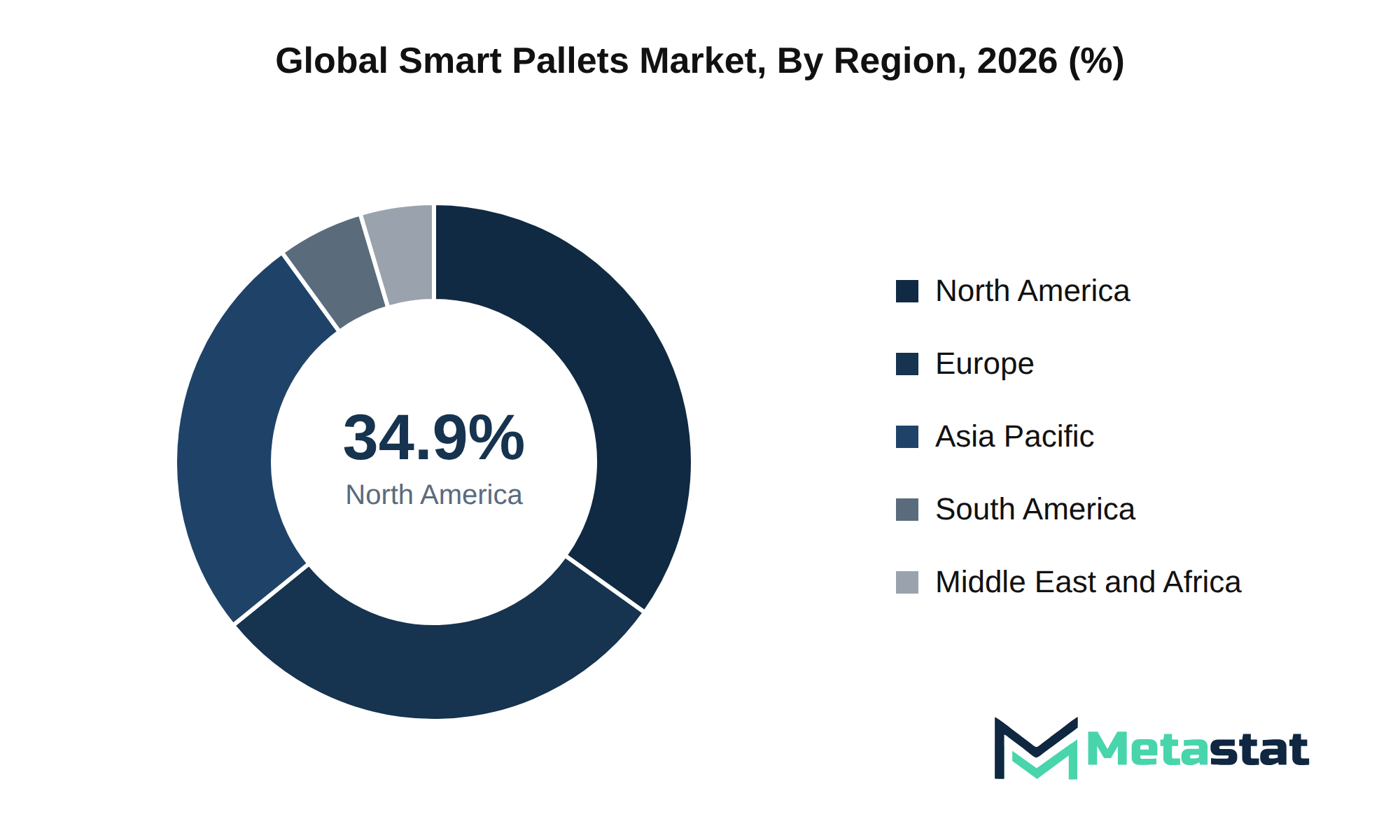
The Smart Pallets market features a diverse array of players employing various strategic behaviors to enhance their market positioning. Companies including CHEP (Brambles Limited), iGPS Logistics, and RM2 USA, Inc. focus on strategic consolidation through partnerships and alliances that strengthen their market presence and operational efficiencies. This approach enables integrated supply chain solutions, enhancing customer retention by providing effective service.
In addition to strategic alliances, companies including Utz Group, Cabka N.V., and Tosca invest heavily in product differentiation and proprietary technology to create unique offerings. These technological advancements enhance their competitive edge and address specific customer needs, allowing for premium pricing strategies that reflect their value proposition.
Competitive dynamics involve barriers to entry that affect new entrants in the Smart Pallets market. Established players including Rehrig Pacific Company and ORBIS Corporation leverage their brand equity and intellectual property portfolios to maintain a strong market foothold. This creates a challenging environment for startups seeking to disrupt the market. High switching costs further entrench established companies.
Future competitive outlooks suggest a focus on innovation and responsiveness to market demands. Companies including Sensefinity, Adastra Corporation, and Adaptive Pallet Solutions emphasize research and development to advance their product offerings. This ensures relevance in an evolving market. The ongoing evolution of customer preferences drives these players to adapt and refine their strategies continuously.
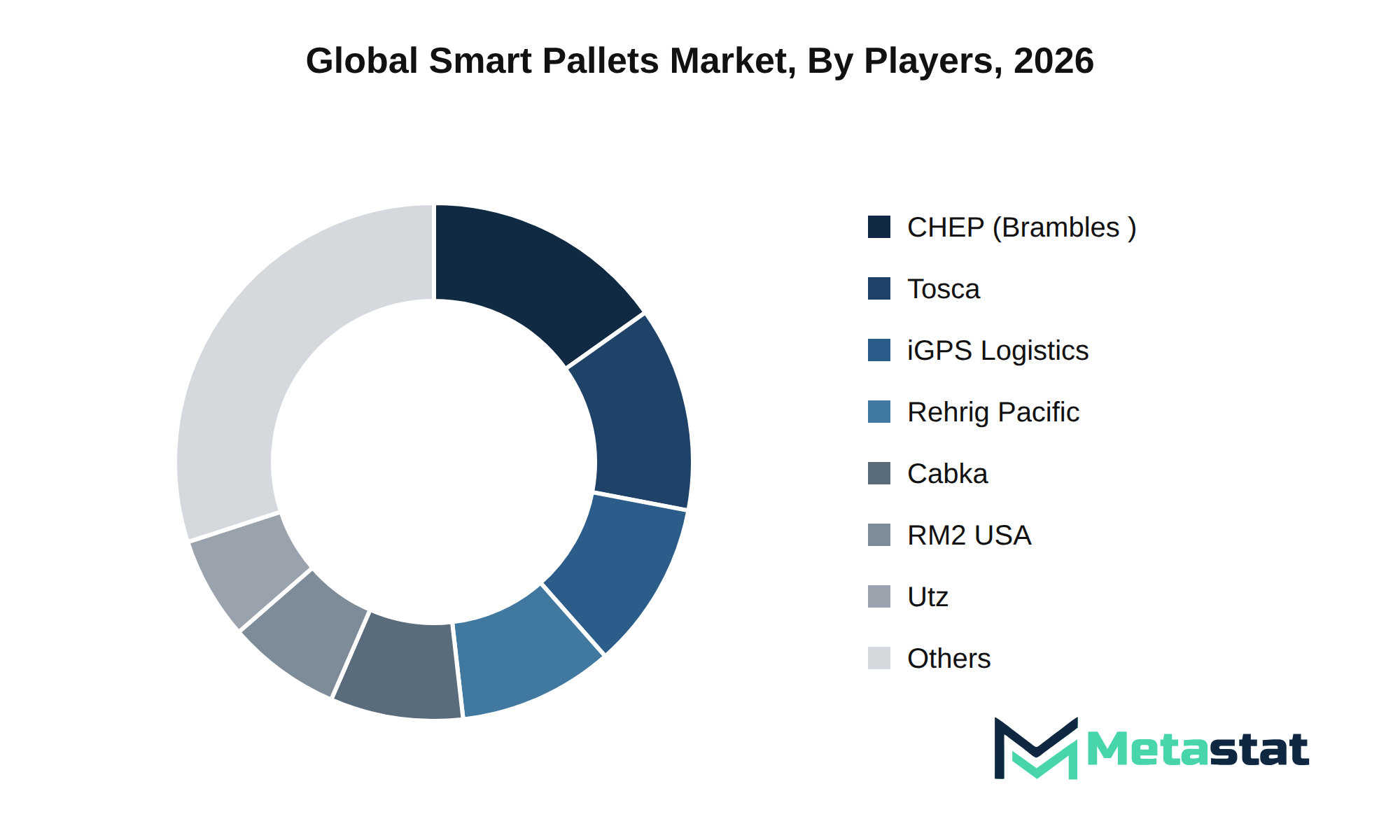
Market size is forecast to rise from USD 2,637.5 million in 2025 to over USD 7,685.8 million by 2033. The base case projects a growth trajectory of USD 2,637.5 million in 2025 to USD 7,685.8 million by 2033 at a 14.3% CAGR. This growth aligns with macroeconomic factors, including increasing demand from various end-use industries including food and beverage, pharmaceuticals, and retail. Shifts towards next-generation technologies and the integration of innovative solutions like smart tracking systems enhance operational efficiencies, driving demand for smart pallets.
Downstream demand changes reflect a surge in logistics and supply chain management needs, particularly in response to evolving consumer behaviors and preferences. Regulatory evolution continues to shape operational landscapes, with compliance milestones enforcing standards that promote the adoption of advanced pallet systems. Geopolitical realignments and supply chain shifts prompt an increased focus on local sourcing and logistics optimization, further impacting market dynamics.
Investment in infrastructure and strategic capital allocation is anticipated to support the market. Key players prioritize R&D commercialization timelines, ensuring timely product introductions that meet emerging enterprise needs. High-growth pockets in regions including North America and Europe present significant opportunities for market expansion. The evolving landscape necessitates robust executive-level strategies to navigate potential disruptions while capitalizing on white-space opportunities.
This environment creates a competitive market characterized by rapid technological advancements and ongoing innovation. Participants in the smart pallets market align their strategies with emerging trends, ensuring their offerings remain relevant amid changing industry demands. The dynamic nature of the market highlights the importance of proactive adjustments to maintain competitiveness and drive sustained growth.
The report strategically identifies and profiles the key market players and analyses their core competencies in each sub-segment of the Smart Pallets market.
Report Attributes | Details |
Study Period | 2021-2033 |
Base Year | 2025 |
Estimated Year | 2026 |
Forecast Period | 2026-2033 |
Historical Period | 2021-2025 |
Growth Rate | CAGR 14.3% from 2026 to 2033 |
Revenue Unit | USD million |
Segmentation | By Pallet Material, Technology, Application, End-Use Industry, and Region |
By Region | North America (By Pallet Material, Technology, Application, End-Use Industry, and Country)
|
Europe (By Pallet Material, Technology, Application, End-Use Industry, and Country)
| |
Asia Pacific (By Pallet Material, Technology, Application, End-Use Industry, and Country)
| |
South America (By Pallet Material, Technology, Application, End-Use Industry, and Country)
| |
Middle East and Africa (By Pallet Material, Technology, Application, End-Use Industry, and Country)
|
Find answers to common questions about this report
The Smart Pallets market size was valued at USD 2,637.5 million in 2025, according to the Metastat Insights study.
The Smart Pallets market is projected to grow at a CAGR of 14.3% during the forecast period from 2026 to 2033.
The North America Smart Pallets market size is estimated to reach USD 2,447.2 million by 2033.
The Plastic segment leads the Smart Pallets market, with a projected value of USD 3,452.5 million by 2033, reflecting a compound annual growth rate of 15.3%. This growth outpaces other material segments, establishing Plastic because the dominant choice in the market.
The Smart Pallets market experiences growth driven by the emphasis on digital transformation and the integration of automation technologies. Organizations prioritize operational efficiency, inventory management, and asset tracking, which align with sustainability goals and enhance productivity across various sectors. These advancements create a competitive advantage, increasing demand for smart pallets.
North America holds the dominant share of the Smart Pallets market, with a projected value of USD 2,447.2 million in 2033, representing 34.9% of the total market.
Significant challenges restraining Smart Pallets market growth include high capital investment requirements and escalating operating costs, which deter potential adopters, particularly small and medium-sized enterprises. supply chain disruptions and geopolitical instability create unpredictability, further complicating operational efficiency and affecting customer confidence in the market.
The increasing emphasis on digital transformation and investment in automation technologies significantly favor product adoption in the Smart Pallets market. Organizations seek to enhance operational efficiency, streamline processes, and achieve sustainability goals, driving demand for advanced pallet solutions that improve visibility and control within supply chains.
The Smart Pallets market is estimated to reach a valuation of USD 7,685.8 million by 2033.
Key players in the Smart Pallets market include CHEP (Brambles Limited), iGPS Logistics, RM2 USA, Inc., UPR Corporation, Utz Group, and Tosca.
The analysts below cover Packaging research at Metastat Insights.
LEAD ANALYST
Utkarsh Khirodkar is a Lead Market Research Analyst at MetaStat Insight, specializing in market intelligence, technology sector assessments, and competitive strategy.

SENIOR RESEARCH ANALYST
Biotechnology · Food and Beverages · Medical Devices · Packaging
Snehal Pasalkar is a Research Analyst at MetaStat Insight, operating at the intersection of life sciences research, competitive strategy, and market intelligence.

INDUSTRY CONSULTANT - CHEMICALS & ADVANCED MATERIALS
Chemicals and Materials · Machinery & Equipment · Packaging
Amit Gadhekar Consultant for Chemicals and Materials at MetaStat Insight, directing sector-specific intelligence, research, and strategic consulting across global chemical and processing markets.
Decarbonizing industrial thermal processes hinges on refrigerant regulations and compressor efficiency limits. Metastat Insights delivered a thorough market analysis that evaluated natural refrigerants like CO2 and hydrocarbons against synthetic low-GWP alternatives. The breakdown of utility incentives and grid capacity constraints across key European manufacturing hubs offered valuable perspective. The follow-up conversation with their sector analysts addressed our specific questions on mechanical vapor recompression systems efficiently.
Assessing 200mm wafer transition schedules and substrate supply bottlenecks requires precise technical intelligence. MetaStat Insight supplied an actionable breakdown comparing planar and trench MOSFET architectures across automotive and industrial drive markets. The regional capacity estimates for Asia-Pacific foundries helped clarify lead-time uncertainties during our strategic planning session. When we needed additional clarification on high-purity raw material sourcing, their analyst team responded with helpful context within twenty-four hours.
Tracking maintenance cycle demand for secondary flight display units and terrain collision avoidance systems across regional jet fleets involves complex aftermarket dynamics. MetaStat Insight provided practical analysis separating airline retrofit programs from OEM forward-fit production schedules in North America and Southeast Asia. The supplier matrix highlighted component obsolescence timelines without resorting to vague generalizations. The dataset served as a dependable reference during our annual program review meetings.
Explore related market intelligence reports worth reading alongside this one.