
LEAD ANALYST
Utkarsh Khirodkar is a Lead Market Research Analyst at MetaStat Insight, specializing in market intelligence, technology sector assessments, and competitive strategy.

UK & Ireland Bra Market Size, Share, By Product Type (Full Cup / Full Coverage, Balconette / Demi, Plunge, T-Shirt / Seamless, Push-Up, Strapless / Multiway, Sports, Bralette / Soft Bra, Maternity / Nursing, Others), By Construction Type (Underwired, Wireless / Non-Wired), By Distribution Channel (Brand-Owned Stores, Specialist Multi-Brand Lingerie Stores, Department Stores, Mass-Market Apparel and General Merchandise Retailers, Others), By Region (United Kingdom, Ireland), Industry Analysis, Growth, Trends, and Forecast, 2026-2033
Report ID
MSI-5293
Published
September, 2026
Pages
278 Pages
Format
Historical
Base year
Forecast
Forecast period
Report Details
Market Valuation: Valued at $1,463.2 Million in 2025, projected to reach $2,610.5 Million by 2033 at a 7.5% CAGR.
Dominant Segment: The Full Cup / Full Coverage segment leads the market, driven by increasing consumer preference for comfort and support, with a projected value of USD 449.3 million by 2033.
Geographic Lead: The United Kingdom is the primary market, benefiting from a growing emphasis on comfort and functionality in bra design, which aligns with consumer preferences.
What's Inside: The report includes comprehensive competitive coverage, detailed analyses of market dynamics, and forecasts extending to 2033, providing insights into key trends and consumer behaviors.
Investment in Digital Transformation: Increased investment in digital transformation enhances operational productivity and consumer engagement, facilitating targeted marketing strategies and driving revenue growth.
Regulatory Compliance Hurdles: Regulatory compliance challenges impose additional operational costs, impacting market adaptability and revenue potential for companies operating in the UK & Ireland Bra market.
Choose Your License
UK & Ireland Bra Market
The UK & Ireland Bra market was valued at USD 1,463.2 million in 2025 and is projected to reach USD 2,610.5 million by 2033, growing at a CAGR of 7.5% over the forecast period.
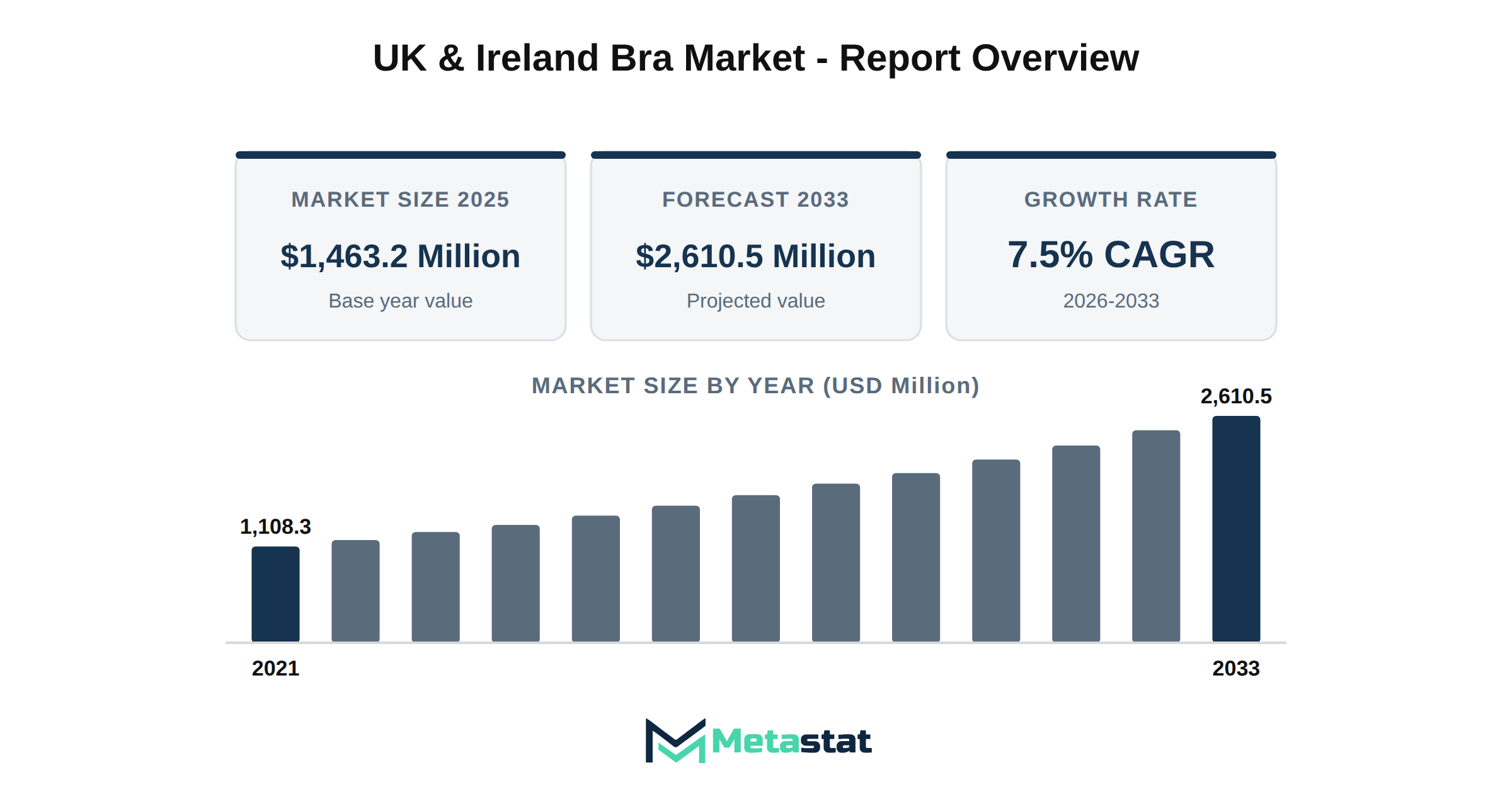
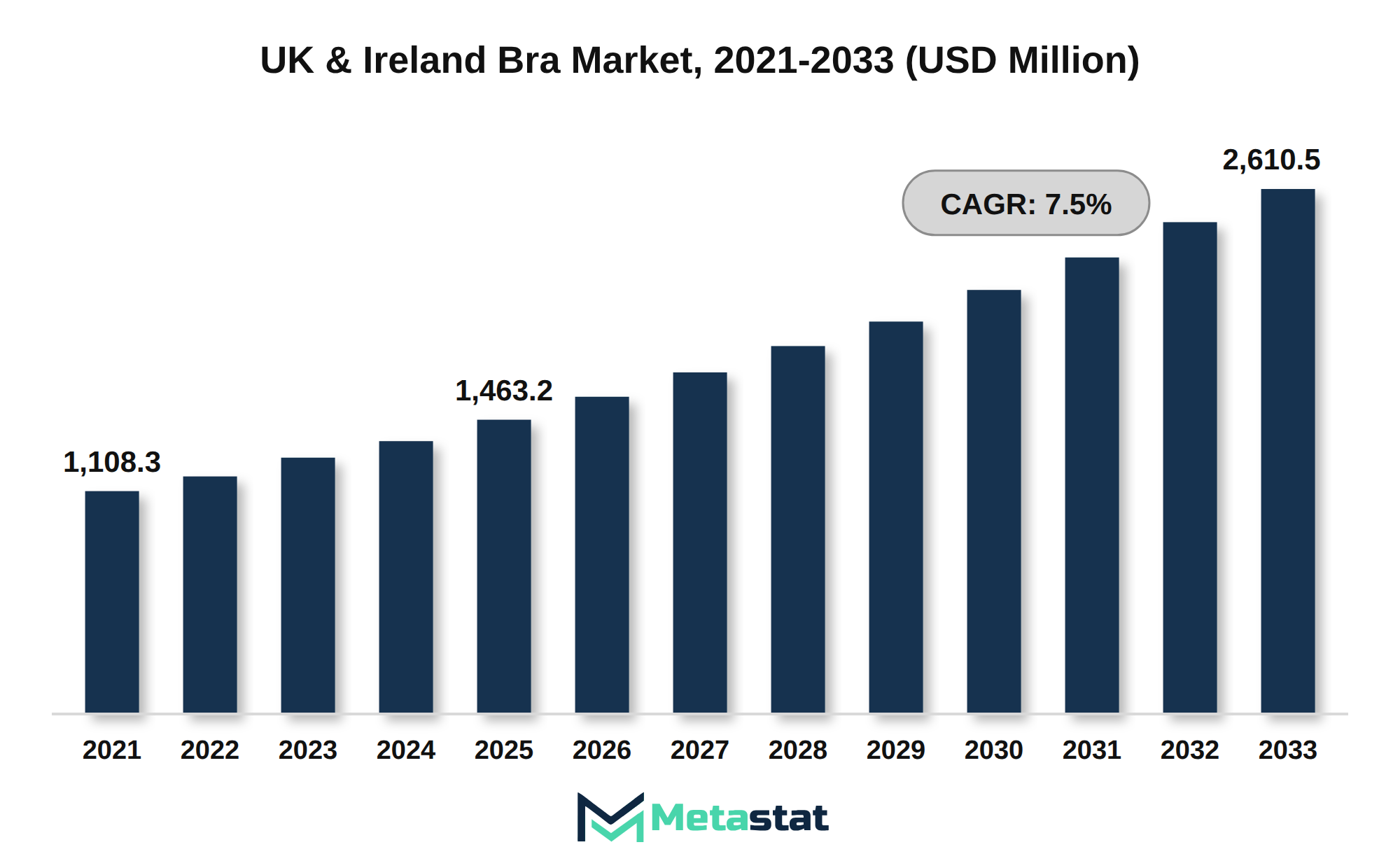
The UK & Ireland Bra market reached a value of USD 1,463.2 million in 2025, with projections indicating growth to USD 2,610.5 million by 2033. This expansion reflects a compound annual growth rate (CAGR) of 7.5% over the forecast period. Historical data shows a steady increase in market value from USD 1,108.3 million in 2021 to USD 1,356.5 million in 2024.
Trends significantly shaping consumer demand include a rising preference for wireless and non-wired bras. This shift aligns with the growing emphasis on comfort and practicality among consumers in the UK and Ireland. Full coverage and everyday comfort bras are driving market growth, reflecting the desire for functionality combined with style.
The demand for sports bras has surged alongside the adoption of active lifestyles across the UK and Ireland. This trend reflects a broader consumer focus on health and fitness, influencing purchasing decisions in the market. Growth in fuller-bust and inclusive bra sizing options further enhances market appeal, addressing the diverse needs of the consumer base.
Premium and fashion-led bra purchasing trends indicate a movement towards higher-quality products that offer both functionality and aesthetic value. Consumers increasingly invest in brands that align with their values, including sustainability and ethical manufacturing practices.
The expansion of online bra retail and direct-to-consumer sales has transformed shopping experiences. E-commerce platforms provide consumers with greater accessibility and convenience, reshaping traditional retail dynamics. Department stores and specialist lingerie retailers are adapting by enhancing in-store experiences to compete effectively in the evolving market.
Sustainable materials and responsible bra manufacturing trends reflect heightened consumer awareness regarding environmental impacts. Innovations in bra fit, comfort engineering, and product development focus on enhancing wearer experience, driving brand loyalty and repeat purchases.
Pricing trends reveal shifts in consumer spending on bras in the UK and Ireland, with premium offerings gaining traction despite economic pressures. Competitive dynamics among leading bra and lingerie brands intensify, driven by companies striving to differentiate themselves within a rapidly growing market.
Comparative analysis between UK and Ireland bra demand uncovers distinctive retail growth opportunities. Maternity, nursing, and post-surgical bra demand trends highlight niche segments poised for expansion, catering to specific consumer needs.
Future growth opportunities in the UK & Ireland Bra market present significant potential, driven by evolving consumer preferences and increased investment in innovative product development.
The UK & Ireland Bra market experiences notable trends that shape consumer demand, reflecting evolving preferences and lifestyles. A significant rise in the demand for wireless and non-wired bras highlights a shift toward comfort and ease of wear. Consumers increasingly prioritize everyday comfort, driving growth in full coverage bras that offer support without compromising style.
The sports bra segment gains traction owing to more individuals adopting active lifestyles, emphasizing the need for functional and stylish options. This trend aligns with a growing interest in wellness and fitness, thereby expanding the market's reach.
Market dynamics include a marked increase in the demand for fuller-bust and inclusive bra sizing. This trend responds to the diverse body shapes and sizes of consumers, promoting a more inclusive approach within the industry. Premium and fashion-led bra purchasing trends further illustrate the shift toward products that deliver both quality and aesthetic appeal, influencing consumer spending patterns.
Online bra retail and direct-to-consumer sales experience substantial expansion, driven by digitalization and changing shopping behaviors. This shift allows brands to reach customers more effectively, enhancing the competitive landscape.
Department stores and specialist lingerie retailers face evolving dynamics due to adapting to the increasing prevalence of e-commerce. Traditional retail channels innovate to remain relevant in the market, balancing online and in-store experiences.
Sustainable materials and responsible manufacturing practices are gaining traction among consumers conscious of environmental impact. This trend drives brand strategies, promoting eco-friendly practices within the market. Innovations in bra fit, comfort engineering, and product development play a critical role in attracting and retaining customers, enhancing overall satisfaction.
Pricing trends reflect varied consumer spending on bras in the UK and Ireland, indicating a willingness to invest in quality products. Competitive dynamics among leading bra and lingerie brands intensify, because companies seek to differentiate themselves through unique offerings and brand identity.
Comparative analysis of UK versus Ireland bra demand reveals distinct retail growth opportunities. Market players consider regional preferences and shopping habits to tailor their strategies effectively. The demand for maternity, nursing, and post-surgical bras continues to rise, indicating a specific market segment with unique requirements that brands address.
Future growth opportunities in the UK & Ireland Bra market align with emerging trends and consumer preferences, presenting avenues for innovation and expansion. Companies that adapt to these changes are likely to thrive in an increasingly competitive environment.
The UK & Ireland Bra market benefits from increased investment in digital transformation, which enhances operational productivity and consumer engagement. Adoption of advanced technologies, including automation and artificial intelligence, streamlines processes and enhances supply chain resilience. These technological advancements enable companies to meet evolving consumer preferences and expectations.
Investment in digital infrastructure enables brands to implement innovative marketing strategies. E-commerce growth provides a platform for brands to access a wider audience, facilitating targeted campaigns that connect with diverse demographic segments. The shift towards online shopping, driven by changing consumer behaviors, contributes to revenue growth across the market.
Capital investment in research and development leads to innovation-led product diversification. Companies actively explore opportunities to develop new bra styles and functionalities that cater to changing lifestyle dynamics. This trend enhances the market's ability to attract a broader consumer base, driving sales and increasing overall market value.
Digital transformation and associated investments create a favorable environment for the UK & Ireland Bra market. Strategic focus on technology integration boosts operational efficiency and improves customer experiences, fueling growth through 2033.
The UK & Ireland Bra market sees significant revenue growth driven by evolving consumer behaviors. Changes in lifestyle and an increasing focus on personal health and comfort influence purchasing decisions. Higher demand for versatile and functional products aligns with consumer preferences, particularly among younger demographics that prioritize style and practicality. This shift encourages brands to innovate and diversify their offerings, leading to more targeted marketing strategies and tailored product lines.
Urbanization trends contribute to changing buying patterns, driven by consumers in metropolitan areas seeking convenience and accessibility. The growth of e-commerce platforms enhances market accessibility, allowing brands to reach a broader audience. The impact of these shifts is evident because the market adapts to meet consumer expectations, creating a competitive environment that supports continuous innovation. Overall, the influence of changing consumer behaviors on the UK & Ireland Bra market positions it for sustainable growth through the forecast period.
The UK & Ireland Bra market faces significant challenges due to regulatory compliance hurdles that impose additional operational costs. Tightened regulations regarding material sourcing and manufacturing processes escalate expenses for producers, deterring new entrants and limiting the growth potential of existing companies. The burden of compliance, in conjunction with rising inflationary pressures, creates a difficult environment for brands to maintain competitive pricing while ensuring adherence to legal standards.
Market participants experience heightened operational costs associated with navigating complex regulatory landscapes. Such compliance challenges divert focus from strategic growth initiatives, impacting revenue potential and market adaptability. Continuous investment in compliance mechanisms further strains financial resources, hindering companies' ability to innovate and respond to evolving consumer preferences within the UK & Ireland Bra market.
Geopolitical instability and supply chain disruptions impact raw material availability and pricing, compounding the challenges faced by market players. Fluctuations in material costs due to global uncertainties lead to unpredictable pricing strategies that alienate budget-conscious consumers. Consequently, these factors contribute to a climate of uncertainty that restricts market expansion and diminishes overall profitability for industry stakeholders.
Geopolitical fragmentation presents substantial challenges for the UK & Ireland Bra market, impacting supply chain reliability and cost structures. Trade deficits and tariff friction contribute to rising input costs, complicating procurement processes for key materials and components. Producers experience pressures on profit margins due to fluctuating prices and logistical disruptions driven by international tensions.
The market faces technological disruptions that necessitate investment in research and development. Complex integrations required for innovation demand skilled labor; however, workforce skill gaps hinder progress. Talent retention pressures complicate operational stability, resulting in delays in product development and market response.
Environmental lifecycle footprints and sustainability demands influence market dynamics. Companies encounter increasing pressure to adopt sustainable practices and reduce carbon footprints, often requiring retrofitting of existing facilities. Implementation bottlenecks arise from aligning processes with tightening regional regulatory standards, adding compliance overhead that strains resources.
These intertwined challenges necessitate strategic adaptations among players in the UK & Ireland Bra market, influencing long-term growth trajectories and competitive positioning. The market's ability to navigate these pressures will determine resilience against future volatility and ensure sustained consumer engagement.
The UK & Ireland Bra market experiences significant opportunities driven by strategic consolidation and cross-industry mergers. These approaches enable market participants to expand their product offerings and enhance competitive positioning. The resulting synergies contribute to increased operational efficiencies and access to broader customer segments.
Emerging regional demands shape the market landscape, with a noticeable shift towards sustainable practices and eco-friendly products. Consumers increasingly prefer brands that align with sustainability imperatives, encouraging manufacturers to innovate and integrate eco-conscious materials into their product lines. This trend drives growth in market segments including full cup and wireless bras, which cater to consumer preferences for comfort and sustainability.
Technological disruptions drive advancements in product design and manufacturing processes. Implementation of automation and smart technology streamlines production, reduces costs, and improves product quality. These innovations enhance the overall value proposition for consumers while expanding market reach, particularly among younger demographics who prioritize both functionality and style.
The digital transformation within the market facilitates evolving buying behaviors, with consumers gravitating towards online shopping and digital procurement methods. Brands investing in robust e-commerce platforms and targeted marketing strategies capture a share of this growing online consumer base, thus driving sales and brand loyalty.
Downstream market diversification presents additional opportunities for growth. Manufacturers exploring niche applications and specialized products tap into previously underserved segments. This approach not only broadens product lines but mitigates risks associated with market fluctuations.
Overall, the UK & Ireland Bra market reflects a dynamic environment where strategic initiatives and consumer trends converge to create substantial growth opportunities. Stakeholders are well-positioned to leverage these developments for enhanced market performance and revenue generation.
The UK & Ireland Bra market is segmented based on Product Type, Construction Type, Distribution Channel, and Region.
Valued at USD 291.3 million in 2026, the Full Cup / Full Coverage segment is projected to reach USD 449.3 million by 2033, at a CAGR of 6.4% during the forecast period. Increasing consumer preference for comfort and support drives demand for this product type. Enhanced design features and technological innovations lead to improved fit and functionality, attracting more buyers seeking reliable options. Brand loyalty and marketing strategies employed by key players in the UK & Ireland Bra market strengthen consumer engagement, further fueling demand. The segment benefits from growing awareness of body positivity and inclusivity, prompting brands to expand their size ranges and cater to diverse body types. This evolution in product offerings ensures a wider reach, thereby enhancing revenue potential. Competitive pricing strategies within the segment maintain consumer interest while addressing cost pressures associated with raw material sourcing and production. Ultimately, these factors contribute to continuous growth and expansion of the Full Cup / Full Coverage segment, reflecting the overall positive trajectory of the UK & Ireland Bra market.
Projected growth in the Balconette / Demi segment highlights a robust market trajectory, with estimates indicating a reach of USD 295.5 million by 2033, representing a CAGR of 7.1% during the forecast period. This upward trend is driven by evolving consumer preferences for stylish and comfortable lingerie, enhancing demand within the UK & Ireland Bra market.
Increasing emphasis on diverse body types and fashion-forward designs drives adoption rates of Balconette and Demi bras, appealing to a broader demographic. Retailers expanding their product lines to incorporate these styles further accelerates market penetration. Innovative fabric technologies and design enhancements contribute to the segment's evolution, attracting consumers seeking functionality and aesthetic appeal.
Shifts in consumption patterns, alongside the rise of e-commerce, provide strategic opportunities for brands offering Balconette / Demi options. The growing preference for online shopping facilitates easier access to a wider array of products, thus enhancing buyer engagement within the market. Retailers leveraging digital platforms effectively position themselves to capture increased sales and strengthen brand loyalty.
In terms of regulatory compliance, adherence to health and safety standards remains a priority for manufacturers in the segment. This commitment ensures product quality and builds consumer trust, ultimately influencing purchasing decisions. The market maintains resilience against pricing volatility through strategic sourcing and cost management, allowing brands to remain competitive while sustaining margins.
Projected growth in the Plunge segment aligns with evolving consumer preferences for stylish and versatile lingerie. The trend towards deeper neckline outfits has driven demand for plunge bras, appealing to customers seeking both functionality and fashion. Rising awareness of body positivity and inclusivity among brands has led to increased product offerings within this category, enhancing market appeal.
Pricing strategies significantly impact the Plunge segment, influencing consumer purchasing decisions. Competitive pricing combined with innovative designs increases market penetration. Brands that invest in high-quality materials while maintaining accessible pricing positions enhance their market reach. Anticipated market value for the Plunge segment is USD 282.2 million by 2033.
Technological advancements in fabric and design contribute to product evolution within the UK & Ireland Bra market. Next-generation materials, including breathable and moisture-wicking fabrics, support better comfort and fit, attracting more customers. The focus on sustainability and eco-friendly materials presents a strategic opportunity window, appealing to environmentally conscious consumers.
Distribution channels play a crucial role in shaping market dynamics. Brand-owned stores and e-commerce platforms serve because primary sales avenues, allowing brands to engage directly with consumers. This direct interaction enhances brand loyalty and provides valuable feedback for future product development, making it essential for companies to adapt swiftly to market demands.
Growth in the T-Shirt / Bra segment of the UK & Ireland Bra market reflects changing consumer preferences towards comfort and versatility. This segment is projected to grow at a CAGR of 6.7% during the forecast period. Increased demand for designs without seams contributes to the expansion, driven by consumers seeking bras that provide a smooth silhouette under various clothing types. Innovations in materials and manufacturing techniques enhance the appeal of T-Shirt bras, offering both style and practicality.
Consumers prioritize comfort alongside aesthetics, prompting brands to adapt their offerings to meet these expectations. The trend towards casual and athleisure wear continues to promote the adoption of T-Shirt bras, which pair well with a variety of outfits. A growing awareness of the importance of fit and support drives consumers to seek high-quality bras without seams, increasing market demand.
Investment in marketing strategies that highlight the comfort and versatility of T-Shirt bras supports segment growth. Retailers and brands increasingly use digital platforms and social media to engage consumers effectively. Collaborations with influencers and targeted advertising campaigns enhance brand visibility and connect with younger demographics seeking stylish yet comfortable lingerie options.
Technological advancements in fabric development and manufacturing processes play a crucial role in product evolution within the segment. Innovations including moisture-wicking and breathable materials attract consumers focused on functionality. The integration of sustainable practices in production aligns with the growing demand for eco-friendly products, appealing to conscious consumers.
Overall, the T-Shirt / Bra segment demonstrates a strong upward trajectory within the UK & Ireland Bra market, driven by shifting consumer preferences, technological advancements, and strategic marketing efforts.
Consumer preference for Push-Up bras within the UK & Ireland Bra market highlights a focus on enhancing shape and support. This trend aligns with fashion influences that prioritize aesthetics and versatility, driving demand among various demographics. Adoption expands through innovative designs that incorporate advanced materials for comfort and functionality. Competition among brands introduces a range of styles, catering to different body types and customer needs, thereby enriching the market.
Technological maturation in manufacturing processes enhances the quality and affordability of these bras. The integration of smart textiles and ergonomic designs promotes a better fit, encouraging customer loyalty and repeat purchases. Sustainability considerations increasingly influence consumer choices, pushing brands to explore eco-friendly materials while maintaining performance standards.
Market dynamics reflect shifts in consumption patterns, with younger consumers gravitating toward brands that offer both style and comfort. Regulatory compliance surrounding material safety and manufacturing practices establishes a framework that brands adhere to, impacting product offerings. Strategic opportunities in this segment present avenues for investment in marketing campaigns that connect with environmentally conscious consumers while highlighting product benefits.
Overall, the Push-Up segment stands poised for growth within the UK & Ireland Bra market, driven by evolving consumer preferences, technological advancements, and increased brand competition. This positions the segment favorably for sustained expansion in the coming years.
Growing consumer preferences for versatile and multifunctional lingerie drive demand for the Strapless / Multiway sub-segment in the UK & Ireland Bra market. Increasing participation in events including weddings and social gatherings prompts a rise in the need for stylish yet functional undergarments. The segment benefits from innovations in design and materials, enhancing comfort and fit while maintaining aesthetic appeal.
Technological advancements play a significant role in shaping this market. Enhanced elastic materials and improved construction techniques contribute to better support, making strapless options more reliable and comfortable for extended wear. These developments encourage adoption among consumers seeking fashionable solutions without compromising functionality.
Shifts in consumption patterns indicate a growing inclination towards practical yet trendy designs, impacting purchasing decisions. The rise in online shopping expands market reach, facilitating access to diverse styles and brands tailored to specific consumer needs. This expansion drives competitive dynamics, prompting brands to innovate continuously in product offerings.
With the increasing focus on quality and performance, brands invest in marketing strategies that highlight the unique benefits of the Strapless / Multiway category. Promotional campaigns emphasizing versatility appeal to a broader audience, reinforcing the segment's potential for growth within the UK & Ireland Bra market.
Increased participation in sports and fitness activities among consumers drives demand for sports bras in the UK & Ireland Bra market. This trend aligns with a broader emphasis on health and wellness, with more individuals engaging in physical activities ranging from casual exercise to competitive sports. Enhanced consumer awareness regarding the importance of proper support during workouts increases the adoption of specialized sports bras designed for varying levels of activity.
Technological maturation within the sector leads to innovations in materials and designs that improve comfort, support, and performance. Manufacturers integrate moisture-wicking fabrics, breathable designs, and customizable fit options, appealing to an active customer base. These advancements contribute to overall market expansion. Brands respond to consumer preferences by offering products that enhance athletic performance.
Growing online retail channels facilitate access to a diverse range of sports bras, enabling consumers to explore various styles and brands. This shift in distribution channels supports the market by ensuring that customers have the convenience of purchasing products from home. E-commerce continues to thrive. Brands invest in digital marketing strategies to reach target audiences more effectively, further driving growth within the segment.
Pricing volatility affects the market, with fluctuations in raw material costs influencing retail pricing strategies. Brands adapt to these changes by optimizing their supply chains and exploring alternative sourcing options, allowing them to maintain competitive pricing while preserving product quality. Such measures help mitigate margin pressures, ensuring sustained consumer interest and loyalty in the sports bra segment of the UK & Ireland Bra market.
Growing interest in comfort and style among consumers influences the popularity of bralettes and soft bras within the UK & Ireland Bra market. These products cater to a demographic that values both aesthetic appeal and practical wearability, driving adoption across various age groups. Innovations in fabric technology enhance softness and flexibility, which align with consumer demand for more versatile undergarments.
Market players recognize shifting consumption patterns, with many consumers opting for loungewear and casual attire that complements bralettes. This trend reflects a broader movement towards relaxed fashion choices, influencing brands to expand their offerings in this segment. The evolution of designs and diverse styles available encourages consumer exploration and engagement with the product category.
Environmental sustainability emerges because a key consideration, with brands increasingly investing in eco-friendly materials and ethical manufacturing practices. This shift aligns with consumers prioritizing brands that match their values, strengthening brand loyalty and influencing purchase decisions. The UK & Ireland Bra market, therefore, positions itself well to capitalize on these trends, presenting robust opportunities for manufacturers and retailers alike.
Demand for Maternity / Nursing bras stems from an increasing awareness of the need for comfort and support during pregnancy and postpartum periods. Pregnant individuals prioritize functionality, ensuring ease of wear and breastfeeding accessibility. Trends in this sub-segment indicate a shift toward innovative designs that incorporate adjustable features, which enhance usability and adapt owing to changes in body shapes. Manufacturers incorporate soft, breathable fabrics to promote comfort while ensuring adequate support, meeting the specific requirements of this demographic.
Technological maturation plays a critical role in the evolution of Maternity / Nursing bras, with advancements in materials and production techniques enabling higher quality and more tailored products. Brands introduce next-generation upgrades that address previous shortcomings in fit and functionality. This evolution drives consumer interest, because modern designs cater to both style and practical needs, reflecting changing consumer preferences.
Regulatory compliance standards related to maternity products influence market dynamics, because manufacturers adhere to safety and quality regulations. The focus on sustainability impacts the product development process, prompting brands to source eco-friendly materials while meeting customer demand for responsible consumption. This regulatory environment encourages innovation, leading to new product offerings that align with consumers' ethical considerations.
Shifts in consumption dynamics indicate a growing preference for online shopping, particularly for specialized products including Maternity / Nursing bras. This trend reflects a broader movement within the UK & Ireland Bra market, where convenience and accessibility shape buying habits. Retailers enhance their e-commerce platforms to provide a smooth shopping experience, integrating detailed product descriptions and virtual fitting tools to aid customer decision-making.
Overall, the Maternity / Nursing segment's growth aligns with broader trends in the UK & Ireland Bra market, emphasizing the importance of comfort, functionality, and evolving consumer preferences. Strategic opportunity windows arise for brands that effectively address these needs while navigating the regulatory and economic landscape.
Specific preferences among consumers for Minimizer, Post-Surgical, and Longline bras influence trends in the UK & Ireland Bra market. These bra types cater to niche markets, addressing particular needs including enhanced support and post-operative comfort. Demand drivers for this sub-segment include increasing awareness of health and wellness, along with a growing focus on aesthetics in post-surgical recovery.
Technological advancements in fabric and design enhance the appeal of these bras. Innovations in materials facilitate increased comfort and functionality, attracting consumers seeking both practicality and style. The expansion of online retail platforms broadens access to these specialized products, increasing their reach among potential buyers.
Regulatory compliance regarding health and safety standards shapes product offerings within this sub-segment. Certifications ensuring quality and comfort contribute to brand loyalty and consumer trust. The market adapts to shifting consumption patterns, with an increasing number of consumers prioritizing health-specific features in their lingerie choices.
Investment in marketing strategies emphasizing the unique benefits of Minimizer, Post-Surgical, and Longline bras supports growth opportunities. Targeted campaigns that connect with specific demographic segments enhance visibility and drive sales. This strategic focus allows brands to adapt to the market's evolving conditions, ensuring sustained relevance and competitiveness.
Valued at USD 1,104 million in 2026, the Underwired segment is projected to reach USD 1,657.1 million by 2033, at a CAGR of 6% during the forecast period. Growing preference for structured support among consumers drives demand for Underwired bras. The increasing focus on comfort and fit enhances adoption, with brands incorporating innovative materials and designs to cater to consumer needs.
Technological advancements in fabric technology and production processes facilitate the evolution of Underwired bras. These improvements lead to enhanced comfort, durability, and aesthetic appeal, which attract a broader consumer base. Key players in the UK & Ireland Bra market invest in research and development to launch next-generation products that align with consumer preferences.
Brand loyalty and recognition significantly impact purchasing decisions. Consumers gravitate towards established brands known for quality and comfort. The expansion of e-commerce platforms provides wider access to diverse Underwired bra options, encouraging increased consumer spending in the segment. The growing trend towards online shopping influences distribution strategies, allowing brands to reach a broader audience effectively.
Pricing volatility and margin pressures challenge manufacturers in the Underwired segment. Rising raw material costs impact production expenses, necessitating efficient supply chain management and cost optimization strategies. Despite these challenges, the segment continues to show resilience, supported by consistent consumer demand for high-quality and fashionable Underwired options.
The UK & Ireland Bra market reflects a shift towards inclusive sizing and better-fitting options, driving growth in the Underwired segment. Increased awareness surrounding body positivity and diversity promotes a greater variety of styles and sizes, encouraging broader market participation. This trend indicates growth potential for the Underwired segment in the coming years.
Demand for Wireless / Non-Wired bras in the UK & Ireland Bra market reflects a growing consumer preference for comfort and versatility. This segment is projected to reach USD 953.4 million by 2033, at a CAGR of 10.5% during the forecast period. Factors driving adoption include increased awareness regarding body positivity and a shift towards more casual and comfortable clothing choices. Technological maturation in fabric development enhances the appeal of wireless bras, leading to better support and fit without compromising comfort.
Product evolution focuses on innovative designs that cater to various body types and personal preferences, further expanding consumer reach. Downstream applications in activewear and leisurewear benefit from the rise of wireless options, aligning with broader consumption shifts towards athleisure and multifunctional garments. Regulatory compliance standards regarding material safety and product labeling shape the competitive landscape, ensuring consumer trust and brand loyalty.
Pricing volatility and margin pressures primarily affect manufacturers, leading to strategic adjustments in sourcing and production methods. Cost structures evolve to accommodate the demand for sustainable materials, impacting pricing strategies. Strategic opportunity windows emerge through collaborations with fashion influencers and targeted marketing campaigns that highlight the comfort and style of wireless bras, positioning brands favorably within the competitive market.
Valued at USD 288.6 million in 2026, the Brand-Owned Stores segment is projected to reach USD 395.8 million by 2033, at a CAGR of 4.6% during the forecast period. The growing trend towards personalized shopping experiences drives consumer interest in brand-owned retail locations, where customers access exclusive collections and tailored services. Increased investment in brand identity and customer engagement further enhances the appeal of these stores, strengthening their position within the UK & Ireland Bra market. Shifts in consumer behavior towards experiential shopping emphasize the importance of ambiance and service quality, leading retailers to prioritize these elements in their brand-owned outlets. This focus on creating inviting environments contributes to increased foot traffic and boosted sales. In this segment, competition intensifies because brands seek to differentiate offerings through innovative designs and sustainable materials, reflecting broader market trends. The overall growth in the segment aligns with rising consumer awareness around quality and ethical sourcing, establishing a positive outlook for brand-owned stores in the coming years.
Growth in the Specialist Multi-Brand Lingerie Stores segment reflects a significant shift in consumer purchasing behavior towards curated lingerie experiences. Increasing consumer interest in personalized shopping and the tactile experience of trying on garments drives foot traffic to these stores. This segment is projected to reach USD 294.5 million by 2033, with a CAGR of 4.6% during the forecast period.
Technological advancements in retail, including virtual fitting rooms and enhanced inventory management systems, support efficiency within this segment. Consumers favor brands that offer both quality and style, prompting retailers to adapt their offerings continuously. This evolution aligns with trends in the UK & Ireland Bra market, where product diversity and innovative designs are essential for maintaining competitive advantage.
Regulatory compliance regarding product safety and quality standards remains crucial for retailers in this segment. Meeting these standards protects consumer interests and enhances brand reputation and consumer trust, further strengthening market position. With the focus on high-quality materials and sustainable practices, retailers in the market respond to the growing demand for eco-friendly lingerie options.
Department Stores within the UK & Ireland Bra market is projected to reach USD 324.7 million by 2033, reflecting a growing consumer inclination toward physical retail experiences. This segment benefits from the ability to provide personalized fitting services and immediate product availability, which enhances customer satisfaction and drives sales. Consumers increasingly appreciate the tactile experience of trying on bras, which online shopping cannot replicate effectively.
Integration of innovative technology in retail spaces supports this growth. Smart mirrors and mobile applications in department stores enhance the shopping experience by offering personalized recommendations based on consumer preferences. This technological maturation aligns with contemporary consumer expectations for convenience and engagement, reinforcing the role of department stores in the market.
Economic factors, including disposable income levels, contribute significantly to consumer spending in this segment. Improving economic conditions lead to increased consumer investment in higher-quality lingerie, driving demand for premium products within department stores. The evolving fashion landscape emphasizes stylish yet comfortable bras, further driving growth opportunities.
Such shifts in consumer behavior and preferences highlight the importance of adapting product offerings in department stores to address emerging trends. Brands that prioritize inclusivity and diversity in their bra collections align with changing societal norms, thereby attracting a wider customer base. This strategic focus on consumer desires strengthens the significance of department stores within the broader UK & Ireland Bra market.
Growth in the Mass-Market Apparel & General Merchandise Retailers segment of the UK & Ireland Bra market reflects changing consumer shopping habits that emphasize convenience and affordability. This segment is projected to grow at a CAGR of 5.8% during the forecast period. Increased demand for budget-friendly lingerie options, driven by a diverse range of styles and sizes, contributes to this expansion. Retailers adapt their offerings to include contemporary designs that align with current fashion trends, thereby attracting a broader consumer base.
Emerging trends in e-commerce and online shopping enhance accessibility for consumers, further boosting sales in mass-market channels. Retailers focus on integrating omnichannel strategies, allowing customers to experience smooth transitions between online and in-store shopping. This strategy supports revenue growth and enhances brand loyalty, which is crucial in a competitive landscape. The availability of promotional offers and price discounts in mass-market retail environments attracts price-sensitive consumers, driving traffic and increasing purchasing frequency.
Operational efficiencies among mass-market retailers, including streamlined supply chains and reduced overhead costs, facilitate competitive pricing. This pricing strategy, coupled with targeted marketing campaigns, positions retailers to capitalize on the growing demand for value-oriented products within the market. While the segment evolves, adaptability to consumer preferences regarding style, comfort, and price remains essential for maintaining market share and driving future growth in the UK & Ireland Bra market.
Increasing reliance on online shopping platforms shapes the growth of the Others (Brand-Owned E-Commerce, Multi-Brand E-Commerce, Marketplaces) segment within the UK & Ireland Bra market. Enhanced convenience and accessibility provided by e-commerce platforms influence purchasing behavior, allowing consumers to explore a broader range of products from various brands without geographical limitations.
Technological advancements in e-commerce, including improved user experiences, personalized recommendations, and mobile shopping capabilities, support segment expansion. Increased internet penetration and smartphone usage facilitate consumer engagement with online retail channels. Brands invest in digital marketing strategies and social media campaigns to enhance visibility and attract target audiences.
Changing consumer preferences, particularly among younger demographics, drive demand for online purchasing options. Access to exclusive collections or limited-edition items through brand-owned e-commerce sites enhances consumer appeal. Brands benefit from reduced overhead costs associated with physical retail spaces while maintaining direct relationships with customers.
Strategic partnerships with multi-brand e-commerce platforms and marketplaces expand distribution channels for brands. This collaborative approach enables brands to reach diverse consumer segments while leveraging the established trust and customer bases of these platforms. Retailers adapt to these shifts, creating opportunities for growth and increasing market share.
Valued at USD 1,505.8 million in 2026, the United Kingdom segment is projected to reach USD 2,476.6 million by 2033, at a CAGR of 7.4% during the forecast period. Increasing consumer awareness regarding body positivity and self-expression influences purchasing decisions, driving demand for diverse bra styles. An emphasis on comfort and fit, particularly in the Full Cup / Full Coverage and Wireless / Non-Wired categories, supports this growth. The market experiences a notable shift towards sustainable and ethically produced products, aligning with consumer values.
Technological advancements in fabric and design enhance product offerings, contributing to evolving consumer preferences. Innovations including moisture-wicking and breathable materials cater to active lifestyles, particularly in the sports bra segment. Retail strategies optimizing online and offline experiences concentrate on personalized services, further attracting consumers. Regulatory compliance around safety and environmental impact shapes production practices, augmenting brand loyalty among consumers.
Investment in marketing and brand positioning strengthens competitive dynamics within the UK & Ireland Bra market. Growing brand awareness through social media and influencer collaborations enhances reach and engagement. The economic landscape influences pricing strategies, compelling brands to balance quality and affordability. Overall, these factors contribute to a robust outlook for the United Kingdom segment, positioning it favorably for sustained growth within the broader market.
Valued at USD 133.9 million by 2033, the Ireland segment features a CAGR of 9.4% during the forecast period. Increasing consumer awareness regarding fit and style drives demand for various bra types. Consumers in Ireland show a growing preference for innovative and comfortable options, contributing to the segment's expansion. The influence of social media and online platforms in promoting lingerie trends enhances product visibility and accessibility, further driving market growth.
Investment in sustainable practices and eco-friendly materials aligns with changing consumer preferences, boosting the overall market. Retailers focusing on eco-conscious brands attract a dedicated customer base, positioning themselves favorably within the market. The adoption of next-generation upgrades in production technology enhances efficiency and quality, allowing brands to meet consumers' evolving demands.
Price sensitivity among consumers affects purchasing behavior, influencing product selection and brand loyalty. Competitors focusing on cost-effective yet stylish designs capture a growing share of the market. Innovation in designs and fabrics leads to product evolution, resulting in diverse offerings that cater to various consumer needs. This development reflects an ongoing shift towards personalization and customization in the market.
The Ireland segment's growth aligns with broader trends observed in the UK & Ireland Bra market, where evolving consumer preferences and technological advancements shape the market. Continuous investment and strategic opportunities within the segment enhance its potential for sustained growth, supporting future market developments.
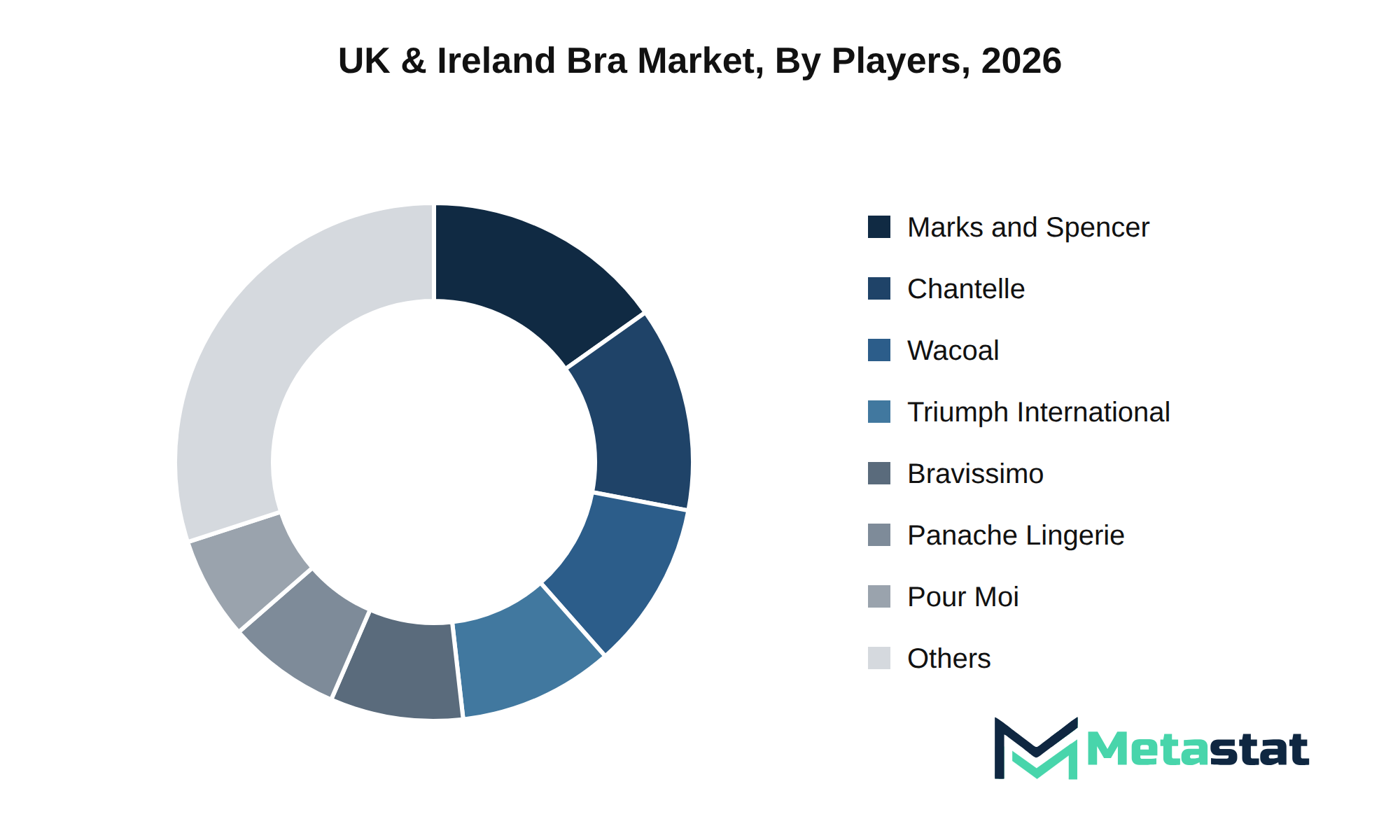
The UK & Ireland Bra market features numerous established players, each pursuing distinct strategies to enhance market presence and consumer engagement. Companies including Chantelle, Wacoal, and Triumph International focus on product differentiation through innovative designs and premium materials, addressing the diverse preferences of consumers. This emphasis on quality and comfort strengthens brand loyalty among target demographics.
Another notable strategic behavior involves partnerships and collaborations that enhance product offerings and market reach. For instance, brands like Marks and Spencer Group plc and NEXT plc leverage their retail networks to present a wider range of products, thereby increasing visibility and accessibility. Strategic alliances with e-commerce platforms, including ASOS plc and H&M Hennes & Mauritz AB, facilitate entry into new market segments, enhancing their competitive edge.
In the context of market dynamics, pricing architectures play a critical role in establishing competitive positioning. Brands like Primark Limited and Calvin Klein / PVH Corp. adopt aggressive pricing strategies to attract budget-conscious consumers. Luxury brands including Agent Provocateur and Intimissimi / Oniverse focus on premium pricing to maintain exclusivity. This pricing model influences consumer perception and purchasing decisions across different market segments.
Barriers to entry remain significant due to established brand equity and customer loyalty. New entrants face challenges in acquiring market share owing to existing players like Victoria's Secret & Co. and Panache Lingerie benefiting from well-established reputations. However, the emergence of niche brands like Curvy Kate and Lounge Underwear demonstrates the potential for disruption through targeted marketing and unique value propositions.
Looking towards the future, the competitive outlook in the UK & Ireland Bra market remains dynamic. Ongoing innovations in product development and marketing strategies will shape the market. Companies that effectively integrate value chain operations and maintain a focus on customer retention are likely to enhance their market position. Continuous investment in research and development will further drive product advancements, ensuring sustained growth and competitiveness.
Market size is forecast to rise from USD 1,463.2 million in 2025 to over USD 2,610.5 million by 2033. This projection indicates a compound annual growth rate (CAGR) of 7.5%, reflecting robust expansion within the UK & Ireland Bra market.
The base case scenario anticipates consistent growth driven by increasing consumer preferences for diverse and high-quality lingerie products. Demand shifts stemming from evolving consumer lifestyles and fashion trends contribute significantly to this upward trajectory. Bull cases envision higher growth potential, driven by rapid technological advancements and innovations within product offerings. Conversely, bear cases highlight potential risks stemming from economic downturns, regulatory changes, or shifts in consumer sentiment that could impact overall market performance.
Research and development efforts aimed at integrating next-generation technologies into bra designs influence product life cycles, enhancing consumer engagement and satisfaction. Regulatory evolution and compliance milestones dictate operational frameworks for companies operating in the market, shaping strategic decisions and capital allocation directives.
Geopolitical realignments and trade corridor changes impact regional supply chains, creating challenges and opportunities for market players. The emergence of high-growth pockets underlines the importance of identifying unmet enterprise needs, guiding strategic imperatives that drive future growth. Companies within the UK & Ireland Bra market focus on developing defensibility roadmaps to navigate market complexities effectively.
The report strategically identifies and profiles the key market players and analyses their core competencies in each sub-segment of the Bra market.
|
Report Attributes |
Details |
|
Study Period |
2021-2033 |
|
Base Year |
2025 |
|
Estimated Year |
2026 |
|
Forecast Period |
2026-2033 |
|
Historical Period |
2021-2025 |
|
Growth Rate |
CAGR 7.5% from 2026 to 2033 |
|
Revenue Unit |
USD million |
|
Segmentation |
By Product Type, Construction Type, Distribution Channel, Region, and Region |
Find answers to common questions about this report
The Bra market size in the UK and Ireland was valued at USD 1,463.2 million in 2025.
The Bra market is projected to grow at a CAGR of 7.5% during the forecast period from 2026 to 2033.
The Full Cup / Full Coverage segment leads the UK & Ireland Bra market, with a value of USD 291.3 million in 2026. This segment holds the largest share compared to other product types.
Key drivers for the UK & Ireland Bra market include increased investment in digital transformation, which enhances operational productivity and consumer engagement. The growth of e-commerce and changing consumer behaviors towards convenience and comfort further stimulate demand, supporting revenue growth and innovation in product offerings.
The UK & Ireland Bra market faces significant challenges due to regulatory compliance hurdles, which increase operational costs for producers and deter new entrants. geopolitical instability and supply chain disruptions affect raw material availability and pricing, leading to unpredictable costs that restrict market expansion and diminish overall profitability.
Increased investment in digital transformation enhances operational productivity and consumer engagement within the UK & Ireland Bra market. Adoption of advanced technologies, including automation and artificial intelligence, streamlines processes, allowing brands to better meet evolving consumer preferences and expectations. This trend drives innovation and product diversification, favoring product adoption among a broader consumer base.
The Bra market is estimated to reach a valuation of USD 2,610.5 million by 2033.
Key players in the UK & Ireland Bra Market include Chantelle, Wacoal, Triumph International, Panache Lingerie, Boux Avenue, Bravissimo Ltd, Curvy Kate, and Lounge Underwear.
The UK & Ireland Bra market is projected to reach USD 2,610.5 million by 2033.
The United Kingdom generates the highest revenue in the UK & Ireland Bra market, expected to reach USD 2,476.6 million by 2033.
The analysts below cover Consumer Goods research at Metastat Insights.
LEAD ANALYST
Utkarsh Khirodkar is a Lead Market Research Analyst at MetaStat Insight, specializing in market intelligence, technology sector assessments, and competitive strategy.
Standard industry briefs frequently blur the operational distinctions between isobaric pressure exchangers and centrifugal turbines. In this study, MetaStat Insight categorized mega-scale desalination tenders across the GCC and Mediterranean basins by membrane replacement frequencies and salinity tolerances. Their primary research helped us evaluate local content requirements in Saudi Arabia and the UAE without relying on marketing literature. We found the segment-level equipment replacement estimates grounded and well-reasoned throughout.
The technical breakdown of ISO 20022 migration readiness across correspondent banking corridors was remarkably thorough. Rather than treating cross-border corporate payments as a single block, the report drew a useful distinction between multilateral netting platforms and domestic instant payment rails across ASEAN economies. MetaStat Insight highlighted regulatory constraints on foreign exchange liquidity management that many publications gloss over. The research material offered practical clarity for our platform development roadmap.
Our group needed clearer visibility into out-of-autoclave processing timelines for high-temperature thermoplastic composites. MetaStat Insight delivered an objective assessment that contrasted automated fiber placement scrap rates with traditional thermoset prepreg layup cycles. The supplier landscape mapped out primary resin suppliers and tape slitting capacity across France, Germany, and Japan with solid technical accuracy. Their analyst handled our questions on precursor supply risks during an unscheduled inquiry call, providing clear, unembellished context.
Explore related market intelligence reports worth reading alongside this one.