
UK Sustainable Aviation Fuel Market
UK Sustainable Aviation Fuel Market Size, Share, By Production Pathway (Hydroprocessed Esters and Fatty Acids (HEFA), Waste/Biomass Gasification-to-Fischer-Tropsch, Alcohol-to-Jet (ATJ), Methanol-to-Jet (MtJ), Power-to-Liquid Fischer-Tropsch, Pyrolysis and Hydrotreatment, Refinery Co-processing, Synthesized Iso-Paraffins, Catalytic Hydrothermolysis, HC-HEFA), By Primary Feedstock (Used Cooking Oil, Waste Animal Fats and Greases, Agricultural Residues, Forestry, Sawmill and Waste-Wood Residues, Municipal Solid Waste and Refuse-Derived Fuel, Industrial Off-Gases and Other Recycled-Carbon Feedstocks), By End User (Commercial Passenger Airlines, Cargo and Express Airlines, Business and General Aviation, Military and Government Aviation), Industry Analysis, Growth, Trends, and Forecast, 2026-2033
MSI-5046
August 25, 2026
290 Pages
Historical
Base year
Forecast
Forecast period
Report Details
Comprehensive Market Analysis And Insights
Market Overview
The UK Sustainable Aviation Fuel market was valued at USD 98.4 million in 2025 and is projected to reach USD 420.4 million by 2033, growing at a CAGR of 19.9% over the forecast period.
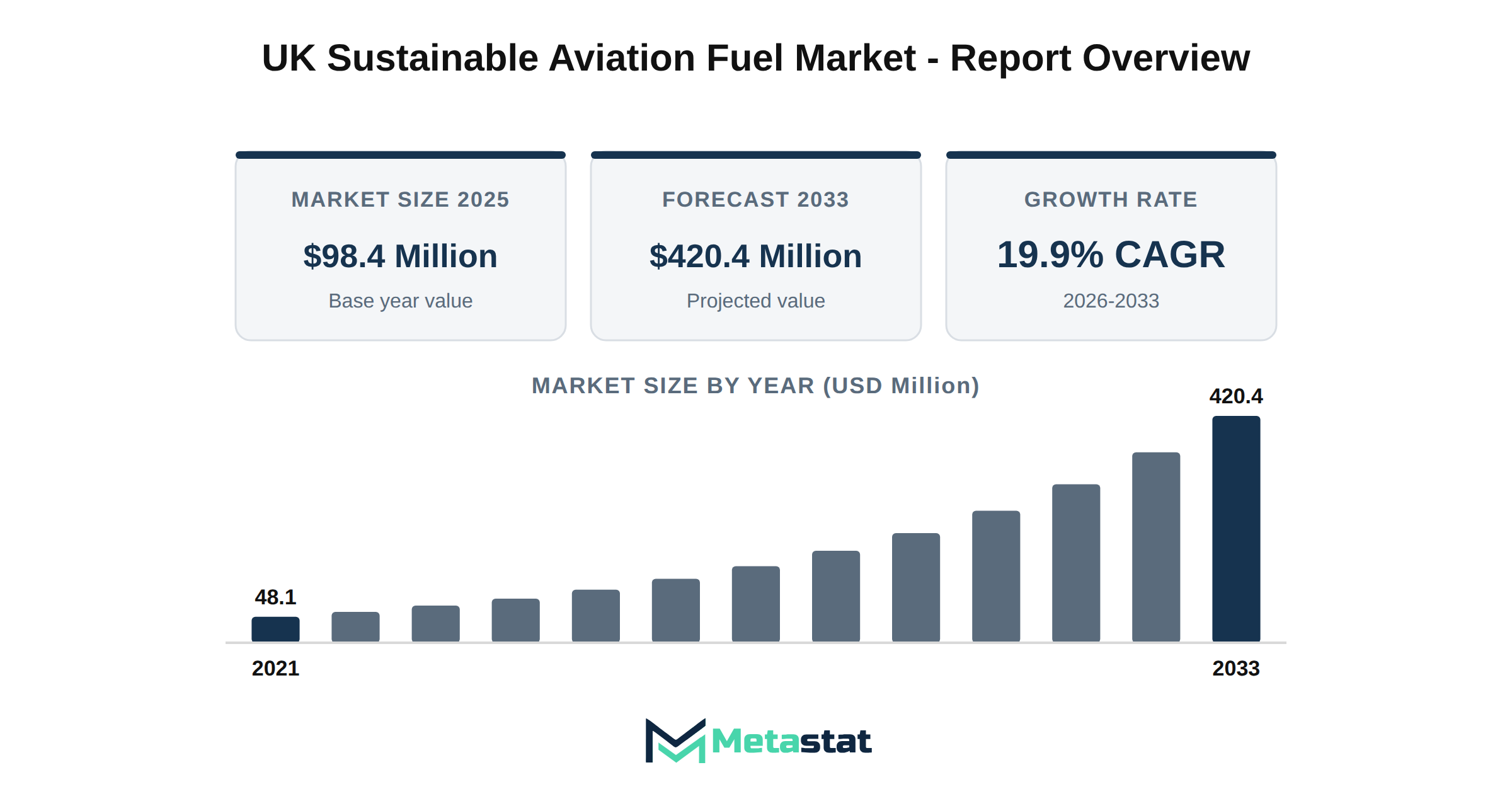
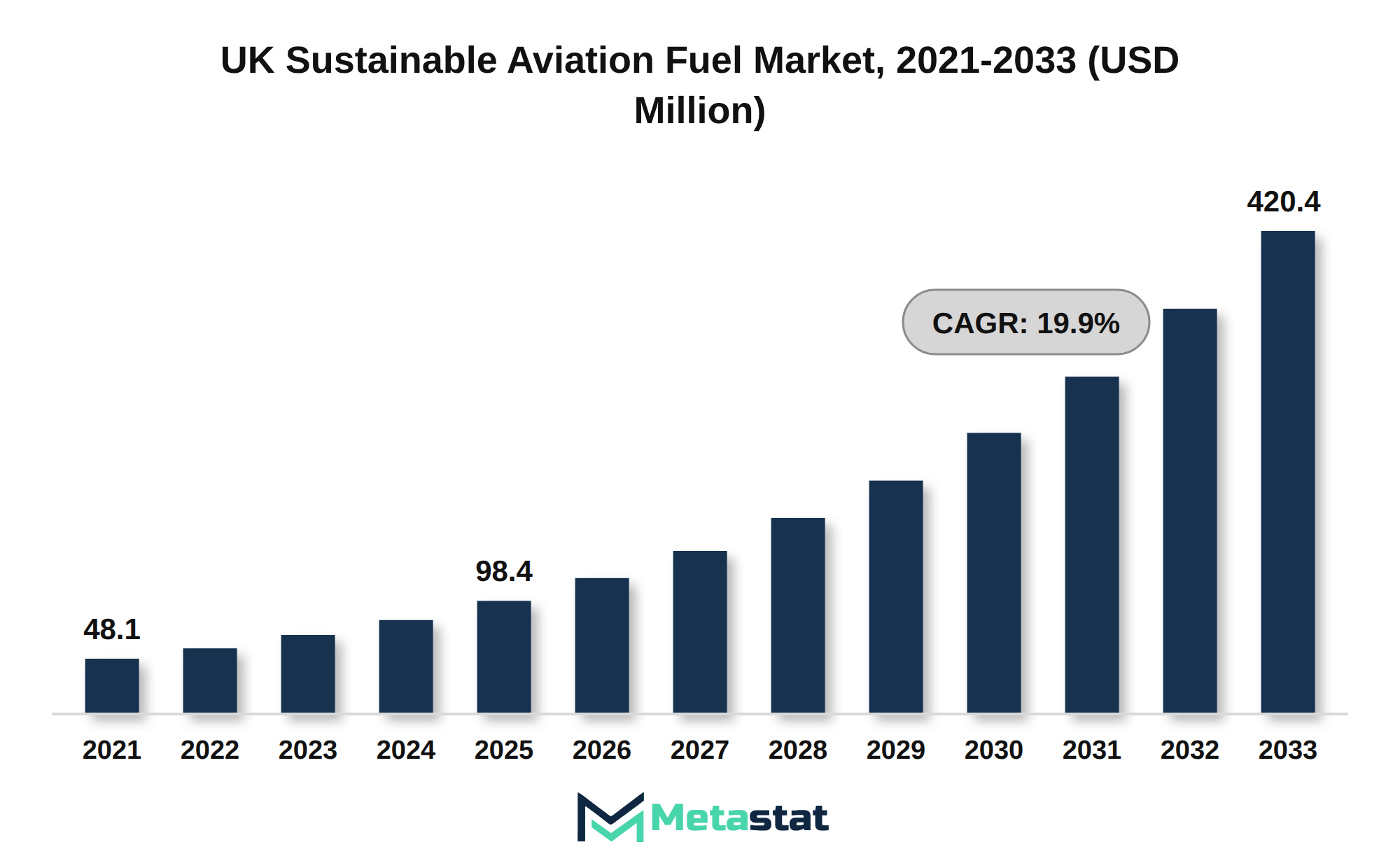
The UK Sustainable Aviation Fuel market is poised for significant growth, with a base value of USD 98.4 million in 2025 and a forecast value of USD 420.4 million by 2033. This growth corresponds to a compound annual growth rate (CAGR) of 19.9%, indicating strong momentum in the sector. The market experienced an increase in value from USD 48.1 million in 2021 to USD 68.9 million in 2023, reflecting heightened interest and investment in sustainable fuel alternatives.
Key factors driving this expansion include advancements in production capacity, particularly through waste-based feedstock opportunities. The UK government has implemented evolving mandates and policy support, creating an environment conducive to investment and infrastructure development. These regulatory frameworks enhance compliance and support the transition towards sustainable aviation practices, making the market attractive for various stakeholders.
Investment in research and development (R&D) trajectories focused on next-generation innovations contributes to the sustainable transformation of the aviation sector. Decarbonization efforts align with circular economy dynamics, promoting the use of renewable energy sources and reducing environmental impact. Consequently, companies within the market position themselves strategically to leverage these trends, ensuring their operations align with sustainable practices.
The supply chain landscape and logistics architecture evolve in response to market demands, influencing sourcing strategies and procurement processes. Market fragmentation presents opportunities for mergers and acquisitions (M&A), allowing companies to consolidate resources and enhance their competitive edge. While the value chain adapts, capital allocation towards infrastructure investments becomes critical. Optimizing both capital expenditure (CapEx) and operational expenditure (OpEx) is essential for success.
Macroeconomic headwinds including inflationary pressures and currency volatility impact market dynamics, necessitating adaptive strategies. The future strategic outlook of the UK Sustainable Aviation Fuel market remains optimistic, supported by corporate imperatives that prioritize sustainability and innovation. High-value recommendations for stakeholders emphasize the importance of aligning operational strategies with market trends to maximize growth potential.
The UK Sustainable Aviation Fuel market experiences significant growth driven by the rising demand for sustainable practices in the aviation sector. Investment in production capacity continues to expand, particularly for waste-based feedstocks. The transition towards sustainable aviation fuel aligns with evolving UK mandates and policy support aimed at reducing carbon emissions. This regulatory landscape creates a conducive environment for innovation and investment in cleaner fuel alternatives.
Research and development trajectories focus on next-generation innovations within the market. Companies prioritize sustainable transformation to meet decarbonization goals and align with circular economy dynamics. Efforts to enhance the supply chain landscape contribute to improved logistics architecture and sourcing strategies, ensuring the availability of sustainable feedstocks.
Market fragmentation characterizes the competitive environment, with various players vying for position. Mergers and acquisitions dynamics further influence the landscape, enabling companies to consolidate resources, enhance capabilities, and streamline operations. Capital allocation strategies reflect the emphasis on infrastructure investments, particularly in production facilities and technology advancements.
Macroeconomic headwinds, including inflationary pressures and currency volatility, present challenges for market participants. These challenges influence operational costs and pricing strategies, impacting overall profitability. The future strategic outlook for the UK Sustainable Aviation Fuel market remains optimistic, driven by corporate imperatives that prioritize sustainability and compliance with regulatory frameworks. High-value recommendations include focusing on innovation, strategic partnerships, and investment in scalable production technologies to capture growth opportunities.
Market Dynamics
Emission limits drive closed-loop adoption
The UK Sustainable Aviation Fuel market experiences rapid growth influenced by stringent emission limits imposed on the aviation sector. Countries focus on reducing their carbon footprints to meet international climate goals, while airlines face increasing pressure to adopt cleaner fuel alternatives. This pressure translates into heightened demand for sustainable aviation fuels, which significantly reduce greenhouse gas emissions compared to traditional fuels.
Investment in sustainable aviation fuels aligns with broader trends in operational productivity and cost-efficiency initiatives. Airlines and fuel producers commit to enhancing their sustainability profiles through investment in advanced technologies and production methods that optimize fuel efficiency. Integrating innovative production pathways, including Hydroprocessed Esters and Fatty Acids (HEFA) and Waste/Biomass Gasification-to-Fischer-Tropsch, supports both environmental goals and potential cost savings over time.
Regulatory pressures and evolving consumer preferences for sustainable practices drive demand for the UK Sustainable Aviation Fuel market. Stakeholders across the aviation industry prioritize environmental responsibility, leading to anticipated growth driven by these emission-related factors.
Technological integration propels market growth
Digital transformation significantly impacts the UK Sustainable Aviation Fuel market, driven by advancements in automation, artificial intelligence, and software adoption. These technologies streamline operations, enhance production efficiency, and enable rapid assessment of market demands. Integration of modern digital solutions facilitates a more responsive supply chain, aligning production with customer preferences and regulatory expectations.
Investments in innovative technologies contribute to a competitive edge, enabling suppliers to respond swiftly to emerging trends within the market. Companies investing in AI and automation achieve optimized resource allocation, reducing operational costs while increasing output. This shift toward technological integration supports the overall growth trajectory of the market, reflecting the increasing emphasis on sustainable practices and efficient resource management.
The integration of these technologies enhances collaboration among stakeholders, improving data sharing and operational transparency. This collaboration leads to improved decision-making processes and strategic planning, crucial for navigating the complexities of the UK Sustainable Aviation Fuel market. Expanding technological capabilities set the market for greater investment in sustainable practices, reinforcing its position within the broader aviation industry.
High capital investment requirements hinder adoption
High capital investment requirements present a significant restraint in the UK Sustainable Aviation Fuel market. Substantial upfront costs associated with developing production facilities and advanced technologies limit access for smaller players and new entrants. This financial barrier constrains the ability of many companies to invest in sustainable aviation fuel production, leading to slower market penetration and reduced competition.
Escalating operating costs impact profitability and operational feasibility for existing players. The transition to renewable feedstocks and advanced production methodologies introduces complexities that increase cost structures. These financial pressures restrict pricing flexibility, affecting the overall competitiveness of sustainable aviation fuel in relation to traditional aviation fuels.
Supply chain disruptions exacerbate these challenges by delaying the procurement of essential materials and affecting production timelines. Geopolitical instability influences the availability and pricing of key feedstocks, resulting in fluctuating costs that strain supply chain dynamics. Such uncertainties negatively impact long-term planning and investment decisions, hindering market growth.
Given these financial and logistical hurdles, stakeholders in the UK Sustainable Aviation Fuel market face significant challenges in achieving scalable production and widespread adoption. Addressing these issues through collaborative efforts and strategic financial mechanisms is crucial to enhancing market viability and encouraging growth in the coming years.
Geopolitical fragmentation challenges supply stability
The UK Sustainable Aviation Fuel market faces significant challenges related to geopolitical fragmentation, which disrupts supply chains and affects trade dynamics. Events including trade deficits and tariff friction exert pressure on sourcing and distribution, often resulting in increased costs for suppliers. This instability complicates the procurement of feedstocks and essential components, potentially leading to shortages or delays that undermine production timelines.
Technological disruptions arise from the complexity of research and development integrations within the sector. Companies navigate interoperability friction among diverse production pathways, which impede efficient operations and slow market uptake. Feedstock volatility further exacerbates these challenges, with fluctuations in availability and pricing impacting cost structures and profitability for producers.
Logistics disruptions, combined with supply chain instability, increase the risk of operational setbacks for stakeholders in the market. The need for robust infrastructure is critical, yet gaps in existing systems often hinder effective implementation of sustainable aviation fuel solutions. These barriers contribute to rising input costs and margin pressures, making it difficult for companies to achieve competitive pricing while meeting escalating sustainability demands.
Skills gaps within the workforce pose another challenge, stemming from a lack of qualified personnel in emerging technologies that limits operational efficiency. Automation displacements further complicate talent retention, affecting the overall productivity of companies operating within the UK Sustainable Aviation Fuel market.
Lastly, evolving regulatory standards and compliance overhead necessitate adaptive strategies for producers. Compliance with tightening regulations involves significant resources, creating a burden for companies striving for market position while aligning with decarbonization mandates. The cumulative effect of these challenges illustrates the complexity of navigating the UK Sustainable Aviation Fuel market in an increasingly fragmented geopolitical environment.
Emerging technologies stimulate market growth
The UK Sustainable Aviation Fuel market expands due to the emergence of advanced technologies that facilitate the production and utilization of sustainable fuels. Innovations in production pathways, including Hydroprocessed Esters and Fatty Acids (HEFA) and Waste/Biomass Gasification-to-Fischer-Tropsch, enable higher efficiency and lower emissions. These advancements attract significant investment from various stakeholders, enhancing the market's capacity to meet growing demand.
A shift toward sustainability imperatives drives the adoption of sustainable aviation fuels among commercial passenger airlines and cargo carriers. This transition aligns with the increasing importance of ESG-driven frameworks that promote environmental responsibility and corporate accountability. Prioritizing sustainable practices enhances competitive positioning and appeals to environmentally conscious consumers.
Digital procurement shifts contribute to operational efficiency within the market. Enhanced data analytics and procurement technologies streamline supply chain processes, allowing stakeholders to respond swiftly to market demands. This digital transformation enables companies to optimize operational yields and adapt to evolving consumer preferences for sustainable aviation solutions.
Geographical expansion of production facilities supports the growth of the UK Sustainable Aviation Fuel market. Strategic localization of production helps mitigate import dependencies and ensures a reliable supply of feedstocks, including used cooking oil and agricultural residues. This localization enhances resilience within the supply chain and promotes sustainability across all levels of production.
The market experiences a trend toward niche application growth, with increased focus on specialized aviation segments, including military and government aviation. This diversification allows producers to explore new revenue streams and tailor solutions to meet specific sector demands. The strong emphasis on sustainability across various aviation applications fuels further investment and innovation, reinforcing the overall growth trajectory of the market.
Market Segmentation Analysis
The UK Sustainable Aviation Fuel market is segmented based on Production Pathway, Primary Feedstock, and End User.
By Production Pathway, the market is further segmented into:
- Hydroprocessed Esters and Fatty Acids (HEFA)
- Waste/Biomass Gasification-to-Fischer-Tropsch
- Alcohol-to-Jet (ATJ)
- Methanol-to-Jet (MtJ)
- Power-to-Liquid Fischer-Tropsch
- Pyrolysis & Hydrotreatment
- Refinery Co-processing
- Others (Synthesized Iso-Paraffins, Catalytic Hydrothermolysis, HC-HEFA)
Hydroprocessed Esters and Fatty Acids (HEFA)
Valued at USD 88.8 million in 2026, the Hydroprocessed Esters and Fatty Acids (HEFA) segment is projected to reach USD 242.1 million by 2033, reflecting a compound annual growth rate (CAGR) of 15.4% during the forecast period. This segment benefits from increasing regulatory support aimed at reducing carbon emissions in aviation, aligning with the broader objectives of the UK Sustainable Aviation Fuel market. Adoption of HEFA technology is driven by its ability to use sustainable feedstocks, including used cooking oil, which directly addresses the growing demand for eco-friendly aviation solutions.
Technological advancements in the production of HEFA fuels facilitate improved efficiency and scalability, further enhancing market penetration. The segment experiences expansion due to the increasing collaboration between aviation stakeholders and fuel suppliers, creating an ecosystem conducive to innovation. The rising focus on sustainability within the aviation sector contributes to the attractiveness of HEFA because a viable alternative, aligning with consumer preferences for greener travel options.
Cost structures within the HEFA segment are influenced by raw material availability and pricing volatility. Dependence on feedstock sourcing from waste products introduces both opportunities and challenges, impacting overall margins. Competitive pricing dynamics from alternative fuel sources exert pressure on HEFA prices, prompting market players to optimize production processes to maintain profitability. Overall, the Hydroprocessed Esters and Fatty Acids segment represents a significant growth opportunity within the UK Sustainable Aviation Fuel market, driven by favorable regulatory conditions and technological maturation.
Waste/Biomass Gasification-to-Fischer-Tropsch
Significant opportunities exist within the Waste/Biomass Gasification-to-Fischer-Tropsch segment of the UK Sustainable Aviation Fuel market, which is estimated to reach USD 42.5 million by 2033, at a CAGR of 29.6% during the forecast period. The push for sustainability and regulatory mandates drives the adoption of innovative production pathways, making this segment an attractive option for fuel producers and airlines seeking to reduce greenhouse gas emissions. Enhanced technological maturation in gasification processes enables efficient conversion of biomass into usable fuels, addressing the growing demand for cleaner aviation alternatives.
Advancements in feedstock sourcing, including waste materials, provide a steady supply of resources for production. Expansion of this segment hinges on increasing investments in infrastructure and technology, along with strategic partnerships among stakeholders in the supply chain. Demand from commercial airlines for sustainable solutions drives growth, contributing to a shift in consumption patterns in favor of low-carbon fuels. Regulatory compliance standards further incentivize adoption, reinforcing the segment's relevance within the broader UK Sustainable Aviation Fuel market.
Alcohol-to-Jet (ATJ)
Demand for the Alcohol-to-Jet (ATJ) segment of the UK Sustainable Aviation Fuel market is expected to increase, reaching USD 38.1 million by 2033. Several factors drive this growth, including rising regulatory pressure to reduce carbon emissions and the aviation industry's commitment to sustainable practices. Key end-users, including commercial airlines, actively seek alternative fuels to meet sustainability goals and enhance their environmental profiles.
Technological advancements in conversion processes facilitate the evolution of ATJ fuels, making them a viable option for airlines. Investments in research and development support the maturation of these technologies, leading to increased production efficiency and cost-effectiveness. Shifts in end-use dynamics indicate a movement towards more sustainable operating models, further emphasizing the importance of ATJ fuels within the broader context of the UK Sustainable Aviation Fuel market.
The segment's potential is heightened by the availability of diverse feedstock options, including various alcohol sources. This flexibility supports supply chain resilience and reduces dependence on any single raw material. Continuous efforts in the sector focus on reducing production costs and enhancing margins, which is expected to attract further capital investment in the coming years.
Methanol-to-Jet (MtJ)
The growth of the Methanol-to-Jet (MtJ) segment reflects evolving technological advancements and increasing regulatory support for sustainable fuels. Methanol provides a versatile feedstock that aligns with environmental sustainability goals, driving interest from producers in the UK Sustainable Aviation Fuel market. The segment is projected to grow at a CAGR of 40.4% during the forecast period, highlighting its increasing relevance in the aviation sector.
Demand arises from a combination of environmental policies and the aviation industry's commitment to reducing carbon emissions. Airlines face pressure to transition to lower-carbon fuels, which drives adoption of MtJ because a viable alternative. The segment's growth is supported by advancements in production technologies, enabling efficient conversion of methanol into jet fuel, thus enhancing its commercial viability.
Investment in infrastructure for methanol production is significant for the segment's expansion. Strategic partnerships between energy companies and technology developers facilitate the establishment of MtJ facilities. This collaboration enhances supply chain resilience and reduces risks associated with raw material sourcing. While production capacity increases, competitive pricing structures are expected to emerge, further driving demand within the market.
Regulatory frameworks promoting sustainable aviation fuel increase the attractiveness of the Methanol-to-Jet segment. Compliance with emissions targets encourages airlines to seek out innovative solutions, boosting the market's potential. While adoption of MtJ expands, the segment is anticipated to influence broader consumption patterns in the aviation industry, supporting the transition towards greener fuels.
Power-to-Liquid Fischer-Tropsch
The Power-to-Liquid Fischer-Tropsch production pathway contributes to the UK Sustainable Aviation Fuel market's diversification strategy by enabling the conversion of renewable energy into liquid fuels. This segment leverages advances in technology that enhance efficiency and reduce emissions, aligning with the industry’s sustainability goals. Demand for this pathway stems from increasing regulatory pressures to lower carbon footprints in aviation, coupled with consumer preferences for greener fuel alternatives.
Technological maturation in the Power-to-Liquid Fischer-Tropsch methods encourages greater adoption among producers, thereby enhancing overall market dynamics. Investments in research and development for next-generation upgrades further support the segment's growth. Adoption of this technology leads to a more resilient supply chain, which effectively manages raw material sourcing challenges while ensuring compliance with stringent regulatory standards.
Downstream applications of Power-to-Liquid Fischer-Tropsch fuels manifest primarily in commercial aviation, where operational shifts towards sustainable practices directly influence fuel consumption patterns. This transition aligns with the broader market trend of embracing sustainable alternatives, responding to environmental concerns and regulatory mandates. Strategic opportunity windows arise from increased capital investment in infrastructure, preparing the market for future demand growth.
The emergence of disruptive alternatives in the aviation fuel sector highlights the importance of technological obsolescence, prompting continuous innovation in production methodologies. Overall, the Power-to-Liquid Fischer-Tropsch segment plays a significant role in shaping the UK Sustainable Aviation Fuel market, driving forward a transition towards more sustainable energy sources while navigating the complexities of cost structures and market volatility.
Pyrolysis & Hydrotreatment
Adoption of Pyrolysis & Hydrotreatment in the UK Sustainable Aviation Fuel market reflects a shift towards environmentally friendly production methods. These processes enable the conversion of various organic materials into fuel, aligning with stringent regulations on carbon emissions and sustainability. The growing emphasis on reducing environmental impacts drives interest in this segment, making it a focal point for innovation.
Technological advancements play a critical role in enhancing the efficiency and viability of Pyrolysis & Hydrotreatment. Continuous investment in research and development leads to improved yields and lower production costs, making this pathway increasingly attractive for producers. The evolution of these technologies supports the transition towards more sustainable aviation fuels, reinforcing their position in the market.
End-use dynamics indicate a strong preference among commercial airlines for fuels produced via Pyrolysis & Hydrotreatment, driven by rising consumer awareness of sustainability. Airlines recognize the importance of reducing their carbon footprint, prompting investments in sustainable fuel options. This trend enhances demand for this production pathway, aligning with corporate sustainability goals.
Regulatory compliance remains a significant factor influencing the Pyrolysis & Hydrotreatment segment. Governments across the UK and Europe implement various policies to encourage the adoption of sustainable aviation fuels, creating a favorable environment for investment. The introduction of incentives for lower-emission fuel sources further stimulates market growth.
Cost structures within this segment benefit from increasing efficiencies and economies of scale. While technology matures, production costs decrease, making Pyrolysis & Hydrotreatment a more economically viable option for fuel generation. This trend enables broader adoption within the UK Sustainable Aviation Fuel market, allowing producers to compete effectively against traditional fuel sources.
Strategic opportunity windows for investment in Pyrolysis & Hydrotreatment exist owing to rising market demand for sustainable aviation fuels. Investors recognize the potential for significant returns because the aviation industry shifts towards cleaner fuels. This segment presents a promising avenue for capital investment, reflecting growing consumer and regulatory pressures for sustainable practices.
Refinery Co-processing
Refinery co-processing significantly influences the UK Sustainable Aviation Fuel market by allowing existing refineries to integrate sustainable feedstocks into their operations. This process enhances the utilization of existing infrastructure, promoting a transition towards sustainable fuel production without necessitating extensive capital investment in new facilities. By leveraging current refining capabilities, companies produce sustainable aviation fuel alongside traditional fuels, optimizing resource usage and minimizing waste.
Key factors driving adoption within this sub-segment include regulatory compliance standards that mandate reductions in greenhouse gas emissions from the aviation sector. Governments across the UK prioritize initiatives aimed at reducing carbon emissions, which incentivizes refineries to adopt co-processing technologies. Environmental policies tighten, and refineries face increasing pressure to comply with these mandates. This situation spurs investment in cleaner production methods.
Technological maturation within the refinery co-processing segment allows for enhanced efficiency and cost-effectiveness, thereby attracting more players into the market. Advances in processing techniques enable refineries to convert a diverse range of feedstocks into sustainable aviation fuel, thereby broadening the potential supply base. This versatility supports sustainability goals and allows refineries to respond effectively to fluctuations in feedstock availability.
End-use dynamics within the aviation industry further reinforce the importance of refinery co-processing. Commercial airlines increasingly seek to meet their sustainability commitments through the use of sustainable aviation fuels, which drives demand for co-processed fuel options. This trend aligns with evolving consumer preferences for greener travel. Refineries adapt and innovate to meet these shifting demands.
The market benefits from a strong focus on capital investment outlook, driven by refineries strategically evaluating their operations to accommodate sustainable alternatives. By investing in co-processing technologies, refineries secure their competitive position and contribute significantly to the overall growth of the UK Sustainable Aviation Fuel market. This strategic alignment with environmental goals enhances operational efficiency and positions refineries because crucial players in the transition towards sustainable aviation.
Others (Synthesized Iso-Paraffins, Catalytic Hydrothermolysis, HC-HEFA)
Technological advancements significantly influence the segment focused on Others (Synthesized Iso-Paraffins, Catalytic Hydrothermolysis, HC-HEFA) within the UK Sustainable Aviation Fuel market. Innovations in production techniques drive efficiency and cost-effectiveness, enabling producers to enhance their offerings and meet the increasing demand for sustainable aviation fuels. This segment benefits from a growing emphasis on sustainability across the aviation industry, prompting investments in research and development to explore next-generation fuel alternatives.
Regulatory compliance stands because a crucial factor shaping the market. Stricter environmental regulations push companies to adopt cleaner fuel technologies, aligning with global sustainability goals. The need for certifications in sustainable fuel production further influences operational practices, encouraging firms to integrate advanced methodologies into their supply chains. Market players recognize the importance of maintaining compliance, which provides a competitive edge and attracts environmentally conscious consumers.
Strategic opportunity windows emerge because market dynamics evolve. Increased collaboration between technology providers and aviation stakeholders boosts innovation and accelerates the adoption of synthesized iso-paraffins and related technologies. The relationship between changing consumer preferences and regulatory frameworks creates unique market conditions, prompting firms to explore strategic partnerships to optimize production capabilities while navigating potential substitution risks and technological obsolescence.
Investment in raw material sourcing and supply chain resilience remains vital for sustaining growth in this segment. Firms explore diverse feedstock options, including recycled materials and agricultural residues, to mitigate reliance on traditional sources while enhancing the sustainability profile of their products. This focus on innovative feedstock procurement reflects the market's commitment to reducing its carbon footprint and adapting to shifting consumption patterns.
By Primary Feedstock, the market is further segmented into:
- Used Cooking Oil
- Waste Animal Fats & Greases
- Agricultural Residues
- Forestry, Sawmill & Waste-Wood Residues
- Municipal Solid Waste & Refuse-Derived Fuel
- Industrial Off-Gases & Other Recycled-Carbon Feedstocks
- Others (Eligible Processing Residues)
Used Cooking Oil
Valued at USD 58.6 million in 2026, the Used Cooking Oil segment is projected to reach USD 150.5 million by 2033, at a CAGR of 14.4% during the forecast period. The growing focus on sustainable practices in aviation drives this segment's expansion, with increasing regulations promoting the use of renewable feedstocks. The aviation industry experiences heightened scrutiny regarding its environmental impact, compelling airlines to seek alternatives that reduce carbon emissions. Used Cooking Oil, because a renewable feedstock, presents a viable option that aligns with these sustainability goals. Stakeholders in the UK Sustainable Aviation Fuel market recognize the potential of this feedstock to fulfill regulatory compliance and enhance corporate sustainability profiles.
Technological advancements in processing Used Cooking Oil into sustainable aviation fuel improve efficiency and yield, leading to further investment in this segment. Facilities designed for this purpose experience reduced operational costs due to lower feedstock expenses, enhancing profit margins. The market anticipates increased collaboration among industry players to develop innovative methods for feedstock conversion, which will further support growth. The strategic opportunity windows for capital investment continue to expand owing to rising demand for sustainable aviation fuel, positioning this segment because a key player in the market's overall trajectory.
Waste Animal Fats & Greases
Valued at USD 54.4 million by 2033, the Waste Animal Fats & Greases segment of the UK Sustainable Aviation Fuel market experiences a compound annual growth rate (CAGR) of 15.5% during the forecast period. This segment benefits from increasing regulatory pressures to reduce greenhouse gas emissions, which pushes industries to adopt more sustainable practices. The food service and agricultural sectors provide a consistent supply of waste animal fats and greases, enhancing raw material sourcing capabilities. Advancements in processing technologies improve efficiency, making this feedstock more attractive for aviation fuel production. Heightened competition among producers seeking to capitalize on this segment leads to increased investment in innovative processing techniques and product development. Overall, the expansion of this segment supports broader market growth and effectively responds to shifting consumer preferences towards sustainability.
Agricultural Residues
Growing interest in renewable energy sources drives the adoption of Agricultural Residues due to their role because a primary feedstock for sustainable aviation fuel. A strong focus on reducing carbon emissions pushes airlines and aviation authorities to seek alternative fuels that minimize environmental impact. Agricultural Residues provide an effective solution, leveraging existing waste materials from food production and agriculture, thus improving sustainability in the aviation sector.
Technological advancements and increasing research in converting Agricultural Residues into fuel create significant expansion opportunities in the UK Sustainable Aviation Fuel market. Investment in innovative processing techniques and facilities supports the development of efficient conversion methods, ensuring cost-effectiveness and scalability. Such advancements align with the industry's transition toward sustainable operations, attracting further investment and supporting market growth.
Compliance with regulatory standards drives the demand for Agricultural Residues because a feedstock. Governments and organizations increasingly implement policies that favor renewable energy and penalize high-emission fuels. These regulations prompt aviation companies to explore sustainable options, positioning Agricultural Residues because a viable alternative that meets compliance requirements while supporting the market's overall expansion.
Valued at USD 55 million by 2033, the Agricultural Residues segment reflects the increasing emphasis on sustainable practices within the aviation industry. This growth highlights the importance of integrating renewable feedstocks into traditional aviation fuel systems, contributing to a more sustainable future for air travel. The market continues to evolve, with Agricultural Residues playing a crucial role in transforming the aviation sector's approach to fuel sources.
Forestry, Sawmill & Waste-Wood Residues
Valued at USD 55 million in 2026, the Forestry, Sawmill & Waste-Wood Residues segment is projected to grow at a CAGR of 27% during the forecast period. This growth arises from increased interest in sustainable feedstocks for aviation fuel, driven by regulatory pressures and environmental considerations. Companies within the market seek to enhance their sustainability profiles, prompting higher adoption of bio-based feedstocks including forestry and waste-wood residues.
Downstream applications in commercial aviation fuel will drive demand because airline operators focus on reducing greenhouse gas emissions. Supply chain factors, including raw material availability and sourcing practices, significantly impact the segment's expansion. The presence of various feedstock options supports operational flexibility for producers, enabling them to adapt to changing market dynamics.
Advancements in conversion technologies play a crucial role in optimizing the efficiency of Forestry, Sawmill & Waste-Wood Residues. The resulting fuels align with regulatory compliance standards, further enhancing the segment's attractiveness. Continuous innovation within the sector contributes to price stability and margin improvements, positioning the market favorably for future growth.
Municipal Solid Waste & Refuse-Derived Fuel
Municipal Solid Waste and Refuse-Derived Fuel presents a unique opportunity within the UK Sustainable Aviation Fuel market. Growing environmental concerns and the need for sustainable waste management drive demand for this feedstock. Its integration into aviation fuel production aligns with regulatory frameworks aiming to reduce greenhouse gas emissions and promote circular economy principles.
Technological maturation plays a critical role in enhancing the efficiency of converting municipal solid waste into usable fuel. Innovations in waste processing technologies expand the range of feedstocks and improve output quality. These advancements significantly impact the economics of sustainable aviation fuel production.
Market dynamics indicate a shift towards greater adoption of municipal solid waste because a primary feedstock. The increasing focus on sustainability among end users, particularly commercial passenger airlines, strengthens the case for integrating waste-derived fuels into their operations. This shift aligns with wider consumption patterns favoring environmentally friendly products.
Regulatory compliance standards and certifications associated with the use of municipal solid waste in fuel production drive investment in this sub-segment. Stakeholders focus on ensuring that their operations meet stringent environmental criteria, influencing the supply chain dynamics within the wider market. This focus creates strategic opportunities for companies developing innovative technologies to streamline the conversion process.
While the UK Sustainable Aviation Fuel market evolves, municipal solid waste and refuse-derived fuel are expected to play a vital role in addressing both energy demands and sustainability goals. This emphasis highlights the importance of this feedstock in the broader context of renewable energy solutions.
Industrial Off-Gases & Other Recycled-Carbon Feedstocks
Use of Industrial Off-Gases & Other Recycled-Carbon Feedstocks presents opportunities within the UK Sustainable Aviation Fuel market, driven by increasing environmental regulations and sustainability targets set by governments. Adoption of these feedstocks aligns with global trends focusing on circular economy principles, enhancing sustainability in aviation fuel production.
Strong interest in reducing greenhouse gas emissions fuels demand for innovative feedstock solutions. The shift towards more sustainable practices encourages aviation stakeholders to explore alternative materials that lessen reliance on traditional fossil fuels. This trend reflects broader consumer preferences for environmentally friendly products.
Technological maturation plays a critical role in facilitating the improved processing of industrial off-gases, leading to enhanced fuel quality and performance. Emerging technologies and advancements in chemical engineering are essential, enabling conversion processes that improve the feedstock's viability for aviation fuel applications.
Regulatory compliance standards influence the market landscape, with stringent emissions targets compelling airlines and fuel producers to innovate and adopt new feedstock solutions. These regulations drive investment in research and development, promoting advancements in production technologies that incorporate recycled-carbon feedstocks.
Supply chain resilience becomes increasingly vital, driven by sourcing raw materials from diverse and sustainable origins that mitigate risks associated with feedstock availability. Use of industrial off-gases diversifies the feedstock landscape, ensuring a more reliable supply for aviation fuel production.
Strategic opportunity windows exist for partnerships between feedstock suppliers and aviation fuel producers. Collaborations strengthen market positioning and enhance overall production capabilities, aligning both parties with sustainability goals and regulatory demands.
The UK Sustainable Aviation Fuel market continues to evolve, with industrial off-gases and other recycled-carbon feedstocks forming a key component in meeting future energy needs. Ongoing investments and commitment to innovation will drive growth and adoption within this segment.
Others (Eligible Processing Residues)
Growing interest in sustainable practices fuels the demand for alternatives within the UK Sustainable Aviation Fuel market, particularly in the Others (Eligible Processing Residues) segment. This sub-segment represents a strategic opportunity for producers aiming to use various non-traditional feedstocks. Adoption of these eligible residues aligns with regulatory compliance standards and supports sustainability goals within the aviation sector. Technological advancements drive innovation in feedstock processing, enhancing the feasibility and efficiency of processing diverse materials. Continued capital investment will enable the maturation of technologies necessary for processing these residues, reinforcing their role in the market.
End-use dynamics evolve owing to commercial passenger airlines increasingly seeking sustainable options to meet consumer preferences for greener travel solutions. This shift in consumption patterns highlights the importance of incorporating eligible processing residues into fuel production. Strategic opportunity windows arise during this transformation, encouraging investors and producers to explore innovative pathways. Overall, the expansion of the Others (Eligible Processing Residues) sub-segment presents a compelling component of the broader UK Sustainable Aviation Fuel market.
By End User, the market is further segmented into:
- Commercial Passenger Airlines
- Cargo & Express Airlines
- Business & General Aviation
- Military & Government Aviation
- By, the market is further segmented into
Commercial Passenger Airlines
Valued at USD 96.2 million in 2026, the Commercial Passenger Airlines segment is projected to reach USD 331.6 million by 2033, at a CAGR of 19.3% during the forecast period. Demand for sustainable aviation fuel within this segment is driven by heightened regulatory pressure to reduce carbon emissions and the aviation industry's commitment to sustainability. Major airlines are increasingly focusing on integrating sustainable practices into their operations, leading to a growing appetite for alternatives including sustainable aviation fuel.
Investment in next-generation technologies enhances production capacities and improves the efficiency of sustainable fuel usage in commercial aviation. The maturation of production pathways and advances in feedstock conversions facilitate a wider adoption across airlines. Enhanced operational efficiency and reduced environmental impact present significant competitive advantages, making the integration of sustainable aviation fuel a strategic necessity.
Regulatory compliance standards and certifications play an important role in driving the segment's growth. Airlines actively pursue certification for sustainable fuel to meet both consumer expectations and legal requirements. This focus on compliance strengthens the segment's positioning within the broader UK Sustainable Aviation Fuel market, driven by airlines seeking to ensure their fuel sources align with evolving regulations and public sentiment toward environmental responsibility.
While the market evolves, fluctuations in pricing and raw material sourcing introduce challenges that airlines navigate. Strategic partnerships with sustainable fuel producers help mitigate risks associated with supply chain vulnerabilities and enhance procurement efficiency. Airlines leverage these partnerships to stabilize pricing structures in a volatile market, ensuring long-term sustainability goals remain achievable.
The Commercial Passenger Airlines segment demonstrates robust potential within the UK Sustainable Aviation Fuel market. The combination of regulatory drivers, technological advancements, and strategic partnerships creates a strong foundation for growth, ensuring this segment remains a focal point in the pursuit of a sustainable aviation future.
Cargo & Express Airlines
Increased demand for efficient and environmentally friendly fuel sources drives growth in the Cargo & Express Airlines segment within the UK Sustainable Aviation Fuel market. The segment is estimated to reach USD 45.9 million by 2033, at a CAGR of 21% during the forecast period. Increasing regulatory pressures and corporate sustainability goals contribute to this trend, pushing airlines to adopt sustainable aviation fuel solutions actively. Technological advancements in production pathways enhance the availability and efficiency of sustainable aviation fuels, aligning with the operational requirements of cargo and express airlines. The integration of sustainable practices meets regulatory compliance standards and appeals to environmentally conscious consumers seeking to reduce their carbon footprint. Strategic investments in infrastructure and production capabilities support segment growth, positioning it favorably in the evolving aviation industry. The overall trajectory of the market reflects a commitment to reducing greenhouse gas emissions while satisfying the logistical demands of air cargo operations.
Business & General Aviation
Valued at USD 25.7 million by 2033, the Business & General Aviation segment experiences notable growth driven by increasing awareness of sustainable practices among operators. Compliance with regulatory standards regarding emissions influences the adoption of sustainable aviation fuels within this sector. Technological advancements enhance the efficiency of fuel production pathways, contributing to a more robust supply chain. Enhanced performance characteristics of sustainable aviation fuels compared to traditional fuels influence end-user preferences, leading to a shift towards greener alternatives. The UK Sustainable Aviation Fuel market anticipates considerable investments in infrastructure and innovation to address the growing demand for environmentally friendly aviation solutions.
Military & Government Aviation
Projected growth at a CAGR of 24.1% during the forecast period highlights the significance of the Military & Government Aviation segment within the UK Sustainable Aviation Fuel market. Increasing focus on reducing carbon emissions drives the demand for sustainable alternatives among military and government operators, who seek to enhance their environmental strategies.
Adoption of sustainable aviation fuel in this segment aligns with global regulatory compliance standards aimed at achieving net-zero emissions targets, further encouraging investment in innovative fuel solutions. Technological advancements and next-generation upgrades in fuel production processes enhance the efficiency and viability of these alternative fuels, supporting the segment's growth trajectory.
The market for Military & Government Aviation is becoming increasingly competitive because stakeholders explore strategic opportunities. These opportunities arise from the transition to renewable energy sources and the meet stringent regulations. The operational advantages associated with sustainable aviation fuels position this segment favorably for future capital investments.
By, the market is further segmented into
Valued at USD 118.3 million in 2026, the segment is projected to reach USD 420.4 million by 2033, at a CAGR of 19.9% during the forecast period. Growth stems from increasing regulatory compliance standards and policy headwinds that emphasize the need for sustainable fuel solutions in the aviation sector. Heightened awareness of environmental issues influences airlines to adopt cleaner fuel alternatives to meet emissions targets.
Increased investments in technological advancements drive competition among suppliers, leading to the evolution of diverse production pathways. The segment sees significant interest in innovative feedstocks, which enhances the resilience of supply chains. By optimizing production processes, companies aim to reduce costs while improving fuel performance. Strategic opportunity windows for new entrants and established players alike further fuel growth in the market.
Competitive Landscape and Strategic Insights
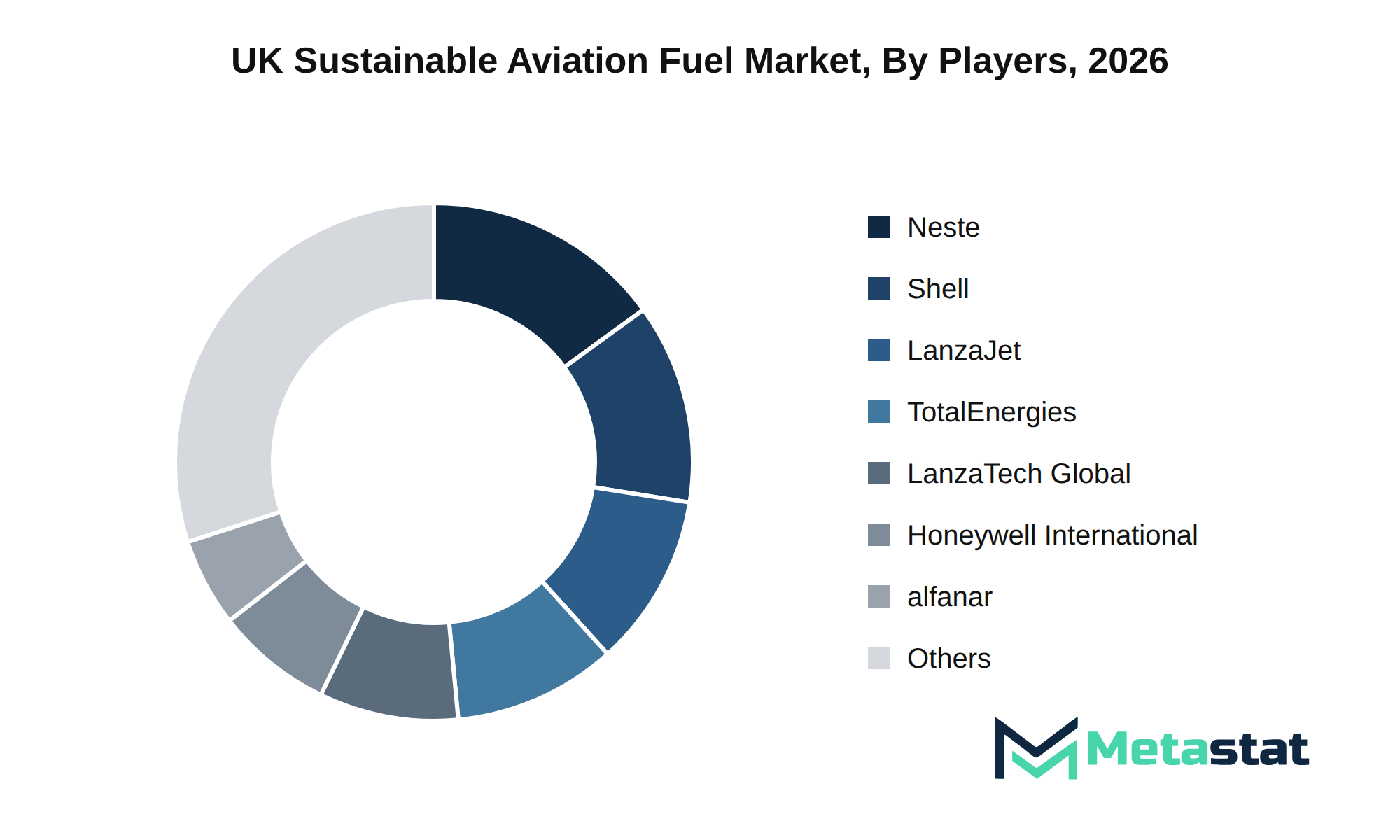
The UK Sustainable Aviation Fuel market experiences significant activity driven by mergers, acquisitions, and strategic collaborations among key players. Companies including LanzaJet, Inc., Neste, and Shell plc focus on enhancing production capabilities through strategic alliances and joint ventures, resulting in improved efficiency and innovation in sustainable fuel technologies.
Product differentiation remains a vital strategy in the market, with firms investing in research and development to develop proprietary technologies. For instance, TotalEnergies and Honeywell International Inc. emphasize advanced production pathways and feedstocks, ensuring a competitive edge through innovation and sustainability claims. The emphasis on intellectual property and patent landscapes further fortifies their market positions.
Barriers to entry present challenges for new entrants, primarily due to the established supply chain dominance held by major players including BP Plc and OMV Aktiengesellschaft. These companies leverage procurement strategies to maintain competitive pricing, while customer retention strategies enhance brand loyalty against emerging competitors. The market's future outlook indicates strong growth, supported by strategic growth vectors from established firms and innovative startups.
Competitive dynamics within the UK Sustainable Aviation Fuel market reflect a complex relationship of strategic positioning, technological advancement, and evolving consumer demands shaping the industry's trajectory.
Forecast and Future Outlook
Market size is forecast to rise from USD 98.4 million in 2025 to over USD 420.4 million by 2033. This growth trajectory reflects an anticipated compound annual growth rate (CAGR) of 19.9%. The base case scenario, reflecting steady advancements in infrastructure and technology, aligns with the market's capacity to meet downstream demand changes efficiently.
In a bullish scenario, accelerated adoption of sustainable technologies, increased investment in research and development, and favorable regulatory environments could drive the market beyond current forecasts. Conversely, a bearish outlook could arise from economic downturns, regulatory delays, or geopolitical tensions, impacting investment and operational capacity.
Structural shifts in consumption patterns emphasize the need for innovative production pathways and diverse feedstocks. Integration of next-generation technologies will play an important role in enhancing production efficiency and lowering costs. Timely commercialization of R&D initiatives is essential in aligning with evolving regulatory frameworks and compliance milestones.
Strategic capital allocation is essential in ensuring the market adapts to changing economic cycles and competitive pressures. Emerging opportunities in high-growth segments present avenues for investment, while the evolution of trade corridors and regional supply chain dynamics further defines the strategic environment for industry players.
Overall, the UK Sustainable Aviation Fuel market stands at a critical juncture, where aligning executive-level strategies with market growth imperatives dictates future success. Continuous evaluation of unmet enterprise needs and capitalizing on white-space opportunities guides the path forward in this sector.
UK Sustainable Aviation Fuel Market Key Segments
By Production Pathway:
- Hydroprocessed Esters and Fatty Acids (HEFA)
- Waste/Biomass Gasification-to-Fischer-Tropsch
- Alcohol-to-Jet (ATJ)
- Methanol-to-Jet (MtJ)
- Power-to-Liquid Fischer-Tropsch
- Pyrolysis & Hydrotreatment
- Refinery Co-processing
- Others (Synthesized Iso-Paraffins, Catalytic Hydrothermolysis, HC-HEFA)
By Primary Feedstock:
- Used Cooking Oil
- Waste Animal Fats & Greases
- Agricultural Residues
- Forestry, Sawmill & Waste-Wood Residues
- Municipal Solid Waste & Refuse-Derived Fuel
- Industrial Off-Gases & Other Recycled-Carbon Feedstocks
- Others (Eligible Processing Residues)
By End User:
- Commercial Passenger Airlines
- Cargo & Express Airlines
- Business & General Aviation
- Military & Government Aviation
- By
Key UK Sustainable Aviation Fuel Industry Players
- LanzaJet, Inc.
- LanzaTech Global, Inc.
- Neste
- alfanar
- Shell plc
- Nova Pangaea Technologies
- Honeywell International Inc.
- OXCCU Tech Ltd
- Carbon Neutral Fuels Ltd
- TotalEnergies
- OMV Aktiengesellschaft
- Arcadia eFuels
- Topsoe A/S
- BP Plc
- Esso Petroleum Company, Limited (ExxonMobil)
- Equilibrion Ltd
- Phillips 66
- Valero Energy Corporation
- Eni S.p.A.
- Johnson Matthey Plc
Report Coverage
The report strategically identifies and profiles the key market players and analyses their core competencies in each sub-segment of the Sustainable Aviation Fuel market.
Report Attributes | Details |
Study Period | 2021-2033 |
Base Year | 2025 |
Estimated Year | 2026 |
Forecast Period | 2026-2033 |
Historical Period | 2021-2025 |
Growth Rate | CAGR 19.9% from 2026 to 2033 |
Revenue Unit | USD million |
Segmentation | By Production Pathway, Primary Feedstock, End User, and Region |
What Report Provides
- Key Company Market Share, Revenue and Ranking for the UK Sustainable Aviation Fuel Market
- Key Market Leaders in the UK Sustainable Aviation Fuel Sector
- Full In-Depth Analysis of the Parent Industry Dynamics
- Industry Statistics and Important Changes in Market Trends
- Segmentation Details of the UK Sustainable Aviation Fuel Market
- Historical, Ongoing and Projected Market Analysis
- Assessment of Niche Industry Developments and Opportunities
- Key Strategic Recommendations for Market Participants
Frequently Asked Questions
Find answers to common questions about this report
The Sustainable Aviation Fuel market size in the UK was valued at USD 98.4 million in 2025.
The Sustainable Aviation Fuel market is projected to grow at a CAGR of 19.9% during the forecast period from 2026 to 2033.
The leading segment in the UK Sustainable Aviation Fuel market is Commercial Passenger Airlines, with a projected value of USD 331.6 million by 2033. This segment demonstrates significant growth potential, driven by increasing demand for sustainable aviation solutions.
The UK Sustainable Aviation Fuel market experiences growth driven by stringent emission limits and increasing pressure on airlines to adopt cleaner fuel alternatives. Investment in advanced technologies and production methods enhances sustainability profiles while meeting evolving consumer preferences for environmental responsibility. These factors collectively increase demand for sustainable aviation fuels.
High capital investment requirements and substantial upfront costs associated with developing production facilities hinder access for smaller players. Supply chain disruptions and geopolitical instability further complicate procurement and increase operational costs, limiting the competitiveness of sustainable aviation fuel compared to traditional aviation fuels.
Regulatory pressures and evolving consumer preferences for sustainable practices drive product adoption in the UK Sustainable Aviation Fuel market. Airlines face increasing demands to reduce carbon footprints, which boosts the need for cleaner fuel alternatives, creating opportunities for investment in advanced production technologies.
The Sustainable Aviation Fuel market is estimated to reach a valuation of USD 420.4 million by 2033.
Key players in the UK Sustainable Aviation Fuel market include LanzaJet, Inc., Neste, Shell plc, TotalEnergies, BP Plc, and Honeywell International Inc.
Used Cooking Oil represents a significant primary feedstock, with a forecasted value of USD 150.5 million by 2033.
Waste/Biomass Gasification-to-Fischer-Tropsch exhibits the highest growth rate, with a compound annual growth rate of 29.6% projected through 2033.
Choose Your License
UK Sustainable Aviation Fuel Market
Related Reports
Explore related market intelligence reports worth reading alongside this one.
Global Aircraft Maintenance, Repair and Overhaul (MRO) Market
Starting from
$2950