
LEAD ANALYST
Utkarsh Khirodkar is a Lead Market Research Analyst at MetaStat Insight, specializing in market intelligence, technology sector assessments, and competitive strategy.

United States Industrial Outdoor Storage (IOS) Market Size, Share, By Type (Storage Containers, Open Yards, Racks, and Shelving Systems), By Industry (Logistics and Transportation, Construction, E-commerce, Automotive, Municipal Services, and Others), By Revenue Source (Sale and Rent), By Industry Analysis, Growth, Trends, and Forecast, 2026-2033
Report ID
MSI-4534
Published
January, 2026
Updated
Pages
320 Pages
Format
Report Details
Choose Your License
United States Industrial Outdoor Storage (IOS) Market
United States Industrial Outdoor Storage (IOS) market was valued at USD 228.3 billion in 2025 and is projected to grow at a CAGR of 6.1% during 2026-2033, reaching USD 367.2 billion by 2033.
United States Industrial Outdoor Storage (IOS) market valued at USD 228.3 billion in 2025, growing at a CAGR of around 6.1% through 2033, with potential to exceed USD 367.2 billion.
Storage Containers segment accounts for a 29.2% market share in 2025, supported by demand for modular, secure, and rapidly deployable storage across industrial sites.
Key Trend: Expansion in e-commerce, port and border freight activity, and last-mile logistics is increasing demand for truck parking, trailer storage, and container yards across major United States freight corridors.
Key Opportunity: Platform roll-ups and value-add redevelopment of underutilized industrial parcels into structured IOS yards.
Key Insight: The United States Industrial Outdoor Storage (IOS) market is expanding steadily as logistics operators and industrial users seek flexible, cost-efficient space solutions supporting supply chain and infrastructure activity.
The United States Industrial Outdoor Storage (IOS) market within the logistics and industrial real estate industry moves beyond its traditional perception as open-yard storage and has positioned itself as a strategic extension of operational infrastructure. In the coming years, IOS assets will be treated less as passive land holdings and more as purpose-built environments supporting time-sensitive, regulation-heavy, and equipment-intensive activities. This shift will increase the emphasis on how space is organized, secured, and digitally monitored rather than only available square footage.
In the coming years, IOS features increasingly align with specialized industrial workflows. Port-adjacent yards, staging zones, and contractor-centric sites will be designed to support equipment movement, modular deployment, and faster turnaround. Logistics and industrial real estate will no longer operate in isolation; instead, IOS networks will increasingly integrate with inland ports, repair centers, and local distribution corridors. This alignment will reduce friction between storage, maintenance, and deployment without requiring conversion of IOS sites into enclosed warehouse formats.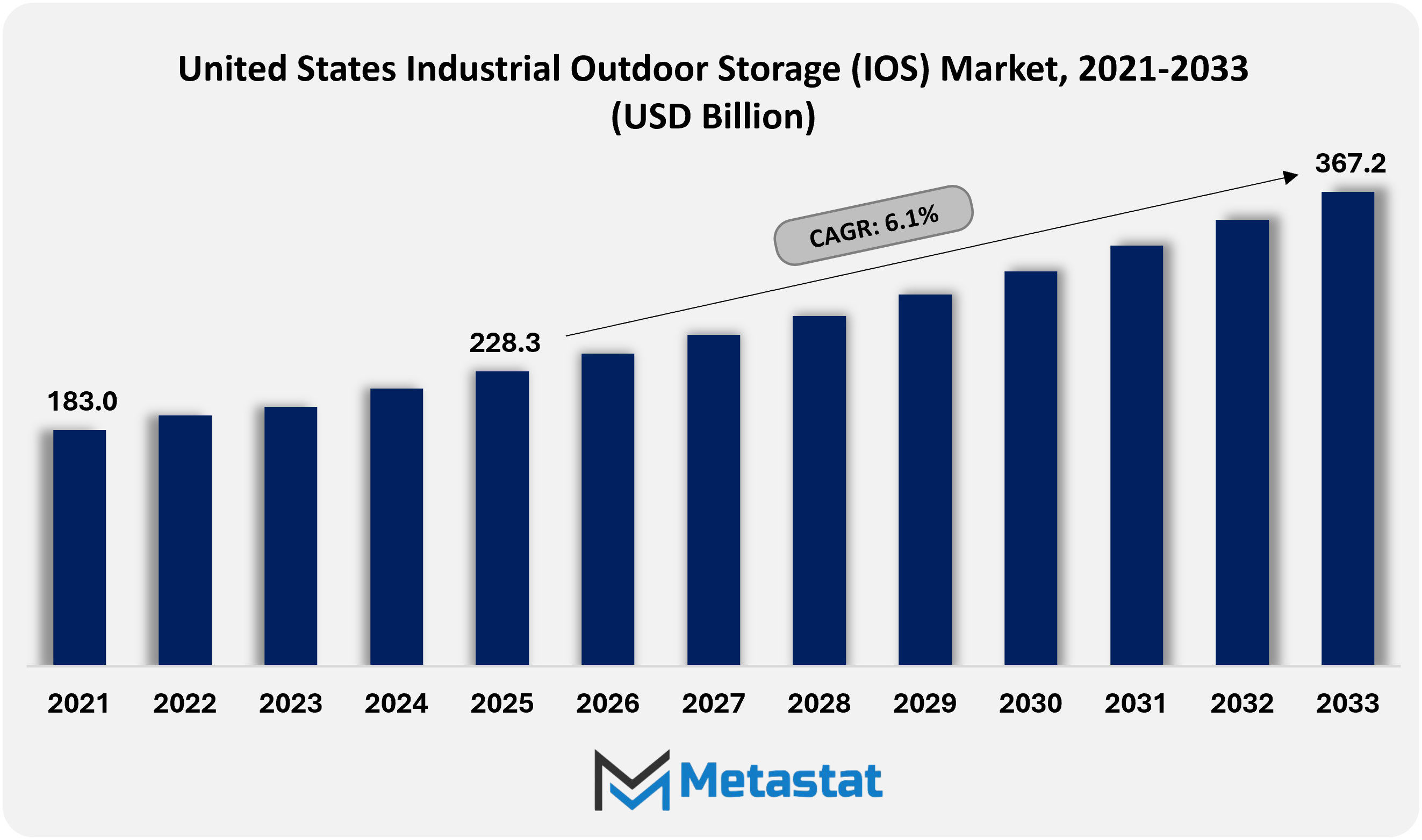
The rapid expansion of online retail, cross-border freight flows, and expectations for faster delivery continues to drive demand for truck parking, trailer storage, and outdoor yards. Major freight corridors across the United States will experience persistent pressure for purpose-built outdoor storage solutions that support high volumes and efficient distribution networks.
Limited availability of industrial-zoned land with large yard capacity near ports, highways, and rail links will push higher IOS rents. Such constraints will attract institutional investors and private equity firms seeking stable returns. Outdoor storage assets are increasingly recognized as a distinct, income-generating real estate category.
Local zoning laws, long approval timelines, and resistance from local communities will often delay or restrict IOS site improvements. Concerns linked to traffic congestion, noise levels, and visual impact will continue to influence municipal decisions, limiting the pace of new IOS site development and expansion.
Outdoor storage operations face higher exposure to weather conditions, environmental compliance requirements, and safety standards. Regulations related to stormwater management, soil conservation, and surface contamination increase operating costs and require additional investment in monitoring and access control.
Consolidation strategies and redevelopment of underutilized industrial parcels into structured IOS yards will present strong growth potential. Since data remains limited, early movers will benefit from pricing inefficiencies, while institutional participation will bring operational discipline and long-term scalability to the sector.
The United States Industrial Outdoor Storage (IOS) market is classified based on Type, Industry, and Revenue Source.
Storage Containers segment is estimated at USD 70.8 billion in 2026 and is projected to reach USD 107.6 billion by 2033, at a CAGR of 6.2% during 2026-2033.
Storage containers continue to attract attention to their durability and modular design. Industrial operations will rely on container-based solutions to store equipment, raw materials, and surplus inventory. The future will emphasize weather resistance, easy relocation, and scalable layouts, making container storage suitable for changing operational requirements in industrial areas.
Open yards will be necessary for storage of large sized goods and bulk materials. Construction materials, heavy machinery and industrial components increasingly occupy organized open spaces. Future yard layouts will focus on better access control, surface durability and spatial planning to increase safety and handling efficiency without closed structures.
Racks and shelving systems support vertical space utilization in outdoor settings. Industrial storage strategies increasingly adopt corrosion-resistant materials and flexible configurations. Future designs aim to balance access and load capacity, allowing better organization of equipment, spare parts and packaged goods while reducing crowding at ground level.
Logistics and Transportation segment is projected to reach USD 115.9 billion by 2033, at a CAGR of 6% during the forecast period.
Logistics and transportation operations rely on outdoor storage to manage fleet parking, container storage, and load staging. Future logistics planning will integrate outdoor storage sites near transit hubs to improve turnaround times and reduce bottlenecks during peak demand cycles.
Construction segment is projected to reach USD 91.8 billion by 2033, at a CAGR of 6.2% during the forecast period.
Construction activity supports the demand for outdoor storage areas, which are used for materials, equipment, and temporary assets. Future construction planning will prioritize nearby storage yards to reduce transportation delays. Organized outdoor storage improves project timelines, cost control, and site coordination across expanding urban and infrastructure activity.
E-commerce growth will increase storage requirements. Outdoor storage will support packaging materials, delivery vehicles, and overflow inventory. Future strategies will integrate outdoor storage near fulfillment centers to enable faster dispatch, seasonal volume shifts, and flexible space management across high-velocity distribution networks.
Automotive operations utilize outdoor storage for vehicle staging, spare parts, and components. Automotive supply chains of the future prioritize safe and well-maintained outdoor areas near manufacturing and distribution points. Outdoor storage will support smooth inventory movement and better space utilization in production cycles.
Municipal services rely on external storage for public works equipment, maintenance vehicles and infrastructure materials. Future planning emphasizes centralized storage locations to support emergency response readiness, routine maintenance activities, and efficient asset management in expanded urban service areas.
Other industries will adopt outdoor storage to support specific operational needs. Agriculture, energy and utility sectors will use outdoor spaces for equipment and material handling. Future adoption will focus on customized layout, regulatory compliance, and long-term land use planning to suit industry-specific requirements.
Sales-based models support long-term ownership of outdoor storage assets. Organizations invest in permanent storage infrastructure to ensure control and optimization. Sustainability priorities, land value appreciation, and operational control aligned with long-term planning horizons will propel the sale segment over the forecast period.
Rent segment is projected to reach USD 315.1 billion by 2033 with a share of 84.6% in 2025.
Rental models expand owing to flexibility and low upfront investment. Businesses prefer rented outdoor storage to manage temporary projects and fluctuating demand. The future rental offering will focus on short-term scalability, location convenience, and adaptable contracts to meet emerging industrial requirements.
The United States industrial outdoor storage (IOS) market continues to attract investment interest as demand rises for flexible, open-air storage solutions supporting logistics, construction, transportation, and infrastructure verticals. The market is evolving with rising industrial activity, urban expansion, and supply chain reconfiguration that require large, secure yards instead of traditional warehouses. The competitive landscape reflects a mix of established real estate firms and specialized IOS operators shaping acquisition, development, and management practices across key industrial corridors.
Multiple leading players have strengthened their positions by acquiring strategically located sites near highways, ports, and industrial corridors. Companies such as Alterra Property Group (Alterra IOS), Industrial Outdoor Ventures, LLC, Peakstone Realty Trust, and Realterm are building portfolios aligned with tenant requirements for access and operational efficiency. Common strategies include upgrading yard surfaces, enhancing security, and offering flexible lease terms to deliver reliable outdoor storage capacity. These developments reflect a shift from basic land ownership toward value-driven asset management.
Medium-sized and niche companies play an important role in the IOS market by targeting specific needs and regional demand. JIOS (Jadian Capital), Triten Real Estate Partners, Delphen Industrial LLC and Zenith IOS have expanded through select acquisitions and partnerships that support tenant-specific use cases. Meanwhile, operators such as Murphy Logistics, ConGlobal, National IOS, Lynx Contractor Storage, and RecNation Storage focus on operational efficiency and tailored services, supporting strong tenant relationships in competitive locations.
New and diverse players continue to go into the market, in addition to intensifying the aggressive surroundings. Outpost, Criterion Group LLC, and Iconic Equities are examples of organizations that might be building IOS-centred strategies along broader industry investments. As opposition increases, primary tendencies will probably focus on zoning compliance, and technology-driven control practices. Together, these competitors will make contributions to a marketplace that is becoming more organized, tenant-centred, and aware of industrial storage desires throughout the USA. 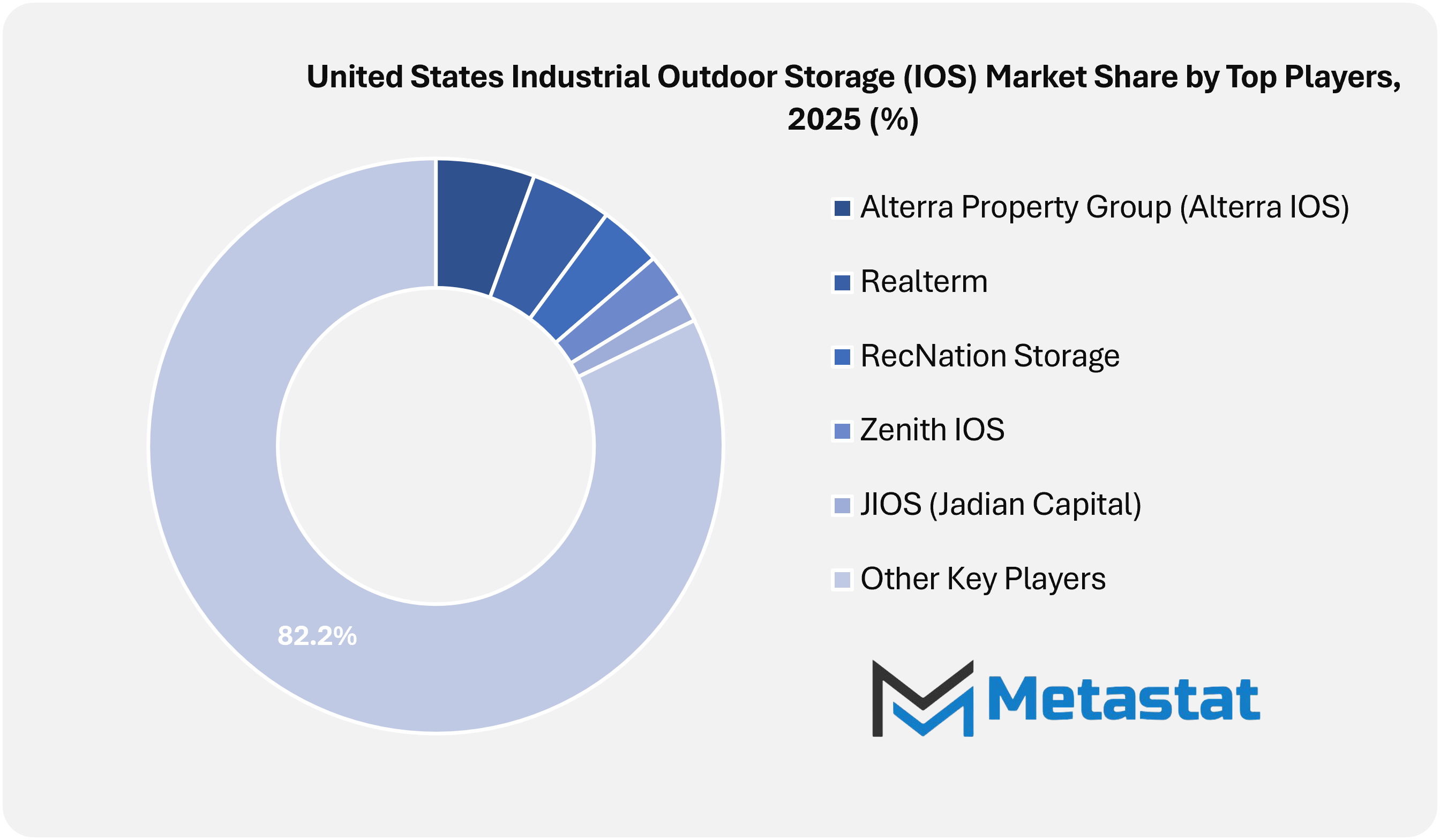
Market size is forecast to rise from USD 228.3 billion in 2025 to over USD 367.2 billion by 2033.
From an investment and planning perspective, the United States Industrial Outdoor Storage (IOS) market attracts attention for its adaptability during industrial transformation. Supply chain rebalancing and shifts in heavy asset ownership patterns position IOS as a buffer that absorbs operational uncertainty without demanding permanent structural commitments. The capability supports sustained relevance as industries reassess how and where physical assets are staged, stored, and mobilized.
This research report categorizes the Industrial Outdoor Storage (IOS) market based on key segments and regions, forecasts revenue growth, and analyses trends in each submarket. The report analyzes trends in each submarket such as Asia Pacific and Oceania. The report analyzes key growth drivers, opportunities, and challenges influencing the Industrial Outdoor Storage (IOS) market. Recent market developments and competitive strategies such as expansion, new site development, partnership, merger, and acquisition are included to present the competitive landscape.
The report strategically identifies and profiles the key market players and analyses their core competencies in each sub-segment of the Industrial Outdoor Storage (IOS) market.
|
Report Attributes |
Details |
|
Study Period |
2021-2033 |
|
Base Year |
2025 |
|
Estimated Year |
2026 |
|
Forecast Period |
2026-2033 |
|
Historical Period |
2021-2025 |
|
Growth Rate |
CAGR 6.1% from 2026 to 2033 |
|
Revenue Unit |
USD Billion |
|
Segmentation |
By Type, Industry, and Revenue Source |
|
By Type |
|
|
By Industry |
|
|
By Revenue Source |
|
Find answers to common questions about this report
The Metastat Insights study shows that the United States Industrial Outdoor Storage (IOS) market size was USD 228.3 billion in 2025.
The United States Industrial Outdoor Storage (IOS) market is likely to grow at a CAGR of 6.1% over the forecast period (2026-2033).
The Metastat Insights analysis shows that the United States Industrial Outdoor Storage (IOS) market size is estimated to be USD 367.2 billion by 2033.
The Open Yards is the leading type segment in the United States market.
Growth in e-commerce, port/border exchange and last-mile logistics and limited availability of well-located industrial-zoned land are key driving factors, boosting the market.
Zoning restrictions, permitting complexity and community opposition (noise, traffic, visual impact) often slow or block the development and expansion of IOS sites will hamper market growth within the forecast period.
United States Industrial Outdoor Storage (IOS) market is estimated to reach USD 367.2 billion by 2033.
Top players operating in the Industrial Outdoor Storage (IOS) industry include Alterra Property Group (Alterra IOS), Industrial Outdoor Ventures, LLC, Peakstone Realty Trust, Realterm, and JIOS (Jadian Capital).
The analysts below cover Machinery & Equipment research at Metastat Insights.
LEAD ANALYST
Utkarsh Khirodkar is a Lead Market Research Analyst at MetaStat Insight, specializing in market intelligence, technology sector assessments, and competitive strategy.

INDUSTRY CONSULTANT - CHEMICALS & ADVANCED MATERIALS
Chemicals and Materials · Machinery & Equipment · Packaging
Amit Gadhekar Consultant for Chemicals and Materials at MetaStat Insight, directing sector-specific intelligence, research, and strategic consulting across global chemical and processing markets.

PRINCIPAL CONSULTANT - QUALITY SYSTEMS & COMPLIANCE
Electronics and Semiconductor · Machinery & Equipment · Professional Services
Omkar Phadtare is an Industry Consultant at MetaStat Insight, specializing in quality systems, regulatory compliance, and standards benchmarking to drive data-driven market intelligence and strategic industry research.

ENERGY & INFRASTRUCTURE INDUSTRY CONSULTANT
Automotive and Transportation · Electronics and Semiconductor · Energy and Power · Machinery & Equipment
Saurabh Vasant Ganvir consults for Energy & Infrastructure Industry at MetaStat Insight, specializing in renewable energy, solar EPC, and electric vehicle (EV) infrastructure markets.

LEAD CONSULTANT - COMMUNICATION, TELECOM, AND IT
Electronics and Semiconductor · Information & Technology · Machinery & Equipment · Professional Services
Ravindra Sathe Consultants for Communication, Telecom, and IT at MetaStat Insight. He leads the firm's industry research initiatives across telecommunications infrastructure, digital connectivity, enterprise networking, and emerging information technology domains.
Last Updated: October, 2026
When evaluating distributed energy resource management systems, standard research summaries tend to gloss over the operational differences between front-of-the-meter utility deployments and behind-the-meter industrial sites. The MetaStat Insight report addressed those distinctions directly, especially regarding software interoperability standards and grid interconnection backlogs. The five-year market sizing across regional transmission organizations provided actionable context for our grid modernization strategy.
Most industry reports on warehouse automation bundle autonomous mobile robots and fixed conveyor installations into the same top-level numbers, which complicates advisory work. This study split the market cleanly by payload tiers, navigation technology, and fleet management software layers. The regional forecast for Western Europe gave our team defensible adoption benchmarks when evaluating capital allocation for logistics clients, saving us days of secondary data scrubbing.
Standard industry briefs frequently blur the operational distinctions between isobaric pressure exchangers and centrifugal turbines. In this study, MetaStat Insight categorized mega-scale desalination tenders across the GCC and Mediterranean basins by membrane replacement frequencies and salinity tolerances. Their primary research helped us evaluate local content requirements in Saudi Arabia and the UAE without relying on marketing literature. We found the segment-level equipment replacement estimates grounded and well-reasoned throughout.
Explore related market intelligence reports worth reading alongside this one.
Starting from
$2950