
LEAD ANALYST
Utkarsh Khirodkar is a Lead Market Research Analyst at MetaStat Insight, specializing in market intelligence, technology sector assessments, and competitive strategy.

US Liquid Carbon Dioxide (CO₂) Market Size, Share, By Grade (Food Grade Liquid CO₂, Medical Grade Liquid CO₂, Other Grades), By Application (Food, Beverages, Chemicals, Pharmaceuticals, Oil, Gas, Metal Fabrication, and Others), Industry Analysis, Growth, Trends, and Forecast, 2026-2033
Report ID
MSI-4582
Published
April, 2026
Pages
320 Pages
Format
Report Details
Choose Your License
US Liquid Carbon Dioxide (CO₂) Market
US Liquid Carbon Dioxide (CO₂) market size is valued at USD 1,071.3 million in 2025 and projected to grow at a CAGR of 5.2% during the forecast period, reaching USD 1,607.1 million by 2033.
US Liquid Carbon Dioxide (CO₂) market is valued at USD 1,071.3 million in 2025, growing at a CAGR of 5.2% through 2033, with potential to exceed USD 1,607.1 million.
Food Grade Liquid CO₂ segment accounts for a market share of 56.2% in 2025.
Key trends driving growth: Escalating demand for Individual Quick Freezing (IQF) in food logistics; expanding use in medical cryotherapy and minimally invasive surgeries; rising adoption in carbon capture, utilization, and storage (CCUS) projects.
Opportunities include emerging applications in sustainable cooling systems and precision metal fabrication, along with strategic sourcing from renewable biogas and Direct Air Capture (DAC) to mitigate traditional supply volatility.
Key insight: Modernization of cold chain logistics and the shift toward green CO₂ sourcing are redefining the competitive landscape, as manufacturers move from byproduct-dependent models to diversified production.
The US Liquid CO₂ market serves a broad set of industrial, food, healthcare, and controlled-environment applications beyond traditional carbonation and freezing uses. Over the forecast period, demand will increasingly favor high-purity CO₂ solutions for applications where gas consistency, moisture control, and supply reliability matter more than price alone. Product development is expected to align with biopharmaceutical handling, electronics manufacturing support, greenhouse enrichment, and other precision-controlled operating environments.
Purification technology, source diversification, and delivery efficiency will shape future competitive positioning. Producers are increasingly investing in recovery systems, advanced gas cleaning, telemetry-enabled storage, and localized micro-bulk distribution to improve supply reliability without compromising purity. Long-term supply agreements will gain prominence, enabling suppliers to tailor delivery schedules and purity specifications for food, medical, laboratory, and industrial end users.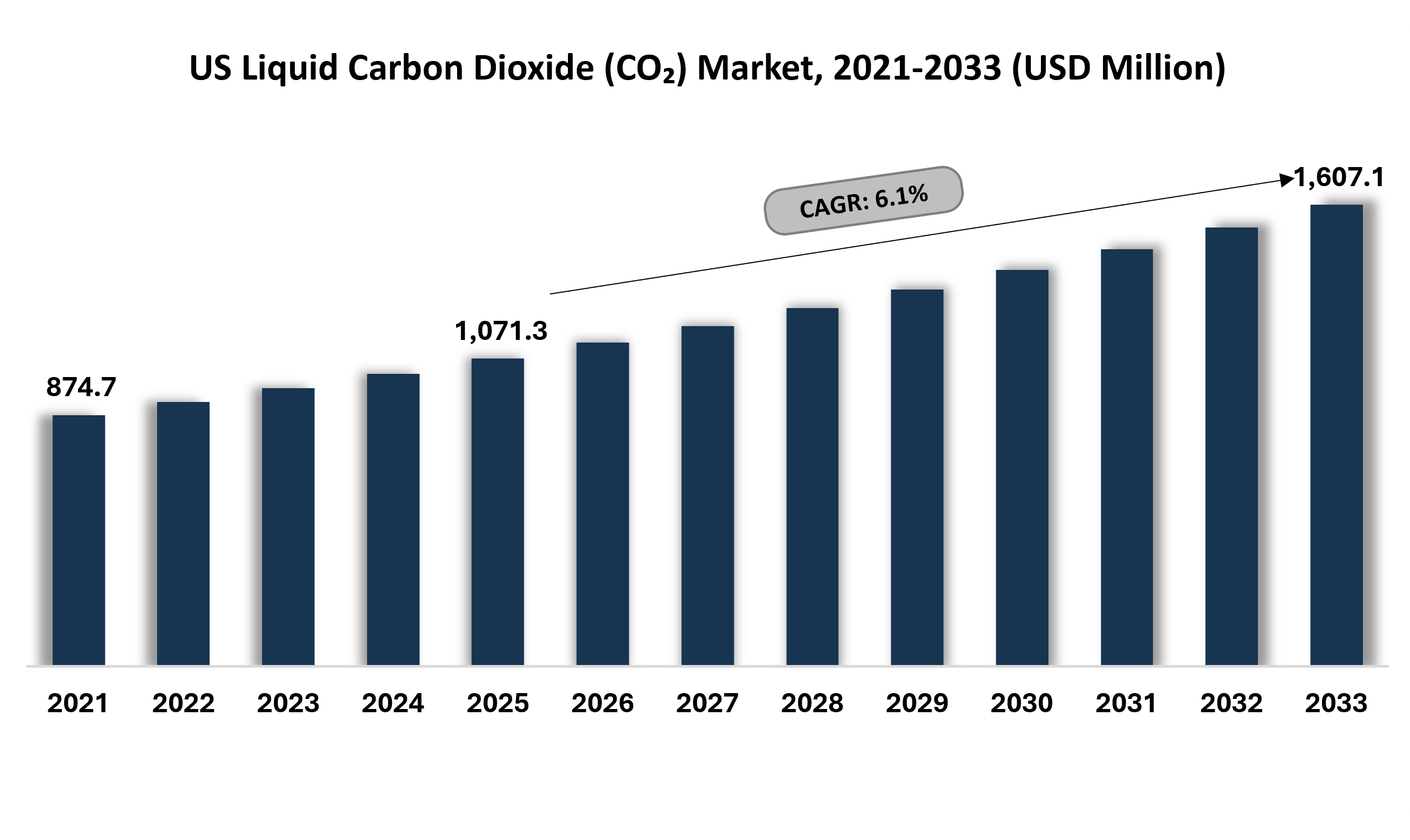
The US Liquid CO₂ market will benefit from sustained investments across the food and beverage supply chain. Rapid growth in ready-to-eat meals and export-oriented meat processing will push facilities toward liquid CO₂ for flash freezing and temperature-controlled shipping, ensuring long-term shelf stability and food safety.
Healthcare facilities will increasingly rely on medical-grade CO₂ for insufflation during surgeries and cryogenic storage for biological samples. Growth in outpatient surgical centers and the biotechnology growth in hubs like California and Washington will inspire wider use of high-purity liquid gas systems.
Restraints and Challenges:
A significant portion of CO₂ is captured as a byproduct of ammonia and ethanol production. Seasonal plant maintenance and shifts in fertilizer demand can cause regional shortages, compressing margins for end-users. Supply uncertainty will slow expansion choices in price-sensitive sectors within the US market.
Maintaining CO₂ in a liquid state requires specialized vacuum-insulated tanks and heavy-duty tanker transport. Installation complexity and the need for rigorous safety protocols for high-pressure storage will raise lifecycle expenditure, creating adoption resistance for smaller-scale industrial users.
Technological innovation will reshape future sourcing through carbon capture at the point of emission. Utilizing CO₂ from biogas or industrial flue gas will reduce environmental impact and provide a more stable supply. Such benefits will open new application zones in green electronics and support long-term expansion prospects for the US Liquid CO₂ market.
The US Liquid Carbon Dioxide (CO₂) market is segmented on Grade, Application, and Region.
The US Liquid Carbon Dioxide (CO₂) market is segmented by Grade, Application, and Region.
Food Grade Liquid CO₂ segment is valued at USD 633.5 million in 2026 and is projected to reach USD 912.8 million by 2033, at a CAGR of 5.4% during the forecast period.
Adoption will accelerate through the demand for carbonated beverages and advanced food packaging. Future production will focus on five-nines purity to meet stricter FDA safety standards.
Medical Grade Liquid CO₂ segment is valued at USD 195.7 million in 2026 and is projected to reach USD 300.5 million by 2033, at a CAGR of 6.3% during the forecast period.
Utilization remains critical for respiratory stimulation and surgical procedures. Advancements in medical device compatibility will drive steady growth across hospital networks.
Technical grades will serve heavy industrial needs, including pH balancing in wastewater and chemical synthesis where standard purity thresholds are sufficient.
Sustained by the beverage industry's need for carbonation and the food sector's reliance on cryogenic cooling.
Used as a feedstock for urea production and as a solvent in chemical processing.
Driven by the need for supercritical fluid extraction and cold-chain maintenance for temperature-sensitive drugs.
Focuses on Enhanced Oil Recovery (EOR) applications, particularly in regions with aging wells requiring pressurized injection.
Liquid CO₂ serves as a shielding gas in welding and a cooling agent in precision machining.
Includes agriculture (greenhouse enrichment), water treatment, and fire suppression.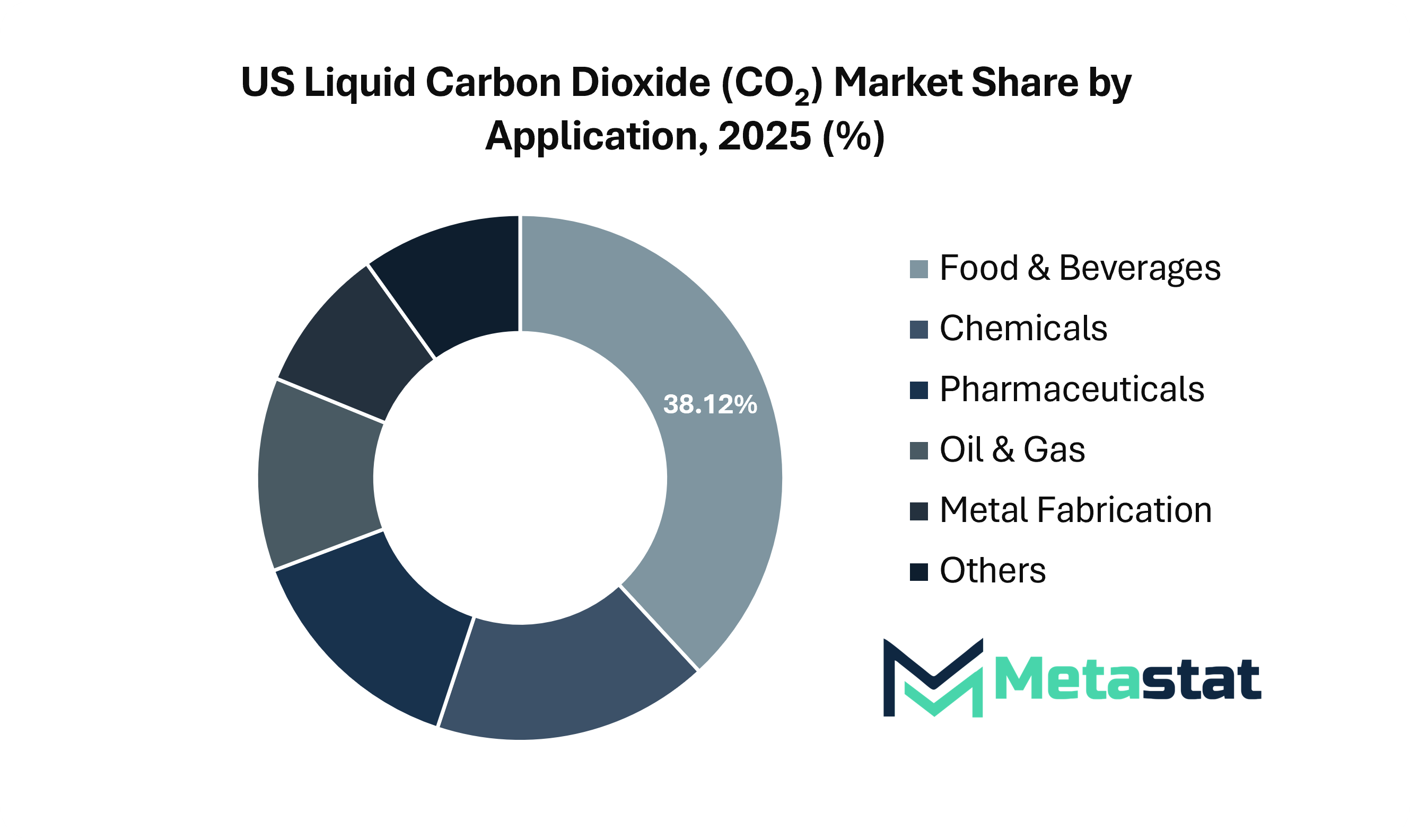
The US Liquid Carbon Dioxide market performs a crucial role in supporting modern infrastructure, specifically in food safety, healthcare, and industrial processing. Growing urban populations and stronger attention on sustainable supply chains will continue to shape the market. Several competitors dominate the market via scale and broad distribution networks. Airgas (Air Liquide S.A.), Linde Gas & Equipment Inc., and Air Products and Chemicals, Inc. lead with extensive cryogenic fleets and national reach. Their focus on high-purity standards and Gas-as-a-Service models supports long-term contracts with major food conglomerates and hospital systems. Messer North America and Nippon Sanso Matheson have strengthened their positions through strategic regional acquisitions and investment in onsite generation. Regional specialists and niche-focused groups such as American Welding & Gas, nexAir, and Roberts Oxygen play an essential role in meeting localized industrial needs. Companies like Continental Carbonic Products, Inc. focus heavily on the dry ice and liquid CO₂ interface for the logistics sector, while firms like Carbonic Systems Inc. and WestAir provide tailored engineering for specialized laboratory and fabrication environments. As sustainability becomes a core metric, players like SOL Group and INOX Air Products are increasingly exploring CCUS-sourced gas to differentiate their portfolios.
Market size is forecast to rise from USD 1,071.3 million in 2025 to over USD 1,607.1 million by 2033.
The US liquid CO₂ market will stand out as a resilience-focused segment driven by sourcing diversification rather than simple volume growth. Its future position will depend on how effectively suppliers transition toward carbon-neutral recovery methods and integrated digital supply chain monitoring to ensure reliability across the volatile industrial landscape.
This research report categorizes the Liquid Carbon Dioxide (CO₂) market based on key segments and regions, forecasts revenue growth, and analyses trends in each submarket. The report analyses the key growth drivers, opportunities, and challenges influencing the Liquid Carbon Dioxide (CO₂) market. Recent market developments and competitive strategies such as expansion, product launch, partnership, merger, and acquisition have been included to draw the competitive landscape in the market.
The report strategically identifies and profiles the key market players and analyses their core competencies in each sub-segment of the Liquid Carbon Dioxide (CO₂) market.
|
Report Attributes |
Details |
|
Study Period |
2021-2033 |
|
Base Year |
2025 |
|
Estimated Year |
2026 |
|
Forecast Period |
2026-2033 |
|
Historical Period |
2021-2025 |
|
Growth Rate |
CAGR 5.2% from 2026 to 2033 |
|
Revenue Unit |
USD million |
|
Sales Volume Unit |
Kilotons |
|
Segmentation |
By Grade, Application, and Region |
Find answers to common questions about this report
Top players operating in the Liquid Carbon Dioxide (CO₂) industry include Airgas, Inc. (Air Liquide S.A.), Linde Gas & Equipment Inc., Nippon Sanso Matheson, Air Products and Chemicals, Inc., Messer North America, Inc., American Welding & Gas, nexAir, Roberts Oxygen, Continental Carbonic Products, Inc., WestAir Gases & Equipment, General Air Service & Supply, Arc3 Gases, Central McGowan, Holston Gases, Norco Inc. Industrial and Gas, Indiana Oxygen Company, Keen Compressed Gas, Butler Gas Products, Red Ball Oxygen, Maine Oxy, Terry Supply Company, Southwest Gases, Carbonic Systems Inc., INOX Air Products Pvt. Ltd., Praxair Technology, Inc., SOL Group, and Others.
The Metastat Insights study shows that the US Liquid Carbon Dioxide (CO₂) market size was USD 1,071.3 million in 2025.
The US Liquid Carbon Dioxide (CO₂) market is expected to grow at a CAGR of 5.2% over the forecast period (2026-2033).
US Liquid Carbon Dioxide (CO₂) market is estimated to reach USD 1,607.1 million by 2033.
The analysts below cover Chemicals and Materials research at Metastat Insights.
LEAD ANALYST
Utkarsh Khirodkar is a Lead Market Research Analyst at MetaStat Insight, specializing in market intelligence, technology sector assessments, and competitive strategy.

INDUSTRY CONSULTANT - CHEMICALS & ADVANCED MATERIALS
Chemicals and Materials · Machinery & Equipment · Packaging
Amit Gadhekar Consultant for Chemicals and Materials at MetaStat Insight, directing sector-specific intelligence, research, and strategic consulting across global chemical and processing markets.
Analyzing the transition from natural gas to green hydrogen in iron ore reduction requires realistic infrastructure timelines. Meta stat insight supplied a detailed regional assessment of DRI plant conversion costs and scrap metal availability in North America and Western Europe. Their report carefully examined pellet quality specs and electrical grid access constraints without making oversimplified market assumptions. The research material served as a practical reference during internal technology roadmap discussions.
Integrating zero-trust access controls across legacy electronic health record systems involves complex compliance overhead. Team produced an analysis that clearly separated identity governance and administration tools from privileged access management platforms. Their evaluation of HIPAA and GDPR compliance features across cloud native solutions gave our architecture group clear baseline criteria. The custom data request regarding biometric authentication adoption in hospital networks was returned promptly with clear documentation.
Evaluating calorific value requirements and air permit compliance across municipal waste facilities requires localized data. Metastat Insight structured their analysis around operational throughput capacity and feedstock composition variations in Latin America and Eastern Europe. Their competitive mapping of sorting equipment vendors helped clarify technology differences between optical separators and heavy media systems. The study provided an objective baseline during our capital expenditure reviews.
Explore related market intelligence reports worth reading alongside this one.
Starting from
$2950