
LEAD ANALYST
Utkarsh Khirodkar is a Lead Market Research Analyst at MetaStat Insight, specializing in market intelligence, technology sector assessments, and competitive strategy.

Vietnam Roasted Coffee Market Size, Share, By Product Form (Whole Bean Coffee, Loose Ground Coffee, Drip Bag Coffee, Coffee Pods and Capsules, Others), By Coffee Bean Type (Robusta, Arabica, Arabica-Robusta Blends, Liberica and Excelsa), By Roast Level (Light Roast, Medium Roast, Medium-Dark Roast, Dark Roast), By Distribution Channel (Supermarkets and Hypermarkets, Convenience Stores, Specialty Coffee Stores and Roasteries, Online Retail, Foodservice and HoReCa), Industry Analysis, Growth, Trends, and Forecast, 2026-2033
Report ID
MSI-5336
Published
September, 2026
Pages
250 Pages
Format
Historical
Base year
Forecast
Forecast period
Report Details
Market Valuation: Valued at $5,324 Million in 2025, projected to reach $8,050.1 Million by 2033 at a 5.3% CAGR.
Dominant Segment: The Whole Bean Coffee segment leads the market, driven by increasing consumer preferences for fresh and high-quality coffee products. This trend is supported by the rise of specialty coffee shops that emphasize whole bean offerings for superior flavor.
Geographic Lead: Urban areas in Vietnam are experiencing the fastest growth in coffee consumption, influenced by a burgeoning coffee culture and a shift towards premium and specialty products among younger demographics.
What's Inside: The report provides comprehensive coverage of market dynamics, competitive landscape, and detailed segmentation across product forms, coffee bean types, roast levels, and distribution channels. It includes forecasts for 2026 to 2033, offering insights into future market trends.
Market Opportunity: Significant opportunities exist as urban consumers increasingly seek diverse coffee products, particularly in the Whole Bean and Loose Ground Coffee segments. Infrastructure modernization and digital transformation initiatives are enhancing market accessibility and consumer engagement.
Choose Your License
Vietnam Roasted Coffee Market
The Vietnam Roasted Coffee market was valued at USD 5,324 million in 2025 and is projected to reach USD 8,050.1 million by 2033, growing at a CAGR of 5.3% over the forecast period.
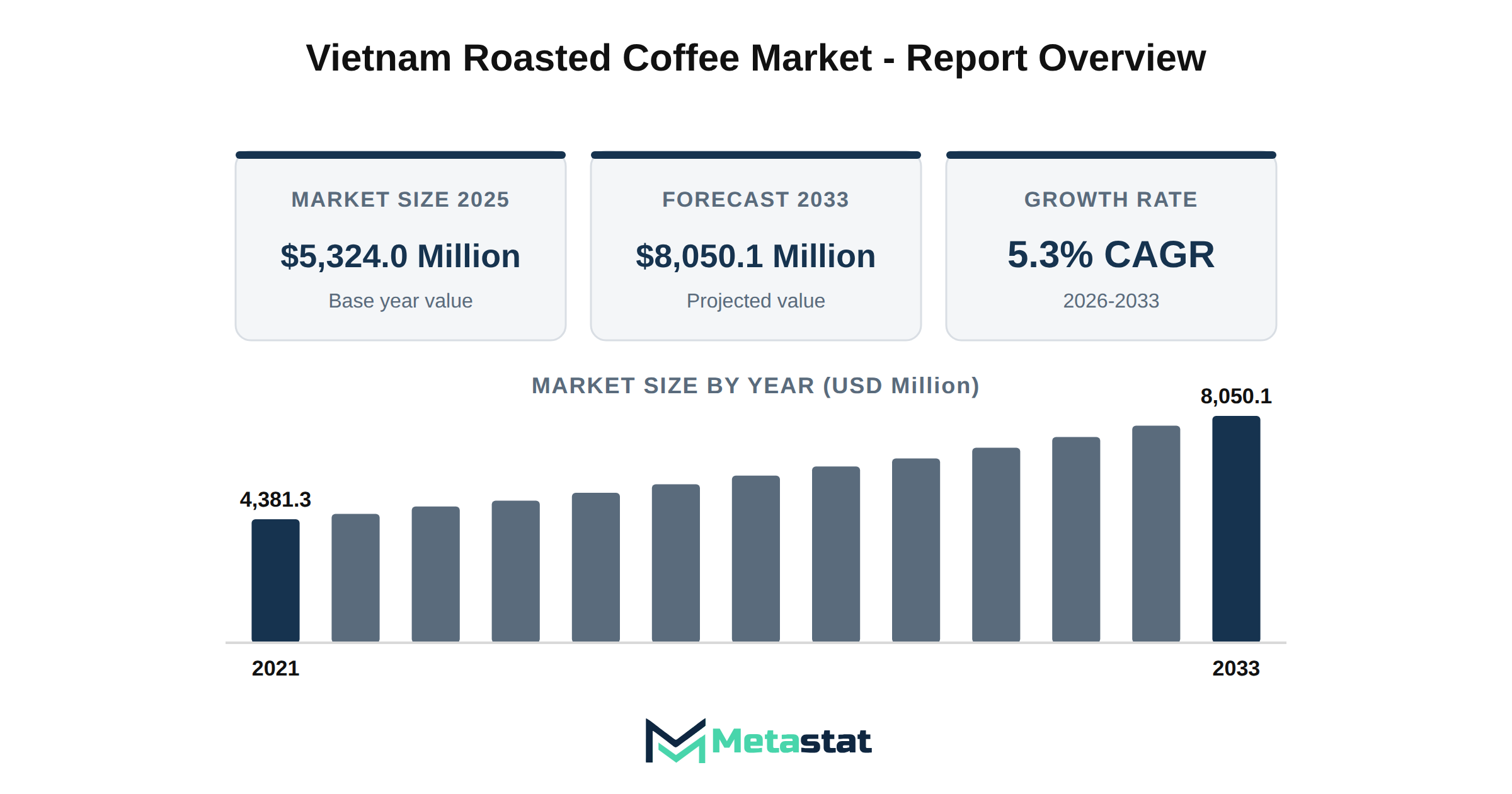
The Vietnam Roasted Coffee market reached a valuation of USD 5,324 million in 2025, reflecting a significant increase from USD 4,381.3 million in 2021. This upward trajectory is projected to continue, with an estimated market value of USD 8,050.1 million by 2033, resulting in a compound annual growth rate (CAGR) of 5.3% during the forecast period from 2026 to 2033.
Vietnam's coffee consumers increasingly favor premium and specialty products, a shift driven by evolving preferences and a growing appreciation for quality. This trend aligns with the dominance of Robusta coffee, which shapes the market structure, accounting for several market participants in total production. Urban consumers are gradually embracing Arabica and specialty coffee, enhancing the overall market appeal and contributing to its diversification.
The emergence of third-wave coffee culture significantly influences premium roasted coffee consumption. Consumers seek unique flavors and high-quality beans, propelling demand for artisanal products. The convenience of drip bag coffee enhances its appeal, allowing consumers to enjoy quality brews without the complexity of traditional brewing methods.
In urban households, coffee pods and capsules are gaining traction, aligning with modern consumer lifestyles that prioritize convenience. Simultaneously, medium and light roasts benefit from the growing adoption of specialty coffee, reflecting a shift in preferences toward more nuanced flavors. Traditional dark roast preferences persist, continuing to influence mass-market demand and ensuring a broad product range.
Online retail serves because a crucial channel for brand discovery and sales, facilitating access to a diverse array of roasted coffee products. Specialty roasteries play a vital role in strengthening Vietnam's premium coffee ecosystem, promoting innovation and quality in the market.
Supermarkets and hypermarkets remain key distribution channels for packaged roasted coffee, providing consumers with easy access to a variety of options. The expansion of foodservice and café establishments further supports the consumption of roasted coffee, catering to a growing demand for quality beverages in social settings.
Shifts in consumer demand toward premium and specialty products significantly influence the Vietnam Roasted Coffee market. Urban consumers increasingly select high-quality offerings, favoring unique flavors and artisanal production methods. This trend aligns with a broader appreciation for specialty coffee, enhancing the market's overall value.
Robusta coffee dominates the market, comprising a substantial portion of total production. Its resilience and adaptability to local growing conditions contribute to this dominance, establishing a foundation for roasted coffee products. However, a growing interest in Arabica and specialty varieties emerges, particularly among discerning consumers seeking diverse flavor profiles.
The rise of third-wave coffee culture creates an environment where premium roasted coffee consumption flourishes. This cultural shift emphasizes quality, sustainability, and innovative brewing techniques, advancing consumer preferences for unique coffee experiences. The market experiences a notable increase in demand for drip bag coffee, appealing to consumers seeking convenience without compromising quality.
Urban households increasingly adopt coffee pods and capsules, reflecting a shift toward more convenient brewing methods. This trend drives market growth by catering to busy lifestyles while maintaining quality standards. Meanwhile, medium and light roasts benefit from the adoption of specialty coffee, attracting consumers who seek a diverse range of flavors and aromas.
Traditional dark roast preferences maintain influence within the mass market, appealing to consumers who value familiarity and robust flavors. Despite the growth of lighter and specialty offerings, dark roasts continue to represent a significant segment of consumer choices.
The online retail channel plays a crucial role in accelerating brand discovery and sales, providing consumers with access to a wider variety of products. This channel adapts to changing shopping habits and preferences, driving significant growth in the market. Specialty roasteries contribute to the premium coffee ecosystem, offering unique products and creating a community of coffee enthusiasts.
Supermarkets remain a vital distribution channel for packaged roasted coffee, meeting consumer demand for convenience and accessibility. The expansion of foodservice establishments and cafés supports overall roasted coffee consumption, enhancing market growth opportunities.
Domestic coffee brands intensify competition in the packaged roasted coffee segment, innovating to capture consumer interest. At the same time, international brands expand their presence in the premium market, introducing diverse offerings that cater to evolving consumer preferences. Sustainable coffee sourcing gains importance, with traceability and origin-based branding shaping consumer purchasing decisions.
Advanced roasting technologies improve flavor consistency and product differentiation, enabling brands to stand out in a competitive landscape. The emergence of single-origin and fine Robusta products creates new growth opportunities within the premium segment, appealing to consumers seeking unique coffee experiences.
E-commerce and direct-to-consumer models transform distribution channels, allowing brands to reach consumers more effectively. Rising disposable income supports increased consumption of premium roasted coffee, particularly in urban areas like Ho Chi Minh City and Hanoi, which lead in specialty coffee demand.
Lastly, coffee tourism strengthens demand for locally roasted Vietnamese coffee, highlighting the nation's rich coffee heritage. Export-oriented roasters expand value-added coffee production, further positioning Vietnam because a key player in the global coffee market. Packaging innovations extend product freshness and support premium positioning, enhancing market competitiveness.
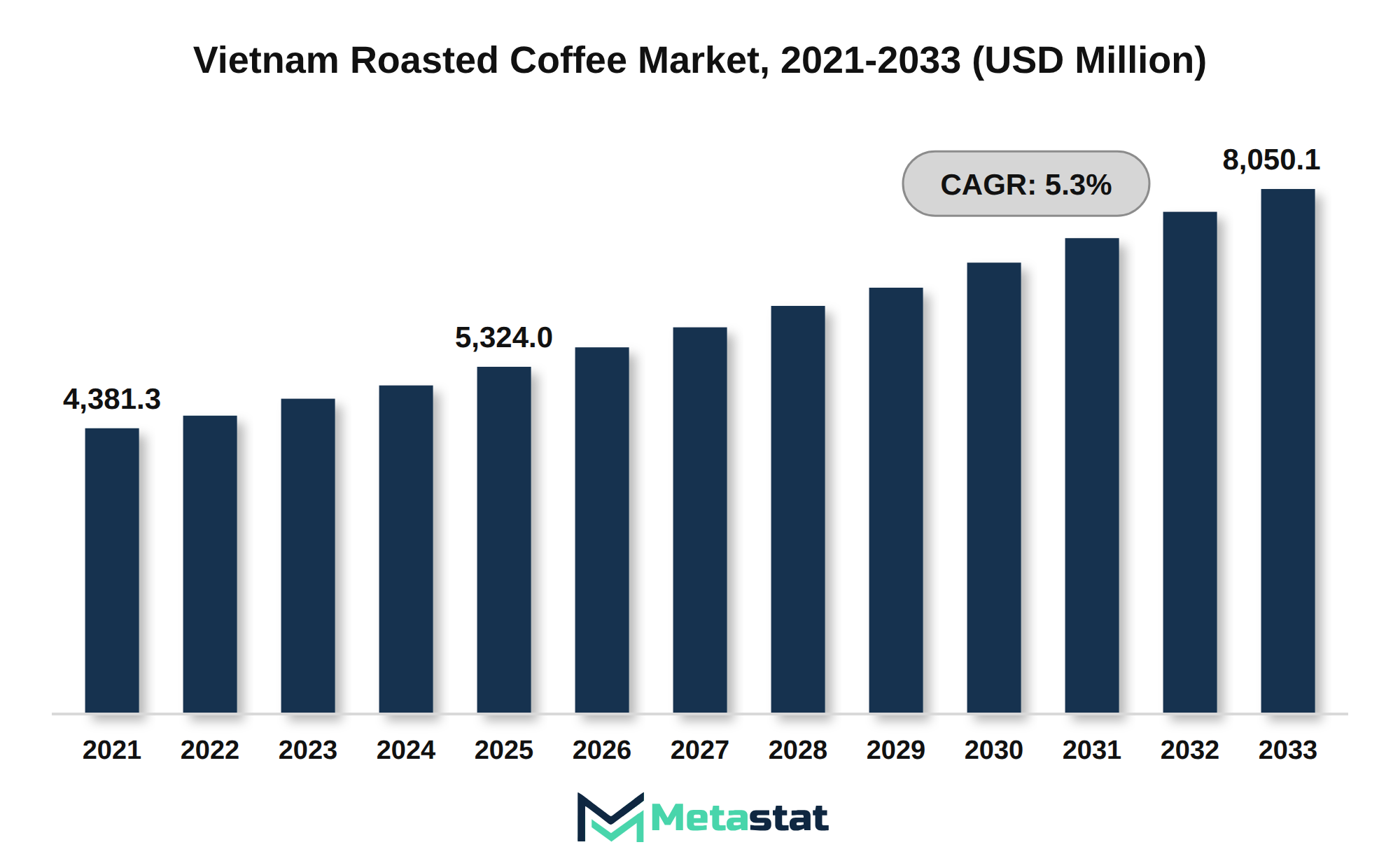
The Vietnam Roasted Coffee market experiences growth driven by urbanization and shifting consumer lifestyles. Rapid urban migration leads to increased coffee consumption patterns, particularly among younger demographics. These consumers favor convenience and quality, resulting in heightened demand for ready-to-drink options and specialty coffee products. The rise of coffee culture in urban areas fuels interest in diverse coffee types, including whole bean and ground coffee, aligning with evolving preferences.
Capital investment in the coffee sector supports the expansion of coffee shops and online retail channels, enhancing accessibility and variety for consumers. The growth of specialty coffee stores and roasteries reflects a trend toward premiumization, where consumers prioritize high-quality ingredients and unique flavor profiles. This focus on quality aligns with broader trends in consumer behavior, where individuals increasingly seek artisanal and sustainable products.
Market growth is influenced by technological advancements in coffee production and distribution. Automation in processing and the rise of e-commerce platforms streamline operations, making premium products more accessible to consumers. Embracing these technological changes positions players to capitalize on emerging trends and demand for high-quality coffee offerings.
The Vietnam Roasted Coffee market experiences notable growth driven by advancements in technological integration. Automation and artificial intelligence streamline production processes, enhancing operational efficiency and reducing costs. Producers increasingly adopt software solutions that digitize legacy processes, leading to improved inventory management and distribution accuracy. This evolution in technology supports a more agile response to consumer demands, particularly for specialty coffee products.
Investment in research and development emerges because a priority for companies within the market, leading to innovation-led product diversification. Increased focus on proprietary technology allows companies to expand their offerings, catering to evolving consumer preferences while improving sustainability practices. The integration of technology not only enhances productivity but encourages transparency in sourcing and production, aligning with consumer expectations for ethical governance.
With a growing emphasis on sustainability and resource stewardship, the market capitalizes on technological advancements that support circular economy initiatives. The push for reduced carbon footprints leads to the adoption of smart agriculture practices and energy-efficient production techniques. This trend benefits both producers and consumers, aligning market growth with broader environmental goals.
Regulatory compliance in the Vietnam Roasted Coffee market imposes significant barriers to entry for new producers. Compliance requirements, including stringent quality standards and safety regulations, create additional operational burdens that increase production costs. Smaller companies struggle to meet these regulations, limiting their market participation and negatively impacting overall competition.
Macroeconomic headwinds contribute to the challenges faced by producers. Inflationary pressures raise raw material costs, leading to higher prices for consumers. This situation deters potential buyers, affecting sales and limiting growth opportunities within the market.
Supply chain disruptions further complicate market dynamics. Global logistics challenges result in delays and increased transportation costs, impacting the timely availability of roasted coffee products. Producers face difficulties in sourcing quality beans and other essential materials, which hinder production efficiency and profitability.
Technological obsolescence represents an additional constraint in the market. Advances in coffee production technology require continuous investment. Companies that do not upgrade their processes risk falling behind and losing market share to more innovative competitors.
Market fragmentation poses a challenge due to the diverse preferences of consumers. Varied tastes across different regions lead to a wide range of product offerings, making it difficult for brands to establish a strong foothold. This fragmentation dilutes marketing efforts and increases customer acquisition costs.
The Vietnam Roasted Coffee market encounters cultural barriers that influence consumer preferences. Traditional coffee drinking habits resist shifts toward new product forms, including coffee pods and capsules. Such resistance limits the adoption of innovative products and slows market growth.
Geopolitical fragmentation significantly influences the Vietnam Roasted Coffee market, creating an environment characterized by trade deficits and tariff friction. These factors contribute to uncertainties in supply chains, affecting the cost and availability of raw materials. Producers face increased challenges in sourcing coffee beans, particularly due to fluctuations in international trade relations. Consequently, businesses experience considerable operational pressures, because rising import costs raise overall expenditures and impact profitability.
Logistical disruptions stemming from geopolitical tensions hinder the efficient movement of goods, leading to delays and increased transportation costs. Supply chain instability complicates inventory management and planning, challenging suppliers to maintain consistent product availability. This situation results in heightened competition among businesses, constraining market growth and limiting the ability to meet evolving consumer demands.
The market faces pressures from tightening regional regulatory standards, driving compliance overhead for producers. Adapting to these requirements necessitates additional investments in technology and processes, diverting resources that could support innovation and expansion. Such compliance challenges, coupled with fluctuating pricing and margin pressures, create an environment where businesses navigate complex operational landscapes to sustain their market positions.
The Vietnam Roasted Coffee market presents substantial opportunities driven by evolving consumer preferences and increasing demand for diverse coffee products. Emerging regional demands for premium and specialty coffee among urban consumers contribute to higher sales, particularly in the Whole Bean and Loose Ground Coffee segments. Geographical expansion into rural markets uncovers untapped potential, allowing suppliers to cater to a broader customer base.
Infrastructure modernization enhances distribution efficiency, facilitating access to various coffee formats and boosting sales through supermarkets and online retail channels. Digital transformation initiatives enable companies to engage with consumers more effectively, employing social media and e-commerce platforms to promote their products. This shift in buying behavior emphasizes the need for brands to adopt comprehensive digital procurement strategies.
Technological disruptions including advancements in roasting techniques and equipment lead to improved product quality and consistency. Sustainability imperatives increasingly influence consumer choices, pushing brands to adopt eco-friendly practices and transparent sourcing methods. The market's alignment with environmental, social, and governance (ESG) standards strengthens brand loyalty and attracts environmentally conscious consumers.
Downstream market diversification and product integration present additional growth avenues. Coffee businesses explore niche applications, including health-oriented coffee products and ready-to-drink formats, catering to health-conscious consumers. Strategic consolidation through cross-industry mergers enhances competitive positioning, allowing companies to leverage synergies and broaden their product offerings.
Supply chain localization promotes resilience and reduces dependency on imports, enhancing operational efficiency. This trend correlates with asset life-cycle extensions, where investments in maintenance upgrades and retrofitting dynamics provide long-term financial benefits. Value-chain optimization through process automation and yield maximization supports profitability in the Vietnam Roasted Coffee market, positioning businesses for growth.
The Vietnam Roasted Coffee market is segmented based on Product Form, Coffee Bean Type, Roast Level, and Distribution Channel.
Valued at USD 1,695.5 million in 2026, the Whole Bean Coffee segment is projected to reach USD 2,345.8 million by 2033, at a CAGR of 4.7% during the forecast period. This growth results from increasing consumer preferences for fresh and high-quality coffee products, which lead to a greater emphasis on whole bean offerings. Rising numbers of specialty coffee shops and roasteries further increase demand, driven by these establishments frequently highlighting whole bean coffee for its superior flavor and aroma characteristics.
Technological advancements in coffee grinding and brewing techniques enhance the overall consumer experience, promoting the popularity of whole bean coffee. Consumers increasingly seek out premium products, which drive segment expansion and intensify the competition among suppliers within the Vietnam Roasted Coffee market. While the market evolves, producers invest in sustainable sourcing practices, which appeal to environmentally conscious consumers and influence purchasing decisions.
Price volatility within raw material markets impacts the whole bean coffee segment, creating margin pressures for producers. The ability to manage cost structures effectively is crucial for maintaining profitability. In response to changing consumption trends, companies develop innovative blends and flavors that cater to diverse consumer preferences, ensuring relevance in a competitive landscape. Segmental growth and investment opportunities continue to shape the dynamics of the Vietnam Roasted Coffee market.
Growth in the Loose Ground Coffee segment reflects a shift in consumer preferences toward convenience and versatility in coffee preparation. The segment is estimated to reach USD 3,632.2 million by 2033, at a CAGR of 4.2% during the forecast period. Factors driving this expansion include an increase in home brewing activities and the rising popularity of on-the-go coffee options. The ongoing trend of specialty coffee culture influences demand, driven by consumers seeking higher quality and diverse flavor profiles in their coffee selections.
Technological advancements play a role in segment development, with innovations in packaging and preservation methods enhancing the quality and shelf life of loose ground coffee products. Retail channels, including supermarkets and online platforms, facilitate easier access for consumers, thus expanding market reach. This strong alignment between consumer behavior and product offerings positions the Loose Ground Coffee segment favorably within the broader Vietnam Roasted Coffee market.
Growth in the Drip Bag Coffee segment aligns with evolving consumer preferences for convenience and quality in the Vietnam Roasted Coffee market. Increasing adoption of ready-to-brew options reflects a shift towards on-the-go lifestyles, driving demand among busy professionals and millennials seeking efficient coffee solutions.
This segment is expected to reach USD 1,060.2 million by 2033, driven by technological maturation and product evolution that enhance brewing experiences. Innovations in packaging, including single-serve formats, provide consumers with consistent flavor profiles and ease of use, further supporting market growth.
Rising interest in specialty coffee experiences influences the Drip Bag Coffee segment, with consumers seeking diverse flavor options and unique sourcing stories. Increased awareness of the quality of coffee beans, influenced by sustainability practices, impacts purchasing decisions and creates a competitive environment among suppliers.
Pricing volatility in the market contributes to margin pressures for producers, particularly amid fluctuating raw material costs. Strategic opportunities exist for companies that streamline operations and enhance their sourcing capabilities. These strategies enable companies to meet the growing demand while maintaining profitability.
Overall, the Drip Bag Coffee segment thrives within the broader context of the Vietnam Roasted Coffee market. This segment is characterized by dynamic consumer trends and a competitive environment that continually adapts to meet shifting expectations.
Growing consumer preference for convenient coffee solutions drives the Coffee Pods and Capsules segment within the Vietnam Roasted Coffee market. The segment is projected to grow at a CAGR of 9.1% during the forecast period. This shift aligns with broader trends towards on-the-go consumption and increasing demand for single-serve options. Rising busy lifestyles lead consumers to seek products that offer quick preparation and consistent quality.
Technological advancements in brewing and packaging enhance the appeal of coffee pods and capsules. Innovations in flavor preservation and sustainability, including the use of biodegradable materials, attract environmentally conscious consumers. Expansion of online retail channels facilitates easier access to these products, supporting growth in this segment.
Market dynamics show strong competition among brands focusing on the Coffee Pods and Capsules segment. Companies invest in marketing strategies and product diversification to capture a larger share. Anticipated growth in this sub-segment contributes positively to the overall market, reflecting a significant shift in consumer behavior and preferences.
Consumer preferences increasingly shift toward convenience-oriented products, driving interest in alternatives including Coffee Bags and Single-Serve Pour-Over Packs. These products cater to on-the-go consumers who prioritize quick preparation without compromising on quality. The growing awareness regarding sustainability and eco-friendly packaging influences purchasing decisions, encouraging brands to innovate in product offerings and design.
The market experiences notable expansion through technological advancements in single-serve brewing methods. Innovations in brewing technology enhance the flavor profile and convenience of these coffee options, appealing to consumers seeking quality and ease of use. This evolution in product offerings contributes to the competitive landscape, driven by established brands and new entrants striving to capture market share in this segment.
End-use dynamics indicate growing demand from various consumer demographics, including young professionals and busy households. Increased urbanization leads to a greater emphasis on convenience, making single-serve options a preferred choice. The trend toward premiumization in coffee consumption aligns with the desire for high-quality experiences, further fueling the adoption of innovative products in the Vietnam Roasted Coffee market.
Regulatory compliance regarding food safety and packaging standards shapes product development within this sub-segment. Brands that adhere to these regulations not only enhance consumer trust but benefit from reduced risks associated with compliance issues. Effective supply chain management ensures that raw materials are sourced sustainably and logistics frameworks are resilient against market fluctuations.
Strategic opportunity windows emerge for companies looking to differentiate their offerings within the Vietnam Roasted Coffee market. By focusing on unique flavor profiles and sustainable practices, brands create compelling narratives that appeal to environmentally conscious consumers. Capital investment in research and development is essential to drive innovation, ensuring that products meet evolving consumer expectations while remaining competitively priced.
Valued at USD 3,170.7 million in 2026, the Robusta segment is projected to reach USD 4,216.7 million by 2033, at a CAGR of 4.2% during the forecast period. Factors driving demand include the robust flavor profile and lower acidity of Robusta coffee, catering to consumers seeking a strong and rich coffee experience. The segment's growth is supported by increasing consumption in both domestic and international markets, driven by shifting preferences towards affordable yet high-quality coffee products.
Adoption of Robusta coffee aligns with the rising trend of instant coffee products and coffee blends, enhancing its appeal among diverse consumer segments. Technological advancements in processing methods have improved the quality of Robusta coffee, making it more competitive against Arabica varieties. The market has observed a growing interest in sustainable sourcing practices, influencing purchasing decisions among environmentally conscious consumers.
The emerging trend of specialty coffee shops and cafés promotes the inclusion of Robusta in their offerings, further expanding its market presence. Price stability remains vital, with fluctuations in raw material costs impacting profit margins for producers. Efforts to establish stronger supply chain networks enhance resilience against potential disruptions, ensuring steady availability of Robusta coffee to meet increasing demand in the Vietnam Roasted Coffee market.
In the Vietnam Roasted Coffee market, the Arabica segment demonstrates strong potential, projected to reach USD 1,218.8 million by 2033, at a CAGR of 6.8% during the forecast period. This growth reflects a transition towards higher-quality coffee, driven by an increase in consumer interest in specialty and premium products. Rising disposable incomes and a growing café culture contribute to the demand for Arabica beans, recognized for their superior flavor profile compared to other varieties.
Evolving consumer preferences emphasize sustainable sourcing and traceability, influencing purchasing decisions. Brands that ensure compliance with these consumer expectations gain competitive advantages in the market. Consequently, investments in quality assurance and sustainable practices become essential for suppliers aiming to capture a larger share of this segment.
Technological advancements in coffee production and processing enhance product offerings, catering to the sophisticated tastes of coffee drinkers. Innovations in brewing methods and preparation techniques attract consumers seeking unique coffee experiences. The segment's appeal in specialty coffee shops drives growth, aligning with trends favoring artisanal and crafted beverages.
With the Arabica segment's momentum in the Vietnam Roasted Coffee market, significant opportunities exist for investment in cultivation and supply chain enhancements. Addressing challenges including climate change and crop disease remains crucial for ensuring consistent quality and supply, thereby supporting long-term growth in this segment.
Consumer interest in the Arabica-Robusta Blends segment emerges from a combination of flavor complexity and affordability. This segment is expected to reach USD 1,986 million by 2033, reflecting a growing demand for blends that balance the boldness of Robusta with the aromatic qualities of Arabica. The trend toward premium coffee experiences drives this growth, reflecting consumers' desire for diverse flavor profiles and higher-quality offerings in the Vietnam Roasted Coffee market.
Market dynamics indicate a notable shift toward blended coffee products, often favored for their versatility and accessibility. This segment benefits from evolving brewing techniques and increased availability across distribution channels, particularly through online platforms and specialty coffee stores. Such developments enhance consumer access and broaden market appeal, allowing for greater engagement with diverse customer bases.
The Arabica-Robusta Blends segment capitalizes on rising health consciousness among consumers, who associate coffee with various health benefits. This awareness drives an increase in consumption among health-oriented individuals seeking products with lower acidity and higher antioxidant properties. Consequently, brands focusing on this segment leverage marketing strategies that emphasize the health aspects of their blends, further driving demand within the market.
Investment in quality sourcing and sustainable practices within this segment shapes consumer preferences. While ethical consumption becomes more prominent, brands that prioritize transparency and sustainability in their sourcing practices experience increased loyalty from environmentally conscious consumers. This consumer segment significantly influences purchasing decisions, enhancing overall growth prospects for the Arabica-Robusta Blends within the Vietnam Roasted Coffee market.
Growing interest in specialty coffee varieties enhances demand for Liberica and Excelsa beans within the Vietnam Roasted Coffee market. Unique flavor profiles and the increasing popularity of diverse coffee experiences drive consumer preferences toward these beans. The segment grows at a CAGR of 6.9% during the forecast period, reflecting an expanding appreciation for distinct coffee flavors.
Consumption of Liberica and Excelsa beans aligns with broader trends in the market, where consumers increasingly seek out unique and high-quality coffee options. The growth of artisanal coffee shops and specialty cafes frequently featuring such offerings reflects this trend. Investment in marketing and product innovation targeting these segments enhances their visibility and availability.
While consumer awareness regarding various coffee types increases, suppliers in the market look to expand their product lines to incorporate Liberica and Excelsa varieties. This strategic focus on product evolution allows for differentiation in a competitive landscape, catering to niche markets that appreciate the distinctive attributes of these beans. The transition toward specialty coffee significantly influences overall consumption patterns, reshaping the market's dynamics.
Growing interest in unique coffee experiences influences the Others (Catimor, Typica, Bourbon and Other Specialty Arabica Varieties) segment within the Vietnam Roasted Coffee market. This segment receives attention from consumers seeking distinctive flavors and high-quality offerings, driving demand among both enthusiasts and casual drinkers. The trend toward specialty coffee has prompted producers to explore diverse bean types, enhancing product variety and encouraging innovation in flavor profiles.
Adoption of these specialty varieties benefits from increased consumer awareness and education regarding coffee origins and brewing methods. Many consumers prioritize quality, seeking premium experiences that improve their daily coffee rituals. This shift in consumer behavior encourages brands to invest in sourcing and promoting specialty beans, aligning with the growing preference for artisanal products.
Strategic opportunity windows arise for producers focused on this segment. By emphasizing sustainability and ethical sourcing practices, brands appeal to environmentally conscious consumers, enhancing market positioning. Collaborations with local producers enhance authenticity and strengthen community ties, creating added value in the eyes of consumers.
Innovative brewing methods and preparation techniques emerge due to vital factors shaping consumption dynamics. While coffee culture evolves, consumers increasingly experiment with diverse brewing options, further promoting the appeal of specialty varieties. This evolution stimulates interest and drives demand for robust and unique flavor experiences within the market.
Investment in marketing and education initiatives highlights the distinct characteristics of specialty Arabica varieties. While consumers develop a deeper appreciation for the complexities of flavor profiles and brewing techniques, the potential for growth in the Others segment continues to expand. Engaging storytelling around the origins and cultivation of these beans significantly strengthens consumer connection and loyalty.
Valued at USD 644.2 million in 2026, the Light Roast segment is projected to reach USD 1,067.4 million by 2033, at a CAGR of 7.5% during the forecast period. This growth is attributed to increasing consumer preferences for lighter coffee flavors, which are perceived because healthier and more aromatic. The trend aligns with the rising demand for specialty coffee, which emphasizes flavor profiles and quality over traditional dark roasting methods. While consumers become more adventurous in their coffee choices, the Light Roast segment benefits from evolving tastes and preferences.
Technological advancements in coffee roasting processes further enhance product quality and consistency, attracting both new consumers and established coffee enthusiasts. The influence of social media and coffee culture promotes awareness and appreciation for Light Roast varieties, driving consumer engagement and purchase intent. The expansion of online retail channels facilitates broader access to specialty coffees, including light-roasted options, thus fueling market growth.
Strategic opportunities present themselves for producers in the Vietnam Roasted Coffee market, focusing on sourcing high-quality beans that create distinctive light roast profiles. This approach not only enhances product offerings but addresses the growing demand for sustainably sourced coffee, appealing to environmentally conscious consumers. Overall, the combination of flavor innovation, consumer education, and improved retail access strengthens the Light Roast segment's position because a significant contributor to the growth of the market.
Consumer preferences for Medium Roast coffee are rising, reflecting a distinct inclination towards well-balanced flavor profiles and moderate acidity. This shift is reflected in the segment's estimated revenue of USD 2,184.8 million by 2033, at a CAGR of 6.4% during the forecast period. The growing demand is driven by a diverse consumer base ranging from casual coffee drinkers to connoisseurs, all seeking a robust yet smooth tasting experience. Factors contributing to segment growth include evolving lifestyle trends favoring convenience and quality, along with increased exposure to global coffee varieties and brewing techniques.
Retail dynamics play a crucial role in the Medium Roast segment, particularly through the expansion of specialty coffee shops and online retail channels. Enhanced accessibility to premium products facilitates consumer trials and adoption, driving sales across various distribution channels. The market remains sensitive to price fluctuations, influenced by raw material sourcing and production costs, which impact profitability. However, consistent investment in quality and branding by producers strengthens market positioning and builds consumer loyalty.
Technological advancements in coffee preparation and brewing methods contribute to the evolving landscape of the Medium Roast segment. Innovations in equipment and techniques enhance the quality of brewing, appealing to a broader audience. While the market adapts, opportunities arise for new entrants and established players to differentiate their offerings through unique blends and sustainable practices. This ongoing evolution in the market reflects a commitment to meeting the sophisticated tastes of consumers while supporting sustainable sourcing and production standards.
Interest in the Medium-Dark Roast segment reflects a growing consumer preference for bolder coffee flavors, contributing to its anticipated market value of USD 2,505.2 million by 2033. This segment benefits from increasing exposure to diverse coffee profiles and an expanding café culture, enhancing its appeal among coffee enthusiasts. The trend toward medium-dark roasting techniques allows for a balance of rich flavor and aroma, attracting consumers seeking depth in their coffee experience.
Demand remains steady, driven by younger consumers who favor unique taste profiles and an affinity for artisanal products. The flourishing café culture in Vietnam aligns with evolving consumer preferences toward specialty and premium coffee offerings. Investments in marketing and product development focusing on medium-dark roast varieties strengthen competitive positioning within the market.
Pricing stability within the Medium-Dark Roast segment results from strategic sourcing and roasting practices that optimize quality while managing costs. This segment faces minimal substitution risks, given its established consumer base and distinct flavor characteristics that differentiate it from lighter roast varieties. The market exhibits resilience against price volatility, supported by a robust supply chain that ensures consistent availability of high-quality beans.
Market dynamics in the Dark Roast segment exhibit several distinctive characteristics. This segment is projected to grow at a CAGR of 3.5% during the forecast period. Factors driving this growth include increasing consumer preference for robust flavors and a growing trend toward premium coffee experiences. The complexity and depth of flavor associated with dark roast attract a diverse range of consumers, from casual drinkers to coffee enthusiasts. The segment benefits from the rising popularity of specialty coffee shops and cafes in Vietnam, enhancing visibility and accessibility for these products.
The market landscape indicates that educational initiatives by roasters and retailers significantly impact consumer choices. Awareness of different roast profiles is increasing, leading more consumers to explore dark roast options, which encourages experimentation and loyalty. Economic factors, including rising disposable incomes, contribute to increased spending on premium coffee products, further supporting segment expansion.
Price stability in the dark roast segment is essential for maintaining consumer interest. Competitive pricing amid rising raw material costs challenges suppliers while encouraging innovation in product offerings. Supply chain resilience and strategic partnerships with local coffee farmers enhance sourcing capabilities, ensuring quality and consistency in dark roast products. Overall, the dark roast segment within the Vietnam Roasted Coffee market demonstrates growth potential driven by evolving consumer preferences and market dynamics.
Valued at USD 1,738.2 million in 2026, the Supermarkets and Hypermarkets segment is projected to reach USD 2,313.6 million by 2033, achieving a CAGR of 4.2% during the forecast period. This segment benefits from increasing consumer demand for convenience and accessibility in purchasing roasted coffee products. Growth in this distribution channel stems from a preference for one-stop shopping experiences, encouraging consumers to purchase coffee alongside other daily essentials.
Strategic expansions by retailers, along with enhanced marketing efforts, position the Supermarkets and Hypermarkets segment for continued growth. The Vietnam Roasted Coffee market reflects a broader trend toward premiumization, where consumers seek higher-quality coffee options. This market shift prompts supermarkets and hypermarkets to diversify their coffee offerings, including specialty and gourmet products, aimed at discerning consumers.
Pricing strategies within this segment are important, particularly due to potential fluctuations in raw material costs. Retailers actively manage pricing to attract price-sensitive consumers while ensuring profitability. The dynamic nature of consumer preferences necessitates continuous adaptation to market trends, further driving the evolution of product assortments within the segment. Overall, the segment's performance is closely tied to consumer trends, competition among retailers, and ongoing investment in marketing and product innovation.
Increasing demand for ready-to-consume coffee products enhances the Convenience Stores segment within the Vietnam Roasted Coffee market. The convenience of purchasing coffee on the go attracts consumers seeking quick and accessible options. Busy lifestyles drive individuals to opt for convenient coffee solutions, increasing the appeal of this distribution channel.
Valued at USD 1,738.2 million in 2026, the segment is estimated to reach USD 1,258.2 million by 2033, at a CAGR of 4.7% during the forecast period. This growth reflects robust consumer lifestyles and preferences leaning toward instant coffee products. Rising disposable income among Vietnamese consumers further supports this trend, facilitating greater spending on coffee purchases.
Product evolution significantly contributes to this segment's expansion. The introduction of innovative packaging and product formulations allows for improved convenience and freshness, appealing to busy consumers. Collaborations with local coffee brands enhance market presence and accessibility.
Strategic location placement of convenience stores enhances visibility and creates opportunities for impulse purchases. The growing number of outlets in urban areas ensures a larger customer base, contributing to the segment's growth. Retailers increasingly adapt their offerings to cater to local tastes and preferences, driving sales in the Convenience Stores segment.
Overall, the Convenience Stores segment reflects a dynamic shift in consumption habits, positioning itself favorably within the Vietnam Roasted Coffee market. This trend aligns with broader developments in consumer behavior and retail strategies, promising continued growth opportunities in the coming years.
Consumer interest in high-quality coffee experiences significantly influences the growth of the Specialty Coffee Stores and Roasteries segment within the Vietnam Roasted Coffee market. This segment is expected to reach USD 1,624.5 million by 2033, reflecting the increasing demand for unique and premium coffee offerings. The proliferation of specialty coffee shops aligns with shifting consumer preferences for artisan and locally sourced products, driving the segment's expansion.
Technological advancements contribute to the evolution of brewing methods and equipment, enhancing the quality and variety of coffee served in specialty stores. This evolution attracts a diverse customer base seeking unique coffee experiences, fueling further growth in the segment. Concurrently, rising disposable incomes and changing lifestyles encourage consumers to explore gourmet coffee options, increasing sales across specialty coffee outlets.
Effective branding and marketing strategies employed by specialty coffee stores enhance their visibility and appeal. Social media presence and community engagement serve because important factors in attracting customers, thus strengthening market positioning. With an emphasis on quality and customer experience, these stores carve out an increasing share in the competitive environment of the market, contributing to the overall positive outlook for the Vietnam Roasted Coffee market.
Consumer trends toward online shopping significantly influence the Online Retail segment within the Vietnam Roasted Coffee market. The convenience of accessing a wide variety of coffee products from home drives this growth. Valued at USD 1,738.2 million in 2026, the segment is projected to grow at a CAGR of 9.4% during the forecast period. Increasing smartphone penetration and improved internet access facilitate the expansion of e-commerce platforms dedicated to coffee sales.
Shifts in consumer behavior reflect a preference for purchasing roasted coffee online, particularly among younger demographics who prioritize convenience and variety. The ability to compare prices and explore unique blends influences purchasing decisions, further enhancing demand in this segment. The growing trend of subscription services for coffee provides consumers with an efficient experience, encouraging retention and repeat purchases.
Competition within the market intensifies, prompting retailers to invest in user-friendly online interfaces and personalized marketing strategies. Innovations including virtual tastings and interactive content on e-commerce platforms engage customers and create a sense of community. Such advancements position the Online Retail segment favorably for sustained growth throughout the forecast period.
Demand for coffee in the Foodservice and HoReCa channel stems from a growing inclination toward quality and variety in beverage offerings. Establishments prioritize sourcing high-quality coffee to enhance customer satisfaction, driving competition among suppliers to provide quality products. The rise of specialty coffee beverages influences pricing strategies and margin pressures within the segment, compelling providers to focus on product differentiation and unique offerings.
Adoption of innovative brewing technologies enhances the customer experience. Establishments increasingly invest in advanced equipment to prepare premium coffee drinks efficiently. The market experiences an ongoing evolution of product offerings, including ready-to-drink options and unique blends tailored to consumer preferences. This trend aligns with overall consumption shifts toward artisanal and gourmet products.
Regulatory compliance and certification standards play a crucial role in the Foodservice and HoReCa segment. Establishments adhere to food safety and quality guidelines to maintain customer trust and operational integrity. The focus on sustainability and ethically sourced products has become prominent, with many consumers favoring brands that demonstrate responsible sourcing practices.
Strategic opportunities arise from the growing trend of coffee culture in Vietnam. Cafes and restaurants provide unique experiences that capitalize on local tastes and preferences. Investment in marketing strategies that highlight these unique offerings and the use of locally sourced materials enhances brand loyalty and customer retention in the market.
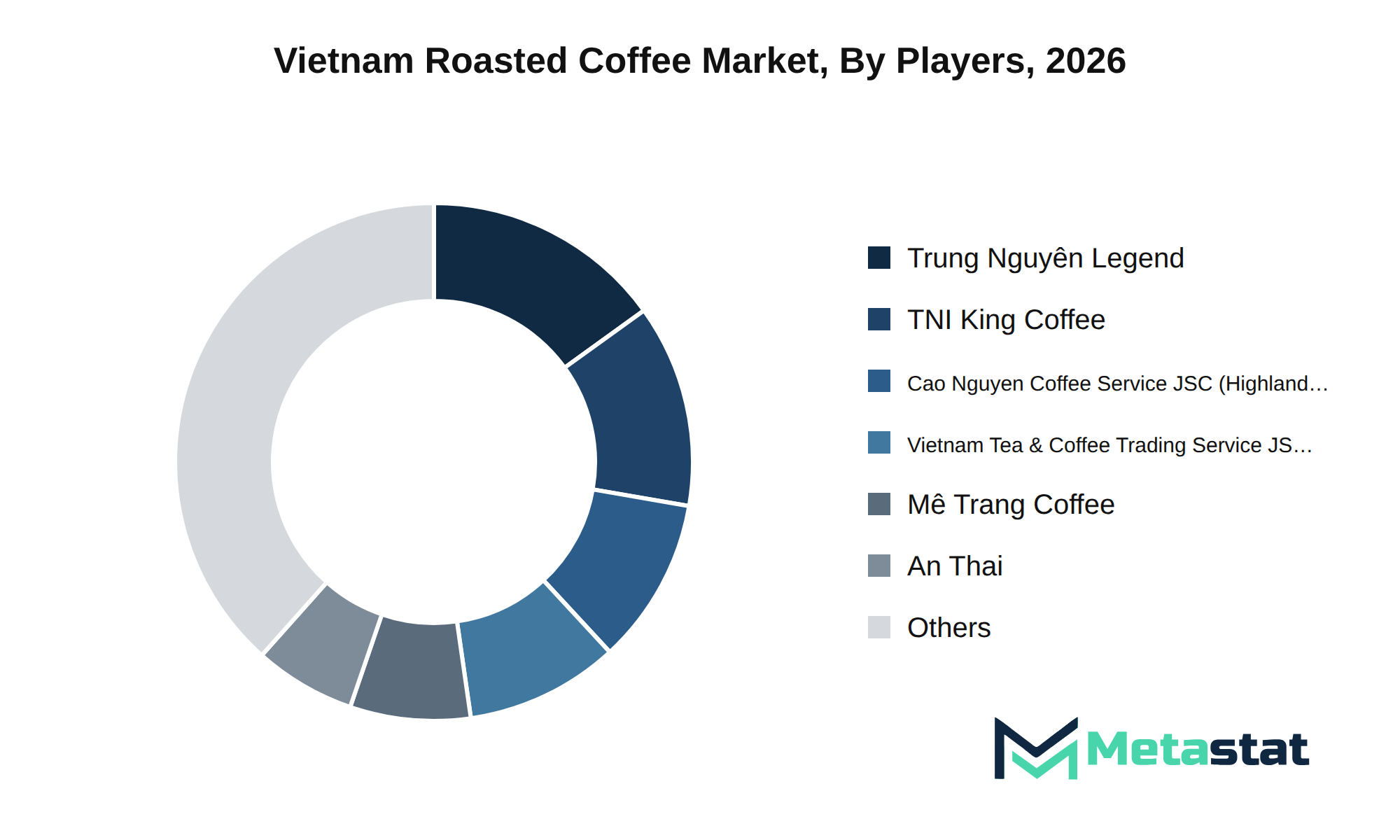
The Vietnam Roasted Coffee market features a competitive environment characterized by strategic alliances and product differentiation. Key players including Trung Nguyên Legend and TNI King Coffee Co., Ltd. focus on enhancing their market presence through innovative product offerings, including specialty coffee forms and unique blends. These companies leverage strong brand equity and customer retention strategies to maintain loyalty among consumers.
Market dynamics involve ongoing research and development efforts aimed at creating proprietary technologies and improving quality across various coffee products. Companies like Cao Nguyen Coffee Service JSC (Highlands Coffee) and Vietnam Tea & Coffee Trading Service JSC (The Coffee House) adopt aggressive go-to-market strategies that emphasize distribution through supermarkets, hypermarkets, and online retail channels. Such distribution channels play a crucial role in reaching a broad customer base and enhancing accessibility to products.
The threat of new entrants remains a consideration in the market. Established players benefit from economies of scale and supply chain dominance, which pose obstacles for startups. However, new entrants introduce innovative concepts that challenge traditional approaches, stimulating competition and driving growth within the Vietnam Roasted Coffee market.
Overall, the competitive outlook suggests that strategic growth vectors will continue to evolve, driven by product innovation and customer-centric approaches. Companies in this market actively pursue opportunities to strengthen market positions and adapt to changing consumer preferences.
Market size is forecast to rise from USD 5,324 million in 2025 to over USD 8,050.1 million by 2033. The growth trajectory reflects a compound annual growth rate (CAGR) of 5.3%. Economic conditions, including fluctuating demand and consumer preferences, influence market dynamics. In the bull case, stronger consumer confidence and heightened demand for specialty roasted coffee could accelerate growth beyond the base forecast. In the bear case, economic downturns or unfavorable trade policies restrict market expansion, leading to modest performance.
Shifting consumption trends towards premium coffee products and the integration of next-generation technologies in production processes play significant roles in shaping the Vietnam Roasted Coffee market. Research and development advancements in coffee roasting and brewing techniques enhance product offerings, catering to evolving consumer preferences. Regulatory developments impact market operations, with compliance milestones guiding industry practices and shaping competitive landscapes. Strategic capital allocation towards infrastructure and supply chain improvements ensures alignment with market growth, addressing emerging white-space opportunities.
The future outlook for the Vietnam Roasted Coffee market remains positive, driven by structural shifts in consumption patterns and technological innovations. Companies focusing on meeting unmet enterprise needs and adapting to changing market dynamics position themselves for sustained growth and defensibility within this sector.
The report strategically identifies and profiles the key market players and analyses their core competencies in each sub-segment of the Roasted Coffee market.
Report Attributes | Details |
Study Period | 2021-2033 |
Base Year | 2025 |
Estimated Year | 2026 |
Forecast Period | 2026-2033 |
Historical Period | 2021-2025 |
Growth Rate | CAGR 5.3% from 2026 to 2033 |
Revenue Unit | USD million |
Segmentation | By Product Form, Coffee Bean Type, Roast Level, Distribution Channel, and Region |
Find answers to common questions about this report
The Vietnam Roasted Coffee market size was valued at USD 5,324 million in 2025.
The Vietnam Roasted Coffee market is projected to grow at a CAGR of 5.3% during the forecast period from 2026 to 2033.
Loose Ground Coffee leads the Vietnam Roasted Coffee market with a projected value of USD 3,632.2 million by 2033, representing the largest share among the product segments.
Key drivers for the Vietnam Roasted Coffee market include urbanization, shifting consumer lifestyles, and technological advancements. Increased coffee consumption among younger demographics prioritizes convenience and quality, while automation and innovative practices enhance production efficiency and accessibility. The rise of specialty coffee culture further fuels demand for premium products.
Regulatory compliance creates significant barriers to entry in the Vietnam Roasted Coffee market, increasing operational burdens and production costs for new producers. Macroeconomic headwinds, including inflationary pressures and supply chain disruptions, complicate market dynamics, limiting growth opportunities and impacting profitability. Cultural resistance to new product forms hinders market expansion.
The Vietnam Roasted Coffee market benefits from urbanization and shifting consumer lifestyles, leading to increased demand for convenience and quality. The rise of coffee culture in urban areas drives interest in diverse coffee types, particularly specialty products, aligning with evolving consumer preferences for premium and artisanal offerings.
The Roasted Coffee market is estimated to reach a valuation of USD 8,050.1 million by 2033.
Key players operating in the Vietnam Roasted Coffee market include Trung Nguyên Legend, TNI King Coffee Co., Ltd., Cao Nguyen Coffee Service JSC (Highlands Coffee), Vietnam Tea & Coffee Trading Service JSC (The Coffee House), An Thai Group, Mê Trang Coffee, and Soul Specialty Coffee.
Whole bean coffee is projected to reach USD 2,345.8 million by 2033, growing from USD 1,695.5 million in 2026, reflecting a compound annual growth rate of 4.7%.
The rise of coffee culture in urban areas, along with a focus on premiumization and unique flavor profiles, drives demand for specialty coffee products among younger consumers.
The analysts below cover Food and Beverages research at Metastat Insights.
LEAD ANALYST
Utkarsh Khirodkar is a Lead Market Research Analyst at MetaStat Insight, specializing in market intelligence, technology sector assessments, and competitive strategy.

LEAD PRINCIPAL ANALYST, PHARMA AND HEALTHCARE
Food and Beverages · Healthcare · Healthcare IT · Medical Devices
Ajay Devgire is the Lead Healthcare Analyst at MetaStat Insight, leading strategic research and market intelligence initiatives across the global healthcare domain.

SENIOR RESEARCH ANALYST
Biotechnology · Food and Beverages · Medical Devices · Packaging
Snehal Pasalkar is a Research Analyst at MetaStat Insight, operating at the intersection of life sciences research, competitive strategy, and market intelligence.
Tracking maintenance cycle demand for secondary flight display units and terrain collision avoidance systems across regional jet fleets involves complex aftermarket dynamics. MetaStat Insight provided practical analysis separating airline retrofit programs from OEM forward-fit production schedules in North America and Southeast Asia. The supplier matrix highlighted component obsolescence timelines without resorting to vague generalizations. The dataset served as a dependable reference during our annual program review meetings.
Evaluating secondary resin quality across post-consumer packaging streams requires reliable technical segmentation. MetaStat Insight delivered an objective assessment that distinguished between extrusion-grade flake pricing and optical sorting throughput limitations across Western Europe. The competitive positioning breakdown for licensed depolymerization technology providers answered several questions during our feedstock feasibility audit. Their team clarified regional trade restrictions on mixed plastic scrap quickly when our team submitted follow-up requests.
Evaluating sovereign cloud deployments for core banking platforms demands a clear view of data residency regulations and migration exit strategies. MetaStat Insight delivered an exhaustive review of regional latency tolerances, mainframe decommission milestones, and third-party vendor concentration risk. The regulatory compliance mapping across European and Asian financial jurisdictions gave our team a dependable baseline for multi-cloud infrastructure discussions.
Explore related market intelligence reports worth reading alongside this one.