
Explore the key trends influencing the Nickel Superalloy market, including rising investments in aerospace, lightweight materials, and regulatory compliance.
The market for Nickel Superalloy is shaped by various trends that significantly influence demand and procurement strategies, particularly in critical sectors like aerospace and defense. Understanding these trends provides insight for buyers and suppliers alike on what to expect in the evolving landscape. For a detailed analysis, refer to the Nickel Superalloy market size and forecast report.
1. Increased investment in aerospace and defense
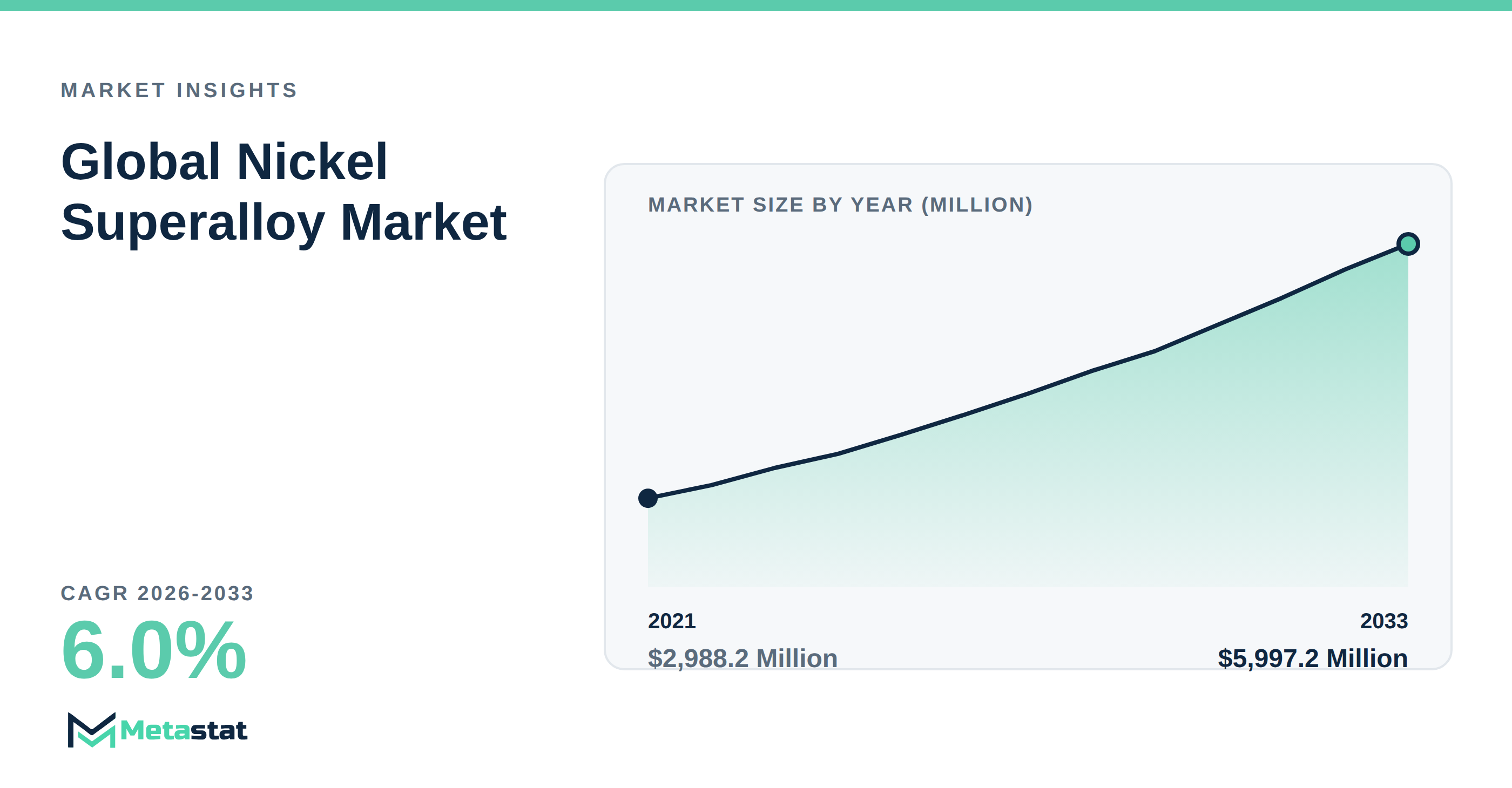
Investment in the aerospace and defense sectors continues to rise, prompting higher demand for Nickel Superalloy. Original Equipment Manufacturers (OEMs) focus on advanced materials that enhance aircraft performance while ensuring safety and reliability. This sector is anticipated to generate USD 2,872.2 million in 2026, underlining its importance in driving demand. The emphasis on high-performance materials means that OEMs and component manufacturers prioritize suppliers meeting stringent quality standards, which impacts procurement decisions and long-term contracts.
2. Demand for lightweight materials
The push for lighter and more efficient aircraft drives demand for Nickel Superalloys known for their excellent strength-to-weight ratios. To optimize fuel efficiency, buyers seek materials that provide both durability and reduced weight. This trend influences product development strategies among suppliers, motivating them to innovate consistently to meet the aerospace sector's needs. Offering lightweight options not only enhances aircraft performance but helps in meeting environmental regulations.
3. Qualification of superalloy powders for additive manufacturing
The qualification of nickel-based superalloy powders has emerged as a critical development in the market. The aerospace industry increasingly adopts additive manufacturing techniques, resulting in rising demand for qualified powders. These materials undergo rigorous testing to ensure compliance with mechanical performance criteria essential for high-stress applications. This trend compels manufacturers to invest in quality assurance processes and advanced technologies, which ensures they meet evolving industry standards and support innovative production techniques.
4. Cost management strategies amid rising production expenses
As production costs increase, especially for high-performance materials, suppliers adopt strategic cost management practices. Long-term contracts and fixed pricing agreements have become common among OEMs to mitigate the impact of price fluctuations. This approach allows manufacturers to secure stable supply chains, enabling buyers to benefit from predictable pricing, thus facilitating more efficient budgeting. The focus on cost management shapes competitive dynamics in the market for Nickel Superalloy, influencing supplier relationships and investment in operational efficiencies.
5. Regulatory compliance driving innovation
Increasing regulatory requirements related to environmental sustainability are prompting innovations in Nickel Superalloy production. Manufacturers face rising compliance costs, leading them to adopt cleaner, more efficient manufacturing processes. This regulatory landscape encourages suppliers to invest in technologies that reduce their environmental footprint while maintaining high performance. Compliance initiatives are reshaping product offerings and market strategies as companies adapt to meet both regulatory demands and customer expectations for sustainability.
These trends in the market for Nickel Superalloy reflect significant shifts in demand dynamics and procurement strategies driven by the aerospace and defense sectors. Staying informed on these developments enables buyers and suppliers to navigate the evolving landscape effectively.
Tags
About the Author

LEAD ANALYST
Utkarsh Khirodkar is a Lead Market Research Analyst at MetaStat Insight, specializing in market intelligence, technology sector assessments, and competitive strategy.