
Explore key dynamics influencing the Petrochemicals market as it evolves from 2025 to 2033. Learn about growth drivers, challenges, and regional opportunities.
The Petrochemicals market is undergoing significant transformations driven by various forces. Understanding these dynamics is essential for industry stakeholders looking to navigate this complex landscape successfully.
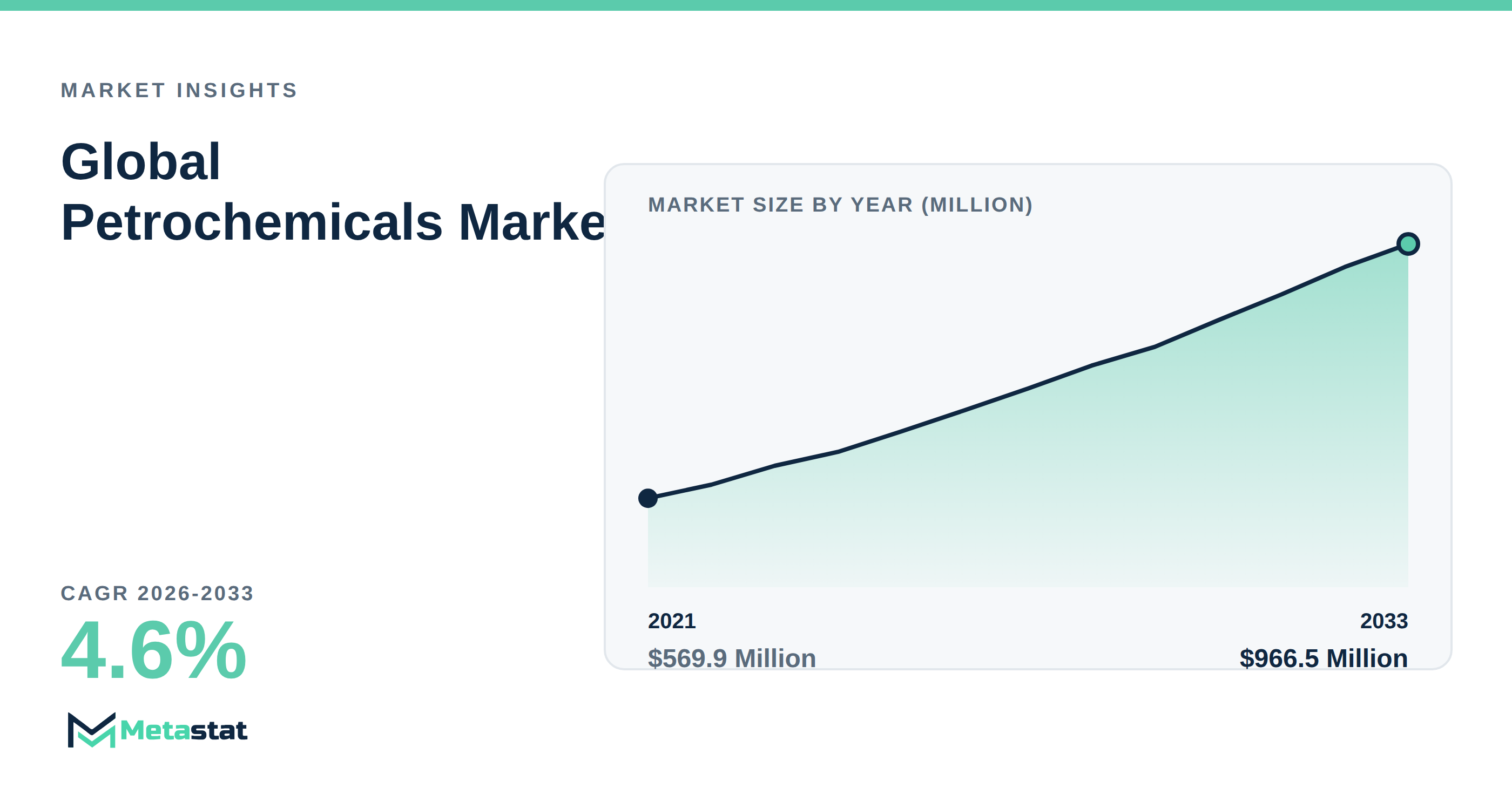
1. Macro-economic factors fuel market growth
Growth in the Petrochemicals market is closely tied to macroeconomic conditions. Rising GDP levels drive increased demand for petrochemical products, which fulfill crucial roles in sectors including automotive and healthcare. This economic momentum prompts investments in new production facilities and advancements in technology, enhancing market capacity. With higher public and private spending power, companies pursue diverse opportunities, positioning the market for sustained growth through 2033.
2. Regulatory constraints challenge operational flexibility
Regulatory compliance concerning emissions and environmental standards exerts a significant impact on the Petrochemicals market. Stricter regulations require producers to invest in cleaner technology, leading to substantial capital outlays. Such requirements create complexities in production processes and elevate operational costs, influencing profitability. Companies that successfully adapt to evolving regulations enhance their competitive edge and align operations with sustainability goals. The need for continuous innovation to meet compliance standards remains critical for maintaining relevance in the market.
3. Geopolitical tensions disrupt supply chains
Geopolitical tensions contribute to instability in supply chains essential to the petrochemicals industry. Trade deficits and tariff disagreements disrupt the flow of raw materials, resulting in unpredictable cost structures. Suppliers encounter difficulties in obtaining feedstocks at stable prices, which directly affects operational margins. Companies navigating these challenging conditions employ robust risk management strategies to cushion the effects of rising input costs, ensuring competitiveness in a tumultuous environment.
4. Regional demands drive competitive dynamics
Emerging regional demands, particularly in the Asia Pacific, significantly influence the Petrochemicals market's growth trajectory. Rapid industrialization and urbanization in countries including China and India lead to increased consumption of petrochemical products across diverse sectors. Investments in infrastructure modernization boost production capabilities, creating substantial opportunities for market players. The Asia Pacific region, holding a 50.8% market share, presents a compelling landscape for expansion, prompting companies to tailor their strategies to meet local demands.
5. Technological advancements enhance production efficiency
Technological innovations are imperative to the progress of the Petrochemicals market. Investments in automation and digital transformation are redefining traditional processes. These advancements enable companies to optimize operations and improve productivity. Enhanced production techniques lead to better yield efficiency and decreased operational costs. By focusing on next-generation applications, including lightweight composites, firms position themselves favorably for future growth, especially within the automotive and packaging sectors.
6. The shift towards sustainable practices reshapes product offerings
Increasing emphasis on sustainability reshapes product offerings within the Petrochemicals market. Companies invest in bio-based and eco-friendly alternatives to respond to changing consumer preferences. This transition not only ensures regulatory compliance but boosts brand reputation among environmentally conscious buyers. Industries including automotive and construction are adopting sustainable materials, and companies that innovate in greener product development will capture emerging market segments and strengthen their competitive stance.
These forces reshaping the Petrochemicals market highlight an industry in transition. Stakeholders should remain informed about these dynamics owing to their role in driving growth, innovation, and competition within this evolving market. For more detailed insights, refer to the Global Petrochemicals Market.
Tags
About the Authors

LEAD ANALYST
Utkarsh Khirodkar is a Lead Market Research Analyst at MetaStat Insight, specializing in market intelligence, technology sector assessments, and competitive strategy.

INDUSTRY CONSULTANT - CHEMICALS & ADVANCED MATERIALS
Chemicals and Materials · Machinery & Equipment · Packaging
Amit Gadhekar Consultant for Chemicals and Materials at MetaStat Insight, directing sector-specific intelligence, research, and strategic consulting across global chemical and processing markets.