
Explore essential questions buyers should ask suppliers in the Light Duty Truck sector to enhance operational efficiency and meet evolving needs.
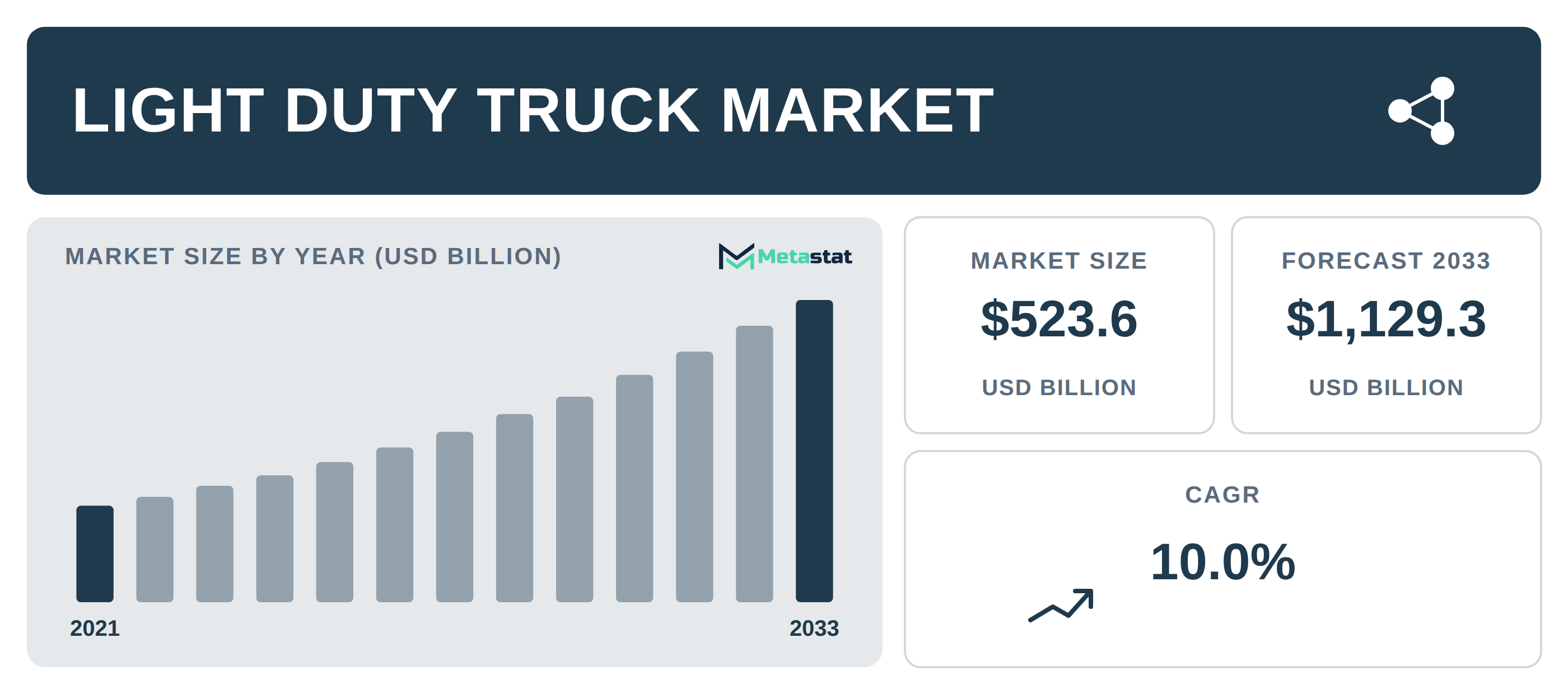
The landscape for Light Duty Truck suppliers is both dynamic and competitive. Buyers navigating this market engage their suppliers with pointed questions to ensure they meet operational needs effectively. This article discusses critical inquiries that enhance supplier relationships and drive optimal purchasing decisions. The full figures are in our Light Duty Truck market size and forecast report.

1. What are the latest advancements in battery-electric technology?
The transition towards battery-electric powertrains is reshaping the landscape for Light Duty Truck suppliers. Buyers should ask suppliers about their latest innovations in electric vehicle technology. With the battery-electric segment expected to reach USD 312.4 billion by 2033, understanding suppliers’ offerings in battery-electric models aids buyers in aligning with sustainability initiatives and evolving regulatory standards while benefiting from reduced operational costs.
2. How do you ensure vehicle reliability and performance?
Reliability and performance hold immense value in the Light Duty Truck sector. Prospective buyers should inquire about the measures suppliers implement to guarantee vehicle durability and effectiveness. Fleet operators are projected to experience significant expansion, amplifying the demand for dependable trucks. Suppliers who provide detailed testing and maintenance protocols assure buyers of the long-term value and performance stability of their vehicles, fostering trust in their capabilities.
3. Can you provide tailored solutions for specific operational needs?
Customized solutions are increasingly vital in procuring Light Duty Trucks. Buyers should ask suppliers how they modify vehicles to cater to distinctive operational requirements. The growing demand for specialized vehicles, especially in delivery services, highlights the necessity of customization. Suppliers offering specific features, including telematics and upfitting, enhance operational efficiency, allowing fleet operators to adapt more effectively to their unique demands.
4. How do you address the total cost of ownership?
Understanding the total cost of ownership remains a crucial factor for buyers. Engaging suppliers about how they calculate this total - including acquisition, maintenance, and fuel efficiency - can clarify potential long-term savings. With fleet operators increasingly opting for battery-electric trucks and hybrids, comprehending the related expenses, including charging infrastructure, becomes essential. Suppliers who present transparent pricing models will attract more budget-conscious buyers.
5. What strategies do you have in place for sustainability and emissions reduction?
Given the intensifying regulatory pressures regarding emissions, buyers should explore suppliers’ strategies for sustainability. Inquiring about initiatives to minimize carbon footprints allows buyers to align their procurement policies with environmental standards. The growing adoption of battery-electric and hybrid vehicles reflects a broader shift towards greener alternatives. Understanding suppliers' contributions to this transition is vital for buyers aiming to uphold compliance and corporate responsibility.
6. How do you plan to adapt to evolving market trends?
The market for Light Duty Truck is evolving rapidly due to trends including the rise of e-commerce and urban logistics. Buyers should question suppliers about how they intend to adapt their offerings to meet these changes. Engaging suppliers who demonstrate flexibility in product development and can anticipate market needs will better position buyers to seize opportunities and maintain a competitive edge.
7. How do you ensure effective after-sales support?
After-sales support is critical in maintaining vehicle performance and customer satisfaction in the Light Duty Truck sector. Buyers should inquire about the level of support suppliers provide post-purchase, including warranty services, maintenance options, and training for operators. Suppliers who prioritize proactive communication and effective support structures significantly influence buyers' long-term operational success, making them a preferred choice among fleet operators.
Asking these questions allows buyers to gauge supplier capabilities and align their procurement processes with the evolving dynamics of the Light Duty Truck sector. Understanding these facets not only supports informed purchasing decisions but contributes to long-term operational success.
Tags
About the Authors

LEAD ANALYST
Utkarsh Khirodkar is a Lead Market Research Analyst at MetaStat Insight, specializing in market intelligence, technology sector assessments, and competitive strategy.

ENERGY & INFRASTRUCTURE INDUSTRY CONSULTANT
Automotive and Transportation · Electronics and Semiconductor · Energy and Power · Machinery & Equipment
Saurabh Vasant Ganvir consults for Energy & Infrastructure Industry at MetaStat Insight, specializing in renewable energy, solar EPC, and electric vehicle (EV) infrastructure markets.