
Explore the crucial elements driving costs in the Fiber Reinforced Polymer Rebar market. Understand how material choice, regional dynamics, and more influence pricing strategies.
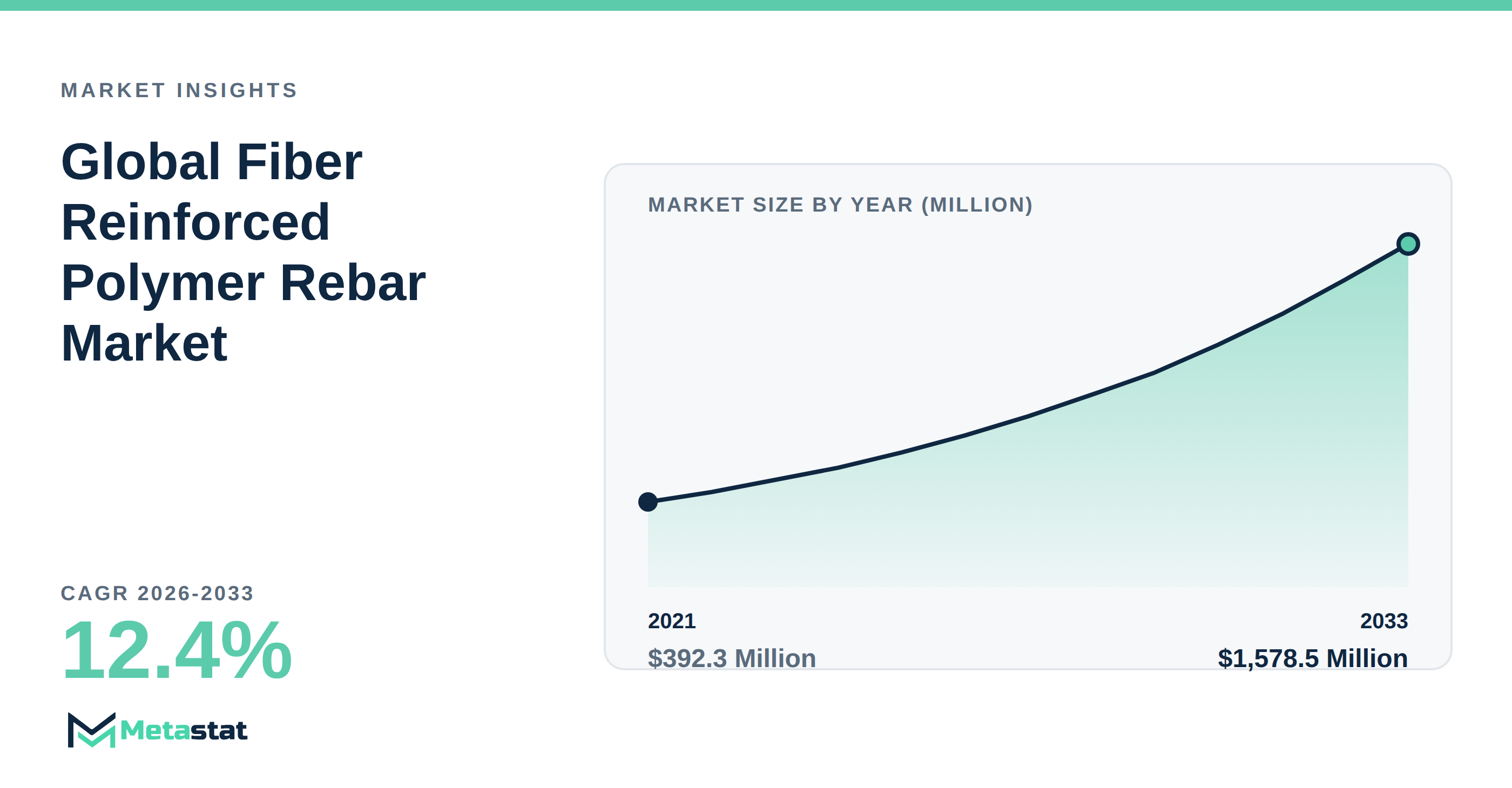
The Fiber Reinforced Polymer Rebar market is projected to experience substantial growth, reaching USD 1,578.5 million by 2033. Understanding the factors behind pricing and costs in this market enables buyers to make more informed decisions. Are six critical elements shaping pricing and the leverage buyers exert on them.
1. Material type variability affects costs
The type of fiber used in the rebar significantly influences costs. One prominent category, Glass Fiber Reinforced Polymer (GFRP) rebar, is projected to grow from USD 449.1 million in 2026 to USD 976.8 million by 2033. In comparison, Carbon Fiber Reinforced Polymer (CFRP) rebar is expected to achieve a value of USD 435.3 million by 2033, reflecting a strong growth trajectory. Buyers leverage this variability by selecting materials based on their project requirements, potentially realizing cost savings while meeting necessary performance standards.
2. Regional demand drives pricing strategies
Regional distribution significantly impacts pricing dynamics within the Fiber Reinforced Polymer Rebar market. North America holds the largest market share at 39%, largely due to significant infrastructure investments. Europe, with its 28.3% share, follows closely because modernization initiatives drive demand. Buyers affect pricing based on geographic location and the competitive environment in their area, navigating supply costs and availability to optimize their purchasing decisions.
3. Supply chain efficiency and its impact on pricing
Efficient supply chain logistics play a crucial role in determining costs within the Fiber Reinforced Polymer Rebar market. Geopolitical tensions and other disruptions increase operational costs, which in turn affect material pricing. Buyers focusing on suppliers with robust logistics and reliable sourcing strategies mitigate delays and potential cost increases, thereby enhancing their negotiating power and overall project budgets.
4. Technological advances increase value
Technological innovations in manufacturing processes significantly contribute to the performance and cost-effectiveness of Fiber Reinforced Polymer Rebar. These advancements yield products characterized by enhanced durability and reduced weight, critical attributes for construction applications. Buyers prioritizing suppliers that invest in technology access higher-quality materials at more competitive prices, ensuring project longevity and minimizing maintenance expenses.
5. Regulatory standards influence compliance costs
Compliance with safety and environmental regulations imposes operational costs on manufacturers, subsequently leading to higher prices for buyers. Stricter regulations necessitate substantial investments in compliance measures, impacting overall pricing structures. Buyers should recognize these regulatory requirements and opt for suppliers that proactively address compliance issues, potentially resulting in better pricing over time.
6. Market fragmentation offers competitive pricing options
The Fiber Reinforced Polymer Rebar market is characterized by significant fragmentation, with numerous manufacturers contributing to competitive pricing. This diversity enhances options for buyers but can create challenges regarding quality assurance. Buyers who compare multiple suppliers negotiate better pricing terms. Focusing on manufacturers that emphasize innovation and quality certifications ensures value without compromising material attributes.
Understanding the dynamics affecting pricing in the Fiber Reinforced Polymer Rebar market allows buyers to make informed decisions. By considering factors including material types and supply chain efficiencies, buyers exert leverage to secure more favorable pricing while ensuring quality and compliance in their projects.
The full analysis is in Global Fiber Reinforced Polymer Rebar Market.
Tags
About the Authors

LEAD ANALYST
Utkarsh Khirodkar is a Lead Market Research Analyst at MetaStat Insight, specializing in market intelligence, technology sector assessments, and competitive strategy.

INDUSTRY CONSULTANT - CHEMICALS & ADVANCED MATERIALS
Chemicals and Materials · Machinery & Equipment · Packaging
Amit Gadhekar Consultant for Chemicals and Materials at MetaStat Insight, directing sector-specific intelligence, research, and strategic consulting across global chemical and processing markets.