
Explore essential questions buyers should consider when engaging suppliers in the South Africa Rail Freight Transport market to enhance decision-making and operational efficiency.
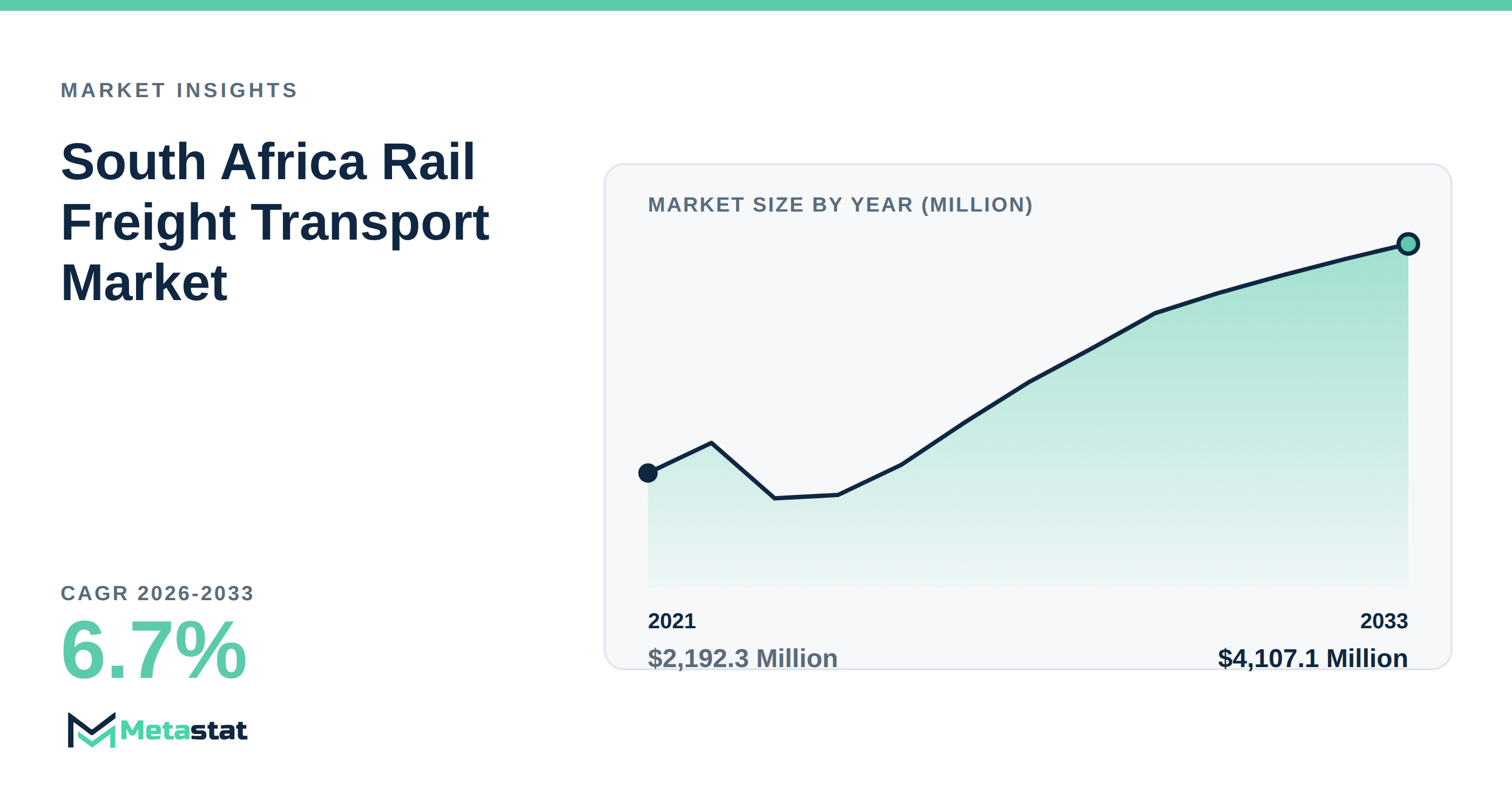
The South Africa Rail Freight Transport market is poised for considerable growth, projected to rise from USD 2,262.2 million in 2025 to USD 4,107.1 million by 2033. This significant shift creates a need for buyers to engage suppliers effectively, ensuring alignment with strategic goals and operational capabilities. The following questions guide buyers in assessing potential suppliers in this transforming landscape.
1. How do you enhance service delivery through technology?
Technological innovations are central to improving operations in the South Africa Rail Freight Transport market. Buyers should inquire how suppliers implement automation and digital solutions to optimize service delivery. The integration of these technologies not only drives efficiency but is essential for meeting the growing demand for real-time tracking and data analytics. Understanding a supplier's technological capabilities offers insights into their potential to adapt to evolving market demands and enhance overall supply chain reliability.
2. What measures do you have in place for regulatory compliance?
Regulatory compliance is a vital factor affecting operational efficiency within the rail freight industry. Buyers should ask suppliers about their established protocols to meet safety and operational standards. Suppliers equipped with strong compliance frameworks enhance operational safety and efficiency, minimizing the risk of disruptions. Such compliance ensures that goods are transported without legal complications, thereby positively impacting the overall supply chain.
3. How do you address challenges related to infrastructure constraints?
The need for infrastructure rehabilitation and upgrades is critical to accommodate rising freight volumes in the South Africa Rail Freight Transport market. Suppliers should elaborate on their strategies for managing existing infrastructure challenges, including their plans for necessary upgrades and maintenance. By evaluating a supplier's approach to addressing infrastructure limitations, buyers gain a clearer understanding of their operational resilience and ability to handle increased demand, particularly across diverse cargo types including containerized and non-containerized freight.
4. What strategies are employed for enhancing security measures?
Security issues, including theft and vandalism, present ongoing challenges in the rail sector. Buyers should inquire about suppliers' security protocols designed to protect assets and ensure reliable service delivery. Suppliers with robust security measures mitigate risks associated with operational disruptions, thereby maintaining the integrity of the supply chain. Gaining an understanding of how a supplier manages security risks reveals their commitment to reliability and service continuity, crucial for buyers seeking dependable logistics partners.
5. How do you facilitate public-private partnerships?
Public-private partnerships significantly enhance infrastructure development and capital mobilization within the rail freight sector. Buyers should seek to understand how suppliers engage in collaborative initiatives with governmental entities and private stakeholders. A supplier's ability to navigate these partnerships influence their growth potential and capacity for innovation, affecting their service offerings and market reach. Buyers prioritize suppliers that are proactive in pursuing such collaborative opportunities.
6. What role do international regulations play in your operations?
While the South Africa Rail Freight Transport market expands, adherence to international regulations becomes increasingly significant. Buyers should inquire how suppliers manage logistics across borders and navigate the complexities of international trade regulations. Suppliers that efficiently tackle these regulatory challenges enhance their operational efficiency, offering a competitive edge while ensuring smooth transportation across borders. Understanding this capability is crucial for buyers engaged in international trade.
7. How do you plan to scale operations in response to market growth?
Market analysis indicates a growth trajectory with a projected CAGR of 6.7% from 2026 to 2033. Buyers should question suppliers about their strategic plans for scaling operations to accommodate this anticipated growth. Assessing a supplier's readiness to enhance capacity and efficiency directly impacts a buyer's logistics operations. Suppliers with clear strategies for scaling operations will be better positioned to manage rising demand and ensure seamless logistics.
Engaging suppliers with these essential inquiries prepares buyers to make informed decisions in the South Africa Rail Freight Transport market. Aligning with suppliers that demonstrate operational capabilities and a commitment to compliance optimizes logistics strategies and contributes to the overall market growth. For further insights, explore the South Africa Rail Freight Transport Market.
Tags
About the Authors

LEAD ANALYST
Utkarsh Khirodkar is a Lead Market Research Analyst at MetaStat Insight, specializing in market intelligence, technology sector assessments, and competitive strategy.

ENERGY & INFRASTRUCTURE INDUSTRY CONSULTANT
Automotive and Transportation · Electronics and Semiconductor · Energy and Power · Machinery & Equipment
Saurabh Vasant Ganvir consults for Energy & Infrastructure Industry at MetaStat Insight, specializing in renewable energy, solar EPC, and electric vehicle (EV) infrastructure markets.