
Explore the significant growth disparities in the Asia Pacific Immunoassay and Molecular Diagnostics market, focusing on the contrasting advancements of China and India.
The Asia Pacific Immunoassay and Molecular Diagnostics market shows striking disparities in growth among its regions, particularly between China and India. While China stands out with notable advancements in diagnostic technologies, India encounters several challenges that hinder its progress. Understanding the underlying factors contributing to these divergences provides valuable insights for stakeholders aiming to navigate this dynamic and evolving market.
What accounts for China's leadership in the market?
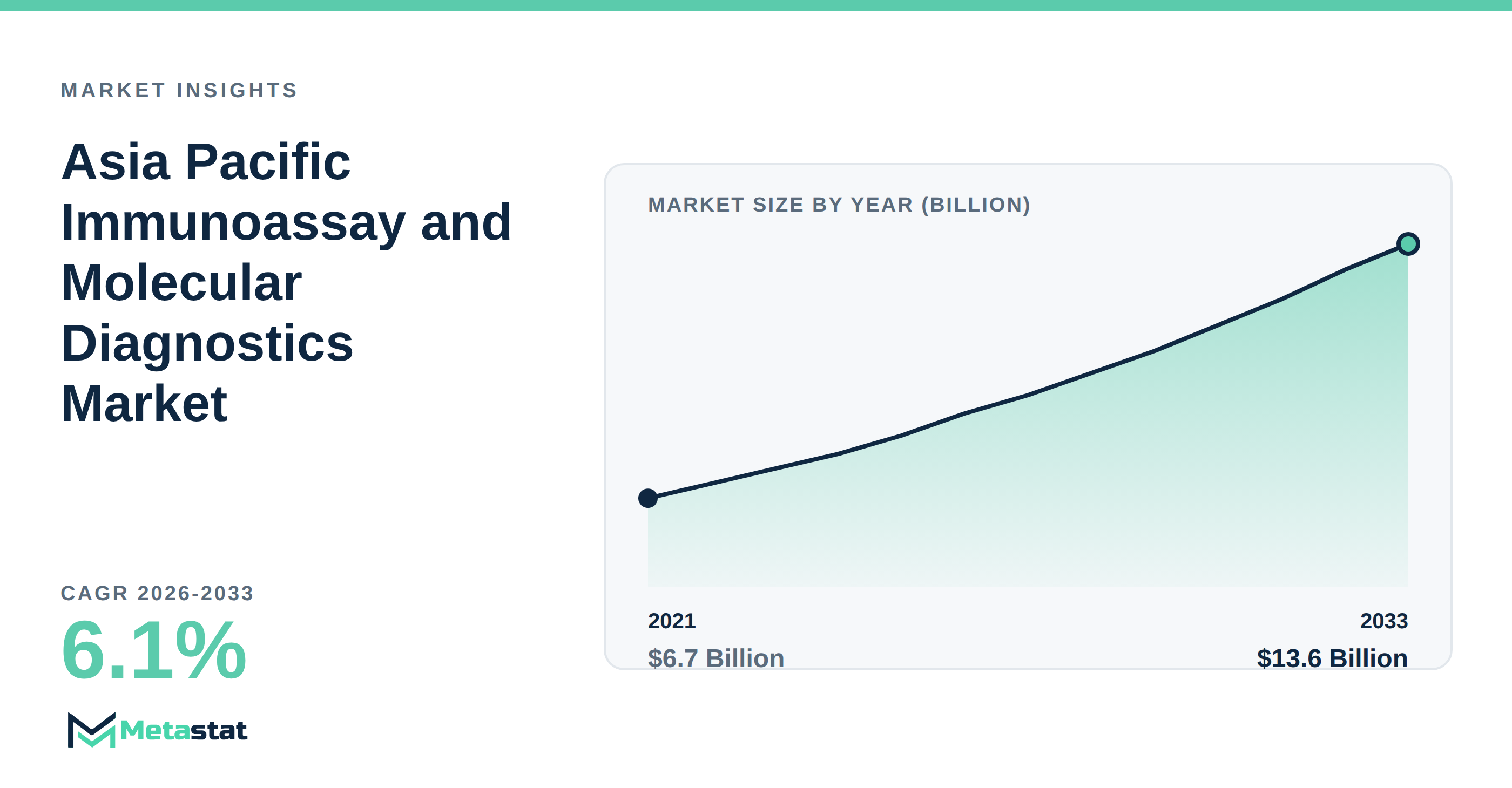
China has emerged because a frontrunner in the Asia Pacific Immunoassay and Molecular Diagnostics market, attributed to its substantial investments in healthcare infrastructure and technology. The government's commitment to upgrading health systems has resulted in broader access to advanced diagnostic technologies nationwide. With a market value anticipated to reach USD 13.6 billion by 2033 and a robust compound annual growth rate (CAGR) of 6.1%, China's focus on enhancing healthcare capabilities fosters rapid adoption of both immunoassay and molecular diagnostics.
The rise in infectious diseases, paired with initiatives promoting personalized medicine, drives the demand for fast and accurate diagnostic solutions. Companies operating in China, including F. Hoffmann-La Roche and Abbott, lead the charge in research and development, thereby enhancing diagnostic capabilities and improving patient outcomes. Innovations like next-generation sequencing and digital PCR further transform the diagnostics landscape, enabling healthcare providers to deliver timely and precise diagnoses.
Why is India lagging behind?
Contrastingly, India's development in the Asia Pacific Immunoassay and Molecular Diagnostics market is comparatively slower, primarily due to regulatory compliance challenges and infrastructure deficiencies. Stricter regulations require significant investments in compliance infrastructure, which disproportionately impacts smaller firms lacking the resources to adapt. This situation creates a competitive disadvantage against larger companies better positioned to navigate complex regulatory environments.
Macroeconomic factors, including inflationary pressures and currency fluctuations, add additional strain on market dynamics in India. These factors influence pricing strategies and profitability, complicating the operational landscape for diagnostic companies. Reliance on outdated methodologies impedes innovation, limiting India's capacity to adopt advanced diagnostic technologies that could enhance its market standing.
What role does healthcare infrastructure play?
The state of healthcare infrastructure greatly influences the growth trajectories of both China and India within the Asia Pacific Immunoassay and Molecular Diagnostics market. China benefits from continuous investments in healthcare facilities, which enhance diagnostic capabilities and facilitate integration of modern technologies. This focus on upgrading healthcare systems ensures that diagnostic solutions are widely accessible to a larger population.
In contrast, India's healthcare system grapples with accessibility and resource allocation challenges. Insufficient investments in infrastructure lead to disparities in the availability of advanced diagnostic tools, particularly in rural and underserved areas. Lack of modern facilities constrains the implementation of innovative diagnostic technologies, thereby stalling overall market development.
How does regulatory compliance affect growth?
Regulatory compliance remains a significant barrier for India's progress in the Asia Pacific Immunoassay and Molecular Diagnostics market. Stringent regulations often translate into higher operational costs, discouraging investments in new technologies and postponing product launches. Conversely, China's regulatory environment, although stringent, increasingly supports innovation and product development, allowing companies to introduce advanced diagnostic solutions more readily.
This supportive regulatory landscape enables Chinese firms to excel in areas like immunoassay diagnostics and molecular diagnostics, where growth is anticipated at CAGRs of 4.5% and 7.8%, respectively. The ability to meet regulatory standards and obtain certification fosters trust among healthcare providers and patients, promoting greater market adoption of diagnostic solutions.
What is the future outlook for the region?
Looking ahead, the Asia Pacific Immunoassay and Molecular Diagnostics market presents significant growth opportunities, albeit with marked divergence between China and India. Ongoing investments in technology and infrastructure in China are expected to maintain its leadership position. In contrast, India’s path forward hinges on addressing its regulatory hurdles and improving healthcare infrastructure to unlock its market potential.
Investment in research and development remains crucial for both nations. Chinese firms will likely continue driving innovations, while Indian companies focus on optimizing operational efficiencies and expanding their market presence through strategic collaborations and partnerships.
While the Asia Pacific region navigates the complexities of healthcare evolution, stakeholders remain agile, adapting to varying market dynamics and leveraging technological advancements to secure a competitive edge. For more detailed insights, explore the Asia Pacific Immunoassay and Molecular Diagnostics Market.
Tags
About the Authors

LEAD ANALYST
Utkarsh Khirodkar is a Lead Market Research Analyst at MetaStat Insight, specializing in market intelligence, technology sector assessments, and competitive strategy.

LEAD PRINCIPAL ANALYST, PHARMA AND HEALTHCARE
Food and Beverages · Healthcare · Healthcare IT · Medical Devices
Ajay Devgire is the Lead Healthcare Analyst at MetaStat Insight, leading strategic research and market intelligence initiatives across the global healthcare domain.

SENIOR RESEARCH ANALYST
Biotechnology · Food and Beverages · Medical Devices · Packaging
Snehal Pasalkar is a Research Analyst at MetaStat Insight, operating at the intersection of life sciences research, competitive strategy, and market intelligence.