
Explore the reasons behind the regional disparity in the Fire Alarm Systems market, focusing on North America's leadership and the challenges faced by Asia Pacific.
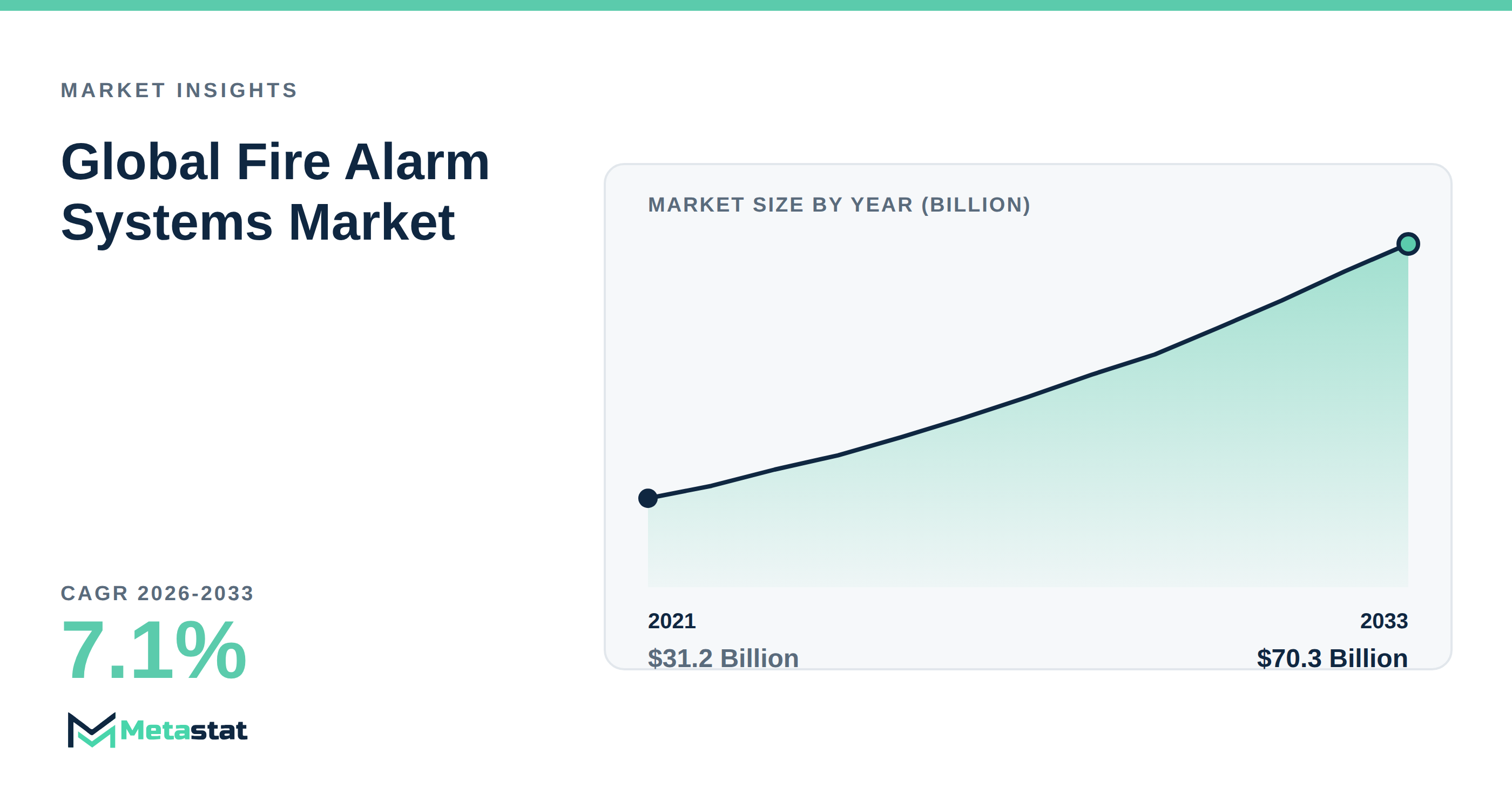
The global Fire Alarm Systems market exhibits significant regional divergence, particularly between North America and Asia Pacific. North America currently leads the market, accounting for 35.2% of the total share, while Asia Pacific is emerging because a fast-growing region with an increasing demand for fire safety solutions. Understanding the factors behind these regional differences provides crucial insights for stakeholders and decision-makers.
What drives North America's market leadership?
North America's dominance in the Fire Alarm Systems market is attributed to several compelling factors. Stringent safety regulations significantly shape market dynamics, compelling organizations across multiple sectors, particularly in commercial and healthcare, to invest heavily in advanced fire alarm technologies. This regulatory pressure has resulted in a high adoption rate of innovative fire alarm systems. The region's well-established infrastructure supports technological advancements, allowing for the integration of next-generation solutions including IoT-enabled devices and smart functionalities.
A strong presence of leading manufacturers, including Honeywell International Inc. and Siemens AG, bolsters North America's leadership position. These companies operate in the market by driving competition through continuous innovation and the development of sophisticated solutions that meet evolving safety standards. The combination of regulatory pressure, technological maturity, and substantial investments in fire safety solutions positions North America because a prominent force in the industry.
What factors hinder Asia Pacific's growth?
In contrast, Asia Pacific, while recognized because a rapidly growing region in the Fire Alarm Systems market, contends with distinct challenges that restrict its full potential. The diverse regulatory environments across countries within this region create complexities in compliance and standards for fire safety solutions. This fragmentation often results in delays in adopting advanced fire alarm technologies, because manufacturers and end-users navigate differing regulations.
Economic factors, including inflation and supply chain disruptions, further strain investment capabilities in this region. The ongoing effects of global economic challenges instill a sense of reluctance among organizations to commit to significant expenditures, adversely impacting the overall growth of the Fire Alarm Systems market in Asia Pacific. The scarcity of skilled labor for installation and maintenance complicates the landscape, leading to bottlenecks in project execution and deployment of fire alarm systems.
How do emerging opportunities affect market dynamics?
Despite facing challenges, Asia Pacific presents emerging opportunities that positively influence the market’s dynamics. Rapid urbanization and increasing safety awareness in countries including India and China fuel the demand for advanced fire safety solutions. Governments in these regions are beginning to implement stricter safety regulations, which necessitate the adoption of modern fire alarm systems.
Companies are increasingly prioritizing innovation in their offerings, integrating smarter technologies and connectivity features into their products to meet the rising demand for advanced fire safety solutions. The shift towards eco-friendly products is significant, because manufacturers align with global sustainability initiatives, which creates a competitive edge and attracts environmentally conscious consumers.
Will the gap between regions close?
The divergence between North America and Asia Pacific in the Fire Alarm Systems market underscores the necessity for targeted strategies to promote balanced growth. While regulatory frameworks evolve and economic conditions stabilize, Asia Pacific is expected to maintain its upward trajectory. Companies operating in this region focus on developing localized solutions that comply with specific regulations while emphasizing innovation and sustainability.
For North America, preserving its leadership will depend on remaining at the forefront of technological advancements and adapting to shifting regulatory requirements. The potential for collaboration between regions, particularly in technology sharing and best practices, could facilitate mutual benefits, ultimately bridging the gap between these dynamically different markets.
Understanding the diverse dynamics between North America and Asia Pacific in the Fire Alarm Systems market allows stakeholders to make informed decisions regarding their strategies and investments. To gain deeper insights into these regional differences, readers are encouraged to refer to the Global Fire Alarm Systems Market.
Tags
About the Authors

LEAD ANALYST
Utkarsh Khirodkar is a Lead Market Research Analyst at MetaStat Insight, specializing in market intelligence, technology sector assessments, and competitive strategy.

PRINCIPAL CONSULTANT - ENTERPRISE AI & EMERGING TECHNOLOGIES
Banking & Finance · Electronics and Semiconductor · Energy and Power · Healthcare IT · Information & Technology · Professional Services
Vijay Gunti is a Principal Consultant at MetaStat Insight, bringing over two decades of experience across enterprise digital transformation, technology strategy, and intelligent systems.

PRINCIPAL CONSULTANT - QUALITY SYSTEMS & COMPLIANCE
Electronics and Semiconductor · Machinery & Equipment · Professional Services
Omkar Phadtare is an Industry Consultant at MetaStat Insight, specializing in quality systems, regulatory compliance, and standards benchmarking to drive data-driven market intelligence and strategic industry research.

ENERGY & INFRASTRUCTURE INDUSTRY CONSULTANT
Automotive and Transportation · Electronics and Semiconductor · Energy and Power · Machinery & Equipment
Saurabh Vasant Ganvir consults for Energy & Infrastructure Industry at MetaStat Insight, specializing in renewable energy, solar EPC, and electric vehicle (EV) infrastructure markets.

LEAD CONSULTANT - COMMUNICATION, TELECOM, AND IT
Electronics and Semiconductor · Information & Technology · Machinery & Equipment · Professional Services
Ravindra Sathe Consultants for Communication, Telecom, and IT at MetaStat Insight. He leads the firm's industry research initiatives across telecommunications infrastructure, digital connectivity, enterprise networking, and emerging information technology domains.