
The Malaysia Car Rental market is poised for substantial growth, driven by urbanization and increased tourism. This blog delves into the factors fueling this trend.
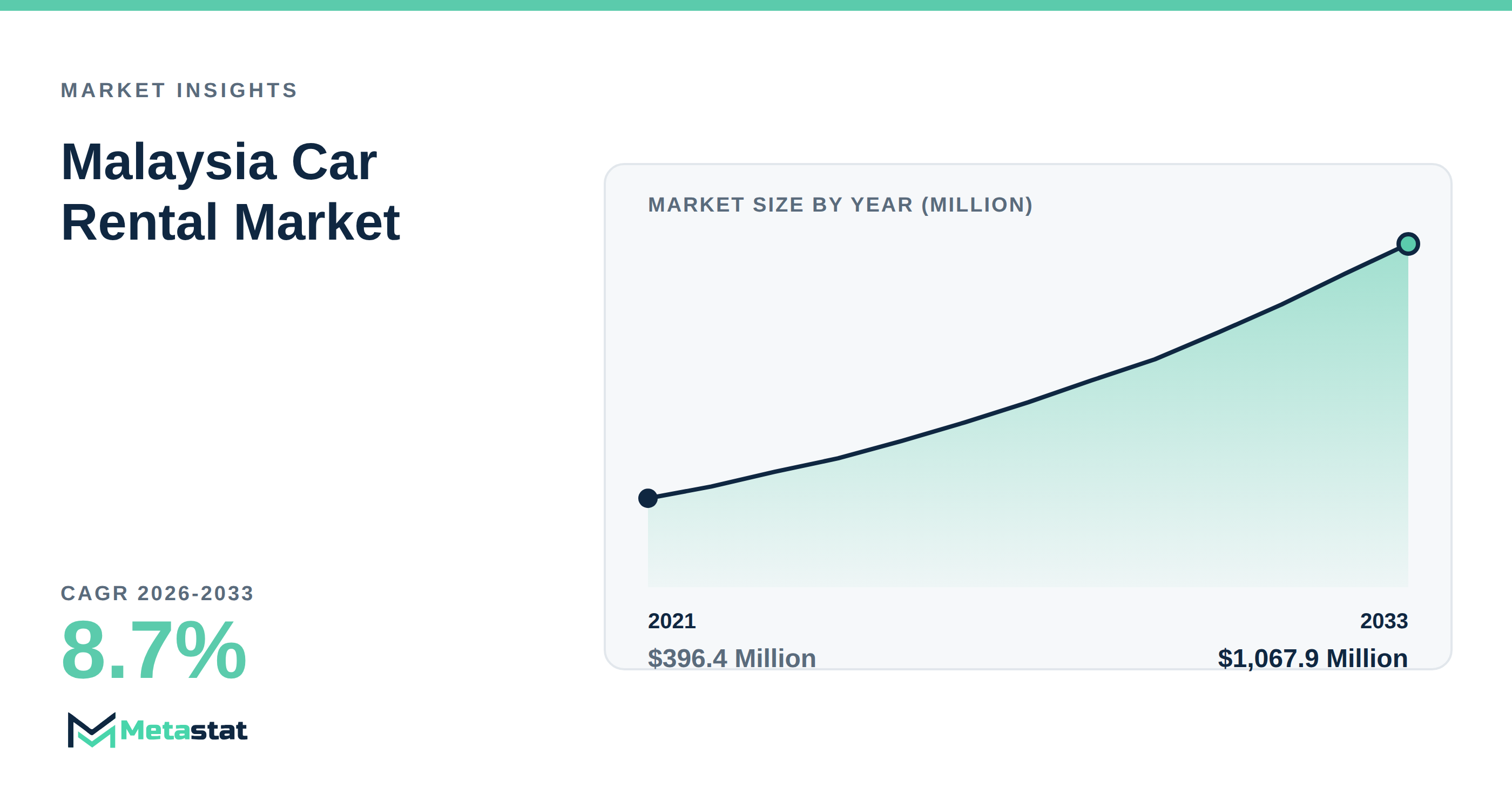
The Malaysia Car Rental market is experiencing remarkable growth, largely driven by the surge in urbanization and the influx of tourists. With a valuation of USD 547.3 million in 2025, the market is expected to grow to USD 1,067.9 million by 2033, representing an impressive growth rate of 8.7%. Recognizing the factors that contribute to this evolution is crucial for stakeholders aiming to make informed decisions in this shifting landscape.
Why is the short-term rental segment gaining traction?
Short-term rentals, characterized by durations of 1 to 7 days, dominate the Malaysia Car Rental market, supported by various factors. The tourism sector significantly contributes to this segment's expansion, because Malaysia remains an attractive destination for both domestic and international travelers. Tourists are increasingly drawn to the flexibility and convenience offered by short-term rentals, allowing them to tailor their travel experiences. Business professionals prefer these options for corporate travel, driving additional demand.
Urban centers are growing in popularity among visitors, leading rental companies to capitalize on the rising need for transportation solutions. Enhanced accessibility to car rental services through innovations, including digital booking platforms and mobile applications, simplifies the rental process. Companies that focus on user experience through technology integration are likely to capture a larger share of this expanding segment, positioning themselves advantageously in a competitive marketplace.
What obstacles hinder growth in medium and long-term rentals?
While the short-term rental segment flourishes, medium-term (8 to 30 days) and long-term (31+ days) rentals present significant opportunities. However, these segments face distinct challenges stemming from regulatory compliance and economic pressures. Rental companies navigate a complex regulatory landscape that increases operational costs and imposes administrative burdens, which influence service delivery.
Economic factors, including inflationary pressures, impact the overall cost structure within the market. Rising fuel prices and vehicle maintenance expenses create financial strain on rental companies, affecting their ability to offer competitive pricing. Developing effective operational strategies that prioritize compliance and cost management remains essential for companies focusing on these rental segments.
In what ways does technology shape consumer expectations?
Technological advancements play a significant role in shaping the Malaysia Car Rental market by enhancing both customer experiences and operational efficiencies. The incorporation of digital booking platforms streamlines the rental process, enabling customers to easily browse available vehicles and confirm reservations. Companies that prioritize embracing digital transformation improve service delivery and can adapt swiftly to shifting consumer preferences, gaining a competitive advantage.
Consumer interest in sustainable practices has prompted car rental companies to integrate eco-friendly vehicle options into their fleets. This shift not only aligns with environmental concerns but enhances brand reputation among environmentally conscious consumers. Stakeholders looking to capitalize on this trend should invest in technologies that support sustainability initiatives, thereby attracting a demographic that prioritizes eco-friendly solutions.
How do capital investments impact the growth trajectory?
Capital investment environments significantly influence the Malaysia Car Rental market, facilitating growth through infrastructure enhancements and technological integration. An increase in GDP correlates with heightened consumer confidence and spending power, contributing to an uptick in demand for rental vehicles. The development of transport networks through public-private partnerships enhances accessibility, further supporting market expansion.
Rental companies that strategically allocate capital towards technology integration enhances operational efficiency, reduce costs, and ultimately improve customer satisfaction. By focusing on sustainable practices alongside capital investments, firms align with evolving consumer preferences, strengthening their position in the market and ensuring long-term success.
Understanding the factors driving growth in the short-term rental segment within the Malaysia Car Rental market is crucial for stakeholders making strategic decisions. Emphasizing technology integration, regulatory compliance, and capital investment will enable companies to seize opportunities in this evolving landscape. For more detailed insights, explore the Malaysia Car Rental Market.
Tags
About the Authors

LEAD ANALYST
Utkarsh Khirodkar is a Lead Market Research Analyst at MetaStat Insight, specializing in market intelligence, technology sector assessments, and competitive strategy.

ENERGY & INFRASTRUCTURE INDUSTRY CONSULTANT
Automotive and Transportation · Electronics and Semiconductor · Energy and Power · Machinery & Equipment
Saurabh Vasant Ganvir consults for Energy & Infrastructure Industry at MetaStat Insight, specializing in renewable energy, solar EPC, and electric vehicle (EV) infrastructure markets.