
The Aged Care market is expected to experience significant transformations by 2033, driven by demographic changes, technological advancements, and evolving consumer preferences.
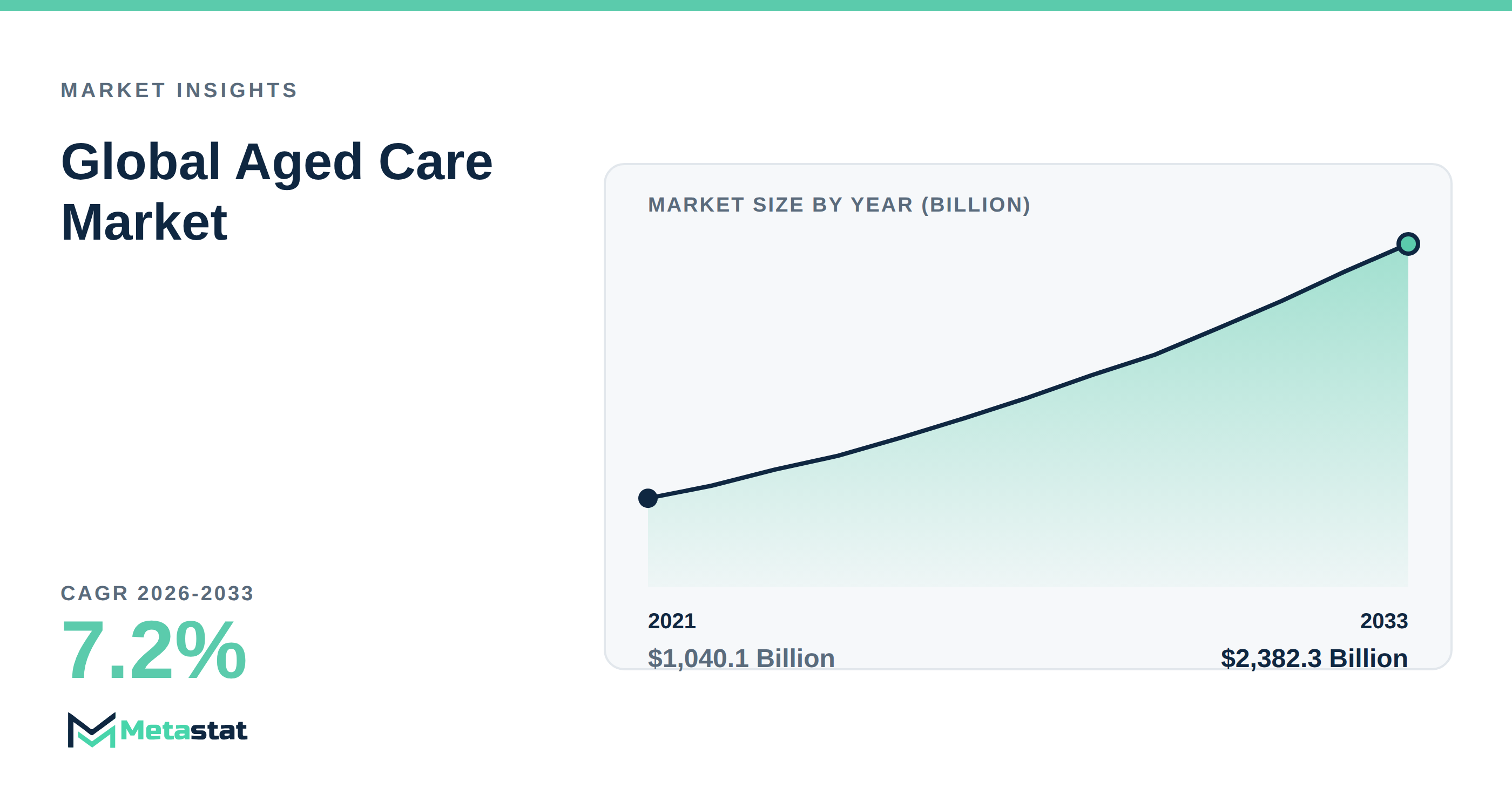
The trajectory of the Aged Care market signals substantial changes between now and the end of the forecast period in 2033. Valued at USD 1,360.4 billion in 2025, the market is projected to expand to USD 2,382.3 billion, reflecting a compound annual growth rate of 7.2%. Various factors fuel this growth, including demographic shifts and technological advancements that shape care delivery models.
Growth will largely stem from the aging population, particularly individuals aged 60 and above. The demand for specialized care services to support these seniors intensifies due to the increasing number of elderly individuals. This demographic shift, driven by rising life expectancy and declining birth rates, creates significant opportunities for service providers focused on skilled nursing, assisted living, and home-based care solutions.
While the Aged Care market evolves, the integration of technology will transform service offerings. Providers increasingly adopt innovations, including telehealth, remote monitoring systems, and smart home technologies. These advancements not only improve patient outcomes but enhance operational efficiency, allowing facilities to cater to the growing preferences for personalized care. Organizations investing in these technologies are better positioned to capture market share, particularly among discerning consumers who prioritize quality and tailored care solutions.
The competitive landscape reflects this push towards innovation. Key players, including Epoch Elder Care and Amedisys, develop enhanced service delivery models that leverage advanced technology. This trend signifies a shift in consumer expectations, with a growing preference for care solutions that deliver both independence and comprehensive support. Providers that prioritize integrating innovative technologies are likely to gain a competitive edge because they meet evolving consumer needs.
Regulatory compliance presents ongoing challenges for the Aged Care market. While scrutiny around care standards intensifies, service providers navigate increasingly complex regulations while maintaining quality delivery. Compliance costs strain operational budgets, especially for smaller organizations. However, adherence to these standards is essential for building consumer trust and ensuring long-term sustainability in a competitive marketplace.
Economic conditions are another vital factor influencing the market. Inflationary pressures and currency fluctuations affect overall cost structures, prompting providers to rethink pricing strategies. Those that efficiently manage operational costs while upgrading service offerings will emerge stronger amid these challenges. The ability to adapt to economic shifts will be crucial for maintaining profitability and enabling investment in future growth.
Emerging regional demands will drive expansion across various segments of the Aged Care market. North America and Europe are likely to witness sustained growth due to their significant elderly populations, while the Asia Pacific region continues to develop its aged care services in response to demographic changes. This geographic diversity presents considerable opportunities for companies that tailor their services to meet regional needs.
The market segmentation reveals key dynamics across different care settings. The Residential Aged Care segment is poised to attract considerable investment, expanding from USD 229.8 billion in 2026 to USD 345.9 billion by 2033. This growth is supported by increasing awareness of healthcare and the need for more facilities catering to an aging demographic.
The Assisted Living and Senior Living Communities sector is projected to grow at a CAGR of 7.5%, driven by lifestyle changes that emphasize community engagement and support. Meanwhile, Home-Based Aged Care is anticipated to experience rapid expansion owing to seniors preferring to maintain independence within their own homes. Providers focusing on creating tailored solutions for these segments will likely benefit from strong demand in the coming years.
While the Aged Care market prepares for significant changes by 2033, stakeholders should remain vigilant about the evolving landscape. Investment in technology, regulatory compliance, and understanding regional dynamics will be essential for companies aiming to capitalize on projected growth. A strategic approach aligning with consumer expectations and anticipating demographic shifts will be critical in navigating this transforming marketplace.
For a deeper dive into the trends and forecasts shaping the Aged Care market, explore the Global Aged Care Market.
Tags
About the Authors

LEAD ANALYST
Utkarsh Khirodkar is a Lead Market Research Analyst at MetaStat Insight, specializing in market intelligence, technology sector assessments, and competitive strategy.

LEAD PRINCIPAL ANALYST, PHARMA AND HEALTHCARE
Food and Beverages · Healthcare · Healthcare IT · Medical Devices
Ajay Devgire is the Lead Healthcare Analyst at MetaStat Insight, leading strategic research and market intelligence initiatives across the global healthcare domain.