
Explore the diverging growth trajectories in the Aircraft Maintenance, Repair and Overhaul (MRO) market across North America and Europe, highlighting the factors influencing these regional variations.
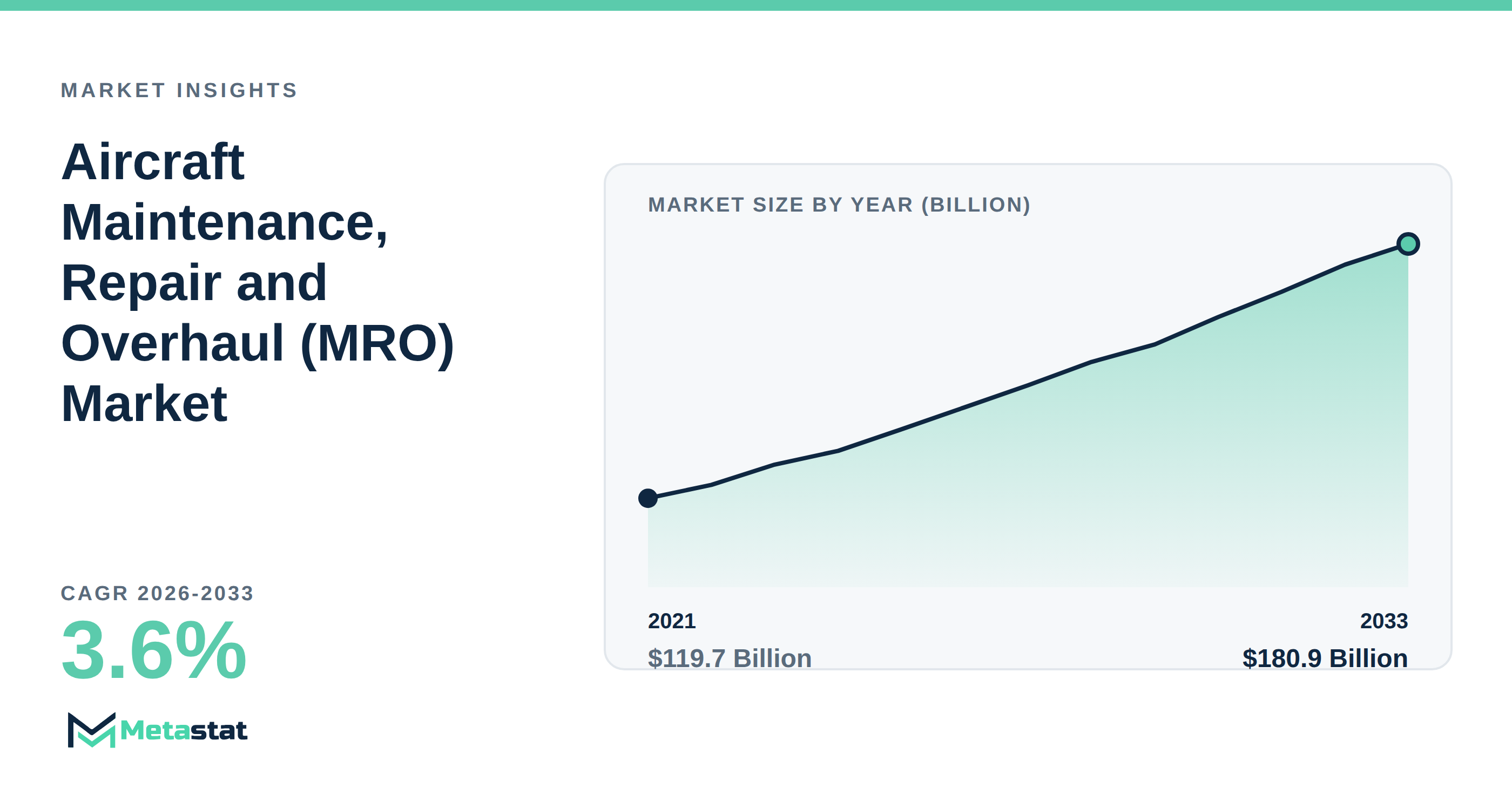
The Aircraft Maintenance, Repair and Overhaul (MRO) market exhibits significant regional divergence, particularly between North America and Europe. North America leads with a market share of 32.8 percent, primarily driven by a robust air travel sector, technological investment, and an efficient regulatory environment. In contrast, Europe holds a 26.8 percent share, grappling with regulatory burdens and economic challenges that hinder growth.
What drives North America's leadership in the MRO market?
North America is projected to reach USD 56.8 billion in the Aircraft Maintenance, Repair and Overhaul (MRO) market by 2033. This leadership stems from several key factors, including a large and expanding fleet of aircraft and an emphasis on operational efficiency. Airlines in this region invest heavily in technologies including predictive maintenance and automation, which streamline aircraft management and minimize downtime. The focus on environmental sustainability influences investment decisions, aligning MRO services with modern consumer expectations for eco-friendly operations.
The competitive landscape in North America is marked by established players like AAR Corp. and GE Aerospace, which drive service quality and innovation. These firms are quick to adapt to emerging technologies and integrate them into their offerings, providing airlines with efficient and reliable solutions. This agility enhances their competitive edge and allows them to capture a larger market share.
What challenges does Europe face in the MRO market?
Although Europe is a significant player in the Aircraft Maintenance, Repair and Overhaul (MRO) market, projected to maintain a substantial share, it encounters unique challenges that create barriers to growth. Strict regulatory compliance standards, including safety and emissions protocols, impose considerable pressure on MRO providers. These regulations require substantial investments in upgrades and technology, affecting operational budgets and limiting the capacity for innovation.
Companies like Lufthansa Technik and Turkish Technic operate in this complex regulatory landscape, often facing delays in service delivery due to the need for adherence to stringent standards. This regulatory burden, combined with varying economic conditions across European nations, results in fragmented growth patterns within the region. Economic pressures, including inflation and currency volatility, further complicate investment strategies for MRO providers, requiring them to remain nimble and responsive to shifting market dynamics.
How does technology influence the MRO market's evolution?
Technological advancements play a critical role in differentiating the MRO market's growth across regions. North America benefits from early adoption of cutting-edge solutions including artificial intelligence and advanced data analytics. These tools facilitate streamlined maintenance processes, enabling MRO providers to optimize service delivery and minimize operational costs.
In Europe, however, the pace of technological integration is slower, often influenced by the need for compliance with regulatory requirements. Consequently, European MRO providers adopt innovations at a more measured pace to ensure safety and reliability. This divergence in technology adoption creates distinct growth trajectories that impact service quality and operational efficiency.
What economic influences shape the MRO market in North America and Europe?
Macroeconomic factors significantly influence the Aircraft Maintenance, Repair and Overhaul (MRO) market's dynamics. In North America, rising GDP correlates directly with increased air travel demand, which heightens the necessity for MRO services. The favorable investment climate supports venture funding for technological integration, enhancing overall market capacity.
On the other hand, Europe faces economic challenges, including inflationary pressures that strain maintenance budgets. MRO providers in this region navigates these economic realities carefully to maintain service quality while adapting to varying procurement strategies. This divergence in economic factors highlights the need for tailored approaches to MRO investment in each region.
What does the future hold for the MRO market?
The future outlook for the Aircraft Maintenance, Repair and Overhaul (MRO) market suggests steady growth in North America, where investments in infrastructure and technology will continue to support expansion. MRO providers are expected to remain innovative and responsive to changing customer needs, particularly surrounding sustainability and operational efficiency.
Conversely, Europe faces challenges that hinder its growth trajectory, requiring MRO providers to enhance compliance while modernizing their capabilities. Addressing these regulatory and economic challenges will be crucial for European companies aiming to sustain competitiveness in a global context. While regional dynamics evolve, decision-makers in the MRO sector will be proactive, leveraging technological advancements and addressing regulatory complexities to drive growth within their organizations.
For a detailed analysis of the Aircraft Maintenance, Repair and Overhaul (MRO) market, including future predictions and insights, visit the Global Aircraft Maintenance, Repair and Overhaul (MRO) Market.
Tags
About the Author

LEAD ANALYST
Utkarsh Khirodkar is a Lead Market Research Analyst at MetaStat Insight, specializing in market intelligence, technology sector assessments, and competitive strategy.