
Explore the key drivers and challenges shaping the Pharmaceutical Excipients market, which is projected to grow significantly by 2033.
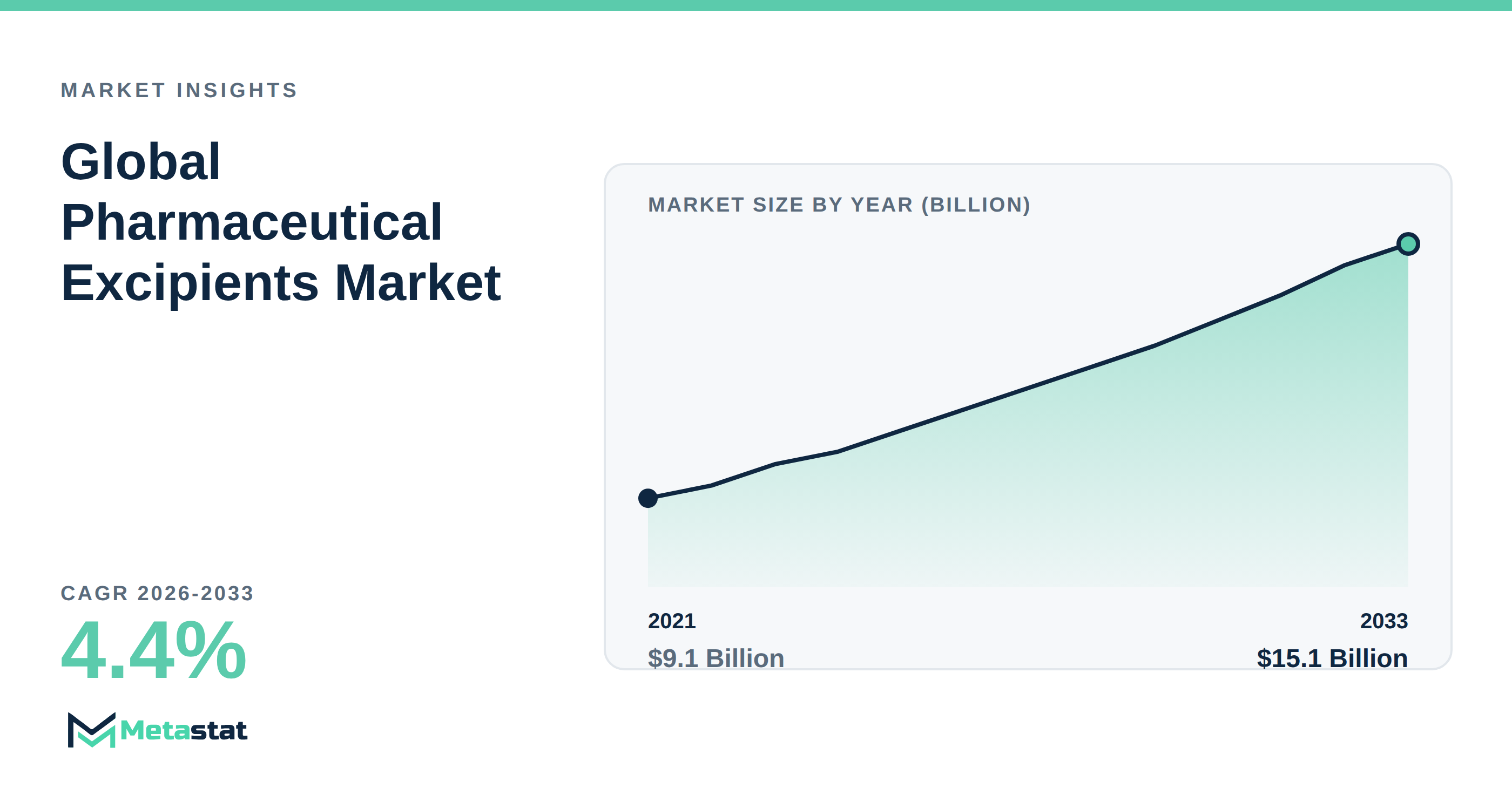
The global Pharmaceutical Excipients market encounters a range of dynamics that are often misinterpreted. A frequent misconception centers around simplistic growth narratives. While the market is expected to expand from USD 10.7 billion in 2025 to USD 15.1 billion by 2033, this figure only scratches the surface of the underlying factors that drive growth and present challenges throughout the sector.
What factors are driving growth in the Pharmaceutical Excipients market?
Growth in the Pharmaceutical Excipients market is predominantly driven by an increasing emphasis on biologics and advanced therapy formulations. Manufacturers are responding to the demand for high-purity excipients that meet low-endotoxin specifications, essential for ensuring the safety and efficacy of sensitive products. This industry shift aligns with the evolving regulatory requirements necessitating robust compliance measures. Inadequate attention to these factors hinder market access and potentially compromise patient safety.
How does technological integration influence the market?
Advancements in technology significantly influence the Pharmaceutical Excipients market. Integrating automation, artificial intelligence, and software into production processes enhances operational efficiencies and reduces costs. This modernization aligns with the heightened demand for quality and compliance within the industry, positioning manufacturers to better address the increasingly complex needs of pharmaceutical development. These enhancements ultimately lead to improved formulation capabilities, in turn fostering innovation.
What role does regulatory compliance play?
Regulatory compliance remains a critical factor in shaping the Pharmaceutical Excipients market. Stricter guidelines necessitate considerable investments in quality assurance, testing, and documentation. Such demands deter smaller players from entering the market, thereby limiting innovation and accessibility. The complexity of navigating diverse regional regulations adds operational challenges, making it essential for companies to adapt their strategies to meet compliance requirements while maintaining product quality.
How do external factors impact the market?
Geopolitical tensions and macroeconomic fluctuations introduce uncertainties that disrupt supply chains and impact pricing strategies. Trade barriers and tariff frictions impose operational challenges that compel companies to reevaluate their sourcing strategies, which lead to increased costs. The cumulative effect of these external pressures necessitates a proactive approach from manufacturers aiming to secure stable supply chains while preserving competitiveness within the market.
What future opportunities exist in the market?
The Pharmaceutical Excipients market presents numerous growth opportunities, particularly in regions including Asia Pacific, where healthcare investments are increasing alongside population growth. Companies focusing on sustainable practices and eco-friendly excipients align well with current regulatory expectations and changing consumer preferences. This alignment allows organizations to capture emerging market segments while reinforcing their commitment to corporate social responsibility and innovation.
Ultimately, comprehending the complexities within the Pharmaceutical Excipients market extends beyond merely recognizing its growth trajectory. Stakeholders who acknowledge critical factors driving demand, address regulatory compliance, and adapt to external challenges position themselves strategically for success. For a comprehensive analysis of these dynamics, refer to the Global Pharmaceutical Excipients Market.
Tags
About the Authors

LEAD ANALYST
Utkarsh Khirodkar is a Lead Market Research Analyst at MetaStat Insight, specializing in market intelligence, technology sector assessments, and competitive strategy.

SENIOR RESEARCH ANALYST
Biotechnology · Food and Beverages · Medical Devices · Packaging
Snehal Pasalkar is a Research Analyst at MetaStat Insight, operating at the intersection of life sciences research, competitive strategy, and market intelligence.