
Exploring the dynamics of the Middle East and Africa Cannabidiol (CBD) market, this post examines key growth drivers and emerging trends shaping the sector.
Consumer interest in Cannabidiol (CBD) products within the Middle East and Africa market shows significant growth, influenced by an expanding understanding of health benefits associated with these products. However, misconceptions often cloud the true nature of market dynamics and potential for expansion.
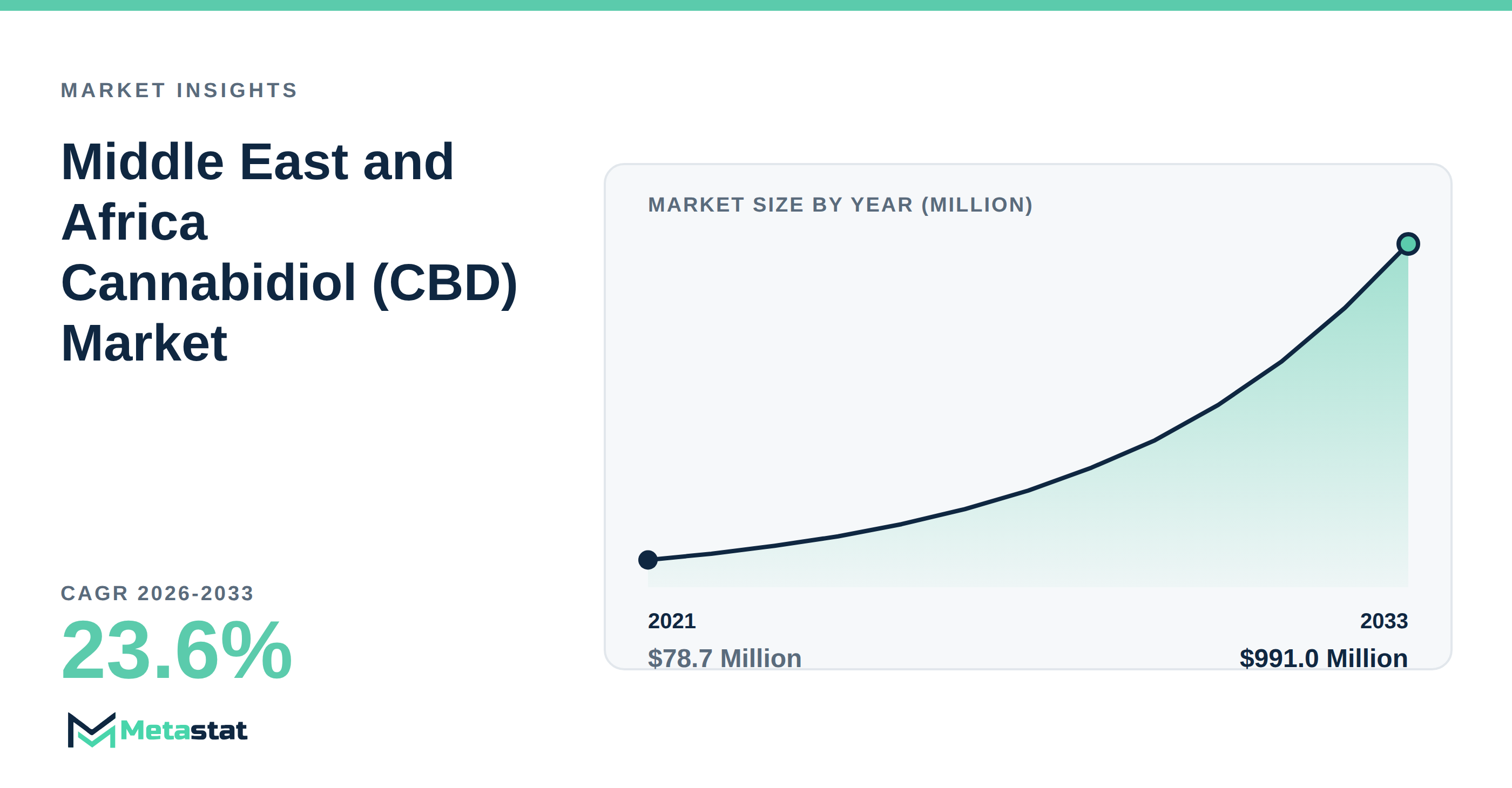
The data indicates that the Cannabidiol (CBD) market in the Middle East and Africa was valued at USD 181.9 million in 2025, with projections estimating growth to USD 991 million by 2033. This increase reflects a compound annual growth rate (CAGR) of 23.6%. Several elements drive this remarkable growth, including heightened consumer awareness and a broader array of applications for CBD products.
What are the key growth drivers?
Consumers increasingly recognize the health advantages of CBD, which substantially affects market dynamics across the Middle East and Africa. Individuals focused on health and wellness actively seek out natural alternatives to conventional pharmaceuticals, resulting in a surge in demand for CBD products. This trend is largely driven by the greater accessibility of information through digital platforms, allowing consumers to make informed choices regarding their health and wellness.
The growing interest in wellness contributes to the acceptance of CBD-infused products among diverse demographics. Both younger generations and older adults are exploring CBD oils, tinctures, and edibles, highlighting a broader movement towards incorporating natural remedies into their daily lives. Companies operating in the market respond to this increased demand by diversifying their product offerings and enhancing their marketing strategies to educate consumers effectively.
How does demographic change influence CBD consumption?
Demographic shifts within the region are reshaping how consumers approach CBD products. Urbanization is increasing, leading to more consumers living in metropolitan areas, which enhances the visibility and accessibility of CBD options. The aging population is expressing greater interest in health solutions that incorporate CBD, especially within pharmaceuticals.
This demographic evolution compels companies to adopt innovative marketing techniques, enabling them to better cater to the specific preferences and needs of consumers. E-commerce platforms have emerged because essential channels for connecting with health-conscious buyers, allowing convenient access to a broad selection of CBD products.
What regulatory challenges restrict market growth?
Despite the promising growth outlook, regulatory challenges significantly limit the potential expansion of the Cannabidiol (CBD) market in the Middle East and Africa. The presence of complex regulatory frameworks across different countries complicates product approvals and compliance, leading to increased operational costs for companies attempting to enter the market.
Geopolitical instability complicates the situation by disrupting supply chains and creating uncertainty for investors. These factors collectively deter potential capital investments and hinder innovation within the sector. Successfully navigating these regulatory complexities necessitates strategic planning and ongoing investments in compliance to ensure sustainable growth.
What emerging market trends create opportunities?
Simultaneously, emerging consumer trends present substantial growth opportunities in the market. There is a discernible shift towards organic and natural products, which positions CBD offerings favorably among health-conscious consumers. Increased investments in processing and distribution infrastructures facilitate the introduction of innovative CBD products, thereby enhancing market accessibility and penetration.
Advancements in extraction methods contribute to improved product quality and efficacy, aligning with the evolving preferences present in the Middle East and Africa Cannabidiol (CBD) market. Companies are prioritizing research and development to create innovative formulations, especially in pharmaceuticals and nutraceuticals, thereby enhancing their competitive positioning within the industry.
In summary, understanding the dynamics of the Cannabidiol (CBD) market in the Middle East and Africa reveals that while challenges exist, the interplay of consumer demand, demographic shifts, and evolving trends indicates promising avenues for growth. Industry stakeholders should prioritize strategic investments in product development and operational compliance to capitalize on the potential within this expanding market. For a thorough analysis, visit the Middle East and Africa Cannabidiol (CBD) Market.
Tags
About the Authors

LEAD ANALYST
Utkarsh Khirodkar is a Lead Market Research Analyst at MetaStat Insight, specializing in market intelligence, technology sector assessments, and competitive strategy.

SENIOR RESEARCH ANALYST
Biotechnology · Food and Beverages · Medical Devices · Packaging
Snehal Pasalkar is a Research Analyst at MetaStat Insight, operating at the intersection of life sciences research, competitive strategy, and market intelligence.