
Explore the factors fueling the growth of the Wind Tunnel market, focusing on technology integration, segment dynamics, and regional leadership.
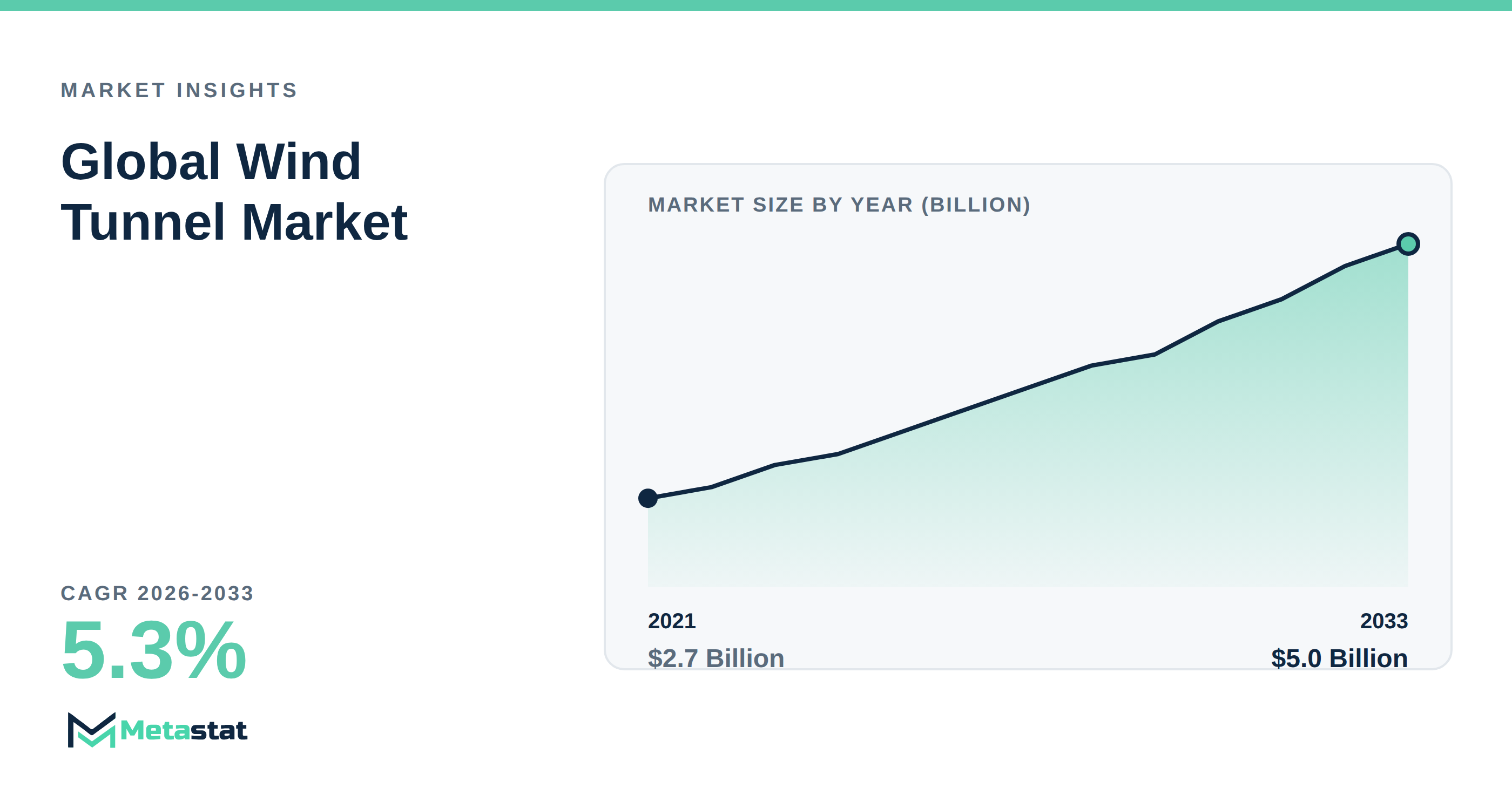
Investment in wind tunnel technology is expected to soar, elevating the market's value from USD 3.3 billion in 2025 to USD 5 billion by 2033, with a compound annual growth rate (CAGR) of 5.3%. This growth raises questions about the specific factors propelling this upward trajectory. A significant driver is the increasing demand from the aerospace and defense sectors, where advanced aerodynamic testing is crucial for enhancing performance and safety.
Countries worldwide are prioritizing their national defense capabilities, channeling substantial budgets into research and development initiatives. This trend translates into major investments in upgraded wind tunnel facilities that facilitate rigorous testing processes. Enhancements in these facilities significantly improve the efficiency and reliability of aerodynamic analyses, allowing defense contractors and aerospace manufacturers to develop next-generation aircraft and systems. The reliance on sophisticated wind tunnel technology continues to amplify, establishing it because a focal point for industry players.
What segment is driving the Wind Tunnel market?
Analysis indicates that the Closed Circuit Wind Tunnel segment is set to experience notable growth, anticipated to reach USD 3.5 billion by 2033. This surge reflects a CAGR of 5.7%, signifying a transition towards more controlled testing environments. Closed circuit systems provide enhanced efficiency and precise measurement capabilities, essential for the aerospace and automotive industries that demand strict adherence to regulatory standards. While organizations endeavor to optimize designs for both performance and sustainability, investment in these advanced testing facilities becomes crucial.
How are technological advancements influencing market dynamics?
The integration of automation, artificial intelligence, and advanced simulation technologies is transforming wind tunnel operations. Organizations increasingly adopt these innovations to streamline testing procedures, resulting in reduced operational costs and enhanced accuracy. For instance, employing computational fluid dynamics alongside traditional wind tunnel methods leads to more precise predictions of aerodynamic behavior, thereby improving product design and safety features. This trend positions companies that embrace technological advancements ahead of their competitors in the Wind Tunnel market.
What challenges do companies face in the Wind Tunnel market?
Despite the promising outlook, several challenges persist. Increasing regulatory compliance requirements concerning emissions and environmental standards necessitate significant investments in closed circuit systems. This requirement raises operational costs and curtails resources available for further innovation, thereby affecting growth trajectories. Macroeconomic pressures, including inflation and supply chain disruptions, complicate the market landscape. Such challenges lead to reduced investment in research and development, limiting technological progress in wind tunnel designs.
Which regions are leading the Wind Tunnel market?
Regionally, North America currently dominates the Wind Tunnel market, accounting for 37.5%. This leadership stems from advancements in aerospace and defense applications. Europe and Asia Pacific follow closely, with respective market shares of 28.5% and 25.8%. Each region possesses distinct dynamics that influence adoption and growth, indicating opportunities for stakeholders and businesses willing to engage in these diverse markets.
The Wind Tunnel market is characterized not only by growth but by the necessity for companies to navigate a complex web of challenges while remaining agile amid economic fluctuations. The significance of regulatory compliance, technological integration, and strategic partnerships is critical in facilitating sustained success. Companies that effectively balance innovation with operational efficiency are poised to reap the greatest rewards in this evolving landscape.
For a comprehensive analysis of the factors influencing the Wind Tunnel market and detailed insights into market dynamics, refer to the Global Wind Tunnel Market.
Tags
About the Author

LEAD ANALYST
Utkarsh Khirodkar is a Lead Market Research Analyst at MetaStat Insight, specializing in market intelligence, technology sector assessments, and competitive strategy.