
LEAD ANALYST
Utkarsh Khirodkar is a Lead Market Research Analyst at MetaStat Insight, specializing in market intelligence, technology sector assessments, and competitive strategy.

Global Airships Market Size, Share, By Hull Structure (Non-Rigid Airships, Semi-Rigid Airships and Rigid Airships), By Flight Operation (Crewed Airships and Uncrewed Airships), By Primary Application (Surveillance and Monitoring, Advertising and Aerial Broadcasting, Tourism and Passenger Transport, Cargo Transport and Heavy Lift, Telecommunications and Scientific Research and Testing), By Operating Altitude (Tropospheric Airships and Stratospheric Airships), Industry Analysis, Growth, Trends, and Forecast, 2026-2033
Report ID
MSI-5805
Published
November, 2026
Pages
280 Pages
Format
Historical
Base year
Forecast
Forecast period
Report Details
Market Valuation: Valued at $462.7 Million in 2025, projected to reach $869.3 Million by 2033 at a 8.2% CAGR.
Dominant Segment: Crewed airships lead the market, driven by their strong demand in surveillance and passenger transport applications. Their established presence reflects a preference for manned operations among buyers.
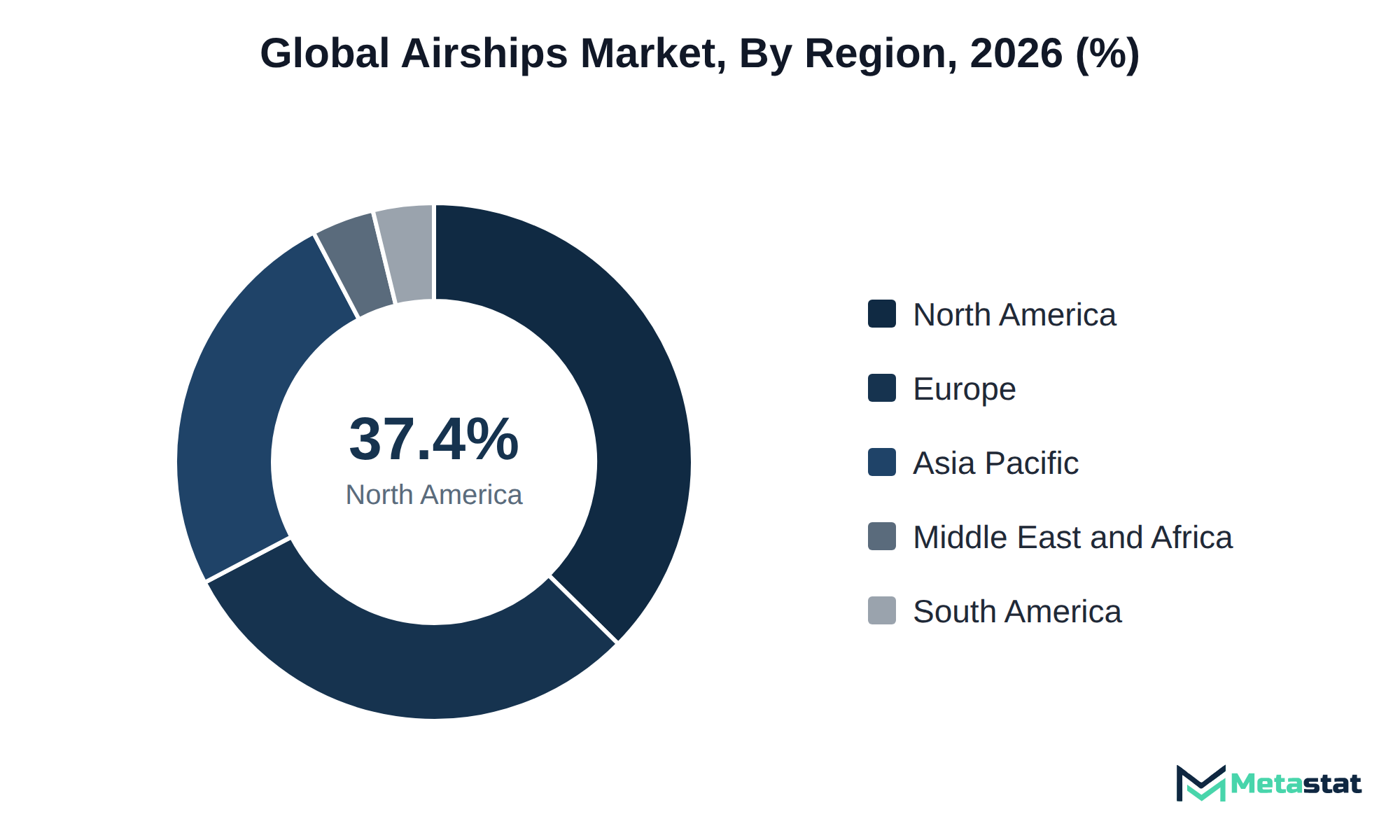
Geographic Lead: North America is the leading region, holding 37.4% of the market in 2025, with the US expected to maintain dominance in 2026 due to significant investments in airship technology.
What's Inside: The report provides a comprehensive analysis of market segmentation by hull structure, flight operation, primary application, and operating altitude, along with competitive coverage and growth forecasts.
High Growth in Uncrewed Airships: The uncrewed airship segment is projected to grow at a CAGR of 13.1% through 2033, driven by demand for autonomous solutions in surveillance and monitoring, appealing to both government and commercial sectors.
Technological Advancements: Innovations in airship design, such as lightweight materials and enhanced propulsion systems, are improving operational efficiency and attracting interest across various applications.
Choose Your License
Global Airships Market
The global Airships market was valued at USD 462.7 million in 2025 and is projected to reach USD 869.3 million by 2033, growing at a CAGR of 8.2% over the forecast period.
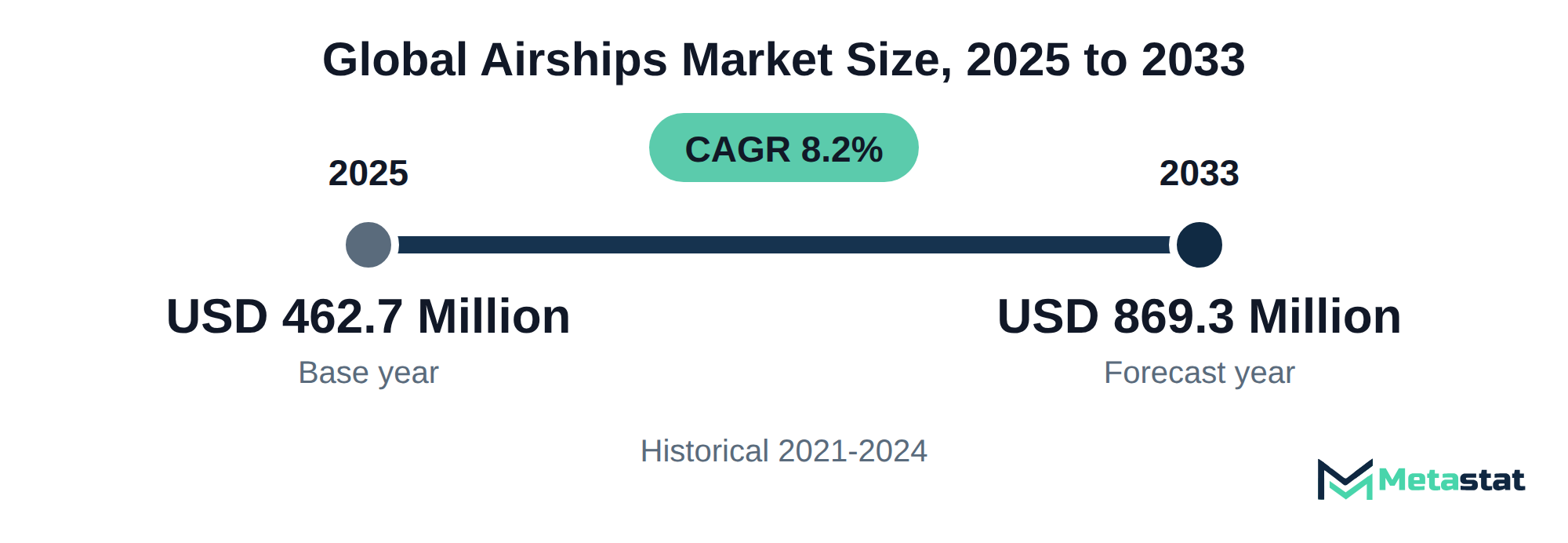
The Airships market encompasses various types of airships, including non-rigid, semi-rigid, and rigid structures, with applications ranging from surveillance to cargo transport. Buyers invest in this market due to the need for cost-effective and environmentally friendly alternatives for transportation and monitoring. The demand for innovative solutions drives spending, while industries seek to enhance operational efficiency and reduce carbon footprints.
Growth in the market is propelled by advancements in technology and increasing interest in airships for commercial uses. Among the segments, crewed airships represent the largest share, reflecting a strong preference for manned operations in surveillance and passenger transport applications. North America holds 37.4% of the market in 2025, with the US leading in 2026, highlighting the region's dominance in airship development and deployment.
One significant growth driver stems from the rising demand for uncrewed airships, particularly for surveillance and monitoring tasks. This trend indicates a shift toward automation and efficiency in operations, presenting opportunities for both established and emerging players in the market. The focus on uncrewed solutions aligns with broader trends in aerospace and defense, contributing to sustained growth in the overall market.
The Airships market serves a diverse range of applications, meeting the needs of sectors including surveillance, advertising, tourism, and cargo transport. Buyers invest in airships for their unique capabilities, including lower operational costs and the ability to access hard-to-reach areas. The versatility of airships enables various industries to adopt this technology for purposes like monitoring environmental changes or facilitating transportation in remote regions. The combination of factors drives significant spending across multiple buyer groups, including government agencies, logistics firms, and advertising companies.
Growth within the market is propelled by several factors, with the increasing demand for surveillance and monitoring applications representing a primary driver. Non-rigid airships emerge as the leading segment in terms of market value, attributed to their cost-effectiveness and operational efficiency. This regional dominance reflects a strong investment in airship technology, driving innovative applications in various industries.
In terms of overall market dynamics, the airships sector is poised for robust expansion, supported by advancements in technology and the growing interest in eco-friendly transportation methods. The anticipated growth across regions indicates a shift towards more sustainable operational practices, with airships playing an integral role in reducing carbon footprints. This potential aligns with global efforts to enhance efficiency and sustainability in various industries.
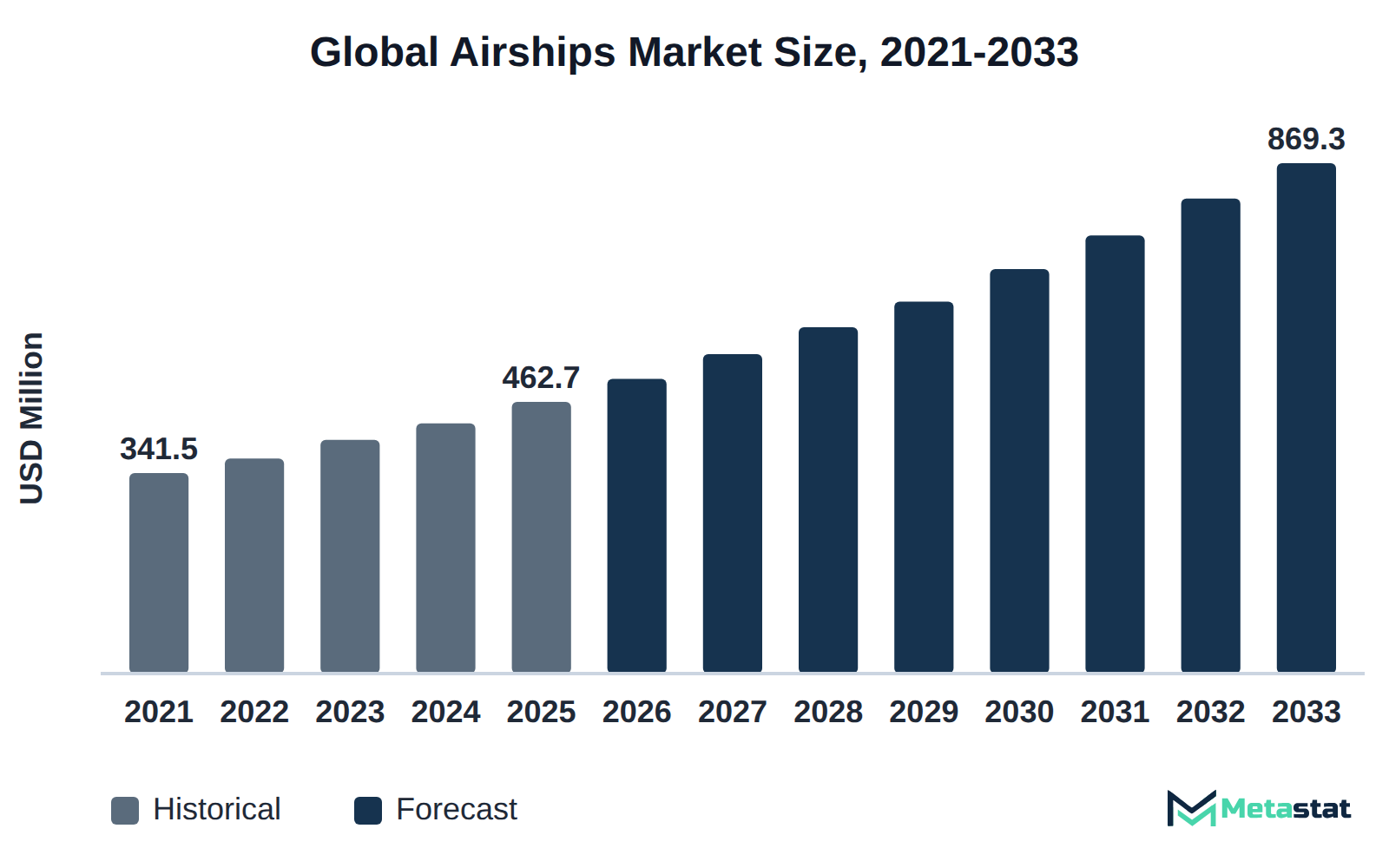
The certification process plays a critical role in the deployment of heavy-lift airships, directly influencing operational viability and market acceptance. Regulatory bodies require compliance with stringent safety and performance standards, which extend timelines for new airship designs. For instance, uncrewed airships, projected to reach a value of USD 288.1 million by 2033, face rigorous scrutiny regarding operational safety and reliability. This certification process often involves extensive testing, including flight trials and system evaluations.
Due to these requirements, manufacturers experience delays in bringing innovative heavy-lift solutions to market. The lengthy certification process deters investment in new technologies, which affects overall growth within the airships market. Without timely certification, companies face challenges in capitalizing on rising demand for heavy-lift capabilities, particularly in sectors including cargo transport and scientific research. The anticipated CAGR of 17% for cargo transport applications highlights the potential for significant revenue that remains untapped while waiting for certifications to clear.
Regulatory approval processes determine competitive advantages among suppliers. Early certification offers firms a chance to establish market presence, while those delayed struggle to attract customers. With the airships market poised for expansion, navigating the certification landscape effectively becomes essential for companies aiming to capitalize on emerging opportunities in heavy-lift airships.
Stratospheric airships serve critical functions in enhancing connectivity and supporting earth observation initiatives. The relatively low operational costs and extensive coverage capabilities of these airships drive increased interest from various sectors, including telecommunications and environmental monitoring. The market for stratospheric airships is projected to experience significant growth, with a compound annual growth rate of 16% through 2033.
Pricing strategies for stratospheric airships typically focus on long-term contracts that optimize operational efficiency and reduce overall expenditures. Buyers engage in negotiations that lead to fixed-price agreements, ensuring predictability in budgeting for both deployment and maintenance. The ability to secure comprehensive service packages that cover technical support, training, and regulatory compliance enhances the value proposition for buyers looking to invest in this technology.
The airships market sees heightened competition among suppliers offering tailored solutions to meet the unique requirements of different applications, leading to a diverse range of pricing structures. For instance, contracts often include performance-based incentives, further aligning supplier objectives with buyer expectations. This approach creates collaborative partnerships that drive innovation and advancement in airship technology.
The tourism and aerial advertising sectors increasingly recognize the economic advantages of airships. Investments in airship fleets for advertising and tourism have shown substantial returns, supported by a projected growth in the airships market. The segment of tourism and passenger transport is expected to reach a value of USD 152.9 million by 2033. The distinct operational capabilities of airships, including low operational costs and the ability to hover over targeted locations, enhance their appeal to advertisers seeking prolonged exposure to audiences.
Airships offer reduced energy consumption compared to traditional aircraft, aligning with growing environmental sustainability expectations among consumers. This factor positions airships favorably in promotional activities, as brands increasingly prioritize green initiatives. The dual advantage of cost efficiency and environmental responsibility attracts investment, fueling growth in the airships market.
The economic dynamics presented by airships create significant opportunities for stakeholders in tourism and advertising. With rising demand for innovative advertising solutions and unique tourist experiences, airships stand out as a competitive choice. This trend highlights the potential for substantial revenue generation, encouraging several players to explore their integration into marketing strategies.
Airships serve diverse commercial applications, significantly impacting various sectors. One prominent use involves surveillance and monitoring. This application leverages the unique aerial capabilities of airships to enhance data collection and real-time observation. The market for surveillance and monitoring is projected to grow from USD 169 million in 2026 to USD 265.8 million by 2033, reflecting a compounded annual growth rate of 6.7%. This rising demand stems from the increasing need for efficient aerial surveillance solutions across industries including security, environmental monitoring, and infrastructure inspection.
The integration of airships into these sectors results in operational efficiencies and cost savings. Companies using airships for surveillance benefit from reduced operational costs compared to traditional aircraft, with airships requiring less fuel and offering longer flight durations. This efficiency enables organizations to conduct more comprehensive monitoring missions at lower costs, encouraging broader adoption in the market. Overall, the growing emphasis on surveillance and monitoring highlights the potential of the airships market to transform how businesses gather data and carry out inspections.
Increased interest in uncrewed airships characterizes the market's current growth trajectory. The transition is evident among sectors including surveillance and cargo transport, where operators seek enhanced operational efficiency and reduced costs. Uncrewed airships offer versatility and decreased reliance on human resources, aligning with evolving industry needs for automated solutions. Significant advancements in drone technology drive this shift, enabling a more competitive landscape for uncrewed alternatives. The segment experiences a compound annual growth rate (CAGR) of 13.1% through 2033, reflecting robust demand. The growing focus on operational cost savings supports a surge in investment toward these solutions, positively impacting overall market dynamics.
The rise of uncrewed airships aligns with broader trends in automation, drawing attention from industries focused on surveillance and monitoring. Buyers prioritize innovative technologies that offer scalable and efficient operational capabilities. This trend contributes to a transformation in how airships operate, creating new opportunities within the market.
Innovations in airship design are driving the Airships market toward enhanced performance and operational efficiency. Developments in lightweight materials and aerodynamics lead to reduced operational costs and improved fuel efficiency. Enhanced propulsion systems contribute to increased range and speed, attracting interest from various sectors including surveillance, advertising, and tourism. The integration of advanced avionics and automated flight systems supports the emergence of uncrewed airships, appealing to industries requiring cost-effective solutions for aerial tasks. These technological advancements result in more versatile applications, increasing adoption rates among potential buyers. The market benefits from these advancements, which enhance overall competitiveness and open new revenue streams.
The push for sustainability influences airship technology, with manufacturers focusing on eco-friendly solutions to reduce carbon footprints. The adoption of alternative energy sources, including electric and hybrid systems, aligns with growing environmental concerns. Such innovations address regulatory pressures and enhance the appeal of airships in a market increasingly focused on sustainable practices. The combination of these technological advancements contributes to market growth, positioning the Airships market favorably against traditional transportation methods.
Price sensitivity among potential buyers restrains engagement with the Airships market, particularly affecting the tourism and advertising sectors. High initial costs associated with acquiring and operating airships hinder widespread adoption, resulting in slower uptake. Buyers often delay purchasing decisions or opt for lower-cost alternatives. This situation manifests through smaller orders and extended replacement cycles for older technologies, limiting overall growth potential. In the advertising sector, for instance, firms evaluate the cost-effectiveness of airships compared to traditional advertising mediums. Budget constraints lead to cautious investment, ultimately affecting market expansion. The ongoing challenge of addressing price perceptions directly impacts buyer confidence, influencing future demand for airships. Understanding these dynamics is crucial for stakeholders aiming to enhance market penetration and support long-term growth in this evolving environment.
Rising input costs create significant challenges for suppliers in the Airships market. Fluctuations in material prices increase production expenses, impacting profit margins. Suppliers respond by exploring alternative materials and enhancing supply chain efficiencies to mitigate these rising costs. Several firms invest in research and development to innovate and create cost-effective solutions that maintain performance standards. This strategic focus on cost reduction supports competitive positioning in a market characterized by price sensitivity. Adapting to these challenges is essential for sustaining profitability while meeting diverse customer demands across applications including surveillance and advertising. Continuous innovation and strategic partnerships enhance supplier resilience, allowing them to navigate the complex market landscape more effectively.
The uncrewed airship segment demonstrates significant potential within the Airships market, showing a projected compound annual growth rate of 13.1% through 2033. This growth results from increasing demand for autonomous surveillance and monitoring capabilities across various sectors. Buyers from both governmental and commercial backgrounds seek to enhance operational efficiency while reducing costs associated with crewed operations. Uncrewed airships offer advantages including lower operational costs, extended flight durations, and the ability to operate in hazardous environments. The anticipated market value for uncrewed airships reaches USD 288.1 million by 2033, reflecting rising interest in advanced aerial technologies. This evolving landscape positions suppliers who specialize in uncrewed systems to capture new opportunities and drive innovation in the sector. Enhanced performance characteristics and operational flexibility will contribute to expanding adoption rates, highlighting the segment's importance in the overall market trajectory.
The Global Airships market is segmented based on Hull Structure, Flight Operation, Primary Application, and Operating Altitude.
Non-Rigid Airships segment is valued at USD 297.4 million in 2026 and is projected to reach USD 448.9 million by 2033, at a CAGR of 6.1% during the forecast period. This category finds application in various sectors, including surveillance, advertising, and passenger transport, catering to both commercial and governmental organizations. The growth of non-rigid airships is driven by increasing demand for cost-effective solutions in aerial monitoring and promotional activities. Compared to semi-rigid and rigid airships, non-rigid variants offer a lower entry price, making them attractive to a broader range of buyers. While the semi-rigid segment shows a stronger projected growth rate of 8.4%, the non-rigid segment remains essential due to its versatility and established presence in the market.
Semi-Rigid Airships segment is estimated to reach USD 288.2 million by 2033, at a CAGR of 8.4% during the forecast period. This segment primarily serves applications in aerial advertising, surveillance, and passenger transport. Industries including tourism and media heavily employ semi-rigid airships for promotional activities and monitoring purposes. A significant demand driver for this segment includes the growing interest in sustainable and low-emission transportation options, influencing various sectors to adopt airships over traditional aircraft. Compared to other hull structures, semi-rigid airships experience faster growth due to their versatility and cost-effectiveness, with a projected compound annual growth rate of 8.4%, exceeding the growth of rigid airships. The segment's adaptability to different operational environments enhances its appeal among buyers across multiple industries, supporting increased investment and adoption in the market.
Rigid Airships segment is expected to reach USD 132.2 million by 2033. These airships, characterized by their supportive internal structure, find applications in specialized areas including surveillance, cargo transport, and research. Key users include government agencies and private companies seeking advanced aerial capabilities. The segment experiences growth driven by increasing demand for efficient surveillance solutions and technological advancements that enhance operational performance. Compared to other hull structure segments, Rigid Airships exhibit a slower growth trajectory, indicated by their compound annual growth rate of 4.4%, contrasting with the higher growth rates of Non-Rigid and Semi-Rigid Airships. This differentiation positions Rigid Airships uniquely within the market, catering primarily to specific operational needs and preferences of buyers focused on stability and payload capacity.
Crewed airships are valued at USD 380.1 million in 2026 and are projected to reach USD 581.2 million by 2033, at a CAGR of 6.3% during the forecast period. These airships serve various applications, including surveillance, monitoring, and passenger transport, primarily for government agencies, tourism operators, and event organizers. The increasing focus on surveillance and monitoring drives demand for crewed airships, which provide effective platforms for aerial observation. Comparatively, crewed airships exhibit slower growth than uncrewed airships, which show a projected CAGR of 13.1% through 2033. This divergence stems from the operational complexities associated with crewed airships, resulting in higher costs for operators. The requirement for pilot training and certification adds to the overall expense, influencing purchasing decisions among several potential buyers in the market.
Uncrewed Airships segment is estimated to reach USD 288.1 million by 2033, at a CAGR of 13.1% during the forecast period. These airships primarily serve applications in surveillance and monitoring, attracting interest from governmental and commercial entities focused on security and environmental oversight. The segment's rapid growth is driven by advancements in autonomous technology and increasing demand for cost-effective aerial solutions. This growth surpasses that of crewed airships, which are projected to grow at a CAGR of 6.3%. The operational flexibility and lower manpower requirements associated with uncrewed airships appeal to various sectors, enhancing their adoption rate. Innovations in drone technology and regulatory support further facilitate acceptance and integration into existing infrastructures, positioning uncrewed airships as a significant option in the market.
This segment primarily serves government agencies and private security firms seeking aerial surveillance capabilities for border security, infrastructure monitoring, and environmental assessment. The growing emphasis on security and surveillance drives demand for airships equipped with advanced imaging technologies. Compared to other segments, including Advertising and Aerial Broadcasting, which anticipates a CAGR of 4.4%, the Surveillance and Monitoring segment demonstrates a strong growth trajectory. The demand for sophisticated aerial surveillance solutions drives this segment's expansion, positioning it favorably within the market. Increasing investments in security infrastructure further support this trend, resulting in a favorable outlook for the Surveillance and Monitoring segment.
Advertising and Aerial Broadcasting segment is estimated to reach USD 154 million by 2033, at a CAGR of 4.4% during the forecast period. This segment focuses on using airships for promotional activities, allowing brands to reach audiences from unique vantage points. Businesses in advertising and marketing increasingly explore the advantages of aerial visibility and novel advertising techniques, driving demand in this sector. Unlike the faster-growing Cargo Transport and Heavy Lift segment, which shows a CAGR of 17%, the Advertising and Aerial Broadcasting segment experiences slower expansion due to the competitive nature of traditional advertising channels. Price sensitivity affects investment decisions, leading to careful selection of promotional methods. Brands seek cost-effective solutions, and the airships market offers a niche option that supports brand differentiation and audience engagement.
This segment primarily serves the leisure and travel industries, allowing for scenic flights and unique experiences that attract tourists. Increased interest in alternative travel options drives demand for airships, particularly among buyers seeking eco-friendly transportation modes. The segment's growth contrasts with other applications, including Surveillance and Monitoring, which shows a different trajectory. The projected compound annual growth rate (CAGR) for this segment is slower compared to the Cargo Transport and Heavy Lift segment, which has a CAGR of 17%. While airships offer a unique travel experience, challenges including regulatory hurdles and pricing dynamics influence wider adoption. Overall, the growth potential in the tourism and passenger transport segment reflects evolving consumer preferences for innovative and sustainable travel solutions, highlighting the adaptability of airships to changing market conditions.
Cargo Transport and Heavy Lift is projected to grow at a CAGR of 17% during the forecast period. This segment is essential in transporting oversized and heavy loads, serving industries including construction, mining, and humanitarian aid. The increasing demand for efficient and flexible logistics solutions drives growth in this area. Unlike other segments, including Surveillance and Monitoring, which show slower growth rates, this segment benefits from its specific applications in heavy cargo transport. The ability to operate in areas with limited infrastructure enhances its attractiveness to buyers. Advancements in airship technology and design facilitate improved payload capacities, further increasing demand. Overall, the Cargo Transport and Heavy Lift segment stands out in the market due to its rapid growth and specialized applications, leading to increased investment and activity in the coming years.
Telecommunications employs airships to provide cost-effective communication solutions over vast areas, particularly in remote regions lacking infrastructure. This application of airships targets telecommunications companies, governmental agencies, and organizations focusing on disaster relief operations, where traditional ground-based communication networks face challenges. Ongoing technological advancements in communication systems, including 5G and beyond, drive demand for airborne platforms capable of enhancing connectivity. Compared to other applications like surveillance and monitoring, telecommunications demonstrates a unique growth trajectory due to its reliance on emerging technologies that require innovative deployment approaches. The segment offers potential for lower operating costs compared to traditional ground-based solutions, presenting an attractive option for service providers navigating increasing operational expenses.
Scientific Research and Testing involves the use of airships for various scientific purposes, including atmospheric studies, environmental monitoring, and data collection. Research institutions and environmental agencies employ these airships to conduct detailed assessments of atmospheric conditions and gather critical data in hard-to-reach areas. This segment experiences growth driven by the increasing demand for advanced environmental monitoring technologies and the need for sustainable research methods that minimize ecological footprints. Compared to other segments, this application typically attracts higher investment due to the specialized nature of its operations and the advanced technology required for effective deployment. Other segments focus more on commercial applications, while Scientific Research and Testing emphasizes collaboration with academic and governmental organizations, reflecting a unique consumer base that prioritizes research outcomes over profit margins.
Tropospheric Airships segment is valued at USD 459.8 million in 2026 and is projected to reach USD 750 million by 2033, at a CAGR of 7.2% during the forecast period. These airships primarily serve applications in surveillance, monitoring, and other commercial uses, attracting interest from industries that prioritize such operational capabilities. The segment experiences momentum from increasing demand for aerial surveillance solutions, driven by advancements in technology and heightened security requirements. This growth trajectory contrasts with Stratospheric Airships, which show a faster CAGR of 16% during the same period, positioning Tropospheric Airships as a more stable option. The relatively lower cost associated with Tropospheric Airships compared to their stratospheric counterparts appeals to a broader range of buyers, enhancing their market penetration. The airship market continues to evolve, with Tropospheric Airships playing a critical role in meeting diverse operational needs.
Stratospheric Airships segment is estimated to reach USD 119.4 million by 2033, at a CAGR of 16% during the forecast period. These airships serve various applications, including surveillance, telecommunications, and scientific research, appealing to sectors that require high-altitude operations and extended range capabilities. The rapid growth of this segment derives from increased demand for advanced surveillance systems and effective communication solutions in remote areas. Compared to Tropospheric Airships, which show a CAGR of 7.2%, Stratospheric Airships exhibit a higher growth rate, indicating stronger market interest. This segment's unique positioning targets specialized buyers seeking enhanced operational performance and advanced technological capabilities, further differentiating it from other airship offerings in the market.
Based on geography, the Global Airships market is divided into North America, Europe, Asia-Pacific, South America, Middle East, and Africa.
Significant growth in the airships market in North America derives from industries including surveillance and cargo transport. The increasing need for advanced monitoring solutions drives demand among governmental and commercial entities. Infrastructure investment, particularly in unmanned aerial systems, supports the expansion of uncrewed airships for surveillance applications. North America holds a 37.4% share of the global market in 2025 and is projected to reach USD 306.7 million by the end of 2033. The unique geographical landscape of the region facilitates diverse applications, enhancing operational efficiency and safety across various sectors. Demand for both crewed and uncrewed airships is expected to rise, reflecting a growing trend in innovative aerial solutions.
Demand within the Airships market in Europe experiences significant growth, largely driven by the rising need for surveillance and monitoring capabilities across various industries. Countries like Germany and France emphasize the use of airships for environmental monitoring and security applications, tapping into governmental and private sector investments. Infrastructure improvements in airship technology contribute to this demand, enhancing operational efficiencies and reducing deployment costs. The market benefits from a strong emphasis on sustainability, with airships offering a lower carbon footprint compared to traditional air transport options. By 2025, Europe is anticipated to account for a 29.9% share of the global airships market, reflecting its strategic importance in technological advancements and environmental initiatives.
Airships market demand in Asia-Pacific arises from various applications, particularly in surveillance, monitoring, and cargo transport. China, Japan, and India lead advancements in airship technology due to ongoing investments in research and development. The region's growing interest in uncrewed airships reflects a shift toward automation and efficiency, driven by the need for cost-effective solutions. Australia and South Korea exhibit increasing adoption of airships for environmental monitoring and telecommunications purposes. With a projected market share of 25.0% in 2025, the market in Asia-Pacific demonstrates significant growth aligned with regional infrastructure improvements and government support for innovative transportation methods.
Airships market growth in South America stems from applications in industries including advertising, tourism, and surveillance. In Brazil and Argentina, increasing interest in eco-friendly tourism and advertising strategies drives demand for airships, which offer sustainable and innovative solutions. The region benefits from limited competition, allowing localized players to thrive. Infrastructure development remains a constraint, impacting deployment and maintenance costs for airship operations. The region's potential for growth exists, particularly with advancements in technology and increasing awareness of airship capabilities. The market is projected to expand through 2033, attracting investment and encouraging innovation in applications including cargo transport and monitoring services.
Saudi Arabia and the UAE exhibit a growing interest in airships, driven by advancements in surveillance and monitoring technologies. The South African market recognizes the potential for airships in various applications, including tourism and cargo transport. Rising investments in infrastructure and renewable energy projects contribute to the demand for airships in this region. The market in the Middle East and Africa accounts for 3.9% of the global share in 2025, indicating a developing landscape for airship adoption. Factors including cost-effective aerial solutions and environmental benefits further influence the growth trajectory. The airships market in this region shows promise, reflecting a shift toward innovative transportation methods.
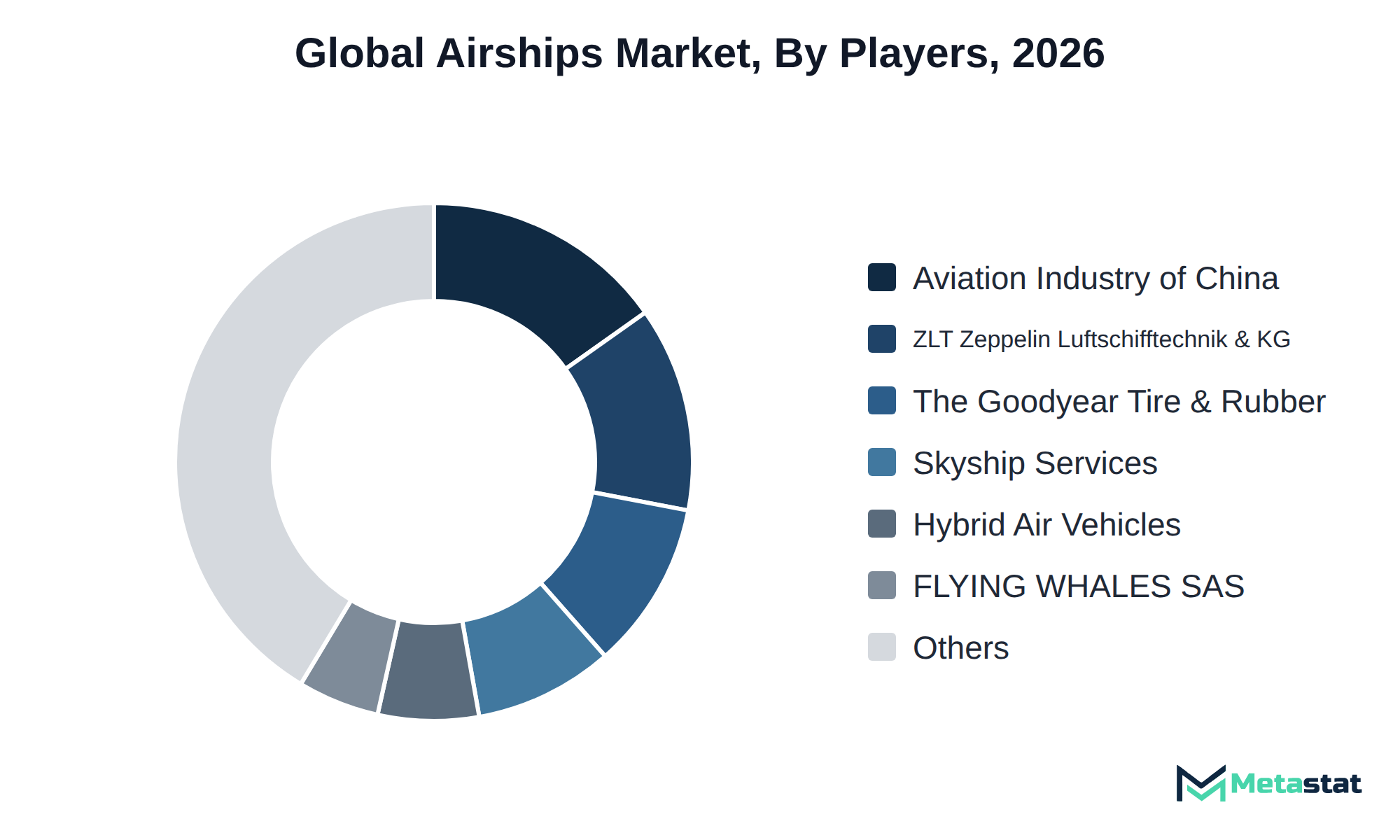
The Airships market features companies differentiating themselves based on product offerings and operational capabilities. Key segments include hull structure, flight operation, and primary application, with companies targeting specific niches within these categories. For instance, ZLT Zeppelin Luftschifftechnik GmbH & Co. KG focuses on non-rigid airships, while Aviation Industry Corporation of China, Ltd. emphasizes semi-rigid designs. Meanwhile, Hybrid Air Vehicles Limited specializes in innovative flight operations.
Buyers in the market prioritize factors including price, customization, service, and ecosystem integration when selecting airship providers. Skyship Services, Inc. and The Goodyear Tire & Rubber Company leverage their established reputations to attract clients, emphasizing service reliability. OceanSky Cruises AB targets the tourism sector, offering customized aerial experiences. This diversity in strategic focus illustrates the dynamic nature of competition in the Airships market.
Achieving this growth relies on several critical developments. First, increasing demand for uncrewed airships, particularly in applications like surveillance and monitoring, will drive expansion. This segment is projected to grow at a CAGR of 13.1%, highlighting the potential for significant adoption in various industries. Second, advancements in semi-rigid airship technologies, which are expected to reach USD 288.2 million by 2033, will enhance operational capabilities and attract investment. Third, the growth of cargo transport and heavy lift applications, with its strong potential for a 17% CAGR, will further contribute to the market's overall performance. Conversely, operational challenges, particularly those related to regulatory compliance and air traffic management, pose risks that could hinder market growth. Regions including Europe, where regulatory frameworks are more stringent, experience slower adoption rates compared to North America. Balancing these developments and risks will determine the market's trajectory, influencing investment and competitive dynamics within the airships market.
By Flight Operation: Crewed Airships, Uncrewed Airships
By Primary Application: Surveillance and Monitoring, Advertising and Aerial Broadcasting, Tourism and Passenger Transport, Cargo Transport and Heavy Lift, Telecommunications, Scientific Research and Testing
By Operating Altitude: Tropospheric Airships, Stratospheric Airships
The report strategically identifies and profiles the key market players and analyses their core competencies in each sub-segment of the Airships market.
Report Attributes | Details |
Study Period | 2021-2033 |
Base Year | 2025 |
Estimated Year | 2026 |
Forecast Period | 2026-2033 |
Historical Period | 2021-2025 |
Growth Rate | CAGR 8.2% from 2026 to 2033 |
Revenue Unit | USD million |
Segmentation | By Hull Structure, Flight Operation, Primary Application, Operating Altitude, and Region |
By Region | North America (By Hull Structure, Flight Operation, Primary Application, Operating Altitude, and Country)
|
Europe (By Hull Structure, Flight Operation, Primary Application, Operating Altitude, and Country)
| |
Asia Pacific (By Hull Structure, Flight Operation, Primary Application, Operating Altitude, and Country)
| |
South America (By Hull Structure, Flight Operation, Primary Application, Operating Altitude, and Country)
| |
Middle East and Africa (By Hull Structure, Flight Operation, Primary Application, Operating Altitude, and Country)
|
Find answers to common questions about this report
The Airships market size was valued at USD 462.7 million in 2025.
The market is projected to grow at a CAGR of 8.2% during the forecast period from 2026 to 2033.
The North America Airships market size is estimated to reach USD 306.7 million by 2033.
Non-Rigid Airships lead the Airships market with a value of USD 297.4 million in 2026. This segment surpasses others in the Hull Structure category.
Increased interest in uncrewed airships drives market growth, particularly in surveillance and cargo transport sectors seeking operational efficiency and cost reduction. Technological advancements in airship design, including lightweight materials and enhanced propulsion systems, contribute to improved performance and fuel efficiency, attracting interest from various industries.
North America holds the dominant share of the Airships market, with a value of USD 306.7 million projected for 2033, representing 37.4 percent of the total market. This figure surpasses the shares of other regions, including Europe at 29.9 percent and Asia Pacific at 25 percent.
Price sensitivity among potential buyers restrains Airships market growth, particularly affecting the tourism and advertising sectors. Rising input costs present challenges for suppliers, impacting profit margins and limiting overall growth potential.
Increased interest in uncrewed airships is driven by the demand for enhanced operational efficiency and cost savings across sectors including surveillance and cargo transport. Technological advancements, including lightweight materials and alternative energy sources, further support adoption by improving performance and addressing environmental concerns.
The Airships market is estimated to reach a valuation of USD 869.3 million by 2033.
Key players operating in the Airships market include ZLT Zeppelin Luftschifftechnik GmbH & Co. KG, Aviation Industry Corporation of China, Ltd., Skyship Services, Inc., Kelluu Oy, The Goodyear Tire & Rubber Company, OceanSky Cruises AB, Hybrid Air Vehicles Limited, and Worldwide Aeros Corp.
The analysts below cover Aerospace and Defense research at Metastat Insights.
LEAD ANALYST
Utkarsh Khirodkar is a Lead Market Research Analyst at MetaStat Insight, specializing in market intelligence, technology sector assessments, and competitive strategy.
Evaluating calorific value requirements and air permit compliance across municipal waste facilities requires localized data. Metastat Insight structured their analysis around operational throughput capacity and feedstock composition variations in Latin America and Eastern Europe. Their competitive mapping of sorting equipment vendors helped clarify technology differences between optical separators and heavy media systems. The study provided an objective baseline during our capital expenditure reviews.
Decarbonizing industrial thermal processes hinges on refrigerant regulations and compressor efficiency limits. Metastat Insights delivered a thorough market analysis that evaluated natural refrigerants like CO2 and hydrocarbons against synthetic low-GWP alternatives. The breakdown of utility incentives and grid capacity constraints across key European manufacturing hubs offered valuable perspective. The follow-up conversation with their sector analysts addressed our specific questions on mechanical vapor recompression systems efficiently.
Assessing 200mm wafer transition schedules and substrate supply bottlenecks requires precise technical intelligence. MetaStat Insight supplied an actionable breakdown comparing planar and trench MOSFET architectures across automotive and industrial drive markets. The regional capacity estimates for Asia-Pacific foundries helped clarify lead-time uncertainties during our strategic planning session. When we needed additional clarification on high-purity raw material sourcing, their analyst team responded with helpful context within twenty-four hours.
Explore related market intelligence reports worth reading alongside this one.
Starting from
$2950