
LEAD ANALYST
Utkarsh Khirodkar is a Lead Market Research Analyst at MetaStat Insight, specializing in market intelligence, technology sector assessments, and competitive strategy.

Global Aerospace Materials Testing Services Market Size, Share, By Service Type (Mechanical and Destructive Testing, Non-Destructive Testing, Chemical and Physical Analysis, Metallurgical and Microstructural Analysis, Environmental and Corrosion Testing, Coatings and Surface Engineering Testing, Others (Failure Analysis and Specialized Testing)), By Material Type (Metals and Alloys, Polymer Matrix Composites, Ceramic Matrix Composites, Polymers and Elastomers, Coatings and Surface Treatments, Others (Adhesives and Sealants)), By Application (Aircraft Structural Components, Aircraft Engine and Propulsion Components, Landing Gear and Flight Control Components, Aircraft Interior Components, Spacecraft and Satellite Components, Avionics and Electronic Enclosures), By End User (Commercial Aerospace OEMs, Defense and Military Aerospace OEMs, Aircraft Engine Manufacturers, Aerospace Tier 1 Suppliers, Aerospace Tier 2 and Tier 3 Suppliers, Spacecraft and Satellite Manufacturers, Aerospace Aftermarket and MRO Providers, Government and Aerospace Research Organizations), Industry Analysis, Growth, Trends, and Forecast, 2026-2033
Report ID
MSI-4494
Published
November, 2026
Pages
275 Pages
Format
Historical
Base year
Forecast
Forecast period
Report Details
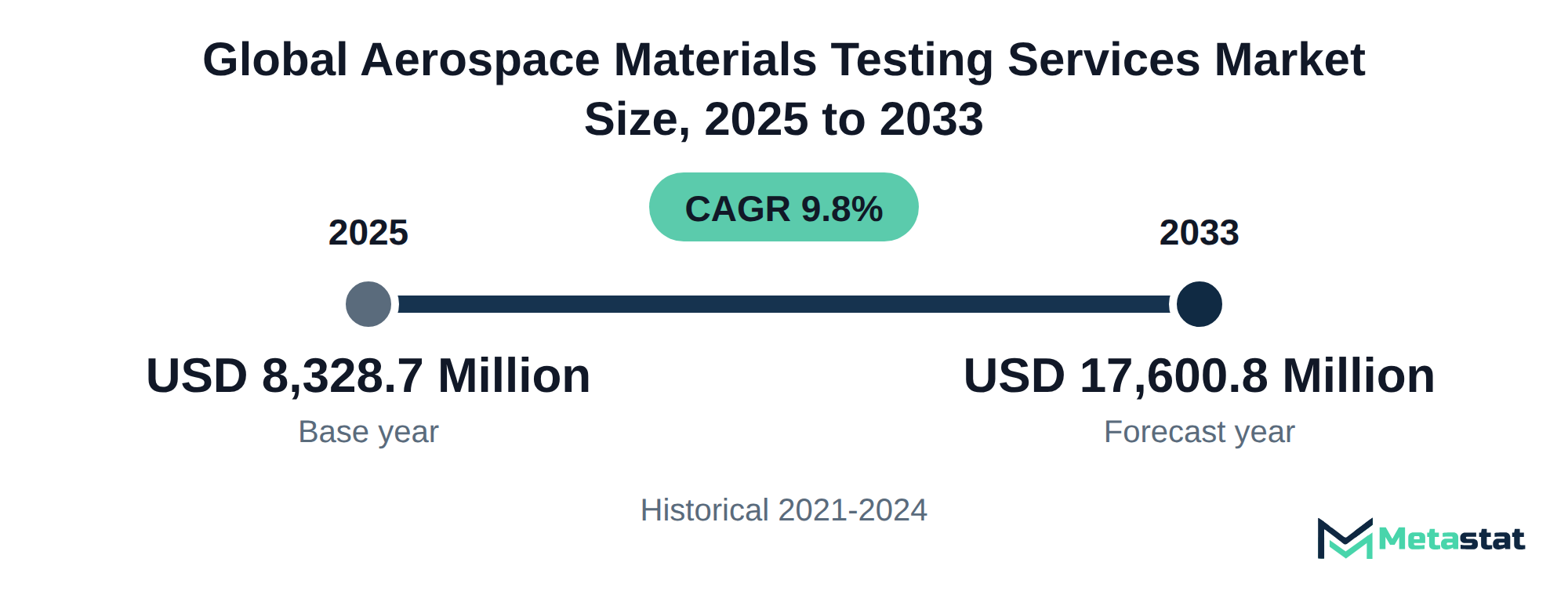
Market Valuation: Valued at $8,328.7 Million in 2025, projected to reach $17,600.8 Million by 2033 at a 9.8% CAGR.
Dominant Segment: Non-Destructive Testing leads the Aerospace Materials Testing Services market, driven by its critical role in ensuring safety without damaging materials. This segment is projected to reach USD 4,079.9 million by 2033, reflecting the industry's focus on innovative testing techniques.
Geographic Lead: North America holds the largest market share at 38.1% in 2025, with the United States anticipated to lead in 2026. This dominance is attributed to a strong aerospace manufacturing base and substantial investments in new technologies.
What's Inside: The report provides a comprehensive analysis of the Aerospace Materials Testing Services market, covering various service types, material types, applications, and end users. It includes competitive coverage and forecasts through 2033, offering insights into market dynamics and growth trends.
Market Dynamics: The market is influenced by increasing demand for efficient aircraft components and rising costs of skilled labor. Innovations in testing methodologies are essential to meet the growing regulatory standards and performance requirements in the aerospace sector.
Choose Your License
Global Aerospace Materials Testing Services Market
The global Aerospace Materials Testing Services market was valued at USD 8,328.7 million in 2025 and is projected to reach USD 17,600.8 million by 2033, growing at a CAGR of 9.8% over the forecast period.
The Aerospace Materials Testing Services market encompasses a range of testing methodologies essential for ensuring the safety and reliability of aerospace materials. Buyers invest in these services to adhere to stringent regulatory standards and enhance the performance and longevity of aerospace components. Demand for testing services surged due to the increasing complexity of materials used in aerospace applications, driven by technological advancements and the ongoing push for innovation within the industry.
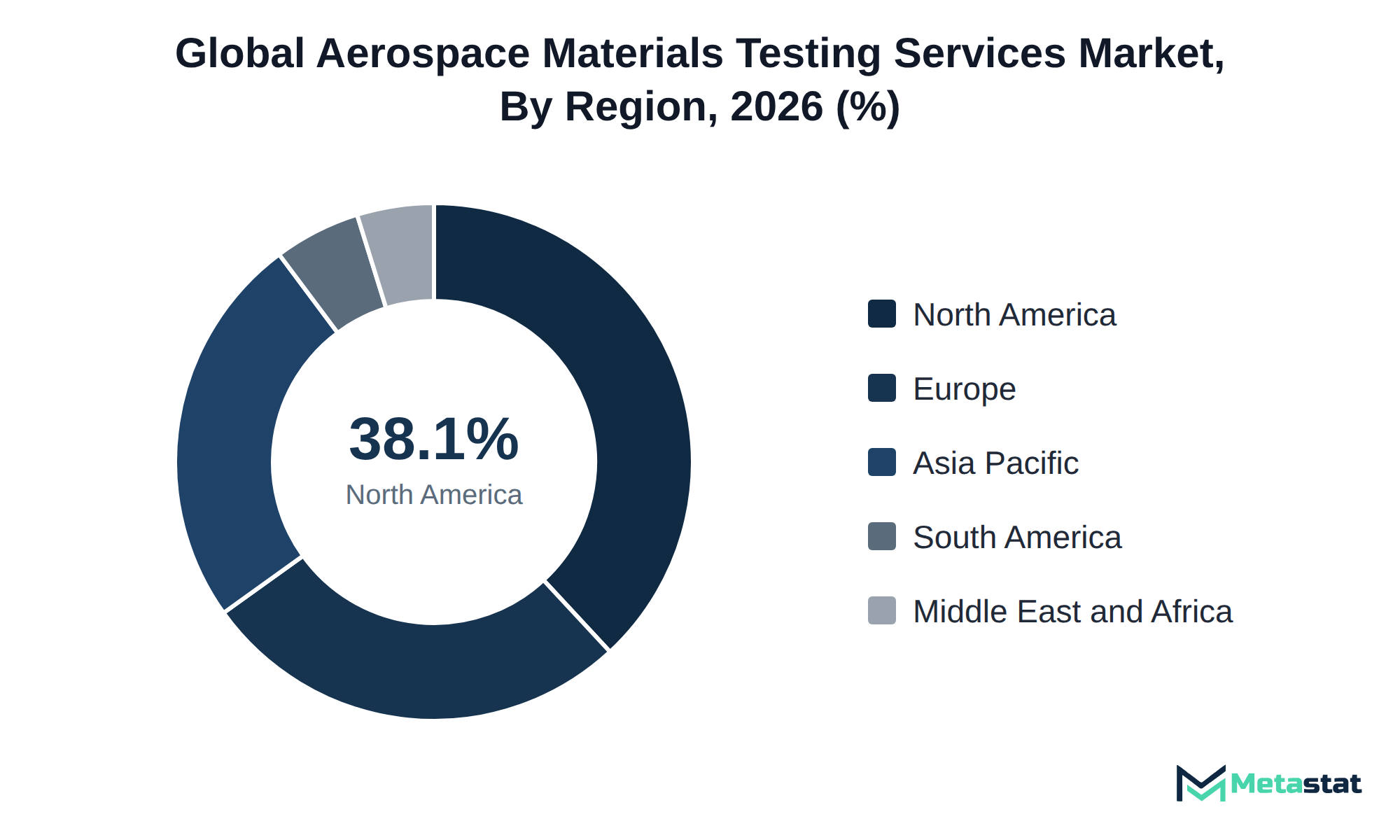
Rising need for safety and performance validation in aerospace applications propels growth in the aerospace materials testing services market. Non-Destructive Testing, which assesses materials without causing damage, represents the segment with the highest value within the market. North America holds 38.1% of the market in 2025, with the US leading in 2026. This region benefits from a robust aerospace manufacturing base and significant investment in new technologies, fueling demand for testing services.
Technological advancements contribute significantly to market expansion, enhancing the efficiency and effectiveness of testing processes. The European market, while holding a share of 27%, focuses on stringent regulatory compliance and innovation in testing methods. In comparison, the Asia Pacific region captures 24.7%, driven by increasing aerospace production and demand for high-performance materials. Key players are investing in advanced testing technologies to maintain relevance in a competitive market.
The Aerospace Materials Testing Services market ensures the integrity and performance of materials used in aerospace applications. Buyers invest in these services to mitigate risks associated with material failure, which has severe safety and financial implications. Key industries, including commercial aerospace and defense, prioritize high-quality testing to comply with stringent regulatory standards and ensure product reliability, enhancing overall operational efficiency and safety in aviation and related fields.
Increasing demand for advanced testing methodologies and materials that enhance aircraft performance drives market growth. Among the various segments, Non-Destructive Testing stands out as the most valuable, reflecting the industry's focus on innovative and efficient testing techniques. The growing emphasis on safety and performance standards in aerospace applications fuels the expansion of testing services. North America is projected to maintain a significant share of the market, with the US leading in 2026.
Investment in research and development for advanced materials continues to support market growth. The need for reliable aerospace materials that withstand extreme conditions drives aerospace manufacturers to seek comprehensive testing solutions. While the aerospace industry evolves, the Aerospace Materials Testing Services market adapts, ensuring that materials meet the increasing demands of modern aviation and space exploration.
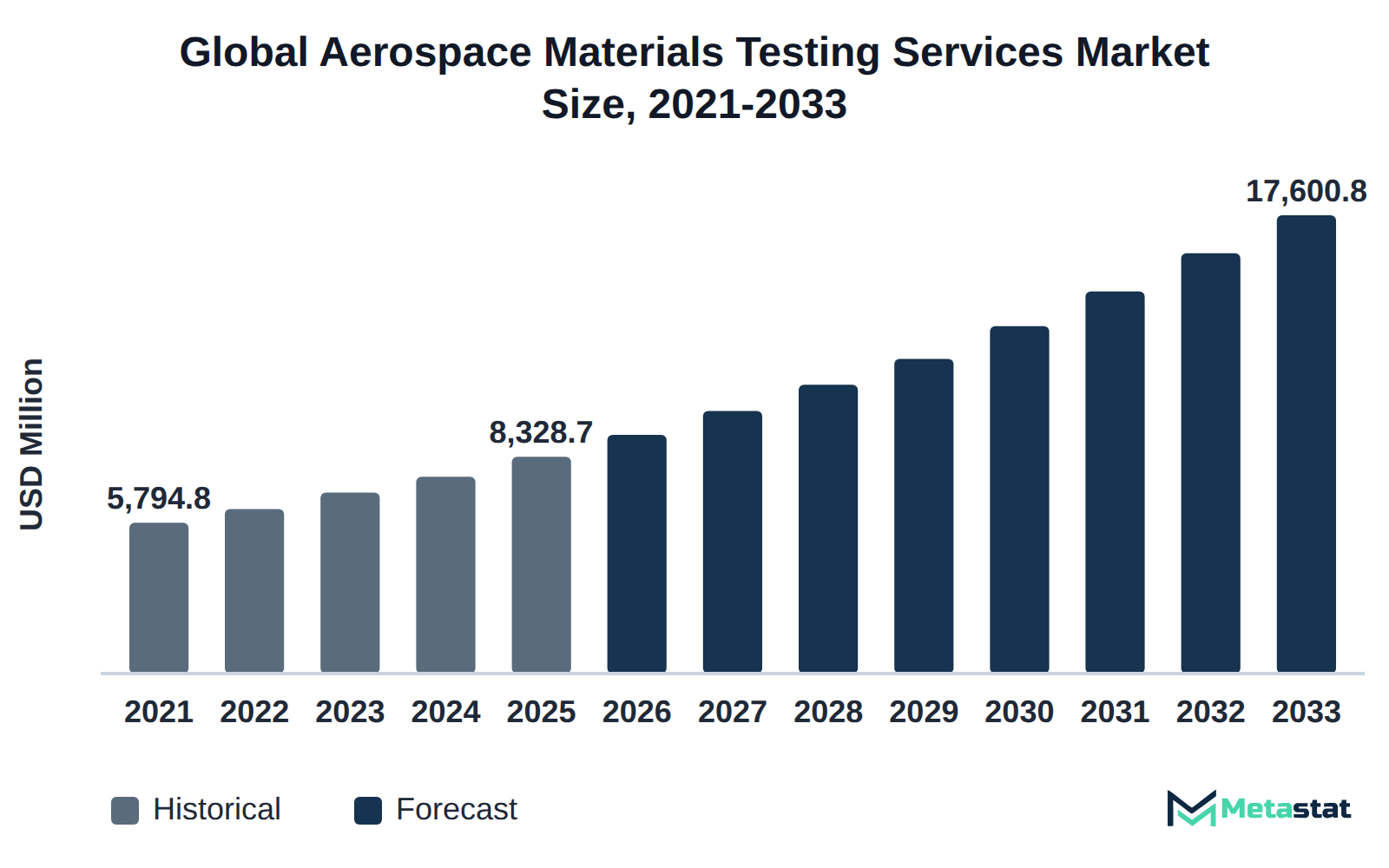
Advanced non-destructive testing (NDT) technologies ensure the safety and reliability of aerospace components. Innovations within this domain focus on improving inspection accuracy while reducing operational downtime. The Aerospace Materials Testing Services market is shifting towards these advanced techniques. Non-destructive testing is projected to reach USD 4,079.9 million by 2033 at a compound annual growth rate of 10.1% during the forecast period.
Technological advancements, including automated ultrasonic testing and digital radiography, enhance the ability to detect defects without compromising material integrity. These methods provide high-resolution data, allowing manufacturers to make informed decisions regarding component performance. The integration of digital inspection technologies contributes to efficiency by minimizing manual intervention, thus expediting the quality assurance process.
The emphasis on advanced NDT technologies aligns with growing demand for stricter compliance with safety regulations in aerospace manufacturing. Regulatory bodies implement more rigorous standards, prompting manufacturers to invest in sophisticated testing solutions. Such investments enhance safety protocols and strengthen competitive positioning in the Aerospace Materials Testing Services market.
The Aerospace Materials Testing Services market experiences significant changes in pricing structures and contract models for composite material qualification and high-performance alloy testing. Buyers increasingly focus on long-term contracts, which offer cost stability and predictable expenditures. For instance, the shift towards composite materials in aerospace applications has resulted in a projected market value of USD 3,365.3 million for Polymer Matrix Composites by 2033. This growth influences negotiations, with suppliers and buyers seeking agreements that reflect the rising importance of these materials in aircraft design.
In the market, fixed-price contracts have gained popularity due to their ability to mitigate risks associated with fluctuating raw material costs. Buyers exhibit a preference for these models when engaging with service providers, allowing them to project their budgets accurately. Performance-based contracts have emerged, where payments link directly to the quality and reliability of testing outcomes. This approach incentivizes service providers to maintain high standards, ensuring that the testing processes meet the stringent requirements of aerospace applications.
The Aerospace Materials Testing Services market is expected to continue evolving, with buyers increasingly valuing transparency in pricing and contract terms. This evolution enhances collaboration between buyers and service providers, creating a more efficient procurement process that benefits both parties. These pricing strategies and contract models drive market growth by meeting the needs of different stakeholders and keeping the aerospace industry competitive and innovative.
Aerospace certification requirements significantly influence the quality assurance processes across global supply chains, particularly for Commercial Aerospace OEMs. By 2033, the demand from this end-user segment is projected to reach USD 3,777.1 million, reflecting a shift toward stringent compliance with safety and reliability standards. Certification ensures that materials meet rigorous performance standards, reducing risks associated with product failures in critical aerospace applications.
In the context of the Aerospace Materials Testing Services market, material traceability becomes fundamental. It provides a clear record of the material's journey from supplier to end-user, ensuring that all components comply with established standards. This traceability is vital in maintaining the integrity of both the manufacturing process and the final product, driven by rising regulatory pressures and consumer expectations for transparency.
The focus on quality assurance enhances operational efficiency while mitigating potential liabilities associated with non-compliance. By prioritizing proper certification and traceability, organizations optimize their supply chains and increase their competitiveness in the market. The connection between rigorous certification processes and effective material traceability builds trust among stakeholders, driving continued investments in Aerospace Materials Testing Services.
The introduction of lightweight aircraft materials and advanced propulsion systems significantly alters testing requirements in the Aerospace Materials Testing Services market. These innovations necessitate more rigorous testing methodologies to ensure safety, performance, and compliance with regulatory standards. This rapid expansion highlights the increasing focus on enhancing material performance and reliability.
In particular, the demand for Non-Destructive Testing (NDT) services is expected to evolve rapidly, with a forecasted value of USD 4,079.9 million by 2033. Lightweight materials, including polymer matrix composites and advanced alloys, require precise evaluation techniques to detect hidden defects without compromising material integrity. The shift toward these materials and systems drives aerospace manufacturers to seek specialized testing services that ensure optimal functionality and durability. Consequently, organizations investing in advanced testing solutions position themselves competitively in a market driven by continuous technological advancements.
Growing demand for more efficient and reliable aircraft components drives significant investments in testing services. Commercial Aerospace OEMs, in particular, focus on enhancing safety and performance standards to meet evolving customer expectations. This shift towards high-quality components is evident in the projected increase in demand. The Aerospace Materials Testing Services market is expected to reach USD 17,600.8 million by 2033, reflecting a compound annual growth rate (CAGR) of 9.8%. The heightened emphasis on rigorous testing ensures that materials comply with safety regulations and performance criteria, resulting in increased volumes of testing services needed across various aerospace applications.
The emphasis on innovative materials, including composites and alloys, further influences spending patterns in the market. OEMs pursue enhanced design capabilities and operational efficiencies, making testing services tailored to new material types essential. This trend illustrates a broader shift among buyers towards adopting advanced testing methodologies to guarantee the quality and reliability of aerospace materials.
Innovations within testing methodologies significantly influence the Aerospace Materials Testing Services market. Development of advanced testing techniques, including automated inspection and artificial intelligence integration, enhances accuracy and efficiency, reducing overall testing costs. Suppliers adopting these technologies benefit from improved service delivery and expanded capabilities, meeting rising demands from aerospace manufacturers for enhanced performance and reliability.
The transition toward more cost-effective materials, including polymer matrix composites, necessitates refined testing methods to ensure compliance with rigorous safety standards. This transition drives demand for testing solutions that validate material integrity. Consequently, investments in technology upgrades improve service offerings, and the market is expected to grow. Enhanced capabilities contribute to maintaining competitive advantages among suppliers, encouraging further innovation in testing methodologies.
Rising costs for aerospace materials testing services limit the adoption rate among commercial aerospace OEMs. Increased raw material prices and high operational expenses contribute to larger budget allocations, reducing investment in testing services. Consequently, this affects the capability of OEMs to procure comprehensive testing packages, leading to smaller orders and delayed procurement processes. Limited financial resources hinder the ability of companies to upgrade testing facilities or adopt advanced methodologies. This constraint results in slower uptake of new technologies, affecting overall efficiency and competitiveness in the market. The combination of rising costs and constrained budgets impedes the growth trajectory of the aerospace materials testing services market, forcing buyers to seek alternative solutions or delay investments. Buyers are increasingly seeking cost-effective options, impacting their decisions regarding service providers and significantly influencing market dynamics.
Suppliers in the Aerospace Materials Testing Services market face challenges related to increasing costs of skilled labor. This situation arises from a competitive labor market where qualified professionals are in high demand, resulting in higher wages and operational costs for testing firms. Many suppliers respond to this challenge by investing in training programs to enhance the skills of existing employees, thereby reducing reliance on external hiring. Automation and advanced technologies are adopted to streamline operations and minimize the need for extensive labor. These strategies help control operational costs and improve service efficiency. This dynamic impacts the overall pricing strategy within the market, with suppliers adjusting their rates to maintain profitability while meeting the demands for comprehensive testing services. Sustained investment in labor efficiency and innovative technologies remains crucial for suppliers aiming to thrive amid these economic pressures.
Rapid expansion within the Aerospace Materials Testing Services market highlights a significant opportunity for aerospace tier 1 suppliers. This category is projected to exhibit a compound annual growth rate (CAGR) of 10% through 2033, driven by increasing demand for high-quality materials and components required for modern aircraft. The focus on performance and reliability in aerospace manufacturing necessitates advanced testing services that meet compliance standards and enhance operational efficiency. Aerospace tier 1 suppliers are positioned to benefit from this growth by integrating innovative testing methodologies and strengthening supplier relationships. The anticipated revenue growth in this segment supports investment and development, enabling suppliers to meet the industry's changing needs more effectively. This strategic positioning leads to enhanced market share and improved competitive dynamics among key players.
The Global Aerospace Materials Testing Services market is segmented based on Service Type, Material Type, Application, and End User.
Mechanical and Destructive Testing segment is valued at USD 2,316.2 million in 2026 and is projected to reach USD 4,368.5 million by 2033, at a CAGR of 9.5% during the forecast period. This segment focuses on evaluating the mechanical properties and structural integrity of materials through various destructive methods. Predominantly employed by aerospace manufacturers and research organizations, it ensures that components meet stringent safety and performance standards. The rising necessity for more reliable and durable aircraft structures drives demand in this segment. Mechanical and destructive testing typically entails higher costs compared to non-destructive testing methods, which influences buyer preferences. With a CAGR of 9.5%, this segment exhibits significant growth compared to others, reflecting ongoing investments in testing and development within the aerospace sector.
The non-destructive testing segment evaluates the integrity of materials without causing any damage, making it essential for ensuring safety in aerospace applications. Manufacturers, including Commercial Aerospace OEMs and Defense and Military Aerospace OEMs, rely on non-destructive testing techniques to maintain stringent quality standards. The growing focus on safety and regulations in the aerospace industry drives demand for non-destructive testing services. Compared to other service types, this segment exhibits a faster growth rate, driven by the increasing adoption of advanced technologies and methodologies. Demand for high-quality inspections in aircraft structural and propulsion components further distinguishes this segment from others, enhancing its significance in the Aerospace Materials Testing Services market.
Chemical and Physical Analysis segment is expected to reach USD 2,369.1 million by 2033. This segment focuses on evaluating the chemical composition and physical properties of aerospace materials, ensuring they meet stringent industry standards. Predominantly employed by aerospace manufacturers and quality assurance teams, the analysis aids in identifying material integrity and performance capabilities. Driving factors for this segment include increasing regulatory demands for safety and performance verification. This segment displays a growth rate of 9.6%, aligning closely with other service types, yet it distinguishes itself through its specialized focus on chemical interactions and physical characteristics. Compared to Non-Destructive Testing, which has a higher CAGR of 10.1%, this segment's growth remains robust and reflects a specialized service offering tailored to specific material types.
Metallurgical and Microstructural Analysis segment is projected to grow at a CAGR of 9.6% during the forecast period. This segment focuses on assessing materials' structural integrity and microscopic properties, essential for applications in aerospace manufacturing. Aerospace Tier 1 suppliers and manufacturers rely on this analysis to ensure quality and performance across various components. A significant force driving this segment includes the increasing demand for advanced materials that enhance aircraft efficiency and safety. Compared to the Non-Destructive Testing segment, which has a higher growth rate at 10.1%, the Metallurgical and Microstructural Analysis segment experiences a steadier growth trajectory. This segment supports the needs of aerospace engine manufacturers, who require detailed insights into material characteristics to optimize production processes.
Environmental and Corrosion Testing focuses on assessing materials' resistance to environmental factors and corrosion processes. This testing is crucial for ensuring the durability and safety of aerospace components, particularly in regions exposed to harsh conditions. Commercial aerospace OEMs, defense contractors, and aircraft manufacturers employ these services to verify the longevity of materials used in aircraft and associated systems. Demand for these testing services increases due to heightened regulatory standards and industry expectations for performance. Compared to other sub-segments, Environmental and Corrosion Testing experiences slower growth due to the complexity and specialized knowledge required for effective assessment. The stringent requirements for certification and compliance further differentiate this segment from others, emphasizing the necessity of high-quality assurance processes throughout the aerospace materials testing services market.
Coatings and Surface Engineering Testing provides essential evaluations of surface properties for aerospace materials, ensuring their performance and durability in challenging environments. Various manufacturers, including Commercial Aerospace OEMs and Defense and Military Aerospace OEMs, engage in this testing to comply with stringent safety and quality standards. A significant driver for this segment involves the increasing complexity of aerospace components, which requires advanced surface treatments to enhance performance. This segment differentiates itself through a focus on specialized applications, presenting unique challenges that require tailored testing solutions. Compared to other service types, including Non-Destructive Testing, the Coatings and Surface Engineering Testing segment experiences slower growth, driven by the need for technological advancements and skilled labor. The Aerospace Materials Testing Services market continually adapts to these evolving requirements to maintain material integrity and performance.
Failure Analysis and Specialized Testing encompasses various approaches to identify the root causes of failures in aerospace components, addressing issues that arise during operational conditions. This segment serves aerospace manufacturers, ensuring that defects are understood and mitigated effectively. Demand for specialized testing grows due to increasing complexity in aerospace materials and designs, driving manufacturers to seek better insights into component performance. The segment differentiates itself from others by focusing on niche scenarios that require detailed investigation into failures, rather than routine assessment. The market's reliance on advanced diagnostic techniques and expert analysis intensifies due to the push for enhanced safety and reliability in aerospace applications. Ongoing advancements in technology and methodologies contribute to the evolution of specialized testing, positioning this segment as crucial for maintaining high standards in aerospace engineering.
Metals and Alloys segment is valued at USD 3,943.8 million in 2026 and is projected to reach USD 7,367.7 million by 2033, at a CAGR of 9.3% during the forecast period. This segment serves various industries, including aerospace manufacturers and suppliers who require robust materials for structural and engine components. The increasing demand for lightweight, high-strength metals and alloys drives significant investments in testing services. Compared to other material types, Metals and Alloys experience steady growth, influenced by advancements in manufacturing techniques and stricter quality assurance requirements. This segment's growth trajectory differentiates it from others, particularly Polymer Matrix Composites, which is expected to grow at a CAGR of 10.9%. The market for metals and alloys testing ensures that aerospace components meet safety and performance standards.
Polymer Matrix Composites segment is estimated to reach USD 3,365.3 million by 2033, at a CAGR of 10.9% during the forecast period. This segment serves the aerospace industry, particularly manufacturers focused on developing lightweight and high-strength materials for aircraft applications. Buyers include commercial aerospace OEMs and aircraft engine manufacturers, who require rigorous testing to ensure safety and performance. The growing emphasis on fuel efficiency and reduced emissions drives demand for polymer matrix composites, which offer superior properties compared to traditional materials. This segment differentiates itself through its faster growth rate compared to others, including Metals and Alloys, which has a CAGR of 9.3%. This growth reflects the increasing reliance on composite materials in advanced aerospace designs, necessitating enhanced testing services to meet stringent regulatory standards.
Ceramic Matrix Composites segment is expected to reach USD 1,647.4 million by 2033. This segment finds applications primarily in aerospace structural components, where high thermal stability and lightweight properties are essential. Major players, including commercial aerospace OEMs and defense aerospace manufacturers, demand these materials for their ability to withstand extreme conditions. Increased focus on fuel efficiency drives the market, with manufacturers seeking to reduce weight without compromising performance. The segment demonstrates a faster growth trajectory compared to other material types, with anticipated advancements in production technologies further enhancing its appeal. Innovations in manufacturing processes are expected to lead to decreased costs, enabling wider adoption across various applications. The unique properties of ceramic matrix composites differentiate them from alternatives, positioning them favorably in the competitive landscape of the Aerospace Materials Testing Services market.
Polymers and Elastomers segment is projected to grow at a CAGR of 9.3% during the forecast period. This segment finds applications in various aerospace components, particularly in sealing, insulation, and vibration damping. Manufacturers in commercial aerospace OEMs and aircraft engine manufacturers apply this segment for its lightweight and flexible properties, which contribute to overall efficiency. A key driver for this segment includes advancements in polymer technology, enhancing performance characteristics and leading to increased adoption among aerospace engineers. Compared to other material types, Polymers and Elastomers offer a unique advantage in cost-effectiveness, which keeps them a competitive option. Their growth is slower than that of Polymer Matrix Composites, which is anticipated to grow at a CAGR of 10.9%. The market demonstrates significant potential for expansion due to increasing demand for lightweight materials that support fuel-efficient designs in new aircraft.
Coatings and Surface Treatments involve the evaluation of surface properties to ensure the performance and durability of aerospace materials in challenging environments. These services play a critical role in various applications, particularly in enhancing the resistance of components against wear, corrosion, and environmental degradation. Commercial aerospace OEMs and defense contractors frequently employ these services to maintain high standards in safety and reliability. Demand for advanced coatings and surface treatments is propelled by the increasing focus on enhancing material performance under harsh conditions. This segment distinguishes itself from others in the Material Type category, focusing on surface characteristics rather than material composition, creating a unique value proposition for clients. The Aerospace Materials Testing Services market is expected to experience steady growth, driven by the ongoing need for innovative solutions in aerospace applications.
Adhesives and sealants play a critical role in the aerospace sector, primarily for bonding various materials and ensuring structural integrity in components. This segment serves commercial aerospace OEMs, defense and military aerospace OEMs, and aircraft engine manufacturers, facilitating the assembly of aircraft components and systems. Growth in this segment results from increasing demand for lightweight materials that enhance fuel efficiency and reduce emissions. Innovations in adhesive technologies, driven by the need for higher performance and environmental resistance, support this trend. Compared to other material types, adhesives and sealants experience slower adoption rates due to specific performance requirements and regulatory challenges, which affect their overall segment performance in the Aerospace Materials Testing Services market.
Aircraft Structural Components segment is valued at USD 2,663.9 million in 2026 and is projected to reach USD 4,896.5 million by 2033, at a CAGR of 9.1% during the forecast period. This segment focuses on the evaluation and testing of structural components used in aircraft, including wings, fuselage, and other critical parts. Commercial aerospace OEMs and defense manufacturers engage these services to ensure structural integrity and reliability in their products. Increased emphasis on safety and regulatory compliance drives demand for rigorous testing methodologies. Compared to other application segments, Aircraft Structural Components experiences moderate growth, while segments like Aircraft Engine and Propulsion Components exhibit a higher CAGR of 10.4%. The unique requirements of structural testing often result in a differentiated pricing structure and targeted service offerings tailored to specific aerospace applications, reinforcing its role in the Aerospace Materials Testing Services market.
Aircraft Engine and Propulsion Components segment is estimated to reach USD 4,481.2 million by 2033, at a CAGR of 10.4% during the forecast period. This segment focuses on critical components essential for the functioning of aircraft engines, impacting overall aircraft performance and efficiency. Manufacturers in this area include commercial aerospace OEMs and defense contractors, who require rigorous testing to ensure component reliability and safety. Demand intensifies due to technological advancements in propulsion systems necessitating more sophisticated testing methods. Compared to other segments, this one exhibits a faster growth rate, driven by the increasing complexity of engine designs and heightened safety regulations. Testing services in this segment often command higher prices due to the specialized nature of the components involved, reflecting the market's emphasis on quality and performance assurance.
Landing Gear and Flight Control Components segment is expected to reach USD 2,788 million by 2033. This segment involves critical evaluations of components essential for the safety and performance of aircraft during takeoff, landing, and in-flight maneuvers. Primarily used by commercial aerospace OEMs and defense aerospace manufacturers, it ensures compliance with safety and quality standards. The growing emphasis on aircraft safety and the need for advanced materials testing drive demand in this segment. At a CAGR of 9.1%, this segment experiences slower growth compared to the Aircraft Engine and Propulsion Components segment, which is expected to grow at a CAGR of 10.4%. The Aerospace Materials Testing Services market continues to evolve, reflecting increasing technological advancements in materials and testing methodologies.
Aircraft Interior Components segment is projected to grow at a CAGR of 9.1% during the forecast period. This segment includes testing services focused on the materials used in the cabin interiors of aircraft, including seating, paneling, and in-flight entertainment systems. Original Equipment Manufacturers (OEMs) in the commercial aerospace sector engage these services to ensure compliance with safety standards and enhance passenger comfort. A significant driver for this segment is the increasing emphasis on passenger experience and safety regulations, leading to higher demand for quality assurance and performance evaluations. Compared to other application segments, the growth rate is slower than Aircraft Engine and Propulsion Components, which has a CAGR of 10.4%, reflecting differing priorities in testing and certification across applications. The Aerospace Materials Testing Services market continues to respond to evolving regulatory requirements and advancements in material science, further shaping the dynamics of this segment.
Spacecraft and Satellite Components focus on the critical structural elements vital for aerospace operations. This segment serves a diverse range of companies, including satellite manufacturers and agencies involved in space exploration, testing materials and components for durability and performance in extreme conditions. Increasing demand for advanced satellite technology and the push for space exploration drive growth in this segment. Compared to other applications, the spacecraft and satellite components segment experiences unique challenges related to regulatory compliance and stringent performance standards. While segments including Aircraft Structural Components and Aircraft Engine and Propulsion Components exhibit faster growth rates, the specialized nature of testing for spacecraft and satellite applications results in higher costs due to the complexity and precision required. The Aerospace Materials Testing Services market benefits from these dynamics, supporting ongoing innovation and development in aerospace technologies.
Avionics and Electronic Enclosures encompass critical systems and components that contribute to the operation and functionality of aircraft. These elements are essential for navigation, communication, and control systems used in aviation. Primary users include commercial aerospace OEMs and defense contractors who rely on stringent testing standards to ensure reliability and performance in demanding environments. Demand for this segment is driven by increasing technological advancements and the necessity for high-performance electronics in new aircraft designs. Compared to other segments, this area experiences slower growth due to the specialized nature and higher costs associated with testing electronic components. The Aerospace Materials Testing Services market ensures these components meet regulatory standards and operational requirements, supporting the overall safety and efficiency of aerospace operations.
Commercial Aerospace OEMs segment is valued at USD 2,034.2 million in 2026 and is projected to reach USD 3,777.1 million by 2033, at a CAGR of 9.2% during the forecast period. This segment caters to original equipment manufacturers involved in the design and production of commercial aircraft. The demand for enhanced safety and performance in aerospace materials drives growth in this segment, leading to increased investment in testing services. Commercial Aerospace OEMs differ from other end-user segments due to their focus on high-volume production and stringent regulatory requirements, resulting in a projected CAGR that aligns with the overall market but reflects unique pressures. Investment in innovative testing technologies for materials ensures compliance with evolving aerospace standards, influencing operational efficiency and long-term viability in the market. While the aerospace sector evolves, the emphasis on materials validation and assurance remains critical for maintaining competitive advantages.
Defense and Military Aerospace OEMs segment is estimated to reach USD 3,136.5 million by 2033, at a CAGR of 10% during the forecast period. This segment caters to governmental and defense organizations, focusing on the development and production of military aircraft and related defense systems. Growth is driven by increasing defense budgets and continuous demand for advanced military technologies. This sub-segment stands out due to its higher growth rate compared to other end-user segments, reflecting strategic investments in national defense capabilities. The push for modernization and procurement of new military platforms fuels demand for aerospace materials testing services tailored to stringent regulatory standards and performance requirements, distinct from commercial aerospace OEMs that face different market dynamics. The Aerospace Materials Testing Services market experiences robust activity in this sub-segment, particularly around non-destructive testing methodologies and mechanical testing, ensuring compliance and reliability of military assets.
Aircraft Engine Manufacturers segment is expected to reach USD 2,800.3 million by 2033. This segment serves a critical role in providing specialized testing services essential for the design, production, and maintenance of aircraft engines. Key players in this segment include original equipment manufacturers (OEMs) engaged in the aerospace sector, who rely on precise testing to guarantee the reliability and safety of engine components. The increasing demand for enhanced engine performance and fuel efficiency drives growth in this segment. The segment's growth rate, projected at a CAGR of 10%, is significantly higher compared to other segments, reflecting a robust trend toward advanced technologies and compliance with stringent regulations. These dynamics contribute to the overall expansion of the market, driven by manufacturers striving to meet evolving industry standards and consumer expectations.
Aerospace Tier 1 Suppliers segment is projected to grow at a CAGR of 10% during the forecast period. This segment serves essential functions for major aerospace manufacturers, focusing on the supply of critical aerospace parts used in aircraft production and maintenance. The demand for advanced materials testing services has surged due to increasing emphasis on safety, compliance with stringent regulations, and the need for high-quality materials that meet rigorous performance standards. Unlike other segments, Aerospace Tier 1 Suppliers face pressures from both technological advancements and heightened competitive dynamics, driving the need for continuous innovation and cost management. The projected revenue for this segment is anticipated to reach USD 2,800.3 million by 2033, reflecting its significance within the Aerospace Materials Testing Services market. The growth trajectory for this sub-segment indicates robust demand for reliable and efficient testing solutions tailored to the unique requirements of Tier 1 suppliers.
Aerospace Tier 2 and Tier 3 Suppliers represent a critical segment of the aerospace supply chain, supplying components and materials to larger manufacturers and original equipment manufacturers (OEMs). This segment focuses on providing specialized parts that fulfill specific requirements for various applications, including aircraft and spacecraft. Demand for these suppliers arises from the increasing complexity of aerospace designs, which necessitates a varied range of materials and testing services to ensure safety and performance. Unlike larger OEMs, these suppliers typically operate with lower volume production, which leads to a distinct pricing structure. The Aerospace Materials Testing Services market is expected to reflect strong growth, driven by heightened regulatory standards and advancements in material technology. Engagement from these suppliers is crucial, filling gaps in the supply chain and enabling larger manufacturers to meet stringent quality and performance criteria.
Spacecraft and Satellite Manufacturers focus on the design and construction of satellite systems and spacecraft, serving an essential role in supporting national security, scientific research, and commercial applications. Key players in this segment include aerospace defense contractors and satellite service providers. Demand in this segment is driven by advancements in satellite technology and an increasing reliance on space-based services for communication and navigation. Compared to other segments, this area experiences stronger growth due to the rising need for satellite deployment and maintenance, leading to higher investment in associated materials testing services. The dynamics in the Aerospace Materials Testing Services market highlight the critical nature of ensuring reliability and performance in spacecraft and satellite components, which differs from other applications that prioritize cost over technology.
Aerospace Aftermarket and MRO Providers focus on the maintenance, repair, and overhaul of aerospace components and systems. These providers serve a diverse range of clients, including commercial airlines, military organizations, and maintenance organizations, fulfilling the critical role of ensuring aircraft safety and performance. Demand for these services is driven by the growing fleet of aircraft and the need for regular maintenance to adhere to stringent safety regulations. This segment differs from others in that it experiences relatively stable demand rather than rapid growth, reflecting the ongoing need for aircraft upkeep and compliance with safety standards. The Aerospace Materials Testing Services market supports these efforts by providing essential testing services that validate the integrity and reliability of components used in maintenance and overhaul processes.
Government and Aerospace Research Organizations engage in various activities focused on advancing aerospace technologies and safety standards. These organizations conduct extensive testing and evaluation of materials to ensure compliance with stringent regulations and performance criteria. Key drivers in this segment include the increasing emphasis on aerospace safety and the growing need for innovative materials that enhance aircraft performance. Compared to other segments, this group experiences slower growth due to funding constraints and lengthy approval processes associated with government projects. Collaboration with commercial aerospace manufacturers and defense agencies shapes the demand for specialized materials testing services, making this segment distinct in its operational focus and regulatory requirements. The Aerospace Materials Testing Services market benefits from the specialized insights and advanced methodologies employed by these organizations.
Based on geography, the Global Aerospace Materials Testing Services market is divided into North America, Europe, Asia-Pacific, South America, Middle East, and Africa.
Demand for aerospace materials testing services in North America remains robust, driven by the presence of key players and a strong emphasis on safety and compliance within the aerospace sector. The region benefits from significant investments in research and development, enhancing technological advancements in materials testing. The United States, Canada, and Mexico represent primary markets, focusing on rigorous testing methods to ensure the reliability of aerospace components. North America is projected to reach USD 6,360.9 million by the end of 2033. With a market share of 38.1% in 2025, this region's growth reflects its commitment to maintaining high standards in aerospace manufacturing and safety protocols. The focus on non-destructive testing and mechanical testing methods indicates an evolving landscape that prioritizes innovation and efficiency in the aerospace materials testing services market.
Europe's contribution to the Aerospace Materials Testing Services market stands at 27.0% in 2025. Countries including Germany, France, the UK, Italy, and Spain drive demand through robust aerospace manufacturing and research activities. The presence of established aerospace OEMs and Tier 1 suppliers within these nations generates significant testing requirements for compliance with stringent safety and quality standards. Regulatory frameworks governing material safety and performance play a vital role in shaping the market landscape. The focus on innovation in aircraft design and production enhances the need for advanced testing services to ensure material integrity and reliability. Growth in commercial and defense aerospace sectors contributes to sustained demand for these services across the region.
Growth within the Asia-Pacific region is driven by increasing demand from various industries, particularly in countries including China, Japan, and India. The Aerospace Materials Testing Services market benefits from rapid advancements in aerospace technology, necessitating stringent testing and compliance standards. Infrastructure development in these countries enhances capabilities for testing services, resulting in improved efficiency and reduced turnaround times. Significant investments in aerospace manufacturing and research further support the demand for testing services in aircraft structural components and engine manufacturing. With a market share of 24.7% in 2025 and an expected expansion, this region holds substantial potential for stakeholders operating in the Aerospace Materials Testing Services market.
Brazil and Argentina represent significant markets within the Aerospace Materials Testing Services market, driven by an expanding aerospace industry and increasing investment in manufacturing capabilities. Government initiatives aimed at enhancing aviation infrastructure contribute to robust demand for materials testing services. The focus on safety regulations and compliance in these countries enhances the requirement for rigorous testing protocols. The market share for South America is projected at 5.4% in 2025, with expectations for further growth through 2033. The need for advanced materials and reliable testing processes remains critical for local manufacturers seeking to meet global standards in aerospace applications.
The Middle East and Africa represent a niche sector within the Aerospace Materials Testing Services market. Demand stems primarily from countries including Saudi Arabia and the UAE, where a focus on infrastructure development and investment in military capabilities drives the need for advanced materials testing. The presence of a growing aerospace industry in South Africa further supports market expansion, with local manufacturers seeking compliance with international standards. Regulatory frameworks in these regions emphasize safety and quality assurance, fueling the demand for testing services. The market is anticipated to grow, driven by increasing emphasis on quality control and adoption of advanced technologies in aerospace applications.
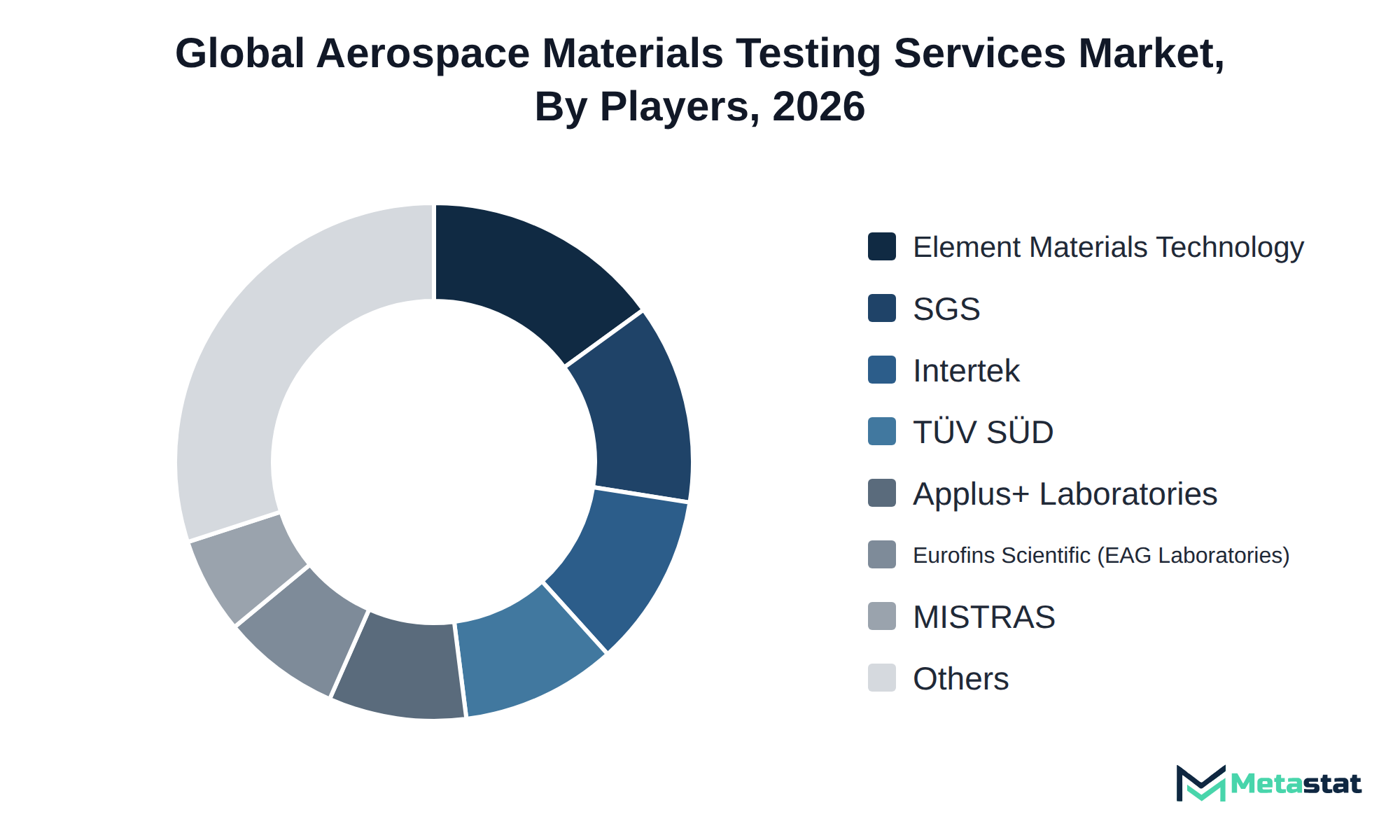
The competitive environment in the Aerospace Materials Testing Services market features a range of companies striving to distinguish themselves through specialized offerings and capabilities. Segment divisions include service types including Mechanical and Destructive Testing, Non-Destructive Testing, and Chemical and Physical Analysis, allowing companies to cater to varying customer requirements for quality assurance and compliance.
Buyers often make decisions based on factors including price, certification, customization, and service quality. Companies including Element Materials Technology and Intertek Group plc focus on comprehensive testing services and certifications that enhance their appeal among aerospace manufacturers. SGS S.A. emphasizes its broad range of service offerings, including Environmental and Corrosion Testing, attracting clients seeking to meet stringent regulatory demands.
In this dynamic market, competition intensifies while firms leverage their expertise and technological capabilities to secure contracts with Commercial Aerospace OEMs and Defense and Military Aerospace OEMs, among other sectors. This competitive landscape drives continual innovation and improvement in testing methodologies, ensuring that companies remain responsive to evolving industry standards and client needs.
This growth depends on several key developments within the Aerospace Materials Testing Services market. First, the expansion of non-destructive testing services is essential, driven by the increasing need for safety and reliability in aerospace applications. Second, the rising demand for metals and alloys testing will support market growth, with this segment anticipated to grow from USD 3,943.8 million in 2026 to USD 7,367.7 million by 2033. Third, advancements in chemical and physical analysis are expected to play a significant role, with innovative testing techniques enhancing material evaluation processes. Potential disruptions in the supply chain present risks that could hinder growth. Geopolitical tensions in key regions like Europe and North America impact procurement and delivery schedules. Overall, the combination of sectoral demand and potential supply chain challenges will determine the market's trajectory toward USD 17,600.8 million by 2033.
By Service Type: Mechanical and Destructive Testing, Non-Destructive Testing, Chemical and Physical Analysis, Metallurgical and Microstructural Analysis, Environmental and Corrosion Testing, Coatings and Surface Engineering Testing, Others (Failure Analysis and Specialized Testing)
By Material Type: Metals and Alloys, Polymer Matrix Composites, Ceramic Matrix Composites, Polymers and Elastomers, Coatings and Surface Treatments, Others (Adhesives and Sealants)
By Application: Aircraft Structural Components, Aircraft Engine and Propulsion Components, Landing Gear and Flight Control Components, Aircraft Interior Components, Spacecraft and Satellite Components, Avionics and Electronic Enclosures
By End User: Commercial Aerospace OEMs, Defense and Military Aerospace OEMs, Aircraft Engine Manufacturers, Aerospace Tier 1 Suppliers, Aerospace Tier 2 and Tier 3 Suppliers, Spacecraft and Satellite Manufacturers, Aerospace Aftermarket and MRO Providers, Government and Aerospace Research Organizations
The report strategically identifies and profiles the key market players and analyses their core competencies in each sub-segment of the Aerospace Materials Testing Services market.
|
Report Attributes |
Details |
|
Study Period |
2021-2033 |
|
Base Year |
2025 |
|
Estimated Year |
2026 |
|
Forecast Period |
2026-2033 |
|
Historical Period |
2021-2025 |
|
Growth Rate |
CAGR 9.8% from 2026 to 2033 |
|
Revenue Unit |
USD million |
|
Segmentation |
By Service Type, Material Type, Application, End User, and Region |
|
By Region |
North America (By Service Type, Material Type, Application, End User, and Country)
|
|
Europe (By Service Type, Material Type, Application, End User, and Country)
|
|
|
Asia Pacific (By Service Type, Material Type, Application, End User, and Country)
|
|
|
South America (By Service Type, Material Type, Application, End User, and Country)
|
|
|
Middle East and Africa (By Service Type, Material Type, Application, End User, and Country)
|
Find answers to common questions about this report
The Aerospace Materials Testing Services market size was valued at USD 8,328.7 million in 2025.
The market is projected to grow at a CAGR of 9.8% during the forecast period from 2026 to 2033.
The North America Aerospace Materials Testing Services market size is estimated to reach USD 6,360.9 million by 2033.
The leading segment in the Aerospace Materials Testing Services market is Non-Destructive Testing, with a projected value of USD 4,079.9 million by 2033. This segment surpasses others in terms of growth potential and market share.
Growing demand for more efficient and reliable aircraft components drives significant investments in testing services. The heightened emphasis on rigorous testing ensures that materials comply with safety regulations and performance criteria, resulting in increased volumes of testing services needed across various aerospace applications.
North America holds the dominant share of the Aerospace Materials Testing Services market, with a value of USD 6,360.9 million in 2033, representing 38.1 percent of the total market.
Rising costs for aerospace materials testing services limit adoption rates among commercial aerospace OEMs. Increased raw material prices and operational expenses lead to larger budget allocations, reducing investment in testing services and hindering the capability to procure comprehensive testing packages.
Several factors favor adoption in the Aerospace Materials Testing Services industry. The increasing demand for high-quality materials and components for modern aircraft drives investment in innovative testing methodologies. the emphasis on compliance with safety regulations enhances the need for rigorous testing, further supporting market growth.
The Aerospace Materials Testing Services market is estimated to reach a valuation of USD 17,600.8 million by 2033.
Key players operating in the Aerospace Materials Testing Services market include Element Materials Technology, Applus+ Laboratories, Intertek Group plc, SGS S.A., TÜV SÜD, Eurofins Scientific (EAG Laboratories), MISTRAS Group, and Infinita lab inc.
The analysts below cover Aerospace and Defense research at Metastat Insights.
LEAD ANALYST
Utkarsh Khirodkar is a Lead Market Research Analyst at MetaStat Insight, specializing in market intelligence, technology sector assessments, and competitive strategy.
Evaluating sensor fusion reliability across harsh operating environments can be tricky without field-validated data. The study on agricultural autonomous guidance systems clearly separated stereo vision setups from automotive-grade solid-state LiDAR. We appreciated the regional infrastructure analysis, specifically around RTK network density across North America and South America. During our follow-up consultation, the MetaStat Insight team walked through tier-two perception software partnerships, giving our engineering leads a practical basis for vendor shortlisting.
Analyzing the transition from natural gas to green hydrogen in iron ore reduction requires realistic infrastructure timelines. Meta stat insight supplied a detailed regional assessment of DRI plant conversion costs and scrap metal availability in North America and Western Europe. Their report carefully examined pellet quality specs and electrical grid access constraints without making oversimplified market assumptions. The research material served as a practical reference during internal technology roadmap discussions.
Integrating zero-trust access controls across legacy electronic health record systems involves complex compliance overhead. Team produced an analysis that clearly separated identity governance and administration tools from privileged access management platforms. Their evaluation of HIPAA and GDPR compliance features across cloud native solutions gave our architecture group clear baseline criteria. The custom data request regarding biometric authentication adoption in hospital networks was returned promptly with clear documentation.
Explore related market intelligence reports worth reading alongside this one.