
LEAD ANALYST
Utkarsh Khirodkar is a Lead Market Research Analyst at MetaStat Insight, specializing in market intelligence, technology sector assessments, and competitive strategy.

Global E-Scrap Recycling Market Size, Share, By E-Scrap Type (Information Technology and Telecommunications Equipment, Consumer Electronics, Large Household Appliances, Small Household Appliances, Display Equipment, Industrial and Commercial Electronic Equipment, Electrical and Electronic Tools, Lighting Equipment, Photovoltaic Panels, and Others), By Recycling Process (Manual Dismantling and Sorting, Mechanical Shredding and Material Separation, Pyrometallurgical Processing, Hydrometallurgical Processing, and Combined Mechanical-Metallurgical Processing), By Material Recovered (Metals, Plastics, Glass, Printed Circuit Boards and Electronic Components, and Others), By End-Use Industry (Residential, Commercial, Industrial, Government and Public Sector, Retailers and Distributors, Original Equipment Manufacturers, and Data Centers and Telecommunications Operators), Industry Analysis, Growth, Trends, and Forecast, 2026-2033
Report ID
MSI-5104
Published
August, 2026
Updated
Pages
303 Pages
Format
Historical
Base year
Forecast
Forecast period
Report Details
Choose Your License
Global E-Scrap Recycling Market
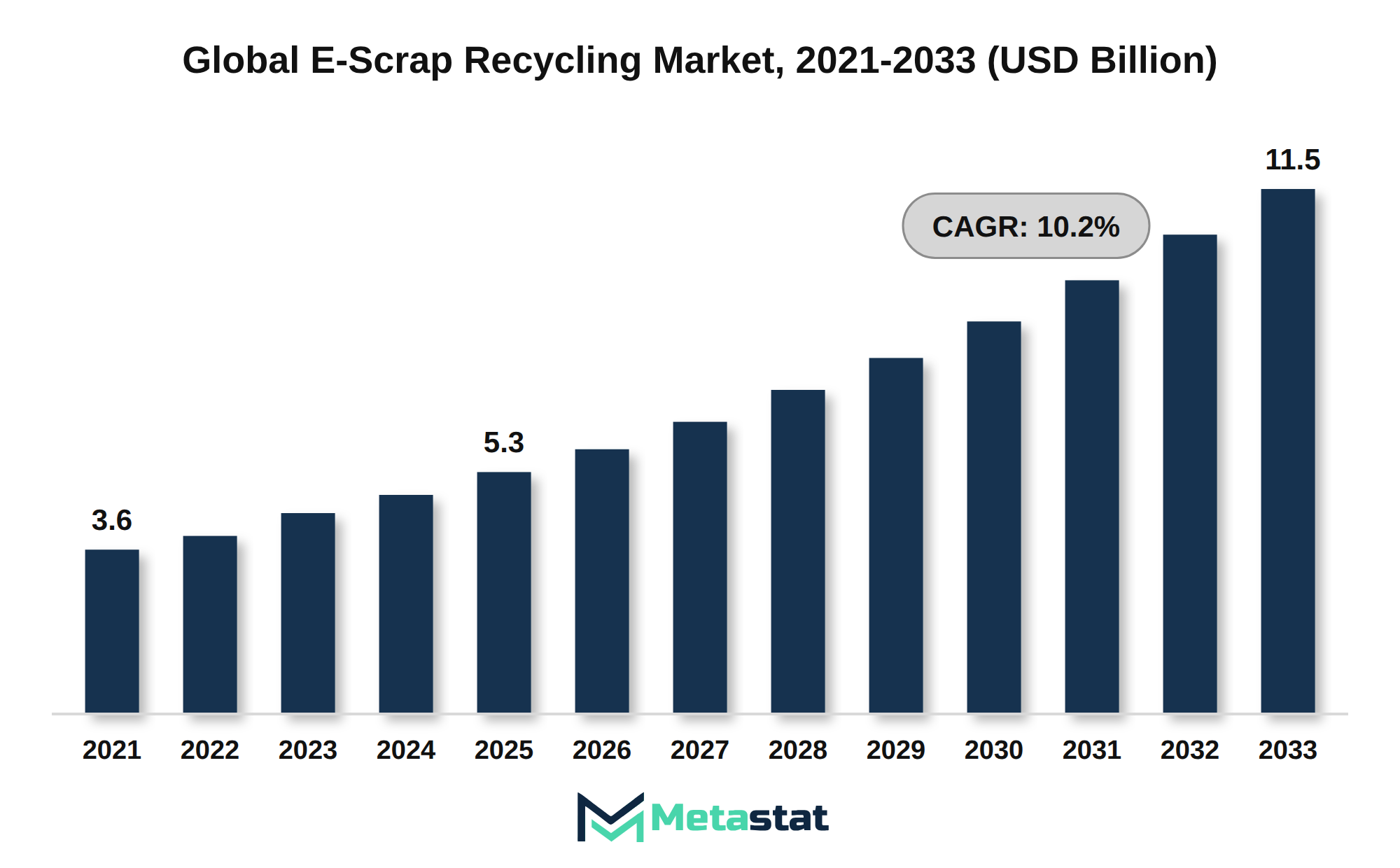
The global E-Scrap Recycling market was valued at USD 5.3 billion in 2025 and is projected to reach USD 11.5 billion by 2033, growing at a CAGR of 10.2% over the forecast period.
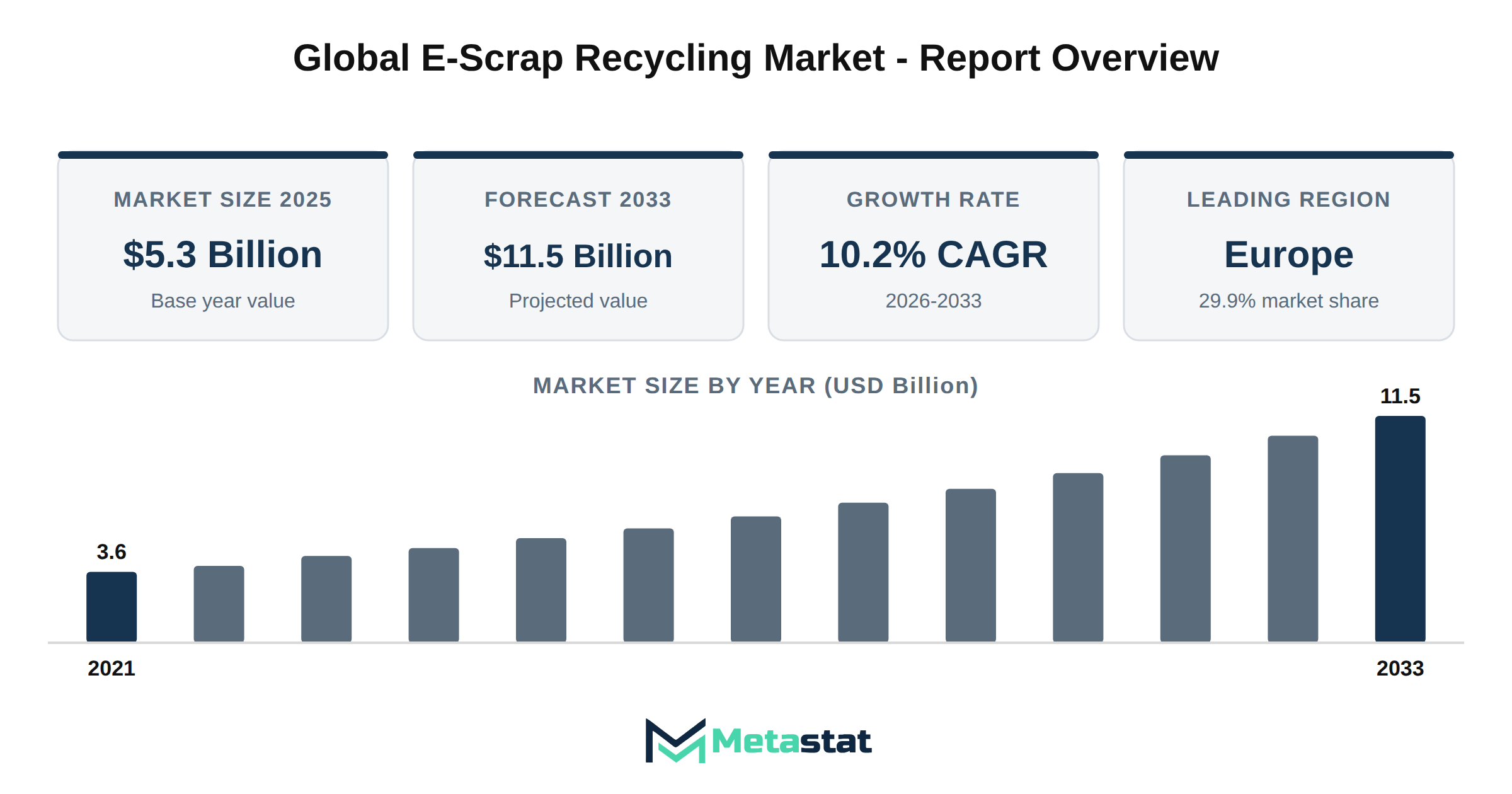
The E-Scrap Recycling market is positioned for significant growth, with a base value of USD 5.3 billion in 2025, projected to reach USD 11.5 billion by 2033. This expansion represents a compound annual growth rate (CAGR) of 10.2% during the forecast period from 2026 to 2033. Historical data indicates a steady increase from USD 3.6 billion in 2021 to USD 4.8 billion in 2024, establishing a solid foundation for future growth. The market's trajectory reflects increasing awareness and initiatives toward sustainable practices and the circular economy.
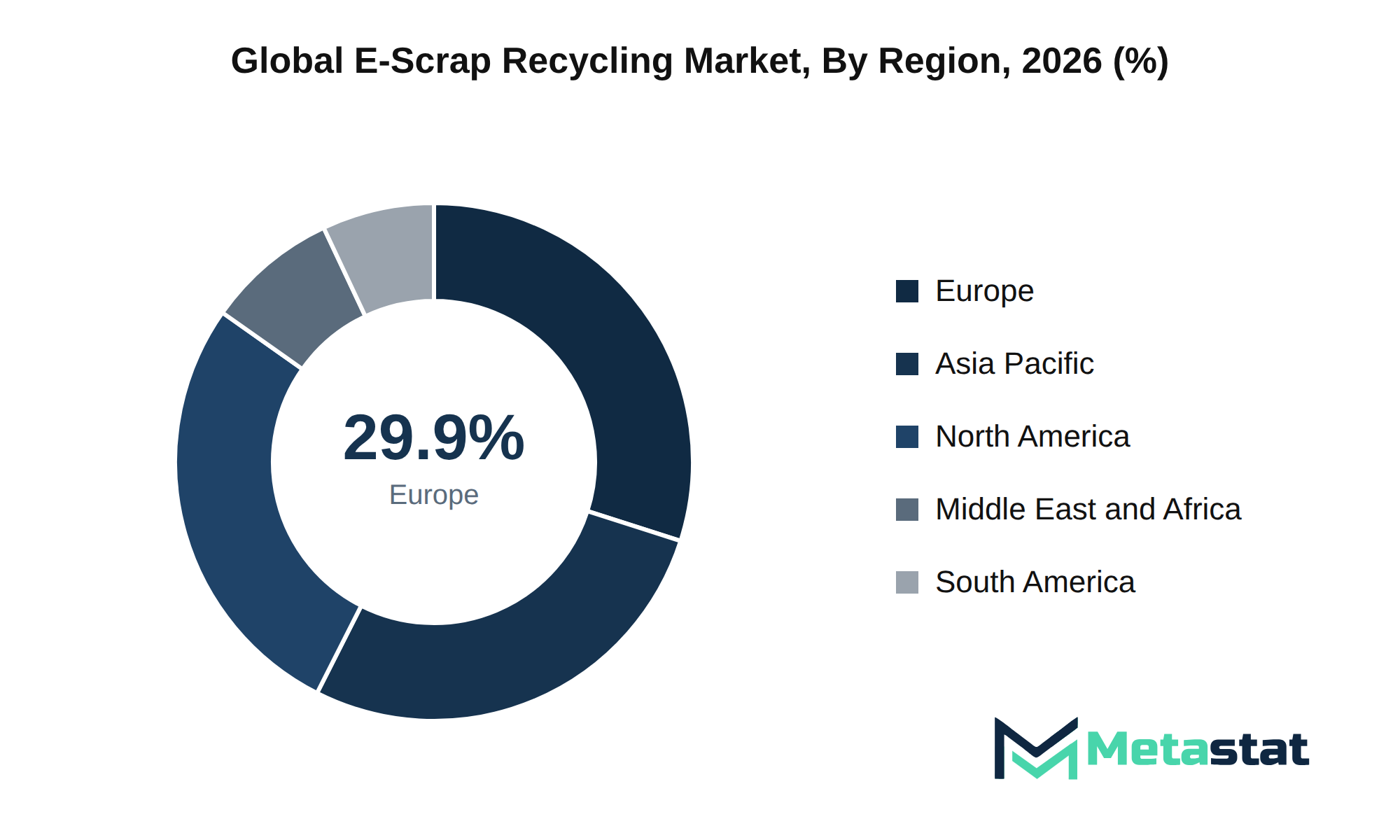
Regional dynamics illustrate that Europe and North America hold substantial shares of the market, with percentages of 29.9% and 27.3%, respectively. Asia Pacific follows closely at 27.5%. The varying regulatory frameworks and compliance standards across these regions influence market operations and growth strategies. For instance, regulatory compliance in Europe promotes recycling efficiency and resource recovery, while North America focuses on enhancing electronic waste management systems.
The E-Scrap Recycling market experiences fragmentation due to the diverse range of players involved, including both large corporations and smaller entities. Key players including Umicore, Boliden Group, and Aurubis AG engage in various recycling processes, including mechanical shredding and hydrometallurgical processing. This diversity drives competition, enhancing innovation and efficiency improvements across the value chain.
Investment in research and development (R&D) remains critical, contributing to next-generation innovations aimed at optimizing recycling techniques and material recovery. The market experiences advancements in technology, facilitating better sorting, processing, and recovery of valuable materials. This focus on innovation aligns with the broader goals of decarbonization and sustainable transformation, emphasizing the importance of reducing environmental impact and enhancing resource utilization.
The evolving landscape of the E-Scrap Recycling market reflects a growing emphasis on regulatory compliance and standards. Governments and organizations worldwide implement stringent regulations to encourage sustainable practices in e-waste management. Compliance with these regulations drives investment in advanced recycling technologies, ensuring that the market aligns with environmental and safety standards.
Disruption within the market arises from rapid technological advancements that facilitate more efficient recycling processes. Innovations in material recovery technologies, including hydrometallurgical processing and mechanical shredding, enhance yield rates and reduce operational costs. These advancements position companies to capitalize on the increasing volume of electronic waste, ensuring profitability and sustainability.
Research and development trajectories indicate a strong focus on next-generation innovation aimed at improving material recovery and reducing environmental impact. Companies invest in R&D to develop processes that not only enhance efficiency but minimize emissions and resource consumption. This investment signals a shift towards sustainable transformation, aligning with broader global initiatives aimed at decarbonization and resource conservation.
Dynamic circular economy dynamics play a crucial role in shaping the market. The trend towards circularity emphasizes the importance of reusing and recycling materials, reducing reliance on virgin resources. This framework supports the market's growth, driven by companies seeking to integrate circular principles into their operations, promoting long-term sustainability.
The supply chain landscape for the E-Scrap Recycling market involves intricate logistics architecture and sourcing strategies. Efficient logistics networks enhance the collection and processing of e-waste, impacting overall operational efficiency. Strategic partnerships within the supply chain help mitigate risks associated with sourcing materials and managing waste streams, ultimately benefiting the market.
Market fragmentation presents both challenges and opportunities within the industry. Numerous players operate at various scales, from large multinational corporations to small local recyclers. This fragmentation creates a competitive environment that encourages innovation and diversification, driving the market forward.
Mergers and acquisitions dynamics reflect the competitive landscape because companies seek to strengthen their market presence and expand capabilities. Strategic consolidations enable firms to enhance operational efficiencies and broaden service offerings, contributing to the overall growth of the market.
The value chain in the E-Scrap Recycling market highlights the importance of effective procurement strategies and customer journey dynamics. Firms prioritize building strong relationships with suppliers and customers to optimize service delivery and ensure satisfaction. This approach enhances loyalty and promotes growth through repeat business.
Capital allocation remains essential for supporting infrastructure investments in advanced recycling facilities. Companies focus on upgrading existing operations and building new facilities to accommodate increasing e-waste volumes. This allocation of resources aligns with the market's growth trajectory and ensures readiness to meet future demands.
The future strategic outlook for the E-Scrap Recycling market indicates significant growth driven by environmental awareness and increasing regulatory pressures. Companies that prioritize sustainability and innovation will likely achieve competitive advantages, positioning themselves favorably within the evolving market.
Corporate imperatives emphasize the need for industries to adopt sustainable practices and integrate circular economy principles. High-value recommendations for companies include investing in R&D, enhancing compliance measures, and establishing strategic partnerships to navigate the complexities of the market effectively.
Capital investment environments significantly influence the E-Scrap Recycling market. Interest rates, GDP growth, and venture funding create a favorable climate for investment in recycling technologies and infrastructure. A robust economic framework enables stakeholders to allocate resources towards advancements in recycling processes, leading to improved operational efficiencies and enhanced recovery rates of valuable materials.
Increased public and private sector spending supports the development of recycling facilities and the integration of advanced technologies. This strategic investment enhances productivity and encourages the adoption of innovative recycling methods. Consequently, the market experiences a surge in demand for E-Scrap Recycling services, reinforcing the importance of capital investment in driving growth.
The interdependence of economic factors and investment levels creates a competitive environment for E-Scrap Recycling. Organizations that effectively utilize these investments gain a distinct advantage, positioning themselves for sustained success in the evolving market. Overall, the relationship between capital investment environments and the growth of the market establishes a foundation for long-term expansion and innovation.
Digital transformation drives efficiency and innovation in the E-Scrap Recycling market. The integration of advanced technologies, including automation and artificial intelligence, enhances operational productivity by streamlining processes and minimizing human error. This transformation enables companies to manage their resources more effectively, optimizing the recovery of valuable materials from e-scrap.
Shifting consumer behaviors contribute significantly to this growth. With increasing awareness of sustainability, consumers exhibit a preference for services that prioritize ethical governance and environmental stewardship. The demand for effective recycling solutions rises, compelling companies to adopt digital tools that facilitate transparency and traceability in their operations. This shift creates new revenue streams and strengthens brand loyalty.
Investment in digital infrastructure is essential for companies in the market. Organizations focusing on upgrading their capabilities leverage data analytics and software solutions to enhance decision-making processes. This integration creates a more responsive and agile operational model, allowing businesses to adapt to changing market dynamics and consumer expectations swiftly.
The E-Scrap Recycling market benefits from these advancements. Companies equipped with digital solutions offer improved services and capture more value from recycled materials. The convergence of technology and sustainability positions the market for growth, with long-term implications for environmental impact and resource management.
The E-Scrap Recycling market faces significant constraints due to stringent regulatory compliance challenges. These obligations often vary across regions, leading to confusion and increased operational costs for companies. Failure to meet these requirements results in legal penalties, impacting profit margins and delaying project timelines.
In addition, legal mandates surrounding environmental impact and recycling processes impose high capital investment requirements. Companies frequently struggle to allocate necessary resources toward meeting evolving regulations, leading to capital stagnation. This stagnation curtails investment in technological advancements that improve recycling efficiency and effectiveness.
Macroeconomic factors contribute further complexities, including inflationary pressures and supply chain disruptions. Rising costs for raw materials and labor increase operational expenses, making it difficult for companies to maintain competitive pricing in the market. Geopolitical instability exacerbates these pressures, affecting the availability of essential resources and increasing uncertainty for stakeholders.
Infrastructure gaps, particularly in developing regions, hinder efficient deployment of recycling capabilities. Limited access to necessary facilities decreases the potential for market expansion and complicates the logistics of e-scrap collection and processing. Skilled labor deficiencies create challenges in recruiting and retaining the workforce needed to enhance operational efficiency in the market.
These factors slow adoption rates and limit overall market growth. Addressing regulatory compliance challenges, infrastructure deficiencies, and labor shortages is essential for the E-Scrap Recycling market to achieve its full potential and meet increasing demand for sustainable recycling solutions.
The E-Scrap Recycling market experiences challenges due to geopolitical fragmentation, which leads to trade deficits and tariff friction. These factors disrupt the flow of materials and components essential for recycling processes, limiting access to necessary feedstock. Regional conflicts and trade disputes result in unpredictable supply chains, affecting operational efficiency and increasing costs.
Technological disruptions further complicate the landscape. Rapid advancements in recycling technologies require continuous adaptation. Companies face pressure to invest in research and development to integrate new processes, creating complexity in operational frameworks. This need for advanced capabilities strains resources and diverts attention from core recycling activities.
Logistics disruptions impact the market, with rising input costs and supply chain instability contributing to pricing compression. Companies struggle to maintain margins amid fluctuating material prices and increased operational overhead. Workforce skill gaps exacerbate these challenges. The demand for specialized skills in advanced recycling techniques outpaces availability, hindering company growth.
Environmental sustainability demands heighten market pressures, dictating that firms align strategies with decarbonization mandates and lifecycle environmental footprints. Compliance with tightening global regulatory standards adds another layer of complexity, requiring investment in infrastructure and processes that facilitate adherence. These demands introduce significant barriers to entry for new participants and challenge existing players to innovate while maintaining profitability.
The influence of changing downstream demands creates additional pressures. Market saturation leads to competition for limited resources. Companies in the E-Scrap Recycling market navigate this multifaceted environment, balancing technological advancements and compliance with the need for sustainable practices to achieve success.
The E-Scrap Recycling market benefits from emerging demands across various regions, particularly in North America and Europe. Increased consumer awareness regarding waste management and environmental sustainability drives organizations to seek effective recycling solutions. Growing urban populations contribute to higher electronic waste levels, prompting investments in advanced recycling infrastructure and technologies to manage this surge. E-scrap recycling processes evolve, enhancing recovery rates and reducing resource consumption, aligning with global sustainability goals.
Technological disruptions, including advancements in hydrometallurgical processing, present opportunities to improve efficiency and recovery yields. The introduction of innovative recycling methods, alongside digital procurement shifts, facilitates streamlined operations and reduces operational costs. Strategic partnerships among key players enhance the supply chain, allowing for better resource allocation and localized recycling initiatives. Emphasizing asset life-cycle extension promotes a culture of reuse and repair, enabling the market to tap into new revenue streams.
The market experiences growth through increasing demand for niche applications, including the recovery of rare metals from electronic devices. Cross-industry collaboration drives product integration, expanding the scope of services offered by recycling companies. Companies prioritizing Environmental, Social, and Governance (ESG) criteria position themselves favorably in the evolving market environment, responding to heightened consumer expectations for responsible sourcing and recycling practices.
Overall, these factors contribute to a robust market outlook, facilitating growth in the E-Scrap Recycling market through strategic investments and innovative practices.
The Global E-Scrap Recycling market is segmented based on E-Scrap Type, Recycling Process, Material Recovered, and End-Use Industry.
E-Scrap Recycling benefits from the increasing volume of electronic waste generated globally. This segment is valued at USD 0.7 billion in 2026 and is projected to reach USD 1.4 billion by 2033, at a CAGR of 10.5% during the forecast period. The rapid advancement of technology fuels the demand for new information technology and telecommunications equipment, leading to the disposal of older devices. With heightened awareness of environmental issues, consumers and businesses prioritize the recycling of electronic products to recover valuable materials and reduce landfill waste.
Adoption of effective recycling processes enhances segment growth. Regulatory compliance standards regarding electronic waste disposal exert pressure on industries to implement eco-friendly practices. Innovations in recycling technology improve efficiency and profitability by enabling higher recovery rates of precious metals and other materials. Growing investment in recycling infrastructure supports this trend, allowing for expanded capacity and improved processing methods.
End-use dynamics significantly influence the market, particularly through increased demand from commercial and residential sectors. Companies are seeking reliable recycling partners to manage their e-waste responsibly. Technological obsolescence further drives product evolution, owing to outdated electronics requiring processing to reclaim valuable resources. This cyclical trend creates strategic opportunity windows for companies operating within the segment, positioning them favorably within the E-Scrap Recycling market.
Rapid growth characterizes the Consumer Electronics segment within the E-Scrap Recycling market, driven by increased consumer demand for electronic devices and the subsequent need for responsible disposal and recycling of outdated products. Technological advancements in recycling processes enable efficient recovery of valuable materials, aligning with sustainability goals set by both manufacturers and consumers. This segment is projected to reach USD 5.1 billion by 2033, at a CAGR of 10% during the forecast period.
Adoption of recycling practices in the Consumer Electronics sector reflects heightened awareness of environmental impacts. Regulatory compliance standards encourage electronics manufacturers to implement take-back schemes, promoting responsible end-of-life management. Such initiatives enhance brand reputation and mitigate potential liabilities associated with improper disposal of electronic waste.
Evolution within the product landscape influences the dynamics of the Consumer Electronics segment. Innovations in device design incorporate recyclable materials, thereby increasing overall recovery rates during the recycling process. This shift towards sustainability aligns with eco-conscious consumers, driving a preference for brands committed to environmental stewardship.
Downstream applications for recycled materials from this segment extend across various industries, including automotive, construction, and consumer goods. Effective recovery methods open strategic opportunities for businesses to tap into new revenue streams. The ongoing demand for high-quality recycled materials reinforces the business case for investment in advanced recycling technologies.
The Consumer Electronics segment is positioned for significant growth in the E-Scrap Recycling market, fueled by regulatory pressures, technological advancements, and shifting consumer behaviors. Continued investment in this segment promises to enhance sustainability efforts and create economic value through the recovery of valuable materials.
Growth in the Large Household Appliances segment of the E-Scrap Recycling market stems from increasing consumer awareness regarding sustainable disposal practices and regulatory pressures promoting recycling initiatives. Expanding adoption of energy-efficient appliances drives demand for responsible recycling methods, emphasizing the importance of recovering valuable materials. Manufacturers actively pursue innovative designs, integrating recyclable materials into product development, which influences the recycling landscape.
Rapid technological advancements contribute to segment expansion, with new appliance models requiring recycling solutions that address electronic waste. The shift towards next-generation appliances, equipped with smart technology, necessitates specialized recycling approaches that cater to diverse materials. Increasing consumer demand for environmentally friendly products accelerates the transition to sustainable practices within households, driving growth.
The Large Household Appliances segment is projected to reach USD 1.3 billion by 2033. This growth reflects rising concerns over environmental impacts and an increased focus on circular economy principles, encouraging manufacturers and consumers alike to engage in recycling programs. Strengthening partnerships among stakeholders across the supply chain supports efficient recovery processes and enhances overall segment performance.
Regulatory compliance continues to influence market dynamics, driven by governments worldwide establishing stricter guidelines governing e-scrap disposal. Such standards drive investment in recycling infrastructure and technology, facilitating improved recovery rates and reducing waste. By aligning with evolving regulations, businesses enhance their competitive position within the E-Scrap Recycling market, ensuring long-term sustainability and profitability.
Growth in the Small Household Appliances segment reflects a notable shift in consumer behavior towards compact, energy-efficient products. Increasing environmental awareness drives the demand for recycling these appliances, aligning with global sustainability initiatives and reducing landfill waste. Technological advancements in recycling processes enhance the efficiency of recovering materials from small household appliances, making it economically viable for operators. Regulatory compliance standards emphasize the importance of responsible disposal and recycling, further stimulating market interest.
The Small Household Appliances segment is projected to grow at a CAGR of 10.5% during the forecast period. This growth trajectory indicates a robust response from manufacturers and consumers towards sustainable practices and recyclable materials. The focus on next-gen upgrades encourages innovation in design and functionality, leading to more efficient, recyclable appliance models that cater to modern consumer preferences. This transition promotes both economic opportunities and environmental responsibility.
Demand for display equipment recycling within the E-Scrap Recycling market derives primarily from the increasing proliferation of electronic devices, driven by consumer preferences for advanced technologies. The rapid evolution of display technologies, including LED and OLED, generates a higher turnover rate for older models, contributing to the accumulation of electronic waste. Such dynamics prompt manufacturers and consumers to seek responsible disposal methods, enhancing demand for recycling services.
Adoption of innovative recycling methods facilitates the efficient recovery of valuable materials from outdated display equipment. Increased emphasis on sustainability by various industries further supports this trend, because companies align their operations with environmental compliance standards. Regulatory frameworks push for reduced waste and enhanced recycling practices, incentivizing consumers and manufacturers to engage in responsible disposal of electronic items.
Shifts in consumption patterns towards smart devices and larger screens lead to higher volumes of discarded display equipment. Technological obsolescence affects older display units, creating a strategic opportunity window for recycling operations to recover valuable components including metals and plastics. Capital investment in advanced recycling technologies enhances processing capabilities, enabling facilities to handle diverse types of display equipment effectively and efficiently.
Investment in supply chain resilience plays a critical role in ensuring consistent material flow to recycling facilities. Stakeholders focus on raw material sourcing, emphasizing the importance of securing reliable streams of electronic waste. The presence of disruptive alternatives, including refurbished devices, poses challenges yet promotes higher recycling rates. Consumers opt for sustainable choices.
The E-Scrap Recycling market continues to evolve, driven by these factors that shape the display equipment sub-segment. Investment in next-generation upgrades and product evolution remains vital for industry players aiming to maintain a competitive edge while addressing regulatory pressures and consumer demands.
Increasing concern over electronic waste disposal significantly impacts the Industrial and Commercial Electronic Equipment segment within the E-Scrap Recycling market. Adoption of stringent regulations drives businesses to seek reliable recycling solutions, enhancing compliance with environmental standards. The focus on sustainability encourages investments in new technologies, allowing the segment to evolve and adapt to changing market demands.
Technological maturation plays a critical role in the segment's expansion. Advancements in recycling processes lead to better recovery rates of valuable materials. The transition towards next-generation upgrades in equipment ensures efficient dismantling and sorting, improving operational efficiencies and reducing costs associated with waste management.
End-use dynamics reflect a shift toward circular economy principles. Organizations prioritize recycling because a core business strategy. This shift influences consumption patterns, prompting customers to select products based on their recyclability and environmental impact. Enhanced awareness contributes to increased demand for sustainable practices across commercial sectors.
Regulatory compliance standards remain a significant driver for the segment. Companies face mounting pressure to adhere to laws governing electronic waste disposal. This regulatory landscape encourages innovation and investment in advanced recycling technologies, enabling organizations to stay ahead of compliance challenges while maximizing material recovery.
Raw material sourcing strategies evolve to address sustainability concerns. Companies explore alternative materials and recycling methods to minimize dependence on virgin resources. This strategic focus presents opportunities for businesses to improve their supply chain resilience while navigating pricing volatility and margin pressures that impact the market.
Growth in the Electrical and Electronic Tools segment within the E-Scrap Recycling market arises from rising consumer awareness regarding sustainability and responsible disposal practices. Increasing regulations concerning electronic waste disposal further drive demand for effective recycling solutions. Manufacturers and consumers prioritize environmentally friendly options, pushing investments into recycling infrastructure and technology.
Advancements in recycling technologies enhance the efficiency of material recovery from electrical and electronic tools. Innovations in separation and processing methods facilitate higher recovery rates of valuable materials, improving profitability for recycling firms. The trend toward next-generation upgrades within tools influences demand, driven by older models becoming obsolete and requiring disposal.
End-use dynamics reflect a shift toward greater adoption of recycled materials in manufacturing processes. Companies increasingly seek to integrate recovered materials into their supply chains, supporting sustainability goals and reducing raw material costs. This trend enhances the attractiveness of recycling investments in the market.
Regulatory compliance standards play a crucial role in shaping operational strategies for businesses involved in this segment. Adhering to environmental regulations promotes responsible practices and offers competitive advantages. Companies that align with these standards experience improved market positioning and consumer trust, which stimulates growth opportunities.
Pricing volatility in raw materials due to supply chain disruptions drives the need for recovery solutions. By providing alternatives to traditional sourcing, the segment helps mitigate risks associated with reliance on virgin materials. This strategic opportunity encourages investment in recycling facilities and technologies, making the market increasingly vital for stakeholders.
Growing awareness of energy efficiency and sustainability significantly drives demand for lighting equipment in the E-Scrap Recycling market. The increasing adoption of LED technology in residential, commercial, and industrial applications results in more discarded lighting devices, creating a steady supply of e-scrap. Legislation promoting recycling and waste reduction supports this trend, compelling manufacturers and consumers to dispose of outdated lighting products responsibly.
Technological advancements enhance the recycling process for lighting equipment, leading to higher recovery rates of valuable materials. Innovations in recycling methods, including hydrometallurgical and pyrometallurgical processing, reduce costs and improve efficiency. Companies focusing on the recycling of lighting equipment invest in advanced technologies to maximize material recovery while minimizing environmental impact.
End-use dynamics indicate that various sectors, including residential, commercial, and government institutions, increasingly prioritize sustainable practices. The shift towards greater regulatory compliance, coupled with consumer preferences for eco-friendly products, influences manufacturers to design products that facilitate recycling. This focus on sustainability creates strategic opportunities for businesses within the market.
Challenges related to cost structures and pricing volatility impact the lighting equipment recycling segment. Fluctuating raw material prices affect the profitability of recycling operations, prompting companies to seek more resilient supply chains and alternative sourcing strategies. Developing partnerships with manufacturers and distributors creates a more stable supply of recyclable materials, enhancing operational efficiency.
The E-Scrap Recycling market anticipates that the ongoing evolution of lighting technologies will lead to more efficient recycling solutions. Continuous product evolution ensures that recycling processes remain competitive and effective in addressing the challenges posed by technological obsolescence. This ongoing commitment to innovation positions companies favorably within the market.
Increasing focus on sustainability drives demand for the recycling of photovoltaic panels within the E-Scrap Recycling market. Governments and regulatory bodies worldwide implement stricter regulations regarding electronic waste disposal, pushing industries to adopt environmentally friendly practices. This regulatory environment creates opportunities for companies involved in the recycling of photovoltaic panels, driven by alignment with sustainability goals and compliance standards.
Technological advancements in recycling processes enhance the recovery rates of valuable materials from photovoltaic panels. Innovations in hydrometallurgical and mechanical shredding techniques improve efficiency and material recovery, enabling companies to optimize their operations. This evolution in technology reduces costs and enhances the overall value proposition of recycling services.
The shift toward renewable energy sources influences the growth of the photovoltaic panel recycling segment. While countries strive to increase their reliance on solar energy, the quantity of end-of-life photovoltaic panels rises, creating a substantial market for recycling. This trend attracts investment from both public and private sectors and contributes to the segment's expansion within the broader E-Scrap Recycling market.
Utilization of recovered materials from photovoltaic panels in new manufacturing processes supports a circular economy, enhancing the economic feasibility of recycling initiatives. Companies that successfully integrate these recovered materials into their production lines strengthen their competitive advantage while reducing reliance on virgin resources. This strategic approach promotes long-term sustainability and presents growth opportunities within the market.
Growing interest in recycling medical devices, toys, and leisure equipment drives the expansion of this sub-segment within the E-Scrap Recycling market. Increased regulatory pressure surrounding electronic waste disposal requires manufacturers to comply with stricter recycling policies. This compliance enhances the adoption of recycling solutions among industries including healthcare and consumer goods.
Technological advancements facilitate upgrades in recycling processes for these products, improving recovery rates and reducing environmental impact. The ongoing evolution of products within these categories leads to an increase in electronic waste, necessitating efficient recycling methods. Shifting consumer preferences towards sustainability increase the demand for responsible disposal and recycling of medical and electronic equipment.
Market participants face challenges due to fluctuating raw material costs and pricing volatility, impacting profit margins. Opportunities arise from developing innovative recycling technologies that enhance operational efficiency and reduce costs. Strategic investment in advanced recycling infrastructure strengthens supply chain resilience, addressing potential vulnerabilities in logistics and raw material sourcing.
The focus on regulatory compliance standards further fuels the segment's growth, prompting companies to enhance their recycling capabilities. Demand for effective recycling solutions in this sub-segment continues to rise, positioning the market for robust future expansion.
Demand for Manual Dismantling and Sorting in the E-Scrap Recycling market is fueled by the increasing volume of electronic waste, necessitating effective recycling processes. This segment is valued at USD 1.5 billion in 2026 and is projected to reach USD 2.7 billion by 2033, at a CAGR of 8.3% during the forecast period. The growth aligns with rising consumer awareness regarding sustainable practices and the environmental impact of improper e-waste disposal.
Technological maturation in recycling processes supports enhancements in efficiency and effectiveness, driving operators to adopt advanced methods for dismantling and sorting. Investments in next-gen upgrades enable operators to improve recovery rates and reduce operational costs, positively impacting profit margins. Regulatory compliance standards regarding e-waste management compel entities to prioritize responsible recycling practices, further boosting demand for this segment.
End-use dynamics indicate a shift toward environmentally responsible solutions, with commercial and residential sectors increasingly seeking reliable recycling options. The segment benefits from strategic opportunity windows created by evolving consumer preferences and regulatory frameworks, ensuring its relevance in the broader E-Scrap Recycling market. Capital investment continues to flow into developing facilities equipped to handle the complexities of electronic waste, enhancing the overall competitive environment.
Anticipated growth in the Mechanical Shredding and Material Separation segment reflects the increasing efficiency in recycling processes, driven by technological advancements. This segment is estimated to reach USD 4.4 billion by 2033, at a CAGR of 10.2% during the forecast period. The rise in electronic waste generated globally necessitates effective recycling solutions, pushing industries to adopt more sophisticated methods for material recovery. Enhanced processes streamline operations and yield higher volumes of recoverable materials, including metals and plastics.
Regulatory compliance further influences the market dynamics, with stringent policies promoting sustainable waste management practices. Companies in the E-Scrap Recycling market invest in next-generation technologies to meet these standards, driving innovation and operational efficiency. The growth of e-waste recycling initiatives across various sectors creates an environment ripe for investments, enhancing the overall appeal of the mechanical shredding and material separation processes.
Collaboration among industry players and the development of strategic partnerships support the segment's expansion potential. Increased awareness among consumers regarding sustainability encourages companies to adopt eco-friendly practices, boosting demand for efficient recycling methods. The strengthening market position of key players attracts new entrants, injecting fresh competition and innovation into the mechanical shredding and material separation segment.
Growth in the Pyrometallurgical Processing segment aligns with advancements in recycling technologies and increased regulatory scrutiny regarding electronic waste management. These factors drive the demand for efficient recovery of valuable materials from e-scrap, enhancing profitability for recyclers. The rising volume of complex electronic devices contributes to the complexity of recycling processes, which in turn increases the significance of pyrometallurgical methods, known for effectively extracting precious metals.
Technological maturation influences the adoption of pyrometallurgical processing, with innovations improving operational efficiency and reducing energy consumption. The integration of next-generation technologies enhances the effectiveness of this recycling method, reinforcing its position within the broader E-Scrap Recycling market. Regulatory compliance plays a critical role, driven by governments implementing stricter rules on e-waste disposal, compelling businesses to invest in advanced recycling capabilities.
Projected growth for this segment indicates a significant increase in market value, with the Pyrometallurgical Processing segment expected to reach USD 1.8 billion by 2033. This trajectory reflects a broader trend toward sustainable practices within various industries and a commitment to resource recovery. While businesses prioritize environmental responsibility, demand for pyrometallurgical processing will continue to strengthen, driving competitive dynamics within the market.
Investment in the hydrometallurgical processing segment of the E-Scrap Recycling market reflects an increasing emphasis on efficient recovery of valuable materials from electronic waste. This segment is projected to grow at a CAGR of 12.1% during the forecast period. Technological advancements enhance the efficiency and effectiveness of hydrometallurgical methods, allowing for the extraction of metals with higher purity levels. Growing regulatory pressures to reduce environmental impact and promote sustainable practices further drive adoption among industry players.
Demand for this processing method largely stems from its ability to recover metals including gold, silver, and copper from electronic waste, vital for various end-use industries, including electronics manufacturing and renewable energy sectors. The evolving landscape of regulatory compliance standards drives investments in technologies that ensure responsible handling of e-waste. Strategic opportunity windows arise from companies seeking to align their operations with sustainability goals, emphasizing the significance of hydrometallurgical processing in achieving these aims.
Market participants face challenges pertaining to cost structures and pricing volatility associated with raw material sourcing. Fluctuations in metal prices impact the profitability of hydrometallurgical operations, necessitating effective strategies to mitigate margin pressures. Despite these challenges, the segment's resilience is evident through increasing demand for recycled materials and the shift towards circular economy practices. Overall, the hydrometallurgical processing segment represents an important area within the expanding E-Scrap Recycling market, driving significant growth and evolution.
Technological advancements drive the adoption of Combined Mechanical-Metallurgical Processing in the E-Scrap Recycling market. This processing method allows for efficient recovery of valuable materials from electronic waste, supporting the transition towards a circular economy. Increased environmental regulations push manufacturers to implement sustainable practices, resulting in heightened demand for this segment. The growing integration of automation and AI enhances operational efficiency, reduces labor costs, and improves output quality.
Next-generation upgrades in processing technology contribute to the segment's evolution, with innovations focusing on maximizing recovery rates of metals and minimizing waste. Demand from various end-use industries, including residential and commercial sectors, fuels growth owing to these sectors seeking sustainable methods for handling their electronic waste. Regulatory compliance standards emphasize the importance of responsibly managing electronic waste, creating a robust market for Combined Mechanical-Metallurgical Processing.
Market dynamics reflect a shift towards more sustainable practices, with consumers becoming more conscious of their ecological footprint. This shift motivates industries to seek efficient recycling solutions, enhancing market expansion opportunities. Continuous innovation in processing methods leads to strategic opportunities, providing a competitive edge for firms investing in advanced technologies. The outlook for Combined Mechanical-Metallurgical Processing remains positive, driven by ongoing developments in the E-Scrap Recycling market.
Valued at USD 3.4 billion in 2026, the metals segment is projected to reach USD 6.6 billion by 2033, demonstrating a CAGR of 10% during the forecast period. Increasing demand for metals recovery from electronic waste arises from growing industrial activities and the persistent need for sustainable resource management. The push for circular economy initiatives enhances the focus on retrieving valuable metals, particularly precious and rare metals, from end-of-life electronic products. These developments significantly influence end-use industries, including automotive, electronics manufacturing, and construction, where recovered metals serve because crucial inputs, reducing reliance on virgin materials.
Technological advancements in recycling processes enhance the efficiency of metal recovery. Innovations in hydrometallurgical and pyrometallurgical methods ensure higher recovery rates and lower operational costs, further driving investment in this sector. Regulatory compliance standards emphasizing resource recovery and waste reduction compel manufacturers to adopt recycling practices, contributing to the growth of the E-Scrap Recycling market. Rising costs of raw materials increase the importance of recovered metals, providing a financial incentive for industries to invest in recycling capabilities.
Increasing emphasis on recycling practices significantly influences the Plastics segment within the E-Scrap Recycling market. This segment is projected to reach USD 2.6 billion by 2033, at a CAGR of 10.4% during the forecast period. Regulatory compliance standards drive businesses to adopt eco-friendly practices, resulting in heightened demand for recycled plastics. Technological maturation enhances processing efficiency, enabling companies to extract valuable materials from electronic waste effectively.
Downstream applications expand due to manufacturers increasingly incorporating recycled plastics in new products, contributing to a circular economy. Consumption shifts reflect preferences for sustainable materials among end-users, particularly in industries like consumer electronics and automotive. Market players face pricing volatility due to fluctuations in crude oil prices, which impact the cost of virgin plastics and encourage the adoption of recycled alternatives.
Strategic opportunity windows arise for investment in advanced recycling technologies, facilitating improved recovery rates and material quality. Capital investment outlook remains positive, with stakeholders focusing on enhancing supply chain resilience and reducing reliance on virgin materials. The segment's growth aligns with broader trends in sustainability and environmental awareness, reinforcing its significance in the overall E-Scrap Recycling market.
Increasing regulations surrounding electronic waste management enhance the importance of glass recycling within the E-Scrap Recycling market. Environmental standards and certifications compel manufacturers to adopt sustainable practices, thereby increasing demand for effective recycling solutions. The glass segment is expected to reach USD 1.1 billion by 2033. Enhanced awareness of sustainability issues drives consumers and businesses to support recycling initiatives, influencing market dynamics. Technological maturation in recycling processes facilitates improved recovery rates for glass, making it a critical component in the circular economy. The market experiences shifts driven by industries seeking responsible disposal and recycling channels for glass, aligning with broader environmental objectives.
Growing investments in technology and manufacturing contribute to the increasing recovery of Printed Circuit Boards and Electronic Components within the E-Scrap Recycling market. Innovations in recycling processes enhance efficiency and increase the volume of materials recovered, providing a strategic advantage to firms involved in this segment. This segment is projected to grow at a CAGR of 12.4% during the forecast period. The heightened focus on sustainability aligns with regulatory frameworks urging the recycling of electronic waste, further driving demand for recovery solutions in printed circuit boards.
Adoption of advanced recycling technologies leads to improved extraction rates of valuable materials from these components, supporting the overall growth of the market. End-use dynamics show a rising demand for electronic devices, which results in higher volumes of waste electronics, thereby increasing the quantity of printed circuit boards entering the recycling stream. This trend highlights the intersection of regulatory compliance standards and market demand, driven by manufacturers and consumers prioritizing environmentally responsible disposal methods.
Cost structures associated with the recovery of printed circuit boards reflect the complexities of materials processing, affecting pricing volatility in the market. Companies investing in efficient logistics and supply chain resilience mitigate risks associated with fluctuating raw material prices. While technological obsolescence accelerates, strategic opportunity windows arise for firms focused on the recovery of printed circuit boards and electronic components, ensuring profitability in an evolving landscape.
Growing recognition of the importance of effective recycling methods drives interest in the recovery of materials classified under "Others," which includes rubber, ceramics, and residual recoverable materials. This sub-segment finds relevance through its capability to contribute to the overall circular economy by recovering useful materials that would otherwise end up in landfills. Increasing regulatory compliance standards emphasize waste reduction and resource recovery, driving growth in the E-Scrap Recycling market.
Technological maturation presents significant opportunities within this sub-segment. Advancements in material recovery processes enhance the ability to extract value from diverse waste streams, improving operational efficiencies and expanding recovery capabilities. The evolving dynamics of end-use illustrate a shift towards more sustainable practices, prompting industries to seek out comprehensive recycling solutions that incorporate materials like rubber and ceramics. This shift emphasizes the need for innovative technologies to adapt to the specific recovery requirements of these materials.
Cost structures and pricing volatility of raw materials influence the attractiveness of recovering rubber, ceramics, and residual materials. Fluctuating prices for virgin materials push manufacturers to explore alternative sources, including those derived from e-scrap. This trend aligns with growing consumer demand for sustainable products, urging companies to invest in recycling technologies and processes that maximize material recovery. Within this framework, strategic opportunity windows emerge for firms that prioritize the integration of such materials into their recycling operations.
Valued at USD 2 billion in 2026, the residential segment is projected to reach USD 3.8 billion by 2033, at a CAGR of 9.5% during the forecast period. Factors driving growth in this segment include the increasing volume of consumer electronics and appliances entering the residential market, coupled with rising awareness of recycling benefits among homeowners. Enhanced regulations regarding electronic waste disposal and environmental sustainability promote higher recycling rates within households, significantly impacting the E-Scrap Recycling market. Adoption of innovative recycling technologies supports segment expansion by improving efficiency and recovery rates of valuable materials from end-of-life products. Strategic investments in consumer education and public awareness campaigns create opportunities for companies operating in the market, ensuring a steady inflow of e-scrap from residential sources.
Investment in e-scrap recycling within the commercial sector reflects a significant shift in how businesses manage electronic waste. Growing emphasis on sustainability initiatives drives companies to adopt eco-friendly disposal methods, enhancing corporate social responsibility. This evolving landscape necessitates compliance with stringent regulatory standards that govern the management of electronic waste, further propelling adoption within the commercial segment.
The commercial segment is estimated to reach USD 2.4 billion by 2033, at a CAGR of 10.5% during the forecast period. Increasing awareness of the environmental impacts associated with e-waste disposal fuels demand for efficient recycling processes. Many enterprises recognize the economic benefits linked to recycling, including reduced material costs and the potential for revenue generation through recovered materials.
Technological maturation influences the commercialization of advanced recycling methodologies. Companies increasingly adopt innovative techniques, leading to improved recovery rates of valuable materials. The E-Scrap Recycling market emphasizes the importance of integrating next-generation technologies that provide the ability to recover more complex components from electronic devices.
End-use dynamics shift toward a circular economy model, where recycled materials are reintegrated into production processes. This transition supports the objectives of various industries, including manufacturing and construction, to adopt sustainable materials. In turn, this approach strengthens supply chain resilience, ensuring a more stable flow of resources.
While the commercial segment evolves, the focus on certification and compliance with regulatory frameworks reinforces its position in the market. Adherence to these standards enhances the credibility of recycling operations, building trust among consumers and stakeholders alike. Overall, the commercial sector's commitment to adopting sustainable practices signifies a significant phase within the e-scrap recycling landscape.
Significant growth in the Industrial segment of the E-Scrap Recycling market aligns with increasing awareness of sustainable practices among organizations. Industrial operations generate substantial electronic waste, prompting companies to seek responsible recycling solutions. The growing emphasis on compliance with environmental regulations and standards drives demand for effective recycling processes.
Investment in recycling technology enhances efficiency and recovery rates, benefiting the overall market. Organizations recognize the potential for operational cost savings and resource recovery through effective e-scrap recycling strategies. Valued at USD 1.8 billion by 2033, the Industrial segment reflects a robust expansion trajectory driven by these factors.
Growth in the Government and Public Sector results from increasing regulations surrounding electronic waste management and sustainability initiatives. Governments and public organizations prioritize responsible recycling practices to ensure compliance with environmental policies, driving demand for E-Scrap Recycling services. The emphasis on circular economy principles encourages public entities to source recycled materials for new projects, enhancing market growth.
Government programs and incentives for recycling initiatives stimulate investment in E-Scrap Recycling technologies. These investments enhance operational efficiencies and expand capacity, aligning with rising consumer expectations for sustainable practices. By adopting advanced recycling processes, the sector improves its contribution to waste reduction and resource recovery, positioning it favorably in the E-Scrap Recycling market.
The Government and Public Sector segment is projected to grow at a CAGR of 9.4% during the forecast period. This growth aligns with global trends in electronic waste management and the increasing need for sustainable disposal methods. Capital investments in recycling infrastructure represent strategic opportunities, enabling public sectors to address waste challenges and resource scarcity.
Retailers and distributors play a crucial role in the E-Scrap Recycling market by facilitating the collection and processing of electronic waste. Increasing consumer demand for sustainable disposal options drives retailers to adopt more eco-friendly practices, enhancing their market presence. This segment experiences growth due to heightened awareness surrounding the environmental impacts of e-waste, leading to shifts in consumer behavior towards recycling initiatives. Retailers often seek partnerships with recycling firms to streamline processes, ensuring compliance with regulatory standards and certifications while addressing the growing concerns over electronic waste management.
The segment's expansion relies on advancements in recycling technologies, allowing for improved recovery rates of valuable materials from electronic products. Next-generation upgrades in recycling processes contribute to increased efficiency and lower operational costs, creating strategic opportunity windows for retailers and distributors. In this evolving market, maintaining supply chain resilience becomes essential, particularly owing to challenges in sourcing raw materials. While technological obsolescence occurs, retailers and distributors are compelled to adapt to remain competitive in the E-Scrap Recycling market.
Increasing focus on sustainability drives demand for e-scrap recycling among Original Equipment Manufacturers. This segment experiences pressure to comply with regulatory standards and certifications, which require responsible management of electronic waste. Next-generation upgrades and product evolution in electronic devices necessitate efficient recycling processes, enabling manufacturers to recover valuable materials while adhering to environmental guidelines.
Technological maturation in recycling techniques enhances the ability of manufacturers to recover metals, plastics, and other materials from obsolete equipment. Evolving consumption patterns, alongside a shift towards circular economy principles, prompt manufacturers to invest in sustainable practices. Strategic opportunity windows emerge because companies focus on supply chain resilience and raw material sourcing, particularly in light of disruptions and pricing volatility. This approach positions Original Equipment Manufacturers favorably within the E-Scrap Recycling market, driving growth in their recycling initiatives.
Investment in data centers and telecommunications operators drives significant demand for e-scrap recycling solutions. Increasing electronic waste from these sectors necessitates efficient recycling practices to reclaim valuable materials and adhere to regulatory standards. Technological advancements in recycling processes enhance recovery rates, addressing the growing volumes of obsolete equipment.
Adoption of eco-friendly practices among data centers and telecommunications operators reflects a broader trend toward sustainability. Efforts to mitigate environmental impact highlight the importance of responsible e-waste management. Evolving technologies in electronic components lead to rapid obsolescence, emphasizing the need for effective recycling solutions.
Regulatory compliance remains a crucial factor influencing operational strategies in this segment. Strict policies governing electronic waste disposal compel companies to invest in recycling initiatives, shaping the e-scrap recycling market. This regulatory environment encourages innovation and the development of advanced recycling technologies tailored to the unique challenges posed by discarded telecommunications equipment.
The evolving environment of the data centers and telecommunications operators segment within the e-scrap recycling market highlights the importance of strategic investment in recycling capabilities. Continuous technological evolution and heightened focus on sustainability contribute to a robust outlook for growth in this sector.
Based on geography, the Global E-Scrap Recycling market is divided into North America, Europe, Asia-Pacific, South America, Middle East, and Africa.
Strong growth potential characterizes the North America E-Scrap Recycling market, which is set to expand at a CAGR of 10.2% within the forecast period, reaching a market size (TAM) of USD 2.9 billion by the end of 2033. The region's share of the global market is projected at 27.3% in 2025, reflecting robust demand driven by increasing consumer awareness and stringent regulations surrounding electronic waste management.
In the United States, Canada, and Mexico, significant investments in infrastructure modernization increase adoption of e-scrap recycling practices. The presence of advanced technologies and localized manufacturing densities supports the efficient processing of e-waste. High-value replacement cycles for consumer electronics contribute to sustained demand for recycling services, ensuring that obsolete devices are effectively disposed of and their materials recovered.
Regional resource availability plays a critical role in shaping market dynamics. The energy grid's resiliency enhances operational capabilities, while favorable geographic regulatory frameworks encourage compliance with environmental mandates. Local compliance mandates and trade policy shifts continue to reinforce the market's growth trajectory, ensuring that stakeholders remain aligned with evolving standards.
Competition within the North America E-Scrap Recycling market features several domestic participants, including established companies with strong vendor consolidation trends. These dynamics enhance localized procurement strategies, driving efficiency and reducing costs for customers. Cultural nuances and regional B2B buying behaviors influence purchasing decisions, creating opportunities for tailored service offerings that address specific market needs.
The E-Scrap Recycling market in Europe holds a 29.9% share of the global market in 2025. This region benefits from a robust regulatory environment that mandates responsible e-waste management, driving demand for recycling services. Countries including Germany, France, the UK, Italy, and Spain actively promote initiatives to enhance recycling rates, aligning with the European Union’s sustainability goals.
Emerging front-runners in the market, including Germany, capitalize on advanced recycling technologies, enabling efficient processing of e-scrap. This technological modernization strengthens the region’s capacity to recover valuable materials, particularly metals and plastics. High-value replacement cycles in consumer electronics and household appliances further stimulate the market. Aging products necessitate proper disposal and recycling.
Localized manufacturing densities contribute to a more resilient supply chain, reducing reliance on imports and enhancing regional procurement dynamics. Trade corridors between European nations facilitate cross-border recycling initiatives, allowing for a more efficient exchange of materials and expertise. Cultural nuances within the region influence B2B buying behaviors, with an increasing preference for sustainable practices among businesses.
Energy grid resiliency and local infrastructure readiness support the growth of the E-Scrap Recycling market, ensuring that recycling facilities operate efficiently. Strategic entry barriers, including compliance with stringent regulations, shape the competitive landscape, compelling market players to adopt innovative approaches to meet local mandates. Foreign direct investment flows into the region further enhance market capabilities, driving expansion and positioning Europe because a leader in e-scrap recycling.
The Asia-Pacific region contributes 27.5% of the global E-Scrap Recycling market in 2025. Rapid urbanization and increasing electronic waste generation in countries like China, Japan, and India drive demand for effective recycling solutions. Enhanced awareness of environmental sustainability among consumers encourages the adoption of recycling programs in these regions.
Investment in infrastructure modernization advances recycling capabilities. Countries including South Korea and Australia exhibit strong governmental support for e-scrap recycling initiatives, driving investments in technology and facilities. This support creates a more efficient recycling ecosystem, which is essential in addressing the growing volume of electronic waste.
The market is characterized by specific cultural nuances that influence B2B buying behaviors. Regional procurement dynamics shift towards local sourcing, enhancing partnerships with domestic players. Major companies like Umicore and Aurubis AG strengthen their presence by collaborating with local businesses, which facilitates access to underpenetrated territories and emerging market front-runners.
High-value replacement cycles in consumer electronics contribute to market growth. Consumers increasingly upgrade their devices, resulting in a higher volume of e-scrap. The growing emphasis on the circular economy drives innovation within the market, compelling suppliers to optimize recycling processes and enhance material recovery rates.
Geopolitical fragmentation and trade policy shifts create both challenges and opportunities. Local compliance mandates necessitate adherence to environmental regulations, influencing operational strategies of market participants. The relationship between regional resource availability and energy grid resiliency impacts the competitiveness of local players, ensuring sustainable operations.
The E-Scrap Recycling market in South America is characterized by significant growth opportunities, driven by rising awareness of the need for sustainable electronic waste management. Brazil and Argentina lead the region, with expanding initiatives aimed at enhancing recycling capabilities and modernizing infrastructure. Growth in urban populations and increasing consumption of electronics contribute to the volume of e-scrap generated, further fueling demand within the market.
Local compliance mandates and evolving regulatory frameworks support the establishment of more effective recycling systems. This regulatory push encourages investment in recycling technologies and processes, enhancing recovery rates of valuable materials from electronic waste. The market benefits from gradual improvements in localized manufacturing densities and procurement dynamics, allowing for a more efficient supply chain.
Cross-border trade corridors facilitate the movement of materials for recycling, while geopolitical dynamics influence trade policies and regulatory compliance. Domestic market participants are strategically positioned to capitalize on these market dynamics, focusing on enhancing operational efficiencies and expanding service offerings. The E-Scrap Recycling market is projected to experience significant growth, supported by these emerging trends and local advancements.
The Middle East and Africa region represents 8.2% of the global E-Scrap Recycling market in 2025, highlighting the growing importance of e-scrap recycling initiatives within this area. Countries including Saudi Arabia, UAE, and South Africa exemplify rising awareness of sustainable practices and the necessity for effective waste management systems.
Investment in infrastructure modernization enhances recycling capabilities. The region experiences varying adoption rates driven by local compliance mandates and cultural nuances. Market dynamics reflect a balance between mature and emerging sectors, creating significant opportunities for expansion in underpenetrated territories.
The demand for e-scrap recycling in the Middle East and Africa arises from high-value replacement cycles across consumer electronics and information technology sectors. Local procurement dynamics influence purchasing behaviors, while geopolitical factors shape supply chain regionalization strategies. Vendors operating in this market encounter unique challenges and opportunities driven by the regional competitive landscape and domestic market participants.
Infrastructure readiness, along with energy grid resiliency, supports the growth of the recycling market. Strategic entry barriers remain a consideration for foreign direct investment flows, impacting potential geographic expansion windows. Overall, the Middle East and Africa region presents a diverse and evolving market within the E-Scrap Recycling sector, promising incremental growth vectors for stakeholders.
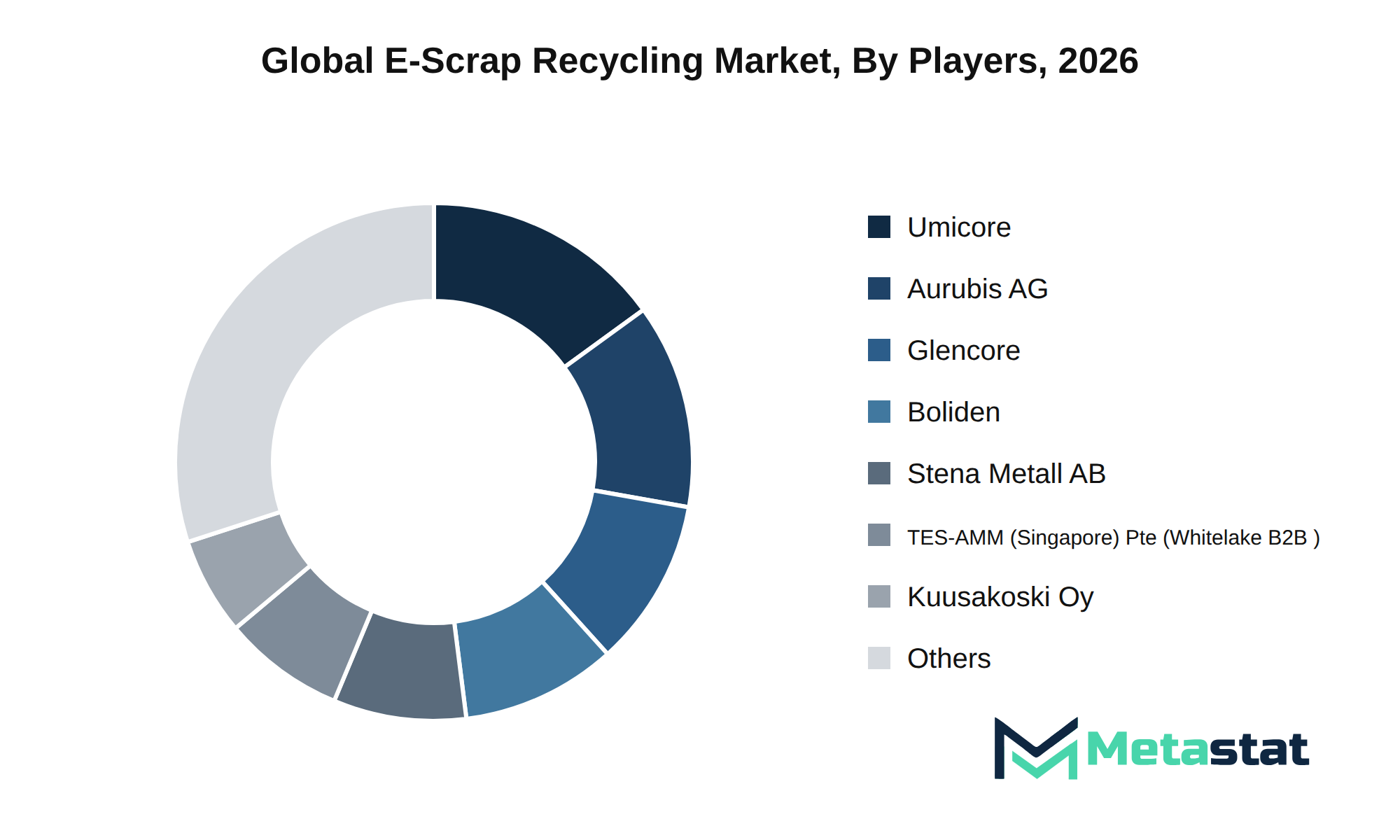
The E-Scrap Recycling market experiences significant activity driven by companies pursuing strategies in mergers, acquisitions, and strategic consolidation. Firms including Umicore, Boliden Group, and Aurubis AG leverage their capabilities through partnerships and joint ventures, enhancing their competitive position while increasing market share. Strategic alliances emerge because a key factor in reaching broader customer bases and improving service offerings.
Innovation remains central to the E-Scrap Recycling market, with players focusing on product differentiation and research and development. Companies like Glencore and Stena Metall AB invest in proprietary technologies, establishing technological moats that secure their market presence. Through advancements in recycling processes and material recovery, these firms position themselves to capture growing demand while improving operational efficiencies.
Barriers to entry present challenges for new entrants in the E-Scrap Recycling market, where established companies hold significant procurement leverage and supply chain dominance. The presence of major players, including Kuusakoski Oy and TES-AMM (Singapore) Pte Ltd, creates a competitive environment that maintains high switching costs for customers. Existing firms focus on customer retention strategies, enhancing brand equity and building loyalty within the industry.
The future competitive outlook for the E-Scrap Recycling market indicates continued expansion, driven by strategic growth vectors. Companies including ECOBAT and ERI actively explore emerging markets and sustainability initiatives, positioning themselves to meet evolving consumer expectations and regulatory demands. This proactive stance reinforces their competitive edge in an increasingly competitive environment.
Market size is forecast to rise from USD 5.3 billion in 2025 to over USD 11.5 billion by 2033. This trajectory reflects a base case CAGR of 10.2%, driven by increasing e-scrap generation and rising environmental awareness among consumers and businesses. Bull cases envision accelerated demand due to investments in next-generation recycling technologies, while bear cases consider potential disruptions from economic downturns or regulatory changes.
The integration of advanced technologies into the e-scrap recycling market influences operational efficiencies and recovery rates. Companies pursuing research and development initiatives exhibit increased resilience against market fluctuations, positioning themselves for growth. Regulatory evolution and compliance milestones impact operational strategies, with organizations focusing on sustainable practices to meet upcoming standards.
Geopolitical realignments and evolving trade corridors contribute to shifts in supply chains, impacting the availability of raw materials and recovery processes. Strategic capital allocation directed toward infrastructure investments enhances recycling capabilities and creates opportunities for companies to expand their market share.
Emerging white-space opportunities arise from unmet enterprise needs, particularly in sectors including consumer electronics and industrial equipment. Identifying high-growth pockets within the market leads to significant competitive advantages. Executive-level strategic imperatives emphasize developing defensibility roadmaps that prioritize sustainability while exploring avenues for future growth.
The report strategically identifies and profiles the key market players and analyses their core competencies in each sub-segment of the E-Scrap Recycling market.
Report Attributes | Details |
Study Period | 2021-2033 |
Base Year | 2025 |
Estimated Year | 2026 |
Forecast Period | 2026-2033 |
Historical Period | 2021-2025 |
Growth Rate | CAGR 10.2% from 2026 to 2033 |
Revenue Unit | USD billion |
Segmentation | By E-Scrap Type, Recycling Process, Material Recovered, End-Use Industry, and Region |
By Region | North America (By E-Scrap Type, Recycling Process, Material Recovered, End-Use Industry, and Country)
|
Europe (By E-Scrap Type, Recycling Process, Material Recovered, End-Use Industry, and Country)
| |
Asia Pacific (By E-Scrap Type, Recycling Process, Material Recovered, End-Use Industry, and Country)
| |
South America (By E-Scrap Type, Recycling Process, Material Recovered, End-Use Industry, and Country)
| |
Middle East and Africa (By E-Scrap Type, Recycling Process, Material Recovered, End-Use Industry, and Country)
|
Find answers to common questions about this report
The E-Scrap Recycling market size was valued at USD 5.3 billion in 2025, according to the Metastat Insights study.
The E-Scrap Recycling market is projected to grow at a CAGR of 10.2% during the forecast period from 2026 to 2033.
The North America E-Scrap Recycling market size is estimated to reach USD 2.9 billion by 2033.
The Consumer Electronics segment leads the E-Scrap Recycling market, with a projected value of USD 5.1 billion by 2033. This segment's growth reflects significant demand for recycling electronic devices.
Key drivers for the E-Scrap Recycling market include favorable capital investment environments, which enhance resource allocation towards advanced recycling technologies. digital transformation and shifting consumer behaviors towards sustainability increase demand for efficient recycling solutions, enabling companies to improve operational productivity and capture more value from recycled materials.
Europe holds the dominant share of the E-Scrap Recycling market, with a value of USD 1.5 billion in 2033, representing 29.9 percent of the total market.
The E-Scrap Recycling market faces significant constraints from stringent regulatory compliance challenges, which vary across regions and increase operational costs. inflationary pressures, supply chain disruptions, and skilled labor deficiencies hinder efficient operations and market expansion, ultimately limiting growth potential.
Factors favoring product adoption in the E-Scrap Recycling market include increased public and private sector spending, which supports the development of recycling facilities and advanced technologies. shifting consumer behaviors toward sustainability drive demand for effective recycling solutions, compelling companies to adopt digital tools that enhance transparency and operational efficiency.
The E-Scrap Recycling market is estimated to reach a valuation of USD 11.5 billion by 2033.
Key players in the E-Scrap Recycling market include Umicore, Boliden Group, Aurubis AG, Glencore, Stena Metall AB, and Kuusakoski Oy. These companies are recognized for their significant contributions to the industry and their operational capabilities in recycling electronic waste.
The analysts below cover Electronics and Semiconductor research at Metastat Insights.
LEAD ANALYST
Utkarsh Khirodkar is a Lead Market Research Analyst at MetaStat Insight, specializing in market intelligence, technology sector assessments, and competitive strategy.

PRINCIPAL CONSULTANT - ENTERPRISE AI & EMERGING TECHNOLOGIES
Banking & Finance · Electronics and Semiconductor · Energy and Power · Healthcare IT · Information & Technology · Professional Services
Vijay Gunti is a Principal Consultant at MetaStat Insight, bringing over two decades of experience across enterprise digital transformation, technology strategy, and intelligent systems.

PRINCIPAL CONSULTANT - QUALITY SYSTEMS & COMPLIANCE
Electronics and Semiconductor · Machinery & Equipment · Professional Services
Omkar Phadtare is an Industry Consultant at MetaStat Insight, specializing in quality systems, regulatory compliance, and standards benchmarking to drive data-driven market intelligence and strategic industry research.

ENERGY & INFRASTRUCTURE INDUSTRY CONSULTANT
Automotive and Transportation · Electronics and Semiconductor · Energy and Power · Machinery & Equipment
Saurabh Vasant Ganvir consults for Energy & Infrastructure Industry at MetaStat Insight, specializing in renewable energy, solar EPC, and electric vehicle (EV) infrastructure markets.

LEAD CONSULTANT - COMMUNICATION, TELECOM, AND IT
Electronics and Semiconductor · Information & Technology · Machinery & Equipment · Professional Services
Ravindra Sathe Consultants for Communication, Telecom, and IT at MetaStat Insight. He leads the firm's industry research initiatives across telecommunications infrastructure, digital connectivity, enterprise networking, and emerging information technology domains.
Last Updated: September, 2026
Tracking ceramic matrix composite adoption in high-bypass aero engines requires strict attention to material qualification cycles and FAA airworthiness testing milestones. The MetaStat Insight team provided a detailed timeline of silicon carbide fiber manufacturing capacity and commercial foundry lead times. Having clear visibility into upstream thermal barrier coating supply helped us stress-test our long-term component procurement strategy.
Transitioning ultra-class mining haul trucks to alternative power requires concrete data on remote hydrogen refueling infrastructure economics. The report evaluated megawatt-scale electrolyzer installation expenses, onsite storage safety mandates, and heavy-duty fuel cell stack degradation under continuous duty cycles. That technical rigor helped our engineers benchmark realistic total operating cost horizons for off-highway fleet decarbonization.
Enterprise zero-trust network rollouts are often slowed down by multi-cloud transit latency and proprietary hardware retirement schedules. This study provided realistic total cost of ownership models comparing cloud-delivered security edge solutions against traditional hardware refreshes. The analysis of contract renewal lengths and software maintenance fees gave us clear visibility into enterprise replacement cycles over the next three to five years.
Explore related market intelligence reports worth reading alongside this one.
Starting from
$2950