
LEAD ANALYST
Utkarsh Khirodkar is a Lead Market Research Analyst at MetaStat Insight, specializing in market intelligence, technology sector assessments, and competitive strategy.

Europe Luxury Yacht Market Size, Share, By Yacht Type (Motor Yachts, Sailing Yachts, Catamarans and Multihulls, Explorer/Expedition Yachts, Others), By Yacht Size (Up to 50 Meters, 50 to 100 Meters, Above 100 Meters), By End User (Private Individuals, Charter Companies, Corporate and Events, Fractional-Ownership Clubs, Government and Naval), By Region (Italy, France, Spain, United Kingdom, Germany, Rest of Europe), Industry Analysis, Growth, Trends, and Forecast, 2026-2033
Report ID
MSI-5407
Published
September, 2026
Updated
Pages
302 Pages
Format
Historical
Base year
Forecast
Forecast period
Report Details
Market Valuation: Valued at $6,998.4 Million in 2025, projected to reach $15,901.9 Million by 2033 at a 10.8% CAGR.
Dominant Segment: Motor yachts lead the Europe Luxury Yacht market with a significant share of 58.3%, driven by rising interest in luxury recreational experiences among affluent consumers. This segment is projected to grow from USD 4,510.2 million in 2026 to USD 8,879.6 million by 2033.
Geographic Lead: Italy is the leading region in the Europe Luxury Yacht market, projected to reach USD 4,961.4 million by 2033, growing at a CAGR of 11.3%. This growth is fueled by increased disposable income and a strong cultural affinity for leisure activities.
What's Inside: The report provides a comprehensive analysis of the Europe Luxury Yacht market, including competitive coverage, market segmentation by yacht type and size, and detailed forecasts from 2026 to 2033. It also explores emerging trends such as hybrid propulsion and sustainable materials.
Emerging Trends: The market is experiencing growth driven by increasing consumer awareness of sustainability and the adoption of smart onboard systems. These trends are shaping consumer preferences and prompting manufacturers to innovate in design and technology.
Choose Your License
Europe Luxury Yacht Market
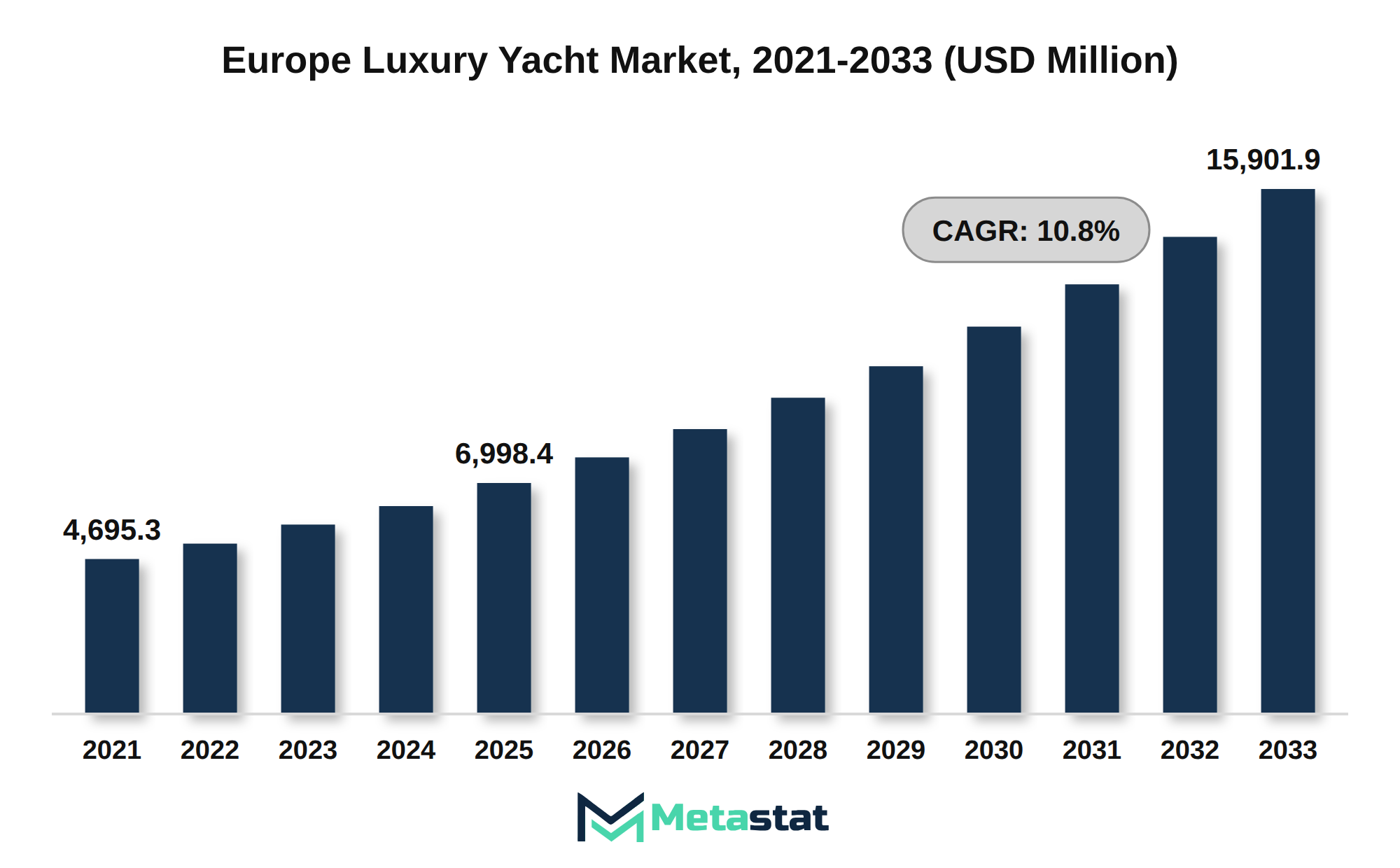
The Europe Luxury Yacht market was valued at USD 6,998.4 million in 2025 and is projected to reach USD 15,901.9 million by 2033, growing at a CAGR of 10.8% over the forecast period.
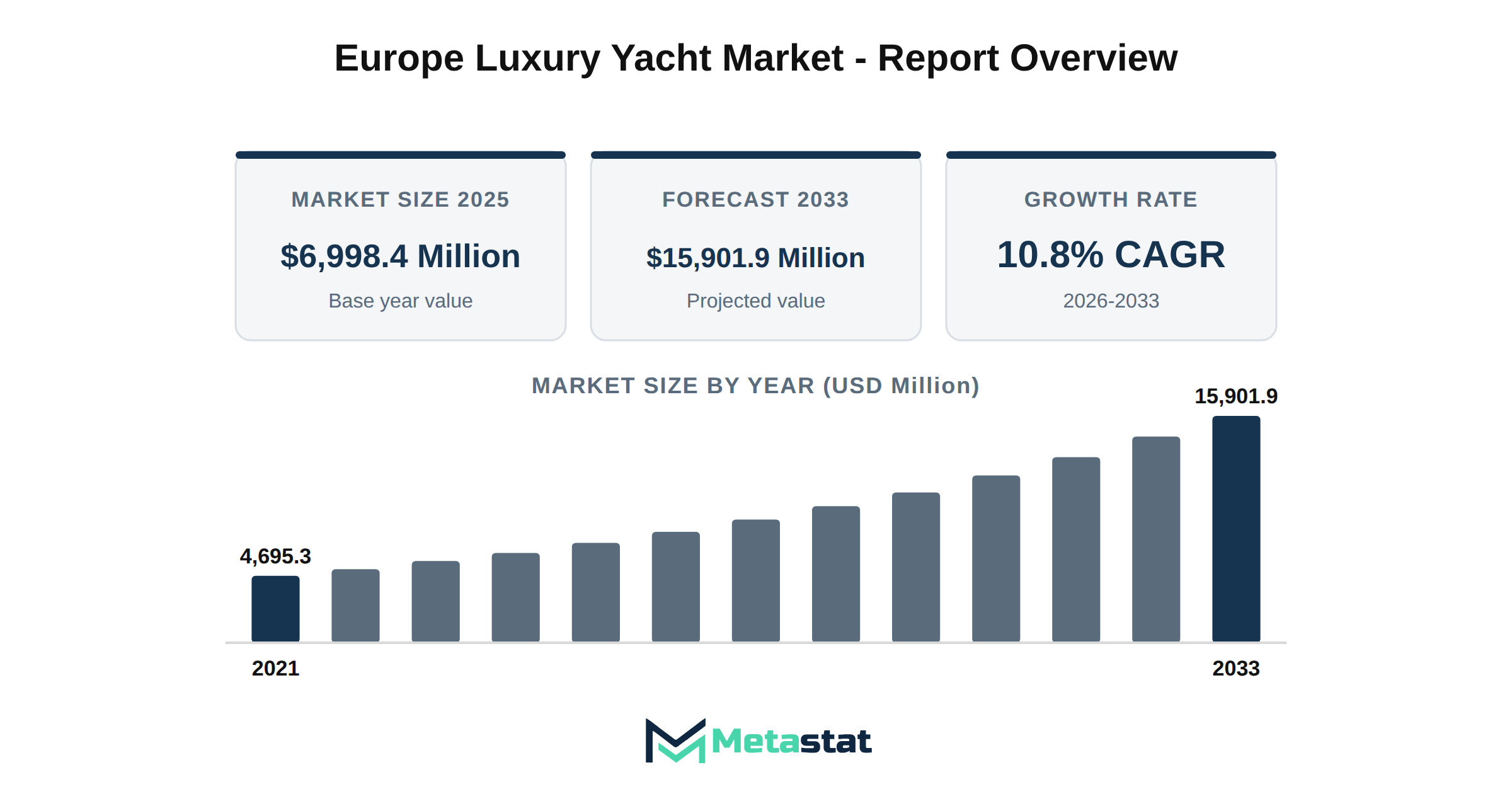
The Europe Luxury Yacht market reached a value of USD 6,998.4 million in 2025, with a historical growth pattern from USD 4,695.3 million in 2021 to USD 6,295.2 million in 2024. Projections indicate substantial growth, with the market expected to attain a value of USD 15,901.9 million by 2033, reflecting a compound annual growth rate (CAGR) of 10.8% during the forecast period from 2026 to 2033.
In terms of yacht types, motor yachts lead the market with a share of 58.3%, followed by sailing yachts at 18.4%, catamarans and multihulls at 9.7%, explorer/expedition yachts at 8.2%, and other types, including sport and performance yachts, at 5.5%. The segment of motor yachts is projected to grow from USD 4,510.2 million in 2026 to USD 8,879.6 million in 2033, achieving a CAGR of 10.2%. Sailing yachts are anticipated to reach USD 2,735.1 million by 2033, while the segment for explorer/expedition yachts is projected to grow at a CAGR of 13.7%.
The market segments vary by yacht size, with yachts up to 50 meters projected to expand from USD 5,747.5 million in 2026 to USD 11,412.8 million in 2033, reflecting a CAGR of 10.3%. Yachts ranging from 50 to 100 meters are expected to reach USD 3,946.9 million by 2033, while yachts above 100 meters will see a smaller segment value.
End-user distribution shows private individuals dominating the market, with an expected value increase from USD 4,918.5 million in 2026 to USD 9,607.9 million in 2033, marking a CAGR of 10%. Charter companies are projected to reach USD 3,740.1 million by 2033, while other end users, including corporate events, hold a smaller share. The market analysis indicates robust demand from private buyers, driving growth across various yacht types.
The adoption of hybrid and electric propulsion systems in the Europe Luxury Yacht market reflects a growing commitment to sustainability. Increasing regulatory pressures and consumer demand for eco-friendly alternatives drive this trend. Shipbuilders and yacht manufacturers invest in R&D to develop innovative propulsion technologies, leading to enhanced operational efficiency and reduced emissions. The shift towards these propulsion systems supports market growth by attracting environmentally conscious buyers.
Hydrogen and alternative-fuel yachting present emerging opportunities within the Europe Luxury Yacht market. While the industry evolves, stakeholders explore the potential of hydrogen fuel cells to reduce carbon footprints. The development of alternative fuels aligns with global sustainability goals, prompting manufacturers to adapt their offerings. This transition positions companies favorably in a market that increasingly prioritizes environmental responsibility.
The integration of smart onboard systems and automation enhances the user experience in the Europe Luxury Yacht market. Advanced technologies including IoT and AI enable real-time monitoring and control of yacht operations, improving safety and convenience. Buyers increasingly seek yachts equipped with these systems, influencing manufacturers to prioritize technological advancements in their design and production processes. This trend supports competitive differentiation and market expansion.
The use of sustainable materials and lightweighting techniques in yacht construction is gaining traction within the Europe Luxury Yacht market. Manufacturers focus on sourcing eco-friendly materials that reduce overall weight, leading to improved fuel efficiency and performance. This strategic shift meets consumer preferences for sustainability and addresses regulatory requirements for emissions reductions. The adoption of these practices enhances market competitiveness and aligns with broader environmental initiatives.
Competitive shipyard and product benchmarking plays a critical role in the evolution of the Europe Luxury Yacht market. Shipyards continually evaluate their offerings against industry standards and competitor products to identify areas for improvement. This analysis encourages innovation and quality enhancements, allowing manufacturers to maintain relevance in a dynamic market. Strategic partnerships and collaborations further enhance product development, ensuring that shipyards remain competitive.
The debate between new-build versus refit technology adoption influences the strategic decisions of stakeholders in the Europe Luxury Yacht market. New builds represent an opportunity for innovation and customization, while refits allow owners to upgrade existing vessels with the latest technologies. This choice impacts investment strategies for yacht owners and builders, focusing on maximizing value and maintaining market appeal.
The Europe Luxury Yacht market experiences significant growth driven by increasing disposable incomes among affluent consumers. A growing number of high-net-worth individuals in the region leads to heightened demand for luxury recreational activities, including yacht ownership. This trend results from economic recovery and growth in personal wealth, particularly in countries including Italy, France, and Spain.
Rising disposable income prompts consumers to shift towards luxury experiences, resulting in increased investment in high-end leisure products. The market for luxury yachts benefits from this evolution in consumer behavior, reflecting a preference for opulent lifestyles and unique recreational options. This shift enhances demand across various yacht types, particularly motor yachts and sailing yachts, which appeal to affluent buyers.
Expanding yacht ownership among private individuals contributes to a robust market environment. The anticipated growth in disposable income fuels further investments in luxury yachts, supporting long-term expansion of the Europe Luxury Yacht market. Increased capital investments in yacht manufacturing and design directly align with consumer preferences, ultimately driving market growth and enhancing competition among industry participants.
The Europe Luxury Yacht market experiences growth driven by increasing consumer awareness regarding sustainability and environmental stewardship. Consumers prioritize eco-friendly practices and products, prompting manufacturers to focus on sustainable materials and energy-efficient technologies. This shift in consumer behavior encourages companies to invest in research and development, resulting in innovative designs that align with modern ecological values.
The demand for sustainable yachts prompts producers to enhance operational practices and streamline production processes, reducing waste and promoting a circular economy. Manufacturers that prioritize sustainability improve brand reputation and capture a growing segment of environmentally conscious buyers, thereby increasing market share. The integration of sustainable practices directly influences the overall growth trajectory of the market.
Investment in sustainable technologies, including hybrid propulsion systems and recyclable materials, positions companies to meet the evolving preferences of affluent consumers. This strategic alignment with consumer expectations enhances competitiveness and supports long-term growth within the Europe Luxury Yacht market. The ongoing focus on sustainability fuels innovation, enabling manufacturers to differentiate offerings and meet regulatory requirements while appealing to a broader customer base.
Regulatory tightening significantly impacts the Europe Luxury Yacht market, creating compliance hurdles that affect manufacturers and suppliers. Increased legal mandates related to emissions and safety standards raise operational costs, compelling companies to invest heavily in compliance measures. Such investments divert capital from innovation and product development, limiting competitiveness within the market.
Macroeconomic headwinds, including inflationary pressures and supply chain disruptions, restrict growth prospects. Rising costs for materials and labor impact profit margins for yacht builders, leading to a slowdown in production rates. Geopolitical instability further complicates supply chains, causing uncertainty in procurement and delivery timelines. These factors contribute to a cautious market environment, where potential buyers delay purchasing decisions.
High capital investment requirements pose a barrier to entry for new players. The substantial financial commitment needed to develop and market luxury yachts deters companies, especially in a fragmented market where competition intensifies. This situation limits options for consumers and hampers overall market liquidity.
Technological obsolescence presents another challenge. Rapid advancements in yacht design and engineering necessitate continual investment in research and development. Companies face risks associated with substitution, where alternative leisure activities attract potential customers away from yacht ownership. Infrastructure gaps and connectivity deficits in certain regions complicate market dynamics, affecting access to key facilities and services.
The combination of these regulatory challenges and external pressures creates a complex environment, constraining the growth trajectory of the Europe Luxury Yacht market. Stakeholders navigate these issues strategically to enhance market positioning and seize emerging opportunities.
Geopolitical fragmentation creates significant challenges for the Europe Luxury Yacht market. Heightened trade deficits and tariff friction increase operational costs, impacting pricing strategies across the industry. These dynamics lead to volatility in supply chains and feedstock availability, complicating manufacturing processes and contributing to project delays.
Technological disruptions complicate integration efforts, particularly in developing innovative designs that meet evolving consumer expectations. Research and development complexities emerge owing to companies striving to keep pace with market demands while navigating interoperability friction between traditional and advanced yacht systems.
Rising input costs and pricing compression pressure manufacturers’ profit margins, necessitating a re-evaluation of cost structures. Workforce skill gaps hinder production capabilities, while talent retention pressures persist amid an increasingly competitive labor market. These factors limit expansion opportunities and influence the growth trajectory of the market.
Environmental lifecycle footprints and decarbonization mandates push organizations toward sustainability, introducing additional compliance overhead. The evolving legal landscape surrounding environmental regulations creates uncertainty, making investment decisions more complex. Consequently, addressing these challenges becomes vital for maintaining competitiveness in the Europe Luxury Yacht market.
The Europe Luxury Yacht market presents substantial growth opportunities driven by several emerging trends. Increasing demand for luxury experiences among affluent consumers contributes significantly to market expansion. Acceleration in consumer preference aligns with a global shift toward customized luxury, creating a favorable environment for yacht manufacturers to introduce bespoke offerings.
Infrastructure modernization in key European regions strengthens market potential by improving accessibility to marinas and repair facilities. Enhanced infrastructure promotes a smooth experience for yacht owners, promoting higher rates of ownership and utilization. Such developments attract investments and encourage innovations in yacht design and technology.
Geographical expansion across Europe, particularly in coastal regions, further stimulates the market. While new destinations for yachting arise, consumers exhibit increased interest in exploring diverse maritime environments. This trend drives demand for versatile yacht types, including motor yachts and catamarans, which cater to varying consumer preferences.
Technological disruptions, including advancements in propulsion systems and digital navigation, create avenues for innovation within the market. The integration of smart technologies enhances user experience and increases operational efficiency. Such innovations attract tech-savvy consumers, expanding the market's reach to younger demographics.
Sustainability imperatives influence buying behaviors within the Europe Luxury Yacht market. Rising environmental awareness compels manufacturers to innovate eco-friendly designs and materials. This shift attracts environmentally conscious consumers, enhancing brand loyalty and driving growth. Strategic consolidation among yacht manufacturers facilitates investments into sustainable practices and greener technologies.
Downstream market diversification, encompassing luxury charters and specialty services, further enriches the market. The rise of charter companies seeking premium vessels leads to heightened competition among yacht builders. Consequently, this encourages collaboration and partnerships, ensuring a dynamic ecosystem that supports various market segments. The combination of these factors contributes to a robust outlook for the Europe Luxury Yacht market through the forecast period.
The Europe Luxury Yacht market is segmented based on Yacht Type, Yacht Size, End User, and Region.
Demand for motor yachts is driven by rising interest in luxury recreational experiences among affluent consumers, particularly in regions with rich maritime traditions, including the Mediterranean. Owners increasingly seek customization options that enhance onboard comfort and entertainment, urging manufacturers to innovate in design and technology.
Technological maturation influences consumer preferences. Advances in materials and propulsion systems improve efficiency and performance, attracting buyers interested in sustainability without compromising luxury. The shift towards hybrid and electric propulsion aligns with environmental considerations, appealing to eco-conscious consumers.
Market expansion relies on a diverse range of applications and end-user dynamics. Private individuals dominate the market, seeking personal enjoyment, while charter companies capitalize on the growing trend of luxury yacht charters. The segment benefits from evolving consumption shifts, with younger generations showing increased interest in yachting experiences.
Regulatory compliance standards surrounding emissions and safety influence production strategies. Manufacturers invest in research and development to ensure adherence to evolving regulations while maintaining competitive pricing. Pricing volatility in raw materials impacts cost structures, necessitating strategic sourcing and supply chain resilience to mitigate risks.
Strategic opportunity windows emerge for manufacturers focusing on next-gen upgrades and innovative product evolution. By targeting unique customer preferences and enhancing service offerings, companies differentiate themselves in the competitive landscape. Overall, the Motor Yachts segment stands poised for growth within the Europe Luxury Yacht market, fueled by robust demand and a commitment to innovation.
Increasing interest in leisure activities drives demand for Sailing Yachts within the Europe Luxury Yacht market. The segment is expected to reach USD 2,735.1 million by 2033, at a CAGR of 9.9% during the forecast period. Rising disposable incomes among affluent consumers support investments in luxury sailing experiences, leading to enhanced market dynamics. Technological advancements focus on improving performance and sustainability, enabling manufacturers to innovate in design and construction. These developments enhance the appeal of Sailing Yachts, attracting both new buyers and seasoned enthusiasts.
Shifts in consumer preferences towards eco-friendly options influence the segment's growth trajectory. Sailing Yachts often incorporate sustainable materials and energy-efficient technologies, aligning with evolving regulatory compliance standards and consumer expectations. Manufacturers prioritize the integration of next-generation upgrades, including advanced navigation systems and automated sailing features, to enhance user experience.
Market dynamics reflect a competitive landscape, where established players leverage brand reputation and craftsmanship to capture market share. Emerging companies introduce disruptive alternatives, focusing on customization and unique design elements to attract niche segments. This broadens the spectrum of offerings and stimulates consumer interest, further propelling the market.
Strong interest in performance and luxury drives the demand for Catamarans & Multihulls in the Europe Luxury Yacht market. This segment benefits from increasing consumer preferences for stability and space, which catamarans inherently offer due to their dual-hull design. The growing popularity of recreational boating, especially among affluent individuals, further supports this demand. Advancements in manufacturing processes enhance the design and build quality of these yachts, allowing for more sophisticated and eco-friendly models.
By 2033, the Catamarans & Multihulls segment is expected to reach USD 1,755.6 million. This growth results from the rising trend of experiential travel among high-net-worth individuals, which promotes investment in leisure and recreational activities, including yachting. The segment's expansion is evidenced by an increased number of charter companies offering catamarans to cater to this demand, further boosting adoption rates.
Technological maturation influences product evolution within the catamarans segment. Enhanced materials and construction techniques lead to improved durability and performance, attracting buyers seeking long-term investments. Regulatory compliance regarding environmental standards influences designs, pushing manufacturers to focus on sustainable practices, which aligns with environmentally conscious consumers.
Pricing volatility and margin pressures affect the segment, with fluctuations in raw material costs impacting overall production expenses. These factors lead to strategic opportunities for manufacturers who adapt their supply chains to enhance resilience against such economic shifts. Overall, the Catamarans & Multihulls segment positions itself because a significant player within the Europe Luxury Yacht market, driven by evolving consumer preferences and industry advancements.
Increased consumer interest in adventure travel and exploration fuels demand for Explorer/Expedition Yachts in the Europe Luxury Yacht market. These yachts cater to affluent individuals seeking unique experiences in remote destinations, enhancing their appeal. The segment is projected to grow at a CAGR of 13.7% during the forecast period, reflecting strong market dynamics and potential.
Technological advancements facilitate the development of more capable and versatile yachts. Enhanced fuel efficiency and improved navigation systems allow for longer voyages and greater safety, attracting buyers focused on exploration. The expansion of this segment reflects a growing trend among affluent consumers who prioritize experiences over traditional luxury offerings.
Regulatory compliance and environmental standards increasingly influence yacht manufacturing and design. Manufacturers invest in sustainable materials and energy-efficient technologies, aligning with changing consumer preferences and regulations. This shift enhances brand reputation and opens new market opportunities within the luxury segment, supporting growth in the Explorer/Expedition Yachts category.
The market for Explorer/Expedition Yachts positions itself for significant growth. Investment in innovative designs and increased consumer focus on unique travel experiences contribute to a robust outlook for this segment within the broader Europe Luxury Yacht market.
Shifts in consumer preferences toward performance and luxury significantly influence the Others (Sport/Performance Yachts) segment within the Europe Luxury Yacht market. Enthusiasts increasingly seek custom-built yachts that feature advanced engineering and unique aesthetic designs. This trend reflects a desire for individualism and exclusivity, appealing to affluent buyers who prioritize distinctive experiences over traditional luxury standards.
Technological advancements play a crucial role in segment expansion. Innovations in materials, propulsion systems, and onboard amenities enhance performance capabilities and fuel efficiency. Manufacturers focus on integrating next-generation technologies, which align with growing environmental considerations, thereby appealing to eco-conscious consumers. The introduction of lightweight materials and hybrid propulsion systems contributes to greater agility and speed, attracting a younger demographic interested in high-performance vessels.
The market encounters challenges related to pricing volatility and cost structures in the luxury yacht industry. Fluctuations in raw material prices and labor costs impact the final pricing of sport and performance yachts, influencing consumer purchasing decisions. Economic factors, including inflation, further affect buyers' willingness to invest in high-value assets. Nevertheless, affluent segments remain resilient, often viewing yacht purchases because long-term investments.
Strategic opportunities exist in enhancing the customer experience through tailored services and personalized offerings. Manufacturers and dealers benefit from engaging directly with clients to understand their specific needs and preferences, building stronger relationships. This approach supports customer loyalty and repeat business, ultimately driving growth in the segment.
This segment demonstrates strong demand primarily driven by private individuals seeking luxury and leisure experiences on the water. Market expansion stems from increasing disposable incomes and a growing interest in recreational boating activities among various demographics.
Technological advancements play a significant role in enhancing the appeal of smaller yachts. Innovations in design, fuel efficiency, and onboard amenities attract a broader range of consumers. A shift in consumption patterns occurs, with buyers prioritizing eco-friendly and technologically advanced vessels that align with contemporary lifestyle choices.
Regulatory compliance standards regarding emissions and safety regulations increasingly impact the segment. Manufacturers invest in sustainable materials and technologies to meet these requirements while maintaining high performance and luxury standards. This alignment satisfies regulatory demands and appeals to environmentally conscious consumers.
Investment in the Up to 50 Meters segment reflects strategic opportunities within the Europe Luxury Yacht market. The appeal of smaller yachts continues to grow, supported by favorable economic conditions and shifts in consumer preferences. This upward trajectory highlights the segment's resilience and adaptability in a competitive environment, positioning it for continued success through 2033.
Valued at USD 3,946.9 million by 2033, the 50 to 100 Meters segment demonstrates significant growth, driven by increasing consumer preferences for larger vessels that provide enhanced comfort and luxury. Factors influencing this demand include advancements in yacht design and technology, which offer improved performance and amenities. Owners of yachts within this size range seek customization options that reflect their personal style, further driving market expansion.
In the Europe Luxury Yacht market, the trend towards eco-friendly features contributes to growth within this segment. Incorporating sustainable materials and energy-efficient technologies appeals to environmentally conscious buyers, influencing purchasing decisions. This shift aligns with regulatory pressure for greener practices, prompting manufacturers to innovate while managing compliance costs.
The anticipated CAGR of 12.1% during the forecast period indicates a strong investment outlook for the 50 to 100 Meters segment. Increased capital investments in research and development enhance technological maturation, improving product offerings and consumer appeal. Strategic opportunities for manufacturers arise through partnerships with luxury brands to create unique experiences that cater to high-net-worth individuals.
Competitive dynamics within the market focus on delivering high-quality vessels that incorporate state-of-the-art capabilities. Successful players leverage their expertise in craftsmanship and technology to differentiate their products, appealing to a discerning clientele. This competitive environment encourages innovation, ensuring that the 50 to 100 Meters segment remains a vital part of the overall Europe Luxury Yacht market.
Valued at USD 542.3 million by 2033, the Above 100 Meters segment reflects a growing trend within the Europe Luxury Yacht market. This increase stems from rising demand for larger luxury vessels that offer exceptional space, comfort, and advanced technology. Key buyers include affluent individuals and charter companies seeking unique experiences, particularly in regions known for luxury tourism.
Technological advancements play a significant role in this segment's growth. Manufacturers focus on incorporating advanced navigation systems, energy-efficient propulsion technologies, and enhanced onboard amenities. These innovations cater to the sophisticated preferences of affluent clients, contributing to increased adoption rates among high-net-worth individuals.
Regulatory compliance standards, especially concerning environmental regulations, influence the design and production processes within the segment. Companies investing in eco-friendly technologies not only meet compliance requirements but appeal to the growing market of environmentally conscious consumers. This strategy positions them favorably in a competitive environment, enhancing their reputation and market share.
Pricing volatility associated with raw materials impacts cost structures across the market. Fluctuations in material costs, including steel and composite materials, necessitate agile pricing strategies. Manufacturers responding to these changes effectively maintain healthy profit margins while ensuring competitive pricing.
Investment in luxury yachts continues to rise, and the capital investment outlook remains positive. The segment's growth trajectory indicates promising strategic opportunity windows for manufacturers and investors alike. With increasing demand for luxury experiences and advanced yacht features, the Above 100 Meters segment is projected to experience significant expansion within the Europe Luxury Yacht market.
Increasing disposable income among high-net-worth individuals directly drives demand for luxury yachts. This demand is reinforced by the growing trend of personalization, where luxury yacht owners seek bespoke features and designs tailored to their preferences. The preference for exclusive and unique experiences among affluent consumers drives market expansion, with high-quality craftsmanship and luxurious amenities becoming key selling points.
Technological advancements in yacht design and construction enhance the appeal of luxury yachts for private individuals. Innovations including improved fuel efficiency and eco-friendly materials increase attractiveness, addressing environmental concerns while maintaining luxury and performance standards. The competitive landscape sees established manufacturers and new entrants focusing on delivering state-of-the-art features, further propelling growth within this segment.
Consumption shifts toward more experiential luxury reflect the evolving expectations of private yacht owners. Chartering services gain popularity among individuals who prefer flexible access without full ownership obligations. This trend broadens the market, enabling greater participation from diverse consumer segments. Regulatory compliance regarding environmental standards and safety protocols impacts design and manufacturing processes, ensuring that luxury yachts align with evolving regulations.
Supply chain resilience and raw material sourcing remain crucial for maintaining competitive pricing and market stability. Fluctuating costs of materials lead to pricing volatility, affecting profit margins within the sector. Strategic opportunity windows exist for manufacturers who successfully navigate these challenges while investing in sustainable practices. The evolving landscape of the Europe Luxury Yacht market reflects a dynamic interaction of consumer preferences, technological advancements, and regulatory frameworks, ultimately shaping the trajectory of the Private Individuals segment.
Valued at USD 3,740.1 million by 2033, the Charter Companies segment reflects a robust trajectory within the Europe Luxury Yacht market, fueled by a CAGR of 12.2% during the forecast period. This growth stems from increasing demand for luxury experiences, driving customers to charter yachts for vacations, events, and other leisure activities. The evolving landscape of travel preferences has shifted towards unique, personalized experiences, creating significant opportunities for charter companies.
Technological advancements have influenced the development of high-performance yachts, enhancing the appeal of charter options. Next-gen upgrades in onboard amenities and eco-friendly features attract environmentally conscious consumers, enabling charter companies to differentiate their offerings. Shifts in consumer behavior towards convenience and premium services affirm the value proposition of chartering luxury yachts, further expanding market potential.
Price sensitivity remains a crucial factor, with fluctuating operational costs impacting profit margins within this segment. Nonetheless, the growing willingness of affluent individuals to invest in luxurious experiences offsets these pressures, enabling charter companies to navigate pricing volatility effectively. While consumer preferences continue to evolve, charter companies that adapt to emerging trends thrive, maintaining competitiveness in the market.
Increasing corporate spending on luxury events drives demand for yacht rentals in the Corporate and Events segment. Companies seek unique venues for corporate functions and client entertainment, leading to heightened interest in private yacht charters. This shift signifies a growing trend among businesses aiming to enhance client relationships and brand image through exclusive experiences on the water.
Segments including this one in the Europe Luxury Yacht market experience growth due to the rise of experiential marketing. Organizations leverage unique experiences to engage clients, enhancing brand loyalty and differentiation. The Corporate and Events segment is projected to reach USD 990.7 million by 2033, reflecting the increasing importance of luxury offerings in corporate strategies.
Technological advancements in yacht design and amenities enhance appeal within this segment. Enhanced onboard technology, luxury accommodations, and personalized services contribute to a superior experience, making yachts an attractive option for corporate retreats and events. Consequently, companies prioritize luxury yacht rentals to host memorable gatherings, aligning with trends in corporate hospitality.
Interest in shared ownership models drives the growth of the Fractional-Ownership Clubs segment within the Europe Luxury Yacht market. This approach allows multiple owners to share the costs and usage of luxury yachts, making yacht ownership more accessible to a broader audience. The segment is projected to grow at a CAGR of 13.7% during the forecast period, reflecting increasing consumer preference for flexible and cost-effective access to luxury experiences.
Demand for luxury experiences without the financial commitment of full ownership contributes to the expansion of this segment. Increased marketing by fractional ownership companies highlights the benefits of having access to high-end vessels, appealing to affluent individuals seeking innovative ways to enjoy yachting. This trend aligns with the overall growth trajectory observed in the Europe Luxury Yacht market.
The rise of digital platforms facilitating fractional ownership enhances market dynamics by simplifying the purchasing process for potential buyers. Enhanced technological integration allows for smoother management and scheduling of yacht usage among owners, thus improving satisfaction. This combination increases revenue potential and attracts investment opportunities within this segment.
Investments in marketing strategies aimed at educating prospective customers about the advantages of fractional ownership further support segment growth. With increasing awareness and acceptance, the market for Fractional-Ownership Clubs within the Europe Luxury Yacht market is positioned for substantial expansion, appealing to a diverse clientele seeking luxury without the burdens of sole ownership.
Government and Naval (VIP) yacht purchases reflect a distinct segment within the Europe Luxury Yacht market, driven by specific demand from governmental entities and high-profile clients. The necessity for secure, luxurious, and technologically advanced vessels influences adoption and expansion within this sector. Various governmental organizations prioritize yachts for official use, representing national pride and facilitating diplomatic missions. This segment experiences particular interest in advanced security features, state-of-the-art navigation systems, and luxury amenities tailored for high-ranking officials.
Growing demand stems from enhanced geopolitical complexities where governments seek reliable maritime capabilities. Investments in defense and VIP transport manifest because a response to heightened security needs, pushing manufacturers to innovate. Technological maturation leads to the integration of sophisticated systems, aligning yacht development with modern operational demands. The sector adapts to evolving regulatory standards, ensuring compliance with international maritime regulations while meeting client expectations.
The presence of significant market players further fuels competition, prompting continuous improvement and innovation across products. Strategic opportunity windows emerge for firms capable of delivering tailored solutions to governmental clients, enhancing market positioning. While the market evolves, premium offerings attract interest from a broad array of potential buyers, including corporate entities seeking to leverage luxury for brand enhancement and networking opportunities. Overall, the Government and Naval (VIP) segment represents a vital component of the Europe Luxury Yacht market, characterized by its unique demands and growth potential.
Valued at USD 2,342.9 million in 2026, the Italy segment is projected to reach USD 4,961.4 million by 2033, at a CAGR of 11.3% during the forecast period. This growth stems from robust demand for luxury experiences among affluent individuals. Increased disposable income in Italy, coupled with a strong cultural affinity for leisure activities, significantly enhances the market landscape. Innovations in yacht design and technology contribute to the expansion of the Italy segment, attracting both domestic and international buyers. Incorporating sustainable technologies and eco-friendly materials aligns with environmentally conscious consumers, further stimulating market growth. Demand for custom-built yachts, tailored to individual preferences, remains high, driving manufacturers to enhance their offerings. The competitive environment encourages collaboration between established players and emerging brands, promoting product differentiation. Overall, the Italy segment exemplifies the dynamism of the Europe Luxury Yacht market, demonstrating resilience and adaptability through evolving consumer preferences and market demands.
Strong growth in the France segment of the Europe Luxury Yacht market aligns with rising affluence among buyers and an increasing enthusiasm for luxury recreation. The luxury yacht experience holds considerable appeal for affluent individuals and families seeking unique leisure activities. The segment is estimated to reach USD 3,005.5 million by 2033, at a CAGR of 10.9% during the forecast period. Factors driving this demand include the growing popularity of yachting events and the desire for personalized experiences among high-net-worth individuals.
Technological advancements enhance yacht capabilities and performance, attracting buyers interested in next-generation features. Product evolution includes eco-friendly designs and innovations, appealing to environmentally conscious consumers. The France segment benefits from a rich maritime heritage and established shipbuilding infrastructure, creating a robust supply chain that supports high-quality yacht production.
End-use dynamics indicate a significant shift toward private ownership, with affluent individuals leading this trend. Corporate and event spending on luxury yacht experiences contributes to demand growth. The market remains sensitive to pricing volatility, influenced by raw material costs and economic conditions. Strategic opportunities arise in the form of collaborations among manufacturers and service providers, particularly in the charter sector.
Overall, the France segment demonstrates robust potential for expansion within the Europe Luxury Yacht market, driven by evolving consumer preferences, technological advancements, and a strong emphasis on luxurious and personalized experiences.
Spain's luxury yacht segment is expected to reach USD 2,512.5 million by 2033. Factors driving this growth include increasing disposable income among affluent individuals and a growing interest in luxury leisure activities. The expansion of the luxury yacht market in Spain reflects a strong preference for high-quality recreational experiences among consumers. The rise of experiential tourism enhances the appeal of yacht ownership and charter services in the region.
Technological advancements in yacht design and construction contribute significantly to market growth. Innovations including eco-friendly propulsion systems and smart onboard technology attract buyers seeking sustainability alongside luxury. This trend aligns with increased regulatory pressure for environmental compliance, prompting manufacturers to invest in greener technologies that enhance operational efficiencies.
Market dynamics observe a shift in end-user preferences, with private individuals and charter companies emerging due to key segments. The demand from private individuals reflects a lifestyle choice emphasizing exclusivity and personalized experiences. Meanwhile, charter companies benefit from the rising trend of experiential travel, where consumers prefer short-term yacht rentals over ownership, diversifying their offerings to cater to this demand.
Investment in marketing strategies tailored to affluent consumers captures market share. Companies that emphasize unique experiences and bespoke services in their offerings position themselves favorably within the competitive landscape of the Europe Luxury Yacht market. The potential for growth remains strong, driven by the continuous evolution of consumer preferences and the introduction of innovative yacht features, making Spain a critical market for luxury yacht manufacturers and service providers.
Projected growth in the United Kingdom segment aligns with a CAGR of 9.7% during the forecast period. Factors influencing this growth include increased disposable income among consumers and a rising interest in luxury lifestyles. The market benefits from a strong presence of established yacht manufacturers, offering diverse options that cater to varying preferences and budgets.
Expanding adoption of technology, including eco-friendly propulsion systems and advanced navigation tools, enhances the appeal of luxury yachts. Demand from private individuals seeking unique leisure experiences drives investments in yacht ownership. The corporate and charter sectors contribute significantly, reflecting a trend toward luxury events and experiential travel.
Market dynamics indicate a shift towards sustainability, with manufacturers responding by incorporating environmentally friendly practices. This commitment attracts environmentally conscious consumers and aligns with increasing regulatory compliance standards. The Europe Luxury Yacht market continues to evolve, emphasizing innovation and premium experiences, positioning the United Kingdom segment for robust expansion.
Germany presents a significant opportunity in the Europe Luxury Yacht market, driven by increasing disposable incomes and a growing affluent population. High-net-worth individuals in this region exhibit a strong preference for luxury goods, including yachts, creating a robust demand framework. Adoption of advanced technologies in yacht design and manufacturing enhances product offerings, appealing to discerning consumers who prioritize customization and innovation. Segment expansion is further supported by Germany's reputation because a hub for maritime engineering and design, attracting investments and encouraging industry collaboration.
Technological maturation plays a critical role in shaping market dynamics. The integration of eco-friendly materials and energy-efficient systems aligns with consumer preferences for sustainable luxury. Regulatory compliance standards surrounding environmental impact increasingly influence purchasing decisions, encouraging manufacturers to innovate and adapt. End-use dynamics indicate a shift towards recreational and leisure activities, with private individuals seeking unique experiences at sea.
Pricing volatility remains a challenge, because fluctuations in raw material costs impact profit margins. Manufacturers strategically navigate cost structures by leveraging local supply chains and optimizing production processes. The competitive landscape in Germany features a mix of established players and emerging firms, each vying for market share. Opportunities for growth lie in exploring white-space areas, including bespoke yacht services and enhanced customer experiences.
Overall, the Germany segment within the Europe Luxury Yacht market exemplifies resilience and adaptability. Investment in next-generation upgrades and product evolution positions firms to meet the evolving demands of a sophisticated clientele, reinforcing the segment's attractiveness for ongoing capital investment.
Growing interest in luxury experiences significantly influences the Europe Luxury Yacht market. The increasing number of affluent individuals across various European countries drives demand for yachts, with consumers seeking unique leisure activities that offer exclusivity and personalization. This trend supports expansion within the segment, driven by manufacturers responding with innovative designs and enhanced features that cater to discerning clients.
Technological advancements play a crucial role in shaping the market. Innovations in yacht design and manufacturing methods enable the creation of more efficient and environmentally friendly vessels. These developments attract environmentally conscious buyers, promoting the adoption of next-generation yachts that align with sustainability goals.
End-use dynamics show a shift toward private ownership and charter services. Wealthy individuals prioritize unique experiences, leading to increased investments in luxury yachts for personal use. Charter companies capitalize on this trend, expanding their fleets to meet growing consumer interest in high-end yacht rentals, which drives revenue within the market.
Regulatory compliance standards and certifications impact product offerings. Manufacturers navigate complex regulations, ensuring vessels adhere to safety and environmental standards. This commitment enhances brand reputation and supports consumer trust, ultimately contributing to market growth.
Consumption shifts highlight a focus on customized products, reflecting a broader trend in luxury goods. Tailored solutions in yacht design align with consumer preferences, encouraging buyers to invest in yachts that reflect their personal style and operational needs.
Supply chain resilience remains vital for maintaining consistent production levels. The sourcing of raw materials for yacht manufacturing requires strategic partnerships with suppliers to ensure quality and availability. Logistics vulnerabilities, arising from global supply chain disruptions, present challenges that manufacturers address through diversified sourcing strategies.
Strategic opportunity windows exist for manufacturers targeting emerging markets. Increasing disposable incomes and growing interest in luxury lifestyles in various European regions present avenues for expansion. Investments in marketing and outreach efforts targeted at affluent consumers will enhance brand visibility and capture potential buyers.
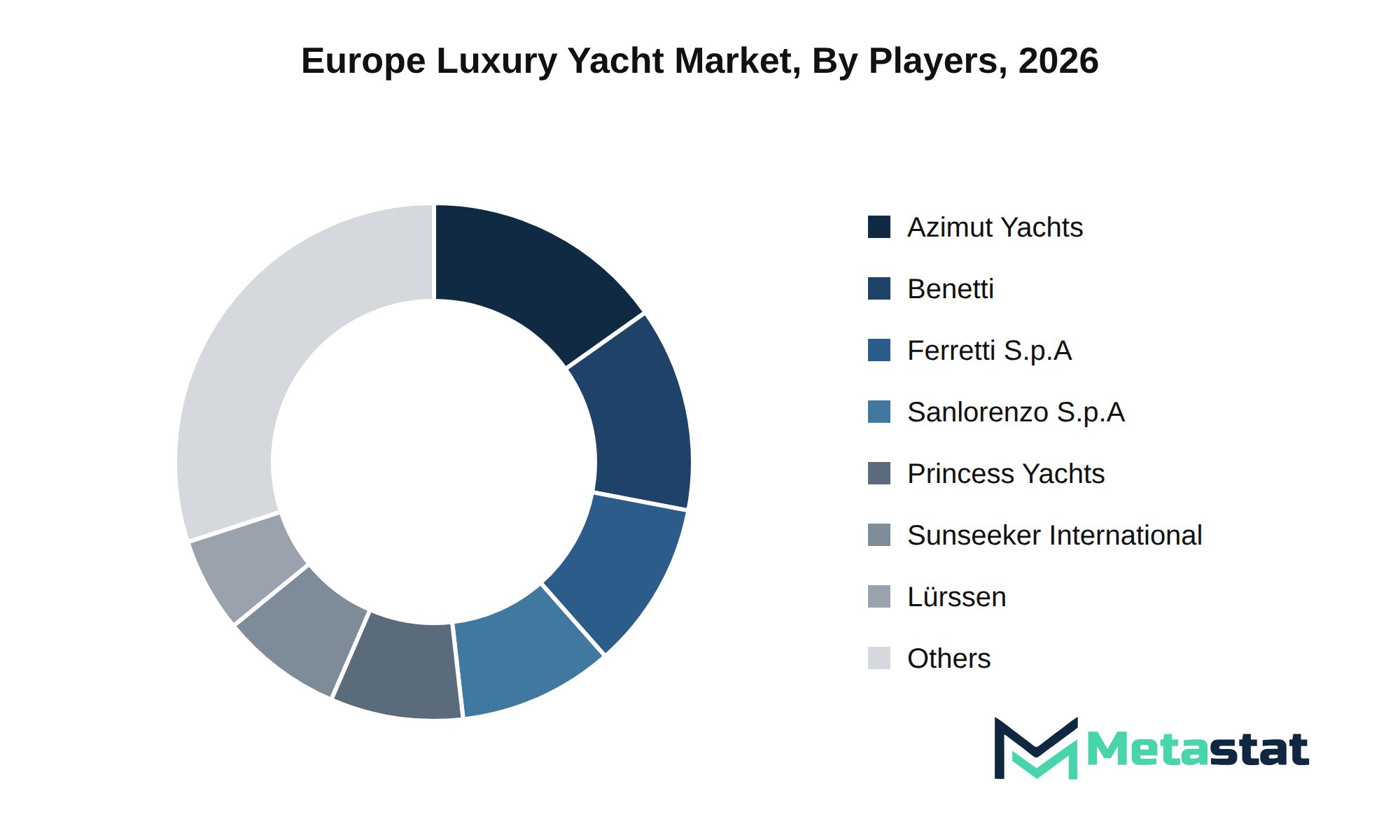
The Europe Luxury Yacht market features a dynamic competitive landscape characterized by a range of strategic behaviors among key players. Companies including Azimut Yachts, Benetti, and Ferretti S.p.A. focus on product differentiation and innovation to capture market share. These companies invest in research and development pipelines to enhance their offerings and maintain technological defensibility, ensuring alignment with the evolving demands of affluent consumers.
Strategic alliances and partnerships play a crucial role in the market, with firms including Sanlorenzo S.p.A. and Princess Yachts Limited forming collaborations to expand their reach and enhance customer retention strategies. Joint ventures with complementary businesses support value chain integration and procurement leverage, strengthening competitive positions. The threat of new entrants is mitigated by established brand equity and high switching costs, which further reinforce the market's leading players.
Overall, the future competitive outlook for the Europe Luxury Yacht market indicates sustained growth driven by innovation, strategic partnerships, and the ability to adapt to consumer preferences in luxury offerings. Companies prioritizing these elements will likely define market dynamics in the coming years.
The base case anticipates steady demand driven by increasing consumer interest in luxury travel experiences and advancements in yacht technology.
The bullish scenario envisions enhanced growth, influenced by robust economic recovery, increased disposable incomes, and heightened investments in luxury maritime experiences. Conversely, the bearish outlook considers potential economic downturns, fluctuating consumer sentiments, and disruptions in supply chains that could impede growth trajectories.
Core industry maturation signifies a shift towards innovative yacht designs and sustainable manufacturing practices. Next-generation technology integration, including automation and eco-friendly materials, will shape future product offerings. Continuous research and development efforts facilitate commercialization timelines, leading to improved product life cycles that align with evolving consumer preferences.
Regulatory evolution dictates compliance milestones and policy enforcement horizons, affecting operational frameworks across the industry. Geopolitical realignments and evolving trade corridors influence regional supply chain dynamics, impacting cost structures and strategic capital allocation directives.
Emerging white-space opportunities present avenues for growth, especially in underserved market segments including eco-conscious consumers and charter companies. Identifying unmet enterprise needs and high-growth pockets is essential for stakeholders aiming to capitalize on shifting market dynamics.
Executive-level strategic imperatives guide firms in navigating market complexities and defining defensibility roadmaps that ensure competitive advantages in the expanding Europe Luxury Yacht market.
By End User: Private Individuals, Charter Companies, Corporate and Events, Fractional-Ownership Clubs, Government and Naval (VIP)
By Region: Italy, France, Spain, United Kingdom, Germany, Rest of Europe
The report strategically identifies and profiles the key market players and analyses their core competencies in each sub-segment of the Luxury Yacht market.
Report Attributes | Details |
Study Period | 2021-2033 |
Base Year | 2025 |
Estimated Year | 2026 |
Forecast Period | 2026-2033 |
Historical Period | 2021-2025 |
Growth Rate | CAGR 10.8% from 2026 to 2033 |
Revenue Unit | USD million |
Segmentation |
Find answers to common questions about this report
The Luxury Yacht market size in Europe was valued at USD 6,998.4 million in 2025.
The Luxury Yacht market is projected to grow at a CAGR of 10.8% during the forecast period from 2026 to 2033.
Motor Yachts lead the Europe Luxury Yacht market with a projected value of USD 8,879.6 million by 2033, representing the largest share compared to other yacht types.
Key drivers for the Europe Luxury Yacht market include increasing disposable incomes among affluent consumers and a growing number of high-net-worth individuals. heightened consumer awareness regarding sustainability prompts manufacturers to invest in eco-friendly practices, further driving market growth and innovation.
Regulatory tightening creates compliance hurdles that raise operational costs for manufacturers, limiting competitiveness. Macroeconomic headwinds, including inflation and supply chain disruptions, further restrict growth prospects, while high capital investment requirements deter new players from entering the market. These factors collectively constrain the growth trajectory of the Europe Luxury Yacht market.
Increasing disposable incomes among affluent consumers and a growing number of high-net-worth individuals favor product adoption in the Europe Luxury Yacht market. heightened consumer awareness regarding sustainability drives demand for eco-friendly yachts, prompting manufacturers to innovate and align their offerings with modern ecological values.
The Luxury Yacht market is estimated to reach a valuation of USD 15,901.9 million by 2033.
Key players in the Europe Luxury Yacht market include Azimut Yachts, Benetti, Ferretti S.p.A., Sanlorenzo S.p.A., Princess Yachts Limited, and Sunseeker International Limited.
The market for motor yachts is projected to grow from USD 4,510.2 million in 2026 to USD 8,879.6 million by 2033, reflecting a compound annual growth rate of 10.2%.
Italy exhibits the highest growth rate in the luxury yacht market, with a compound annual growth rate of 11.3%, increasing from USD 2,342.9 million in 2026 to USD 4,961.4 million by 2033.
The analysts below cover Automotive and Transportation research at Metastat Insights.
LEAD ANALYST
Utkarsh Khirodkar is a Lead Market Research Analyst at MetaStat Insight, specializing in market intelligence, technology sector assessments, and competitive strategy.

ENERGY & INFRASTRUCTURE INDUSTRY CONSULTANT
Automotive and Transportation · Electronics and Semiconductor · Energy and Power · Machinery & Equipment
Saurabh Vasant Ganvir consults for Energy & Infrastructure Industry at MetaStat Insight, specializing in renewable energy, solar EPC, and electric vehicle (EV) infrastructure markets.
Last Updated: October, 2026
In the biological seed treatment space, registration timelines vary drastically between the European Union, Brazil, and North America. The MetaStat Insight research handled these cross-border regulatory barriers with genuine nuance, mapping commercialization pathways alongside historical field adoption rates. The segmentation between microbial strains and biochemical active ingredients was particularly well structured.
Our team was tracking whether regional recycling infrastructure could realistically absorb the growing volume of lithium iron phosphate batteries over the next decade. The report did a solid job separating announced hydrometallurgical plant capacity from active, permitted operational throughput. That distinction made the feedstock availability projections and regional recovery rate models far more credible than standard commercial overviews.
Tracking capacity expansion in single-use bioprocessing requires dependable data on raw material availability and cleanroom-grade polymer supply chains. The competitive landscape chapter gave a grounded evaluation of secondary component suppliers across North America and Asia-Pacific rather than simply reprinting press releases. Having that level of supplier benchmarking helped clarify dual-sourcing considerations for our clinical pipeline planning.
Explore related market intelligence reports worth reading alongside this one.
Starting from
$2950