
LEAD ANALYST
Utkarsh Khirodkar is a Lead Market Research Analyst at MetaStat Insight, specializing in market intelligence, technology sector assessments, and competitive strategy.

Global Fabric Softeners Market Size, Share, By Product Type (Liquid Fabric Conditioners, Dryer Sheets, Single-Dose Fabric Softener Pods/Capsules and Solid/Block Fabric Softeners), By End-Use Sector (Households, Commercial Laundry Services and Laundromats, Hospitality, Healthcare and Long-Term Care, and Other Institutional and Industrial Users), By Distribution Channel (Supermarkets and Hypermarkets, Mass Merchandisers and Discount Stores, Traditional / Independent Retail, Convenience Stores, Drugstores and Specialty Home-Care Retail, and Wholesale Clubs and Cash-and-Carry), By Fragrance Profile (Scented and Fragrance-Free / Unscented), Industry Analysis, Growth, Trends, and Forecast, 2026-2033
Report ID
MSI-5222
Published
September, 2026
Pages
290 Pages
Format
Historical
Base year
Forecast
Forecast period
Report Details
Market Valuation: Valued at $12.4 Billion in 2025, projected to reach $18.3 Billion by 2033 at a 5.0% CAGR.
Dominant Segment: The Liquid Fabric Conditioners segment leads the market, driven by increasing consumer emphasis on fabric care and the demand for convenient laundry solutions.
Geographic Lead: The Asia-Pacific region is projected to grow fastest, fueled by rising disposable incomes and urbanization, which enhance demand for fabric softeners.
What's Inside: The report provides a detailed analysis of market dynamics, competitive landscape, and segmentation by product type, end-use sector, distribution channel, and fragrance profile, covering the forecast period from 2026 to 2033.
Emerging Technologies: Innovations in formulations, including eco-friendly ingredients and advanced fragrance technologies, are enhancing product offerings and appealing to environmentally conscious consumers.
Choose Your License
Global Fabric Softeners Market
The global Fabric Softeners market was valued at USD 12.4 billion in 2025 and is projected to reach USD 18.3 billion by 2033, growing at a CAGR of 5.0% over the forecast period.
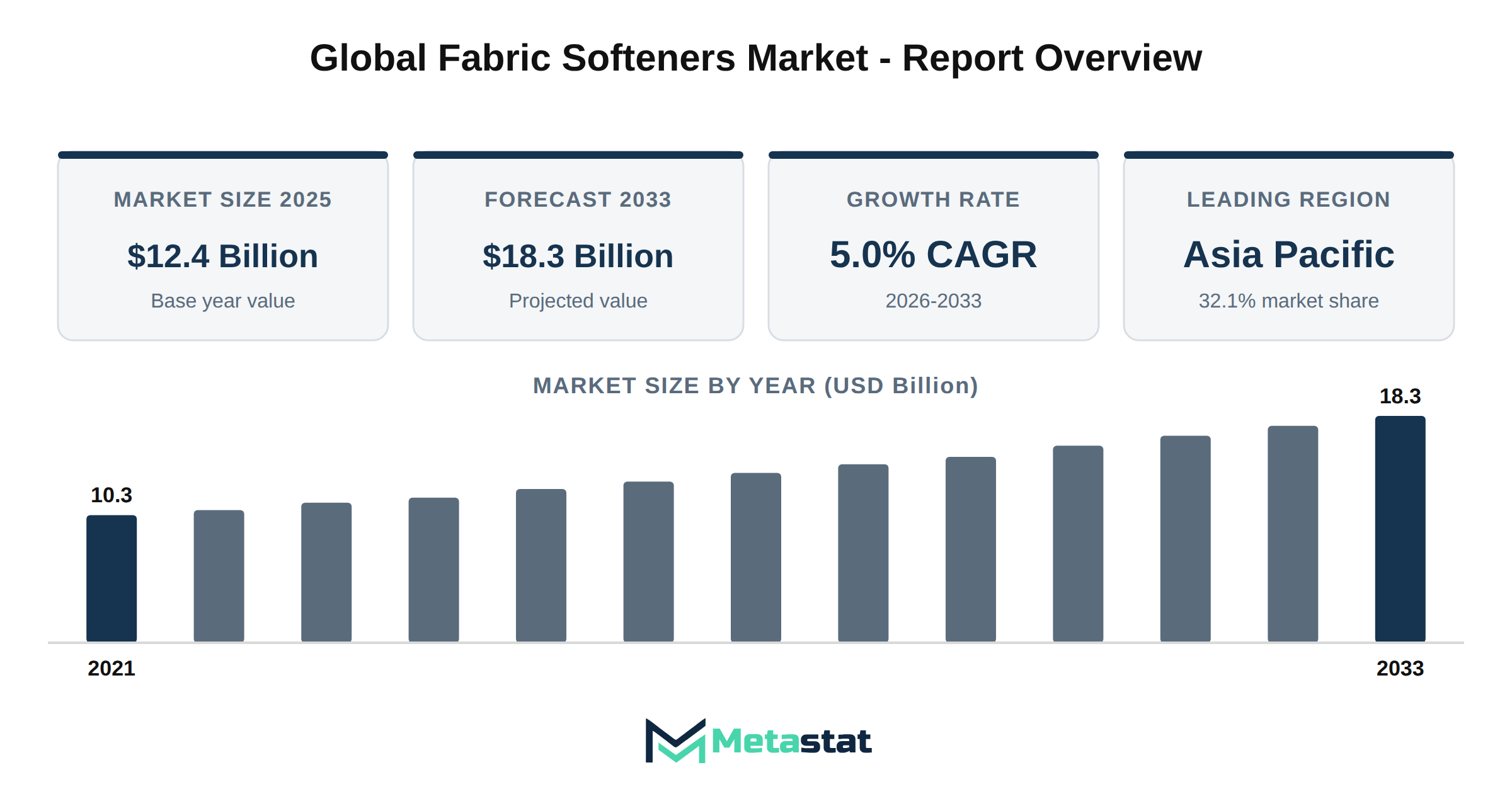
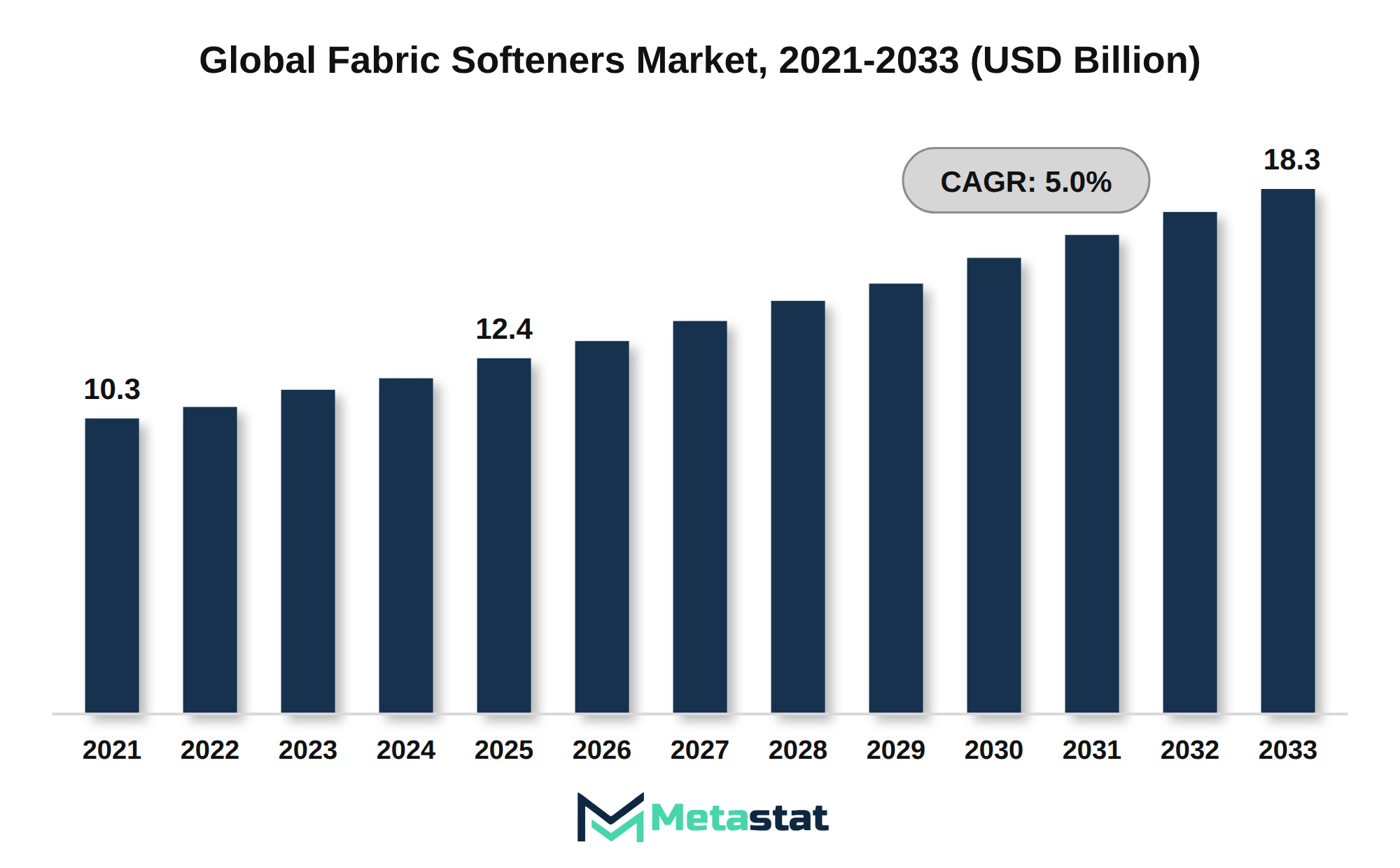
The global Fabric Softeners market reached a valuation of USD 12.4 billion in 2025, reflecting significant growth from USD 10.3 billion in 2021. The market is projected to experience a compound annual growth rate (CAGR) of 5% and attain USD 18.3 billion by 2033. This expansion signifies a robust demand for fabric softeners, driven by various factors, including innovative product developments and changing consumer preferences.
Fragrance encapsulation innovation plays a critical role in enhancing the appeal of fabric softeners. By applying advanced technologies, manufacturers create products that release fragrances gradually, improving lasting freshness. Odor-control claim differentiation further distinguishes products in a competitive marketplace, allowing brands to position themselves because leaders in scent performance.
Sustainable conditioning chemistry adoption addresses growing consumer concerns regarding environmental impact. Brands focusing on eco-friendly formulations gain traction, appealing to environmentally conscious buyers. Compliance with regulations regarding microplastics and fragrance allergens strengthens market positioning, because consumers seek safer, sustainable options.
Concentrate and refill packaging economics contribute to cost-saving measures while minimizing environmental footprints. This approach aligns with the increasing demand for sustainable practices in product development. In a highly fragmented market, private-label competitive pressure emerges, prompting brand owners to enhance quality and value propositions.
The supply chain landscape for fabric softeners is evolving, influenced by logistics architecture and sourcing strategies. Companies invest in infrastructure to streamline operations, ensuring timely delivery and product availability. While the market adapts to changing dynamics, strategic capital allocation becomes crucial for driving innovation and maintaining competitive advantages.
Future strategic outlooks indicate a focus on corporate imperatives, including sustainable transformation and decarbonization efforts. Brands committed to circular economy dynamics stand to benefit from increased consumer loyalty and market share. High-value recommendations for stakeholders emphasize the importance of adapting to emerging trends and consumer demands in the fabric softeners market.
Fragrance encapsulation innovation enhances product longevity and delivers a prolonged scent experience in the Fabric Softeners market. This technology allows manufacturers to create formulations that release fragrances over time, catering to consumer preferences for lasting freshness. Such advancements in fragrance technology drive competitive differentiation among brands, influencing purchasing decisions.
Odor-control claim differentiation serves because a critical factor in consumer choices within the market. Brands that successfully communicate their unique odor-neutralizing capabilities capture attention and build loyalty. This aspect of product marketing highlights the importance of effective communication strategies in building brand equity and consumer trust.
Sustainable conditioning chemistry adoption reflects a growing consumer demand for eco-friendly products in the Fabric Softeners market. While sustainability becomes more prevalent in purchasing decisions, companies focusing on biodegradable ingredients and environmentally friendly formulations gain a competitive edge. This trend is driven by the transition towards greener alternatives, aligning with broader societal shifts toward sustainability.
Compliance with microplastic and fragrance-allergen regulations remains a priority for manufacturers. The increasing scrutiny surrounding environmental impact and health concerns shapes product development and formulation strategies. Companies that proactively address these regulations enhance their market positioning and mitigate potential risks associated with non-compliance.
The economics of concentrate and refill packaging present opportunities for cost reduction and environmental sustainability. Such packaging innovations reduce material usage and transport costs, appealing to environmentally conscious consumers. This approach aligns with the market's shift towards reducing waste and optimizing supply chain efficiencies.
Private-label competitive pressure intensifies within the Fabric Softeners market, because retailers seek to differentiate their offerings. Retailers increasingly invest in developing their private-label brands, often leading to price competition and innovation. This dynamic affects established brands, prompting them to enhance their value propositions and marketing strategies.
Market fragmentation influences competitive dynamics, with numerous players operating in various segments. This fragmentation often leads to intense rivalry and innovation, because brands strive to capture market share. The presence of multiple players creates a diverse product offering, catering to varying consumer preferences.
Research and development trajectories focus on next-generation innovations, emphasizing performance improvements and sustainability. Investments in R&D drive product differentiation, enabling brands to meet evolving consumer demands. Continuous innovation remains essential for maintaining competitiveness within the market.
Sustainable transformation and decarbonization initiatives reshape the industry landscape. Companies prioritize strategies that minimize their carbon footprint and contribute to a circular economy. This shift meets regulatory expectations and aligns with consumer preferences for sustainable products.
The supply chain landscape adapts to changing consumer demands and regulatory pressures. Companies streamline logistics architecture and sourcing practices to enhance efficiency and reduce costs. This adaptability strengthens market resilience and positions companies for future growth.
Future strategic outlooks emphasize capital allocation towards innovative products and sustainable practices. Companies that prioritize investments in eco-friendly technologies and consumer-centric products enhance their competitive positioning. This proactive approach supports long-term growth and aligns with market trends.
Corporate imperatives focus on high-value recommendations that drive operational excellence and market differentiation. Companies that identify and act on these imperatives position themselves for sustained success in the Fabric Softeners market, leveraging insights to enhance their product offerings and customer engagement.
Changing consumer preferences significantly influence the fabric softeners market. Increasing awareness regarding fabric care and the desire for enhanced laundry results lead consumers to seek products that provide superior softness and fragrance. This trend is evident among younger demographics, particularly those prioritizing quality and performance in household products.
The growing urban population contributes to an increase in disposable income, enabling consumers to invest in premium fabric softeners. Evolving lifestyles emphasize convenience and ease of use because crucial factors in purchasing decisions. This results in a growing preference for liquid fabric conditioners and single-dose fabric softener pods, which align with consumers’ desire for efficiency in their laundry routines.
The trend towards sustainability impacts consumer choices. Environmentally conscious buyers increasingly opt for products with reduced carbon footprints or sustainable packaging. The market responds with innovations in fragrance-free options and biodegradable formulations, appealing to this eco-focused segment of consumers.
This combination of shifting demographics, lifestyle changes, and sustainability awareness is expected to drive growth in the fabric softeners market, leading to increased demand and product diversification that aligns with evolving consumer expectations.
The Fabric Softeners market experiences notable growth due to advancements in technological integration. Automation and artificial intelligence enhance production efficiency and product consistency, allowing manufacturers to meet rising consumer expectations effectively. Increased operational productivity contributes to a more competitive landscape, enabling suppliers to optimize resource allocation and reduce costs. Companies adopting digitized processes and innovative software solutions improve supply chain management and enhance customer engagement.
Venture funding significantly facilitates research and development initiatives within the fabric softeners sector. The influx of capital supports innovation-led product diversification, enabling companies to introduce new formulations and packaging solutions that align with evolving consumer preferences. Infrastructure development and asset modernization enhance manufacturing capabilities, ensuring that companies respond swiftly to shifting market demands. This dynamic environment positions the market for sustained growth through 2033.
Regulatory tightening and compliance hurdles present significant challenges for the Fabric Softeners market. These pressures require manufacturers to adhere to strict environmental regulations and safety standards, which increase production costs and delay product development. The resulting financial burden impacts smaller players disproportionately, leading to market consolidation because larger firms absorb these costs more effectively.
Macroeconomic headwinds, including inflationary pressures, create an environment of uncertainty in consumer spending. Rising prices for raw materials and transportation contribute to escalating operating costs, compelling companies to reassess pricing strategies. This situation risks reducing overall demand within the market, because consumers shift their focus toward essential goods over discretionary household products like fabric softeners.
Geopolitical instability exacerbates supply chain disruptions, affecting the availability of critical components and raw materials necessary for fabric softener production. These interruptions lead to longer lead times and increased costs, which further strain operational efficiency. Companies struggle to maintain competitive pricing while navigating these complications, impacting their market positioning.
Market fragmentation limits the ability of smaller manufacturers to compete effectively, because they grapple with limited resources to invest in technology and marketing. This fragmentation leads to diverse consumer preferences across regions, complicating the development of standardized products. Addressing these varied demands requires additional investment in research and development, stretching the capabilities of smaller players within the market.
Infrastructure gaps in certain regions restrict the distribution of fabric softeners, hindering growth in emerging markets. Limited access to retail channels reduces product visibility and availability, impacting overall sales potential. Without significant investment in infrastructure development, the market experiences slower growth in these areas, limiting the expansion of established brands.
Geopolitical fragmentation has led to increased instability within the Fabric Softeners market. Trade deficits result from fluctuating international relations, impacting pricing strategies and supply chain reliability. Tariff friction creates additional costs for manufacturers, ultimately affecting retail prices and consumer purchasing behavior. This fragmentation complicates the sourcing of raw materials and components, leading to potential shortages that disrupt production timelines.
Technological disruptions challenge market participants. The integration of new technologies into R&D processes involves significant costs, diverting resources from production and creating operational inefficiencies. Complex R&D integrations slow down innovation cycles, making it difficult for manufacturers to respond to changing consumer demands and preferences.
Supply chain instability has emerged owing to a critical issue. Logistics disruptions, exacerbated by geopolitical tensions, complicate the movement of goods and materials, resulting in delays and increased operational costs. This instability impacts inventory management strategies, forcing companies to adapt quickly to changing circumstances. Rising input costs driven by geopolitical issues place further pressure on profit margins, challenging companies to maintain competitive pricing.
Environmental sustainability demands add another layer of complexity. The market faces pressure to adopt greener practices and meet decarbonization mandates, requiring significant investment in new processes and technologies. These sustainability initiatives often come with high initial costs, complicating the balance between profitability and compliance.
Overall, the combination of geopolitical fragmentation, technological disruptions, and sustainability pressures poses significant challenges for the Fabric Softeners market. Companies navigate these complexities to ensure operational viability and maintain market share in an increasingly competitive environment.
The Fabric Softeners market increasingly benefits from emerging technologies that improve product offerings and consumer experiences. Innovations in formulations, including plant-based and eco-friendly ingredients, appeal to environmentally conscious consumers, driving demand across various regions. This technological evolution aligns with sustainability trends that prioritize reduced environmental impact and enhanced product performance.
Digital transformation initiatives support the development of smarter, more efficient manufacturing processes, enabling companies to optimize production and distribution channels. Enhanced data analytics facilitates better inventory management, reducing waste and improving overall operational efficiency. Companies leveraging these technologies experience reduced costs and increased responsiveness to shifting consumer demands, positioning themselves competitively within the market.
Geographical expansion into developing regions introduces opportunities for growth in the Fabric Softeners market. Rising disposable incomes and urbanization trends in regions including Asia Pacific lead to increased household spending on premium household products, including fabric softeners. This expansion enables the introduction of new product lines tailored to local preferences, further strengthening market penetration.
The integration of innovative packaging solutions creates additional differentiation within the market. Eco-friendly packaging aligns with consumer preferences for sustainability while enhancing product visibility and convenience. This strategic focus on innovative packaging attracts environmentally conscious consumers, encouraging brand loyalty and repeat purchases.
Strategic consolidation through mergers and acquisitions reflects a trend toward increased market competitiveness. Companies seek to broaden their product portfolios and geographic reach by acquiring smaller players with niche offerings or complementary technologies. This consolidation supports market growth by leveraging economies of scale and enhancing product distribution networks.
The Global Fabric Softeners market is segmented based on Product Type, End-Use Sector, Distribution Channel, and Fragrance Profile.
Valued at USD 8.8 billion in 2026, the Liquid Fabric Conditioners segment is projected to reach USD 11.7 billion by 2033, at a CAGR of 4.2% during the forecast period. Increasing consumer emphasis on fabric care, along with the demand for products that enhance laundry quality, drives growth in this segment. The trend towards more convenient laundry solutions, including ready-to-use liquid fabric conditioners, supports adoption rates among households and commercial entities.
The expanding household sector, which accounts for a significant portion of consumption, influences the segment's dynamics. Adoption within this sector is fueled by rising disposable incomes and changing lifestyles that prioritize convenience. In commercial applications, including laundromats and hospitality services, an emphasis on efficiency and superior fabric care promotes the use of liquid conditioners, supporting segment expansion.
Technological maturation plays a role in product evolution, with manufacturers introducing advanced formulations that provide enhanced softness and scent longevity. Innovations including eco-friendly options and concentrated formulas cater to a growing consumer base that values sustainability. These developments position the segment favorably in the broader Fabric Softeners market, appealing to environmentally conscious consumers.
Fluctuations in raw material pricing and sourcing challenges impact cost structures within the segment. Manufacturers face pressures from rising ingredient costs, compelling them to optimize formulations and production processes. This situation creates a competitive landscape where efficiency is essential for maintaining margins. Regulatory compliance regarding ingredient safety and environmental impact shapes product offerings, with companies investing in certifications that enhance brand trust.
Overall, the Liquid Fabric Conditioners segment stands poised for growth, supported by strong demand drivers and ongoing innovation that aligns with consumer preferences and regulatory trends in the Fabric Softeners market.
Significant growth characterizes the Dryer Sheets segment within the Fabric Softeners market, with an estimated valuation of USD 3.3 billion by 2033, reflecting a CAGR of 3.7% during the forecast period. This segment benefits from evolving consumer preferences that prioritize convenience and efficiency in laundry care. The demand for easy-to-use products boosts adoption rates of dryer sheets, particularly among busy households seeking to simplify their laundry routines.
Product innovation plays a critical role in segment expansion. Manufacturers increasingly focus on enhancing the performance of dryer sheets, developing formulations that offer long-lasting freshness and improved static control. The introduction of eco-friendly options further aligns with consumer trends toward sustainability, attracting environmentally conscious buyers. The market for dryer sheets is expected to experience steady growth driven by continuous product evolution and the rising popularity of multifunctional laundry solutions.
Increasing competition within the market leads to strategic opportunities for brands to differentiate their products through unique fragrances and packaging. Retailers play a vital role in influencing consumer choices, with product placement and promotional strategies significantly impacting sales. Consequently, the dryer sheets segment stands poised for growth, driven by companies leveraging marketing efforts and product development to capture a larger share of the expanding Fabric Softeners market.
Growth projections for the Single-Dose Fabric Softener Pods/Capsules segment reflect evolving consumer preferences toward convenience and ease of use. This shift toward single-dose formats aligns with busy lifestyles, providing a quick and effective laundry solution without the need for measuring. By 2033, this segment is projected to reach USD 2.7 billion, supported by rising demand for innovative fabric solutions.
Technological advancements contribute significantly to the development of these products. Improvements in formulation and packaging enhance the effectiveness of single-dose pods, offering concentrated cleaning and softening capabilities. The market for fabric softeners benefits from these innovations, appealing to consumers seeking high-performance laundry care products.
End-use dynamics, particularly within households, drive market expansion. Families prioritize simplicity in laundry routines, favoring products that streamline the washing process. The convenience offered by single-dose fabric softener pods aligns with these consumer demands, reinforcing growth within the segment.
Pricing volatility poses a challenge for producers within this market. Fluctuations in raw material costs impact margins, necessitating strategic pricing approaches to maintain competitiveness. Brands that navigate these cost pressures while delivering high-quality products enhance their market position.
Regulatory compliance plays a critical role in product development and marketing. Manufacturers adhere to stringent safety and environmental standards, influencing formulation choices and packaging designs. This focus on compliance ensures consumer safety and impacts operational costs and market entry strategies.
Overall, the Single-Dose Fabric Softener Pods/Capsules segment illustrates a dynamic facet of the Fabric Softeners market, driven by innovation, consumer preferences, and regulatory influences. With a projected growth trajectory, this segment holds significant opportunities for manufacturers committed to adapting to evolving market demands.
Solid/Block Fabric Softeners segment is projected to grow at a CAGR of 4.5% during the forecast period. This growth stems from increasing demand for cost-effective alternatives that provide desired softness and static control in laundry applications. The market experiences a shift toward solid formulations that offer convenience and longer shelf life, driving adoption among households and commercial users. Innovations in formulation enhance the performance of these products, aligning with consumer preferences for efficient and reliable fabric care solutions.
End-use dynamics show that households represent a growing share of demand, contributing to revenue growth. The hospitality and healthcare sectors present opportunities for solid/block fabric softeners, driven by the prioritization of effective laundry solutions to maintain hygiene and comfort standards. Regulatory compliance surrounding environmental concerns necessitates the development of eco-friendly formulations, influencing product evolution within the market.
Pricing volatility in raw materials impacts cost structures, compelling manufacturers to explore sustainable sourcing strategies. Such strategies optimize supply chain resilience while addressing consumer demands for transparency and environmentally friendly practices. Competitive pressures drive companies to invest in next-generation upgrades, ensuring that solid/block fabric softeners remain relevant within the evolving fabric softeners market.
Household consumption of fabric softeners drives significant market growth, reflecting changing consumer preferences for enhanced laundry experiences. Valued at USD 10.1 billion in 2026, this segment is projected to reach USD 13.7 billion by 2033, at a CAGR of 4.5% during the forecast period. Increased awareness regarding fabric care among consumers is increasing demand for products that provide superior softness and fragrance.
The growing trend toward eco-friendly and sustainable products influences purchasing behaviors in households. Consumers prioritize brands that offer biodegradable or environmentally friendly options, prompting manufacturers to innovate and diversify their product offerings. This shift enhances brand loyalty and increases market penetration among environmentally conscious consumers.
Technological advancements in product formulation contribute to the segment's expansion. The introduction of concentrated formulas and advanced scent technology allows for improved performance and user satisfaction. Households increasingly opt for fabric softeners that deliver long-lasting freshness and effective fabric care.
Pricing strategies play a crucial role in shaping household consumption patterns. Competitive pricing and promotional offers from retailers enhance accessibility and encourage bulk purchases, further driving market growth. In response, manufacturers optimize their distribution strategies to ensure the availability of products across various retail channels.
Continued investments in marketing and product education are essential for driving awareness and adoption of fabric softeners within households. By highlighting the benefits of using fabric softeners, brands strengthen their market position and attract new consumers. Overall, the households segment significantly contributes to the overall growth of the fabric softeners market, driven by evolving preferences and technological advancements.
Demand for fabric softeners within the Commercial Laundry Services & Laundromats segment reflects a robust trajectory driven by increasing consumer preference for convenience and quality in laundry services. The growing number of laundromats and commercial laundry services, particularly in urban areas, fuels this demand. Expanding urban populations and rising disposable incomes contribute to increased laundry service utilization, thereby enhancing the segment's growth prospects.
In terms of market dynamics, technological advancements in fabric softening products improve service quality while enhancing efficiency. Innovations including quick-dissolving formulas and eco-friendly options attract environmentally conscious consumers, encouraging the adoption of fabric softeners in commercial settings. The segment is estimated to reach USD 1.5 billion by 2033, at a CAGR of 6.5% during the forecast period.
Price fluctuations and raw material sourcing remain crucial factors affecting operational costs within the segment. Manufacturers face pressures from fluctuating raw material prices, particularly for surfactants and fragrances, which directly impact profit margins. Successful navigation of these challenges enhances competitiveness in the market. Compliance with regulatory standards regarding environmental impact influences product development and pricing strategies, requiring continuous adaptation to maintain market relevance.
Overall, the Commercial Laundry Services & Laundromats segment positions itself because a vital force in the fabric softeners market, driven by a combination of consumer demand, technological evolution, and strategic market adaptations.
Growing demand for fabric softeners within the hospitality sector supports significant market expansion. The sector values comfort and quality, prompting increased adoption of fabric softeners to enhance guest experiences through improved laundry quality. This focus on premium service offerings drives hotels and resorts to invest in effective fabric care solutions, contributing to the projected segment value of USD 1.4 billion by 2033.
Hospitality establishments increasingly prioritize sustainability, influencing purchasing decisions towards eco-friendly fabric softeners. Innovations in fragrance profiles and packaging align with the evolving preferences of travelers seeking environmentally conscious options. Enhanced product performance, including stain removal and fabric longevity, strengthens the appeal of fabric softeners within this end-use sector.
Competitive pricing strategies and effective distribution channels play vital roles in increasing accessibility to fabric softeners in the hospitality segment. Partnerships between manufacturers and suppliers ensure consistent product availability, meeting the expectations of commercial laundry services catering to hotels and restaurants. The market benefits from strategic investments in marketing and product development, supporting the growth trajectory of the segment.
Investment in healthcare facilities drives demand for fabric softeners within the Healthcare & Long-Term Care segment. This sector experiences significant utilization of softeners to enhance the quality of laundered textiles, contributing to the overall cleanliness and comfort of environments where patients receive care. Regulations regarding hygiene and patient safety necessitate the use of effective laundry products, including fabric softeners, to ensure compliance with stringent healthcare standards. The segment is projected to grow at a CAGR of 6.3% during the forecast period, reflecting strong adoption driven by the focus on patient comfort and satisfaction.
While healthcare facilities expand their operations, the requirement for high-quality laundry services increases. This expansion creates a steady demand for fabric softeners that improve the softness and freshness of linens and uniforms. Advancements in product formulations enhance the effectiveness of fabric softeners in removing odors and providing long-lasting freshness, aligning with the needs of healthcare settings. The rise of eco-friendly and hypoallergenic options within the market caters to the growing preference for sustainable and safe products.
Increased investment in healthcare infrastructure, particularly in developing regions, positions the market for growth. The Healthcare & Long-Term Care segment experiences heightened interest from manufacturers aiming to capture this expanding market. Joint efforts between industry players and healthcare providers will likely focus on developing specialized products that meet the unique demands of this sector. Overall, the evolving landscape of healthcare services significantly contributes to the advancement of the fabric softeners market.
Growth in the Other Institutional & Industrial Users (Education, Correctional Facilities, Industrial Workwear) segment within the Fabric Softeners market arises from increasing demand for high-quality laundry solutions in educational and institutional settings. Institutions prioritize cleanliness and hygiene, driving the need for effective fabric softeners that enhance the washing process while reducing wear and tear on fabrics.
Adoption of fabric softeners in correctional facilities and educational institutions results from a focus on maintaining a professional appearance and extending the life of textiles. This demand reflects an understanding of the importance of fabric care in creating a positive environment in these facilities.
Product evolution plays a critical role, with manufacturers innovating formulations to meet specific needs in institutional settings. Products tailored for commercial use often emphasize efficiency, effectiveness, and adherence to safety standards, thereby facilitating their acceptance in these sectors.
Regulatory compliance standards influence product selection, pushing institutions to favor fabric softeners that meet environmental and safety regulations. Manufacturers that align their products with these compliance requirements stand to enhance their market position and appeal to institutional buyers.
Cost structures and pricing volatility impact procurement decisions among institutions, where budget constraints necessitate a careful evaluation of fabric softener options. Strategic opportunity windows arise for suppliers offering competitive pricing without compromising product quality, ensuring institutions maintain their operational efficiency.
Supply chain resilience remains essential in this segment, particularly owing to institutions navigating disruptions that affect raw material sourcing. Suppliers demonstrating reliable logistics and sourcing strategies will likely strengthen their partnerships within the market.
Technological maturation leads to the introduction of next-gen upgrades that enhance the performance of fabric softeners. Innovations targeting specific institutional needs, including fabric care and scent retention, contribute to market growth and acceptance among users.
The Fabric Softeners market reflects these trends, emphasizing the importance of targeted solutions for institutional and industrial users. Continuous evolution in product offerings and alignment with sector-specific demands will drive sustainable growth in this segment.
Valued at USD 5.1 billion in 2026, the Supermarkets & Hypermarkets segment is projected to reach USD 6.4 billion by 2033, at a CAGR of 3.4% during the forecast period. Retailers in this segment play a crucial role in driving the demand for fabric softeners by providing a wide range of product options and facilitating convenient access for consumers. The expansion of retail networks and the increasing inclination of consumers toward one-stop shopping experiences contribute to market growth.
Growing interest in environmentally friendly products influences purchasing decisions within this segment. Retailers respond to consumer preferences for sustainable and biodegradable fabric softeners by enhancing their product offerings. This shift toward greener alternatives aligns with increasing awareness of environmental impacts, positioning the market favorably for upcoming growth opportunities.
Pricing strategies play an essential role in the Supermarkets & Hypermarkets segment. Competitive pricing and promotional activities enhance customer engagement and drive volume sales. Retailers adopting innovative pricing models, including discount promotions and loyalty programs, strengthen their market positions and attract a broader customer base. Such strategies contribute to revenue growth and sustained demand for fabric softeners in the market.
The evolving landscape of consumer preferences and shopping habits emphasizes the importance of product availability and accessibility. Retailers focusing on enhancing supply chain efficiency and expanding product availability in various geographic regions position themselves advantageously. Such improvements ensure that consumers have consistent access to preferred fabric softener brands, thus driving market growth.
Mass Merchandisers & Discount Stores segment is estimated to reach USD 3.1 billion by 2033, at a CAGR of 4.3% during the forecast period. This growth reflects the increasing consumer preference for convenience and cost-effective purchasing options. Consumers gravitate towards mass merchandisers due to their competitive pricing and extensive product ranges, which enhance the shopping experience. The proliferation of discount stores provides significant opportunities for fabric softener brands to penetrate new markets while catering to price-sensitive consumers.
Strategic partnerships with mass merchandisers enable fabric softener companies to improve visibility and availability, driving brand loyalty and repeat purchases. Promotional activities and in-store displays significantly influence purchasing decisions, resulting in higher sales volumes within this channel. The expansion of online sales alongside traditional mass merchandising strategies further supports growth, driven by consumers increasingly turning to e-commerce platforms for convenience and variety.
Overall, the evolving dynamics of the Fabric Softeners market create a favorable environment for the Mass Merchandisers & Discount Stores segment, enabling sustained growth and revenue potential through effective channel strategies.
Increasing consumer preference for convenient shopping options significantly influences the Traditional / Independent Retail segment within the Fabric Softeners market. This shift towards traditional retail formats is driven by the desire for personalized shopping experiences and immediate product availability. While consumers prioritize convenience, retailers expand their fabric softener selections to cater to changing preferences, supporting growth in this segment.
Projected to reach USD 1.8 billion by 2033, this segment benefits from product diversification, including various fragrance profiles and packaging options. Retailers are adapting to consumer demands by offering a wide range of fabric softeners, thereby improving their market presence. In addition, the segment's growth is supported by strong brand loyalty, attributed to consumers gravitating towards established brands known for quality and effectiveness.
Pricing strategies play a significant role in driving sales within Traditional / Independent Retail. Competitive pricing ensures accessibility for a broader consumer base, which further supports market penetration. While the market expands, retailers capitalize on promotional activities and marketing campaigns to enhance visibility, ultimately influencing consumer purchasing decisions.
Technological advancements in supply chain management and inventory tracking improve operational efficiency, enabling retailers to respond effectively to market dynamics. This adaptability strengthens the segment's position within the Fabric Softeners market, enhancing its resilience against economic fluctuations and evolving consumer demands.
Consumer preferences for quick and convenient shopping influence the growth of the Convenience Stores segment within the Fabric Softeners market. This segment is projected to grow at a CAGR of 3.2% during the forecast period. The presence of fabric softeners in convenience stores offers consumers immediate access to essential household products, driving impulse purchases. Urbanization and busy lifestyles lead consumers to seek easily accessible shopping options, further supporting demand.
Promotional strategies employed by convenience stores enhance product visibility and encourage trial among consumers. Competitive pricing and bundled offers attract price-sensitive shoppers, contributing to steady sales growth within the segment. The evolving retail channels, including the rise of convenience store formats, require fabric softener manufacturers to adapt distribution strategies to maximize reach and penetration in the market.
Growing awareness of fabric softener benefits, including improved fabric care and enhanced scent, stimulates consumer interest and purchasing behavior. This awareness, combined with the increasing availability of various fragrance profiles and formulations, positions the Convenience Stores segment for continued expansion. Overall, the segment plays a critical role in shaping the future of the Fabric Softeners market.
Recent shifts in consumer preferences towards specialized shopping environments contribute significantly to the growth of the Drugstores & Specialty Home-Care Retail sub-segment within the Fabric Softeners market. These retail channels offer a curated selection of products that cater to specific customer needs, improving the buying experience. The availability of diverse fabric softener options, including eco-friendly and hypoallergenic formulations, aligns with increasing consumer awareness regarding product ingredients and environmental impact.
The rising trend towards personal care and home hygiene continues to increase demand within the retail sector. Consumers prioritize products that ensure freshness and softness, leading to an uptick in sales for fabric softeners marketed through drugstores and specialty retailers. This segment capitalizes on strategic marketing that emphasizes product benefits, including long-lasting fragrance and fabric care.
Regulatory compliance regarding product safety and environmental standards influences offerings in the market. Brands achieving certifications for sustainable practices gain a competitive edge, attracting environmentally conscious consumers. The emphasis on transparency in ingredient sourcing builds trust and loyalty among buyers, further driving sales in this segment.
Price volatility in raw materials impacts the overall cost structures associated with production. Robust supply chain management strategies mitigate risks related to sourcing and logistics, ensuring consistent product availability in retail outlets. This resilience supports the segment’s growth trajectory while enhancing customer satisfaction through reliable access to fabric softeners.
Increased competition among brands encourages innovation in product formulations and packaging, driving product evolution. The introduction of next-generation fabric softeners featuring advanced odor elimination technology or customizable fragrance options positions players to capture market share. Such developments enhance the relevance of the Drugstores & Specialty Home-Care Retail sub-segment within the broader fabric softeners landscape.
Wholesale Clubs & Cash-and-Carry channels play a significant role in the distribution of fabric softeners, presenting unique opportunities for both suppliers and consumers. This segment benefits from the increasing popularity of bulk purchasing, appealing to cost-conscious consumers seeking to maximize value. Key drivers of demand include the growing trend toward convenience and the preference for larger, value-oriented packaging. Retailers operating within this channel employ strategies focusing on competitive pricing and promotional offers to attract consumers.
The evolution of product offerings within the market allows for an expanded range of fabric softeners, catering to diverse consumer preferences and enhancing overall market appeal. Innovations in formulation and packaging maintain consumer interest while adapting to changing preferences. The segment benefits from rising awareness regarding sustainability and eco-friendly products, which influence purchasing decisions and encourage investment in environmentally conscious alternatives.
Shifts in consumption patterns, particularly in urban areas, fuel growth in the Wholesale Clubs & Cash-and-Carry segment. An increasing number of consumers prioritizing efficiency in shopping demonstrates a growing reliance on these channels for household essentials, including fabric softeners. Price volatility and margin pressures typical in retail settings challenge suppliers, requiring a strategic approach to maintain competitiveness while ensuring product availability. Overall, the dynamics within this sub-segment highlight the strategic importance of the Wholesale Clubs & Cash-and-Carry channels in the broader fabric softeners market.
Demand for fabric softeners across online, direct B2B, and institutional sales channels experiences notable momentum, driven by increasing digitalization and the rising preference for convenient shopping experiences. Enhanced accessibility through e-commerce platforms enables consumers and businesses to procure fabric softeners with greater ease, influencing overall market dynamics. Institutions including educational and healthcare facilities actively seek reliable sources for bulk purchases, increasing demand across these channels.
Technological advancement significantly shapes purchasing patterns in the fabric softeners market. Online platforms benefit from improved supply chain technologies, reducing lead times and ensuring timely deliveries. The integration of user-friendly interfaces and personalized shopping experiences enhances customer engagement, particularly among institutional buyers who require efficiency in procurement.
The shift towards sustainability and eco-friendly products influences purchasing decisions significantly. Institutions increasingly value products with environmentally friendly certifications, impacting brand loyalty and selection criteria. Suppliers are innovating their fabric softener offerings to align with changing consumer expectations.
Market dynamics in the online and direct B2B segments reflect broader consumption shifts. The demand trajectory indicates a move towards personalized and specialized products tailored for specific institutional needs. This evolution prompts suppliers to adapt their product lines, enhancing their appeal to institutional buyers. Growth potential in this segment remains robust, contributing to the overall expansion of the fabric softeners market.
Scented fabric softeners represent a substantial portion of the Fabric Softeners market, valued at USD 11.7 billion in 2026 and projected to reach USD 16.1 billion by 2033, at a CAGR of 4.7% during the forecast period. Growth in this segment stems from strong consumer preference for pleasant fragrances that enhance laundry freshness. Increasing awareness regarding the sensory experience associated with well-scented clothing drives adoption, particularly among households focused on creating an inviting and pleasant environment.
Product evolution is significant, with manufacturers innovating to introduce a diverse range of scents that cater to varying consumer preferences. This trend encourages brand loyalty and repeat purchases, reinforcing market stability. The expansion of distribution channels, particularly through supermarkets and hypermarkets, enhances availability, making scented fabric softeners an accessible choice for a broad consumer base.
Regulatory compliance standards related to fragrance safety and environmental impact influence product formulations, prompting manufacturers to invest in sustainable practices. The market's evolution reflects a shift towards transparency, with consumers increasingly seeking information on ingredient sourcing and environmental responsibility. Such trends contribute to the overall growth of the scented segment within the Fabric Softeners market.
Consumer preferences for fragrance-free and unscented products drive growth in this sub-segment within the Fabric Softeners market. Health-conscious buyers increasingly seek options that minimize allergic reactions and skin irritations, resulting in heightened demand for gentle formulations. The Fragrance-Free / Unscented segment is projected to reach USD 2.2 billion by 2033, at a CAGR of 7.1% during the forecast period. Efforts by manufacturers to innovate and improve formulations enhance appeal, meeting the needs of consumers prioritizing comfort and sensitivity in fabric care.
Regulatory compliance shapes product offerings within this segment. Stringent regulations regarding chemical usage influence formulation choices, compelling manufacturers to adapt to eco-friendly practices. The trend toward sustainability further increases demand for fragrance-free options, aligning with environmental movements and consumer expectations. Strategic investment in this area supports long-term growth and enhances market position.
Overall, the combination of evolving consumer preferences, regulatory influences, and innovation in product development contributes to a robust outlook for the Fragrance-Free / Unscented segment. The Fabric Softeners market stands to benefit from these trends, ensuring sustained interest and potential for expansion.
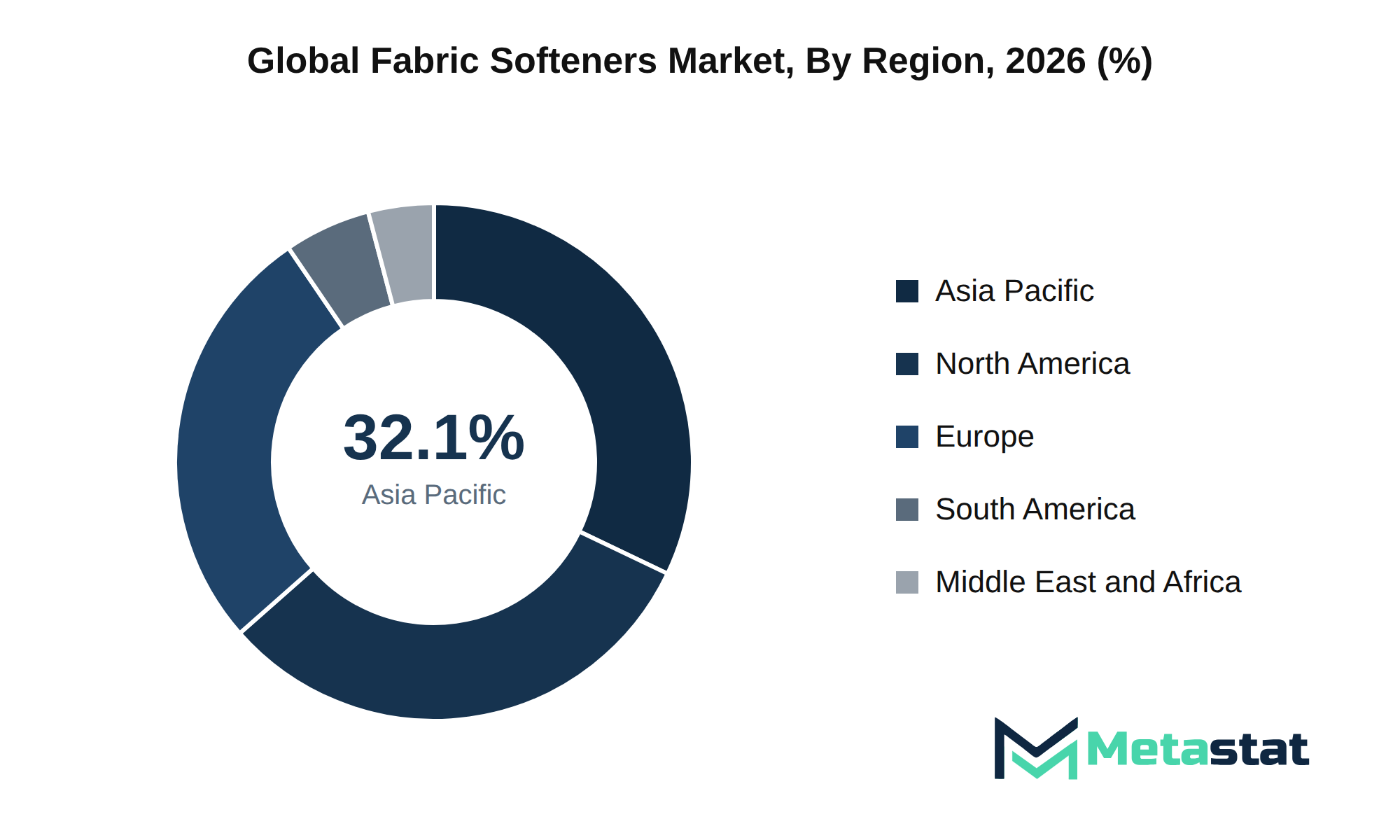
Based on geography, the Global Fabric Softeners market is divided into North America, Europe, Asia-Pacific, South America, Middle East, and Africa.
North America presents a robust environment for the Fabric Softeners market, driven by evolving consumer preferences and a diverse distribution network. The population’s increasing focus on home care and hygiene has increased demand for fabric softeners, particularly in households where convenience and fabric care play significant roles. By the end of 2033, the market is projected to expand at a CAGR of 5.0%, reaching a total addressable market size of USD 5.5 billion.
In this region, the share of the global market in 2025 stands at 31.4%. The growth trajectory reflects not only consumer demands but the effectiveness of localized manufacturing and supply chain dynamics. Key participants in the market, including The Procter & Gamble Company and Unilever PLC, have established strong positions by capitalizing on regional preferences and distribution channels.
With the increasing trend towards sustainable products, fabric softeners that prioritize eco-friendly ingredients are gaining traction among consumers, further enhancing market dynamics. This shift in consumer behavior emphasizes the importance of aligning product offerings with regional values and preferences, presenting a significant opportunity for growth in the market.
Europe signifies a crucial region within the Fabric Softeners market, holding a 27.00% share of the global landscape in 2025. Key drivers include shifting consumer preferences toward high-quality and eco-friendly products, prompting brands to innovate their offerings. Countries including Germany, France, the UK, Italy, and Spain exemplify mature markets where established brands develop products that align with sustainability goals and health-conscious trends. The presence of a strong retail network enhances product availability, supporting steady demand across households and commercial sectors.
Significant growth is expected in the households segment, driven by rising disposable incomes and an inclination towards convenience in laundry care. The commercial laundry services sector presents substantial opportunities, particularly within hospitality and healthcare environments, where fabric softeners play an important role in maintaining quality standards. Competitive dynamics illustrate a market populated by both established multinationals and local players, each vying for market share through unique product differentiation and targeted marketing strategies.
Regional supply chains experience increased localization, with manufacturers adapting to consumer demand for sustainability and efficiency. Geopolitical factors, alongside evolving trade policies, influence cross-border dynamics, necessitating agility in procurement and distribution strategies. The market's evolution reflects a complex relationship of consumer trends, competitive strategies, and infrastructural readiness, positioning Europe because an important area for growth in the fabric softeners arena.
Asia Pacific holds a significant position in the Fabric Softeners market, representing 32.1% of the global share in 2025. The region benefits from a rising middle class, particularly in countries like China, India, and Southeast Asia, where increasing disposable incomes enhance purchasing power and create robust demand for fabric softeners. Urbanization trends contribute to changing lifestyles, resulting in higher consumption of laundry products.
The presence of established players, including The Procter & Gamble Company and Unilever PLC, strengthens competitive dynamics within the market. Notable growth in online retailing provides additional channels for product distribution, catering to the evolving preferences of consumers. Localized manufacturing initiatives improve supply chain efficiencies and reduce lead times, further enhancing market accessibility.
Cultural nuances influence buying behaviors, with fragrance preferences varying significantly across countries. Scented products dominate in markets like Japan, while fragrance-free options gain traction in regions prioritizing health and wellness. These diverse consumer preferences drive product development and innovation in the fabric softeners sector.
Infrastructure modernization remains a critical factor, with investments in logistics and distribution networks facilitating smoother supply chain operations. The region's economic growth attracts further investment opportunities, drawing foreign direct investment in relevant sectors. This environment supports incremental growth vectors and positions the Asia Pacific region because a key player in shaping the future of the Fabric Softeners market.
The Fabric Softeners market in South America encounters unique dynamics driven by regional consumer preferences and economic conditions. Brazil and Argentina represent the primary markets, characterized by a growing demand for liquid fabric conditioners and scented products. Increasing awareness of the benefits of fabric softeners contributes to market expansion, with households progressively adopting these products to enhance laundry results.
Local manufacturing capabilities and the presence of regional players increase competition. Domestic market participants leverage established distribution channels, including supermarkets and hypermarkets, to reach consumers effectively. Strategic entry barriers for foreign entrants include localized procurement dynamics and cultural nuances that shape consumer buying behavior.
The market's growth is supported by rising disposable incomes and urbanization trends. Enhanced marketing strategies focusing on product benefits and user experiences drive demand, resulting in a robust outlook for the Fabric Softeners market through the forecast period.
The Fabric Softeners market in the Middle East and Africa displays a growth trajectory driven by increasing consumer awareness regarding fabric care and enhanced product offerings. Countries including Saudi Arabia, UAE, and South Africa demonstrate rising demand for fabric softeners, influenced by urbanization and changing lifestyles. The adoption of fabric softeners in households contributes to market expansion, supported by a growing retail infrastructure.
Localized manufacturing and regional supply chains emerge owing to critical factors that facilitate the availability of products tailored to consumer preferences. The market anticipates steady growth, with an expected contribution of 4.1% to the global share by 2025. Increased investment in retail channels enhances accessibility, allowing consumers to explore a range of scented and fragrance-free options.
Competitive dynamics within the region highlight a focus on established players who capitalize on brand loyalty and regional compliance with product standards. Strategies involving targeted marketing and product innovation position companies effectively within the market. Overall, the Middle East and Africa present a region ripe for investment, with promising opportunities for growth in the Fabric Softeners market.
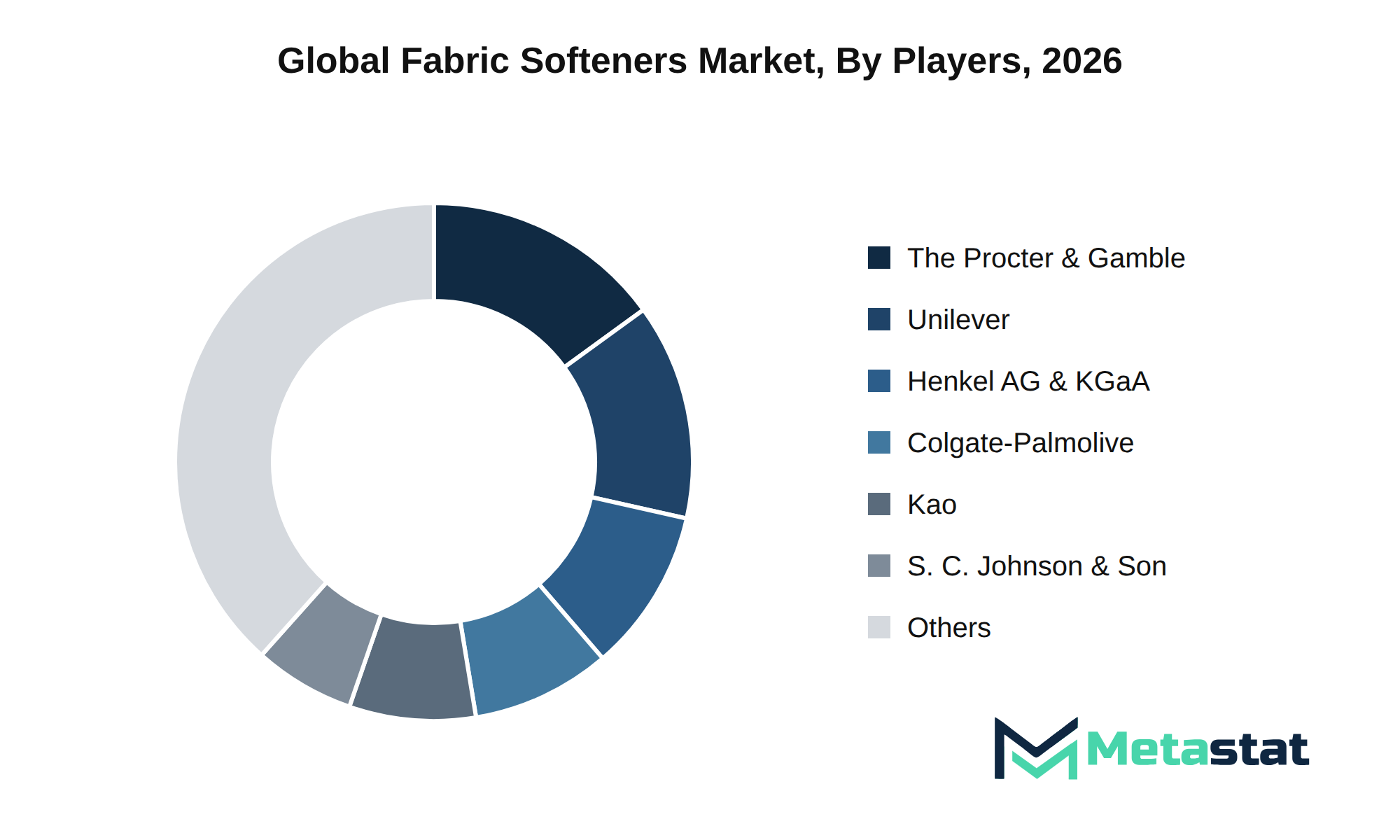
The Fabric Softeners market experiences dynamic competition among leading players focused on strategic consolidation and innovation. Companies including The Procter & Gamble Company, Unilever PLC, and Henkel AG & Co. KGaA engage in mergers and acquisitions to enhance their market positions and broaden product offerings. This approach enables firms to utilize resources efficiently and improve distribution networks.
Product differentiation shapes competition. Firms invest heavily in research and development to innovate and create unique formulations, addressing diverse consumer preferences and environmental concerns. For instance, fragrance-free options and eco-friendly products are gaining traction, prompting companies to adjust their portfolios accordingly.
Strategic alliances and partnerships emerge because critical tactics in the market, promoting collaboration across various sectors. Companies including Kao Corporation and Church & Dwight Co., Inc. pursue joint ventures to strengthen supply chain dominance and customer retention strategies, enhancing brand equity and ensuring a competitive edge.
Barriers to entry remain a notable aspect of the market, with established players holding substantial intellectual property portfolios and proprietary technologies. This creates challenges for new entrants attempting to penetrate the market. The competitive outlook suggests a continued focus on defensive imperatives, with firms like S. C. Johnson & Son, Inc. and LG H&H Co., Ltd. balancing growth vectors against external threats.
Market size is forecast to rise from USD 12.4 billion in 2025 to over USD 18.3 billion by 2033. The base case projects a growth rate of 5.0% CAGR during this period. In a bullish scenario, factors including rising disposable incomes, increased consumer awareness regarding fabric care, and product innovation drive higher demand for fabric softeners. Conversely, a bearish outlook could arise from economic downturns, fluctuating raw material prices, and potential regulatory challenges impacting production and distribution processes.
Shifts in downstream demand driven by changing consumer preferences significantly influence the fabric softeners market. Core industry maturation leads to heightened competition, prompting manufacturers to invest in next-generation technology and R&D commercialization. The product life cycle continues to evolve, with an increasing focus on sustainability and eco-friendly formulations. Regulatory evolution, compliance milestones, and policy enforcement horizons remain critical factors shaping market dynamics.
Geopolitical realignments and shifting trade corridors create new opportunities and challenges within global supply chains, impacting raw material sourcing and distribution logistics. Strategic capital allocation directives focus on infrastructure commitments and CapEx investment vectors that enhance operational efficiency. Identifying emerging white-space opportunities and addressing unmet enterprise needs will be crucial for capturing high-growth pockets within the fabric softeners market.
Executive-level strategic imperatives highlight the importance of developing defensibility roadmaps to navigate potential market disruptions while outlining future growth recommendations that align with evolving consumer expectations and regulatory frameworks.
The report strategically identifies and profiles the key market players and analyses their core competencies in each sub-segment of the Fabric Softeners market.
|
Report Attributes |
Details |
|
Study Period |
2021-2033 |
|
Base Year |
2025 |
|
Estimated Year |
2026 |
|
Forecast Period |
2026-2033 |
|
Historical Period |
2021-2025 |
|
Growth Rate |
CAGR 5.0% from 2026 to 2033 |
|
Revenue Unit |
USD billion |
|
Segmentation |
By Product Type, End-Use Sector, Distribution Channel, Fragrance Profile, and Region |
|
By Region |
North America (By Product Type, End-Use Sector, Distribution Channel, Fragrance Profile, and Country)
|
|
Europe (By Product Type, End-Use Sector, Distribution Channel, Fragrance Profile, and Country)
|
|
|
Asia Pacific (By Product Type, End-Use Sector, Distribution Channel, Fragrance Profile, and Country)
|
|
|
South America (By Product Type, End-Use Sector, Distribution Channel, Fragrance Profile, and Country)
|
|
|
Middle East and Africa (By Product Type, End-Use Sector, Distribution Channel, Fragrance Profile, and Country)
|
Find answers to common questions about this report
The Fabric Softeners market size was valued at USD 12.4 billion in 2025, according to the Metastat Insights study.
The Fabric Softeners market is projected to grow at a CAGR of 5.0% during the forecast period from 2026 to 2033.
The North America Fabric Softeners market size is estimated to reach USD 5.5 billion by 2033.
Liquid Fabric Conditioners lead the Fabric Softeners market, with a projected value of USD 11.7 billion by 2033. This segment surpasses other product types in terms of revenue generation.
Key drivers for the Fabric Softeners market include changing consumer preferences towards enhanced fabric care and convenience, increased disposable income among urban populations, and the rising demand for sustainable products. Technological advancements in production efficiency and automation further support market growth by enabling manufacturers to meet evolving consumer expectations effectively.
Asia Pacific holds the dominant share of the Fabric Softeners market, accounting for 32.1 percent in 2025. This region surpasses North America, which holds a share of 31.4 percent.
Regulatory tightening and compliance hurdles restrain Fabric Softeners market growth by increasing production costs and delaying product development, disproportionately impacting smaller manufacturers. Macroeconomic headwinds, including inflationary pressures and rising raw material prices, risk reducing overall demand because consumers prioritize essential goods. Geopolitical instability complicates supply chain reliability, leading to increased costs and operational inefficiencies.
Changing consumer preferences significantly favor product adoption in the fabric softeners market. Increased awareness regarding fabric care, coupled with the desire for enhanced laundry results, drives demand for superior softness and fragrance. the growing urban population and rising disposable incomes enable consumers to invest in premium fabric softeners, further supporting market growth.
The Fabric Softeners market is estimated to reach a valuation of USD 18.3 billion by 2033.
Key players operating in the Fabric Softeners market include The Procter & Gamble Company, Unilever PLC, Henkel AG & Co. KGaA, Colgate-Palmolive Company, Kao Corporation, and S. C. Johnson & Son, Inc.
The analysts below cover Chemicals and Materials research at Metastat Insights.
LEAD ANALYST
Utkarsh Khirodkar is a Lead Market Research Analyst at MetaStat Insight, specializing in market intelligence, technology sector assessments, and competitive strategy.

INDUSTRY CONSULTANT - CHEMICALS & ADVANCED MATERIALS
Chemicals and Materials · Machinery & Equipment · Packaging
Amit Gadhekar Consultant for Chemicals and Materials at MetaStat Insight, directing sector-specific intelligence, research, and strategic consulting across global chemical and processing markets.
When evaluating distributed energy resource management systems, standard research summaries tend to gloss over the operational differences between front-of-the-meter utility deployments and behind-the-meter industrial sites. The MetaStat Insight report addressed those distinctions directly, especially regarding software interoperability standards and grid interconnection backlogs. The five-year market sizing across regional transmission organizations provided actionable context for our grid modernization strategy.
Most industry reports on warehouse automation bundle autonomous mobile robots and fixed conveyor installations into the same top-level numbers, which complicates advisory work. This study split the market cleanly by payload tiers, navigation technology, and fleet management software layers. The regional forecast for Western Europe gave our team defensible adoption benchmarks when evaluating capital allocation for logistics clients, saving us days of secondary data scrubbing.
Analyzing the transition from natural gas to green hydrogen in iron ore reduction requires realistic infrastructure timelines. Meta stat insight supplied a detailed regional assessment of DRI plant conversion costs and scrap metal availability in North America and Western Europe. Their report carefully examined pellet quality specs and electrical grid access constraints without making oversimplified market assumptions. The research material served as a practical reference during internal technology roadmap discussions.
Explore related market intelligence reports worth reading alongside this one.