
LEAD ANALYST
Utkarsh Khirodkar is a Lead Market Research Analyst at MetaStat Insight, specializing in market intelligence, technology sector assessments, and competitive strategy.

Global Gene Editing Off-Target Effect Detection Test Systems Market Size, Share, By Detection Approach (In Silico Off-Target Prediction, Biochemical Genome-Wide Detection, Cell-Based Genome-Wide Detection, In Situ Off-Target Detection, Targeted Sequencing Confirmation, Structural Variant and Chromosomal Rearrangement Detection), By Offering Type (Assay Kits and Reagents, NGS Library Preparation Systems, Sequencing-Based Detection Systems, Bioinformatics Software and Data Analysis Platforms, Digital PCR-Based Detection Systems, Contract Testing and Analytical Services), By Gene Editing Modality (CRISPR-Cas Nuclease Editing, Base Editing, Prime Editing, TALEN Editing, Zinc Finger Nuclease Editing, Other Programmable Nuclease Editing), By End User (Biopharmaceutical and Biotechnology Companies, Cell and Gene Therapy Developers, Contract Research Organizations (CROs), Academic and Research Institutes, Agricultural Biotechnology Companies, Animal Biotechnology and Model Developers), Industry Analysis, Growth, Trends, and Forecast, 2026-2033
Report ID
MSI-5824
Published
November, 2026
Pages
292 Pages
Format
Historical
Base year
Forecast
Forecast period
Report Details
Market Valuation: Valued at $393.6 Million in 2025, projected to reach $1,076.6 Million by 2033 at a 13.4% CAGR.
Dominant Segment: The Cell-Based Genome-Wide Detection approach leads the market, driven by its critical role in ensuring safety and efficacy in gene editing applications.
Geographic Lead: North America is projected to dominate the market, with the US expected to lead in 2026, benefiting from robust research infrastructure and significant investments in biotechnology.
What's Inside: The report includes comprehensive competitive coverage, detailed analyses of various detection approaches, and a forecast window extending to 2033.
Emerging Technologies: Advancements in CRISPR-Cas and other gene editing modalities are driving the demand for sophisticated detection methods, enhancing the accuracy of off-target effect evaluations.
Investment Trends: There is a notable increase in investments in biochemical genome-wide detection technologies, reflecting a growing emphasis on precision in gene editing.
Choose Your License
Global Gene Editing Off-Target Effect Detection Test Systems Market
The global Gene Editing Off-Target Effect Detection Test Systems market was valued at USD 393.6 million in 2025 and is projected to reach USD 1,076.6 million by 2033, growing at a CAGR of 13.4% over the forecast period.
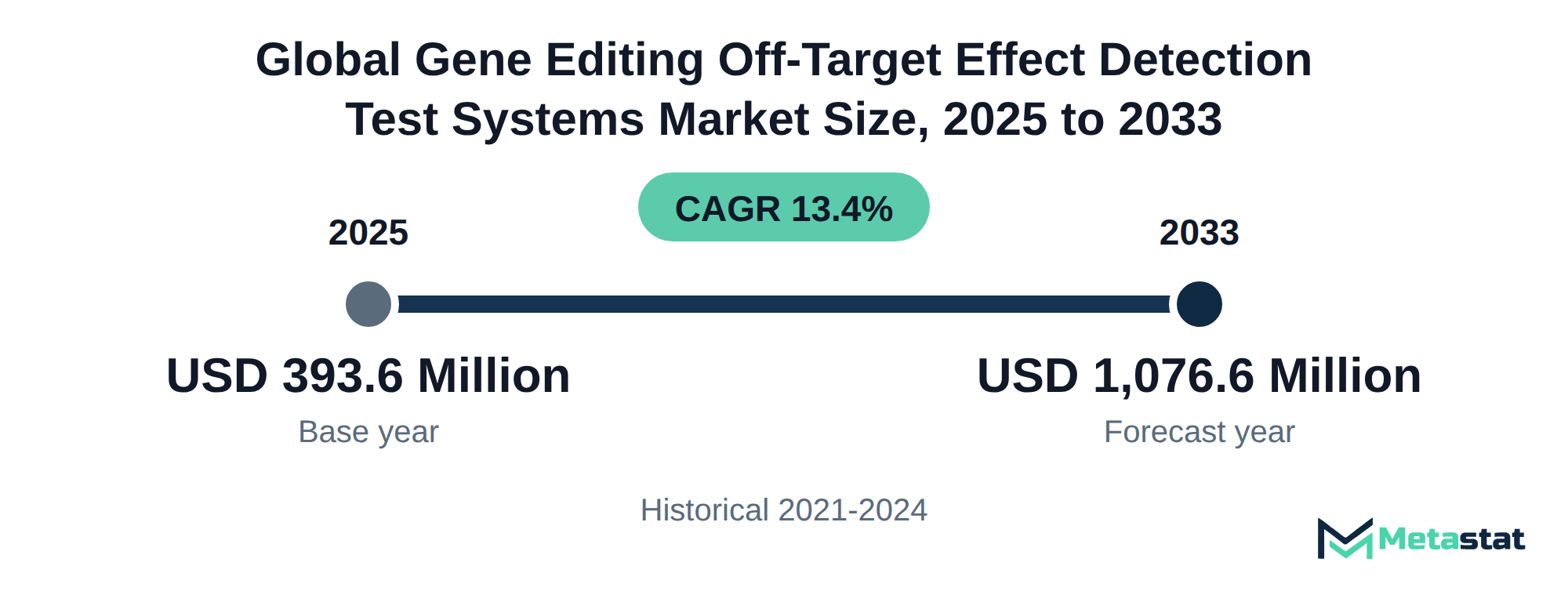
The Gene Editing Off-Target Effect Detection Test Systems market covers technologies and methodologies that identify unintended genetic alterations resulting from gene editing techniques. Buyers invest in these test systems to ensure the accuracy and safety of gene editing applications, which are critical in fields including biopharmaceuticals, biotechnology, and research institutions. The ability to detect off-target effects is vital for regulatory compliance and to mitigate potential risks associated with genetic modifications.
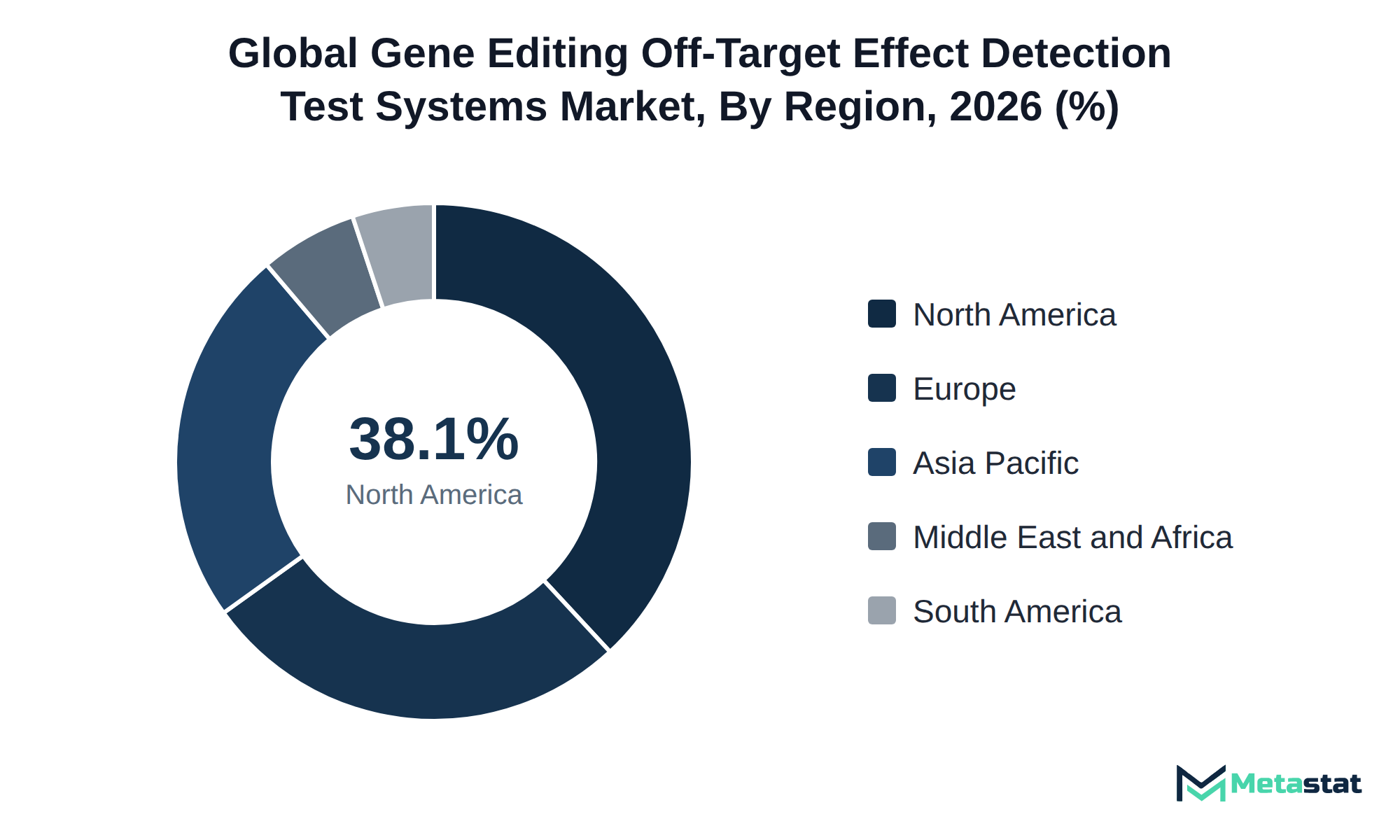
Growth in the market is driven by advancements in gene editing technologies and the increasing demand for precise and reliable detection methods. The segment with the highest value within the market is the Cell-Based Genome-Wide Detection approach. North America holds 38.1% of the market in 2025, with the US leading in 2026. This region benefits from a robust research infrastructure, significant investments in biotechnology, and a high level of public and private funding, all contributing to the expansion of gene editing applications.
Technological innovations, particularly in CRISPR-Cas and other gene editing modalities, drive market growth. These innovations enhance the efficacy of off-target effect detection, driving adoption among biopharmaceutical and biotechnology companies. The increasing focus on personalized medicine and genetic therapies further increases demand for advanced testing solutions and supports investment in this sector.
The Gene Editing Off-Target Effect Detection Test Systems market encompasses diverse methodologies aimed at ensuring precision in gene editing applications. Buyers, including biopharmaceutical companies and research institutions, invest in these systems to mitigate risks associated with off-target effects, which lead to unintended genetic modifications. The emphasis on safety and efficacy in gene therapies drives spending, with stakeholders prioritizing reliable detection tools to enhance their research and development outcomes.
Growth within the market is propelled by increasing investments in gene editing technologies and a surge in research activities focused on therapeutic applications. The segment of In Silico Off-Target Prediction holds the highest value, reflecting the demand for computational methods that expedite the identification of potential off-target sites. This region's robust infrastructure and significant funding for biotech research contribute to its dominant position.
Continued advancements in gene editing modalities, particularly CRISPR-Cas technologies, enhance the capabilities of detection systems. The need for precise and efficient detection methods supports the expansion of offerings within the market. Companies increasingly focus on developing innovative solutions to address the evolving challenges in gene editing, which further fuels market growth.
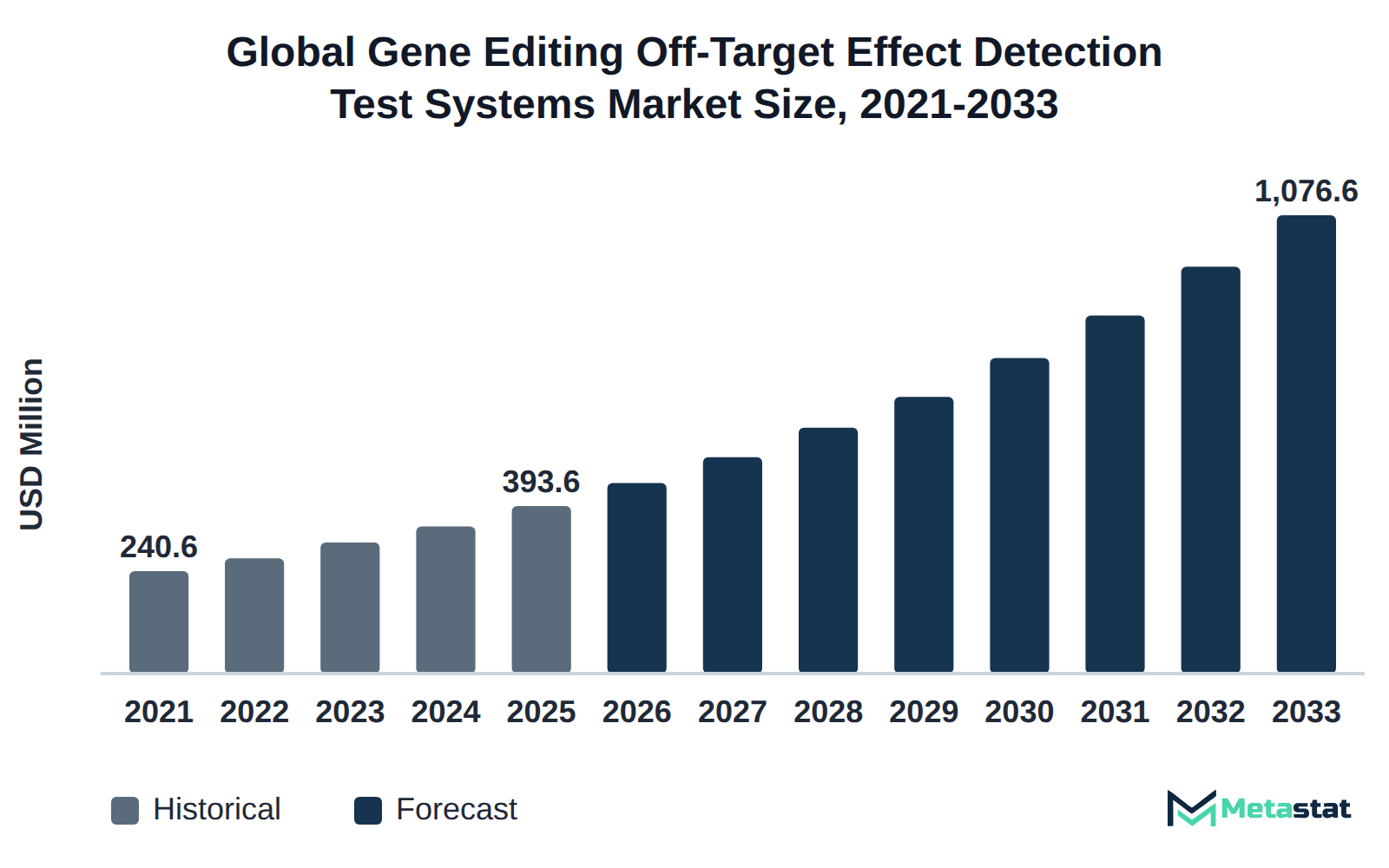
Recent advancements in CRISPR-Cas9 off-target detection technologies have significantly enhanced the accuracy and reliability of genome-wide screening. The introduction of biochemical genome-wide detection methods, projected to reach USD 169.2 million by 2033, reflects a growing emphasis on precision in genetic editing processes. These technologies enable researchers and biopharmaceutical companies to identify unintentional modifications in the genome, thus ensuring the safety and efficacy of gene therapies.
The increasing demand for high-throughput screening techniques has driven investments in innovative detection systems. Companies that develop assay kits and reagents, projected to grow from USD 112.1 million in 2026 to USD 256.7 million in 2033, support these advanced methodologies. Enhanced detection capabilities streamline the research workflow, improve data quality, and reduce time to market for new therapies.
Advancements in genome-wide screening technologies within the Gene Editing Off-Target Effect Detection Test Systems market present substantial commercial opportunities. By minimizing off-target effects, these innovations enable more precise gene editing, enhancing confidence among regulatory bodies and investors alike. The market is expected to experience significant expansion, driven by a clear need for safer and more effective gene editing solutions.
The integration of Next-Generation Sequencing (NGS), Digital PCR, and bioinformatics significantly influences procurement processes within the Gene Editing Off-Target Effect Detection Test Systems market. Buyers increasingly prioritize solutions that combine these technologies, improving accuracy and efficiency in off-target effect validation. The market for NGS Library Preparation Systems is projected to reach USD 192.8 million by 2033, highlighting growing demand for advanced genomic analysis methodologies.
Pricing models for these integrated solutions vary, often reflecting the complexity and capabilities of the systems involved. For instance, assay kits and reagents are projected to grow from USD 112.1 million in 2026 to USD 256.7 million by 2033, indicating a trend towards higher investment in essential tools for precision editing. Buyers engage in long-term contracts with suppliers to secure favorable terms and ensure continuous access to the latest technology.
This shift towards integrated solutions necessitates that suppliers innovate pricing strategies and service agreements, strengthening relationships with clients. The emphasis on integrated systems enhances market competitiveness and drives growth in the Gene Editing Off-Target Effect Detection Test Systems market.
The demand for off-target testing in cell and gene therapy development has increased significantly due to the growing emphasis on safety and efficacy in therapeutic applications. This surge aligns with the broader trends in the Gene Editing Off-Target Effect Detection Test Systems market, where biopharmaceutical and biotechnology companies seek reliable methods to evaluate potential off-target effects of gene editing technologies. In 2026, the revenue generated from this specific end user segment is projected to reach USD 151.4 million, escalating to USD 346.2 million by 2033, reflecting a compound annual growth rate of 12.5%.
Cell and gene therapy developers require precise off-target effect detection to ensure the safety of their therapies before clinical trials. While these therapies advance towards commercialization, the ability to identify unintended modifications in the genome becomes crucial. Regulatory bodies increasingly mandate thorough off-target analysis, so developers need rigorous testing methodologies. This environment generates a competitive advantage for companies that invest in high-quality Gene Editing Off-Target Effect Detection Test Systems, ultimately leading to enhanced market positioning and increased funding opportunities.
Emerging gene editing modalities significantly influence off-target detection requirements. The adoption of CRISPR-Cas nucleases, for instance, is driving the demand for advanced detection methods, with this segment projected to reach USD 491.2 million by 2033, reflecting a compound annual growth rate (CAGR) of 12.6% from 2026. This rise highlights the need for comprehensive off-target effect detection that aligns with the precision of these advanced editing technologies.
In addition to CRISPR-Cas, modalities including base editing and prime editing introduce complexities that necessitate tailored detection strategies. Base editing is anticipated to generate a market value of USD 209.2 million by 2033, with a CAGR of 14.9%. This growth prompts buyers to seek solutions that ensure high fidelity in detecting off-target effects specific to these advanced techniques. Enhanced detection capabilities contribute to the commercial viability of gene editing products, promoting confidence among stakeholders in the market.
Significant advancements in in silico off-target prediction technologies have led to increased spending by biopharmaceutical and biotechnology companies. These buyers prioritize the accuracy and efficiency of genomic alterations while developing gene therapies, driving a shift toward computational methods. The integration of powerful bioinformatics tools supports swift analysis and interpretation of genetic data, allowing faster decision-making in research and development. The volume of tests has increased markedly, leading to a projected growth in this segment from USD 107 million in 2026 to USD 245.8 million by 2033, reflecting a compound annual growth rate of 12.6%. The Gene Editing Off-Target Effect Detection Test Systems market benefits from this trend as developers aim to enhance precision in gene editing applications.
The adoption of in situ off-target detection technologies significantly enhances the capabilities of researchers and developers in identifying unintended genetic modifications directly within cellular environments. This approach aligns with the increasing complexity of gene editing applications that require precise validation of target specificity. Key players in the Gene Editing Off-Target Effect Detection Test Systems market invest in advanced imaging techniques and methodologies that allow real-time analysis and localization of off-target effects.
Such advancements in detection methodologies provide biopharmaceutical companies and academic institutions with powerful tools for assessing the safety profiles of gene editing products. Improved accuracy in detecting off-target effects directly contributes to increasing confidence in gene therapy approaches, driving greater investment and innovation within the sector. The emphasis on in situ detection techniques is expected to strengthen regulatory compliance, resulting in a more efficient development process within the market.
The high costs associated with gene editing off-target effect detection test systems present a significant challenge for numerous buyer groups, particularly biopharmaceutical and biotechnology companies. These organizations, focused on maintaining budgets while pursuing innovative research, often delay investment in advanced detection technologies due to steep initial expenditures. This hesitation results in slower uptake of vital testing systems, reducing the speed at which new therapies enter clinical development. Consequently, smaller orders and limited budgets restrict the market's growth potential, impacting both suppliers and end users. The market's future expansion hinges on achieving more competitive pricing structures that align with the financial capabilities of prospective buyers, increasing adoption across the sector. Enhanced cost-benefit analyses demonstrate the value of these systems in ensuring gene editing safety; however, without addressing pricing challenges, overall market momentum remains constrained.
Talent costs present a significant challenge for suppliers in the Gene Editing Off-Target Effect Detection Test Systems market. The demand for skilled professionals with expertise in gene editing technologies and data analysis has surged, leading to increased labor expenses. Biopharmaceutical and biotechnology companies encounter difficulties in recruiting and retaining qualified personnel, impacting their ability to innovate and deliver products efficiently. This situation increases margin pressure for suppliers.
In response to these challenges, companies adopt various strategies to manage talent-related costs. Investments in employee training programs and partnerships with academic institutions facilitate the development of in-house expertise. Automation and technology integration into laboratory processes streamline workflows, allowing for more efficient use of existing personnel. By enhancing operational efficiency and reducing reliance on external talent, suppliers in the market position themselves to maintain competitiveness amid rising costs.
The biochemical genome-wide detection segment stands out with a projected compound annual growth rate of 14.3% through 2033. This growth stems from increasing demand for comprehensive off-target effect analysis in gene editing. Biopharmaceutical and biotechnology companies drive this demand due to their focus on precision and safety in genetic interventions. Enhanced accuracy in detecting off-target effects directly correlates with improved patient outcomes in therapeutic applications. The market evolves, and investments in advanced detection strategies, including biochemical approaches, are anticipated to increase, strengthening the competitive positioning of stakeholders. The market's overall trajectory indicates a shift toward more sophisticated tools that facilitate the identification of unintended genetic modifications. This trend aligns with a broader push for regulatory compliance and safety standards in gene editing applications, reflecting a growing need for reliable detection systems. Together, these factors make biochemical genome-wide detection a significant contributor to overall market growth.
The Global Gene Editing Off-Target Effect Detection Test Systems market is segmented based on Detection Approach, Offering Type, Gene Editing Modality, and End User.
The In Silico Off-Target Prediction segment is valued at USD 107 million in 2026 and is projected to reach USD 245.8 million by 2033, at a CAGR of 12.6% during the forecast period. This segment serves biopharmaceutical companies and researchers focused on enhancing gene editing precision through computational models that predict unintended genetic modifications. Rising demand for accuracy in genetic engineering drives investment in this segment, reflecting a growing prioritization of safety and efficacy in therapeutic applications. Differentiating from other detection approaches, including biochemical and cell-based methods, in silico prediction offers distinct advantages in cost-effectiveness and speed. This segment’s growth trajectory outpaces others, driven by reliance on evolving bioinformatics capabilities and increasing integration with high-throughput screening technologies. The market overall benefits from these advancements, establishing in silico predictions as an essential tool for gene editing validation.
Biochemical Genome-Wide Detection segment is estimated to reach USD 169.2 million by 2033, at a CAGR of 14.3% during the forecast period. This segment is essential for identifying off-target effects in gene editing by analyzing genetic alterations across the entire genome. Primarily used by biopharmaceutical and biotechnology companies, this approach enables comprehensive assessments of potential unintended effects of gene editing technologies. The rapid advancement of detection technologies and the increasing demand for precise genetic modifications drive growth in this sector. Compared to other segments, biochemical genome-wide detection experiences higher growth rates, reflecting its critical importance in ensuring the safety and efficacy of gene editing applications. With a growing emphasis on rigorous testing and validation processes, this segment is vital for maintaining scientific and regulatory standards in gene editing research and development.
Cell-Based Genome-Wide Detection segment is expected to reach USD 241.8 million by 2033. This segment identifies unintended genomic modifications in live cells and serves biopharmaceutical and biotechnology companies that prioritize accuracy in gene editing applications. A significant driver for this segment stems from the increasing focus on safety and efficacy in therapeutic developments, leading to heightened demand for reliable detection methods. Compared to other detection approaches, cell-based techniques typically offer a more realistic environment for testing modifications, thus attracting substantial interest. This segment exhibits a competitive growth trajectory, supported by advancements in technology and growing urgency for precision in genetic research. The market recognizes the importance of these methods, contributing to their anticipated expansion through 2033.
In Situ Off-Target Detection is projected to grow at a CAGR of 14.4% during the forecast period. This segment is significant in evaluating unintended effects of gene editing directly within cellular contexts, facilitating accuracy in genetic research. Primarily used by biopharmaceutical and biotechnology companies, it enhances the reliability of gene editing applications. Growth in this segment is driven by the increasing focus on precision medicine and the demand for effective therapies, which necessitate robust off-target evaluations. Compared to other detection approaches including biochemical and cell-based genome-wide detection, In Situ Off-Target Detection offers unique advantages in real-time assessment, leading to its accelerated growth trajectory. With a rising emphasis on improving safety profiles in gene editing, investment in this technology is expected to gain momentum, further shaping the market for Gene Editing Off-Target Effect Detection Test Systems.
Targeted Sequencing Confirmation focuses on confirming the presence of off-target effects within gene editing applications. This segment finds extensive use in biopharmaceutical and biotechnology companies, where precise editing is essential for therapeutic efficacy and safety. Key factors driving growth in this segment include the increasing emphasis on accuracy in gene editing and rising regulatory scrutiny surrounding genetic modifications. Compared to other detection approaches, this segment typically entails higher costs due to its specialized technology requirements and is subject to different buyer dynamics that influence procurement strategies. Its effectiveness in validating results using advanced sequencing techniques distinguishes it from other segments, positioning it strategically within the Gene Editing Off-Target Effect Detection Test Systems market.
Structural Variant and Chromosomal Rearrangement Detection focuses on identifying significant genetic alterations related to chromosomal structures. This detection approach is valuable for biopharmaceutical and biotechnology companies targeting precision medicine and gene therapy applications. Factors driving growth in this segment include the increasing prevalence of genetic disorders and ongoing advancements in gene editing technologies. Compared to other detection approaches, this segment typically experiences slower growth due to higher complexity and the need for specialized equipment. While offering unique insights into genomic stability, the segment faces challenges related to cost and the availability of trained personnel. Overall, the segment contributes to the comprehensive assessment of gene editing applications, enhancing the safety and efficacy of novel therapies within the market.
Assay kits and reagents provide essential tools for researchers and developers in genomic analysis, particularly in off-target effect detection during gene editing procedures. Its growth is driven by increasing demand for reliable and accurate testing methodologies among biopharmaceutical and biotechnology companies, who prioritize safety and efficacy in their product development processes. In comparison to other segments, Assay Kits and Reagents exhibit steady growth; however, the biochemical genome-wide detection segment shows a higher CAGR of 14.3%, indicating a faster pace of expansion. The cost for these kits remains competitive, appealing to a diverse range of end users, including academic institutions and contract research organizations, which further contributes to the segment's strong position within the market.
NGS Library Preparation Systems segment is estimated to reach USD 192.8 million by 2033, at a CAGR of 13.8% during the forecast period. This technology serves crucial roles in preparing sequencing libraries for Next-Generation Sequencing (NGS), primarily used by biopharmaceutical companies, contract research organizations, and academic institutions. The segment benefits from increasing investments in genomic research and rising demand for precise gene editing applications. Strong growth in the NGS Library Preparation Systems segment derives from innovations in sequencing technologies, which enhance efficiency and accuracy in library preparation processes. Compared to the other segments in this group, this segment experiences a moderate growth rate, influenced by advancements in automation and the integration of bioinformatics tools. The market dynamics surrounding the NGS Library Preparation Systems segment significantly impact overall growth trends within the Gene Editing Off-Target Effect Detection Test Systems market.
Sequencing-Based Detection Systems segment is expected to reach USD 244.2 million by 2033. This segment is essential for identifying off-target effects in gene editing applications, primarily used by biopharmaceutical companies and research institutions. The growth of this segment is driven by increasing investments in genomic research and heightened focus on safety profiles of gene therapies. Compared to other segments, Sequencing-Based Detection Systems display a moderate growth trajectory, influenced by advancements in sequencing technologies and growing demand for precise genetic analysis. The projected compound annual growth rate is aligned with broader trends in the Gene Editing Off-Target Effect Detection Test Systems market, pointing towards sustained emphasis on robust data analysis capabilities for various end users.
Bioinformatics Software and Data Analysis Platforms segment is projected to grow at a CAGR of 14.3% during the forecast period. These platforms facilitate the analysis of genomic data generated through various gene editing techniques. Primarily used by biopharmaceutical companies and academic institutions, these tools support researchers in interpreting complex datasets to validate gene editing outcomes. Increasing demand for precise and efficient data analysis solutions drives this segment. Compared to other segments, this segment experiences growth due to the rising emphasis on data-driven decision-making in research. The market places a premium on high-quality bioinformatics platforms, leading to significant investment in these technologies. The integration of advanced algorithms and machine learning capabilities enhances the performance of these platforms, differentiating them from traditional data analysis tools.
Digital PCR-Based Detection Systems employ polymerase chain reaction technology to identify off-target effects in gene editing applications. This approach appeals mainly to biopharmaceutical and biotechnology companies engaged in precision medicine research. A primary force driving this segment involves the heightened need for accurate detection methods that ensure the safety and efficacy of gene editing technologies. The segment distinguishes itself from others by emphasizing high sensitivity and specificity in off-target effect detection, aligning with stringent regulatory requirements in the market. Compared to other offerings like assay kits and reagents, Digital PCR-Based Detection Systems often carry higher costs due to the complexity of the technology and the advanced equipment required for implementation. The emphasis on reliability and precision in research processes influences purchasing decisions among end-users, particularly those in highly regulated markets.
Contract Testing and Analytical Services provides essential support for customers requiring in-depth analysis and validation of gene editing projects. This segment serves biopharmaceutical and biotechnology companies, contract research organizations, and academic institutions that require highly specialized testing. The increasing complexity of gene editing technologies drives demand for these services, as entities seek to ensure precision and compliance with regulatory standards. Compared to other segments, this offering often involves higher service costs due to the specialized expertise required, which leads to slower adoption. The market faces growing pressure from advancements in internal testing methodologies, prompting customers to evaluate the price versus value proposition of outsourcing testing services. The Gene Editing Off-Target Effect Detection Test Systems market continues to evolve, with Contract Testing and Analytical Services contributing to advancements in research quality and reliability.
CRISPR-Cas Nuclease Editing is essential for developing precise gene editing tools, primarily used by biopharmaceutical and biotechnology companies aiming to enhance therapeutic interventions. The increasing demand for targeted therapies and advancements in CRISPR technology, including its applications in various diseases, drive growth within this segment. Compared to other gene editing modalities, CRISPR-Cas Nuclease Editing shows a relatively higher growth rate, with its CAGR of 12.6% reflecting strong interest and investment from industry players. This segment's price positioning is competitive, attracting a wide range of end users focused on innovative genetic solutions, further contributing to the overall expansion of the market.
The Base Editing segment is employed primarily by biopharmaceutical companies and researchers focused on precise genetic alterations. A significant driver for growth in this segment stems from increasing demand for targeted therapies and advanced genetic treatments, facilitating more accurate and efficient editing processes. Compared to other modalities in the market, Base Editing exhibits higher growth potential, attributed to its ability to create precise edits without causing double-strand breaks in DNA. This characteristic differentiates it from traditional editing methods, making it an attractive option for companies seeking innovative solutions in gene editing applications.
Prime Editing segment is expected to reach USD 153.6 million by 2033. This segment focuses on precise modifications in the genome, offering significant advantages over traditional editing methods. It serves primarily biopharmaceutical and biotechnology companies that seek advanced solutions for genetic modifications with minimal off-target effects. The driving force behind this segment includes increasing demand for more accurate gene editing techniques, reflecting a broader trend toward precision medicine. The compound annual growth rate for Prime Editing stands at 14.9%, higher than other modalities, indicating robust market interest. Compared to CRISPR-Cas Nuclease Editing, which has a CAGR of 12.6%, Prime Editing offers a more refined approach, attracting attention from organizations prioritizing accuracy in gene therapies. Such dynamics contribute to the growth of the market.
TALEN Editing is projected to grow at a CAGR of 12.1% during the forecast period. This gene editing method involves using transcription activator-like effector nucleases to achieve targeted modifications in the genome. Biopharmaceutical and biotechnology companies primarily use TALEN Editing to facilitate precise genetic alterations that enhance research and therapeutic applications. Demand for this segment is driven by increased investment in gene editing technologies and the growing need for effective therapies in genetic disorders. Compared to other gene editing modalities, TALEN Editing offers distinct advantages in specificity, although it does not experience the same rapid growth as CRISPR-Cas Nuclease Editing, which is expected to reach USD 491.2 million by 2033. The unique characteristics of TALEN Editing position it as a vital option within the Gene Editing Off-Target Effect Detection Test Systems market.
Zinc Finger Nuclease Editing employs engineered nucleases for targeted modifications in genomic sequences. This technology is employed primarily by biopharmaceutical and biotechnology companies, enabling precise genetic alterations for therapeutic applications. Demand for this sub-segment benefits from the growing focus on personalized medicine, where tailored therapies significantly improve patient outcomes. Compared to other segments, Zinc Finger Nuclease Editing operates at a higher price point due to the complexity of the technology and the expertise required for its implementation. Regulatory hurdles surrounding gene editing technologies influence the adoption rate, potentially slowing growth compared to other modalities like CRISPR-Cas Nuclease Editing. Continuous advancements in nucleic acid engineering techniques are expected to drive innovation and expand possibilities within this niche, contributing to the overall progress in the Gene Editing Off-Target Effect Detection Test Systems market.
Other Programmable Nuclease Editing involves advanced gene editing techniques employing programmable nucleases other than the commonly known methods. This segment caters to researchers and developers in biotechnology and pharmaceutical sectors focusing on innovative gene modification applications. Demand for this segment arises from the increasing need for precise and efficient gene editing tools that minimize off-target effects. The growing interest in personalized medicine and tailored gene therapies drives significant advancements in this area. Compared to other sub-segments, this segment experiences slower growth due to the higher complexity and costs associated with developing and implementing these technologies. Overall, the market reflects a strong focus on enhancing the efficiency and safety of genetic modifications.
This segment primarily serves organizations engaged in drug development and biotechnological innovations, focusing on evaluating the precision and safety of gene editing applications. Demand is driven by the increasing necessity for precise and reliable detection methods to identify off-target effects in therapeutic applications. This segment outpaces others, reflecting a steady growth trajectory due to heightened investment in biopharmaceutical research. Compared to other segments, including Contract Research Organizations (CROs), which cater to a broader client base, Biopharmaceutical and Biotechnology Companies maintain a specialized focus, ensuring tailored solutions for advanced genetic research, thereby contributing to its growth in the market.
Cell and Gene Therapy Developers segment is estimated to reach USD 265.7 million by 2033, at a CAGR of 14.6% during the forecast period. This segment focuses on developing and implementing therapies that apply gene editing technologies to treat genetic disorders. Biopharmaceutical and biotechnology companies drive demand within this segment, seeking innovative solutions to address unmet medical needs. Growth in this segment is influenced by advancements in gene editing technologies, which enhance the precision and efficiency of therapeutic applications. Compared to other segments, Cell and Gene Therapy Developers exhibit a faster growth trajectory, reflecting increasing investment in gene therapies and the expanding pipeline of clinical applications. The market for gene editing off-target effect detection test systems is poised for significant expansion, driven by the necessity for rigorous safety and efficacy evaluations in this therapeutic landscape.
Contract Research Organizations (CROs) segment is expected to reach USD 185.6 million by 2033. This segment serves vital functions in supporting biopharmaceutical and biotechnology companies by providing specialized testing services for gene editing applications. Increasing investment in drug development drives demand for comprehensive off-target effect detection, with CROs facilitating the validation of gene editing technologies through their contract testing services. The growth rate for this segment is notable, with a CAGR of 14.6%, reflecting significant market activity. This expansion contrasts with other segments where demand growth is not robust. Growing awareness of the importance of off-target effects in the development of safe and effective therapies positions this segment for continued revenue generation in the Gene Editing Off-Target Effect Detection Test Systems market.
Academic and Research Institutes segment is projected to grow at a CAGR of 12.6% during the forecast period. This segment comprises educational and research organizations focused on advancing gene editing technologies and methodologies. Researchers in these institutes apply gene editing off-target effect detection test systems to ensure precision in their experimental designs and to validate results. The demand for enhanced accuracy in genetic research drives growth within this segment. Differentiating itself from others, this segment emphasizes cost-effective solutions, contrasting with biopharmaceuticals seeking more comprehensive and higher-priced options. In terms of market value, academic and research institutes are expected to reach an estimated USD 185.6 million by 2033. This growth reflects increasing investment in genetic research and the necessity for reliable detection methods to mitigate off-target effects, which is crucial for developing effective therapies and interventions in the gene editing off-target effect detection test systems market.
Agricultural Biotechnology Companies focus on the development and production of genetically modified organisms to enhance agricultural productivity and sustainability. This sub-segment serves farmers and agribusinesses seeking to improve crop yields, pest resistance, and nutritional value through plant genome editing technologies. Increasing demand for sustainable agricultural practices drives this segment, urging companies to adopt advanced gene editing techniques. Compared to other segments, Agricultural Biotechnology Companies experience a distinct market trajectory due to the pressing need for food security and climate resilience. Regulatory approvals and consumer acceptance present challenges that influence growth. Investments in research and development support innovation within this sector, ensuring these companies remain competitive in the market.
Animal Biotechnology and Model Developers focus on the development and enhancement of genetically modified animals for various applications, including research, agriculture, and pharmaceuticals. This segment serves institutions and companies aiming to leverage animal models for studying genetic diseases, drug testing, and agricultural improvements. Increasing investment in genetic research drives demand within this segment, highlighting the role of innovation in biotechnology. Regulatory pressures regarding animal welfare and environmental impacts present challenges, influencing the adoption of gene editing technologies. Compared to other end users, including Biopharmaceutical and Biotechnology Companies, Animal Biotechnology and Model Developers face distinct market dynamics, including different regulatory frameworks and consumer perceptions of genetically modified organisms. This segment emphasizes precision in gene editing to ensure ethical practices align with technological advancements in Gene Editing Off-Target Effect Detection Test Systems.
Based on geography, the Global Gene Editing Off-Target Effect Detection Test Systems market is divided into North America, Europe, Asia-Pacific, South America, Middle East, and Africa.
Significant growth in the Gene Editing Off-Target Effect Detection Test Systems market stems from active biopharmaceutical and biotechnology sectors within North America. The region's focus on innovation and research attracts substantial investment, driving demand for advanced detection methodologies. By 2033, North America is projected to reach USD 396.6 million, capturing a market share of 38.1% in 2025. The presence of major players supports competition, leading to enhanced product offerings and technological advancements. The United States, Canada, and Mexico play critical roles in shaping market dynamics, with robust infrastructure and research initiatives driving growth. Increased collaborations among industry stakeholders further strengthen the market position, enabling the development and implementation of advanced detection solutions for off-target effects.
Growth in the Gene Editing Off-Target Effect Detection Test Systems market within Europe stems from a robust base of biopharmaceutical and biotechnology companies concentrated in countries like Germany, France, and the UK. The increasing focus on research and development activities drives demand for advanced detection systems, ensuring the safety and efficacy of gene editing techniques. High investment in healthcare infrastructure, particularly in Germany, supports the adoption of these technologies. Regulatory frameworks around gene therapy, particularly in the UK and Europe, emphasize the importance of off-target effect detection, enhancing research quality and compliance. By 2025, Europe is projected to capture a 27.0% share of the global market, reflecting its significant role in advancing gene editing technologies.
Asia Pacific contributes 23.7% to the global market in 2025. The region’s rapid advancements in biotechnology and increasing investments in research and development drive growth in the Gene Editing Off-Target Effect Detection Test Systems market. Countries including China and India emphasize expanding their biopharmaceutical sectors, which increases demand for effective off-target detection methods. Japan maintains a focus on innovative solutions, leveraging its strong technological infrastructure. South Korea and Australia stand out with their robust academic and research institutions, creating a strong market for gene editing technologies. The rising number of cell and gene therapy developers in Southeast Asia reflects an evolving landscape, with heightened interest in precision medicine and genetic research. Growth in these sectors directly influences the adoption of advanced testing systems, supporting further expansion of the market.
The Gene Editing Off-Target Effect Detection Test Systems market in South America shows potential due to growing interest in advanced biotechnological applications. Brazil and Argentina lead the demand, driven by increasing investments in biopharmaceutical research and development. Local entities prioritize innovation in gene editing technologies to enhance agricultural productivity and improve healthcare outcomes. The market benefits from supportive government initiatives aimed at advancing biotechnology infrastructure, facilitating research, and promoting collaboration between academic institutions and industry players. The region is projected to account for a 5.1% share of the global market in 2025, highlighting its emerging significance. Growth in this market sector aligns with regional efforts to utilize gene editing advancements for various applications.
The market experiences steady growth in the Middle East and Africa, driven by increasing investment in biotechnology and pharmaceutical research. Countries including Saudi Arabia and the UAE emphasize advancements in genetic research and personalized medicine, driving demand for innovative solutions. The South African market benefits from a growing emphasis on biopharmaceutical development, enhancing local capabilities in gene editing applications. A focus on improving healthcare outcomes through advanced technologies contributes to the expansion of the Gene Editing Off-Target Effect Detection Test Systems market. The region attracts interest from both local and international players, focusing on the development of advanced gene editing methodologies.
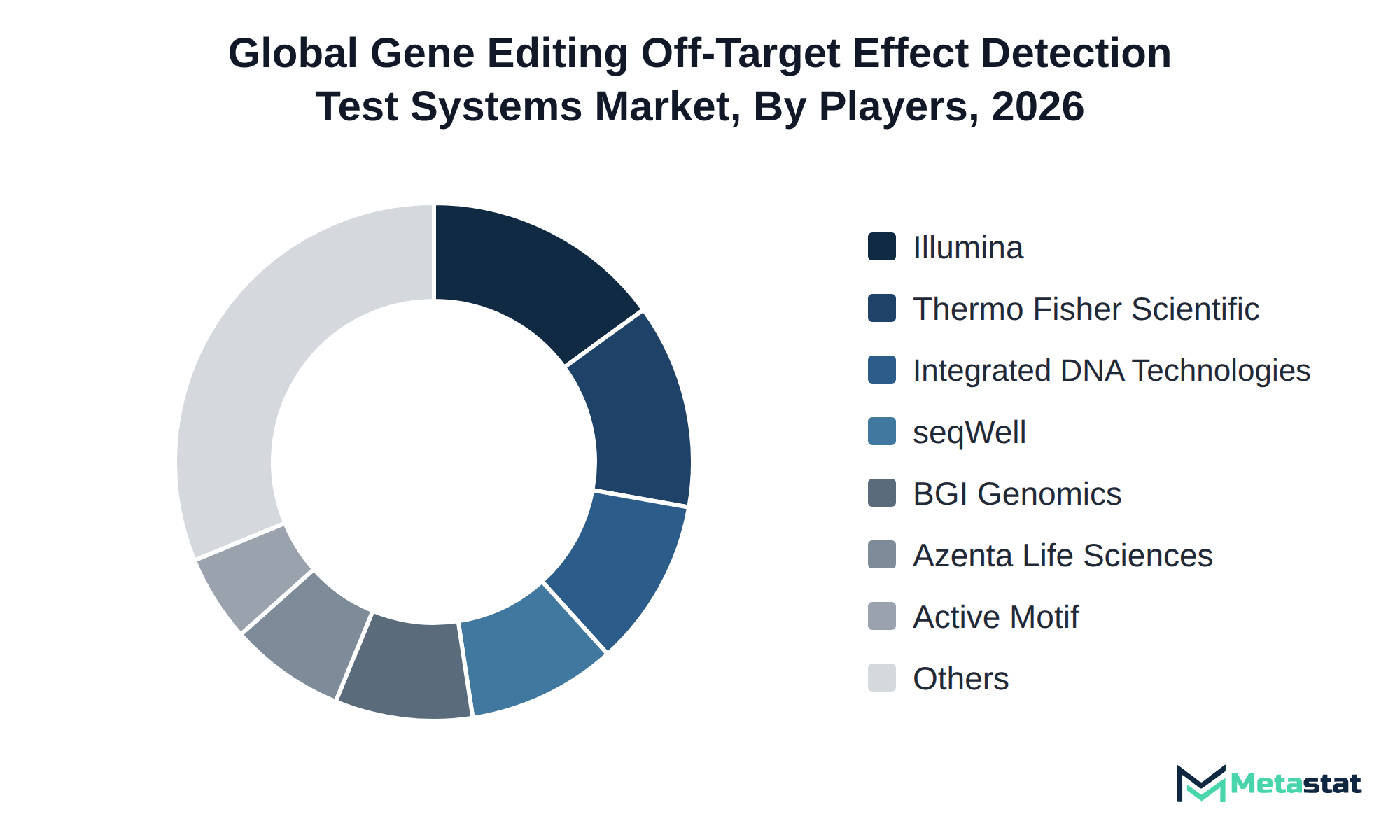
Companies in the Gene Editing Off-Target Effect Detection Test Systems market differentiate through various strategic approaches. The market includes players focusing on offering assay kits, reagents, and bioinformatics solutions, while others emphasize advanced sequencing systems and detection technologies. Buyers choose suppliers based on factors including price, service quality, and the ability to customize solutions to meet specific research or clinical needs.
seqWell, Inc. specializes in innovative detection systems and reagents, contributing to enhanced off-target effect analysis. Integrated DNA Technologies, Inc. targets biopharmaceutical companies by providing comprehensive solutions for gene editing applications. Illumina, Inc. prioritizes high-throughput sequencing technologies, enabling researchers to efficiently assess off-target effects in various editing modalities. Thermo Fisher Scientific Inc. offers a broad range of assay kits and reagents, supporting diverse applications in gene editing and detection.
Growth in the Gene Editing Off-Target Effect Detection Test Systems market will depend on several critical developments. First, advancements in the detection approach, particularly in Biochemical Genome-Wide Detection, will enhance the accuracy and efficiency of off-target effect detection, driving demand from biopharmaceutical and biotechnology companies. The expansion of CRISPR-Cas Nuclease Editing applications within the gene editing modality segment will attract increased investments, supporting market growth. Second, rising adoption of assay kits and reagents under the offering type segment will support overall market expansion while end users seek reliable and user-friendly solutions to meet their operational needs. Potential regulatory challenges pose a significant risk that could hinder market progress. Stricter regulations on gene editing technologies, particularly in North America and Europe, will slow the pace of innovation and investment. Addressing these challenges while ensuring compliance will be crucial for stakeholders aiming to capitalize on the opportunities within the market and achieve the projected growth by 2033.
By Detection Approach: In Silico Off-Target Prediction, Biochemical Genome-Wide Detection, Cell-Based Genome-Wide Detection, In Situ Off-Target Detection, Targeted Sequencing Confirmation, Structural Variant and Chromosomal Rearrangement Detection
By Offering Type: Assay Kits and Reagents, NGS Library Preparation Systems, Sequencing-Based Detection Systems, Bioinformatics Software and Data Analysis Platforms, Digital PCR-Based Detection Systems, Contract Testing and Analytical Services
By Gene Editing Modality: CRISPR-Cas Nuclease Editing, Base Editing, Prime Editing, TALEN Editing, Zinc Finger Nuclease Editing, Other Programmable Nuclease Editing
By End User: Biopharmaceutical and Biotechnology Companies, Cell and Gene Therapy Developers, Contract Research Organizations (CROs), Academic and Research Institutes, Agricultural Biotechnology Companies, Animal Biotechnology and Model Developers
The report strategically identifies and profiles the key market players and analyses their core competencies in each sub-segment of the Gene Editing Off-Target Effect Detection Test Systems market.
Report Attributes | Details |
Study Period | 2021-2033 |
Base Year | 2025 |
Estimated Year | 2026 |
Forecast Period | 2026-2033 |
Historical Period | 2021-2025 |
Growth Rate | CAGR 13.4% from 2026 to 2033 |
Revenue Unit | USD million |
Segmentation | By Detection Approach, Offering Type, Gene Editing Modality, End User, and Region |
By Region | North America (By Detection Approach, Offering Type, Gene Editing Modality, End User, and Country)
|
Europe (By Detection Approach, Offering Type, Gene Editing Modality, End User, and Country)
| |
Asia Pacific (By Detection Approach, Offering Type, Gene Editing Modality, End User, and Country)
| |
South America (By Detection Approach, Offering Type, Gene Editing Modality, End User, and Country)
| |
Middle East and Africa (By Detection Approach, Offering Type, Gene Editing Modality, End User, and Country)
|
Find answers to common questions about this report
The Gene Editing Off-Target Effect Detection Test Systems market size was valued at USD 393.6 million in 2025.
The market is projected to grow at a CAGR of 13.4% during the forecast period from 2026 to 2033.
The North America Gene Editing Off-Target Effect Detection Test Systems market size is estimated to reach USD 396.6 million by 2033.
The leading segment in the Gene Editing Off-Target Effect Detection Test Systems market is Cell-Based Genome-Wide Detection, projected to reach USD 241.8 million by 2033. This segment surpasses others in terms of market value within the specified timeframe.
Significant advancements in in silico off-target prediction technologies have increased spending by biopharmaceutical and biotechnology companies, driving a shift toward computational methods. The growing demand for comprehensive off-target effect analysis in gene editing is fueled by the focus on precision and safety in genetic interventions.
North America holds the dominant share of the Gene Editing Off-Target Effect Detection Test Systems market, with a value of USD 396.6 million projected for 2033. This region accounts for 38.1 percent of the total market share.
High costs associated with gene editing off-target effect detection test systems present a significant challenge, leading to delayed investment and slower uptake among biopharmaceutical and biotechnology companies. Talent costs have surged due to increased demand for skilled professionals, impacting innovation and efficiency in product delivery.
The Gene Editing Off-Target Effect Detection Test Systems market is estimated to reach a valuation of USD 1,076.6 million by 2033.
Key players operating in the Gene Editing Off-Target Effect Detection Test Systems market include seqWell, Inc., Integrated DNA Technologies, Inc., Illumina, Inc., Thermo Fisher Scientific Inc., Azenta Life Sciences, Inc., BGI Genomics Co., Ltd., and QIAGEN N.V.
The biochemical genome-wide detection segment is projected to achieve a compound annual growth rate of 14.3% through 2033.
The analysts below cover Biotechnology research at Metastat Insights.
LEAD ANALYST
Utkarsh Khirodkar is a Lead Market Research Analyst at MetaStat Insight, specializing in market intelligence, technology sector assessments, and competitive strategy.

SENIOR RESEARCH ANALYST
Biotechnology · Food and Beverages · Medical Devices · Packaging
Snehal Pasalkar is a Research Analyst at MetaStat Insight, operating at the intersection of life sciences research, competitive strategy, and market intelligence.
The technical breakdown of ISO 20022 migration readiness across correspondent banking corridors was remarkably thorough. Rather than treating cross-border corporate payments as a single block, the report drew a useful distinction between multilateral netting platforms and domestic instant payment rails across ASEAN economies. MetaStat Insight highlighted regulatory constraints on foreign exchange liquidity management that many publications gloss over. The research material offered practical clarity for our platform development roadmap.
Our group needed clearer visibility into out-of-autoclave processing timelines for high-temperature thermoplastic composites. MetaStat Insight delivered an objective assessment that contrasted automated fiber placement scrap rates with traditional thermoset prepreg layup cycles. The supplier landscape mapped out primary resin suppliers and tape slitting capacity across France, Germany, and Japan with solid technical accuracy. Their analyst handled our questions on precursor supply risks during an unscheduled inquiry call, providing clear, unembellished context.
Evaluating sensor fusion reliability across harsh operating environments can be tricky without field-validated data. The study on agricultural autonomous guidance systems clearly separated stereo vision setups from automotive-grade solid-state LiDAR. We appreciated the regional infrastructure analysis, specifically around RTK network density across North America and South America. During our follow-up consultation, the MetaStat Insight team walked through tier-two perception software partnerships, giving our engineering leads a practical basis for vendor shortlisting.
Explore related market intelligence reports worth reading alongside this one.