Global Directional Drilling Market Size, Share, By Service (Logging While Drilling (LWD), Measurement While Drilling (MWD), Rotary Steerable System (RSS), Mud Motors and Others), By Location (Onshore and Offshore), By Well Type (Horizontal, Extended-Reach, Multilateral and Sidetrack/Re-entry), By Application (Oil and Gas Production, Utility Installation (HDD), Telecommunications Ducting, Geothermal and CCUS Wells and Others), Industry Analysis, Growth, Trends, and Forecast, 2026-2033
Report ID
MSI-4879
Published
August 7, 2026
Pages
287 Pages
Format
Market Size 2021
USD 11 Billion
Historical
Market Size 2025
USD 14.4 Billion
Base year
Market Size 2033
USD 24.9 Billion
Forecast
CAGR 2025-2033
7.1%
Forecast period
Report Details
Comprehensive Market Analysis And Insights
Market Overview
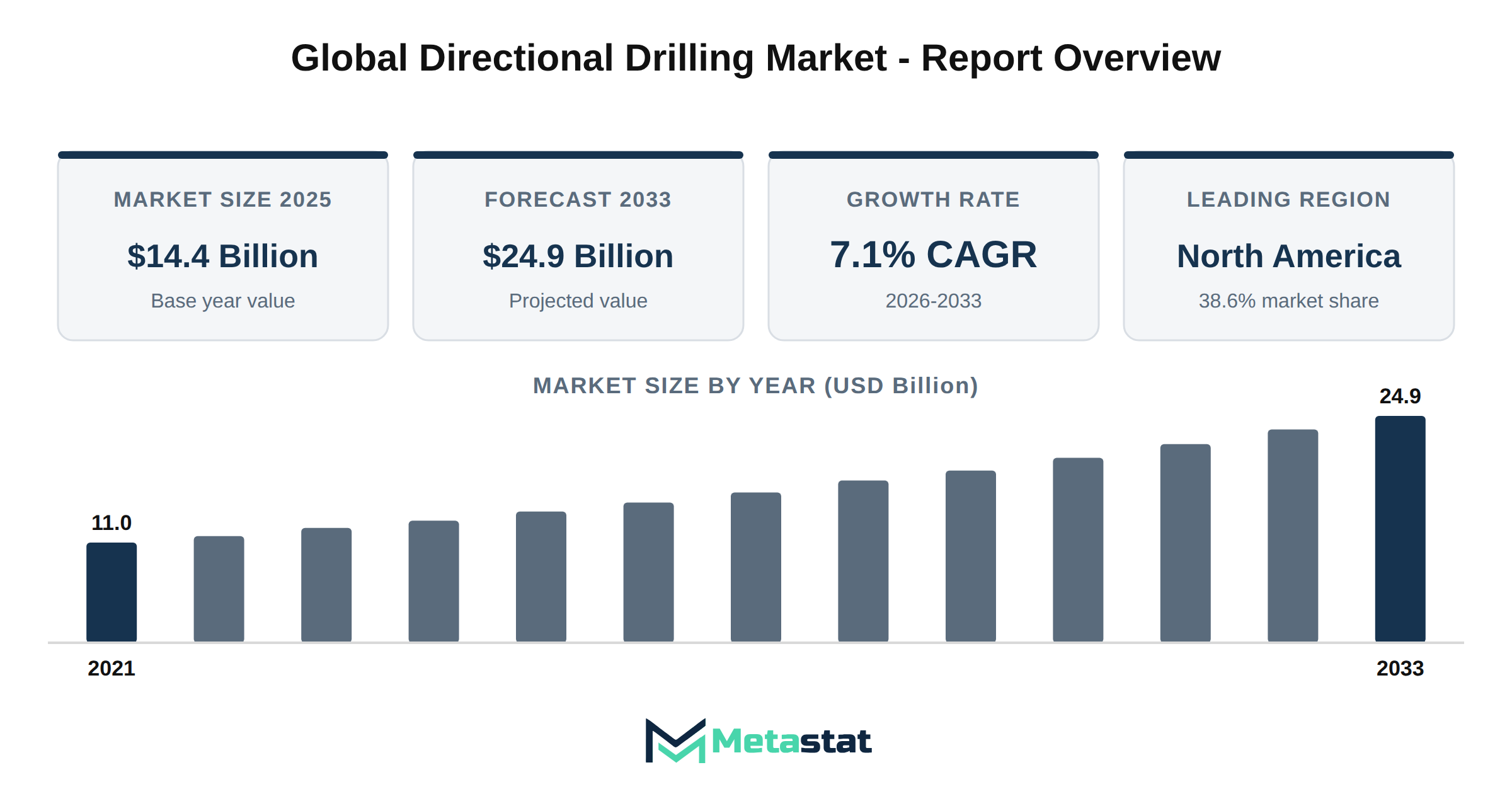
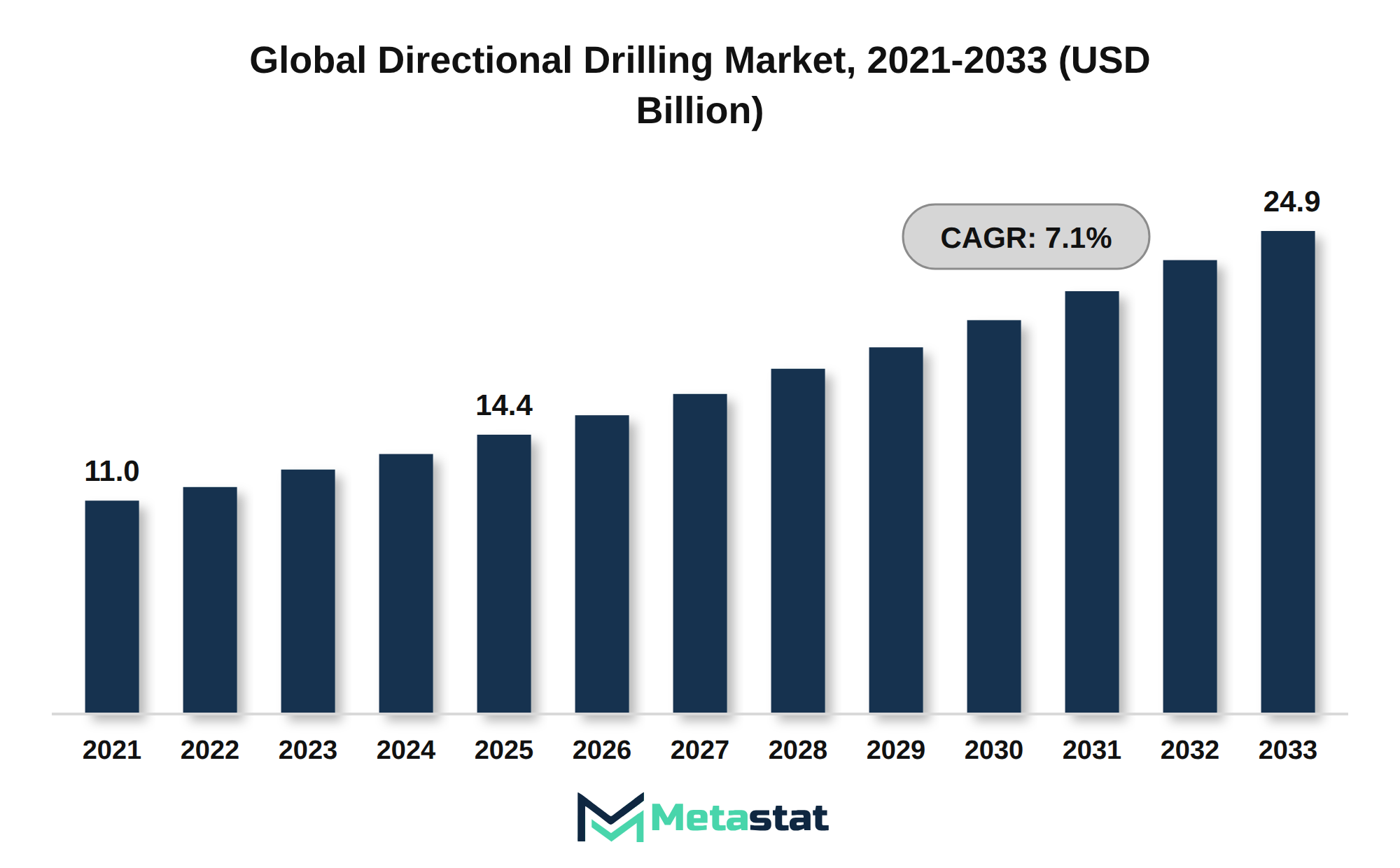
The global Directional Drilling market was valued at USD 14.4 billion in 2025 and is projected to reach USD 24.9 billion by 2033, growing at a CAGR of 7.1% over the forecast period.
The Directional Drilling market, valued at USD 14.4 billion in 2025, is projected to reach USD 24.9 billion by 2033, reflecting a compound annual growth rate (CAGR) of 7.1% during the forecast period. Historical data shows steady growth, with the market expanding from USD 11 billion in 2021 to USD 13.4 billion in 2024. Increasing demand for efficient drilling techniques in the oil and gas industry drives this growth, along with advancements in technology and the rising need for innovative solutions.
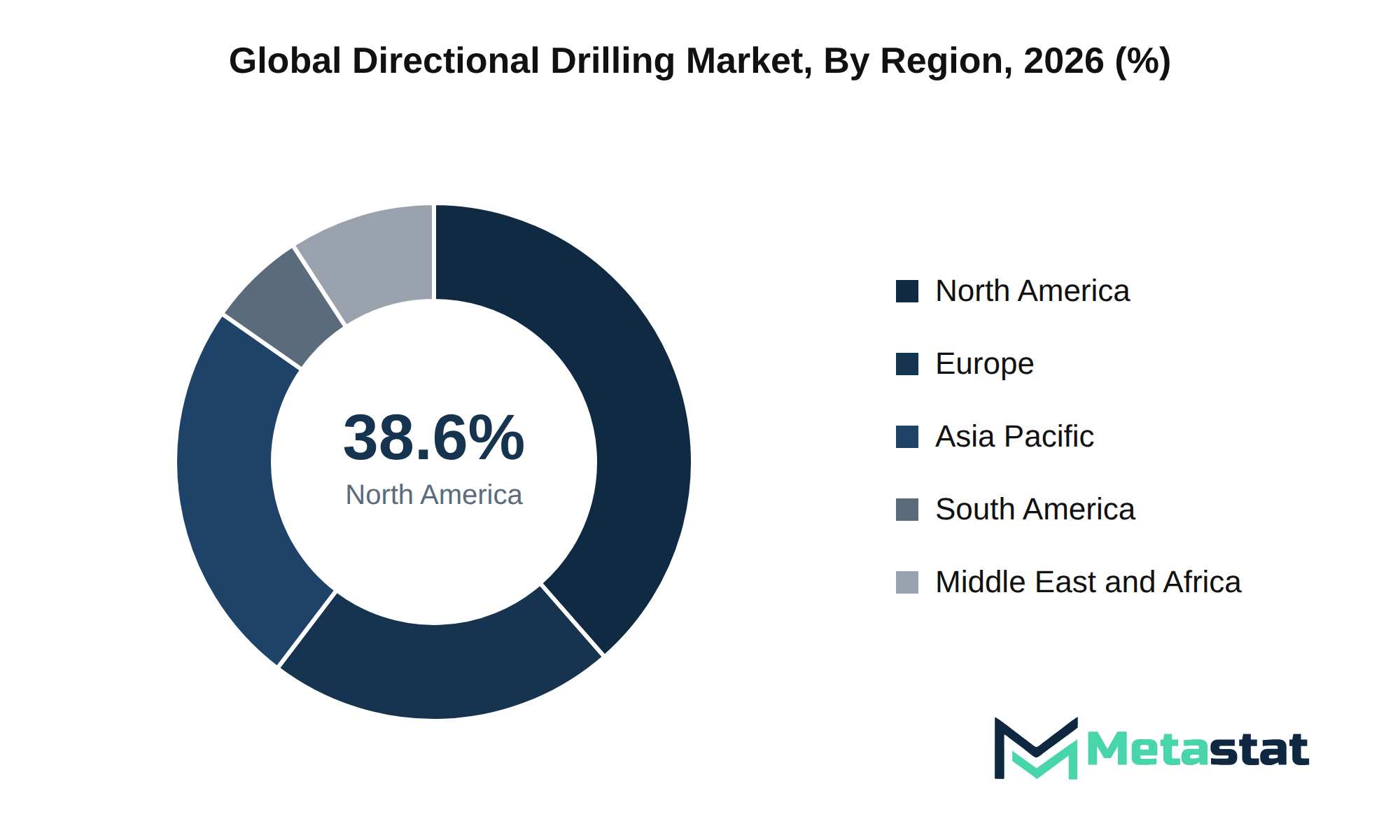
In 2025, North America holds the largest market share at 38.6%, followed by Asia Pacific at 24.4% and Europe at 21.8%. The North American segment is expected to generate USD 8.7 billion by 2033, maintaining a CAGR of 7.1%. The Asia Pacific region shows promise with significant growth potential, driven by increasing investments in energy infrastructure and exploration activities. South America and the Middle East and Africa account for smaller shares, but their markets are anticipated to develop owing to evolving energy demands.
Service offerings within the Directional Drilling market include Logging While Drilling (LWD), Measurement While Drilling (MWD), Rotary Steerable Systems (RSS), and Mud Motors. The LWD segment is expected to expand from USD 4.4 billion in 2026 to USD 6.9 billion by 2033, while the MWD segment is projected to reach USD 6.1 billion during the same period. Both segments are projected to maintain a CAGR of 6.4%. The offshore segment shows strong growth, with an anticipated CAGR of 8.7% through 2033, highlighting the increasing reliance on advanced technologies in challenging drilling environments.
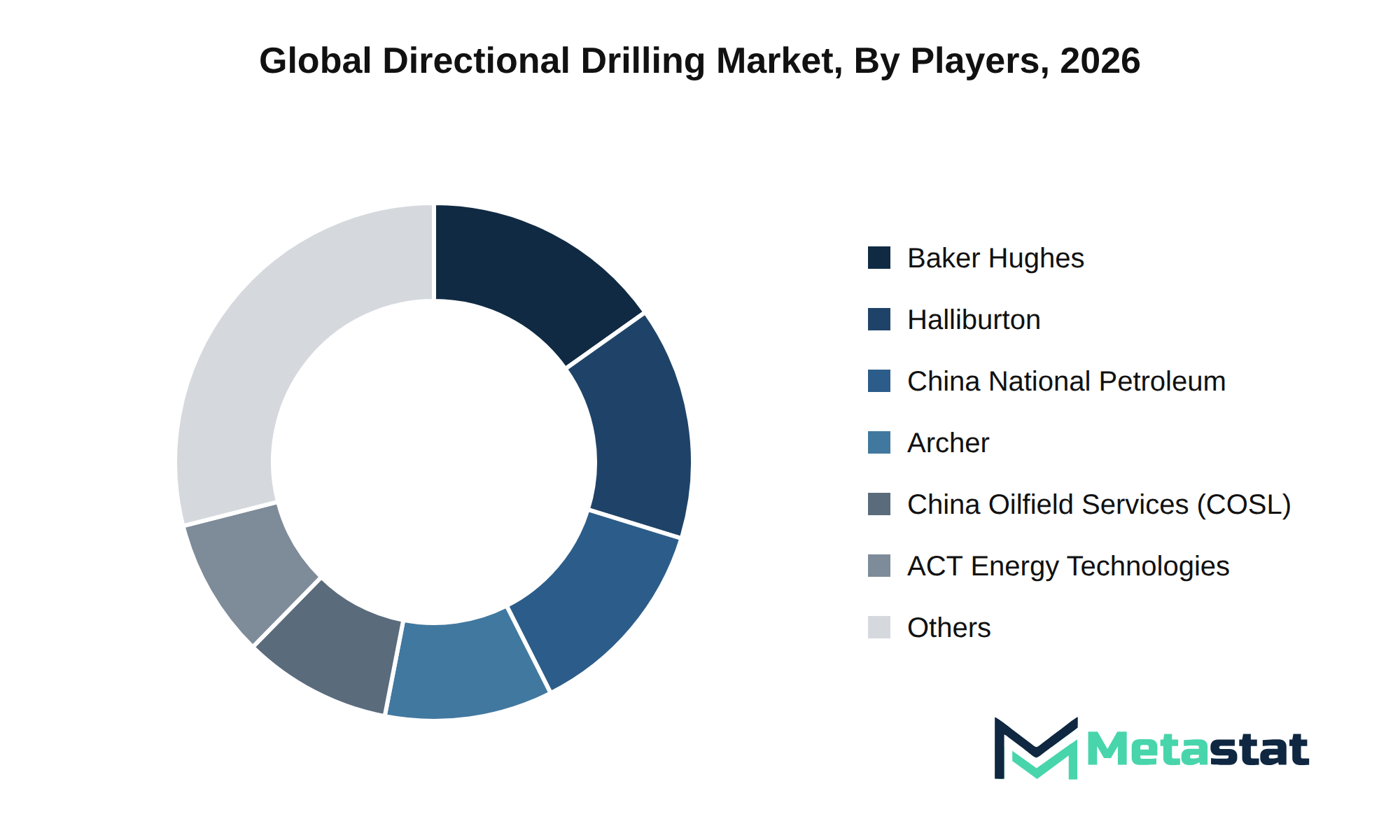
The competitive environment in the Directional Drilling market features several key players, including Baker Hughes Company, Halliburton Company, Schlumberger Ltd, and National Oilwell Varco (NOV) Inc. These companies invest significantly in research and development to enhance their offerings and maintain market relevance. The focus on technological advancements and strategic partnerships influences the competitive dynamics.
Regulatory compliance remains a critical factor influencing the Directional Drilling market. Increasing environmental regulations, particularly those focused on emissions reduction and safety standards, drive companies to invest in advanced drilling technologies. These advancements ensure compliance and enhance operational efficiency, reducing costs associated with potential fines and operational downtimes.
The supply chain landscape experiences shifts due to geopolitical tensions and economic fluctuations. Disruptions in supply chains result in increased costs for raw materials, impacting overall project budgets. Companies actively seek to mitigate these risks through diversification strategies. This approach ensures access to reliable suppliers while maintaining competitive pricing.
Inflationary pressures challenge profitability across the market. Rising costs for labor, materials, and logistics force companies to reassess their capital allocation strategies. In response, many firms focus on optimizing operational efficiencies. They adopt new technologies to maintain margins while navigating these economic headwinds.
The market's strategic outlook hinges on ongoing advancements in research and development. Investment in next-generation technologies, including automation and real-time data analytics, enhances drilling precision and efficiency. These innovations align with growing demands for sustainable practices and support the industry's transition towards decarbonization and the circular economy.
Infrastructure investments play a significant role in shaping market dynamics. Governments worldwide prioritize energy infrastructure upgrades, creating opportunities for directional drilling services. This trend is particularly evident in regions with significant oil and gas exploration activities. Infrastructure enhancements facilitate smoother operations and reduce project timelines.
Corporate imperatives emphasize the importance of aligning business strategies with environmental, social, and governance (ESG) goals. Companies in the Directional Drilling market increasingly adopt sustainable practices to enhance their reputations and attract investment. This shift towards sustainability addresses regulatory demands and aligns with the evolving expectations of stakeholders.
Market Dynamics
Capital investment environments drive market growth
Increased capital investments significantly influence the Directional Drilling market, driving overall expansion. Economic factors including GDP growth, interest rates, and venture funding directly affect companies’ ability to invest in advanced drilling technologies and services. Enhanced access to capital leads to greater opportunities for innovation and operational efficiency, particularly in high-demand regions including North America and Asia Pacific.
While companies seek to capitalize on emerging market opportunities, they prioritize investments in automation, software adoption, and the digitization of legacy processes. This focus on digital transformation facilitates improved drilling accuracy, cost efficiency, and operational productivity. Enhanced technologies position firms to meet evolving consumer demands and adapt to competitive pressures, ultimately contributing to market revenue growth.
Investment in infrastructure development and modernization of existing assets significantly influences the market's trajectory. Upgrading physical and digital capabilities increases operational efficiency and reduces costs, which presents a compelling case for stakeholders. Enhanced asset performance and resource stewardship align with sustainability goals, appealing to environmentally conscious investors and consumers, thus driving further market adoption.
Investment in technological integration drives growth
Technological integration significantly influences the Directional Drilling market, facilitating operational efficiency and enhancing productivity. Advances in automation and artificial intelligence streamline drilling operations, reducing labor costs and improving accuracy. These improvements attract investments, driven by companies seeking to optimize performance and ensure competitive advantage.
Digital transformation initiatives further accelerate this growth. Companies investing in software adoption and digitizing legacy processes achieve better data analytics, real-time monitoring, and more informed decision-making. Enhanced data accessibility and analytics capabilities allow operators to improve their drilling strategies, reducing downtime and costs while maximizing output.
Infrastructure development and asset modernization contribute to the expansion of the market. Upgrading facilities and enhancing network capabilities drive increased efficiency and reliability in drilling operations. These enhancements improve the overall performance of directional drilling systems, appealing to stakeholders in the oil and gas, telecommunications, and geothermal sectors.
Continued focus on operational productivity and cost-efficiency initiatives remains essential. Strategies aimed at process streamlining and reducing overhead expenses provide a pathway for companies to enhance their profitability. Such initiatives support the overall demand for directional drilling services, ensuring a steady growth trajectory for the market.
Ultimately, the relationship of technological integration and infrastructure investment positions the Directional Drilling market for sustained growth. These developments enhance innovation, improve operational capabilities, and strengthen competitive positioning across various sectors, enabling firms to thrive in a dynamic environment.
Regulatory scrutiny hinders market progress
Regulatory tightening presents significant challenges within the Directional Drilling market. Increased emphasis on compliance creates hurdles for operators, driven by the navigate complex legal mandates and industry standards. These compliance hurdles result in heightened operational costs, deterring new market entrants and limiting expansion opportunities for established companies.
Macroeconomic headwinds further complicate market dynamics. Inflationary pressures increase costs for operators, impacting profitability and investment decisions. Supply chain disruptions, exacerbated by geopolitical instability, lead to delays in project timelines and increased uncertainty, hindering market growth.
High capital investment requirements pose another restraint. The substantial financial commitment needed for advanced drilling technologies and infrastructure development deters smaller players from entering the market. This situation creates a competitive environment where only financially robust companies thrive, resulting in market fragmentation.
Operational challenges including skilled labor deficiencies contribute to the market's restraint. A lack of qualified personnel limits the ability of companies to fully employ advanced technologies, impacting efficiency and project execution. Rising workforce overhead further strains budgets, complicating operational scalability.
Data security vulnerabilities and privacy concerns present additional barriers. Increased reliance on digital technologies heightens risks associated with intellectual property theft and data breaches. Companies face pressure to invest in cybersecurity measures, diverting resources from strategic growth initiatives.
Overall, these factors create a complex environment for the Directional Drilling market, influencing growth trajectories and investment potential. Addressing these restraints requires strategic planning and a focus on operational efficiencies to ensure sustained market performance.
Geopolitical fragmentation and supply chain instability
Geopolitical fragmentation poses significant challenges within the Directional Drilling market. Rising tensions and trade disputes create unpredictability in supply chains, impacting the availability of critical components and feedstock. Suppliers face difficulties in sourcing materials, which directly affects production schedules and costs. These disruptions lead to increased operational expenses, forcing companies to adjust pricing strategies, which influences market competitiveness. Market players experience pressures on profit margins, limiting their ability to invest in new technologies and expand operations.
Supply chain instability further complicates the market. Fluctuations in logistics and transportation capabilities hinder timely deliveries, affecting project timelines. Companies allocate additional resources to manage these uncertainties, often resulting in higher compliance overhead and operational complexities. This situation restricts overall growth potential and leads to project delays, negatively impacting customer satisfaction and relationships. The Directional Drilling market navigates these challenges to maintain stability and create future growth opportunities.
Technological disruptions and interoperability issues add another layer of complexity. Rapid advancements in drilling technologies necessitate continuous updates and integration across existing systems. Companies face obstacles in ensuring that new technologies align with legacy systems, leading to potential inefficiencies and increased costs. The cumulative effect of these challenges highlights the need for strategic planning and investment in infrastructure to enhance resilience and adaptability within the market.
Emerging applications drive market opportunities
The Directional Drilling market presents numerous opportunities driven by emerging applications across various sectors. Rapid advancements in drilling technologies enable the exploration of previously untapped resources, particularly in unconventional oil and gas fields. This trend aligns with the increasing demand for energy and the strategic diversification of energy sources, fueling investments in new drilling projects and techniques.
Infrastructure modernization plays a critical role, with significant upgrades in drilling equipment and techniques enhancing efficiency and safety. Investments directed toward sustainable practices influence the adoption of eco-friendly drilling solutions, resulting from corporate sustainability imperatives. Such changes drive interest in next-generation innovations and digital transformation efforts, resulting in enhanced operational capabilities and cost efficiencies.
Geographic expansion into emerging markets presents additional avenues for growth. Regions including Asia Pacific and South America exhibit growing energy demands, leading to an increase in directional drilling activities. The combination of favorable regulatory environments and supportive governmental policies contributes to market expansion in these regions, increasing the attractiveness of investment opportunities.
Strategic consolidation and cross-industry collaborations emerge, driven by important trends, enabling firms to leverage complementary strengths and enhance operational synergies. These collaborations facilitate the integration of advanced technologies, optimizing the value chain and increasing competitiveness in the market. The evolving buying behaviors and digital procurement shifts among companies reflect a commitment to operational yield maximization and process automation, further supporting the market's growth trajectory.
The trend towards sustainability drives significant changes in operational practices, prompting firms to align with environmental, social, and governance (ESG) standards. This shift toward eco-friendly practices not only aligns with global sustainability goals but enhances the market's resilience against environmental challenges and regulatory pressures. Consequently, the Directional Drilling market is positioned for continued growth, driven by these multifaceted opportunities and changes within the industry.
Market Segmentation Analysis
The Global Directional Drilling market is segmented based on Service, Location, Well Type, and Application.
By Service, the market is further segmented into:
Logging While Drilling (LWD)
Measurement While Drilling (MWD)
Rotary Steerable System (RSS)
Mud Motors
Others
Logging While Drilling (LWD)
In 2026, the Logging While Drilling (LWD) segment is valued at USD 4.4 billion and is projected to reach USD 6.9 billion by 2033, at a CAGR of 6.4% during the forecast period. This growth is driven by several primary demand drivers, including the increasing need for real-time data to enhance decision-making in drilling operations. High precision and efficiency associated with LWD technologies enable operators to optimize drilling performance, leading to reduced costs and improved resource recovery rates.
Technological maturation in LWD systems accelerates adoption across various oil and gas applications. Advanced sensor technologies and data analytics capabilities enhance the functionality of LWD tools, resulting in higher accuracy and reliability. The market experiences significant growth due to the evolution of next-gen upgrades, streamlining operations and reducing downtime, which increases overall productivity.
Shifts in consumption patterns towards environmentally friendly extraction techniques further support the segment's expansion. Regulatory compliance standards related to environmental protection drive investments in sustainable drilling technologies. These conditions create strategic opportunity windows for companies focusing on innovative LWD solutions that meet regulatory requirements while delivering economic benefits.
Cost structures and pricing volatility impact the competitive landscape within the market. Fluctuating raw material prices influence the operational margins of LWD service providers. Companies that effectively manage their supply chains and sourcing strategies gain an advantage, ensuring resilience against market disruptions. The ongoing development of disruptive alternatives poses risks that challenge established players, prompting them to innovate continuously.
The Logging While Drilling segment finds itself at a critical juncture, where technological advancements and strategic investments in R&D are essential for capitalizing on emerging opportunities. With a keen focus on enhancing operational efficiency and meeting evolving customer demands, the market positions itself for sustained growth in the coming years.
Measurement While Drilling (MWD)
Investment in Measurement While Drilling (MWD) technology significantly influences the Directional Drilling market. The increasing need for real-time data during drilling operations drives demand, allowing operators to make informed decisions that enhance efficiency and reduce costs. Industries including oil and gas production prioritize MWD due to its ability to optimize drilling performance and increase recovery rates.
Technological advancements in MWD systems enable improved accuracy and reliability, facilitating broader adoption across various applications. Enhanced data analytics capabilities and integration with other technologies, including automation and artificial intelligence, support market expansion. Stakeholders recognize MWD's critical role in minimizing drilling hazards, thereby improving safety standards and regulatory compliance.
Cost structures associated with MWD services remain a focal point, with fluctuating pricing influenced by raw material availability and technological innovation. Competitive pressures within the market encourage suppliers to streamline operations and enhance service offerings, further shaping the pricing dynamics. The Measurement While Drilling (MWD) segment is projected to reach USD 6.1 billion by 2033, at a CAGR of 6.4% during the forecast period.
Strategic partnerships among key players contribute to a resilient supply chain, addressing potential vulnerabilities and encouraging collaboration for innovative solutions. The focus on product evolution ensures that MWD technologies remain relevant in a rapidly changing market environment. Investment in research and development strengthens competitive positioning and opens strategic opportunity windows, enhancing the overall growth trajectory of the Directional Drilling market.
Rotary Steerable System (RSS)
Growth in the Rotary Steerable System (RSS) segment is driven by advancements in drilling technology that enable increased accuracy and efficiency during operations. Investments in next-generation upgrades enhance performance, making RSS an attractive option for operators seeking to optimize drilling processes. The segment is expected to reach USD 6.2 billion by 2033, reflecting a robust adoption rate among oil and gas companies aiming to improve wellbore placement and reduce operational costs.
Technological maturation contributes to expanding the RSS segment, with innovations leading to improved system reliability and reduced maintenance requirements. Demand for RSS solutions continues to rise owing to companies increasingly focusing on reducing drilling time and costs while maintaining safety standards. End-use dynamics reflect a shift towards more precise drilling methods within the directional drilling market, positioning RSS because a key player in this evolution.
Regulatory compliance standards influence the adoption of rotary steerable systems. Companies prioritize solutions that meet stringent environmental and safety regulations, further boosting the appeal of RSS technology. The segment's growth aligns with increasing global energy demands and the need for efficient resource extraction methods, ensuring a promising outlook for the RSS market within the broader directional drilling landscape.
Mud Motors
Growth in the Mud Motors segment stems from increasing demand for efficient and cost-effective drilling solutions. Operators in the oil and gas sectors prioritize technology that enhances drilling performance and reduces costs, leading to greater adoption of mud motors. These tools contribute to improved rate of penetration and overall performance in challenging drilling environments. The segment is projected to grow at a CAGR of 5.6% during the forecast period, reflecting evolving operational needs. Continued advancements in drilling technology drive the need for more reliable and efficient mud motors, impacting investments within the Directional Drilling market.
Technological maturation within the segment supports the introduction of next-generation upgrades, enhancing functionality and efficiency. Innovations in design and material sourcing strengthen the competitive position of mud motors, leading to increased market penetration. Downstream applications in oil and gas production see heightened interest, driving demand for efficient drilling methods that mud motors provide. Regulatory compliance standards further influence market dynamics, encouraging the adoption of advanced technologies that ensure operational safety and efficiency.
Others
Emerging applications within the Directional Drilling market drive interest in the Others segment, encompassing various niche services that cater to specialized drilling needs. Industries looking for innovative solutions frequently adopt these services, responding to unique operational challenges and project requirements. The incorporation of advanced technologies within this segment improves efficiency and precision, appealing to companies aiming for competitive advantages in drilling operations.
Regulatory compliance standards increasingly influence the adoption of services within the Others segment. Companies prioritize adherence to safety and environmental regulations, which shapes investment decisions and operational strategies. This focus on compliance encourages market players to develop tailored solutions that address specific regulatory requirements, further promoting market growth.
Pricing volatility presents challenges for service providers in the Others segment. Fluctuations in raw material costs affect profitability, compelling suppliers to implement strategies in pricing structures and cost management. Ultimately, effective navigation of pricing pressures contributes to sustained demand for these specialized services within the market.
Technological advancements play a significant role in the evolution of services under the Others segment. Continuous innovation enables companies to introduce next-generation upgrades that enhance drilling performance and reduce operational risks. This ongoing technological maturation influences customer preferences, driving demand for effective solutions that improve efficiency and effectiveness.
Strategic opportunity windows arise due to companies in the Directional Drilling market seeking to diversify their service offerings. The Others segment presents an avenue for firms to explore unaddressed needs and tailor solutions that meet specific end-use dynamics. This strategic focus on white-space analysis allows companies to strengthen their market positions and enhance customer satisfaction.
By Location, the market is further segmented into:
Onshore
Offshore
Onshore
Valued at USD 11.1 billion in 2026, the onshore segment is projected to reach USD 17.2 billion by 2033, reflecting a CAGR of 6.4% during the forecast period. Primary demand drivers for this segment include increased exploration and production activities in onshore oil and gas reserves, particularly in North America and parts of Asia Pacific. The adoption of advanced drilling technologies contributes to operational efficiency, reducing time and costs associated with drilling projects.
Segment expansion catalysts arise from improved regulatory frameworks that encourage investment and development in onshore resources. Technological maturation in drilling techniques, including rotary steerable systems and measurement while drilling technologies, enhances precision and safety, further attracting stakeholders. Downstream applications, especially in oil and gas production, increase reliance on directional drilling services, thereby strengthening segment demand.
Consumption shifts toward more sustainable practices prompt exploration of alternative energy sources, influencing investments in onshore projects. Cost structures have been optimized through technological advancements, while pricing volatility remains a consideration amid fluctuating oil prices. Strategic opportunity windows exist for firms developing innovative solutions to meet evolving market needs, ensuring sustained growth within the onshore segment of the directional drilling market.
Offshore
Investments in offshore drilling operations are expected to drive significant growth in the Directional Drilling market. Rising energy demand and advancements in drilling technologies contribute to this upward trajectory. The offshore segment is estimated to reach USD 7.7 billion by 2033, at a CAGR of 8.7% during the forecast period. Enhanced efficiency in drilling processes and the ability to reach previously inaccessible reserves of oil and gas increase the attractiveness of offshore directional drilling. The push for energy diversification and sustainability encourages investments in offshore projects, leading to increased adoption of advanced directional drilling techniques. Competitive dynamics are influenced by technological maturation and the ongoing evolution of products designed for offshore applications.
Cost structures associated with offshore operations significantly affect market dynamics. High initial investment costs typically deter smaller players from entering the market, resulting in a landscape dominated by larger companies with robust capital backing. Pricing volatility presents a challenge, often linked to fluctuations in oil prices, which pressure margins. Strategic opportunity windows arise from ongoing innovations that reduce operational costs and improve efficiency. Companies continuously seek ways to enhance performance while adhering to regulatory compliance standards, which further shapes end-use dynamics within the offshore segment.
By Well Type, the market is further segmented into:
Horizontal
Extended-Reach
Multilateral
Sidetrack/Re-entry
Horizontal
Horizontal drilling is a key component in the Directional Drilling market, driven by increasing demand from various sectors, including oil and gas production, telecommunications ducting, and geothermal applications. Primary demand drivers include the need for enhanced recovery rates and improved access to reserves located in challenging geological formations. Adoption of advanced drilling techniques facilitates operational efficiency, allowing for longer boreholes and minimized surface disturbance, aligning with environmental regulations and sustainability goals.
Technological maturation in horizontal drilling has led to significant improvements in equipment performance and reliability. Innovations including rotary steerable systems and measurement while drilling technologies enhance the precision and effectiveness of horizontal drilling operations. These advancements contribute to reduced drilling times and costs, making horizontal drilling an attractive option for operators.
Segment expansion catalysts include increasing investments in exploration and production activities, particularly in unconventional resources. The growing focus on enhancing production from existing fields and developing new ones promotes the adoption of horizontal well designs. Regulatory compliance standards and certifications further influence the market, driven by companies striving to meet environmental and safety requirements while optimizing drilling operations.
Cost structures within the horizontal drilling segment reflect the complexities associated with advanced technology and skilled labor. Pricing volatility in raw materials used for drilling equipment impacts overall project costs, affecting profit margins for service providers. Operational efficiencies gained through technological advancements assist in mitigating these pressures.
Strategic opportunity windows arise from the increasing need for energy security and sustainable resource management. The shift towards renewable energy sources and the integration of carbon capture and storage systems create new avenues for horizontal drilling applications. Companies that invest in next-generation upgrades and disruptive alternatives position themselves favorably within this dynamic market.
Supply chain resilience remains crucial to ensuring timely access to essential materials and technologies. Sourcing raw materials from diversified suppliers reduces vulnerabilities and strengthens market competitiveness. The horizontal drilling segment presents a robust framework for capital investment, driving innovation and supporting the overall growth of the Directional Drilling market.
Extended-Reach
Extended-reach drilling has gained traction within the Directional Drilling market owing to its ability to reach difficult locations and maximize reservoir contact. Key demand drivers include the increasing need for efficient hydrocarbon extraction and the quest for energy resources in challenging terrains. Industries including oil and gas production recognize the advantages of extended-reach techniques, which facilitate access to previously untapped reserves, thereby enhancing operational efficiency.
Adoption of extended-reach drilling is further propelled by advancements in drilling technologies, which optimize performance and reduce operational risks. Innovations including improved drill bits and enhanced telemetry systems contribute to higher precision and reliability during operations. These technological improvements entice operators looking to minimize downtime and maximize production output.
Market growth for extended-reach drilling aligns with an increasing focus on sustainable practices in energy production. Environmental regulations and a shift towards cleaner energy sources drive investments in advanced drilling techniques that enhance resource recovery while adhering to compliance standards. This shift highlights the importance of balancing efficiency and sustainability within the sector.
Pricing volatility impacts the viability of extended-reach projects, with fluctuating costs of raw materials influencing overall expenditure. Operators face challenges in maintaining profit margins amid these dynamics, prompting strategic adjustments to project scopes and timelines. Efficient cost management becomes crucial for sustaining competitiveness in the market.
Future prospects for extended-reach drilling remain positive, supported by ongoing capital investments and a growing appetite for innovative solutions. Strategic opportunity windows arise owing to companies seeking to leverage the potential of advanced technologies and techniques. The focus on enhanced drilling efficiencies aligns with broader trends in the Directional Drilling market, positioning extended-reach capabilities because essential for future growth.
Multilateral
Multilateral wells generate interest due to their capacity for enhanced resource recovery and operational efficiency. This well type allows multiple drilling paths from a single location, optimizing the use of drilling rigs and reducing surface disruption. Industries engaged in oil and gas production favor this approach, maximizing reservoir contact while minimizing drilling costs.
The advancement of drilling technology acts because a significant catalyst for the adoption of multilateral wells. Innovations in downhole tools and techniques streamline the drilling process, enhance precision, and reduce the risk of geological complications. Operators focusing on complex reservoirs experience improved results through multilateral drilling, leading to higher profitability and a stronger competitive edge.
Regulatory compliance requirements increasingly influence multilateral drilling operations. Companies adhere to environmental standards while maximizing resource extraction, pushing them to adopt practices that minimize ecological impact. This regulatory landscape shapes strategic decisions, prompting investments in advanced technologies that ensure compliance and operational effectiveness.
Cost structures present unique challenges within the multilateral segment. Initial investments for multilateral drilling projects often exceed those for conventional wells, primarily due to the complexity of operations and the specialized equipment required. The potential for higher production rates and reduced overall drilling costs over the life of the well justifies this initial expenditure.
Supply chain resilience is critical for the successful implementation of multilateral well projects. Suppliers provide high-quality materials and components that meet stringent standards for performance and reliability. Disruptive alternatives, including innovations in drilling fluids and completion technologies, reshape the competitive dynamics within this segment, encouraging players to adapt and innovate.
Strategic opportunity windows emerge because operators explore the potential of multilateral drilling in unconventional reservoirs. Companies investing in next-generation upgrades and technologies position themselves favorably to capture market share. The focus on operational efficiency and resource optimization supports long-term growth prospects in the Directional Drilling market.
Sidetrack/Re-entry
Significant drivers for the Sidetrack/Re-entry sub-segment stem from the need for enhanced operational efficiency and cost reduction in drilling operations. Companies increasingly seek to optimize existing wellbore infrastructure, thereby extending the productive life of wells. This trend aligns with higher oil and gas demand, prompting operators to maximize recovery from established assets.
Technological advancements contribute to the growth of this sub-segment. Innovations in drilling techniques and equipment allow for more precise and efficient sidetracking, enabling operators to access previously inaccessible reserves. Enhanced technologies, including real-time data analytics, facilitate informed decision-making during drilling operations, further driving demand.
End-use dynamics within the oil and gas industry significantly impact the Sidetrack/Re-entry sub-segment. Increased exploration and production activities in mature fields, coupled with regulatory frameworks promoting efficient resource utilization, strengthen the sub-segment's position. Operators prioritize sidetrack drilling to enhance recovery rates and reduce environmental impact, aligning with sustainability goals.
Market players experience pressures related to cost structures and pricing volatility. Fluctuations in raw material prices affect the overall expenses associated with sidetrack drilling projects. Companies continuously seek strategic opportunities to mitigate these pressures, enhancing supply chain resilience through diversified sourcing and logistics strategies. These efforts support operational stability and cost management.
Strategic opportunity windows exist for companies engaging in Sidetrack/Re-entry operations. Demand for efficient drilling solutions increases, prompting operators to invest in next-generation technologies that support these initiatives. Continuous capital investment in this sub-segment is expected to enable enhanced performance and competitiveness in the broader Directional Drilling market.
By Application, the market is further segmented into:
Oil and Gas Production
Utility Installation (HDD)
Telecommunications Ducting
Geothermal and CCUS Wells
Others
Oil and Gas Production
Production activities within the oil and gas sector significantly influence demand for directional drilling technologies. An increase in global energy requirements drives operators to seek efficient drilling solutions that enhance productivity and reduce operational costs. The focus on optimizing well performance encourages investments in advanced directional drilling equipment, creating a competitive environment that prioritizes innovation and technological advancements.
Technological maturation within the sector fuels adoption, with advancements in rotary steerable systems and measurement while drilling technologies offering improved accuracy and efficiency. These innovations enable operators to drill complex well profiles with greater precision, essential for maximizing resource extraction. Consequently, the adoption of directional drilling methods aligns with the industry's ongoing push for enhanced operational capabilities.
Exploration and production companies increasingly emphasize sustainability and compliance with stringent regulatory standards. Proactive adaptation to environmental concerns necessitates the use of technologies that minimize ecological footprints while maximizing resource recovery. Investment in directional drilling systems capable of meeting these standards enhances market prospects while addressing environmental responsibilities.
Cost structures and pricing volatility in the oil and gas industry create unique pressures. Fluctuating crude oil prices impact capital allocation, influencing strategic decisions regarding wells and drilling methods. Companies leverage directional drilling technologies to streamline operations and reduce costs, ensuring long-term viability in a challenging economic landscape.
Strategic opportunity windows emerge from shifts in consumption patterns, with an increasing focus on natural gas driven by a cleaner energy source. This transition influences drilling activity and necessitates efficient extraction techniques that directional drilling technologies facilitate. The market's adaptability to changing energy demands highlights its importance in the evolving energy landscape.
Supply chain resilience plays a critical role in sustaining operations within the oil and gas sector. Collaborations among key industry players enhance the availability of resources and technologies, ensuring continuous development and deployment of directional drilling solutions. The strategic partnerships create innovation, ultimately benefiting producers and improving the market's overall efficiency.
Utility Installation (HDD)
Utility installation applications within the Directional Drilling market experience significant demand driven by urbanization and infrastructure development. Increasing investment in utility installation projects, particularly for water, gas, and electricity, enhances the adoption of horizontal directional drilling (HDD) techniques. These installations require minimal surface disruption, which aligns with regulatory and environmental considerations, making HDD a preferred method.
Technological advancements play a crucial role in segment expansion, with improvements in drilling equipment and methodologies contributing to operational efficiency. The integration of advanced technologies, including real-time monitoring and data analytics, enhances drilling precision and reduces project timelines. This attracts more customers across various utility sectors.
Regulatory compliance standards increasingly influence the utility installation segment. Governments implement stricter guidelines to ensure safety and minimize environmental impact. Compliance with these standards necessitates investments in high-quality equipment and skilled labor, raising operational costs while leading to higher quality outcomes.
Pricing volatility in raw materials, including steel and drilling fluids, presents challenges for companies involved in utility installations. Fluctuations in these costs impact project budgets and profitability. Companies actively seek to mitigate these pressures through strategic sourcing and partnerships, ensuring supply chain resilience while maintaining competitive pricing.
Strategic opportunity windows emerge from the growing focus on renewable energy projects, including geothermal and utility-scale solar installations. These projects require innovative drilling solutions, creating avenues for expansion within the HDD segment. Investment in next-generation upgrades, including more efficient drilling rigs and environmentally friendly technologies, further supports the segment’s growth and positions it favorably within the market.
Overall, the utility installation sub-segment in the Directional Drilling market demonstrates robust potential. Demand for reliable infrastructure solutions continues to rise. Companies focusing on technological advancements, regulatory compliance, and strategic opportunities are well positioned to capture market share and contribute to the sector's expansion.
Telecommunications Ducting
Investment in telecommunications ducting remains crucial for infrastructure development. Enhanced connectivity requirements drive demand for efficient installation methods, particularly in urban areas. The ongoing expansion of fiber optic networks significantly influences this sub-segment, driven by telecommunications companies seeking to improve data transmission capabilities. Technological advancements facilitate the evolution of ducting solutions, enabling faster and more reliable installations.
Regulatory compliance standards play a vital role in shaping the market, compelling companies to adopt durable and efficient materials. The integration of next-generation upgrades, including smart ducting systems, enhances operational efficiency. These developments attract investments, driving growth in the telecommunications ducting sector. Supply chain resilience is critical, with raw material sourcing strategies evolving to address potential vulnerabilities.
Pricing volatility remains a challenge, impacting profit margins across the industry. Companies navigate these fluctuations while maintaining competitive pricing strategies. Disruptive alternatives, including wireless technologies, present both risks and opportunities, necessitating continual innovation. The demand for telecommunications ducting rises, creating strategic opportunity windows that allow firms to capture a greater market share.
The market experiences shifts in consumption patterns owing to end-users increasingly prioritizing high-speed connectivity. Investment in capital projects further supports expansion initiatives within the telecommunications ducting segment. Companies that strategically position themselves to adapt to these changes enhance their competitive advantage in the growing Directional Drilling market.
Geothermal and CCUS Wells
Demand for geothermal and carbon capture, utilization, and storage (CCUS) wells drives growth in the Directional Drilling market. The increasing focus on renewable energy sources and reducing carbon emissions supports the expansion of geothermal projects. Stringent regulations on greenhouse gas emissions increase investments in CCUS technologies, enhancing the need for directional drilling capabilities in these applications.
Technological advancements influence the maturation of geothermal and CCUS wells. Innovations in drilling techniques and equipment improve efficiency, enabling deeper and more complex well designs. These developments attract investment from energy companies looking to enhance their operational capabilities in a competitive market.
Cost structures play a significant role in the adoption of directional drilling for geothermal and CCUS wells. Initial investments for drilling projects remain high, yet long-term operational efficiencies lead to improved margins. Market players work to optimize their pricing strategies while managing costs associated with equipment and raw materials.
Regulatory compliance significantly impacts the segment, driven by energy companies adhering to environmental standards and policies. Enhanced scrutiny on drilling activities creates a need for companies to implement best practices, which in turn drives demand for advanced directional drilling solutions.
Investment outlooks reflect optimism for geothermal and CCUS wells, with increasing allocations toward research and development. Energy producers are motivated to explore new technologies that address sustainability and efficiency, positioning themselves to capitalize on emerging market opportunities within the Directional Drilling market.
Applications categorized under "Others" within the Directional Drilling market encompass a range of specialized uses, reflecting both niche and emerging requirements across industries. Primary demand drivers for this sub-segment include the increasing adoption of innovative drilling techniques, which enable more efficient access to unconventional resources. Enhanced performance in drilling technologies contributes to expanding opportunities within this segment.
Technological maturation significantly influences the market, with advancements leading to improved reliability and efficacy of equipment. The integration of next-generation upgrades supports performance optimization, providing competitive advantages for operators. Product evolution continues to align with market needs, ensuring that directional drilling solutions meet the requirements of various applications.
The dynamics of end-use sectors underline the importance of these applications, particularly in areas where resource extraction becomes increasingly complex. Regulatory compliance standards and certifications play a crucial role in shaping operational practices, impacting overall market growth. Effective navigation of these frameworks enhances operational credibility for service providers.
Cost structures within the market exhibit variability, influenced by factors including raw material sourcing and pricing volatility. Margins face pressures stemming from heightened competition and the introduction of disruptive alternatives. A strategic opportunity window exists for players who leverage technological innovation to mitigate these pressures, driving adoption across diverse applications.
Overall, the "Others" sub-segment reflects a responsive and evolving aspect of the Directional Drilling market, adapting to shifting consumption patterns and emerging regulatory landscapes. Continued investment in research and development will underpin the expansion of this sub-segment, supporting resilience in the supply chain and exploring white-space opportunities that align with future market trends.
By Region
Based on geography, the Global Directional Drilling market is divided into North America, Europe, Asia-Pacific, South America, Middle East, and Africa.
North America
North America serves because a significant region in the Directional Drilling market, with expectations of expanding at a CAGR of 7.1% during the forecast period, ultimately reaching a market size (TAM) of USD 8.7 billion by the end of 2033. A major contributor to this growth is the robust demand stemming from oil and gas production activities, particularly in the United States, Canada, and Mexico.
The region contributes 38.6% of the global market share in 2025, indicating a strong foothold in directional drilling technology. The advanced infrastructure and investment in modernization across North America further support the emergence of high-value replacement cycles, enhancing overall operational efficiency within the market.
Increased investment in localized manufacturing and cross-border trade corridors strengthens supply chain regionalization, allowing for better responsiveness to market demands. The presence of well-established domestic market participants creates a competitive environment, driving innovation and adoption of advanced technologies within the directional drilling sector.
Geopolitical factors and regulatory frameworks impact procurement dynamics and influence regional compliance mandates in North America. Localized B2B buying behaviors reflect a preference for suppliers with strong track records in performance and reliability, crucial for maintaining operational continuity in energy projects.
Overall, the North American Directional Drilling market presents opportunities for growth and investment, driven by technological advancements, infrastructure readiness, and strategic entry barriers that enhance the competitive environment. These factors are set to dictate market trajectories and shape future developments within the sector.
Europe
Europe represents a notable share of the Directional Drilling market. Significant demand for efficient drilling techniques arises from countries including Germany, France, the UK, Italy, Spain, and Russia. Factors driving this interest include increased exploration activities and modernization of existing infrastructure. The need for advanced drilling solutions aligns with investment trends in oil and gas, telecommunications, and geothermal applications, enhancing operational efficiency.
Germany and the UK lead in adopting innovative drilling technologies, supported by robust regulatory frameworks and investment in infrastructure upgrades. The market benefits from a favorable environment for foreign direct investment (FDI) flows, which enhances the competitive landscape and encourages vendor collaboration. Spain and Italy show increasing engagement in directional drilling projects, particularly in offshore applications, where demand rises due to resource exploration.
Mature market dynamics in Europe include high-value replacement cycles, particularly in aging oil and gas infrastructure, fueling incremental growth vectors. Russia’s vast natural resources position it because a critical player in the market, with ongoing projects expanding its drilling capabilities. The region’s diverse resource availability and energy grid resiliency contribute to its strategic importance in the global Directional Drilling market.
Localized procurement dynamics reflect unique cultural nuances among these countries, influencing B2B buying behaviors. This regional specificity shapes competitive strategies among domestic market participants, leading to vendor consolidation trends and partnerships across the sector. Enhanced collaboration within cross-border trade corridors facilitates knowledge sharing and technology transfer, benefiting the market's overall growth.
Asia-Pacific
The Asia-Pacific region represents a significant portion of the global Directional Drilling market. Rapid industrialization and urbanization in countries including China and India drive substantial demand for energy resources, including oil and gas. In Japan and South Korea, a strong emphasis on technological advancements and energy efficiency boosts the adoption of directional drilling technologies. Australia, along with Southeast Asia and the Rest of Asia Pacific, experiences increased investments in infrastructure modernization, further supporting market growth.
Emerging markets within the region demonstrate a robust interest in directional drilling solutions, particularly in oil and gas production applications. Challenges related to infrastructure readiness in certain territories necessitate localized procurement and manufacturing strategies. Companies operating in the region focus on building partnerships with local vendors to navigate cultural nuances and align with regional B2B buying behaviors.
The competitive landscape features key players including China National Petroleum Corporation, Baker Hughes Company, and Halliburton Company, which operate in the market and leverage regional resources to enhance their operational capabilities. The ongoing trend of nearshoring initiatives is expected to support localized manufacturing, contributing to supply chain regionalization and efficiency. Overall, the Asia-Pacific market is projected to experience incremental growth, driven by high-value replacement cycles and a need for advanced drilling technologies.
South America
Brazil and Argentina are key players in the Directional Drilling market, contributing significantly to the regional dynamics. Investment in oil and gas exploration drives demand, with operators seeking advanced drilling techniques to enhance efficiency and reduce costs in challenging geological conditions. Emerging technologies including Logging While Drilling (LWD) and Measurement While Drilling (MWD) support growth by providing real-time data for improved decision-making.
Infrastructure modernization efforts, particularly in Brazil, create opportunities for increased adoption of directional drilling services. The region's diverse geography necessitates tailored solutions for onshore and offshore drilling operations. While local companies invest in building capabilities, foreign direct investment (FDI) flows into South America contribute to competitive advantages, creating a favorable environment for market expansion.
The competitive landscape in South America features several domestic and international vendors, including established companies that offer a range of directional drilling services. Regional players adapt to local procurement dynamics and cultural nuances, enhancing their market positions. Strategic partnerships enable companies to navigate regulatory frameworks and compliance mandates effectively, driving further growth within the market.
Energy grid resiliency and local infrastructure readiness are critical factors influencing the Directional Drilling market. Rising demand for energy, coupled with investments in renewable energy sources and traditional hydrocarbons, boosts market potential. South America is projected to experience a steady increase in directional drilling activities, driven by ongoing exploration and production efforts.
Middle East and Africa
The Directional Drilling market in the Middle East and Africa experiences notable dynamics influenced by significant investment in the oil and gas sectors, particularly in Saudi Arabia and the UAE. These countries prioritize modernization of their energy infrastructure, creating an environment conducive to the adoption of advanced drilling technologies. South Africa contributes to market expansion through its mining activities, which require specialized drilling services.
Regional players actively seek opportunities to enhance operational efficiencies, leading to increased demand for services like Logging While Drilling (LWD) and Measurement While Drilling (MWD). The offshore segment demonstrates significant growth potential, particularly in the UAE, driven by the exploration of untapped reserves. Investment in localized manufacturing capabilities for drilling equipment supports supply chain regionalization, contributing to improved cost efficiencies.
Geopolitical factors in the region influence market behavior, with shifting trade policies impacting cross-border collaboration. Domestic companies are establishing strategic partnerships to strengthen market presence, responding to the competitive landscape characterized by a mix of established players and emerging firms. The anticipated growth rate of the market reflects a healthy outlook, positioning the Middle East and Africa because a critical area for future investments in directional drilling technologies.
Competitive Landscape and Strategic Insights
The Directional Drilling market features a diverse competitive landscape, with companies pursuing various strategies to enhance their market position. Mergers and acquisitions play a significant role in consolidating market share among leading players including Baker Hughes Company, Halliburton Company, and Schlumberger Ltd. These strategic consolidations enable firms to integrate advanced technologies and expand their service offerings, thus driving operational efficiency and customer retention.
Strategic alliances and joint ventures among key players drive innovation and enhance technological capabilities within the market. Companies like Weatherford International plc and Transocean Ltd focus on cross-industry partnerships to leverage complementary strengths, advancing directional drilling technologies. Firms including National Oilwell Varco (NOV) Inc. and Nabors Industries Ltd. prioritize R&D pipelines, investing in proprietary technologies that establish competitive advantages and protect their market share.
The market exhibits significant barriers to entry, including high capital investment and stringent regulatory requirements. New entrants face challenges in establishing brand equity and customer loyalty against established firms including China National Petroleum Corporation and Patterson-UTI Energy, Inc. / MS Directional. Consequently, the competitive outlook indicates sustained growth for established players, while startups navigate complex market dynamics to secure a foothold in the Directional Drilling market.
Forecast and Future Outlook
Market size is forecast to rise from USD 14.4 billion in 2025 to over USD 24.9 billion by 2033. This growth represents a compound annual growth rate (CAGR) of 7.1%. The base case establishes a clear trajectory of increasing demand within the Directional Drilling market, driven by advancements in technology and an uptick in drilling activities across various sectors.
In the bull case, robust investments in next-generation technologies and infrastructure development enhance the market's expansion potential. Industries including oil and gas, telecommunications, and renewable energy actively seek innovative drilling solutions to optimize operations and reduce costs. Strategic capital allocation toward modern drilling techniques supports this optimistic outlook.
The bear case highlights potential challenges that could hinder growth. Economic downturns, regulatory changes, and geopolitical tensions impact investment in the sector. Supply chain disruptions and rising costs of raw materials strain operational margins, affecting profitability for market players. Stakeholders navigate these uncertainties to maintain competitiveness and capitalize on emerging opportunities.
The Directional Drilling market is positioned for significant expansion, contingent upon firms' ability to adapt to the evolving environment and address both challenges and opportunities effectively.
Zhongman Petroleum and Natural Gas Group Corp. Ltd.
Report Coverage
The report strategically identifies and profiles the key market players and analyses their core competencies in each sub-segment of the Directional Drilling market.
Report Attributes
Details
Study Period
2021-2033
Base Year
2025
Estimated Year
2026
Forecast Period
2026-2033
Historical Period
2021-2025
Growth Rate
CAGR 7.1% from 2026 to 2033
Revenue Unit
USD billion
Segmentation
By Service, Location, Well Type, Application, and Region
By Region
North America (By Service, Location, Well Type, Application, and Country)
United States
Canada
Mexico
Europe (By Service, Location, Well Type, Application, and Country)
Germany
France
UK
Italy
Spain
Russia
Rest of the Europe
Asia Pacific (By Service, Location, Well Type, Application, and Country)
China
Japan
India
South Korea
Australia
Southeast Asia
Rest of Asia Pacific
South America (By Service, Location, Well Type, Application, and Country)
Brazil
Argentina
Rest of South America
Middle East and Africa (By Service, Location, Well Type, Application, and Country)
Saudi Arabia
UAE
South Africa
Rest of Middle East and Africa
WHAT REPORT PROVIDES
Company Market Share, Revenue and Ranking for the Directional Drilling Market
Key Market Leaders in the Directional Drilling Industry
Full In-Depth Analysis of the Parent Industry
Industry Statistics and Important Changes in Market Dynamics
Segmentation Details of the Directional Drilling Market
Historical, Ongoing and Projected Market Analysis
Key Strategies of Major Players in the Market
Company Profiles of Key Players in Directional Drilling
Find answers to common questions about this report
The Directional Drilling market size was valued at USD 14.4 billion in 2025, according to the Metastat Insights study.
The Directional Drilling market is projected to grow at a CAGR of 7.1% during the forecast period from 2026 to 2033.
The North America Directional Drilling market size is estimated to reach USD 8.7 billion by 2033.
The segment leading the Directional Drilling market is Onshore, with a projected value of USD 17.2 billion by 2033. This figure surpasses the Offshore segment, which is expected to reach USD 7.7 billion in the same year.
Increased capital investments, technological integration, and infrastructure development drive the Directional Drilling market. Companies prioritize automation and digital transformation to enhance operational efficiency, reduce costs, and meet evolving consumer demands, contributing to sustained market growth.
North America holds the dominant share of the Directional Drilling market, accounting for USD 8.7 billion in 2033, representing 38.6 percent of the total market. This significant share positions North America because the leading region in this sector.
Regulatory tightening, macroeconomic headwinds, and high capital investment requirements restrain the Directional Drilling market growth. Compliance challenges increase operational costs, while inflation and supply chain disruptions complicate investment decisions and project timelines. skilled labor deficiencies and data security vulnerabilities hinder operational efficiency and scalability.
Increased capital investments and technological integration favor product adoption in the Directional Drilling market. Enhanced access to capital enables companies to invest in advanced drilling technologies, while digital transformation initiatives improve operational efficiency and productivity, ultimately driving market growth.
The Directional Drilling market is estimated to reach a valuation of USD 24.9 billion by 2033.
Key players operating in the Directional Drilling market include Baker Hughes Company, Halliburton Company, Schlumberger Ltd, National Oilwell Varco (NOV) Inc., and China National Petroleum Corporation.
Pet Snacks and Treats Market Size, Share, Trends, 2033
Pet Snacks and Treats market is valued at USD 38.5 billion in 2025 and projected to reach USD 90 billion by 2033, growing at a CAGR of 11.2%.
Pet Snacks and Treats market, Pet Snacks and Treats Market Size, Pet Snacks and Treats Market Share, Pet Snacks and Treats Market Analysis, Pet Snacks and Treats Market Growth, Pet Snacks and Treats Market Trends, Pet Snacks and Treats Market Research Report, Pet Snacks and Treats Market Forecast, Pet Snacks and Treats, Pet Snacks and Treats Market Research, Pet Snacks and Treats Industry, Pet Snacks and Treats Industry Report, Pet Snacks and Treats Market Data, Pet Snacks and Treats Statistics, Pet Snacks and Treats Market Statistics, Pet Snacks and Treats Industry Trends, Pet Snacks and Treats Market Report, Pet Snacks and Treats Market Trends, Pet Snacks and Treats Market News, Pet Snacks and Treats Forecasts, Pet Snacks and Treats Market Intelligence Report, Pet Snacks and Treats market 2033, Pet Snacks and Treats market outlook, Pet Snacks and Treats market segmentation, Pet Snacks and Treats market drivers, Pet Snacks and Treats market restraints, Pet Snacks and Treats market opportunities, Pet Snacks and Treats market CAGR, Pet Snacks and Treats suppliers, Pet Snacks and Treats manufacturers, Pet Snacks and Treats market by region, North America Pet Snacks and Treats market, Asia Pacific Pet Snacks and Treats market, Europe Pet Snacks and Treats market, Pet Snacks and Treats market competitive landscape, Pet Snacks and Treats market key players, Eatable Pet Snacks and Treats, Chewable Pet Snacks and Treats, Dogs Pet Snacks and Treats, Cats Pet Snacks and Treats, Animal Protein-Based Pet Snacks and Treats, Plant-Based Pet Snacks and Treats, Grain-Free Pet Snacks and Treats, Organic Ingredients Pet Snacks and Treats
Global Energy market size was USD 2,057.1 billion in 2025 and is projected to reach USD 4,845.7 billion by 2033, growing at a CAGR of 11.3%. Full analysis.
Energy market, Energy Market Size, Energy Market Share, Energy Market Analysis, Energy Market Growth, Energy Market Trends, Energy Market Research Report, Energy Market Forecast, Energy, Energy Market Research, Energy Industry, Energy Industry Report, Energy Market Data, Energy Statistics, Energy Market Statistics, Energy Industry Trends, Energy Market Report, Energy Market Trends, Energy Market News, Energy Forecasts, Energy Market Intelligence Report, Energy market 2033, Energy market outlook, Energy market segmentation, Energy market drivers, Energy market restraints, Energy market opportunities, Energy market CAGR, Energy suppliers, Energy manufacturers, Energy market by region, North America Energy market, Asia Pacific Energy market, Europe Energy market, Energy market competitive landscape, Energy market key players, Oil Energy market, Natural Gas Energy market, Solar Energy market, Wind Energy market, Residential Energy market, Commercial Buildings Energy market, Energy market investment analysis, Energy market supply chain, Energy market regulatory environment, Global Energy market trends.
Fuel Management Systems Market Size, Share, Trends, 2033
Global Fuel Management Systems market size: USD 2,113.3 million in 2025, forecast USD 5,086.3 million by 2033 at a 11.6% CAGR. Segment and regional data.
Fuel Management Systems market, Fuel Management Systems Market Size, Fuel Management Systems Market Share, Fuel Management Systems Market Analysis, Fuel Management Systems Market Growth, Fuel Management Systems Market Trends, Fuel Management Systems Market Research Report, Fuel Management Systems Market Forecast, Fuel Management Systems, Fuel Management Systems Market Research, Fuel Management Systems Industry, Fuel Management Systems Industry Report, Fuel Management Systems Market Data, Fuel Management Systems Statistics, Fuel Management Systems Market Statistics, Fuel Management Systems Industry Trends, Fuel Management Systems Market Report, Fuel Management Systems Market Trends, Fuel Management Systems Market News, Fuel Management Systems Forecasts, Fuel Management Systems Market Intelligence Report, Fuel Management Systems market 2033, Fuel Management Systems market outlook, Fuel Management Systems market segmentation, Fuel Management Systems market drivers, Fuel Management Systems market restraints, Fuel Management Systems market opportunities, Fuel Management Systems market CAGR, Fuel Management Systems suppliers, Fuel Management Systems manufacturers, Fuel Management Systems market by region, North America Fuel Management Systems market, Asia Pacific Fuel Management Systems market, Europe Fuel Management Systems market, Fuel Management Systems market competitive landscape, Fuel Management Systems market key players, Fuel Procurement and Strategic Sourcing market, Fuel Inventory and Tank Monitoring market, Cloud-Based Fuel Management Systems market, Transportation and Logistics Fuel Management Systems market.