
Global Nutricosmetic Ingredients Market
Global Nutricosmetic Ingredients Market Size, Share, By Ingredient Type (Collagen Peptides, Vitamins and Minerals, Botanical Extracts and Phytonutrients, Carotenoids, Hyaluronic Acid and Glycosaminoglycans, Probiotics, Prebiotics and Postbiotics, Omega-3 Fatty Acids and Phospholipids, Amino Acids and Protein-Derived Ingredients, Ceramides and Functional Lipids), By Beauty Benefit (Skin Health and Anti-Aging, Skin Hydration and Elasticity, Hair Growth and Strength, Nail Growth and Strength, Skin Radiance and Complexion, Sun and Environmental Protection, Body Contouring), By Source (Plant-Derived, Animal-Derived, Marine and Algae-Derived, Microbial and Fermentation-Derived, Synthetic and Biotechnology-Derived), By End-Use (Capsules and Tablets, Powders and Sachets, Gummies and Chewables, Softgels, Liquid Shots and Ready-to-Drink Products, Functional Foods and Beverages), Industry Analysis, Growth, Trends, and Forecast, 2026-2033
MSI-5051
August 26, 2026
299 Pages
Historical
Base year
Forecast
Forecast period
Report Details
Comprehensive Market Analysis And Insights
Market Overview
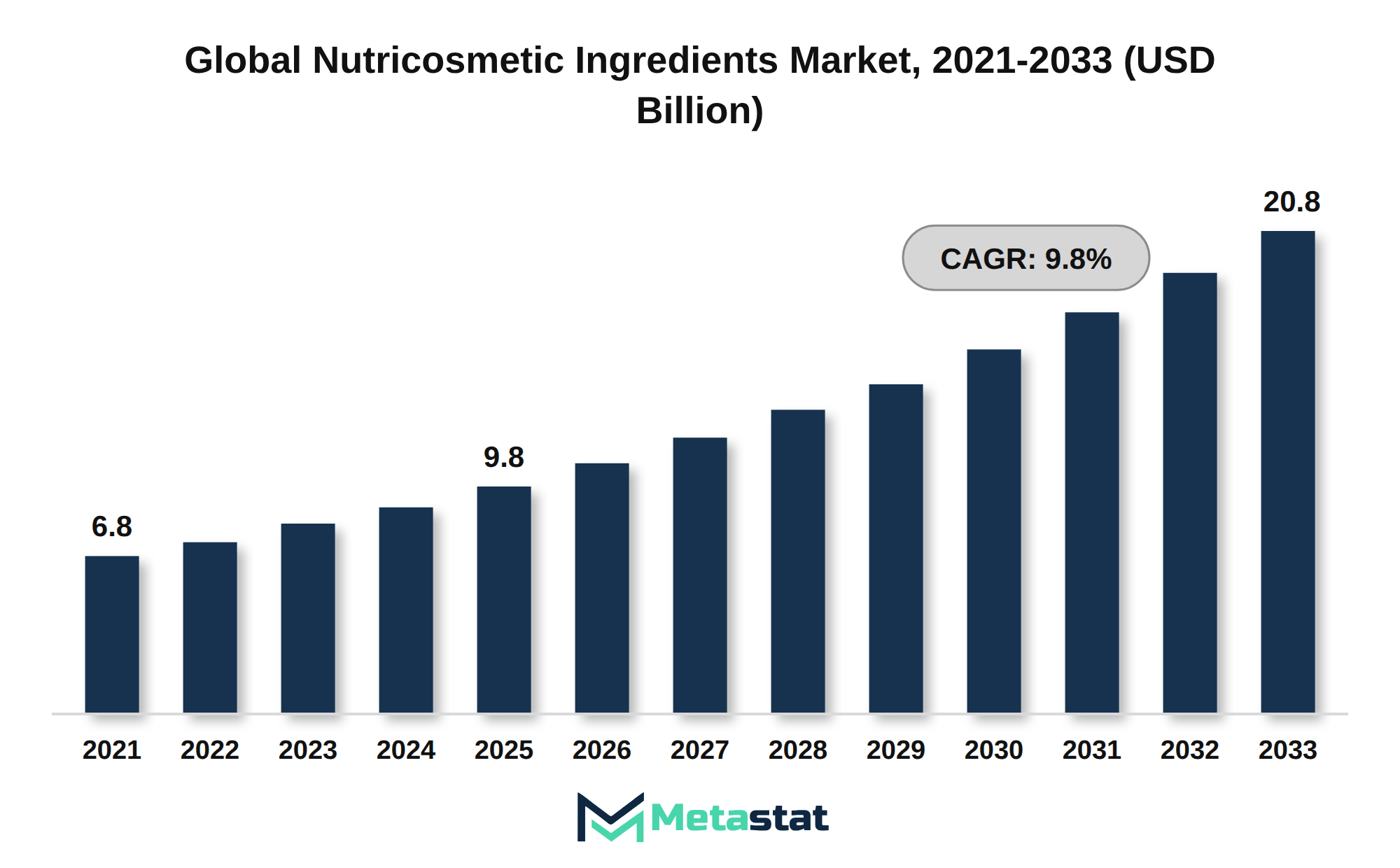
The global Nutricosmetic Ingredients market was valued at USD 9.8 billion in 2025 and is projected to reach USD 20.8 billion by 2033, growing at a CAGR of 9.8% over the forecast period.
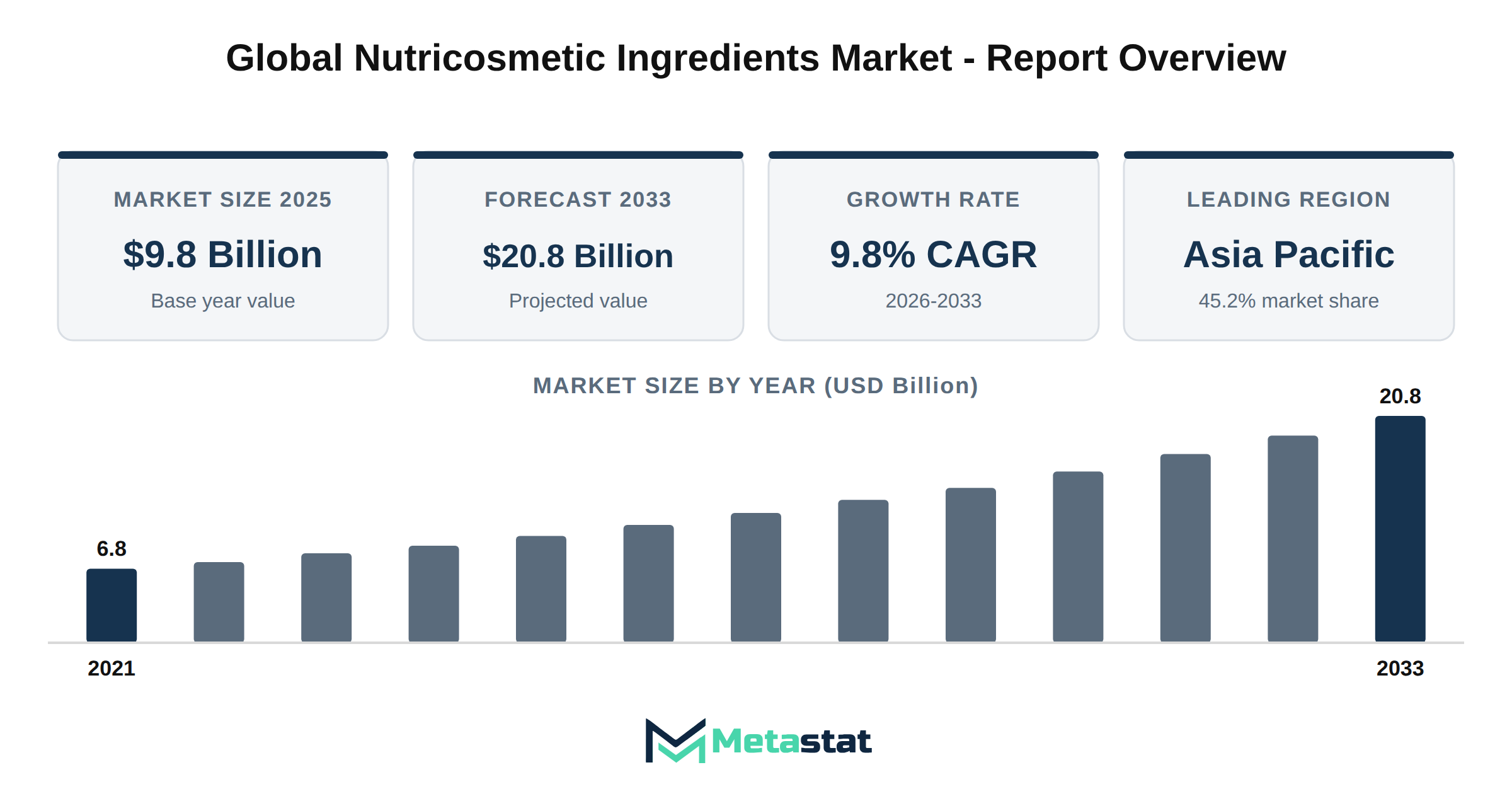
The global Nutricosmetic Ingredients market reached a value of USD 9.8 billion in 2025, with a historical growth trajectory beginning from USD 6.8 billion in 2021. This upward momentum is expected to continue, with projections indicating a market value of USD 20.8 billion by 2033, reflecting a compound annual growth rate (CAGR) of 9.8%. The anticipated growth signifies strong demand for ingredients that enhance beauty and wellness through nutritional means.
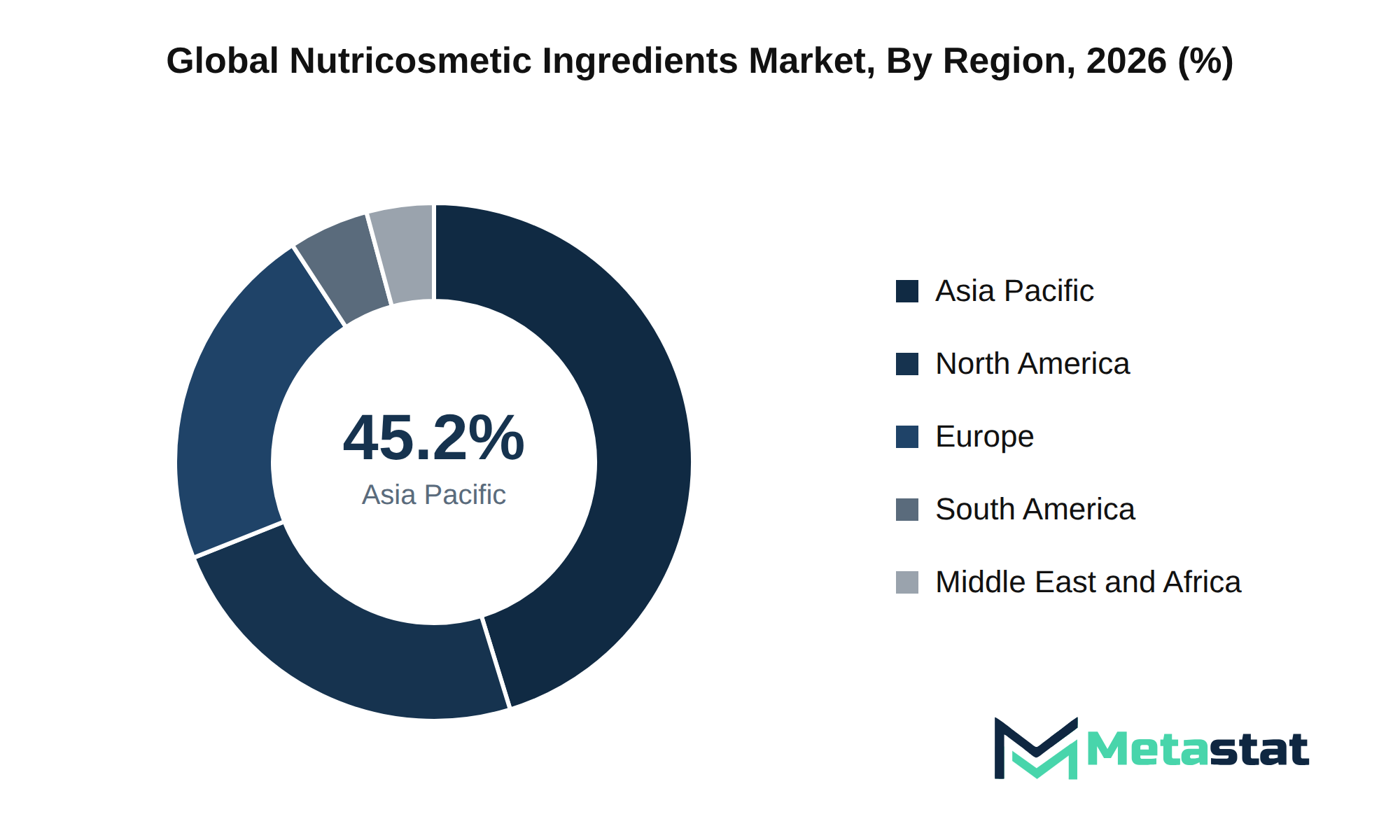
Regional dynamics play a critical role in shaping the Nutricosmetic Ingredients market. The Asia Pacific region commands the largest share at 45.2%, followed by North America at 23.7% and Europe at 21.8%. Diverse consumer preferences and increasing awareness of health and beauty among the population in Asia Pacific contribute to its dominant market position. In North America, the market is projected to reach USD 4.4 billion by 2033, expanding at a CAGR of 9.8%. This growth reflects a rising trend towards preventive health measures and personal care solutions that align with consumer lifestyles.
Ingredient types within the market highlight significant opportunities for growth. Collagen peptides, essential for skin elasticity and overall beauty, are projected to grow from USD 3.2 billion in 2026 to USD 6.2 billion by 2033, with a CAGR of 9.7%. Vitamins and minerals, important for maintaining skin health, are expected to reach USD 2.8 billion by 2033, demonstrating an increasing consumer focus on health solutions. Botanical extracts and phytonutrients, valued for their natural properties, and carotenoids are expected to contribute considerably to market expansion.
Beauty benefits offered by these ingredients significantly influence consumer choices. Skin health and anti-aging products, starting from USD 5.9 billion in 2026, are anticipated to rise to USD 11 billion by 2033, with a CAGR of 9.2%. The demand for skin hydration and elasticity solutions is projected to reach USD 1.7 billion by 2033, with a higher growth rate of 10.3%. The emphasis on hair growth and strength, alongside nail growth and strength, reflects a comprehensive approach to personal care that consumers increasingly prioritize.
The Nutricosmetic Ingredients market experiences significant dynamics influenced by various factors. Regulatory compliance influences product development and market entry strategies. Companies invest in meeting stringent regulations, ensuring product safety and efficacy, which builds consumer confidence and drives market growth.
Research and development trajectories indicate a strong focus on next-generation innovations. Companies prioritize the development of advanced formulations that cater to evolving consumer preferences, including plant-derived ingredients and bioactive compounds. This emphasis on innovation is essential for maintaining competitive advantage and enhancing product offerings.
Sustainable transformation emerges because a key trend within the market. Organizations adopt environmentally friendly practices, focusing on sourcing responsibly and reducing their carbon footprint. This shift aligns with increasing consumer demand for sustainable products, further propelling market growth.
The supply chain landscape reflects complex interdependencies. Organizations optimize logistics and sourcing strategies to enhance operational efficiency. Strategic partnerships with suppliers ensure consistent quality and availability of raw materials, strengthening the overall resilience of the market.
Market fragmentation poses challenges and opportunities. Numerous players operate across various segments, leading to intense competition. This fragmentation creates a need for companies to differentiate their offerings through unique value propositions and targeted marketing strategies.
Mergers and acquisitions dynamics influence market positioning and capabilities. Strategic consolidations enable companies to expand their product portfolios and access new customer segments, driving long-term growth potential within the market.
The value chain remains important in understanding market dynamics. Efficient procurement processes and well-established distribution networks enhance product accessibility, facilitating a smooth customer journey. A focus on customer-centric strategies ensures companies effectively meet consumer needs and preferences.
Capital allocation reflects the strategic priorities of organizations within the market. Investments in infrastructure and technology upgrades enhance production capabilities, positioning companies for future growth. This focus on operational excellence supports overall market expansion.
Macroeconomic headwinds, including inflationary pressures and currency volatility, impact market dynamics. Companies navigate these challenges by adjusting pricing strategies and optimizing cost structures. Adapting to these economic fluctuations is essential for sustaining profitability in the Nutricosmetic Ingredients market.
The future strategic outlook emphasizes innovation, sustainability, and consumer engagement. Companies align their corporate imperatives with market trends, ensuring they remain relevant and competitive. High-value recommendations include prioritizing R&D investments and focusing on sustainable practices to capitalize on emerging opportunities.
Market Dynamics
Shifting consumer behaviors drive market growth
The Nutricosmetic Ingredients market experiences growth driven by changing consumer behaviors and preferences. The rising focus on health and wellness significantly influences demand for products that support beauty from within. Increasing awareness of the benefits of nutrition on skin, hair, and overall aesthetics drives consumers toward ingredients that deliver tangible results.
Aging populations prioritize proactive health measures, leading to a surge in demand for effective solutions targeting anti-aging, hydration, and overall skin health. Urbanization and lifestyle changes further contribute by creating a consumer base more inclined toward convenience and efficacy. This shift in buying preferences highlights the importance of innovative formulations and ingredient transparency, driven by consumers seeking products that align with their wellness goals.
The market's expansion aligns with these evolving consumer trends, encouraging suppliers to innovate and adapt their offerings. Enhanced marketing strategies and product diversification aimed at meeting the specific needs of different demographics support the growth trajectory of the Nutricosmetic Ingredients market. This strategic focus enables companies to capture a larger market share and drive revenue growth in a competitive landscape.
Investment in digital transformation accelerates market growth
Investment in digital transformation significantly enhances the Nutricosmetic Ingredients market. Organizations increasingly integrate advanced technologies, including artificial intelligence and automation, to streamline operations and improve product development. This technological integration drives innovation in ingredient sourcing, formulation processes, and product delivery, ultimately leading to more effective and appealing offerings for consumers.
The shift towards digital tools and platforms enables brands to respond rapidly to evolving consumer preferences and market trends. Enhanced data analytics capabilities allow for targeted marketing strategies and personalized product recommendations, aligning closely with individual consumer needs. This capability drives brand loyalty and repeat purchases, contributing to strengthening long-term demand in the market.
Capital investments in software adoption facilitate more efficient supply chain management, reducing overhead costs and improving profitability. Companies that prioritize technological advancements strengthen their competitive position within the Nutricosmetic Ingredients market. Investment in innovation leads to the development of new products that meet rising demand for beauty and wellness solutions, further propelling market growth.
Regulatory compliance challenges hinder market expansion
The Nutricosmetic Ingredients market faces significant challenges due to stringent regulatory compliance requirements. Regulatory frameworks impose constraints on ingredient sourcing, safety testing, and product labeling. These factors create barriers for new entrants and established players, leading to increased operational costs and delays in product launches. Compliance complexities hinder innovation, forcing companies to allocate substantial resources toward meeting legal mandates, restricting their ability to invest in growth initiatives.
Macroeconomic headwinds further exacerbate the situation. Inflationary pressures impact production costs and consumer purchasing power, limiting the market's overall growth potential. Supply chain disruptions plague the industry, driven by geopolitical instability and resource scarcity. These disruptions lead to increased lead times, higher prices, and uncertainty in ingredient availability, affecting the production capabilities of many companies within the market.
Competition from alternative offerings creates additional pressure. With an influx of new products that present viable substitutes, the market experiences fragmentation, making it challenging for traditional nutricosmetic ingredients to maintain market share. This saturation results in intensified competition, compelling companies to adapt rapidly to shifts in consumer preferences while navigating the complexities of regulatory compliance.
Finally, the industry experiences talent gaps that hinder operational effectiveness. A shortage of skilled labor in areas including research and development limits the capacity for innovation and product advancement. Addressing these challenges requires significant investment in workforce development and strategic partnerships, adding another layer of complexity to the Nutricosmetic Ingredients market. The combination of these factors poses substantial constraints on market growth and necessitates a strategic approach to overcoming these hurdles.
Geopolitical fragmentation and trade challenges
The Nutricosmetic Ingredients market faces significant challenges due to geopolitical fragmentation and trade deficits. Such fragmentation leads to tariff frictions that disrupt the flow of ingredients across borders, impacting pricing and availability. Suppliers experience increased costs, which eventually transfer to consumers, compressing margins within the market. Technological disruptions contribute to this challenge by creating uneven adoption rates across regions, complicating the integration of new processes and products.
Logistics disruptions and supply chain instability exacerbate these conditions, with interruptions in the transportation of raw materials affecting production schedules and product launches. This instability creates uncertainty for manufacturers who rely on timely deliveries of critical components. Compliance overhead increases owing to tightening global regulatory standards, necessitating additional resources for adherence to evolving legal liabilities. Such complexities divert focus from innovation, slowing the market's growth trajectory.
Rising input cost structures further complicate the landscape, forcing producers to optimize their operations while managing workforce skill gaps. Talent retention pressures arise alongside automation displacements, creating challenges in maintaining a skilled labor force needed for advanced R&D activities. The combination of these factors influences competitive dynamics within the market, prompting firms to seek efficient strategies to navigate a saturated environment characterized by substitution pressures.
Emerging technology adoption enhances market potential
The Nutricosmetic Ingredients market stands poised for growth through the integration of advanced technologies and innovative processes. Emerging regional demands for personalized wellness solutions drive interest in tailored nutricosmetic products, attracting diverse consumer segments. Infrastructure modernization supports the production of high-quality ingredients, while geographical expansion into untapped markets presents significant revenue opportunities.
Technological disruptions facilitate the development of novel ingredients, further enhancing the market’s appeal. Digital transformation within retail and marketing channels optimizes customer engagement, leading to heightened consumer awareness and demand for nutricosmetic solutions. Sustainability imperatives prompt companies to align their product offerings with environmental objectives, reflecting a shift towards eco-friendly practices.
Cross-industry mergers and acquisitions enable strategic consolidation, allowing companies to diversify their portfolios and enhance their value propositions. Downstream market diversification strengthens the competitive landscape, driven by businesses exploring niche applications that cater to specific beauty benefits. Evolving buying behaviors, influenced by the rise of digital procurement, affect purchasing decisions, making online channels increasingly important for market players.
Supply chain localization strategies contribute to operational resilience, reducing dependency on imports and enhancing product availability. This focus on local sourcing aligns with consumer preferences for transparency and sustainability. Overall, these factors position the market for significant growth, with companies well-equipped to meet the evolving demands of consumers seeking effective nutricosmetic solutions.
Market Segmentation Analysis
The Global Nutricosmetic Ingredients market is segmented based on Ingredient Type, Beauty Benefit, Source, and End-Use.
By Ingredient Type, the market is further segmented into:
- Collagen Peptides
- Vitamins and Minerals
- Botanical Extracts and Phytonutrients
- Carotenoids
- Hyaluronic Acid and Glycosaminoglycans
- Probiotics, Prebiotics and Postbiotics
- Omega-3 Fatty Acids and Phospholipids
- Amino Acids and Protein-Derived Ingredients
- Ceramides and Functional Lipids
- Others (Coenzyme Q10, MSM, Enzymes)
Collagen Peptides
Valued at USD 3.2 billion in 2026, the Collagen Peptides segment shows significant growth potential within the Nutricosmetic Ingredients market. Projections indicate a rise to USD 6.2 billion by 2033, reflecting a CAGR of 9.7% during the forecast period. This expansion is driven by increasing awareness of the benefits of collagen peptides for skin health and anti-aging, leading to heightened consumer demand across various demographics.
Technological advancements in extraction and formulation processes enhance the effectiveness and appeal of collagen peptides. Continuous innovations improve ingredient quality and bioavailability, aligning with consumer preferences for natural and efficient products. The growing trend towards preventive health and wellness further increases the adoption of collagen-based supplements, expanding market opportunities.
Regulatory compliance influences market dynamics, driven by stringent standards that ensure product safety and efficacy. Manufacturers actively pursue certifications to strengthen consumer trust, facilitating wider distribution across retail and online platforms. The shift towards plant-derived and sustainably sourced ingredients creates a competitive landscape, influenced by brands differentiating themselves through ethical practices and transparency.
End-use dynamics highlight a growing preference for collagen peptides in capsules and powders, reflecting shifts in consumer consumption habits. The increasing incorporation of these ingredients into functional foods and beverages illustrates their versatility and market relevance. Overall, the growth forecast for the Collagen Peptides segment aligns with evolving consumer expectations and the expanding landscape of the Nutricosmetic Ingredients market.
Vitamins and Minerals
Growth in the Vitamins and Minerals segment of the Nutricosmetic Ingredients market stems from increasing consumer awareness regarding health and wellness. This segment is estimated to reach USD 2.8 billion by 2033, at a CAGR of 8.7% during the forecast period. The rise in demand for supplements that promote skin health, hair strength, and overall well-being influences product innovation and development strategies among suppliers. The integration of vitamins and minerals into various forms, including gummies and powders, enhances consumer accessibility and engagement.
Technological advancements play a crucial role in segment expansion, facilitating the creation of enhanced formulations that deliver higher efficacy and bioavailability. Increased focus on natural ingredients drives the sourcing of plant-derived vitamins and minerals, aligning with consumer preferences for clean-label products. Regulatory compliance standards further shape market dynamics, driven by manufacturers adapting their offerings to meet safety and quality requirements, thereby building trust among consumers.
Price sensitivity remains a consideration in this segment, with fluctuations in raw material costs impacting pricing strategies. Strategic partnerships and investments in supply chain resilience support manufacturers in mitigating risks associated with sourcing and distribution. Overall, the Vitamins and Minerals segment is set to evolve, driven by shifts in consumer consumption patterns and the continuous push for innovative, effective solutions within the Nutricosmetic Ingredients market.
Botanical Extracts and Phytonutrients
Consumer preference for natural and organic products fuels demand for botanical extracts and phytonutrients in the Nutricosmetic Ingredients market. This shift reflects a broader trend toward wellness and health, driving companies to innovate and enhance product offerings. The segment is projected to reach USD 2.2 billion by 2033, indicating strong growth prospects.
Technological advancements in extraction and formulation processes contribute to segment expansion, allowing manufacturers to offer high-quality ingredients with enhanced bioavailability. Increased research into the health benefits of botanicals, including anti-inflammatory and antioxidant properties, supports the appeal of these ingredients in cosmetic applications. Brands focus on integrating these extracts into formulations aimed at skin health, hydration, and anti-aging benefits. Consumer education on the efficacy of phytonutrients influences purchasing decisions, with a growing emphasis on transparency and ethical sourcing.
Regulatory compliance regarding ingredient safety and labeling standards remains critical, pushing suppliers to adhere to stringent guidelines. While the market evolves, strategic partnerships and collaborations between ingredient suppliers and cosmetic manufacturers enhance product development capabilities. The emphasis on sustainability and eco-friendly practices strengthens the position of plant-derived ingredients in the market.
Companies that prioritize sustainable sourcing and production methods attract environmentally conscious consumers. Continuous innovation in product formats, including powders and gummies, caters to shifting consumer preferences. This further expands the application potential of botanical extracts and phytonutrients across various end-use segments.
Carotenoids
Strong demand for carotenoids stems from their established role in promoting skin health and providing antioxidant benefits. Market growth is driven by increasing consumer awareness of the advantages of natural ingredients in beauty and wellness products. Rising health consciousness contributes to the demand for carotenoids, particularly among consumers seeking to enhance their dietary intake of vitamins and nutrients.
The carotenoids segment is projected to grow at a CAGR of 9.2% during the forecast period. This growth reflects a broader trend towards natural supplements and functional foods, aligning with consumer preferences for natural health solutions. Integration of carotenoids into various end-use applications, including softgels, powders, and capsules, enhances their appeal across diverse market segments.
Technological advancements facilitate the extraction and formulation of carotenoids, improving their bioavailability and effectiveness in product applications. Expansion of product offerings featuring carotenoids aligns with ongoing innovations in the nutraceutical sector, driving competitive differentiation among manufacturers. Evolving regulatory standards and compliance with certifications become essential for market participants aiming to establish credibility and trust with consumers.
Strategic investment in research and development enhances the market landscape. This investment supports new product introductions that leverage the unique properties of carotenoids. A focus on innovation supports continued market expansion, enabling companies to meet the evolving needs of health-conscious consumers. Overall, the carotenoids segment within the Nutricosmetic Ingredients market shows strong potential for growth driven by shifting consumer preferences and technological advancements.
Hyaluronic Acid and Glycosaminoglycans
Increasing consumer awareness regarding skin health drives demand for Hyaluronic Acid and Glycosaminoglycans within the Nutricosmetic Ingredients market. This segment focuses on enhancing skin hydration, elasticity, and overall appearance, aligning with current beauty trends emphasizing natural ingredients and anti-aging benefits. Adoption of products featuring these ingredients occurs primarily in skincare formulations, where users seek significant results without invasive treatments.
The evolving landscape of beauty and wellness continues to drive product innovation in this segment. Brands leverage advancements in extraction and formulation technologies, enabling the development of more effective and stable Hyaluronic Acid and Glycosaminoglycans products. Companies investing in research and development create unique offerings that cater to diverse consumer needs, enhancing market competitiveness.
Regulatory compliance plays a critical role in shaping product offerings. Manufacturers adhere to strict safety and quality standards to ensure consumer trust and satisfaction. Navigating these regulations while maintaining cost efficiency presents challenges, driven by raw material sourcing and production processes that require careful oversight to mitigate risks associated with supply chain disruptions.
Pricing volatility in the ingredient market influences consumer purchasing behavior. Fluctuations in raw material availability and costs impact the overall pricing structure of end products. Strategic management of these factors enables companies to maintain competitive pricing while ensuring product quality, ultimately contributing to sustained growth within the segment.
The appetite for multifunctional beauty products further supports the expansion of Hyaluronic Acid and Glycosaminoglycans in various applications, including dietary supplements and functional foods. Increasing interest in health drives consumers toward products that provide both beauty and wellness benefits, positioning this segment for continued success in the Nutricosmetic Ingredients market.
Probiotics, Prebiotics and Postbiotics
Growth in consumer awareness regarding gut health significantly drives the demand for probiotics, prebiotics, and postbiotics within the Nutricosmetic Ingredients market. An increasing focus on wellness contributes to broader acceptance and incorporation of these ingredients into daily dietary routines. The segment benefits from rising consumer preference for functional food and dietary supplements that promote overall health, beyond traditional cosmetic benefits.
Technological advancements enhance product formulation and delivery systems for probiotics, prebiotics, and postbiotics, enabling more effective products that meet consumer expectations. Innovations in encapsulation technologies improve ingredient stability and bioavailability, facilitating successful application across various formulations. This evolution in product offerings positions the segment for further growth and market penetration.
Regulatory compliance and certifications play a crucial role in shaping the segment's landscape. Adherence to safety and efficacy standards builds consumer trust and encourages adoption across various demographics. Manufacturers focusing on transparent sourcing and responsible marketing practices are likely to gain a competitive edge, supporting long-term growth in the market.
Cost structures within the segment remain influenced by sourcing challenges and potential pricing volatility of raw materials. Strategic partnerships and supply chain resilience are essential for mitigating risks associated with disruptions in raw material availability. Companies investing in sustainable sourcing and efficient supply chain management are positioned to navigate these challenges.
Omega-3 Fatty Acids and Phospholipids
Growing interest in health and wellness significantly boosts demand for Omega-3 Fatty Acids and Phospholipids within the Nutricosmetic Ingredients market. Consumers increasingly recognize the benefits of these compounds for skin health, anti-aging, and overall well-being, enhancing their incorporation into various products. The rise in dietary supplementation aims to address skin hydration, elasticity, and resilience, factors that appeal to a broad demographic seeking natural solutions for skin vitality.
Technological advancements in extraction and formulation processes drive innovation in product development. Enhanced bioavailability and delivery methods improve the effectiveness of Omega-3 Fatty Acids and Phospholipids, encouraging manufacturers to introduce next-generation products that appeal to health-conscious consumers. This evolution aligns with the market's trend towards clean-label and functional ingredients, driven by brands striving for transparency and efficacy in their offerings.
Regulatory compliance continues to shape the landscape for Omega-3 Fatty Acids and Phospholipids. Stricter safety and quality standards necessitate robust sourcing and manufacturing practices, influencing cost structures and pricing strategies. The need for certifications and adherence to guidelines ensures consumer safety and product integrity, highlighting the importance of regulatory navigation for companies operating in this segment.
Investment in supply chain resilience emerges because a critical factor. Fluctuations in raw material availability and sourcing challenges call for strategic partnerships and diversified supply networks. Companies that effectively manage these risks position themselves favorably within the competitive environment, enhancing their capacity to meet consumer demand and capitalize on growth opportunities in the market.
Increasing competition within the segment prompts a swift response to changing consumer preferences. The introduction of innovative formulations and targeted marketing strategies enables brands to differentiate their offerings. Companies that prioritize consumer insights and adapt to emerging trends will likely capture significant market share, ultimately driving the growth of Omega-3 Fatty Acids and Phospholipids in the Nutricosmetic Ingredients market.
Amino Acids and Protein-Derived Ingredients
Growing interest in amino acids and protein-derived ingredients drives their relevance within the Nutricosmetic Ingredients market. Consumers increasingly seek products that support overall wellness and beauty, particularly those that enhance skin health, hair strength, and nail growth. These ingredients play a significant role due to their vital functions in cellular repair and regeneration, making them desirable in formulations targeting anti-aging and rejuvenation.
Technological advancements facilitate the extraction and utilization of amino acids, enhancing product efficacy. Innovations in processing techniques yield superior formulations, attracting manufacturers aiming to meet evolving consumer preferences. The market benefits from a shift toward personalized nutrition, where consumers seek tailored solutions that address specific beauty concerns. This trend provides strategic opportunities for companies specializing in amino acids and protein-derived ingredients.
Regulatory compliance standards shape product development within this segment. Companies navigate a complex landscape of regulations, ensuring safety and efficacy in their offerings. This compliance builds consumer trust and positions brands favorably in a competitive market. The growing emphasis on sustainability influences sourcing practices, prompting manufacturers to adopt responsible raw material procurement methods.
Pricing volatility emerges owing to a factor affecting profit margins in the market. Fluctuations in raw material costs impact overall pricing strategies, compelling companies to enhance efficiency in their supply chains. Strategic partnerships and collaborations enhance supply chain resilience, allowing businesses to mitigate risks associated with sourcing and distribution. Demand for amino acids and protein-derived ingredients continues to evolve, with companies having robust supply chains positioned to capitalize on market opportunities.
Ceramides and Functional Lipids
Growing interest in skin health and beauty promotes the utilization of ceramides and functional lipids within the Nutricosmetic Ingredients market. These compounds support skin barrier function and hydration, leading to a rise in their incorporation into beauty supplements. The segment benefits from increasing consumer recognition of the importance of skin health and the demand for effective anti-aging products. Product innovation in this area focuses on improving formulation stability and efficacy, enhancing consumer appeal.
Technological advancements in extraction and formulation techniques contribute to the expansion of this segment. Manufacturers invest in research to optimize the bioavailability of ceramides and functional lipids, driving product evolution. Regulatory compliance standards regarding ingredient safety further enhance market credibility, influencing consumer trust and preference. Ongoing adoption of these ingredients across various end-use applications underlines their significance in the market.
Consumers increasingly shift towards products that offer dual benefits, including skin hydration and anti-aging. This trend influences the integration of ceramides and functional lipids into diverse formulations, including capsules, powders, and gummies. The segment's adaptability to shifting consumer preferences and market demands highlights its strategic opportunity window for manufacturers looking to capitalize on emerging beauty trends.
Others (Coenzyme Q10, MSM, Enzymes)
Consumer interest in ingredients like Coenzyme Q10, MSM, and enzymes drives demand within the Nutricosmetic Ingredients market. These elements support various beauty benefits, enhancing skin health and overall wellness. Technological advancements in extraction and formulation processes facilitate the development of innovative products, appealing to a broader consumer base.
Shifts in consumption patterns emphasize the desire for effective and scientifically-backed ingredients, which influence product evolution. Regulatory compliance standards play a significant role in shaping the market, ensuring safety and efficacy for consumers. This focus on compliance builds trust and encourages market growth.
Strategic opportunity windows exist for companies focusing on research and development to create next-generation products. Investment in these areas enhances competitive positioning and meets evolving consumer preferences. The relationship between consumer expectations and ingredient efficacy continues to shape the market's trajectory.
By Beauty Benefit, the market is further segmented into:
- Skin Health and Anti-Aging
- Skin Hydration and Elasticity
- Hair Growth and Strength
- Nail Growth and Strength
- Skin Radiance and Complexion
- Sun and Environmental Protection
- Body Contouring
- Others (Scalp Health, Skin Barrier Support)
Skin Health and Anti-Aging
Consumer focus on skin health and anti-aging enhances the demand for innovative formulations in the Nutricosmetic Ingredients market. Valued at USD 5.9 billion in 2026, this segment is projected to reach USD 11 billion by 2033, at a CAGR of 9.2% during the forecast period. The growing aging population, along with rising disposable incomes, drives interest in products that provide effective solutions for skin improvement and rejuvenation.
Technological advancements in ingredient formulation and extraction processes contribute to the proliferation of high-quality options in this segment. Increased availability of collagen peptides, botanical extracts, and specific phytonutrients enables consumers to access a diverse range of products tailored for skin health. This trend reflects a broader shift towards preventive health measures and proactive beauty regimens.
Changing consumer perceptions regarding beauty, which now encompass overall health and well-being, further drive growth in the market. Effective marketing strategies that highlight the benefits of nutricosmetic ingredients provide consumers with necessary education and awareness, reinforcing their choices in product selection.
Regulatory compliance standards and certifications concerning ingredient safety and efficacy play a crucial role in shaping the market landscape. Consumers increasingly seek products that meet stringent quality benchmarks, allowing brands prioritizing transparency and ethical sourcing to gain competitive advantages.
End-use dynamics indicate a notable increase in product diversity, with a rise in the popularity of oral supplements, functional foods, and beverages formulated for skin health. This diversification caters to evolving consumer preferences and habits, positioning the market for sustained growth in the coming years.
Skin Hydration and Elasticity
Growing consumer demand for products that enhance skin hydration and elasticity drives the market for nutricosmetic ingredients. This segment is estimated to reach USD 1.7 billion by 2033, at a CAGR of 10.3% during the forecast period. Increasing awareness regarding the benefits of nutricosmetic ingredients for skin health influences purchasing decisions among consumers. Product innovations focusing on natural ingredients, including plant-derived compounds, play a significant role in expanding market offerings. The rise in disposable incomes and changing lifestyles further supports the segment's growth, driven by consumers seeking effective solutions for skin care. Strategic investments in research and development enhance product efficacy, enabling companies to respond to emerging trends and consumer preferences. Consequently, the nutricosmetic ingredients market experiences robust expansion within this sub-segment, highlighting the importance of skin hydration and elasticity in overall beauty and wellness.
Hair Growth and Strength
Growing consumer interest in hair health drives demand for ingredients focused on hair growth and strength within the Nutricosmetic Ingredients market. The segment is projected to reach USD 4.2 billion by 2033, reflecting a significant growth trajectory fueled by increasing awareness of the importance of maintaining healthy hair. Factors influencing this demand include rising concerns about hair loss and the efficacy of natural ingredients in promoting hair vitality.
The expansion of this segment benefits from advancements in ingredient formulation, particularly the integration of plant-derived and animal-derived components. These ingredients are perceived because effective solutions for enhancing hair strength and promoting growth, leading to greater adoption among consumers seeking natural alternatives to traditional hair care products. The market experiences a shift towards formulations that combine multiple active ingredients, thereby providing enhanced benefits in hair care.
Technological maturation in extraction and processing methods supports the development of innovative products that deliver targeted results. Emerging trends in personalization, where consumers seek products tailored to their specific hair concerns, contribute to segment growth. This customization leads to increased consumer engagement and loyalty, driving sales within the Nutricosmetic Ingredients market.
Regulatory compliance standards play a crucial role in this segment, ensuring that products meet safety and efficacy requirements. Certifications for natural and organic ingredients enhance consumer confidence and encourage purchasing decisions. Consequently, brands focusing on transparency and ethical sourcing of ingredients strengthen their market position and appeal to conscious consumers.
Nail Growth and Strength
Nail health increasingly ranks because a priority among consumers, driving demand for ingredients that support nail growth and strength. This segment is projected to grow at a CAGR of 10.3% during the forecast period. The focus on comprehensive beauty solutions enhances utilization of nutricosmetic ingredients that promote not only nails but overall well-being.
Shifts in consumer preferences toward natural and effective formulations contribute to market expansion. Consumers actively seek products that offer visible results, leading to heightened interest in ingredients derived from plant and animal sources. Brands focusing on transparency in sourcing and formulation attract a loyal customer base.
Regulatory compliance and certifications play critical roles in shaping product offerings in the market. Ingredients that meet stringent safety and efficacy standards gain consumer trust and build brand loyalty. Ongoing innovations in formulation techniques enable companies to enhance the efficacy of nail growth products, attracting further investment.
The demand for supplements targeting nail strength highlights a broader trend towards personalized beauty solutions. With growing awareness of nutritional impacts on nail health, products offering specific formulations tailored to individual needs receive increased attention. This trend drives sustained growth in the nutricosmetic ingredients market.
Skin Radiance and Complexion
Increasing consumer emphasis on skin radiance and complexion significantly influences the Nutricosmetic Ingredients market. This focus stems from a broad desire for products that enhance natural beauty and improve skin tone. Consumers actively seek ingredients that support skin health, leading to heightened demand for formulations containing botanical extracts, vitamins, and other nutrient-rich components.
Technological advancements within the segment facilitate product evolution, allowing manufacturers to create targeted solutions that address specific skin concerns. Innovations in extraction methods and formulation technologies enhance the efficacy of active ingredients, appealing to health-conscious consumers.
Consumption shifts towards preventive skincare strategies contribute to the segment's expansion. Consumers prioritize long-term skin health and radiance over quick fixes, leading to increased interest in nutricosmetic products that deliver sustained benefits. This trend encourages brands to invest in research and development, ultimately boosting product offerings in the market.
Regulatory compliance standards and certifications play a crucial role in shaping product offerings within the segment. Companies navigate stringent regulations to ensure safety and efficacy, making compliance a critical factor in gaining consumer trust and maintaining market competitiveness.
Strategic opportunity windows arise from the rising demand for clean-label products. Brands that provide transparency in sourcing and ingredient formulation connect well with consumers. This focus on clean ingredients aligns with current trends in health and wellness, propelling growth within the Nutricosmetic Ingredients market.
Sun and Environmental Protection
Consumer focus on sun and environmental protection drives innovation within the Nutricosmetic Ingredients market. Awareness regarding the detrimental effects of UV rays and environmental stressors on skin health fuels demand for products designed to mitigate such impacts. This segment benefits from evolving consumer preferences toward proactive skincare solutions that emphasize prevention over reaction.
Technological maturation in ingredient formulation, including advancements in the bioavailability of protective compounds, enhances product efficacy. Next-generation upgrades in extraction and processing techniques lead to higher concentrations of active ingredients, resulting in more effective formulations. Broader adoption occurs across various demographic segments, particularly among those prioritizing preventive skincare.
While sustainability becomes a core value for consumers, brands emphasizing ethically sourced, plant-derived ingredients gain traction in the market. The increasing availability of certifications related to environmental sustainability further influences purchasing decisions, promoting products aligned with these values. This aspect creates a strategic opportunity window for companies focusing on sustainable practices.
Supply chain resilience remains crucial, particularly in sourcing raw materials for this segment. Disruptions in logistics pose risks, necessitating adaptive strategies to maintain ingredient availability. The competitive landscape features a range of disruptive alternatives, with innovative brands entering the market and challenging established players.
Investment in research and development continues to play a significant role in driving growth within this segment. Companies embracing technological advancements and consumer insights are well-positioned to capitalize on emerging trends. The Nutricosmetic Ingredients market benefits from strong consumer demand for solutions that ensure long-term protection against environmental factors.
Body Contouring
Consumer interest in body contouring drives demand for ingredients that enhance body aesthetics and support weight management. The trend reflects a broader shift towards health and wellness, with consumers prioritizing products that contribute to their overall appearance and self-esteem. Ingredients that promise results in body shaping and contouring attract attention from manufacturers seeking to innovate their offerings in the Nutricosmetic Ingredients market.
Technological advancements play a significant role in the evolution of body contouring products. Research and development focus on enhancing ingredient efficacy and exploring new formulations that deliver visible results. The market benefits from these innovations, creating a competitive environment where companies strive to differentiate their products through enhanced performance and unique selling propositions.
Regulatory compliance shapes the landscape for body contouring ingredients. Manufacturers face scrutiny regarding safety and efficacy, prompting adherence to stringent guidelines. Certifications from recognized bodies offer assurance to consumers and support manufacturers in building trust in their products. This compliance strengthens market positions and reduces risks associated with product recalls or safety concerns.
Pricing volatility impacts consumers' purchasing choices in this segment. Economic fluctuations and shifts in raw material costs affect the final price of products. Companies navigate these pressures by optimizing supply chain efficiency and leveraging strategic sourcing practices. Sustainable sourcing of ingredients further enhances brand reputation and aligns with consumer expectations for environmentally friendly products.
Investment in marketing and consumer education emerges driven by a strategic opportunity for body contouring products. Consumers increasingly seek information on the benefits and uses of these ingredients. Effective communication strategies enhance brand visibility and drive sales. Companies that successfully engage with their audience position themselves favorably within the competitive landscape of the Nutricosmetic Ingredients market.
Others (Scalp Health, Skin Barrier Support)
Consumer interest in scalp health and skin barrier support influences the demand for ingredients targeting these specific benefits. Increased awareness of the importance of maintaining a healthy scalp and skin barrier drives the development of innovative formulations within the Nutricosmetic Ingredients market. Ingredients that support these functions often feature plant-derived sources, which align with consumer preferences for natural and sustainable options.
Technological maturation in ingredient extraction and formulation techniques enhances the availability of effective solutions for scalp health and skin barrier support. Advancements in processing methods lead to higher efficacy and bioavailability, meeting the rising expectations of consumers seeking visible results from their products. This evolution encourages manufacturers to expand their product ranges and integrate these specialized ingredients into various formats, including capsules and powders.
Shifts in consumption patterns toward preventive care and overall wellness promote the integration of scalp health and skin barrier support into daily routines. The trend emphasizes comprehensive approaches to beauty, which aligns with the growing demand for multifunctional Nutricosmetic Ingredients that cater to diverse consumer needs.
Regulatory compliance standards play a significant role in shaping the market landscape by ensuring product safety and efficacy. Certifications from reputable organizations enhance consumer trust in products formulated with ingredients focused on scalp health and skin barrier support, driving market growth. Strategic opportunity windows arise owing to brands adapting to evolving regulations and consumer preferences, presenting avenues for further investment and innovation.
By Source, the market is further segmented into:
- Plant-Derived
- Animal-Derived
- Marine and Algae-Derived
- Microbial and Fermentation-Derived
- Synthetic and Biotechnology-Derived
Plant-Derived
Consumer preference for natural and plant-based ingredients significantly drives the demand for the Plant-Derived segment within the Nutricosmetic Ingredients market. This segment is valued at USD 5.3 billion in 2026 and is projected to reach USD 9.5 billion by 2033, at a CAGR of 8.7% during the forecast period. Increased awareness regarding the benefits of plant-derived components in skincare and nutrition contributes to the segment's expansion. Consumers increasingly favor products that highlight sustainability and ethical sourcing, which aligns with the characteristics of plant-based ingredients.
The rise of clean beauty trends encourages manufacturers to invest in plant-derived innovations, further enhancing product portfolios. Companies are integrating botanical extracts and phytonutrients into formulations, responding to the growing demand for health-conscious solutions. This trend influences downstream applications across various end-use categories, including capsules and tablets, powders and sachets, and gummies and chewables.
Regulatory compliance regarding ingredient safety enhances market confidence in plant-derived products. Certifications that verify organic and natural claims enhance consumer trust and facilitate market penetration. Companies focusing on strategic opportunities in this segment position themselves to leverage the expanding consumer base prioritizing natural solutions in the Nutricosmetic Ingredients market.
Animal-Derived
Interest in animal-derived ingredients within the Nutricosmetic Ingredients market reflects a rising consumer preference for natural and effective beauty solutions. This segment focuses on products that feature collagen, gelatin, and other animal-based components known for their beneficial properties in enhancing skin elasticity, hydration, and overall beauty. Increased awareness regarding the efficacy of these ingredients drives demand, particularly in formulations targeting skin health and anti-aging.
Animal-derived ingredients provide essential nutrients that support skin regeneration and repair, aligning with current trends in beauty and wellness. While consumers seek products that deliver tangible results, manufacturers prioritize sourcing high-quality animal-derived components to meet these expectations. This strategic focus contributes to the segment's growth, with the Animal-Derived segment projected to reach USD 4.4 billion by 2033, at a CAGR of 9.3% during the forecast period.
Innovations in extraction and processing technologies significantly enhance the quality and efficacy of animal-derived ingredients. These advancements address regulatory compliance and sustainability concerns, which are increasingly important to consumers. The segment benefits from its adaptability in various end-use applications, including dietary supplements and functional foods, reinforcing its role within the broader Nutricosmetic Ingredients market.
Marine and Algae-Derived
Demand for Marine and Algae-Derived ingredients stems from their unique nutritional profiles, which include essential fatty acids, vitamins, and minerals. Increasing awareness of the health benefits associated with these ingredients drives adoption across various sectors, particularly in beauty and wellness products. The growing trend towards natural and sustainable sourcing enhances the attractiveness of marine and algae-derived options, appealing to eco-conscious consumers. Companies in the Nutricosmetic Ingredients market invest in research and development to optimize extraction processes and improve product formulations.
Marine and Algae-Derived segment is expected to reach USD 2.8 billion by 2033. Rising consumer preferences for plant-based alternatives drive growth in this segment, prompting manufacturers to explore innovative applications. Enhanced focus on regulatory compliance and quality certifications increases confidence among end-users, supporting market penetration. The proliferation of marine and algae-derived ingredients in functional foods and beverages reflects broader consumption shifts, emphasizing their versatility and efficacy in promoting overall health.
Strategic investment in marketing and education about the benefits of marine and algae-derived products is critical for increasing consumer awareness. Competition among suppliers intensifies due to their efforts to differentiate offerings through unique formulations and targeted marketing campaigns. The Nutricosmetic Ingredients market continues to evolve, with marine and algae-derived ingredients positioned because a key growth driver in the coming years.
Microbial and Fermentation-Derived
Consumer interest in innovative ingredients contributes to significant growth in the Microbial and Fermentation-Derived segment of the Nutricosmetic Ingredients market. Increasing awareness of the benefits of probiotics and postbiotics drives demand, particularly among consumers seeking products that enhance gut health and skin appearance. The segment is projected to grow at a CAGR of 12.2% during the forecast period, reflecting heightened interest in natural formulations supported by scientific evidence.
Technological advancements in fermentation processes facilitate the development of high-quality ingredients, enhancing product offerings across various downstream applications. Producers focusing on microbial and fermentation-derived solutions experience improved efficiency in ingredient sourcing, which reduces costs and increases margins. Regulatory compliance standards regarding safety and efficacy enhance consumer confidence, further fueling segment expansion.
Shifts in consumer preferences toward sustainable and ethically sourced ingredients significantly affect the market landscape. The growing trend of clean label products aligns well with the characteristics of microbial and fermentation-derived offerings, appealing to health-conscious consumers. These factors contribute to an increasingly competitive environment, driving innovation and diversifying product portfolios within the Nutricosmetic Ingredients market.
Synthetic and Biotechnology-Derived
Technological maturation within the Nutricosmetic Ingredients market drives advancements in synthetic and biotechnology-derived products. Innovations in biotechnological processes enhance ingredient efficacy and safety, aligning with consumer preferences for reliable and effective solutions. Shifts toward sustainability encourage manufacturers to explore synthetic alternatives that minimize environmental impact while delivering high-quality results. This trend creates strategic opportunity windows for brands to introduce novel formulations that cater to evolving market demands.
Regulatory compliance standards increasingly influence the development of synthetic ingredients. Manufacturers prioritize certifications and adherence to safety regulations, enhancing consumer trust in these products. This focus on compliance strengthens market stability and secures competitive advantages for firms that exceed basic regulatory requirements. Consistent investments in product evolution drive ongoing enhancements in formulation quality, appealing to health-conscious consumers.
Cost structures within the synthetic and biotechnology-derived segment exhibit unique dynamics. Fluctuations in raw material sourcing influence pricing volatility, prompting companies to develop strategies that mitigate margin pressures. Supply chain resilience remains critical, driven by firms adapting to potential disruptions through diversifying suppliers and investing in localized sourcing solutions. Such strategies strengthen the segment's position within the broader market.
By End-Use, the market is further segmented into:
- Capsules and Tablets
- Powders and Sachets
- Gummies and Chewables
- Softgels
- Liquid Shots and Ready-to-Drink Products
- Functional Foods and Beverages
- Others (Oral Strips, Pellets and Granules)
Capsules and Tablets
Growing interest in convenient and effective health solutions drives the demand for capsules and tablets in the Nutricosmetic Ingredients market. This end-use segment is valued at USD 3.3 billion in 2026 and is projected to reach USD 6.3 billion by 2033, at a CAGR of 9.4% during the forecast period. Factors contributing to this growth include the rising popularity of dietary supplements that promote beauty and wellness, leading to an increase in formulations incorporating collagen peptides and vitamins.
Consumer preferences increasingly favor products that offer targeted beauty benefits, including skin health and anti-aging. This focus enhances the appeal of capsules and tablets, which provide a concentrated dose of functional ingredients. The segment benefits from technological advancements in formulation science, enabling improved ingredient stability and bioavailability, which encourages adoption among consumers.
Regulatory compliance and certifications play a significant role in shaping market dynamics. Labeling transparency and adherence to health standards enhance consumer trust, contributing to market growth. The segment experiences competitive pressures from alternative delivery formats, but the convenience and familiarity of capsules and tablets continue to secure their position in the Nutricosmetic Ingredients market.
Strategic opportunities emerge through innovations that align with health trends, including plant-based and clean-label formulations. While consumers become more health-conscious, the demand for high-quality, efficacious ingredients sourced from reputable suppliers rises. Investment in research and development further supports the evolution of this segment, ensuring it meets consumer expectations and preferences.
Powders and Sachets
Growing interest in convenient delivery formats for health supplements drives demand for powders and sachets within the Nutricosmetic Ingredients market. This segment is estimated to reach USD 3.7 billion by 2033, at a CAGR of 9.7% during the forecast period. The preference for ready-to-mix options aligns with busy lifestyles, prompting manufacturers to innovate formulations that enhance portability and ease of use.
Product evolution towards personalized nutrition contributes to this segment's growth. Consumers increasingly seek tailored health solutions that address specific beauty needs, further driving the demand for powders and sachets. Technological maturation enables advancements in ingredient formulation, resulting in products that combine efficacy with convenience.
Regulatory compliance standards and certifications for health supplements influence product offerings. Strict adherence to quality and safety regulations informs consumer trust and preference for established brands in the market. This regulatory landscape encourages investment in R&D, driven by companies striving to create compliant yet innovative products that meet consumer expectations.
Supply chain resilience remains critical for maintaining product availability and managing costs. Raw material sourcing challenges impact pricing volatility, compelling companies to seek alternative suppliers or develop in-house capabilities for key ingredients. Strategic opportunity windows arise for brands that navigate these complexities while offering high-quality and effective powders and sachets.
Gummies and Chewables
Consumer preference for convenient dietary supplements significantly influences the Gummies and Chewables segment of the Nutricosmetic Ingredients market. This trend reflects a shift toward products that combine health benefits with enjoyable consumption experiences. The segment is expected to reach USD 2.4 billion by 2033, indicating strong growth potential driven by evolving consumer habits. Innovations in flavor, texture, and formulation enhance the appeal of these products, making them increasingly attractive to health-conscious consumers.
Regulatory compliance regarding ingredient safety and labeling standards shapes the segment's growth trajectory. Manufacturers that adhere to stringent regulations gain consumer trust, promoting wider market acceptance. The emphasis on natural ingredients increases the demand for Gummies and Chewables, driven by consumers seeking products with minimal artificial additives. This shift aligns with a broader trend within the Nutricosmetic Ingredients market toward clean-label formulations.
Technological advancements in production processes facilitate the development of high-quality Gummies and Chewables. Improved manufacturing techniques enable the incorporation of active ingredients without compromising taste or texture, thus enhancing the overall consumer experience. The segment's evolution is further supported by a growing awareness of the benefits of nutricosmetic ingredients, driving demand across diverse demographics.
Softgels
Increasing consumer preference for convenient and easy-to-consume formats drives demand for softgels within the Nutricosmetic Ingredients market. This segment is projected to grow at a CAGR of 9.7% during the forecast period. Factors contributing to this growth include the rising awareness of health benefits associated with nutricosmetics, enhancing the appeal of softgel products among consumers seeking effective solutions for beauty and wellness. The expanding incorporation of innovative ingredients into softgels facilitates the development of multifunctional products, which are increasingly popular in the market.
Shifting consumption patterns, particularly among younger demographics emphasizing health and beauty, further influence the demand for softgels. The evolution of these products to include plant-based and marine-derived ingredients aligns with consumer trends towards natural formulations, driving adoption. Regulatory compliance regarding safety and efficacy of nutricosmetic ingredients enhances consumer confidence, contributing to the growth of the softgels segment. This combination of factors positions softgels because a significant category within the broader nutricosmetic ingredients market.
Liquid Shots and Ready-to-Drink Products
Growing consumer interest in health and wellness significantly influences the demand for liquid shots and ready-to-drink products within the Nutricosmetic Ingredients market. Rising popularity of convenient, on-the-go formats for dietary supplements aligns with the changing lifestyles of modern consumers, creating an environment conducive to growth in this segment. Enhanced formulations that prioritize bioavailability and efficacy have become crucial, driving ingredient innovation and attracting a diverse consumer base.
Segment expansion is propelled by increasing awareness of the benefits associated with nutraceutical ingredients. Consumers seek products that promote skin health and anti-aging, leading to heightened demand for formulations that combine convenience with effective results. This shift in consumer behavior highlights the importance of product evolution, pushing manufacturers to invest in research and development to create unique offerings.
Regulatory compliance and certifications play a vital role in shaping consumer trust and acceptance. Products that meet stringent quality and safety standards are more likely to gain traction in the market. Manufacturers focusing on transparency regarding sourcing, ingredient integrity, and health benefits experience enhanced market positioning. Cost structures and pricing volatility specific to liquid shots and ready-to-drink products remain critical considerations, affecting profitability and market penetration.
Strategic opportunity windows exist for companies that leverage emerging trends, including plant-based formulations and functional ingredients. Emphasis on sustainability and health-conscious choices creates a competitive environment that rewards innovation and adaptability. While the Nutricosmetic Ingredients market continues to evolve, companies that align their product offerings with consumer values secure a stronger foothold in this dynamic segment.
Functional Foods and Beverages
Consumer inclination towards health-conscious choices drives substantial growth in the Functional Foods and Beverages sub-segment. This shift arises from increasing awareness of the benefits of functional ingredients, which promote both wellness and beauty. Demand for Nutricosmetic Ingredients influences product formulation, with emphasis on natural, bioactive compounds that enhance skin, hair, and overall health.
Regulatory compliance shapes product offerings within this segment. While various health and wellness regulations evolve, producers focus on ensuring that their formulations meet stringent standards, which builds consumer trust and brand loyalty. Compliance creates opportunities for brands to differentiate themselves through transparency and quality assurance.
Innovation within the sector results in the development of next-generation formulations that cater to changing consumer preferences. Increased research and development efforts contribute to the introduction of enhanced product lines that incorporate synergistic blends of nutrients. Such advancements expand the market by appealing to a broader audience seeking functional benefits in their dietary choices.
Downstream application dynamics reflect growing consumption shifts, with consumers increasingly seeking convenience and effectiveness in their dietary supplements. The popularity of ready-to-drink products and functional foods exemplifies this transition, making health-enhancing options more accessible to a diverse consumer base. This trend drives growth in the Nutricosmetic Ingredients market, prompting producers to innovate continuously.
Cost structures within the segment experience pressure due to rising raw material prices and supply chain challenges. Producers navigate these circumstances by optimizing sourcing strategies to ensure the availability of high-quality ingredients while maintaining competitive pricing. This balancing act is essential for sustaining profitability and supporting long-term market growth.
Others (Oral Strips, Pellets and Granules)
Growing demand for diverse and innovative delivery formats increases interest in oral strips, pellets, and granules within the Nutricosmetic Ingredients market. This sub-segment attracts consumers seeking convenient methods to incorporate health benefits into their daily routines. The evolution of these formats aligns with shifting consumption preferences, emphasizing portability and ease of use.
Ingredient manufacturers focus on product evolution, enhancing bioavailability and efficacy of active components to remain competitive. Regulatory compliance standards further influence the development of formulations, ensuring safety and effectiveness for end-users. The segment benefits from advancements in technology, which enable the creation of more palatable and effective delivery options.
Strategic opportunities arise from rising consumer awareness of health and wellness trends, opening avenues for product differentiation within the market. Increased investment in research and development supports innovative solutions tailored to specific beauty benefits, including skin hydration and elasticity. Enhanced marketing strategies targeting health-conscious consumers drive engagement and growth, reinforcing the position of oral strips, pellets, and granules in the overall scope of nutricosmetic ingredients.
By Region
Based on geography, the Global Nutricosmetic Ingredients market is divided into North America, Europe, Asia-Pacific, South America, Middle East, and Africa.
North America
North America Nutricosmetic Ingredients market is set to expand at a CAGR of 9.8% within the forecast period, reaching a market size (TAM) of USD 4.4 billion by the end of 2033. The market holds a share of 23.7% of the global market in 2025, reflecting robust consumer engagement with Nutricosmetic products.
The United States, Canada, and Mexico represent key nations within this regional market. A growing inclination towards health and beauty solutions that offer nutritional benefits drives demand for various Nutricosmetic ingredients. Ingredients including collagen peptides, vitamins, and botanical extracts gain traction due to their perceived efficacy in enhancing beauty and wellness.
The region benefits from a well-established distribution infrastructure, facilitating effective market penetration and ensuring product availability to consumers. Local manufacturing capabilities strengthen supply chains, enabling timely responses to market trends and consumer preferences.
North America's diverse consumer base presents opportunities for segment expansion, particularly within the beauty benefits category. Products aimed at skin health and anti-aging, skin hydration, and hair growth show significant growth potential, driven by rising consumer awareness regarding the benefits of Nutricosmetic ingredients.
Increasing investments in research and development by leading players drive innovation in product offerings, enhancing competitive dynamics within the market. Domestic market participants leverage localized procurement strategies to optimize supply chain efficiencies, responding effectively to regional demands.
The Nutricosmetic Ingredients market in North America is positioned for sustained growth, supported by favorable demographic trends, increasing disposable incomes, and evolving consumer preferences towards health-focused solutions. These factors contribute to an optimistic outlook for the market through 2033.
Europe
The Nutricosmetic Ingredients market in Europe exhibits strong growth potential, driven by increasing consumer awareness regarding the benefits of nutricosmetic products. Countries including Germany, France, the UK, Italy, Spain, and Russia demonstrate a keen interest in innovative and effective solutions for skin health, hydration, and anti-aging.
Market players in Europe leverage a variety of ingredient types, including Collagen Peptides, Vitamins and Minerals, and Botanical Extracts and Phytonutrients, to cater to evolving consumer preferences. The regional market, accounting for 21.8% of the global value in 2025, reflects robust demand for high-quality products that align with health and beauty trends.
Localized manufacturing and procurement dynamics significantly shape the market landscape. Domestic suppliers adapt to regional consumer preferences by offering products that align with cultural nuances and local buying behaviors. The competitive environment features several key players that focus on innovation and quality.
Growth in the Nutricosmetic Ingredients market is expected to derive from increased investments in research and development. This focus will enhance the range of offerings available to consumers, positioning market players to capitalize on existing and emerging trends.
Asia-Pacific
Asia-Pacific represents a significant portion of the global Nutricosmetic Ingredients market, accounting for 45.2% in 2025. The region's growth is primarily driven by increasing consumer awareness regarding health and wellness, leading to a higher demand for ingredients that support skin health, hydration, and anti-aging benefits. Countries including China, Japan, and India reflect a dynamic market for nutricosmetic products, highlighting diverse beauty standards and consumer preferences.
The rise of e-commerce platforms enhances the accessibility of nutricosmetic products, enabling rapid adoption among consumers seeking innovative solutions. Expanding local manufacturing capabilities address regional preferences for natural and plant-derived ingredients. Emerging markets within Southeast Asia exhibit untapped potential, indicating promising avenues for growth in the nutricosmetic sector.
Investment in infrastructure modernization and supply chain efficiencies positions Asia-Pacific within a competitive landscape for domestic and international players. Regulatory frameworks specific to health and food safety further influence market dynamics, encouraging compliance and innovation among local manufacturers. The strategic entry of domestic market participants expands product offerings and enhances competition.
Vendor consolidation trends within Asia-Pacific indicate a shift towards collaboration among key players to strengthen market presence. Increased foreign direct investment (FDI) flows contribute to innovative product development, enhancing the region's competitive edge in the global nutricosmetic ingredients market. Collectively, these factors create an environment for continued growth and adoption within the market.
South America
The Nutricosmetic Ingredients market in South America faces unique challenges and opportunities driven by evolving consumer preferences and regional characteristics. Brazil and Argentina serve because key countries within this market, contributing to a collective share of 5.00% of the global market in 2025. The cultural nuances in these regions significantly influence consumer behaviors, with a growing shift towards health and wellness products that promote beauty from within.
Infrastructure readiness in South America remains varied, impacting the distribution and accessibility of nutricosmetic products. The necessity for localized manufacturing and supply chain regionalization becomes crucial to meet the rising demand efficiently. Domestic players and emerging suppliers are beginning to capitalize on these opportunities, focusing on innovative ingredient formulations that appeal to local consumers.
These dynamics drive high-value replacement cycles that encourage market engagement. The integration of natural and plant-derived ingredients aligns with evolving consumer expectations for sustainability and effectiveness. While the market continues to expand, strategic entry barriers become increasingly critical for new entrants aiming to establish their presence in this competitive environment.
Middle East and Africa
The Nutricosmetic Ingredients market in the Middle East and Africa demonstrates unique growth characteristics driven by evolving consumer preferences and regional health trends. In countries including Saudi Arabia, UAE, and South Africa, increasing awareness of beauty and wellness benefits from nutricosmetics stimulates demand. The market represents a notable portion of the global total in 2025. Emerging market front-runners emphasize natural and plant-derived ingredients, aligning with cultural preferences for health solutions. Consumer interest in beauty benefits including skin health and anti-aging significantly influences purchasing behaviors, leading to heightened demand for specific ingredient types. Geopolitical factors and trade dynamics impact market entry and expansion strategies. Domestic players adapt to local regulatory frameworks, ensuring compliance with health and safety standards. Strategic investments in localized manufacturing capacities enhance supply chain resilience, catering to increasing consumer demand. The Middle East and Africa region presents substantial opportunities for growth within the Nutricosmetic Ingredients market, driven by cultural nuances and rising health-conscious behaviors.
Competitive Landscape and Strategic Insights
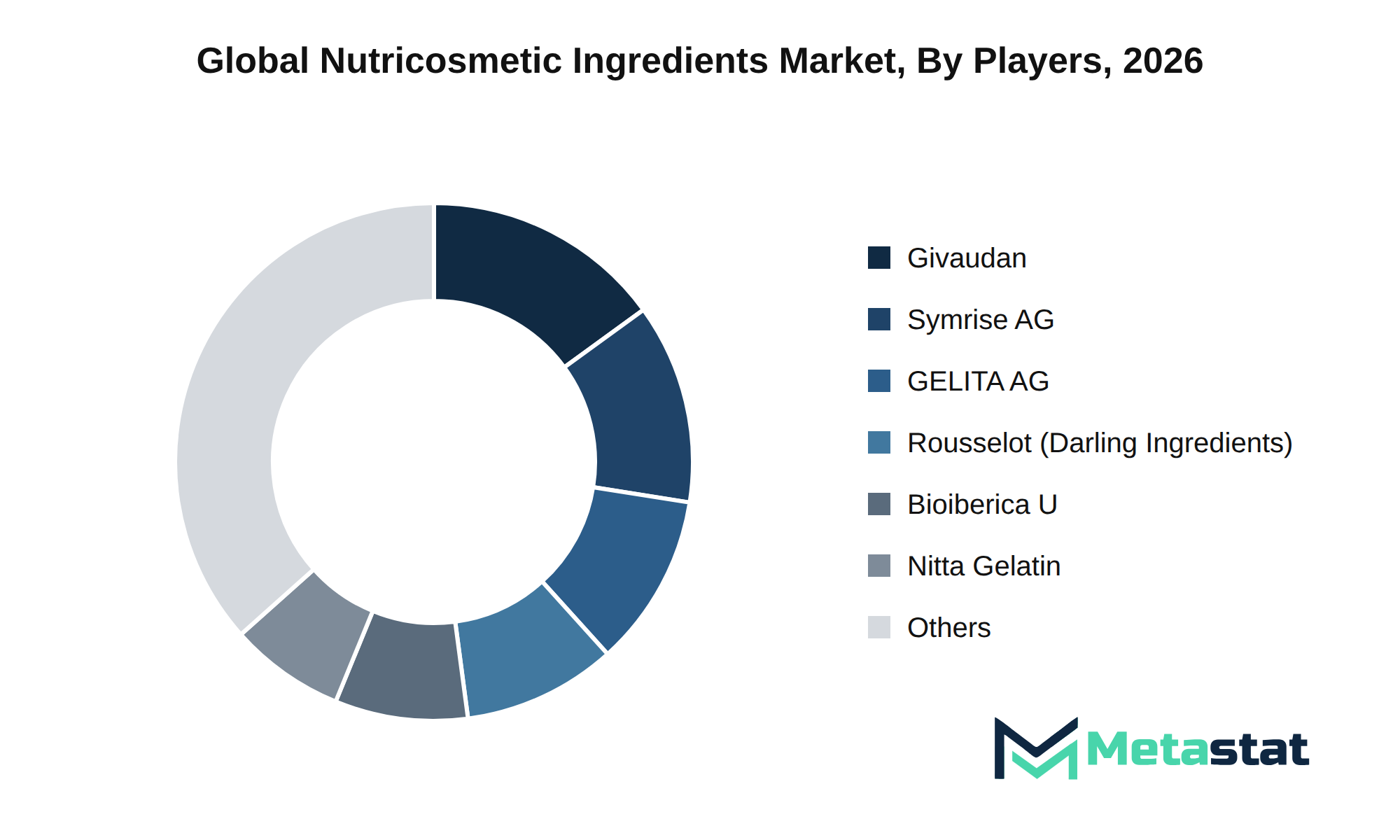
The Nutricosmetic Ingredients market features a diverse group of players employing various strategies to enhance their competitive position. Companies including GELITA AG, Rousselot (Darling Ingredients), and Nitta Gelatin Inc. focus on product differentiation through innovative ingredient formulations and proprietary technology. This approach creates distinct market offerings that cater to specific consumer needs, enhancing brand equity and customer retention.
Strategic alliances and joint ventures emerge because essential tactics, allowing companies like Symrise AG and Lycored to leverage combined expertise and expand their product portfolios. These partnerships enable participants to access new markets and enhance their research and development capabilities, creating a collaborative approach that strengthens their competitive position.
Threats from new entrants influence market dynamics, because established players implement barriers to entry through robust intellectual property portfolios and proprietary technologies. Companies including Activ'Inside and Indena S.p.A. demonstrate leadership in this area, emphasizing the importance of technological defensibility in maintaining competitive advantages within the Nutricosmetic Ingredients market.
The ongoing focus on supply chain dominance and procurement leverage among leading players, including Givaudan and Nexira, aids in optimizing operational efficiencies. These strategies contribute to favorable pricing architectures and enhance profitability, positioning these companies advantageously in the evolving market.
While market trends shift towards sustainability and natural ingredients, companies like Bioiberica S.A.U. and Roquette Frères adapt their product offerings to meet consumer demand. This proactive approach not only addresses changing preferences but strengthens their standing in the Nutricosmetic Ingredients market, ensuring readiness for future competitive challenges.
Forecast and Future Outlook
Market size is forecast to rise from USD 9.8 billion in 2025 to over USD 20.8 billion by 2033. This growth reflects a compound annual growth rate (CAGR) of 9.8%, driven by increasing consumer interest in beauty and wellness products that promote skin health, hydration, and anti-aging benefits. Various factors contribute to the anticipated expansion, including rising disposable incomes, changing lifestyles, and a growing emphasis on preventative health measures.
In a bullish scenario, strong investment in research and development leads to innovative product formulations, enhancing the appeal of the Nutricosmetic Ingredients market. Increased collaboration among industry players facilitates the introduction of advanced technologies, driving further adoption and market penetration. A bearish outlook highlights potential risks, including regulatory hurdles that could delay product launches and compliance challenges impacting market accessibility.
The evolving geopolitical landscape reshapes trade corridors and affects global supply chains. Strategic capital allocation directed towards infrastructure and production capabilities strengthens supply chain resilience, ensuring timely delivery of products to consumers. Emerging white-space opportunities in niche segments of the market present avenues for growth, including targeting specific demographics and addressing unmet consumer needs.
Ongoing shifts in consumer preferences, combined with technological advancements in ingredient sourcing and formulation, create a dynamic environment for the Nutricosmetic Ingredients market. Companies that align their strategic imperatives with evolving consumer demands and regulatory frameworks enhance their growth prospects in the future.
Nutricosmetic Ingredients Market Key Segments
By Ingredient Type:
- Collagen Peptides
- Vitamins and Minerals
- Botanical Extracts and Phytonutrients
- Carotenoids
- Hyaluronic Acid and Glycosaminoglycans
- Probiotics, Prebiotics and Postbiotics
- Omega-3 Fatty Acids and Phospholipids
- Amino Acids and Protein-Derived Ingredients
- Ceramides and Functional Lipids
- Others (Coenzyme Q10, MSM, Enzymes)
By Beauty Benefit:
- Skin Health and Anti-Aging
- Skin Hydration and Elasticity
- Hair Growth and Strength
- Nail Growth and Strength
- Skin Radiance and Complexion
- Sun and Environmental Protection
- Body Contouring
- Others (Scalp Health, Skin Barrier Support)
By Source:
- Plant-Derived
- Animal-Derived
- Marine and Algae-Derived
- Microbial and Fermentation-Derived
- Synthetic and Biotechnology-Derived
By End-Use:
- Capsules and Tablets
- Powders and Sachets
- Gummies and Chewables
- Softgels
- Liquid Shots and Ready-to-Drink Products
- Functional Foods and Beverages
- Others (Oral Strips, Pellets and Granules)
By Region:
- North America
- Europe
- Asia-Pacific
- South America
- Middle East and Africa
Key Global Nutricosmetic Ingredients Industry Players
- GELITA AG
- Rousselot (Darling Ingredients)
- Nitta Gelatin Inc.
- Bioiberica S.A.U.
- Symrise AG
- Lycored
- Activ'Inside
- Indena S.p.A.
- Euromed S.A.
- Givaudan
- Nexira
- Balchem Corp.
- Lubrizol
- Roquette Frères
- Nektium
- AIDP, Inc.
- Stratum Nutrition
- Sami-Sabinsa Group
- Maypro
- Nutris
Report Coverage
The report strategically identifies and profiles the key market players and analyses their core competencies in each sub-segment of the Nutricosmetic Ingredients market.
Report Attributes | Details |
Study Period | 2021-2033 |
Base Year | 2025 |
Estimated Year | 2026 |
Forecast Period | 2026-2033 |
Historical Period | 2021-2025 |
Growth Rate | CAGR 9.8% from 2026 to 2033 |
Revenue Unit | USD billion |
Segmentation | By Ingredient Type, Beauty Benefit, Source, End-Use, and Region |
By Region | North America (By Ingredient Type, Beauty Benefit, Source, End-Use, and Country)
|
Europe (By Ingredient Type, Beauty Benefit, Source, End-Use, and Country)
| |
Asia Pacific (By Ingredient Type, Beauty Benefit, Source, End-Use, and Country)
| |
South America (By Ingredient Type, Beauty Benefit, Source, End-Use, and Country)
| |
Middle East and Africa (By Ingredient Type, Beauty Benefit, Source, End-Use, and Country)
|
What Report Provides
- Key Company Market Share, Revenue and Ranking for the Nutricosmetic Ingredients Market
- Key Market Leaders in the Nutricosmetic Ingredients Sector
- Full In-Depth Analysis of the Parent Industry
- Industry Statistics and Important Changes in Market Dynamics
- Segmentation Details of the Nutricosmetic Ingredients Market
- Historical, Ongoing and Projected Market Analysis
- Assessment of Niche Industry Developments
- Key Strategic Recommendations for Market Participants
Frequently Asked Questions
Find answers to common questions about this report
The Nutricosmetic Ingredients market size was valued at USD 9.8 billion in 2025, according to the Metastat Insights study.
The Nutricosmetic Ingredients market is projected to grow at a CAGR of 9.8% during the forecast period from 2026 to 2033.
The North America Nutricosmetic Ingredients market size is estimated to reach USD 4.4 billion by 2033.
The segment leading the Nutricosmetic Ingredients market is Collagen Peptides, with a projected value of USD 6.2 billion by 2033. This segment demonstrates significant growth potential, with a compound annual growth rate of 9.7 percent.
The Nutricosmetic Ingredients market experiences growth driven by changing consumer behaviors, with a rising focus on health and wellness influencing demand. Aging populations and urbanization create a consumer base inclined toward effective solutions for beauty from within, emphasizing innovative formulations and ingredient transparency. Enhanced marketing strategies and digital transformation further support market expansion.
The Nutricosmetic Ingredients market growth faces restraints due to stringent regulatory compliance requirements, increasing operational costs, and delays in product launches. Macroeconomic headwinds, including inflation and supply chain disruptions, further limit market potential, while competition from alternative offerings intensifies pressure on traditional ingredients. Talent gaps in skilled labor hinder innovation and operational effectiveness.
Changing consumer behaviors and a rising focus on health and wellness significantly influence product adoption in the Nutricosmetic Ingredients market. Increased awareness of nutrition's benefits on beauty, along with aging populations seeking effective anti-aging solutions, drive demand for innovative and transparent formulations that align with individual wellness goals.
The Nutricosmetic Ingredients market is estimated to reach a valuation of USD 20.8 billion by 2033.
Key players in the Nutricosmetic Ingredients market include GELITA AG, Rousselot (Darling Ingredients), Nitta Gelatin Inc., Bioiberica S.A.U., Symrise AG, and Lycored.
Collagen Peptides is projected to grow at a CAGR of 9.7% from USD 3.2 billion in 2026 to USD 6.2 billion by 2033.
Choose Your License
Global Nutricosmetic Ingredients Market
Related Reports
Explore related market intelligence reports worth reading alongside this one.