
LEAD ANALYST
Utkarsh Khirodkar is a Lead Market Research Analyst at MetaStat Insight, specializing in market intelligence, technology sector assessments, and competitive strategy.

Global Green Steel Market Size, Share, By Industry Verticals (Electric Arc Furnace (EAF) and Molten Oxide Electrolysis (MOE)), By Energy Source (Hydrogen, Coal Gasification, and Electricity), By End User (Construction, Automotive, Electronics, and Others), By Steel Type (Flat Steel, Long Steel, Tubular Steel, Stainless Steel, and Specialty Steel), Industry Analysis, Growth, Trends, and Forecast, 2026-2033
Report ID
MSI-5178
Published
September, 2026
Pages
290 Pages
Format
Historical
Base year
Forecast
Forecast period
Report Details
Choose Your License
Global Green Steel Market
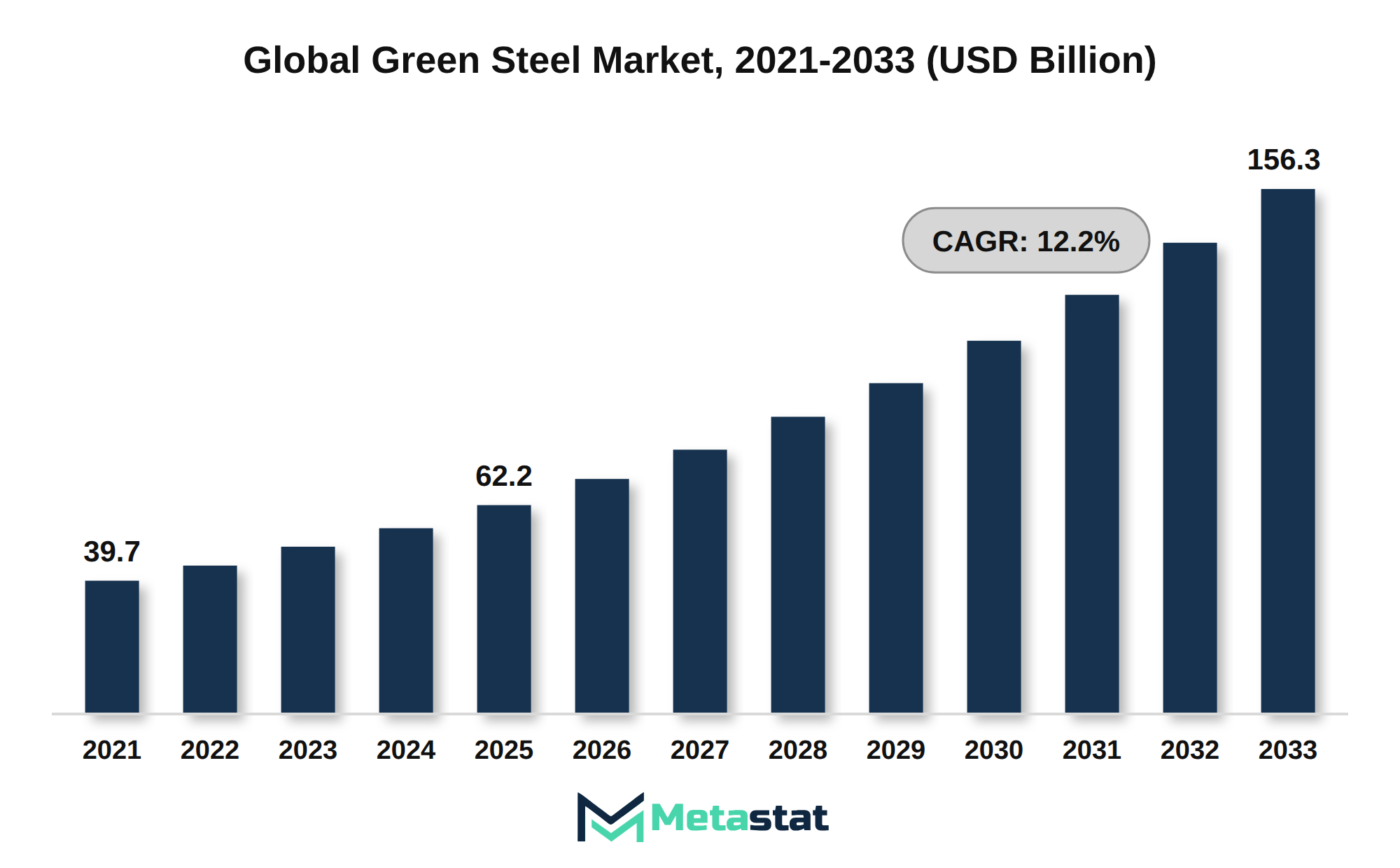
The global Green Steel market was valued at USD 62.2 billion in 2025 and is projected to reach USD 156.3 billion by 2033, growing at a CAGR of 12.2% over the forecast period.
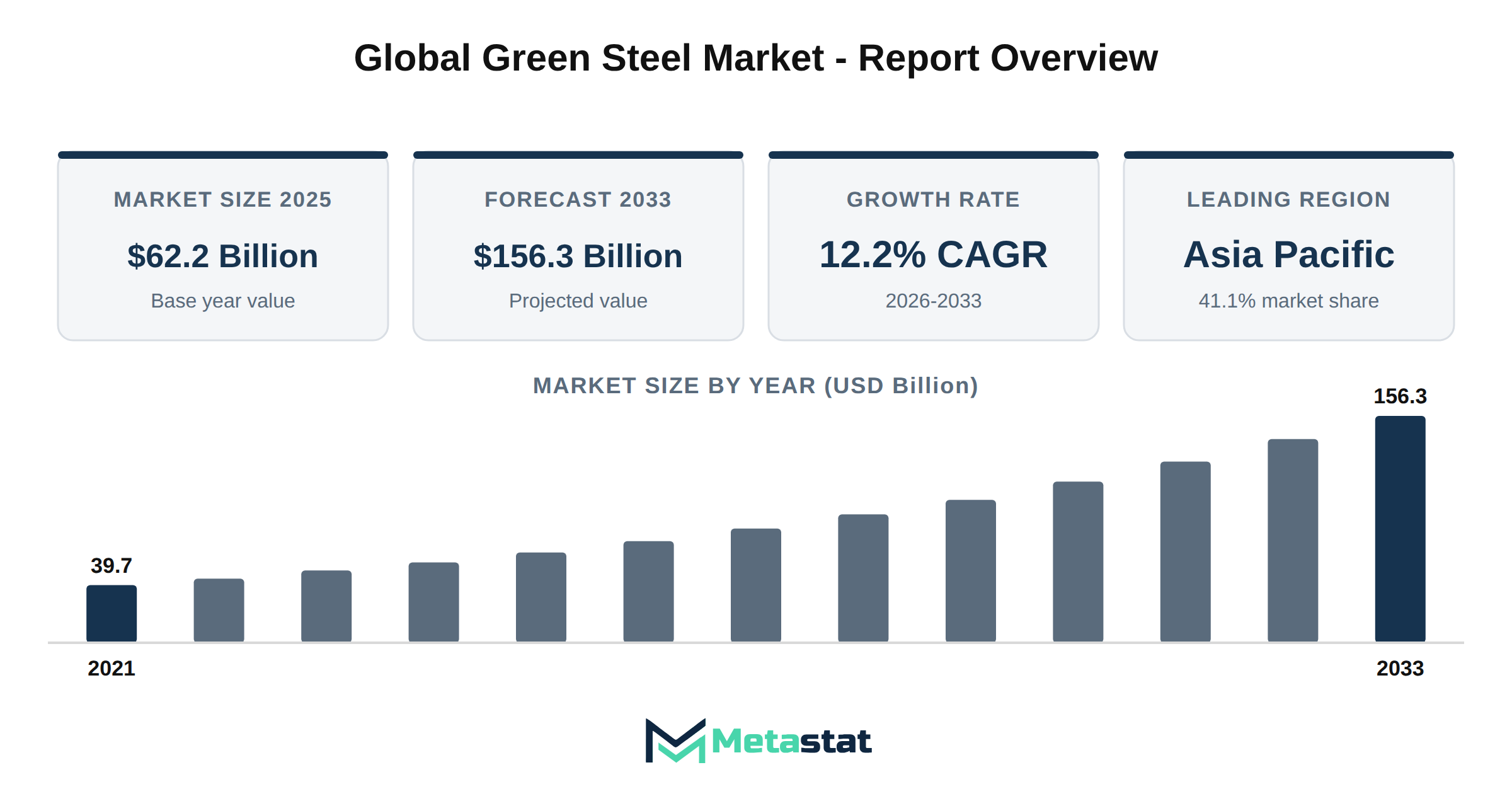
The Green Steel market reached a value of USD 62.2 billion in 2025, reflecting significant growth from USD 39.7 billion in 2021. Projections indicate an increase to USD 156.3 billion by 2033, with a compound annual growth rate (CAGR) of 12.2%. The growth trajectory highlights the increasing demand for sustainable steel production methods and the rising adoption of green technologies across various industries.
Green hydrogen-based steelmaking trends are gaining traction, driven by advancements in hydrogen production and usage in steel manufacturing. The integration of hydrogen into the steelmaking process enhances the environmental sustainability of production, attracting investments from key players. Companies investing in hydrogen technology are positioned to benefit from the shift towards low-carbon solutions, contributing to the overall growth of the market.
Direct Reduced Iron (DRI) technology adoption plays a critical role in transforming steel production processes. Innovations in DRI technology lead to improved efficiency and reduced emissions, aligning with global decarbonization efforts. This trend influences the competitive landscape, encouraging traditional steelmakers to innovate and adapt processes to remain competitive in the evolving market.
Investment trends reflect a strong commitment to green steel projects. A robust pipeline of upcoming projects supports the transition to sustainable production methods. Investments in advanced technologies, including electric arc furnaces and molten oxide electrolysis, highlight the industry's focus on reducing carbon footprints while meeting the rising demand for green steel.
Competitive positioning within the Green Steel market is characterized by strategic initiatives among key players. Companies are forming partnerships and collaborations to enhance their technological capabilities and expand market reach. These initiatives allow firms to share knowledge and resources, improving operational efficiency and market presence.
Regulatory developments and decarbonization policies significantly influence the market landscape. Governments worldwide implement stringent regulations to lower carbon emissions, driving the demand for green steel solutions. Compliance with these regulations stimulates innovation among steel producers, propelling the adoption of sustainable practices across the industry.
Growth opportunities span across the low-carbon steel value chain, with increasing emphasis on sustainable sourcing and production methodologies. Stakeholders are focusing on enhancing supply chain efficiencies while minimizing environmental impact. This comprehensive approach positions the market for sustained growth and investment, driven by evolving consumer preferences and regulatory frameworks.
The transition to green hydrogen-based steelmaking represents a significant trend within the Green Steel market. The utilization of green hydrogen because a reducing agent in steel production reduces carbon emissions substantially. This technology is gaining traction among steel manufacturers aiming to align with global decarbonization goals. Several companies have initiated pilot projects focusing on the commercial application of this technology, driving innovation within the sector.
Direct Reduced Iron (DRI) technology has seen increased adoption within the market, driven by its ability to produce low-emission steel. Innovations in DRI processes, including the integration of renewable energy sources, enhance efficiency and reduce environmental impact. Stakeholders in the industry are investing in advanced DRI technologies to improve production capabilities. This investment supports the overall growth trajectory of the market.
Investment in green steel projects is intensifying, with substantial capital allocated to developing sustainable steelmaking technologies. The project pipeline includes both new facilities and retrofitting existing plants to accommodate low-carbon production methods. Financial commitments from various stakeholders reflect a growing confidence in the profitability of green steel initiatives, creating a competitive landscape that encourages innovation and expansion.
Competitive positioning within the Green Steel market has shifted significantly because players adopt various strategic initiatives. Companies are forming partnerships and collaborations to leverage technological advancements and share resources. This approach enables participants to enhance their market presence and optimize production efficiencies while reducing costs, which is crucial in a changing market environment.
Regulatory developments focused on environmental sustainability and decarbonization policies are shaping the market landscape. Governments worldwide are implementing stringent regulations aimed at reducing carbon emissions from steel production. Compliance with these regulations drives investments in green technologies, ensuring that companies remain competitive while adhering to emerging environmental standards.
Growth opportunities within the low-carbon steel value chain are expanding because demand for sustainable products increases. The market for green steel is projected to benefit from rising consumer awareness and preference for environmentally friendly materials. This trend opens avenues for innovation, particularly in the development of new steel grades that meet both performance and sustainability criteria, further enhancing market growth.
Increased emphasis on reducing carbon emissions significantly influences the Green Steel market. Stringent environmental regulations and public pressure for sustainability compel steel producers to adopt more eco-friendly practices. This shift drives investment in innovative technologies, including Electric Arc Furnace (EAF) and Molten Oxide Electrolysis (MOE), which contribute to lower carbon footprints while maintaining production efficiency.
The market benefits from these advancements, driven by stakeholders in various sectors, including construction and automotive, prioritizing sustainable sourcing. These industries increasingly demand steel products that align with their environmental objectives, thereby enhancing market growth. The anticipated transition towards closed-loop production systems, which minimize waste and maximize recycling, positions the market favorably for future expansion and investment.
Investment in renewable energy sources, including hydrogen, supports this transition. This energy approach not only reduces dependence on fossil fuels but aligns with the evolving sustainability mandates from governments and industries. The result is a robust market environment, promoting innovation and driving competitive advantages among players committed to sustainable practices.
Investment in technological integration serves because a catalyst for the growth of the Green Steel market. Companies increasingly adopt automation and artificial intelligence to optimize production processes and reduce operational costs. By leveraging advanced software solutions, manufacturers enhance their efficiency, ensuring a more sustainable approach to steel production.
The rise of digital transformation across industries creates a competitive environment where innovation thrives. Companies that invest in digitizing legacy processes benefit from streamlined operations and increased productivity. This transformation aligns with the market's focus on sustainability, because enhanced operational efficiency directly contributes to reduced carbon footprints.
In particular, the adoption of automation technologies supports the shift towards green initiatives by minimizing waste and improving resource utilization. Higher efficiency translates into cost savings and leads to improved margins, attracting further investment into the sector. The combination of technological integration and cost-efficiency initiatives positions the market for growth through 2033.
While industries transition to greener practices, the demand for green steel rises, driven by evolving consumer preferences and environmental concerns. Technological advancements enhance production capacity and reinforce the commitment to sustainability, ensuring that the market remains competitive in an increasingly eco-conscious economy.
The Green Steel market faces significant challenges stemming from stringent regulatory compliance and high capital investment requirements. Regulatory frameworks aimed at reducing carbon emissions impose strict guidelines that increase operational costs for producers. The complexities of meeting these regulations require substantial financial resources, restricting the ability of smaller players to compete effectively in the market.
Macroeconomic headwinds, including inflationary pressures and supply chain disruptions, further exacerbate the situation. Rising costs of raw materials and labor, coupled with geopolitical instability, create an environment where operational expenses escalate, affecting profitability. These factors contribute to reluctance among potential investors, hindering growth prospects within the market.
Technological obsolescence poses another restraint, particularly for companies that fail to adopt innovative manufacturing processes. The rapid advancement of steel production technologies necessitates continuous investment to maintain competitiveness. Firms that do not adapt risk losing market share to competitors that leverage newer, more efficient production methods.
The Green Steel market encounters challenges related to skilled labor shortages and talent gaps. A lack of qualified personnel limits the ability to scale operations effectively, impacting production capacity and overall market growth. Addressing these workforce issues remains critical for companies aiming to enhance their competitive positioning in the evolving green steel production sector.
The Green Steel market encounters significant challenges owing to geopolitical fragmentation, which leads to trade deficits and tariff friction. This situation creates uncertainty for suppliers and manufacturers, impacting the availability of raw materials and components. Tariffs imposed on imported materials escalate costs for producers, resulting in increased pricing pressure on the market. Manufacturers face obstacles in sourcing essential feedstocks, which affects production timelines and overall efficiency.
Technological disruptions further complicate the landscape. Integrating advanced production technologies requires substantial investment in research and development, and the complexity of these integrations hinders progress. Firms struggle with interoperability issues, affecting the adoption of innovative solutions across different manufacturing systems. Such challenges delay the implementation of sustainable practices essential for meeting the demands of the Green Steel market.
Logistics disruptions and supply chain instability continue to pose threats. Natural disasters, geopolitical events, and other unexpected occurrences result in transportation delays and increased operational costs. These disruptions significantly influence inventory management and delivery schedules, affecting manufacturers' ability to meet customer demands consistently.
Environmental regulations tighten globally, introducing compliance overhead and evolving legal liabilities for producers. Adhering to these regulations necessitates additional investments in compliance measures, further constraining operational budgets. Rising input costs, stemming from increased energy prices and raw material scarcity, pressure profit margins across the market.
Skill gaps within the workforce contribute to operational inefficiencies. The transition to advanced green technologies requires a highly skilled workforce capable of managing sophisticated manufacturing processes. Talent retention pressures exacerbate this issue, limiting companies' ability to maintain a proficient and adaptive labor force. These factors collectively hinder the Green Steel market's growth and expansion prospects.
Infrastructure gaps and retrofitting barriers complicate the transition to greener steelmaking processes. Many existing facilities require significant upgrades to adopt innovative production methods, presenting both technical and financial challenges. Implementation bottlenecks arise from the need for specialized knowledge and resources to facilitate these transitions.
Finally, the market navigates intellectual property protection deficits, cybersecurity risks, and data vulnerabilities. Protecting innovations in green technologies becomes increasingly crucial, owing to the intensifying competitive landscape. Failure to secure intellectual property leads to lost competitive advantage and hinders investment in new solutions, ultimately affecting the overall growth trajectory of the Green Steel market.
The Green Steel market experiences significant opportunities driven by emerging regional demands across various sectors. Increased focus on sustainability and environmental accountability prompts industries to adopt greener practices, resulting in heightened demand for low-carbon steel solutions. Infrastructure modernization initiatives across North America and Europe further support this trend, facilitating investments in advanced production technologies and sustainable practices.
Technological disruptions play an important role in the evolution of the market, enabling innovations like Electric Arc Furnace (EAF) and Molten Oxide Electrolysis (MOE) methods that enhance production efficiency. Digital transformation within the sector promotes streamlined operations and improved data management, allowing companies to respond to changing consumer preferences more effectively. The integration of technological advancements positions players to optimize operational yields and increase market competitiveness.
Geographical expansion across Asia Pacific, particularly in China and India, presents substantial growth avenues for the Green Steel market. These regions display rising industrial activity and growing infrastructure development, leading to increased steel consumption. Alongside this expansion, strategic consolidation initiatives and cross-industry mergers enhance market positioning, allowing companies to improve their value propositions and broaden product offerings.
Shifts in buying behaviors, driven by environmental, social, and governance (ESG) considerations, influence procurement strategies across industries. Buyers increasingly prioritize suppliers who demonstrate commitment to sustainability, pushing manufacturers to align their operations with eco-friendly compliance standards. This trend significantly affects downstream market diversification, resulting from companies seeking to cater to niche applications that prioritize sustainability.
Investments in asset life-cycle extensions, maintenance upgrades, and retrofitting further contribute to market opportunities. Firms recognize the importance of maximizing existing resources to meet evolving environmental requirements. Value-chain optimization through process automation allows for enhanced operational efficiencies, ultimately leading to improved profitability and growth potential. The combination of these factors creates substantial advancements in the Green Steel market, positioning it for growth in the coming years.
The Global Green Steel market is segmented based on Industry Verticals, Energy Source, End User, and Steel Type.
Valued at USD 39.8 billion in 2026, the Electric Arc Furnace (EAF) segment is projected to reach USD 88.1 billion by 2033, reflecting a CAGR of 12% during the forecast period. Rising demand for sustainable steel production techniques drives interest in EAF technology, enabling manufacturers to produce steel with reduced carbon emissions compared to traditional methods. Industries including automotive and construction increasingly adopt EAF steel, aligning with the global shift toward environmentally friendly practices.
Technological advancements continue to enhance EAF efficiency, promoting its adoption across various sectors. The segment benefits from improved energy efficiency, reduced operational costs, and a more flexible production process. EAF systems accommodate diverse raw materials, facilitating shifts in consumption patterns. Industries seek to meet environmental standards and consumer preferences for sustainable products.
Regulatory compliance and governmental incentives further support the growth of the Electric Arc Furnace segment in the Green Steel market. Policies aimed at reducing carbon footprints and promoting renewable energy usage encourage investment in EAF technologies. While manufacturers prioritize eco-friendly processes, capital investment in EAF systems increases significantly, reinforcing its role in the future of the steel industry.
Molten Oxide Electrolysis (MOE) segment is estimated to reach USD 68.3 billion by 2033, at a CAGR of 12.4% during the forecast period. This segment benefits from advancements in technology and increased demand for sustainable alternatives in steel production. The adoption of MOE technology is driven by rising environmental regulations and the need for cleaner production methods, primarily in industrial sectors including automotive and construction.
Strategic investments in research and development enhance the technological maturation of MOE processes, leading to improved efficiency and lower operational costs. This evolution signifies a shift in end-user dynamics, with sectors increasingly seeking eco-friendly sources of steel to meet sustainability goals. Consumption shifts towards greener alternatives reinforce the appeal of MOE in the broader context of the Green Steel market.
Regulatory compliance standards increasingly favor low-emission technologies, creating a conducive environment for MOE to thrive. Price volatility related to raw material sourcing presents challenges that influence margins. Suppliers within this segment navigate these pressures while capitalizing on strategic opportunities in growing markets.
The MOE segment is projected to secure a growing share of the Green Steel market, reflecting a strong alignment with global trends towards sustainable industrial practices. The strategic outlook for investments in this area indicates significant expansion, supported by a commitment to cleaner energy sources and innovative production techniques.
Hydrogen utilization in steel production demonstrates significant potential for market expansion. Valued at USD 32 billion in 2026, this segment is projected to reach USD 74.7 billion by 2033, reflecting a robust CAGR of 12.9% throughout the forecast period. This growth is primarily driven by the increasing demand for low-carbon alternatives in the steelmaking process. Industries, particularly automotive and construction, emphasize sustainable practices, significantly affecting the adoption of hydrogen because a primary energy source in steel production.
The transition towards hydrogen-powered steelmaking aligns with global efforts to reduce greenhouse gas emissions. Regulatory frameworks and policy incentives further accelerate this shift, creating favorable conditions for investment in hydrogen technologies. Innovations in electrolyzer technology and hydrogen production methods enhance efficiency, impacting operational costs positively. While production capabilities mature, the market experiences a shift towards more scalable hydrogen solutions, enabling broader application across various steel types.
Downstream applications directly benefit from hydrogen integration, because manufacturers realize the potential for cleaner production processes. Demand from end-users, particularly in sectors focused on sustainability, drives growth in the Green Steel market. The anticipated consumption shifts towards hydrogen-based steel highlight a strategic opportunity window for stakeholders aiming to capture emerging market share.
Cost structures associated with hydrogen production continuously evolve, reflecting advancements in technology and increased competition within the energy sector. Pricing volatility in traditional fossil fuels further incentivizes the transition to hydrogen, enhancing its attractiveness for steelmakers. While the market matures, maintaining supply chain resilience becomes essential, ensuring reliable access to hydrogen and associated technologies. Substitution risks related to fossil fuels prompt steel manufacturers to explore hydrogen because a viable alternative, contributing to the segment's anticipated growth.
Increasing focus on reducing carbon emissions drives demand for coal gasification in the Green Steel market. This method uses coal to produce synthetic gas, which acts because a significant alternative to traditional steelmaking processes. The segment plays a key role in facilitating the transition towards greener production methods while ensuring resource efficiency. Numerous industries, particularly construction and automotive, leverage this process to meet sustainability targets. Technological advancements enhance the efficiency and output of coal gasification, supporting wider adoption across various sectors. The segment is estimated to reach USD 19.7 billion by 2033, at a CAGR of 10% during the forecast period. Strategic investments in this segment illustrate the commitment to reducing emissions while maintaining production capabilities. While the market evolves, coal gasification emerges because a viable solution for meeting the increasing steel demand with reduced environmental impact.
Significant growth in the Electricity segment of the Green Steel market reflects a shift in energy sourcing strategies aimed at reducing carbon emissions. The estimated value is expected to reach USD 61.8 billion by 2033. This expansion arises from increasing demand for cleaner production methods driven by regulatory pressures and consumer preferences prioritizing sustainability.
Technological advancements enhance the efficiency of electricity usage in steel production, leading to cost reductions and improved operational effectiveness. Supply chain resilience is essential, particularly in securing reliable electricity sources to support production needs. The integration of renewable electricity sources strengthens the market's sustainability narrative, aligning with global decarbonization goals.
Downstream applications in sectors including construction and automotive drive further demand for electricity-based steel production. The market's evolution reflects a growing recognition of the need for sustainable materials, prompting investment in next-generation technologies. This trend positions the Electricity segment because a vital contributor to the overall growth trajectory of the Green Steel market.
Valued at USD 31.4 billion in 2026, the construction sector holds a significant position in the Green Steel market, projected to reach USD 69.3 billion by 2033, at a CAGR of 12% during the forecast period. The increasing demand for sustainable building materials drives the adoption of green steel, aligning with global efforts to reduce carbon emissions in construction processes. Regulatory compliance and rising environmental standards compel construction companies to integrate eco-friendly materials into their projects, enhancing competitiveness and market position.
Technological maturation in steel production processes supports the development of advanced green steel solutions. Innovations in Electric Arc Furnace (EAF) technology and Molten Oxide Electrolysis (MOE) significantly enhance energy efficiency and lower carbon footprints. With construction projects prioritizing sustainability, the shift towards green steel becomes essential for meeting consumer expectations and regulatory requirements.
Investment in research and development focuses on next-generation upgrades that improve the performance and cost-effectiveness of green steel products. Transitioning to green steel fulfills immediate construction requirements and positions companies favorably for long-term growth. Overall, the construction segment's evolution within the Green Steel market highlights the significance of sustainable practices and technological advancements in achieving operational efficiency and market competitiveness.
Demand for green steel within the automotive sector experiences significant growth, driven by the industry's increasing focus on sustainability and stringent regulatory requirements. Automotive manufacturers prioritize reducing carbon footprints in production processes to align with global efforts toward environmental responsibility. The automotive segment is expected to reach USD 54.1 billion by 2033, at a CAGR of 12% during the forecast period.
Technological advancements in manufacturing techniques enhance the appeal of green steel for automotive applications. Innovations in electric arc furnace technologies and molten oxide electrolysis result in increased efficiency and lower emissions, making green steel a viable alternative to traditional methods. This technological maturation supports greater adoption rates among automotive manufacturers seeking to meet consumer demand for eco-friendly vehicles.
End-use dynamics in the automotive sector reflect a significant shift toward electric and hybrid vehicles, which increasingly incorporate lightweight materials to enhance performance and efficiency. The transition toward sustainable materials, including green steel, aligns with the broader trend of electrification in the automotive market. This shift encourages manufacturers to explore new production methods and materials that contribute to overall vehicle sustainability and performance.
Regulatory compliance standards further influence the automotive segment's growth trajectory. Governments worldwide implement policies aimed at reducing greenhouse gas emissions, driving automotive brands toward integrating green steel into their supply chains. These compliance measures create strategic opportunity windows for participants in the green steel market to expand partnerships and collaborations with automotive manufacturers looking to enhance their sustainability profiles.
Overall, the automotive segment in the green steel market demonstrates strong growth potential fueled by evolving consumer preferences, technological evolution, and regulatory pressures. Capital investment in innovative processes and materials becomes critical for automotive manufacturers aiming to secure a competitive edge while contributing to environmental goals.
Demand for green steel within the electronics sector reflects increasing focus on sustainability and energy efficiency in manufacturing practices. Concerns regarding carbon emissions influence electronics manufacturers to adopt greener alternatives, leading to a shift toward environmentally friendly materials in production processes. The Electronics segment is expected to reach USD 12.4 billion by 2033.
Technological maturation influences the evolution of green steel applications in electronics. Innovations in manufacturing techniques, including advances in electric arc furnace technology, enhance the viability and performance of green steel in electronic components. This development creates strategic opportunity windows for suppliers looking to penetrate the electronics market further.
Regulatory compliance standards increasingly mandate reductions in carbon footprints across various industries, including electronics. Compliance with these standards drives demand for sustainable materials, positioning green steel because a viable solution. The alignment of product evolution with regulatory shifts drives growth in the market, attracting investment in green steel solutions tailored for electronics.
Pricing volatility and margin pressures persist due to fluctuating raw material costs. Suppliers face challenges in maintaining competitive pricing while investing in advanced technologies for production. This dynamic requires strategic approaches to raw material sourcing and supply chain resilience to ensure consistent product availability.
Consumption shifts within the electronics sector reflect a broader trend toward sustainable materials. While manufacturers prioritize eco-friendly options, demand for green steel increases, reinforcing its significance in the market. The transition reflects a collective movement toward sustainability across industries, further enhancing the role of green steel in future manufacturing practices.
Market dynamics for the "Others" segment in the Green Steel market reflect a growing demand across various industries not explicitly covered in other categories. This segment is projected to grow at a CAGR of 13.3% during the forecast period. Factors driving growth include increasing awareness of sustainability and environmental impact among consumers, which influences manufacturers to adopt greener practices. Technological maturation supports this trend, with innovations in production processes enhancing the efficiency and performance of green steel.
Downstream applications have expanded into diverse fields, including niche markets, which contribute to consumption shifts. Regulatory compliance standards increasingly favor eco-friendly products, while certifications for sustainable practices enhance market credibility. This segment benefits from strategic opportunity windows, reflecting companies' efforts to differentiate themselves in an evolving environment.
Pricing volatility remains a consideration, with fluctuations in raw material costs impacting profit margins. The strategic investment outlook for the segment remains positive due to the potential for long-term savings associated with green steel adoption. While the market evolves, the integration of innovative technologies and sustainable practices will likely chart a growth path for the "Others" segment within the Green Steel market.
Valued at USD 27.4 billion in 2026, the Flat Steel segment is projected to reach USD 64.2 billion by 2033, at a CAGR of 12.9% during the forecast period. Increasing adoption of flat steel in construction applications drives significant demand, driven by builders focusing on sustainable materials that align with environmental regulations and standards. Investment in next-generation upgrades, including advanced Electric Arc Furnace (EAF) technologies, enhances production efficiency and reduces emissions. These advancements contribute to improved product evolution, providing a competitive edge in the market.
Downstream applications in automotive production and electronics manufacturing rely increasingly on flat steel’s versatility and strength, supporting the shift towards sustainable practices. This trend aligns with heightened regulatory compliance standards, compelling manufacturers to innovate and develop greener products. Price volatility remains a critical factor, influenced by raw material sourcing and supply chain resilience, requiring strategic management to mitigate margin pressures. The growing emphasis on sustainability provides strategic opportunity windows for companies in the Green Steel market, encouraging capital investment in eco-friendly production methods and technologies.
Long Steel segment is estimated to reach USD 37.1 billion by 2033, at a CAGR of 12% during the forecast period. Primary demand drivers for this segment include increased construction activities and rising infrastructure development globally. Several regions, particularly in Asia Pacific and North America, experience significant growth in construction projects that heavily use long steel products. Investment in sustainable construction methods further drives the demand for green steel solutions within this sector.
The adoption of advanced manufacturing technologies, including Electric Arc Furnace (EAF) methods, contributes to the expansion of the Long Steel segment. These technologies enhance production efficiency while reducing carbon emissions. Regulatory frameworks increasingly emphasize sustainability, and compliance with environmental standards compels manufacturers toward greener practices.
Technological maturation in steel production methods streamlines the overall manufacturing process and reduces operational costs. Enhanced production capabilities expand opportunities for long steel applications in various industries, including construction and automotive. This evolution in technology presents strategic opportunity windows for investments and partnerships that support next-generation upgrades.
End-use dynamics within the construction and automotive sectors remain crucial for the market. The ongoing shift toward eco-friendly materials promotes the adoption of green steel in long steel production. Continuous advancements in product evolution, coupled with rising consumer awareness regarding sustainability, influence purchasing decisions, ultimately driving demand for green steel throughout these industries.
Cost structures within the long steel segment face fluctuations due to raw material pricing volatility and supply chain resilience. Manufacturers actively seek to mitigate these challenges by diversifying raw material sourcing and investing in local production facilities. Such strategies enhance logistical efficiencies while reducing reliance on single-source suppliers.
Regulatory compliance standards increasingly influence market dynamics, compelling manufacturers to adapt to stricter emissions guidelines. Ongoing policy developments further shape the competitive landscape, leading to increased capital investments in green steel technologies. The segment's growth trajectory reflects these fundamental shifts, reinforcing its position within the broader Green Steel market.
Significant growth in the Tubular Steel segment contributes to the increasing market value, projected to reach USD 17.9 billion by 2033. The transition toward sustainable production methods influences demand for green steel, particularly in sectors prioritizing environmental compliance and carbon reduction. Adoption of tubular steel within industries including construction and energy infrastructure strengthens its market presence, driven by the material's strength and versatility.
Technological maturation in production processes enhances the efficiency and sustainability of tubular steel manufacturing. Innovations in hydrogen-based steelmaking and electric arc furnace technologies reduce environmental impact while improving product performance. The market's evolution reflects a shift toward next-generation upgrades, focusing on eco-friendly practices that align with regulatory pressures and end-user preferences.
Downstream applications for tubular steel span various sectors, with construction and energy leading in demand. The need for lightweight, high-strength materials in construction projects drives consumption shifts toward green steel solutions. Regulatory compliance standards further support this trend, pushing manufacturers to adopt greener practices to meet consumer and governmental expectations.
Cost structures within the tubular steel sector face pressures from raw material sourcing and pricing volatility. Fluctuations in the availability of traditional steel inputs influence market pricing and margins, compelling producers to explore alternative sources and practices that enhance supply chain resilience. Strategic investments in sustainable technologies create opportunities for differentiation and competitive advantage in the market.
Growth in the stainless steel segment of the Green Steel market results from increasing demand across various industries, particularly in construction and automotive applications. The growing emphasis on sustainability drives manufacturers to seek low-carbon alternatives, enhancing the appeal of stainless steel produced through green steel processes. Manufacturers invest in advanced production technologies, improving operational efficiency and reducing emissions, which contributes to market growth.
The stainless steel segment is projected to grow at a CAGR of 11.1% during the forecast period. The focus on innovative production techniques, including electric arc furnace technology, enables more sustainable sourcing of raw materials, mitigating environmental impacts associated with traditional steel production methods. This shift transforms consumption patterns and influences purchasing decisions in end-user industries.
Regulatory compliance influences the market landscape. Stringent environmental regulations drive the adoption of green steel solutions, pushing manufacturers towards sustainable practices. This regulatory environment enhances competitive advantage for producers who prioritize eco-friendly methods, driving demand for stainless steel in the Green Steel market.
Specialty steel plays a critical role in the Green Steel market, driven by the increasing demand for high-performance materials across various industries. The push for advanced applications in sectors including aerospace, defense, and high-end automotive fuels the need for specialty steel products. Regulatory compliance standards regarding environmental impact further increase the importance of specialty steel, because manufacturers seek materials that align with sustainability initiatives.
Technological maturation enhances the production processes of specialty steel, resulting in improved efficiency and reduced emissions. Innovations in alloy formulations and production techniques contribute to the evolution of specialty steel products that meet stringent specifications. This evolution opens strategic opportunity windows for companies to develop next-generation materials that cater to more demanding applications, enhancing market competitiveness.
Downstream applications highlight the increasing reliance on specialty steel in sectors emphasizing precision and durability. Industries including renewable energy, medical devices, and high-tech manufacturing prioritize the performance attributes of specialty steel, leading to shifts in consumption patterns. These dynamics create a favorable environment for investment and expansion within the specialty steel segment of the market.
Supply chain resilience remains a focus, with raw material sourcing strategies evolving to mitigate risks associated with price volatility and logistics vulnerabilities. Efforts to optimize sourcing channels and develop alternative supply routes enhance the robustness of the specialty steel supply chain. This focus on resilience ensures consistent availability of high-quality materials essential for specialty steel production.
Pricing volatility presents challenges, impacting margins for producers of specialty steel. Fluctuations in raw material costs, influenced by global market dynamics, necessitate strategic pricing approaches. Companies prioritize cost management while maintaining product quality to navigate these pressures effectively. The overall outlook for the specialty steel segment remains positive, with significant opportunities for growth in the context of the Green Steel market.
Based on geography, the Global Green Steel market is divided into North America, Europe, Asia-Pacific, South America, Middle East, and Africa.
North America Green Steel market demonstrates significant expansion potential, with projections indicating a compound annual growth rate (CAGR) of 12.2% throughout the forecast period. By the conclusion of 2033, the market is set to reach a total addressable market size of USD 36 billion. A significant driver for this growth involves heightened awareness regarding sustainability and environmental regulations, compelling industries to transition towards greener production methods.
The region's market share in the global context stands at 22.8% in 2025, reflecting robust competitive dynamics among prominent players. Key nations within this region include the United States, Canada, and Mexico, each contributing uniquely to the market's landscape. Increased investments in renewable energy, efficient production techniques, and localized supply chains enhance the operational capacity of manufacturers, pushing the market towards sustainable practices.
Infrastructure modernization efforts across North America serve because a catalyst for the Green Steel market, improving the efficiency of steel production and reducing carbon footprints. The ongoing trend of nearshoring initiatives facilitates localized manufacturing, promoting agility in supply chains and reducing dependency on overseas production. Regional resource availability and energy grid resiliency play critical roles in supporting the manufacturing capabilities of companies operating in this space.
Emerging market front-runners focus on advanced technologies to optimize production processes while meeting stringent environmental regulations. Domestic market leaders actively pursue strategic partnerships and investments to strengthen their competitive positions. The increasing demand for green steel across various industries, including construction and automotive, further drives growth within the market, establishing North America because an important region in the global Green Steel landscape.
The Green Steel market in Europe displays strong potential driven by a combination of regulatory frameworks, emerging technologies, and evolving consumer preferences. Countries including Germany, France, the UK, Italy, and Spain contribute significantly to the market, supported by robust industrial policies aimed at sustainability and carbon neutrality. The market share in Europe is projected at 28.1% in 2025, reflecting the region's commitment to transitioning towards greener production methods.
Germany leads the charge in adopting innovative steel production technologies, including Electric Arc Furnace (EAF) and Molten Oxide Electrolysis (MOE), which align with the broader European Union objectives of improving energy efficiency. France and the UK follow suit, enhancing their manufacturing capabilities to meet the rising demand for green steel across various sectors including construction and automotive. Spain and Italy are similarly positioned, investing heavily in renewable energy sources to support their steel production processes.
Emerging market front-runners in Europe benefit from a combination of localized resource availability and energy grid resiliency, allowing for a smoother transition to green steel production. The increasing emphasis on high-value replacement cycles and mature market dynamics aids in sustaining growth, particularly in high-demand sectors. Incremental growth vectors, driven by local procurement dynamics and cultural nuances in B2B buying behaviors, further position Europe because a key player in the global green steel landscape.
The ongoing regionalization of supply chains and initiatives aimed at nearshoring support local manufacturing densities, creating a conducive environment for competitive advantage. This emphasis on localized production minimizes geopolitical risks while enhancing cross-border trade corridors that improve market accessibility. Overall, Europe’s strategic entry barriers and continuous foreign direct investment (FDI) flows into green technologies significantly influence the region's competitive landscape, establishing it because a stronghold in the Green Steel market.
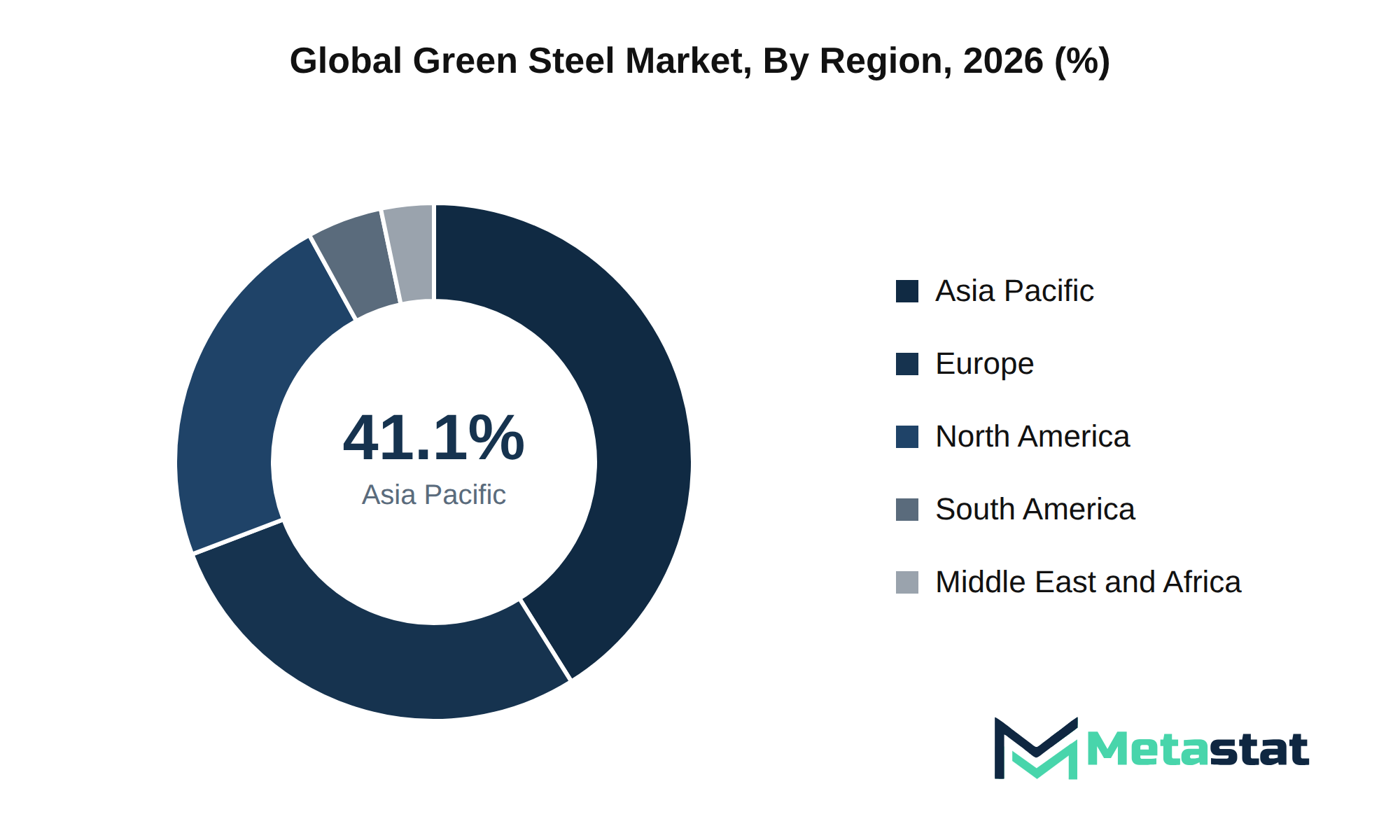
Asia-Pacific represents a significant opportunity in the Green Steel market, accounting for 41.1% of the global share in 2025. The region's growth is driven by increasing industrialization and urbanization, particularly in countries like China and India. These nations experience rising demand for steel in construction and infrastructure projects, necessitating a transition towards more sustainable production methods.
Infrastructure modernization efforts across Asia-Pacific enable the adoption of advanced steel production technologies, including Electric Arc Furnace (EAF) and Molten Oxide Electrolysis (MOE). Investments in renewable energy sources, particularly hydrogen, enhance the potential for green steel production. This trend attracts substantial foreign direct investment (FDI) flows, increasing competition among local and international players.
The competitive landscape in the region features domestic market participants alongside emerging players that focus on sustainable practices. Local procurement dynamics emphasize the importance of cultural nuances in B2B buying behavior, influencing customer preferences toward environmentally friendly products. Regional resource availability, including access to renewable energy, plays a critical role in shaping production capabilities.
While stakeholders prioritize reducing carbon emissions, the Green Steel market in Asia-Pacific is expected to experience incremental growth. The region's strategic entry barriers and localized manufacturing densities contribute to efficient supply chains that enhance product availability. With a focus on sustainability, Asia-Pacific positions itself because a key player in the evolving environment of green steel production.
The Green Steel market in South America is shaped by a growing awareness of sustainability among consumers and industries, particularly in Brazil and Argentina. Local manufacturers increasingly adopt green steel technologies to meet both domestic demand and international environmental standards, enhancing their competitive positioning. The region's resource availability, particularly in iron ore, supports the production of green steel, while energy grid developments improve access to renewable energy sources essential for production processes.
Infrastructure modernization plays an important role in supporting market growth. Enhanced access to transportation and energy facilities facilitates the distribution of green steel products. Local compliance mandates regarding emissions reduction further encourage investment in green steel technologies, particularly in Brazil, which leads the region in market size and adoption rates.
Emerging players in the South American market focus on localized manufacturing densities to improve supply chain efficiency. The presence of domestic market participants alongside new entrants creates a competitive landscape that drives innovation and encourages investment in green steel processes. This dynamic reflects the market's growth potential, representing a significant increase by 2033.
Overall, the Green Steel market in South America reflects incremental growth vectors driven by a combination of regulatory frameworks, resource availability, and localized procurement dynamics. The region's strategic entry barriers, including foreign direct investment flows, enhance opportunities for expansion, enabling stakeholders to tap into the growing global demand for sustainable steel solutions.
The Green Steel market in the Middle East and Africa presents unique characteristics shaped by several factors. Regional demand drivers include increasing awareness of sustainability and the shift towards decarbonizing industries, particularly in Saudi Arabia and the UAE. These countries have made significant commitments to reduce carbon emissions, leading to a growing interest in green steel production technologies.
Infrastructure modernization efforts contribute to the market's development, with countries including South Africa enhancing their steel manufacturing capabilities. Investments in renewable energy sources further support the adoption of green steel, especially in regions rich in solar and wind resources. Localized manufacturing densities are emerging, providing opportunities for companies to address domestic needs efficiently.
The Green Steel market experiences challenges related to supply chain regionalization, with geopolitical factors influencing cross-border trade. Domestic market participants focus on strengthening their competitive positions through strategic partnerships and investments. The environment in this region reflects a blend of mature market dynamics and emerging growth opportunities.
Regional resource availability plays a significant role in the potential for green steel adoption. The availability of affordable energy sources and localized production capabilities enhances competitiveness. Foreign direct investment flows into the region indicate strong interest in the development of green steel initiatives, which could further accelerate growth.
The Middle East and Africa exhibit a developing market landscape for green steel, defined by sustainability initiatives, infrastructure investments, and evolving competitive dynamics. Continued focus on compliance with local regulatory frameworks and energy resilience will shape the future direction of the market.
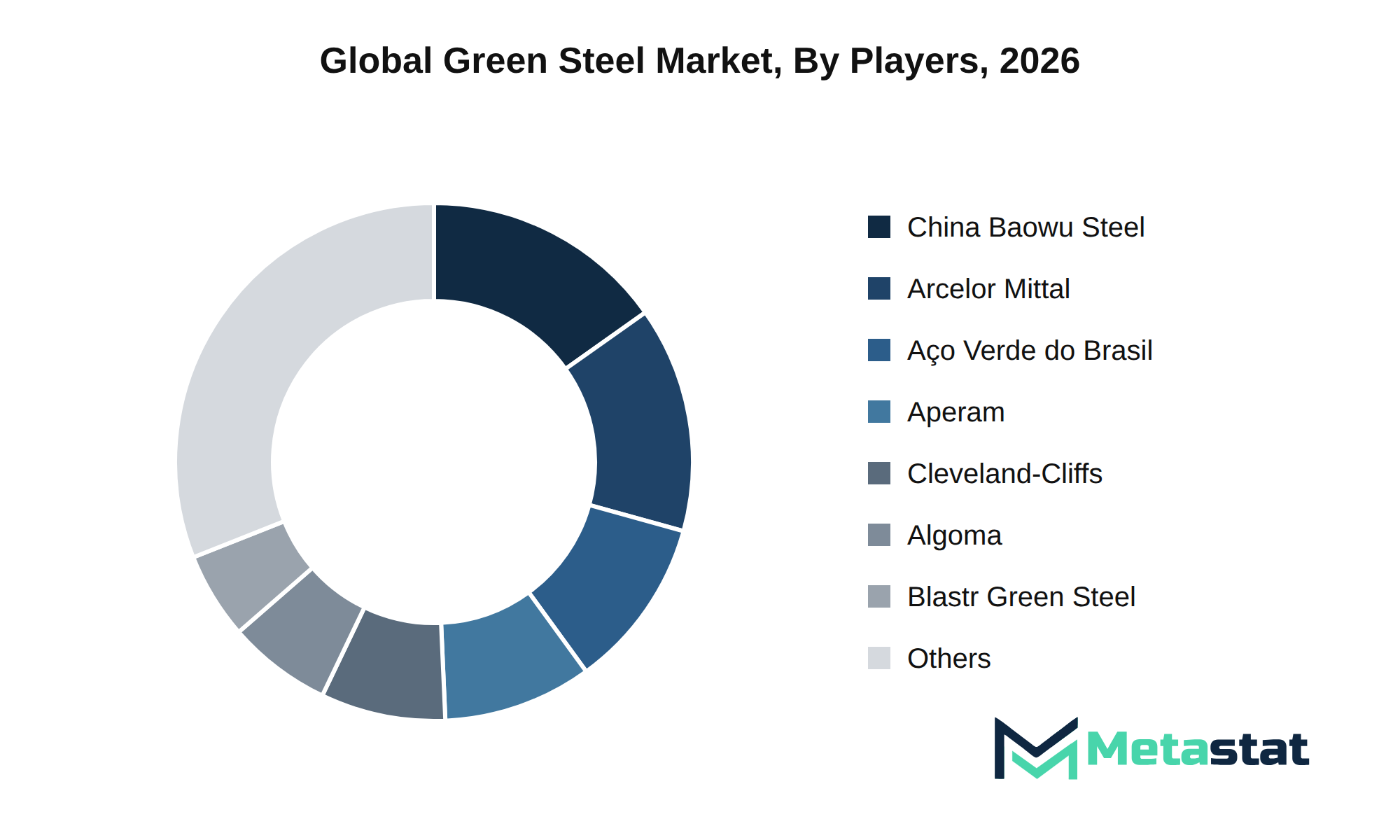
Competitive dynamics within the Green Steel market reflect a landscape marked by strategic consolidation, alliances, and innovative approaches to production. Key players including Arcelor Mittal and Nucor Corporation pursue mergers and acquisitions to strengthen their market positions and expand their technological capabilities. Joint ventures among companies like H2 Green Steel and global leaders enhance research and development efforts, developing new technologies that drive operational efficiencies.
Companies within the Green Steel market employ varied go-to-market strategies that leverage proprietary technologies and intellectual property. Players like Thyssenkrupp Steel and Tata Steel focus on product differentiation to cater to specific industry needs, creating barriers to entry for new entrants. The competitive environment benefits from established supply chain dominance, which offers procurement leverage while enhancing customer retention strategies through brand equity.
Market size is forecast to rise from USD 62.2 billion in 2025 to over USD 156.3 billion by 2033. This growth is expected to occur at a compound annual growth rate (CAGR) of 12.2%. Key drivers influencing this trajectory include macroeconomic factors, evolving downstream demand, and shifts in core industry maturity. Strategic capital allocation directives, including infrastructure investments and commitments to renewable technologies, play crucial roles in shaping market dynamics.
The bull case aligns with robust demand stemming from increased regulatory emphasis on sustainable practices and growing consumer preferences for environmentally friendly products. Conversely, the bear case hinges on potential obstacles including geopolitical tensions, trade corridor shifts, and unpredictable compliance timelines that could hinder growth. Despite these variables, the green steel market is poised for substantial expansion driven by technological advancements and increasing R&D commercialization timelines that facilitate innovative solutions to meet emerging enterprise needs.
Future growth recommendations emphasize the importance of identifying high-growth pockets within the market while addressing unmet demands. Companies should develop defensibility roadmaps to navigate evolving regulatory environments and capitalize on strategic opportunities for investment. This proactive approach ensures competitiveness within a dynamic environment.
The report strategically identifies and profiles the key market players and analyses their core competencies in each sub-segment of the Green Steel market.
|
Report Attributes |
Details |
|
Study Period |
2021-2033 |
|
Base Year |
2025 |
|
Estimated Year |
2026 |
|
Forecast Period |
2026-2033 |
|
Historical Period |
2021-2025 |
|
Growth Rate |
CAGR 12.2% from 2026 to 2033 |
|
Revenue Unit |
USD billion |
|
Segmentation |
By Industry Verticals, Energy Source, End User, Steel Type, and Region |
|
By Region |
North America (By Industry Verticals, Energy Source, End User, Steel Type, and Country)
|
|
Europe (By Industry Verticals, Energy Source, End User, Steel Type, and Country)
|
|
|
Asia Pacific (By Industry Verticals, Energy Source, End User, Steel Type, and Country)
|
|
|
South America (By Industry Verticals, Energy Source, End User, Steel Type, and Country)
|
|
|
Middle East and Africa (By Industry Verticals, Energy Source, End User, Steel Type, and Country)
|
Find answers to common questions about this report
The Green Steel market size was valued at USD 62.2 billion in 2025.
The Green Steel market is projected to grow at a CAGR of 12.2% during the forecast period from 2026 to 2033.
The North America Green Steel market size is estimated to reach USD 36 billion by 2033.
The Electric Arc Furnace (EAF) segment leads the Green Steel market, with a projected value of USD 88.1 billion by 2033. This segment demonstrates significant growth potential, with a compound annual growth rate (CAGR) of 12.0%.
Key drivers for the Green Steel market include increased emphasis on reducing carbon emissions and stringent environmental regulations. These factors compel steel producers to adopt eco-friendly practices and invest in innovative technologies that lower carbon footprints while maintaining production efficiency, aligning with the sustainability objectives of various industries.
Significant challenges restraining the Green Steel market growth include stringent regulatory compliance, high capital investment requirements, and skilled labor shortages. These factors increase operational costs and limit the ability of smaller players to compete effectively, while geopolitical fragmentation and logistics disruptions create further uncertainty in sourcing materials and maintaining production efficiency.
Increased emphasis on reducing carbon emissions and stringent environmental regulations favor product adoption in the Green Steel market. Industries including construction and automotive prioritize sustainable sourcing, driving demand for steel products that align with their environmental objectives. Investment in innovative technologies, including Electric Arc Furnace and Molten Oxide Electrolysis, further enhances production efficiency while minimizing carbon footprints.
The Green Steel market is estimated to reach a valuation of USD 156.3 billion by 2033.
Key players operating in the Green Steel market include Aço Verde do Brasil, Arcelor Mittal, Boston Metal, China Baowu Steel Group, JFE Steel Corporation, JSW Steel, LIBERTY Steel Group, and Nippon Steel Corporation.
The Green Steel market is projected to grow at a compound annual growth rate (CAGR) of 12.2% from 2026 to 2033.
The analysts below cover Chemicals and Materials research at Metastat Insights.
LEAD ANALYST
Utkarsh Khirodkar is a Lead Market Research Analyst at MetaStat Insight, specializing in market intelligence, technology sector assessments, and competitive strategy.

INDUSTRY CONSULTANT - CHEMICALS & ADVANCED MATERIALS
Chemicals and Materials · Machinery & Equipment · Packaging
Amit Gadhekar Consultant for Chemicals and Materials at MetaStat Insight, directing sector-specific intelligence, research, and strategic consulting across global chemical and processing markets.
When evaluating distributed energy resource management systems, standard research summaries tend to gloss over the operational differences between front-of-the-meter utility deployments and behind-the-meter industrial sites. The MetaStat Insight report addressed those distinctions directly, especially regarding software interoperability standards and grid interconnection backlogs. The five-year market sizing across regional transmission organizations provided actionable context for our grid modernization strategy.
Most industry reports on warehouse automation bundle autonomous mobile robots and fixed conveyor installations into the same top-level numbers, which complicates advisory work. This study split the market cleanly by payload tiers, navigation technology, and fleet management software layers. The regional forecast for Western Europe gave our team defensible adoption benchmarks when evaluating capital allocation for logistics clients, saving us days of secondary data scrubbing.
Analyzing the transition from natural gas to green hydrogen in iron ore reduction requires realistic infrastructure timelines. Meta stat insight supplied a detailed regional assessment of DRI plant conversion costs and scrap metal availability in North America and Western Europe. Their report carefully examined pellet quality specs and electrical grid access constraints without making oversimplified market assumptions. The research material served as a practical reference during internal technology roadmap discussions.
Explore related market intelligence reports worth reading alongside this one.